After the Crash

Dispatches From a Long Recovery (Est. 10/2024)

After the Crash

We wink to them, Good Night!

Liberation-Through-Lucid-Living-Creating-Your-Lucid-Reality

By The Raqs Media Collective

Source: Adbusters

For the past few decades, globally, many well-meaning but demoralized people, especially artists and intellectuals, but also activists, have been losing sleep. They suffer from a peculiarly debilitating activist insomnia consisting of relentless Facebook posting, forwarded petitions and other rituals of narrowing particularity that have taken the place of heretical, insurrectionary and transcendental visions.

We are restless, exhausted through the operation of the worst, most damaging technique available to torturers: sleep deprivation. We could all do with a “sleep in” on the long night shifts. It appears as if there has been a generalized forgetting of the arts and sciences of dreaming, especially lucid dreaming.

This makes it sobering, and even mildly therapeutic, to undertake a close reading of a different account of sleep, and of awakening — the one that opens this essay, from Faridabad Workers News (FMS), a workers’ newspaper.

During our regular night shifts, the general manager used to be abrasive with any worker he saw dozing. He used to take punitive action against them. One night, one hundred and eight of us went to sleep, all together, on the shop floor. Managers, one after the other, who came to check on us, saw us all sleeping in one place, and returned quietly. We carried on like this for three nights. They didn’t misbehave with us, didn’t take any action against us. Workers in other sections of the factory followed suit. It became a tradition of sorts.

We have been reading FMS — which is produced by some friends in Faridabad, a major industrial suburb of Delhi and one of the largest manufacturing hubs of Asia — for the past 25 years. The paper has a print run of 12 thousand, is distributed at regular intervals by workers, students, and itinerant fellow travellers at various traffic intersections, and is read on average by two hundred thousand workers all over the restless industrial hinterland of Delhi.

Over the years, this four-page, A1-size paper full of news and reports of what working people are doing and thinking in one of the biggest industrial concentrations of Asia has acted as a kind of reality check, especially against the echolalia — manic or melancholic, laudatory or lachrymose — that issues forth at regular intervals from the protagonists as well as the antagonists of the new world order. In these circumstances, the paper acts as a kind of weather vane, a device which helps us scent the wind, sense undercurrents and keep from losing our head either in the din of the ecstatic overture for capital and the state, or in the paralyzing grief over their attempts to strengthen their sway.

The issue of FMS, published a week before the results of India’s elections unleashed a frenzy of mourning and celebration, talks about questions coming to shore. It says,

While distributing the paper, we were stopped twice and advised: “Don’t distribute the paper here. Workers here are very happy. Are you trying to get factories closed?” That reading, writing, thinking and exchange can lead to factory closures — where does this thought come from?

Perhaps this fear is a result of messages that circulate between the mobile phones of tailors. Or perhaps this fear emerges because workers on the assembly line are humming!

The industrial belt that surrounds Delhi has been going through a deep churning over the last few years. Hundreds of thousands of young men and women are gathering enormous experience and thought at an early age. They are giving force to waves of innovative self-activity, finding new ways of speaking and thinking about life and work, creating new forms of relationships. In the gathering whirlwind of this milieu, many long-held assumptions have been swept away, and fresh, unfamiliar possibilities have been inaugurated. Here we are presenting some of the questions that have coursed through our conversations and which continue to murmur around us.

Why should anyone be a worker at all?

This question has gained such currency in these industrial areas that some readers may find it strange that it is being mentioned here at all. But still, we find it pertinent to underscore the rising perplexity at the demand that one should surrender one’s life to that which has no future. And again, why should one surrender one’s life to something that offers little dignity?

If we put aside the fear, resentment, rage and disappointment in the statement “What is to be gained through wage work after all?” we can begin to see outlines of a different imagination of life. This different imagination of life knocks at our doors today, and we know that we have between us the capacity, capability and intelligence to experiment with ways that can shape a diversity of ways of living.

Do the constantly emerging desires and multiple steps of self-activity not bring into question every existing partition and boundary?

In this sprawling industrial zone, at every work station, in each work break — whether it’s a tea break or a lunch break — conversations gather storm. Intervals are generative. They bring desires into the open, and become occasions to invent steps and actions. No one is any longer invested in agreements that claim that they might be able to bring forth a better future in three years, or maybe five. Instead, workers are assessing constantly, negotiating continually; examining the self and examining the strength of the collective, ceaselessly. And with it, a wink and a smile: “Let’s see how a manager manages this!” The borders drawn up by agreements are breached, the game of concession wobbles, middlemen disaggregate.

When we do — and can do — everything on our own, why then do we need the mediation of leaders?

“Whether or not to return to work after a break, and across how many factories should we act together — we decide these things on our own, between ourselves,” said a seamstress. Others concurred: “When we act like this, on our own, results are rapid, and our self-confidence grows,” and elaborated, “on the other hand, when a leader steps in, things fall apart; it’s disheartening. When we are capable of doing everything on our own, why should we go about seeking disappointment?”

Are these various actions that are being taken today breaking the stronghold of demand-based thinking?

The most remarkable and influential tendency that has emerged in this extensive industrial belt cannot be wrapped up, contained in, or explained via the language of conditions, demands and concessions. Why? Over the years, the dominant trend has been to portray workers as “poor things,” which effectively traps them in a language that makes them seem like victims of their condition and dependent on concessions. And then they are declared as being in thrall to the language of conditions, demands and concessions. This is a vicious cycle. In the last few years, the workers of Maruti Suzuki (Manesar) have ripped through this encirclement.

“What is it that workers want? What in the world do workers want?”

The company, the local government, the central government were clueless in 2011, they stayed clueless through 2012 and they are still clueless. This makes them nervous. That is why, when workers exploded despite the substantial concessions being offered by management, it resulted in six hundred paramilitary commandos being deputed to restore “normalcy.” One hundred and forty seven workers are political prisoners even today.

Do these questions hold for everyone, everywhere in the world?

The April 2014 issue of FMS featured a categorical statement.

Today we can say with full confidence that an unsettling courses through seven billion people. It is inspired by the desire for an assertion of the overflowing of the surplus of life. It is an expression of creative, boundless astonishment.

Today we can say with full confidence that an unsettling courses through seven billion people. And relatedly, a crisis-laden astonishment: What happens to the colossal wealth that is being produced? Where does it go? How is it that such a tiny sliver from it reaches daily life?

Astonishment is an interesting emotion. It can signal a profound delight alloyed with surprise, as well as the kind of deep anger that borders on puzzled rage. In dreams, we are far more comfortable with astonishment than we are when we are awake and distracted. This double-edged astonishment features both a joy at the self-discovery of the multitude’s own capacities as a planetary force, as well as a recognition of how life itself is being drained of worth and value. This takes us to a new ground — a place of radical uncertainty. Here, both the perils and the potentials of a new global subjectivity lie in wait. Why can we not see them? Why can we not hear them call out? Perhaps they are feigning sleep, restoring themselves with an unauthorized midshift siesta that could break, if they wanted it to, any moment.

Perhaps, in places, it has already broken.

Emergence of factory rebels. Attack on factories by congregations of workers. Frightened management. Industrial areas turn into war zones. Rising numbers of workers as political prisoners. Courts that keep refusing bail. A mounting rebuttal on shop floors of the unsavory behavior of managers and supervisors. The dismantling of the managerial game of concessions. Irrelevance of middlemen. An acceleration of linkages and exchanges between workers.

“This,” says the paper, “is the general condition of today.”

The one thing that we can say with certainty is that management no longer knows what workers are thinking. They do not know what happens next.

Ebullitions all around, the unshackling of factories. Workers refuse to leave the factory. The undoing of the occupation of factories by management. Making factories unfettered spaces for collective gathering. Creating environments that invite the self, others, the entire world to be seen anew. Ceaseless conversation, deep sleep, thinking, the exchange of ideas. The joining together of everyone in extended relays of singing. The invention of new relationships. Whirling currents of possibility opened up by the making of collective claims on life.

This too is the general condition of today.

So how will the sinking ship of the state keep sailing? How will orders be given and obeyed if so few are even speaking the language of the captain anymore? For the ship not to sink, at least not yet, these orders must at least appear to be given and obeyed. Someone must semaphore.

Perhaps the rise of nationalism of the far right across the world is not as much a sign of the increasing power of capital and the state as it is a recognition, by those at the helm of affairs, of their own besieged situation. They are under siege. Once again the rulers do not know what is going on in the minds of those they rule. For all practical purposes, the subjects are opaque, oblivious to every command. Management does not even know whether the workers are asleep or awake. When they are asleep, they seem to be animated by the current of vivid dreams. When they are awake, they doze at the machine. Is this why every leader asks his nation to awaken? So that he can be reassured that they are at least listening to him? The more they sleep, the louder is the call to rise.

This is the time to dream lucidly. To envision and realize the things that one cannot do when one is awake, distracted, bored, busy. This is the time for hearing voices, to become open to the murmur of the universe, for heresy, for audacious conversations, for acts to turn factories into orchards and a laughter that makes standing armies into brass bands.

Let them who rule risk fatigue with their watchfulness.

We wink to them, good night!

— The Raqs Media Collective plays a plurality of roles, appearing as artists, curators and philosophical agent provocateurs in India. This piece appeared in the e-flux journal No. 56, June 2014.

Related Video:

300

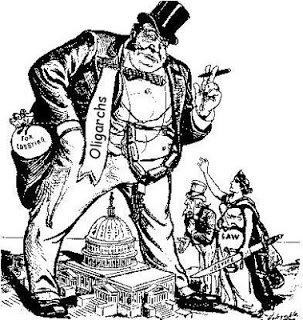
How America Became an Oligarchy

OLIGARCHY

By Ellen Brown

Source: Counterpunch

“The politicians are put there to give you the idea that you have freedom of choice. You don’t. . . . You have owners.”

— George Carlin, The American Dream

According to a new study from Princeton University, American democracy no longer exists. Using data from over 1,800 policy initiatives from 1981 to 2002, researchers Martin Gilens and Benjamin Page concluded that rich, well-connected individuals on the political scene now steer the direction of the country, regardless of – or even against – the will of the majority of voters. America’s political system has transformed from a democracy into an oligarchy, where power is wielded by wealthy elites.

“Making the world safe for democracy” was President Woodrow Wilson’s rationale for World War I, and it has been used to justify American military intervention ever since. Can we justify sending troops into other countries to spread a political system we cannot maintain at home?

The Magna Carta, considered the first Bill of Rights in the Western world, established the rights of nobles as against the king. But the doctrine that “all men are created equal” – that all people have “certain inalienable rights,” including “life, liberty and the pursuit of happiness” – is an American original. And those rights, supposedly insured by the Bill of Rights, have the right to vote at their core. We have the right to vote but the voters’ collective will no longer prevails.

In Greece, the left-wing populist Syriza Party came out of nowhere to take the presidential election by storm; and in Spain, the populist Podemos Party appears poised to do the same. But for over a century, no third-party candidate has had any chance of winning a US presidential election. We have a two-party winner-take-all system, in which our choice is between two candidates, both of whom necessarily cater to big money. It takes big money just to put on the mass media campaigns required to win an election involving 240 million people of voting age.

In state and local elections, third party candidates have sometimes won. In a modest-sized city, candidates can actually influence the vote by going door to door, passing out flyers and bumper stickers, giving local presentations, and getting on local radio and TV. But in a national election, those efforts are easily trumped by the mass media. And local governments too are beholden to big money.

When governments of any size need to borrow money, the megabanks in a position to supply it can generally dictate the terms. Even in Greece, where the populist Syriza Party managed to prevail in January, the anti-austerity platform of the new government is being throttled by the moneylenders who have the government in a chokehold.

How did we lose our democracy? Were the Founding Fathers remiss in leaving something out of the Constitution? Or have we simply gotten too big to be governed by majority vote?

Democracy’s Rise and Fall

The stages of the capture of democracy by big money are traced in a paper called “The Collapse of Democratic Nation States” by theologian and environmentalist Dr. John Cobb. Going back several centuries, he points to the rise of private banking, which usurped the power to create money from governments:

The influence of money was greatly enhanced by the emergence of private banking. The banks are able to create money and so to lend amounts far in excess of their actual wealth. This control of money-creation . . . has given banks overwhelming control over human affairs. In the United States, Wall Street makes most of the truly important decisions that are directly attributed to Washington.

Today the vast majority of the money supply in Western countries is created by private bankers. That tradition goes back to the 17th century, when the privately-owned Bank of England, the mother of all central banks, negotiated the right to print England’s money after Parliament stripped that power from the Crown. When King William needed money to fight a war, he had to borrow. The government as borrower then became servant of the lender.

In America, however, the colonists defied the Bank of England and issued their own paper scrip; and they thrived. When King George forbade that practice, the colonists rebelled.

They won the Revolution but lost the power to create their own money supply, when they opted for gold rather than paper money as their official means of exchange. Gold was in limited supply and was controlled by the bankers, who surreptitiously expanded the money supply by issuing multiple banknotes against a limited supply of gold.

This was the system euphemistically called “fractional reserve” banking, meaning only a fraction of the gold necessary to back the banks’ privately-issued notes was actually held in their vaults. These notes were lent at interest, putting citizens and the government in debt to bankers who created the notes with a printing press. It was something the government could have done itself debt-free, and the American colonies had done with great success until England went to war to stop them.

President Abraham Lincoln revived the colonists’ paper money system when he issued the Treasury notes called “Greenbacks” that helped the Union win the Civil War. But Lincoln was assassinated, and the Greenback issues were discontinued.

In every presidential election between 1872 and 1896, there was a third national party running on a platform of financial reform. Typically organized under the auspices of labor or farmer organizations, these were parties of the people rather than the banks. They included the Populist Party, the Greenback and Greenback Labor Parties, the Labor Reform Party, the Antimonopolist Party, and the Union Labor Party. They advocated expanding the national currency to meet the needs of trade, reform of the banking system, and democratic control of the financial system.

The Populist movement of the 1890s represented the last serious challenge to the bankers’ monopoly over the right to create the nation’s money. According to monetary historian Murray Rothbard, politics after the turn of the century became a struggle between two competing banking giants, the Morgans and the Rockefellers. The parties sometimes changed hands, but the puppeteers pulling the strings were always one of these two big-money players.

In All the Presidents’ Bankers, Nomi Prins names six banking giants and associated banking families that have dominated politics for over a century. No popular third party candidates have a real chance of prevailing, because they have to compete with two entrenched parties funded by these massively powerful Wall Street banks.

Democracy Succumbs to Globalization

In an earlier era, notes Dr. Cobb, wealthy landowners were able to control democracies by restricting government participation to the propertied class. When those restrictions were removed, big money controlled elections by other means:

First, running for office became expensive, so that those who seek office require wealthy sponsors to whom they are then beholden. Second, the great majority of voters have little independent knowledge of those for whom they vote or of the issues to be dealt with. Their judgments are, accordingly, dependent on what they learn from the mass media. These media, in turn, are controlled by moneyed interests.

Control of the media and financial leverage over elected officials then enabled those other curbs on democracy we know today, including high barriers to ballot placement for third parties and their elimination from presidential debates, vote suppression, registration restrictions, identification laws, voter roll purges, gerrymandering, computer voting, and secrecy in government.

The final blow to democracy, says Dr. Cobb, was “globalization” – an expanding global market that overrides national interests:

[T]oday’s global economy is fully transnational. The money power is not much interested in boundaries between states and generally works to reduce their influence on markets and investments. . . . Thus transnational corporations inherently work to undermine nation states, whether they are democratic or not.

The most glaring example today is the secret twelve-country trade agreement called the Trans-Pacific Partnership. If it goes through, the TPP will dramatically expand the power of multinational corporations to use closed-door tribunals to challenge and supersede domestic laws, including environmental, labor, health and other protections.

Looking at Alternatives

Some critics ask whether our system of making decisions by a mass popular vote easily manipulated by the paid-for media is the most effective way of governing on behalf of the people. In an interesting Ted Talk, political scientist Eric Li makes a compelling case for the system of “meritocracy” that has been quite successful in China.

In America Beyond Capitalism, Prof. Gar Alperovitz argues that the US is simply too big to operate as a democracy at the national level. Excluding Canada and Australia, which have large empty landmasses, the United States is larger geographically than all the other advanced industrial countries of the OECD (Organization for Economic Cooperation and Development) combined. He proposes what he calls “The Pluralist Commonwealth”: a system anchored in the reconstruction of communities and the democratization of wealth. It involves plural forms of cooperative and common ownership beginning with decentralization and moving to higher levels of regional and national coordination when necessary.

Dr. Alperovitz is co-founder of an initiative called The Next System Project, aimed at defining the issues in a national political debate as a first step to realizing the possible. He quotes Prof. Donald Livingston, who asked in 2002:

What value is there in continuing to prop up a union of this monstrous size? . . . [T]here are ample resources in the American federal tradition to justify states’ and local communities’ recalling, out of their own sovereignty, powers they have allowed the central government to usurp.

Taking Back Our Power

If governments are recalling their sovereign powers, they might start with the power to create money, which was usurped by private interests while the people were asleep at the wheel. State and local governments are not allowed to print their own currencies; but they can own banks, and all depository banks create money when they make loans, as the Bank of England recently acknowledged.

The federal government could take back the power to create the national money supply by issuing its own Treasury notes as Abraham Lincoln did. Alternatively, it could issue some very large denomination coins as authorized in the Constitution; or it could nationalize the central bank and use quantitative easing to fund infrastructure, education, job creation, and social services, responding to the needs of the people rather than the banks.

The freedom to vote carries little weight without economic freedom – the freedom to work and to have food, shelter, education, medical care and a decent retirement. President Franklin Roosevelt maintained that we need an Economic Bill of Rights. If our elected representatives were not beholden to the moneylenders, they might be able both to pass such a bill and to come up with the money to fund it.

Ellen Brown is an attorney, founder of the Public Banking Institute, and author of twelve books including the best-selling Web of Debt. Her latest book, The Public Bank Solution, explores successful public banking models historically and globally. Her 300+ blog articles are at EllenBrown.com. Listen to “It’s Our Money with Ellen Brown” on PRN.fm.


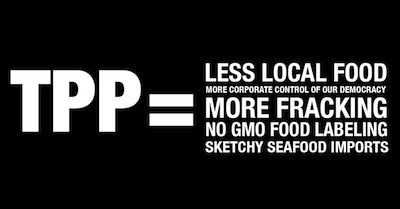
The Trans-Pacific Partnership and the Death of the Republic

TPPequals

By Ellen Brown

Source: Washington’s Blog

The United States shall guarantee to every State in this Union a Republican Form of Government.    — Article IV, Section 4, US Constitution

A republican form of government is one in which power resides in elected officials representing the citizens, and government leaders exercise power according to the rule of law. In The Federalist Papers, James Madison defined a republic as “a government which derives all its powers directly or indirectly from the great body of the people . . . .”

On April 22, 2015, the Senate Finance Committee approved a bill to fast-track the Trans-Pacific Partnership (TPP), a massive trade agreement that would override our republican form of government and hand judicial and legislative authority to a foreign three-person panel of corporate lawyers.

The secretive TPP is an agreement with Mexico, Canada, Japan, Singapore and seven other countries that affects 40% of global markets. Fast-track authority could now go to the full Senate for a vote as early as next week. Fast-track means Congress will be prohibited from amending the trade deal, which will be put to a simple up or down majority vote. Negotiating the TPP in secret and fast-tracking it through Congress is considered necessary to secure its passage, since if the public had time to review its onerous provisions, opposition would mount and defeat it.

Abdicating the Judicial Function to Corporate Lawyers

James Madison wrote in The Federalist Papers:

The accumulation of all powers, legislative, executive, and judiciary, in the same hands, . . . may justly be pronounced the very definition of tyranny. . . . “Were the power of judging joined with the legislative, the life and liberty of the subject would be exposed to arbitrary control, for the judge would then be the legislator. . . .”

And that, from what we now know of the TPP’s secret provisions, will be its dire effect.

The most controversial provision of the TPP is the Investor-State Dispute Settlement (ISDS) section, which strengthens existing ISDS  procedures. ISDS first appeared in a bilateral trade agreement in 1959. According to The Economist, ISDS gives foreign firms a special right to apply to a secretive tribunal of highly paid corporate lawyers for compensation whenever the government passes a law to do things that hurt corporate profits — such things as discouraging smoking, protecting the environment or preventing a nuclear catastrophe.

Arbitrators are paid $600-700 an hour, giving them little incentive to dismiss cases; and the secretive nature of the arbitration process and the lack of any requirement to consider precedent gives wide scope for creative judgments.

To date, the highest ISDS award has been for $2.3 billion to Occidental Oil Company against the government of Ecuador over its termination of an oil-concession contract, this although the termination was apparently legal. Still in arbitration is a demand by Vattenfall, a Swedish utility that operates two nuclear plants in Germany, for compensation of €3.7 billion ($4.7 billion) under the ISDS clause of a treaty on energy investments, after the German government decided to shut down its nuclear power industry following the Fukushima disaster in Japan in 2011.

Under the TPP, however, even larger judgments can be anticipated, since the sort of “investment” it protects includes not just “the commitment of capital or other resources” but “the expectation of gain or profit.” That means the rights of corporations in other countries extend not just to their factories and other “capital” but to the profits they expect to receive there.

In an article posted by Yves Smith, Joe Firestone poses some interesting hypotheticals:

Under the TPP, could the US government be sued and be held liable if it decided to stop issuing Treasury debt and financed deficit spending in some other way (perhaps by quantitative easing or by issuing trillion dollar coins)? Why not, since some private companies would lose profits as a result?

Under the TPP or the TTIP (the Transatlantic Trade and Investment Partnership under negotiation with the European Union), would the Federal Reserve be sued if it failed to bail out banks that were too big to fail?

Firestone notes that under the Netherlands-Czech trade agreement, the Czech Republic was sued in an investor-state dispute for failing to bail out an insolvent bank in which the complainant had an interest. The investor company was awarded $236 million in the dispute settlement. What might the damages be, asks Firestone, if the Fed decided to let the Bank of America fail, and a Saudi-based investment company decided to sue?

Abdicating the Legislative Function to Multinational Corporations

Just the threat of this sort of massive damage award could be enough to block prospective legislation. But the TPP goes further and takes on the legislative function directly, by forbidding specific forms of regulation.

Public Citizen observes that the TPP would provide big banks with a backdoor means of watering down efforts to re-regulate Wall Street, after deregulation triggered the worst financial crisis since the Great Depression:

The TPP would forbid countries from banning particularly risky financial products, such as the toxic derivatives that led to the $183 billion government bailout of AIG. It would prohibit policies to prevent banks from becoming “too big to fail,” and threaten the use of “firewalls” to prevent banks that keep our savings accounts from taking hedge-fund-style bets.

The TPP would also restrict capital controls, an essential policy tool to counter destabilizing flows of speculative money. . . . And the deal would prohibit taxes on Wall Street speculation, such as the proposed Robin Hood Tax that would generate billions of dollars’ worth of revenue for social, health, or environmental causes.

Clauses on dispute settlement in earlier free trade agreements have been invoked to challenge efforts to regulate big business. The fossil fuel industry is seeking to overturn Quebec’s ban on the ecologically destructive practice of fracking. Veolia, the French behemoth known for building a tram network to serve Israeli settlements in occupied East Jerusalem, is contesting increases in Egypt’s minimum wage. The tobacco maker Philip Morris is suing against anti-smoking initiatives in Uruguay and Australia.

The TPP would empower not just foreign manufacturers but foreign financial firms to attack financial policies in foreign tribunals, demanding taxpayer compensation for regulations that they claim frustrate their expectations and inhibit their profits.

Preempting Government Sovereignty

What is the justification for this encroachment on the sovereign rights of government? Allegedly, ISDS is necessary in order to increase foreign investment. But as noted in The Economist, investors can protect themselves by purchasing political-risk insurance. Moreover, Brazil continues to receive sizable foreign investment despite its long-standing refusal to sign any treaty with an ISDS mechanism. Other countries are beginning to follow Brazil’s lead.

In an April 22nd report from the Center for Economic and Policy Research, gains from multilateral trade liberalization were shown to be very small, equal to only about 0.014% of consumption, or about $.43 per person per month. And that assumes that any benefits are distributed uniformly across the economic spectrum. In fact, transnational corporations get the bulk of the benefits, at the expense of most of the world’s population.

Something else besides attracting investment money and encouraging foreign trade seems to be going on. The TPP would destroy our republican form of government under the rule of law, by elevating the rights of investors – also called the rights of “capital” – above the rights of the citizens.

That means that TPP is blatantly unconstitutional. But as Joe Firestone observes, neo-liberalism and corporate contributions seem to have blinded the deal’s proponents so much that they cannot see they are selling out the sovereignty of the United States to foreign and multinational corporations.

For more information and to get involved, visit:

Flush the TPP

The Citizens Trade Campaign

Public Citizen’s Global Trade Watch

Eyes on Trade

__________________

Ellen Brown is an attorney, founder of the Public Banking Institute, and author of twelve books including the best-selling Web of Debt. Her latest book, The Public Bank Solution, explores successful public banking models historically and globally. Her 300+ blog articles are at EllenBrown.com.

Baltimoreans Pushed to Their Limits

Suspect_Dies_Baltimore.JPEG-01b3c_c0-199-4709-2943_s561x327

By David S. D’Amato

Source: Center for a Stateless Society

We speak of the blowback that results from American foreign policy, the senseless, heinous acts of terror that represent an unfocused and irrational rebellion against American imperialism. We understand that calling it what it is, blowback — pointing out the causal relationship between American foreign policy and terrorism — is not an attempt to exculpate the people who commit these crimes. Looking for a motive that may aid in explaining these horrors is not looking for an excuse.

Similarly, the Baltimore rioters have found themselves on the losing end of a set of government policies that have consolidated wealth and foreclosed economic opportunities for independence and self-sufficiency. While so many Americans have been railing against welfare recipients, worried about the effects of food stamps on the federal budget, top American companies have worked closely with government for generations, guaranteeing the corporate welfare and special privileges that define the U.S. economic system.

The truth is that corporate capitalism has hung these rioting Baltimoreans out to dry, the American Dream being to them no more than a cruelly sarcastic joke, forever out of reach, mocking them. The prevailing story depicts the urban poor largely as the victims of “the free market,” dependent on a helping hand from government, be it education, job training, or just the bare necessities. In this story, government intervenes to file the sharp edges off of unbridled free market competition.

The problem with this story is that is recasts government in a role it has never actually played for poor and working class people — least of all black Americans. In real life, the state has intervened not to protect the economically powerless and penniless, but to serve to the needs of capital, to fence off resources and restrict opportunities in order to subject people to the control of a few giant employers. This coercive, state-driven process has nothing to do with a principled, libertarian free market today, and it never has in the past.

The result has been a permanent underclass, condemned to live in ghettos under quasi-military occupation, surrounded by violent crime that is the direct product of a failed war on drugs. And while the people who live in these communities are demonstrably no more likely to possess contraband than anyone else, they are far more likely to be stopped and frisked, arrested, and even murdered by increasingly militarized police officers.

The problems in Baltimore are historical and systemic. Everyone agrees that rioting, looting, and the wanton destruction of private property are senseless acts that ultimately can’t help anyone or create positive social change. We must nevertheless ask why these people in Baltimore feel so helpless, so abandoned and frustrated by the “proper channels,” that they find it is necessary to lash out and express themselves in this way.

Systematic state violence has left Baltimore communities barren, crying out for justice and opportunity. Anarchists believe that the dormant power of self-organization, cooperation and trade, once truly freed from aggression and meddling, is all the poor need to thrive. Through the anger and sadness coming out of Baltimore, it’s important not to lose sight of the larger, underlying issues.

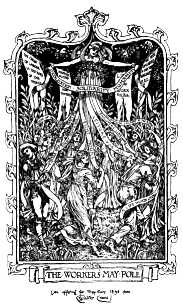
MAY DAY – The International Labor Day

crane13

Source: The Anarchist International

May 1st, International Workers’ Day, commemorates the historic struggle of working people throughout the world, and is recognized in most countries. The United States of America and Canada are among the exceptions. This despite the fact that the holiday began in the 1880s in the USA, linked to the battle for the eight-hour day, and the Chicago anarchists.

The struggle for the eight-hour day began in the 1860s. In 1884, the Federation of Organized Trades and Labor Unions of the United States and Canada, organized in 1881 (and changing its name in 1886 to American Federation of Labor ) passed a resolution which asserted that “eight hours shall constitute a legal day’s work from and after May 1, 1886, and that we recommend to labor organizations throughout this district that they so direct their laws as to conform to this resolution”. The following year the Federation repeated the declaration that an eight-hour system was to go into effect on May 1, 1886. With workers being forced to work ten, twelve, and fourteen hours a day, support for the eight-hour movement grew rapidly. In the months prior to May 1, 1886, thousands of workers, organized and unorganized, members of the organization Knights of Labor and of the federation, were drawn into the struggle. Chicago was the main center of the agitation for a shorter day. The anarchists were in the forefront of the Central Labor Union of Chicago, which consisted of 22 unions in 1886, among them the seven largest in the city.

During the Railroad strikes of 1877, the workers had been violently attacked by the police and the United States Army. A similar tactic of state terrorism was prepared by the bureaucracy to fight the eight-hour movement. The police and National Guard were increased in size and received new and powerful weapons financed by local business leaders. Chicago’s Commercial Club purchased a $2000 machine gun for the Illinois National Guard to be used against strikers. Nevertheless, by May 1st, the movement had already won gains for many Chicago workers. But on May 3, 1886, police fired into a crowd of strikers at the McCormick Harvester Machine Company, killing at least one striker, seriously wounding five or six others, and injuring an undetermined number. Anarchists called for a mass meeting the next day in Haymarket Square to protest the brutality.

The meeting proceeded without incident, and by the time the last speaker was on the platform, the rainy gathering was already breaking up, with only about two hundred people remaining. It was then a police column of 180 men marched into the square and ordered the meeting to disperse. At the end of the meeting a bomb was thrown at the police, killing one instantly, six others died later. About seventy police officers were wounded. Police responded by firing into the crowd. How many civilians were wounded or killed from police bullits never was ascertained exactly. Although it was never determined who threw the bomb, the incident was used as an excuse to attack anarchists and the labor movement in general. Police ransacked the homes and offices of suspected radicals, and hundreds were arrested without charge. A reign of police terror swept over Chicago. Staging “raids” in the working-class districts, the police rounded up all known anarchists and other socialists. “Make the raids first and look up the law afterward!” publicly counseled the state’s attorney.

Anarchists in particular were harassed, and eight of Chicago’s most active were charged with conspiracy to murder in connection with the Haymarket bombing. A kangaroo court found all eight guilty, despite a lack of evidence connecting any of them to the bomb-thrower, and they were sentenced to die. In October 9, 1886, the weekly journal Knights of Labor published in Chicago, carried on page 1 the following announcement: “Next week we begin the publication of the lives of the anarchists advertised in another column.”

The advertisement, carried on page 14, read: The story of the anarchists, told by themselves; Parsons, Spies, Fielden, Schwab, Fischer, Lingg, Engle, Neebe. The only true history of the men who claim that they are condemned to suffer death for exercising the right of Free Speech: Their association with Labor, Socialistic and Anarchistic Societies, their views as to the aims and objects of these organizations, and how they expect to accomplish them; also their connection with the Chicago Haymarket Affair. Each man is the author of his own story, which will appear only in the “Knights of Labor” during the next three months, – the great labor paper of the United States, a 16-page weekly paper, containing all the latest foreign and domestic labor news of the day, stories, household hints, etc. A co-operative paper owned and controlled by members of the Knights of Labor, and furnished for the small sum of $1.00 per annum. Adress all communications to Knights of Labor Publishing Company, 163 Washington St., Chicago, Ill. Later this journal and the paper Alarm published the autobiographies of the Haymarket men.

Albert Parsons, August Spies, Adolf Fischer and George Engel were hanged on November 11, 1887. Louis Lingg committed suicide in prison. The authorities turned over the bodies to friends for burial, and one of the largest funeral processions in Chicago history was held. It was estimated that between 150,000 to 500,000 persons lined the route taken by the funeral cortege of the Haymarket martyrs. A monument to the executed men was unveiled June 25, 1893 at Waldheim Cemetery in Chicago. The remaining three, Samuel Fielden, Oscar Neebe and Michael Schwab, were finally pardoned in 1893.

On June 26, 1893, the governor of Illinois, John Peter Altgeld, issued the pardon message in which he made it clear that he was not granting the pardon because he believed that the men had suffered enough, but because they were innocent of the crime for which they had been tried, and that they and the hanged men had been the victims of hysteria, packed juries and a biased judge. He noted that the defendants were not proven guilty because the state “has never discovered who it was that threw the bomb which killed the policeman, and the evidence does not show any connection whatsoever between the defendants and the man who threw it.”

International Workers’ Day is the commemoration of the Haymarket Event in Chicago in 1886. In 1889, the first congress of the Second International, meeting in Paris for the centennial of the French Revolution and the Exposition Universelle (1889), following an initiative from the American Federation of Labor, called for international demonstrations on the 1890 anniversary of the Chicago protests. These were so successful that May Day was formally recognized as an annual event at the International’s second congress in 1891.

It is not surprising that the state, business leaders, mainstream union officials, and the media would want to hide the true history of May Day. In its attempt to erase the history and significance of May Day, the United States government declared May 1st to be “Law Day”, and gave the workers instead Labor Day, the first Monday of September – a holiday devoid of any historical significance.

Nevertheless, rather than suppressing the labor and anarchist movements, the events of 1886 and the execution of the Chicago anarchists, spokesmen of the movement for the eight-hour day, mobilized many generations of radicals. Emma Goldman, a young immigrant at the time, later pointed to the Haymarket affair as her political birth. Instead of disappearing, the anarchist movement only grew in the wake of Haymarket.

As workers, we must recognize and commemorate May Day not only for it’s historical significance, but also as a time to organize around issues of vital importance of today for the working-class broadly defined, i.e. the grassroots – the people seen as a class in contrast to the superiors in income and/or rank – economically and/or political/administrative.

The May Day Manifestos of the International Workers of the World affiliated to the Anarchist International, from the latest years are published on its Webpage, click here!

Deepwater Capitalism

gulf-oil-spill17

Reflections on the Fifth Anniversary of One of the Biggest Oil Spills in History

By Quincy Saul

Source: Counterpunch

In memory of Gabriel García Márquez, March 6, 1927-April 17, 2014.

In September of 2009, the BP corporation dug the deepest oil well in history. The 35,055-foot deep Tiber prospect, 300 miles off the Texas coast, promised six billion barrels: one of the largest oil fields ever discovered in the country. So of course, they kept looking for more: They moved their massive drilling rig named Deepwater Horizon fifty miles south of the Louisiana coastline, to a prospect called Macondo, named after the setting of the famous book 100 Years of Solitude, by Gabriel García Márquez.

On April 20, 2010, as they began to seal the well, something went wrong: a mix of oil and gas escaped, rushing up through earth and water, blowing up the Deepwater Horizon, and killing eleven workers, whose bodies were never recovered. Over the next eighty seven days, the whole world watched as over 200 million gallons of oil erupted from the ocean floor into the Gulf of Mexico.

It was the largest oil spill in history – more than ten times the size of the Exxon Valdez disaster in Alaska. The images of animals covered in oil began to haunt our screens again, and the scale of death was so great it still seems impossible to quantify – estimates of the number of birds killed within the first hundred days ranges between 100,000 and one million. But the real nightmare was offshore, as riptides and hired hands collected thousands of animal carcasses into “death gyres”. Riki Ott explains:

“Hurricane Creekkeeper John Wathen managed to get the only footage of what I came to call the ‘death gyres.’ the rip currents that collected dead animals offshore. The Incident Command – BP and the US Coast Guard – kept the media 1,500 feet up in the air so the press couldn’t really capture the situation there. The animal carcasses were corralled, taken out to sea, and dumped at night, according to fishermen who were involved with so-called ‘Night-time Operations.’ Offshore workers reported ‘thousands of dolphins, birds too numerous to count, sea turtles too numerous to count,’ and even whales in the death gyres.” (Earth at Risk, Building a Resistance Movement to Save the Planetedited by Derrick Jensen and Lierre Keith, p. 49)

Five years later, what can we say? If hindsight is 20-20 then presumably we can learn from our mistakes. How did it happen? Was it BP’s fault? Or is there a bigger picture to blame? Five years later, the common sense of this tragedy has yet to dawn, as if the oil has clogged our hearts and minds along with our oceans and beaches. Like the pioneers of Márquez’s Macondo, searching for a way through the swamp, we seem lost, desperately hacking our way through nature and through our own nature. And the past, like the path, seems to always be disappearing behind us.

“…and the cries of the birds and the uproar of the monkeys became more and more remote, and the world became eternally sad. The men on the expedition felt overwhelmed by their most ancient memories in that paradise of dampness and silence, going back to before original sin, as their boots sank into pools of steaming oil and their machetes destroyed bloody lilies and golden salamanders. . . . They could not return because the strip that they were opening as they went along would soon close up with a new vegetation that almost seemed to grow before their eyes.” (Márquez, p. 11-12)

How did it Happen?

“The main thing is not to lose our bearings.” (Márquez, p. 12)

Whodunit? What was the crime scene, and who are the criminals? What murder weapon spawned gyres of death? Five years later, we must look through the tangled jungle of events which have grown up behind us, and remember how we got here. Michael Klare’s insightful blow-by-blow of the events leading up to the accident is worth revisiting. 

“When BP first deployed the rig at the Macondo prospect in January 2010, it set a target date of March 7 for completion of that well. However, due to a series of geological obstacles and technical mishaps, drilling was not completed until April 19, producing a cost overrun on the project of approximately $58 million. It is not surprising, then, that BP’s site managers felt particular pressure to seal the well and move the Deepwater Horizon, to its next scheduled location. In their rush, the site managers made several last-minute decisions. . . . When preparing for the final cementing that would prevent natural gas from leaking into the wellbore, for instance, they decided to use only six “centralizers” to position the well’s steel casing, whereas the original design had called for twenty-one centralizers. They also went ahead with the sealing of the well even though several ‘negative-pressure’ tests suggested a dangerous buildup of gas in the wellbore. . . . the desire to complete the job swiftly and move the expensive drillship to its next assignment certainly contributed to the disaster.” (The Race for What’s Left, The global scramble for the world’s last resourcesKlare, p. 47-8)

One way to solve this crime is to blame the workers – the crime scene is the workplace, and the murder weapon is the botched job. They failed to follow industry regulations; using less than half of the recommended number of centralizers, and ignoring the test results indicating a dangerous buildup of gas. But this explanation is not sufficient, and hides another suspect. If the workers pulled the trigger, who gave the order?

As Klare explains, the workers were in a rush. It was the BP site managers – their cost overrun, their “pressure to seal the well and move,” and the “desire to complete the job swiftly,” which created the conditions in which the oil workers made their fateful decisions. So is BP the murderer? Is the crime scene the BP board room?


Inside BP

At the dawn of the 21st century, BP had a tabloid affair with alternative energy. John Browne, its CEO from 1995 to 2007 re-branded the company, from “British Petroleum” to “Beyond Petroleum”, and urged its shareholders and broader public “to look beyond oil and gas to fuels which can be produced locally and which do not threaten the sustainability of the world’s climate.” In 2008, Browne was replaced by Tony Hayward, whose more sober vision re-branded the company simply “BP”, and clarified that “the energy of the future will be more than oil, but oil will still be a major part of it.” In 2010 he closed BP’s “alternative energy office.” (Klare, p. 41)

Perhaps the public relations team from that office had all been moved to the Gulf Coast, where it has been working overtime since 2010. This has included classroom visits with “hands-on” experiments, substituting cocoa for oil and dish soap for chemical dispersant, to win young hearts and minds to the efficacy of BP’s cleanup efforts.[1] According to the company, the case is closed. A recently released report from BP concluded: “BP has seen no data to suggest a significant long-term population-level impact to any species.” In fact, “BP is claiming that wildlife in the Gulf is thriving and more abundant since the disaster.” (Jensen and Keith, p. 61) In a recent press conference, BP’s executive vice president for response and environmental restoration in the region Laura Folse said “I personally have no concern about oil washing in from the offshore to the shoreline.”

BP is preparing for the punchline, because currently pending in court is the case which will decide how much money BP has to pay in damages for the disaster. While BP is a giant – listed by Fortune magazine as the fourth largest publicly held company in the world – some on Wall Street have expressed fear that the court’s decision could kill the company. This panic began almost immediately after the spill, and BP began to sell off assets all over the world, in Colombia, Egypt, the US, Canada and Argentina. (Klare, p. 215, 216)

But according to forensic accounting expert Ian Ratner who testified recently on the case, BP “actually, has a better balance sheet today than it had before the spill.” Despite around $40 billion in oil spill liabilities, the company is financially better off than before the disaster. What’s more, they are back at the scene of the crime: “We expect to be back and actively drilling during the second half of the year,” said BP Chief Financial Offcer Byron Grote in April 2011. And he kept his promise: like Colonel Buendía in Márquez’s novel, BP gives orders for execution but is isolated and naive about to the results: “Lost in the solitude of his immense power, he began to lose direction.” (Márquez, p. 171) BP seems both all-powerful and powerless, returning to the scene of the crime like a dog unto its vomit, at the mercy of some god or godlessness which demands more drilling.

There is more than meets the eye in this case. Is BP the only culprit on trial? If the workers pulled the trigger, and BP gave the order, who put the gun in its hand? And who made the gun? There is an African saying that “if you want to get at the root of the murder, you have to look for the blacksmith who made the machete.” (Anthills of the SavannahChinua Achebe, p. 159)

The World System

“That was perhaps the only mystery that was never cleared up in Macondo. . . . A trickle of blood came out under the door, crossed the living room, went out into the street, continued on in a straight line across the uneven terraces, went down steps and climbed over curbs, passed along the Street of the Turks, turned a corner to the right and another to the left, made a right angle at the Buendía house, went in under the closed door, crossed through the parlor, hugging the walls so as not to stain the rugs, went on to the other living room, made a wide curve to avoid the dining-room table, went along the porch with the begonias, and passed without being seen under Amaranta’s chair as she gave an arithmetic lesson to Aureliano José, and went through the pantry and came out in the kitchen, where Úrsula was getting ready to crack thirty-six eggs to make bread.” (Márquez, p. 135)

What was the blacksmith that built and blew the Deepwater Horizon? Like the mystery of Macondo in Márquez’s story, the trail of blood climbs and descends, turns corners and crosses paths, taking us from the work place, to the board room, to the stock exchange, and from there it seems to flow into the ocean of normal every-day modern life. As Lamar McKay, chairman and president of BP America said, “the deepwater is indispensable to the world’s energy future.” (Klare, p. 69) The trail doesn’t go cold, it goes everywhere. Like the war of Colonel Buendía, our search for justice in the death gyres seems to get stuck in a stalemate of business as usual: “’Everything normal, Colonel.’ And normality was precisely the most fearful part of that infinite war.” (Márquez, p. 171)

In the early 2000s, the deep sea drilling industry boomed. All the big oil corporations competed to dig the deepest wells, at depths and conditions that boggle the imagination – deeper than Mt. Everest is tall, under thousands of feet of water (and pressure). These projects out-compete space exploration in the audacity of their engineering and in their cost: Shell built a rig called Mars that was three times more expensive than the Mars Pathfinder mission, with arguably more complex technology. (Klare, p. 44) While their locations are industry secrets – no one knows how many or where they all are – they are everywhere, from the Falkland Islands to the Arctic Circle, from South America to West Africa.

A 2010 report by energy expert Michael Smith estimated that big oil would spend $387 billion on offshore drilling between 2010 and 2014 – 33% more than over the previous five years – building 20,000 offshore wells in ever deeper waters. (Klare, p. 44-45) The Deepwater Horizon explosion, which came nineteen days after President Obama announced plans for more offshore drilling, did little or nothing to change the plan. Three days after the explosion, with Macondo still gushing, a White House spokesperson assured that increase in offshore drilling would continue, promising that it would be done “safely, securely, and without harm to the environment.” (Klare, p. 51)

Before Deepwater Horizon, regulations on the industry had been lax. In the United States, the Interior Department’s Mineral Management Service (MMS) took a hands-off approach to the industry, never, for instance, setting any criteria for minimum-pressure tests, which had such fateful consequences in the Gulf. (Klare, p. 50) After a six month moratorium on drilling in the Gulf after the disaster, oil companies began to lobby the courts to being reissuing permits. A new set of safety rules was established, and by April 2011, one year after the disaster, deep drilling in the Gulf, by BP and others, was back online. (Klare, p. 52) Everything normal, Colonel.

This is the normalcy of the infinite war on mother earth: While the fallout of the disaster continues to inflict irreparable damage to the Gulf, the industry which created the crisis is allowed to resume the activity which created it. And the same agencies that failed to regulate the industry before are being trusted to do it right this time. How can this be?

The answer can be found by following the money, like the trickle of blood in Macondo, from the scene of the crime, and out into the world-system. In an energy analysis report from several years ago, it was predicted that due to declining reserves of conventional oil, offshore oil output would contribute 35 percent of global supplies by 2020. By 2015, the report continued, deep-offshore fields would be “the only source of growth to power the world’s expanding economy. . . . Any energy firm that intends to continue being involved in the production of hydrocarbons must, therefore, establish a significant presence in the major deepwater drilling zones.” (Klare, p. 45)

In other words, the industry is too big to fail – even if does fail. Big oil cannot be too strictly regulated or restricted – or punished. Their alibi is the world-system; the modern way of life. This logic was recently re-asserted by Justice Department attorney Steve O’Rourke in the buildup to the court case that will decide BP’s punishment, who said that the penalty “has to be high enough that companies of this size won’t let a spill like this ever happen again. But, again, not so high as to be ruinous to their operation.” In the great state of Louisiana, individuals who murder get capital punishment, but corporations who murder get rehabilitation. Questioned about whether the company would attempt to drill at Macondo again, BP senior vice president Kent Wells responded that “there is a good reservoir there,” and there was no reason to rule it out, because if BP didn’t, someone else would. (Klare, p. 52)

And so BP and the Gulf and all of us have come full circle, back to the scene of the crime. As death approaches for Márquez’s Ursula Buendía, so does the realization for all of us: “time was not passing. . . . it was turning in a circle.” (Márquez, p409) As big oil races ever faster and ever deeper, time somehow seems to stand still. The rush put on the workers is the rush put on the managers, is the rush put on the CEOs, is the rush put on the shareholders, is the same rush put again upon the workers. And in this “race for what’s left,” as Michael Klare calls it, we are left standing still, watching death approaching, as the drilling rigs, like monster space-age vultures, circle Macondo once again.

We must ask again, and answer again, to keep our bearings, and to clear a path to the truth: Is the crime scene the workplace, or is it the board room? The stock exchange, or the gas station down the street? Like the trickle of blood weaving through the town of Macondo, the evidence leads everywhere; back to normal modern life. The crime scene is everywhere. The murder weapon is the world-system. The criminal and the culprit is deepwater capitalism.

Deepwater capitalism is a terminal stage in the global metastasis of a social cancer we call the economy. Capitalism has gone to deep water, as it has gone to the hearts of mountains and into the depths of the earth. Offshore oil drilling is but one horseman, in a world-wide apocalypse of extreme resource extraction. The others are fracking, tar sands, and mountaintop removal. If imperialism is the highest stage of capitalism, then today’s resource extraction apocalypse reveals the highest stage of imperialism – genocide and extinction.

Captain Ahab from Moby Dick, the insane captain of a whaling ship – distant ancestors of today’s offshore oil rigs – speaks for the system: “all my means are sane, my object and my motive mad.” (Melville, p. 177) With sane means and mad motives, Captain Ahab is both a model and a metaphor for today’s economy, whose command will sink civilization. It is the immense power without direction, the normal infinite war, the gravity at the center of a world-wide death gyre.


Conclusions

At the beginning of the road into the swamp they put up a sign that said ‘Macondo’ and another larger one on the main street that said ‘God exists’.” (Márquez, p. 49)

Five years later we owe it to ourselves and to the world to come to some conclusions. It may take millions of years for the ecosystems of the Gulf to recover, but in the meantime we must recover our hearts and our minds from a modernity in which such disasters are normal aspects of every-day life. We must come to some conclusions about this world-system, and about the generations of people who will live and die on the front lines of an infinite struggle against an infinite war.

Regardless of the severity of the punishment BP receives, the fact that it is back at the scene of the crime, drilling, gives us an indication of the real scale of the problem. If BP is a psychopathic recidivist criminal, it is not alone. The global economy which depends on this kind of extreme resource extraction, which gives corporations like BP orders and alibis, and which bends executive, legislative and judicial power to its needs, is on the move, and it will strike again. Bhopal, Macondo, Fukushima – the beat will go on until we pull the emergency break. Michael Klare writes in conclusion to his comprehensive global survey of our doomsday terrain: “As the race for what’s left gains momentum, this sort of predatory behavior will become more frequent and more brutal. . . . Only if we abandon the race altogether . . . . can we hope to avoid calamity on a global scale.” (Klare, p. 218 and 210)

To abandon the race: This is the conclusion to which we must come. It will, however, require much more of us than the reformist measures Klare proposes – increasing efficiency, developing alternative energies, and supporting “green” versus “brown” capital. These will only buy Captain Ahab more time. It’s time for mutiny. It’s time for the emergency break. It’s time for revolution.

Conclusions on the local level in the Gulf are more difficult. Big picture political conclusions will not bring back the fish and the birds, will not restore livelihoods and dreams swept away by poisoned waters. In a region that the federal government has all but abandoned, the future is wholly in the hands of the common people of the Gulf coast.[2] It is an immense burden for any people, let alone those who are still recovering, ten years later, from Hurricane Katrina, and who live trapped between “cancer alley” and rising ocean levels, with the ground literally sinking under their feet. Thus the struggles of the people of the Gulf symbolize for the entire world a last stand for meaning, in a civilization on the brink of oblivion: “It was the last that remained of a past whose annihilation had not taken place because it was still in a process of annihilation, consuming itself from within, ending at every moment but never ending its ending.” (Márquez, p409) After them, the flood.

Like children, many of us are afraid of the dark. We hide from the creeping annihilation even as it seeps ever closer to home. We close off our hearts to the horror, and mute our minds before the madness, even as it consumes us and enlists our complicity. As John W. Tunnell, witness for BP, recently testified, “The images of those dead birds that were oiled, like pelicans, stick in people’s minds more, and so it’s easy to get emotionally involved in those things. . . . you have to step back and critically and unemotionally, objectively to look at what’s going on.”

While BP’s witnesses, as personifications of capital, would have us immerse ourselves in the infamous “icy waters of egotistical calculation,” some people in the Gulf prefigure a different path to the truth. A documentary titled My Louisiana Love chronicles the story of Monique Verdin, a young Native American woman in search of love and life amidst death and indifference: “I want to keep living on our land, but I’m inheriting a dying delta.” She sets out fearlessly into a landscape of annihilation with an open heart, an open mind, and open hands, and in her story there is a universal story.

It is a story of salvation blossoming next to damnation, a story which promises like Holderin that “where danger threatens, that which saves from it also grows.” Like jewelweed growing next to poison ivy, like women’s liberation in Rojava alongside to the patriarchal crusade of ISIS, like God next to Macondo: There is hope here, perhaps the only kind of hope that is real in a world where everything is at least partly toxic, where dioxin swirls in breast milk, and death gyres spiral in the oceanic cradle of life. It is a story that slumbers in a world consumed with cynicism, a world awash in the icy waters of ego. But like the people of Macondo, we await only the right magnet to re-ignite our wonder. As the gypsy proclaimed, “things have a life of their own. . . . It’s simply a matter of waking up their souls.” (Márquez, p. 2)

Quincy Saul is the author of Truth and Dare: A Comic Book Curriculum for the End and the Beginning of the World, and the co-editor of Maroon the Implacable: The Collected Writings of Russell Maroon Shoatz. He is a musician and a co-founder of Ecosocialist Horizons.

REFERENCES

100 Years of Solitude, by Gabriel García Márquez, Harper Perennial Modern Classics, 2006

The Race for What’s Left, The global scramble for the world’s last resources, by Michael T. Klare, Metopolitan Books, Henry Holt and Company, NY, 2012

Earth at Risk, Building a Resistance Movement to Save the Planet, edited by Derrick Jensen and Lierre Keith, Flashpoint Press, 2012

Anthills of the Savannah, by Chinua Achebe, Anchor Book, 1998

Moby Dick, by Herman Melville, St. Botolph Society, 1892

“Suffering a Sea Change,” by Joel Kovel, Capitalism Nature Socialism, Volume 21, Issue 3, September 2010

Notes.

[1]  “NOAA and BP teamed up to visit eighth-grade classrooms in the Gulf to show children how to safely clean up an oil spill. They spilled cocoa powder in a little aquarium to mimic an oil spill – cocoa powder, right? Yummy. They sprinkled in Dawn dish soap to ‘disperse’ the oil. ‘See children? Dispersant works to clean up the oil, and we’re going to save the world. It’s OK.’ (Riki Ott, in Jensen and Keith, p52) Chemical dispersants can best be described with the poem by Gerard Manley Hopkins, “where we, even where we mean to mend her, we end her”: the toxicity of chemical dispersants – arguably more dangerous than the oil they purport to clean up – has been analyzed and documented by many organizations.

[2]  “It really is all up to us. In the Gulf, it didn’t take people twenty years like with the Exxon Valdez spill to realize the federal government was not in control of the situation; it took them two months.” -Riki Ott (Jensen and Keith, p52)



G.M.O. Resistance

GMO-Protect-the-land-and-farmers-from-GMOs

By Rebel Fagin

Source: The Daily Censored

We don’t have to do what the corporate death state says. We can choose how we’ll live, what media we’ll consume, and what foods we’ll eat.

Genetically Modified Organisms (GMO) have been added to a dozen crops. GMOs are used in Monsanto’s Roundup Ready seeds – the only seeds that will allegedly survive an attack of the herbicide Roundup. Roundup contains glyphosate, a chemical that disrupts photosynthesis and the immune system. It is a civilian off-shoot of Agent Orange, Monsanto’s notorious herbicide made from 2, 4-D and 2, 4, 5-T.

Here’s how the chemical farmer’s cycle goes. A farmer uses Roundup and other glyphosate based chemicals. Most of the weeds die. Those that survive pass on this survival gene to their offspring and the weeds come back stronger. The farmer then uses more chemicals. Ever wonder where those chemicals go?

You are what you eat. The American Academy of Environmental Medicine (AAEM) states, “Several animal studies indicate serious health risks associated with GM foods.” These include: infertility, immune problems, accelerated aging, faulty insulin regulation, allergic reactions, gastrointestinal disorders, obesity, heart disease, depression, infertility, cancers, and Alzheimer’s disease.

It’s worse for infants. Their immune systems are still developing and they metabolize food at a much higher rate than adults. This makes them more sensitive to chemical toxins. Independent laboratory tests have found genetically engineered soy in four popular infant formulas: Similac Soy (42%), Gerber Good Start Soy (48%), Enfamil Pro Soybee (49%), and Walmart Soy (66%). The Cornucopia Institute Report found GMO contamination in several cereals including: Mother’s Bumpers (28%), Kix Corn Puffs (56%), Nutritious Living Hi-Lo (85%), and Kashi Go Lean (100%)!

GMOs are common in processed foods. They frequently turn up in the forms of sugar, corn starch, corn syrup, cotton seed oil, and canola oil.

GMOs arrive in meat and meat byproducts as rbGH and rbST. These growth hormones have been banned in Canada.

Another dangerous GMO product is aspartame which is found in Nutrisweet and Equal. Aspartame has been linked to disorders ranging from tumors to seizers.
As of March 2015 we know that soy, cotton, canola, sugar beets (not cane sugar), corn, salmon, Hawaiian papaya, alfalfa used for hay, a small amount of yellow and crookneck squash, and recently Arctic Apples can all contain GMOs.

So what can we do? First look at the label. If it says Federal Organic, Non GMO Project Verified, or rbGH and rbST free then it is GMO free. Web sites like http://www.ocsoco.org/gmo, LabelGMOs.org. NonGMOShoppingGuide.com will keep you up to date. However, looking out only for number one is half steppin’. To do the whole dance, couple these labels with Fair Trade or Fair for Life labels and look out for the people who provide you with your food as well.

Shop at your local farmer’s market and get to know your farmers and their practices. Shop at stores that champion organic foods. You can always raise your own food. D.I.Y.
Here’s how to grow a simple organic garden in 10 easy steps.

1) Build beds and put soil in them. Soil is not dirt. Dirt is what happens when you don’t clean. Soil is interactive biological communities. Beds can be made from wood, bricks, chicken wire, etc. You can build them on the ground or at any convenient height. Build them to last several years. Rake out the rocks and level the ground.

2) Add green vegetable cuttings, animal manure, and rock nutrients to your soil. Mix well and level again.

3) You can plant seeds directly in the ground or start them indoors and then transplant them. Space them according to their mature size. This is a good time to put in a flex line drip irrigation system. Drip irrigation is a good way to conserve water. Many people like to include timers.

4) Lay mulch, such as organic hay, between your beds. It will both help retain water and control pests. Till the mulch into the soil at the end of the season.

5) Water and weed regularly. Spend time in your garden and get to know it well. Your garden will serve you for this. Add organic nutrients only as needed. Usually you need more nitrogen in the beginning. Check with your local organic gardener for what works best in your region.

6) For large pests you’ll need a fence tall enough for deer and deep enough so wild pigs don’t dig under it.

7) For smaller pests good soil preparation and a clean garden is your best foundation. Rotate crops for both pest control and to keep soil healthy.

8) Compost discarded organic, non-meat foods in a compost bin. Mix together green (vegetables) and brown (leaves), stir them up, water them, close the lid, and let ‘em cook. Avoid thick skinned foods like bananas and melon rinds as they take longer to break down. Coffee grounds and egg shells add beneficial nutrients to the soil. Stir and wait. After a year or two you’ll retrieve rich black soil from the bottom of your compost to add to your garden. Good compost is warm and alive with worms and other creatures.

9) Check your plants for color, firmness, and smell before you harvest them. You can either harvest the whole plant or take clippings from it and allow it to grow. It depends on the plant and what you want.

10) Take extra food to your local Food Pantry or contact cropmobsters.com and they will help you with distribution.
We are not slaves to the corporate death state. We can choose how we’ll live. Choose life over death and make conscious choices about food today.

Sources: Monsanto A Corporate Profile © 2013 by Food & Water Watch, ResponsibleTechnology.org, LabelGMOs.org, Herbicide forum in Willits, CA 3/8/15

Rebel can be read at the Sonoma County Peace Press & the Daily Censored.

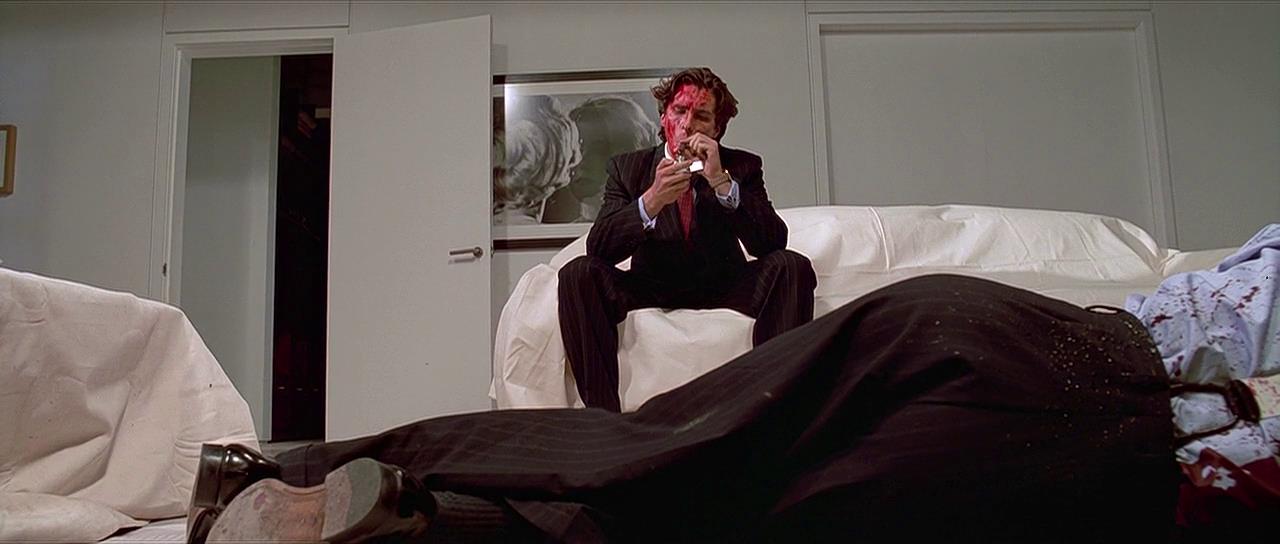
Report: Whites More Likely To Be Named CEOs Than Equally Sociopathic Black Candidates

americanpsycho8

Editor’s Note: Good satire always has a firm basis in truth.

Source: The Onion

ALEXANDRIA, VA—Shedding light on the striking lack of diversity within the highest ranks of corporate America, a report from the Executive Leadership Council released Tuesday reveals that white individuals are far more likely to be named CEOs than equally sociopathic black candidates.

Despite widespread evidence that minority executives are just as misanthropic and unprincipled as their Caucasian peers, the study found that less than 1 percent of Fortune 500 companies have black chief executives, demonstrating that the upper levels of the business world frequently remain inaccessible to even the most morally bankrupt of African-Americans.

“Our data shows that when white megalomaniacs and black megalomaniacs contend for the highest corporate positions in the U.S., the latter are routinely passed over,” said the report’s lead author, Sandra Norwood, pointing to dozens of recent instances in which African-American individuals who had proven track records of undermining their colleagues’, employees’, and shareholders’ interests in order to further their own selfish ambitions were not even offered an interview for a company’s top seat. “Vindictive, unscrupulous blacks simply aren’t granted these leadership opportunities, despite possessing the same willingness to maximize short-term profit by eliminating health insurance benefits for part-time employees or commit accounting fraud in order to inflate the value of their personal stock options.”

“These are heartless sadists who have put in countless hours of backstabbing and forsaken all ethical constraints in order to bolster their own power, and yet time and time again they are denied a place at the top of the corporate ladder simply because of the color of their skin,” she continued.

According to the report, even when companies were presented with numerous highly qualified minority candidates with no moral compass and a history of increasing earnings by knowingly rushing an unsafe product to market or outsourcing thousands of manufacturing jobs to overseas sweatshops, the top-tier positions still tended to be awarded almost exclusively to deceitful, empathy-devoid whites.

In fact, the study found that, when presented with identical résumés of potential CEOs who had hid billions of dollars of revenue in offshore tax havens and poached several engineers from a rival business in order to illegally gain confidential trade secrets—one labeled with a common Caucasian name and the other with a traditionally African-American name—boards of directors were far more likely to select the applicant with the white-sounding name. Such findings suggest that many at the highest corporate level still hold inherent biases against amoral, power-hungry egotists of color.

“Even in 2015, many corporate boards will automatically discount a black candidate even if they have demonstrated that they are fully capable of using aggressive intimidation tactics to prevent their company’s workers from forming a labor union,” Norwood said. “Board members often are more comfortable working with lying, underhanded double-crossers who are similar to themselves. Therefore, the individual that they ultimately promote to CEO tends to come from the same cultural background that turned them into destructive, unrepentant monsters.”

According to sources, the dearth of black CEOs within corporate America has prompted a number of companies to institute personnel outreach programs to identify and cultivate malevolent young African-Americans who they believe have the potential to one day violate insider trading laws and initiate spurious patent lawsuits against smaller competitors in order to overwhelm them with legal fees and force them out of the industry.

However, after years of confronting the “glass ceiling” that prevents them from advancing as far as their white peers, many blindly ambitious blacks told reporters they are skeptical that these programs will have a meaningful impact on African-Americans who aspire to become CEOs so that they can immediately downsize as many low-level personnel as necessary to hit profit targets that trigger lucrative personal bonuses.

“When you’re black, you have to be twice as ruthless and deceptive just to reach the senior level, but then you can pretty much forget about ever having a shot at the corner office,” said William Coleman, the sole African-American vice president at a prominent Wall Street financial services group, who says he has yet to be recognized for allocating the risk of his firm’s portfolio of unstable derivatives investments entirely onto the municipal worker pension funds it administers. “My company just elected a white external candidate for our CEO role even after I successfully shifted the blame for a botched merger onto a fellow senior manager before personally firing him and claiming his successes as my own. It’s like they refuse to see how deeply predatory and full of hatred I am.”

“My race shouldn’t be a factor when I’ve proven that I’m a borderline psychopath who will step over anybody in my way to sate my fanatical lust for power,” he continued. “When it comes to succeeding in the business world, that’s all that should matter.”


Related Video:


Lara Trace Hentz

INDIAN COUNTRY NEWS

In Saner Thought

"It is the duty of every man, as far as his ability extends, to detect and expose delusion and error"..Thomas Paine

ZEDJournAI

Human in Algorithms

Rooster Crows

From the Roof Top

Aisle C

I See This

The Free

blog of the post capitalist transition.. Read or download the novel here + latest relevant posts

अध्ययन-अनुसन्धान(Essential Knowledge of the Overall Subject)

अध्ययन-अनुसन्धानको सार