The most recent episode of “Guns and Butter” featured a compilation of highlights from a conference on public banking in San Rafael, California. Though it was held last year it’s worth a listen and will probably become more relevant in the future. You can listen to the whole show here:
The following are two of the speeches on the program posted as videos. The first, featuring Jim Hogue, has sound problems in the beginning but is greatly improved about three minutes in. The second clip features Charlie Eaton who discusses how bankers profit off colleges while screwing over students and taxpayers.
Though she wasn’t featured on Guns and Butter, student activist Victoria Grant presented this short but concise speech breaking down the relationship between banks, corporations and governments and how they facilitate corrupt policies.
Grant Morrison is one of the most popular writers in comics, and one of the most controversial. He is the Rock Star of Comics, a philosopher and chaos magician, who has used his comics to change both himself and his audience. He is a man living on the border between FICTION and REALITY, and this is his STORY.
The film was produced in close collaboration with Morrison and features extensive interviews with him, as well as never before seen photos and documents spanning his childhood to the present day.
Complimenting Morrison’s own words are interviews with his closest collaborators and friends, including Frank Quitely, Douglas Rushkoff, Cameron Stewart, Phil Jimenez, Mark Waid, Geoff Johns, Jill Thompson and many more. The film makes extensive use of found and abstract footage to make the documentary feel like a Morrison comic.
We can cite scores of statistics and financials that prove without a shadow of a doubt that the U.S. economy is in a tail spin and won’t be recovering any time soon. Abysmal home sales, continued degradation in the national employment numbers, sky rocketing national debt, and ever rising consumer prices all point to serious problems.
But one number in particular pretty much sums it all up. It depicts not just the worsening state of our economy, but puts the lies and machinations of the U.S. government on full display for the world to see.
You’ll often hear the media cite the U.S. Growth Domestic Product (GDP) as a measure of economic growth. It measures the rate at which our economy grows.
In 2013, for example, our GDP was $17.08 trillion, up from the previous year’s $16.42 trillion. So, all of the goods and services sold throughout the United States (essentially, all of the money spent by Americans) rose about $661 billion dollars year-over-year.
Most people might look at the number, see 4% growth, and say it’s a no-brainer. How can the economy not be growing if the GDP rose?
The answer is simple. And when you look at it from the perspective Karl Denninger of the Market Ticker outlines below, you can’t help but realize that you’ve been purposely duped into believing that things are getting better. Just the opposite is true.
When looking at GDP you absolutely must account for the manufactured credit infused into the system during this same time period. When you do you’ll see just why the economy is not growing in any way, shape or form.
It is, in fact, contracting.
However, The Federal Reserve added $1.112 trillion in credit (unbacked by anything) during the same period of time; that’s a debasement of the units in which GDP is reported of 6.51%.
So the real change in the economy is in fact negative 2.51%.
We are factually in a recession.
Period.
There can be no progress economically or politically until the lies are stopped. These are not mistakes; both the hosts and guest are fully-aware of The Fed’s balance sheet.
That extra trillion dollars slammed into the system by The Fed pretty much wipes out any growth noted by the Federal government’s statistics, because we never actually earned that money. It’s debt. Not growth!
Incidentally, the other oft cited measure of economic health is the Dow Jones Industrial Average, which currently sits around record all-time highs of 16,000 points, is likewise benefiting from this illusion. Guess where that stock market “growth” came from? Yes, the very same credit being used to prop up the economy (that $85 billion or so in Fed Treasury purchases every month) is also keeping stocks at record highs.
Back on Main Street, where most Americans live, we’re feeling the effects. Do we need to mention that the Patient Affordable Care Act has just forced working Americans to spend up to quadruple on their monthly premiums? Or that millions of Americans who are unemployed and no longer counted in the official statistics have absolutely no income whatsoever because their unemployment insurance has run out? Or that the price of everything from food and energy to rent and clothing is rising?
That kind of thing tends to happen when you debase your currency.
Last week famed contrarian economist John Williams noted that the economy gave a powerful recessionary signal in January that had not been seen since right before the market crash in 2007. Furthermore, one of the leading economic indicators of a recessionary environment is the price of copper because it is so closely associated with global growth. It has dropped significantly in recent months and it could well be signaling a coming crash in stocks just as it did in 2008.
When, not if, this thing buckles again we’re going to be in for an unprecedented period in U.S. history.
Many of us were told in private conversations that if we voted against this bill on Monday, that the sky would fall, the market would drop two or three thousands points the first day, another couple thousand the second day, and a few members were even told that there would be martial law in America if we voted no.
House Representative Brad Sherman (D-California)
Debate on the House Floor, October 2, 2008
They’ve used up all of the tricks in their magic hat. One misstep here and we’re going down. Any number of domestic or geo-political events could trigger a meltdown in U.S. stock markets and send the broader economy crashing.
Last month, NBC and a number of other corporate news sites reported on cluster of extremely rare and severe birth defects in Yakima, Benton and Franklin counties in Washington State. The reports stated there have been over two dozen cases of anencephaly (a condition which blocks the development of parts of the brain and skull) and spina bifida (a related condition in which the neural tube fails to close properly). The national average rate of anencephaly is 2.1 per 10,000. In Yakima, Benton and Franklin counties between 2010 and 2013 the average was 8.4 per 10,000.
In the NBC coverage of the story, the reporter quoted CDC health scientist Jim Kucik, who claimed “A group of birth defects can appear to be related, when it’s actually just coincidence”. Other possibilities mentioned in the article included: lack of folic acid, complications related to obesity and diabetes, and exposure to fumonisins, grain molds and/or pesticides. Surprisingly, and suspiciously (especially for NBC which is partly owned by GE, a nuclear power manufacturer), there was no mention made of the fact that anencephaly was one of the most common birth defects among the offspring of radiation-poisoned survivors of the Hiroshima and Nagasaki atomic bomb explosions (see: Radiation Effects Research Foundation), and that the Yakima-Benton-Franklin Tri-Cities area happens to be near the Hanford Nuclear Plant.
In 2012 it was revealed that a giant double-walled storage tank containing radioactive materials was leaking. Exactly how much radioactive waste was released into the environment and for how long was never clarified. A more recent AP article analyzed (possibly leaked) new documents that showed “…subsequent surveys of the other double-walled tanks performed for the U.S. Department of Energy by one of its Hanford contractors found at least six shared defects with the leaking tank that could lead to future leaks”. Similar concerns about the storage of nuclear waste and the threat of leaks arose last month in New Mexico when 17 workers at an underground nuclear dump in New Mexico were exposed to radiation. But the situation at Hanford is particularly serious because it stores about two-thirds of the nation’s high-level radioactive waste. Authorities are so concerned about information about its dangers getting out, at least two Hanford whistleblowers have recently been fired.
If the birth defects are in fact a result of radioactive groundwater contamination from Hanford, it wouldn’t be the first time residents living near the plant have been poisoned. In December of 1949 they were exposed to between 7,000 and 12,000 curies of airborne iodine-131 during Operation Green Run (see: Toxipedia.org). The result was numerous cases of down-winder residents being afflicted with thyroid disorders, many of whom shared their experiences through public comment letters to the CDC for a thyroid disease study in 1999.
PRESS RELEASE FROM CORPORATE EUROPE OBSERVATORY AND THE TRANSNATIONAL INSTITUTE
Amsterdam/Brussels, March 10, 2014 – Speculative investors are claiming more than 1,7 billion Euros in compensation from Greece, Spain and Cyprus in private international tribunals – for measures implemented to deal with economic crises, a new report released today by the Transnational Institute (TNI) and Corporate Europe Observatory (CEO) reveals.
The report Profiting from Crisis – How corporations and lawyers are scavenging profits from Europe’s crisis countriesexposes a growing wave of corporate lawsuits against Europe’s struggling economies which could lead to European taxpayers paying out millions of euros in a second major public bailout – this time to speculative investors. The report argues that these lawsuits provide a salutary warning of the potential high costs of the proposed trade deal between the US and the EU, which start its fourth round of negotiations today in Brussels.
Pia Eberhardt, trade campaigner with Corporate European Observatory and co-author of the report said:“Speculative investors are already using investment agreements to raid the cash-strapped public treasuries in Europe’s crisis countries. It would be political madness to grant corporations the same excessive rights in the even more far-reaching EU-US trade deal.”
Profiting from Crisis examines a number of investor disputes launched against Spain, Greece and Cyprus in the wake of the European economic crisis. In most cases, the investors were not long-term investors, but rather invested as the crisis emerged and were therefore fully aware of the risks. They have used the investment agreements as a legal escape route to extract further wealth from crisis countries when their risky investment didn’t pay off, explains the report.
For example, in Greece, Poštová Bank from Slovakia bought Greek debt after the bond value had already been downgraded, and was then offered a very generous debt restructuring package, yet sought to extract an even better deal by suing Greece, using the bilateral investment treaty between Slovakia and Greece.
Cecilia Olivet, co-author of the report for the Transnational Institute said: “At a time when ordinary people across Europe have been stripped of many basic social rights, it is perverse that the EU supports an international investment regime which provides VIP protection to largely speculative foreign investors. It is time to reject a privatised justice system that supports predatory corporate vultures and undermines crucial regulation in the public interest.”
Profiting from Crisis also unveils how speculative investors have been backed by international law firms that actively encourage investor-state lawsuits. Law firms benefit – whether attacking or defending states – and are reaping substantial financial rewards in the process. UK-based Herbert Smith Freehills, hired to represent Spain in at least two cases, for example,could earn up to 1.6 million euros for the cases.
Growing controversy around the EU-US trade talks has forced the European Commission to temporarily halt negotiations on the investor rights chapter in the proposed transatlantic deal and announce a public consultation on the issue expected to start this month. But the Commission has already indicated that it does not want to abandon these controversial corporate rights, but rather reform them.
Pia Eberhardt commented: “The investor-state arbitration system cannot be tamed. Profit-greedy law firms and their corporate clients will always find a way to attack countries for actions that threaten their profits – even when it is much needed legislation to get out of a financial crisis. Corporate super-rights should be abolished.”
“Scratch” (2001) is a well-researched documentary directed by Doug Pray about the origins and culture of the hip-hop DJ scene from the 70s to around 2000. It features performances and interviews with legendary turntablists such as DJs Q-bert, Shadow, Premier, Rob Swift, Krush, Cut Chemist, NuMark and Mix Master Mike, as well as early pioneers such as Afrika Bambaataa and GrandWizard Theodore .
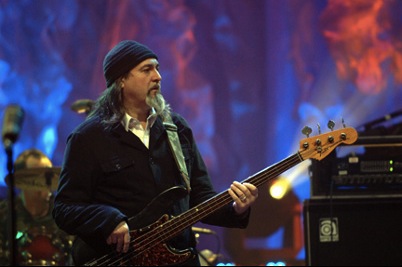
The producer of the soundtrack to Scratch was Bill Laswell, who was also a co-writer and producer of Herbie Hancock’s “Rockit”, one of the first hit singles to feature record scratching as an instrument. Though not as well known as he should be, Laswell continues to be among the most groundbreaking, versatile and prolific living musician/producers. His music draws inspiration from funk, hip-hop, rock, post-punk, jazz, world music, hardcore metal, electronica, ambient, dark ambient, film soundtracks and experimental genres. Artists he has produced or performed with include Afrika Bambaataa, Johnny Rotten, Iggy Pop, Mick Jagger, the Ramones, Yoko Ono, Motörhead, Swans, Whitney Houston, William S. Burroughs, Paul Bowles, Robert Quine, Fred Frith, John Zorn, Brian Eno, David Byrne, Fela Kuti, Ginger Baker, Henry Threadgill, Sonny Sharrock, Sting, Nine Inch Nails, Ozzy Osbourne, Tori Amos, Peter Gabriel, Laurie Anderson, Lee “Scratch” Perry, Medeski Martin & Wood, DJ Krush, the Orb, Mike Patton, Tetsu Inoue, Pete Namlook, and the Master Musicians of Jajouka. In 2006 he and a number of his favorite collaborators including Buckethead, Pharoah Sanders, Foday Musa Suso, Bootsy Collins, Toshinori Kondo, Hamid Drake, Zakir Hussein, Ustad Sultan Khan, DJ Disk, Karsh Kale, and Nils Petter Molvaer among others appeared on the PBS program Soundstage. They performed live sets from some of the various projects Laswell has been a central force behind over the years such as Praxis, Material, and Tabla Beat Science.