Saturday Matinee: Memorial Triple Feature

Today happens to be the day of two pivotal events in American history: the WACO massacre (1993) and the Oklahoma City bombing (1995). In both cases there’s much evidence pointing towards state terrorism and cover-up. Two of the best documentaries which build convincing cases in support of this are “WACO: Rules of Engagement” and “A Noble Lie: Oklahoma City 1995”, both presented here in their entirety.

Lastly, I have recently and belatedly heard the news that whistleblower, investigative journalist and author of “Crossing the Rubicon” Michael C. Ruppert is dead. He reportedly killed himself last Sunday shortly after his final broadcast. Given the nature of Ruppert’s research it would be natural to suspect foul play, but the story is supported by the following statement from a close friend:

Sunday night following Mike’s Lifeboat Hour radio show, he was found dead of a self-inflicted gunshot wound. This was not a “fake” suicide. It was very well planned by Mike who gave us few clues but elaborate instructions for how to proceed without him. His wishes were to be cremated, and as of this moment, there are no plans for a memorial service. However, I will be taking his show this coming Sunday night, April 20, and the entire show will be an In Memoriam show for Mike with opportunities for listeners to call in. It was my privilege to have known Mike for 14 years, to have worked with him, to have been mentored by him, and to have supported him in some of his darkest hours, including the more recent ones. I am posting this announcement with the blessing of his partner Jesse Re and his landlord, Jack Martin. Thank you Mike for all of the truth you courageously exposed and for the legacy of truth-telling you left us. Goodbye my friend. Your memory will live in hour hearts forever. I have no more details to share than I am posting here. We should have much more information by Sunday night.

Carolyn Baker

Many including myself discovered Ruppert’s work through his early independent 9/11 research on his From the Wilderness website. A few years ago his work on Peak Oil was brought to a larger audience through the critically acclaimed documentery “Collapse” (2009). Rest in peace, Mike Ruppert.

New Cover-up in Boston Bombing Saga—Blaming Moscow

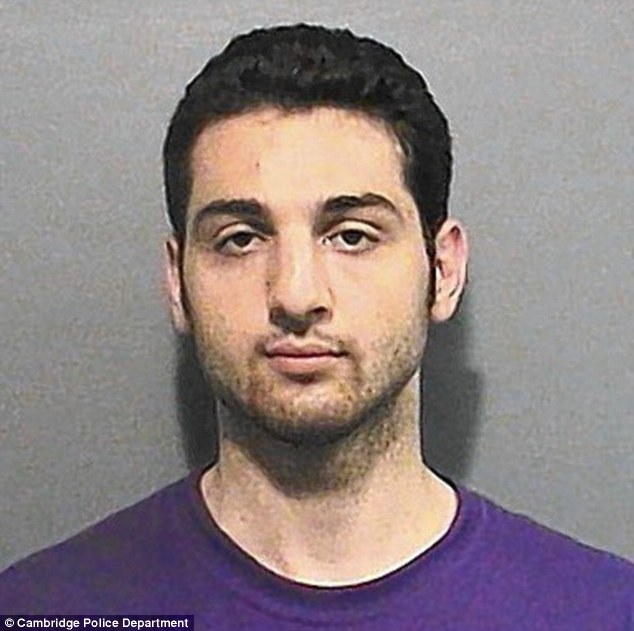
article-0-1CFA75C300000578-914_634x631

By Russ Baker

Source: WhoWhatWhy.com

Maybe you heard: the Russians are responsible for the Boston Marathon Bombing. At least indirectly.

That’s what the New York Times says. Had the Russians told the Americans everything they knew about Tamerlan Tsarnaev, the bombing might have been averted by the FBI. The Times knows this because it was told so by an anonymous “senior American official” who got an advance look at a report from the “intelligence community.”

***

Anyone who still entertains the fantasy that America is a vigorous, healthy democracy with an honest and reliable security apparatus and an honest, competent, vigilant media need only consider this major news leak just published as a New York Times exclusive. It pretty much sums up the fundamental corruption of our institutions, the lack of accountability, and the deep-dyed complicity of the “finest” brand in American journalism.

Killing Two Birds with One Stone

Just days before the first anniversary of the Boston bombing on April 15, some unnamed “senior American official” puts the blame for the bombing squarely on…Vladimir Putin.

It takes a keen understanding of certain members of the American media to know they will promote, without question, the latest “intelligence community” version of events. Which is that responsibility for the second largest “terror attack” after 9/11 should be pinned on the Russians, currently America’s bête noir over Ukraine.

Consider the cynical manipulation of public opinion involved here. The government permits, presumably authorizes, a high official—the Attorney General or someone of that status, perhaps even the Vice President—to leak confidential information for no apparent purpose beyond seeking to put a damper on legitimate inquiries into the behavior of the American government at the most fundamental level.

And the world’s vaunted “newspaper of record”—its brand largely based on insider access and the willingness of powerful figures to give it “hot stuff” in return for controlling public perceptions— shamelessly runs this leak with no attempt to question its timing or provenance.

Let’s look at what this article actually says. Here’s the opening paragraph:

The Russian government declined to provide the FBI with information about one of the Boston marathon bombing suspects two years before the attack that likely would have prompted more extensive scrutiny of the suspect, according to an inspector general’s review of how U.S. intelligence and law enforcement agencies could have thwarted the bombing.

And here’s the “takeaway”:

While the review largely exonerates the FBI, it does say that agents in the Boston area who investigated the Russian intelligence in 2011 could have conducted a few more interviews when they first examined the information.

The FBI agents also could have ordered turkey sandwiches instead of pastrami, which surely would have been a little healthier.

***

So, New York Times, should we trust the anonymous individual, or more importantly, the report that none of us have seen?

The report was produced by the inspector general of the Intelligence Community, which has responsibility for 17 separate agencies, and the inspectors general from the Department of Homeland Security and the Central Intelligence Agency.

Now, the Times doesn’t offer any useful context on why these reviews took place, beyond a pro forma effort to respond to complaints from a handful of congressional members (see this and this). The article does not address the quality or credibility of this “self-investigation” and the overall track record of these investigators. Nor does it express undue interest in why the report appears to have been finished just in time for the anniversary of the bombing.

In our view, the article is one hundred percent “stovepiping.” That’s when claimed raw intelligence is transmitted directly to an end user without any attempt at scrutiny or skepticism. This is irresponsible journalism, and it is the kind of behavior (from The New York Times again) that smoothed the way for the U.S. to launch the Iraq war in 2003.

The Times doesn’t even point out how self-serving the report is, coming from an “intelligence community” that has been publicly criticized for its actions leading up to the Boston Marathon bombing and its behavior since. (For more on the dozens of major reasons not to trust anything the authorities say about the Boston Bombing, see this, this, and this. For perspective on the media’s cooperation with the FBI in essentially falsifying the Bureau’s record throughout its history, see this).

Now let’s consider the core substance of the new revelations:

[A]fter an initial investigation by the F.B.I., the Russians declined several requests for additional information about Mr. Tsarnaev….

Did the Times ask the Russians about this? Did they find out if the Russians actually “declined” several requests, or whether they ever got back to the FBI?

The anonymous official notes one specific piece of evidence that the Russians did not share until after the bombing: that intercepted telephone conversations between Tamerlan Tsarnaev and his mother included discussions of Islamic jihad. The official speculates that this information might have given the FBI greater authority to conduct surveillance of the suspects.

However, the reality is that the Russians had already warned that Tamerlan was an Islamic radical, and it is not clear how this additional information would necessarily have provided anything truly substantive to add to a request for spying authority.

It’s also highly questionable, based in part on Edward Snowden’s revelations, whether the FBI or the NSA were actually adhering to such restrictions on spying anyway. Finally, it’s worth noting how truly remarkable it is that the Russians shared such intelligence at all. That they didn’t want to volunteer that they were capturing telephone calls is not that surprising, on the other hand.

Hiding the Real Story?

The Times does mention, almost in passing, what should have been the key point of an article: the timing of the “news” regarding the report:

It has not been made public, but members of Congress are scheduled to be briefed on it Thursday, and some of its findings are expected to be released before Tuesday, the first anniversary of the bombings.

This leak, which clears the FBI of all charges of incompetence or worse, comes just when the “American conversation” will again intensely focus on the nature of the “war on terror” and the trustworthiness of our vast secret state.

It also comes, most conveniently for the Bureau, at the precise moment when Dzhokhar Tsarnaev’s defense counsel has been seeking to learn the exact chronology and nature of the FBI’s interaction with the Tsarnaev family.

Months ago, we ran Peter Dale Scott’s rumination on whether the FBI could have recruited Tamerlan Tsarnaev as an informant, as it has done thousands of times before with other immigrants of a similar profile. Recently, the defense for Tamerlan’s younger brother, Dzhokhar, essentially claimed this was correct—that the Bureau at least attempted to recruit the older Tsarnaev. That has been cursorily reported by the major media, but no one seems to have connected the dots linking this claim to the new report that conveniently exonerates the FBI for failing to take action against the Tsarnaevs in time to stop the bombing.

A Curious Little Slip

As we have previously reported, it was the same duo of New York Times national security reporters, Schmidt and Schmitt, who had first, inadvertently it seems, raised a tremendously important question: when did the Tsarnaev family first come to the attention of the FBI?

The Russian warning to the US about Tamerlan Tsarnaev purportedly came in March 2011.

But according to an earlier article by Schmitt and Schmidt (along with a third reporter), the Bureau’s first contact with the Tsarnaevs came in January 2011. Though the Times did not make anything of this fact, it would be enormously consequential—because it would mean that the FBI was interacting with the Tsarnaevs two months before the Russians suggested the US take a close look at Tamerlan Tsarnaev.

If that was in error, the Times should have issued a correction. But it hasn’t. (Neither Schmidt nor Schmitt responded to WhoWhatWhy’s emails requesting comment.)

Interestingly, Schmidt and Schmitt, in subsequent articles, including the recent one, make no more mention of this early FBI contact. As it stands, the New York Times is on record of having asserted, again based on what sources told it, that the FBI was interacting with the Tsarnaevs before the Russians ever contacted it. If that early report was true, then by definition, the Inspector General’s report (and the leaked article about it) would be calculated parts of a cover-up about an FBI foul-up.

Conversely, if the early report was in error, then we need to know who provided it, or how they got that information wrong. Serious investigators know not to reject anomalies and “wrong” early reports as simply the result of haste or rumor without at least checking out the possibility that the early reports were right—but were later suppressed because they might cause problems to someone in power.

***

It is worth noting that the revelations in the new report—sure to be picked up by other media outlets that tend to repeat unquestioningly whatever the Times publishes—will be all the average American remembers about the FBI’s failure to prevent the Marathon bombing, and what may lie behind that failure.

Most members of the public will never know of the substantial indications that something is seriously wrong with what the government has put out about this affair. They will only recall that the FBI was somehow “cleared.” And they will probably remember that Putin’s Russia was somehow at fault.

In the final analysis, what we have just witnessed is the kind of arrant manipulation that shows the contempt of the “system” for the “people.” The “best” news organization gets another exclusive story. The US government gets to point its finger again at the Russian bogeyman. The FBI and the security apparatus get another free pass.

And the American people, once again, are fed pig slop and told to imagine sirloin.

Podcast Roundup

4/2: Guillermo Jimenez has a conversation with Danny Benavides at Traces of Reality to discuss the drug war, the surveillance state, and the increasing use of violence by the Border Patrol among other topics:

http://tracesofreality.com/wp-content/uploads/2014/04/Traces-of-Reality-Radio-2014.03.28-Danny-Benavides.mp3

4/2: At Red Ice Radio, host Henrik Palmgren interviews Mark Gray to discuss occult symbolism, synchronicity and geomancy in  connection to a number of current events. Mystical phenomenon or pattern recognition gone awry? You decide:

http://rediceradio.net/radio/2014/RIR-140402-markgray-hr1.mp3

4/3: Dave Lindorff of This Can’t Be Happening interviews Elena Teyer mother-in-law of Ibragim Todashev, the man executed by the FBI during their “investigation” of the Boston Bombing. They reveal many details about the case which were ignored by corporate news coverage:

http://media62.podbean.com/pb/ca9ac429bc5bf18a823cf98eb9a28f7a/533db613/data1/blogs18/661545/uploads/ThisCantBeHappening_040214.mp3

4/4: On the Meria Heller show, Meria and guest Catherine Austin Fitts deliver useful information on the banking system, investing on priorities and improving one’s lifestyle:

http://meria.net/ipod/040114.mp3

4/5: Computer security expert Conrad Jaeger joins host Greg Carlwood at The Higher Side Chats to talk about the deep web, cyber security and the surveillance state:

http://thehighersidechats.com/wp-content/uploads/2014/04/101-Deep-Web.mp3

Handy chart for conspiracy theorists (with new Boston Bombing updates)

251543_10151388666682589_92757733_n

By Russ Baker

Originally posted at WhoWhatWhy

Lazy and imitative journalists and academics like to bandy around the term “conspiracy theory.” It is a one-size-fits-all putdown. But those who are unafraid of the real world know that conspiracies happen, and not only on House of Cards.

Conspiracies are prosecuted every day in courthouses throughout the land. As for outfits like the FBI and the CIA, journalism’s job is to continuously forget all the abuses and outright illegalities perpetrated over the years by these institutions, and to treat their claims with respect and trust.

The use of “conspiracy theory” is highly selective. When powerless people say that the CIA is doing something like illegally entering others’ computers, they are conspiracy theorists. But when Senator Dianne Feinstein, chair of the Senate Intelligence Committee, says it, she’s…well, a senator condemning an illegal act by the Central Intelligence Agency.

***

Sometime back, we ran a piece here in response to an op-ed in the New York Times that poked fun at those of us who don’t trust everything the authorities say about the Boston Marathon bombing. (We’ve had a few more things to say on that subject, such as this and this.)

Now, we’re pleased to present a little graphic that our friends at SwayWhat put together to illustrate a point: 63 percent of Americans believe at least one thing that someone else has labeled a “conspiracy theory.” The question always is, who’s doing the labeling? Anything involving more than one person committing a crime and conspiring in secret to do it is a conspiracy. Therefore, anyone who posits that 19 hijackers were behind the 9/11 attack is in fact a “conspiracy theorist.”

Of course, what exercises The New York Times most is when ordinary citizens smell a conspiracy in some kind of governmental cover-up which the mainstream media has failed to explore. Despite evidence of previous U.S. government involvement in conspiracies and cover-ups galore (from Watergate to Iran-Contra), the mainstream media is predictably shocked when someone suggests it might be happening again.

Enjoy.

Screen shot 2014-03-16 at 1.52.16 PM

Editor’s note: Check out Russ Baker’s site for an excellent two part expose on newly uncovered anomalies surrounding the Boston Bombing cover up:

Boston Bomber Carjacking Unravels. Part 1 of 2

Something Dead Wrong Here: Investigating the Mysterious and Central Character, “Danny.” Part 2 of 2

What Happened to Flight 370? An Analysis of What Is Known

missing_maylasia_airlines_jet_map

By Charles Hugh Smith

Originally posted at OfTwoMinds.com

If we put these together, we can establish a number of logical parameters around each plausible scenario, where plausible scenario means a situation based on previous losses of commercial aircraft.

Like many other people, I am following the story of what happened to Malaysia Airlines Flight 370 with keen interest. Much of what we’ve been told doesn’t add up, deepening the mystery.

It seems to me that we can already draw a number of conclusions from the known data by pursuing a logic-based analysis of what is possible and what can be excluded as illogical.

Let’s start with what is known:

1. The Malaysian authorities have been evasive to the point of misdirection, in other words, they’ve hidden the facts to serve an undisclosed agenda.

What is the agenda driving their evasion? What is known is that Malaysian security is obviously lax. This fact has caused Malaysian authorities to lose face, i.e. be humiliated on the global stage. Malaysia is an Asian nation, and maintaining face in Asia is of critical importance. We can conclude that one reason the Malaysian authorities are dissembling is to hide their gross incompetence.

It is also suspected that Malaysia is a safe haven for potentially dangerous Islamic groups. (Follow the threads from Pakistan’s secret nuclear proliferation program to Malaysia for documentation of this possibility.) The Malaysian government may have an informal quid pro quo along these lines: you are welcome to set up shop as long as you don’t cause any trouble here or do anything to cause Malaysia to lose face.

This provides another logical source of Malaysian evasion: if there is indeed a terrorist connection to the loss of the aircraft, this would focus the global spotlight on Malaysian tolerance of potentially dangerous groups.

That the Malaysian military was unable to effectively monitor the aircraft or coordinate with civilian air traffic control (ATC) also suggests incompetence at the most sensitive levels. Revealing this would also cause a loss of face.

Summary: Malaysian authorities have not been truthful or timely in their reporting. The logical conclusion is that they’re hiding data to protect national pride and the true state of their abysmal security.

2. Additional information is available but is not being shared with the public. To take one example, the Aircraft Communications Addressing and Reporting System (ACARS) on Flight 370 was functioning and automatically sent data on four critical systems, including the engines. This data has not been released by Malaysian Airlines.

It also appears that the pilot of another 777 airliner heading to Japan contacted the pilot in Flight 370 and reported the transmission was garbled.

Even with the transponder off, the aircraft would appear on primary (military) radar. The Malaysian military tracked Flight 370 but is dissembling. Clearly the authorities are not revealing the full extent of what is known.

3. Satellite imagery did not detect a high-altitude explosion. This excludes all scenarios in which the aircraft crashes into another plane, explodes in mid-air, etc.

4. Flight 370 changed course and altitude, and then maintained the new bearing for hundreds of miles and an additional hour of flight after losing contact with ATC (air traffic control). This limits scenarios in which decompression causes everyone on board to lose consciousness or a catastrophic electrical fire incapacitating the flight deck to an emergency that enabled the pilots to set a new course before losing consciousness or control of the aircraft.

5. The Malaysian military reported Flight 370’s altitude as 29,500 feet. This conflicts with eyewitness accounts from fishermen reporting a large aircraft at a much lower altitude around 1,000 meters (3,000 feet). If the radar altitude is correct, this suggests the aircraft was not experiencing decompression, as the pilots would descend as an emergency response to decompression. If the fishermen’s report is accurate, then decompression would not be an issue.

6. Mobile phone data suggests the passengers’ phones were still functioning after the aircraft lost contact with air traffic control (ATC) and the transponder was turned off/failed.

7. Releasing data from the U.S. intelligence space-based network would reveal U.S. capabilities. The Strait of Malacca is a key shipping lanes chokepoint, and is thus of strategic interest to the U.S. and other nations with space-based assets. U.S. authorities have already revealed that U.S. coverage of the area is “thorough.”

This confirms that U.S. communications monitoring and space-based assets cover the seas around the Strait of Malacca. Given what is known about these monitoring and space-based assets, it is likely that the U.S. intelligence agencies have additional data but are not revealing them, as this would provide direct evidence of U.S. capabilities.

We can surmise that the U.S. maintains thermal imaging capabilities that can detect more than large explosions. We can also surmise that the communications monitoring networks picked up any signals from the aircraft or related to the aircraft.

That the head of the C.I.A. publicly professed ignorance is interesting. What course of action would one pursue if one wanted to keep U.S. capabilities secret? Publicly proclaim ignorance.

This is not to suggest that the U.S. “knows where flight 370 is;” it is simply to note that this is not “open ocean” comparable to the mid-Atlantic where Air France Flight 447 went down five years ago. This is a strategic chokepoint of great interest to the U.S., and therefore it is likely that U.S. networks and space-based assets collected data that would either exclude certain possibilities or make other possibilities more likely.

What can we logically conclude from the most reliable and trustworthy data available?

1. The pilots were conscious when they turned off the transponder (or the transponder failed) around 1:30 a.m. and when they changed course soon after. The aircraft was under the control of the pilots long enough for them to set a new course.

2. The aircraft flew an additional hour or more on the new westward course at cruising altitude.

3. No distress signal was sent during this 1+ hour flight after whatever event caused the the pilots to change course.

If we put these together, we can establish a number of logical parameters around each plausible scenario, where plausible scenario means a situation based on previous losses of commercial aircraft.

1. Pilot suicide. If the pilot had decided to commit suicide by crashing the plane, why not ditch the aircraft in the South China Sea? Why change course and fly for another hour?

Alternatively, the Malaysian military’s reports are completely false and they were tracking an unknown aircraft near Pulau Perak at 2:15 a.m. (previously reported as 2:40 a.m.)

How many unindentified large aircraft are flying around Pulau Perak at 2:15 a.m. on a typical night? The possibility that the radar signal was not Flight 370 seems remote.

2. Mechanical failure that caused decompression or an electrical fire that incapacitated the flight deck. If such an emergency occurred, it enabled the pilots to change course and altitude.

Assuming a decompression event, we could expect the pilots to descend rapidly. If Flight 370 was indeed at 29,500 feet at 2:15 a.m., that suggests the aircraft was still capable of flight at cruising altitude. So either the pilots were still flying the aircraft or the decompression event enabled them to change course and set the autopilot before losing consciousness.

If the aircraft was being flown by autopilot, it could have flown for many more hours, given its fuel load, which raises the question: if the pilots were unconscious at 2:15 a.m., why did the aircraft suddenly crash 10 minutes later?

If an emergency had crippled the aircraft’s electrical system, it’s unlikely the plane could have continued flying at cruising altitude for an additional hour. If a catastrophic electrical fire crippled the flight deck, how could the plane continue flying at cruising altitude for another hour, given that the battery backup would last at best 30 minutes?

In other words, the additional hour of flight time on a new course does not logically align with an emergency decompression or fire that led to the flight deck and pilots being incapacitated. A decompression event would have led to either A. a rapid controlled descent or B. the pilots unconscious/unable to take control and the autopilot flying the aircraft on the new course for many hours.

Alternatively, a catastrophic electrical fire would have either brought the aircraft down within minutes of the event or at best provided 30 minutes on emergency battery power. Neither jives with an additional hour of flight at cruising altitude.

This leads to the conclusion that the aircraft was still being flown by the pilots, i.e. conscious decisions were being made by either the pilots or someone who had seized control of the flight deck.

If a mechanical emergency had crippled the aircraft, it seems unlikely that the pilots could change course and altitude but not be able to send a distress signal. If the pilots had lost consciousness but the rest of the plane’s systems were nominal, the autopilot would have continued flying the aircraft until the fuel ran out, many hours beyond 2:15 a.m.

That suggests there was conscious control of the aircraft and that those in charge made a decision sometime after 2:15 a.m. that led to the loss of the aircraft. This scenario strongly suggests human action or error as the operative emergency rather than mechanical failure.

Either that, or some key data that has been released as fact is actually false.

Late breaking news: if the satellite images released by China (taken one day after Flight 370 went missing) are in fact photos of wreckage, then the Malaysian military was obviously not tracking Flight 370 to the west an hour later.

The blurry photo does not reveal much, but several features are noteworthy:

1. The three pieces are very large, which means they must be intact sections of the wings or fuselage. It is unlikely these would still be floating hours after a crash. We might also wonder, what sort of impact would create three large pieces rather than a debris field?

2. The three pieces are close together. Unless the aircraft landed intact in the water and sank in one piece, there would likely be a field of much smaller floating debris.

3. What else could this be? The large size of the pieces is certainly consistent with the scale of a 777.

4. Why did China withhold the imagery for three days? Did their own search ships reach the coordinates identified by the satellite?

5. The ocean currents and the location of the presumed debris do not compute. Ocean currents in the area are 2 kilometers/hour. Presumed debris is 141 miles from last known position This doesn’t compute: the satellite image was taken 11 am Sunday 33 hours after MH370 presumably crashed; debris would only drift 33 hr X 2 KM=66 KM or about 40 miles from the last known position of HM370. Debris was 140 miles to the east–100 miles beyond what’s possible in terms of debris drifting with currents from the presumed crash site.

In summary, these images open additional questions. There is no substitute for actually finding the aircraft or debris.

MH370: Satellite images show possible crash debris in South China sea

Malaysian military now reveals it tracked MH370 to the Malacca strait

Radar Blips Baffle Officials in Malaysian Jet Inquiry

The Mystery of Malaysia Airlines Flight 370

Malaysian plane sent out engine data before vanishing

Update 3/14: Confirmed automatic maintenance data uploads transferred from the missing plane to a database of engine maker Rolls Royce indicate flight 370 may have continued flying for at least four hours after the tower lost contact with it. This has led some researchers to speculate on possible destinations such as military bases like the ones on Coco Island or Diego Garcia. As for the motive, one possibility was recently posted at 4key.net.

Update 3/17: A plausable scenario posted at Washington’s Blog.

Update 3/19: More info about the Freescale Semiconductor connection: http://www.express.co.uk/news/world/465557/Malaysian-plane-20-on-board-worked-for-ELECTRONIC-WARFARE-and-radar-defence-company

Update 3/22: More clues pointing towards Diego Garcia: http://salonesoterica.wordpress.com/2014/03/22/malaysia-air-flight-370-is-no-doubt-at-diego-garcia-why-would-they-do-this/

Update 3/29: Important questions about MH 370 that need to be answered: http://www.globalresearch.ca/disappearance-of-malaysian-airlines-flight-mh-370-the-trillion-question-to-the-u-s-and-its-intelligence-services/5375780

News Video Roundup

3/3: PressTV interviews Dan Dicks of Press for Truth on the erosion of freedom of the press in the U.S.

3/3: Gerald Celente speaks out on the rash of recent banker suicides and speculation on a connection to a coming global economic collapse at NextNewsNetwork.

3/4: At Global Research TV, geopolitical analysts from across the board explain how the Ukrainian coup has been deliberately provoked by outside agents to promote a combination of US, EU, NATO and IMF interests, and the possible implications.

3/4: Excellent episode of Breaking the Set in which Abby Martin covers the Ukraine conflict and Washington DC’s shadow lobbyists.

3/5: An inspiring story from WeAreChange.org about libertarian crossfit gym owner Danny Lopez-Calleja who overcame drug abuse and homelessness to become a catalyst for change.

3/6: Over 80 people were shot during riots in Kiev a few weeks ago. Now new evidence is coming out that opposition snipers were behind shootings of police and protesters on both sides:

On the lighter side, the Onion reports on disturbing findings from a new marijuana study. It’s even funnier (or more disturbing) watching it stoned.

Did the CIA Kill Hugo Chavez?

Chavez

Today marks the first anniversary of the death of Venezuelan President Hugo Chavez. As Washington DC and U.S. corporate media do everything in their power to shift popular support towards the conservative opposition, now is a good time to remember what Chavez and his party stood for, why the U.S. hated him so much, why his people loved him, and how and why the CIA may have assassinated him. These and other topics are discussed in the interview transcript below with author and historian William Blum by John Robles first published by Stop NATO. For more details about likely CIA involvement in the death of Hugo Chavez, read http://www.madcowprod.com/2013/03/08/who-killed-hugo-chavez/.

The CIA has Attempted to Assassinate 50 Foreign Leaders Including Chavez

The late Venezuelan President Hugo Chavez was warned by Fidel Castro to be careful of a very specific attack, namely a quick jab from an infected needle. Such a warning coming from a leader who has reportedly been the target of CIA assassination plots more than 600 times in over 50 years, was sure to be heeded.

Was the illness of Hugo Chavez a completely deniable assassination by the CIA? William Blum spoke with the VOR’s John Robles and discussed this issue and more.

Robles: I’ve read your Anti-Empire report regarding Hugo Chavez. Can you give us your comments on speculation that he was assassinated by the CIA?

Blum: I cannot prove it of course, but I believe he was. It would be totally in keeping with the entire history of the CIA and its attitude towards people like Hugo Chavez.

The CIA has attempted to assassinate more than 50 foreign leaders and successfully at least half the time. And very few of them were as despised by the US government as Chavez was, I would say. So, there would be no reason at all to expect that the CIA would not at least plan on killing, and the nature of his ailment is very odd.

He went from a cancer, which would not go away despite several sessions of chemotherapy and what have you. Then it went to serious lung infections, which would not go away no matter what they did. And then it went to, suddenly, a massive heart attack. All in the same man with no apparent cause, he was only 58-years-old, and as far as we know he was a very healthy until this happened, it is all very odd.

And given the great motivation that the US Government and the persons in the CIA has put for killing a man like Hugo Chavez, I’m pretty sure that the CIA played a role in this.

Robles: Do you know or have you heard of any credible new technology or new programs that could deliver such a cancer?

Blum: The means would be a needle with a quick, sharp jab and what you need is getting one person close enough to Chavez to do that.

Chavez was always in the public eye, he was always embracing people. There must have been countless occasions in the past few years when he was vulnerable to a quick jab by a needle that would be the method of transmitting the ailments.

Robles: Did he ever complain that he had been poked by something in public? Were there any reports of anything like that happening that you had heard about?

Blum: He did mention that Fidel Castro warned him about just that. He said: “A quick jab with a needle, and they’ll do…I don’t know what!” Actually he was told by Fidel.

Robles: A quick jab with a needle. Do you think that happened with Fidel because he had become very ill?

Blum: Well, Fidel…According to Cuban intelligence, there were more than 600 attempts on the life of Fidel Castro by the CIA. There is an entire book on that subject by Cuban intelligence.

And many of the methods were pretty bizarre, including an exploding cigar, but over the course of 50 years the Cubans claim there were more than 600 attempts on his life and it may have taken just one with Chavez.

Robles: Have you heard anything from your sources or from where you get some of your information? Have you heard anything detailing any connection between these two US Air Force attaches that were expelled from the country and the death of Hugo Chavez?

Blum: No. I would assume that there is a connection but I don’t know if the Venezuelan government has actually said so.

Getting back to Chavez’s case, we have to keep in mind that four other South American leaders, prominent people on the left, all came down with cancer within the past year or two.

Robles: I think it was seven, wasn’t it, altogether?

Blum: The four that I named in my report…You can add the ones that you know just for my information… were Cristina Fernandez…

Robles: De Kirchner, right…

Blum: of Argentina, Dilma Rousseff of Brazil, Fernando Lugo of Paraguay, the former Brazilian head of state Lula da Silva. Who would you add into that list?

Robles: Well, and then of course Hugo Chavez himself…

Blum: Castro is one of them…

Robles: I would add Castro to the list and Kirchner’s husband who died of a mysterious heart attack as well.

Blum: Right.

Robles: We might add that as a mysterious illness, not exactly a cancer but…

Blum: Right! If the CIA was involved it doesn’t have to be cancer necessarily of course.

Robles: Oh, sure, it could be anything. Have you heard anything about cancer strains or any kind of killing weapons like this, any kind of biological weapons that would give maybe cancer-like symptoms, not exactly a certain type of cancer?

Blum: I very well may have read of such over the years. I have read so much about the CIA, but at the moment I can’t think of anything to supply you with that information. Although we do know, it is well known, that for decades the CIA was looking for a method of killing somebody which would not leave a trace. The CIA itself has used those words. For the entire period of the Cold War that was a major stated project of the CIA. But where that stands today, I have no idea.

Robles: Yes, of course that is all very secret and no one is going to talk about it, but perhaps there are some echoes or some whispers? Maybe somebody has come out and said something? What other reasons would you give to back up the argument that he was assassinated?

Blum: I will mention there is no one in the entire universe who was more hated, no leader more hated than Chavez was by the US government. In the eyes of the US power that be, Chavez was worse than Fidel Castro and Salvador Allende.

Robles: Why was he so hated?

Blum: Because he was the most outspoken leader in the world when it came to criticizing US foreign policy. He never pulled his punches for a moment, he made a claim that it was all crimes against humanity and the US leaders were war criminals, and he said so explicitly. It is unusual for a head of state to be talking that way. And at the UN he attacked Bush in front of the whole world.

Robles: Oh yes, I remember he said that the Devil had been there the day before or something, and it still smelled like sulfur.

Blum: Yes, Bush had spoken to the UN before Chavez from the same platform. And Chavez said there was a smell of sulfur in the air because of that.

Robles: That’s usually the domain of the United States, I mean… Isn’t it? I mean Bush was calling everybody the axis of evil, and all this stuff, branding everyone evil. Wasn’t that kind of a shock to see the same thing done to an American leader?

Blum: Yeah, it is a shock for anyone under any circumstances to be so outspoken in the criticism of the US foreign policy. It is a point in Chavez’s favor that he could have the honesty and the courage to say such things, which very much needed to be said.

Robles: So, you supported the way he stood up?

Blum: Well, in general yes. I think there certainly were times when he may have overdone it, even for me. I mean, he felt obliged to comment on everything under the sun, and I thought several times that he could have held off on saying certain things, they were not serving any good purpose. But that’s a minor criticism of his overall marvelous record.

Robles: You say he had a marvelous record. What do you think were his major achievements in your opinion?

Blum: What he’s brought to the poor people of Venezuela in the way of education and healthcare, and housing, and what have you. And what he brought to the rest of the South America, he formed various anti-US empire blocs which stood in the way of expansion of the US influence.

He and others formed a new…A counter to the OAS, the Organization of American States, which for decades has been dominated and corrupted by the US and Canada. And they formed a new organization in South America excluding the US and Canada. So it was that simple.

Robles: Do you think his achievements will continue or do you think the US will be successful in rolling back everything he did? Which of course I assume they would want to.

Blum: Yes, they would want to. But if Maduro who was chosen and backed by Chavez, wins, and he is expected to win in the election next month, then most of it will continue, I assume.

Stop NATO e-mail list home page with archives and search engine:
http://groups. yahoo.com/ group/stopnato/ messages

Stop NATO website and articles:
http://rickrozoff. wordpress. com

Overthrowing other people’s governments: The Master List

Corporate-domination

By William Blum

Originally posted at RINF.com

Instances of the United States overthrowing, or attempting to overthrow, a foreign government since the Second World War. (* indicates successful ouster of a government)

  • China 1949 to early 1960s
  • Albania 1949-53
  • East Germany 1950s
  • Iran 1953 *
  • Guatemala 1954 *
  • Costa Rica mid-1950s
  • Syria 1956-7
  • Egypt 1957
  • Indonesia 1957-8
  • British Guiana 1953-64 *
  • Iraq 1963 *
  • North Vietnam 1945-73
  • Cambodia 1955-70 *
  • Laos 1958 *, 1959 *, 1960 *
  • Ecuador 1960-63 *
  • Congo 1960 *
  • France 1965
  • Brazil 1962-64 *
  • Dominican Republic 1963 *
  • Cuba 1959 to present
  • Bolivia 1964 *
  • Indonesia 1965 *
  • Ghana 1966 *
  • Chile 1964-73 *
  • Greece 1967 *
  • Costa Rica 1970-71
  • Bolivia 1971 *
  • Australia 1973-75 *
  • Angola 1975, 1980s
  • Zaire 1975
  • Portugal 1974-76 *
  • Jamaica 1976-80 *
  • Seychelles 1979-81
  • Chad 1981-82 *
  • Grenada 1983 *
  • South Yemen 1982-84
  • Suriname 1982-84
  • Fiji 1987 *
  • Libya 1980s
  • Nicaragua 1981-90 *
  • Panama 1989 *
  • Bulgaria 1990 *
  • Albania 1991 *
  • Iraq 1991
  • Afghanistan 1980s *
  • Somalia 1993
  • Yugoslavia 1999-2000 *
  • Ecuador 2000 *
  • Afghanistan 2001 *
  • Venezuela 2002 *
  • Iraq 2003 *
  • Haiti 2004 *
  • Somalia 2007 to present
  • Libya 2011*
  • Syria 2012

Q: Why will there never be a coup d’état in Washington?

A: Because there’s no American embassy there.

William Blum is an author, historian, and renowned critic of U.S. foreign policy. He is the author of Killing Hope: U.S. Military and CIA Interventions Since World War II and Rogue State: A Guide to the World’s Only Superpower, among others. Visit his blog.