Saturday Matinee: Fantastic Planet

Surrealism and political critique in the animated medium: Fantastic Planet (1973)

By Dan Stalcup

Source: The Goods Firm Reviews

Coming from the “Panic Movement” surrealist art collective is one of the most bizarre animated films of all time: Fantastic Planet, a French-Czech production by director/co-writer René Laloux and co-writer/production designer Roland Topor.

With its title, Fantastic Planet sounds like it should be a cheesy sci-fi flick, and in some ways, it is. (The French title, La Planète sauvage, is much more pleasing.) But this is something much more insular and experimental than most genre films of the era. Thanks to its distinctive pencil-sketched, cutout animation technique (also seen in Monty Python interludes), the film has the look of a history or biology book come to life. The grotesqueries depicted have a diagrammatic, almost clinical look to them, making every alien and bit of worldbuilding feel all the more strange.

Fantastic Planet chronicles a far future when humans have been transplanted to the distant planet Ygam by giant blue aliens with red bug eyes called Draags (or, in some translations, Traags). There, humans serve the role of something resembling a rodent or small dog: occasionally domesticated by Draags, occasionally living in wild colonies as feral creatures. The humans on Ygam are called “Oms” by the Draags. They’re mostly viewed as harmless by the aliens, but often casually exploited and exterminated when convenient.

The story follows Terr, an orphaned human/Om, who is adopted by a Draag, but escapes before organizing an resistance to the giant aliens. Terr’s life has a vaguely mythological arc to it, further enhancing the sense the we’re witnessing some passed-down story. The entire telling is detached and emotionless — when Terr’s mother or compatriots die, there is no mourning or reaction, just a progression to the next item of the story. It’s disquieting.

What really makes Fantastic Planet so bizarre and unforgettable is the depiction of the alien life and planet: flora and fauna that look like something out of a fever dream or acid trip. The ground shifts into squirming intestines; a hookah bar causes the inhabitants to meld into a blur; twirling headless statues perform a mating ritual. It’s baroque and occasionally whimsical; half Dr. Seuss, half Salvador Dali.

Despite the strangeness of the imagery, the film avoids slipping into an all-out dissociated psychedelic trip thanks to its linear and straightforward narrative. This, paradoxically, makes everything feel even more alien: The story takes logical, coherent leaps, but the images and details within are so nonchalantly unearthly. It’s a dizzying juxtaposition.

The story is clearly allegorical: Animal rights is an obvious interpretation given the way that humans are chattelized. It’s not hard to squint and see anti-racism or anti-imperialism in its parable, either — any scenario where the majority or oppressors are negligent, systemic participators rather than active aggressors would fit.

There’s also a lot of coming of age imagery in the film, blown out into absurdism. The semi-comprehending way the humans perceive the Draag world is not too detached from the way kids see the adult world: full of obtuse rituals and norms. Plenty of the designs are charged with phallic and sexual imagery (not to mention casual nudity), but it’s secondary to the overall sweep of the visual invention of the film.

In the half century since its release, Fantastic Planet has become a cult legend, even inducted into the Criterion Collection — one of only a few animated films with the honor. According to Letterboxd, it’s among the most popular films of 1973. I can’t say I blame cinephiles out there. Even at 72 minutes, Fantastic Planet is a bit exhausting, but it’s such a unique and evocative experience that it is essential viewing. At least for weirdos like me.

The First Day Continued

When Danielle and Florence first visited me in the Neuro ICU, it felt like the first time I saw them since before the crash. On further reflection I recalled the hazy dream-like hospital room that was actually the Trauma ICU. My memories of it even at that time seemed faded and fragmented whether because of the heavy medication or a side-effect of physical and/or mental trauma.

Regardless, how could I not realize I was quadriplegic through that period which was at least a week? I tried hard to recall what people actually said to me but could only remember portions of my mother explaining how my family scrambled to get to Seattle and my brother Daryl explaining something about a computer.

Part of the missing information could be attributed to impaired hearing, since I noticed sounds coming through my left ear had a slightly distant or muffled quality. But I think the main factor was my fragile mental state compounded by heavy medication causing faulty memory. It could also be that “selective forgetting” was a way to protect myself from uncomfortable information my mind was incapable of accepting.

One example was at some point that day I felt the urge to urinate and thought I’d need to call the nurse for a bedpan. This alarmed my visitors because they witnessed the same scenario at the trauma ICU not long before. They explained for a second time that I had been catheterized shortly after being admitted to Harborview.

Perhaps suspecting there’s other important details I hadn’t retained, Danielle provided a detailed description of my injury. Though I had deduced what what was going on with my body, it didn’t hit home until she described it as the same injury suffered by Christopher Reeve. She then asked if I knew how I was injured and after I gestured “no” she recounted what she knew about the crash from police and first responder reports. Even though I had no prior memory of such details, it didn’t come as a complete surprise since a bike crash was always the most likely explanation. She described surgery scars along my neck and spine that resembled tattoos and puncture wounds on my head from having it bolted down to keep it from moving. I couldn’t feel them at the time but did later on.

Also new to me (though likely recounted before) was the timeline of my stay at Harborview. To me it felt like it could have been anywhere between a few days and a month. In actuality it had been about two weeks. Even more surprising was learning I had flatlined for a few seconds on at least two occasions. Danielle became teary-eyed as if reliving those moments and seemed almost as re-traumatized recounting repeated unsuccessful attempts to get information from my employer’s impenetrable HR department.

Although I retained a partial memory of it, my mother described how she, my father and older brother arrived at the hospital just two days after my crash. My dad and brother had to go back home after about a week but my mom planned to stay for three months. I was appreciative for their visit because my parents had been reluctant to travel by plane since the start of Covid in 2020.

Throughout the day we were frequently interrupted by nurses taking vitals and refilling the IV with saline, liquid food and medications, staff members changing my bed position and cleaning the room, and phlebotomists drawing blood samples. An odd side-effect of my lowered metabolism (or slowed-down state of mind) was that everyone’s movements seemed “sped-up”. The entire day seemed to go by rapidly as well and before long it was evening.

Saturday Matinee: The History of the World Backwards

Source: Wikipedia

The History of the World Backwards is a comedy sketch show written and starring Rob Newman. It is a mock history programme set in an alternative world where time flows forwards whilst history told backwards. In other words, if you were born in 2007, you would be 60 years old in 1947. All the major historical events happen backwards, so for example, Nelson Mandela enters jail a Spice Girls fan, and comes out as a terrorist intent in overthrowing the state. There are several recurring themes, such as the “Technology collapse”, where scientific discoveries are lost, forgotten or made unworkable.

It was shown on BBC Four, starting on 30 October 2007, and later shown on BBC Two. It was Newman’s first television project in 14 years.

First Post-Crash Day Fully Conscious

The first group I encountered on my first day of full consciousness post-crash was a team of various medical professionals. A nurse recorded my vital signs while a doctor assessed my cognitive health through a series of questions which I answered by nodding or shaking my head.

A couple of people from the surgical team focused on the extent of my spinal cord injuries, asking if I was able to feel or move various parts of my arms and legs. I was able to feel everywhere, though in a tingly and imprecise way, similar to how one’s arms or legs feel “asleep” from lack of circulation. I could definitely feel a sense of touch, but it seemed to emanate not from the surface of the skin but from a layer beneath. As expected, I couldn’t move anywhere below the shoulders while areas touched on my arms were felt on corresponding areas of phantom limbs above my chest.

Lastly, a specialist investigated my emotional state through another round of questions including if I felt depressed or had suicidal thoughts. This line of questioning seemed absurd at the time for how self-apparent the answers should be. It’s inconceivable that anyone newly quadriplegic would not be depressed. Likewise, any sane person who loses movement of all limbs as well as loss or impairment of numerous internal bodily functions would be lying if they denied having suicidal ideation even fleetingly.

That being said, I nodded in agreement about being depressed but shook my head to signal “no” to the question about suicide. I didn’t want or need suicide counseling and even if I were seriously suicidal, what could I do about it? But my main motive for lying was the possibility that my family would find out. I imagined how they may have experienced trauma from witnessing the trauma I went through, and how much they’d want me to survive. It would hurt them to know they wanted me alive more than I did at the time. There are moments when I still have such thoughts, particularly when my wife and I experience economic setbacks related to my injury, but the emotional impact suicide would have on loved ones is enough to keep the thoughts ephemeral and in the realm of speculation.

As if conjured by thoughts and memories, my wife Danielle and mother Florence arrived soon after, looking just as worried as I expected.

Saturday Matinee: Homecoming

By Michael Gingold

Source: Fangoria


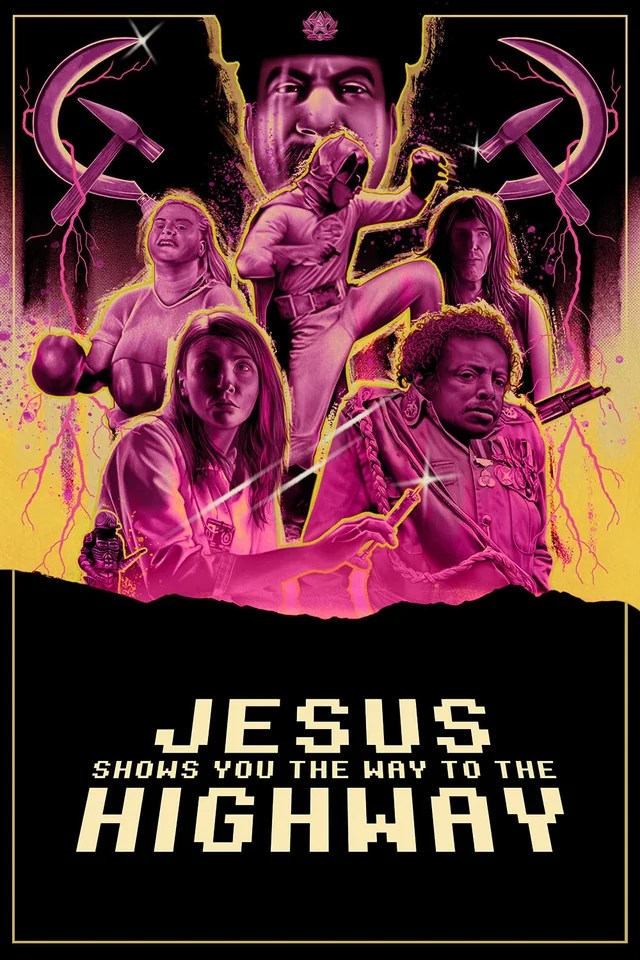
Part of the appeal of Masters of Horror has been the chance to see things on this Showtime series that you won’t see anywhere else on television. So far, that has mostly meant explicit gore, nudity and sexuality, which is all fine and well. But Joe Dante’s Homecoming, premiering December 2, treats us to sights that are not only unique in the TV horror genre, but have been off-limits anywhere else on the tube as well. Like, f’rinstance, rows of flag-draped coffins bearing the bodies of dead soldiers killed in a Mideast war.

Yes, Dante is back in horror-satire mode, and this time he and screenwriter Sam Hamm (adapting the short story “Death and Suffrage” by Dale Bailey) are directly taking on a target that the rest of TV-drama-land and mainstream Hollywood has heretofore largely danced around. The result is as pointed, clever and blackly amusing as anything the genre has seen in ages, a perfect example of horror’s ability to address subjects too touchy to deal with in other genres. It also takes the political subtext of George A. Romero’s Dead series and puts it right up in the forefront, without becoming preachy with its message. Dante and Hamm manage the tricky balancing act of shining a harsh light on current events without losing sight of the fact that they’re telling a horror story first and foremost.

Hamm’s script takes place in the near future, specifically 2008, when a certain Republican president is running for re-election and a war he duped the nation into fighting still rages on. The central characters are campaign consultant David Murch (Jon Tenney) and right-wing author Jane Cleaver (Thea Gill), who has written a popular book attacking the “radical left”—any resemblance to Ann Coulter is, uh, purely coincidental. After meeting on a dead-on parody of an issues-oriented talk show (Terry David Mulligan is perfect as the host), the two find themselves politically and romantically attracted—but their world is shaken up when the dead begin returning to life. Not all the deceased, mind you, just those who were killed in that particular overseas combat, and they’ve got a particular—pardon the pun—ax to grind. It’s an extrapolation of the Vietnam-era ghoul film Deathdream to the nth degree—the image of the first revived corpse pushing its way out from under the Stars and Stripes that cover its casket is the most pointed and arresting image the genre has recently offered.

No more should be said about the plot particulars of Homecoming, which is packed with wonderful details and images; given a document to read, a zombie missing an eye puts on a pair of glasses with a shot-out lens. The way in which Dante and Hamm keep the story twists coming, never losing steam or running in place thematically or dramatically, is kind of breathtaking; every scene has a revelation or line of dialogue that adds new dimension to either the story or the satire. The actors (also including Dante regular Robert Picardo as a political advisor with a secret of his own) adopt just the right tone of straight-faced earnestness, selling every line and never winking at the camera. The behind-the-scenes craftspeople do a good job of substituting Vancouver locations for the D.C. area (this is also the most expansive-looking Masters yet), and Greg Nicotero and Howard Berger contribute undead makeups that get the points across (like that eyeless ghoul) without being showy.

As the film goes on and we learn more about the characters (particularly Murch), Homecoming’s antiwar message gains new levels of resonance, and it comes to a stirring and completely apt conclusion that perfectly ties up the assorted story threads. And even though horror fans are the species of television viewer least likely to be conservative, you don’t get a sense of preaching to the converted here; the writing and filmmaking are so sharp, even some red-staters might respond to the material. For the second year in a row, a satirical zombie project stacks up as the year’s best horror production; here’s hoping someone in Hollywood notices, and gives Dante a shot at a feature that will show off the skills that, on this evidence, are only becoming sharper with time.

Assessing the Damage

In hindsight, what obsessed my thoughts upon regaining full consciousness at the neuro ICU was described by Elisabeth Kübler-Ross’ five stages of grief: Denial, Anger, Bargaining, Depression, Acceptance. I certainly experienced all of them, though in varying order and levels of intensity and repetition, for my mind kept looping back to different stages and emotions.

Denial was one of the earliest stages, which I felt as soon as I realized I couldn’t fully move. Anger was less dominant and would be directed at what I felt to be an unjust god or universe, myself, or anyone else who may have been involved (I had no idea since I had no memory of what happened). I also experienced my own form of bargaining, imagining what I’d sacrifice or do differently were I to have a chance to regain my former body and way of life. Depression permeated my mental state at the time, and though I knew I needed to accept the reality of my situation, it was and still is a struggle to retain acceptance and resist the temptation of magical thinking.

To distract from thoughts related to grief and loss, I focused instead on physical sensations. Though I couldn’t see intentional movement below my shoulders, when I attempted to move arms or legs I detected certain muscles firing. The signals were fairly weak but were hopeful signs nevertheless. Occasionally I’d feel a sudden random leg twitch which made me think of rigor mortis. With each twitch, as well as whenever I moved parts of my shoulders still capable of movement, I felt a surge of tingling similar to how it feels when one’s leg or arm is asleep.

My sense of touch below the shoulders was altered in other ways as well. The cloth touching my body felt odd and unnatural while parts of my arm that were exposed seemed extra sensitive to even the slightest breeze such as the one emitted from an overhead AC vent. I felt the sensation of a metal bar over my chest just below my neck which was actually the separation line between the paralyzed and non-paralyzed parts of my body. Overall, my body felt numb, which I was later informed was a result of widespread inflammation due to trauma. This was a small blessing since as inflammation reduced over time, muscle tightness and spasms increased and continue to plague me to this day.

My phantom limbs were in the same position over my chest while actual arms were still alongside my torso. I’ve always thought phantom limb syndrome only occurred when one loses limbs, but apparently it also happens when the brain has faulty connections to limbs. I’ll never get over how strange it is to feel my limbs at the wrong locations.

The main source of physical pain I felt at the time came from the breathing tube near my throat and an additional tube taped to my nose which I later learned was a medication feed tube. The pain was heightened every time I swallowed. I also detected a few chipped teeth with my tongue. The only other notably altered sensation was a feeling of tiny sparks on the skin of my forehead. This turned out to be the new way I experienced sweating.

Having spent what felt like sufficient time alone, I looked forward to the staff and visitors that I expected would soon show up.