The Empire of Lies Breaks Down: Ugly Truths the Deep State Wants to Keep Hidden

By John W. Whitehead & Nisha Whitehead

Source: The Rutherford Institute

“The world is a dangerous place, not because of those who do evil, but because of those who look on and do nothing.”—Albert Einstein

America is breaking down.

This breakdown—triggered by polarizing circus politics, media-fed mass hysteria, racism, classism, fascism, fear-mongering, political correctness, cultural sanitation, virtue signaling, a sense of hopelessness and powerlessness in the face of growing government corruption and brutality, a growing economic divide that has much of the population struggling to get by, and militarization and militainment (the selling of war and violence as entertainment)—is manifesting itself in madness, mayhem and an utter disregard for the very principles and liberties that have kept us out of the clutches of totalitarianism for so long.

In New York City, for example, a 200-year-old statue of Thomas Jefferson holding the Declaration of Independence will be removed from the City Council’s chambers where it has presided since 1915. Despite Jefferson’s many significant accomplishments, without which we might not have the rights we do today, he will be banished for having been, like many of his day, a slaveowner. Curiously, that same brutal expectation of infallibility has yet to be applied to many other politically correct yet equally imperfect and fallible role models of the day.

In Washington, DC, a tribunal of nine men and women spoke with one voice to affirm that the government and its henchmen can literally get away with murder and not be held accountable for their wrongdoing. The Supreme Court’s latest rulings are yet another painful lesson in compliance, a reminder that in the American police state, “we the people” are at the mercy of law enforcement officers who have almost absolute discretion to decide who is a threat, what constitutes resistance, and how harshly they can deal with the citizens they were appointed to ‘serve and protect.”

All across the country, from California to Connecticut and every point in between, men and women who have worked faithfully and diligently at their jobs for years are being terminated for daring to believe that they have a right to bodily integrity; that they should not be forced, against their conscience or better judgment, to choose between individual liberty and economic survival; and that they—and not the government, or the FDA, or the CDC, or the Corporate State—have dominion over their bodies. Conveniently enough, this COVID-19 pandemic has created yet another double standard in how “we the people” navigate this country: while “we the middling classes” are subjected to vaccine mandates and denied even the right to be skeptical about the origins of the COVID virus, let alone the efficacy of the so-called cure, the government, corporations and pharmaceutical companies have been shielded from liability with blanket immunity laws that ensure we are little more than guinea pigs for their questionable experiments.

And then in Pennsylvania, a man traveling on a commuter train harassed, assaulted and then raped a woman over the course of 40 minutes and more than two dozen train stops while fellow travelers, watching and filming the attack, did nothing. Not a single witness called 911. Not a single bystander intervened to help the woman. Despite the fact that the man was outnumbered and could have been overwhelmed by those on the train, no collective effort was made to ward off the attack. Only when it was too late, when the damage had been done and the train had pulled into its last stop, did police show up to intervene.

There is an allegory here for what is happening to our country and its citizens, who have also been waylaid by a madman (the Deep State), stripped of their safety nets (their rights undermined and eroded), and savaged out in the open by a fiend (the American Police State and its many operatives—the courts, the legislatures and their various armies) that is devoid of humanity while those not in the immediate crosshairs watch safely from a distance without making a move to help.

This is madness, yet there is a method to this madness.

This is how freedom falls and tyranny rises.

Remember, authoritarian regimes begin with incremental steps: overcriminalization, surveillance of innocent citizens, imprisonment for nonviolent—victimless—crimes, etc. Bit by bit, the citizenry finds its freedoms being curtailed and undermined for the sake of national security. And slowly the populace begins to submit.

No one speaks up for those being targeted.

No one resists these minor acts of oppression.

No one recognizes the indoctrination into tyranny for what it is.

Historically this failure to speak truth to power has resulted in whole populations being conditioned to tolerate unspoken cruelty toward their fellow human beings, a bystander syndrome in which people remain silent and disengaged—mere onlookers—in the face of abject horrors and injustice.

Time has insulated us from the violence perpetrated by past regimes in their pursuit of power: the crucifixion and slaughter of innocents by the Romans, the torture of the Inquisition, the atrocities of the Nazis, the butchery of the Fascists, the bloodshed by the Communists, and the cold-blooded war machines run by the military industrial complex.

We can disassociate from such violence. We can convince ourselves that we are somehow different from the victims of government abuse. We can continue to spout empty political rhetoric about how great America is, despite the evidence to the contrary.

We can avoid responsibility for holding the government accountable.

We can zip our lips and bind our hands and shut our eyes.

In other words, we can continue to exist in a state of denial. Yet there is no denying the ugly, hard truths that become more evident with every passing day.

  1. The government is not our friend. Nor does it work for “we the people.”
  2. Our so-called government representatives do not actually represent us, the citizenry. We are now ruled by an oligarchic elite of governmental and corporate interests whose main interest is in perpetuating power and control.
  3. Republicans and Democrats like to act as if there’s a huge difference between them and their policies. However, they are not sworn enemies so much as they are partners in crime, united in a common goal, which is to maintain the status quo.
  4. The lesser of two evils is still evil.
  5. Some years ago, a newspaper headline asked the question: “What’s the difference between a politician and a psychopath?” The answer, then and now, remains the same: None. There is virtually no difference between psychopaths and politicians.
  6. More than terrorism, more than domestic extremism, more than gun violence and organized crime, the U.S. government has become a greater menace to the life, liberty and property of its citizens than any of the so-called dangers from which the government claims to protect us
  7. The government knows exactly which buttons to push in order to manipulate the populace and gain the public’s cooperation and compliance.
  8. If voting made any difference, they wouldn’t let us do it.
  9. America’s shadow government—which is comprised of unelected government bureaucrats, corporations, contractors, paper-pushers, and button-pushers who are actually calling the shots behind the scenes right now and operates beyond the reach of the Constitution with no real accountability to the citizenry—is the real reason why “we the people” have no control over our government.
  10. You no longer have to be poor, black or guilty to be treated like a criminal in America. All that is required is that you belong to the suspect class—that is, the citizenry—of the American police state. As a de facto member of this so-called criminal class, every U.S. citizen is now guilty until proven innocent.
  11. “We the people” are no longer shielded by the rule of law. By gradually whittling away at our freedoms—free speech, assembly, due process, privacy, etc.—the government has, in effect, liberated itself from its contractual agreement to respect our constitutional rights while resetting the calendar back to a time when we had no Bill of Rights to protect us from the long arm of the government.
  12. Private property means nothing if the government can take your home, car or money under the flimsiest of pretexts, whether it be asset forfeiture schemes, eminent domain or overdue property taxes. Likewise, private property means little at a time when SWAT teams and other government agents can invade your home, break down your doors, kill your dog, wound or kill you, damage your furnishings and terrorize your family
  13. We now find ourselves caught in the crosshairs of a showdown between the rights of the individual and the so-called “emergency” state, and “we the people” are losing.
  14. All of those freedoms we cherish—the ones enshrined in the Constitution, the ones that affirm our right to free speech and assembly, due process, privacy, bodily integrity, the right to not have police seize our property without a warrant, or search and detain us without probable cause—amount to nothing when the government and its agents are allowed to disregard those prohibitions on government overreach at will.
  15. If there is an absolute maxim by which the federal government seems to operate, it is that the American taxpayer always gets ripped off.
  16. Our freedoms—especially the Fourth Amendment—continue to be choked out by a prevailing view among government bureaucrats that they have the right to search, seize, strip, scan, spy on, probe, pat down, taser, and arrest any individual at any time and for the slightest provocation.
  17. Forced vaccinations, forced cavity searches, forced colonoscopies, forced blood draws, forced breath-alcohol tests, forced DNA extractions, forced eye scans, forced inclusion in biometric databases: these are just a few ways in which Americans continue to be reminded that we have no control over what happens to our bodies during an encounter with government officials.
  18. Finally, freedom is never free. There is always a price—always a sacrifice—that must be made in order to safeguard one’s freedoms.

We cannot remain silent in the face of the government’s ongoing overreaches, power grabs, and crimes against humanity.

Evil disguised as bureaucracy is still evil. Indeed, this is what Hannah Arendt referred to as the banality of evil.

As I make clear in my book Battlefield America: The War on the American People and in its fictional counterpart The Erik Blair Diaries, such evil happens when bureaucrats (governmental and corporate) unquestioningly carry out orders that are immoral and inhumane; obey immoral instructions unthinkingly; march in lockstep with tyrants; mindlessly perpetuate acts of terror and inhumanity; and justify it all as just “doing one’s job.”

Such evil prevails when good men and women do nothing.

By doing nothing, by remaining silent, by being bystanders to injustice, hate and wrongdoing, good people become as guilty as the perpetrator.

There’s a term for this phenomenon where people stand by, watch and do nothing—even when there is no risk to their safety—while some horrific act takes place (someone is mugged or raped or bullied or left to die): it’s called the bystander effect.

It works the same whether you’re talking about kids watching bullies torment a fellow student on a playground, bystanders watching someone dying on a sidewalk, passengers on a train filming a fellow traveler be raped without intervening to help, or citizens remaining silent in the face of government atrocities.

We need to stop being silent bystanders.

It’s time to stand up for truth—for justice—for freedom—not just for ourselves but for all humanity. Tomorrow may be too late.
America Is Now a Kleptocrapocracy

By Charles Hugh Smith

Source: Of Two Minds

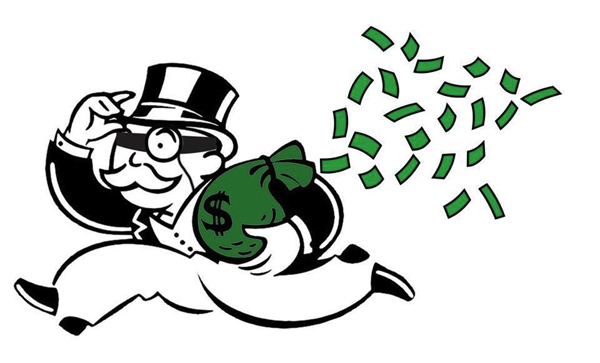
I’ve coined a new portmanteau word to describe America’s descent: kleptocrapocracy, a union of kleptocracy (a nation ruled by kleptocrats) and crapocracy, a nation drowning in a moral sewer of rampant self-interest in which the focus is cloaking all the skims, scams, rackets and bezzles in some virtuous-sounding garb, a nation choking on low-quality junk ceaselessly hawked by robocalls, spam, phishing and Big Tech manipulation.

It’s little wonder trust has collapsed in America: the only thing we can trust is whatever’s being pitched is deceptively packaged to mask the self-interest and profiteering of the perps.

The stench from the decomposing carcasses of once-trusted institutions is everywhere. Insiders and the marketers they pay to cloak their grifting are banking bennies at the expense of hapless debt-serfs who fell for the scam. You need these three costly medications, and then when the side-effects kick in, you need six more to counteract the first three, and so on. But trust us; your “health” (heh) is our only concern. Uh, sure.

Why do state universities need to market themselves like a roto-rooter service? Maybe because they’re both working the sewers: state universities are exploiting the student loan sewers, desperate to recruit another batch of debt-serfs who fell for the 3-card monte game in which a lifetime of debt is exchanged for a credential of dubious value.

The competition for the remaining pool of debt-serfs is heating up, so like everything else in America, the game is now all about marketing, virtue-signaling, exploiting Big Tech manipulation, and so on.

Doing something useful is now for chumps. The opportunities in America are all about getting rich by doing, well, nothing: skimming 20% “guaranteed” returns in DeFi, mining cryptos, trading stablecoins, selling volatility, etc.–getting rich and then living large on the sweat of the chumps who are still working (poor deluded fools!).

The obvious goal here is for everyone to get in on trading stablecoins, buying rentals with DeFi, churning meme stocks, etc. Why should anyone lower themselves to doing something useful anymore? Why bother?

Labor has been degraded for decades in speculative-frenzy America. Why work when the Fed has our backs and all those newly issued trillions are up for grabs? Doing something useful is for chumps.

Nobody seems to ask what happens when we’re all minting fortunes off speculative churn and there’s nobody filling potholes, stocking shelves or carrying bags of QuikCrete to customers’ trucks.

And while we’re on the subject of sewage: if America’s security services and Big Tech oligarchies track everything and everyone, why are we drowning in robocalls, spam, SMS-spam (smishing), etc.? Couldn’t the NSA/CIA track the spammers and robo-callers down and rendition them (warrantlessly, of course) to a hellhole camp in an unnamed country?

Of course they could. But the ruination of everyday life is of no concern to the kleptocrats (fly with me to the stars!) or our dysfunctional government, which has become nothing more than an invitation-only auction of favors that elevates the relentless pursuit of self-interest and profiteering to new kleptocratic heights.

Please don’t make the mistake of expecting anything to work properly in America. The components are garbage, the parts are on back-order, the people who knew how to make the kludgy mess function just quit in disgust, and we’ll have to get back to you about your request, as our service staff just left to launch an OnlyFans site.

I don’t want to work, I’m minting money speculating, but gol-darn it, I want everyone else to wait on me and meet my needs for low, low quality goods and services at not-so-low prices, and if I’m not treated well enough by everyone earning chump-change, then I’ll freak out, and if that doesn’t pan out, I’ll blame it all on my meds. Accountability is like work–only for chumps.

Trust me, everything’s going great and we’re all going to get wealthier and wealthier until we won’t be able to take it any more, it will be so great. I hope everyone here is hungry because the banquet of consequences is being served.

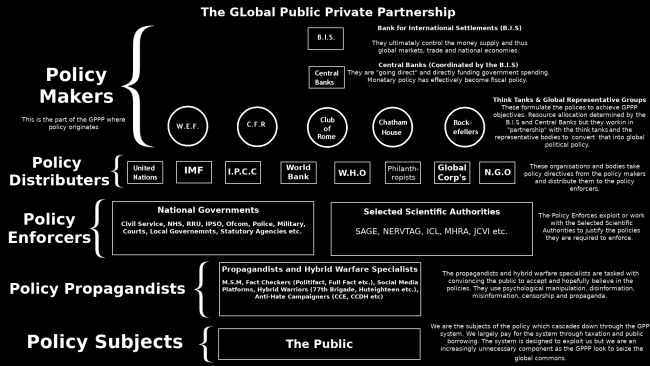
What is the “Global Public-Private Partnership”?

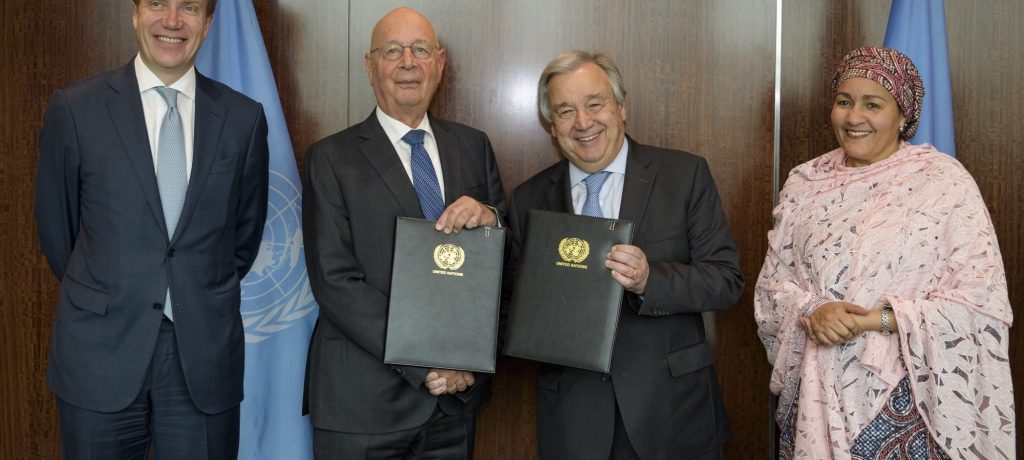
Heads of UN and WEF signing “strategic partnership framework”, New York 2019

By Iain Davis

Source: Off-Guardian


The Global Public-Private Partnership (GPPP) is a world-wide network of stakeholder capitalists and their partners.

This collective of stakeholders (the capitalists and their partners) comprises global corporations (including central banks), philanthropic foundations (multi-billionaire philanthropists), policy think-tanks, governments (and their agencies), non-governmental organisations, selected academic & scientific institutions, global charities, the labour unions and other chosen “thought leaders.”

The GPPP controls global finance and the world’s economy. It sets world, national and local policy (via global governance) and then promotes those policies using the mainstream media (MSM) corporations who are also “partners” within the GPPP.

Often those policies are devised by the think-tanks before being adopted by governments, who are also GPPP partners. Government is the process of transforming GPPP global governance into hard policy, legislation and law.

Under our current model of Westphalian national sovereignty, the government of one nation cannot make legislation or law in another. However, through global governance, the GPPP create policy initiatives at the global level which then cascade down to people in every nation. This typically occurs via an intermediary policy distributor, such as the IMF or IPCC, and national government then enact the recommended policies.

The policy trajectory is set internationally by the authorised definition of problems and their prescribed solutions. Once the GPPP enforce the consensus internationally, the policy framework is set. The GPPP stakeholder partners then collaborate to ensure the desired policies are developed, implemented and enforced. This is the oft quoted “international rules based system.”  

In this way the GPPP control many nations at once without having to resort to legislation. This has the added advantage of making any legal challenge to the decisions made by the most senior partners in the GPPP (it is an authoritarian hierarchy) extremely difficult.

The GPPP has traditionally been referenced in the context of public health and specifically in a number of United Nation’s (UN) documents, including those from their agencies such as the World Health Organisation (WHO).

In their 2005 document Connecting For Health, the WHO, in noting what the Millennium Development Goals meant for global health, revealed the emerging GPPP:

These changes occurred in a world of revised expectations about the role of government: that the public sector has neither the financial nor the institutional resources to meet their challenges, and that a mix of public and private resources is required……Building a global culture of security and cooperation is vital….The beginnings of a global health infrastructure are already in place. Information and communication technologies have opened opportunities for change in health, with or without policy-makers leading the way…….Governments can create an enabling environment, and invest in equity, access and innovation.”

The revised role of governments meant that they were no longer leading the way. The traditional policymakers weren’t making policy anymore, other GPPP partners were. National government had been relegated to creating the GPPP’s enabling environment by taxing the public and increasing government borrowing debt.

This is a debt owed to the senior partners in the GPPP. They are also the beneficiaries of the loans and use this comically misnamed “public investment” to create markets for themselves and the wider the GPPP.

The researchers Buse & Walt 2000 offers a good official history of the development of the GPPP concept. They suggest it was a response to the growing disillusionment in the UN project as a whole and the emerging realisation that global corporations were increasingly key to policy implementation. This correlates to the development of the stakeholder capitalism concept, first popularised in the 1970s.

Buse & Walt outlined how GPPP’s were designed to facilitate the participation of new breed of corporations. These entities had recognised the folly of their previously destructive business practices. They were ready to own their mistakes and make amends. They decided they would achieve this by partnering with government to solve global problems. These existential threats were defined by the GPPP and the selected scientists, academics and economists they funded.

The two researchers identified a key Davos address, delivered by then UN Secretary General Kofi Annan to the WEF in 1998, as marking the transition to a GPPP based global governance model:

The United Nations has been transformed since we last met here in Davos. The Organization has undergone a complete overhaul that I have described as a ‘quiet revolution’…A fundamental shift has occurred. The United Nations once dealt only with governments. By now we know that peace and prosperity cannot be achieved without partnerships involving governments, international organizations, the business community and civil society…The business of the United Nations involves the businesses of the world.”

Buse & Walt claimed that this signified the arrival of a new type of responsible global capitalism. As we shall see, that is not how the corporations viewed this arrangement. Indeed, Buse and Walt acknowledged why the GPPP was such an enticing prospect for the global giants of banking, industry, finance and commerce:

Shifting ideologies and trends in globalization have highlighted the need for closer global governance, an issue for both private and public sectors. We suggest that at least some of the support for GPPPs stems from this recognition, and a desire on the part of the private sector to be part of global regulatory decision-making processes.”

The conflict of interest is obvious. We are simply expected to accept, without question, that global corporations are committed to putting humanitarian and environmental causes before profit. Supposedly, a GPPP led system of global governance is somehow beneficial for us.

Believing this requires a considerable degree of naivety. Many of the stakeholder corporations have been convicted, or publicly held accountable, for the crimes they have commited. These include war crimes. The apparent passive agreement of the political class that these “partners” should effectively set global policy, regulations and spending priorities seems like infantile credulity.

This naivety is, in itself, a charade. As many academics, economists, historians and researchers have pointed out, corporate influence, even dominance of the political system had been increasing for generations. Elected politicians have long-been the junior partners in this arrangement.

With the arrival of GPPP’s we were witnessing the birth of the process to formalise this relationship, the creation of a cohesive world order. The politicians have simply stuck to the script ever since. They didn’t write it.

It is important to understand the difference between government and governance in the global context. Government claims the right, perhaps through a quasi-democratic mandate, to set policy and decree legislation (law.)

The alleged western representative democracies, which aren’t democracies at all, are a model of national government where elected representatives form the executive who enact legislation. For example, in the UK this is achieved through the parliamentary process.

Perhaps the closest thing to this form of national government on an international scale is the United Nations General Assembly. It has a tenuous claim to democratic accountability and can pass resolutions which, while they don’t bind member states, can create “new principles” which may become international law when later applied by the International Court of Justice.

However, this isn’t really world “government.” The UN lacks the authority to decree legislation and form law. The only way its “principles” can become law is via judicial ruling. The non-judicial power to create law is reserved for governments and their legislative reach only extends to their own national borders.

Due to the often fraught relationships between national governments, world government starts to become impractical. With both the non-binding nature of UN resolutions and the international jockeying for geopolitical and economic advantage, there isn’t currently anything we could call a world government.

There is the additional problem of national and cultural identity. Most populations aren’t ready for a distant, unelected world government. People generally want the political class to have more democratic accountability, not less.

The GPPP would certainly like to run a world government, but imposition by overt force is beyond their capability. Therefore, they have employed other means, such as deception and propaganda, to promote the notion of global governance.

Former Carter administration advisor and Trilateral Commission founder Zbigniew Brzezinski recognised how this approach would be easier to implement. In his 1970 book Between Two Ages: Americas Role In The Technetronic Era, he wrote:

Though the objective of shaping a community of the developed nations is less ambitious than the goal of world government, it is more attainable.”

The last 30 years have seen numerous GPPP’s form as the concept of global governance has evolved. A major turning point was the WEF’s conspectus of multistakeholder governance. With their 2010 publication of Everybody’s Business: Strengthening International Cooperation in a More Interdependent World, the WEF outlined the elements of GPPP stakeholder’s form of global governance.

They established their Global Agenda Councils to deliberate and suggest policy covering practically every aspect of our existence. The WEF created a corresponding global governance body for every aspect of our society. From our values and economy, through to our security and public health, our welfare systems, consumption, access to water, food security, crime, our rights, sustainable development and the global financial and monetary system, nothing was left untouched.

The executive chairman of the WEF, Klaus Schwab, spelled out what the objective of global governance was:

Our purpose has been to stimulate a strategic thought process among all stakeholders about ways in which international institutions and arrangements should be adapted to contemporary challenges…the world’s leading authorities have been working in interdisciplinary, multistakeholder Global Agenda Councils to identify gaps and deficiencies in international cooperation and to formulate specific proposals for improvement…

These discussions have run through the Forum’s Regional Summits during 2009 as well as the Forum’s recent Annual Meeting 2010 in Davos-Klosters, where many of the emerging proposals were tested with ministers, CEOs, heads of NGOs and trade unions, leading academics and other members of the Davos community…

The Global Redesign process has provided an informal working laboratory or marketplace for a number of good policy ideas and partnership opportunities…We have sought to expand international governance discussions…to take more pre-emptive and coordinated action on the full range of risks that have been accumulating in the international system.

By 2010 the WEF had taken it upon themselves to begin the  Global Redesign process. They defined the international challenges and they proposed the solutions. Fortunately for the GPPP, their proposals meant more control and partnership opportunities for them. The WEF sought to spearhead the expansion of this international governance.

In just one example, in 2019 the UK Government announced its partnership with the WEF to develop future business, economic and industrial regulations. The UK government were committed to supporting a regulatory environment created by the global corporations who would then be regulated by the same regulations they had designed.

The WEF do not have an electoral mandate of any kind. None of us have any opportunity to influence or even question their judgments and yet they are working in partnership with our supposedly democratically elected governments, and other GPPP stakeholders, to redesign the planet we all live on.

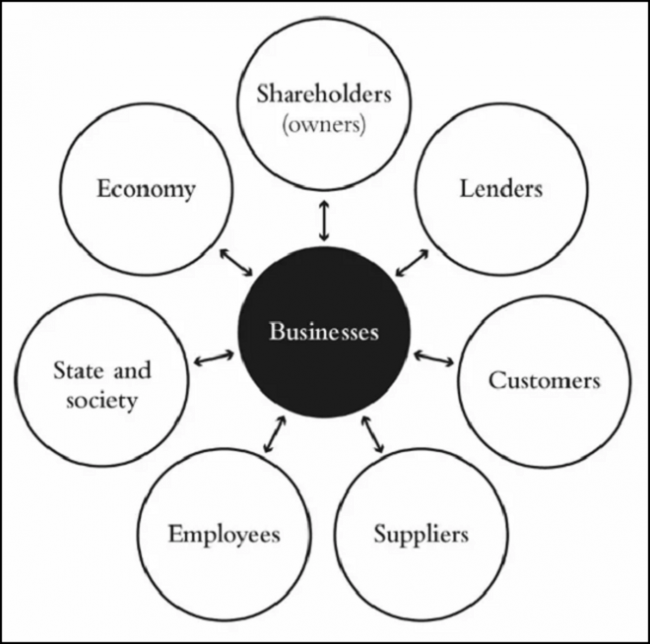
Stakeholder capitalism lies at the heart of the GPPP. Essentially it usurps democratic government (or indeed government of any kind) by placing global corporations at the centre of decision making. Despite deriving authority from no one but themselves, the leaders of the GPPP assume their own modern interpretation of the “divine right of kings” and rule absolutely.

In January 2021 The WEF spoke about how they viewed Stakeholder Capitalism:

The most important characteristic of the stakeholder model today is that the stakes of our system are now more clearly global.. What was once seen as externalities in national economic policy making and individual corporate decision making will now need to be incorporated or internalized in the operations of every government, company, community, and individual. The planet is.. the center of the global economic system, and its health should be optimized in the decisions made by all other stakeholders.”

The GPPP will oversee everything. Every government, all business, our so-called communities (where we live) and each of us individually. We are not the priority. The priority is the planet. Or so the WEF claim.

Centralised control of the entire planet, all its resources and everyone that lives on it is the core ethos of the GPPP. There is no need to interpret GPPP intentions, we don’t have to read between the lines. It is stated plainly in the introduction to the WEF’s Great Reset initiative:

To improve the state of the world, the World Economic Forum is starting The Great Reset initiative.. The Covid-19 crisis.. is fundamentally changing the traditional context for decision-making. The inconsistencies, inadequacies and contradictions of multiple systems –from health and financial to energy and education – are more exposed than ever.. Leaders find themselves at a historic crossroads.. As we enter a unique window of opportunity to shape the recovery, this initiative will offer insights to help inform all those determining the future state of global relations, the direction of national economies, the priorities of societies, the nature of business models and the management of a global commons.”

It should be noted that the WEF are just one partner organisation among many in the GPPP. However, they have been perhaps the most influential in terms of public relations throughout the pseudopandemic. Contrary to the hopes of Buse & Walt, we see an emergent global, corporate dictatorship, not caring stewardship of the planet.

The GPPP will determine the future state of global relations, the direction of national economies, the priorities of societies, the nature of business models and the management of a global commons. There is no opportunity for any of us to participate in either their project or the subsequent formation of policy.

While, in theory, governments do not have to implement GPPP policy, the reality is that they do. Global policies have been an increasing facet of our lives in the post WW2 era. The mechanism of translating GPPP policy initiatives, first into national and then regional and eventually local policy, can be clearly identified by looking at sustainable development.

In 1972 the privately funded, independent policy think-tank the Club of Rome (CoR) published the Limits of Growth. As we saw with the roll-out out of the pseudopandemic, the CoR used computer models to predict what they decreed were the complex problems faced by the entire planet: the “world problematique.”

Their offered opinions derived from the commissioned work of the Massachusetts Institute of Technology’s (MIT’s) system dynamic “World3 model.” This assumed global population would deplete natural resources and pollute the environment to the point where “overshoot and collapse” would inevitably occur.

This is not a scientific “fact” but rather a suggested scenario. So far, none of the predictions made have come to pass.

The scientific and statistical to-and-fro on the claims made in the Limits to Growth has been prolific. However, ignoring all doubts, the World3 model was firmly planted at the centre of the sustainable development policy environment.

In 1983 the Brundtland Commission was convened by former Norwegian Prime Minister Gro Harland Brundlandt and then Secretary General of the UN Javier Pérez de Cuéllar. Both were Club of Rome members. Based upon the highly questionable assumptions in the World3 model, they set about uniting governments from around the world to pursue sustainable development policies.

In 1987 the Commission published the Brundtland Report, also known as Our Common Future. Central to the idea of sustainable development, outlined in the report, was population control (reduction.)  This policy decision, to get rid of people, won international acclaim and awards for the authors.

The underlying assumptions for these policy proposals weren’t publicly challenged at all. The academic and scientific debate raged but remained almost completely unreported. As far as the public knew, scientific assumption and speculation was a proven fact. It is now impossible to question these unproven assumptions and obviously inaccurate models without being accused of “climate denial.”

This resulted in the Millenium Development Goals and eventually, in 2015, they gave way to the United Nation’s full adoption of Sustainable Development Goals (SDGs), In turn, these have been translated into government policy. For example, the UK government proudly announced their Net Zero policy commitment to sustainable development goals in 2019.

SDGs were already making an impact at the regional and local level in counties, cities, towns and boroughs across the UK. Nearly every council across the country has a “sustainable development plan.”

Regardless of what you think about the global threats we may or may not face, the origin and the distribution pathway of the resultant policy is clear. A privately funded, globalist think-tank was the driver of a policy agenda which led to the creation of a global policy framework, adopted by governments the world over, which has impacted communities in nearly every corner of the Earth.

SDGs are just one among numerous examples of GPPP global governance in action. The elected politician’s role in this process is negligible. They merely serve to implement and sell the policy to the public.

It doesn’t matter who you elect, the policy trajectory is set at the global governance level. This is the dictatorial nature of the GPPP and nothing could be less democratic.

COVID Has A Lower Mortality Risk To Children Than The Flu, Car Accidents, Suicide & More

By Arjun Walia

Source: The Pulse

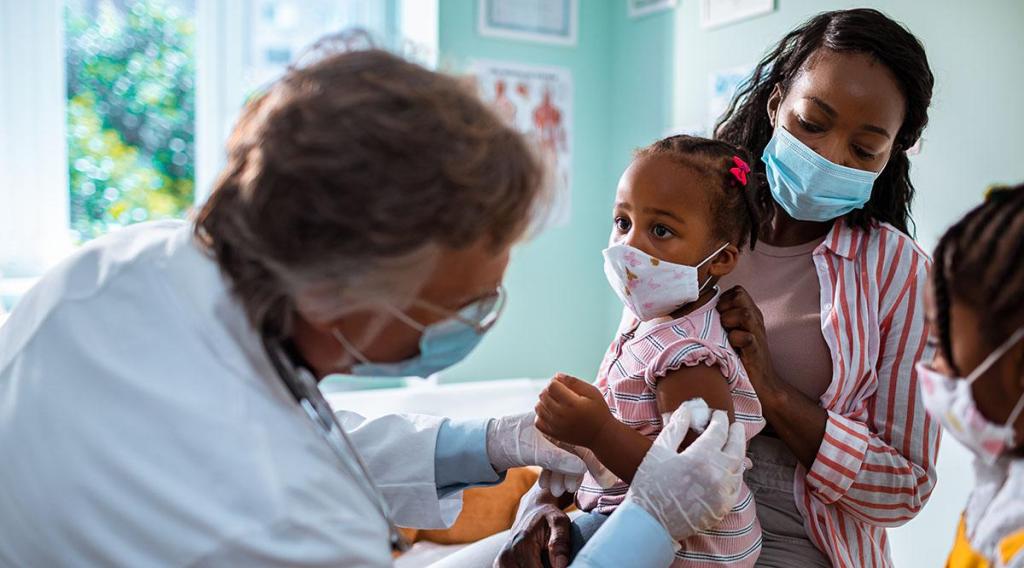
The risks of severe illness and death from COVID for children has not been put in context of other risks. Right now, many parents are stricken with fear and worry about their child contracting COVID. Putting COVID in the context of other risks may help change the perspective of parents and also question whether or not making COVID vaccines mandatory for children is the right decision.

When it comes to morality risk to children, COVID-19 has a lower annual mortality risk than car accidents, influenza, and for 5-14 year olds, suicide (Leonhardt, 2021). In fact, the survival rate of COVID for people under the age of 19 according to recent pre-print study by two Stanford scientists is nearly 100 percent.

Seroprevalence data from eight locations around the world: England, France; Ireland; Netherlands; Spain; Atlands, USA; New York, USA; Geneva, Switzerland show the infection fatality rate for 0-9 year olds to be less than 1 in 200,000 (less than 5 in 1 million) and 1/55,000 for 10–19-year-olds.

Even the risk of hospitalization as a result of a COVID infection is quite low. If infected with COVID-19, children ages 0-9 have on average a chance of 0.1% or 1/1000 of being hospitalized and, for ages 11-19 a 0.2% or 1/500 chance of being admitted to the hospital
(Herrera-Esposito, 2021).

In Canada, as of May 28, 2021, there were 259,308 confirmed cases of SARS-CoV-2 infections in Canadians 19 years and under. Of these, 0.48% were hospitalized, 0.06% were admitted to ICU, and 0.004% died. According to this data, seasonal influenza is associated with more severe illness than COVID-19.

Given Canada’s numbers, the discussion around “keeping children safe at school” is not a policy concern if it was not one for the seasonal flu. Yes, children may be a source of transmission, but they are not at risk of COVID by being at school.

While many studies suggest pre-symptomatic/asymptomatic spread may comprise > 40% of vertical transmission, numerous large observational population studies show that children are POOR COVID-19 spreaders. This includes studies from Ireland, Iceland, Italy, France, and Australia. For a link to a more complete reference list, see Washington University Pediatric & Adolescent Ambulatory Research Consortium.

In comparison to the vaccine, a study out of the University of California shows that the risk of myocarditis is greater after two doses of the Pfizer vaccine than being hospitalized for COVID for boys ages 12-15. The research was led by led by epidemiologist Dr. Tracy Høeg, an epidemiologist studying COVID in kids.

There have been multiple reports of death from myocarditis following COVID vaccination, including a 13-year-old Michigan boy who died June 16, three days after he received his second dose of Pfizer’s COVID vaccine. Preliminary autopsy results indicated that following his vaccination his heart become enlarged and was surrounded by fluid. As of August 7th, there were 106 reported incidents of myocarditis/pericarditis in Ontario, Canada in people under the age of 25.

Pfizer BioNTech study included 2,260 children and adolescents, 12-15 years of age, 1,131 of whom received the vaccine. This is a very small number of adolescents and does not permit an evaluation of rare but serious side-effects, such as effects that may happen in only 1:5,000 adolescents. Furthermore, with most of the adolescents followed for only 1 or 2 months after their 2nd dose, there is no data to support long-term safety.

Furthermore, the science regarding waning vaccine immunity and the science regarding natural immunity is something to consider as well, as well as the data showing that the vaccines offer a very low absolute risk reduction.

On the 22nd of September, Høeg gave her testimony to the U.S. House of Representatives providing an excellent summary regarding the latest data on COVID and kids. In it she cites data illustrating that drowning, vehicle accidents, homicide, cancer, cardiovascular disease, flu, and suffocation are all greater threats when it comes to mortality for children.

She also touches upon concerns like long COVID, and the Delta variant, and other affects the pandemic and health policy is having on the mental and physical health of children.

She outlines how the delta variant has resulted in increased case numbers in children, but the severity of the disease per case does not appear to have increased. When it comes to long COVID, a recent report from the Office of National Statistics (ONS, 2021) in the UK that she sites, the prevalence of persistent symptoms 12-16 weeks after COVID were no different between those with a COVID infection and controls.

I feel that our country’s failure to do a risk-benefit analysis as well as good scientific studies of the interventions we imposed upon children to mitigate one disease has created numerous additional and avoidable public health crises in our youth. For a disease that relatively spares them, this generation has suffered an incredible amount during the pandemic and, unfortunately, the effects of this will likely travel with them for the rest of their lives.

Høeg.

Sunetra Gupta, an infectious disease epidemiologist from the University of Oxford, Carl Heneghan, an NHS urgent care doctors and Professor of Evidence Based Medicine at the University of Oxford, as well as Alberto Giubilini, senior research fellow in infectious diseases at Oxford, make their position on vaccinating children quite clear below. They published an opinion article in the European Journal of Medical Ethics in July 2021, explaining why children should not be required or encouraged to take the COVID-19 vaccine.

The risks of COVID-19 for children and young people are minimal. For example, ‘[i]n the USA, UK, Italy, Germany, Spain, France and South Korea, deaths from COVID-19 in children remained rare up to February 2021 (ie, up to the time the study had available data about), at 0.17 per 100 000 population’.7 The long-term risks of the novel COVID-19 vaccines on a population of millions of children are at the moment unknown, given that the clinical trials involved a few thousands of subjects over a few months period.

Vaccinating children would be a way of treating them as mere means to serve other people’s interests or some form of collective good. We already did this through indiscriminate lockdowns and other restrictions, such as school closure. Using children as means or even mere means in this way is not necessarily wrong, but it can only be justified if the cost imposed is sufficiently small and the benefit sufficiently large.7 Unfortunately, currently available COVID-19 vaccines do not meet either condition, given our current state of knowledge. Not only would vaccinating children pose risks on them without any substantial direct benefit.

Also, vaccinating children can only offer collective good if this reduces infection levels in the community. However, while COVID-19 vaccines almost certainly will provide long-term protection against severe disease and death, their infection blocking effects are incomplete and very likely to be transient. This means there is actually no collective benefit to trade off against individual harm to children, unless we perform mass vaccination on a regular basis, for example, annually. But this would compound the potential harms.

Is the Tide Finally Starting to Turn on Covid as an American Biowarfare Attack?

By Ron Unz

Source: The Unz Review

During the last eighteen months, I think I’ve stood nearly alone on the Internet in arguing that the late 2019 Covid outbreak that began in Wuhan, China was probably the result of an American biowarfare attack conducted by rogue elements of our own national security establishment.

The individual articles in my long series have been viewed some 350,000 times, but with rather few exceptions almost no one has publicly endorsed such an extremely controversial hypothesis, and almost as few of the multitude of readers have even been willing to acknowledged its existence.

However, that unfortunate situation may now be starting to change. Just a couple of days ago, an influential MAGA/Trumpist website called The Conservative Treehouse published a 1,400 word piece strongly suggesting that America’s “Fourth Branch of Government,” namely our intelligence services, were quite possibly responsible for the Covid epidemic, and even concurring with me that former Secretary of State and CIA Director Mike Pompeo seems the individual most likely to know who was really responsible.

The motives suggested are somewhat different from my own, with the alleged goal being to help ensure Trump’s defeat for reelection, and other details are also at variance with my analysis. But these are secondary matters of little importance compared to general agreement on the overriding question of “Who Did It?” and I have anyway never claimed much certainty in my speculations about “Why?”

To the extent that America’s enormous number of still-fervent Trump supporters begin moving in the direction suggested by this piece, the likelihood of our being able to firmly answer both “Who?” and “Why?” will be greatly enhanced. Given the deaths of so many hundreds of thousands of American citizens and the severe disruption to the daily lives of our entire population, these seem very important questions to be asking.

With fortuitous timing, I had recently created a separate section on our website Sidebar providing convenient access to all my major Covid/Biowarfare articles as well as freely downloadable eBook containing them, and I append the contents below:

Major Covid/Biowarfare Articles

Based upon excess death totals, the Covid epidemic has probably killed more than 15 million people worldwide, and also greatly disrupted the lives of many billions more. For these reasons, it probably already ranks as the most important global event since World War II, with an impact easily exceeding the collapse of the Soviet Union or the 9/11 Attacks and the Middle Eastern wars they unleashed.

Since April 2020 I have published a long series of articles arguing the the Covid outbreak was due to an American biowarfare attack against China (and Iran), and have been almost unique in publicly taking this extremely controversial position. I have also placed it within the context of the hidden history of America’s longstanding biological warfare programs.

Taken together, these articles run more than 50,000 words and have been viewed some 350,000 times, while provoking almost 9,000 comments totaling more than 1.2 million words. Aside from being available on this website, they have also been collected into a freely downloadable ebook, available both in EPub and Mobi/Kindle formats.

Although the articles make a lengthy and detailed case for my remarkable claims, some of the strongest evidence may easily be summarized in just the following few paragraphs, extracted from these much longer works:

But with the horrific consequences of our own later governmental inaction being obvious, elements within our intelligence agencies have sought to demonstrate that they were not the ones asleep at the switch. Earlier this month, an ABC News story cited four separate government sources to reveal that as far back as late November, a special medical intelligence unit within our Defense Intelligence Agency had produced a report warning that an out-of-control disease epidemic was occurring in the Wuhan area of China, and widely distributed that document throughout the top ranks of our government, warning that steps should be taken to protect US forces based in Asia. After the story aired, a Pentagon spokesman officially denied the existence of that November report, while various other top level government and intelligence officials refused to comment. But a few days later, Israeli television mentioned that in November American intelligence had indeed shared such a report on the Wuhan disease outbreak with its NATO and Israeli allies, thus seeming to independently confirm the complete accuracy of the original ABC News story and its several government sources.

It therefore appears that elements of the Defense Intelligence Agency were aware of the deadly viral outbreak in Wuhan more than a month before any officials in the Chinese government itself. Unless our intelligence agencies have pioneered the technology of precognition, I think this may have happened for the same reason that arsonists have the earliest knowledge of future fires.

According to these multiply-sourced mainstream media accounts, by “the second week of November” our Defense Intelligence Agency was already preparing a secret report warning of a “cataclysmic” disease outbreak taking place in Wuhan. Yet at that point, probably no more than a couple of dozen individuals had been infected in that city of 11 million, with few of those yet having any serious symptoms. The implications are rather obvious. Furthermore:

As the coronavirus gradually began to spread beyond China’s own borders, another development occurred that greatly multiplied my suspicions. Most of these early cases had occurred exactly where one might expect, among the East Asian countries bordering China. But by late February Iran had become the second epicenter of the global outbreak. Even more surprisingly, its political elites had been especially hard-hit, with a full 10% of the entire Iranian parliament soon infected and at least a dozen of its officials and politicians dying of the disease, including some who were quite senior. Indeed, Neocon activists on Twitter began gleefully noting that their hatred Iranian enemies were now dropping like flies.

Let us consider the implications of these facts. Across the entire world the only political elites that have yet suffered any significant human losses have been those of Iran, and they died at a very early stage, before significant outbreaks had even occurred almost anywhere else in the world outside China. Thus, we have America assassinating Iran’s top military commander on Jan. 2nd and then just a few weeks later large portions of the Iranian ruling elites became infected by a mysterious and deadly new virus, with many of them soon dying as a consequence. Could any rational individual possibly regard this as a mere coincidence?

Main Articles in the Series

American Pravda: Our Coronavirus Catastrophe as Biowarfare Blowback?
The Unz Review • April 21, 2020 • 7,400 Words
American Pravda: Covid-19, Its Impact and Origins After One Year
The Unz Review • March 15, 2021 • 8,700 Words
American Pravda: “The Truth” and “The Whole Truth” About the Origins of Covid-19
The Unz Review • May 10, 2021 • 6,400 Words
American Pravda: George Orwell’s Virus Lab-Leak
The Unz Review • May 31, 2021 • 5,200 Words
The Covid BioWeapon: Made in the USA, Aimed at China
The Unz Review • June 15, 2021 • 4,400 Words • Interview by Mike Whitney
American Pravda: Covid Epidemic as Lab-Leak or Biowarfare?
The Unz Review • July 12, 2021 • 13,100 Words
American Pravda: Waging Biological Warfare
The Unz Review • August 9, 2021 • 7,500 Words

Planet of the Living Dead (Halloween 2021)

By Mickey Z.

Source: Dissident Voice

The only thing we have to fear…

(the dude who signed Executive Order 9066)

Halloween is an odd holiday. The ostensible concept — as it has evolved to become — is to shock, startle, frighten, petrify, horrify, and/or terrify… all while consuming enough high fructose corn syrup to keep the American Dental Association content for another century or two. Every year, as October 31 nears, loyal consumers squander a small fortune to adorn their soon-to-be-foreclosed-upon abodes with Made-in-China images of tombstones, skulls, ghouls, goblins, monsters, zombies, and even the occasional bloody severed limb or two. But let’s face it, none of these cardboard depictions remotely compare to the real-life horrors we passively accept as normal.

Who needs Dracula when we’ve got ruling class vampires sucking us dry — stealing not only our blood but also our jobs, homes, health, autonomy, sovereignty, and future? Why bother with Michael Myers when legions of Y chromosome ghouls unleash far worse cruelty — every minute of every day — via male pattern violence? Never forget:

  • No zombie is more frightening than those stumbling around in masks and chanting “trust the science.” 
  • Never mind Jason and his hockey mask when you’ve got “Brandon” playing left wing. 
  • Bats, pumpkins, and skeletons vs. pornographers, pimps, and pedophiles? No contest
  • Elm Street’s Freddie ain’t got nothing on corporations transformed into “persons” — set free to pillage the ecosystem and co-opt our minds. 
  • And I’ll take Godzilla’s side over pesticide, genocide, and ecocide. 

Here’s one more 24/7 real-life nightmare far more dreadful than anything the Halloween-Industrial Complex can conjure up: When all those kids come knocking on your door, expecting brightly colored toxins called “candy,” you might wish to remind yourself that across the globe, an estimated 10,000 extra children are dying each month thanks to unnecessary lockdowns and restrictions. 

Cue the ominous music: 10,000 dead. Every single month. From preventable causes. Because most of the world bought into the Covid lies. The next time you’re at a sporting event or a concert (for the vaccinated-only, of course), take a good, slow look around you and get a feel for what 10,000 looks like. It’s a whole lot more terrifying than the whir of a chainsaw echoing down a desolate Texas highway. Remember: “We’re all in this together.”

Saturday Matinee: A Girl Walks Home Alone at Night

By Jonathan Romney

Source: Film Comment

A term beloved of French film critics—and one I never tire of borrowing, just because it pinpoints its referent so well—is OVNI, meaning “UFO.” It’s used to refer to a film, usually a first feature, that’s next to impossible to categorize, that seems to have come out of nowhere, to have been made entirely against the odds—a film that appears to originate if not actually from other planets, then from some parallel cinematic dimension where the usual rules don’t apply.

Little could qualify more for OVNI-dom than an “Iranian vampire Western,” as Ana Lily Amirpour’s first feature has been dubbed. In fact, the skewed quality of A Girl Walks Home Alone at Night is accentuated by the fact that it both is and isn’t “really” Iranian. That is, the film is in Farsi, and stars a cast of Iranian or Iranian-American actors, but was shot in California, not far from Bakersfield, where writer-director Ana Lily Amirpour grew up. Taft stands in for Bad City, as the subtitles call it—or “Shahr Bad,” which may possibly be a Farsi play on words—a run-down, isolated burg where weird things happen by night, and nothing too ordinary takes place by day.

The Girl of the title (Sheila Vand) is a gamine-ish music fan who likes to dance alone in her poster-decorated den. But when she steps out onto the streets, she’s not the imperiled victim that the title—misleadingly, cleverly—would have you expect. She’s a figure of menace: a marauder who wears a chador over a very Gallic stripy matelot top, adding a curious dash of indie-kid chic to her image as a ghost figure who glides rather than walk. In fact, her gliding gait comes from the fact that she’s commandeered a terrified child’s skateboard. Spreading her robe like black wings, the Girl haunts the night like an Islamic descendant of Musidora’s Irma Vep, lawless masked heroine of Louis Feuillade’s silent serial Les Vampires.

The Girl is indeed a vampire, and more than a match for supposedly the scariest presence on this city’s mean streets—thuggish drug dealer Saeed (Dominic Rains), who has “SEX” tattooed across his neck, a sleazy drooping moustache on his chops, and a pad filled with big-bad-hunter tat (deer’s heads, tiger-print throws…). The predatory Saeed practically licks his chops at the thought of feral sex when the Girl’s canines pop out to full length with an almost comical sound effect; he doesn’t look so happy once she snaps his finger off.

The Girl can be downright terrifying: the young boy who loses his skateboard probably hasn’t done anything to merit being chilled to the bone by her, when she leans in to ask him if he’s been good, then warns him (in one of the most authentically ghoulish horror-movie rasps since Mercedes McCambridge did voice duty for Linda Blair), “I can take your eyes out of your skull and give them to the dogs to eat.” We don’t, by the way, see the dogs of Bad City, but the local cat is unsettling enough: a naturally charismatic starer which looks like it’s taking a break from sitting in a Bond villain’s lap, and which gets the best close-up in the film.

Meanwhile in Bad City, a devilishly handsome young man named Arash (Arash Marandi) is coping with the depressed excesses of his overweight junkie dad Hossein (Marshall Manesh), and working as gardener and handyman to a rich family whose spoiled daughter, the recent recipient of a nose job, sees him as her latest toy.

Things take an overtly comic turn when Arash—something of a sweet-natured dork despite his quiffed rebel demeanor—attends a Halloween party as Dracula. Walking home the worse for wear in a too-baggy cape and really ill-fitting fangs, he meets the Girl, who “lures” him to her den—or rather, wheels her decidedly floppy prospective beau back to her place on the skateboard. Things turn romantic, at once chastely and very sensually, in a beautiful extended take, as Arash approaches her and she closes in—not, as you’d expect, on his neck, but on his chest. It all happens in swoony slow motion, but with a mirror ball spinning round and filling the room with sparkles at crazy speed: a magnificent, and inexplicably romantic, paradox of pacing that adds to the eerie romance of the scene.

The couple later tryst at dead of night at the local power plant, itself lit up like a jeweled city. Why at the power plant? For the chiaroscuro, of course—that seems to be what motivates Amirpour most. This is one of those films that are shot in black and white because a director is genuinely in love with the affective and expressive possibilities of that visual choice, and especially with its ability to draw magic out of night scenes: I’m reminded of another piece of black-and-white small-town dream romance, Eric Mendelsohn’s Judy Berlin (99), which used an eclipse as the narrative excuse for its midsummer night’s encounters. In her own nightscapes, Amirpour doesn’t mess around with half-measures: DP Lyle Vincent saturates his shadows with the inkiest of blackness (as does the graphic novel that Amirpour has created to accompany the film).

A Girl Walks Home Alone at Night is a wayward, genuinely oneiric creation—look at its sudden arresting focus-pull on some oil derricks, and its graceful, gratuitous interlude of a transgender cowgirl figure dancing with a helium balloon. It manages to be tender, chilly, comic, and willfully bizarre all at once, but never has you wishing it would choose one register and stick to it. In his very enthusiastic recent review, David Thomson invokes not only David Lynch, but Vigo, Cocteau, and Buñuel, no less. Perhaps more modestly, A Girl Walks reminded me most of early Jarmusch, and of the general spirit of  late-Seventies/early-Eighties punk-influenced U.S. cinema (names like Scott B and Beth B, Amos Poe, Slava Tsukerman of Liquid Sky), because of Amirpour’s brisk disregard for genre norms, for the sense that she’s up for telling whatever story she wants to tell, any way she wants to tell it. While manifestly very polished and composed, the film nevertheless gives the impression that it’s making itself up—or dreaming itself into being—as it goes along.

There’s an oddly innocent blazing-youth romanticism about it, especially when the Girl and Arash bond over music. That feeling comes across all the more strongly because non-Farsi speakers will depend on the subtitles: it adds a tender but absurd irony to the revelation that the last song the Girl listened to was, of all things, Lionel Richie’s “Hello.” Fortunately, there’s cooler stuff on the soundtrack: the Tom-Waits-in-Tehran opening number by Iranian band Kiosk, and some Morricone-ish fanfare by Federale, a group from Portland.

A Girl Walks Home Alone at Night is bound to cause a stir in academic circles for the way that it blurs its Eastern and Western codes so thoroughly: making manifestly American settings stand in for an imaginary Iran, playing provocatively on the chador as Islamic garment and as vampire-cape substitute, having its heroine at once tender lover and murderous monster in a way that neither Anne Rice nor Stephenie Meyer would quite recognize. Overall, Amirpour’s film feels like an elaborately punkish code-scrambling gesture rather than a fully formed organic statement, but that doesn’t matter—it has style, grace, and imagination, and as artistic gestures go, could hardly be more devil-may-care. By the time it takes a final Aldrich-esque drive into the shadows, A Girl Walks Home has more than earned your attention—and got you wondering where that shadow-steeped road leads, either for its romantic duo or for Amirpour as audacious writer-director.

Watch A Girl Walks Home Alone at Night on Kanopy here: https://www.kanopy.com/product/girl-walks-home-alone-night