Is the stock market about to crash? Hopefully not, and there definitely have been quite a few “false alarms” over the past few years. But without a doubt we have been living through one of the greatest financial bubbles in U.S. history, and the markets are absolutely primed for a full-blown crash. That doesn’t mean that one will happen now, but we are starting to see some ominous things happen in the financial world that we have not seen happen in a very long time. So many of the same patterns that we witnessed just prior to the bursting of the dotcom bubble and just prior to the 2008 financial crisis are repeating themselves again. Hopefully we still have at least a little bit more time before stocks completely crash, because when this market does implode it is going to be a doozy.
The following are 9 ominous signals coming from the financial markets that we have not seen in years…
#1 By the time the markets closed on Monday, we had witnessed the biggest three day decline for U.S. stocks since 2011.
#2 On Monday, the S&P 500 moved below its 200 day moving average for the first time in about two years. The last time this happened after such an extended streak of success, the S&P 500 ended up declining by a total of 22 percent.
#3 This week the put-call ratio actually moved higher than it was at any point during the collapse of Lehman Brothers in 2008. This is an indication that there is a tremendous amount of fear on Wall Street right now.
#4 Everybody is watching the VIX at the moment. According to the Economic Policy Journal, the VIX has now risen to the highest level that it has been since the heart of the European debt crisis. This is another indicator that there is extraordinary fear on Wall Street…
US stock market volatility has jumped to the highest since the eurozone debt crisis, according to a closely watched index, the the CBOE Vix index of implied US share price volatility.
It jumped to 24.6 late on Monday and is up again this morning. On Thursday, it was as low as 15.
That’s a very strong move, but things have been much worse. At height of the recent financial crisis – the Vix index peaked at 80.1 in November 2008.
Could we get there again? Yeah.
#5 The price of oil is crashing. This also happened in 2008 just before the financial crisis erupted. At this point, the price of oil is now the lowest that it has been in more than two years.
#6 As Chris Kimble has pointed out, the chart for the Dow has formed a “Doji Star topping pattern”. We also saw this happen in 2007. Could this be an indication that we are on the verge of another stock market crash similar to what happened in 2008?
#7 Canadian stocks are actually doing even worse than U.S. stocks. At this point, Canadian stocks have already dropped more than 10 percent from the peak of the market.
#8 European stocks have also had a very rough month. For example, German stocks have already dropped about 10 percent since July, and there are growing concerns about the overall health of the German economy.
#9 The wealthy are hoarding cash and precious metals right now. In fact, one British news report stated that sales of gold bars to wealthy customers are up 243 percent so far this year.
So what comes next?
Some experts are saying that this is the perfect time to buy stocks at value prices. For example, USA Today published a story with the following headline on Tuesday: “Time to ‘buy’ the fear? One Wall Street pro says yes“.
Other experts, however, believe that this could represent a major turning point for the financial markets.
Technical strategist Abigail Doolittle is holding tight to her prediction of market doom ahead, asserting that a recent move in Wall Street’s fear gauge is signaling the way.
Doolittle, founder of Peak Theories Research, has made headlines lately suggesting a market correction worse than anyone thinks is ahead. The long-term possibility, she has said, is a 60 percent collapse for the S&P 500.
In early August, Doolittle was warning both of a looming “super spike” in the CBOE Volatility Index as well as a “death cross” in the 10-year Treasury note. The former referenced a sharp move higher in the “VIX,” while the latter used Wall Street lingo for an event that already occurred in which the fixed income benchmark saw its 50-day moving average cross below its 200-day trend line.
Both, she said, served as indicators for trouble ahead.
The report that a healthcare worker in Dallas, Texas, one of those who treated Ebola victim Thomas Eric Duncan before his death, has herself contracted the disease, is a significant and troubling event. Dr. Thomas Frieden, director of the US Centers for Disease Control and Prevention, admitted in a television interview Sunday, “It’s deeply concerning that this infection occurred.”
While Frieden claimed that current protocols for treating Ebola patients were effective in preventing the spread of the disease, arguing that there must have been “a breach of protocol,” no actual explanation has been given for how the healthcare worker became infected. She was not one of the 48 primary contacts with Duncan who were being monitored for possible exposure, but worked in a more peripheral role. Her infection was only detected when she contracted a fever and reported it herself.
There are a growing number of such cases, including doctors and nurses in the affected regions of Liberia, Sierra Leone and Guinea, who were well aware of the procedures, and an NBC News photographer, whose infection has caused the quarantining of the entire reporting team, led by Dr. Nancy Snyderman, the network’s chief medical correspondent. These cases suggest that despite the repeated assurances from health officials, there is much that is not known about how the disease is transmitted.
What is certain is that the Ebola outbreak in West Africa is a catastrophe for the people of that region. More than 8,000 people have been infected and more than 4,000 have died, with no signs that the epidemic has been curtailed. The heroic efforts of doctors, nurses and aid workers have been sabotaged by the collapse of the healthcare systems of these countries, among the poorest in the world. Only 20 percent of the affected population in West Africa has access to a treatment center.
It is almost impossible to overstate the dimensions of the disaster. Until this year, Ebola was a disease of remote rural areas that had killed only 1,500 people in 20 previous outbreaks over 40 years. Now the disease has reached urban centers like Monrovia, capital of Liberia, a city of one million, and individuals infected with the virus have travelled from the region only to fall ill in the United States, Spain and Brazil. There are well-founded fears that Ebola could become a global plague, particularly if it reaches more densely populated countries like Nigeria, or the impoverished billions of South and East Asia.
The impotent global response to the immense tragedy in West Africa is a serious warning. The Ebola crisis has proven to be a test of the ability of capitalism, as a world system, to deal with an acute and deadly threat. The profit system has failed. A society organized on the basis of production for private gain and divided into antagonistic nation-states, with a handful of imperialist powers dominating the rest, is incapable of the systematic, energetic and humane response that this crisis requires. It is no accident that the Ebola outbreak takes place in countries that are former colonies of imperialist powers. Guinea was a French colony, Sierra Leone a British colony, and Liberia a de facto US colony since its founding by freed American slaves. Despite their nominal independence, each country remains dominated by giant corporations and banks based in the imperialist countries, which extract vast profits from the mineral wealth and other natural resources. Guinea is the world’s largest bauxite exporter, Sierra Leone depends on diamond exports, Liberia has long been the fiefdom of Firestone Rubber (now Bridgestone).
These countries are unable to provide even rudimentary healthcare services to their populations, not because they lack resources, but because they are exploited and oppressed by a global economic system controlled by Wall Street and other financial and commodity markets. This economic system is so unequal that the 85 richest individuals on the planet control more wealth than the poorest three billion people, nearly half of humanity.
Economic development, particularly over the past 40 years, has created an interconnected and globalized world. Thousands of people travel every day between West Africa and other parts of the world. The revolution in transportation and communications means that what happens in West Africa today can affect Dallas, Boston, Madrid and Rio de Janeiro tomorrow. This makes the Ebola epidemic not a regional event, but a world event.
But the response to the Ebola crisis is carried out by national governments driven by competing national interests, and concerned, not with the danger of the virus to the world’s people, but with how it affects the interests of the ruling class in each nation. Thus there are calls in the United States and Europe for imposing an embargo on travelers from Liberia, Sierra Leone and Guinea, although health experts warn that such an action would cause the economic collapse of these countries, vastly worsening the epidemic and making its global spread more rather than less likely.
Equally reactionary is the Obama administration’s decision to send 4,000 US troops to Liberia, ostensibly to build health treatment facilities. Why are heavily armed soldiers chosen for such a mission? They are not construction workers or healthcare providers. If healthcare workers and journalists have become infected, despite taking every precaution, then certainly soldiers could themselves fall victim to the disease, and bring the virus home with them. The real agenda of Washington is to secure a basis for its Africa Command (AFRICOM), up to now excluded from the continent by local opposition, thus advancing the interests of American imperialism against its rivals, particularly China.
The potential dangers of a disease like Ebola spreading from rural Africa to the world have long been understood by epidemiologists and other scientists. It has been the subject of specialized studies and best-selling books. The issue has even penetrated into popular culture through films from The Andromeda Strain to Outbreak and 28 Days. But the profit system has been incapable of generating a serious effort to forestall an entirely predictable crisis.
The detection of Ebola in the mid-1970s should have been the occasion for the launching of an intensive effort to study the virus, analyze how it is transmitted and develop antidotes and a vaccine. This did not take place, in large measure, as a report last month suggested, because the giant pharmaceutical companies that control medical research saw little profit in saving the lives of impoverished villagers in rural Africa (see “Profit motive big hurdle for Ebola drugs”).
What little research has been conducted on possible cures and vaccines was funded by the US Pentagon, for dubious reasons: at best, to protect US soldiers who might be deployed to the jungles of central Africa as an imperialist invasion force; at worst, to determine whether the virus could be weaponized for use against potential enemies.
What would a serious response to the Ebola crisis look like? It would entail a massive, internationally coordinated response which calls on vast resources on the scale necessary both to save as many as possible of those under immediate threat and to prevent the development of an outbreak on a global scale.
It would mean the mobilization of doctors, nurses, public health workers and scientists from America, Europe, Russia, China and the rest of the world to fight back against a deadly threat to the entire human race. And it would mean taking control of this response out of the hands of the national military establishments, particularly the Pentagon, and the giant pharmaceutical firms, one of the most corrupt and rapacious detachments of big business.
The strife that has engulfed Christopher Columbus’s legacy in recent years has put the concept of an Indigenous People’s Day at the forefront of discussion.
In theory, as we move forward in our lives, we should make every effort to broaden our perspective and to seek out the truth. As we mature so should our thought process. Such maturation holds true on both an individual and a societal basis. A broad understanding of history enables one to reconcile the past, comprehend the present, and reasonably theorize how future events may unfold. As truths are discovered, norms begin to shift. Such forthright thinking is necessary to fully grasp the complexities of historical events and figures. This is particularly true with respect to the legacy of Christopher Columbus. A polarizing historical figure whose life has been defined, by many, for his astonishing level of courage and intestinal fortitude; nevertheless, such impressive traits should never blur the fact that he oversaw a murderous quest for material riches that resulted in the utter demise of a people. Each year, as October 12th comes and goes, a question is raised – what are we celebrating about his life?
Christopher Columbus was an immensely talented mariner who navigated the Santa Maria and two other smaller ships across the Atlantic Ocean in search of Asia. However, he and his crew inadvertently arrived in the New World on October 12th of 1492. Their long and arduous journey was driven by one clear objective – to find and establish a long-term source of wealth, preferably gold for the King and Queen of Spain. In return Columbus would be allotted 10 percent of the profits, governorship over newfound land, and awarded the prestigious title of Admiral of the Ocean Sea. Upon arriving in the islands, which we now refer to as the Bahamas, Columbus and his crew first encountered the Arawaks. It was at that fateful juncture in human history that he made two keen observations regarding these indigenous people. Firstly, they were docile and trusting in nature; and, secondly, they wore gold jewelry. Columbus’s own words from his personal journal capture the ominous fate that awaited the Arawaks:
They do not bear arms, and do not know them, for I showed them a sword, they took it by the edge and cut themselves out of ignorance. They have no iron. Their spears are made of cane. They would make fine servants. With fifty men we could subjugate them all and make them do whatever we want.
The concept of private property and the pursuit of material riches had reached a frenzied pitch within 15th century Europe. As an independent contractor Christopher Columbus recognized the seemingly limitless economic potential of the land he had “discovered.” It was at this point in time that his bravery had begun to shift to sheer brutality. This transition within his personality was encapsulated in many of the notes that he had sent to the King and Queen of Spain to bolster expectations. In one particular note he promised “as much gold as they need and as many slaves as they ask.” Soon thereafter, he and his men kidnapped a number of the Arawaks and forced them to identify other sources of gold throughout the region. With an extensive arsenal of advanced weaponry / horses, Columbus and his men, arrived on the islands that were later named Cuba and Hispaniola (present day Dominican Republic / Haiti). Upon arrival, the sheer magnitude of gold, which was readily available, set into motion a relentless wave of murder, rape, pillaging, and slavery that would forever alter the course of human history. A young, Catholic priest named Bartolomé de las Casas transcribed Columbus’s journals and later wrote about the violence he had witnessed. The fact that such crimes could potentially go unnoticed by future generations was deeply troubling to him. He expanded upon the extent of Columbus’s reign of terror within his multivolume book entitled the History of the Indies:
There were 60,000 people living on this island, including the Indians; so that from 1494 to 1508, over 3,000,000 people had perished from war, slavery, and the mines. Who in future generations will believe this? I myself writing it as a knowledgeable eyewitness can hardly believe it.
Such words offer the reader a firsthand account of the state-sponsored genocide that the Spanish Empire had financed through Columbus. Clearly, the intent of the Spanish Empire was to eradicate the islands of indigenous people through slavery and violence. In doing so they had further established their already dominant political and economic standing within Europe. In a matter of years, Columbus and his men decimated the indigenous people of the Caribbean islands.
The fact that Columbus Day is celebrated each October is a testament to the intellectual dishonesty that has stemmed from the likes of academics, teachers, and politicians. It has become an annual ritual to sanitize history and present half-truths as absolutes. In 1937, Columbus Day was officially established as a federal holiday in the United States; however, to this day it is not observed in Hawaii, Nevada, Oregon and South Dakota. The other 46 states that observe the holiday acknowledge Christopher Columbus as a superior mariner that had unknowingly found himself in the Caribbean Sea after departing from Europe. Incidentally, in conjunction with those facts, it would also be quite fair to label Columbus as one of the “founding fathers” of the trans-Atlantic slave trade. Unfortunately such an unpleasant truth has been relegated to the background of history. For decades now we have been hearing self proclaimed “experts” espouse Columbus’s many accomplishments – particularly his “discovery” of the New World, yet, in doing so they have opted to minimize the extent of his violence or have utterly disregarded it. The shame in all of this is that people living in countries throughout the Western Hemisphere, including the United States, have been indoctrinated into believing such fallacies and have been intentionally miseducated.
In sum, history cannot be rewritten. However with information now at our fingertips we can no longer fault our teachers, politicians, etc. for being left in the dark regarding our collective histories. Thoroughly researched academic materials are readily available for those who seek the truth. In fact, it is fair to assume that as people gain a better understanding of Columbus they will begin to support other efforts to acknowledge this particular point in time. Such forthright thinking is certainly evident within the City of Denver, Colorado and within the City of Minneapolis, Minnesota whom have both taken the lead in distancing themselves from Columbus’s crimes and have acknowledged his victims with an “Indigenous People’s Day” on October 12th. Or, perhaps, we should consider an “Italian Heritage Day” – one could certainly make a valid argument for the recognition of Galileo Galilei, Saint Francis of Assisi, Dante Alighieri, or Leonardo Da Vinci’s accomplishments? Be that as it may, most Americans take pride in our collective history and it is incumbent upon us to rectify past errors through education and enlighten our young people to the rich; yet, nuanced nature of American history. By taking a moment to reflect upon the man Columbus truly was is the first step to gaining a better understanding of how far we have come as a model nation.
Owen McCormack is a teacher within the New York City Department of Education. He holds a Master of Arts degree in History from the City College of New York and a Master of Science degree in Special Education from the College of Staten Island. He enjoys analyzing the complexities of today’s social and political issues through a religious / historical prism. His writing has been featured in TRUTH-OUT.org.
The phenomenon known as the Dark Night of the Soul is something which many spiritual seekers experience on their journey to re-enlightenment. It can be a painful and frightening process, but it can also be liberating and empowering. It all depends on your perspective and your ability to remain detached.
Peeling the Onion
The word ‘night’ is misleading. This is a process, and thankfully so. I doubt you would want to experience the purification process all at once. My own Dark Night journey began in 1994 and culminated this year (2013). While that may seem like an inordinate amount of time, I didn’t go through the process continually, thank heavens, but rather in stages. The length and intensity of the process is determined by the degree of purification one requires.
Think of this as peeling an onion. Each layer you strip away brings tears to your eyes. You stop for a while in order to recover, and then you proceed to the next layer. Once you reach the core, you are at the heart of your angst. This is often the toughest part of the process which is why it comes last. You build up your strength and your ability to face your core issue(s). Your higher self will not let you access this core until you are ready.
The good news is you have already faced the worst. Nothing that you unearth during this process will ever be as bad as the original pain you experienced. You were strong enough to face it once, so you are more than capable of releasing it now. And, once it’s purified, it is gone for good.
Ego Death
Essentially, the Dark Night of the Soul is the death of the (malignant) ego. I say ‘malignant’ because the ego is not inherently bad or in need of extinguishing. The ego provides the soul with the illusion of separation so that we may explore creations that differ from the unified field of Love from which we originate.
The ego in its present form, however, is overly dominant. We live in an egocentric era. The Cult to Self is celebrated through our worship of celebrity, fame, fortune, superficial beauty and power. Narcissistic behaviours are often rewarded in this ego-driven climate. The external world is a projection result of the malignancy of our collective ego state.
Needless to say, the ego does not take kindly to the awakening and enlightenment process. It sees the spiritual awakening process as a threat to its very existence and, in many ways, it is right. As you begin to remember more about your spiritual origins, the allure of ego lessens. This eventually breaks ego’s hold over you, and the ego begins to shrink away.
From the ego’s perspective, this equates to death. It, therefore, isn’t going to surrender without a fight. The key is not to resist the ego. That being said, non-resistance is not easy. In fact, your ego will do everything in its power to cling to the old, but your higher self knows better.
Existential Crisis
As we awaken from the shadows of our dream life on Earth to the limitless, formless, eternal nature of the Soul, the form and thought-based illusions of our life begin to dissolve. The very foundation of one’s human existence crumbles, leading to an existential crisis of faith.
Symptoms Include:
Deep introspection and angst
Questioning the meaning and purpose of life
Feeling that life is meaningless
Isolation; feeling alone, cut off from others
Facing mortality
Feeling empty, devoid of joy
Your existential crisis can cut you off from others. The battle you’re fighting is internal. It’s akin to depression, except that it is spiritual rather than mental in nature. The ego is fighting for its life, and thus it resists the purification process.
Remember though, these symptoms stem from the ego’s perspective on life. The soul knows that everything has meaning, pleasure and beauty. Once you supplant your ego with your soul, life becomes vibrant again.
Purification by Fire
As your ego’s domain is dismantled, your external world will reflect this internal process. That which does not serve your highest good falls away. While this stage may seem destructive and painful, it is actually helping to break ego’s hold over you by forcing it to surrender everything it holds dear.
It’s like the old adage says: “Beware the man who has nothing left to lose”. That man is absolutely fearless. When you lose everything your ego values, its fear-based hold on you shatters.
Please note, I’m not advocating that you must lose everything. I’m just explaining what sometimes happens during the process. For instance, if you find yourself facing loss (i.e. divorce, job loss, and bankruptcy) know that this has helped to shatter your ego’s hold over you. The more dramatic the loss, the more rapid the purification process.
As you empty yourself of ego/fear, you create more room to house your soul’s love, light, wisdom, beauty and joy.
The Phoenix Rises
At this point, things may appear bleak and hopeless; but, to quote another old gem, “It’s always darkest before the dawn”. I liken this to sinking into the murky depths. You feel like you will never see the light of day again, and that all is lost. Then, suddenly, your feet touch ground and you are able to push off the bottom giving you the momentum propel you back into the light.
You’re almost through this learning curve, and when you emerge on the other side of the Dark Night, you will rediscover the joy and beauty of the world. You are the phoenix, being purified by fire. Once you have rid yourself of the ego fears, you will be ‘reborn’ or transformed as a freer, happier higher-vibrational version of you.
Sanity-Saving Solutions
Higher Perspective: Understand that darkness, fear and ego are all illusions. You’re a child of Love and Light. Your current experiences are simply a dream that your soul is having. It wants to better understand Love and Light but it cannot do so without contrast. Since the ego isn’t real, try changing its nature from a narcissistic dictator to a small, frightened child. Then, when it acts up, love and nurture it instead of fighting it or being controlled by it.
Non-Resistance: Do not resist the process. The greater the resistance, the more painful the symptoms. Remember, that which you resist persists. Don’t give your ego anything to push against. Just go with the flow. And remember, the ego is fighting for its life. Rather than seeking to destroy it, love it instead and teach it to trust your spirit to keep you safe. The ego can be retrained.
Non-Attachment: Release everything that no longer serves your higher good. No matter how scary it may seem, until you let go of the old ego-based elements in your life, nothing new and spiritually-uplifting can come in. Think of it as cleaning house. You’re ridding your vessel of darkness and density to make way for lightness.
Spiritual Guides: Enlist the help of the spirit realms. Call on your spirit guides; soul family; soul group; departed loved ones; the angels; ascended masters; animal totems; Mother Earth; Father Sun; the Creator/God/Goddess, and with whomever else you resonate. Be open to receiving help in all forms.
Kindred Support: Find like-minded souls with whom you can share your experiences. You are not alone. There are many others who are currently experiencing, or have recently gone through, the Dark Night of the Soul. Ask your spirit guides to help you find these people, or they you. Then, pay attention to the messages you receive intuitively. If a stranger stops to talk to you, s/he may be a kindred spirit.
TLC: You need extra love and gentle care right now. Be your own best friend. Talk gently and lovingly to yourself. Release obligations and commitments that are draining you. Set healthy boundaries with others. Treat yourself with kid gloves. Eat a healthy diet, drink plenty of pure water, sleep when you’re tired, and practice mindful exercise such as yoga, Tai Chi and Qigong. Energy medicine can also help alleviate the severity and duration of the symptoms. Above all, never forgot, you are a precious child of the divine.
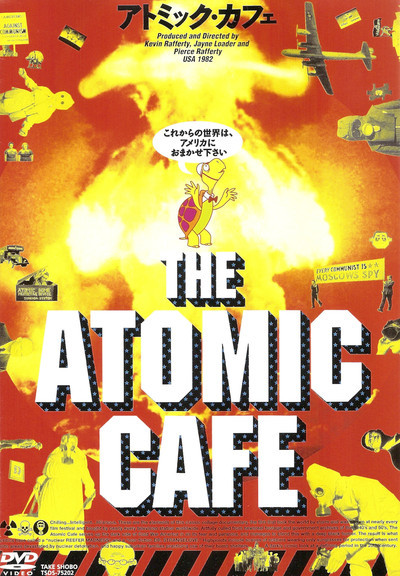
“Hearts and Minds” (1974) and “The Atomic Cafe” (1982) are two of the most chilling and persuasive anti-war documentaries ever made (at least for viewers who are not psychopaths). Though the editorial choices of both films clearly reflect an anti-war perspective, their messages are made more powerful by their lack of narration and abundance of archive footage, newsreels, and public statements from military and political officials. Both documentaries were years in the making with much time (nearly the entire time in the case of The Atomic Cafe) spent on research and editing, and the work clearly pays off by expanding the scope of the films to the political, cultural, and psychological factors behind wars. The filmmakers involved in Hearts and Minds and The Atomic Cafe, unlike most corporate news coverage of wars, both display great empathy in their inclusion of footage of “enemy” casualties of the war and “collateral damage” (ie. innocent victims caught in the crossfire). In the context of the current war-mongering from the Obama administration and corporate/government news media, Hearts and Minds and The Atomic Cafe are more relevant than ever and should be required viewing for everyone who values life.
The following essay is intended to provide a brief overview of topics addressed in a discussion graciously recorded by Julie Vivier at the offices of the Center for Research on Globalization in Montreal Canada on August 5, 2014.-JFT
Modern propaganda techniques utilized by the corporate state to enforce anti-democratic and destructive policies routinely entail the manufacture and manipulation of news events to mold public opinion and, as Edward Bernays put it, “engineer consent” toward certain ends.
Such events include not only overt political appeals, but also acts of seemingly spontaneous terrorism and militarism that traumatize the body politic into ultimately accepting false narratives as political and historical realities.
Western states’ development and utilization of propaganda closely parallels the steady decay of political enfranchisement and engagement throughout the twentieth century. Upon securing a second term in 1916, the Democratic administration of Woodrow Wilson plunged the United States into the most violent and homicidal war in human history. Wilson, a former Princeton University academician groomed for public office by Wall Street bankers, assembled a group of progressive-left journalists and publicists to “sell the war” to the American people.
George Creel, Walter Lippmann, Edward Bernays and Harold Lasswell all played influential roles in the newly-formed Committee on Public Information, and would go on to be major figures in political thought, public relations, and psychological warfare research.
The sales effort was unparalleled in its scale and sophistication. The CPI was not only able to officially censor news and information, but essentially manufacture these as well. Acting in the role of a multifaceted advertising agency, Creel’s operation “examined the different ways that information flowed to the population and flooded these channels with pro-war material.”
The Committee’s domestic organ was comprised of 19 subdivisions, each devoted to a specific type of propaganda, one of which was a Division of News that distributed over 6,000 press releases and acted as the chief avenue for war-related information. On an average week, more than 20,000 newspaper columns carried data provided through CPI propaganda. The Division of Syndicated Features enlisted the help of popular novelists, short story writers, and essayists. These mainstream American authors presented the official line in a readily accessible form reaching twelve million people every month. Similar endeavors existed for cinema, impromptu soapbox oratory (Four Minute Men), and outright advertising at home and abroad.[1]
With the experiences and observations of these war marketers variously recounted and developed throughout the 1920s (Lippmann, Public Opinion, The Phantom Public, Bernays, Propaganda, Crystallizing Public Opinion, Creel, How We Advertised America, Lasswell, Propaganda and the World War), alongside the influence of their elite colleagues and associates, the young publicists’ optimism concerning popular democracy guided by informed opinion was sobered with the realization that public sentiment was actually far more susceptible to persuasion than had been previously understood. The proposed solutions to guarantee something akin to democracy in an increasingly confusing world lay in “objective” journalism guided by organized intelligence (Lippmann) and propaganda, or what Edward Bernays termed “public relations.”
The argument laid out in Lippmann’s Public Opinion was partly motivated by the US Senate’s rejection of membership in the League of Nations. An adviser to the Wilson administration, a central figure behind intelligence gathering that informed postwar geopolitical dynamics laid out at the Paris Peace Conference, and an early member of the Council on Foreign Relations, Lippmann increasingly viewed popular democracy as plagued by a hopelessly ill-informed public opinion incapable of comprehending the growing complexities of modern society. Only experts could be entrusted with assessing, understanding, and acting on the knowledge accorded through their respective professions and fields.
Along these lines, journalism should mimic the then-fledgling social sciences by pursuing objectivity and deferring to the compartmentalized expertise of established authority figures. News and information could similarly be analyzed, edited, and coordinated to ensure accuracy by journalists exercising similar technocratic methods. Although Lippmann does not exactly specify what body would oversee such a process of “organized intelligence,” his postwar activities and ties provides a clue.
Edward Bernays’ advocacy for public opinion management is much more practical and overt. Whereas Lippmann suggests a regimented democracy via technocratic news and information processing, Bernays stresses a privileged elite’s overt manipulation of how the populace interprets reality itself. Such manipulation necessitates contrived associations, figures and events that appear authentic and spontaneous. “Any person or organization depends ultimately on public approval,” Bernays notes,
“and is therefore faced with the problem of engineering the public’s consent to a program or goal … We reject government authoritarianism or regimentation, but we are willing to be persuaded by the written or spoken word. The engineering of consent is the very essence of the democratic process, the freedom to persuade and suggest.[2]
Bernays demonstrates an affinity with Lippmann’s notion of elite expediency when pursuing prerogatives and decision-making the public at large cannot be entrusted to interpret. In such instances,
democratic leaders must play their part in leading the public through the engineering of consent to socially constructive goals and values. This role naturally imposes upon them the obligation to use educational processes, as well as other available techniques, to bring about as complete an understanding as possible.[3]
Written in the early 1950s, these observations become especially apt in the latter half of the twentieth century, where the US is typically a major aggressor in foreign (and eventually domestic) affairs. Yet what does Bernays mean by, for example, “educational processes”? An indication may be found by noting his central role in the promotion of tobacco use, municipal water fluoridation, and the overthrow of the democratically-elected Arbenz regime in Guatemala.[4]
With the advent of the national security state in 1947, secret programs emerge where the people are as a matter of course intentionally left unaware of the state’s true rationales and objectives.
Indeed, a wealth of contemporary historical examples suggest how the “engineering of consent” is wholly calculating and anti-democratic, and where the crises requiring such drastic and immediate public relations and military measures are themselves the result of the same leadership’s policies and actions. The US economic provocation of the Japanese attack on Pearl Harbor and the Tonkin Gulf incident precipitating US military occupation of Vietnam are obvious examples of such manufactured events.
Similar techniques are apparent in the major political assassinations of the 1960s, where to this day the public is prompted to partake in the false reality that Lee Harvey Oswald was the sole culprit in the murder of President John F. Kennedy, much as Sirhan Sirhan was responsible for the death of Senator Robert F. Kennedy.
In fact, in each instance overwhelming evidence points to Central Intelligence Agency involvement in orchestrating the assassinations while training and presenting Oswald and Sirhan as the would-be assassins.
The US government’s assassination of Dr. Martin Luther King Jr., probably the most influential African American public persona of the twentieth century, is not even open to debate, having been soundly proven in a court of law.[5] Yet as with the Kennedys, it is a genuine public relations achievement that much of the American population is oblivious to the deeper dynamics of these political slayings that are routinely overlooked or inaccurately recounted in public discourse.
Along these lines, in the historical context of Operation Gladio, the Oklahoma City Murrah Federal Building bombing, the events of September 11, 2001, the London 7/7/2005 bombings, and lesser episodes such as the “shoe” and “underwear” bombers, the engineering of consent has reached staggering new heights where state-orchestrated terrorism is used to mold public opinion toward acceptance of militarized policing operations, the continued erosion of civil liberties, and major sustained aggression against moderate Middle Eastern nations to cartelize scarce resources and politically reconfigure an entire region of the world.
Again, the public is essentially compelled to believe that political extremism of one form or another is the cause of each event, even in light of how the sophistication and scope of the Oklahoma City and 9/11 “attacks” suggest high-level forces at work. If one is to delve beneath the public relations narrative of each event, the recent Newtown massacre and Boston Marathon bombing likewise appear to have broader agendas where the public is again purposely misled.
Conventional journalists and academics are reluctant to publicly address such phenomena for fear of being called “conspiracy theorists.” In the case of academe this has severely curtailed serious and potentially crucial inquiry into such deep events and phenomena in lieu of what are often innocuous intellectual exchanges divorced from actually existing social and political realities that cry out for serious interrogation and critique.
The achievements of modern public relations are further evident in the Warren and 9/11 Commissions themselves, both of which have spun the fantastic myths of Allan Dulles and Peter Zelikow respectively, and that today maintain footholds in public discourse and consciousness.
Indeed, the “conspiracy theory” meme, a propaganda campaign waged by the CIA beginning in the mid-1960s to counter criticism of the Warren Commission report, is perhaps as little-known as Operation Mockingbird, the CIA program where hundreds of journalists and publishers actively devoted their services to spread Agency disinformation. The overall effect of these combined operations has been an immensely successful program continues to shape the contours of American political life and mediated reality.[6]
The present socio-political condition and suppression of popular democracy are triumphs of modern propaganda technique. So are they also manifest in the corporate state’s efforts to engineer public acquiescence toward such things as the colossal frauds of genetically modified organisms masquerading as “food,” toxic polypharmacy disguised as “medicine,” and the police state and “war on terror” seeking to preserve “national security.”
[2] Edward Bernays, Public Relations, Norman OK: University of Oklahoma Press, 1952, 159-160.
[3] Ibid. 160.
[4] “You can get practically any ideas accepted,” Bernays reflected on the campaign to fluoridate New York City’s water supply. “If doctors are in favor, the public is willing to accept it, because a doctor is an authority to most people, regardless of how much he knows, or doesn’t know … By the law of averages, you can usually find an individual in any field who will be willing to accept new ideas, and the new ideas then infiltrate the others who haven’t accepted it. Christopher Bryson, The Fluoride Deception, New York: Seven Stories Press, 2004, 159.
[5] William F. Pepper, An Act of State: The Execution of Martin Luther King, New York: Verso, 2003.
The Boston Marathon bombing is much more important than has been acknowledged, principally because it is the major domestic national security event since 9-11 and has played a major role in expanding the power of the security state. For that reason, WhoWhatWhy is continuing to investigate troubling aspects of this story and the establishment media treatment of it. So even as it slips from the headlines, we will be exploring new elements of the story regularly as the trial of Dzhokhar Tsarnaev approaches.
***
Since the Boston Marathon bombing a year and a half ago, the FBI appears to be intimidating, harassing, and silencing friends and acquaintances of the Tsarnaev brothers. Dzhokhar Tsarnaev’s lawyers have noticed it too—they’re having trouble getting anyone to talk to them, recent court papers reveal.
In what WhoWhatWhy previously described as the FBI’s “war on witnesses”, the Bureau seems to be employing a scorched earth strategy of destroying anything that might be of use to the “enemy.”
On August 29, Tsarnaev’s lawyers filed a motion requesting a continuance for more time to prepare their defense, noting the fact that they were given only half the median preparation time that federal courts have allowed over the past decade for defendants on trial for their lives. (The judge did grant a two-month delay while refusing the defense request to move the trial out of Boston.)
The lawyers cited “outpaced requirements” in building a proper defense for their client: (1) the international nature of the investigation—including language and geographic barriers, (2) the large amount of evidence that has to be scrutinized, and most tellingly, (3) the climate of intimidation and fear created by the FBI’s investigative efforts since the bombing. They write:
Domestic defense mitigation investigation has been conducted amid a growing atmosphere of anxiety and agitation generated by highly-publicized arrests, indictments, prosecutions, deportations (and, in one instance, the FBI killing) of members of Dzhokhar and Tamerlan Tsarnaev’s peer groups.
Most news reports brush over that last part. As if shooting to death an unarmed man involved in this case—as an FBI agent did to Tamerlan’s friend Ibragim Todashev—is not relevant to the difficulties the defense team has had in getting witnesses to talk to them. But even less extreme events are enough to silence potential witnesses, such as the mysterious closing of their bank accounts.
Prosecutors resisted this and an earlier attempt to have the trial delayed. The victims have a right to see justice done—swiftly, the thinking goes.
The victims and their families certainly deserve justice for this horrible atrocity. True justice should include a full accounting—something a hurried, one-sided investigation is not likely to produce. And of course Boston and the American public deserve, and need, the truth, whatever it may be.
Yet a close read of the motion document reveals FBI activities that seem more of an effort to conceal than to illuminate.
The FBI’s March to the Sea
Tsarnaev’s defense team makes reference to the most troubling—and most anxiety-producing—action by the FBI since the bombing: the shooting to death of Tamerlan’s friend, Todashev. (See our earlier story on the head-scratching circumstances surrounding that shooting, including the questionable history of the agent who pulled the trigger.)
Some of the FBI’s aggressive tactics described in the defense document look like outright intimidation. For instance, individuals “with lawful immigration status have been detained for hours and required to surrender their electronic devices upon re-entry to the United States.”
And take a look at this excerpt:
“The investigation has been further hampered by aggressive FBI follow-up tracking and questioning of potential witnesses, as well as by the unrelenting attention of the news media.”
It is one thing to be aggressively tracking and questioning individuals suspected of committing crimes, but to be doing this to presumably innocent witnesses reeks of intimidation. Witness intimidation is a tactic ordinarily associated with mafia or drug cartel defendants.
Notably, this “tracking” must have been brought to the attention of defense lawyers by witnesses themselves, indicating overt surveillance: “We’re watching you.”
Then, farther down in the document:
“These difficult circumstances are compounded by a continuing pattern of aggressive FBI re-interviewing of potential witnesses — on occasion within hours of an attempted contact by defense investigator [emphasis added].”
Within hours of an attempted contact by defense investigator? Is the defense team being watched too? (We reached out to Tsarnaev’s defense team hoping they could expand on that, but have not yet had a response.)
It wouldn’t be the first time the FBI was caught spying on defense lawyers in a high-profile terrorism case. Lawyers for accused 9/11 mastermind Khalid Shaikh Mohammed allege that the FBI has been surveilling them.
Whether legal counsel are being watched directly or simply getting caught up in the surveillance of Tsarnaev’s acquaintances, the effect is the same: the feds know who is talking to whom, and when.
That’s a Nice Immigration Status You Got There…
Witnesses who are not U.S. citizens—which describes the majority of Tsarnaev’s friends, family, and many in the local Muslim community—are particularly vulnerable to law enforcement manipulation. The threat of deportation is a clear and present danger to these individuals, “regardless of whether criminal charges are ever brought or proven against them,” Tsarnaev’s lawyers wrote.
Indeed, a handful of people loosely connected to the Tsarnaevs have already been deported, or had deportation proceedings initiated against them, despite having nothing to do with the Boston Marathon bombing. These include:
– KonstantinMorozov: friend of Tamerlan, arrested and jailed pending deportation reportedly after refusing to wear a wire for the FBI as the Bureau sought information on one of Tamerlan’s Chechen friends.
– Tatiana Gruzdeva: girlfriend of Ibragim Todashev, deported after speaking with Boston Magazine about the circumstances surrounding her boyfriend’s death.
– Ashurmamad Miraliev: friend of Ibragim Todashev, was reportedly denied a request for an attorney while interrogated by FBI for over six hours, and transferred to an immigration detention center where deportation proceedings were initiated.
Why hasn’t Boston’s “liberal” media made more noise about this? Arguably, the most newsworthy portion of Tsarnaev’s motion for continuance—potential witness intimidation—has been glossed over or ignored in most mainstream media accounts.
The Florida chapter of the Council on American-Islamic Relations reached out to the media and the public to expose the intimidation and harassment of Todashev’s friends and associates—and got a fair amount press coverage by their local media. The same cannot be said for the Boston area press.
Have they, albeit indirectly, been intimidated, too? The Boston media has historically had a close relationship with law enforcement, and when it ever so slightly challenged the police, found its usual (and needed) sources shut down.
However, if ever there was a moment for the local press to do the right thing, this is surely it.


 about to crash? Hopefully not, and there definitely have been quite a few “false alarms” over the past few years. But without a doubt we have been living through one of the greatest financial bubbles in U.S. history, and the markets are absolutely primed for a full-blown crash. That doesn’t mean that one will happen now, but we are starting to see some ominous things happen in the financial world that we have not seen happen in a very long time. So many of the same patterns that we witnessed just prior to the bursting of the dotcom bubble and just prior to the 2008 financial crisis are repeating themselves again. Hopefully we still have at least a little bit more time before stocks completely crash, because when this market does implode it is going to be a doozy.




 After the Crash