A Timeless Message From Charlie Chaplin

Charlie_Chaplin

Today marks the 125th anniversary of Charlie Chaplin’s birthday. Countless video clips demonstrate his comic genius, but the enlightened aspect of his soul was never more apparent than in his monologue at the end of “The Great Dictator” which to this day remains one of cinema’s greatest political speeches. The film was released at the peak of Chaplin’s career, for shortly after he was investigated by the FBI, his personal life was sensationalized by the media, he was accused of being a communist sympathizer and was forced to leave the U.S. for Switzerland. Interesting facts about the The Great Dictator are recounted in the following passage from Chaplin’s Wikipedia page:

The 1940s saw Chaplin face a series of controversies, both in his work and in his personal life, which changed his fortunes and severely affected his popularity in the United States. The first of these was a new boldness in expressing his political beliefs. Deeply disturbed by the surge of militaristic nationalism in 1930s world politics, Chaplin found that he could not keep these issues out of his work. Parallels between himself and Adolf Hitler had been widely noted: the pair were born four days apart, both had risen from poverty to world prominence, and the German dictator wore the same toothbrush moustache as the Tramp. It was this perceived physical resemblance that supplied the pretext for the plot for Chaplin’s next film, The Great Dictator, which directly satirized Hitler and attacked fascism.

Chaplin spent two years developing the script, and began filming in September 1939 – six days after Britain declared war on Germany. He had submitted to using spoken dialogue, partly out of acceptance that he had no other choice, but also because he recognized it as a better method for delivering a political message. Making a comedy about Hitler was seen as highly controversial, but Chaplin’s financial independence allowed him to take the risk. “I was determined to go ahead,” he later wrote, “for Hitler must be laughed at.” Chaplin replaced the Tramp (while wearing similar attire) with “A Jewish Barber”, a reference to the Nazi party’s belief that he was a Jew. In a dual performance he also played the dictator “Adenoid Hynkel”, who parodied Hitler.

The Great Dictator spent a year in production, and was released in October 1940. There was a vast amount of publicity around the film, with a critic for the New York Times calling it “the most eagerly awaited picture of the year”, and it was one of the biggest money-makers of the era. The ending was unpopular, however, and generated controversy. Chaplin concluded the film with a six-minute speech in which he looked into the camera and professed his personal beliefs. Charles J. Maland has identified this overt preaching as triggering a decline in Chaplin’s popularity, and writes, “Henceforth, no movie fan would ever be able to separate the dimension of politics from [his] star image”. The Great Dictator received five Academy Award nominations, including Best Picture, Best Original Screenplay and Best Actor.

The Great Dictator’s Speech

I’m sorry, but I don’t want to be an emperor. That’s not my business. I don’t want to rule or conquer anyone. I should like to help everyone – if possible – Jew, Gentile – black man – white. We all want to help one another. Human beings are like that. We want to live by each other’s happiness – not by each other’s misery. We don’t want to hate and despise one another. In this world there is room for everyone. And the good earth is rich and can provide for everyone. The way of life can be free and beautiful, but we have lost the way.

Greed has poisoned men’s souls, has barricaded the world with hate, has goose-stepped us into misery and bloodshed. We have developed speed, but we have shut ourselves in. Machinery that gives abundance has left us in want. Our knowledge has made us cynical. Our cleverness, hard and unkind. We think too much and feel too little. More than machinery we need humanity. More than cleverness we need kindness and gentleness. Without these qualities, life will be violent and all will be lost….

The aeroplane and the radio have brought us closer together. The very nature of these inventions cries out for the goodness in men – cries out for universal brotherhood – for the unity of us all. Even now my voice is reaching millions throughout the world – millions of despairing men, women, and little children – victims of a system that makes men torture and imprison innocent people.

To those who can hear me, I say – do not despair. The misery that is now upon us is but the passing of greed – the bitterness of men who fear the way of human progress. The hate of men will pass, and dictators die, and the power they took from the people will return to the people. And so long as men die, liberty will never perish. …..

Soldiers! don’t give yourselves to brutes – men who despise you – enslave you – who regiment your lives – tell you what to do – what to think and what to feel! Who drill you – diet you – treat you like cattle, use you as cannon fodder. Don’t give yourselves to these unnatural men – machine men with machine minds and machine hearts! You are not machines! You are not cattle! You are men! You have the love of humanity in your hearts! You don’t hate! Only the unloved hate – the unloved and the unnatural! Soldiers! Don’t fight for slavery! Fight for liberty!

In the 17th Chapter of St Luke it is written: “the Kingdom of God is within man” – not one man nor a group of men, but in all men! In you! You, the people have the power – the power to create machines. The power to create happiness! You, the people, have the power to make this life free and beautiful, to make this life a wonderful adventure.

Then – in the name of democracy – let us use that power – let us all unite. Let us fight for a new world – a decent world that will give men a chance to work – that will give youth a future and old age a security. By the promise of these things, brutes have risen to power. But they lie! They do not fulfill that promise. They never will!

Dictators free themselves but they enslave the people! Now let us fight to fulfill that promise! Let us fight to free the world – to do away with national barriers – to do away with greed, with hate and intolerance. Let us fight for a world of reason, a world where science and progress will lead to all men’s happiness. Soldiers! in the name of democracy, let us all unite!

The Boston Marathon Bombing’s Constructed Reality

By James F. Tracy

Source: Memory Hole

“The only feeling that anyone can have about an event he does not experience is the feeling aroused by his mental image of that event … For it is clear enough that under certain conditions men respond as powerfully to fictions as they do to realities.” Walter Lippmann, Public Opinion, 1922.

The careful coordination of information and visual representations governs the mass mind. The conditions for such are accentuated in times of perceived crisis. For a relatively brief period following the Boston Marathon bombing two sets of photographs emerged that actually depicted what appeared to have taken place at “ground zero,” where the first explosive device detonated. Each series of photos strongly suggests the execution of a mass casualty exercise.

The first set of photographs was taken by amateur sports photographer Benjamin Thorndike, whose employment as a financial advisor at FOC Partners on Boylston provided him with an ideal position. The second set was taken by graphic designer Aaron Tang, whose office is several doors down Boylston Street from FOC. In fact, Tang’s photos are especially revealing as they chronicle the unusual law enforcement and first responder reactions to the incident.

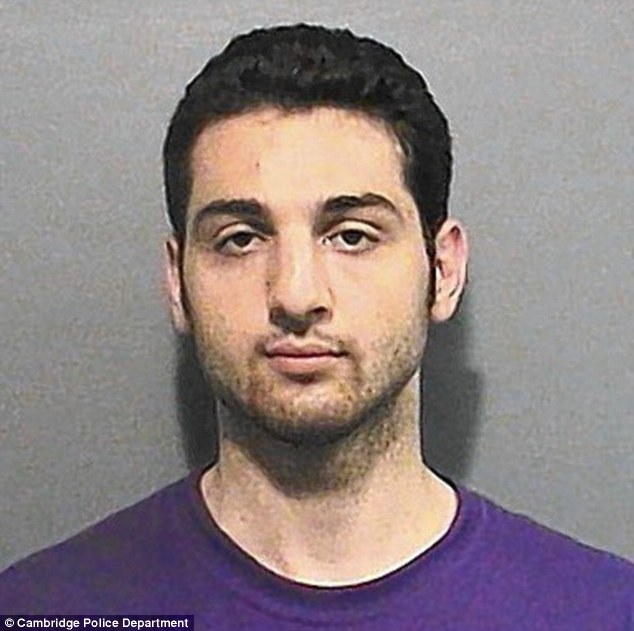
While Tang’s photos and personage are almost entirely absent from corporate news reportage and commentary, Thorndike and a handful of his more than two dozen photos receive sporadic consideration in the short-lived news cycle preceding 5:00PM on April 18, when the FBI revealed images of Tamarlan and Dzhokhar Tsarnaev in the vicinity of the finish line.

The federal government and its major media appendages would then employ this dubious evidence vis-á-vis the Tsarnaevs’ non-American otherness to essentially indict the brothers in the court of public opinion. The spectre of Muslim terrorism–an important propaganda element of the “war on terror”–further legitimated the declaration of martial law in the greater Boston area, culminating in the extrajudicial killing of Tamarlan and the near-murder (so far as the public is lead to believe) of Dzhokhar.

The Boston bombing’s “forgotten” photographs are worthy of further consideration as they suggest the ways in which major news media operate in a de facto censorial fashion with the federal government to highlight certain phenomena while simultaneously rendering important artifacts down the memory hole. The images’ misuse or sheer absence arguably contributed to a major tragedy and miscarriage of justice.

Thorndike’s credentials alongside his bird’s eye perspective of America’s most horrendous terrorist attack since September 11 are of tremendous significance. With this in mind one would think major media would have been clamoring to disseminate his eyewitness account and series of photographs worldwide. Indeed, following the event Mr. Thorndike made himself readily available to the media for interviews.

Although the Associated Press circulating a select few of Thorndike’s photos, LexisNexis and Start Page web searches for “Ben Thorndike” and “Boston Marathon bombing” between the dates April 15, 2013 to May 15, 2013 reveal photo credits in only three US print publications within two weeks of the incident–the New York Daily News (April 17) the Boston Globe (April 18) and the New York Times (April 27)[1] each of which used the photo below; one European paper, the Scottish Express, also used the photos in two pieces.[2] The Globe was the sole outlet to publish remarks from Thorndike extending beyond a soundbite.[3]

As for broadcast outlets, the same search for transcripts reveals only four stories referencing Thorndike, none of which extend beyond a reference or brief interview excerpt. CNN published seven of Thorndike’s photos on its website, yet referenced them only once in subsequent broadcasts.[4]

Mr. Thorndike asserts that he was at his office building on Boylston almost directly above where the first explosion erupted on April 15, 2013. “Almost momentarily when I got there, directly in front of me, right in my sight-line, the explosion went off,” he said. “Just out of reflex, I had the camera on, had it in sports mode, which means I can shoot rapid-fire.” As CBS Boston reported,

“Thorndike shot a sequence of 25 photos right after the blast that shows injured and stunned victims on the ground below. But it was the behavior of one man — seen running from the scene — that prompted Thorndike to contact the FBI.”

“His reflex is to sprint away that really caught my eye [sic]” Thorndike recalls. “Everyone else in the photo is stunned, shocked and frozen,” he said. “It’s either someone who is badly burned, panicked and running, or they’re running for another reason.”[5]

The important fact overlooked, however, that the observed man is running with all limbs intact from the epicenter of a harrowing blast and its purportedly lethal wave of shrapnel.

Thorndike turned the photos over to FBI investigators, who repeatedly interviewed him concerning what he observed. The FBI was tight-lipped concerning the investigation, and what some media termed the “running away man” depicted in the photographs who remains unidentified.

Thorndike’s photographs of what transpired at “ground zero” of the Boston Marathon bombing event contrast sharply with the widely-circulated video footage from the Boston Globe, where the videographer appears to purposely arch the camera away from alleged bombing victims and activity on the sidewalk.

Although more than 260 individuals supposedly suffered injuries as a result of the bombings,[6] the high resolution photographs of both Thorndike and Tang indicate no more than three-to-four dozen persons in the immediate vicinity of the initial explosion, most of whom remain mobile in the immediate aftermath and are soon eclipsed in number by law enforcement and medical responders.

According to the CBS Boston report, “Thorndike and his co-workers fled soon after the photos were taken.” This is perhaps an unusual observation since journalists given that within seconds of the detonations the Boston Police locked down surrounding buildings in order to strictly control media access to the unfolding event. [See, for example, video here at 0:07-2:24].[7] CBS also curiously reports, “All the other bay windows in the office were blown out except the one where Thorndike stood.”[8]

img_8722

{Photo Credit: Benjamin Thorndike]

In terms of broadcast, with the exception of the more detailed interview highlighted above by CBS Boston, the novice photographer is given a soundbite on ABC and NBC newscasts, as the photos are presented and lightly touched upon.[9] For example, like Thorndike, NBC’s Pete Williams similarly references the man emerging from the center of the initial blast. “[Y]ou can see the impact of the blast has partially ripped his clothes away,” Williams remarks.[10]

Thorndike’s photos are also brought up twice on one specific CNN program by the cable channel’s “law enforcement analyst” Mike Brooks, who explains how the visual evidence from a typical crime investigation is handled. “What [federal law enforcement] have done,” Brooks remarks, is that

they will take this picture, any video that is along that route, and they will try to put together a timeline. Going back before, during and after and what they’ll do is they’ll take this video, and they will send it to Quantico. The FBI lab at Quantico has an engineering section. I have used them on a number of my cases to help enhance video and the technology has increased so much, you know, over the years–”[11]

What the FBI in fact proceeded to do with the assistance of major media was almost the exact opposite–focusing on the Tsarnaevs to the exclusion of all other agents and phenomena–and foregrounding these images alongside those of purported evidence and the injured to forthrightly incriminate the Tsarnaevs. The overall effect of this gross manipulation was evident in the jubilation exhibited by Boston residents upon Tamarlan’s murder and Dzhokhar’s capture; mass ecstasy eerily akin to the effect of a public lynching.

Events such as momentous political assassinations, the Tonkin Gulf, Oklahoma City, and 9/11 have suggested that government-corporate manipulation of the public for broader political ends is not difficult to achieve. Control over an event and the select use of stimuli elicits certain desired responses. This is particularly the case in a society that exercises almost unquestioning allegiance toward what Erich Fromm termed “anonymous authority.” The Boston Marathon bombing event suggests the end result of this blind faith; how such finely tuned stagecraft can mobilize a mass mentality to the degree that it misinterprets the implementation of martial law as a genuine representation of a public will.

Notes:

[1] Bev Ford, Greg B. Smith, and Larry McShane, “Police Narrow in on Two Suspects in Boston Marathon Bombing,” New York Daily News, April 17, 2013; Brian MacQuarrie, “Spectator’s Picture [sic] of Scene Draws Attention,” Boston Globe, April 18, 2013; Katharinie Q. Steelye and Ian Lovett, “After Attack, Suspects Returned to Routines, Raising No Suspicions,” New York Times, April 28, 2013.

[2] “Boston Terror Link to N-bomb at Olympics,” Scottish Express, April 21, 2013; “Did Hamza [sic] Inspire Boston Bombers?” Scottish Express, April 28, 2013.

[3] Sera Congi, “Photographer Discusses Images of Boston Marathon Bombing Blast,” CBS WBZ TV Boston, April 17, 2013.

[4] “After the Explosion: Moment by Moment,” CNN, April 17, 2013.

[4] Congi, “Photographer Discusses Images of Boston Marathon Bombing Blast.”

[5] Ibid.

[6] James F. Tracy, “The Boston Marathon Bombing’s Inflated Injury Tallies,” Global Research, May 11, 2013.

[7] PlasmaBurns, “Heroes Are Scripted – Boston Lies,” YouTube, January 11, 2014.

[8] Congi, “Photographer Discusses Images of Boston Marathon Bombing Blast.”

[9] Brian Williams, Anne Thompson, et al., “NBC News for April 16, 2013,” NBC; “Images of Bomb and Torn Backpack, Pressure Cooker with Ball Bearings,” ABC News Transcript, April 17, 2013; Anderson Cooper, Tom Fuentes, et al., “Reports On Bombing Arrest; Justice Department: No Arrest Made,” CNN, April 17, 2013; Mark Lauer, Savannah Guthrie, et al., “NBC News for April 17, 2013.”

[10] Lauer, Guthrie, et al., “NBC News for April 17, 2013.”

[11] Cooper, Fuentes, et al., “Reports On Bombing Arrest; Justice Department: No Arrest Made,” CNN, April 17, 2013.

For more information, read The Boston Marathon Bombing: A Compendium of Research and Analysis 4/13/14

Mass Incarceration in the US Viral Video

imgpress

Though many of us may be aware of the widespread societal harm caused by the prison-industrial complex, as is the case with many complex issues, it’s helpful to compile and organize the multitude of relevant data through infographics or short videos to drive the message home for others who may be less familiar with the issues. This is exactly what the Vlogbrothers did in collaboration with Visual.y, Kurzgesagt and The Prison Policy Initiative with this recently released video:

Notes from the vlogbrothers YouTube channel:

Thanks to Visually (http://Visual.ly) for facilitating the creation of this video, to http://youtube.com/kurzgesagt for the animation, and to The Prison Policy Initiative for research help and fact checking. (http://www.prisonpolicy.org).

It wasn’t easy to pick this topic, but I believe that America’s 40-year policy of mass incarceration is deeply unethical, not very effective, and promotes the security of the few at the expense of the many.

It’s hard for me, as a person who was born into privilege, to imagine the challenges convicted criminals face, often for crimes that are utterly non-violent.

If you’re feeling like you want to do something about this, I’m mostly just making this video as an informational resource and to encourage people to think of felons not as bad, scary people but just as people.

The people at The Prison Policy Initiative were very helpful in the creation of this video and if you want to learn more about their work and how to get involved go to http://www.prisonpolicy.org


A lot of people have been asking why I didn’t cover race in this video. It is absolutely true that our justice system has serious racial bias at every step: arrest, prosecution, conviction, and sentencing. But as I researched this video (I started this project three months ago) it was very clear that I wouldn’t be doing anyone any favors if I tried to make this a comprehensive study of the US criminal justice system.

Racism, the war on drugs, sentencing laws, class bias…I found that as soon as I started hitting those topics there was no way to do it justice without a lot more time. It’s not a simple discussion (though many would have you believe that it is). So I decided to make this video a top-down introduction for people who know very little about our incarceration policy (the vast majority of people.) I wanted to discuss how this policy is bad for /everyone/ whether you’re black or white, privileged or not.

Do I feel bad about not talking about race? Absolutely…but I had a goal and I determined what I thought was the best path for accomplishing it.


The Science (and Mystery) of Sleep

dream-web-270x204

Given the widespread use of technology and stresses caused by economic instability, it’s no surprise that more than one out of three adults in America today get less than seven hours of sleep a night and 38% reported unintentionally falling asleep during the day at least once in the past month according to a Centers for Disease Control’s Morbidity and Mortality Report. What may come as more of a surprise are results of studies which indicate just how important getting a healthy amount of sleep really is for our physical and mental well-being. According to a recent article by Dr. Joseph Mercola, risks associated with sleep deprivation include:

  1. Reaction Time Slows: When you’re sleep-deprived, you’re not going to react as quickly as you normally would, making driving or other potentially dangerous activities, like using power tools, risky. One study even found that sleepiness behind the wheel was nearly as dangerous as drinking and driving.2
  2. Your Cognition Suffers: Your ability to think clearly is also dampened by lack of sleep. If you’re sleep-deprived, you will have trouble retaining memories, processing information, and making decisions. This is why it’s so important to get a good night’s sleep prior to important events at work or home.
  3. Emotions Are Heightened: As your reaction time and cognition slows, your emotions will be kicked into high gear. This means that arguments with co-workers or your spouse are likely and you’re probably going to be at fault for blowing things out of proportion.

Meanwhile, previous research has found that sleep deprivation has the same effect on your immune system as physical stress or illness,3 which may help explain why lack of sleep is tied to an increased risk of numerous chronic diseases.

In addition, getting less than seven hours of sleep or having regular interrupted and/or impaired sleep can affect hormone levels and expression of genes which can:

  • Increase your risk of heart disease and cancer

  • Harm your brain by halting new neuron production. Sleep deprivation can increase levels of corticosterone (a stress hormone), resulting in fewer new brain cells being created in your hippocampus

  • Contribute to a pre-diabetic, insulin-resistant state, making you feel hungry even if you’ve already eaten, which can lead to weight gain

  • Contribute to premature aging by interfering with your growth hormone production, normally released by your pituitary gland during deep sleep (and during certain types of exercise, such as high-intensity interval training)

  • Increase your risk of dying from any cause

Read the full article here: http://articles.mercola.com/sites/articles/archive/2014/03/27/sleep-deprivation-risks.aspx

A recent post at Thought Infection also highlights the importance of sleep, speculating on how it could serve as a biological compression algorithm. From the article’s conclusion:

One might think about it like a similar process that happens when a computer is put to sleep. The energetically costly RAM is compressed and dumped to the much more efficient, but also much slower hard disk. Perhaps the brain might operate in a similar way, finding the most energetically efficient means to store new memories in synaptic circuits by connecting new memories to old ones.

Taking this a little further, I think this idea has given me a little bit of insight into how biological brains function. Unlike a computer which fills up the hard drive with new information stored with (more or less) perfect fidelity, organic brains have to have some pre-existing map to connect a novel sensation both in order to make sense of it and to store the memory of it.

An apple is only an apple after you know what an apple is.

The brain does not have an unlimited tape of memory onto which to record, or an infinite supply of energy to build synapses. The brain must make due with what resources it has, and that is the genius of it. Because brains must find ways that new ideas and memories connect to old ones, we are energetically required to find new ways of thinking about the world every night. Sleep reinvents us one night at a time.

Read the full article here: http://thoughtinfection.com/2014/04/12/is-sleep-a-biological-compression-algorithm/

While this theory may possibly explain an important neurological function of sleep, the subjective experience of the dream state remains as shrouded in mystery as ever.

Anecdotal evidence suggests that during sleep it sometimes is not just one’s direct experiences being processed but also future experiences and experiences of loved ones, ancestors, and those of people going through traumatic events as well. In other words, in rare cases it may also be an an interconnected and non-local state of consciousness.

The following two examples were recently featured in an article reposted at Red Ice Creations:

Scene 1. Mark Twain was famous for mocking every orthodoxy and convention, including, it turns out, the conventions of space and time. As he relates the events in his diaries, Twain and his brother Henry were working on the riverboat Pennsylvania in June 1858. While they were in port in St. Louis, the writer had a dream:


In the morning, when I awoke I had been dreaming, and the dream was so vivid, so like reality, that it deceived me, and I thought it was real. In the dream I had seen Henry a corpse. He lay in a metallic burial case. He was dressed in a suit of my clothing, and on his breast lay a great bouquet of flowers, mainly white roses, with a red rose in the centre.

Twain awoke, got dressed, and prepared to go view the casket. He was walking to the house where he thought the casket lay before he realized “that there was nothing real about this—it was only a dream.”

Alas, it was not. A few weeks later, Henry was badly burned in a boiler explosion and then accidentally killed when some young doctors gave him an overdose of opium for the pain. Normally the dead were buried in a simple pine coffin, but some women had raised $60 to put Henry in a metal one. Twain explains what happened next:

When I came back and entered the dead-room Henry lay in that open case, and he was dressed in a suit of my clothing. He had borrowed it without my knowledge during our last sojourn in St. Louis; and I recognized instantly that my dream of several weeks before was here exactly reproduced, so far as these details went—and I think I missed one detail; but that one was immediately supplied, for just then an elderly lady entered the place with a large bouquet consisting mainly of white roses, and in the center of it was a red rose, and she laid it on his breast.

Who would not be permanently marked, at once inspired and haunted, by such a series of events? Who of us, if this were our dream and our brother, could honestly dismiss it as a series of coincidences? Twain could not. He was obsessed with such moments in his life, of which there were many. In 1878 he described some of them in an essay and even theorized how they worked. But he could not bring himself to publish it, as he feared “the public would treat the thing as a joke whereas I was in earnest.” He offered the essay to the North American Review on the condition that it be published anonymously. The magazine refused to do so. Finally, Twain published the article in Harper’s, in two installments: “Mental Telegraphy: A Manuscript With a History” (1891) and “Mental Telegraphy Again” (1895).

Mental telegraphy. The technological metaphor points to Twain’s conviction that such events were connected to the acts of reading and writing. Indeed, he suspected that whatever processes this mental telegraphy involved had some relationship to the sources of his literary powers. The “manuscript with a history” of the first essay’s title refers to a detailed plotline for a story about some Nevada silver mines that one day came blazing into his mind. Twain came to believe that he had received this idea from a friend 3,000 miles away through mental telegraphy.

Scene 2. The American forensic pathologist Janis Amatuzio’s book Beyond Knowing is filled with extraordinary stories of impossible things that routinely happen around death. Here is one such tale.

It began one night when Amatuzio encountered a very troubled hospital chaplain, who asked her if she knew how they had found the body of a young man recently killed in a car accident. Amatuzio replied that her records showed that the Coon Rapids Police Department had recovered the body in a frozen creek bed at 4:45 a.m.

“No,” the man replied. “Do you know how they really found him?” The chaplain then explained how he had spoken with the dead man’s wife, who related a vivid dream she’d had that night of her husband standing next to her bed, apologizing and explaining that he had been in a car accident, and that his car was in a ditch where it could not be seen from the road. She awoke immediately, at 4:20, and called the police to tell them that her husband had been in a car accident not far from their home, and that his car was in a ravine that could not be seen from the road. They recovered the body 20 minutes later.

Read the full article here: http://chronicle.com/article/Embrace-the-Unexplained/145557


Saturday Matinee: The Hidden

Hidden_2

In the fine tradition of Robocop and They Live, “The Hidden” (1987) is a sci-fi thriller with a layer of social commentary skewering excesses of late 80s American culture. The plot revolves around the pursuit of a psychopathic body-snatching alien with a predilection for things that happen to be Hollywood action movie tropes (ie. sex, drugs, rock and roll, fast cars, guns, money, etc). Whether intended by the filmmakers or not, the shapeshifting alien is a perfect metaphor for the corporate Id free from the moral and ethical constraints of the Superego; an embodiment of pure unbridled greed. Whatever it wants it takes through brute force with no regard for the interests of others or even the bodies it inhabits, a strategy which gets it dangerously close to the highest levels of political power. Various actors depicting hosts for the villain effectively convey their possession by the same entity while Kyle MacLachlan stars as a more benevolent alien posing as a detective with a performance reminiscent of his role as Dale Cooper in Twin Peaks. Michael Nouri plays a skeptical cop who goes through the traditional buddy cop story story arc (though it’s made more intriguing by the fact that he’s partnered with an alien).

New Cover-up in Boston Bombing Saga—Blaming Moscow

article-0-1CFA75C300000578-914_634x631

By Russ Baker

Source: WhoWhatWhy.com

Maybe you heard: the Russians are responsible for the Boston Marathon Bombing. At least indirectly.

That’s what the New York Times says. Had the Russians told the Americans everything they knew about Tamerlan Tsarnaev, the bombing might have been averted by the FBI. The Times knows this because it was told so by an anonymous “senior American official” who got an advance look at a report from the “intelligence community.”

***

Anyone who still entertains the fantasy that America is a vigorous, healthy democracy with an honest and reliable security apparatus and an honest, competent, vigilant media need only consider this major news leak just published as a New York Times exclusive. It pretty much sums up the fundamental corruption of our institutions, the lack of accountability, and the deep-dyed complicity of the “finest” brand in American journalism.

Killing Two Birds with One Stone

Just days before the first anniversary of the Boston bombing on April 15, some unnamed “senior American official” puts the blame for the bombing squarely on…Vladimir Putin.

It takes a keen understanding of certain members of the American media to know they will promote, without question, the latest “intelligence community” version of events. Which is that responsibility for the second largest “terror attack” after 9/11 should be pinned on the Russians, currently America’s bête noir over Ukraine.

Consider the cynical manipulation of public opinion involved here. The government permits, presumably authorizes, a high official—the Attorney General or someone of that status, perhaps even the Vice President—to leak confidential information for no apparent purpose beyond seeking to put a damper on legitimate inquiries into the behavior of the American government at the most fundamental level.

And the world’s vaunted “newspaper of record”—its brand largely based on insider access and the willingness of powerful figures to give it “hot stuff” in return for controlling public perceptions— shamelessly runs this leak with no attempt to question its timing or provenance.

Let’s look at what this article actually says. Here’s the opening paragraph:

The Russian government declined to provide the FBI with information about one of the Boston marathon bombing suspects two years before the attack that likely would have prompted more extensive scrutiny of the suspect, according to an inspector general’s review of how U.S. intelligence and law enforcement agencies could have thwarted the bombing.

And here’s the “takeaway”:

While the review largely exonerates the FBI, it does say that agents in the Boston area who investigated the Russian intelligence in 2011 could have conducted a few more interviews when they first examined the information.

The FBI agents also could have ordered turkey sandwiches instead of pastrami, which surely would have been a little healthier.

***

So, New York Times, should we trust the anonymous individual, or more importantly, the report that none of us have seen?

The report was produced by the inspector general of the Intelligence Community, which has responsibility for 17 separate agencies, and the inspectors general from the Department of Homeland Security and the Central Intelligence Agency.

Now, the Times doesn’t offer any useful context on why these reviews took place, beyond a pro forma effort to respond to complaints from a handful of congressional members (see this and this). The article does not address the quality or credibility of this “self-investigation” and the overall track record of these investigators. Nor does it express undue interest in why the report appears to have been finished just in time for the anniversary of the bombing.

In our view, the article is one hundred percent “stovepiping.” That’s when claimed raw intelligence is transmitted directly to an end user without any attempt at scrutiny or skepticism. This is irresponsible journalism, and it is the kind of behavior (from The New York Times again) that smoothed the way for the U.S. to launch the Iraq war in 2003.

The Times doesn’t even point out how self-serving the report is, coming from an “intelligence community” that has been publicly criticized for its actions leading up to the Boston Marathon bombing and its behavior since. (For more on the dozens of major reasons not to trust anything the authorities say about the Boston Bombing, see this, this, and this. For perspective on the media’s cooperation with the FBI in essentially falsifying the Bureau’s record throughout its history, see this).

Now let’s consider the core substance of the new revelations:

[A]fter an initial investigation by the F.B.I., the Russians declined several requests for additional information about Mr. Tsarnaev….

Did the Times ask the Russians about this? Did they find out if the Russians actually “declined” several requests, or whether they ever got back to the FBI?

The anonymous official notes one specific piece of evidence that the Russians did not share until after the bombing: that intercepted telephone conversations between Tamerlan Tsarnaev and his mother included discussions of Islamic jihad. The official speculates that this information might have given the FBI greater authority to conduct surveillance of the suspects.

However, the reality is that the Russians had already warned that Tamerlan was an Islamic radical, and it is not clear how this additional information would necessarily have provided anything truly substantive to add to a request for spying authority.

It’s also highly questionable, based in part on Edward Snowden’s revelations, whether the FBI or the NSA were actually adhering to such restrictions on spying anyway. Finally, it’s worth noting how truly remarkable it is that the Russians shared such intelligence at all. That they didn’t want to volunteer that they were capturing telephone calls is not that surprising, on the other hand.

Hiding the Real Story?

The Times does mention, almost in passing, what should have been the key point of an article: the timing of the “news” regarding the report:

It has not been made public, but members of Congress are scheduled to be briefed on it Thursday, and some of its findings are expected to be released before Tuesday, the first anniversary of the bombings.

This leak, which clears the FBI of all charges of incompetence or worse, comes just when the “American conversation” will again intensely focus on the nature of the “war on terror” and the trustworthiness of our vast secret state.

It also comes, most conveniently for the Bureau, at the precise moment when Dzhokhar Tsarnaev’s defense counsel has been seeking to learn the exact chronology and nature of the FBI’s interaction with the Tsarnaev family.

Months ago, we ran Peter Dale Scott’s rumination on whether the FBI could have recruited Tamerlan Tsarnaev as an informant, as it has done thousands of times before with other immigrants of a similar profile. Recently, the defense for Tamerlan’s younger brother, Dzhokhar, essentially claimed this was correct—that the Bureau at least attempted to recruit the older Tsarnaev. That has been cursorily reported by the major media, but no one seems to have connected the dots linking this claim to the new report that conveniently exonerates the FBI for failing to take action against the Tsarnaevs in time to stop the bombing.

A Curious Little Slip

As we have previously reported, it was the same duo of New York Times national security reporters, Schmidt and Schmitt, who had first, inadvertently it seems, raised a tremendously important question: when did the Tsarnaev family first come to the attention of the FBI?

The Russian warning to the US about Tamerlan Tsarnaev purportedly came in March 2011.

But according to an earlier article by Schmitt and Schmidt (along with a third reporter), the Bureau’s first contact with the Tsarnaevs came in January 2011. Though the Times did not make anything of this fact, it would be enormously consequential—because it would mean that the FBI was interacting with the Tsarnaevs two months before the Russians suggested the US take a close look at Tamerlan Tsarnaev.

If that was in error, the Times should have issued a correction. But it hasn’t. (Neither Schmidt nor Schmitt responded to WhoWhatWhy’s emails requesting comment.)

Interestingly, Schmidt and Schmitt, in subsequent articles, including the recent one, make no more mention of this early FBI contact. As it stands, the New York Times is on record of having asserted, again based on what sources told it, that the FBI was interacting with the Tsarnaevs before the Russians ever contacted it. If that early report was true, then by definition, the Inspector General’s report (and the leaked article about it) would be calculated parts of a cover-up about an FBI foul-up.

Conversely, if the early report was in error, then we need to know who provided it, or how they got that information wrong. Serious investigators know not to reject anomalies and “wrong” early reports as simply the result of haste or rumor without at least checking out the possibility that the early reports were right—but were later suppressed because they might cause problems to someone in power.

***

It is worth noting that the revelations in the new report—sure to be picked up by other media outlets that tend to repeat unquestioningly whatever the Times publishes—will be all the average American remembers about the FBI’s failure to prevent the Marathon bombing, and what may lie behind that failure.

Most members of the public will never know of the substantial indications that something is seriously wrong with what the government has put out about this affair. They will only recall that the FBI was somehow “cleared.” And they will probably remember that Putin’s Russia was somehow at fault.

In the final analysis, what we have just witnessed is the kind of arrant manipulation that shows the contempt of the “system” for the “people.” The “best” news organization gets another exclusive story. The US government gets to point its finger again at the Russian bogeyman. The FBI and the security apparatus get another free pass.

And the American people, once again, are fed pig slop and told to imagine sirloin.

Is the US or the World Coming to an End?

dollar-gasp-460_1007200c

Source: Paul Craig Roberts

2014 is shaping up as a year of reckoning for the United States.

Two pressures are building on the US dollar. One pressure comes from the Federal Reserve’s declining ability to rig the price of gold as Western gold supplies shrivel and market knowledge of the Fed’s illegal price rigging spreads. The evidence of massive amounts of naked shorts being dumped into the paper gold futures market at times of day when trading is thin is unequivocal. It has become obvious that the price of gold is being rigged in the futures market in order to protect the dollar’s value from QE.

The other pressure arises from the Obama regime’s foolish threats of sanctions on Russia. Other countries are no longer willing to tolerate Washington’s abuse of the world dollar standard. Washington uses the dollar-based international payments system to inflict damage on the economies of countries that resist Washington’s political hegemony.

Russia and China have had enough. As I have reported and as Peter Koenig reports here http://www.informationclearinghouse.info/article38165.htm Russia and China are disconnecting their international trade from the dollar. Henceforth, Russia will conduct its trade, including the sale of oil and natural gas to Europe, in rubles and in the currencies of its BRICS partners.

This means a big drop in the demand for US dollars and a corresponding drop in the dollar’s exchange value.

As John Williams (shadowstats.com) has made clear, the US economy has not recovered from the downturn in 2008 and has weakened further. The vast majority of the US population is hard pressed from the lack of income growth for years. As the US is now an import-dependent economy, a drop in the dollar’s value will raise US prices and push living standards lower.

All evidence points to US economic failure in 2014, and that is the conclusion of John Williams’ April 9 report.

This year could also see the breakup of NATO and even the EU. Washington’s reckless coup in Ukraine and threat of sanctions against Russia have pushed its NATO puppet states onto dangerous ground. Washington misjudged the reaction in Ukraine to its overthrow of the elected democratic government and imposition of a stooge government. Crimea quickly departed Ukraine and rejoined Russia. Other former Russian territories in Ukraine might soon follow. Protesters in Lugansk, Donetsk, and Kharkov are demanding their own referendums. Protesters have declared the Donetsk People’s Republic and Kharkov People’s Republic. Washington’s stooge government in Kiev has threatened to put the protests down with violence. http://rt.com/news/eastern-ukraine-violence-threats-405/ Washington claims that the protests are organized by Russia, but no one believes Washington, not even its Ukrainian stooges.

Russian news reports have identified US mercenaries among the Kiev force that has been sent to put down the separatists in eastern Ukraine. A member of the right-wing, neo-Nazi Fatherland Party in the Kiev parliament has called for shooting the protesters dead.

Violence against the protesters is likely to bring in the Russian Army and result in the return to Russia of its former territories in Eastern Ukraine that were attached to Ukraine by the Soviet Communist Party.

With Washington out on a limb issuing threats hand over fist, Washington is pushing Europe into two highly undesirable confrontations. Europeans do not want a war with Russia over Washington’s coup in Kiev, and Europeans understand that any real sanctions on Russia, if observed, would do far more damage to Europeans. Within the EU, growing economic inequality among the countries, high unemployment, and stringent economic austerity imposed on poorer members have produced enormous strains. Europeans are in no mood to bear the brunt of a Washington-orchestrated conflict with Russia. While Washington presents Europe with war and sacrifice, Russia and China offer trade and friendship. Washington will do its best to keep European politicians bought-and-paid-for and in line with Washington’s policies, but the downside for Europe of going along with Washington is now much larger.

Across many fronts, Washington is emerging in the world’s eye as duplicitous, untrustworthy, and totally corrupt. A Securities and Exchange Commission prosecuting attorney, James Kidney used the occasion of his retirement to reveal that higher ups had squelched his prosecutions of Goldman Sachs and other “banks too big to fail,” because his SEC bosses were not focused on justice but “on getting high-paying jobs after their government service” by protecting the banks from prosecution for their illegal actions. http://www.counterpunch.org/2014/04/09/65578/

The US Agency for International Development has been caught trying to use social media to overthrow the government of Cuba. http://rt.com/news/cuba-usaid-senate-zunzuneo-241/

This audacious recklessness comes on top of Washington’s overthrow of the Ukrainian government, the NSA spying scandal, Seymour Hersh’s investigative report that the Sarin gas attack in Syria was a false flag event arranged by NATO member Turkey in order to justify a US military attack on Syria, Washington’s forcing down Bolivian President Evo Morales’ presidential plane to be searched, Saddam Hussein’s “weapons of mass destruction,” the misuse of the Libyan no-fly resolution for military attack, and on and on. Essentially, Washington has so badly damaged other countries’ confidence in the judgment and integrity of the US government that the world has lost its belief in US leadership. Washington is reduced to threats and bribes and increasingly presents as a bully.

The self-inflicted hammer blows to Washington’s credibility have taken a toll. The most serious blow of all is the dawning realization everywhere that Washington’s crackpot conspiracy theory of 9/11 is false. Large numbers of independent experts as well as more than one hundred first responders have contradicted every aspect of Washington’s absurd conspiracy theory. No aware person believes that a few Saudi Arabians, who could not fly airplanes, operating without help from any intelligence agency, outwitted the entire National Security State, not only all 16 US intelligence agencies but also all intelligence agencies of NATO and Israel as well.

Nothing worked on 9/11. Airport security failed four times in one hour, more failures in one hour than have occurred during the other 116,232 hours of the 21st century combined. For the first time in history the US Air Force could not get interceptor fighters off the ground and into the sky. For the first time in history Air Traffic Control lost airliners for up to one hour and did not report it. For the first time in history low temperature, short-lived, fires on a few floors caused massive steel structures to weaken and collapse. For the first time in history 3 skyscrapers fell at essentially free fall acceleration without the benefit of controlled demolition removing resistance from below.

Two-thirds of Americans fell for this crackpot story. The left-wing fell for it, because they saw the story as the oppressed striking back at America’s evil empire. The right-wing fell for the story, because they saw it as the demonized Muslims striking out at American goodness. President George W. Bush expressed the right-wing view very well: “They hate us for our freedom and democracy.”

But no one else believed it, least of all the Italians. Italians had been informed some years previously about government false flag events when their President revealed the truth about secret Operation Gladio. Operation Gladio was an operation run by the CIA and Italian intelligence during the second half of the 20th century to set off bombs that would kill European women and children in order to blame communists and, thereby, erode support for European communist parties.

Italians were among the first to make video presentations challenging Washington’s crackpot story of 9/11. The ultimate of this challenge is the 1 hour and 45 minute film, “Zero.” You can watch it here: http://www.youtube.com/watch?v=QU961SGps8g&feature=youtu.be

Zero was produced as a film investigating 9/ll by the Italian company Telemaco. Many prominent people appear in the film along with independent experts. Together, they disprove every assertion made by the US government regarding its explanation of 9/11.

The film was shown to the European parliament.

It is impossible for anyone who watches this film to believe one word of the official explanation of 9/11.

The conclusion is increasingly difficult to avoid that elements of the US government blew up three New York skyscrapers in order to destroy Iraq, Afghanistan, Libya, Somalia, Syria, Iran, and Hezbollah and to launch the US on the neoconservatives agenda of US world hegemony.

China and Russia protested but accepted Libya’s destruction even though it was to their own detriment. But Iran became a red line. Washington was blocked, so Washington decided to cause major problems for Russia in Ukraine in order to distract Russia from Washington’s agenda elsewhere.

China has been uncertain about the trade-offs between its trade surpluses with the US and Washington’s growing encirclement of China with naval and air bases. China has come to the conclusion that China has the same enemy as Russia has–Washington.

One of two things is likely: Either the US dollar will be abandoned and collapse in value, thus ending Washington’s superpower status and Washington’s threat to world peace, or Washington will lead its puppets into military conflict with Russia and China. The outcome of such a war would be far more devastating than the collapse of the US dollar.