It’s War: The Real Meat Grinder Starts Now

By Pepe Escobar

Source: Strategic Culture Foundation

No more shadow play. It’s now in the open. No holds barred. 

Exhibit 1: Friday, March 22, 2024. It’s War. The Kremlin, via Peskov, finally admits it, on the record.

The money quote:

“Russia cannot allow the existence on its borders of a state that has a documented intention to use any methods to take Crimea away from it, not to mention the territory of new regions.”

Translation: the Hegemon-constructed Kiev mongrel is doomed, one way or another. The Kremlin signal: “We haven’t even started” starts now.

Exhibit 2: Friday afternoon, a few hours after Peskov. Confirmed by a serious European – not Russian – source. The first counter-signal.

Regular troops from France, Germany and Poland have arrived, by rail and air, to Cherkassy, south of Kiev. A substantial force. No numbers leaked. They are being housed in schools. For all practical purposes, this is a NATO force.

That signals, “Let the games begin”. From a Russian point of view, Mr. Khinzal’s business cards are set to be in great demand.

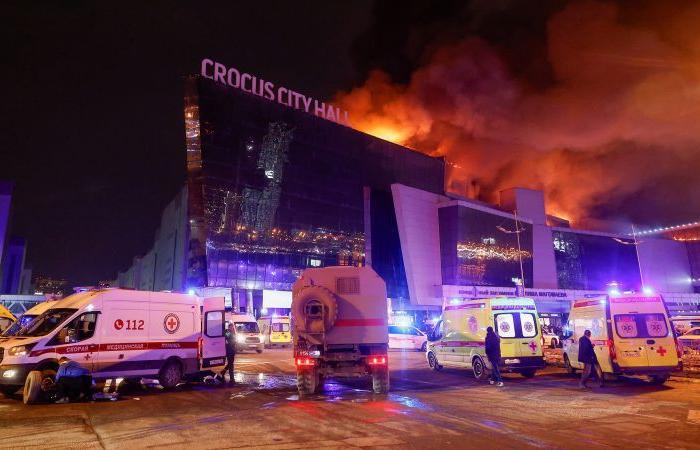
Exhibit 3: Friday evening. Terror attack on Crocus City, a music venue northwest of Moscow. A heavily trained commando shoots people on sight, point blank, in cold blood, then sets a concert hall on fire. The definitive counter-signal: with the battlefield collapsing, all that’s left is terrorism in Moscow.

And just as terror was striking Moscow, the US and the UK, in southwest Asia, was bombing Sana’a, the Yemeni capital, with at least five strikes.

Some nifty coordination. Yemen has just clinched a strategic deal in Oman with Russia-China for no-hassle navigation in the Red Sea, and is among the top candidates for BRICS+ expansion at the summit in Kazan next October.

Not only the Houthis are spectacularly defeating thalassocracy, they have the Russia-China strategic partnership on their side. Assuring China and Russia that their ships can sail through the Bab-al-Mandeb, Red Sea and Gulf of Aden with no problems is exchanged with total political support from Beijing and Moscow.

The sponsors remain the same

Deep in the night in Moscow, before dawn on Saturday 23. Virtually no one is sleeping. Rumors dance like dervishes on countless screens. Of course nothing has been confirmed – yet. Only the FSB will have answers. A massive investigation is in progress.

The timing of the Crocus massacre is quite intriguing. On a Friday during Ramadan. Real Muslims would not even think about perpetrating a mass murder of unarmed civilians under such a holy occasion. Compare it with the ISIS card being frantically branded by the usual suspects.

Let’s go pop. To quote Talking Heads: “This ain’t no party/ this ain’t no disco/ this ain’t no fooling around”. Oh no; it’s more like an all-American psy op. ISIS are cartoonish mercenaries/goons. Not real Muslims. And everyone knows who finances and weaponizes them.

That leads to the most possible scenario, before the FSB weighs in: ISIS goons imported from the Syria battleground – as it stands, probably Tajiks – trained by CIA and MI6, working on behalf of the Ukrainian SBU. Several witnesses at Crocus referred to “Wahhabis” – as in the commando killers did not look like Slavs.

It was up to Serbia’s Aleksandar Vucic to cut to the chase. He directly connected the “warnings” in early March from American and British embassies directed at their citizens not to visit public places in Moscow with CIA/MI6 intel having inside info about possible terrorism, and not disclosing it to Moscow.

The plot thickens when it is established that Crocus is owned by the Agalarovs: an Azeri-Russian billionaire family, very close friends of…

… Donald Trump.

Talk about a Deep State-pinpointed target.

ISIS spin-off or banderistas – the sponsors remain the same. The clownish secretary of the National Security and Defense Council of Ukraine, Oleksiy Danilov, was dumb enough to virtually, indirectly confirm they did it, saying on Ukrainian TV, “we will give them [Russians] this kind of fun more often.”

But it was up to Sergei Goncharov, a veteran of the elite Russia Alpha anti-terrorism unit, to get closer to unwrapping the enigma: he told Sputnik the most feasible mastermind is Kyrylo Budanov – the chief of the Main Directorate of Intelligence at the Ukrainian Ministry of Defense.

The “spy chief” who happens to be the top CIA asset in Kiev.

It’s got to go till the last Ukrainian

The three exhibits above complement what the head of NATO’s

military committee, Rob Bauer, previously told a security forum in Kiev: “You need more than just grenades – you need people to replace the dead and wounded. And this means mobilization.”

Translation: NATO spelling out this is a war until the last Ukrainian.

And the “leadership” in Kiev still does not get it. Former Minister of Infrastructure Omelyan: “If we win, we will pay back with Russian oil, gas, diamonds and fur. If we lose, there will be no talk of money – the West will think about how to survive.”

In parallel, puny “garden-and jungle” Borrell admitted that it would be “difficult” for the EU to find an extra 50 billion euros for Kiev if Washington pulls the plug. The cocaine-fueled sweaty sweatshirt leadership actually believes that Washington is not “helping” in the form of loans, but in the form of free gifts. And the same applies for the EU.

The Theater of the Absurd is unmatchable. The German Liver Sausage Chancellor actually believes that proceeds from stolen Russian assets “do not belong to anyone”, so they can be used to finance extra Kiev weaponizing.

Everyone with a brain knows that using interest from “frozen”, actually stolen Russian assets to weaponize Ukraine is a dead end – unless they steal all of Russia’s assets, roughly $200 billion, mostly parked in Belgium and Switzerland: that would tank the Euro for good, and the whole EU economy for that matter.

Eurocrats better listen to Russian Central Bank major “disrupter” (American terminology) Elvira Nabiullina: The Bank of Russia will take “appropriate measures” if the EU does anything on the “frozen”/stolen Russian assets.

It goes without saying that the three exhibits above completely nullify the “La Cage aux Folles” circus promoted by the puny Petit Roi, now known across his French domains as Macronapoleon.

Virtually the whole planet, including the English-speaking Global North, had already been mocking the “exploits” of his Can Can Moulin Rouge Army.

So French, German and Polish soldiers, as part of NATO, are already in the south of Kiev. The most possible scenario is that they will stay far, far away from the frontlines – although traceable by Mr. Khinzal’s business activities.

Even before this new NATO batch arriving in the south of Kiev, Poland – which happens to serve as prime transit corridor for Kiev’s troops – had confirmed that Western troops are already on the ground.

So this is not about mercenaries anymore. France, by the way, is only 7th in terms of mercenaries on the ground, largely trailing Poland, the US and Georgia, for instance. The Russian Ministry of Defense has all the precise records.

In a nutshell: now war has morphed from Donetsk, Avdeyevka and Belgorod to Moscow. Further on down the road, it may not just stop in Kiev. It may only stop in Lviv. Mr. 87%, enjoying massive national near-unanimity,  now has the mandate to go all the way. Especially after Crocus.

There’s every possibility the terror tactics by Kiev goons will finally drive Russia to return Ukraine to its original 17th century landlocked borders: Black Sea-deprived, and with Poland, Romania, and Hungary reclaiming their former territories.

Remaining Ukrainians will start to ask serious questions about what led them to fight – literally to their death – on behalf of the US Deep State, the military complex and BlackRock.

As it stands, the Highway to Hell meat grinder is bound to reach maximum velocity.
US Gov’t Remaining Silent on American Detained in Ukraine for His Political Views

Detained by Security Service of Ukraine (SBU) due to his political views on the conflict…

By Dave DeCamp

Source: The Free Thought Project

The State Department has refused to say if it’s engaging with the Ukrainian government over American citizen Gonzalo Lira, who was detained by the Security Service of Ukraine (SBU) due to his political views on the conflict with Russia.

Lira has a popular YouTube channel and a large following on Twitter and Telegram. He is also a writer who has contributed to several media outlets, including Business Insider. Lira was born in California and is a dual citizen of the US and Chile and had been living in Kharkiv, Ukraine, throughout the war.

Lira is a critic of the Ukrainian government and was arrested by the SBU on charges of justifying the Russian invasion. “After the start of the full-scale invasion, the blogger was one of the first to support the Russian invaders and glorify their war crimes,” the SBU said in a press release referring to Lira.

The SBU also accused Lira of “discrediting the top military and political leadership and the Defense Forces of our state.” He was charged under sections 2 and 3 of Article 436-2 of Ukraine’s criminal code, which outlaws the “distribution of materials” that justify Russia’s actions going back to 2014.

Epoch Times reporter Liam Cosgrove asked State Department spokesman Matthew Miller if the administration was aware of Lira’s detainment and how the US feels about Ukraine arresting an American for speech.

“So I will say in general that we’re aware of the report. We obviously support the exercise of freedom of speech anywhere in the world, and I’ll leave it at that,” Miller said.

When asked if the administration was working to secure Lira’s release, Miller said, “I’m going to leave my comments where I just left them.”

Cosgrove also asked Reps. Ted Lieu (D-CA) and Marjorie Taylor Greene (R-GA) about Lira’s detainment. Lieu said that he wasn’t aware of the case but said US citizens should “have the ability to express their thoughts and views” and that he would look into the arrest.

Responding to the news, Greene told Cosgrove: “America is providing weapons, equipment for the defense of their country, but the Ukrainian government is not going to defend any American’s freedom of speech, and that’s a real problem.”

Lira’s arrest received virtually no attention in Western media. One of the few outlets to cover it was the Daily Beast, which smeared the American instead of questioning the charges. According to the BeastLira is facing five to eight years in prison.

Researchers Find Massive Anti-Russian ‘Bot Army’

By Peter Cronau

Source: Consortium News

A team of researchers at the University of Adelaide have found that as many as 80 percent of tweets about the 2022 Russia-Ukraine invasion in its early weeks were part of a covert propaganda campaign originating from automated fake “bot” accounts.

An anti-Russia propaganda campaign originating from a “bot army” of phony automated Twitter accounts flooded the internet at the start of the war.

The research shows that of the more than 5 million tweets studied, 90.2 percent (both bot and non-bot) came from accounts that were pro-Ukraine, with fewer than 7 percent of the accounts being classed as pro-Russian.

The university researchers also found these automated tweets had been purposely used to drive up fear amongst people targeted by them, boosting a high level of statistically measurable “angst” in the online discourse.

The research team analysed a massively unprecedented 5,203,746 tweets, sent with key hashtags, in the first two weeks of the Russian invasion of Ukraine from Feb. 24. The researchers looked at predominately English-language accounts. A calculated 1.8 million unique Twitter accounts in the dataset posted at least one English-language tweet.

The results were published in August in a research paper, titled “#IStandWithPutin versus #IStandWithUkraine: The interaction of bots and humans in discussion of the Russia/Ukraine war,” by the University of Adelaide’s School of Mathematical Science.

The size of the sample under study, of over 5-million tweets, dwarfs other recent studies of covert propaganda in social media surrounding the Ukraine war. 

The little-reported Stanford University/Graphika research on Western disinformation, analysed by Declassified Australia in September, examined just under 300,000 tweets from 146 Twitter accounts.

The Meta/Facebook research on Russian disinformation reported widely by mainstream media, including by the Australian Broadcasting Corporation (ABC) a fortnight later, looked at only 1,600 Facebook accounts.

Reports on the new research have appeared in only a few independent media sites, and on Russia’s RT.  The ground-breaking study exposing a massive anti-Russia social media disinformation campaign has been effectively ignored by Western establishment media, showing how stories that don’t fit the desired pro-Western narrative are routinely buried. 

Disinformation Blitz Krieg

The Adelaide University researchers unearthed a massive organised pro-Ukraine influence operation underway from the early stages of the conflict. Overall, the study found automated “bot” accounts to be the source of between 60 to 80 percent of all tweets in the dataset. 

The published data shows that in the first week of the Ukraine-Russia war there was a huge mass of pro-Ukrainian hashtag bot activity. Approximately 3.5 million tweets using the hashtag #IStandWithUkraine were sent by bots in that first week. 

In fact, it was like someone had flicked a switch at the start of the war as pro-Ukraine bot activity suddenly burst into life. In that first day of the war the #IStandWithUkraine hashtag was used in as many as 38,000 tweets each hour, rising to 50,000 tweets an hour by day three of the war. 

By comparison, the data shows that in the first week there was an almost total absence of pro-Russian bot activity using the key hashtags. During that first week of the invasion, pro-Russian bots were sending off tweets using the #IStandWithPutin or #IStandWithRussia hashtags at a rate of only several hundred per hour.

Given the apparent long-range planning for the invasion of Ukraine, cyber experts expressed surprise that Russian cyber and internet responses were so laggard. A researcher at the Centre for Security Studies in Switzerland, said: “The [pro-Russian] cyber operations we have seen do not show long preparation, and instead look rather haphazard.”

After being apparently left flatfooted, the #IStandWithPutin hashtag mainly from automated bots, eventually fired up a week after the start of the war. That hashtag started appearing in higher numbers on  March 2, day 7 of the war. It reached 10,000 tweets per hour just twice over the next two days, still way behind the pro-Ukraine tweeting activity. 

The #IStandWithRussia hashtag use was even smaller, reaching only 4,000 tweets per hour. After just two days of operation, the pro-Russian hashtag activity had dropped away almost completely. The study’s researchers noted the automated bot accounts “likely used by Russian authorities,” were “removed likely by pro-Ukrainian authorities.”

The reaction against these pro-Russian accounts had been swift. On March 5, after the #IStandWithPutin hashtag had trended on Twitter, the company announced it had banned over 100 accounts using the hashtag for violating its “platform manipulation and spam policy” and participating in “coordinated inauthentic behaviour.”

Later that month, the Ukraine Security Service (SBU) reportedly raided five “bot farms”’ operating inside the country. The Russia-linked bot operators were reportedly operating through 100,000 fake social media accounts spreading disinformation that was “intended to inspire panic among Ukrainian masses.”

Ukrainian security forces unearthed a pro-Russian automated “bot army” operating out of an apartment in March 2022. The raid found 100 sets of GSM-gateways, left, and 10,000 sim cards, right, operating 100,000 fake bot accounts. (SBU)

Unfiltered Research

The landmark Adelaide University research differs from these earlier revelations in another most unique and spectacular way. 

While the Stanford-Graphika and Meta research was produced by researchers who have long-term deep ties to the U.S. national security state, the Adelaide University researchers are remarkably independent. The academic team is from the university’s School of Mathematical Science.

Using mathematical calculations, they set out to predict and model people’s psychological traits based on their digital footprint.

Unlike the datasets selected and provided for the Stanford/Graphika and the Meta research, the data the Adelaide University team accessed did not come from accounts that had been detected for breaching guidelines and shut down by Meta or Twitter. 

Joshua Watt is one of the lead researchers on the university team, and is a Master of Philosophy candidate in applied mathematics.

He told Declassified Australia that the dataset of 5 million tweets was accessed directly by the team from Twitter accounts on the internet using an academic license giving access to the Twitter API.

The “Application Programming Interface” is a data communication software tool that allows researchers to directly retrieve and analyse Twitter data.

The fake tweets and automated bot accounts had not been detected and removed by Twitter before being analysed by the researchers, although some were possibly removed in Twitter’s March sweep.

Watt told Declassified Australia that in fact many of the bot accounts behind the 5 million tweets studied are likely to be still up and running.

Declassified Australia contacted Twitter to ask what action they may have taken to remove the fake bot accounts identified in the University of Adelaide research. They had not responded by the time of going to press.

Critical Tool in Info War

This new research paper confirms mounting fears that social media has covertly become what the researchers call “a critical tool in information warfare playing a large role in the Russian invasion of Ukraine.”

The Adelaide University researchers tried their best to be noncommittal in describing the activities of the fake Twitter accounts, although they had found the vast majority – over 90 percent – were anti-Russian messages. They stated: “Both sides in the Ukrainian conflict use the online information environment to influence geopolitical dynamics and sway public opinion.”

They found the two main participating sides in the propaganda war have their own particular goals and style. “Russian social media pushes narratives around their motivation, and Ukrainian social media aims to foster and maintain external support from Western countries, as well as promote their military efforts while undermining the perception of the Russian military.”

While the research findings concentrated on automated Twitter bots, there were also findings on the use of hashtags by non-bot tweeters. They found significant information flows from non-bot pro-Russian accounts, but no significant flows from non-bot pro-Ukraine accounts.

As well as being far more active, the pro-Ukraine side was found to be far more advanced in its use of automated bots. The pro-Ukrainian side used more “astroturf bots” than the pro-Russians. Astroturf bots are hyper-active political bots that continuously follow many other accounts to increase followers of that account.

Social Media Role in Boosting Fear

Crucially, the University of Adelaide researchers also investigated the psychological influence the fake automated bot accounts had on the online conversation during those early weeks of the war. 

These conversations in a target audience may develop over time into support or opposition towards governments and policies – but they may also have more instant effects influencing the target audiences’ immediate decisions.

The study found that it was the tweets from the fake “bot” accounts that most drove an increase in conversations surrounding “angst” amongst people targeted by them. They found these automated bot accounts increased “the use of words in the angst category which contains words related to fear and worry, such as ‘shame,’ ‘terrorist,’ ‘threat, ‘panic.’”

By combining the “angst” messaging with messages about “motion” and geographical locations, the researchers found “the bot accounts are influencing more discussion surrounding moving/fleeing/going or staying.” The researchers believe this effect may well have been to influence Ukrainians even away from the conflict zones to flee from their homes.

The research shows that fake automated social media “bot” accounts do manipulate public opinion by shaping the discourse, sometimes in very specific ways. The results provide a chilling indication of the very real malign effects that mass social media disinformation campaigns can have on an innocent civilian population. 

Origins of Twitter Bot Accounts

The researchers report that the overwhelming level of Twitter disinformation that was anti-Russian was from bots “likely [organised] by pro-Ukrainian authorities.”

The researchers asserted no further findings about the origin of the 5 million tweets, but did find that some bots “are pushing campaigns specific to certain countries [unnamed], and hence sharing content aligned with those timezones.” The data does show that the peak time for a selection of pro-Ukrainian bot activity occurred between 6pm and 9pm across U.S. time zones.

Some indication of the origin and the targeting of the messages could be deduced from the specific languages used in the 5 million tweets. Over 3.5 million tweets, or 67 percent, were in the English language, with fewer that 2 percent in Russian and Ukrainian. 

In May 2022, the National Security Agency (NSA) director and U.S. cyber command chief, General Paul Nakasone, revealed that the Cyber Command had been conducting offensive Information Operations in support of Ukraine.

“We’ve conducted a series of operations across the full spectrum: offensive, defensive, [and] information operations,” Nakasone said. 

Nakasone said the U.S. has been conducting operations aimed at dismantling Russian propaganda. He said the operations were lawful, conducted through policy determined by the U.S. Defense Department and with civilian oversight.

Nakasone said the U.S. seeks to tell the truth when conducting an information operation, unlike Russia.

U.S. Cyber Command had deployed to Ukraine a “hunt forward” cyber team in December to help shore up Ukraine’s cyber defences and networks against active threats in anticipation of the invasion.

A newly formed European Union cyber rapid response team consisting of 12 experts joined the Cyber Command team to look for active cyber threats inside Ukrainian networks and to strengthen the country’s cyber defences.

The U.S. has invested $40 million since 2017 in helping Ukraine buttress its information technology sector. According to U.S. Deputy Secretary of State Wendy Sherman, the investments have helped Ukrainians “keep their internet on and information flowing, even in the midst of a brutal Russian invasion.”

Wars & Lies in Our Pockets

With the rise of the internet, war and armed conflict will never be the same. Analysts have noted that the Russian invasion of Ukraine has ushered in a “new digital era of military, political and economic conflict” being manipulated by “laptop generals and bot armies.”

“In all dimensions of this conflict, digital technology plays a key role – as a tool for cyberattacks and digital protest, and as an accelerator for flows of information and disinformation,” wrote analysts at the Heinrich Boll Stiftung in Brussels. “Propaganda has been a part of war since the beginning of history, but never before could it be so widely spread beyond an actual conflict area and targeted to so many different audiences.”

Joshua Watt, one of the lead researchers on the University of Adelaide team that conducted the landmark study, summed it up: “In the past, wars have been primarily fought physically, with armies, air force and navy operations being the primary forms of combat. However, social media has created a new environment where public opinion can be manipulated at a very large scale.”

“CNN brought once-distant wars into our living rooms,” another analyst stated, “but TikTok and YouTube and Twitter have put them in our pockets.”

We are all carrying around with us a powerful source of information and news media – and also, most certainly, disinformation that’s coming relentlessly at us from influence operations run by “bad actors” whose aim is to deceive.

Intelligence Expert Believes CIA Behind Car Bomb Assassination of Daughter of Alexander Dugin

Douglas Valentine says that “Zelensky doesn’t go to the bathroom without asking permission from his CIA case officer.”

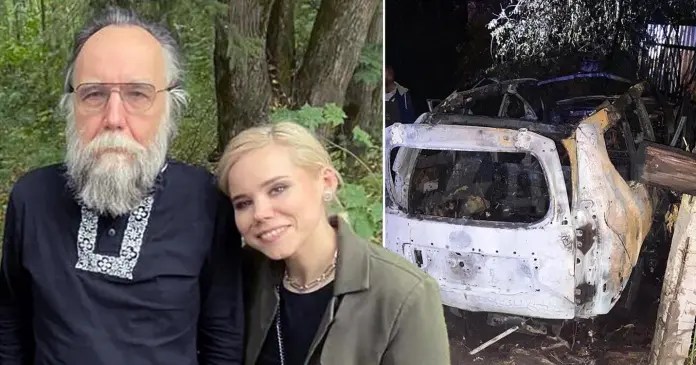
Alexander Dugin and his daughter Darya and charred vehicle of the Toyota Land Cruiser that blew up with Darya in it on Saturday night. [Source: metro.co.uk]

By Jeremy Kuzmarov

Source: Covert Action

CIA expert Douglas Valentine, author of the seminal book The Phoenix Program (1990), believes that the CIA was behind the car bomb that killed Darya Dugina, a journalist and daughter of well-known Russian intellectual Alexander Dugin.

Ms. Dugina, 29, was killed on Saturday night when a bomb blew up the Toyota Land Cruiser she was driving in a suburb of Moscow. She was the intended target along with her father, whose promotion of a Eurasian Union has influenced the thinking of Vladimir Putin and members of his inner circle.

Russia’s Federal Security Services (FSB) blamed the Ukrainian intelligence services for the killing, specifying that the attack was carried out by a woman named Natalya Vovk (AKA Natalya Shaban), a member of the Azov Battalion along with her brother who arrived in Russia last month with her teenage daughter.[1]

Vovk allegedly rented an apartment from where she researched Ms. Dugina, attended “The Tradition” celebration where her father gave a speech and Ms. Dugina was killed, and after planting the bomb, fled to Estonia via Pskov.

According to Douglas Valentine, “Zelensky doesn’t go to the bathroom without asking permission from his CIA case officer. Ten billion dollars comes with a lot of strings attached. The CIA would have been intimately involved in recruiting the woman assassin, preparing the plan every step of the way including escape. That’s just Standard Operating Procedure.”

Valentine admits of course that there is no direct evidence to implicate the CIA in Dugina’s killing and that he’s making an “educated guess,” however, “clandestine ops occur by definition without anyone knowing they happened.” Valentine further told CAM that “the CIA doesn’t conduct a covert operation of this grandiosity unless it’s deniable and worth the risk. That’s known. So there’s rarely any evidence.”

Phoenix Program Redux

Just days before Dugina’s assassination, The New York Times published a front-page article about Ukrainian guerrilla fighters, or partisans, who openly admitted to planting car bombs targeting pro-Russian police officers and politicians behind Russian lines.

Ukraine’s Special Services (SBU) is also known to have set up a Phoenix-style kidnapping and assassination program targeting dissidents, including mayors and local government officials considered sympathetic to Russia.

Vasily Prozorov, a former SBU officer, meanwhile proclaimed that the SBU had been advised by the CIA since 2014. “CIA employees [who have been present in Kyiv since 2014] are residing in clandestine apartments and suburban houses,” he said. “However, they frequently come to the SBU’s central office for holding, for example, specific meetings or plotting secret operations.”

Valentine told CAM in April that the CIA “is applying the same organizational structure in Ukraine as it used in South Vietnam to conduct an updated version of the typical ‘two tier’ Phoenix program. The top tier is to assure political control, the lower tier to pacify the population.”

Valentine continued:

“CIA foreign intelligence officers advise SBU security service to assure ‘top tier’ internal security and political control; and Ukrainian CIA agents run ops into Donbas, Russia and Belarus, sending illegal travelers, smugglers, and agents to set up agent nets and penetrate the enemy in his territory, [and carry out] sabotage and subversion. SBU and Ukrainian CIA are where hit-lists get authored. CIA officers advise military, militias and mercenaries in deniable political, paramilitary and psychological operations to terrorize and otherwise persuade civilian population to support Zelensky while demoralizing and fighting the enemy.”

As in Vietnam, some of the CIA agents may be operating under the cover of State Department-run police training programs which were instituted in Ukraine after the 2014 Maidan coup.[4] Others have been assigned to specialized paramilitary units fighting in eastern Ukraine.[5]

Valentine stated that the “original Phoenix was responsible for the planned assassination of between 25,000 to 40,000 people in South Vietnam. Based on the Phoenix organizational model, assassination became a standarized component of military and CIA operations. It has since been perfected, as evidenced by the assassination of Dugina and scores of other examples from Central Americca to Iran to Africa and the Far East.”

The CIA, Valentine added, is “always finding a reason to start a war, so they can send the next generation of young men into battle, to learn how to kill people in the most brutal fashion—that’s Phoenix, always rising from the ashes of war.”

  1. A Russian website of the NemeZida project, which publishes data on Ukrainian servicemen posted in April that Natalya Shaban, born in 1979, served in the Azov-based National Guard. (The National Guard is not the same as the U.S. National Guard; rather, it was formed directly by the hardcore Azov Regiment, with many members not directly members of the Azov.) The April posting displays a copy of Vovk/Shaban’s certificate indicating military unit No. 3057, in which the 12th brigade of the National Guard of Ukraine is stationed. Shaban is the name that her daughter, Sophia Shaban, used when they entered Russia—and the assumption is that Natalya Vovk is the maiden name of Natalya Shaban. The photograph of the National Guard member is a close match with the Natalya Vovk renting an apartment next to Darya Dugina’s residence.