When globe-trotting journalist and keen geopolitical analyst Pepe Escobar refers to the United States as the “Empire of Chaos,” it may seem like hyperbole. But upon looking deeper at both Escobar’s coverage and the United States’ foreign policy itself, it is perhaps the most accurate title for this political entity and its means of operation, perhaps more apt than the name “The United States” itself.
In the wake of World War II, the US and its allies set out upon the reclamation of the West’s lost colonies, many of which took advantage of Europe’s infighting to either establish independence from their long-standing colonial masters, or begin the conflicts that would inevitably lead toward independence.
Perhaps the most well-known of these conflicts was the Vietnam War. The United States would involve itself in the dissolution of French Indochina at the cost of some 4 million lives in a conflict that would embroil not only Vietnam, but much of Southeast Asia, including Cambodia, Laos and Thailand. Covert coups and brutal insurgencies were underwritten by Washington across the planet, from the Middle East to South and Central America. And while this too seems chaotic, the goal always seemed to be the destruction of independent states, and the creation of viable client states.
These client states included the Shah’s Iran, Saudi Arabia, much, if not all of Western Europe and even to varying degrees, some of the enduring autocracies of the Middle East until for one reason or another they fell out of favor with Washington. The idea was to create an international order built upon the concept of globalization.
Globalization was meant to be a system of vast interdependencies governed by international institutions created by and for the United States and more specifically, the special interests that have long since co-opted America’s destiny.
However, the concept of globalization seems to have neglected any anticipation for rapid technological advances in both terms of information technology and manufacturing. There are very few real interdependencies left to stitch this vision of globalization together with many of them being artificially maintained at increasing costs. The idea of using sanctions to ‘starve’ a nation by isolating it from this global order has been exposed as more or less impotent by nations like Iran and North Korea who have sustained themselves for decades despite everything besides air and gravity being denied to them.
Indeed, nations understand the value of self-sufficiency in both terms of politics and the basic necessities which constitute any state’s infrastructure. Russia’s recent encounter with Western sanctions has caused it to look not only eastward, but inward, to secure its interests and to transcend sanctions wholly dependent on the concept of “globalization.”
As this “carrot and stick” method of working the world into Wall Street and Washington’s international order becomes less effective, some of the uglier and less elegant tools of the West’s geopolitical trade have taken a more prominent role on the global stage. It appears that if the West cannot rule this international order built upon the concepts of globalization, it will rule an international order built on chaos.
The Empire of Chaos
The unipolar geopolitical concepts that underpin globalization have eroded greatly. Nations no longer have to pick between an existence of lonely isolation and socioeconomic atrophy or subordination within this international order. Instead, they can pick to associate with the growing community of what the West calls “rogue states.” So large has this list grown that the US may soon find itself and Western Europe the last remaining members of its failed international order.
The real danger for an aspiring global empire is to find a planet that has suddenly begun to move in tandem out from under its shadow and moving on without them in relative peace and prosperity. To prevent this from happening we have seen a concerted effort focused on disrupting and destroying this emerging multi-polar world.
In Europe, the refugee crisis is being used to polarize European society and allow governments to increase their power domestically and further justify wars abroad. Along Western Europe’s borders, facing Russia, a relative stable balancing act maintained by former Soviet territories attempting to benefit from associating with both East and West has been turned into outright war.
Throughout North Africa and the Middle East, any nation that even so much as slightly resembles a sovereign nation state has been undermined and attempts to violently overthrow them pursued. The goal is no longer to create viable client states, but rather to Balkanize and leave them in ruins so as to never contest Western ambitions in the region again. This can be observed clearly in Libya, Syria, Iraq and Yemen where none of the groups backed by the US and its allies could ever realistically run a functioning nation state.
And in Asia, in state after state, those leading political parties marked by Washington for future client status are being removed from power and their leaders, long backed by the US, being either exiled or jailed.
Where these political gambits are crumbling, a steady stream of violence perpetrated by terrorist groups not even indigenous to the region has begun to build in strength.
Divide and Conquer
Divide and conquer is a geopolitical maxim that has served as empire’s bread and butter since the beginning of recorded human civilization. When the British could not subdue a targeted territory just beyond the grasp of its empire, it would divide and destroy them. A ruined nation that can be plundered and trampled may not be as desirable as a loyal client state run by a British viceroy, but it is better than a pocket of national sovereignty serving as an example for others of the merits of resisting “Great Britain.”
Today, it is clear that the idea of creating a client state in the midst of a general public increasingly aware of the features and fixations of modern empire is becoming ever more tenuous. Such client states are less likely to be accepted by a local population who, with minimum effort, can put up significant resistance against even the best funded of foreign proxies.
Globalism required more and more illusions to convince people they needed a global system controlled by far-off special interests to do what can now be done through advances in technology nationally and even locally. Now all that is left is the sowing of chaos to prevent people from leveraging this technology nationally and locally, to keep them divided and distracted for as long as possible, to perpetuate the West’s global hegemony for as long as possible.
Moving Beyond the Chaos
An empire built on chaos is not meant to last. Chaos, like the international order of globalization that preceded it, requires illusions and manipulation to perpetuate itself. Unfortunately, stirring chaos among a population is a lot easier than convincing them of the non-existent interdependencies of globalization.
Nations leading the way out of this chaos include those who have suffered the most because of it. Their leaders have realized the necessity of closing off the vectors through which the West feeds this chaos within their borders, which include socioeconomic disparity, foreign-funded propaganda, foreign-funded nongovernmental organizations (NGOs) and of course extremist groups used to carry out the actual terrorism and agitation required to create the worst sort of chaos.
Russia and China in particular have been busy creating alternatives not only for the remnants of the West’s globalization racket, but alternatives for the unipolar world the West was trying to create. They are both looking within and across their borders to create a patchwork of nations ready to move beyond the chaos and toward a more widespread balance of power.
By in turn, placing sanctions on the West, Russia is forcing itself to not only produce raw materials for export, but to become a more capable producer of finished goods. By doing so, Russia has begun a process that turns America’s sanctions game back onto itself. While many believe Washington drives American policy, it is unrealistic to discount Wall Street’s role. By cutting the corporations trading on Wall Street down to size, one cuts down their unwarranted power they wield on the global stage.
Nations choosing to trade rather than being forced to because of an ungainly system of globalization ensures that any given people have more control over not only what they buy and sell, but how and where their natural resources are used.
With the Empire of Chaos in terminal decline and with a new multi-polar order emerging, the only question left to ask is; will chaos spread and destroy faster than this new multi-polar order can be built? It is certainly a close race pushing both sides into acts of increasingly unimaginable confrontation.
There are the news stories that genuinely surprise you, and then there are the ones that you could write in your sleep before they happen. Let me concoct an example for you:
“Top American and European military leaders are weighing options to step up the fight against the Islamic State in the Mideast, including possibly sending more U.S. forces into Iraq, Syria, and Libya, just as Washington confirmed the second American combat casualty in Iraq in as many months.”
Oh wait, that was actually the lead sentence in a May 3rd Washington Timespiece by Carlo Muñoz. Honestly, though, it could have been written anytime in the last few months by just about anyone paying any attention whatsoever, and it surely will prove reusable in the months to come (with casualty figures altered, of course). The sad truth is that across the Greater Middle East and expanding parts of Africa, a similar set of lines could be written ahead of time about the use of Special Operations forces, drones, advisers, whatever, as could the sorry results of making such moves in [add the name of your country of choice here].
Put another way, in a Washington that seems incapable of doing anything but worshiping at the temple of the U.S. military, global policymaking has become a remarkably mindless military-first process of repetition. It’s as if, as problems built up in your life, you looked in the closet marked “solutions” and the only thing you could ever see was one hulking, over-armed soldier, whom you obsessively let loose, causing yet more damage.
How Much, How Many, How Often, and How Destructively
In Iraq and Syria, it’s been mission creep all the way. The B-52s barely made it to the battle zone for the first time and were almost instantaneously in the air, attacking Islamic State militants. U.S. firebases are built ever closer to the front lines. The number of special ops forces continues to edge up. American weapons flow in (ending up in god knows whose hands). American trainers and advisers follow in ever increasing numbers, and those numbers are repeatedly fiddled with to deemphasize how many of them are actually there. The private contractors begin to arrive in numbers never to be counted. The local forces being trained or retrained have their usual problems in battle. American troops and advisers who were never, never going to be “in combat” or “boots on the ground” themselves now have their boots distinctly on the ground in combat situations. The first American casualties are dribbling in. Meanwhile, conditions in tottering Iraq and the former nation of Syria grow ever murkier, more chaotic, and less amenable by the week to any solution American officials might care for.
And the response to all this in present-day Washington?
You know perfectly well what the sole imaginable response can be: sending in yet more weapons, boots, air power, special ops types, trainers, advisers, private contractors, drones, and funds to increasingly chaotic conflict zones across significant swaths of the planet. Above all, there can be no serious thought, discussion, or debate about how such a militarized approach to our world might have contributed to, and continues to contribute to, the very problems it was meant to solve. Not in our nation’s capital, anyway.
The only questions to be argued about are how much, how many, how often, and how destructively. In other words, the only “antiwar” position imaginable in Washington, where accusations of weakness or wimpishness are a dime a dozen and considered lethal to a political career, is how much less of more we can afford, militarily speaking, or how much more of somewhat less we can settle for when it comes to militarized death and destruction. Never, of course, is a genuine version of less or a none-at-all option really on that “table” where, it’s said, all policy options are kept.
Think of this as Washington’s military addiction in action. We’ve been watching it for almost 15 years without drawing any of the obvious conclusions. And lest you imagine that “addiction” is just a figure of speech, it isn’t. Washington’s attachment — financial, tactical, and strategic — to the U.S. military and its supposed solutions to more or less all problems in what used to be called “foreign policy” should by now be categorized as addictive. Otherwise, how can you explain the last decade and a half in which no military action from Afghanistan to Iraq, Yemen to Libya worked out half-well in the long run (or even, often enough, in the short run), and yet the U.S. military remains the option of first, not last, resort in just about any imaginable situation? All this in a vast region in which failed states are piling up, nations are disintegrating, terror insurgencies are spreading, humongous population upheavals are becoming the norm, and there are refugee flows of a sort not seen since significant parts of the planet were destroyed during World War II.
Either we’re talking addictive behavior or failure is the new success.
Keep in mind, for instance, that the president who came into office swearing he would end a disastrous war and occupation in Iraq is now overseeing a new war in an even wider region that includes Iraq, a country that is no longer quite a country, and Syria, a country that is now officially kaput. Meanwhile, in the other war he inherited, Barack Obama almost immediately launched a military-backed “surge” of U.S. forces, the only real argument being over whether 40,000 (or even as many as 80,000) new U.S. troops would be sent into Afghanistan or, as the “antiwar” president finally decided, a mere 30,000 (which made him an absolute wimp to his opponents). That was 2009. Part of that surge involved an announcement that the withdrawal of American combat forces would begin in 2011. Seven years later, that withdrawal has once again been halted in favor of what the military has taken to privately calling a “generational approach” — that is, U.S. forces remaining in Afghanistan into at least the 2020s.
The military term “withdrawal” may, however, still be appropriate even if the troops are staying in place. After all, as with addicts of any sort, the military ones in Washington can’t go cold turkey without experiencing painful symptoms of withdrawal. In American political culture, these manifest themselves in charges of “weakness” when it comes to “national security” that could prove devastating in the next election. That’s why those running for office compete with one another in over-the-top descriptions of what they will do to enemies and terrorists (from acts of torture to carpet-bombing) and in even more over-the-top promises of “rebuilding” or “strengthening” what’s already the largest, most expensive military on the planet, a force better funded at present than those of at least the next seven nations combined.
Such promises, the bigger the better, are now a necessity if you happen to be a Republican candidate for president. The Democrats have a lesser but similar set of options available, which is why even Bernie Sanders only calls for holding the Pentagon budget at its present staggering level or for the most modest of cuts, not for reducing it significantly. And even when, for instance, the urge to rein in military expenses did sweep Washington as part of an overall urge to cut back government expenses, it only resulted in a half-secret slush fund or “war budget” that kept the goodies flowing in.
These should all be taken as symptoms of Washington’s military addiction and of what happens when the slightest signs of withdrawal set in. The U.S. military is visibly the drug of choice in the American political arena and, as is only appropriate for the force that has, since 2002, funded, armed, and propped up the planet’s largest supplier of opium, once you’re hooked, there’s no shaking it.
Hawkish Washington
Recently, in the New York Times Magazine, journalist Mark Landler offered a political portrait entitled “How Hillary Clinton Became a Hawk.” He laid out just how the senator and later secretary of state remade herself as, essentially, a military groupie, fawning over commanders or former commanders ranging from then-General David Petraeus to Fox analyst and retired general Jack Keane; how, that is, she became a figure, even on the present political landscape, notable for her “appetite for military engagement abroad” (and as a consequence, well-defended against Republican charges of “weakness”).
There’s no reason, however, to pin the war-lover or “last true hawk” label on her alone, not in present-day Washington. After all, just about everyone there wants a piece of the action. During their primary season debates, for instance, a number of the Republican candidates spoke repeatedly about building up the U.S. Sixth Fleet in the Mediterranean, while making that already growing force sound like a set of decrepit barges.
To offer another example, no presidential candidate these days could afford to reject the White House-run drone assassination program. To be assassin-in-chief is now considered as much a part of the presidential job description as commander-in-chief, even though the drone program, like so many other militarized foreign policy operations these days, shows little sign of reining in terrorism despite the number of “bad guys” and terror “leaders” it kills (along with significant numbers of civilian bystanders). To take Bernie Sanders as an example — because he’s as close to an antiwar candidate as you’ll find in the present election season — he recently put something like his stamp of approval on the White House drone assassination project and the “kill list” that goes with it.
Mind you, there is simply no compelling evidence that the usual military solutions have worked or are likely to work in any imaginable sense in the present conflicts across the Greater Middle East and Africa. They have clearly, in fact, played a major role in the creation of the present disaster, and yet there is no place at all in our political system for genuinely antiwar figures (as there was in the Vietnam era, when a massive antiwar movement created space for such politics). Antiwar opinions and activities have now been driven to the peripheries of the political system along with a word like, say, “peace,” which you will be hard-pressed to find, even rhetorically, in the language of “wartime” Washington.
The Look of “Victory”
If a history were to be written of how the U.S. military became Washington’s drug of choice, it would undoubtedly have to begin in the Cold War era. It was, however, in the prolonged moment of triumphalism that followed the Soviet Union’s implosion in 1991 that the military gained its present position of unquestioned dominance.
In those days, people were still speculating about whether the country would reap a “peace dividend” from the end of the Cold War. If there was ever a moment when the diversion of money from the U.S. military and the national security state to domestic concerns might have seemed like a no-brainer, that was it. After all, except for a couple of rickety “rogue states” like North Korea or Saddam Hussein’s Iraq, where exactly were this country’s enemies to be found? And why should such a muscle-bound military continue to gobble up tax dollars at such a staggering rate in a reasonably peaceable world?
In the decade or so that followed, however, Washington’s dreams turned out to run in a very different direction — toward a “war dividend” at a moment when the U.S. had, by more or less universal agreement, become the planet’s “sole superpower.” The crew who entered the White House with George W. Bush in a deeply contested election in 2000 had already been mainlining the military drug for years. To them, this seemed a planet ripe for the taking. When 9/11 hit, it loosed their dreams of conquest and control, and their faith in a military that they believed to be unstoppable. Of course, given the previous century of successful anti-imperial and national independence movements, anyone should have known that, no matter the armaments at hand, resistance was an inescapable reality on Planet Earth.
Thanks to such predictable resistance, the drug-induced imperial dreamscape of the Busheviks would prove a fantasy of the first order, even if, in that post-9/11 moment, it passed for bedrock (neo)realism. If you remember, the U.S. was to “take the gloves off” and release a military machine so beyond compare that nothing would be capable of standing in its path. So the dream went, so the drug spoke. Don’t forget that the greatest military blunder (and crime) of this century, the invasion of Iraq, wasn’t supposed to be the end of something, but merely its beginning. With Iraq in hand and garrisoned, Washington was to take down Iran and sweep up what Russian property from the Cold War era still remained in the Middle East. (Think: Syria.)
A decade and a half later, those dreams have been shattered, and yet the drug still courses through the bloodstream, the military bands play on, and the march to… well, who knows where… continues. In a way, of course, we do know where (to the extent that we humans, with our limited sense of the future, can know anything). In a way, we’ve already been shown a spectacle of what “victory” might look like once the Greater Middle East is finally “liberated” from the Islamic State.
The descriptions of one widely hailed victory over that brutal crew in Iraq — the liberation of the city of Ramadi by a U.S.-trained elite Iraqi counterterrorism force backed by artillery and American air power — are devastating. Aided and abetted by Islamic State militants igniting or demolishing whole neighborhoods of that city, the look of Ramadi retaken should give us a grim sense of where the region is heading. Here’s how the Associated Press recently described the scene, four months after the city fell:
“This is what victory looks like…: in the once thriving Haji Ziad Square, not a single structure still stands. Turning in every direction yields a picture of devastation. A building that housed a pool hall and ice cream shops — reduced to rubble. A row of money changers and motorcycle repair garages — obliterated, a giant bomb crater in its place. The square’s Haji Ziad Restaurant, beloved for years by Ramadi residents for its grilled meats — flattened. The restaurant was so popular its owner built a larger, fancier branch across the street three years ago. That, too, is now a pile of concrete and twisted iron rods.
“The destruction extends to nearly every part of Ramadi, once home to 1 million people and now virtually empty.”
Keep in mind that, with oil prices still deeply depressed, Iraq essentially has no money to rebuild Ramadi or anyplace else. Now imagine, as such “victories” multiply, versions of similar devastation spreading across the region.
In other words, one likely end result of the thoroughly militarized process that began with the invasion of Iraq (if not of Afghanistan) is already visible: a region shattered and in ruins, filled with uprooted and impoverished people. In such circumstances, it may not even matter if the Islamic State is defeated. Just imagine what Mosul, Iraq’s second largest city and still in the Islamic State’s hands, will be like if, someday, the long-promised offensive to liberate it is ever truly launched. Now, try to imagine that movement itself destroyed, with its “capital,” Raqqa, turned into another set of ruins, and remind me: What exactly is likely to emerge from such a future nightmare? Nothing, I suspect, that is likely to cheer up anyone in Washington.
And what should be done about all this? You already know Washington’s solution — more of the same — and breaking such a cycle of addiction is difficult even under the best of circumstances. Unfortunately, at the moment there is no force, no movement on the American scene that could open up space for such a possibility. No matter who is elected president, you already know more or less what American “policy” is going to be.
But don’t bother to blame the politicians and national security nabobs in Washington for this. They’re addicts. They can’t help themselves. What they need is rehab. Instead, they continue to run our world. Be suitably scared for the ruins still to come.
There was a time when I, like tens of thousands of my progressive partners, held Noam Chomsky and Amy Goodman in awe. After all, Amy informed us and Noam spoke for us, coherently explaining the issues. However, as I became more aware and more informed, I realized that there were great differences between their thinking and mine.
In many instances, our gurus spoke with forked tongue. Although Amy’s program Democracy Now! was informative, there were many areas of reporting that were out of bounds and were not reported on.
One could legitimately claim that reporters cannot report on everything and they would be right. But let us be honest. When 9/11 occurred, it was an historical event and an event that changed the course of history. Where was Amy? Relatively silent. She invited David Ray Griffin, who has written several books illustrating the lies and misdirections of the government’s narrative about that day, to Democracy Now! which one could claim was a significant journalistic move.
However, instead of interviewing him so that he could reveal to her listening audience the facts that he had accumulated that put into question the government’s explanations of that day, she paired him with a pro-government guest who spent the hour attacking Griffin personally and ignoring any of the data Griffin produced. It became a three-ring circus and helped sabotage any impetus the Truth Movement might have gained within the progressive community. Was that her goal? I’m not sure I can answer that but it was a successful strategy, progressives seemed reluctant to support the Truth Movement. The Movement was being portrayed as one in which there were marginal “conspiracy nuts” leading the charge and should be avoided.
Where was Noam Chomsky on this issue? Despite the significance of 9/11, Chomsky has remained relatively passive concerning this event.
During an interview on Democracy Now!, Noam Chomsky stated that he believes Osama bin Laden was probably behind the attacks of September 11, 2001. The statement was curious because in earlier interviews Chomsky described the evidence against bin Laden as thin to nonexistent, which was accurate and, no doubt, explains why the US Department of Justice never indicted bin Laden for the 9/11 attacks.
In two peer-reviewed papers published in 2008–2009, independent scientists reported finding residues of nanothermite, an incendiary, military level explosive which is capable of cutting through steel, in dust samples from the collapsed World Trade Center. The scientists also found tiny flakes of unexploded nanothermite.
How did this explosive material get into the dust at the WTC? Certainly, one could conclude that the explosives were used to bring down all three towers (WTC #7 collapsed later that day in free fall time despite the fact a plane never touched it).
This evidence of explosives coupled with the testimony of many New York City firemen, who claimed they heard a continuing series of explosions before the towers collapsed, and the testimony of Willie Rodriquez, a maintenance worker in the towers, who stated that there was an explosion in the sub-basement before any planes flew into the towers, make it clear that it was the explosives, not the planes that brought the towers down. The question now is, who planted these explosives in the three buildings that collapsed? It takes time to set up a controlled demolition which means the explosives had been placed in the buildings prior to 9/11. Does this sound like a conspiracy to anyone?
In response to a question at the University of Florida recently, Noam Chomsky claimed that there were only “a minuscule number of architects and engineers” who felt that the official account of WTC Building 7 should be treated with skepticism. Chomsky followed-up by saying, “a tiny number—a couple of them—are perfectly serious.” The reality is that close to 2,500 architects and engineers have expressed their doubts about the government’s explanation of how and why the towers fell. It doesn’t matter how many professionals or intellectuals are willing to admit it. The facts remain that the U.S. government’s account for the destruction of the WTC on 9/11 is purely false. There is no science behind the government’s explanation for WTC 7 or for the Twin Towers and everyone, including the government, admits that WTC Building 7 experienced free fall on 9/11. There is no explanation for that other than the use of explosives.
Also, Chomsky’s assumption that only a small number of architects and engineers have expressed support for the notion that the towers fell because of explosives planted in the buildings and that a much larger majority of architects and engineers have remained silent, is the argument of the absurd. It is equivalent to implying that if 10,000 New Yorkers claim the schools are substandard, because the rest of New Yorkers remain silent, the schools cannot be considered substandard.
Chomsky and Goodman are bright, knowledgeable, intelligent people. What has influenced them to avoid confronting the government regarding the events of 9/11?
The fact that 9/11 investigators had already presented substantial documented evidence for: prior warnings, Air Force stand-down, anomalous insider trading connected to the CIA, withdrawal of most of the U.S. fighter planes from the east coast to participate in military exercises on that particular day, cover-up of the domestic anthrax attacks, inconsistencies in identities and timelines of “hijackers” did not appear to influence either Amy or Noam.
Their influence on people who view themselves as progressive cannot be over estimated. When I began questioning the government’s role regarding 9/11, several of my friends responded to me negatively and said specifically that if my suspicions had any legitimacy, Chomsky and Goodman would be speaking out.
Ever since the events of 9/11, the American Left and even ultra-Left have been downright fanatical in combating notions that the U.S. government was complicit in the attacks or at least had foreknowledge of the events.
This kind of response from Chomsky regarding possible government conspiracies is not new. He still insists that Lee Harvey Oswald was the lone gunman in Dallas. Anyone who still supports the Warren Commission hoax after 50 years of countering proofs is either ill-informed, dumb, gullible, afraid to speak truths to power or a disinformation agent.
Michael Morrissey stated, in one of his articles, “Rethinking Chomsky,” in 1994, “we should be clear about the stand that ‘America’s leading intellectual dissident,’ as he is often called, has taken on the assassination. It is not significantly different from that of the Warren Commission or the majority of Establishment journalists and government apologists, and diametrically opposed to the view ‘widely held in the grassroots movements and among left intellectuals’ and in fact to the view of the majority of the population.”
Michael Parenti states, “Conspiracy is a legitimate concept in law: the collusion of two or more people pursuing illegal means to effect some illegal or immoral end. People go to jail for committing conspiratorial acts. Conspiracies are a matter of public record, and some are of real political significance. The Watergate break-in was a conspiracy, as was the Watergate cover-up, which led to Nixon’s downfall. Iran-contra was a conspiracy of immense scope, much of it still uncovered. The savings and loan scandal was described by the Justice Department as “a thousand conspiracies of fraud, theft, and bribery,” the greatest financial crime in history.”
However, the word conspiracy is often used by those in power, who have participated in a conspiracy to advance their own power and/or wealth, as a label to marginalize and neutralize those who seek to reveal the conspiracy. Thus we, as a society, have developed what Parenti calls conspiracy phobia.
The behavior of both Chomsky and Goodman have led me to conclude that they hesitate to see the conspiracies for fear that such acknowledgment would compromise their reputations. Either that or they are controlled by powerful people who censor their behavior. We cannot afford to accept what they say at face value.
Chomsky’s questionable political positioning is still evident today. On May 17, Chomsky appeared on Democracy Now! and was asked by Amy Goodman to speak on the Syrian crisis. Chomsky is a linguist and words are very meaningful to him. So what he said and how he said it is significant.
“It’s necessary to cut off the flow of arms, as much as possible, to everyone. That means to the vicious and brutal Assad regime, primarily Russia and Iran, to the monstrous ISIS, which has been getting support tacitly through Turkey, through—to the al-Nusra Front, which is hardly different, has just the—the al-Qaeda affiliate, technically broke from it, but actually the al-Qaeda affiliate, which is now planning its own—some sort of emirate, getting arms from our allies, Qatar and Saudi Arabia. Our own—the CIA is arming them.”
I found it particularly informative that he describes Assad’s regime as vicious and brutal and places Russia and Iran right alongside ISIS.
If Assad’s government is really brutal and vicious, why did 86% of the Syrian people vote for him in the last election. Also, let it be clear that it was Russian’s entrance into the conflict last September that led to the retreat of ISIS from many cities and villages, a success that the U.S. had avoided for a year. Syrians who were freed from ISIS rule were openly happy to welcome Assad’s “brutal” army into their villages. Many Syrian refugees began returning to their homes.
Chomsky also managed to portray the Irish Republican Army (IRA) as terrorists in their conflict with Britain. He conveniently omitted the context for their behavior . . . the brutality of British rule against the Irish Catholics for hundreds of years.
Both Amy and Noam are extremely influential and have attained a degree of power amongst progressives. It is crucial that we remain aware of what they are telling us, how they are framing it, and what it is they are not telling us. Both seem to have provided, and continue to provide today, a cover from the left for the U.S.’s imperialist agenda.
Chomsky is called upon to address various issues periodically. Amy, on the other hand, is viewed every week, Monday through Friday. It is easy to identify her evolution into someone slightly to the left of MSNBC.
With the world collapsing around her, she offers relative silence on issues such as the U.S. supported takeover of the Ukrainian government by neo-Nazis, the surrounding of Russia by U.S. and NATO military forces, the threat of WW3 which would likely be a nuclear war, the Syrian crisis and the U.S. desire to overthrow Assad’s government, the humanitarian crisis in Libya, the coup to oust Dilma Rousseff from office in Brazil, the ongoing collapse of the Venezuelan economy and the threat to the Madero government (please note: both Rousseff and Madero are progressive thinkers—is the U.S. behind the collapse of their governments?). She does not address the continuous wars sponsored by the U.S. and NATO countries in their imperialistic ventures.
Instead, most of her time is spent covering the election and interviewing guests who have recently published books. Her program has mellowed. Most of her guests are establishment people, people MSNBC would not hesitate to have on. The radical view, the view that challenges the establishment, is no longer part of her coverage.
Amy’s audience expects to get the news coverage and the variety of views the MSM does not provide. Today’s Democracy Now! no longer provides that.
Dave Alpert has masters degrees in social work, educational administration, and psychology. He spent his career working with troubled inner city adolescents.
There are numerous tactics available to those who aim to make problems worse while pretending to solve them, but misdirection is always a favorite. The reason to want to make problems worse is that problems are profitable—for someone. And the reason to pretend to be solving them is that causing problems, then making them worse, makes those who profit from them look bad.
In the international arena, this type of misdirection tends to take on a farcical aspect. The ones profiting from the world’s problems are the members of the US foreign policy and military establishments, the defense contractors and the politicians around the world, and especially in the EU, who have been bought off by them. Their tactic of misdirection is conditioned by a certain quirk of the American public, which is that it doesn’t concern itself too much with the rest of the world. The average member of the American public has no idea where various countries are, can’t tell Sweden from Switzerland, thinks that Iran is full of Arabs and can’t distinguish any of the countries that end in -stan. And so a handy trick has evolved, which amounts to the following dictum: “Always attack the wrong country.”
Need some examples? After 9/11, which, according to the official story (which is probably nonsense) was carried out by “suicide bombers” (some of them, amusingly, still alive today) who were mostly from Saudi Arabia, the US chose to retaliate by attacking Saudi ArabiaAfghanistan and Iraq.
When Arab Spring erupted (because a heat wave in Russia drove up wheat prices) the obvious place to concentrate efforts, to avoid a seriously bad outcome for the region, was Egypt—the most populous Arab country and an anchor for the entire region. And so the US and NATO decided to attack EgyptLibya.
When things went south in the Ukraine, whose vacillating government couldn’t make up its mind whether it wanted to remain within the Customs Union with Russia, its traditional trading partner, or to gamble on signing an agreement with the EU based on vague (and since then broken) promises of economic cooperation, the obvious place to go and try to fix things was the Ukraine. And so the US and the EU decided fix the UkraineRussia, even though Russia is not particularly broken. Russia was not amused; nor is it a country to be trifled with, and so in response the Russians inflicted some serious pain on the Washington establishmentfarmers within the EU.
Who was at fault exceedingly clear once the Ukrainians that managed to get into power (including some very nasty neo-Nazis) started to violate the rights of Ukraine’s Russian-speaking majority, including staging some massacres, in turn causing a large chunk of it to hold referendums and vote to secede. (Perhaps you didn’t know this, but the majority of the people in the Ukraine are Russian-speakers, and there is just one city of any size—Lvov—that is mostly Ukrainian-speaking. Mind you, I find Ukrainian to be very cute and it makes me smile whenever I hear it. I don’t bother speaking it, though, because any Ukrainian with an IQ above bathwater temperature understands Russian.) And so the US and the EU decided to fix things by continuing to put pressure on the UkraineRussia.
When Russia started insisting on a political rather than a military resolution to the crisis in the Ukraine, and helped negotiate the Minsk agreements together with the Ukraine, France and Germany, a similar thing happened. These agreements obligated the Ukrainian government to pass constitutional reforms to grant autonomy to its Russian regions in the east. The Ukrainian government refused to abide by these agreements. As a result, the US and the EU decided to put pressure on the UkrainianRussian government.
When a nasty terrorist group calling itself ISIS and composed of Islamic Salafi/Takfiri extremists started to seize power in large parts of Iraq, and then spread to Syria, something had to be done about it. These extremists were being financed by Turkey (which is still buying oil from them and sheltering them on its territory) and Saudi Arabia. And so the US and NATO decided to put some pressure on Turkey and Saudi ArabiaSyria.
In response to all this foolishness, Russia up and decided to actually go and fix something that was broken: Syria. And now Syria is on the mend, and members the misdirectorate in Washington are left scratching their heads.
So far so good. But this method of pretending to be solving problems by making them worse has some definite downsides.
For one thing, eventually even the dimmest, most geographically challenged bulbs in the general population start to get a clue, and then they start refusing to vote for the establishment candidates. Then it becomes hard to continue with the misdirecting because the people doing the misdirecting are voted out, and (horror of horrors!) somebody who might actually try to fix a problem or two might get voted in.
For another, continually making problems worse by attacking the wrong country tends to eventually make the sheer number problems get completely out of hand. Take the recent massive terror attack in Brussels, down the road from NATO headquarters, for which ISIS took credit. Recently, Europe has been experiencing a large-scale influx of people from the Middle East and North Africa, who have been forced to flee their native lands because of all the previous acts of misdirection, and a fair number of these people are ISIS terrorists. And so, to protect itself, NATO is planning to fight ISIS in EuropeSyria. Also, it is well known that the influx into Europe has been orchestrated by Turkey. In response, the EU has decided to put pressure ongive billions of euros to Turkey and tell Turkey that it is welcome to join the EU.
Lastly, this pattern has an overall momentum that, over time, becomes harder and harder to break. It starts out as just one group of plutocrats doing incredibly vile, underhanded but profitable things; later on, an even bigger group of plutocrats is doing equally vile but now completely idiotic, self-defeating, embarrassing things; and right near the end a really huge group of plutocrats is doing things that are absolutely suicidal—but they can’t stop themselves. You should be able to decide for yourselves when that point in time arrives, but I doubt that it is too far in the future.
Hillary Clinton has a dark history in foreign policy. Indeed, if the Nuremberg principles were applied evenly, her name would certainly be on the docket, along with her former boss in the White House, who is actually less of a hawk than she. When Donald Trump publicly expressed a willingness to negotiate with Russia over international conflicts, she referred to such an idea as putting “Christmas in the Kremlin.” She’s red-baited Bernie Sanders for his support for the Cuban and Nicaraguan revolutions back in the 1980s. Clinton basically backs not “political realism,” but the more imperial tradition of neoconservative “American exceptionalism,” a chauvinist mindset by which the US sets the political, economic, and military priorities of the world and the places and times of its interventions, sometimes with allied support, sometimes without, at its own discretion.
Hillary is a product of her husband’s alignment with Democratic Leadership Council (DLC) and the right wing shift of the party, which moved the Democrats away from its moorings in organized labor, the New Deal, civil rights, and the Great Society. Bill Clinton’s successful election undoubtedly inspired the formation of “New” Labour in Britain, which likewise broke with its party history in the labor movement. In the 1990s, then MP Tony Blair, his shadow government chancellor of the exchequer Gordon Brown, and his chief pollster Philip Gould came to America as apprentices of the Clinton presidential campaigns to study their public relations and other electioneering tactics. This became part of New Labour’s successful “Third Way” victorious strategy in 1997. Back then, Anthony Howard, writing in the Times of London, said that Clinton’s New Democrats “lighted the path” for Blair’s New Labour. Blair partnered with Clinton and the DLC in taking a more militarist stance toward Saddam Hussein, which paved the way for Bush’s and Blair’s 2003 invasion of Iraq.
Bill Clinton’s and the DLC’s legacy candidate is Hillary. And what better way to prove her cojones, in case anyone thought a woman president might turn out to be a negotiator and peacenik, than to pick on Russia and reignite the Cold War. Despite the Russians’ brilliant mix of negotiation – warding off a US invasion of Iran, getting the US off Assad’s back with the disposal of his chemical weapons stash – and their effective military intervention against ISIS, Obama, Clinton, and now Kerry will not relent in their hostility. The US neocon inner circle cannot countenance a balance of power arrangement with the Kremlin, disregarding Russia’s status as the second most militarily powerful country in the world. Clinton has called Putin a dictator, the favorite term of disgrace in American ruling circles, except when it comes to America’s allies in the Gulf states, Erdogan, and the long list of authoritarian friends the US has backed over the entire course of the postwar era. Indeed, Putin may be a strongman of sorts, and an extremely popular one in his own country, but is far less of an authoritarian than his predecessor, ” Boris Yeltsin, who ruled by decree and whom Hillary’s husband lauded and financed as a genuine, if quite inebriated, democrat.
Was Hillary in on Bill’s political choices? Recently speaking to Amy Goodman on Democracy Now, Clinton’s secretary of labor Robert Reich said that Bill never made an important decision without consulting the first lady. What are the programs to which Hillary can claim advisory credit during her husband tenure? NAFTA, welfare reform (“ending welfare as we know it,” said Bill), balancing the budget (inflicting austerity measures), the 1994 crime bill (“three strikes and you’re out”), bank deregulation (a sonata for the Great Recession). All of these projects, says author Thomas Frank, were for working Americans and people of color absolute disasters. And one might add to his list the expansion of NATO and the assault on Yugoslavia.
As secretary of state, Hillary backed CIA director Petraeus’ plan to overthrow the Assad government in Syria, from which Obama eventually backed away, thanks to Russia’s intervention and defense of Syria’s sovereignty. As a good neocon soldier for American exceptionalism, Clinton aligns herself with whatever appears at the moment to be the “national interest” center of political gravity (promoting the oil industry, arms sales, the pro-Zionist alliance, divide and rule aid to opponents of secular nationalism, right-to-protect military and economic interventions). The distraction over her emailgate and the Benghazi investigation hides the real crimes of her active support for the bombing of Libya, the overthrow of the government, and the resulting chaos and ISIS organizing in the country, not to mention her backing for the Honduran coup d’etat. Former secretary of defense Robert Gates says that it was Hillary who pushed Obama into the decision on Libya, for which the president now publicly expresses regret, calling the present condition of the country (his words) “a shit show.”
Her champions who cheer her work with women and children ignore the thousands of women and children in Libya and elsewhere in the Middle East, who were slaughtered under her leadership in the State Department. Speaking on regime change, even a right-wing former Pentagon analyst, Michael Maloof, didn’t believe it was appropriate to attack Iraq. “Now with Libya,” he says, “it’s the same. And Hillary Clinton was very much responsible for that.”
If she becomes president, what can be expected of her on domestic policy? She’ll be a good team player – that is, the neocon team – and may even get something accomplished, such as privatizing part of social security and medicare, which was always part of the DLC agenda, and working more closely with the oil companies. Among her other achievements during her years in the State Department, according to investigative journalist, Lee Fang, was her creation of a separate bureau, with more than 60 staff, whose focus was on energy resources. Traveling the world, Clinton used her position, partnered with Chevron, to promote the practice of fracking in developing countries.
With the power couple in the White House, their assets already worth well over $100 million, and with a Congress being mostly a millionaires’ club, no serious tax increase on the rich can be expected. Indeed, the White House will be more of a revolving door for government officials and staff moving back and forth between the corporate world and “public service.” Open Secrets.org found 84 revolving door personnel working for Hillary, more than on any other politician’s staff: “the greatest number of staffers who either came to Capitol Hill after representing private interests or left the member’s staff for a lobbying position.”
Her march to the White House relies on over 400 superdelegates pledged to her – a number of them also wearing the hat of corporate lobbyist – rather than to the democratic voice of the people, Even if nominated and then elected, Hillary, lacking credibility about her authenticity, will not be a popular president. Nearly half of Democrats don’t trust her (56% express trust vs. 81% for Bernie). And a new AP-GfK poll reveals that 55% of all Americans hold a negative opinion of her. Under her presidency, and with the return of the first man, American politics will continue to be business as usual.
Gerald Sussman is a Professor in the Toulan School of Urban Studies and Planning at Portland State University
If there were any doubts that Hillary Clinton favors a neoconservative foreign policy, her performance at Thursday’s debate should have laid them to rest. In every meaningful sense, she is a neocon and – if she becomes President – Americans should expect more global tensions and conflicts in pursuit of the neocons’ signature goal of “regime change” in countries that get in their way.
Beyond sharing this neocon “regime change” obsession, former Secretary of State Clinton also talks like a neocon. One of their trademark skills is to use propaganda or “perception management” to demonize their targets and to romanticize their allies, what is called “gluing white hats” on their side and “gluing black hats” on the other.
So, in defending her role in the Libyan “regime change,” Clinton called the slain Libyan leader Muammar Gaddafi “genocidal” though that is a gross exaggeration of Gaddafi’s efforts to beat back Islamic militants in 2011. But her approach fits with what the neocons do. They realize that almost no one will dare challenge such a characterization because to do so opens you to accusations of being a “Gaddafi apologist.”
Similarly, before the Iraq War, the neocons knew that they could level pretty much any charge against Saddam Hussein no matter how false or absurd, knowing that it would go uncontested in mainstream political and media circles. No one wanted to be a “Saddam apologist.”
Clinton, like the neocons, also shows selective humanitarian outrage. For instance, she laments the suffering of Israelis under crude (almost never lethal) rocket fire from Gaza but shows next to no sympathy for Palestinians being slaughtered by sophisticated (highly lethal) Israeli missiles and bombs.
She talks about the need for “safe zones” or “no-fly zones” for Syrians opposed to another demonized enemy, Syria’s President Bashar al-Assad, but not for the people of Gaza who face the wrath of Israeli Prime Minister Benjamin Netanyahu.
“Yes, I do still support a no-fly zone [in Syria] because I think we need to put in safe havens for those poor Syrians who are fleeing both Assad and ISIS and have some place that they can be safe,” Clinton said. But she showed no such empathy for Palestinians defenseless against Israel’s “mowing the grass” operations against men, women and children trapped in Gaza.
In Clinton’s (and the neocons’) worldview, the Israelis are the aggrieved victims and the Palestinians the heartless aggressors. Referring to the Gaza rocket fire, she said: “I can tell you right now I have been there with Israeli officials going back more than 25 years that they do not seek this kind of attacks. They do not invite the rockets raining down on their towns and villages. They do not believe that there should be a constant incitement by Hamas aided and abetted by Iran against Israel. …
“So, I don’t know how you run a country when you are under constant threat, terrorist attack, rockets coming at you. You have a right to defend yourself.”
Ignoring History
Clinton ignored the history of the Israeli-Palestinian conflict, which dates back to the 1940s when Israeli terrorist organizations engaged in massacres to drive Palestinians from their ancestral lands and murdered British officials who were responsible for governing the territory. Israeli encroachment on Palestinian lands has continued to the present day.
But Clinton framed the conflict entirely along the propaganda lines of the Israeli government: “Remember, Israel left Gaza. They took out all the Israelis. They turned the keys over to the Palestinian people. And what happened? Hamas took over Gaza. So instead of having a thriving economy with the kind of opportunities that the children of the Palestinians deserve, we have a terrorist haven that is getting more and more rockets shipped in from Iran and elsewhere.”
So, Clinton made clear – both at the debate and in her recent AIPAC speech – that she is fully in line with the neocon reverence for Israel and eager to take out any government or group that Israel puts on its enemies list. While waxing rhapsodic about the U.S.-Israeli relationship – promising to take it “to the next level” – Clinton vows to challenge Syria, Iran, Russia and other countries that have resisted or obstructed the neocon/Israeli “wish list” for “regime change.”
In response to Clinton’s Israel-pandering, Sen. Bernie Sanders, who once worked on an Israeli kibbutz as a young man, did the unthinkable in American politics. He called out Clinton for her double standards on Israel-Palestine and suggested that Netanyahu may not be the greatest man on earth.
“You gave a major speech to AIPAC,” Sanders said, “and you barely mentioned the Palestinians. … All that I am saying is we cannot continue to be one-sided. There are two sides to the issue. … There comes a time when if we pursue justice and peace, we are going to have to say that Netanyahu is not right all of the time.”
But in Hillary Clinton’s mind, the Israeli-Palestinian dispute is essentially one-sided. During her speech to the American Israel Public Affairs Committee last month, she depicted Israel as entirely an innocent victim in the Mideast conflicts.
“As we gather here, three evolving threats — Iran’s continued aggression, a rising tide of extremism across a wide arc of instability, and the growing effort to de-legitimize Israel on the world stage — are converging to make the U.S.-Israel alliance more indispensable than ever,” she declared.
“The United States and Israel must be closer than ever, stronger than ever and more determined than ever to prevail against our common adversaries and to advance our shared values. … This is especially true at a time when Israel faces brutal terrorist stabbings, shootings and vehicle attacks at home. Parents worry about letting their children walk down the street. Families live in fear.”
Yet, Clinton made no reference to Palestinian parents who worry about their children walking down the street or playing on a beach and facing the possibility of sudden death from an Israeli drone or warplane. Instead, she scolded Palestinian adults. “Palestinian leaders need to stop inciting violence, stop celebrating terrorists as martyrs and stop paying rewards to their families,” she said.
Then, Clinton promised to put her future administration at the service of the Israeli government. Clinton said, “One of the first things I’ll do in office is invite the Israeli prime minister to visit the White House. And I will send a delegation from the Pentagon and the Joint Chiefs to Israel for early consultations. Let’s also expand our collaboration beyond security.”
Pleasing Phrases
In selling her neocon policies to the American public, Clinton puts the military aspects in pleasing phrases, like “safe zones” and “no-fly zones.” Yet, what she means by that is that as President she will invade Syria and push “regime change,” following much the same course that she used to persuade a reluctant President Obama to invade Libya in 2011.
The Libyan operation was sold as a “humanitarian” mission to protect innocent civilians though Gaddafi was targeting Islamic militants much as he claimed at the time and was not engaging in any mass slaughter of civilians. Clinton also knew that the European allies, such as France, had less than noble motives in wanting to take out Gaddafi.
As Clinton confidant Sidney Blumenthal explained to her, the French were concerned that Gaddafi was working to develop a pan-African currency which would have given Francophone African countries greater freedom from their former colonial master and would undermine French economic dominance of those ex-colonies.
In an April 2, 2011 email, Blumenthal informed Clinton that sources close to one of Gaddafi sons reported that Gaddafi’s government had accumulated 143 tons of gold and a similar amount of silver that “was intended to be used to establish a pan-African currency” that would be an alternative to the French franc.
Blumenthal added that “this was one of the factors that influenced President Nicolas Sarkozy’s decision to commit France to the attack on Libya.” Sarkozy also wanted a greater share of Libya’s oil production and to increase French influence in North Africa, Blumenthal wrote.
But few Americans would rally to a war fought to keep North Africa under France’s thumb. So, the winning approach was to demonize Gaddafi with salacious rumors about him giving Viagra to his troops so they could rape more, a ludicrous allegation that was raised by then-U.S. Ambassador to the United Nations Susan Rice, who also claimed that Gaddafi’s snipers were intentionally shooting children.
With Americans fed a steady diet of such crude propaganda, there was little serious debate about the wisdom of Clinton’s Libyan “regime change.” Meanwhile, other emails show that Clinton’s advisers were contemplating how to exploit Gaddafi’s overthrow as the dramatic moment to declare a “Clinton Doctrine” built on using “smart power.”
On Oct. 20, 2011, when U.S.-backed rebels captured Gaddafi, sodomized him with a knife and then murdered him, Secretary of State Clinton couldn’t contain her glee. Paraphrasing a famous Julius Caesar quote, she declared about Gaddafi, “we came, we saw, he died.”
But this U.S.-organized “regime change” quickly turned sour as old tribal rivalries, which Gaddafi had contained, were unleashed. Plus, it turned out that Gaddafi’s warnings that many of the rebels were Islamic militants turned out to be true. On Sept. 11, 2012, one extremist militia overran the U.S. consulate in Benghazi killing U.S. Ambassador Christopher Stevens and three other Americans.
Soon, Libya slid into anarchy and Western nations abandoned their embassies in Tripoli. President Obama now terms the Libyan fiasco the biggest mistake of his presidency. But Clinton refuses to be chastened by the debacle, much as she appeared to learn nothing from her support for the Iraq invasion in 2003.
The Libyan Mirage
During Thursday’s debate – instead of joining Obama in recognition of the Libyan failure – Clinton acted as if she had overseen some glowing success: “Well, let me say I think we did a great deal to help the Libyan people after Gaddafi’s demise. … We helped them hold two successful elections, something that is not easy, which they did very well because they had a pent-up desire to try to chart their own future after 42 years of dictatorship. I was very proud of that. …
“We also worked to help them set up their government. We sent a lot of American experts there. We offered to help them secure their borders, to train a new military. They, at the end, when it came to security issues, … did not want troops from any other country, not just us, European or other countries, in Libya.
“And so we were caught in a very difficult position. They could not provide security on their own, which we could see and we told them that, but they didn’t want to have others helping to provide that security. And the result has been a clash between different parts of the country, terrorists taking up some locations in the country.”
But that is exactly the point. Like the earlier neocon-driven “regime change” in Iraq, the “regime change” obsession blinds the neocons from recognizing that not only are these operations violations of basic international law regarding sovereignty of other nations but the invasions unleash powerful internal rivalries that neocons, who know little about the inner workings of these countries, soon find they can’t control.
Yet, America’s neocons are so arrogant and so influential that they simply move from one catastrophe to the next like a swarm of locust spreading chaos and death around the globe. They also adapt readily to changes in the political climate.
That’s why some savvy neocons, such as the Brookings Institution’s Robert Kagan, have endorsed Clinton, who The New York Times reported has become “the vessel into which many interventionists are pouring their hopes.”
Kagan told the Times, “I feel comfortable with her on foreign policy. If she pursues a policy which we think she will pursue it’s something that might have been called neocon, but clearly her supporters are not going to call it that; they are going to call it something else.”
Now with Clinton’s election seemingly within reach, the neocons are even more excited about how they can get back to work achieving Syrian “regime change,” overturning Obama’s nuclear deal with Iran, and – what is becoming their ultimate goal – destabilizing nuclear-armed Russia and seeking “regime change” in Moscow.
After all, by helping Assad bring some stability to Syria and assisting Obama in securing the Iranian nuclear deal, Russian President Vladimir Putin has become what the neocons view as the linchpin of resistance to their “regime change” goals. Pull Putin down, the thinking goes, and the neocons can resume checking off their to-do list of Israel’s adversaries: Syria, Iran, Hezbollah, Hamas, etc.
And what could possibly go wrong by destabilizing nuclear-armed Russia and forcing some disruptive “regime change”?
By making Russia’s economy scream and instigating a Maidan-style revolt in Moscow’s Red Square, the neocons see their geopolitical path being cleared, but what they don’t take into account is that the likely successor to Putin would not be some malleable drunk like the late Russian President Boris Yeltsin but, far more likely, a hardline nationalist who might be a lot more careless with the nuclear codes than Putin.
But, hey, when has a neocon “regime change” scheme veered off into a dangerous and unanticipated direction?
A Neocon True-Believer
In Thursday’s debate, Hillary Clinton showed how much she has become a neocon true-believer. Despite the catastrophic “regime changes” in Iraq and Libya, she vowed to invade Syria, although she dresses up that reality in pretty phrases like “safe zones” and “no-fly zones.” She also revived the idea of increasing the flow of weapons to “moderate” rebels although they, in reality, mostly fight under the command umbrella of Al Qaeda’s Nusra Front.
Clinton also suggested that the Syria mess can be blamed on President Obama’s rejection of her recommendations in 2011 to authorize a more direct U.S. military intervention. “Nobody stood up to Assad and removed him,” Clinton said, “and we have had a far greater disaster in Syria than we are currently dealing with right now in Libya.”
In other words, Clinton still harbors the “regime change” goal in Syria. But the problem always was that the anti-Assad forces were penetrated by Al Qaeda and what is now called the Islamic State. The more likely result from Clinton’s goal of removing Assad would be the collapse of the Syrian security forces and a victory for Al Qaeda’s Nusra Front and/or the Islamic State.
If that were to happen, the horrific situation in Syria would become cataclysmic. Millions of Syrians – Alawites, Shiites, Christians, secularists and other “infidels” – would have to flee the beheading swords of these terror groups. That might well force a full-scale U.S. and European invasion of Syria with the bloody outcome probably similar to the disastrous Iraq War.
The only reasonable hope for Syria is for the Assad regime and the less radical Sunni oppositionists to work out some power-sharing agreement, stabilize most of the country, neutralize to some degree the jihadists, and then hold elections, letting the Syrian people decide whether “Assad must go!” – not the U.S. government. But that’s not what Clinton wants.
Perhaps even more dangerous, Clinton’s bellicose rhetoric suggests that she would eagerly move into a dangerous Cold War confrontation with Russia under the upside-down propaganda theme blaming tensions in Eastern Europe on “Russian aggression,” not NATO’s expansion up to Russia’s borders and the U.S.-backed coup in Ukraine in 2014 which ousted an elected president and touched off a civil war.
That coup, which followed neocon fury at Putin for his helping Obama avert U.S. bombing campaigns against Syria and Iran, was largely orchestrated by neocons associated with the U.S. government, including Assistant Secretary of State for European Affairs Victoria Nuland (Robert Kagan’s wife), Sen. John McCain and National Endowment for Democracy President Carl Gershman.
After the violent coup, when the people of Crimea voted by 96 percent to secede from Ukraine and rejoin Russia, the U.S. government and Western media deemed that a “Russian invasion” and when ethnic Russians in eastern Ukraine rose up in resistance to the new authorities in Kiev that became “Russian aggression.”
NATO on the Move
Though President Obama should know better – and I’m told that he does know better – he has succumbed this time to pressure to go along with what he calls the Washington “playbook” of saber-rattling and militarism. NATO is moving more and more combat troops up to the Russian border while Washington has organized punishing economic sanctions aimed at disrupting the Russian economy.
Hillary Clinton appears fully onboard with the neocon goal of grabbing the Big Enchilada, “regime change” in Moscow. Rather than seeing the world as it is, she continues to look through the wrong end of the telescope in line with all the anti-Russian propaganda and the demonization of Putin, whom Clinton has compared to Hitler.
Supporting NATO’s military buildup on Russia’s border, Clinton said, “With Russia being more aggressive, making all kinds of intimidating moves toward the Baltic countries, we’ve seen what they’ve done in eastern Ukraine, we know how they want to rewrite the map of Europe, it is not in our interests [to reduce U.S. support for NATO]. Think of how much it would cost if Russia’s aggression were not deterred because NATO was there on the front lines making it clear they could not move forward.”
Though Clinton’s anti-Russian delusions are shared by many powerful people in Official Washington, they are no more accurate than the other claims about Iraq’s WMD, Gaddafi passing out Viagra to his troops, the humanitarian need to invade Syria, the craziness about Iran being the principal source of terrorism (when it is the Saudis, the Qataris, the Turks and other Sunni powers that have bred Al Qaeda and the Islamic State), and the notion that the Palestinians are the ones picking on the Israelis, not the other way around.
However, Clinton’s buying into the neocon propaganda about Russia may be the most dangerous – arguably existential – threat that a Clinton presidency would present to the world. Yes, she may launch U.S. military strikes against the Syrian government (which could open the gates of Damascus to Al Qaeda and the Islamic State); yes, she might push Iran into renouncing the nuclear agreement (and putting the Israeli/neocon goal to bomb-bomb-bomb-Iran back on the table); yes, she might make Obama’s progressive critics long for his more temperate presidency.
But Clinton’s potential escalation of the new Cold War with Russia could be both the most costly and conceivably the most suicidal feature of a Clinton-45 presidency. Unlike her times as Secretary of State, when Obama could block her militaristic schemes, there will be no one to stop her if she is elected President, surrounded by likeminded neocon advisers.
Investigative reporter Robert Parry broke many of the Iran-Contra stories for The Associated Press and Newsweek in the 1980s. You can buy his latest book, America’s Stolen Narrative, either in print here or as an e-book (from Amazon and barnesandnoble.com).
While it seems the Panama Papers are a genuine attempt at exposing rampant corruption of the world’s corporate-political uber-elite, a closer inspection reveals a likely Western geopolitical power play utilizing the latest techniques in information warfare.
The 11.5 million documents that were stolen from Mossack Fonseca were leaked to Suddeutsche Zeitung, which then turned to the International Consortium of Investigative Journalists to investigate the documents.
This process created a dynamic where control of the information resides in the hands of corporate mainstream media, thus allowing them to cherry pick stories they deem “newsworthy” – this exclusive access is troubling.
Had the Mossack Fonseca documents been turned over to WikiLeaks, the information would have been released en mass, as to allow for a publicly searchable database that would allow for anyone to search the documents in detail.
The immediate initial reporting on the Panama Papers has been curiously focused on Russian President Putin and Chinese President Xi Jinping, the leaders of two countries that have been recently labeled as strategic threats by Washington – with explicit implications that both of their leaders are corrupt.
Coincidentally, the U.S. has been working to actively “contain” both of these states – actively hedging against Russian influence in Syria and Ukraine, as well as actively engaging in an “Asian pivot” strategically designed to usurp a rising China and maintain U.S. hegemony.
And while there are some pro-Western interests revealed thus far, such as holdings by British Prime Minister David Cameron’s father, Ukrainian President Petro Poroshenko and Saudi Arabian King Salman, the vast amount of the reporting has focused on the usual suspects demonized by the West.
Curiously, there is no mention of any Western corporations or billionaires – the primary customers of Mossack Fonseca – in any of the articles written on the leak thus far, with The Guardian ominously stating that “much of the leaked material will remain private.”
With so much power residing in the hands of journalists, it begs the question; who or what is behind the International Consortium of Investigative Journalists?
The International Consortium of Investigative Journalists was launched by the Center for Public integrity – a group heavily funded by Putin arch-nemesis George Soros. Soros has been implicated in being a hidden hand behind numerous revolutions across the world.
Rockefeller Family Fund
Open Society Foundation (Soros)
Carnegie Endowment
Ford Foundation
W K Kellogg Foundation
The simple fact that information is being kept out of the public’s reach seems to speak clearly to the fact that this leak is most likely being perpetrated with an agenda to destabilize certain powerful states that are working to create a more multipolar world i.e. (Russia and China) at the expense of U.S. hegemony.
While there is no mistaking the corruption within every state apparatus on earth, curiously these leaks seem to focus heavily on those the U.S. political elite has established as threats. Perhaps there is more to come that will bring to light the corruption of the West as well… but until then, it looks to be a geopolitical hit job by the West — with a few sacrificial lambs thrown in to cause reasonable doubt.
Sadly, some important duties of journalism, such as applying evenhanded standards on human rights abuses and financial corruption, have been so corrupted by the demands of government propaganda – and the careerism of too many writers – that I now become suspicious whenever the mainstream media trumpets some sensational story aimed at some “designated villain.”
Far too often, this sort of “journalism” is just a forerunner to the next “regime change” scheme, dirtying up or delegitimizing a foreign leader before the inevitable advent of a “color revolution” organized by “democracy-promoting” NGOs often with money from the U.S. government’s National Endowment for Democracy or some neoliberal financier like George Soros.
We are now seeing what looks like a new preparatory phase for the next round of “regime changes” with corruption allegations aimed at former Brazilian President Luiz Ignacio Lula da Silva and Russian President Vladimir Putin. The new anti-Putin allegations – ballyhooed by the UK Guardian and other outlets – are particularly noteworthy because the so-called “Panama Papers” that supposedly implicate him in offshore financial dealings never mention his name.
Or as the Guardian writes: “Though the president’s name does not appear in any of the records, the data reveals a pattern – his friends have earned millions from deals that seemingly could not have been secured without his patronage. The documents suggest Putin’s family has benefited from this money – his friends’ fortunes appear his to spend.”
Note, if you will, the lack of specificity and the reliance on speculation: “a pattern”; “seemingly”; “suggest”; “appear.” Indeed, if Putin were not already a demonized figure in the Western media, such phrasing would never pass an editor’s computer screen. Indeed, the only point made in declarative phrasing is that “the president’s name does not appear in any of the records.”
A British media-watch publication, the Off-Guardian, which criticizes much of the work done at The Guardian, headlined its article on the Putin piece as “the Panama Papers cause Guardian to collapse into self-parody.”
But whatever the truth about Putin’s “corruption” or Lula’s, the journalistic point is that the notion of objectivity has long since been cast aside in favor of what’s useful as propaganda for Western interests.
Some of those Western interests now are worried about the growth of the BRICS economic system – Brazil, Russia, India, China and South Africa – as a competitor to the West’s G-7 and the International Monetary Fund. After all, control of the global financial system has been central to American power in the post-World War II world – and rivals to the West’s monopoly are not welcome.
What the built-in bias against these and other “unfriendly” governments means, in practical terms, is that one standard applies to a Russia or a Brazil, while a more forgiving measure is applied to the corruption of a U.S. or European leader.
Take, for instance, former Secretary of State Hillary Clinton’s millions of dollars in payments in speaking fees from wealthy special interests that knew she was a good bet to become the next U.S. president. [See Consortiumnews.com’s “Clinton Stalls on Goldman-Sachs Speeches.”]
Or, similarly, the millions upon millions of dollars invested in super-PACS for Clinton, Sen. Ted Cruz and other presidential hopefuls. That might look like corruption from an objective standard but is treated as just a distasteful aspect of the U.S. political process.
But imagine for a minute if Putin had been paid millions of dollars for brief speeches before powerful corporations, banks and interest groups doing business with the Kremlin. That would be held up as de facto proof of his illicit greed and corruption.
Losing Perspective
Also, when it’s a demonized foreign leader, any “corruption” will do, however minor. For example, in the 1980s, President Ronald Reagan’s denounced Nicaraguan President Daniel Ortega for his choice of eyewear: “The dictator in designer glasses,” declared Reagan, even as Nancy Reagan was accepting free designer gowns and free renovations of the White House funded by oil and gas interests.
Or, the “corruption” for a demonized leader can be a modest luxury, such as Ukrainian President Viktor Yanukovych’s “sauna” in his personal residence, a topic that got front-page treatment in The New York Times and other Western publications seeking to justify the violent coup that drove Yanukovych from office in February 2014.
Incidentally, both Ortega and Yanukovych had been popularly elected but were still targeted by the U.S. government and its operatives with violent destabilization campaigns. In the 1980s, the CIA-organized Nicaraguan Contra war killed some 30,000 people, while the U.S.-orchestrated “regime change” in Ukraine sparked a civil war that has left some 10,000 people dead. Of course, in both cases, Official Washington blamed Moscow for all the trouble.
In both cases, too, the politicians and operatives who gained power as a result of the conflicts were arguably more corrupt than the Nicaraguan Sandinistas or Yanukovych’s government. The Nicaraguan Contras, whose violence helped pave the way for the 1990 election of U.S.-backed candidate Violeta Chamorro, were deeply implicated in cocaine trafficking. [See Consortiumnews.com’s “The Sordid Contra-Cocaine Saga.”]
Today, the U.S.-supported Ukrainian government is wallowing in corruption so deep that it has provoked a new political crisis.[See Consortiumnews’com’s “Reality Peeks Through in Ukraine.”]
Ironically, one of the politicians actually named in the Panama Papers for having established a shadowy offshore account is the U.S.-backed Ukrainian President Petro Poroshenko, although he got decidedly second-billing to the unnamed Putin. (Poroshenko denied there was anything improper in his offshore financial arrangements.)
Double Standards
Mainstream Western journalism no longer even tries to apply common standards to questions about corruption. If you’re a favored government, there might be lamentations about the need for more “reform” – which often means slashing pensions for the elderly and cutting social programs for the poor – but if you’re a demonized leader, then the only permissible answer is criminal indictment and/or “regime change.”
One stark example of these double standards is the see-no-evil attitude toward the corruption of Ukraine’s Finance Minister Natalie Jaresko, who is touted endlessly in the Western media as the paragon of Ukrainian good governance and reform. The documented reality, however, is that Jaresko enriched herself through her control of a U.S.-taxpayer-financed investment fund that was supposed to help the people of Ukraine build their economy.
According to the terms of the $150 million investment fund created by the U.S. Agency for International Development (USAID), Jaresko’s compensation was supposed to be capped at $150,000 a year, a pay package that many Americans would envy. But it was not enough for Jaresko, who first simply exceeded the limit by hundreds of thousands of dollars and then moved her compensation off-books as she amassed total annual pay of $2 million or more.
The documentation of this scheming is clear. I have published multiple stories citing the evidence of both her excessive compensation and her legal strategies for covering up evidence of alleged wrongdoing. [See Consortiumnews.com’s “How Ukraine’s Finance Minister Got Rich” and “Carpetbagging Crony Capitalism in Ukraine.”]
Despite the evidence, not a single mainstream Western news outlet has followed up on this information even as Jaresko is hailed as a “reform” candidate for Ukrainian prime minister.
This disinterest is similar to the blinders that The New York Times and other major Western newspapers put on when they were assessing whether Ukrainian President Yanukovych was ousted in a coup in February 2014 or just wandered off and forgot to return.
In a major “investigative” piece, the Times concluded there was no coup in Ukraine while ignoring the evidence of a coup, such as the intercepted phone call between U.S. Assistant Secretary of State for European Affairs Victoria Nuland and U.S. Ambassador to Ukraine Geoffrey Pyatt discussing who they would put into power. “Yats is the guy,” said Nuland – and surprise, surprise, Arseniy Yatsenyuk ended up as prime minister.
The Times also ignored the observation of George Friedman, president of the global intelligence firm Stratfor, who noted that the Ukraine coup was “the most blatant coup in history.” [See Consortiumnews.com’s “NYT Still Pretends No Coup in Ukraine.”]
The Propaganda Weapon
The other advantage of “corruption” as a propaganda weapon to discredit certain leaders is that we all assume that there is plenty of corruption in governments as well as in the private sector all around the world. Alleging corruption is like shooting large fish crowded into a small barrel. Granted, some barrels might be more crowded than others but the real decision is whose barrel you choose.
That’s part of the reason why the U.S. government has spread around hundreds of millions of dollars to finance “journalism” organizations, train political activists and support “non-governmental organizations” that promote U.S. policy goals inside targeted countries. For instance, before the Feb. 22, 2014 coup in Ukraine, there were scores of such operations in the country financed by the National Endowment for Democracy (NED), whose budget from Congress exceeds $100 million a year.
But NED, which has been run by neocon Carl Gershman since its founding in 1983, is only part of the picture. You have other propaganda fronts operating under the umbrella of the State Department and USAID. Last year, USAID issued a fact sheet summarizing its work financing friendly journalists around the globe, including “journalism education, media business development, capacity building for supportive institutions, and strengthening legal-regulatory environments for free media.”
USAID estimated its budget for “media strengthening programs in over 30 countries” at $40 million annually, including aiding “independent media organizations and bloggers in over a dozen countries,” In Ukraine before the coup, USAID offered training in “mobile phone and website security,” which sounds a bit like an operation to thwart the local government’s intelligence gathering, an ironic position for the U.S. with its surveillance obsession, including prosecuting whistleblowers based on evidence that they talked to journalists.
USAID, working with billionaire George Soros’s Open Society, also funds the Organized Crime and Corruption Reporting Project, which engages in “investigative journalism” that usually goes after governments that have fallen into disfavor with the United States and then are singled out for accusations of corruption. The USAID-funded OCCRP also collaborates with Bellingcat, an online investigative website founded by blogger Eliot Higgins.
Despite his dubious record of accuracy, Higgins has gained mainstream acclaim, in part, because his “findings” always match up with the propaganda theme that the U.S. government and its Western allies are peddling. Though most genuinely independent bloggers are ignored by the mainstream media, Higgins has found his work touted by both The New York Times and The Washington Post.
In other words, the U.S. government has a robust strategy for deploying direct and indirect agents of influence. Indeed, during the first Cold War, the CIA and the old U.S. Information Agency refined the art of “information warfare,” including pioneering some of its current features like having ostensibly “independent” entities and cut-outs present U.S. propaganda to a cynical public that would reject much of what it hears from government but may trust “citizen journalists” and “bloggers.”
But the larger danger from this perversion of journalism is that it sets the stage for “regime changes” that destabilize whole countries, thwart real democracy (i.e., the will of the people), and engender civil warfare. Today’s neoconservative dream of mounting a “regime change” in Moscow is particularly dangerous to the future of both Russia and the world.
Regardless of what you think about President Putin, he is a rational political leader whose legendary sangfroid makes him someone who is not prone to emotional decisions. His leadership style also appeals to the Russian people who overwhelmingly favor him, according to public opinion polls.
While the American neocons may fantasize that they can generate enough economic pain and political dissension inside Russia to achieve Putin’s removal, their expectation that he will be followed by a pliable leader like the late President Boris Yeltsin, who will let U.S. operatives back in to resume plundering Russia’s riches, is almost certainly a fantasy.
The far more likely possibility is that – if a “regime change” could somehow be arranged – Putin would be replaced by a hard-line nationalist who might think seriously about unleashing Russia’s nuclear arsenal if the West again tries to defile Mother Russia. For me, it’s not Putin who’s the worry; it’s the guy after Putin.
So, while legitimate questions about Putin’s “corruption” – or that of any other political leader – should be pursued, the standards of evidence should not be lowered just because he or anyone else is a demonized figure in the West. There should be single not double standards.
Western media outrage about “corruption” should be expressed as loudly against political and business leaders in the U.S. or other G-7 countries as it is toward those in the BRICS.
Investigative reporter Robert Parry broke many of the Iran-Contra stories for The Associated Press and Newsweek in the 1980s. You can buy his latest book, America’s Stolen Narrative, either in print here or as an e-book (from Amazon and barnesandnoble.com).



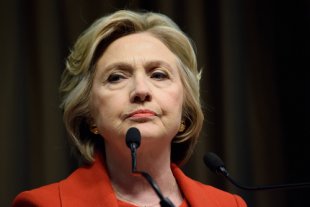


 After the Crash