
By Fabian Ommar
Source: Activist Post
It’s that time of the year, and instead of following tradition and making new predictions and forecasts (which we preppers do all the time anyways), I usually look back into the recent past, review my (and other’s) work and previous analyses, what transpired (or not), where my perspectives need adjustment and where, and so forth.
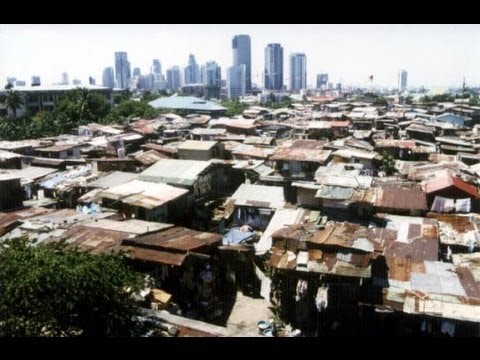
I decided to review and expand on a few topics addressed previously here and see where we are on those. In April, I wrote about the thirdworldization of the United States, as both it, and the rest of the First World, is gradually shifting towards the Third World.
It’s not only happening, but accelerating. And the entire world is going that way, too – or soon it will, judging by the signs. These things have a delay and don’t happen linearly, but in waves.
Thirdworldization 2.0 – When the First World becomes the Third World
Let’s see some more about how life can be in places constantly suffering with economic crises, political upheavals, moral degeneracy, authority demoralization, institutional failure and social decadence.
For anyone who’s never lived in such a context, understanding the dynamics of the system and societies in the Third World (or any place in which the order has changed drastically, yet not totally evaporated), can be a good way to prepare for what’s already underway.
The current crisis is global and unlike others seen in recent times
Notwithstanding the crap lining up just waiting to hit the fan – a pandemic, a debt time-bomb, geopolitical tensions, and lots more – the capacity to deal with all that is at an all-time low. Even wealthy nations look exhausted, depleted and lost like never before.
There’s zero willingness to cooperate and coordinate a solution, despite authorities’ constant and oddly similar declarations to the contrary. Speaking of the leadership currently in charge, it’s as mediocre, misguided, and uninspiring as it can possibly be.
And this is everywhere. We’re screwed.
It’s impossible to say for sure whether or not all that will end up in a full-blown SHTF of some kind, much less when. It can take a year, or ten. What’s certain is this: until things reach that catalyst point, degradation will force large swaths of populations worldwide, in most if not all countries, to take a few steps back in many fronts.
As I said before, it’s already happening.
The Third World will get much worse, and the First World will become a lot like the Third.
This is not SHTF as some might see it, but a middle-of-the-road-yet-still-gloomy scenario. Many in Preppersphere can’t conceive of anything less than the Apocalypse. Fine, to each their own. Besides, preparing for the worst means covering for everything less, so in principle it’s not a bad strategy, right?
I live in Brazil, but have visited the US, EU, and a few other countries and continents, even having lived abroad for a period during the 1990s. I’ve experienced both realities under different circumstances and gained some perspective on the contrasts between advanced societies, and ones with broken, inefficient, and corrupt institutions, and with weak social contracts.
That’s what I’m here to share. I’ll continue to raise awareness to what society converts into long before TEOTWAWKI happens, and try to help others prepare and deal with that. I do this not only because this is where I have some degree of knowledge, but also because that is what I see happening.
It’s hard to make progress in a ‘quicksand environment.’
In developed countries, people frame their decisions and take action based on reasonable probabilities, and the assumption that certain basic conditions of the social contract won’t change radically or suddenly, depending on who’s in charge or some other spurious reason.
A functional checks-and-balances system warrants the stability of laws, regulations, the tax regime, while the political rules and institutions create a favorable environment for investment and risk taking by people, families, and businesses. That’s what promotes the development and advancement of a country.
That’s perhaps the most important thing to understand about (and consequently prepare for) thirdworldization: it’s not just that things change, but how they change. Thirdworldization is the present and constant possibility that things can get done, undone, and again, at any moment, in unpredictable ways, without debate or warning.
How do you make plans for the future in such context?
Instability and uncertainty make life in general much harder to navigate in the Third World.
If the goalposts are constantly moving, everyone will act short or near term as a way to adapt and survive. The harder and more unstable the context, the faster you must both adapt and act (what is SHTF if not chaos?). So, there’s a silver lining to living like this, but also a price: it’s riskier, more stressful, tiresome, and frustrating.
I won’t say it’s hell, because it’s not.
Most people don’t live 24/7 in fear or under serious risk, not even in severely hit places. It’s not a full-scale SHTF. Life’s just more fluid, more challenging, and not as predictable and calm as in more civilized nations. Actions and consequences don’t follow a linear, predictable path.
Look around and see the sweeping anxiety and depression everywhere. I’d argue it’s not being caused by the pandemic, or even the economy going kaput, but by the appetite of governments everywhere to change basic rules and destroy freedom and individual liberty in the name of an emergency. When you combine this with people’s willingness to forfeit their rights, privacy and liberties in the name of illusory safety you end up with our current world.
That’s what I mean by the world going the way of the Third World.
Observing and understanding the real nature of fluidity in everyday life of a dysfunctional society can be critical, because dysfunctional is exactly what the world is fast becoming.
I’ll give some examples to illustrate what I’m talking about…
What does the path to authoritarianism look like?
The executive, legislative, and judiciary overstepping each other is common in banana republics. Every country can have a bill of rights, but it’s the separation of powers that make the constitution effective. Without a checks-and-balances system, rights are just words on a piece of paper.
This creates both confusion and infighting while simultaneously eroding confidence in the government’s institutions. People lose reference, politicians tend to abuse this strategy more and more, and from there it’s only downhill. It’s the exact script dictators and populists everywhere follow every single time to not only take power but to try to keep it forever.
For a long time this was something unacceptable and unseen in advanced nations. Despite this, though, it’s still been happening for some time now only having escalated in the last couple decades. Since 2020 it’s exploded, and it’s now eroding political and social stability in various developed countries.
And this is not only about inflated presidents declaring wars and contracting treaties and other actions without congressional approval, but also the government ceding increasing powers to agencies – NGOs and others organizations of unprepared, unelected tyrants aligned with the elites, eager to interfere and micromanage both society and people’s lives, as they steal people’s inherent rights and freedoms.
We now have moral ambiguity from top to bottom.
As we go lower down the scale into a full-fledged Third World nation, everyday life begins to border on the bizarre. In developing countries, the public administration is a cesspool of incompetence, poor planning, lack of vision, populism and corruption which drains precious resources and wealth from what would otherwise be a productive population.
The bureaucracy can reach paralyzing levels. The tax regime is so complex and illogical that it’s almost impossible to comply, even if you want to. The regulations are unstable and mutating. Besides punishing the population, these regulations lower the appetite of people and businesses to invest and take risk. The economy becomes less dynamic, less competitive and, eventually, it crawls.
Finally, when the government, institutions, and other authorities begin to become ambiguous with their defining the rules they create and enforce, people start thinking “why should I follow any of that?”
And once this happens, then it’s only a matter of time for disorder to increase and morality to collapse. That’s what a slow-burning SHTF means, after all: a semi-functional system where everything is fluid and the laws have little practical effect.
There’s little guns can do to solve bigger issues.
But let’s switch gears a little to explain something related: guns are important and can save us in some specific situations. But they can’t help with any of the stuff I’m talking about.
Who are we gonna shoot? The politicians? The corrupt cops? The lazy public workers? The stupid laws? That would solve nothing. All it would mean would be civil war, which only makes everything worse.
Things might get to that point, but it’s a completely different dynamic. When the system is up, shooting someone can land you in jail – even in the Third World.
“How’s that any different from anywhere else?” you might ask. In many ways, this starts with an ineffective investigation apparatus: here only about 6% of intentional homicides are solved, in comparison to an average of 65% in US, 80% in France, and 90% in UK.
Translating, it’s a lot more discouraging to commit a crime in the First World than in the Third. But then other distortions and inequalities come into play. The rich and/or connected almost never go to jail, no matter the crime.
And this leads to the second big difference: the slow and utterly unfair justice system that punishes the entire society, by not punishing the deserving, as it should.
And then there’s the infamous Third World penitentiary system…
These are true SHTF microcosms. No prison anywhere is paradise, obviously. But do you have any idea how bad and dangerous a Third World jail is? If having forty dangerous inmates in a small cubicle originally designed to hold four gives you chills, you understand why honest citizens (especially preppers) are so reluctant to brag about firearms and shooting others in developing countries.
In there, one can get raped, beat up, killed. Or co-opted by one of the many factions that command organized crime, to whom you’ll belong for protection, for the right to live, or even to keep your relatives from being abused, tortured, or killed outside.
Instead of rehabilitating prisoners, this system turns them into even better (that is, worse) criminals.
Mass escapes are also commonplace in Third World prisons. So are violent riots and rebellions in which enemy factions fight, torture, kill and literally rip apart their rivals, as a way to display ruthlessness and inflict fear into opponents. Sure, these things also happen in First World prisons, but not with nearly the same frequency, brutality, or impunity.
There are many ways to get unwillingly involved in this mess of a system, too.
As the situation worsens, so does the entire system. If you do everything right, lay low and get lucky, you may be well. It’s not guaranteed though. Something crazy can happen by pure chance or opportunity, and you’re suddenly involved in something you didn’t ask for, but can’t avoid or escape anymore.
For instance, one day the cops or some government agent – inspection, fiscal, whatever – pay a visit to your small shop or business and ask for a “collaboration”, for… reasons. You pay, of course. It’s extortion, but you don’t want to upset the “law” – and the system can’t protect you from itself.
Now you’re a cash cow.
You go for a jog in the streets and 99% of the time nothing happens. One day you get mugged, or your wife or daughter get groped while riding a bicycle, and there’s little you can do (if you thought “guns!”, go back a couple paragraphs and read what I said about those again).
And then, there’s the organized crime…
I could talk about organized crime for forever, discussing how it grows and spreads based on the same principles and practices that high-profile corporations use to grow and spread. How it infiltrates all levels of society, by corruption, intimidation, lobbying, or even by financing people to occupy strategic positions. How it gets involved with politicians, legitimate businesses, the media – until it’s just one big thing with tentacles everywhere.
Instead, I’ll do you all a big favor and just point to a couple of movies that not only show in true, raw, vivid colors how this whole mechanism works, but do it in a very entertaining and thrilling way. Elite Squad (1997) and its sequel, The Enemy Within (2010) are two of most brilliant and well-made Brazilian movies ever (both rated 8.0 on IMDB).
Apart from superb action flicks, they’re blunt, brutal, realistic portraits of crime, drug fighting/trafficking, institutional corruption, and overall social and moral decadence. They explain how crime evolves and takes over the system – how it gets “institutionalized”. It’s shocking, revealing, and educational.
There’s a reason I keep returning to the topic of crime.
Crime and violence are insidious and pervasive – the first evidence of collapse – while at the same time both the cause and consequence of deeper issues. Crime is the antecedent to (serious) shortages, and skyrockets when the grid goes down. It becomes both a collective and an individual problem. It affects us directly, and indirectly, physically and mentally – an itch no one can scratch.
Look how fast crime has grown in the US and around the world just in the past few months. I’m not talking about a 2% increment, but something in the two or even three figures in some places – and again, in months. For many, especially the part of society living in safe and civilized regions, crime may seem like something distant, numbers and statistics presented in the news.
That all changes when it comes to our door, and then the cat is definitely out of the bag.
To conclude, there’s been a lot of talk about the possibility of civil war in the United States. I think that it can happen, but not necessarily like 1871. It could be a mix of guerrilla warfare and crime, for instance. Or we could witness a steep, sudden, and widespread rise in crime and violence. In Haiti, gangs rule the country and casualties are high. It affects everyday life and impacts the whole population, the economy, everything. It may not be declared, but its de facto a civil war.
Abandoning innocence
When everything is good and there’s a surplus, collaboration happens easily and even spontaneously. With all the challenges and hardships we’re facing, people are entering survival mode everywhere. Becoming more knowledgeable about the dynamics of living in a dysfunctional society can build psychological preparations to live in a fluid and unstable world.
I acknowledge none of what I talked about here is prerogative of Third World or collapsed countries. Disorder, corruption and malfeasance are part of human nature and exist everywhere. But again, it’s certainly more widespread and violent where it’s not contained, and – this is critical – not punished.
And that’s precisely in proportion to the level of institutional efficiency, solidity and civil cohesion. Once these decay, the doors to social maladies are held wide open. And wherever this happens, a similar scenario unfolds.
It’s happening everywhere.
 After the Crash