
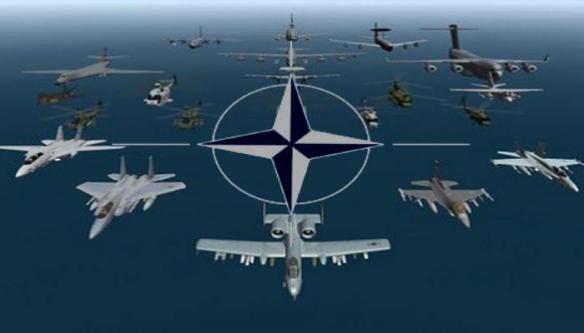
Understanding NATO, Ending War

By Robert J. Burrowes

On 4 April 2019, the North Atlantic Treaty Organization, better known as NATO, marked the 70th anniversary of its existence with a conference attended by the foreign ministers of member nations in Washington DC. This will be complemented by a meeting of the heads of state of member nations in London next December.

Coinciding with the anniversary event on 4 April, peace activists and concerned scholars in several countries conducted a variety of events to draw attention to, and further document, the many war crimes and other atrocities committed by NATO (sometimes by deploying its associate and crony terrorist armies – ISIS, Al Qaeda, Al Nusra – recruited and trained by the CIA and funded by Saudi Arabia, other Gulf countries and the US directly or through one or other of its many agencies: see ‘NATO – No Need – NATO-EXIT: The Florence Declaration’), the threat that NATO poses to global peace and security as an appendage of the US military, and to consider ways that NATO might be terminated.

These protests and related activities included several outlined in ‘No To NATO: Time To End Aggressive Militarism’ which also explains how NATO ‘provides a veneer of legality’ when ‘the US is unable to get the United Nations Security Council to approve military action’ and ‘Congress will not grant authority for US military action’ and despite the clearcut fact that NATO has no ‘international legal authority to go to war’, the grounds for which are clearly defined in the Charter of the United Nations and are limited to just two: authorization by the UN Security Council and a response in self-defense to a military attack.

The most significant gathering of concerned scholars was undoubtedly the ‘Exit NATO!’ conference in Florence, Italy, which culminated in the Florence Declaration calling for an end to NATO. See ‘The Florence Declaration: An International Front Calling for NATO-Exit’.

If NATO’s record of military destruction is so comprehensive – in the last 20 years virtually destroying Yugoslavia (balkanized into various successor states), Iraq and Libya, while inflicting enormous damage on many others, particularly Afghanistan and Syria – how did it come into existence and why does it exist now?

The Origin and Functions of NATO

Different authors offer a variety of reasons for the establishment of NATO. For example, Yves Engler argues that two of the factors driving the creation of NATO were ‘to blunt the European Left’ and ‘a desire to bolster colonial authority and bring the world under a US geopolitical umbrella’. See ‘On NATO’s 70th anniversary important to remember its anti-democratic roots’ and ‘Defense of European empires was original NATO goal’.

But few would disagree with Professor Jan Oberg’s brief statement on the origin of NATO: ‘Its raison d’etre… had always and unambiguously been the very existence of the Soviet Union… and its socialist/communist ideology.’ See ‘NATO at 70: An unlawful organisation with serious psychological problems’.

In other words, NATO was established as one response to the deep fear the United States government harbored in relation to the Soviet Union which, despite western propaganda to the contrary and at staggering cost to its population and industrial infrastructure, had led the defeat of Nazi Germany in World War II.

As Professor Michel Chossudovsky elaborates this point: The NATO ‘alliance’ of 29 member states (with Israel also a de facto member), most with US military bases, US military (and sometimes nuclear) weapons and significant or substantial deployments of US troops on their territory, was designed to sustain ‘the de facto “military occupation” of Western Europe’ and to confront the Soviet Union as the US administration orchestrated the Cold War to justify its imperial agenda – global domination guaranteed by massive US military expansion – in service of elite interests (including the profit maximization of the military industrial complex, its fossil fuel and banking corporations, and its media and information technology giants).

While NATO has the appearance of a multinational military alliance, the US controls NATO command structures with the Pentagon dominating NATO decision-making. NATO’s Supreme Allied Commander Europe (SACEUR) and Supreme Allied Commander Atlantic (SACLANT) are Americans appointed by Washington with the NATO Secretary General Jens Stoltenberg performing merely bureaucratic functions.

In light of the above, Chossudovsky observes: ‘Under the terms of the military alliance, NATO member states are harnessed into endorsing Washington’s imperial design of World conquest under the doctrine of collective security.’ Even worse, he argues, given the lies and fabrications that permeate US-NATO military doctrine, key decision-makers believe their own propaganda. ‘Immediately after the Cold War, a new nuclear doctrine was formulated, focused on the preemptive use of nuclear weapons, meaning a nuclear first strike as a means of self-defense.’ More recently: ‘Not only do they believe that tactical nuclear weapons are peace-making bombs, they are now putting forth the concept of a “Winnable Third World War”. Taking out China and Russia is on the drawing board of the Pentagon.’ See ‘NATO-Exit: Dismantle NATO, Close Down 800 US Military Bases, Prosecute the War Criminals’ and ‘NATO Spending Pushes Europe from Welfare to Warfare’.

So, given the ongoing military threats – with an expanding range of horrific weapons (including, to nominate just two, ‘more usable’ low yield nuclear weapons and technologies on ‘weather warfare’ offered by the military/nuclear corporate war planners) that threaten previously unimagined outcomes – and interventions by a US-led NATO, with Venezuela and now Iran the latest countries to be directly threatened – see ‘“Dangerous game”: US, Europe and the “betrayal” of Iran’ – as well as a gathering consensus among peace activists and scholars of the importance of stopping NATO (particularly given the many opportunities, beginning with aborting its origin, that have been missed already as explained by Professor Peter Kuznick: see ‘“Obscene” Bipartisan Applause for NATO in Congress’) how do we actually stop NATO?

While several authors, including those with articles cited above, offer ideas on what should be done about ending NATO, Chossudovsky offers the most comprehensive list of ideas in this regard well aware that stopping NATO is intimately connected to the struggle to end war and globalization. Chossudovsky’s ideas range from organizational suggestions such as integrating anti-war protest with the campaign against the gamut of neoliberal economic ‘reforms’ and the development of a broad based grassroots network independent of NGOs funded by Wall Street, objectives such as dismantling the propaganda apparatus which sustains the legitimacy of war and neoliberalism, challenging the corporate media (including by using alternative media outlets on the Internet), providing encouragement (including information about the illegality of their orders) for military personnel to refuse to fight (perhaps like the GI coffeehouse movement during the US war on Vietnam: see ‘The story of the GI coffeehouses’), working to close down weapons assembly plants and many other suggestions. See Towards a World War III Scenario: The Dangers of Nuclear War and ‘NATO-Exit: Dismantle NATO, Close Down 800 US Military Bases, Prosecute the War Criminals’.

Given my own deep interest in this subject of US/NATO wars and in developing and implementing a strategy that ends their war-making, let me elaborate Chossudovsky’s explanation of NATO’s function in the world today by introducing a book by Professor Peter Phillips.

In his book Giants: The Global Power Elite, Phillips observes that the power elite continually worries about rebellion by the ‘unruly exploited masses’ against their structure of concentrated wealth. This is why the US military empire has long played the role of defender of global capitalism. As a result, the United States has more than 800 military bases (with some scholars suggesting 1,000) in 70 countries and territories. In comparison, the United Kingdom, France, and Russia have about 30 foreign bases. In addition, US military forces are now deployed in 70 percent of the world’s nations with US Special Operations Command (SOCOM) having troops in 147 countries, an increase of 80 percent since 2010. These forces conduct counterterrorism strikes regularly, including drone assassinations and kill/capture raids.

‘The US military empire stands on hundreds of years of colonial exploitation and continues to support repressive, exploitative governments that cooperate with global capital’s imperial agenda. Governments that accept external capital investment, whereby a small segment of a country’s elite benefits, do so knowing that capital inevitably requires a return on investment that entails using up resources and people for economic gain. The whole system continues wealth concentration for elites and expanded wretched inequality for the masses….

‘Understanding permanent war as an economic relief valve for surplus capital is a vital part of comprehending capitalism in the world today. War provides investment opportunity for the Giants and TCC elites and a guaranteed return on capital. War also serves a repressive function of keeping the suffering masses of humanity afraid and compliant.’

As Phillips elaborates: This is why defense of global capital is the prime reason that NATO countries now account for 85 percent of the world’s military spending; the United States spends more on the military than the rest of the world combined.

In essence, ‘the Global Power Elite uses NATO and the US military empire for its worldwide security. This is part of an expanding strategy of US military domination around the world, whereby the US/ NATO military empire, advised by the power elite’s Atlantic Council, operates in service to the Transnational Corporate Class for the protection of international capital everywhere in the world’.

In short, ending NATO requires recognition of its fundamental role in preserving the US empire (at the expense of national sovereignty) and maintaining geopolitical control to defend the global elite’s capital interests – reflected in the capitalist agenda to endlessly expand economic growth – and particularly the profits the elite makes by inciting, supplying and justifying the massively profitable wars that the US/NATO conduct on its behalf.

So if you thought that wars were fought for reasons other than profit (like defense, a ‘just cause’ or ‘humanitarian’ motives) you have missed the essential function of US/NATO wars. And while these wars might be promoted by the corporate media as conflicts over geostrategic considerations (like ‘keeping open the Straits of Hormuz’), access to resources (‘war for oil’) or even markets (so that we can have US junk-food chains in every country on Earth), these explanations are all merely more palatable versions of the word ‘profit’ and are designed to obscure the truth.

And this raises another question worth pondering. Given that wars are the highly organized industrial-scale killing of fellow human beings (for profit) as well as the primary means of expanding the number of fellow human beings who are drawn into the global capitalist economy to be exploited (for profit) and the primary method used for destroying Earth’s climate and environment (for profit), you might wander if those who conduct wars are sane. Well, as even posing the question suggests, the global elite – which drives wars, the highly exploitative capitalist economy and destruction of the biosphere – is quite insane. And there is a brief explanation of this insanity and how it is caused in the article ‘The Global Elite is Insane Revisited’.

Stopping NATO

So if war is precipitated and now maintained perpetually by an insane elite that controls and utilizes the US and NATO military forces to secure profits by killing and exploiting fellow human beings while destroying the climate and environment, how can we stop it? Clearly, not without a sophisticated strategy that addresses each dimension of the conflict.

Hence, my own suggestion is that we do three things simultaneously:

  1. Invite participation in a comprehensive strategy to end war, of which NATO is a symptom
  2. Invite participation in one or another program to substantially reduce consumption to systematically reduce the vital driver of ‘wars for resources’ (which will also reduce the gross exploitation of fellow human beings and humanity’s adverse impact on the biosphere), and
  3. Invite participation in programs to increase human emotional functionality so that an increasing proportion of the human population is empowered to actively engage in struggles for peace, justice and sustainability and to perceive the propaganda of elites and their agents, including NATO functionaries and corporate media outlets, without being deceived by it.

There is a comprehensive strategy to end war explained on this website – Nonviolent Campaign Strategy – which includes identification of the two strategic aims and a basic list of 37 strategic goals to end war. See ‘Strategic Aims’.

There is a strategy for people to systematically reduce their consumption and increase their self-reliance mapped out in ‘The Flame Tree Project to Save Life on Earth’. But if you want a simpler 12-point list which still has strategic impact, see ‘The Earth Pledge’ included in ‘Why Activists Fail’. If you want to better understand why people over-consume, you can find out here: ‘Love Denied: The Psychology of Materialism, Violence and War’.

There is a process for improving your own emotional functionality (which will develop your conscience, courage and capacity to think strategically) described in the article ‘Putting Feelings First’. If you would like to assist children to grow up without emotional dysfunctionalities, consider making ‘My Promise to Children’. If you want to read the foundation behind these two suggestions, see Why Violence? and Fearless Psychology and Fearful Psychology: Principles and Practice.

Complementary to these suggestions, you might like to sign the online pledge of The Peoples Charter to Create a Nonviolent World which links people working to end violence in all contexts.

There is one question that remains unaddressed by the suggestions above: How do we mobilize sufficient people (both anti-war activists and others) and organizations (including anti-war groups and others) to participate in the effort to end elite-sponsored war, including its organizational structures such as NATO?

Given the notorious difficulty of mobilizing activists to act strategically in any context (a much more complex version of the basic problem of mobilizing people), my primary suggestion is that individuals within the anti-war movement invite other individuals and activist groups to choose and campaign on one or more of the strategic goals necessary to end war listed in ‘Strategic Aims’. While some activist groups are already working to achieve one or more of these strategic goals, we clearly need to engage more groups to work on the many other goals so that each of these goals is being addressed. War will not be ended otherwise.

One thing that a section of the climate movement does well is to research and report on those banks, superannuation funds and insurance companies that provide financial services, loans, investment capital and insurance cover to fossil fuel corporations and to then invite concerned people to sign standard letters sent to these organizations requesting them to cease their support of fossil fuels. The anti-war movement could usefully emulate this tactic (on a far wider scale than has existed previously) in relation to weapons corporations and to invite individuals and organizations everywhere to boycott banks, superannuation funds and insurance companies with any involvement in the weapons industry.

But this is just one simple tactic (involving no risk and little effort) on a small but important range of ‘targets’ in the anti-war struggle. Unfortunately, there are plenty more targets that need our attention and that will require more commitment than signing a letter given that, for example, essential funding for the weapons industry is supplied by government procurement programs using your taxes.

Similarly, we need individuals and groups working to mobilize people to substantially reduce their consumption, and individuals and groups working to mobilize people to prioritize their emotional well-being (the foundation of their courage to act conscientiously and strategically in resisting war, exploitation and destruction of the biosphere generally). If we do not undertake these complementary but essential programs, our efforts to end war will be endlessly undermined by our own fear and over-consumption.

Because, in the final analysis, it is our fearfully surrendered tax dollars and our dollars spent consuming the resources seized in wars that will ensure that elite-driven wars for profit by the US and NATO will be financially sustained, whatever words we utter and actions we take.

So our strategy must address this fear and over-consumption too if it is to have the sophistication and comprehensiveness necessary to shut down NATO and end war.


Biodata: Robert J. Burrowes has a lifetime commitment to understanding and ending human violence. He has done extensive research since 1966 in an effort to understand why human beings are violent and has been a nonviolent activist since 1981. He is the author of Why Violence? His email address is flametree@riseup.net and his website is here.

Why Activists Fail

By Robert J. Burrowes

Despite enormous ongoing effort over more than a thousand years, during and since the formation and shaping of the modern world, and as the number of issues being contested has steadily increased, activists of many types have made insufficient progress on key issues, particularly in relation to ending violence and war (and the threat of nuclear war), stopping the exploitation of many peoples and halting the endless assaults on Earth’s biosphere.

Of course, in order for those of us who identify as activists to have any prospect of success in these and other endeavors, we need to understand how the world works and to develop an interrelated set of nonviolent strategies that are being effectively implemented to address each of the key aspects of this crisis.

This is because there is a great deal wrong with how the human world functions and a staggering amount that needs to be done if we are to fix it and preserve the planetary biosphere in doing so, particularly given that the primary threats are now so serious that human extinction is likely to occur within a few years. See ‘Human Extinction by 2026? A Last Ditch Strategy to Fight for Human Survival’.

Of course, if human governance systems, ranging from international organizations like the United Nations and its various agencies to national, provincial and local governments functioned effectively, then we might expect these agencies, which theoretically function on our behalf, to have addressed these problems a long time ago. Or to do so now.

However, for reasons that are readily identifiable, these agencies have little power and routinely malfunction (from the viewpoints of ordinary people and the planetary biosphere).

So let me start by briefly explaining how the world works and then elaborating a few key points about strategy so that you can choose, if you wish (and, problematically, assuming there is still time), to play a more active and effective role, in one or more ways, in the struggle to make our world one of peace, justice and sustainability.

How the World Works: A Brief History

The formal human governance systems on Earth – that is, governments and intergovernmental organizations such as the United Nations – are controlled by the global elite which is invisible to, and hence not considered by, most people including activists. This, of course, is how the elite wants it and one can still readily find accounts that ask if the elite (by whatever name it is given) actually exists and even ascribe it a mystical quality. If the idea is not simply written off as a ‘conspiracy theory’.

Well the global elite exists and its membership can be readily identified. But let me start by briefly outlining how the global elite acquired its extraordinary control over world affairs.

Following the Neolithic revolution 12,000 years ago, agriculture allowed human settlement to supersede the hunter-gatherer economy. However, while the Neolithic revolution occurred spontaneously in several parts of the world, some of the Neolithic societies that emerged in Asia, Europe, Central America and South America resorted to increasing degrees of social control in order to achieve a variety of social and economic outcomes, including increased efficiency in food production.

Civilizations emerged just over 5,000 years ago and, utilizing this higher degree of social control, were characterized by towns or cities, efficient food production allowing a large minority of the community to be engaged in more specialized activities, a centralized bureaucracy and the practice of skilled warfare. See ‘A Critique of Human Society since the Neolithic Revolution’.

With the emergence of civilization, elites of a local nature (such as the Pharoahs of Egypt), elites with imperial reach (including Roman emperors), elites of a religious nature (such as Popes and officials of the Vatican), elites of an economic character (particularly the City of London Corporation) and elites of a ‘national’ type (especially the monarchies of Europe) progressively emerged, essentially to manage the administration associated with maintaining and expanding their realms (political, financial and/or religious).

Following the Peace of Westphalia in 1648, which formally established the nation-state system, national elites, increasingly of an economic nature as capitalism progressively developed and rapidly expanded, consolidated their hold over national societies and, as these elites internationalized their reach in the following centuries, by the second half of the C20th, a truly global elite had consolidated its control over the world.

Awareness of elites in earlier eras has been noted by some authors. For example, in his 1775 book An Inquiry into the Nature and Causes of the Wealth of Nations, Adam Smith noted that ‘All for ourselves, and nothing for other people, seems, in every age of the world, to have been the vile maxim of the masters of mankind’.

But the work of C. Wright Mills in his 1956 classic The Power Elite is the original scholarly effort of the post-World War II era to document the nature of this elite, how it functions and why it had total control over US national society. Of course, despite scholarship of this nature, which has been added to routinely ever since, most people still believe the elite-sponsored delusion that international organizations, such as the United Nations, and national governments actually have some significant say in world affairs.

To jump to the present then, for the best recent account of how the global elite manifests today, see the book by Professor Peter Phillips titled Giants: The Global Power Elite. In this book, Phillips identifies the world’s top seventeen asset management firms, such as BlackRock and J.P Morgan Chase, that collectively manage more than $US41.1 trillion in a self-invested network of interlocking capital that spans the globe. The seventeen Giants operate in nearly every country in the world and are ‘the central institutions of the financial capital that powers the global economic system’. They invest in anything considered profitable, ranging from ‘agricultural lands on which indigenous farmers are replaced by power elite investors’ to public assets (such as energy and water utilities), to fossil fuels, nuclear power and war.

More precisely, Phillips identifies the 199 individual directors of the seventeen global financial Giants and the importance of those transnational institutions that serve a unifying function – including the World Bank, International Monetary Fund, G20, G7, World Trade Organization (WTO), World Economic Forum (WEF), Trilateral Commission, Bilderberg Group, Bank for International Settlements and Council on Foreign Relations – and particularly two very important global elite policy-planning organizations: the Group of Thirty (which has 32 members) and the extended executive committee of the Trilateral Commission (which has 55 members).

And Phillips carefully explains why and how the global elite defends its power, profits and privilege against rebellion by the ‘unruly exploited masses’: ‘the Global Power Elite uses NATO and the US military empire for its worldwide security. This is part of an expanding strategy of US military domination around the world, whereby the US/ NATO military empire, advised by the power elite’s Atlantic Council, operates in service to the Transnational Corporate Class for the protection of international capital everywhere in the world’.

‘The US military empire stands on hundreds of years of colonial exploitation and continues to support repressive, exploitative governments that cooperate with global capital’s imperial agenda. Governments that accept external capital investment, whereby a small segment of a country’s elite benefits, do so knowing that capital inevitably requires a return on investment that entails using up resources and people for economic gain. The whole system continues wealth concentration for elites and expanded wretched inequality for the masses….

‘Understanding permanent war as an economic relief valve for surplus capital is a vital part of comprehending capitalism in the world today. War provides investment opportunity for the Giants and Transnational Corporate Class elites and a guaranteed return on capital. War also serves a repressive function of keeping the suffering masses of humanity afraid and compliant.’

If you would like to read other books which also give a clear sense of elites and their agents operating beyond the law to the extraordinary detriment of humanity and the Earth, then I strongly recommend William Blum’s classic Killing Hope: U.S. Military and CIA Interventions Since World War II and Paul L. Williams’ eye-opening account of Operation Gladio: The Unholy Alliance between the Vatican, the CIA and the Mafia.

In plain language then: The global elite manages human governance systems for its benefit with no concern for ordinary people – who are considered unworthy – or the planetary biosphere. And the most important function that international agencies and governments perform, from the elite perspective, is that they appear to have control over certain jurisdictions and matters so that relevant constituencies focus their efforts, for example, on ‘changing government policy’ or changing the party in government. By having activist effort focused on lobbying governments or changing the party in government, this effort is absorbed and dissipated; hence, nothing of consequence changes because the elite has significant control over all major political processes, parties and their policies.

Of course, I should add that the elite is smart enough to make it look like something has changed occasionally, perhaps by allowing a small concession after years of effort (invariably on a ‘social’ issue, such as gay marriage, that doesn’t adversely impact their power, profits and privilege), so that most activist effort remains focused on governments and international governmental agencies. The elite also allows a ‘genuinely progressive’ candidate to emerge regularly so that activists are again suckered into putting effort into electoral outcomes rather than building movements for broad-based social transformation based on grassroots organizing.

In managing their already vast and endlessly accumulating wealth the global elite siphons a staggering amount of financial resources out of the global economy every day and channels these resources through secretive tax havens to evade tax. Globally, $US10billion of wealth produced by the labor of ordinary people is ‘lost’ each week in this way and more than 10% of global financial wealth (which doesn’t include non-financial wealth ranging from racehorses and yachts to artworks and gold bars) is now hidden in these secrecy jurisdictions. See ‘Elite Banking at Your Expense: How Secretive Tax Havens are Used to Steal Your Money’.

A small proportion (but nevertheless significant amount) of elite wealth is used to create and manage the dominant narrative in relation to the state of the world by financing production of this narrative, generated by elite think tanks, and then distributed through education systems, the entertainment industry and the corporate media. In short, we are bombarded with elite propaganda, given names such as ‘education’, ‘entertainment’ and ‘news’, that hopelessly distorts popular perception of what is taking place.

So why does all of the above happen?

In essence: global elite control of formal human governance systems for its own benefit is an outcome of the global elite’s insanity, as well as the insanity of those who serve it. ‘So what is sanity?’ you might ask.

Sanity is defined as the capacity to consider a set of circumstances, to carefully analyze the evidence pertaining to those circumstances, to identify the cause of any conflict or problem, and to respond appropriately and strategically, both emotionally and intellectually, to that conflict or problem with the intention of resolving it, preferably at a higher level of need satisfaction for all parties (including those of the Earth and all of its living creatures). For a fuller explanation, see ‘The Global Elite is Insane Revisited’ with a lot more detail in ‘Why Violence?’ and ‘Fearless Psychology and Fearful Psychology: Principles and Practice’. In brief, individuals who are not incredibly psychologically damaged, do not behave as described above.

In essence then, while the description of how the world works offered above is accurate, it is driven by an insane elite – endlessly and compulsively accumulating profit, power and privilege at the expense of ordinary people and the biosphere – and the insanity of those who serve the elite, such as virtually all politicians and businesspeople, bankers and accountants, judges and lawyers, academics and corporate media personnel.

Hence, struggles for peace, justice, sustainability and liberation (from military occupation, dictatorship, genocidal assault, coups and invasions), by various means (including those which are nonviolent), fail far too often. But not just because of the enormous power of the global elite. They fail because activists do not understand how the world works, including how the elite exercises its power and, in the case of those who use nonviolent action explicitly, they fail when activists do not understand the psychology, politics and strategy of nonviolent struggle. And while these subjects are not complicated, they do require time to learn.

To reiterate then, the answer to the question ‘Why do activists fail?’ is this: Virtually all activists do not understand strategy and so they do not campaign strategically. This means that anything done – whether a decision in a meeting, a phone call or email, an action or event planned and executed – simply fails to have the impact it could have. Let me elaborate this explanation using just three basic components (out of twelve) of sound nonviolent strategy.

Before doing so I should emphasize that I am talking about those who identify as ‘activists’. I am not talking about lobbyists (or those who use activism in the service of lobbying). Moreover, I am assuming that all activists are using some version of what they understand as ‘nonviolent action’, whether or not they claim to be doing so or even realize they are, simply because no other tradition of activism offers the comprehensive strategic guidance that the literature on nonviolence offers.

So what should activists do so that their efforts have strategic impact?

Strategic Analysis

The foundation of any sound strategy – particularly if campaigning on major issues such as to end war, to end the climate catastrophe, to halt destruction of the fresh water supply and the rainforests, to defeat a coup, occupation or invasion nonviolently, to transform the global economy, to bring down the global elite… – is a thorough understanding of the conflict.

This means, most importantly, having a clear sense of the ‘big picture’ (including those overarching structures and actors in far-off places that maintain/perpetrate the local manifestations of violence and exploitation), not just the detail of the issue on which you focus. Fundamentally, this requires an astute understanding of the global power structure. If we do not understand how power works in society, particularly structurally, including in relation to the conflict we seek to resolve, then we cannot plan and implement a strategy that will work. As the historical record tragically demonstrates.

But it also requires our analysis to include a reasonable understanding of how key issues (such as war, destruction of the climate and environment, and exploitation of women, working people and indigenous peoples) intersect and reinforce each other. If we do not understand something of these relationships then we cannot plan strategy that takes these relationships into account and thus adequately account for all variables driving a conflict. Again, as the historical record painfully demonstrates.

So, for example, the failure of most climate and environmental activists to adequately consider the role of war (and military activity and violence generally) in destroying the climate and environment means that a primary driver of these two conflicts is barely mentioned let alone discussed and then actually tackled strategically – ideally by working in tandem with antiwar activists – by activists working to end the climate catastrophe and defend the environment as a whole.

But this failure to consider the ‘big picture’ is also the reason why most climate activists are focused on switching (from fossils fuels and nuclear power) to renewable energy and miss the fundamental point that we are destroying the entire global environment – including the fresh water, rainforests and oceans – and unless we dramatically reduce, by about 80%, our consumption in all key areas involving both energy and resources of every kind – water, household energy, transport fuels, metals, meat, paper and plastic – and immediately cease driving, flying and eating meat for starters, we have no chance of averting human extinction. See ‘Will humans be extinct by 2026?’ and ‘Climate-Change Summary and Update’.

Which is also why simple, structured approaches to this reduction of consumption, while dramatically expanding our individual and community self-reliance so that all environmental concerns are effectively addressed, must be part of any effective strategy to address the climate/environment catastrophe. See ‘The Flame Tree Project to Save Life on Earth’.

In one simple sentence: We cannot save the climate without saving the rainforests too, and ending war.

Having written all of the above, it is important to acknowledge that there are plenty of fine sources of accurate information on specific issues produced by independent think tanks and activist scholars and researchers. For example, you will find plenty of information about weapons corporations and weapons expenditure (still rising) on the website of the Stockholm International Peace Research Institute and the climate movement produces some rigorous research, with the latest report meticulously documenting that bank financing of fossil fuels is still rising despite the Paris climate ‘agreement’ in 2015. See ‘Banking on Climate Change: Fossil Fuel Finance Report Card 2019’.

Strategic Focus

If we do not thoroughly analyze the conflict, it is impossible to identify the appropriate strategic focus for action and to then plan tactics that address that focus. This inevitably means that we are essentially guessing what to do, not knowing in advance, as we should, that the action we take will have strategic impact.

Moreover, guessing what action to take, usually on the basis of what is familiar or what feels good – perhaps because we get out with a bunch of ‘good people’ – virtually inevitably leads to poor choices like organizing a large demonstration. Demonstrations are notoriously ineffective, as world history’s largest demonstration on 15 February 2003 – involving demonstrations in more than 600 cities around the world, involving up to 30,000,000 people, against the imminent US-led war on Iraq – see ‘The World Says No to War: Demonstrations against the War on Iraq’ – illustrated yet again. Single actions and numbers are not determinative; strategy is determinative. Obviously, large demonstrations could be effective, if they were strategically focused – never on governments though – but only a rare activist understands this with the recent worldwide ‘School Strike 4 Climate Action’ demonstrations on 15 March and the ‘Hands off Venezuela’ demonstrations on 16 March graphically illustrating this lack of understanding and thus wasting opportunities to make a strategic difference.

Let me explain this notion of strategic focus with a simple example, and then invite you to consider it in a little more detail.

Given the critical role that airline flights, travel by car and eating meat, for example, play in destroying the climate and, in the case of the first two, driving US-led wars for control of fossil fuels, imagine if all of those students attending the School Strike 4 Climate rallies had used the day to sign a personal pledge – the Earth Pledge? – which read something like this:

Out of love for the Earth and all of its inhabitants, and my respect for their needs, from this day onwards I pledge that:

  1. I will not travel by plane
  2. I will not travel by car
  3. I will not eat meat and fish
  4. I will only eat organically/biodynamically grown food
  5. I will minimize the amount of fresh water I use
  6. I will not buy rainforest timber
  7. I will not buy or use single-use plastic, such as bags, bottles, containers, cups and straws
  8. I will not use banks that provide any service to corporations involved in fossil fuels, nuclear power and/or weapons
  9. I will not get news from the corporate media (mainstream newspapers, television, radio, Facebook…)
  10. I will make the effort to learn a skill, such as food gardening or sewing, that makes me more self-reliant
  11. I will gently encourage my family and friends to consider signing this pledge.

Imagine if at all future climate rallies, participants were given the opportunity to sign such a pledge.

And imagine if at every demonstration against war, every participant was given the opportunity to sign such a pledge. There is little point yelling (or displaying a sign that reads) ‘No war for oil’ when you are the one using the oil. Surely, that would be hypocritical, wouldn’t it?

If it seems too difficult for now, would you sign the pledge after crossing out one or two items that you might reconsider later?

Perhaps, we can even mark 2 October 2019, the 150th anniversary of Gandhi’s birth, and the International Day of Nonviolence, as a day of world commitment with local ceremonies, small or large, around the world so that people can attend an event to make a public pledge of this nature too.

With the Earth under siege, would you sign such a pledge? What would you need to reorganize about your life to make it manageable?

The point then is this: It is easy to ask someone else to change their behaviour. It is more effective to change your own. And, if we do, we functionally undermine the cause of problems that concern so many of us.

Anyway, somewhat more elaborately, if you want strategic focus in your campaign strategy to end war or the climate catastrophe, for example, check out the two strategic aims and the basic list of strategic goals in ‘Campaign Strategic Aims’. And for the two strategic aims and the basic list of strategic goals to defend against a range of military threats, see ‘Defense Strategic Aims’.

This requires, vitally importantly, that the tactic in any given circumstance is thoughtfully crafted to achieve the strategic goal carefully identified as appropriate for this stage of the campaign. See the relationship and distinction between ‘The Political Objective and Strategic Goal of Nonviolent Actions’.

And for a better understanding of the power of nonviolent action and how to frame it for maximum strategic impact, see also ‘Nonviolent Action: Why and How it Works’.

Strategic Timeframe

Inadequate analysis, perhaps because you simply believe, without investigation, what the global elite is telling you via its many channels, such as its captive mainstream processes (including education systems and the corporate media), might lead you to work to a wholly unrealistic timeframe.

Unfortunately, this is precisely what is happening with the climate catastrophe. Unquestioningly following the elite-controlled discourse on this issue leads most people, including climate activists, to work to an ‘end of century’ timeframe or to believe, for example, that we have until 2030 to end our use of coal. And yet even some mainstream sources, such as the UN, are already reporting the catastrophic consequences of having set the utterly inadequate goal of limiting the global temperature increase to 2° (or 1.5°) celsius above the preindustrial norm. See, for example, ‘Global Linkages – A graphic look at the changing Arctic’ and ‘3-5°C temperature rise is now “locked-in” for the Arctic’.

So it is imperative that activists use their analysis (based on truthful sources) to make a realistic assessment of the timeframe. It might not be convenient to have less time than we think is necessary to precipitate the changes we want but our responsibility as activists includes the need to tell unpalatable truths (which the global elite and its agents will never do).

Fundamentally then, tell the truth. If there is a choice between being popular and telling the truth, I encourage you to always tell the truth. Deluding ourselves that we are doing a fine job and affirming each other for minor gains won’t avert human extinction or save those countless lifeforms, human and otherwise, who die each day as a result of our incredibly dysfunctional and violent world. Nor will it help those who are living under occupation, dictatorship or military assault.

Of course, telling the truth will scare many people. But it is still sounder strategy to trust people to hear the truth well, no matter how unpalatable it might be. Besides if we do not tell the truth and trust people, we have no prospect of mobilizing them strategically in the time we have left.

Needless to say, if you are going to tell the truth to others, you need to be courageous enough to perceive it yourself first. And to act on it.

Summary

In the above three sections, I explained the importance of a sound analysis, strategic focus and an appropriate timeframe as well as the importance of telling the truth, in developing and implementing an effective nonviolent strategy. This applies whatever the nature of the struggle: a peace, justice or environmental campaign or a defense or liberation struggle.

But effective strategy requires more than these three components and each of these components must also be soundly understood and rigorously implemented.

So if becoming more strategic appeals to you, check out either of these websites: Nonviolent Campaign Strategy or Nonviolent Defense/Liberation Strategy.

Or, for a quick overall look at the twelve components of nonviolent strategy, check out the Nonviolent Strategy Wheel on each site, such as this one.

In addition, if you want to focus on parenting children so that they are powerfully able to deal with reality and not get suckered into the widespread addictions of over-consumption and militarism – see ‘Love Denied: The Psychology of Materialism, Violence and War’ – or into believing that lobbying governments is the way to precipitate change, then you are welcome to consider making ‘My Promise to Children’ and learning the art of nisteling. See ‘Nisteling: The Art of Deep Listening’.

Of course, if you have problems reducing your consumption or questioning the efficacy of military violence, then consider addressing the unconscious psychological impediments to this. See ‘Putting Feelings First’.

If you like, you can also join the worldwide movement to end all violence by signing the online pledge of ‘The People’s Charter to Create a Nonviolent World’.

A Final Word

Some corporate economists are concerned that the global economy is facing a ‘downturn’ and, possibly, even entering a recession. As a result, they are arguing for measures to boost economic growth.

The reality, however, is that industrial civilization is already steadily and rapidly breaking down – with an endless sequence of climate and environmental catastrophes now taking place: for one of the latest, see ‘Death toll jumps in Mozambique storm as 15,000 await rescue’ – and will collapse completely within a few years. Why? Because the Earth has very little left to give without a staggering amount of regenerative inputs (some of which we can supply but others that require geological time).

But you do not need to believe me.

Consider the evidence for yourself.

If, after reading the lengthy list of documents, scientific and otherwise, cited in the key articles about near-term human extinction mentioned above, you can search out compelling evidence to refute the argument for near-term human extinction that is presented, then I hope you will share this evidence widely so that we can all be relieved that we have more time than an increasing number of courageous scientists are warning at risk to their livelihoods and professional appointments.

But if you cannot refute the evidence cited above or find the evidence that does it to your satisfaction, I invite you to respond thoughtfully and powerfully by taking immediate action to start systematically and substantially reducing your personal consumption while systematically increasing your personal and community self-reliance, in 16 areas, at the same time. Again, see ‘The Flame Tree Project to Save Life on Earth’.

I can assure you that if we ‘step down’ the global economy systematically while increasing our self-reliance at a (much) lower level of consumption (which will also demonetize economic activity), then all of those corporations – such as those producing fossil fuels, mining strategic minerals and destroying rainforests – will cease producing products for which there is no market. They will simply have no financial incentive to do so. And this will functionally and ongoingly undermine the power of the global elite to manipulate us into surrendering our power by lobbying governments and surrendering our labor and resources to buy their products to increase their power and profits. Moreover, elites will have less incentive to start and fight the wars to steal the resources necessary to make the products our over-consumption currently requires.

As you probably realize, it is your own action that gives you credibility (and moral authority) to then encourage others to follow your example, and for you to campaign for others to change their behaviour too. One hundred years ago, Mohandas K. Gandhi – perhaps anticipating the latest UN report: ‘UN Alliance For Sustainable Fashion addresses damage of “fast fashion”’ – was reminding us that ‘Earth provides enough to satisfy every person’s needs, but not every person’s greed.’ And he modeled the minimal consumption he asked of others in his own life first. At his death, he owned two outfits of handspun cotton, which he made himself on a spinning wheel, and a pair of sandals.

We do not have to be as frugal as Gandhi but we do need to substantially reduce our consumption and increase our self-reliance if we are to have any chance of preserving a biosphere that will sustain life for viable populations of all species.

Activists need to have the courage to act this out and then spread this message to everyone (particularly in the industrialized world): not waste their time asking elite agents, like governments, to support the switch to renewable energy or stop fighting wars to steal resources.

If we are to fight effectively to preserve the biosphere, we must do it strategically.


Biodata: Robert J. Burrowes has a lifetime commitment to understanding and ending human violence. He has done extensive research since 1966 in an effort to understand why human beings are violent and has been a nonviolent activist since 1981. He is the author of ‘Why Violence?’ His email address is flametree@riseup.net and his website is here.

Robert J. Burrowes
P.O. Box 68
Daylesford, Victoria 3460
Australia

Email: flametree@riseup.net

Websites:
Nonviolence Charter
Flame Tree Project to Save Life on Earth
‘Why Violence?’
Feelings First
Nonviolent Campaign Strategy
Nonviolent Defense/Liberation Strategy
Anita: Songs of Nonviolence
Robert Burrowes
Global Nonviolence Network

Exposing the Giants: The Global Power Elite

Diego Rivera, Man at the Crossroads/Man, Controller of the Universe, 1933

By Robert J. Burrowes

Developing the tradition charted by C. Wright Mills in his 1956 classic The Power Elite, in his latest book, Professor Peter Phillips starts by reviewing the transition from the nation state power elites described by authors such as Mills to a transnational power elite centralized on the control of global capital.

Thus, in his just-released study Giants: The Global Power Elite, Phillips, a professor of political sociology at Sonoma State University in the USA, identifies the world’s top seventeen asset management firms, such as BlackRock and J.P Morgan Chase, each with more than one trillion dollars of investment capital under management, as the ‘Giants’ of world capitalism. The seventeen firms collectively manage more than $US41.1 trillion in a self-invested network of interlocking capital that spans the globe.

This $41 trillion represents the wealth invested for profit by thousands of millionaires, billionaires and corporations. The seventeen Giants operate in nearly every country in the world and are ‘the central institutions of the financial capital that powers the global economic system’. They invest in anything considered profitable, ranging from ‘agricultural lands on which indigenous farmers are replaced by power elite investors’ to public assets (such as energy and water utilities) to war.

In addition, Phillips identifies the most important networks of the Global Power Elite and the individuals therein. He names 389 individuals (a small number of whom are women and a token number of whom are from countries other than the United States and the wealthier countries of Western Europe) at the core of the policy planning nongovernmental networks that manage, facilitate and defend the continued concentration of global capital. The Global Power Elite perform two key uniting functions, he argues: they provide ideological justifications for their shared interests (promulgated through their corporate media), and define the parameters of action for transnational governmental organizations and capitalist nation-states.

More precisely, Phillips identifies the 199 directors of the seventeen global financial Giants and offers short biographies and public information on their individual net wealth. These individuals are closely interconnected through numerous networks of association including the World Economic Forum, the International Monetary Conference, university affiliations, various policy councils, social clubs, and cultural enterprises. For a taste of one of these clubs, see this account of The Links in New York. As Phillips observes: ‘It is certainly safe to conclude they all know each other personally or know of each other in the shared context of their positions of power.’

The Giants, Phillips documents, invest in each other but also in many hundreds of investment management firms, many of which are near-Giants. This results in tens of trillions of dollars coordinated in a single vast network of global capital controlled by a very small number of people. ‘Their constant objective is to find enough safe investment opportunities for a return on capital that allows for continued growth. Inadequate capital-placement opportunities lead to dangerous speculative investments, buying up of public assets, and permanent war spending.’

Because the directors of these seventeen asset management firms represent the central core of international capital, ‘Individuals can retire or pass away, and other similar people will move into their place, making the overall structure a self-perpetuating network of global capital control. As such, these 199 people share a common goal of maximum return on investments for themselves and their clients, and they may seek to achieve returns by any means necessary – legal or not…. the institutional and structural arrangements within the money management systems of global capital relentlessly seek ways to achieve maximum return on investment, and … the conditions for manipulations – legal or not – are always present.’

Like some researchers before him, Phillips identifies the importance of those transnational institutions that serve a unifying function. The World Bank, International Monetary Fund, G20, G7, World Trade Organization (WTO), World Economic Forum (WEF), Trilateral Commission, Bilderberg Group, Bank for International Settlements, Group of 30 (G30), the Council on Foreign Relations and the International Monetary Conference serve as institutional mechanisms for consensus building within the transnational capitalist class, and power elite policy formulation and implementation. ‘These international institutions serve the interests of the global financial Giants by supporting policies and regulations that seek to protect the free, unrestricted flow of capital and debt collection worldwide.’

But within this network of transnational institutions, Phillips identifies two very important global elite policy-planning organizations: the Group of Thirty (which has 32 members) and the extended executive committee of the Trilateral Commission (which has 55 members). These nonprofit corporations, which each have a research and support staff, formulate elite policy and issue instructions for their implementation by the transnational governmental institutions like the G7, G20, IMF, WTO, and World Bank. Elite policies are also implemented following instruction of the relevant agent, including governments, in the context. These agents then do as they are instructed. Thus, these 85 members (because two overlap) of the Group of Thirty and the Trilateral Commission comprise a central group of facilitators of global capitalism, ensuring that ‘global capital remains safe, secure, and growing’.

So, while many of the major international institutions are controlled by nation-state representatives and central bankers (with proportional power exercised by dominant financial supporters such as the United States and European Union countries), Phillips is more concerned with the transnational policy groups that are nongovernmental because these organizations ‘help to unite TCC power elites as a class’ and the individuals involved in these organizations facilitate world capitalism. ‘They serve as policy elites who seek the continued growth of capital in the world.’

Developing this list of 199 directors of the largest money management firms in the world, Phillips argues, is an important step toward understanding how capitalism works globally today. These global power elite directors make the decisions regarding the investment of trillions of dollars. Supposedly in competition, the concentrated wealth they share requires them to cooperate for their greater good by identifying investment opportunities and shared risk agreements, and working collectively for political arrangements that create advantages for their profit-generating system as a whole.

Their fundamental priority is to secure an average return on investment of 3 to 10 percent, or even more. The nature of any investment is less important than what it yields: continuous returns that support growth in the overall market. Hence, capital investment in tobacco products, weapons of war, toxic chemicals, pollution, and other socially destructive goods and services are judged purely by their profitability. Concern for the social and environmental costs of the investment are non-existent. In other words, inflicting death and destruction are fine because they are profitable.

So what is the global elite’s purpose? In a few sentences Phillips characterizes it thus: The elite is largely united in support of the US/NATO military empire that prosecutes a repressive war against resisting groups – typically labeled ‘terrorists’ – around the world. The real purpose of ‘the war on terror’ is defense of transnational globalization, the unimpeded flow of financial capital around the world, dollar hegemony and access to oil; it has nothing to do with repressing terrorism which it generates, perpetuates and finances to provide cover for its real agenda. This is why the United States has a long history of CIA and military interventions around the world ostensibly in defense of ‘national interests’.


Wealth and Power

An interesting point that emerges for me from reading Phillips thoughtful analysis is that there is a clear distinction between those individuals and families who have wealth and those individuals who have (sometimes significantly) less wealth (which, nevertheless, is still considerable) but, through their positions and connections, wield a great deal of power. As Phillips explains this distinction, ‘the sociology of elites is more important than particular elite individuals and their families’. Just 199 individuals decide how more than $40 trillion will be invested. And this is his central point. Let me briefly elaborate.

There are some really wealthy families in the world, notably including the families Rothschild (France and the United Kingdom), Rockefeller (USA), Goldman-Sachs (USA), Warburgs (Germany), Lehmann (USA), Lazards (France), Kuhn Loebs (USA), Israel Moses Seifs (Italy), Al-Saud (Saudi Arabia), Walton (USA), Koch (USA), Mars (USA), Cargill-MacMillan (USA) and Cox (USA). However, not all of these families overtly seek power to shape the world as they wish.

Similarly, the world’s extremely wealthy individuals such as Jeff Bezos (USA), Bill Gates (USA), Warren Buffett (USA), Bernard Arnault (France), Carlos Slim Helu (Mexico) and Francoise Bettencourt Meyers (France) are not necessarily connected in such a way that they exercise enormous power. In fact, they may have little interest in power as such, despite their obvious interest in wealth.

In essence, some individuals and families are content to simply take advantage of how capitalism and its ancilliary governmental and transnational instruments function while others are more politically engaged in seeking to manipulate major institutions to achieve outcomes that not only maximize their own profit and hence wealth but also shape the world itself.

So if you look at the list of 199 individuals that Phillips identifies at the centre of global capital, it does not include names such as Bezos, Gates, Buffett, Koch, Walton or even Rothschild, Rockefeller or Windsor (the Queen of England) despite their well-known and extraordinary wealth. As an aside, many of these names are also missing from the lists compiled by groups such as Forbes and Bloomberg, but their absence from these lists is for a very different reason given the penchant for many really wealthy individuals and families to avoid certain types of publicity and their power to ensure that they do.

In contrast to the names just listed, in Phillips’ analysis names like Laurence (Larry) Fink (Chairman and CEO of BlackRock), James (Jamie) Dimon (Chairman and CEO of JPMorgan Chase) and John McFarlane (Chairman of Barclays Bank), while not as wealthy as those listed immediately above, wield far more power because of their positions and connections within the global elite network of 199 individuals.

Predictably then, Phillips observes, these three individuals have similar lifestyles and ideological orientations. They believe capitalism is beneficial for the world and while inequality and poverty are important issues, they believe that capital growth will eventually solve these problems. They are relatively non-expressive about environmental issues, but recognize that investment opportunities may change in response to climate ‘modifications’. As millionaires they own multiple homes. They attended elite universities and rose quickly in international finance to reach their current status as giants of the global power elite. ‘The institutions they manage have been shown to engage in illegal collusions with others, but the regulatory fines by governments are essentially seen as just part of doing business.’

In short, as I would characterize this description: They are devoid of a legal or moral framework to guide their actions, whether in relation to business, fellow human beings, war or the environment and climate. They are obviously typical of the elite.

Any apparent concern for people, such as that expressed by Fink and Dimon in response to the racist violence in Charlottesville, USA in August 2017, is simply designed to promote ‘stability’ or more precisely, a stable (that is, profitable) investment and consumer climate.

The lack of concern for people and issues that might concern many of us is also evident from a consideration of the agenda at elite gatherings. Consider the International Monetary Conference. Founded in 1956, it is a private yearly meeting of the top few hundred bankers in the world. The American Bankers Association (ABA) serves as the secretariat for the conference. But, as Phillips notes: ‘Nothing on the agenda seems to address the socioeconomic consequences of investments to determine the impacts on people and the environment.’ A casual perusal of the agenda at any elite gathering reveals that this comment applies equally to any elite forum. See, for example, the agenda of the recent WEF meeting in Davos. Any talk of ‘concern’ is misleading rhetoric.

Hence, in the words of Phillips: The 199 directors of the global Giants are ‘a very select set of people. They all know each other personally or know of each other. At least 69 have attended the annual World Economic Forum, where they often serve on panels or give public presentations. They mostly attended the same elite universities, and interact in upperclass social setting[s] in the major cities of the world. They all are wealthy and have significant stock holdings in one or more of the financial Giants. They are all deeply invested in the importance of maintaining capital growth in the world. Some are sensitive to environmental and social justice issues, but they seem to be unable to link these issues to global capital concentration.’

Of course, the global elite cannot manage the world system alone: the elite requires agents to perform many of the functions necessary to control national societies and the individuals within them. ‘The interests of the Global Power Elite and the TCC are fully recognized by major institutions in society. Governments, intelligence services, policymakers, universities, police forces, military, and corporate media all work in support of their vital interests.’

In other words, to elaborate Phillips’ point and extend it a little, through their economic power, the Giants control all of the instruments through which their policies are implemented. Whether it be governments, national military forces, ‘military contractors’ or mercenaries (with at least $200 billion spent on private security globally, the industry currently employs some fifteen million people worldwide) used both in ‘foreign’ wars but also likely deployed in future for domestic control, key ‘intelligence’ agencies, legal systems and police forces, major nongovernment organizations, or the academic, educational, ‘public relations propaganda’, corporate media, medical, psychiatric and pharmaceutical industries, all instruments are fully responsive to elite control and are designed to misinform, deceive, disempower, intimidate, repress, imprison (in a jail or psychiatric ward), exploit and/or kill (depending on the constituency) the rest of us, as is readily evident.


Defending Elite Power

Phillips observes that the power elite continually worries about rebellion by the ‘unruly exploited masses’ against their structure of concentrated wealth. This is why the US military empire has long played the role of defender of global capitalism. As a result, the United States has more than 800 military bases (with some scholars suggesting 1,000) in 70 countries and territories. In comparison, the United Kingdom, France, and Russia have about 30 foreign bases. In addition, US military forces are now deployed in 70 percent of the world’s nations with US Special Operations Command (SOCOM) having troops in 147 countries, an increase of 80 percent since 2010. These forces conduct counterterrorism strikes regularly, including drone assassinations and kill/capture raids.

‘The US military empire stands on hundreds of years of colonial exploitation and continues to support repressive, exploitative governments that cooperate with global capital’s imperial agenda. Governments that accept external capital investment, whereby a small segment of a country’s elite benefits, do so knowing that capital inevitably requires a return on investment that entails using up resources and people for economic gain. The whole system continues wealth concentration for elites and expanded wretched inequality for the masses….

‘Understanding permanent war as an economic relief valve for surplus capital is a vital part of comprehending capitalism in the world today. War provides investment opportunity for the Giants and TCC elites and a guaranteed return on capital. War also serves a repressive function of keeping the suffering masses of humanity afraid and compliant.’

As Phillips elaborates: This is why defense of global capital is the prime reason that NATO countries now account for 85 percent of the world’s military spending; the United States spends more on the military than the rest of the world combined.

In essence, ‘the Global Power Elite uses NATO and the US military empire for its worldwide security. This is part of an expanding strategy of US military domination around the world, whereby the US/ NATO military empire, advised by the power elite’s Atlantic Council, operates in service to the Transnational Corporate Class for the protection of international capital everywhere in the world’.

This entails ‘further pauperization of the bottom half of the world’s population and an unrelenting downward spiral of wages for 80 percent of the world. The world is facing economic crisis, and the neoliberal solution is to spend less on human needs and more on security. It is a world of financial institutions run amok, where the answer to economic collapse is to print more money through quantitative easing, flooding the population with trillions of new inflation-producing dollars. It is a world of permanent war, whereby spending for destruction requires further spending to rebuild, a cycle that profits the Giants and global networks of economic power. It is a world of drone killings, extrajudicial assassinations, death, and destruction, at home and abroad.’


Where is this all heading?

So what are the implications of this state of affairs? Phillips responds unequivocally: ‘This concentration of protected wealth leads to a crisis of humanity, whereby poverty, war, starvation, mass alienation, media propaganda, and environmental devastation are reaching a species-level threat. We realize that humankind is in danger of possible extinction’.

He goes on to state that the Global Power Elite is probably the only entity ‘capable of correcting this condition without major civil unrest, war, and chaos’ and elaborates an important aim of his book: to raise awareness of the importance of systemic change and the redistribution of wealth among both the book’s general readers but also the elite, ‘in the hope that they can begin the process of saving humanity.’ The book’s postscript is a ‘A Letter to the Global Power Elite’, co-signed by Phillips and 90 others, beseeching the elite to act accordingly.

‘It is no longer acceptable for you to believe that you can manage capitalism to grow its way out of the gross inequalities we all now face. The environment cannot accept more pollution and waste, and civil unrest is everywhere inevitable at some point. Humanity needs you to step up and insure that trickle-down becomes a river of resources that reaches every child, every family, and all human beings. We urge you to use your power and make the needed changes for humanity’s survival.’

But he also emphasizes that nonviolent social movements, using the Universal Declaration of Human Rights as a moral code, can accelerate the process of redistributing wealth by pressuring the elite into action.


Conclusion

Peter Phillips has written an important book. For those of us interested in understanding elite control of the world, this book is a vital addition to the bookshelf. And like any good book, as you will see from my comments both above and below, it raised more questions for me even while it answered many.

As I read Phillips’ insightful and candid account of elite behavior in this regard, I am reminded, yet again, that the global power elite is extraordinarily violent and utterly insane: content to kill people in vast numbers (whether through starvation or military violence) and destroy the biosphere for profit, with zero sense of humanity’s now limited future. See ‘The Global Elite is Insane Revisited’ and ‘Human Extinction by 2026? A Last Ditch Strategy to Fight for Human Survival’ with more detailed explanations for the violence and insanity here: Why Violence? and Fearless Psychology and Fearful Psychology: Principles and Practice.

For this reason I do not share his faith in moral appeals to the elite, as articulated in the letter in his postscript. It is fine to make the appeal but history offers no evidence to suggest that there will be any significant response. The death and destruction inflicted by elites is highly profitable, centuries-old and ongoing. It will take powerful, strategically-focused nonviolent campaigns (or societal collapse) to compel the necessary changes in elite behavior. Hence, I fully endorse his call for nonviolent social movements to compel elite action where we cannot make the necessary changes without their involvement. See ‘A Nonviolent Strategy to End Violence and Avert Human Extinction’ and Nonviolent Campaign Strategy.

I would also encourage independent action, in one or more of several ways, by those individuals and communities powerful enough to do so. This includes nurturing more powerful individuals by making ‘My Promise to Children’, participating in ‘The Flame Tree Project to Save Life on Earth’ and signing the online pledge of ‘The People’s Charter to Create a Nonviolent World’.

Fundamentally, Giants: The Global Power Elite is a call to action. Professor Peter Phillips is highly aware of our predicament – politically, socially, economically, environmentally and climatically – and the critical role played by the global power elite in generating that predicament.

If we cannot persuade the global power elite to respond sensibly to that predicament, or nonviolently compel it to do so, humanity’s time on Earth is indeed limited.


Biodata: Robert J. Burrowes has a lifetime commitment to understanding and ending human violence. He has done extensive research since 1966 in an effort to understand why human beings are violent and has been a nonviolent activist since 1981. He is the author of ‘Why Violence?’ http://tinyurl.com/whyviolence His email address is flametree@riseup.net and his website is here. http://robertjburrowes.wordpress.com

Robert J. Burrowes
P.O. Box 68
Daylesford, Victoria 3460
Australia

Email: flametree@riseup.net

Websites:
Nonviolence Charter
Flame Tree Project to Save Life on Earth
‘Why Violence?’
Feelings First
Nonviolent Campaign Strategy
Nonviolent Defense/Liberation Strategy
Anita: Songs of Nonviolence
Robert Burrowes
Global Nonviolence Network

Podcast Roundup

6/8: Hosts Mickey Huff and Peter Phillips discuss the ongoing situation in the Ukraine with Dr. Michael Parenti, Prof. Michel Chossudovsky, and former Congresswomen and Green Party Presidential candidate Cynthia McKinney on “the Project Censored Show”. All of them are contributors to a new book by Clarity Press edited by Stephen Lendman, “Flashpoint Ukraine: How the US Drive for Hegemony Risks WWIII.”

https://s3.amazonaws.com/Pcradiodos/Project+Censored+060614.mp3

6/9: On “the Progressive Commentary Hour”, host Gary Null interviews Dr. Andrew Wakefield, a gastroenterologist and academician specializing in inflammatory bowel disease and the measles-mumps-rubella vaccine or MMR. They discuss how the US government uses corporations and universities to support policies, silence top scientists, jeopardize public health and protect corporate profits.

http://s36.podbean.com/pb/3f11f4e516587793b6f2d38475623afc/5398ccbc/data1/blogs18/371244/uploads/ProgressiveCommentaryHour_060914.mp3

6/10: On “the Higherside Chats”, Adam Gorightly and Vyzygoth joins host Greg Carlwood for a freewheeling but illuminating conversation about the suppressed history of the United States hidden beneath lies and disinformation most have been led to believe.

http://thehighersidechats.com/wp-content/uploads/2014/06/112-Vyzygoth.mp3

6/12: KMO talks with Vincent Horn of Buddhist Geeks on the lastest C-Realm podcast. They discuss the use of mindfulness techniques in technological society and its connection to DIY, Quanitifed Self and Maker movements. KMO wraps up with commentary on the nature of individualism and community.

http://www.c-realm.com/wp-content/uploads/418_Adaptive_Comtemplation.mp3


No matter what political reasons are given for war, the underlying reason is always economic. – A.J.P. Taylor

With so much attention on arguments for and against a potential World War 3, it’s almost easy to forget about economic problems though the issues overlap. To remind us (if we did need reminding), a number of great articles have come out recently.

Two headlines at OpEd News explain how economic pressures play a part in mass opposition against the war and reasons why even without another war, America is headed towards a greater financial crisis.

Though corporate media tells us we’re in an economic recovery, the truth is it’s a recovery for the rich, a recession for the rest.

A new UC Berkeley report documents the growing gulf between the rich and poor in the U.S. since 2009, while on a global scale a new “superclass” has emerged who are 94% male, white, and connected to financial corporations, governments, and the military, as reported in this expose on the Financial Core of the Transnational Capitalist Class.

On related notes, ever wonder how much money missile strikes cost and how many CEOs were prosecuted for their role in the financial crisis? The answers will tell you something about the priorities of the U.S. government.

Greg Palast article about the “End-Game” memo: http://www.gregpalast.com/larry-summers-and-the-secret-end-game-memo/