
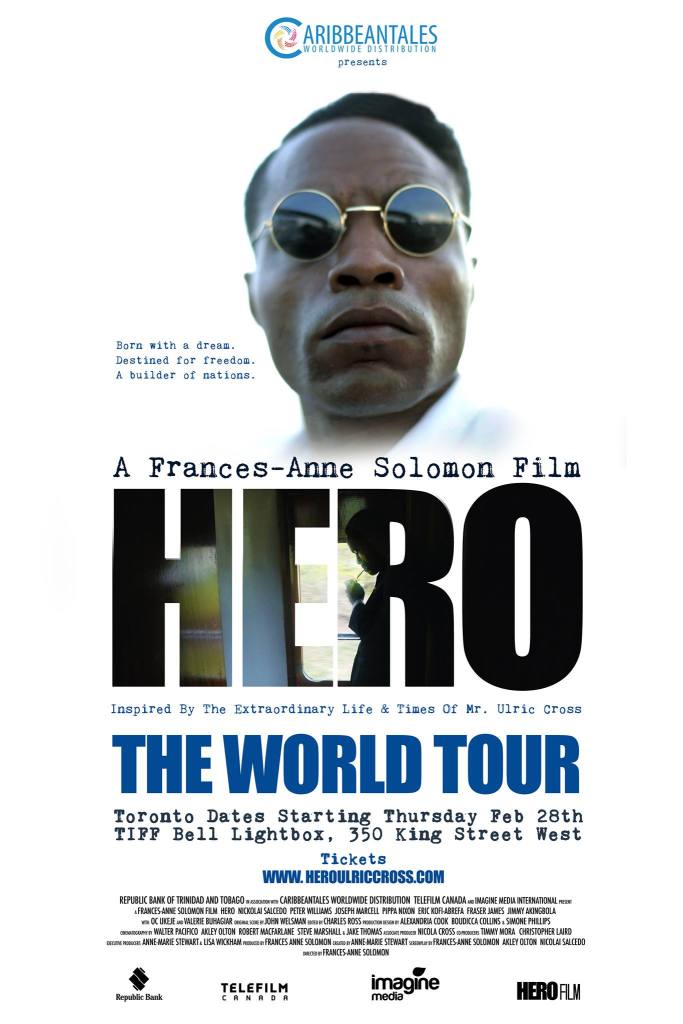
Hero – the extraordinary life and times of Ulric Cross
By Stephen Spark
Source: Soca News
Hero has landed. Frances-Anne Solomon’s film about the life of Ulric Cross – eight years in the making ‑ has finally reached London, though only for a few screenings. If the audience reaction at the premiere at Brixton’s Ritzy cinema was anything to go by, this film, like its subject, is destined for great things.
In conventional terms, Cross was indeed a hero. He was born in Belmont, Trinidad, and after school and some inconsequential jobs, he joined the Royal Air Force when war broke out. He became a navigator for an RAF pathfinder squadron, flying low-level missions over enemy territory to mark targets for the bombers to hit. This was not a job guaranteed to increase your life expectancy, and his near-suicidal decision to fly 80 missions without a break as Cross did was something that even he couldn’t really explain. He was, famously, the most-decorated Caribbean serviceman, gaining both a DFC and DSO for his cool-headed courage.
Like many West Indian servicemen and women, he learnt that an exemplary war record counted for little when it came to finding a peacetime job in ‘civvy street’. Despite training as a lawyer, he ended up at the BBC, but the plug was pulled on him when his interviews were deemed “too political”. And at this point the story really begins.
The title ‘hero’ is a little misleading, for his war service was only one aspect of his life and, according to Solomon, among family and friends “no one saw him as a hero”. Instead, what we have is a film about a heroic life. Cross played an important part in the African independence and pan-Africanist movements in Ghana, Cameroon and Tanzania, along with fellow Trinidadians George Padmore and C L R James. The film highlights how exciting, uncertain, energising and downright dangerous it was to be an intelligent, idealistic champion of Black empowerment and unity in Africa.
It would be impossible in anything less than a full-length dissertation to do justice to all the intersecting themes Hero contains. After the screening, almost everyone this reviewer spoke to said they needed to see it multiple times.
Hero is intellectually and emotionally absorbing, and visually exciting. Solomon has made extensive use of archive footage and melded it seamlessly with newly shot elements. At the post-film Q&A session, Solomon said that she used and adapted archive footage because the budget was too tight to allow the big set-piece scenes to be shot. It’s a restriction she turned to great advantage, as it’s resulted in a film that looks distinctive and stylish, combining newsreel immediacy with feature film gloss.
Nickolai Salcedo is mesmerising and entirely believable as Ulric Cross, and there’s a fine chemistry with Pippa Nixon as his wife, Ann – clearly a strong character in her own right. Peter Williams deserves a mention for his portrayal of the plausible, but deceptive, ‘Pony’ Macfarlane, while Fraser James brings a restless energy to the fascinating and enigmatic George Padmore.
In short: thoroughly recommended – go and see it as soon as you can.
Watch Hero on Hoopla here: https://www.hoopladigital.com/title/15317967

 After the Crash