
US Sanctions Symptomatic of a Failing Empire

By James ONeill
Source:  New Eastern Outlook

On 26 July 2017 the US Congress overwhelmingly approved a Bill providing for fresh sanctions against North Korea, Russia and Iran. The passage of this Bill , and its level of support in the US Congress, is instructive on a number of levels.

The first point is that the US, or more accurately factions within the US establishment, are prepared to pursue policies irrespective of the lack of an evidential foundation; run counter to the interests of its supposed friends and allies, and completely lacks any knowledge of or reference to historical realities. The net result of the latest sanctions is to create a singularly dangerous situation that could very easily lead to a nuclear war. Contrary to the bizarre beliefs of some US policy makers, there would be no winners in such an outcome.

These points may be illustrated by reference to the sanctions applied to Iran. For years, the rhetoric from the US and its close ally Israel was that Iran was on “the verge of developing a nuclear bomb”. For more than a decade, the Israel government was saying that Iran was “only months away” from such a development. That the deadlines came and went without incident did not deter the repetition of what were manifest falsehoods.

Israel’s Prime Minister Netanyahu appeared before the UN General Assembly brandishing a cartoon depiction of the alleged “imminent threat”. The western media largely omitted to mention the fact that it was Israel that was the Middle East’s sole nuclear power; that Israel was not a signatory to the nuclear Non-Proliferation Treaty; and that it was Israel that consistently refused to allow inspections by the IAEA of its nuclear facilities.

Not only was there no evidence that Iran had or wished to develop a nuclear weapons capability, it was the unanimous view of all 17 US intelligence agencies on two separate occasions that Iran was not developing a nuclear weapons program.

To head off the prospect of the constant anti-Iran propaganda escalating to an attack by the US and its allies upon Iran, the Russian government was instrumental in achieving an agreement in 2015 that prevented an alleged non-existent nuclear weapons program becoming a justification for war. The recent historical example of Iraq was illustrative of how constant demonization, undermining by sanctions, and overblown false allegations of nuclear and other weapons of mass destruction could quickly lead to the utter devastation of a previously prosperous nation.

The lessons that should have been learned from Iraq, Libya and Syria are determinedly ignored by the western media that is currently beating the drums of war over North Korea, again ignoring history, logic and military realities.

The Joint Comprehensive Plan of Action (JCPOA) negotiated in 2015 and agreed by the participating parties, including the United States, provided an instrument through which it became virtually impossible for Iran to become a nuclear-armed power. The mechanisms for ensuring compliance included regular IAEA inspections, and six-monthly reports certifying Iran’s compliance. Those reports went to the US Congress.

For the Americans and their allies however, it was not enough. Although the JCPOA deprived them of an immediate casus belli for war, the anti-Iran rhetoric continued non-stop. One example of the false propaganda was the constant claim that Iran was a supporter of Shia groups, intent on fostering terrorism and destabilization across the Middle East and elsewhere.

This allegation bore no resemblance to the facts. The US Carnegie Foundation, for example, in a report entitled “Iran’s Small Hand in Yemen” criticized the depiction of Iran as supporting “Shia rebels” against the forces supporting the deposed President Hadi. The reality is that Hadi was a dictator, elected in an election where he was the only candidate, and whom popular opposition forced him to flee to Saudi Arabia.

The Houthis, who are the main opposition to Hadi, are Zaidi Muslims, much closer theologically to the Sunni branch of Islam than they are to predominantly Shia Iran. The brutal war currently being waged on Yemen is led by Sunni Saudi
Arabia, supported by the UK, US and a heavy involvement of mercenaries, including Australians, about which the Australian government is silent. The reality has more to do with Yemen’s strategic location overlooking the narrow outlet from the Red Sea to the Arabian Sea and its massive oil reserves coveted by the Saudis than it does with any alleged Iranian support. Djibouti, across the strait from Yemen, has similarly attracted US and Chinese strategic involvement, without as yet being ravaged by war.

Iran also offers political and moral support for Hamas in Palestine, Muslims in Kashmir and the Rohingya in Myanmar, all of whom are overwhelmingly Sunni. The feature they all have in common is that they are repressed and subject to genocidal policies by other political and religious groupings.

The Trump administration is demonstrating the truth of President Putin’s observation about the previous Obama administration, that they “are not agreement capable.”

Trump told the Wall Street Journal “if it was up to me I would have found (the Iranians) non-compliant 180 days ago” (when he was sworn in). According to an article in the US Journal Foreign Policy Trump threw a tantrum in the Oval Office and berated his three senior foreign policy advisers (Tillerson, Mattis and McMaster) for not having found a way to claim that Iran was in breach of the provisions of the JCPOA. The New York Times ran a similar story.

In fact it is the United States that is in violation of the JCPOA, both the letter and the spirit of the agreement, and also of UN Security Council Resolution 2231 (2015) that approved the agreement. Article 29 of the JCPOA commits the US to refrain from any policy intended to affect the normalization of trade and economic relations with Iran.

The latest round of sanctions, and the bellicose rhetoric accompanying them are manifestly not in compliance with Article 29.

Among the many falsehoods asserted against Iran is the claim that Iran’s missile tests are a violation of the JCPOA. There is nothing in the agreement that inhibits Iran from developing a self-defence capability, including the use of anti-aircraft and anti-missile technology. That is also a right enshrined in the UN Charter.

Iran took delivery of the Russian made S300 anti-missile system in 2016, also in pursuance of its right to self-defence. Given the bellicose threats made against Iran on an almost constant basis; the two recent incidents of “warning shots” being fired at Iranian vessels by US Navy ships operating close to Iran’s territorial waters; and the recent history of American actions in Iran’s neighborhood, self defence measures are at the very least a prudent course of action.

Iran’s compliance with the terms of the JCPOA has enabled action in another area arguably more important than military self-defence measures. Rapid progress has been made by Iran in strengthening its economic ties to China, India and Russia. Memoranda of Understanding worth $40 billion have been signed with Russia or Russian companies. The Russian company Gazprom has signed a multi-billion dollar deal to develop Iran’s Farzad B gas field. Gazprom is also helping to develop the Azar and Ghanguleh oil fields in Lurestan province where there is an estimated 3.5 billion barrels of oil reserves.

Iran similarly has $7 trillion in natural gas reserves. The $200 billion needed to develop those reserves will come from Russia, China and other non-western sources. Iran has announced that it will give preference in infrastructure and other development deals to those nations who were supportive through the years of sanctions and other forms of warfare.

China, that is currently building a high-speed rail link between Mashad and Tehran (to link with other Central Asian lines) sees Iran as a key player in its massive Belt and Road Initiative (BRI) that is transforming the Eurasian economic and geopolitical landscape.

Iran is similarly a key player in the North South Transportation Corridor that links India via Iran and Azerbaijan with Russia, transporting goods at a fraction of the cost and time of existing conventional routes that are vulnerable to US Navy interference.

Also of major significance is Iran’s associate membership of the Shanghai Cooperation Organisation, with full membership highly likely in 2018. The SCO is a central component of the BRI with ever growing trade and security links with the Russian initiated Eurasian Economic Union (EEU). Russia is the common denominator of BRICS, the SCO, the EEU, the SCO and the NSTC. The countries in these four groups, as well as other nations (now more than 60) who have joined the BRI, are increasingly trading in other than dollar denominated arrangements. The days of the US dollar’s dominance are clearly numbered.

It is this combination of major economic and geopolitical shifts in the balance of power away from US dominance that has prevailed for the past seven decades that is the key to understanding why the Americans are reacting in the desperate, dangerous and irrational manner that they are. It is the classic end of empire syndrome. One hopes that the adults in the room will constrain the US from traveling further down a path that could spell the end of humanity.

End of Nuclearism or the End of the World: Utopian Dreams, Dystopian Nightmares

By Richard Falk

Source: Global Justice in the 21st Century

We are living amid contradictions whether we like it or not, driving expectations about the future toward opposite extremes. Increasingly plausible are fears that the ‘sixth extinction’ will encompass the human species, or at least, throw human society back to a technology of sticks and stones, with a habitat limited to caves and forests. This dark vision is countered by gene editing designer promises of virtual immortality and super-wise beings programming super-intelligent machines, enabling a life of leisure, luxury, and security for all. Whether the reality of such a scientistic future would be also dark is a matter of conjecture, but from a survival perspective, it offers an optimistic scenario.

On political levels, a similar set of polar scenarios are gaining ground in the moral imagination, producing national leaders who seem comfortable embracing an apocalyptic telos without a second thought. The peoples of the world, entrapped in a predatory phase of global capitalism, are using their democratic prerogative to shut down dissent, rationality, and science. On one side, 122 governments pledge a legal commitment to the prohibition of nuclear weapons as an unprecedented prelude to the abolition of the weaponry; on the other side, all nine nuclear weapons states, and their closest allies, oppose the prohibition and opt for modernizing their nuclear weapons arsenals even devising strategic plans for their possible use, prompting an urgent search for counter measures.

John Pilger issues a solemn reminder that Nevile Shute’s On the Beach depicting a post-nuclear human future that is now more resonant than when it was published in 1957. Leaders that could bluff their way to shared catastrophe bellow forth in Washington and Pyongyang, each deluded by the belief that military options even with nuclear weapons are the only geopolitical security blanket worth relying upon, projecting a reckless obliviousness to the risk of losing their balance while engaging in inflammatory rhetorical posturing alarmingly close to the nuclear precipice.

As Pilger also points out, the liberal opposition to this right wing populism in the West is also dangerously disposed toward warmongering. Donald Trump is being pilloried by a bipartisan anti-Russian hysteria that imposes harsh sanctions, seemingly intent on driving Putin’s Kremlin into a corner from which there is no retreat except by way of confrontation, and possibly war.

We read of record heat waves, extreme weather events, extended droughts, and wild fires as common as clouds in the sky without blinking. The newspapers report that climate scientists are ready to push the panic button in reaction to the latest studies of grim global warning trends, while the Trump factor renews coal mining and treats denial a political virtue.

While these alarming realities dim the light of hope for many of us, the American stock market, a barometer of capitalist expectations by the shrewdest investors, achieves record heights. At the same time famine warnings have been officially endorsed for a series of long suffering populations: Syria, Yemen, South Sudan, northern Nigeria, Gaza. The entire Middle East is being turned into a war and conflict zone, with an anti-Iran warmongering coalition pressuring Iran to choose between nuclear deterrence and sectarian warfare inflamed by militarist Israeli/U.S. grand strategy that appears to be motivated by a regional vision of geopolitical pacification.

How best to endure in the face of such fatalistic dualisms? That may be the question of our time, dodged for the sake of sanity by almost all of us, at least most of the time. Business as usual, while living with therapeutic forms of cultural blindness, the opioids of those fortunate enough to live for now in gated communities, whether on the scale of private dwellings or walled off countries.

Recently a lively young woman told me that many of her friends had decided not to have children because they are so fearful of the storm clouds of the future, and refuse to wait around for liberating rainbows. At the other extreme, today’s International Edition of the New York Times contains a front page ad of enticement encouraging attendance at an International Luxury Conference to be held in Brussels, November 13-14, on the demeaning theme of “What’s Next: Luxury in a Turbulent World.” My somewhat impatient response—‘whatever turns out to be next, it will not be and should not be luxury!’ More likely, those grown accustomed to luxury will shift their residences to those underground homes built by Silicon Valley billionaires on vast tracts of lands in the New Zealand countryside as the ultimate hedge against an imminent global catastrophe. It could be that the NYT conference will devote its attention to this form of post-apocalyptic luxury living! Yet that assumes a quite unlikely focus on how the world of luxury is adapting to the unpleasant realities of the Sixth Extinction.

On The Beach 2017

By John Pilger

Source: Axis of Logic

The US submarine captain says, “We’ve all got to die one day, some sooner and some later. The trouble always has been that you’re never ready, because you don’t know when it’s coming. Well, now we do know and there’s nothing to be done about it.”

He says he will be dead by September. It will take about a week to die, though no one can be sure. Animals live the longest.

The war was over in a month. The United States, Russia and China were the protagonists. It is not clear if it was started by accident or mistake. There was no victor. The northern hemisphere is contaminated and lifeless now.

A curtain of radioactivity is moving south towards Australia and New Zealand, southern Africa and South America. By September, the last cities, towns and villages will succumb. As in the north, most buildings will remain untouched, some illuminated by the last flickers of electric light.

This is the way the world ends
Not with a bang but a whimper

These lines from T.S. Eliot’s poem The Hollow Men appear at the beginning of Nevil Shute’s novel On the Beach, which left me close to tears. The endorsements on the cover said the same.

Published in 1957 at the height of the Cold War when too many writers were silent or cowed, it is a masterpiece. At first the language suggests a genteel relic; yet nothing I have read on nuclear war is as unyielding in its warning. No book is more urgent.

Some readers will remember the black and white Hollywood film starring Gregory Peck as the US Navy commander who takes his submarine to Australia to await the silent, formless spectre descending on the last of the living world.

I read On the Beach for the first time the other day, finishing it as the US Congress passed a law to wage economic war on Russia, the world’s second most lethal nuclear power. There was no justification for this insane vote, except the promise of plunder.

The “sanctions” are aimed at Europe, too, mainly Germany, which depends on Russian natural gas and on European companies that do legitimate business with Russia. In what passed for debate on Capitol Hill, the more garrulous senators left no doubt that the embargo was designed to force Europe to import expensive American gas.

Their main aim seems to be war – real war. No provocation as extreme can suggest anything else. They seem to crave it, even though Americans have little idea what war is. The Civil War of 1861-5 was the last on their mainland. War is what the United States does to others.

The only nation to have used nuclear weapons against human beings, they have since destroyed scores of governments, many of them democracies, and laid to waste whole societies – the million deaths in Iraq were a fraction of the carnage in Indo-China, which President Reagan called “a noble cause” and President Obama revised as the tragedy of an “exceptional people”. He was not referring to the Vietnamese.

Filming last year at the Lincoln Memorial in Washington, I overheard a National Parks Service guide lecturing a school party of young teenagers. “Listen up,” he said. “We lost 58,000 young soldiers in Vietnam, and they died defending your freedom.”

At a stroke, the truth was inverted. No freedom was defended. Freedom was destroyed. A peasant country was invaded and millions of its people were killed, maimed, dispossessed, poisoned; 60,000 of the invaders took their own lives. Listen up, indeed.

A lobotomy is performed on each generation. Facts are removed. History is excised and replaced by what Time magazine calls “an eternal present”. Harold Pinter described this as “manipulation of power worldwide, while masquerading as a force for universal good, a brilliant, even witty, highly successful act of hypnosis [which meant] that it never happened. Nothing ever happened. Even while it was happening it wasn’t happening. It didn’t matter. It was of no interest.”

Those who call themselves liberals or tendentiously “the left” are eager participants in this manipulation, and its brainwashing, which today revert to one name: Trump.

Trump is mad, a fascist, a dupe of Russia. He is also a gift for “liberal brains pickled in the formaldehyde of identity politics”, wrote Luciana Bohne memorably. The obsession with Trump the man — not Trump as a symptom and caricature of an enduring system – beckons great danger for all of us.

While they pursue their fossilised anti-Russia agendas, narcissistic media such as the Washington Post, the BBC and the Guardiansuppress the essence of the most important political story of our time as they warmonger on a scale I cannot remember in my lifetime.

On 3 August, in contrast to the acreage the Guardian has given to drivel that the Russians conspired with Trump (reminiscent of the far-right smearing of John Kennedy as a “Soviet agent”), the paper buried, on page 16, news that the President of the United States was forced to sign a Congressional bill declaring economic war on Russia.

Unlike every other Trump signing, this was conducted in virtual secrecy and attached with a caveat from Trump himself that it was “clearly unconstitutional”.

A coup against the man in the White House is under way. This is not because he is an odious human being, but because he has consistently made clear he does not want war with Russia.

This glimpse of sanity, or simple pragmatism, is anathema to the “national security” managers who guard a system based on war, surveillance, armaments, threats and extreme capitalism. Martin Luther King called them “the greatest purveyors of violence in the world today”.

They have encircled Russia and China with missiles and a nuclear arsenal. They have used neo-Nazis to install an unstable, aggressive regime on Russia’s “borderland” – the way through which Hitler invaded, causing the deaths of 27 million people.  Their goal is to dismember the modern Russian Federation.

In response, “partnership” is a word used incessantly by Vladimir Putin — anything, it seems, that might halt an evangelical drive to war in the United States. Incredulity in Russia may have now turned to fear and perhaps a certain resolution. The Russians almost certainly have war-gamed nuclear counter strikes. Air-raid drills are not uncommon. Their history tells them to get ready.

The threat is simultaneous. Russia is first, China is next. The US has just completed a huge military exercise with Australia known as Talisman Sabre. They rehearsed a blockade of the Malacca Straits and the South China Sea, through which pass China’s economic lifelines.

The admiral commanding the US Pacific fleet said that, “if required”, he would nuke China. That he would say such a thing publicly in the current perfidious atmosphere begins to make fact of Nevil Shute’s fiction.

None of this is considered news. No connection is made as the bloodfest of Passchendaele a century ago is remembered. Honest reporting is no longer welcome in much of the media. Windbags, known as pundits, dominate: editors are infotainment or party line managers. Where there was once sub-editing, there is the liberation of axe-grinding clichés. Those journalists who do not comply are defenestrated.

The urgency has plenty of precedents. In my film, The Coming War on China, John Bordne, a member of a US Air Force missile combat crew based in Okinawa, Japan, describes how in 1962 – during the Cuban missile crisis – he and his colleagues were “told to launch all the missiles” from their silos.

Nuclear armed, the missiles were aimed at both China and Russia. A junior officer questioned this, and the order was eventually rescinded – but only after they were issued with service revolvers and ordered to shoot at others in a missile crew if they did not “stand down”.

At the height of the Cold War, the anti-communist hysteria in the United States was such that US officials who were on official business in China were accused of treason and sacked. In 1957 – the year Shute wrote On the Beach – no official in the State Department could speak the language of the world’s most populous nation. Mandarin speakers were purged under strictures now echoed in the Congressional bill that has just passed, aimed at Russia.

The bill was bipartisan. There is no fundamental difference between Democrats and Republicans. The terms “left” and “right” are meaningless.  Most of America’s modern wars were started not by conservatives, but by liberal Democrats.

When Obama left office, he presided over a record seven wars, including America’s longest war and an unprecedented campaign of extrajudicial killings – murder – by drones.

In his last year, according to a Council on Foreign Relations study, Obama, the “reluctant liberal warrior”, dropped 26,171 bombs – three bombs every hour, 24 hours a day.  Having pledged to help “rid the world” of nuclear weapons, the Nobel Peace Laureate built more nuclear warheads than any president since the Cold War.

Trump is a wimp by comparison.  It was Obama – with his secretary of state Hillary Clinton at his side – who destroyed Libya as a modern state and launched the human stampede to Europe. At home, immigration groups knew him as the “deporter-in-chief”.

One of Obama’s last acts as president was to sign a bill that handed a record $618billion to the Pentagon, reflecting the soaring ascendancy of fascist militarism in the governance of the United States. Trump has endorsed this.

Buried in the detail was the establishment of a “Center for Information Analysis and Response”. This is a ministry of truth. It is tasked with providing an “official narrative of facts” that will prepare us for the real possibility of nuclear war – if we allow it.

There’s Only One Rogue Nuclear State, and it’s the USA

It was human nature to walk with their arms out forward to ease the pain of their burnt skin falling off their bodies. Image drawn by a survivor.

By Bruce A. Dixon

Source: Black Agenda Report

This week marks the anniversary of two monstrous war crimes, the nuking of two undefended Japanese cities, Hiroshima and Nagasaki on August 6 and 9, 1945. The fake history I learned as a child in the 50s and 60s was that the bombings saved the lives of a million Japanese and Americans who would have perished in a land invasion of Japan. That was a lie. The US anticipated turning its World War 2 ally the Soviet Union into its postwar enemy, and hoped to scare the scare the Soviets with the terrible carnage its new nuclear weapons would inflict.

The hundreds of thousands murdered at Hiroshima and Nagasaki were the opening acts of the Cold War between the United States and the Soviet Union, the beginning of a US nuclear armed crime wave which has lasted over 70 years and included each and every US president from Harry Truman to Donald Trump. This isn’t hype and it’s not exaggeration. When you rob someone and tell your victim you’ve got a gun, you’re charged with armed robbery whether or not you pull or use the weapon.

By that standard, the US has been a rogue nation on a nuclear armed crime spree now in its eighth decade. A few years ago the American Friends Service Committee compiled a partial list of the times US presidents have openly threatened humanity with nuclear destruction. You can find it by googling “American Friends Service Committee” and “nuclear blackmail.” Here are a few of the dozens of incidents it lists.

In 1946 and 1948 President Harry Truman threatened the Soviets over Iran and Berlin, respectively, and the Chinese in 1950 and 51.

President Eisenhower also threatened the Chinese over Korea in 1953, and again in 1956 over Quemoy and Matsu. He offered the French nukes to use against the Vietnamese at Dienbienphu in 1954.

President Kennedy threatened a nuclear strike at the Soviets over Berlin, and sent nuclear armed missiles to Turkey on the Russian border in 1961. Though these were later wisely withdrawn after the nuclear standoff of the Cuban missile crisis, the US has consistently based its nukes on its fleets and bases in the Pacific, in Europe and Asia, and for decades in South Korea.

Presidents Johnson and Nixon menaced North Korea, Vietnam and the Soviet Union with air and seaborne nukes, and President Gerald Ford ordered nuclear armed bombers from Guam to loiter for an extended time off the coast of North Korea. Jimmy Carter issued the Carter Doctrine, reaffirmed by Ronald Reagan which committed the US to a nuclear response if its vital interests in the Middle East were every threatened. Ronald Reagan terrified the world, though he did briefly consider a lasting arms treaty with the USSR.

Bush 1, Bush 2 and Bill Clinton all menaced North Korea and Iraq, and Obama declared “all options on the table” against Iran.

The AFSC list does not include vital US assistance in developing nuclear weapons technology given to apartheid South Africa which later relinquished its nukes, and apartheid Israel, which currently has missiles aimed at every Arab capital within a thousand miles, and at Iran.

So while Donald Trump’s “fire and destruction” bombast IS criminal and detestable, it’s not new. It’s merely the latest installment in a long running crime wave by the planet’s number one nuclear armed felon, the United States of America.

U-S-A. Let’s make it great again.

America’s Real Red Scare

The Slow-Motion Collapse of the American Empire

By William J. Astore

Source: TomDispatch.com

Jump into your time machine and let me transport you back to another age.

It’s May 2001 and the Atlantic Monthly has just arrived in the mail.  I’m tantalized by the cover article.  “Russia is finished,” the magazine announces.  The subtitle minces no words: “The unstoppable descent into social catastrophe and strategic irrelevance.”  Could it be that the country I had worried most about as a military officer during all those grim years of the Cold War, the famed “Evil Empire” that had threatened us with annihilation, was truly kaput, even in its Russian rather than Soviet guise?

Sixteen years later, the article’s message seems just a tad premature.  Today’s Russia surely has its problems — from poverty to pollution to prostitution to a rickety petro-economy — but on the geopolitical world stage it is “finished” no longer.  Vladimir Putin’s Russia has recently been enjoying heightened influence, largely at the expense of a divided and disputatious superpower that now itself seems to be on an “unstoppable descent.”

Sixteen years after Russia was declared irrelevant, a catastrophe, finito, it is once again a colossus — at least on the American political scene, if nowhere else.  And that should disturb you far less than this: more than a generation after defeating the Soviet Union in the Cold War, the United States of 2017 seems to be doing its level best to emulate some of the worst aspects of its former foe and once rival superpower.

Yes, the U.S. has a Soviet problem, and I’m not referring to the allegations of the moment in Washington: that the Trump campaign and Russian officials colluded, that money may have flowed into that campaign via Russian oligarchs tied to Putin, that the Russians hacked the U.S. election to aid Donald Trump, that those close to the president-elect dreamed of setting up a secret back channel to Moscow and suggested to the Russian ambassador that it be done through the Russian embassy, or even that Putin has a genuine hold of some sort on Donald Trump.  All of this is, of course, generating attention galore, as well as outrage, in the mainstream media and among the chattering classes, leading some to talk of a new “red scare” in America.  All of it is also being investigated, whether by congressional intelligence committees or by former FBI director — now special counsel — Robert Mueller.

When it comes to what I’m talking about, though, you don’t need a committee or a counsel or a back channel or a leaker from some intelligence agency to ferret it out.  Whatever Trump campaign officials, Russian oligarchs, or Vladimir Putin himself did or didn’t do, America’s Soviet problem is all around us: a creeping (and creepy) version of authoritarianism that anyone who lived through the Cold War years should recognize.  It involves an erosion of democratic values; the ever-expanding powers exercised by a national security state operating as a shadow government and defined by militarism, surveillance, secrecy, prisons, and other structures of dominance and control; ever-widening gaps between the richest few and the impoverished many; and, of course, ever more weapons, along with ever more wars.

That’s a real red scare, America, and it’s right here in the homeland.

In February, if you remember — and given the deluge of news, half news, rumor, and innuendo, who can remember anything these days? — Donald Trump memorably compared the U.S. to Russia.  When Bill O’Reilly called Vladimir Putin “a killer” in an interview with the new president, he responded that there was little difference between us and them, for — as he put it — we had our killers, too, and weren’t exactly innocents abroad when it came to world affairs.  (“There are a lot of killers. You think our country’s so innocent?”)  The president has said a lot of outlandish things in his first months in office, but here he was on to something.

My Secret Briefing on the Soviet Union

When I was a young lieutenant in the Air Force, in 1986 if memory serves, I attended a secret briefing on the Soviet Union. Ronald Reagan was president, and we had no clue that we were living through the waning years of the Cold War.  Back then, believing that I should know my enemy, I was reading a lot about the Soviets in “open sources”; you know, books, magazines, and newspapers.  The “secret” briefing I attended revealed little that was new to me. (Classified information is often overhyped.)  I certainly heard no audacious predictions of a Soviet collapse in five years (though the Soviet Union would indeed implode in 1991).  Like nearly everyone at the time, the briefers assumed the USSR would be our archenemy for decades to come and it went without saying that the Berlin Wall was a permanent fixture in a divided Europe, a forever symbol of ruthless Communist oppression.

Little did we know that, three years later, the Soviet military would stand aside as East Germans tore down that wall.  And who then would have believed that a man might be elected president of the United States a generation later on the promise of building a “big, fat, beautiful wall” on our shared border with Mexico?

I wasn’t allowed to take notes during that briefing, but I remember the impression I was left with: that the USSR was deeply authoritarian, a grim surveillance state with an economy dependent on global weapons sales; that it was intent on nuclear domination; that it was imperialist and expansionist; that it persecuted its critics and dissidents; and that it had serious internal problems carefully suppressed in the cause of world mastery, including rampant alcohol and drug abuse, bad health care and declining longevity (notably for men), a poisoned environment, and an extensive prison system featuring gulags.  All of this was exacerbated by festering sores overseas, especially a costly and stalemated war in Afghanistan and client-states that absorbed its resources (think: Cuba) while offering little in return.

This list of Soviet problems, vintage 1986, should have a familiar ring to it, since it sounds uncannily like a description of what’s wrong with the United States today.

In case you think that’s an over-the-top statement, let’s take that list from the briefing — eight points in all — one item at a time.

1. An authoritarian, surveillance state: The last time the U.S. Congress formally declared war was in 1941.  Since then, American presidents have embarked on foreign wars and interventions ever more often with ever less oversight from Congress.  Power continues to grow and coalesce in the executive branch, strengthening an imperial presidency enhanced by staggering technologies of surveillance, greatly expanded in the aftermath of the 9/11 terrorist attacks.  Indeed, America now has 17 intelligence agencies with a combined yearly budget of $80 billion.  Unsurprisingly, Americans are surveilled more than ever, allegedly for our safety even if such a system breeds meekness and stifles dissent.

2. An economy dependent on global weapons sales: The U.S. continues to dominate the global arms trade in a striking fashion.  It was no mistake that a centerpiece of President Trump’s recent trip was a $110 billion arms deal with Saudi Arabia.  On the same trip, he told the Emir of Qatar that he was in the Middle East to facilitate “the purchase of lots of beautiful military equipment.”  Now more than ever, beautiful weaponry made in the U.S.A. is a significant driver of domestic economic growth as well as of the country’s foreign policy.

3. Bent on nuclear domination: Continuing the policies of President Obama, the Trump administration envisions a massive modernization of America’s nuclear arsenal, to the tune of at least a trillion dollars over the next generation.  Much like an old-guard Soviet premier, Trump has boasted that America will always remain at “the top of the pack” when it comes to nuclear weapons.

4. Imperialist and expansionist: Historians speak of America’s “informal” empire, by which they mean the U.S. is less hands-on than past imperial powers like the Romans and the British.  But there’s nothing informal or hands-off about America’s 800 overseas military bases or the fact that its Special Operations forces are being deployed in 130 or more countries yearly.  When the U.S. military speaks of global reach, global power, and full-spectrum dominance, this is traditional imperialism cloaked in banal catchphrases.  Put differently, Soviet imperialism, which American leaders always professed to fear, never had a reach of this sort.

5. Persecutes critics and dissidents: Whether it’s been the use of the Patriot Act under George W. Bush’s presidency, the persecution of whistleblowers using the World War I-era Espionage Act under the Obama administration, or the vilification of the media by the new Trump administration, the U.S. is far less tolerant of dissent today than it was prior to the Soviet collapse.  As Homeland Security Secretary and retired four-star Marine General John Kelly recently put it, speaking of news stories about the Trump administration based on anonymous intelligence sources, such leaks are “darn close to treason.”  Add to such an atmosphere Trump’s attacks on the media as the “enemy” of the people and on critical news stories as “fake” and you have an environment ripe for the future suppression of dissent.

In the Soviet Union, political opponents were often threatened with jail or worse, and those threats were regularly enforced by men wearing military or secret police uniforms.  In that context, let’s not forget the “Lock her up!” chants led by retired Lt. General Michael Flynn at the Republican National Convention and aimed at Donald Trump’s political opponent of that moment, Hillary Clinton.

6. Internal problems like drug abuse, inadequate health care, and a poisoned environment: Alcoholism is still rife in Russia and environmental damage widespread, but consider the U.S. today.  An opioid crisis is killing more than 30,000 people a year.  Lead poisoning in places like Flint, Michigan, and New Orleans is causing irreparable harm to the young.  The disposal of wastewater from fracking operations is generating earthquakes in Ohio and Oklahoma.  Even as environmental hazards proliferate, the Trump administration is gutting the Environmental Protection Agency.  As health crises grow more serious, the Trump administration, abetted by a Republican-led Congress, is attempting to cut health-care coverage and benefits, as well as the funding that might protect Americans from deadly pathogens.  Disturbingly, as with the Soviet Union in the era of its collapse, life expectancy among white men is declining, mainly due to drug abuse, suicide, and other despair-driven problems.

7. Extensive prison systems: As a percentage of its population, no country imprisons more of its own people than the United States.  While more than two million of their fellow citizens languish in prisons, Americans continue to see their nation as a beacon of freedom, ignoring Guantánamo Bay, Cuba.  In addition, the country now has a president who believes in torture, who has called for the murder of terrorists’ families, and who wants to refill Guantánamo with prisoners.  It also has an attorney general who wants to make prison terms for low-level drug offenders ever more draconian.

8. Stalemated wars: You have to hand it to the Soviets.  They did at least exhibit a learning curve in their disastrous war in Afghanistan and so the Red Army finally left that country in 1989 after a decade of high casualties and frustration (even if its troops returned to a land on the verge of implosion).  U.S. forces, on the other hand, have been in Afghanistan for 16 years, with the Taliban growing ever stronger, yet its military’s response has once again been to call for investing more money and sending in more troops to reverse the “stalemate” there.  Meanwhile, after 14 years, Iraq War 3.0 festers, bringing devastation to places like Mosul, even as its destabilizing results continue to manifest themselves in Syria and indeed throughout the greater Middle East.  Despite or rather because of these disastrous results, U.S. leaders continue to over-deploy U.S. Special Operations forces, contributing to exhaustion and higher suicide rates in the ranks.

In light of these eight points, that lighthearted Beatles tune and relic of the Cold War, “Back in the USSR,” takes on a new, and far harsher, meaning.

What Is to Be Done?

Slowly, seemingly inexorably, the U.S. is becoming more like the former Soviet Union.  Just to begin the list of similarities: too many resources are being devoted to the military and the national security state; too many over-decorated generals are being given too much authority in government; bleeding-ulcer wars continue unstanched in Afghanistan, Iraq, and elsewhere; infrastructure (roads, bridges, pipelines, dams, and so on) continues to crumble; restless “republics” grumble about separating from the union (Calexit!); rampant drug abuse and declining life expectancy are now American facts of life. Meanwhile, the latest U.S. president is, in temperament, authoritarian, even as government “services” take on an increasingly nepotistic flavor at the top.

I’m worried, comrade!  Echoing the cry of the great Lenin, what is to be done?  Given the list of symptoms, here’s one obvious 10-step approach to the de-sovietization of America:

1. Decrease “defense” spending by 10% annually for the next five years.  In the Soviet spirit, think of it as a five-year plan to restore our revolution (as in the American Revolution), which was, after all, directed against imperial policies exercised by a “bigly” king.

2. Cut the number of generals and admirals in the military by half, and get rid of all the meaningless ribbons, badges, and medals they wear.  In other words, don’t just cut down on the high command but on their tendency to look (and increasingly to act) like Soviet generals of old.  And don’t allow them to serve in high governmental positions until they’ve been retired for at least 10 years.

3. Get our military out of Afghanistan, Iraq, and other war-torn countries in the Greater Middle East and Africa.  Reduce that imperial footprint overseas by closing costly military bases.

4. Work to eliminate nuclear weapons globally by, as a first step, cutting the vast U.S. arsenal in half and forgetting about that trillion-dollar “modernization” program.  Eliminate land-based ICBMs first; they are no longer needed for any meaningful deterrent purposes.

5. Take the money saved on “modernizing” nukes and invest it in updating America’s infrastructure.

6. Curtail state surveillance.  Freedom needs privacy to flourish.  As a nation, we need to remember that security is not the bedrock of democracy — the U.S. Constitution is.

7. Work to curb drug abuse by cutting back on criminalization.  Leave the war mentality behind, including the “war on drugs,” and focus instead on providing better treatment programs for addicts.  Set a goal of cutting America’s prison population in half over the next decade.

8. Life expectancy will increase with better health care.  Provide health care coverage for all using a single-payer system.  Every American should have the same coverage as a member of Congress.  People shouldn’t be suffering and dying because they can’t afford to see a doctor or pay for their prescriptions.

9. Nothing is more fundamental to “national security” than clean air and water.  It’s folly to risk poisoning the environment in the name of either economic productivity or building up the military.  If you doubt this, ask citizens of Russia and the former Soviet Republics, who still struggle with the fallout from the poisonous environmental policies of Soviet days.

10. Congress needs to assert its constitutional authority over war and the budget, and begin to act like the “check and balance” it’s supposed to be when it comes to executive power.

There you have it.  These 10 steps should go some way toward solving America’s real Russian problem — the Soviet one.  Won’t you join me, comrade?


William J. Astore, a retired lieutenant colonel (USAF) and history professor, is a TomDispatch regular.  His personal blog is Bracing Views.

The U.S. Military Suffers from Affluenza

f9052cf3c11a568d844c43318fe9d952

Showering the Pentagon with Money and Praise

By William J. Astore

Source: TomDispatch.com

The word “affluenza” is much in vogue. Lately, it’s been linked to a Texas teenager, Ethan Couch, who in 2013 killed four people in a car accident while driving drunk. During the trial, a defense witness argued that Couch should not be held responsible for his destructive acts. His parents had showered him with so much money and praise that he was completely self-centered; he was, in other words, a victim of affluenza, overwhelmed by a sense of entitlement that rendered him incapable of distinguishing right from wrong. Indeed, the judge at his trial sentenced him only to probation, not jail, despite the deaths of those four innocents.

Experts quickly dismissed “affluenza” as a false diagnosis, a form of quackery, and indeed the condition is not recognized by the American Psychiatric Association. Yet the word caught on big time, perhaps because it speaks to something in the human condition, and it got me to thinking. During Ethan Couch’s destructive lifetime, has there been an American institution similarly showered with money and praise that has been responsible for the deaths of innocents and inadequately called to account? Is there one that suffers from the institutional version of affluenza (however fuzzy or imprecise that word may be) so much that it has had immense difficulty shouldering the blame for its failures and wrongdoing?

The answer is hidden in plain sight: the U.S. military. Unlike Couch, however, that military has never faced trial or probation; it hasn’t felt the need to abscond to Mexico or been forcibly returned to the homeland to face the music.

Spoiling the Pentagon

First, a caveat. When I talk about spoiling the Pentagon, I’m not talking about your brother or daughter or best friend who serves honorably. Anyone who’s braving enemy fire while humping mountains in Afghanistan or choking on sand in Iraq is not spoiled.

I’m talking about the U.S. military as an institution. Think of the Pentagon and the top brass; think of Dwight Eisenhower’s military-industrial complex; think of the national security state with all its tentacles of power. Focus on those and maybe you’ll come to agree with my affluenza diagnosis.

Let’s begin with one aspect of that affliction: unbridled praise. In last month’s State of the Union address, President Obama repeated a phrase that’s become standard in American political discourse, as common as asking God to bless America. The U.S. military, he said, is the “finest fighting force in the history of the world.”

Such hyperbole is nothing new. Five years ago, in response to similar presidential statements, I argued that many war-like peoples, including the imperial Roman legions and Genghis Khan’s Mongol horsemen, held far better claims to the “best ever” Warrior Bowl trophy. Nonetheless, the over-the-top claims never cease. Upon being introduced by President Obama as his next nominee for secretary of defense in December 2014, for instance, Ash Carter promptly praised the military he was going to oversee as “the greatest fighting force the world has ever known.” His words echoed those of the president, who had claimed the previous August that it was “the best-led, best-trained, best-equipped military in human history.” Similar hosannas (“the greatest force for human liberation the world has ever known”) had once been sprinkled liberally through George W. Bush’s speeches and comments, as well as those of other politicians since 9/11.

In fact, from the president to all those citizens who feel obliged in a way Americans never have before to “thank” the troops endlessly for their efforts, no other institution has been so universally applauded since 9/11. No one should be shocked then that, in polls, Americans regularly claim to trust the military leadership above any other crew around, including scientists, doctors, ministers, priests, and — no surprise — Congress.

Imagine parents endlessly praising their son as “the smartest, handsomest, most athletically gifted boy since God created Adam.” We’d conclude that they were thoroughly obnoxious, if not a bit unhinged. Yet the military remains just this sort of favored son, the country’s golden child. And to the golden child go the spoils.

Along with unbridled praise, consider the “allowance” the American people regularly offer the Pentagon. If this were an “affluenza” family unit, while mom and dad might be happily driving late-model his and her Audis, the favored son would be driving a spanking new Ferrari. Add up what the federal government spends on “defense,” “homeland security,” “overseas contingency operations” (wars), nuclear weapons, and intelligence and surveillance operations, and the Ferraris that belong to the Pentagon and its national security state pals are vrooming along at more than $750 billion dollars annually, or two-thirds of the government’s discretionary spending. That’s quite an allowance for “our boy”!

To cite a point of comparison, in 2015, federal funding for the departments of education, interior, and transportation maxed out at $95 billion — combined! Not only is the military our favored son by a country mile: it’s our Prodigal Son, and nothing satisfies “him.” He’s still asking for more (and his Republican uncles are clearly ready to turn over to him whatever’s left of the family savings, lock, stock, and barrel).

On the other hand, like any spoiled kid, the Defense Department sees even the most modest suggested cuts in its allowance as a form of betrayal. Witness the whining of both those Pentagon officials and military officerstestifying before Congressional committees and of empathetic committee members themselves. Minimalist cuts to the soaring Pentagon budget are, it seems, defanging the military and recklessly endangering American security vis-a-vis the exaggerated threats of the day: ISIS, China, and Russia. In fact, the real “threat” is clearly that the Pentagon’s congressional “parents” might someday cut down on its privileges and toys, as well as its free rein to do more or less as it pleases.

With respect to those privileges, enormous budgets drive an unimaginably top-heavy bureaucracy at the Pentagon. Since 9/11, Congressional authorizations of three- and four-star generals and admirals have multipliedtwice as fast as their one- and two-star colleagues. Too many generals are chasing too few combat billets, contributing to backstabbing and butt-kissing. Indeed, despite indifferent records in combat, generals wear uniforms bursting with badges and ribbons, resembling the ostentatious displays of former Soviet premiers — or field marshals in the fictional Ruritarian guards.

Meanwhile, the proliferation of brass in turn drives budgets higher. Even with recent modest declines (due to the official end of major combat operations in Iraq and Afghanistan), the U.S. defense budget exceeds the combined military budgets of at least the next seven highest spenders. (President Obama proudly claims that it’s the next eight.) Four of those countries — France, Germany, Great Britain, and Saudi Arabia — are U.S. allies; China and Russia, the only rivals on the list, spend far less than the United States.

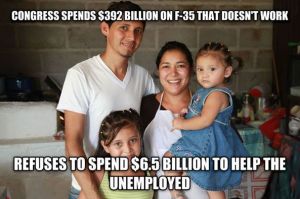
With respect to its toys, the military and its enablers in Congress can never get enough or at a high enough price. The most popular of these, at present, is the under-performing new F-35 jet fighter, projected to cost $1.5 trillion (yes, you read that right) over its lifetime, making it the most expensive weapons system in history. Another trillion dollars is projected over the next 30 years for “modernizing” the U.S. nuclear arsenal (this from a president who, as a candidate, spoke of eliminating nuclear weapons). The projected acquisition cost for a new advanced Air Force bomber is already $100 billion (before the cost overruns even begin).  The list goes on, but you catch the drift.

A Spoiled Pentagon Means Never Having to Say You’re Sorry

To complete our affluenza diagnosis, let’s add one more factor to boundless praise and a bountiful allowance: a total inability to take responsibility for one’s actions. This is, of course, the most repellent part of the Ethan Couch affluenza defense: the idea that he shouldn’t be held responsible precisely because he was so favored.

Think, then, of the Pentagon and the military as Couch writ large. No matter their mistakes, profligate expenditures, even crimes, neither institution is held accountable for anything.

Consider these facts: Iraq, Afghanistan, and Libya are quagmires. The Islamic State is spreading. Foreign armies, trained and equipped at enormous expense by the U.S. military, continue to evaporate. A hospital, clearly identifiable as such, is destroyed “by accident.” Wedding parties are wiped out “by mistake.” Torture (a war crime) is committed in the field. Detainees are abused. And which senior leaders have been held accountable for any of this in any way? With the notable exception of Brigadier General Janis Karpinskiof Abu Ghraib infamy, not a one.

After lengthy investigations, the Pentagon will occasionally hold accountable a few individuals who pulled the triggers or dropped the bombs or abused the prisoners. Meanwhile, the generals and the top civilians in the Pentagon who made it all possible are immunized from either responsibility or penalty of any sort. This is precisely why Lieutenant Colonel Paul Yingling memorably wrote in 2007 that, in the U.S. military, “a private who loses a rifle suffers far greater consequences than a general who loses a war.” In fact, no matter what that military doesn’t accomplish, no matter how lacking its ultimate performance in the field, it keeps getting more money, resources, praise.

When it comes to such subjects, consider the Republican presidential debate in Iowa on January 28th. Jeb Bush led the rhetorical charge by claiming that President Obama was “gutting” the military. Ted Cruz and Marco Rubio eagerly agreed, insisting that a “dramatically degraded” military had to be rebuilt. All the Republican candidates (Rand Paul excepted) piled on, calling for major increases in defense spending as well as looser “rules of engagement” in the field to empower local commanders to take the fight to the enemy. America’s “warfighters,” more than one candidate claimed, are fighting with one arm tied behind their backs, thanks to knots tightened by government lawyers. The final twist that supposedly tied the military up in a giant knot was, so they claim, applied by that lawyer-in-chief, Barack Obama himself.

Interestingly, there has been no talk of our burgeoning national debt, which former chairman of the Joint Chiefs of Staff Admiral Mike Mullen once identified as the biggest threat facing America. When asked during the debate which specific federal programs he would cut to reduce the deficit, Chris Christie came up with only one, Planned Parenthood, which at $500 million a year is the equivalent of two F-35 jet fighters. (The military wants to buy more than 2,000 of them.)

Throwing yet more money at a spoiled military is precisely the worst thing we as “parents” can do. In this, we should resort to the fiscal wisdom of Army Major General Gerald Sajer, the son of a Pennsylvania coal miner killed in the mines, a Korean War veteran and former Adjutant General of Pennsylvania. When his senior commanders pleaded for more money (during the leaner budget years before 9/11) to accomplish the tasks he had assigned them, General Sajer’s retort was simple: “We’re out of money; now we have to think.”

Accountability Is Everything

It’s high time to force the Pentagon to think. Yet when it comes to our relationship with the military, too many of us have acted like Ethan Couch’s mother. Out of a twisted sense of love or loyalty, she sought to shelter her son from his day of reckoning. But we know better. We know her son has to face the music.

Something similar is true of our relationship to the U.S. military. An institutional report card with so many deficits and failures, a record of deportment that has led to death and mayhem, should not be ignored. The military must be called to account.

How? By cutting its allowance. (That should make the brass sit up and take notice, perhaps even think.) By holding senior leaders accountable for mistakes. And by cutting the easy praise. Our military commanders know that they are not leading the finest fighting force since the dawn of history and it’s time our political leaders and the rest of us acknowledged that as well.

William J. Astore, a retired lieutenant colonel (USAF), is a TomDispatchregular. He blogs at Bracing Views.

Pentagon Admits that Israel is a Nuclear Power

netanyahu_un_bomb_cartoon_2012_09_28

By Vladimir Platov

Source: Land Destroyer

In early February, the Pentagon declassified reports on Israel’s nuclear weapons program which was carried out until 1987. According to these documents, Israeli scientists were capable of producing a hydrogen bomb by that time. Although these facts were largely ignored by the Western media, some analysts have noticed that the declassification of these secret reports suspiciously coincided with the recent, rapidly deteriorating relationship between the US and Israel. As Tel Aviv started a massive campaign of criticism aimed at the Obama administration, both in the US media and worldwide, the Pentagon’s revelations were quick to follow. It is also noteworthy that only the facts on the Israeli nuclear weapons program were declassified, while information regarding similar activities of NATO allies (in particular Italy, France, and West Germany) remained locked up.

The 386 page report “Сritical technology assessment in Israel and Nato nations,” was prepared in 1987 by the Institute for Defense Analyses (IDA) and examined the capabilities Israel had already had at that time to produce nuclear weapons. In particular, the study underlines the fact that Israel’s secret laboratories, engaged in the development of an atomic bomb, were on par with the key research nuclear arsenals of the US: Los Alamos, Lawrence Livermore and Oak Ridge National Laboratory.

According to this report, by the mid-80s Israeli experts were at the same stage of research and development of various nuclear weapons the hydrogen bomb in particular, reached by American scientists between 1955-1960. IDA experts were courageous enough to recognize that in certain areas the Israelis have even surpassed their American colleagues of the time, in particular those working in the “Raphael” Israeli secret lab, who had managed to propose unconventional ways of achieving nuclear fission that would have allowed them to create their own version of the hydrogen bomb.

Under these conditions, one should revisit The Sunday Times article “Revealed: The Secrets of Israel’s Nuclear Arsenal” that was published on October 5, 1986. This article was based on the revelations of an Israeli nuclear scientist – Mordechai Vanunu – who disclosed the secrets of the Israeli nuclear program.

This 31 year-old Israeli expert on nuclear weapons had, by 1986, already been working for 10 years in a secret atomic center, Machon 2, that was built under the Negev desert and from the mid-60s had already been producing nuclear weapons. Then, facts and pictures that were presented by Mordechai to international experts caught them by surprise. They had to admit that by the mid-80s Israel became the sixth nuclear power after the United States, Soviet Union, Britain, France and China, although it did its best to conceal this information. Even by that time the Israeli nuclear potential was much higher than that of India, Pakistan and South Africa, which were also suspected of developing nuclear weapons.

According to this whistle-blowing Israeli scientist, by the mid-80s the Jewish state had secret capabilities of plutonium production for more than 20 years, which would eventually reach over the years to the level of 40 kilograms annually, which is enough to produce 10 nuclear bombs. During the 80s, Israel also came into possession of equipment necessary for the production of thermonuclear devices. In particular, a French built reactor with a capacity of 26 megawatts was upgraded by Israeli scientists to reach a capacity of 150 megawatts, which allowed Israel to engage in the production of plutonium.

Nuclear specialists, which were commenting on this article in the The Sunday Times, confirmed that by 1986 Israel could have had 100-200 nuclear bombs.

This information provides a reasonable understanding of Israel’s commitment to maintaining a nuclear monopoly in the Middle East at whatever cost by blocking their potential adversaries from acquiring nuclear weapons. In particular, Tel Aviv recklessly launched air strikes on the Osirak nuclear reactor in Iraq on June 7, 1981, and is now followed by a likewise negative approach toward the Iranian nuclear program.

In light of these publications and official US recognition of Israel as a nuclear power that has been in possession of nuclear devices for more than half a century, it is imperative for international players to begin a discussion of this issue in the UN, forcing Israel to sign the Treaty on the Non-Proliferation of Nuclear Weapons and taking the shipment of such weapons in and out Tel Aviv under rigid international control.

Saturday Matinee: War Documentary Double Feature

large_fKiccFBjZwOKkmsDCQVVcuKgYbxhearts-and-minds

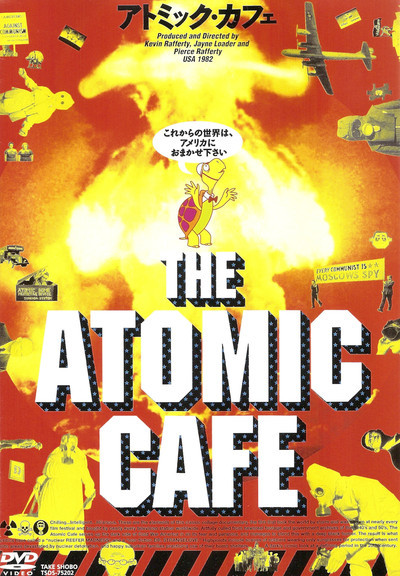
“Hearts and Minds” (1974) and “The Atomic Cafe” (1982) are two of the most chilling and persuasive anti-war documentaries ever made (at least for viewers who are not psychopaths). Though the editorial choices of both films clearly reflect an anti-war perspective, their messages are made more powerful by their lack of narration and abundance of archive footage, newsreels, and public statements from military and political officials. Both documentaries were years in the making with much time (nearly the entire time in the case of The Atomic Cafe) spent on research and editing, and the work clearly pays off by expanding the scope of the films to the political, cultural, and psychological factors behind wars. The filmmakers involved in Hearts and Minds and The Atomic Cafe, unlike most corporate news coverage of wars, both display great empathy in their inclusion of footage of “enemy” casualties of the war and “collateral damage” (ie. innocent victims caught in the crossfire). In the context of the current war-mongering from the Obama administration and corporate/government news media, Hearts and Minds and The Atomic Cafe are more relevant than ever and should be required viewing for everyone who values life.