
Israel’s Censorship: The Repression of Pro-Palestinian Voices

By David Starr

Source: Covert Action

Besides the Israeli military’s mass murder of Palestinians in Gaza (the West Bank as well), there have been repressive measures by Israel to silence the dissent of pro-Palestinian voices. In a sane world, Israel would be sanctioned and deprived of U.S. military aid. Its right-wing leaders would be charged by the International Court of Justice (ICJ). Unfortunately, the world has been insane at this time in human history.

The Israeli-Palestinian war is something unlike other wars in recent history. (Although the 2003 Iraq War is a close example.) The military actions of Israel in Gaza have ironically been, in intent, similar to Nazi Germany’s herding of Jews into the Warsaw ghetto and attempt to starve them. They haven’t yet tried to totally wipe them out because have killed over 30,000 and displaced tens of thousands more while subjecting them to humiliating and brutal living conditions for many years.

Worldwide, there have been the obvious protests against and condemnations of Israel. Voices emphasizing the need for a permanent cease-fire have been loud. But Israel, and its main accomplice, the United States, have not really been listening, or simply don’t care. There have been warnings from the Biden administration for Israel to be more careful, but the United States continues to supply Israel with weapons to use against Palestinians. Thus, Israel is merely getting a soft slap on the wrist in the face of its war crimes. 

Among the voices of dissent, the Middle East Studies Association wrote a letter for Israel’s Prime Minister, Benjamin Netanyahu, Police Commissioner, Yaacov Shavtai and various ministers and university rectors. The letter condemned Israel’s repression against Palestinian students in Israeli universities. This is censorship run amok.

The letter begins as follows:

“We write to you on behalf of the Committee on Academic Freedom of the Middle East Studies Association of North America (MESA) to express our deep and growing concern regarding the ongoing attacks against and restrictions on Palestinian citizens of Israel who are students at Israeli institutions. We call upon you in the strongest terms to put an end to what appears to be a targeted repression of freedom of expression and uphold your responsibility to ensure academic freedom.”

The letter further states that MESA previously contacted Israel about “aggressions against Palestinian students” after the October 7, 2023, Hamas attacks. There is a statement that students have been the targets of intimidation and surveillance. Most importantly, MESA writes that these methods of repression have been going on since before October 7, in fact, for about seven decades. Censorship targets Palestinian students and professors for their criticism of Israel’s actions against Gaza and “their solidarity with the innocent people there.”

MESA cites a survey conducted by the Arab Student Movements Union, which represents Palestinian citizens of Israel who attend colleges and universities. The survey found that 85% of the students polled believed that their security was being threatened. Some 71% said that they are experiencing economic hardship because of the war. Because of this hardship, nearly half of the students considered dropping out of schools they attend and/or considered leaving Israel to pursue education elsewhere.

Further, the survey reveals that, after October 7, 2023, about 160 students have been disciplined for being supposed suspects supporting “terrorism.” Nineteen students have been arrested by the Israeli police because of being so-called terrorists and/or supporting a terrorist organization. But, “Typically, these students were expressing their solidarity with fellow Palestinians and with the children, women, and civilians in the Gaza Strip.”

Also, after October 7, “nine Palestinian students at the University of Haifa were suspended without a disciplinary hearing by the university’s rector, Gur Alroey, for sharing posts and stories on social media.” Alroey’s excuse was that they could cause “extreme situations” at the university. But the university reversed its position and agreed to mediation “with the students’ legal representation.” 

Jewish-Israeli students, however, ignored the ruling and called for the suspension of the nine students without due process. Going further, they protested against the nine students. The National Union of Israeli Students (NUIS) kept the harassment going, launching a campaign to “eradicate the support of terrorism on campuses.” NUIS, then, did not really use its influence to help provide security for all students. As a result, Palestinians were looked at as outcasts.

In an act of paranoia, universities published guides on how to use firearms. This resulted in a rise in the carrying of guns and rifles at universities. MESA’s letter asserted that “Academic institutions are expected to ensure that the campus climate is not hostile, that public discourse remains respectful, and that all students feel safe. Guns do not belong on university campuses.”

The letter added: “We condemn the circumvention of due process, as well as the prejudicial treatment of and broad incitement against Palestinians students,” portraying all of them as terrorists.

In conclusion, “We therefore call upon you to cease these targeted attacks on the higher education sector and ensure that Israeli campuses are safe for all their students and faculty, including those calling for an end to the war.”

Journalists have also been targets of Israeli aggression, but in a more direct fashion. The Israel Defense Forces (IDF) have gunned down journalists who have been reporting on the front lines of the war. According to Mohamed Mandour, writing for the Committee to Protect Journalists (CPJ), “Since the Israel-Gaza war began on October 7, journalists and media across the region have faced a hostile environment that has made reporting on the war exceptionally challenging.” Mandour writes that 25 journalists have been arrested, with the use of “numerous assaults, threats, cyberattacks, and censorship.” He adds that 19 of the journalists were still in prison according to the CPJ’s records as of February 14, 2024.

There have been journalists who have lost family members as a result of Israel’s aggression. For example:

Photojournalist Yasser Qudih suffered the loss of eight family members when four missiles struck their house on November 13, 2023. The CPJ got this information from Reuters and The Guardian. The odds are certain that it was an attack by the IDF. But the group HonestReporting, which monitors the news for supposed anti-Israel bias, inaccuracy and other breaches of journalistic standards, raised questions that Qudih and his family members knew of the October 7 Hamas attack beforehand. This unsubstantiated accusation was rejected and HonestReporting withdrew it the next day.

But the word was out and Netanyahu took advantage of the falsehood. His office tweeted that photographers were complicit in committing “crimes against humanity.” Despite this falsehood, “Israeli war cabinet member Benny Gantz [said] they should be treated as terrorists. Qudih survived the attack.”

Of course, other attacks occurred, no doubt spurred on by Gantz’s ridiculous claim. Other journalists were either killed or survived attacks; sometimes their family members were killed. 

Mandour writes, “CPJ is investigating reports that more than 50 offices in Gaza were damaged, leaving many journalists with no safe place to do their jobs, as they also contend with extensive power and communication outages, food and water shortages, and sometimes have to flee with their families.” 

The high risks are obvious as journalists cover the war. The IDF and Israeli police have been barbaric in their treatment of them as they uncover truths and facts for world consumption, contrary to Israel’s attempts to hide truths and facts with bizarre and insane propaganda.

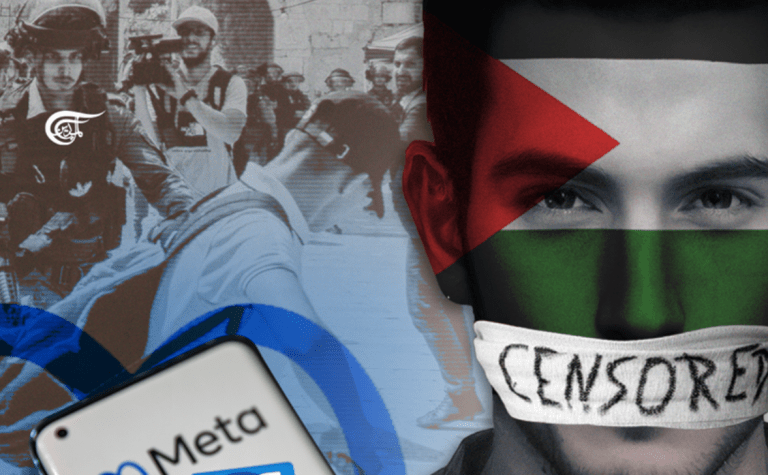
Israel is not the only entity trying to hide the realities of the war. As of this writing, Meta, the parent company of Facebook, has been considering adopting what amounts to censorship rules on the subjects of Israel and the war. While it has been gathering feedback on the move, there are doubts that Meta will change its mind.

There is a manufactured controversy on the use of the word, “Zionist.” Meta may have the intent to censor the word, along with other terminology that puts Israel in a bad light. Writing for The Intercept, Sam Biddle quotes Dani Noble, who is part of Jewish Voice for Peace: 

“As an anti-Zionist Jewish organization for Palestinian freedom, we are horrified to learn that Meta is considering expanding when they treat ‘Zionism’—a political ideology—as the same as ‘Jew/Jewish’—an ethno-religious identity.” Further, Noble said that such a policy shift “will result in shielding the Israeli government from accountability for its policies and actions that violate Palestinian human rights.”

Previously, the word Zionist was allowed as long as it was not associated with the words Jew and Jewish. Now, Meta moderators can be more stringent in deciding whether Zionist is allowed or if it is used to promote anti-Semitism. Thus, Meta has a long reach in deciding which comments are allowed when posting the “offending” word.

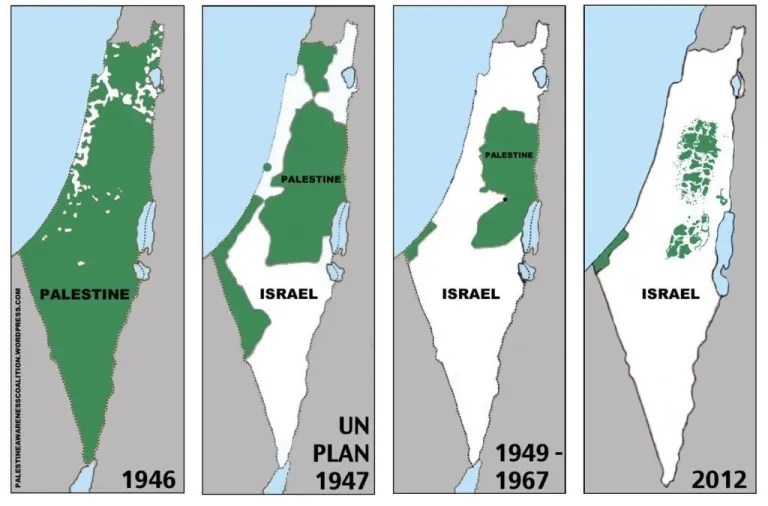
The moderating (or censoring) of the word Zionist is par for the course for hard-line Israel supporters. While there is an attempt to equate it with anti-Semitism, it really symbolizes  a religious form of ultra-nationalism, as evidenced by the right-wing Israeli government’s use of it, along with the right-wing settlers as they attempt to steal more Palestinian land. And one of the objectives on the part of Israeli fascists is to take more land to establish a “Greater Israel.” Thus, the attempt by the IDF to drive Palestinians out of Gaza, and the West Bank.
But there is a major irony here. Biddle writes, “much of the fiercest political activism against Israel’s war in Gaza has been organized by anti-Zionist Jews, while American evangelical Christian Zionists are some of Israel’s most hardcore supporters.” So, there are Jews who are not only anti-Zionist, but side with the Palestinians.

Biddle provides examples of hypothetical posts in quotes that could be censored by Meta: “Zionists are war criminals, just look at what’s happening in Gaza.” “I don’t like Zionists.” “No Zionists allowed at tonight’s meeting of the Progressive Student Association.” 

Meta spokesperson Corey Chambliss tried to justify the change in his company’s rules. Biddle quotes him as saying, “We don’t allow people to attack others based on their protected characteristics, such as their nationality or religion. Enforcing this policy requires an understanding of how people use language to reference those characteristics. While the term Zionist refers to a person’s ideology, which is not a protected characteristic, it can also be used to refer to Jewish or Israeli people.”

Chambliss goes on to imply that the new rules are necessary because of tensions relating to the Middle East. But he admitted that the word Zionist is an ideology, not a religion. Besides, tensions are high already, with Israel’s military aggression in Gaza. It seems like Meta is harping on the word while there are more important things to attend to, like opposing the war, and coming to grips with about 29,000 Palestinian deaths. (And, yes, the 1,200 Israeli deaths need attention even though 55% of those killed were members of the IDF.)

Meta did contact 10 Arab, Muslim and pro-Palestinian organizations about the use of the word Zionist and how it could be used in a “dehumanizing way or violent way” if referring to Jews or Israelis, according to Guardian writers Johana Bhuiyan and Kari Paul. 

But Linda Sarsour, “the executive director of Muslim advocacy organization MPower Change, said Meta’s director of content policy stakeholder engagement, Peter Stern, provided few details about why the company was revisiting the policy now and how it would be implemented or enforced in a way that doesn’t stifle political expression.” Bhuiyan and Paul quoted Sarsour’s response: “If you already have a policy that’s addressing Zionism as a proxy, then why are we having this conversation? Why is there further consideration to expand this policy?”

Expanding the policy could censor those who post pro-Palestinian comments, as well as facts, in the guise of preventing anti-Semitism. Meta, however, has had a policy that allowed the word Zionist to be used as long there wasn’t an association with the words Jew and Jewish. As Sarsour asks, “Why is there further consideration to expand this policy?”

Censorship, threats, intimidation and even murder cannot stop the tidal wave of opposition worldwide to Israel’s war. In Israel itself, more people are speaking out and opposing the Netanyahu government. And events may lead to the downfall of the Israeli fascists. 
Rule by Criminals: When Dissidents Become Enemies of the State

By John & Nisha Whitehead

Source: The Rutherford Institute

In these days of worldwide confusion, there is a dire need for men and women who will courageously do battle for truth.”— Martin Luther King Jr.

When exposing a crime is treated as committing a crime, you are being ruled by criminals.

In the current governmental climate, obeying one’s conscience and speaking truth to the power of the police state can easily render you an “enemy of the state.”

The government’s list of so-called “enemies of the state” is growing by the day.

Wikileaks founder Julian Assange is merely one of the most visible victims of the police state’s war on dissidents and whistleblowers.

Five years ago, on April 11, 2019, police arrested Assange for daring to access and disclose military documents that portray the U.S. government and its endless wars abroad as reckless, irresponsible, immoral and responsible for thousands of civilian deaths.

Included among the leaked materials was gunsight video footage from two U.S. AH-64 Apache helicopters engaged in a series of air-to-ground attacks while American air crew laughed at some of the casualties. Among the casualties were two Reuters correspondents who were gunned down after their cameras were mistaken for weapons and a driver who stopped to help one of the journalists. The driver’s two children, who happened to be in the van at the time it was fired upon by U.S. forces, suffered serious injuries.

There is nothing defensible about crimes such as these perpetrated by the government.

When any government becomes almost indistinguishable from the evil it claims to be fighting—whether that evil takes the form of war, terrorism, torture, drug trafficking, sex trafficking, murder, violence, theft, pornography, scientific experimentations or some other diabolical means of inflicting pain, suffering and servitude on humanity—that government has lost its claim to legitimacy.

These are hard words, but hard times require straight-talking.

It is easy to remain silent in the face of evil.

What is harder—what we lack today and so desperately need—are those with moral courage who will risk their freedoms and lives in order to speak out against evil in its many forms.

Throughout history, individuals or groups of individuals have risen up to challenge the injustices of their age. Nazi Germany had its Dietrich Bonhoeffer. The gulags of the Soviet Union were challenged by Aleksandr Solzhenitsyn. America had its color-coded system of racial segregation and warmongering called out for what it was, blatant discrimination and profiteering, by Martin Luther King Jr.

And then there was Jesus Christ, an itinerant preacher and revolutionary activist, who not only died challenging the police state of his day—namely, the Roman Empire—but provided a blueprint for civil disobedience that would be followed by those, religious and otherwise, who came after him.

Indeed, it is fitting that we remember that Jesus Christ—the religious figure worshipped by Christians for his death on the cross and subsequent resurrection—paid the ultimate price for speaking out against the police state of his day.

A radical nonconformist who challenged authority at every turn, Jesus was a far cry from the watered-down, corporatized, simplified, gentrified, sissified vision of a meek creature holding a lamb that most modern churches peddle. In fact, he spent his adult life speaking truth to power, challenging the status quo of his day, and pushing back against the abuses of the Roman Empire.

Much like the American Empire today, the Roman Empire of Jesus’ day had all of the characteristics of a police state: secrecy, surveillance, a widespread police presence, a citizenry treated like suspects with little recourse against the police state, perpetual wars, a military empire, martial law, and political retribution against those who dared to challenge the power of the state.

For all the accolades poured out upon Jesus, little is said about the harsh realities of the police state in which he lived and its similarities to modern-day America, and yet they are striking.

Secrecy, surveillance and rule by the elite. As the chasm between the wealthy and poor grew wider in the Roman Empire, the ruling class and the wealthy class became synonymous, while the lower classes, increasingly deprived of their political freedoms, grew disinterested in the government and easily distracted by “bread and circuses.” Much like America today, with its lack of government transparency, overt domestic surveillance, and rule by the rich, the inner workings of the Roman Empire were shrouded in secrecy, while its leaders were constantly on the watch for any potential threats to its power. The resulting state-wide surveillance was primarily carried out by the military, which acted as investigators, enforcers, torturers, policemen, executioners and jailers. Today that role is fulfilled by the NSA, the FBI, the Department of Homeland Security and the increasingly militarized police forces across the country.

Widespread police presence. The Roman Empire used its military forces to maintain the “peace,” thereby establishing a police state that reached into all aspects of a citizen’s life. In this way, these military officers, used to address a broad range of routine problems and conflicts, enforced the will of the state. Today SWAT teams, comprised of local police and federal agents, are employed to carry out routine search warrants for minor crimes such as marijuana possession and credit card fraud.

Citizenry with little recourse against the police state. As the Roman Empire expanded, personal freedom and independence nearly vanished, as did any real sense of local governance and national consciousness. Similarly, in America today, citizens largely feel powerless, voiceless and unrepresented in the face of a power-hungry federal government. As states and localities are brought under direct control by federal agencies and regulations, a sense of learned helplessness grips the nation.

Perpetual wars and a military empire. Much like America today with its practice of policing the world, war and an over-arching militarist ethos provided the framework for the Roman Empire, which extended from the Italian peninsula to all over Southern, Western, and Eastern Europe, extending into North Africa and Western Asia as well. In addition to significant foreign threats, wars were waged against inchoate, unstructured and socially inferior foes.

Martial law. Eventually, Rome established a permanent military dictatorship that left the citizens at the mercy of an unreachable and oppressive totalitarian regime. In the absence of resources to establish civic police forces, the Romans relied increasingly on the military to intervene in all matters of conflict or upheaval in provinces, from small-scale scuffles to large-scale revolts. Not unlike police forces today, with their martial law training drills on American soil, militarized weapons and “shoot first, ask questions later” mindset, the Roman soldier had “the exercise of lethal force at his fingertips” with the potential of wreaking havoc on normal citizens’ lives.

A nation of suspects. Just as the American Empire looks upon its citizens as suspects to be tracked, surveilled and controlled, the Roman Empire looked upon all potential insubordinates, from the common thief to a full-fledged insurrectionist, as threats to its power. The insurrectionist was seen as directly challenging the Emperor.  A “bandit,” or revolutionist, was seen as capable of overturning the empire, was always considered guilty and deserving of the most savage penalties, including capital punishment. Bandits were usually punished publicly and cruelly as a means of deterring others from challenging the power of the state.  Jesus’ execution was one such public punishment.

Acts of civil disobedience by insurrectionists. Much like the Roman Empire, the American Empire has exhibited zero tolerance for dissidents such as Julian Assange, Edward Snowden and Chelsea Manning who exposed the police state’s seedy underbelly. Jesus was also branded a political revolutionary starting with his attack on the money chargers and traders at the Jewish temple, an act of civil disobedience at the site of the administrative headquarters of the Sanhedrin, the supreme Jewish council.

Military-style arrests in the dead of night. Jesus’ arrest account testifies to the fact that the Romans perceived Him as a revolutionary. Eerily similar to today’s SWAT team raids, Jesus was arrested in the middle of the night, in secret, by a large, heavily armed fleet of soldiers.  Rather than merely asking for Jesus when they came to arrest him, his pursuers collaborated beforehand with Judas. Acting as a government informant, Judas concocted a kiss as a secret identification marker, hinting that a level of deception and trickery must be used to obtain this seemingly “dangerous revolutionist’s” cooperation. 

Torture and capital punishment. In Jesus’ day, religious preachers, self-proclaimed prophets and nonviolent protesters were not summarily arrested and executed. Indeed, the high priests and Roman governors normally allowed a protest, particularly a small-scale one, to run its course. However, government authorities were quick to dispose of leaders and movements that appeared to threaten the Roman Empire. The charges leveled against Jesus—that he was a threat to the stability of the nation, opposed paying Roman taxes and claimed to be the rightful King—were purely political, not religious. To the Romans, any one of these charges was enough to merit death by crucifixion, which was usually reserved for slaves, non-Romans, radicals, revolutionaries and the worst criminals.

Jesus was presented to Pontius Pilate “as a disturber of the political peace,” a leader of a rebellion, a political threat, and most gravely—a claimant to kingship, a “king of the revolutionary type.” After Jesus is formally condemned by Pilate, he is sentenced to death by crucifixion, “the Roman means of executing criminals convicted of high treason.”  The purpose of crucifixion was not so much to kill the criminal, as it was an immensely public statement intended to visually warn all those who would challenge the power of the Roman Empire. Hence, it was reserved solely for the most extreme political crimes: treason, rebellion, sedition, and banditry. After being ruthlessly whipped and mocked, Jesus was nailed to a cross.

Jesus—the revolutionary, the political dissident, and the nonviolent activist—lived and died in a police state. Any reflection on Jesus’ life and death within a police state must take into account several factors: Jesus spoke out strongly against such things as empires, controlling people, state violence and power politics. Jesus challenged the political and religious belief systems of his day. And worldly powers feared Jesus, not because he challenged them for control of thrones or government but because he undercut their claims of supremacy, and he dared to speak truth to power in a time when doing so could—and often did—cost a person his life.

Unfortunately, the radical Jesus, the political dissident who took aim at injustice and oppression, has been largely forgotten today, replaced by a congenial, smiling Jesus trotted out for religious holidays but otherwise rendered mute when it comes to matters of war, power and politics.

Yet for those who truly study the life and teachings of Jesus, the resounding theme is one of outright resistance to war, materialism and empire.

What a marked contrast to the advice being given to Americans by church leaders to “submit to your leaders and those in authority,” which in the American police state translates to complying, conforming, submitting, obeying orders, deferring to authority and generally doing whatever a government official tells you to do.

Telling Americans to blindly obey the government or put their faith in politics and vote for a political savior flies in the face of everything for which Jesus lived and died.

Will we follow the path of least resistance—turning a blind eye to the evils of our age and marching in lockstep with the police state—or will we be transformed nonconformists “dedicated to justice, peace, and brotherhood”?

As Martin Luther King Jr. reminds us in a powerful sermon delivered 70 years ago, “This command not to conform comes … [from] Jesus Christ, the world’s most dedicated nonconformist, whose ethical nonconformity still challenges the conscience of mankind.”

Ultimately, as I make clear in my book Battlefield America: The War on the American People and in its fictional counterpart The Erik Blair Diaries, this is the contradiction that must be resolved if the radical Jesus—the one who stood up to the Roman Empire and was crucified as a warning to others not to challenge the powers-that-be—is to be an example for our modern age.