Capture, Smear, Contaminate: The Politics Of GMOs

gmo_crops_genfood_735_350-400x190

By Colin Todhunter

Source: RINF

When rich companies with politically-connected lobbyists and seats on public bodies bend policies for their own ends, we are in serious trouble. It is then that public institutions become hijacked and our choices, freedoms and rights are destroyed. Corporate interests have too often used their dubious ‘science’, lobbyists, political connections and presence within the heart of governments to subvert institutions set up to supposedly protect the public interest for their own commercial benefit. Once their power has been established, anyone who questions them or who stands in their way can expect a very bumpy ride.

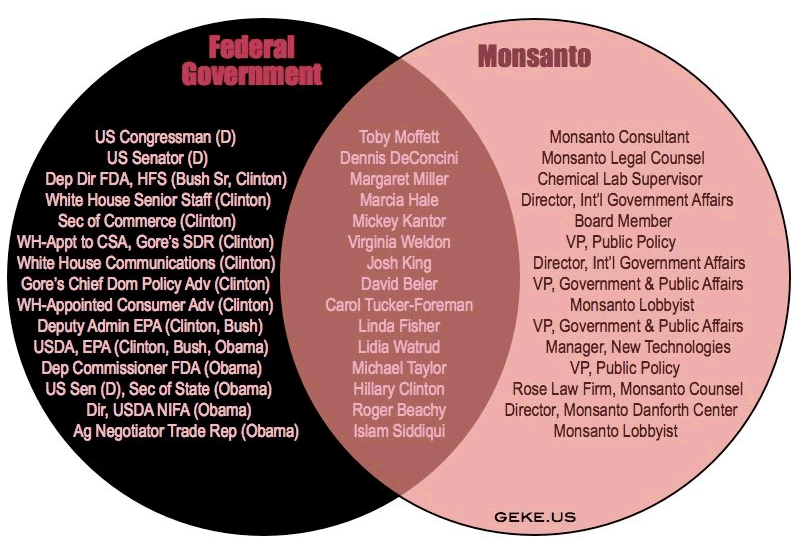
The revolving door between the private sector and government bodies has been well established. In the US, many senior figures from the Genetically Modified Organisms (GMOs) industry, especially Monsanto, have moved with ease to take up positions with the Food and Drug Administration and Evironmental Protection Agency and within the government. Writer and researcher William F Engdahl writes about a similar influence in Europe, noting the links between the GMO sector within the European Food Safety Authority. He states that over half of the scientists involved in the GMO panel which positively reviewed the Monsanto’s study for GMO maize in 2009, leading to its EU-wide authorisation, had links with the biotech industry.

“Monsanto should not have to vouchsafe the safety of biotech food. Our interest is in selling as much of it as possible. Assuring its safety is the FDA’s job” – Phil Angell, Monsanto’s director of corporate communications. “Playing God in the Garden” New York Times Magazine,October 25, 1998.

Phil Angell’s statement begs the question: then who should vouchsafe for it, especially when the public bodies have been severely comprised? Monsanto has all angles covered.

When corporate interests are able to gain access to such positions of power, little wonder they have some heavy-duty tools at their disposal to try to fend off criticism by all means necessary.

A well-worn tactic of the pro-GMO lobby is to slur and attack figures that have challenged the ‘science’ and claims of the industry. With threats of lawsuits and UK government pressure, some years ago top research scientist Dr Arpad Pusztai was effectively silenced over his research concerning the dangers of GM food. A campaign was set in motion to destroy his reputation. Professor Seralini and his team’s research was also met with intense industry pressure, with Monsanto effectively targeting the heart of science to secure its commercial interests. There are numerous examples of scientists being targeted like this. A WikiLeaks cable highlighted how GMOs were being forced into European nations by the US ambassador to France who plotted with other US officials to create a ‘retaliatory target list’ of anyone who tried to regulate GMOs. That clearly indicates the power of the industry.

What the GMO sector fails to grasp is that the onus is on it to prove that its products are safe. And it has patently failed to do this. No independent testing was done before Bush senior allowed GMOs onto the US market. The onus should not be on others to prove they are safe (or unsafe) after they are on the market, especially as public attorney Steven Druker‘s book ‘Altered Genes, Twisted Truth’ shows that GMOs are on the US market due to fraudulent practices and the bypassing of scientific evidence pointing to potential health hazards.

We therefore have the right to ask whether we should trust studies carried out by the sector itself that claims GM crops are safe? Let us turn to Tiruvadi Jagadisan for an answer.

He worked with Monsanto for nearly two decades, including eight years as the managing director of India operations. A few years ago, he stated that Monsanto “used to fake scientific data” submitted to government regulatory agencies to get commercial approvals for its products in India. The former Monsanto boss said government regulatory agencies with which the company used to deal with in the 1980s simply depended on data supplied by the company while giving approvals to herbicides. As reported in India Today, he is on record as saying that India’s Central Insecticide Board simply accepted foreign data supplied by Monsanto and did not even have a test tube to validate the data which at times was faked.

Now that scientists such as Professor Seralini are in a sense playing catch-up by testing previously independently untested GMOs, he is attacked. However, the attacks on Seralini and his study have been found to be based on little more than unscientific polemics and industry pressure. In fact, in new study, Seralini highlights the serious flaws of industry-backed studies that were apparently slanted to distort results. It remains to be seen whether he and his team are in for another bout of smears and attacks.

But this is symptomatic of the industry: it says a product is safe, therefore it is – regardless that science is being used as little more than an ideological smokescreen. We are expected to take its claims at face value. The revolving door between top figures at Monsanto and positions at the FDA makes it difficult to see where the line between lobbying and regulation is actually drawn. People are rightly suspicious of the links between the FDA and GMO industry in the US and the links between it and the regulatory body within the EU.

GM represents the so-called “Green Revolution’s” second coming. Agriculture has changed more over the last two generations than it did in the previous 12,000 years. Environmentalist Vandana Shiva notes that, after 1945, chemical manufacturers who had been involved in the weapons industry turned their attention to applying their chemical know-how to farming. As a result ‘dwarf seeds’ were purposively created to specifically respond to their chemicals. Agriculture became transformed into a chemical-dependent industry that has destroyed much biodiversity. What we are left with is crop monocultures, which negatively impact food security and nutrition. In effect, modern agriculture is part of the paradigm of control based on mass standardization and a dependency on corporate products.

The implications have been vast. Chemical-industrial agriculture has proved extremely lucrative for the oil and chemicals industry, courtesy of oil-rich Rockefeller interests which were instrumental in pushing for the green revolution throughout the world, and has served to maintain and promote Western hegemony, not least via ‘structural adjustment’ and the consequent uprooting of traditional farming practices in favour of single-crop export-oriented policies, dam building to cater for what became a highly water intensive industry, loans and indebtedness, boosting demand for the US dollar, etc.

Agriculture has been a major tool of US foreign policy since 1945 and has helped to secure its global hegemony. One must look no further than current events in Ukraine, where the strings attached to financial loans are resulting in the opening up of (GM) agriculture to Monsanto. From Africa to India and across Asia, the hijack of indigenous agriculture and food production by big corporations is a major political issue as farmers struggle for their rights to remain on the land, retain ownership of seeds, grow healthy food and protect their livelihoods.

Apart from tying poorer countries into an unequal system of global trade and reinforcing global inequalities, the corporate hijacking of food and agriculture has had many other implications, not least where health is concerned.

Dr Meryl Hammond, founder of the Campaign for Alternatives to Pesticides, told a Canadian parliament committee in 2009 that a raft of studies published in prestigious peer-reviewed journals point to strong associations between chemical pesticides and a vast range of serious life-threatening health consequences. Shiv Chopra, a top food advisor to the Canadian government, has documented how all kinds of food products that were known to be dangerous were passed by the regulatory authority and put on the market there due to the power of the food industry.

Severe anemia, permanent brain damage, Alzheimer’s, dementia, neurological disorders, reproductive problems, diminished intelligence, impaired immune system, behavioural disorders, cancers, hyperactivity and learning disability are just some of the diseases that numerous studies have linked to our food.

Of course, just like cigarettes and the tobacco industry before, trying to ‘prove’ the glaringly obvious link will take decades as deceit is passed off as ‘science’ or becomes institutionalized due to the hijacking of government bodies by the corporations involved in food production.

But anyone who questions the need for GMOs in the first place and the risks they bring and devastating impacts they have is painted as clueless and indulging in scare mongering and falsehoods, while standing in the way of human progress. But can we expect much better from an industry that has a record of smearing and attempting to ruin people who criticise it? Are those of us who question the political links of big agritech and the nature of its products ready to take lessons on ethics and high-minded notions of ‘human progress’ from anyone involved with it?

This is an industry that has contaminated crops and bullied farmers with lawsuits in North America, an industry whose companies have been charged with and most often found guilty of contaminating the environment and seriously damaging health with PCBs and dioxins, an industry complicit in concealing the deadly impact of GM corn on animals, an industry where bribery seems to be second nature (Monsanto in Indonesia), an industry associated with human rights violations in Brazil and an industry that will not label its foods in the US.

A great myth forwarded by the pro-GMO lobby is that governments are freely choosing to adopt GMOs. Any brief analysis of the politics of GM highlights that this is nonsense. Various pressures are applied and agritech companies have captured policy bodies and have a strategic hold over the WTO and trade deals like the TTIP.

For instance, take the 2005 US-India nuclear deal (allowing India to develop its nuclear sector despite it not being a signatory of the Non-Proliferation Treaty and allegedly pushed through with a cash for votes tactic in the Indian parliament). It was linked to the Knowledge Initiative on Agriculture, which was aimed at widening access to India’s agricultural and retail sectors. This initiative was drawn up with the full and direct participation of representatives from various companies, including Monsanto, Cargill and Walmart.

When the most powerful country comes knocking at your door seeking to gain access to your markets, there’s good chance that once its corporate-tipped jackboot is in, you won’t be able to get it out.

And it seems you can’t. So far, Bt cotton has been the only GM crop allowed in India, but the open field trials of many GM crops are now taking place around the country despite an overwhelming consensus of official reports warning against this. The work of numerous public bodies and research institutes is now compromised as a result of Monsanto’s strategic influence within India (see this and this).

If global victory cannot be achieved by the GMO biotech sector via the hijack of public bodies and trade deals or intimidation, then the politics of another form of contamination may eventually suffice:

“The hope of the industry is that over time the market is so flooded [with GMOs] that there’s nothing you can do about it. You just sort of surrender” – Don Westfall, biotech industry consultant and vice-president of Promar International, in the Toronto Star,January 9 2001.

Open field planting is but one way of achieving what Westfall states. Of course, there are numerous other ways too (see this).

As powerful agribusiness concerns seek to ‘consolidate the entire food chain’ with their seeds, patents and GMOs, it is clear that it’s not just the health of the nation (any nation) that is at stake but the global control of food and by implication nations.

“What you are seeing is not just a consolidation of seed companies, it’s really a consolidation of the entire food chain” – Robert Fraley, co-president of Monsanto’s agricultural sector 1996, in the Farm Journal. Quoted in: Flint J. (1998) Agricultural industry giants moving towards genetic monopolism. Telepolis, Heise.

Colin Todhunter is an independent writer: colintodhunter.com

Hawaii Sees 10 Fold Increase in Birth Defects After Becoming GM Corn Testing Ground

hawaiians_against_gmo_720_375

By Jay Syrmopoulos

Source: The Free Thought Project

Waimea, HI – Doctors are sounding the alarm after noticing a disturbing trend happening in Waimea, on the island of Kauai, Hawaii. Over the past five years, the number of severe heart malformations has risen to more than ten times the national rate, according to an analysis by local physicians.

Pediatrician Carla Nelson, after seeing four of these defects in three years, is extremely concerned with the severe health anomalies manifesting in the local population.

Nelson, as well as a number of other local doctors, find themselves at the center of a growing controversy about whether the substantial increase in severe illness and birth defects in Waimea stem from the main cash crop on four of the six islands, genetically modified corn, which has been altered to resist pesticide.

Hawaii has historically been used as a testing ground for almost all GMO corn grown in the United States. Over 90% of GMO corn grown in the mainland U.S. was first developed in Hawaii, with the island of Kauai having the largest area used.

According to a report in The Guardian:

In Kauai, chemical companies Dow, BASF, Syngenta and DuPont spray 17 times more pesticide per acre (mostly herbicides, along with insecticides and fungicides) than on ordinary cornfields in the US mainland, according to the most detailed study of the sector, by the Center for Food Safety.

That’s because they are precisely testing the strain’s resistance to herbicides that kill other plants. About a fourth of the total are called Restricted Use Pesticides because of their harmfulness. Just in Kauai, 18 tons – mostly atrazine, paraquat (both banned in Europe) and chlorpyrifos – were applied in 2012. The World Health Organization this year announced that glyphosate, sold as Roundup, the most common of the non-restricted herbicides, is “probably carcinogenic in humans”.

Waimea is a small town that lies directly downhill from the 12,000 acres of GMO test fields leased mainly from the state. Spraying takes place often, sometimes every couple of days. Residents have complained that when the wind blows downhill from the fields, the chemicals have caused headaches, vomiting, and stinging eyes.

“Your eyes and lungs hurt, you feel dizzy and nauseous. It’s awful,” local middle school special education teacher Howard Hurst told the Guardian. “Here, 10% of the students get special-ed services, but the state average is 6.3%,” he says. “It’s hard to think the pesticides don’t play a role.”

To add insult to injury, Dow AgraSciences’ main lobbyist in Honolulu, until recently, actually ran the main hospital in town. Although only 1,700ft away from a Syngenta field, the hospital has never done any research into the effects of pesticides on its patients.

Hawaiians have attempted to reign in the industrial chemical/farming machine on four separate occasions over the past two years. On August 9 an estimated 10,000 people marched through Honolulu’s main tourist district to protest the collusion of big business and state putting profits over citizens’ health.

“The turnout and the number of groups marching showed how many people are very frustrated with the situation,” native Hawaiian activist Walter Ritte said.

Hawaiians have also attempted to use a ballot initiative to force a moratorium on the planting of GMO crops, according to The Guardian:

In Maui County, which includes the islands of Maui and Molokai, both with large GMO corn fields, a group of residents calling themselves the Shaka Movement sidestepped the company-friendly council and launched a ballot initiative that called for a moratorium on all GMO farming until a full environmental impact statement is completed there.

The companies, primarily Monsanto, spent $7.2m on the campaign ($327.95 per “no” vote, reported to be the most expensive political campaign in Hawaii history) and still lost.

Again, they sued in federal court, and, a judge found that the Maui County initiative was preempted by federal law. Those rulings are also being appealed.

Even amidst strong public pressure, the chemical companies that grow the GMO corn have continued to refuse to disclose the chemicals they are using, as well as the specific amounts of each chemical being used. The industry and its political cronies have continually insisted that pesticides are safe.

“We have not seen any credible source of statistical health information to support the claims,” said Bennette Misalucha, executive director of Hawaii Crop Improvement Association in a written statement distributed by a publicist.

Nelson pointed out that American Academy of Pediatrics’ report, Pesticide Exposure in Children, found “an association between pesticides and adverse birth outcomes, including physical birth defects,” going on to note that local schools have twice been evacuated and kids sent to the hospital due to pesticide drift. “It’s hard to treat a child when you don’t know which chemical he’s been exposed to.”

Sidney Johnson, a pediatric surgeon at the Kapiolani Medical Center for Women and Children who oversees all children born in Hawaii with major birth defects says he’s noticed that the number of babies born here with their abdominal organs outside. This is a rare condition known as gastroschisis and has grown from three a year in the 1980s to about a dozen now, according to The Guardian.

Johnson and a team of medical students have been studying hospital records to determine if any of the parents of the infants with gastroschisis were residing near fields that were undergoing spraying during conception and early pregnancy.

“We have cleanest water and air in the world,” Johnson said. “You kind of wonder why this wasn’t done before,” he says. “Data from other states show there might be a link, and Hawaii might be the best place to prove it.”

It was recently revealed that these chemical companies, unlike farmers, are allowed to operate under an antiquated decades-old Environmental Protection Agency permit. This permit was grandfathered in from the days of sugar plantations when the amounts and toxicities were significantly lower, and which allowed for toxic chemicals to be discharged into water. Tellingly the state of Hawaii has asked for a federal exemption to allow these companies to continue to not comply with modern standards.

The ominous reality of collusion between these mega-corporations and the political class in Hawaii has seemingly left the citizens of the state with virtually no ability to safeguard their children’s health. We tread dangerously close to corporate fascism when profits are put above the health of the people.


Jay Syrmopoulos is an investigative journalist, free thinker, researcher, and ardent opponent of authoritarianism. He is currently a graduate student at University of Denver pursuing a masters in Global Affairs. Jay’s work has been published on BenSwann’s Truth in Media, Chris Hedges’s Truth-Out, AlterNet, InfoWars, MintPress News and many other sites. You can follow him on Twitter @sirmetropolis, on Facebook at Sir Metropolis and now on tsu.

Ukraine a Vector for GMO Poison’s Spread Through EU

MOnsanto-Blackwater

By Ulson Gunnar

Source: Land Destroyer Report

When the Washington Post chooses to pen an insulting, condescending editorial targeting entire nations speaking up against Western impropriety, one can just as well assume the precise opposite of whatever narrative the Post is trying to push forward is true.

Regarding American biotech companies and their attempts to infest the planet with genetically modified organisms (GMOs), and in particular their attempts to corrupt the whole of Europe with their unwanted poison through a backdoor (Ukraine), has prompted Russia to speak up for their Eastern European neighbor. Up until the armed coup in 2013-2014, also known as the “Euromaidan,” Ukraine had adamantly rejected GMOs.

With an obedient client regime now installed in Kiev, a series of political, economic and military decisions have been made that have more or less extinguished Ukraine as a sovereign nation state. Along with its extinguished sovereignty comes a complete lack of desire for self-preservation, and so, sowing one’s fields with genetically tainted, unsafe, literal poison goes from being adamantly avoided, to being openly embraced.

This brings us back to the Washington Post and a recent editorial it has published. Titled, “Russia says Western investment in Ukraine’s farms is a plot to take over the world,” it first attempts to make Russia’s accusations that Monsanto is now moving in on Ukraine with plans to institute GMOs nationwide sound unfounded. That is until the Post itself admits that is precisely what Monsanto is doing. The pieces claims:

Ukraine has long tried to sell itself to Europe as the once-and-future breadbasket of the continent, promising that Western investment is the key to making its under-exploited black earth bloom. 

But official Russia would like you to know that all this agricultural development talk is really just a secret plot to help companies like Monsanto take over the world.

Then the Post openly admits:

Genetically-modified cultivation was long banned in Ukraine – as was the sale of farmland.

Then admits:

But the association agreement signed between the European Union and Ukraine last year may have created new space for the potential introduction of genetically-modified crops in Ukraine. 

Finally, the Post mentions Monsanto:

Monsanto – perhaps the most recognizable corporate name in genetically modified products – did express interest in investing in Ukraine last year. (It’s worth noting that the company operates in Russia as well, though not with GMOs, just as it has operated in Ukraine.)

Since Monsanto already operates in Ukraine, what else would it be investing in additionally that it hasn’t had the opportunity to before besides GMOs? Ukraine would serve as the perfect victim to host Monsanto and other biotech corporations’ GMO-infected products in the heart of Europe.

With the EU itself relaxing some of its regulations regarding GMOs, likely without the consent of a population increasingly conscious of the risks and actively seeking organic alternatives, biotech conglomerates hope to make GMO products spread from what will be the completely unregulated fields of Ukraine, into Europe and to become as ubiquitous and unavoidable as they are in America.

Elsewhere around the world, big-agriculture has attempted to use other backdoors to bring their products into regions they are wholly rejected, including Asia where “Golden Rice” has been proposed as the answer to fighting “vitamin A deficiency,” even  when simply planting some carrots would accomplish this goal more easily, cheaper and without the threat of tainting Asia’s rice crops with a strain consumers would reject out of hand.

In other instances, conquering Western interests, like in Afghanistan, have used “aid” as a backdoor to bring big-agriculture and GMOs into the region.

So by the Post’s own admission and by simply looking at what Monsanto and its counterparts have done all over the world already, they themselves couldn’t agree more with the Russian Federation regarding Monsanto’s obvious intentions in Ukraine and for the rest of Europe.

The Post, like many papers across America and Europe, has long-served the interests of the monied elite, with biotech and big-agriculture counted prominently among them. The Post and others will spin and obfuscate Monsanto’s intentions until it is too late to overturn the genetic corruption their crops will inflict on the once well-protected, sovereign fields of Ukraine.

Like many other things in Ukraine, the so-called “Euromaiden” that was allegedly spurred for freedom and self-determination has clearly stripped Ukraine of both its freedom and its ability to determine what is best for itself. From a military set upon its own people, to an economy looted by foreign interests, to a government directed literally by foreigners who chair it, to now fields to be sown with genetically altered poison, the ruination of Ukraine is nearly complete and a lasting testament to what the West truly means when it says “democratization.”

No One Will Buy GMO-Tainted Crops 

Included in Russia’s comments regarding the impending despoilment of Ukraine’s agricultural industry by Monsanto and others, the Post would report:

Russian Security Council Secretary Nikolai Patrushev told a meeting of his counterparts in the Shanghai Cooperation Organization on Tuesday that the West plans to grown “genetically modified crops” in Ukraine. And it’s a fool’s errand too, he suggested, because, “to put it mildly, Europe will not approve of such products.”

The Post, in its role as associate lobbyist for big-agriculture, attempts to downplay this fact. However, reported elsewhere, even within the Western media itself, are reports that the agricultural powerhouse that is the United States is now importing organic corn because consumers refuse to eat tainted GMO products grown within the States.

Bloomberg in its report “U.S. Forced to Import Corn as Shoppers Demand Organic Food” would claim:

A growing demand for organics, and the near-total reliance by U.S. farmers on genetically modified corn and soybeans, is driving a surge in imports from other nations where crops largely are free of bioengineering. 

Imports such as corn from Romania and soybeans from India are booming, according to an analysis of U.S. trade data released Wednesday by the Organic Trade Association and Pennsylvania State University.

The humiliation of a nation historically self-reliant agriculturally having to import something as basic as corn because everything grown domestically is poisoned is a lesson any Ukrainian seeking to preserve what is left of not only their dignity, but their sense of self-preservation should take note of. Even as the “miracle” of GMO evaporates amid an increasingly astute market in the United States, US corporations are buying off Ukraine’s infinitely servile regime to place Ukraine’s neck into the same noose.

However, in a way the Post is right. Russia is crazy to think Monsanto is taking over the world. The corporation, despite untold of billions pumped into lobbying, propaganda, bribes and other forms of mass persuasion, is failing miserably to convince people to ingest their poison, even in the nation their headquarters is located in. However, Russia shedding light on what Monsanto is trying to do in Ukraine, against the obvious best interests of Ukraine itself, is yet another illustration of how the “Euromaiden” putsch had nothing to do with freedom, and everything to do with Washington and Wall Street hijacking yet another nation and its resources out from under its own people under the guise of “democracy.”


Columbians Tired of US Planes Dumping Tons of Monsanto’s Roundup on Them to Fight the Drug War

monsanto-columbian-drug-war

By Matt Agorist

Source: Free Thought Project

For over two decades now, US planes have been dumping tons of pesticides over Columbian coca fields. America’s immoral and asinine policy of the War on Drugs has perpetuated the aerial spraying of Monsanto’s Roundup over rural areas of Columbia since 1994.

Originally the Columbian government wholeheartedly supported the ridiculous notion of mass killing all vegetation in attempt to cull the drug trade. However, it is no longer a secret that the health effects of long-term exposure to glyphosate are less than desirable.

Just last month, the World Health Organization was forced to admit that glyphosate is “probably carcinogenic to humans.”

The recent acceptance by the mainstream that Monsanto’s Roundup causes a slew of negative health effects has sparked fear and infighting among the Columbian government.

According to the AFP,

Health Minister Alejandro Gaviria said last week that Colombia should “immediately suspend” spraying — a move vehemently opposed by Defense Minister Juan Carlos Pinzon, who said it would “give criminals the upper hand.”

The row erupted just as US Deputy Secretary of State Antony Blinken paid a visit to Colombia, which the United States sees as one of its closest allies in the region.

The politicians who are fear-mongering about stopping the program are likely scared of losing the hundreds of millions in funds received annually from the US to combat the cultivation of this plant.

Daniel Mejia, the head of Colombia’s Center for Research on Security and Drugs explained why they are worried about the program. “We carried out a study that showed fumigating caused dermatological and respiratory problems and provoked miscarriages,” he said.

Even if dumping massive amount of carcinogenic pesticides from airplanes was a good idea, it’s not effective. According to the United Nations Office on Drugs and Crime, this program has aided Colombia in reducing its coca fields from more than 140,000 hectares (346,000 acres) in 2001 to 48,000 hectares in 2013. However, they conveniently left out the increase seen last year. The amount of land under coca cultivation in Colombia jumped 39 percent in 2014 to 112,000 hectares (about 27,000 acres), according to the Office of National Drug Control Policy.

Cocaine trafficking in Latin American region has caused a slew violence and turmoil, including the Columbian civil war. However, this turmoil is a direct result of prohibition spearheaded by the United States.

Columbia never had a cocaine trafficking problem until the US-funded war on drugs began its destructive path across South America.

During the 1980s, Peru, Bolivia and Colombia were responsible for 65%, 25% and 10% of the world’s coca production respectively. By 2000, however, the US “war on drugs” in neighboring Andean countries had turned Colombia into the world’s largest cocaine producer by far, representing 90% of the total, according to a report from the from the Woodrow Wilson International Center for Scholars.

The coca plant is one of the most beneficial and astonishingly resilient plants in the world. Resistant to drought and disease, coca needs no irrigation and the alkaloids it contains provide a myriad of medicinal uses. From its analgesic effects to digestive aid, coca’s positive influence in medicine is vast.

The plant has played an important role in history dating back to the Pre-Inca period.

According to a study published by Harvard University in 1975, (Nutritional Value of Coca Leaf (Duke, Aulick, Plowman 1975)) chewing 100 grams of coca is enough to satisfy the nutritional needs of an adult for 24 hours. Thanks to the calcium, proteins, vitamins A and E, and other nutrients it contains, the plant offers even better possibilities to the field of human nutrition than it does to that of medicine, where it is commonly used today.

However, the state cares not about the benefit of such a plant, only that it can be turned into a white powdery substance and snorted to stimulate long and often nonsensical conversations. Instead of cultivating the plant for its benefits, the immoral war on drugs drops carcinogens from airplanes to stop its growth.

The president of Columbia, Juan Manuel Santos, is avoiding any stance on the aerial spraying program whatsoever. According to the AFP, his staff said the final authority on the matter is the National Narcotics Council, which falls under the Justice Ministry. In the meantime, however, the spraying continues.

G.M.O. Resistance

GMO-Protect-the-land-and-farmers-from-GMOs

By Rebel Fagin

Source: The Daily Censored

We don’t have to do what the corporate death state says. We can choose how we’ll live, what media we’ll consume, and what foods we’ll eat.

Genetically Modified Organisms (GMO) have been added to a dozen crops. GMOs are used in Monsanto’s Roundup Ready seeds – the only seeds that will allegedly survive an attack of the herbicide Roundup. Roundup contains glyphosate, a chemical that disrupts photosynthesis and the immune system. It is a civilian off-shoot of Agent Orange, Monsanto’s notorious herbicide made from 2, 4-D and 2, 4, 5-T.

Here’s how the chemical farmer’s cycle goes. A farmer uses Roundup and other glyphosate based chemicals. Most of the weeds die. Those that survive pass on this survival gene to their offspring and the weeds come back stronger. The farmer then uses more chemicals. Ever wonder where those chemicals go?

You are what you eat. The American Academy of Environmental Medicine (AAEM) states, “Several animal studies indicate serious health risks associated with GM foods.” These include: infertility, immune problems, accelerated aging, faulty insulin regulation, allergic reactions, gastrointestinal disorders, obesity, heart disease, depression, infertility, cancers, and Alzheimer’s disease.

It’s worse for infants. Their immune systems are still developing and they metabolize food at a much higher rate than adults. This makes them more sensitive to chemical toxins. Independent laboratory tests have found genetically engineered soy in four popular infant formulas: Similac Soy (42%), Gerber Good Start Soy (48%), Enfamil Pro Soybee (49%), and Walmart Soy (66%). The Cornucopia Institute Report found GMO contamination in several cereals including: Mother’s Bumpers (28%), Kix Corn Puffs (56%), Nutritious Living Hi-Lo (85%), and Kashi Go Lean (100%)!

GMOs are common in processed foods. They frequently turn up in the forms of sugar, corn starch, corn syrup, cotton seed oil, and canola oil.

GMOs arrive in meat and meat byproducts as rbGH and rbST. These growth hormones have been banned in Canada.

Another dangerous GMO product is aspartame which is found in Nutrisweet and Equal. Aspartame has been linked to disorders ranging from tumors to seizers.
As of March 2015 we know that soy, cotton, canola, sugar beets (not cane sugar), corn, salmon, Hawaiian papaya, alfalfa used for hay, a small amount of yellow and crookneck squash, and recently Arctic Apples can all contain GMOs.

So what can we do? First look at the label. If it says Federal Organic, Non GMO Project Verified, or rbGH and rbST free then it is GMO free. Web sites like http://www.ocsoco.org/gmo, LabelGMOs.org. NonGMOShoppingGuide.com will keep you up to date. However, looking out only for number one is half steppin’. To do the whole dance, couple these labels with Fair Trade or Fair for Life labels and look out for the people who provide you with your food as well.

Shop at your local farmer’s market and get to know your farmers and their practices. Shop at stores that champion organic foods. You can always raise your own food. D.I.Y.
Here’s how to grow a simple organic garden in 10 easy steps.

1) Build beds and put soil in them. Soil is not dirt. Dirt is what happens when you don’t clean. Soil is interactive biological communities. Beds can be made from wood, bricks, chicken wire, etc. You can build them on the ground or at any convenient height. Build them to last several years. Rake out the rocks and level the ground.

2) Add green vegetable cuttings, animal manure, and rock nutrients to your soil. Mix well and level again.

3) You can plant seeds directly in the ground or start them indoors and then transplant them. Space them according to their mature size. This is a good time to put in a flex line drip irrigation system. Drip irrigation is a good way to conserve water. Many people like to include timers.

4) Lay mulch, such as organic hay, between your beds. It will both help retain water and control pests. Till the mulch into the soil at the end of the season.

5) Water and weed regularly. Spend time in your garden and get to know it well. Your garden will serve you for this. Add organic nutrients only as needed. Usually you need more nitrogen in the beginning. Check with your local organic gardener for what works best in your region.

6) For large pests you’ll need a fence tall enough for deer and deep enough so wild pigs don’t dig under it.

7) For smaller pests good soil preparation and a clean garden is your best foundation. Rotate crops for both pest control and to keep soil healthy.

8) Compost discarded organic, non-meat foods in a compost bin. Mix together green (vegetables) and brown (leaves), stir them up, water them, close the lid, and let ‘em cook. Avoid thick skinned foods like bananas and melon rinds as they take longer to break down. Coffee grounds and egg shells add beneficial nutrients to the soil. Stir and wait. After a year or two you’ll retrieve rich black soil from the bottom of your compost to add to your garden. Good compost is warm and alive with worms and other creatures.

9) Check your plants for color, firmness, and smell before you harvest them. You can either harvest the whole plant or take clippings from it and allow it to grow. It depends on the plant and what you want.

10) Take extra food to your local Food Pantry or contact cropmobsters.com and they will help you with distribution.
We are not slaves to the corporate death state. We can choose how we’ll live. Choose life over death and make conscious choices about food today.

Sources: Monsanto A Corporate Profile © 2013 by Food & Water Watch, ResponsibleTechnology.org, LabelGMOs.org, Herbicide forum in Willits, CA 3/8/15

Rebel can be read at the Sonoma County Peace Press & the Daily Censored.

Monsanto Shill Patrick Moore Fails “Glyphosate Challenge”

safe_image.php

France is not without it’s share of free speech issues, but much credit should be given to the Canal+ network and a recent documentary they aired, “Bientôt dans vos assiettes” (Soon on your plate), produced by investigative journalist Paul Moreira. During an interview for the show, corporate green-washer Patrick Moore claims that glyphosate, the key ingredient in Monsanto’s Roundup herbicide, is safe enough to drink (an oft-repeated claim for Monsanto chemicals). Moreira’s response is brilliant: offering Moore an opportunity to drink glyphosate in front of the cameras. This is a transcript of the PR nightmare moment:

Moore: Do not believe that glyphosate in Argentina is causing increases in cancer. You can drink a whole quart of it and it won’t hurt you.

Moreira: You want to drink some? We have some here.

Moore: I’d be happy to actually… Not, not really, but…

Moreira: Not really?

Moore: I know it wouldn’t hurt me.

Moreira: If you say so, I have some glyphosate.

Moore: No, I’m not stupid.

Moreira: OK. So you… So it’s dangerous, right?

Moore: No. People try to commit suicide with it and fail, fairly regularly.

Moreira: Tell the truth. It’s dangerous.

Moore: It’s not dangerous to humans. No, it’s not.

Moreira: So you are ready to drink one glass of glyphosate?

Moore: No, I’m not an idiot.

Moore then abruptly ends the interview losing what little dignity he had left by calling the interviewer “a complete jerk.” This is the man Monsanto and the Biotech industry would have us believe is a suitable science Ambassador for EXPO 2015 whose theme will be “Feeding the planet, energy for life”. Moore has also been vocal on social media in response to the decision of the World Health Organization’s panel of scientists to list glyphosate as a probable carcinogen.

Enjoy the schadenfreude with James Corbett through the following Corbett Report video:

It could only be better had Moore actually drank it.


Gates Foundation’s Seed Agenda in Africa ‘Another Form of Colonialism,’ Warns Protesters

Screen-Shot-2015-03-24-at-8.27.09-AM

‘This neoliberal agenda of deregulation and privatization poses a serious threat to food sovereignty and the ability of food producers and consumers to define their own food systems and policies,’ says campaigners

By Lauren McCauley

Source: CommonDreams.org

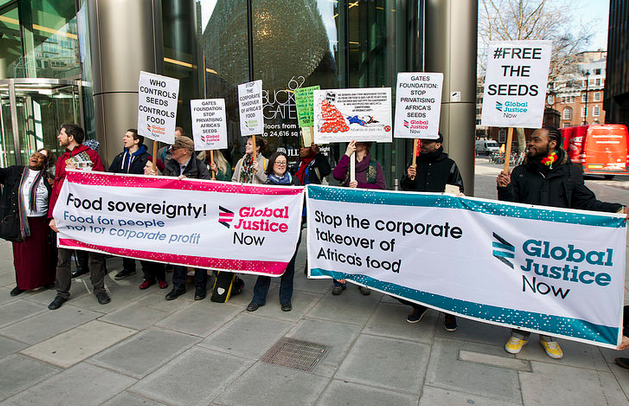
Food sovereignty activists are shining a light on a closed-door meeting between the Bill and Melinda Gates Foundation (BMGF) and the United States Agency for International Development (USAID), which are meeting in London on Monday with representatives of the biotechnology industry to discuss how to privatize the seed and agricultural markets of Africa.

Early Monday, protesters picketed outside the Gates Foundation’s London offices holding signs that called on the foundation to “free the seeds.” Some demonstrators handed out packets of open-pollinated seeds, which served as symbol of the “alternative to the corporate model promoted by USAID and BMGF.” Others smashed a piñata, which they said represented the “commercial control of seed systems;” thousands of the seeds which filled the pinata spilled across the office steps. A similar protest is expected later Monday in Seattle, Washington, where BMGF is headquartered.

The meeting was convened to discuss a report put forth by Monitor-Deloitte, which was commissioned by BMGF and USAID to develop models for the commercialization of seed production in Africa, especially “early generation seed,” and to identify ways in which the African governmental sectors could facilitate private involvement in African seed systems. The study was conducted in Ethiopia, Ghana, Nigeria, Tanzania and Zambia on maize, rice, sorghum, cowpea, common beans, cassava and sweet potato.

However, food sovereignty activists are sounding the alarm over the secret meeting. Heidi Chow, food sovereignty campaigner with Global Justice Now, which organized Monday’s protest, warned that the agenda being promoted by these stakeholders will only increase corporate control over seeds.

“This is not ‘aid’ – it’s another form of colonialism,” said Chow. “We need to ensure that the control of seeds and other agricultural resources stay firmly in the hands of small farmers who feed the majority of the population in Africa, rather than allowing big agribusiness to dominate even more aspects of the food system.”

In a blog post, Chow further explained:

For generations, small farmers have been able to save and swap seeds. This vital practice enables farmers to keep a wide range of seeds which helps maintain biodiversity and helps them to adapt to climate change and protect from plant disease. However, this system of seed saving is under threat by corporations who want to take more control over seeds. Big seed companies are keen to grow their market share of commercial seeds in Africa and alongside philanthropic organizations like the Gates Foundation and aid donors, they are discussing new ways to increase their market penetration of commercial seeds and displacing farmers own seed systems.

Corporate-produced hybrid seeds often produce higher yields when first planted, but the second generation seeds will produce low yields and unpredictable crop traits, making them unsuitable for saving and storing. This means that instead of saving seeds from their own crops, farmers who use hybrid seeds become completely dependent on the seed companies that sell them.

Further, many of the seeds produced by these biotechnology giants are sold alongside chemical fertilizer and pesticides, manufactured by the very same companies, the use of which often leads to widespread environmental destruction and other health problems.

As others noted, while the meeting attendees included representatives from the World Bank and Syngenta, the world’s third biggest seed and biotechnology company, no farmers or farming organizations were represented at the talks.

“Seeds are vital for our food system and our small farmers have always been able to save and swap seeds freely,” Ali-Masmadi Jehu-Appiah, chair of Food Sovereignty Ghana, said in a press statement. “Now our seed systems are increasingly under threat by corporations who are looking to take more control over seeds in their pursuit of profit. This meeting will push this corporate agenda to hand more control away from our small farmers and into the hands of big seed companies.”

Reporting on the Monitor-Deloitte study, Ian Fitzpatrick, a food sovereignty researcher for Global Justice Now, said that documents circulated ahead of the meeting revealed a neo-liberal agenda “laid bare.”

Fitzpatrick writes:

The report recommends that in countries where demand for patented seeds is weaker (i.e. where farmers are using their own seed saving networks), public-private partnerships should be developed so that private companies are protected from ‘investment risk’. It also recommends that that NGOs and aid donors should encourage governments to introduce intellectual property rights for seed breeders and help to persuade farmers to buy commercial, patented seeds rather than relying on their own traditional varieties.

Finally, in line with the broader neoliberal agenda of agribusiness companies across the world, the report suggests that governments should remove regulations (like export restrictions) so that the seed sector is opened up to the global market.

“This neoliberal agenda of deregulation and privatization, currently promoted in almost every sphere of human activity—from food production to health and education—poses a serious threat to food sovereignty and the ability of food producers and consumers to define their own food systems and policies,” Fitzpatrick adds.

AGRA Watch, a program of the grassroots group Community Alliance for Global Justice, notes that the BMGF-USAID commercial seed agenda further “extends U.S. foreign policy into Africa on behalf of corporate interests.”

Phil Bereano, food sovereignty campaigner with AGRA Watch and an Emeritus Professor at the University of Washington added: “This is an extension of what the Gates Foundation has been doing for several years—working with the US government and agribusiness giants like Monsanto to corporatize Africa’s genetic riches for the benefit of outsiders. Don’t Bill and Melinda realize that such colonialism is no longer in fashion? It’s time to support African farmers’ self-determination.”

The Soft Drink That Conquered the World

coca_cola_coke_india

Environmental historian Bartow J. Elmore discusses the global consequences of ‘Coca-Cola capitalism.’

By Elaina Koros

Source: USnews.com

From its origins as a patent medicine formulated in a small southern pharmacy, Coca-Cola has grown into a multibillion-dollar company. Headquartered in Atlanta, it possesses one of the world’s most valuable brands. Yet despite its exponential growth over the decades, Coca-Cola has kept its operations streamlined by relying on partnerships with commercial titans like Monsanto and integrating its manufacturing plants with public water and recycling infrastructures, explains Bartow J. Elmore, an environmental historian at the University of Alabama. In his new book, “Citizen Coke: The Making of Coca-Cola Capitalism,” he argues that this business model, though widespread and successful, has global environmental consequences in the modern age. Elmore recently spoke with U.S. News about the sustainability and applicability of what he calls “Coca-Cola capitalism.” Excerpts:

What inspired you to write this book?

I grew up in Atlanta, born and raised on the syrupy Coke soft drink. Seeing this product that was from my hometown end up everywhere, I wondered how [something] that had started in the Jim Crow South in 1886 ended up all over the world. As someone who was interested in environmental history, I was particularly interested in answering that question from a materials standpoint. Beyond the advertising and marketing, how did the company acquire the natural resources it needed to put its product on retail shelves around the globe?

What is Coca-Cola’s business model?

I call the model Coca-Cola capitalism. I’d say what makes Coke great is not so much what Coke does, but what it doesn’t do. Coca-Cola embeds itself in systems of production and distribution that it doesn’t own. Coke didn’t own sugar plantations. It didn’t own caffeine processing plants. It didn’t own bottling businesses for most of its history. [Instead, it] relied on a host of independent businesses to supply its needs and to distribute its products.

How are Coke operations impacting the environment globally?

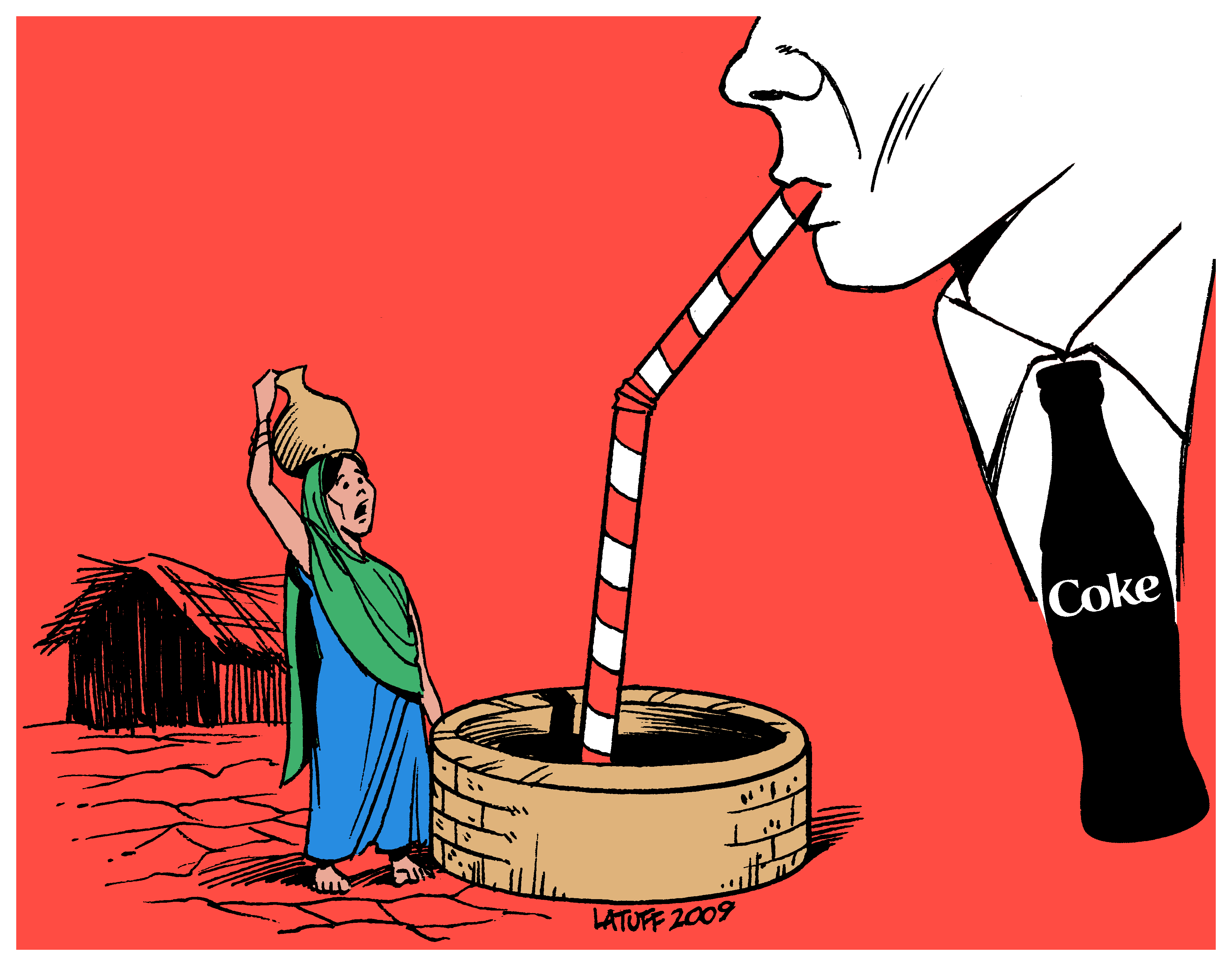
Coke is expanding into increasingly arid regions of the developing world, and that’s in part because Coke is going to places where there aren’t the same kinds of health concerns that there are in the United States. Unfortunately, that means they’re extracting water from places that don’t have a great deal of water to spare.

I think of the human body as part of the environment, and I end the book by explaining how the stomach has become a kind of silo, a storage unit for Coke’s excess. In a nation where more than 30 percent of people are obese today, this is a hot issue for Coca-Cola.

How has Coke’s expansion impacted other companies and the public?

One great example is Monsanto. You wouldn’t have a chemical company like Monsanto without Coke, because Coke in the early 20th century bought all of Monsanto’s main product, which was saccharin, an artificial sweetener. If you go to the Monsanto website, they say that in 1903 and 1905, without Coca-Cola’s massive purchases of their saccharin, they would not exist. I think that’s true of a lot of companies. It’s amazing how many businesses Coke has kept alive through its huge purchasing contracts.

When I say that Coca-Cola capitalism involves partnering with people, that often means the government. I think two good examples of this are public water supplies and recycling. Coke, throughout its history, depended on bottlers who tapped into the public water supply to access 80 percent of what they sold to consumers, which was water, 80 percent of the finished product. In the early 20th century, cities and even the federal government participated in building this infrastructure, spending billions of dollars to bring fresh, clean water to cities and increasingly to rural areas of the country. So, what made Coke expand so rapidly was that it was able to tap into that government infrastructure.

The other example would be recycling. If you look at the history, you see that Coca-Cola and its industry partners lobbied heavily in Congress to try and get curbside recycling to be the solution to the nation’s litter problem. Why not have you and I, the regular taxpayer, pay for that infrastructure and, in a way, conveniently bring the company’s packaging back to the company?

How would you curb some of the negative effects of Coke’s operations and products?

One thing is to make companies pay for the pollution they generate. If we don’t like litter, then we should force corporations to realize that by putting a price tag on it. I would say the same thing goes for obesity. If we think that these products contribute to really expensive health costs like obesity, then let’s make these corporations change. They’ll find ways to respond to the pressures that people put on them.