Israel’s Censorship: The Repression of Pro-Palestinian Voices

By David Starr

Source: Covert Action

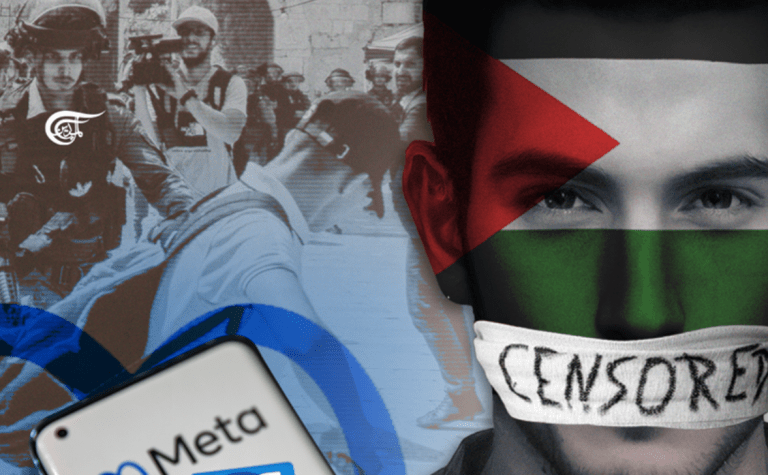
Besides the Israeli military’s mass murder of Palestinians in Gaza (the West Bank as well), there have been repressive measures by Israel to silence the dissent of pro-Palestinian voices. In a sane world, Israel would be sanctioned and deprived of U.S. military aid. Its right-wing leaders would be charged by the International Court of Justice (ICJ). Unfortunately, the world has been insane at this time in human history.

The Israeli-Palestinian war is something unlike other wars in recent history. (Although the 2003 Iraq War is a close example.) The military actions of Israel in Gaza have ironically been, in intent, similar to Nazi Germany’s herding of Jews into the Warsaw ghetto and attempt to starve them. They haven’t yet tried to totally wipe them out because have killed over 30,000 and displaced tens of thousands more while subjecting them to humiliating and brutal living conditions for many years.

Worldwide, there have been the obvious protests against and condemnations of Israel. Voices emphasizing the need for a permanent cease-fire have been loud. But Israel, and its main accomplice, the United States, have not really been listening, or simply don’t care. There have been warnings from the Biden administration for Israel to be more careful, but the United States continues to supply Israel with weapons to use against Palestinians. Thus, Israel is merely getting a soft slap on the wrist in the face of its war crimes. 

Among the voices of dissent, the Middle East Studies Association wrote a letter for Israel’s Prime Minister, Benjamin Netanyahu, Police Commissioner, Yaacov Shavtai and various ministers and university rectors. The letter condemned Israel’s repression against Palestinian students in Israeli universities. This is censorship run amok.

The letter begins as follows:

“We write to you on behalf of the Committee on Academic Freedom of the Middle East Studies Association of North America (MESA) to express our deep and growing concern regarding the ongoing attacks against and restrictions on Palestinian citizens of Israel who are students at Israeli institutions. We call upon you in the strongest terms to put an end to what appears to be a targeted repression of freedom of expression and uphold your responsibility to ensure academic freedom.”

The letter further states that MESA previously contacted Israel about “aggressions against Palestinian students” after the October 7, 2023, Hamas attacks. There is a statement that students have been the targets of intimidation and surveillance. Most importantly, MESA writes that these methods of repression have been going on since before October 7, in fact, for about seven decades. Censorship targets Palestinian students and professors for their criticism of Israel’s actions against Gaza and “their solidarity with the innocent people there.”

MESA cites a survey conducted by the Arab Student Movements Union, which represents Palestinian citizens of Israel who attend colleges and universities. The survey found that 85% of the students polled believed that their security was being threatened. Some 71% said that they are experiencing economic hardship because of the war. Because of this hardship, nearly half of the students considered dropping out of schools they attend and/or considered leaving Israel to pursue education elsewhere.

Further, the survey reveals that, after October 7, 2023, about 160 students have been disciplined for being supposed suspects supporting “terrorism.” Nineteen students have been arrested by the Israeli police because of being so-called terrorists and/or supporting a terrorist organization. But, “Typically, these students were expressing their solidarity with fellow Palestinians and with the children, women, and civilians in the Gaza Strip.”

Also, after October 7, “nine Palestinian students at the University of Haifa were suspended without a disciplinary hearing by the university’s rector, Gur Alroey, for sharing posts and stories on social media.” Alroey’s excuse was that they could cause “extreme situations” at the university. But the university reversed its position and agreed to mediation “with the students’ legal representation.” 

Jewish-Israeli students, however, ignored the ruling and called for the suspension of the nine students without due process. Going further, they protested against the nine students. The National Union of Israeli Students (NUIS) kept the harassment going, launching a campaign to “eradicate the support of terrorism on campuses.” NUIS, then, did not really use its influence to help provide security for all students. As a result, Palestinians were looked at as outcasts.

In an act of paranoia, universities published guides on how to use firearms. This resulted in a rise in the carrying of guns and rifles at universities. MESA’s letter asserted that “Academic institutions are expected to ensure that the campus climate is not hostile, that public discourse remains respectful, and that all students feel safe. Guns do not belong on university campuses.”

The letter added: “We condemn the circumvention of due process, as well as the prejudicial treatment of and broad incitement against Palestinians students,” portraying all of them as terrorists.

In conclusion, “We therefore call upon you to cease these targeted attacks on the higher education sector and ensure that Israeli campuses are safe for all their students and faculty, including those calling for an end to the war.”

Journalists have also been targets of Israeli aggression, but in a more direct fashion. The Israel Defense Forces (IDF) have gunned down journalists who have been reporting on the front lines of the war. According to Mohamed Mandour, writing for the Committee to Protect Journalists (CPJ), “Since the Israel-Gaza war began on October 7, journalists and media across the region have faced a hostile environment that has made reporting on the war exceptionally challenging.” Mandour writes that 25 journalists have been arrested, with the use of “numerous assaults, threats, cyberattacks, and censorship.” He adds that 19 of the journalists were still in prison according to the CPJ’s records as of February 14, 2024.

There have been journalists who have lost family members as a result of Israel’s aggression. For example:

Photojournalist Yasser Qudih suffered the loss of eight family members when four missiles struck their house on November 13, 2023. The CPJ got this information from Reuters and The Guardian. The odds are certain that it was an attack by the IDF. But the group HonestReporting, which monitors the news for supposed anti-Israel bias, inaccuracy and other breaches of journalistic standards, raised questions that Qudih and his family members knew of the October 7 Hamas attack beforehand. This unsubstantiated accusation was rejected and HonestReporting withdrew it the next day.

But the word was out and Netanyahu took advantage of the falsehood. His office tweeted that photographers were complicit in committing “crimes against humanity.” Despite this falsehood, “Israeli war cabinet member Benny Gantz [said] they should be treated as terrorists. Qudih survived the attack.”

Of course, other attacks occurred, no doubt spurred on by Gantz’s ridiculous claim. Other journalists were either killed or survived attacks; sometimes their family members were killed. 

Mandour writes, “CPJ is investigating reports that more than 50 offices in Gaza were damaged, leaving many journalists with no safe place to do their jobs, as they also contend with extensive power and communication outages, food and water shortages, and sometimes have to flee with their families.” 

The high risks are obvious as journalists cover the war. The IDF and Israeli police have been barbaric in their treatment of them as they uncover truths and facts for world consumption, contrary to Israel’s attempts to hide truths and facts with bizarre and insane propaganda.

Israel is not the only entity trying to hide the realities of the war. As of this writing, Meta, the parent company of Facebook, has been considering adopting what amounts to censorship rules on the subjects of Israel and the war. While it has been gathering feedback on the move, there are doubts that Meta will change its mind.

There is a manufactured controversy on the use of the word, “Zionist.” Meta may have the intent to censor the word, along with other terminology that puts Israel in a bad light. Writing for The Intercept, Sam Biddle quotes Dani Noble, who is part of Jewish Voice for Peace: 

“As an anti-Zionist Jewish organization for Palestinian freedom, we are horrified to learn that Meta is considering expanding when they treat ‘Zionism’—a political ideology—as the same as ‘Jew/Jewish’—an ethno-religious identity.” Further, Noble said that such a policy shift “will result in shielding the Israeli government from accountability for its policies and actions that violate Palestinian human rights.”

Previously, the word Zionist was allowed as long as it was not associated with the words Jew and Jewish. Now, Meta moderators can be more stringent in deciding whether Zionist is allowed or if it is used to promote anti-Semitism. Thus, Meta has a long reach in deciding which comments are allowed when posting the “offending” word.

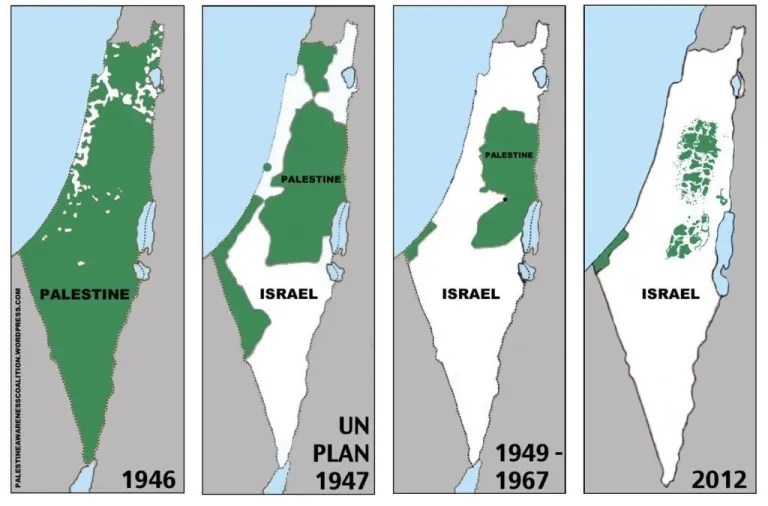
The moderating (or censoring) of the word Zionist is par for the course for hard-line Israel supporters. While there is an attempt to equate it with anti-Semitism, it really symbolizes  a religious form of ultra-nationalism, as evidenced by the right-wing Israeli government’s use of it, along with the right-wing settlers as they attempt to steal more Palestinian land. And one of the objectives on the part of Israeli fascists is to take more land to establish a “Greater Israel.” Thus, the attempt by the IDF to drive Palestinians out of Gaza, and the West Bank.
But there is a major irony here. Biddle writes, “much of the fiercest political activism against Israel’s war in Gaza has been organized by anti-Zionist Jews, while American evangelical Christian Zionists are some of Israel’s most hardcore supporters.” So, there are Jews who are not only anti-Zionist, but side with the Palestinians.

Biddle provides examples of hypothetical posts in quotes that could be censored by Meta: “Zionists are war criminals, just look at what’s happening in Gaza.” “I don’t like Zionists.” “No Zionists allowed at tonight’s meeting of the Progressive Student Association.” 

Meta spokesperson Corey Chambliss tried to justify the change in his company’s rules. Biddle quotes him as saying, “We don’t allow people to attack others based on their protected characteristics, such as their nationality or religion. Enforcing this policy requires an understanding of how people use language to reference those characteristics. While the term Zionist refers to a person’s ideology, which is not a protected characteristic, it can also be used to refer to Jewish or Israeli people.”

Chambliss goes on to imply that the new rules are necessary because of tensions relating to the Middle East. But he admitted that the word Zionist is an ideology, not a religion. Besides, tensions are high already, with Israel’s military aggression in Gaza. It seems like Meta is harping on the word while there are more important things to attend to, like opposing the war, and coming to grips with about 29,000 Palestinian deaths. (And, yes, the 1,200 Israeli deaths need attention even though 55% of those killed were members of the IDF.)

Meta did contact 10 Arab, Muslim and pro-Palestinian organizations about the use of the word Zionist and how it could be used in a “dehumanizing way or violent way” if referring to Jews or Israelis, according to Guardian writers Johana Bhuiyan and Kari Paul. 

But Linda Sarsour, “the executive director of Muslim advocacy organization MPower Change, said Meta’s director of content policy stakeholder engagement, Peter Stern, provided few details about why the company was revisiting the policy now and how it would be implemented or enforced in a way that doesn’t stifle political expression.” Bhuiyan and Paul quoted Sarsour’s response: “If you already have a policy that’s addressing Zionism as a proxy, then why are we having this conversation? Why is there further consideration to expand this policy?”

Expanding the policy could censor those who post pro-Palestinian comments, as well as facts, in the guise of preventing anti-Semitism. Meta, however, has had a policy that allowed the word Zionist to be used as long there wasn’t an association with the words Jew and Jewish. As Sarsour asks, “Why is there further consideration to expand this policy?”

Censorship, threats, intimidation and even murder cannot stop the tidal wave of opposition worldwide to Israel’s war. In Israel itself, more people are speaking out and opposing the Netanyahu government. And events may lead to the downfall of the Israeli fascists. 
How Did Someone Like Me Get Shadow-Banned?

By Charles Hugh Smith

Source: Of Two Minds

It seems there are many reasons to get shadow-banned, but unfortunately we’re never told what “crime” we committed nor are we given a chance to defend ourselves from the “indictment” in whatever “court” found us “guilty.” As in a nightmarish tale right out of Kafka, the powers making the charges, declaring the verdict “guilty as charged” and imposing the penalty are completely obscured.

Those found “guilty” discover their secret “conviction” and “sentence” when their livelihood is destroyed (i.e. they’re demonetized) and their online presence suddenly diminishes or vanishes.

I call this being sent to Digital Siberia. As with the real gulag, most of those convicted in the secret digital Star Chamber are innocent of any real crime; their “crime” was challenging the approved narratives.

Which leads to my question: why was little old marginalized-blogger me shadow-banned? Those responsible are under no obligation to reveal my “crime,” the evidence used against me, or offer me an opportunity to defend myself against the charges, much less file an appeal.

My astonishment at being shadow-banned (everyone in Digital Siberia claims to be innocent, heh) is based on my relatively restrained online presence, as I stick to the journalistic standards I learned as a free-lancer for mainstream print media: source data, excerpts and charts from mainstream / institutional sources and raise the questions / build the thesis on those links / data.

I avoid conspiracy-related topics (not my interest, not my expertise) and hot-button ideological / political cleavages (us vs. them is also not my interest). My go-to source for charts and data is the Federal Reserve database (FRED) and government agencies such as the Census Bureau, Bureau of Labor Statistics, IRS, etc., and respected non-governmental organizations (NGOs) such as the Pew Research Center, RAND, investment banks, etc.

Given my adherence to journalistic standards, I wonder: how did someone like me get shadow-banned?

The standard cause (or excuse) for being overtly banned is “distributing misinformation.” This charge is never specific; something you posted “violates our community standards,” or equivalent broad-brush language.

Shadow-banning is even more pernicious because you’re not even notified that your visibility to others has been restricted or dropped to zero. You see your post, but nobody else does.

What are the precise standards for declaring a link or statement as “misinformation?” As the twitter files revealed, what qualifies as “misinformation” is constantly shifting as a sprawling ecosystem of censors share information and blacklists. This report is well worth reading: The Censorship-Industrial Complex: Top 50 Organizations To Know (Zero Hedge).

Not only do we not know what qualifies as “misinformation,” we also don’t know what Big Tech algorithms are flagging and what their response is to whatever’s been flagged. My colleague Nate Hagens, who is equally scrupulous about using authoritative sources, posted this comment last year:

“It’s both funny and scary. It was explained to me today that the new Facebook/Meta algorithm downrates users who have cookies w evidence of visiting non-mainstream news sources/blogs. Even when one uses proxy servers and incognito mode, if you frequent e.g. Aljazeera or other news sites instead of CNN or FOX the algorithms categorizes your FB content (even if it’s a chicken soup recipe) as ‘non-mainstream’.
Big brother is watching (and not even thinking).
Those ideas/voices outside the status quo aren’t on equal footing- and the status quo (material growth/cultural values) is what’s leading us down the current path, without a map or plan.”

The systems that shadow-ban us are completely opaque. Who’s to say that a knowledgeable human reviews who’s been banned or shadow-banned? Given the scale of these Big Tech platforms and Search Engines, is that even possible?

It’s well known that YouTube constantly changes its ranking algorithms so they are harder to game, i.e. manipulate to advance one’s visibility.

It’s also known that simply posting a link to a site flagged as “misinformation” is enough to get your post excommunicated and your site flagged in unknown ways with unknown consequences.

What I do know is that Of Two Minds was publicly identified as “Russian Propaganda” by a bogus organization with no supporting data, PropOrNot in 2016. This front’s blacklist was prominently promoted by the Washington Post on page one in 2016, more or less giving it the authority of a major MSM outlet.

One might ask how a respected, trusted newspaper could publish a list from a shadowy front without specifying the exact links that were identified as “Russian Propaganda.” Standard journalistic protocol requires listing sources, not just publishing unverified blacklists.

Clearly, the Washington Post should have, at a minimum, demanded a list of links from each site on the blacklist that were labeled as “Russian Propaganda” so the Post journalists could check for themselves. At a minimum, the Post should have included inks as examples of “Russian Propaganda” for each site on the list. They did neither, a catastrophic failure of the most fundamental journalistic standards. Yet no one in the media other than those wrongfully blacklisted even noted or questioned this abject failure.

In effect, the real propaganda was the unsourced, un-investigated blacklist on the front page of the Washington Post.

How did I get on a list of “Russian Propaganda” when I never wrote about Russia or anything related to Russia?

There are two plausible possibilities. One is “guilt by association.” I’ve been interviewed by Max Keiser since 2011, and Max and his partner Stacy Herbert posted their videos on RT (Russia Today) and an Iranian media outlet. Needless to say, these sources were flagged, as was anyone associated with them. So perhaps merely having a link to an interview I did with Max and Stacy was enough to get me shadow-banned. (Shout-out to Max and Stacy in El Salvador.)

Alternatively, perhaps questioning the coronation of Queen Hillary in any way also got me on the blacklist.

Once on the blacklist, then the damage was already done, as the network of censors share blacklists without verifying the “crime”–a shadowy “crime” without any indictment, hearing or recourse, right out of Kafka.

Shadow-banning manifests in a number of ways. Readers reported that they couldn’t re-tweet any of my tweets. Another reader said the Department of Commerce wouldn’t load a page from my site, declaring it “dangerous,” perhaps with the implication that it was a platform for computer viruses and worms–laughable because there is nothing interactive on my sites and thus no potential source for viruses other than links to legitimate sources and adverts served by Investing Channel.

Users of platforms such as Twitter and Facebook have probably noticed that your feed is populated by the same “friends” or “folks you follow.” In other words, the feed you’re presented with is curated by algorithms which sort and display posts / tweets / search results according to parameters that are invisible to users and regulators.

It’s easy to send flagged accounts to Digital Siberia, and trouble-free to leave them there until the trouble-maker goes broke.

It’s impossible to chart the extent of the shadow-banning, or who’s doing it, sharing blacklists, etc. This entire ecosystem of censorship is invisible. Recall that in the Soviet gulag, having an “anti-Soviet dream” was enough to get you a tenner (10-year sentence) in the gulag. Here, posting a flagged link will get you a tenner in Digital Siberia.

When Your Own Government Confirms It Paid Censors To Silence You…

In today’s zeitgeist, merely mentioning the possibility that the COVID-19 virus escaped from a lab resulted in an instant ban in 2020. How could the possibility that it escaped from a nearby lab dedicated to viral research be labeled as “disinformation” when the facts were not yet known?

The answer is of course that the lab-escape theory was “politically sensitive” and therefore verboten.

You see the problem: what’s deemed “politically sensitive” changes with the wind, and so the boundaries of what qualifies as “misinformation” have no visible or definable edge. Virtually anything consequential can suddenly become “politically sensitive” and then declared “misinformation.” When the guidelines of what’s a “crime” and the processes of “conviction” are all opaque, and there is no hearing or recourse to being “convicted” of a shadow-“crime,” we’ve truly entered a Kafkaesque world.

How did someone like me get shadow-banned? There is no way to know, and that’s a problem for our society and our ability to solve the polycrisis we now face.

I joke that what got me shadow-banned was using Federal Reserve charts. Perhaps that’s not that far from reality.

Hunting the Twitter Files

Legacy Media Censor Details About Censorship

By Nolan Higdon

Source: Project Censored

More than two years since Big Tech made the historic decision to limit access to the New York Post’s story about President Joe Biden’s son Hunter, users are getting a glimpse into how Twitter came to that decision. However, delusional legacy and social media outlets are doing everything they can to misrepresent and bury the consequential details of the process.

An October 2020 New York Post story titled “Smoking-gun email reveals how Hunter Biden introduced Ukrainian businessman to VP dad” offered sensationalistic photos and details of Hunter’s addiction issues coupled with damning emails indicating that Hunter utilized his connection with his father to curry favor and economic opportunity in foreign countries. At the time, intelligence officials told members of the press that the story was Russian propaganda aimed at influencing that year’s election. As a result, Big Tech platforms limited access to the story including in direct messages which is usually done only in extreme cases such as child pornography.

On Friday, December 2, 2022, Elon Musk promised to release files related to the matter. Soon afterward, journalist Matt Taibbi published a report based on thousands of internal Twitter documents. Taibbi demonstrated that Twitter’s decision to remove the Hunter Biden story was influenced in part by Biden’s campaign. Indeed, as Taibbi described, Twitter’s staff regularly fields phone calls from powerful people in government and acts upon their requests to moderate content. And it’s is not just Twitter. During a 2022 interview with Joe Rogan, co-founder, chairman, and CEO of Meta (formerly Facebook) Mark Zuckerberg admitted that his company’s decision to moderate content – including the 2020 Hunter story – is sometimes based on recommendations from the intelligence community. Similarly, The Intercept reported in 2022 that the Department of Homeland Security regularly informs Big Tech’s content moderation practices.

In any other country, the revelation that government and Big Tech collude to shape public discourse and democratic participation would make Americans irate, but the story has received little coverage. The coverage received by legacy media has been dismissive. CNN reduced the files as simply showing “how employees debated how to handle 2020 New York Post Hunter Biden story.” Variety echoed the same sentiments. Meanwhile, giving readers less than 24-hours to process what Taibbi reported, WAPO declared that Musk’s Twitter Files “haven’t changed minds.”

The lack of substantive coverage of the Twitter Files is rooted in the legacy media’s fears over the broader implications of the story. Since 2015, legacy media have been fostering a moral panic over fake news and blamed their competition – digital media – for its spread. They have practically begged Big Tech overlords to fix the country and restore faith in journalism by censoring problematic content, which they often refer to as misinformation or disinformation. Taibbi’s reporting demonstrates that the news media’s framing of Big Tech content moderation as a solution to anti-democratic practices, actually functioned as an anti-democratic position that enables the elite political class to shape public dialogue and manufacture consent of the electorate.

Adding to the news media’s inability to cover the story is their business model which depends on framing every story as an issue of left versus right, blue versus red, Democrat versus Republican. Indeed, whether it is cable news audiences or legacy newspaper subscribers, news outlets cater to audiences’ confirmation biases by villainizing a caricature of the “otherside.” This has reduced every story to a partisan issue, and fostered such high levels of hyper-partisanship vitriol that half of Americans cite “other Americans” as their number one fear, while 40% contend that a civil war will occur in their lifetime.

Although they still try, the legacy media has found it impossible to frame the Twitter Files as a hyper-partisan story because the political duopoly, not one party, utilizes Big Tech to manufacture the consent of the people. For example, Big Tech’s content moderation of was influenced by Biden’s Campaign in 2020 and leading Democrats after January 6th. Similarly, Donald Trump’s campaign spent $100 million to work with Facebook staff to amplify their campaign messages, and Trump met personally with Zuckerberg in secret meetings throughout his presidency. Furthermore, legacy news media outlets cannot villainize the “other side” for censorship when loyalists for both parties are complicit. Indeed, the feckless liberals who begged Big Tech overlords to censor content about elections and Covid-19 are equally complicit as the neocons who championed censorship of the press and individuals, and organizations during the War on Terror and Trump supporters who lauded his attacks on the free press and whistleblowers such as Julian Assange.

Anyone can, and will, argue that Hunter’s photos are not newsworthy, but that is for the citizens to decide when they encounter the story. That is how a free press in a democratic republic works. A democracy does not depend on Big Tech overlords acting at the behest of the political class to determine what content the public should see. The notion that censorship will erode hate, correct falsehoods, or solve national problems is a fallacy of utmost proportions.  The contemporary censorious crowd seems to be in such a state of delusion that they have come to believe that World War II and the Holocaust could have been avoided if Twitter was around to censor Nazis. It is ludicrous and the establishment news media deserve part of the blame for perpetuating this lunacy.

A truly independent press would privilege narratives that expose Silicon Valley propaganda, which has led users of all political ideologies to a delusional state of Stockholm Syndrome, where Big Tech exploits their labor, erodes their privacy, and manufactures their consent for the duopoly, but users still laud and entrust the industry with their democracy. To be clear, Big Tech commercialized tools that were developed by the military industrial complex during the Cold War (which was not so cold in much of the world) to surveil and exploit users. They advertised their platforms as transformative tools that strengthen democracy and inclusion. As whistleblower after whistleblower remind us, this is all nonsense: Big Tech’s oligarchs are rapacious capitalists who time and time again put profits over people. No entity should be moderating information in a democracy, and as the Twitter Files reveal, the unaccountable profiteers in Big Tech are no exception.

Related Video: