Eleven countries studied, one inescapable conclusion – the drug laws don’t work

war-on-drugs

Eight month study shows legalisation policies do not result in wider use, and the US should be watched with interest

UK government’s drug laws survey was suppressed, Lib Dem minister says

By Alan Travis

Source: The Guardian

The UK government’s comparison of international drug laws, published on Wednesday, represents the first official recognition since the 1971 Misuse of Drugs Act that there is no direct link between being “tough on drugs” and tackling the problem.

The report, which has been signed off by both the Conservative home secretary, Theresa May, and the Liberal Democrat crime prevention minister, Norman Baker, is based on an in-depth study of drug laws in 11 countries ranging from the zero-tolerance of Japan to the legalisation of Uruguay.

The key finding of the report, written by Home Office civil servants, lies in a comparison of Portugal and the Czech Republic, both countries where personal use is decriminalised.

“We did not in our fact-finding observe any obvious relationship between the toughness of a country’s enforcement against drug possession, and levels of drug use in that country,” it says. “The Czech Republic and Portugal have similar approaches to possession, where possession of small amounts of any drug does not lead to criminal proceedings, but while levels of drug use in Portugal appear to be relatively low, reported levels of cannabis use in the Czech Republic are among the highest in Europe.

“Indicators of levels of drug use in Sweden, which has one of the toughest approaches we saw, point to relatively low levels of use, but not markedly lower than countries with different approaches.”

Endless coalition wrangling over the contents of the report, which has taken more than eight months to be published, has ensured that it does not include any conclusions.

However, reading the evidence it provides, it is hard to escape the conclusion that the Home Office civil servants who wrote it seem to have been impressed that a health-based rather than a criminal justice-based approach is where effective policies lie.

It also, rather remarkably, says that the experiments in legalisation now under way in the US states of Washington and Colorado, and in Uruguay, should be watched with interest. This is a world away from the “war on drugs” rhetoric that has formed the mainstay of the political debate on drugs in the past four decades.

The report, Drugs: International Comparators, documents in great detail the experience of Portugal, where personal use was decriminalised nearly 11 years ago and those arrested for drugs are given the choice of going before a health “dissuasion commission” or facing a criminal justice process.

“Trend data from Portugal shows how levels of drug use changed in the years following decriminalisation in 2001. Although levels of drug use rose between 2001 and 2007, use of drugs has since fallen to below 2001 levels. It is clear that there has not been a lasting and significant increase in drug use in Portugal since 2001,” the report says.

At the same time, it notes there have been significant reductions in the number of drug users diagnosed with HIV and Aids at a time when drug-related deaths have remained stable: “These outcomes cannot be attributed to decriminalisation alone, and are likely to have been influenced by increases in the use of treatment and harm reduction,” it says, stressing that it is difficult to disentangle the impact of decriminalisation from wider improvements in drug treatment and harm reduction over the same period.

Nevertheless, it firmly rejects claims that decriminalisation in Portugal has led to a spike in drug use. It goes on to contrast Portugal with the Czech Republic, where an evaluation found that there was no significant decline in the availability of drugs following an earlier implementation of stricter laws, prior to decriminalisation.

On the situation in Colorado, Washington and Uruguay, the Home Office says their experimental policies which legalise production, supply and recreational use of cannabis have the common aim of disrupting organised crime and exercising greater control over the use of cannabis.

“The American states have a market-driven approach, with lighter regulation than Uruguay and fewer limitations on consumption and use. Uruguay, which has growing concerns about organised crime, has a stronger role for the state, with limitations in size of the market, the strains and potency of cannabis, and the quantity that an individual can purchase in a month.”

Crucially, the report adds: “It is too early to know how these experiments will play out, but we will monitor the impacts of these new policies in the coming years.”

The report examines various harm reduction initiatives in 11 countries, including the use of drug consumption rooms, the prescription of heroin under medical supervision, and prison-based needle exchange programmes. In particular it found evidence that heroin prescribing, including in three limited trials in Britain, can be effective.

There is no overall conclusion to the report, but in its last paragraph the Home Office authors reflect that the lack of any clear correlation between “toughness” of approach and levels of drug use demonstrates the complexity of the issue: “Achieving better health outcomes for drug users cannot be shown to be a direct result of the enforcement approach.”

This article was amended on 31 October 2014. An earlier version said incorrectly that, in the Czech Republic, “criminal penalties for possession [of drugs] were introduced as recently as 2010”, and later referred incorrectly to “the implementation of stricter laws in 2010”.

After Legalization, Why Can’t People’s Prior Pot Convictions Be Wiped Clean?

marijuana_legal_gavel_620x350

In states where marijuana is now legal, many people still have small-scale possession convictions on their records. Advocates for “expungement” face uphill battles, from Washington state to Washington, DC

By Jake Thomas

Source: Substance.com

Marijuana won in November’s midterm elections, with Oregon, Alaska and the District of Columbia joining Colorado and Washington in legalizing it. But it’s a bittersweet victory for people who have a prior cannabis conviction for doing something that is now legal in their state. For now, efforts to clear pot marks from people’s records in states that have legalized the drug are facing uphill battles.

“It’s pretty much ruined my life at this point,” Aaron Pickel (below), who was busted in Oregon for carrying two to three pounds of pot-infused edibles, told the Oregonian. “I’ve tried pretty hard to find work, and when you’re going against people who have nothing on their record and you do, you’re not going to get it.” Pickel’s California medical marijuana card didn’t get him out of the charges. Although he was slapped with only a $200 fine and no jail time, the 33-year-old now has a felony rap—and stays in his mother’s spare bedroom.

People who have been convicted of misdemeanor and lesser charges for possessing the drug often have a hard time securing housing, jobs and education. Proponents of “expungement”—wiping records clean—argue that the voters of these states made it clear that possessing small amounts of marijuana should not be illegal and therefore people who have prior convictions should get a second chance. Opponents argue that people should abide by laws until they are changed.

The expungement debate does not address the plight of people currently serving time for nonviolent cannabis crimes, however. The ballot measures that legalized pot allow people to carry only small amounts—in the case of Oregon’s Measure 91, up to an ounce. Before the passage of these measures, these amounts wouldn’t be cause to lock someone up in prison—in Oregon, it resulted in a violation and a fine. Someone would need to possess up to four ounces to be charged with a felony. Carrying four ounces is still illegal under Measure 91.

“I’ve tried pretty hard to find work, and when you’re going against people who have nothing on their record and you do, you’re not going to get it,” said Aaron Pickel, who was busted in Oregon for carrying several cookies and other pot-infused edibles.

There were 8 million marijuana-related arrests in the US between 2001 and 2010, according to a 2013 American Civil Liberties Union report. Nearly 36,000 people were arrested in 2010 alone in states and jurisdictions that have recently legalized pot. What’s worse, African-Americans, who already face discrimination in housing, employment and education, make up a disproportionate number of arrests. Nationally, they were 3.7 times as likely to be arrested for marijuana possession than whites in 2010, even though they used marijuana at similar rates.

“There are thousands of people in Washington state who have a misdemeanor marijuana conviction, and it hangs over their head when they apply for jobs or housing or education, and giving them a second chance will remove that obstacle,” says Washington state Rep. Joe Fitzgibbon, a Democrat, who introduced a bill in 2013 that would have cleared the records of people with misdemeanor marijuana convictions.

Fitzgibbon’s legislation ended up stuck in committee. He says that lawmakers apparently want to let the dust settle from pot becoming legal two years ago before further tinkering with marijuana laws. But he got pushback from the state prosecutors’ association, which opposes prior-conviction expungement.

A similar bill failed in the state legislature in Colorado, where pot was also legalized in 2012. But a ruling by the Colorado court of appeals in March could provide limited relief for people with pot convictions. The ruling stemmed from a 2010 court case that involved a woman who was charged with child abuse along with possessing methamphetamine and marijuana. Her lawyer, Brian Emeson, says that he was in the process of appealing her methamphetamine charge when the state legalized marijuana, so he appealed her pot charge as well. The court granted the appeal on the pot charge, removing it from her record.

“Thousands of people in Washington state have a misdemeanor marijuana conviction, and it hangs over their head when they apply for jobs or housing or education, and giving them a second chance will remove that obstacle,” said state Rep. Joe Fitzgibbon.

The ruling only affects people who have an active appeal for a pot possession charge, Emeson says. He estimates that number is anywhere from about a dozen to a hundred. He expects the Colorado supreme court to take up the issue next year and possibly reverse the appeals court ruling.

Emeson says that he was able to separate the marijuana charge from the others in his case, characterizing them as “relatively not that bad.” Emeson acknowledges that child abuse is a serious charge, but he says that courts often see much worse. “It’s impossible for people to ignore really, really bad facts in a case.”

Efforts to provide relief to people with prior pot convictions are likely to be complicated by other crimes on their records. “Most people convicted of marijuana are convicted of other things that are still illegal,” says Sam Kamin, a professor of constitutional law at the University of Denver and one of the nation’s leading experts in marijuana regulation. Their crimes, not surprisingly, often involve possession or trafficking of large amounts of pot or other drugs.

Oregon lawmakers will begin grappling with this problem when they meet in the new year to discuss the implementation of the state’s pot legalization measure, says state Sen. Floyd Prozanski, a Democrat who chairs the senate’s judiciary committee. Prozanski says he does not expect any “blanket bills” that will provide automatic expungement.

People convicted of certain felonies and misdemeanors in Oregon can already petition to have their records expunged after a certain period of time has lapsed. Prozanski says that any effort to provide relief to people with pot convictions will rely on the state’s existing expungement process. Lawmakers may update the expungement process in response to marijuana becoming legal.

However, as in Colorado and Washington state, lawmakers will be mainly focused on implementing legal marijuana, Prozanski says. “[Expungement] is sort of secondary issue to the implementation of Measure 91.”

The situation for people with prior convictions is different in Washington, DC, says Mason Tvert, communications director for the Marijuana Policy Project. In October, the city council passed a bill that would allow people convicted of all crimes and misdemeanors that have become legal to have their records sealed.

“It’s astonishing that some congressional members are so concerned about blocking DC from enacting [its legalization measure]. If cartels and gangs had lobbyists on the Hill, preventing marijuana regulation would be their top legislative priority,” said  the Marijuana Policy Project‘s Mason Tvert.

The District of Columbia had the highest overall marijuana possession arrest rate in the country in 2010. African-Americans are eight times more likely to be arrested for pot than their white counterparts, according to the ACLU.

However, both this bill and the measure that legalized marijuana require approval by the incoming Republican Congress, which has not been sympathetic to marijuana legalization or people convicted of pot crimes. Some have already said they will oppose DC’s legalization measure. “I will consider using all resources available to a member of Congress to stop this action,” Rep. Andy Harris, a Maryland Republican, told the Washington Post.

Making good on that threat, congressional Republicans and Democrats struck a deal on Tuesday to fund the federal government through September that includes provisions upending Initiative 71’s legalization of pot, according to the Washington Post. At press time, advocates were debating whether or not the language in the bill offers a loophole allowing the will of DC voters to go forward.

How this mess will ensnare efforts of people to expunge their prior pot convictions remains to be seen. “There’s some uncertainty surrounding the effect the provision will have on the measure. It could end up being a situation in which the courts will decide,” Tvert wrote in an email. “With all of the issues facing the country, it’s astonishing that some congressional members are so concerned about blocking DC from enacting a widely supported local policy. If cartels and gangs had lobbyists on the Hill, preventing marijuana regulation would be their top legislative priority.”

Pro-pot politicians in a few other states are already taking steps to expunge peoples’ old marijuana convictions should the drug be legalized. One Maryland lawmaker has proposed legislation that would erase any prior marijuana-related offense that becomes legal. A candidate in last year’s Democratic primary for Pennsylvania governor called for legalizing pot and expunging records of people convicted of possessing it.

But one of the biggest victories for advocates of expunging peoples’ past drug records came in the 2014 midterm election in a state where pot legalization wasn’t even on the ballot. California voters approved Measure 47, which automatically and retroactively downgraded some nonviolent felonies, many of them drug-related, to misdemeanors. Some 10,000 people are eligible for immediate release, including many who have been jailed for drug misdemeanors—and, once again, a disproportionate number are African-Americans.

Jake Thomas is a reporter in Spokane, Washington. He has written for the Portland MercuryStreet Roots and numerous other publications. His website is here. He tweets at @jakethomas2009. This is his first piece for Substance.com.

How the War on Drugs Advances Transnational Capitalism

dwc-cvr-small_72web

How US drug policy in the Americas is a pretext for extending militarization and global capitalism south of the border.

By Mark Karlin

Source: Alternet

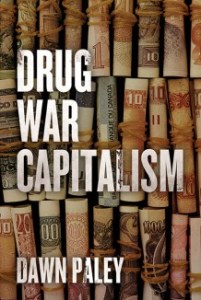
Dawn Paley, a Canadian journalist, offers a transformative view of the US war on drugs in the Western Hemisphere (with the exclusion of Canada as a targeted nation because it is a neoliberal partner of the United States in exploitation). Her just-released book,  Drug War Capitalism, is a sweeping, exhaustively detailed analysis that reveals the insidious actual goals of the US-led and funded militarization south of the border in the name of destroying drug cartels. As Paley writes, “This war is about control over territory and society [and market share, cheap labor, mineral rights and profits], much more so than it is about cocaine or marijuana.”

The following is the Truthout interview with Dawn Paley about  Drug War Capitalism:

Mark Karlin: You state the so-called war on drugs is really a war on people. This is a key point in your exhaustively documented and cogently threaded book. Can you expand on that – and of course you are talking about a certain class and background of person: the indigenous and the poor south of the US Border?

Dawn Paley: There is excellent work being done in the US examining and resisting the impacts of the drug war, specifically when it comes to the mass incarceration of young people from communities of color on that pretext.  Drug War Capitalism looks at how the drug war is deployed south of the US border, where the key mechanism for social control is the use of terror against the people/ el pueblo/los pueblos. Some activists and writers use words like social cleansing to describe the impacts of drug war militarization and paramilitarization, and how both primarily target poor young men in urban and rural environments. The case of Ayotzinapa, with the disappearance of 43 students and the murder of three others (one of the disappeared students is now confirmed to have been murdered) by municipal police in Iguala, Guerrero, is just the latest example of how often the victims of the drug war come from marginalized – and often well organized – communities and groups.

In the US, many people have been turned into frightened puppets who support any action in the name of the war on terrorism, even when such military and police action has to do with the goal of expanding transnational business opportunities. How is this analogous to the use of the war on drugs as a cover for US military intervention in Mexico, Central America, Colombia and the rest of most of the Western Hemisphere, with the exclusion of Canada? After all, doesn’t the US benefit by having a state of violence among the poor and socially marginal people keep them from considering populist political rebellion in these nations?

I’d like to approach this question a little differently, and ask instead why it is that the hundreds of thousands of people who mobilized throughout the United States against the unjust war in Iraq were able to make the connection between US invasions and oil extraction, and why it has been so difficult for folks to mobilize and make the same connections to resource extraction and capitalism in the case of the US-backed war on drugs in Colombia, Mexico and elsewhere.

Once we can start to make the connections between US-backed war agendas in the form of Plan Colombia or the Merida Initiative and the expansion of capitalism in Mexico and Colombia, a lot of things begin to make sense. In the immediate term, the militarization and the paramilitarization stemming from these plans to sow terror and strengthen the state repressive apparatus, which, as we are well aware, works to protect transnational capital, like mining companies or oil companies.

Over the longer term, the structural reforms that go hand in hand with Plan Colombia and the Merida Initiative deepen neoliberalism. With the privatization of Petroleos Mexicanos (Pemex), Mexico’s state oil company, for example, 70 percent of Mexico’s federal budget is at stake, something I argue could lead to a previously unknown level of austerity in Mexico. Already financially starved sectors like health and public education could be impacted, as could existing subsidies for transportation, basic goods and otherwise.

As the privatization of Pemex kicks in and the effects begin to be felt over the next decade, should people rise up in protest, the fact that police and military forces as well as nominally non-state armed actors were strengthened through the Merida Initiative will certainly come in handy in order to control dissent.

You bring up how narcotrafficking money laundering has been profitable for banks and even that the cash liquidity of such funds helped some large US banks survive the 2008 implosion of the economy. In addition, drug cartels invest a lot of their money – 85 percent of which you note is generated in the US, in the cocaine market – in legitimate businesses. Aren’t narcotraffickers often the shady cousins of neoliberal capitalists, who collaborate for mutual benefit at times?

I suppose you could say that, yes. The book doesn’t focus on the role of banks, as this is one of the areas of the drug war that has been extensively covered in the mainstream media. However, There’s a tendency towards showing images of Mexican traffickers with stacks of US dollars, but their proceeds represent a fraction of the overall cash generated because of prohibition. I think it’s important to point out that when we talk about the wealth generated by the drug trade it is essential to remember that the vast majority of that cash is generated in the United States and helps prop up the US economy in various ways.

Perhaps the linchpin to your investigative reporting is that the war on drugs is a cover, in many ways, for the expropriation of land for excavation and fossil fuel companies – as well as the creation of secure manufacturing, assembly and marketing environments for other international corporations. I know that specific alliances of corruption are often difficult to ascertain when it comes to the so-called war on drugs, but how do paramilitary groups (sometimes drug cartels), the military and the police play a role in securing land and providing security for transnational corporations. As you point out, large corporations and their employees are rarely victims of violence in the nations that have been targeted for drug war capitalism.

Colombia provides us with the strongest examples of this: paramilitaries hired to kill union organizers, or companies like BP and Drummond using paramilitaries to ensure they had access to lands for mining and pipeline building. These cases are extensively documented by court cases which have led to settlements for victims.

In a place like Ciudad Juarez we see how, for example, it is workers and their families who are terrorized by the drug war, and especially by state forces, while police go to great extents to protect the US-based owners of manufacturing plants when they visit the city. In the book I document how communal landowners dedicated to protecting their land from resource extraction are threatened by Federal Police deployed in the name of fighting the war on drugs, or how they are murdered by so called cartel hitmen, who I consider to be more akin to paramilitaries. And this is just the beginning. Unfortunately these trends are likely to become more obvious in Mexico, as they did in Colombia, as time goes on.

What role did NAFTA and other trade agreements play in having laid the groundwork for killing, kidnapping and displacing people to seize land for excavation and fossil fuel development? As a further note, you are a Canadian, and Canadian mining companies appear to play a large role in land seizures, hiring of enforcers (in many cases assassins and torturers), and cooperation with corrupt governments, police and even drug cartels. Is it safe to assume that this is with the full support of the Harper government?

Well, in Colombia it was actually Plan Colombia that paved the way for the Canada-Colombia Free Trade Agreement and the US-Colombia Free Trade Agreement. They didn’t advertise it at the time, but following Plan Colombia it was made clear by officials from both the US and Colombia that though the flow of drugs wasn’t reduced, Plan Colombia was a success because it created the conditions for the implementation of these new free trade agreements.

In some ways NAFTA, which became active in January 1994, happened too soon. Let me explain: While NAFTA went a long way towards destroying local economies especially in rural areas and impoverishing small farmers, by 2008 when the Merida Initiative kicked off, it left much to be desired in terms of how open the Mexican economy actually was to transnational capital. At that time, the Mexican government continued to be the full owner of the Federal Electricity Commission and the national oil company, Pemex.

Communal landowners were refusing to enter into privatization schemes made possible when Article 27 of the Mexican Constitution was changed prior to the signing of NAFTA in 1992. Elite Mexican families took control over certain sectors of the economy that were privatized, as NAFTA era privatizations did not include regulations that meant that US bidders would be considered on equal footing with national bidders. All of these elements, among others, meant that Mexico was ripe for a new round of neoliberalism and austerity that would open new areas for investment. That’s part of what the Merida Initiative has provided a platform to do.

NAFTA was a key ingredient in opening up Mexico’s mining sector. Large scale, modern mining, especially gold mining, provides us with a bit of a preview of the kinds of conflicts that could erupt if widespread private sector oil and gas exploration and exploitation goes ahead in Mexico. Gold mining in Mexico is dominated by companies based in Canada, which gives them a litany of financial as well as diplomatic and legal supports for their activities. In the book, I document cases where these Canadian mining companies take advantage of the conditions created by the Merida Initiative in order to push their projects forward.

It appears ironic that the free trade treaties squeeze out small business people and entrepreneurs, benefiting almost exclusively the large multinational corporations. After all, the promoters of the treaties claim that they stimulate the business environment for everyone. You provide evidence, however, on why that is just a sales point for free trade agreements, but hardly the reality.

Free trade agreements decimate local economies and small businesses. They allowed the US and other nations to dump their subsidized agricultural products, like corn, into a diverse national market that included many small holders, as in Mexico, who operate with very few subsidies. There are social classes that benefit greatly from these kinds of agreements, but they are the minority, in the US as well as in target countries like Mexico. Rendering small farms and family businesses unprofitable is more than an economic issue: It is a root cause of forced migration, of displacement, and in the destruction of social and community fabric. This, in turn, is beneficial in terms of increasing state and corporate control over peoples’ lives and lands.

You provide a good deal of clarity on how Plan Colombia was the model for the Mérida Initiative in Mexico. What was the real priority of Plan Colombia in terms of creating a nation that is structured to provide an accommodating and secure environment for transnational businesses?

I believe the real priority of Plan Colombia was just that: improving the conditions for investment throughout the country. Officially this takes a couple of forms, including regulatory and judicial reforms and the extension of police forces and soldiers throughout the national territory. Off the books, it is known that paramilitary groups work closely with police and soldiers throughout the country, and that this tends towards benefiting the activities of transnational companies.

One of the implications of the US working to graft its legal model on nations south of the border is that it appears likely to increase prison populations. Given that the United States has the highest percentage of its population incarcerated, that is an ominous portent, isn’t it?

It is indeed. The Merida Initiative also included funds for building and expanding Mexico’s prison facilities and training Mexican prison guards in the ways of US jailers.

That brings us back to the first question. Who is responsible for the social cleansing that is a significant component of the violence associated with the alleged war on drugs? Who gains from killing “disposable people”?

There are cases where we can talk about individuals responsible for killings, but the approach I take in the book is to try and present what I argue are structural elements which allow this kind of killing and terror to take place. Certainly US-funded militarization is a key component. There’s the media and the government, which blame victims for their own deaths by linking them with drug trafficking. Then there is the impunity, the fact that those responsible for criminal acts not only get away with their crimes, but that various levels of government are actively involved and thus also cover their tracks. That impunity exists at a national level in Mexico and elsewhere, but it is allowed to thrive because it is backed by the US State Department, which boasts that it has had closer relations with the Mexican government since the beginning of the Merida Initiative than at any previous juncture.

One of your key points is that the US State Department basically concedes that the flow of drugs into the US will never really significantly diminish. However, as you point out, by constantly militarizing nations south of the border, the US is able to – through its Northern and Southern Commands – gain large footholds in the militaries, police, paramilitaries (who not infrequently are at the service of global corporations) and even drug cartels that can cooperate to favor US financial interests. In that sense, we are really talking about drug war capitalism, aren’t we?

We are! I hope folks will be inspired to pick up  Drug War Capitalism and explore these issues. In the conclusion, I write that I consider the book to be an early attempt to articulate and make visible connections between the war on drugs and the expansion of capital. Sadly, as recent events in Ayotzinapa, Guerrero and Tlatlaya, Mexico State, have shown, it is likely to become increasingly obvious that the drug war is in fact a war on the people, waged in large part by US-backed state forces.

E-Cig Users and Vapers Need to Join Anti-Drug War Movement

IMG_5220-e1408753980206

By Tony Newman

Source: Drug Policy Alliance

New Year’s Eve is around the corner and no doubt millions of smokers will make resolutions to quit.

Many smokers would love to give up the habit. But smoking is an incredibly hard addiction to quit. Many heroin users say it is harder to quit smoking than quitting heroin.

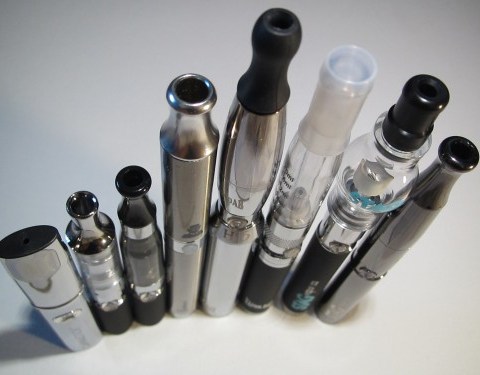
Thankfully, there is an exciting new tool that is helping millions give up on smoking: e-cigs and vaping. Stand on the streets of most major U.S. cities for five minutes and you will see people walking by with an e-cig instead of a cigarette hanging from their mouth.

It is encouraging how fast e-cigs and vaping have taken off. Smokers aren’t stupid. When offered a safer alternative, millions have chosen it. The fact that e-cigs can be purchased at most delis and stores makes it easy for those who want to reduce the harms associated with smoking.

Instead of praising the great news that millions have stopped smoking, too many in the health and anti-smoking fields beat the drums against e-cigs and vaping. Opportunistic politicians and anti-smoking lobbyists ignore emerging evidence that vaping is vastly safer than smoking, and instead are trying to equate the two activities.

City after city has passed anti-vaping laws akin to anti-smoking statues. Cities have prohibited where people can vape, and are currently trying to ban flavors that vapers say helps them quit. Legislation is also in the works to raise the age so people under 21 can’t use e-cigs.
E-cig users should be worried and they should be pissed.

They should be worried because people are going make it harder and harder to vape. And vapers should be pissed because these “health” advocates are trying to take away their tools that can literally help save their life.

It is time for smokers and vapers to join the growing anti-drug war movement. Smokers and vapers may not think about it, but they are also drug users and they are being demonized and threatened like other drug users. And vapers may not know it, but they are also harm-reductionists.

Harm reduction is a major philosophy of the drug reform movement. Thanks to harm-reduction activists we have clean syringe programs that have prevented hundreds of thousands of people from getting HIV.  We have passed laws that allow people to call 911 when witnessing an overdose without fear of being arrested.  And have expanded access to naloxone, that reverses overdose.

But there are too many backward-thinking politicians and uninformed folks who have tried to block such programs by using the same flawed logic that it sends the “wrong message.”

E-cigs and vaping is the most mainstream example of harm reduction in our society right now. It’s something that can save more lives than any other harm reduction practice in our society.

But there will be reactionary folks who will try to ban vaping and e-cigs like they tried to ban clean syringes.

Vapers need to fight for their rights and their lives. They need to join our movement and say we are not going to allow misinformed, judgmental folks to take away their e-cigs. There are millions of vapers who could be a powerful political voice.

Ethan Nadelmann, of the Drug Policy Alliance has a powerful message when he talks about the cost of a slow learning curve. It took the U.S. 20 years to get behind syringe exchange programs, even though much of the rest of the world had embraced it and the evidence was crystal clear that syringes reduced HIV while not increasing drug use. Because of this slow learning curve, 100’000’s of people needlessly got HIV and died.

This is our moment to organize and fight for e-cigs and vaping as a life-saving harm-reduction practice.

A slow learning curve is not something we can accept.

Tony Newman is the director of media relations for the Drug Policy Alliance.

This Mom Could Go To Jail For Saving Her Son With Cannabis Oil. This Needs To Stop

index

By Joe Martino

Source: Collective Evolution

A mother of a 15-year-old could be facing jail time for using cannabis oil to help her son with the side effects of his brain injury. Her son was finally seeing relief from daily migraines, muscle spasms and uncontrollable outbursts.

“I broke the law, but I did it to save my son,” Angela Brown said. She had traveled to Colorado to obtain the cannabis oil and brought it back to Minnesota where it is illegal. She administered the Cannabis oil safely to her son and the results were amazing.

Her Son’s Accident

Angela Brown’s son Trey was a healthy kid, but a baseball accident in 2011 led to a build-up of pressure inside of his head. He was hit with a line drive to the head causing bleeding in his brain. At first, doctors were not sure if he was going to survive. They chose to induce a medical coma. When Trey finally awoke, he didn’t appear to be the same kid according to his mother.

“I cry like every day before I go to bed, like my brain is about to blow up, cause there is so much pressure.” Trey said.

He began dealing with chronic pain, depression and difficult to control outbursts. His mother searched everywhere to try and help treat the effects of his injury. They went through 18 different medications and none of them worked. Trey’s mother felt that the effects of the medications even made her son suicidal.

Then they found cannabis oil and everything was starting to turn around.

Cannabis Oil

Cannabis oil has been making news and headlines for a couple years in ways we may not expect. Cancer and Alzheimer treatments, helping to reduce seizures and replacing potentially harmful medications for many people. Cannabis, although holding a negative stigma, can be seen as a natural miracle substance in a way. It may hold the power to treat and potentially cure a lot of people’s serious diseases.

In the case of Trey, cannabis oil helped to treat and bring quality of life back in a situation where all else was tried and didn’t work.

“It stopped the pain and stopped the muscle spasms,” Trey said. “It was helping me go to school until it then got taken away and then school was really hard again.”

“It was a miracle in a bottle.”Angela Brown

But It’s Illegal In Many Places

The miracle in a bottle didn’t last for Angela and her son. When Trey’s teacher asked how he was doing better in school suddenly, Angela mentioned the oil.

“Well, I gave him an oil that we’d gotten from Colorado, it’s derived from a marijuana plant. And then you could feel the tension in the room.”

It only took a week for the sheriff’s department to confiscate the oil. Later, county officials charged Angela with child endangerment which required child protection to get involved. If she is convicted of her charges she could face up to two years in jail and $6000 in fines.

“It’s asinine, I didn’t hurt my son; I was trying to prevent him from being hurt.”

CBS News, who attained the interview with the family, took the time to reach out to the county prosecutor, law enforcement and Trey’s school district. All declined any form of interview about the case.

The final killer in this story is that in May, Minnesota became the 22nd state to approve specific forms of medicinal marijuana. But the law doesn’t go into effect until 2015. So although this substance is already recognized as something that will become legal very soon, helping her son get better is still a crime.

Why Do We Deny Things That Work?

You might ask yourself why this type of thing could even happen. Are we really that disconnected as a society? Sure one could argue we don’t have the necessary data to state whether or not cannabis oil could have negative effects over time, but the crazy thing is we do have the data that states our medications we so often prescribe have nasty side effects, even after short periods of use. So why is one illegal and the other not? The easy answer is due to social conditioning and stigma.

The deeper answer could go into the realm of business, profit and control. It is often argued that many aspects of the medical system are set up to create life long patients versus properly treating and curing patients.

Although cannabis is finally becoming legal in more places across the world, there is still resistance when it comes to the potential treatment and curing ability the natural plant can have on many serious diseases.

With clinical trials finally on the go with brain cancer patients, the next year of study for cannabis oil could be monumental to the health of our world.

Don’t Forget Why Marijuana Legalization Is Winning

index

By Maia Szalavitz

Source: Substance.com

When I first started writing about drugs in the mid-’80s—before I got into recovery in 1988—it was almost impossible to imagine an America where four states and DC have legalized recreational marijuana use, 58% of Florida midterm voters just cast their ballots in favor of legalizing medical use (the measure needed 60% to pass), and California passed a ballot initiative to lower drug and other nonviolent crime sentences. (Nineteen other states have legalized medical marijuana.)

The magnitude of the change is hard to understand without knowing a bit of recent history—and if we are going to continue to move toward rational drug policy, knowing where we’ve been and how it has changed is critical. I offer this perspective through the lens of my own experience covering the drug war for nearly 30 years.

My first national column was called, embarrassingly enough, “Piss Patrol.” I was assigned by High Times to write about corporate urine testing policies, starting around 1987, presumably as a service to stoned readers who were considering their employment options.

Over the next few years, the media would spill so much ink and airtime demonizing crack cocaine that by 1989, 64% of people polled by CBS News said that drugs were the country’s biggest problem—and Republicans and Democrats began tripping over one another to race to pass the harshest possible drug sentencing laws.

High Times itself was targeted by the DEA with frequent demands for its list of subscribers and raids on all of its biggest advertisers of growing supplies, nearly forcing the magazine to close.

Testifying before Congress, LAPD chief Daryl Gates said that casual drug users “ought to be taken out and shot,” and the DARE drug prevention program he founded saw nothing ominous in encouraging kids to turn their parents in to the police if they used drugs. Supreme Court Justice Thurgood Marshall warned in a prescient 1989 dissent in a urine testing case that “there is no drug exception to the Constitution,” although Congress and the rest of the legal establishment apparently begged to differ.

Even today, police can confiscate cash and property they suspect to be involved in drug crimes, without convicting the owners and with virtual impunity. The surveillance revelations about the NSA’s spying on American citizens include cases where that agency has shared information with the DEA that was gathered from phones and computers without a warrant. In fact, the DEA has an official policy of basically lying to defense attorneys—and sometimes even prosecutors and judges—about the source of this data.

Yet even before the rage to pass tough drug laws took off in the 1980s, law enforcement efforts like mandatory minimum sentences were known to be ineffective. The federal government had quietly overturned one set of mandatory drug sentences in the late ‘60s—since they had clearly failed to prevent the late ‘60s.

And New York City would never have been one of the capitals of crack if the 15-to-life “Rockefeller law” mandatory sentences for selling even powder cocaine, which had been in place here since the mid-‘70s, actually suppressed drug use.

As is clear from this brief summary, for most of my adult life, the idea of a rational drug policy seemed literally to be a pipe dream (a term, by the way, from opium dens). So how did we go, in just a few years, from seeing drug users as demon enemies in a war who must be locked up to having the drug czar drop the military language and even speak at last month’s National Harm Reduction Conference in Baltimore?

Many factors are clearly playing a role. Two of the most obvious are the sheer economic burden of having become the world’s most prolific jailer and the drop in violent crime that hasn’t been paralleled by a fall in addiction rates or a reduction in the availability of drugs like marijuana, heroin and cocaine. Some of the crime decrease may, of course, be linked to the 500% rise in the number of prisoners since 1980—but research shows that violent crime fell more in states that have lowered incarceration rates.

Other influences have also been important. One has been the increasing recognition—driven especially by Michelle Alexander’s 2011 bestseller The New Jim Crow—of the racist nature of the drug war. When you know this history of the drug laws it is very hard to justify supporting them.

Another factor is the rise of the Internet. Early adopters of the net tended to be hippies and libertarians: Steve Jobs famously said that his use of LSD was one of the most important experience of his life, for example, and pro-legalization views dominated online before the mainstream media began to realize the web was the future of its business.

This gave legalizers a loud voice—one that had been previously drowned out by a media that had so bought into the drug war that networks and newsmagazines thought nothing of taking government payments to place stories with the “correct” anti-drug slant in lieu of running paid anti-drug ads.

The Internet has also allowed critics—including me—to directly attack inaccurate coverage as it appeared, exposing readers to truthful information about drugs and drug users that was previously hard to find. It is much harder to start a panic when debunkers immediately offer alternative perspectives.

Three other important forces should also be mentioned. First, the Drug Policy Alliance—helped by large donations from billionaire George Soros—spurred activism and funded ballot initiative measures that brought marijuana policy reform out of the fringes and into the mainstream.

Second, the harm reduction movement spurred by the AIDS epidemic quietly racked up successes. As it became clear that needle exchange hadn’t resulted in a massive increase in IV drug use—but had helped halt the spread of HIV—resistance to measures like naloxone to reverse overdose was pre-empted.

In contrast to the fight over needle exchange, when conservative politicians, drug treatment providers and religious leaders actively opposed expansion and claimed, without data, that it would encourage drug use, it’s actually hard now to find anyone who will argue that drug users and their families should not have access to the OD antidote for fear that preventing the deaths of users “sends the wrong message.”

Third, recovery activists have played a role. While there are still reactionary forces like Patrick Kennedy, many people who have come out about their own recovery have made clear that the criminal justice approach has failed. By putting a real face on drug users—not a stereotyped image of a criminal—recovering people have begun to help fight against, rather than support, their own oppression.

Of course, historically, fights for drug law reform have often resulted in backlash—marijuana was almost legalized, for example, under President Jimmy Carter, but instead we got Ronald Reagan’s war on drugs. But the strength and variety of the forces working against that possibility—particularly the rapid access to accurate information—give me hope that we may finally be starting to get drug policy right.

Maia Szalavitz is one of the nation’s leading neuroscience and addiction journalists, and a columnist at Substance.com. She has contributed to Timethe New York TimesScientific American Mindthe Washington Post and many other publications. She has also published five books, including Help at Any Cost: How the Troubled-Teen Industry Cons Parents and Hurts Kids (Riverhead, 2006), and is currently finishing her sixth, Unbroken Brain, which examines why seeing addiction as a developmental or learning disorder can help us better understand, prevent and treat it. Her last column for Substance.com was about why it is time to reclaim the concept of “recovery” from the abstinence-only establishment.

The Web Revolution That’s Changing How the World Gets High

ibdt-carousel

By Mike Power

Source: Disinfo.com

It is mainly the young who are suffering the consequences of society’s inability to update our drug laws effectively for the modern age. Almost one third of young people are searching for ways of getting legally high, according to the latest survey commissioned by the Angelus Foundation, a campaign group founded in 2009 by Maryon Stewart, whose twenty-one-year-old daughter Hester, a gifted medical student and keen athlete, died after taking GBL in 2009. (Gamma-butyrolactone, a paint stripper and industrial cleaner, can be used as an intoxicant and is poplar on the club scene. It is active at 1 ml, and causes euphoria and disinhibition, but overdoses, where users fall into a coma-like state, are commonplace since it is so potent. It was legal until late 2009.)

Two-thirds of the 1,011 sixteen-to-twenty-four-year-olds surveyed by the Angelus Foundation in October 2012 admitted they were not well-informed about the risks associated with the new drugs on the market.

Festivals since Woodstock have been linked with drug use, whatever message their PR machines might seed in the press, so events there can tell us much about current trends of use and the attendant problems. Dip your head under the canvas at a festival medical tent and you arrive at the intersection of the net, new drugs and young people. Monty Flinsch, who runs Shanti Camp, a non-profit aid organization providing drug crisis intervention at American festivals, says that in recent years instead of dealing with the psychological issues caused by LSD, psilocybin and MDMA, they have seen seizures, delirium, violence and deaths. ‘Even discounting the hyperbolic news coverage of face-eating zombies, the real situation is substantially worse with legal research chemicals than it ever was before. It is now easier for an American teenager to obtain a powerful psychedelic than it is to obtain alcohol. Today’s scene is much more complex with the influx of large numbers of research chemicals ranging from the more common bath salts (MDPV, methylone) to much more obscure chemicals such as 25C-NBOMe and methoxetamine,’ he said.

The reasons the drugs are taken are manifold, but he believes their legality is a major draw, along with cultural influences. ‘Kids feel they are exposing themselves to less risk by taking drugs that are not going to get them arrested, and drug use is highly subject to countercultural trends, and whatever the cool kids are taking quickly becomes popular. In many cases the legal consequences of drug use far outweigh the medical risks. Our drug laws in the US are forcing users to experiment with increasingly dangerous compounds in order to avoid having their lives ruined by a criminal conviction.’

Flinsch says he cannot see any likely improvements in the future. ‘New research chemicals are ubiquitous and the problems associated with them are growing. From the frontlines we see the situation getting worse rather than better. The new compounds are poorly understood and have little or no history of human use, and therefore the problems we see are harder to characterize and therefore treat. It is sad that what is currently legal is substantially more dangerous than what is illegal.’

The entire debate around drugs, which was already philosophically and practically complex, has been made yet more intractable by the emergence of these new drugs and distribution systems. Our insistence on overlaying anachronistic models of drug control onto this digital world might, in future years, be seen as a fatal flaw that we did not address when we had the chance.

The popularization of research chemicals presents legislators, policymakers and police with an almost existential dilemma. They are charged with protecting the health of populations and reducing crimes, and these new drugs pose health risks, but are legal. The Chinese factories that produce them operate with none of the quality control typical in most pharmaceutical manufacturing plants, but customer uptake is enthusiastic. Each new ban brings a newer, possibly more dangerous drug to the market, and it is impossible to predict what the next moves might be.

Legal responses seem not only not to work, but to exacerbate the issue. The American Analog Act did nothing to prevent the arrival in 2009–11 of the JWH chemicals, the cathinones found in bath salts, and the other synthetic cannabinoids that had hit the UK and Europe in 2008. And where the early vendors of synthetic cannabis substitutes had sold the drugs online, the US did it bigger and better, and even more publicly and commercially.

In the US, in October 2011 the DEA responded by adding several of the new drugs to the controlled-substances schedule, making them formally and specifically illegal. The Synthetic Drug Control Act of 2011 was finally signed into law in July 2012, banning dozens of research chemicals at a stroke. Soon after the bill was passed, Time magazine quoted a Tennessee medic, Dr Sullivan Smith, who said the state had been engulfed by the new drugs. ‘The problem is these drugs are changing and I’m sure they’re going to find some that are a little bit different chemically so they don’t fall under the law,’ he said. ‘Is it adequate to name five or ten or even twenty? The answer is no, they’re changing too fast.’

Within weeks of these laws being passed, there were dozens more new drugs available in the US. One category, known as the NBOME-series of chemicals, is composed of unscheduled analogues of the banned Shulgin psychedelics 2C-I, 2C-B, 2C-D, and so on. Where Shulgin’s chemicals were generally active between 10 mg and 20 mg, these new compounds, created in legitimate medical settings for experimental purposes, are more potent by a large order of magnitude, active at around 200 µg. Each gram of these new, unresearched drugs contains around 5,000 doses, and they cost fractions of a penny per dose. The compounds existed before the most recent bans, but it was the new laws that inspired their wider use; use that will only grow as talk of their effects is amplified online. They have already claimed victims. At the Voodoo Fest in New Orleans in October 2012, twenty-one-year-old Clayton Otwell died after taking one drop of an NBOME drug. The New Orleans Times Picayune newspaper spoke to festival goers who said many dealers were selling the drug 25I-NBOME as artificial LSD or mescaline at the event. ‘This weekend, it was everywhere,’ festivalgoer Jarod Brignac, who also was with Otwell at the festival, told the paper. ‘People had bottles and bottles of it; they were walking through the crowd, trying to make a dime off people at the festival.’

There have been at least six other fatalities in the US from 25I-NBOME, Erowid reported in late 2012. There are dozens of other NBOME-drugs, and their use is growing. The Bluelight bulletin board has three threads on 25I-NBOME, running to over seventy-five pages with more than 100,000 views. Search Google for it and there are suppliers on the first page. A kilo of it can be bought for a few thousand dollars from China.

We must now allow drug users to make safer choices, and that means a gradual, tested, evaluated but concerted roll-back of all existing drug laws; particularly those concerning MDMA, marijuana, magic mushrooms and mescaline, for these are the drugs that most research chemicals seek to emulate. Only then will dangerous innovation end. Simultaneously, drug awareness classes should be compulsory at all schools with credible, evidenced and honest discussions of each drug’s effects, good and bad, including alcohol and tobacco. This will not end the debate, or addiction, or reduce drug use. But it will mean those who choose to take drugs in the future will be better informed and safer, and the costs to society lower. Governments must now seize control of the market in new and old drugs from amateurs, criminals and gangsters.

Perhaps the web’s final and most dramatic effect will be to strip drug culture of its mystique, its cachet of countercultural cool, to reveal that behind the magic and madness, there lie only molecules. At the end of it all, drugs are just carbon, hydrogen and a few other elements. They have their meaning projected onto them by users and the culture more widely. Remove the thrill of social transgression that acting illegally provides and reframe drug use in a clinical context, as a health issue, and that might change. We know in detail what the route we have taken for the last century results in: greater and more dangerous use. We now need a new approach and new data to analyse. It is not this book’s argument that any drug is entirely safe; they demonstrably are not. But to persist in the digital age with this failed and arbitrary strategy of prohibition in the face of all the evidence that it increases harm is irresponsibly dangerous.

However, although some politicians are able to admit grudgingly to youthful experimentation with drugs, it seems few are willing to experiment even moderately with new approaches in policy now they have the power to effect positive change – even at a time when the people who vote for them are demanding exactly that, and when it is more urgent than ever before.

Mike Power is a freelance investigative journalist living in London. He has worked for The Guardian, the Mail on Sunday, the BBC, and Reuters. In 2014 he received the Best Investigative Journalism Award, awarded by the Association of British Science Writers, for his piece “The drug revolution that no one can stop,” which appeared in the online journal Matter. Drugs Unlimited is his first book.

Afroman Remakes “Because I Got High” to Support Legalization

Afroman

By Sabrina Fendrick

Source: Norml

Nearly fifteen years after the release of “Because I Got High”- a song well known for poking fun at overzealous reefer madness rhetoric – Afroman is ready to jump headfirst back into the marijuana limelight.  Only this time, as an advocate for legalization.

The grammy nominated artist recently teamed up with NORML and Weedmaps to launch a remake of his hit song, turning the hip hop classic into a positive legalization anthem for the 2014 elections. The remix is a new and entertaining way to drive the narrative surrounding the benefits of cannabis law reform, as well as the medical benefits of the plant itself. With election day right around the corner, his latest project is geared towards keeping up the momentum for all the marijuana law reform efforts taking place across the country, and especially upcoming ballot initiatives.

On November 4th, two states and the District of Columbia will be voting to legalize marijuana, and Florida will be voting on a medical marijuana amendment. The timing couldn’t have been better to take, and remake the canna-cult classic. The 2014 version of “Because I Got High” not only challenges old stereotypes, it also seeks to build support and enthusiasm for the three measures proposing to create a regulated pot market for adults, age 21 and over.