
By Marjorie Cohn
Source: ScheerPost
For nearly three months, Israel has enjoyed virtual impunity for its atrocious crimes against the Palestinian people. That changed on December 29 when South Africa, a state party to the Genocide Convention, filed an 84-page application in the International Court of Justice (ICJ, or World Court) alleging that Israel is committing genocide in Gaza.
South Africa’s well-documented application alleges that “acts and omissions by Israel … are genocidal in character, as they are committed with the requisite specific intent … to destroy Palestinians in Gaza as a part of the broader Palestinian national, racial and ethnical group” and that “the conduct of Israel — through its State organs, State agents, and other persons and entities acting on its instructions or under its direction, control or influence — in relation to Palestinians in Gaza, is in violation of its obligations under the Genocide Convention.”
Israel is mounting a full-court press to prevent an ICJ finding that it’s committing genocide in Gaza. On January 4, the Israeli Foreign Ministry instructed its embassies to pressure politicians and diplomats in their host countries to make statements opposing South Africa’s case at the ICJ.
In its application, South Africa cited eight allegations to support its contention that Israel is perpetrating genocide in Gaza. They include:
(1) Killing Palestinians in Gaza, including a large proportion of women and children (approximately 70 percent) of the more than 21,110 fatalities and some appear to have been subjected to summary execution;
(2) Causing serious mental and bodily harm to Palestinians in Gaza, including maiming, psychological trauma, and inhuman and degrading treatment;
(3) Causing the forced evacuation and displacement of about 85 percent of Palestinians in Gaza — including children, the elderly and infirm, and the sick and wounded. Israel is also causing the massive destruction of Palestinian homes, villages, towns, refugee camps and entire areas, which precludes the return of a significant proportion of the Palestinian people to their homes;
(4) Causing widespread hunger, starvation and dehydration to the besieged Palestinians in Gaza by impeding sufficient humanitarian assistance, cutting off sufficient food, water, fuel and electricity, and destroying bakeries, mills, agricultural lands and other means of production and sustenance;
(5) Failing to provide and restricting the provision of adequate clothing, shelter, hygiene and sanitation to Palestinians in Gaza, including 1.9 million internally displaced persons. This has compelled them to live in dangerous situations of squalor, in conjunction with routine targeting and destruction of places of shelter and killing and wounding of persons who are sheltering, including women, children, the elderly and the disabled;
(6) Failing to provide for or ensure the provision of medical care to Palestinians in Gaza, including those medical needs created by other genocidal acts that are causing serious bodily harm. This is occurring by direct attacks on Palestinian hospitals, ambulances and other healthcare facilities, the killing of Palestinian doctors, medics and nurses (including the most qualified medics in Gaza) and the destruction and disabling of Gaza’s medical system;
(7) Destroying Palestinian life in Gaza, by destroying its infrastructure, schools, universities, courts, public buildings, public records, libraries, stores, churches, mosques, roads, utilities and other facilities necessary to sustain the lives of Palestinians as a group. Israel is killing whole families, erasing entire oral histories and killing prominent and distinguished members of society;
(8) Imposing measures intended to prevent Palestinian births in Gaza, including through reproductive violence inflicted on Palestinian women, newborns, infants and children.
South Africa cited myriad statements by Israeli officials that constitute direct evidence of an intent to commit genocide:
“Gaza won’t return to what it was before. We will eliminate everything,” Israel’s Defense Minister Yoav Gallant said. “If it doesn’t take one day, it will take a week. It will take weeks or even months, we will reach all places.”
Avi Dichter, Israel’s Minister of Agriculture, declared, “We are now actually rolling out the Gaza Nakba,” a reference to the 1948 ethnic cleansing of Palestinians to create the state of Israel.
“Now we all have one common goal — erasing the Gaza Strip from the face of the earth,” Nissim Vaturi, the Deputy Speaker of the Knesset and Member of the Foreign Affairs and Security Committee proclaimed.
Israel’s Strategy to Defeat South Africa’s Case at the ICJ
Israel and its chief patron, the United States, understand the magnitude of South Africa’s ICJ application, and they are livid. Israel usually thumbs its nose at international institutions, but it is taking South Africa’s case seriously. In 2021, when the International Criminal Court launched an investigation into Israel’s alleged war crimes in Gaza, Israel firmly rejected the legitimacy of the probe.
“Israel generally doesn’t participate in such proceedings,” Prof. Eliav Lieblich, an international law expert at Tel Aviv University, told Haaretz. “But this isn’t a UN inquiry commission or the International Criminal Court in the Hague, whose authority Israel rejects. It’s the International Court of Justice, which derives its powers from a treaty Israel joined, so it can’t reject it on the usual grounds of lack of authority. It’s also a body with international prestige.”
A January 4 cable from the Israeli Foreign Ministry says that Israel’s “strategic goal” is that the ICJ reject South Africa’s request for an injunction to suspend Israel’s military action in Gaza, refuse to find that Israel is committing genocide in Gaza and rule that Israel is complying with international law.
“A ruling by the court could have significant potential implications that are not only in the legal world but have practical bilateral, multilateral, economic, security ramifications,” the cable states. “We ask for an immediate and unequivocal public statement along the following lines: To publicly and clearly state that YOUR COUNTRY rejects the outragest [sic], absurd and baseless allegations made against Israel.”
The cable instructs Israeli embassies to urge diplomats and politicians at the highest levels “to publicly acknowledge that Israel is working [together with international actors] to increase the humanitarian aid to Gaza, as well as to minimize damage to civilians, while acting in self defense after the horrible October 7th attack by a genocidal terrorist organization.”
“The State of Israel will appear before the ICJ at The Hague to dispel South Africa’s absurd blood libel,” Prime Minister Benjamin Netanyahu spokesperson Eylon Levy declared. South Africa’s application is “without legal merit and constitutes a base exploitation and contempt of court,” he said.
Israel is pulling out all the stops, including disingenuous accusations of “blood libel,” an anti-Semitic trope that erroneously accuses Jews of the ritual sacrifice of Christian children.
“How tragic that the rainbow nation that prides itself on fighting racism will be fighting pro-bono for anti-Jewish racists,” Levy added ironically. He made the astonishing claim that Israel’s military campaign to destroy Hamas in Gaza is designed to prevent the genocide of the Jews.
As the old adage goes, when you’re being run out of town, get in front of the crowd and act like you’re leading the parade.
The Biden regime rose to defend its staunch ally Israel. U.S. National Security Council spokesman John Kirby lambasted South Africa’s ICJ application as “meritless, counterproductive and completely without any basis in fact whatsoever.” Kirby claimed, “Israel is not trying to wipe the Palestinian people off the map. Israel is not trying to wipe Gaza off the map. Israel is trying to defend itself against a genocidal terrorist threat,” echoing Israel’s preposterous assertion.
Kirby’s contention that Israel is trying to prevent genocide is particularly absurd, given the fact that since Hamas killed 1,200 Israelis on October 7, Israeli forces have killed at least 22,100 Gazans, about 9,100 of whom are children. At least 57,000 persons have been wounded and at least 7,000 are reported missing. Untold numbers of people are trapped beneath the rubble.
Provisional Measures Against Israel Can Have Immediate Impact
South Africa is requesting that the ICJ order provisional measures (interim injunction) in order to “protect against further, severe and irreparable harm to the rights of the Palestinian people under the Genocide Convention.” South Africa is also asking the court “to ensure Israel’s compliance with its obligations under the Genocide Convention not to engage in genocide, and to prevent and to punish genocide.”
The provisional measures South Africa seeks include ordering Israel to “immediately suspend its military operations in and against Gaza” and to cease and desist from killing and causing serious bodily or mental harm to Palestinians, inflicting on them conditions of life intended to destroy them in whole or in part, and imposing measures to prevent Palestinian births. South Africa wants the ICJ to order that Israel stop expelling and forcibly displacing Palestinians and depriving them of food, water, fuel, and medical supplies and assistance.
The judicial arm of the United Nations, the ICJ is composed of 15 judges elected for a nine-year term by the UN General Assembly and the Security Council. It is not a criminal tribunal like the International Criminal Court; rather it resolves disputes between countries.
If a party to the Genocide Convention believes that another party has failed to comply with its obligations, it can take that country to the ICJ to determine its responsibility. This was done in the case of Bosnia v. Serbia, in which the Court found that Serbia violated its duties to prevent and punish genocide under the Convention.
The obligations in the Genocide Convention are erga omnes partes, that is, obligations owed by a state towards all the states parties to the Convention. The ICJ has stated, “In such a convention the contracting States do not have any interests of their own; they merely have, one and all, a common interest, namely, the accomplishment of those high purposes which are the raison d’être of the Convention.”
Article 94 of the UN Charter says that all parties to a dispute must comply with the decisions of the ICJ and if a party fails to do so, the other party may go to the UN Security Council for the enforcement of the decision.
An average ICJ case from start to finish can last several years (it was nearly 15 years from the time that Bosnia first filed its case against Serbia in 1993 to the issuance of the final judgment on the merits in 2007). However, a case can have an immediate impact. The filing of a case in the ICJ sends a strong message to Israel that the international community will not tolerate its actions and seeks to hold it accountable.
Provisional measures can be issued quickly. For example, the ICJ ordered measures 19 days after the Bosnian case was initiated. Provisional measures are binding on the party against whom they are ordered, and compliance with them can be monitored by both the ICJ and the Security Council.
Judgments on the merits rendered by the ICJ in disputes between parties are binding on the parties involved. Article 94 of the United Nations Charter provides that “each Member of the United Nations undertakes to comply with the decision of [the Court] in any case to which it is a party.” The judgments of the court are final; there is no appeal.
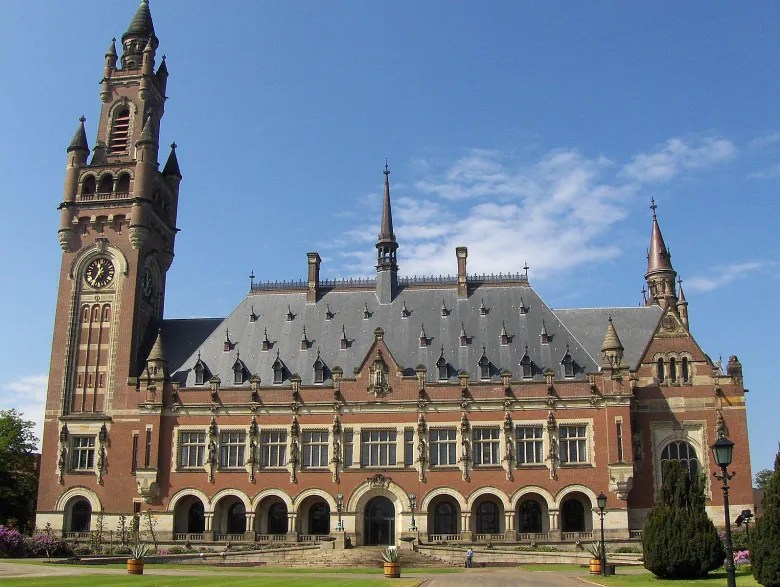
Public hearings on South Africa’s request for provisional measures will take place on January 11 and 12 at the ICJ which is located in the Peace Palace in The Hague, Netherlands. The hearings will be livestreamed from 4:00-6:00 a.m. Eastern/1:00-3:00 a.m. Pacific on the Court’s website and on UN Web TV. The court could order provisional measures within a week after the hearings.
Other States Parties to the Genocide Convention Can Join South Africa’s Case
Other states parties to the Genocide Convention can either request permission to intervene in the case filed by South Africa or file their own applications against Israel in the ICJ. South Africa’s application identifies several countries that have referred to Israel’s genocide in Gaza. They include Algeria, Bolivia, Brazil, Colombia, Cuba, Iran, Palestine, Türkiye, Venezuela, Bangladesh, Egypt, Honduras, Iraq, Jordan, Libya, Malaysia, Namibia, Pakistan and Syria.
On January 5, Quds News Network tweeted, “Jordan’s minister of Foreign Affairs, Ayman Safadi, announces that his country backs South Africa’s genocide case against Israel in the ICJ. He added that the Jordanian government is working on a legal file to follow up on the case. Turkey, Malaysia, and the Organization of Islamic Cooperation (OIC) had announced that they back the case too.”
The newly formed International Coalition to Stop Genocide in Palestine, endorsed by more than 600 groups throughout the world, has convened to urge states parties to invoke the Genocide Convention.
The coalition contends, “Declarations of Intervention in support of South Africa’s invocation of the Genocide Convention against Israel will increase the likelihood that a positive finding of the crime of genocide will be enforced by the United Nations such that actions will be taken to end all acts of genocide and those who are responsible for the acts will be held accountable.”
During the first week of January, delegations of “grassroots diplomats,” spearheaded by CODEPINK, World Beyond War and RootsAction, mounted a campaign across the United States urging nations to submit Declarations of Intervention in South Africa’s case against Israel in the ICJ. Activists traveled to 12 cities, visiting UN missions, embassies and consulates from Colombia, Pakistan, Bolivia, Bangladesh, the African Union, Ghana, Chile, Ethiopia, Turkey, Belize, Brazil, Denmark, France, Honduras, Ireland, Spain, Greece, Mexico, Italy, Haiti, Belgium, Kuwait, Malaysia and Slovakia.
“This is the rare case where collective social pressure urging governments to support the South African case can be a sharp turning point for Palestine,” said Lamis Deek, a Palestinian attorney based in New York, whose firm convened the Palestinian Assembly for Liberation’s Commission on War Crimes Justice, Reparations, and Return. “We need more states to file supporting interventions — and we need the court to feel the watchful eye of the masses so as to withstand what will be extreme U.S. political pressure on the Court.”
Suzanne Adely, president of the National Lawyers Guild, noted, “The increasing global isolation of Israel and the U.S. and their European allies is an indicator that this is a key moment for popular movements to move their governments in the direction of taking these steps and being on the right side of history.” Indeed, since October 7, millions of people throughout the world have marched, protested and demonstrated in support of Palestinian liberation.
RootsAction and World Beyond War have created a template that organizations and individuals can use to urge other states parties to the Genocide Convention to file a Declaration of Intervention in South Africa’s genocide case against Israel in the ICJ.
 After the Crash