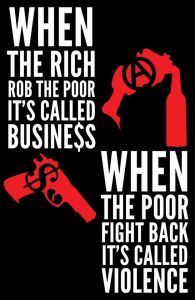
The US economy has not recovered and will not recover

6a00d83451d87169e2014e8c142d89970d

By Paul Craig Roberts

Source: Intrepid Report

The US economy died when middle class jobs were offshored and when the financial system was deregulated.

Jobs offshoring benefitted Wall Street, corporate executives, and shareholders, because lower labor and compliance costs resulted in higher profits. These profits flowed through to shareholders in the form of capital gains and to executives in the form of “performance bonuses.” Wall Street benefitted from the bull market generated by higher profits.

However, jobs offshoring also offshored US GDP and consumer purchasing power. Despite promises of a “New Economy” and better jobs, the replacement jobs have been increasingly part-time, lowly-paid jobs in domestic services, such as retail clerks, waitresses and bartenders.

The offshoring of US manufacturing and professional service jobs to Asia stopped the growth of consumer demand in the US, decimated the middle class, and left insufficient employment for college graduates to be able to service their student loans. The ladders of upward mobility that had made the United States an “opportunity society” were taken down in the interest of higher short-term profits.

Without growth in consumer incomes to drive the economy, the Federal Reserve under Alan Greenspan substituted the growth in consumer debt to take the place of the missing growth in consumer income. Under the Greenspan regime, Americans’ stagnant and declining incomes were augmented with the ability to spend on credit. One source of this credit was the rise in housing prices that the Federal Reserve’s low interest rate policy made possible. Consumers could refinance their now higher-valued home at lower interest rates and take out the “equity” and spend it.

The debt expansion, tied heavily to housing mortgages, came to a halt when the fraud perpetrated by a deregulated financial system crashed the real estate and stock markets. The bailout of the guilty imposed further costs on the very people that the guilty had victimized.

Under Fed Chairman Bernanke, the economy was kept going with Quantitative Easing, a massive increase in the money supply in order to bail out the “banks too big to fail.” Liquidity supplied by the Federal Reserve found its way into stock and bond prices and made those invested in these financial instruments richer. Corporate executives helped to boost the stock market by using the companies’ profits and by taking out loans in order to buy back the companies’ stocks, thus further expanding debt.

Those few benefitting from inflated financial asset prices produced by Quantitative Easing and buy-backs are a much smaller percentage of the population than was affected by the Greenspan consumer credit expansion. A relatively few rich people are an insufficient number to drive the economy.

The Federal Reserve’s zero interest rate policy was designed to support the balance sheets of the mega-banks and denied Americans interest income on their savings. This policy decreased the incomes of retirees and forced the elderly to reduce their consumption and/or draw down their savings more rapidly, leaving no safety net for heirs.

Using the smoke and mirrors of under-reported inflation and unemployment, the US government kept alive the appearance of economic recovery. Foreigners fooled by the deception continue to support the US dollar by holding US financial instruments.

The official inflation measures were “reformed” during the Clinton era in order to dramatically understate inflation. The measures do this in two ways. One way is to discard from the weighted basket of goods that comprises the inflation index those goods whose price rises. In their place, inferior lower-priced goods are substituted.

For example, if the price of New York strip steak rises, round steak is substituted in its place. The former official inflation index measured the cost of a constant standard of living. The “reformed” index measures the cost of a falling standard of living.

The other way the “reformed” measure of inflation understates the cost of living is to discard price rises as “quality improvements.” It is true that quality improvements can result in higher prices. However, it is still a price rise for the consumer as the former product is no longer available. Moreover, not all price rises are quality improvements; yet many prices rises that are not can be misinterpreted as “quality improvements.”

These two “reforms” resulted in no reported inflation and a halt to cost-of-living adjustments for Social Security recipients. The fall in Social Security real incomes also negatively impacted aggregate consumer demand.

The rigged understatement of inflation deceived people into believing that the US economy was in recovery. The lower the measure of inflation, the higher is real GDP when nominal GDP is deflated by the inflation measure. By understating inflation, the US government has overstated GDP growth.

What I have written is easily ascertained and proven; yet the financial press does not question the propaganda that sustains the psychology that the US economy is sound. This carefully cultivated psychology keeps the rest of the world invested in dollars, thus sustaining the House of Cards.

John Maynard Keynes understood that the Great Depression was the product of an insufficiency of consumer demand to take off the shelves the goods produced by industry. The post-WW II macroeconomic policy focused on maintaining the adequacy of aggregate demand in order to avoid high unemployment. The supply-side policy of President Reagan successfully corrected a defect in Keynesian macroeconomic policy and kept the US economy functioning without the “stagflation” from worsening “Philips Curve” trade-offs between inflation and employment. In the 21st century, jobs offshoring has depleted consumer demand’s ability to maintain US full employment.

The unemployment measure that the presstitute press reports is meaningless as it counts no discouraged workers, and discouraged workers are a huge part of American unemployment. The reported unemployment rate is about 5%, which is the U-3 measure that does not count as unemployed workers who are too discouraged to continue searching for jobs.

The US government has a second official unemployment measure, U-6, that counts workers discouraged for less than one-year. This official rate of unemployment is 10%.

When long term (more than one year) discouraged workers are included in the measure of unemployment, as once was done, the US unemployment rate is 23%. (See John Williams, shadowstats.com)

Fiscal and monetary stimulus can pull the unemployed back to work if jobs for them still exist domestically. But if the jobs have been sent offshore, monetary and fiscal policy cannot work.

What jobs offshoring does is to give away US GDP to the countries to which US corporations move the jobs. In other words, with the jobs go American careers, consumer purchasing power and the tax base of state, local, and federal governments. There are only a few American winners, and they are the shareholders of the companies that offshored the jobs and the executives of the companies who receive multi-million dollar “performance bonuses” for raising profits by lowering labor costs. And, of course, the economists, who get grants, speaking engagements, and corporate board memberships for shilling for the offshoring policy that worsens the distribution of income and wealth. An economy run for a few only benefits the few, and the few, no matter how large their incomes, cannot consume enough to keep the economy growing.

In the 21st century US economic policy has destroyed the ability of real aggregate demand in the US to increase. Economists will deny this, because they are shills for globalism and jobs offshoring. They misrepresent jobs offshoring as free trade and, as in their ideology, free trade benefits everyone, claim that America is benefitting from jobs offshoring. Yet, they cannot show any evidence whatsoever of these alleged benefits. (See my book, The Failure of Laissez Faire Capitalism and Economic Dissolution of the West.)

As an economist, it is a mystery to me how any economist can think that a population that does not produce the larger part of the goods that it consumes can afford to purchase the goods that it consumes. Where does the income come from to pay for imports when imports are swollen by the products of offshored production?

We were told that the income would come from better-paid replacement jobs provided by the “New Economy,” but neither the payroll jobs reports nor the US Labor Department’s projections of future jobs show any sign of this mythical “New Economy.”

There is no “New Economy.” The “New Economy” is like the neoconservatives promise that the Iraq war would be a six-week “cake walk” paid for by Iraqi oil revenues, not a $3 trillion dollar expense to American taxpayers (according to Joseph Stiglitz and Linda Bilmes) and a war that has lasted the entirety of the 21st century to date, and is getting more dangerous.

The American “New Economy” is the American Third World economy in which the only jobs created are low productivity, low paid nontradable domestic service jobs incapable of producing export earnings with which to pay for the goods and services produced offshore for US consumption.

The massive debt arising from Washington’s endless wars for neoconservative hegemony now threaten Social Security and the entirety of the social safety net. The presstitute media are blaming not the policy that has devastated Americans, but, instead, the Americans who have been devastated by the policy.

Earlier this month I posted readers’ reports on the dismal job situation in Ohio, Southern Illinois, and Texas. In the March issue of Chronicles, Wayne Allensworth describes America’s declining rural towns and once great industrial cities as consequences of “globalizing capitalism.” A thin layer of very rich people rule over those “who have been left behind”—a shrinking middle class and a growing underclass. According to a poll last autumn, 53 percent of Americans say that they feel like strangers in their own country.

Most certainly these Americans have no political representation. As Republicans and Democrats work to raise the retirement age in order to reduce Social Security outlays, Princeton University experts report that the mortality rates for the white working class are rising. The US government will not be happy until no one lives long enough to collect Social Security.

The United States government has abandoned everyone except the rich.

In the opening sentence of this article, I said that the two murderers of the American economy were jobs offshoring and financial deregulation. Deregulation greatly enhanced the ability of the large banks to financialize the economy. Financialization is the diversion of income streams into debt service. When debt service absorbs a large amount of the available income, the economy experiences debt deflation. The service of debt leaves too little income for purchases of goods and services and prices fall.

Michael Hudson, whom I recently wrote about, is the expert on financialization. His book, Killing the Host, which I recommended to you, tells the complete story. Briefly, financialization is the process by which creditors capitalize an economy’s economic surplus into interest payments to themselves. Perhaps an example would be a corporation that goes into debt in order to buy back its shares. The corporation achieves a temporary boost in its share prices at the cost of years of interest payments that drain the corporation of profits and deflate its share price.

Michael Hudson stresses the conversion of the rental value of real estate into mortgage payments. He emphasizes that classical economists wanted to base taxation not on production, but on economic rent. Economic rent is value due to location or to a monopoly position. For example, beachfront property has a higher price because of location. The difference in value between beachfront and non-beachfront property is economic rent, not a produced value. An unregulated monopoly can charge a price for a service that is higher than the price that would bring that service unto the market.

The proposal to tax economic rent does not mean taxing you on the rent that you pay your landlord or taxing your landlord on the rent that you pay him such that he ceases to provide the housing. By economic rent Hudson means, for example, the rise in land values due to public infrastructure projects such as roads and subway systems. The rise in the value of land opened by a new road and housing and in commercial space along a new subway line is not due to any action of the property owners. This rise in value could be taxed in order to pay for the project instead of taxing the income of the population in general. Instead, the rise in land values raises appraisals and the amount that creditors are willing to lend on the property. New purchasers and existing owners can borrow more on the property, and the larger mortgages divert the increased land valuation into interest payments to creditors. Lenders end up as the major beneficiaries of public projects that raise real estate prices.

Similarly, unless the economy is financialized to such an extent that mortgage debt can no longer be serviced, when central banks lower interest rates property values rise, and this rise can be capitalized into a larger mortgage.

Another example would be property tax reductions and legislation such as California’s Proposition 13 that freeze in whole or part the property tax base. The rise in real estate values that escape taxation are capitalized into larger mortgages. New buyers do not benefit. The beneficiaries are the lenders who capture the rise in real estate prices in interest payments.

Taxing economic rent would prevent the financial system from capitalizing the rent into debt instruments that pay interest to the financial sector. Considering the amount of rents available to be taxed, taxing rents would free production from income and sales taxation, thus lowering consumer prices and freeing labor and productive capital from taxation.

With so much of land rent already capitalized into debt instruments shifting the tax burden to economic rent would be challenging. Nevertheless, Hudson’s analysis shows that financialization, not wage suppression, is the main instrument of exploitation and takes place via the financial system’s conversion of income streams into interest payments on debt.

I remember when mortgage service was restricted to one-quarter of household income. Today mortgage service can eat up half of household income. This extraordinary growth crowds out the production of goods and services as less of household income is available for other purchases.

Michael Hudson and I bring a total indictment of the neoliberal economics profession, “junk economists” as Hudson calls them.

Markets Ignore Fundamentals And Chase Headlines Because They Are Dying

DIY_Preparedness_Normalcy_Bias_Head_In_Sand_2

By Brandon Smith

Source: Alt-Market.com

Normalcy bias is a rather horrifying thing. It is so frightening because it is so final; much like death, there is simply no coming back. Rather than a physical death, normalcy bias represents the death of reason and simple observation. It is the death of the mind and cognitive thought instead of the death of the body.

Ever since the derivatives collapse of 2008 the public has been regaled with wondrous stories of recovery in the mainstream to the point that such fantasies have become the “new normal”. These are grand tales of the daring heroics of central bankers who “saved us all” from impending collapse through gutsy monetary policy and no-holds-barred stimulus measures.

Alternative economists have not been so easy to dazzle. Most of us found that the recovery narrative lacked a certain something; namely hard data that took the wider picture into account. It seemed as though the mainstream media (MSM) as well as the establishment was attempting to cherry-pick certain numbers out of context while demanding we ignore all other factors as “unimportant.”

We just haven’t been buying into the magic show of the so called “professional economists” and the academics, and now that the real and very unstable fiscal reality of the world is bubbling to the surface, the general public will begin to see why we have been right all these years and the MSM has been utterly wrong.

Mainstream economists have done absolutely nothing in the way of investigative journalism and have instead joined a chorus cheerleading for the false narrative, singing a siren’s song of misinterpreted statistics and outright lies drawing the masses ever nearer to the deadly shoals of financial crisis.

Why do they do this? Are they part of some vast conspiracy to mislead the public?

Not necessarily. While central banks and governments have indeed been proven time and again to collude in efforts to cover up financial dangers, most economists in the media are simply greedy and ignorant. You have to remember, they have a considerable stake in this game.

Many mainstream economists tend to have sizable investment portfolios and they base their careers partly on the successes they garner in the annual profits they accumulate playing the equities roulette. They also have invested so much of their public image into their pro-market and recovery arguments that there is no going back. That is to say, they have a personal interest in using their positions in the media to engineer positive market psychology (if they are able) so that their portfolios remain profitable. Not to mention, their professional image is at stake if they ever acknowledge that they were wrong for so long about the underlying health of the real economy.

This atmosphere of deluded self interest also generates a cult-like collectivist attitude. There is a lot of mutual back scratching and mutual ego stroking in the MSM; a kind of inbred conduit of regurgitated arguments and unoriginal talking points, and people in the club rarely step out of line because they not only hurt their own investment future and career, they also hurt everyone in their professional circles.  Meaning, no more cocktail party invitations to the Forbes rumpus room…

This is not to say that I am excusing their self interested lies and disinformation. I think that many of these people should be tarred and feathered in a public square for attempting to dissuade the public from preparing in a practical way for severe economic instability. I do not think they see themselves as being responsible to the people who actually take their nonsense seriously and their attitude needs adjustment. I am only explaining how it is possible for an entire profession of supposed “experts” to be so wrong so often. Mainstream financial analysts WANT to believe their own lies as much as many in the public want to believe them.

Like I said, normalcy bias is a rather horrifying thing.

One of the root pieces of disinformation in the mainstream that feeds all other lies is the disinformation surrounding falling global demand. MSM pundits cannot and will never fully admit to the cold hard reality of collapsing demand within the global economy. If they are forced to admit to falling demand, then the facade of a steady or recovering U.S. economy crumbles.

I covered the facts behind falling global demand for raw goods and consumer goods last year in part one of my six-part article series, ‘One Last Look At The Real Economy Before It Implodes.’ The hard evidence and numbers I presented have only become more important in recent months.

For example, U.S. inventories are building and freight shipments are declining in the U.S. as retailers cite falling demand for goods as the primary culprit. Official retail sales numbers for the holiday season of 2015 have come in flat. When one takes into account real inflation in prices, consumer sales are actually far in the negative. According to the more accurate methods the U.S. government used to use in their calculations of CPI in the 1980’s, we are looking at annual price inflation rate of around 7%. Price inflation does not necessarily equal improved sales.

Energy usage has been crushed since 2008. Despite a growing population and supposedly a growing economic system, oil consumption in 2014 according to the World Economic Forum dropped to levels not seen since 1997.

This is the exact opposite of what should be happening and it is the opposite of mainstream projections for oil consumption made back in 2003. This is why inventories and storage for oil across the globe are reaching capacity in a manner never seen before. American demand for oil is not growing exponentially as expected because Americans cannot afford to support such growth anymore. Falling energy demand at these extreme levels is an undeniable indicator of a failing economic system.

Of course, mainstream economists in their desperation to keep market psychology rolling forward and the equities casino producing profits seek to spin this problem as an “oversupply” issue rather than a demand issue. And this is where the disparity in their arguments begins to bleed through.

Here is the problem presented in the mainstream; what came first, the chicken or the egg? Did falling demand lead to oversupply and thus a fall in prices? Or, is demand remaining steady and is overproduction the cause of falling prices?  Yes, let’s confuse the issue instead of looking at the obvious.

As already linked above, it was falling demand which came first in 2008, and demand which continues to fall in relation to past trends. Have producers failed to reduce oil production to match falling demand? Yes. But this does not change the fact that oil demand today is well below levels needed to sustain the kind of economic growth markets have come to expect. Mainstream economists attempt to distract by hyper-focusing on supply, or twisting the discussion into an either/or scenario. Either it is a supply problem, or it is a demand problem, and they assert it is only a supply problem. This is not reality.

In fact, both can and often do exist at the same time, though one problem usually feeds the other. Falling demand does tend to result in oversupply in any particular sector of the economy. The bottom line, however, is that in our current crisis demand is the driving force and supply is a secondary issue. Supply is NOT the driving force behind the volatility in oil markets. Period.

This same chicken and egg distraction rears its ugly head in discussions on shipping markets as well.

The mainstream claim that the historic implosion of the Baltic Dry Index is nothing more than a problem of “too many ships” operating in the cargo market has been throttled, dissected and debunked so many times that you would think that it is surely dead. But the lie just will not die.

Mainstream propaganda houses like The Economist and Forbes continue to produce articles on a regular basis which deny the issue of falling demand for raw goods and claim that oversupply of vessels is the root cause of the BDI losing around 98 percent of its value since its highs in 2008.

I haven’t seen any of these articles offer actual stats or evidence to back their claims that oversupply of ships is the culprit and that demand is not a legitimate issue. But beyond that, why does the mainstream seem so hell bent on dismissing the BDI as a reliable economic indicator? Well, because shipping rates fall when demand falls, thus, when the BDI falls, it signals a lack of global demand. This is a fact they refuse to accept. When the BDI falls by 98 percent since the 2008 highs preceding the derivatives crisis, this signals a disaster in the making.

So, let’s stamp out the “too many ships came first” disinformation once and for all, shall we?

Shipping companies like Maersk Lines have already publicly admitted that falling global demand is the core problem behind falling rates and that supply is a secondary driver. They view the current financial crisis to be “worse than 2008”.

The fact that the largest shipping company in the world is warning of falling demand does not seem to be having any effect on the mainstream talking heads, though.

So, what do major shipping companies do when demand is falling and too many ships are operating on the market? Do they field those ships anyway and drive rates down even further? No, that makes no sense.

What companies do is either leave ships idle in port or scrap them. According to BIMCO (Baltic And International Maritime Council), 2015 was the busiest year since 2012 for the scrapping of older ships to make way for new arrivals. This process of scrapping ships or storing them idle destroys the argument that too many ships are driving falling rates in the BDI. In fact, as chief shipping analyst Peter Sand of BIMCO stated last year:

“The increase in Capesize scrapping comes at a much needed time for the market. Looking at the development so far this year the fleet growth has actually been negative, with a reduction of 0.8 %.”

I hope the garbage peddlers at Forbes and The Economist caught that — NEGATIVE growth of ship supply, not massive over-growth of ship supply. The scrapping increase was also across the board for other models of ships, not just the Capsize, and the increase of cargo capacity by new ships has been negligible.  Yet, shipping rates continue to plummet to historical lows.  Only falling demand, as Maersk Lines admits, explains the crash of the BDI in light of this information.

China in particular has been offering considerable incentives to those companies that do scrap older ships, to the point that some are even scrapping semi-new ships in order to cash in.

Now, this is not to say there is not an “oversupply” of ships. There are indeed many ships within cargo fleets that are not in operation. But again, this is because demand has declined so completely that even with increased scrapping and idling, shipping companies cannot keep up.  Falling demand OCCURRED FIRST, and oversupply is nothing more than a symptom of this root problem.

So, mainstream hacks, can we please put the “too many ships” nonsense to rest and get on with a real discussion on obvious issues of demand?  Stop focusing on the symptoms and examine the cause for once.

These are just a few of the hundreds of fundamental problems plaguing the global economy today, and they are all problems that the mainstream continues to ignore or dismiss out of hand. Which brings us to the now accelerating volatility in stock markets.

Stock markets are crashing, there is no other way to paint it. They are crashing incrementally, but crashing nonetheless. When you have violent swings in equities and commodities between 5 percent and 10 percent a day, then something is very wrong with your economy and has been wrong for some time. If global consumption and demand were really steady or growing, then you would not see the kind of systemic backlash in the financial system that we are now seeing.  If companies listed on the Dow were making legitimate profits due to a healthy consumer base and enjoying solid expansion, stocks would not be increasingly volatile.  If investors and mainstream analysts actually looked at the real numbers in demand (among other things), then the strange behavior in markets would be easy for them to understand. They will not look at such numbers until it is too late.

Instead, markets have chosen to chase headlines, and here is where the ugly circle of normalcy bias and cognitive dissonance completes itself. There are no positive indicators within the fundamentals today to energize market faith or market investment. So, investors and algorithmic trading computers track news headlines instead. The MSM hacks now have the power (along with central banks and governments) to create massive stock rallies with one or two carefully placed news tags, such as “Russia To Discuss Oil Production Cuts With OPEC.”

Market speculators and trading computers jump on these headlines without verifying if they are true. In most cases, they end up being false or just hearsay from an “unnamed source.” And so, the markets then crash further down into the abyss, waiting for the next headline to bolster activity even for a day.

The sad truth is, if any of these headlines turned out to be legitimate, their effect would still be meaningless in the long run as the overwhelming weight of the fundamentals continues to topple poorly placed optimism. Now that the investment world no longer has the certainty of central bank intervention as a useful tool, they don’t know if bad news is good news or if good news is bad news. The fact that the system is moving into a death spiral without the psychological crutch of central bank stimulus measures should tell you all you need to know about the supposed recovery since 2008.

No society wants to admit economic failure or economic sabotage, and this is why the con-game is able to continue in the face of so much concrete truth. Ultimately, the market trends and economic trends will flow into the negative. In the meantime, expect massive market rallies, rallies which will then disintegrate in a matter of days. And, whatever happens, never take what mainstream economists say very seriously. They have failed the public for long enough.

From Shanghai to San Francisco, the rent is too damn high

homeless-read-tweets

By Jerome Roos

Source: RoarMag.org

Capitalism is a strange beast. Though incredibly resilient in the face of systemic crises and remarkably adaptive to ever-changing conditions, it never truly overcomes its structural contradictions. As the Marxist geographer David Harvey often points out, it merely displaces them in space and time.

The global financial crisis of 2008-’09 has been no exception in this regard. In fact, the very response to that calamity has already laid the foundations for the next big crisis. And just like its immediate predecessor, it looks like this one will be centered, at least in part, on a massive speculative housing bubble.

Officials and investors may still be turning a blind eye, but the warning signs are flashing red everywhere. From Shanghai to San Francisco, from London to L.A., a wave of real-estate speculation is washing over the world, gentrifying popular neighborhoods, pushing housing prices and rents to historically unprecedented highs, and forcing low-income tenants out of their increasingly unaffordable homes. The result is widespread social displacement and deepening discontent.

Unlike the subprime mortgage crisis of 2007-’08, which was centered on the complex packaging of risky loans to low-income households across the U.S., the new housing crisis is a product of real-estate speculation in the world’s major metropolitan areas. Take London, which according to the Financial Times finds itself confronted with “its biggest housing challenge since the Victorian era.” Residential property prices in the British capital have risen 44 percent since 2008, and are now well above their pre-crisis highs.

According to an analysis by the UK charity Shelter, there are currently only 43 homes in Greater London that could still be considered affordable to the average first-time buyer, pushing everyone but the richest of the rich into the rental market, where landlords are known to exact more than a pound of flesh in return for a roof and running water. In the majority of London boroughs, the median rent for a one-bedroom apartment is now over £1,000 per month. On average, Londoners spend about 60 percent of their income on rent.

A similar picture has emerged in New York, where property prices — in the words of the BBC — “have gone turbo-ballistic, as global capital in search of a safe haven has rocketed in.” The average monthly rent in Manhattan now exceeds $3,800, even as half of New York’s urban population lives near or below the poverty line. As a gubernatorial candidate for New York once aptly pointed out, “the rent is too damn high.”

Again, the unsurprising result has been widespread social displacement. Al Jazeera recently reported that “evictions [in New York] have reached epidemic proportions and created a new homeless crisis born out of an affordable housing shortage.” Other major cities like Boston and Los Angeles are not doing much better, as gentrification proceeds apace from coast to coast. Today, even the downtown area of derelict Detroit is rapidly gentrifying, while much of the city still languishes in a state of post-industrial decline.

It is San Francisco, however, that has emerged in recent years as the most paradigmatic case of unbridled gentrification. With median monthly rent hitting $3,530, the city has become the most expensive in the U.S. Desperate to get rid of old tenants who still enjoy rent controls and attract high-income professionals from the tech industry in their place, landlords have gone on an eviction spree: in the past five years, the eviction rate has soared more than 50 percent. Immigrant and working class neighborhoods like the Mission have been reduced to multi-million dollar playgrounds for the “bohemian bourgeois”, complete with snazzy coffee places and expensive vegan restaurants.

The urban sociologist Saskia Sassen has encapsulated the nature of this violent process in strikingly succinct terms: the social reality of financialized capitalism, she argues in her book Expulsions, is all about “systemic complexity producing simple brutality.” And as usual, those feeling the brunt of this brutality are the urban poor and marginalized communities, especially immigrants and people of color, who — along with artists and precarious youths — are increasingly being displaced from city centers towards the periphery.

It is not just cities in the advanced capitalist countries that have been undergoing this turbulent process of urban stratification: the major metropolitan areas of the Global South are firing on all cylinders as well — with the notable difference being that the bubble in emerging markets already appears to be in the process of popping, raising fears of a new international financial crisis centered on China, Brazil and Turkey, among others.

In China’s biggest cities, property prices shot up 60 percent between 2008 and 2014, with residential prices in Shanghai and Beijing rapidly closing in on those of London, Paris and New York. According the consultancy firm McKinsey, some$9 trillion — almost half of China’s total debt, excluding financial sector debt — “is directly or indirectly tied to real estate.” Price increases have exceeded the rise in income by 30 percent in Shanghai and by 80 percent in Beijing.

Other major cities that have been experiencing similar real-estate booms include São Paulo and Rio de Janeiro in Brazil, where residential property prices in the most-desired neighborhoods doubled between 2008 and 2013, and Istanbul, along with the other big cities of Turkey, where a credit-fueled construction boom has accounted for 30 percent of GDP in the period since Erdogan’s AKP came to power on the heels of a previous financial crisis in 2002. Since 2007, property prices in Turkey have shot up 36 percent.

To be sure, the local specificities vary from place to place. In London, the housing crisis has been fueled at least in part by massive capital inflows from wealthy elites in countries like China, Saudi Arabia and the Gulf States, as well as the municipality’s failure to build adequate housing for the large influx of new inhabitants. In Barcelona, by contrast, it has been driven primarily by the tourism industry, while in San Francisco it is largely driven by the tech industry. In Rio, the process has been intensified by preparations for the FIFA World Cup and the Olympic Games, while widespread cronyism and corruption have been an important catalyst for the construction boom in Istanbul.

Yet for all differences between them, the gentrification processes and housing crises in each of these global cities share two crucial commonalities: first in their causes, and second in their consequences.

In terms of the underlying causes, the new housing crisis should be seen as a direct outcome of the response to the previous crisis, which was based on massive bank bailouts and central banks opening the floodgates of cheap credit. With the notable exception of the ECB, which only embarked on quantitative easing earlier this year, the world’s largest central banks dropped interest rates to historic lows, kept them there for years on end, and pumped trillions of dollars of fresh liquidity into the global financial system, effectively subsidizing private investors out of bankruptcy.

This unlimited flow of free money (for the 1% only, of course) produced a tide of surplus capital that had to be absorbed somewhere. With “secular stagnation” taking hold across the developed world, investors were still wary to direct this surplus towards the productive economy, where profit margins remained relatively low. And so, in their insatiable quest for yield, they turned to speculative investment in various asset classes instead: stocks, bonds — and, once again, real-estate. The profits were phenomenal. By 2012-’13, the resulting speculative boom had led U.S. corporate profits back to a new all-time high.

But now that the first signs of overheating have become apparent, we can already begin to identify the second crucial commonality between today’s urban housing crises; a commonality that sets the current crisis apart from the last one: in almost all of the major world cities today, ordinary citizens are already actively mobilizing and fighting back against processes of gentrification, dispossession and displacement, building innovative social movements and powerful political platforms in the process.

From urban insurrections to defend the last-remaining green space of Istanbul or the favelas and public transport system of Rio, to the local direct action of anti-gentrification activists targeting Google buses in the San Francisco Bay Area and reclaiming housing projects in London, it is already clear that the next major crisis, unlike the last one, will not go uncontested.

Of all the urban struggles that have ignited across the globe in recent years, the radically democratic municipal platforms of Spain are undoubtedly among the most advanced and the most promising. With the left-wing anti-eviction activist Ada Colau now holding the mayoralty of Barcelona, an important sign is being sent to the landlords, gentrifiers and real-estate speculators of the world: even in the deepest crises, there will be a limit to your capacity to evict us from our homes and destroy our cities — and that limit, ultimately, is us.

Jerome Roos is a PhD researcher in International Political Economy at the European University Institute, and founding editor of ROAR Magazine. Follow him on Twitter at @JeromeRoos.

Should Taxpayers Be Subsidizing Obscene Salaries?

72efdbfbf79eafb3db4fe161bf2fcc7c

By Adnan Al-Daini

Source: Dissident Voice

An article in the Guardian on bosses’ pay by the director of the High Pay Centre, Deborah Hargreaves, presents the disparity between bosses’ pay and the average wage in the UK thus:

“Chief executives in the FTSE 100 companies took home £4.96m in 2014 compared with average wages of £27,645. And, if anything, the pay gap is getting wider. A typical incentive award for a top boss increased by 50% of salary compared with the previous year, while workforce wages were up by £445. Bosses’ remuneration has risen from around 47 times average wages in the 1990s to around 180 times today.”

The pay gap shown by the above figures will be even wider if the salaries of bosses are expressed as a multiple of the median wage instead of the average wage. The average wage is skewed towards the top, thus most workers will earn below the average. The median wage is a better measure as it means half of the workers will earn below it and the other half above it.

Free-market ideologues would argue that salaries are fixed by market forces, and questioning such a disparity in income is tantamount to the politics of envy and interference in the freedom of markets. Such an argument is not really sustainable.

A company is a joint enterprise, and for it to be successful all its employees need to feel valued and justly rewarded. Such a disparity in income sends the wrong message to the many people who are working hard to make the company successful. It will lead to dissatisfaction and low morale amongst the workforce, and will eventually negatively impact the success of the company. A good boss will not accept such an obscene disparity in income between himself and his employees. Such salaries have become a virility symbol for bosses to compete with each other. It shouts – I am more important than you; just look at the size of my package!

If the wages paid by a company to its poorest employees are so low that it requires the state to top up their wages to provide them with the basics of life, then inflated salaries paid to the bosses are effectively being subsidized by the taxes we pay. It is a transfer of wealth from the many to the very few at the top. How can that be right? Where is the free-market in such practices?

If the income distribution is more equitable, the subsidy by the state to the low paid will be reduced, leaving more money for the government to spend on the NHS, infrastructure, police etc., things that are necessary for a civilized, functioning society.

Surely, then, that gives our elected government the right to enact laws and regulations to fix maximum salaries of bosses as a multiple of the lowest wage in that particular company. This will incentivize the bosses to increase the pay of their poorest employees to increase their own pay. The multiple should be certainly much lower than the figures quoted above.

Our taxation system needs to be overhauled to reflect the huge disparity in incomes; it is too narrowly set. Currently, we have a tax-free allowance of £10,600 and then a jump to 20% up to £42,385 then 40% up to income of £150,000, and a tax rate of 45% on income above £150,000.

A more progressive taxation system would start at a much lower rate and continue to rise incrementally well beyond the 45%. I am not a tax expert, so I leave it to those with the expertise to set the rates in such a way that we as a society ensure that the wealth of the nation is more equitably distributed.

Fairness and justice are the pillars on which successful, happy societies are built. The present system that siphons so much wealth to the top 1% to the impoverishment of the rest is neither fair, nor just. Failure to take action will result in the whole of society becoming the poorer; we will all suffer rich and poor.


Adnan Al-Daini (PhD, Birmingham University, UK) is a retired University Engineering lecturer. He is a British citizen born in Iraq. He writes regularly on issues of social justice and the Middle East. Read other articles by Adnan.


A Critical Update on the Failing Global Economy

stock-footage-hd-spinning-currency-globe-no-background-alpha-matte-at-seconds

By Phillip J. Watt

Source: The Mind Unleashed

The matrix-media will have us believe that the global economy is only experiencing a temporary glitch and that everything will be fine, however that is simply an outright lie. After several decades of saturating the world with unbacked currency and mountains of debt, the can we’ve been kicking has finally run out of road.

As you would know, stocks are plummeting across the globe and since their peak in around mid 2015, individual regions have lost 10-40% in stock value. In total, on the 20th of January the MSCI global stock market index reflected that the world’s markets had officially entered a bear market, which is 20% or more. This is just the beginning, too.

The exceptionally poor start to stocks in 2016 has somewhat been driven by ‘fears’ about China’s economic troubles, but really it is because many of the fundamentals of the global economy are extremely weak. For example, oil, which sustains the financial health of many countries and industries, has crashed over 70% in the last 2 years, whilst the Baltic Dry Index, which measures the amount of raw materials being shipped around the planet, is at a record low of 298 (to put this into context, just before the great recession of 2008 is was over 11,000).

More examples are that in early 2016, North Atlantic cargo shipping almost came to a halt and the U.S. orders in the trucking industry “for Class 8 trucks – the big rigs that haul freight on North American highways – plunged 48% from a year ago”. Furthermore, the retail sector is falling apart, with tens of thousands of job cuts and shop doors closing at an alarming rate.

For a deeper analysis of the data which scream that we’re steam-rolling towards a long over-due debt reset, which might even end in a sustained global depression such as that of the 1930′s, read “22 Signs That The Global Economic Turmoil We Have Seen So Far In 2016 Is Just The Beginning”.

OFFICIAL REPORTING IS FALSE

Given the ‘faith’ that stakeholders need to have in this economic system to keep it from imploding, the governmental data and the mainstream media cannot be truthful in what they report to the world, otherwise news of doom would be a self-fulfilling prophecy. It’s ridiculous to design an economic model in this way, yet regardless of the epic failure of Keynesian economics and the Wall Street casino, any investor who doesn’t recognize this by now is unfortunately in line for some serious financial loss.

To solidify the point, all official numbers in the U.S. and elsewhere are manipulated; shadow stats have made that abundantly clear. For example, real unemployment in the U.S. is above 20% and many of those who are actually working are in low-paying, part-time jobs.

Further to the true state of the labor market in America, many university graduates are working in hospitality or an unrelated field. Something like half of all under 25 yr olds still live with their parents or grandparents. Labor participation rates are at the lowest level in 38 years. Over 45 million people are on food subsidies and poverty and homelessness is increasing not just in America, but all around the globe.

Brazil, Canada, Russia and other countries are already in recession, amplified by the collapse of oil and commodity prices. Unofficial figures suggest the US is too. Canada in particular has seen massive inflation in food and other necessities, so it is likely that we can expect that to emerge in other countries as well.

This shit is really getting serious.

WHO IS AT FAULT?

Unfortunately, the masses don’t yet understand that most central banks around the world are private companies owned by private families i.e. the oligarchs. Essentially, this and the other banking organisations that they own is a century-old scam that robs the people of their riches.

Simply, the U.S. Government has effectively been taken over by an oligarchy, as evidenced by this Princeton University study in 2014. It’s no surprise then that this small group of so-called elites benefited from the largest transfer of wealth in human history, which happened in the 2008 GFC.

The 1%, particularly the 0.1%, economically prospered from the illegal, unethical and unprecedented bank bailouts, whilst the 99% suffered with losses in superannuation, savings, homes and employment. Many also lost their lives due to overdose, suicide and other self-abuse, which was due to their loss of livelihood and economic independence brought about by the global monetary scam.

WHAT HAPPENS NEXT?

The recovery from the GFC of 2008 never occurred, particularly for the main street economy (the real economy, not the Wall street economy). It’s happening all over again because unlike Iceland, there were no incarcerations for the fraudulent bankers and no serious revolution to the banking and finance sector.

This time though, it appears the shadow order (who have monopolized the banking and corporate sectors and effectively control western foreign and domestic policy) are not quite ready for another recessionary/depressionary round because they don’t yet have all their mechanisms in place to offer ‘the solution’ (i.e. global currency, trade agreements and governance).

They’ve got processes such as High Frequency Trading that prop up stocks by buying them back with the money they manifest from nothing (Plunge Protection Teams). They’ve been in overdrive trying to keep it afloat, but to no avail, because the real economy is drying up. As mentioned, global trade is tanking and many businesses are either going into liquidation or laying off thousands of workers each, so it’s easy to imagine that we’re going to hear about a major corporation going bust any day now.

This might just be the black swan event that ‘officially’ triggers the next crisis.

History indicates what will likely happen next: war. When a superpower and their economic hegemony is in collapse (such as the end of petrodollar and the U.S. Dollar as the world’s reserve currency), going to war can distract the populace from the true reasons of an economic crash and the associated suffering that emerges as a result. Essentially, the blame can be shifted to foreign entities.

This is why a high probability exists for a massive false flag to occur over the coming weeks/months to convince the masses to go to war with Russia, China and/or Iran. Saudi Arabia and Iran’s tensions are high right now so they might use that platform; it may in fact be orchestrated for this aim.

In the very short term, however, expect more dramatic policy measures, such as more mass money creation (QE) and even negative interest rates by the Federal Reserve (just like they’ve recently done at Japan’s central bank). They might even attempt widespread bank bail-ins, as already implemented in Italy, Portugal and Cyprus.

As explained in this Reuters article:

“so-called bail-ins typically mean wiping out creditors’ investments, slashing their value or converting them into shares in the bank. Uninsured depositors could get caught along with professional investors”.

In other words, they’re once again planning to steal the hard-earned cash of the little guy, but instead of doing it via tax-funded bail-outs as they did in 2008, they’re going to do it directly by commandeering the financial assets that people house in banks.

Yet, no matter what they do in the short term, they cannot stop the massive bubbles in debt, derivatives (over 1.5 quadrillion dollars), real estate, stocks, and bonds from inevitably popping. It might happen tomorrow or it might hold off for another year, yet regardless of the exact timing, any one of these or other triggers could easily send the global economy into a severe and sustained global depression.

Preparing accordingly, therefore, is nothing short of wise.

WHAT TO DO NEXT?

The potential for it to get seriously ugly over the coming months and years is very real, so both individually and collectively, we should be taking this very seriously.

Whatever does happen though, I do feel it will be in our collective favor. Their matrix of control is crashing; so many more people are now aware of the agenda to create a global governance, as well as the propaganda narratives they convey through the mainstream media that they either own or control.

In other words, we need to accept that all ‘official truths’ are a farce and they’ve been unarguably exposed and documented for the world to see as clear as day. Excitingly, the mainstream ‘truths’ are even beginning to be viewed by the masses as the bullshit of a pathological liar.

To prepare financially, many alternative economists recommend to exit all high risk investments such as stocks. For example, do you know where your superannuation is invested? There will no doubt be massive swings in stocks in the coming weeks, but the risk is high that they will continue to decrease at the least, and dramatically crash at the worst.

Also, to prepare physically, have you secured food and water insurance? Just like we get insurance for our health, car, home contents etc., in these times we should do the same with our basic necessities. I’m sure those in Canada are wishing they stocked up on essential goods because now they’re spending all their hard earned cash on just surviving.

For a deeper discussion on how to prepare, read “70 Tips That Will Help You Survive What Is About To Happen To America”.

FINAL THOUGHTS

These are exciting times because the western world is waking up to the lies and deceptions they’ve been force-fed (much of it is of course common knowledge in places like Russia and parts of Europe etc.). The mainstream narrative in every way you could possibly imagine is a complete fabrication to elicit your consent, especially for war. Yet, even though all of this is driving the awakening needed for humanity’s evolution, there are real risks for all of us.

Organizing our lives in as many self-sufficient ways as possible is simply being street smart. Arming ourselves with the right information is not just for the benefit of ourselves, but our family, friends and community as a whole. And of course, don’t feed the fear machine; we’re electro-magnetic beings in an electro-magnetic universe and how we think and feel does ripple out into the waters.

Make sure it’s worthy energy.

And remember, the banking sector is the head of the snake. This is the fundamental control mechanism of the powers-that-will-no-longer-be that we need to disassemble, because everything else of importance will naturally follow suit. For further information on how to create a better world for our personal future, as well as the future of humanity, see the articles linked below.

ABOUT THE AUTHOR

Phillip J. Watt lives in Australia. His written work deals with topics from ideology to society, as well as self-development. Follow him on Facebook or visit his website.

FURTHER READING

http://themindunleashed.org/2015/08/we-are-the-people-weve-been-waiting-for.html

http://themindunleashed.org/2015/08/this-is-how-to-create-true-freedom-for-humanity.html

http://themindunleashed.org/2015/10/whilst-the-old-system-crashes-a-new-one-is-being-built.html

http://themindunleashed.org/2016/01/how-to-say-no-to-war-with-ken-okeefe-2.html

http://themindunleashed.org/2016/01/12-methods-to-unplug-from-the-matrix.html

http://themindunleashed.org/2015/12/the-risks-for-2016-economic-collapse-more-false-flags-and-wwiii.html

http://themindunleashed.org/2015/12/information-that-society-needs-to-wake-the-fuk-up.html

http://themindunleashed.org/2015/09/the-dirty-secret-about-money-that-is-finally-being-exposed-to-the-masses.html

http://themindunleashed.org/2015/11/why-do-we-allow-private-families-to-control-the-worlds-money.html

Financial turmoil and increasing risks of a severe worldwide economic recession in 2016-17

images

By Rodrigue Tremblay

Source: Dissident Voice

“May you live in interesting times.”—Popular curse, purported to be a translation of a traditional Chinese curse

“The sources of deflation are not a mystery. Deflation is in almost all cases a side effect of a collapse of aggregate demand—a drop in spending so severe that producers must cut prices on an ongoing basis in order to find buyers. Likewise, the economic effects of a deflationary episode, for the most part, are similar to those of any other sharp decline in aggregate spending—namely, recession, rising unemployment, and financial stress.”—Ben S. Bernanke (1953- ), on November 21, 2002

“I’m about to repeat what I said at this time last year and the year before . . . Sooner or later a crash is coming and it may be terrific. The vicious circle will get in full swing and the result will be a serious business depression. There may be a stampede for selling which will exceed anything that the Stock Exchange has ever witnessed. Wise are those investors who now get out of debt.”—Roger Babson (1875-1967), on September 5, 1929

The onset of 2016 has been most chaotic for global financial markets with, so far, a severe stock market correction. As a matter of fact, the first month of 2016 has witnessed the most severe drop in financial stocks ever, with the MSCI All-Country World Stock Index, which measures major developed and emerging stock markets, dropping more than 20 percent, as compared to early 2015. For sure, there will be oversold rallies in the coming weeks and months, but one can expect more trouble ahead.

Many commentators are saying that the epicentre of this unfolding financial and economic crisis is in China, with the Shanghai Composite Index beginning to plummet at the beginning of the year. In my view, reality is more complex and even though China’s financial and economic problems are contributing to the collapse in commodity prices, the epicenter of the crisis is still in Washington D.C.

That is because the current unfolding crisis is essentially a continuation of the 2007-08 financial crisis which has been temporarily suspended and pushed into the future by the U.S. central bank, the Fed, with its aggressive and unorthodox monetary policy of multiple rounds of quantitative easing (QE), i.e., buying huge quantities of financial assets from commercial mega-banks and other institutions, including mortgage-backed securities, with newly created money. As a consequence, the Fed’s balance sheet went from a little more than one trillion dollars in 2008 to some four and a half trillion dollars when the quantitative easing program was ended in October 2014. Other central banks have followed the Fed example, especially the central bank of Japan and the European central bank, which also adopted quantitative easing policies in monetizing large amounts of financial assets.

Why did the Bernanke Fed adopt such an aggressive monetary policy in 2008? Essentially for three reasons: First, the lame-duck Bush administration in 2008 was clueless about what to do with the financial crisis that had started with the de facto failure of Bear Stearns in the spring of 2008 and of Merrill Lynch in early September 2008, culminating on September 15, 2008, with the failure of the large global investment bank of Lehman Brothers. So the U.S. central bank felt that it had to step in. In fact, it financed the merger of the two first failed mega-banks with the JPMorgan Chase bank and the Bank of America respectively. (For different reasons, it did not intervene in the same way when the Lehman Brothers bank failed.)

Secondly, bankers who have a huge influence in the way the Fed is managed did not want the U.S. government to nationalize the American mega-banks in financial difficulties, as it had done in 1989 when the George H.W. Bush administration established the government-owned Resolution Trust Corporation (RTC) to take over some 747 insolvent savings and loans thrift banks.

Thirdly, the Bernanke Fed was very worried that the 2007-08 banking crisis would lead to a Japanese-style deflation that would wreak havoc with an overleveraged economy. The hope was to avoid a devastating debt-deflation economic depression like the one suffered in the 1930s.

By injecting so much liquidity in the system, the Bernanke Fed created a gigantic financial bubble in stocks and bonds, even though the real economy has grown at a somewhat languishing 2 percent growth rate. Stock prices went into the stratosphere while interest rates fell as bond prices rose. Last December 16, the Fed announced officially that it will no longer blow into the financial balloons and that it was raising short-term interest rates for the first time since the financial crisis, setting the target range for the federal funds rate to between 1/4 to 1/2 percent. This was a signal that the financial party was over. And what’s more, this means that the stock market and the bond market will once again go in different directions, as a reflection of the state of the real economy, no matter what the Fed does.

Since 2008, the U.S. Fed has painted itself into a financial corner from which I personally felt it would be difficult to extricate itself. Indeed, it would be extremely difficult to correct the financial bubbles it has created—as an unintended consequence of salvaging the mega-banks in creating trillions of free money—without damaging the real economy of production and employment. If global stock markets collapse and if price deflation accelerates, making it more difficult to service the debt of consumers, corporations, and government alike, a repeat on a larger scale of what has happened in Japan over the last twenty-five years can be feared. This, at the very least, could lead to a global economic recession in 2016-17. If we go back in history, it could also be a repeat of the 1937-38 crash and recession, eight years after the crash and financial crisis of 1929-32.

One thing can be made clear: The creation of the Fed in 1913, as a semi-public American central bank, has not prevented the occurrence of financial crises. It has, however, been a boon to large banks because it has served as an instrument to socialize their losses.

Stay tuned.


Dr. Rodrigue Tremblay is an international economist and author, whose last two books are The Code for Global Ethics, Prometheus Books, 2010; and The New American Empire, Infinity Publishing, 2003. He can be reached at: rodrigue.tremblay@yahoo.com.


Hang onto your wallets: Negative interest, the war on cash, and the $10 trillion bail-in

global-economic-crisis

By Ellen Brown

Source: Intrepid Report

Remember those old ads showing a senior couple lounging on a warm beach, captioned “Let your money work for you”? Or the scene in Mary Poppins where young Michael is being advised to put his tuppence in the bank, so that it can compound into “all manner of private enterprise,” including “bonds, chattels, dividends, shares, shipyards, amalgamations . . .”?

That may still work if you’re a Wall Street banker, but if you’re an ordinary saver with your money in the bank, you may soon be paying the bank to hold your funds rather than the reverse.

Four European central banks—the European Central Bank, the Swiss National Bank, Sweden’s Riksbank, and Denmark’s Nationalbank—have now imposed negative interest rates on the reserves they hold for commercial banks; and discussion has turned to whether it’s time to pass those costs on to consumers. The Bank of Japan and the Federal Reserve are still at ZIRP (Zero Interest Rate Policy), but several Fed officials have also begun calling for NIRP (negative rates) [update: Bank of Japan implemented a negative interest rate 1/29/16].

The stated justification for this move is to stimulate “demand” by forcing consumers to withdraw their money and go shopping with it. When an economy is struggling, it is standard practice for a central bank to cut interest rates, making saving less attractive. This is supposed to boost spending and kick-start an economic recovery.

That is the theory, but central banks have already pushed the prime rate to zero, and still their economies are languishing. To the uninitiated observer, that means the theory is wrong and needs to be scrapped. But not to our intrepid central bankers, who are now experimenting with pushing rates below zero.

Locking the door to bank runs: The cashless society

The problem with imposing negative interest on savers, as explained in the UK Telegraph, is that “there’s a limit, what economists called the ‘zero lower bound.’ Cut rates too deeply, and savers would end up facing negative returns. In that case, this could encourage people to take their savings out of the bank and hoard them in cash. This could slow, rather than boost, the economy.”

Again, to the ordinary observer, this would seem to signal that negative interest rates won’t work and the approach needs to be abandoned. But not to our undaunted central bankers, who have chosen instead to plug this hole in their leaky theory by moving to eliminate cash as an option. If your only choice is to keep your money in a digital account in a bank and spend it with a bank card or credit card or checks, negative interest can be imposed with impunity. This is already happening in Sweden, and other countries are close behind. As reported on Wolfstreet.com:

The War on Cash is advancing on all fronts. One region that has hogged the headlines with its war against physical currency is Scandinavia. Sweden became the first country to enlist its own citizens as largely willing guinea pigs in a dystopian economic experiment: negative interest rates in a cashless society. As Credit Suisse reports, no matter where you go or what you want to purchase, you will find a small ubiquitous sign saying “Vi hanterar ej kontanter” (“We don’t accept cash”) . . .

The lesson of Gesell’s decaying currency

Whether negative interests will actually stimulate an economic recovery, however, remains in doubt. Proponents of the theory cite Silvio Gesell and the Wörgl experiment of the 1930s. As explained by Charles Eisenstein in Sacred Economics:

The pioneering theoretician of negative-interest money was the German-Argentinean businessman Silvio Gesell, who called it “free-money” (Freigeld). . . . The system he proposed in his 1906 masterwork, The Natural Economic Order, was to use paper currency to which a stamp costing a small fraction of the note’s value had to be affixed periodically. This effectively attached a maintenance cost to monetary wealth.

. . . [In 1932], the depressed town of Wörgl, Austria, issued its own stamp scrip inspired by Gesell. . . . The Wörgl currency was by all accounts a huge success. Roads were paved, bridges built, and back taxes were paid. The unemployment rate plummeted and the economy thrived, attracting the attention of nearby towns. Mayors and officials from all over the world began to visit Wörgl until, as in Germany, the central government abolished the Wörgl currency and the town slipped back into depression.

. . . [T]he Wörgl currency bore a demurrage rate [a maintenance charge for carrying money] of 1 percent per month. Contemporary accounts attributed to this the very rapid velocity of the currencies’ circulation. Instead of generating interest and growing, accumulation of wealth became a burden, much like possessions are a burden to the nomadic hunter-gatherer. As theorized by Gesell, money afflicted with loss-inducing properties ceased to be preferred over any other commodity as a store of value.

There is a critical difference, however, between the Wörgl currency and the modern-day central bankers’ negative interest scheme. The Wörgl government first issued its new “free money,” getting it into the local economy and increasing purchasing power, before taxing a portion of it back. And the proceeds of the stamp tax went to the city, to be used for the benefit of the taxpayers. As Eisenstein observes:

It is impossible to prove . . . that the rejuvenating effects of these currencies came from demurrage and not from the increase in the money supply. . . .

Today’s central bankers are proposing to tax existing money, diminishing spending power without first building it up. And the interest will go to private bankers, not to the local government.

Consumers today already have very little discretionary money. Imposing negative interest without first adding new money into the economy means they will have even less money to spend. This would be more likely to prompt them to save their scarce funds than to go on a shopping spree.

People are not keeping their money in the bank today for the interest (which is already nearly non-existent). It is for the convenience of writing checks, issuing bank cards, and storing their money in a “safe” place. They would no doubt be willing to pay a modest negative interest for that convenience; but if the fee got too high, they might pull their money out and save it elsewhere. The fee itself, however, would not drive them to buy things they did not otherwise need.

Is there a bigger threat than a sluggish economy?

The scheme to impose negative interest and eliminate cash seems so unlikely to stimulate the economy that one wonders if that is the real motive. Stopping tax evaders and terrorists (real or presumed) are other proposed justifications for going cashless. Economist Martin Armstrong goes further and suggests that the goal is to gain totalitarian control over our money. In a cashless society, our savings can be taxed away by the banks; the threat of bank runs by worried savers can be eliminated; and the too-big-to-fail banks can be assured that ample deposits will be there when they need to confiscate them through bail-ins to stay afloat.

And that may be the real threat on the horizon: a major derivatives default that hits the largest banks, those that do the vast majority of derivatives trading. On November 10, 2015, the Wall Street Journal reported the results of a study requested by Senator Elizabeth Warren and Rep. Elijah Cummings, involving the cost to taxpayers of the rollback of the Dodd-Frank Act in the “cromnibus” spending bill last December. As Jessica Desvarieux put it on the Real News Network, “the rule reversal allows banks to keep $10 trillion in swaps trades on their books, which taxpayers could be on the hook for if the banks need another bailout.”

The promise of Dodd-Frank, however, was that there would be “no more taxpayer bailouts.” Instead, insolvent systemically-risky banks were supposed to “bail in” (confiscate) the money of their creditors, including their depositors (the largest class of creditor of any bank). That could explain the push to go cashless. By quietly eliminating the possibility of cash withdrawals, the central bank can make sure the deposits are there to be grabbed when disaster strikes.

If central bankers are seriously trying to stimulate the economy with negative interest rates, they need to repeat the Wörgl experiment in full. They need to first get some new money into the economy, money that goes directly to the consumers and local businessmen who will spend it. This could be achieved in a number of ways: with a national dividend; or by using quantitative easing for infrastructure or low-interest loans to states; or by funding free tuition for higher education. Consumers will hit the malls when they have some new discretionary income to spend.

Ellen Brown is an attorney, founder of the Public Banking Institute, and author of twelve books including the best-selling Web of Debt. Her latest book, The Public Bank Solution, explores successful public banking models historically and globally. Her 300+ blog articles are at EllenBrown.com. Listen to “It’s Our Money with Ellen Brown” on PRN.FM.

The West Is Reduced To Looting Itself

wPGF1

By Paul Craig Roberts

Source: PaulCraigRoberts.org

I, Michael Hudson, John Perkins, and a few others have reported the multi-pronged looting of peoples by Western economic institutions, principally the big New York Banks with the aid of the International Monetary Fund (IMF).

Third World countries were and are looted by being inticed into development plans for electrification or some such purpose. The gullible and trusting governments are told that they can make their countries rich by taking out foreign loans to implement a Western-presented development plan, with the result being sufficient tax revenues from economic development to service the foreign loan.

Seldom, if ever, does this happen. What happens is that the plan results in the country becoming indebted to the limit and beyond of its foreign currency earnings. When the country is unable to service the development loan, the creditors send the IMF to tell the indebted government that the IMF will protect the government’s credit rating by lending it the money to pay its bank creditors. However, the conditions are that the government take necessary austerity measures so that the government can repay the IMF. These measures are to curtail public services and the government sector, reduce public pensions, and sell national resources to foreigners. The money saved by reduced social benefits and raised by selling off the country’s assets to foreigners serves to repay the IMF.

This is the way the West has historically looted Third World countries. If a country’s president is reluctant to enter into such a deal, he is simply paid bribes, as the Greek governments were, to go along with the looting of the country the president pretends to represent.

When this method of looting became exhausted, the West bought up agricultural lands and pushed a policy on Third World countries of abandoning food self-sufficiency and producing one or two crops for export earnings. This policy makes Third World populations dependent on food imports from the West. Typically the export earnings are drained off by corrupt governments or by foreign purchasers who pay little while the foreigners selling food charge much. Thus, self-sufficiency is transformed into indebtedness.

With the entire Third World now exploited to the limits possible, the West has turned to looting its own. Ireland has been looted, and the looting of Greece and Portugal is so severe that it has forced large numbers of young women into prostitution. But this doesn’t bother the Western conscience.

Previously, when a sovereign country found itself with more debt than could be serviced, creditors had to write down the debt to an amount that the country could service. In the 21st century, as I relate in my book, The Failure of Laissez Faire Capitalism, this traditional rule was abandoned.

The new rule is that the people of a country, even a country whose top offiials accepted bribes in order to indebt the country to foreigners, must have their pensions, employment, and social services slashed and valuable national resources such as municipal water systems, ports, the national lottery, and protected national lands, such as the protected Greek islands, sold to foreigners, who have the freedom to raise water prices, deny the Greek government the revenues from the national lottery, and sell the protected national heritage of Greece to real estate developers.

What has happened to Greece and Portugal is underway in Spain and Italy. The peoples are powerless because their governments do not represent them. Not only are their governments receiving bribes, the members of the governments are brainwashed that their countries must be in the European Union. Otherwise, they are bypassed by history. The oppressed and suffering peoples themselves are brainwashed in the same way. For example, in Greece the government elected to prevent the looting of Greece was powerless, because the Greek people are brainwashed that no matter the cost to them, they must be in the EU.

The combination of propaganda, financial power, stupidity and bribes means that there is no hope for European peoples.

The same is true in the United States, Canada, Australia, and the UK. In the US tens of millions of US citizens have quietly accepted the absence of any interest income on their savings for seven years. Instead of raising questions and protesting, Americans have accepted without thought the propaganda that their existence depends upon the success of a handful of artificially created mega-banks that are “too big to fail.” Millions of Americans are convinced that it is better for them to draw down their savings than for a corrupt bank to fail.

To keep Western peoples confused about the real threat that they face, the people are told that there are terrorists behind every tree, every passport, under every bed, and that all will be killed unless the government’s overarching power is unquestioned. So far this has worked perfectly, with one false flag after another reinforcing the faked terror attacks that serve to prevent any awareness that this a hoax for accumulating all income and wealth in a few hands.

Not content with their supremacy over “democratic peoples,” the One Percent has come forward with the Trans-Atlanta and Trans-Pacific partnerships. Allegedly these are “free trade deals” that will benefit everyone. In truth, these are carefully hidden, secret, deals that give private businesses control over the laws of sovereign governments.

For example, it has come to light that under the Trans-Atlantic partnership the National Health Service in the UK could be ruled in the private tribunals set up under the partnership as an impediment to private medical insurance and sued for damages by private firms and even forced into abolishment.

The corrupt UK government under Washington’s vassal David Cameron has blocked access to legal documents that show the impact of the Trans-Atlantic partnership on Britain’s National Health Service. http://www.globalresearch.ca/cameron-desperate-to-stop-scandal-as-secret-plans-to-sell-the-national-health-service-are-discovered/5504306

For any citizen of any Western country who is so stupid or brainwashed as not to have caught on, the entire thrust of “their” government’s policy is to turn every aspect of their lives over to grasping private interests.

In the UK the postal service was sold at a nominal price to politically connected private interests. In the US the Republicans, and perhaps the Democrats, intend to privatize Medicare and Social Security, just as they have privatized many aspects of the military and the prison system. Public functions are targets for private profit-making.

One of the reasons for the escalation in the cost of the US military budget is its privatization. The privatization of the US prison system has resulted in huge numbers of innocent people being sent to prison, where they are forced to work for Apple Computer, IT services, clothing companies that manufacture for the US military, and a large number of other private businesses. The prison laborers are paid as low as 69 cents per hour, below the Chinese wage.

This is America today. Corrupt police. Corrupt prosecutors. Corrupt judges. But maximum profits for US Capitalism from prison labor. Free market economists glorified private prisons, alleging that they would be more efficient. And indeed they are efficient in providing the profits of slave labor for capitalists.

Here is a news report on UK Prime Minister Cameron denying information about the effect of the Trans-Atlantic partnership on Britains’ National Health.
http://www.theguardian.com/business/2016/jan/26/anger-government-blocks-ttip-legal-documents-nhs-health-service

The UK Guardian, which often has to prostitute itself in order to maintain a bit of independence, describes the anger that the British people feel toward the government’s secrecy about an issue so fundamental to the well being of the British people. Yet, the British continue to vote for political parties that have betrayed the British people.

All over Europe, the corrupt Washington-contolled governments have distracted people from their sellout by “their” governments by focusing their attention on immigrants, whose presence is a consequence of the European governments representing Washington’s interests and not the interest of their own peoples.

Somthing dire has happened to the intelligence and awareness of Western peoples who seem no longer capable of comprehending the machinations of “their” governments.

Accountable government in the West is history. Nothing but failure and collapse awaits Western civilization.