How GMO Seeds and Monsanto/Bayer’s “RoundUp” are Driving US Policy in Venezuela

Hugo Chavez and Luiz Inacio Lula da Silva visit a soy farm in El Tigre in Venezuela’s Anzoategui state, Oct. 30, 2009. Ariana Cubillos | AP

With Juan Guaidó’s parallel government attempting to take power with the backing of the U.S., it is telling that the top political donors of those in the U.S. most fervently pushing regime change in Venezuela have close ties to Monsanto and major financial stakes in Bayer.

By Whitney Webb

Source: MintPress News

As the political crisis in Venezuela has unfolded, much has been said about the Trump administration’s clear interest in the privatization and exploitation of Venezuela’s oil reserves, the largest in the world, by American oil giants like Chevron and ExxonMobil.

Yet the influence of another notorious American company, Monsanto — now a subsidiary of Bayer — has gone largely unmentioned.

While numerous other Latin American nations have become a “free for all” for the biotech company and its affiliates, Venezuela has been one of the few countries to fight Monsanto and other international agrochemical giants and win. However, since that victory — which was won under Chavista rule — the U.S.-backed Venezuelan opposition has been working to undo it.

Now, with Juan Guaidó’s parallel government attempting to take power with the backing of the U.S., it is telling that the top political donors of those in the U.S. most fervently pushing regime change in Venezuela have close ties to Monsanto and major financial stakes in Bayer.

In recent months, Monsanto’s most controversial and notorious product — the pesticide glyphosate, branded as Roundup, and linked to cancer in recent U.S. court rulings — has threatened Bayer’s financial future as never before, with a litany of new court cases barking at Bayer’s door. It appears that many of the forces in the U.S. now seeking to overthrow the Venezuelan government are hoping that a new Guaidó-led government will provide Bayer with a fresh, much-needed market for its agrochemicals and transgenic seeds, particularly those products that now face bans in countries all over the world, including once-defoliated and still-poisoned Vietnam.


U.S.-Backed Venezuelan opposition seeks to reverse Chavista seed law and GMO ban

In 2004, then-president of Venezuela, Hugo Chávez, surprised many when he announced the cancellation of Monsanto’s plans to plant 500,000 acres of Venezuelan agricultural land in genetically modified (GM) soybeans. The cancellation of Monsanto’s Venezuela contract led to what became an ad hoc ban on all GM seeds in the entire country, a move that was praised by local farmer groups and environmental activists. In contrast to anti-GM movements that have sprung up in other countries, Venezuela’s resistance to GM crops was based more on concerns about the country’s food sovereignty and protecting the livelihoods of farmers.

Although the ban has failed to keep GM products out of Venezuela — as Venezuela has long imported a majority of its food, much of it originating in countries that are among the world’s largest producers of genetically modified foods — one clear effect has been preventing companies like Monsanto and other major agrochemical and seed companies from gaining any significant foothold in the Venezuelan market.

In 2013, a new seed law was nearly passed that would have allowed GM seeds to be sold in Venezuela through a legal loophole. That law, which was authored by a member of the Chavista United Socialist Party of Venezuela (PSUV), was widely protested by farmers, indigenous activists, environmentalists, and eco-socialist groups, which led to the law’s transformation into what has been nicknamed the “People’s Seed Law.” That law, passed in 2015, went even farther than the original 2004 ban by banning not just GM seeds but several toxic agrochemicals, while also strengthening heirloom seed varieties through the creation of the National Seed Institute.

Soon after the new seed law was passed in 2015, the U.S.-backed Venezuelan opposition led by the Roundtable of Democratic Unity (MUD) — a group comprised of numerous U.S.-funded political parties, including Guaidó’s Popular Will — took control of the country’s National Assembly. Until Venezuela’s Supreme Court dissolved the assembly in 2017, the MUD-legislature attempted to repeal the seed law on several occasions. Those in favor of the repeal called the seed bill “anti-scientific” and damaging to the economy.

Despite the 2017 Supreme Court decision, the National Assembly has continued to meet, but the body holds no real power in the current Venezuelan government. However, if the current government is overthrown and Guaidó  — the “interim president” who is also president of the dissolved National Assembly — comes to power, it seems almost certain that the “People’s Seed Law” will be one of the first pieces of legislation on the chopping block.


The AEI axis

Some of the key figures and loudest voices supporting the efforts of the Trump administration to overthrow the Venezuelan government in the United States are well-connected to one particular think-tank, the American Enterprise Institute (AEI). For instance, John Bolton — now Trump’s national security advisor and a major player in the administration’s aggressive Venezuela policy — was a senior fellow at AEI until he became Trump’s top national security official. As national security adviser, Bolton advises the president on foreign policy and issues of national security while also advising both the Secretary of State and the Secretary of Defense. As of late, he has been pushing for military action in Venezuela, according to media reports.

Another key figure in Trump’s Venezuela policy — Elliott Abrams, the State Department’s Special Representative for Venezuela — has been regularly featured at AEI summits and as a guest on its panels and podcasts. According to Secretary of State Mike Pompeo, Abrams’ current role gives him the “responsibility for all things related to our efforts to restore democracy” in Venezuela. Other top figures in the administration, including Vice President Mike Pence and Secretary of State Mike Pompeo, were featured guests at the AEI’s “secretive” gathering in early March. As MintPress and other outlets have reported, Guaidó declared himself “interim president” of Venezuela at Pence’s behest. Pompeo is also intimately involved in directing Trump’s Venezuela policy as the president’s main adviser on foreign affairs.

Other connections to the Trump administration include Secretary of Education Betsy DeVos who was previously on AEI’s board of trustees.

AEI has long been a key part of the “neoconservative” establishment and employs well-known neoconservatives such as Fred Kagan — the architect of the Iraq “troop surge” — and Paul Wolfowitz, the architect of the Iraq War. Its connections to the George W. Bush administration were particularly notable and controversial, as more than 20 AEI employees were given top positions under Bush. Several of them, such as Bolton, have enjoyed new prominence in Trump’s administration.

Other key Bush officials joined the AEI soon after leaving their posts in the administration. One such was Roger Noriega, who was the U.S. representative to the Organization of American States (OAS) during the failed, U.S.-backed 2002 coup and went on to be assistant secretary of state for Western Hemisphere affairs from 2003 to 2005, where he was extremely influential in the administration’s policies towards Venezuela and Cuba.

Since leaving the Bush administration and promptly joining the AEI, Noriega has been instrumental in pushing claims that lack evidence but aim to paint Venezuela’s current President Nicolas Maduro-led government as a national security threat, such as claiming that Venezuela is helping Iran acquire nuclear weapons and hosts soldiers from Lebanon’s Hezbollah. He also lobbied Congress to support Venezuelan opposition leader Leopoldo López, Guaidó’s political mentor and leader of his political party, Popular Will.

Not only that, but Noreiga teamed up with Martin Rodil, a Venezuelan exile formerly employed by the IMF, and José Cardenas, who served in the Bush administration, to found Visión Américas, a private risk-assessment and lobbying firm that was hired to “support the efforts of the Honduran private sector to help consolidate the democratic transition in their country” after the U.S.-backed Honduran coup in 2009. In recent months, Noriega and his associates have been very focused on Venezuela, with Cardenas offering Trump public advice about how “to hasten Maduro’s exit,” while Rodil has publicly offered “to get you a deal” if you have dirt on Venezuela’s government.

While the AEI is best known for its hawkishness, it is also a promoter of big agricultural interests. Since 2000, It has hosted several conferences on the promise of “biotechnology” and genetically modified seeds and has heavily promoted the work of former Monsanto lobbyist Jon Entine, who was an AEI visiting fellow for several years. The AEI also has long-time connections to Dow Chemical.

The most likely reason for the AEI’s interest in promoting biotech, however, can be found in its links to Monsanto. In 2013, The Nation acquired a 2009 AEI document, obtained through a filing error and not intended for public disclosure, that revealed the think tank’s top donors. The form, known as the “schedule of contributors,” revealed that the AEI’s top two donors at the time were the Donors Capital Fund and billionaire Paul Singer.

The Donors Capital Fund, which remains a major contributor to the AEI, is linked to Monsanto interests through the vice chairman of its board, Kimberly O. Dennis, who is also currently a member of the AEI’s National Council. According to AEI, the National Council is composed of “business and community leaders from across the country who are committed to AEI’s success and serve as ambassadors for AEI, providing us with advice, insight, and guidance.”

Dennis is the long-time executive chairwoman of the Searle Freedom Trust, which was founded in 1988 by Daniel Searle after he oversaw the sale of his family pharmaceutical company — G.D. Searle and Company — to Monsanto in 1985 for $2.7 billion. The money Searle had made from that merger was used to fund the trust that now funds the AEI and other right-wing think tanks. Searle was also close to Donald Rumsfeld, who led G.D. Searle and Co. for years and was Secretary of Defense under Gerald Ford and George W. Bush. Searle was also a trustee of the Hudson Institute, which once employed Elliott Abrams.

After the family company — which gained notoriety for faking research about the safety of its sweetener, aspartame or NutraSweet — was sold to Monsanto, G.D. Searle executives close to Daniel Searle rose to prominence within the company. Robert Shapiro, who was G.D. Searle’s long-time attorney and head of its NutraSweet division, would go on to become Monsanto’s vice president, president and later CEO. Notably, Daniel Searle’s grandson, D. Gideon Searle, was an AEI trustee until relatively recently.


Why is a top to Marco Rubio increasing his stake in Bayer while others flee?

Yet, it is AEI’s top individual donor noted in the accidental “schedule of contributors” disclosure who is most telling about the private biotech interests guiding the Trump administration’s Venezuela policy. Paul Singer, the controversial billionaire hedge fund manager, has long been a major donor to neoconservative and Zionist causes — helping fund the Foreign Policy Initiative (FPI), the successor to the Project for a New American Century (PNAC); and the neoconservative and islamophobic Foundation for the Defense of Democracies (FDD), in addition to the AEI.

Singer is notably one of the top political donors to Senator Marco Rubio (R-FL) and has been intimately involved in the recent chaos in Venezuela. He has been called one of the architects of the administration’s current regime-change policy, and was the top donor to Rubio’s presidential campaign, as well as a key figure behind the controversial “dossier” on Donald Trump that was compiled by Fusion GPS. Indeed, Singer had been the first person to hire Fusion GPS to do “opposition research” on Trump. However, Singer has largely since evaded much scrutiny for his role in the dossier’s creation, likely because he became a key donor to Trump following his election win in 2016, giving $1 million to Trump’s inauguration fund.

Singer has a storied history in South America, though he has been relatively quiet about Venezuela. However, a long-time manager of Singer’s hedge fund, Jay Newman, recently told Bloomberg that a Guaidó-led government would recognize that foreign creditors “aren’t the enemy,” and hinted that Newman himself was weighing whether to join a growing “list of bond veterans [that have] already begun staking out positions, anticipating a $60 billion debt restructuring once the U.S.-backed Guaidó manages to oust President Nicolas Maduro and take control.” In addition, the Washington Free Beacon, which is largely funded by Singer, has been a vocal advocate for the Trump administration’s regime-change policy in Venezuela.

Beyond that, Singer’s Elliott Management Corporation gave Roger Noriega, the former assistant secretary of state for Western Hemisphere affairs under Bush, $60,000 in 2007 to lobby on the issue of sovereign debt and for “federal advocacy on behalf of U.S. investors in Latin America.” During the time Noriega was on Singer’s payroll, he wrote articles linking Argentina and Venezuela to Iran’s nonexistent nuclear program. At the time, Singer was aggressively pursuing the government of Argentina in an effort to obtain more money from the country’s prior default on its sovereign debt.

While Singer has been mum himself on Venezuela, he has been making business decisions that have raised eyebrows, such as significantly increasing his stake in Bayer. This move seems at odds with Bayer’s financial troubles, a direct result of the slew of court cases regarding the link between Monsanto’s glyphosate and cancer. The first ruling that signaled trouble for Monsanto and its new parent company Bayer took place last August, but Singer increased his stake in the company starting last December, even though it was already clear by then that Bayer’s financial troubles in relation to the glyphosate court cases were only beginning.

Since the year began, Bayer’s problems with the Monsanto merger have only worsened, with Bayer’s CEO recently stating that the lawsuits had “massively affected” the company’s stock prices and financial performance.


Forcing open a new market for RoundUp

Part of Singer’s interest in Bayer may relate to Venezuela, given that Juan Guaido’s “Plan País” to “rescue” the Venezuelan economy includes a focus on the country’s agricultural sector. Notably, prior to and under Chavismo, agricultural productivity and investment in the agricultural sector took a backseat to oil production, resulting in under 25 percent of Venezuelan land being used for agricultural purposes despite the fact that the nation has a wealth of arable land. The result has been that Venezuela needs to import much of its food from abroad, most of which originate in Colombia or the United States.

Under Chávez and his successor, Maduro, there has been a renewed focus on small-scale farming, food sovereignty and organic agriculture. However, if Maduro is ousted and Guaidó moves to implement his “Plan País,” the opposition’s coziness with foreign corporations, the interests of U.S. coup architects in Bayer/Monsanto, and the opposition’s past efforts to overturn the GM seed ban all suggest that a new market for Bayer/Monsanto products — particularly glyphosate — will open up.

South America has long been a key market for Monsanto and — as the company’s problems began to mount prior to the merger with Bayer — it became a lifeline for the company due to less stringent environmental and consumer regulations that many Western countries. In recent years, when South American governments have opened their countries to more “market-friendly” policies in their agricultural sectors, Monsanto has made millions.

For instance, when Brazil sought to expand biotechnology (i.e. GM seed) investment in 2012, Monsanto saw a 21% increase in its sales of GM corn seed alone, generating an additional $1 billion in profits for the company. A similar comeback scenario is needed more than every by Bayer/Monsanto, as Monsanto’s legal troubles saw the company’s profits plunge late last year.

With countries around the world now weighing glyphosate bans as a result of increased litigation over the chemical’s links to cancer, Bayer needs a new market for the chemical to avoid financial ruin. As Singer now has a significant stake in the company, he — along with the politicians and think tanks he funds — may see promise in the end of the anti-GM seed ban that a Guaidó-led government would bring.

Furthermore, given that Guaidó’s top adviser wants the Trump administration to have a direct role in governing Venezuela if Maduro is ousted, it seems likely that Singer would leverage his connections to keep Bayer/Monsanto afloat amid the growing controversy surrounding glyphosate. Such behavior on the part of Singer would hardly be surprising in light of the fact that international financial media have characterized him as a “ruthless opportunist” and “overly aggressive.”

Such an outcome would be in keeping with the increased profit margins for Monsanto and related companies that have followed its expansion into countries following U.S.-backed coups. For instance, after the U.S.-backed coup in Ukraine in 2014, the loans given to Ukraine by the International Monetary Fund and the World Bank forced the country to open up and expand the use of “biotechnology” and GM crops in its agricultural sector, and Monsanto, in particular, made millions as the prior government’s ban on GM seeds and their associated agrochemicals was reversed. If Maduro is ousted, a similar scenario is likely to play out in Venezuela, given that the Guaidó-led government made known its intention to borrow heavily from these institutions just days after Guaidó declared himself “interim president.”


Whitney Webb is a MintPress News journalist based in Chile. She has contributed to several independent media outlets including Global Research, EcoWatch, the Ron Paul Institute and 21st Century Wire, among others. She has made several radio and television appearances and is the 2019 winner of the Serena Shim Award for Uncompromised Integrity in Journalism.

Kieran Barr contributed to the research used in this report.

4 SIGNS WE LIVE IN A PROFOUNDLY SICK SOCIETY

By Gary Z McGee

Source: Waking Times

“It is no measure of health to be well adjusted to a profoundly sick society.” ~Jiddu Krishnamurti

What makes our society so sick? How do we know for sure that our society is unhealthy? Is there a way to reason our way into a clear explanation for why our society is unfit for healthy human beings attempting to evolve in a healthier way?

It really comes down to answering one critical question: Do you want to live, or do you want to die? As Albert Camus famously stated, “There is but one truly serious philosophical problem, and that is suicide. Judging whether life is or is not worth living amounts to answering the fundamental question of philosophy.” It seems extreme, but in order to get down to the crux of the issue, we need to ask extreme questions.

If your answer is ‘life,’ then it stands to reason that you want that life to be as healthy as possible. If your answer is suicide, then obviously all other questions of survival are irrelevant, and you fall under the null hypothesis.

Let’s assume that your answer is ‘life.’ What is the next logical question? It stands to reason that all subsequent questions would be: What do I need to do in order to continue my survival? The first answer to that question must be: I need to breathe clean air. After that? I need to drink clean water. Then, I need to eat healthy food. And then, I need to find healthy human relations. So on, and so forth.

This gives us a four-fold foundation to begin to see why the system is so unhealthy, while possibly shedding some light on how we can heal our profoundly sick society. Let’s break it down…

1. Our Society Pollutes the Air

“A thing is right when it tends to preserve the integrity, stability, and beauty of the biotic community. It is wrong when it tends otherwise.” ~Aldo Leopold

So, you want to live? Well you’ve got to breathe air. And if you want to live healthy, you must breathe clean air. The first fundamental reason how we know we live in a profoundly sick society is when it becomes evident that our society is directly affecting the quality of the air in a negative and unhealthy way.

Forget the ongoing debate about climate change and global warming. Some people’s cognitive dissonance is so powerful that no amount of arguing will convince them. It will only solidify their hardheaded stance.

Focus instead on the real problem; something we can all agree on: pollution. There is no denying that our society’s excessive use of fossil fuels is a dangerous air pollutant. Just look at the horizon in almost every single major city on the planet. If it’s harming the air quality there, then it’s harming the air quality everywhere. The planet is an interconnected system. Everything is connected to everything else. Especially when it comes to the flow of air.

It’s simple: when our waste output exceeds the planet’s ability to absorb it in a healthy way –that is to say, in a way that preserves the integrity, stability, and beauty of the biotic community– then we know, without a doubt, that it’s unhealthy and that we must scale back. Otherwise, our health and the planet’s health, is compromised.

A society that continues to output more waste into the air than the atmosphere can absorb in a healthy way is a profoundly sick society.

2. Our Society Pollutes the Water

“We forget that the water cycle and the life cycle are one.” ~Jacques Yves Cousteau

So, you’ve decided you want to live and you’ve taken care of breathing air. The next step, if you wish to continue your survival, is to find clean water. This is no easy task in a sick society.

As predicted, the Keystone Pipeline has leaked. Twice! Once on May 4, 2017 (84,000 gallons of oil) and on November 16, 2017 (210,000 gallons). Then there was the Iowa Pipeline (140,000 gallons) on January 31, 2017, the Rover Pipeline in Ohio on May 10, 2017, and the Texas Pipeline (over 50,000 gallons of crude oil) on July 13, 2017. Then there was the Gulf of Mexico oil spill (400,000 gallons of oil). And these were just a few of the larger spills in 2017 alone.

The real war being fought on this planet is between water protectors (healthy people) and oil mongers (unhealthy people). Water represents life, and oil represents entropy. But, it’s not quite so simple. There is a kind of yin-yang dynamic going on here. The white dot on the oil side of the yin-yang represents energy and progress. The black dot on the water side of the yin-yang represents pollution. We use oil for energy to propel our civilizations progressively forward but at a great cost –rampant, poisonous pollution.

The problem is that the black dot on the water side is getting out of control, leading to environmental collapse at best and ecocide at worst. If we’re not careful, the yin-yang of our world is going to be a black mass of oily entropy spinning through space –a burnt-out husk of a planet. Something’s got to give.

Oil has been an industrious boon for our species. No doubt. It helped us achieve many technological marvels. But we were naïve to its pollutant power. At this point, the pollution is so bad that it supersedes the gain. Burning oil, coal, and gas is simply too toxic for us and our environment. We cannot, in good conscience, continue to burn through this now outdated mode of energy use. If we would be a healthy society, we must switch to solar, wind, electric, tide, and especially hemp, or we will burn ourselves out.

A society that continues to use outdated energy-producing methods which cannot be absorbed by their environment in a healthy way, is a profoundly sick society.

3. Our Society Pollutes Our Food

“I screamed at god for the starving child, until I realized that God was the child screaming at me.” ~Unknown

So, you still want to live, and you’ve managed to breathe air and drink water. The next step is to consume clean and healthy food. Again, this is no easy task in a sick society.

From Agent Orange to Roundup, from Nestle to Monsanto, from DDT to GMO, from Fukushima to overfished waters, from hoarding to unnecessary starvation, and everything in between, the range of ways our society has managed to destroy our food supply is laughable.

Do you know why so many fish products are mislabeled? Because corporations don’t have the guts to tell you that the fish you like are practically gone. Yes, 70%of the world’s fisheries are either completely exploited, overexploited or collapsed as a result of overfishing and warmer waters. This should come as a wake-up call of the highest order.

Again, human pollution is the biggest part of the problem. Especially plastic pollution. But another big part of the problem is how we farm, how we distribute (or lack thereof), and how we waste our food. The utter failure of our distribution system undermines the health of our species. It prevents people from thriving because they are expending all their vital energy on merely surviving.

On one end of the spectrum, we have wealthy people hoarding and/or wasting enough food to feed an entire third-world country; on the other end, we have the poor pinching pennies to eat the unhealthiest (but cheapest) “food” ever created: fast food.

One way to fix at least part of this daunting problem is through polyculture farming. Where monoculture is about industry, polyculture is about diversity. Monoculture suffers from a lack of biodiversity and nutrients in soil. Polyculture thrives with biodiversity and replenishes soil. Monoculture requires pesticides. Polyculture is a function of biological pest control. Monoculture is unnatural. Polyculture is natural. Monoculture leads to disease and famine. Polyculture leads to abundance and permaculture. Monoculture is about money over people. Polyculture is about people and healthy food over money.

A society that continues to pollute, mismanage, hoard, poison, and poorly distribute its own food supply is a profoundly sick society.

4. Our Society Creates Unhealthy Individuals

“The system cannot be fixed by the system.” ~Tom Morello

So, you’ve managed to breathe air, drink water, and eat food. But is it healthy? The question ‘do we live in a profoundly sick society’ comes down to this critical question: is the air, the water, and the food we are consuming healthy? If not, is it because of something our society is doing to the air, the water, and the food that is causing it to be unhealthy? If so, what are you, as a member of society, going to do about it?

Are you just going to ignore it and hope it works itself out? Are you going to wait for technology to bail us out somehow? Are you waiting for a hero to save the day?

The main reason we live in a profoundly sick society is because most people do nothing about the unhealthy system that props it up. As a result, we live in a sick society that creates unhealthy individuals which creates more unhealthy individuals. The unhealthy cycle will continue to repeat itself until healthy-minded individuals rise-up to change it. This is an arduously Herculean task, but no task is more important. The very health, indeed the very evolution, of our species is at stake.

When it comes down to it, a society that breathes dirty air, drinks polluted water, eats poisoned food and then continues to do all the things that cause dirty air, polluted water and poisoned food is a profoundly sick society.


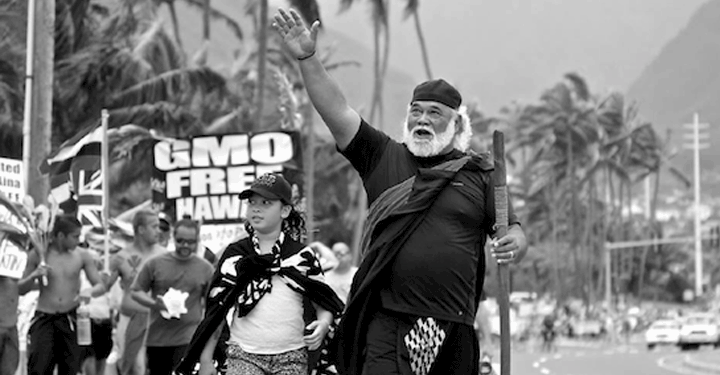
Maui is winning the war against Monsanto

hawaiians_against_gmo_720_375

By Michelle Kennedy Hogan

Source: Inhabitat

Maui is winning the war against Monsanto, according to an attorney for the Sustainable Hawaiian Agriculture for the Keiki and the Aina (SHAKA) Movement. On November 4, Maui voters approved a measure that would ban GMOs in Maui County. But earlier this year, Hawaii Judge Barry Kurren ruled that only states, not counties, can ban GMOs, saying that county laws are pre-empted by state law so they are “invalid.” Monsanto, Dow and others sued to stop the legislation, hoping that Kurren would rule the same after the Maui initiative passed, but Kurren decided to pass the case onto Chief Judge Susan Oki Mollway after public pressure mounted against him. Now the Maui ban on GMOs can move forward, marking a definitive win for the people of Maui.

According to the Natural Society, “until at least the fall of 2011, Judge Kurren’s wife, Faye, was a trustee of The Nature Conservancy (TNC), a 6-billion-dollar environmental group.” TNC specializes in working with mega-corporations, who donate major money, in return for receiving TNC’s “good housekeeping seal of approval” as friends of the environment. “In 2011, TNC leveraged a blockbuster deal with Dow Chemical. Dow pledged a $10 million donation. In exchange, Dow could forthwith use the TNC logo on its site and all its products. Among TNC’s council are businesspersons from Monsanto, Coca Cola, and of course, Dow. Among TNC’s corporate funders are again – Dow, Coke, DuPont, and Pepsi,” according to Natural Society.

In addition to striking down GMO bans, Kurren also recently struck down Ordinance 960 – a pesticide and GMO regulatory bill – in Kauai. Kurren was to be the presiding judge in the Maui County case, but knowing that Kurren has multiple ties to Big Agriculture, the people of Maui County pushed back. Many thought that the case could not be won, given Kurren’s past rulings and Big-Ag ties, and that Maui county would not be able to uphold the ban on GMOs on their island.

RELATED: How Monsanto is turning an island paradise into a GMO wasteland

Originally, the SHAKA Movement agreed to allow a magistrate judge to preside over the case – in this case, it was Kurren. Once the SHAKA Movement found out Kurren would be in charge of their case, they withdrew their approval. Kurren then relinquished the position to Chief Judge Susan Oki Mollway.

Having a different judge – a judge without known ties to the financial dealings of Monsanto and Dow Chemical – could have huge implications for the GMO ban and lead Maui to a win over Monsanto. The ruling further allows Maui County to file their own motions and respond to motions filed by the plaintiffs, according to SHAKA attorney Michael Carroll. If the law stands as voted, only the Maui County Council will be able to lift the ban on GMOs in their county.

Hawaii County Officials Will Appeal Monsanto Court Ruling

P1120628

Source: Inquisitr

In a 5 to 4 decision, Hawaii County Council voted yesterday to appeal the decision of a U.S. Magistrate Judge who has ruled to protect Monsanto and GMO’s testing and production on the Big Island and will continue their battle in a higher court.

Recently, an overwhelmingly popular vote of direct democracy in Hawaii County chose to ban the cultivation of GMO (genetically modified organisms) in their communities. However, genetic engineering giant Monsanto, refused to accept the law, or the will of the people, and sued Hawaii County over the new law.

U.S. Magistrate Judge Barry Kurren, ruled in favor of Monsanto and ordered the Hawaii County Council to stop any enforcement of the law. However, some questions have been raised about the judge who may have Monsanto ties through his wife. This, along with the type of political and financial pressure that Monsanto wields, has called into question whether or not Judge Kurren was able to be unbiased in this decision. Judge Kurren also has an established history of ruling in favor to protect Monsanto’s interest over that of the people. In August of this year, he also struck down Kaua’i’s Pesticide Reform Act claiming there that it was pre-empted by state law denying local government right to pass it’s own regulations; this is the same tactic that he used in this ruling as well. Regardless, the Hawaii County Officials will appeal in higher court to keep the Big Island GMO free.

Of course, this is not the first time that Monsanto has sought to over ride the will of the people and force GMO crops on those who clearly do not want them. Monsanto and its partner companies have spent millions to fight measures to label products containing GMO’s across the country including in Oregon, California, and now Vermont. Top Monsanto officials also end up serving in key governmental positions with the FDA, EPA, or other government posts including current Supreme Court Justice, Clarence Thomas who is the former legal council for Monsanto.

These heavy government ties further complicates matters for those trying to deal with the ecological fall out and health implications of GMO’s. In India there have been over 290,000 farmers who have committed suicide because of GMO’s crops leading most to call Monsanto (or Monsatan as many not so affectionately call it) “the most evil company in the world“.

Monsanto has done much to earn that title as well, beyond their “round up ready” seeds and massively polluting pesticides, Monsanto was also convicted in 2002 in Alabama for “knowingly contaminated their community for decades with PCBs, chemicals used as an insulating fluid in electrical capacitors and transformers.” In 2012 a French court ruled that Monsanto was guilty of chemical poisoning and in Brazil courts found Monsanto guilty of false advertising for claiming that their products were environmentally safe. And in Haiti, farmers there chose to burn the free GMO seeds from Monsanto rather than allow them to infect their nation even in the wake of disaster.

Monsanto and it’s company Dow Chemical were also responsible for Agent Orange which lead to the death of half a million civilians in Vietnam, left over 3 million people contaminated and was responsible for birth defects of half a million Vietnamese children. The U.S. Military did not escape the wrath of Ancient Orange either and many who survived continued to be ill for the rest of their lives.

Monsanto has not been at all shy about their agenda and have accepted no responsibility for any of the problems associated with their global lab experiment. In 1998, Monsanto’s director of corporate communications, Phil Angell made their views on safety clear.

“Monsanto should not have to vouchsafe the safety of biotech food. Our interest is in selling as much of it as possible.”

It is the that very lack of any safety testing and the havoc that GMO crops and accompanying Round Up pesticides may be causing to the food chain, natural plants, and the pollinator’s the keep it all working is one of the key reasons why so many nations, states, and activists are moving to have GMO’s labeled or out right banned all together. But this does not seem to phase the global giant; their spokesman for Britain who had this to say in 1999.

“People will have Roundup Ready soya whether they like it or not”

Many will be watching the battle in Hawaii very closely. It is of monumental importance because not only is it a part of American’s battle for safe food, to protect bees, and insure the survival of natural plants, but it is also critical in the abilities of local government to operate and if Hawaii County loses this battle it could cripple local law makers everywhere and give unprecedented power to those in the corporate world, like Monsanto, to operate above the law and the will of the people.


Monsanto Sues Maui for Direct Democracy, Launches New PR Campaign

maui monsanto protest

By Rebekah Wilce

Source: PR Watch

Residents of Maui County, Hawai’i voted on November 4 to ban the growing of genetically modified (GMO) crops on the islands of Maui, Lanai, and Molokai until scientific studies are conducted on their safety and benefits. Monsanto and Dow Chemical’s unit Mycogen Seeds have sued the county in federal court to stop the law passed by the people.

In Vermont, the Grocery Manufacturers Association (GMA, of which Monsanto and Dow were recently listed as members) has sued the state over its law requiring GMO labels. And Monsanto has a history of suing to prevent consumer labeling regarding its products. The company sued a number of dairies in the 1990s and 2000s for labeling milk free from recombinant bovine growth hormone (rBGH), which Monsanto developed and marketed as Posilac® (sold to Eli Lilly in 2008), the only commercially approved form. Vermont itself is no stranger to such suits. The International Dairy Foods Association sued Vermont for passing a law requiring labeling of milk containing rBGH (Monsanto wrote an amicus brief in support of the plaintiff, and GMA was a plaintiff-appellant) — and it won in federal court.

On the same day that Monsanto said it would challenge the decision of Maui’s citizens to regulate their own land and environment in court, the company also launched a new national advertising campaign as part of an effort to improve the image of the widely reviled company.

The glossy ads portray families of many cultures sitting down to eat gorgeous foods, invoking images more often seen in the pages of Saveur than in the hallways of one of the world’s largest chemical companies.

In addition to print ads in several national magazines and TV ads airing on national cable networks and several local stations in coastal cities, the campaign includes a slick new website launched in September, Discover.Monsanto.com.

The website invites questions from the public. The vast majority are skeptical, if not hostile. Others sound like they were written by Monsanto staff. Predictably, some of the hardest questions, like the one posed by Tim H., “In 2013, how much money has Monsanto spent on lobbyists in DC? What laws were these lobbyists attempting to create/amend and why?” are given short shrift.

Monsanto’s pretty TV ads target moms and millenials, according to the company’s corporate brand lead, Jessica Simmons. Monsanto has even hired a new “director of millenial engagement,” Vance Crowe, 32. He represented the company at a recent South by Southwest Eco conference in Austin, where revelations that Monsanto had paid for a panel of farmers to attend and present generated some excitement, as Tom Philpott reports in Mother Jones.

Crowe told NPR‘s “The Salt” blog, “[T]he challenge with something like SXSW Eco is that it doesn’t do anybody any good if people are so passionate that they’re yelling. The challenge is how can we enter the conversation so that people don’t feel like they have to yell to be heard?” Apparently, Crowe hopes to “enter the conversation” one party at a time. He enthusiastically describes how he and a gay colleague attended sessions on “sustainable fashion” and got invited to parties where they won fans and accolades.

Coincidentally, the front page of Discover.Monsanto.com contains, under “Here’s where we work,” a picture of corn crops being tended in Maui, with the text, “Hawaii’s unique climate allows for three to four growing seasons a year, reducing the time it takes us to develop new products. Our island roots go back more than 45 years.”

The marketing text may indicate the issue at the heart of Monsanto’s lawsuit against Maui. Those multiple growing seasons mean that “about 90 percent of all corn grown in the U.S. is genetically engineered and has been developed partially at Hawaii farms,” according to the Associated Press. Monsanto and the rest of the seed crop industry reap $146.3 million a year in sales from their activities in the state, according to a 2009 USDA report. Now Monsanto would have to substantially downsize its activity in Maui County in order to follow the new law, according to its lawsuit.

Monsanto’s new PR campaign seeks to make its brand approachable to the American consumer. Yet, with 92 percent of Americans demanding that GMO foods be labelled, according to a new Consumer Reports poll, Monsanto and its new millenial hires have their work cut out for them.

Consumer Reports recently put out a study on where GMOs are hiding in your food, including in packages labeled “natural.” You can access the report here.

Rebekah Wilce is a reporter and researcher who directs CMD’s Food Rights Network project.