Is Sleepy Joe Biden Trying to Outdo Hitler and History?

By Phil Butler

Source: New Eastern Outlook

History is the most interesting subject for many reasons. Not the least of which is the fact it tends to repeat itself. And the fact that some are doomed by ignorance of this is an important lesson for today. Take German tanks, for instance. First, let’s rehash a little history about the steppes of Russia and Eastern Ukraine and unlearned lessons.

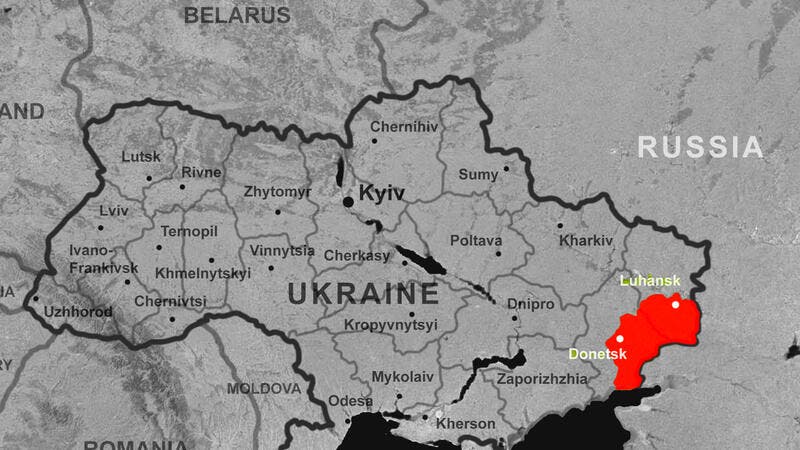
From the 5th of July 1943 until the 23rd of August 1943, the largest tank battle in history took place in what became known as the “Kursk Salient,” an area that stretched from the tiny town of Kirov on the Bolva River in the north, through Belgorod in Russia, Kharkiv, which Ukraine currently controls. The line reached deep into the Donbas region, the focal point of Ukraine’s Nazi hostilities since 2014.

Hitler’s Operation Zitadelle (“Citadel”) was carried out over a 700-mile-long front, where the best Germans tried to outgun and outmaneuver the advancing Soviet forces. It became the largest tank battle in history, pitting the most advanced weaponry Nazi Germany had against prepared and dug-in, superior Soviet resistance. The reader will find it interesting that the German high command chose Belgorod as one of the first key objectives.

Numerous parallels exist between the battle of Kursk and the current proxy war in Ukraine. First, I’d like to deal with tanks. In 1943, Germany manufactured what can be argued as the finest medium and heavy armor of World War II. Though not numerous at Kursk, the deadly Tiger played a big role. The all-new Panther and the giant Ferdinand tank destroyer were supposed to blast the Soviets off the battlefield.

Ironically, many of their burning hulks littered the countryside once the battle ended. The battle raged for months, with neither side gaining a clear advantage. The Soviets, not unlike their modern-day counterparts on the Russian lines, created massive defensive works to sap the German offensive until a counterattack would gain a decisive effect.

When I read the other day about almost all of the highly touted German Leopards sent to Zelensky having been destroyed, this seemed like Deja Vu as a student of history. An article in the Berliner Zeitung cited Alexander Sosnowski, who used data from pro-Ukraine media channels to determine that 41 Leopard-2s, 49 T72 tanks, 31 Bradlys, 7 German Marders, 23 howitzers, and 40 MRAP infantry fighting vehicles have already been turned to scrap by the Russians. In 1943, the great Nazi war machine faced similar despair.

But what other parallels can we draw? What is going to happen next? If you ask most experts, Europe is out of ammo, tanks, and guts. The Germans cannot even crank up and run half their remaining Leopard 2s for lack of repair, Paris is on fire, Germans are ready for any Chancellor but Scholz, Hungary seems about ready to leave the NATO alliance, the dollar may crumble toon, and even Americans grow weary of cheering a losing team.

We can understand how idiotic Joe Biden’s war on Russia will end if we recollect what happened after the Kursk failure. The Germans had been progressing in fighting through the defensive layers the Soviets had built. The northern front of the pincer bogged down, and the southern one was halted by bitter Soviet resistance. Hitler, who the legendary Heinz Guderian had warned against Operation Citadel, lost heart when decisive victory was not at hand and focused elsewhere. Meanwhile, the Soviets had gained momentum in the ground war and never relinquished it after Kursk.

As we know, once the Axis began its retreat from Kursk, the Soviets, and their allies from the West marched into the heart of Europe, taking Berlin and destroying the dream of Leibensraum, at least for the moment. Today, we find Germany’s best tanks strewn all over the battle lines in the regions reclaimed by Russia. Of course, they are not the Tigers or Panthers of legend. Four Tiger tanks held off tank brigades at Kursk. Now a lightweight drone seemed capable of knocking one out. The same seems true for NATO, a military alliance that has never shown it could beat its way out of a wet paper bag, let alone conquer Russia.

Whoever devised this genius plan to create Operation Barbarossa 2 is not even as clever as a drugged Hitler on his worst day. All that has happened is that the Russians are preparing again. Factories are shifting to creating T-14 Armata tanks instead of luxury Lada 4x4s. Far from the front, the Russians ramp up their military complex as before. For Westerners, we can only hope they do so for defensive rather than offensive operations. For certain, as the fires of discontent burning in Paris, there is nothing behind the Donetsk River to stop the Russians if they choose to widen their breathing space.

Funny, isn’t it, how history repeats itself and does so in the same places with the same idiotic mistakes being made?

Why the Russian Federation Recognized the Independence Movements in the Donbas

Recognition of the Donetsk and Luhansk People’s Republics is a direct result of U.S. efforts to contain Russian economically and militarily.

By Ajamu Baraka

Source: Black Agenda Report

“Minsk, Minsk, Minsk,” they cried after Russia recognized Donetsk and Luhansk. But those Western diplomats and pundits did not hear those of us in the anti-war, pro-peace and anti-imperialist movements who insisted that Minsk II was the only conceivable way out of the crisis!  

There will be reams of words attempting to provide a coherent analysis of the manufactured crisis dramatically unfolding in Ukraine, which took another unanticipated turn when Russia extended recognition to the Peoples’ Republics of Donetsk and Luhansk in the territory referred to as the Donbas in Eastern Ukraine. 

I will not add to that mountain of ink because, for me, the story is relatively simple. I have argued since 2015 that it was greed informed by miscalculations that drove the U.S. — with the support of European capital salivating from prospect of profits generated by gaining full control of the Ukrainian economy through the European Association agreement — to decide to overthrow the government of Viktor Yanukovych when he turned to Russia instead of surrendering Ukrainian sovereignty to U.S. and European capital. 

This was the genesis of the crisis. For U.S. policymakers it did not matter that the coup government was made up of literal neo-Nazis and extremist white supremacists and antisemitic ultra-nationalists from the neo-Nazi Svoboda party — the National Socialist Party of Ukraine. 

Nor was there any concern that one of the former commanders of the Azov Battalion, a violent right-wing gang that was merged into the Ukrainian National Guard and is now being trained by the British, said that Ukraine’s mission is to “lead in a final crusade … against the Semite-led Untermenschen” (sub-humans). 

No concern because aligning with rightist elements in order to advance the economic and geostrategic interests of the U.S. state and capitalist class behind the backs of the U.S. public is nothing new. That is why it is so ironic, or perhaps contradictory, that while Democratic Party activists are mobilized to struggle against the far-right in the U.S., Biden’s Ukrainian policies are affirming once again that the neoliberal right does not mind aligning with naked fascism to advance the imperial interests of capital.  

From rightist Islamic forces to right-wing apartheid state of Israel, to anti-democratic monarchs of Saudi Arabia and the Gulf Cooperation Council (GCC), there is usually never a state too odious for the U.S. to deal with as long as there was the possibility of a buck to be made. 

That is why it is almost surreal to read U.S. propaganda messages that still frame U.S. intentions in themes that suggest a benevolent character to U.S. behavior — and getting away with it! And even among African/Black radicals who should know better, instead of educating Africans on what was in play in Ukraine with the expansion of the white supremacist NATO structure, the gangster move being made on Ukraine in order for U.S. capital to continue to assert control over the European market, and the crude attempt to divert attention away from the failures of Biden’s domestic policies — some Africans, along with elements of the white left, were more interested in having abstract discussions on the class nature of the Russian state and economy — as if there was anything to debate there! 

Like other subversive actions by the U.S. state, the destabilization and then capturing of the Ukrainian state, and the installation of a puppet government had nothing to do with any concerns for democracy. It is impossible for the U.S. to be concerned about democracy when it is the principal state undermining democracy around the world. If the U.S. were committed to upholding democratic processes, it would not have overthrown a democratically elected government in Ukraine. 

And U.S. policy certainly did not reflect any concern for human rights in Ukraine. The war that was sparked after the coup government decided to attack its own citizens in the Donbas who rejected its legitimacy resulted in thousands of Ukrainians losing their lives.

The U.S. was not concerned with the territorial integrity of Ukraine either, because it was the coup government, backed by their bosses in Washington, that forced the separation of the Donbas from Ukraine by defining them as non-Ukrainians. Ukrainian citizens in Donbas became “pro-Russia separatists and terrorists,” which made them eligible for massive human rights violations, including murder as foreign entities. 

Yet, with all of that, up until February 21, 2022, the 57th anniversary of the assassination of Black internationalist revolutionary Malcolm X, a route to a peaceful resolution to the crisis existed — the Minsk II agreement.  It was the Minsk II agreement, put in place after the independent republics fought the Ukrainian neo-fascists to a military stand-still, along with provisions for a ceasefire, that provided a path to peaceful resolution. The agreement would have provided political autonomy for the Donbas within the Ukrainian state, thus preserving the existing borders of Ukraine before the coup of 2014. 

Unfortunately, with the election of Joe Biden, who was the Obama administration’s point person on Ukraine, the Democrats immediately picked-up where U.S. policy left off in 2016 and started to encourage the Ukrainian government to ignore the Minsk II agreement and to consider taking back the Donbas by force. 

Today, after the U.S. flooded Ukraine with weapons, including long-range artillery that was introduced into the conflict area in violation of the Minsk ceasefire deal, the deployment of 150,000 Ukrainian troops positioned along the contact line between Ukraine and Donbas, and the shelling from the Ukrainian forces right during the period that the U.S. predicted that Russia would invade, the Minsk agreement has become another casualty of war. 

On February 18, 2022, Russian foreign minister Sergei Lavrov stated that he was “alarmed ” by a reported spike in Ukrainian artillery attacks against rebels in the eastern region of Donbas with weapons prohibited by the Minsk agreement. Reports from the Organization for Security and Cooperation in Europe (OSCE), which was tasked with the responsibility, since 2015, to monitor and report on violations of the agreement, indicated that in Donetsk, between February 18 and February 20, 2022, there were 591 ceasefire violations, and in Luhansk it recorded 975 ceasefire violations, including 860 explosions.  

What was the response from the Ukraine government? The government claims that OSCE is biased because the data it is gathering seems to indicate that it is the Ukrainian forces that are responsible for the increase in military actions.  

But that controversy and debate over that data failed to find itself in the daily coverage of the situation by the Western press, even though the empirical data clearly showed that Ukrainian forces were responsible for escalating the military engagement.  

Ukraine is just the symptom; the Disease is U.S. Doctrine of “Full Spectrum Dominance”

The U.S. has its pretext to move the Europeans to impose economic sanctions against Russia, even though it is clear to many in Europe that the Biden administration’s policies are no more than the “liberal” version of “America First” as it relates to Europe. 

European capital, especially the Germans, are expected to take another hit for the team like it did during the first round of sanctions against Russia and the money they all lost with the Trump administration’s abrogation of the Joint Comprehensive Plan of Action (the Iran Nuclear Deal). 

The capitalist oligarchy that is the base of Putin’s governing coalition may understand something that U.S. policymakers in their arrogance are underestimating, namely, that European capital is getting closer to a breaking point with the U.S., especially when money can be made in a context of relative stability in Europe as opposed to the destabilizing effects of conflict. 

They also know that the world is changing and that multipolarity is rapidly becoming the new reality and that European capital will have to make careful choices.

China is the number one trade and investment partner with the European Union states, the Chinese inspired “Regional Comprehensive Economic Partnership (RCEP) ” is the largest “free trade” agreement on the planet constituting one third of humanity and one third of global GDP. Russia is sitting on top of the Eurasia Economic Union that, in terms of land, is the largest trade union on the planet, and of course the Belt and Road Initiative (BRI). 

The Russian recognition of the republics of Donbas was no more than the open acknowledgment of the dismembering of Ukraine. A process that started with the U.S. coup and the imposition of a government that completely turned over Ukrainian sovereignty to U.S. and European capital. 

The lesson for the colonized, working classes and nationally oppressed? Authentic national liberation, people(s)-centered human rights, and self-determination for peoples and nations are impossible in a world in which capitalist competition and war are the defining characteristics of global relations. 

We must, as we say in the Black is Back Coalition and the Black Alliance for Peace, turn imperialist wars into wars against imperialism! That is our task and responsibility. To do otherwise is to fail the historical mission of our generation. 

WAR IN EUROPE AND THE RISE OF RAW PROPAGANDA

By John Pilger

Source: JohnPilger.com

Marshall McLuhan’s prophecy that “the successor to politics will be propaganda” has happened.  Raw propaganda is now the rule in Western democracies, especially the US and Britain

On matters of war and peace, ministerial deceit is reported as news. Inconvenient facts are censored, demons are nurtured. The model is corporate spin, the currency of the age. In 1964, McLuhan famously declared, “The medium is the message.” The lie is the message now.

But is this new? It is more than a century since Edward Bernays, the father of spin, invented “public relations” as a cover for war propaganda. What is new is the virtual elimination of dissent in the mainstream.

The great editor David Bowman, author of The Captive Press, called this “a defenestration of all who refuse to follow a line and to swallow the unpalatable and are brave”. He was referring to independent journalists and whistle blowers, the honest mavericks to whom media organisations once gave space, often with pride. The space has been abolished.

The war hysteria that has rolled in like a tidal wave in recent weeks and months is the most striking example. Known by its jargon, “shaping the narrative”, much if not most of it is pure propaganda.

The Russians are coming. Russia is worse than bad. Putin is evil, “a Nazi like Hitler”, salivated the Labour MP Chris Bryant. Ukraine is about to be invaded by Russia – tonight, this week, next week. The sources include an ex CIA propagandist who now speaks for the US State Department and offers no evidence of his claims about Russian actions because “it comes from the US Government”.

The no-evidence rule also applies in London. The British Foreign Secretary, Liz Truss, who spent £500,000 of public money flying to Australia in a private plane to warn the Canberra government that both Russia and China were about to pounce,  offered no evidence. Antipodean heads nodded; the “narrative” is unchallenged there. One rare exception, former prime minister Paul Keating, called Truss’s warmongering “demented”.

Truss has blithely confused the countries of the Baltic and Black Sea. In Moscow, she told the Russian foreign minister that Britain would never accept Russian sovereignty over Rostov and Voronezh – until it was pointed out to her that these places were not part of Ukraine but in Russia. Read the Russian press about the buffoonery of this pretender to 10 Downing Street and cringe.

This entire farce, recently starring Boris Johnson in Moscow playing a clownish version of his hero, Churchill, might be enjoyed as satire were it not for its wilful abuse of facts and historical understanding and the real danger of war.

Vladimir Putin refers to the “genocide” in the eastern Donbas region of Ukraine. Following the coup in Ukraine in 2014 – orchestrated by Barack Obama’s “point person” in Kyiv, Victoria Nuland – the coup regime, infested with neo-Nazis, launched a campaign of terror against Russian-speaking Donbas, which accounts for a third of Ukraine’s population.

Overseen by CIA director John Brennan in Kyiv, “special security units” coordinated savage attacks on the people of Donbas, who opposed the coup. Video and eyewitness reports show bussed fascist thugs burning the trade union headquarters in the city of Odessa, killing 41 people trapped inside. The police are standing by. Obama congratulated the “duly elected” coup regime for its “remarkable restraint”.

In the US media the Odessa atrocity was played down as “murky” and a “tragedy” in which “nationalists” (neo-Nazis) attacked “separatists” (people collecting signatures for a referendum on a federal Ukraine). Rupert Murdoch’s Wall Street Journal damned the victims – “Deadly Ukraine Fire Likely Sparked by Rebels, Government Says”.

Professor Stephen Cohen, acclaimed as America’s leading authority on Russia, wrote, “The pogrom-like burning to death of ethnic Russians and others in Odessa reawakened memories of Nazi extermination squads in Ukraine during world war two. [Today] storm-like assaults on gays, Jews, elderly ethnic Russians, and other ‘impure’ citizens are widespread throughout Kyiv-ruled Ukraine, along with torchlight marches reminiscent of those that eventually inflamed Germany in the late 1920s and 1930s…

“The police and official legal authorities do virtually nothing to prevent these neo-fascist acts or to prosecute them. On the contrary, Kyiv has officially encouraged them by systematically rehabilitating and even memorialising Ukrainian collaborators with Nazi German extermination pogroms, renaming streets in their honour, building monuments to them, rewriting history to glorify them, and more.”

Today, neo-Nazi Ukraine is seldom mentioned. That the British are training the Ukrainian National Guard, which includes neo-Nazis, is not news. (See Matt Kennard’s Declassified report in Consortium 15 February). The return  of violent, endorsed fascism to 21st-century Europe, to quote Harold Pinter, “never happened … even while it was happening”.

On 16 December, the United Nations tabled a resolution that called for “combating glorification of Nazism, neo-Nazism and other practices that contribute to fuelling contemporary forms of racism”. The only nations to vote against it were the United States and Ukraine.

Almost every Russian knows that it was across the plains of Ukraine’s “borderland” that Hitler’s divisions swept from the west in 1941, bolstered by Ukraine’s Nazi cultists and collaborators. The result was more than 20 million Russian dead.

Setting aside the manoeuvres and cynicism of geopolitics, whomever the players, this historical memory is the driving force behind Russia’s respect-seeking, self-protective security proposals, which were published in Moscow in the week the UN voted 130-2 to outlaw Nazism. They are:

– NATO guarantees that it will not deploy missiles in nations bordering Russia. (They are already in place from Slovenia to Romania, with Poland to follow)
– NATO to stop military and naval exercises in nations and seas bordering Russia.
– Ukraine will not become a member of NATO.
– the West and Russia to sign a binding East-West security pact.
– the landmark treaty between the US and Russia covering intermediate-range nuclear weapons to be restored. (The US abandoned it in 2019)

These amount to a comprehensive draft of a peace plan for all of post-war Europe and ought to be welcomed in the West. But who understands their significance in Britain? What they are told is that Putin is a pariah and a threat to Christendom.

Russian-speaking Ukrainians, under economic blockade by Kyiv for seven years, are fighting for their survival. The “massing” army we seldom hear about are the thirteen Ukrainian army brigades laying siege to Donbas: an estimated 150,000 troops. If they attack, the provocation to Russia will almost certainly mean war.

In 2015, brokered by the Germans and French, the presidents of Russia, Ukraine, Germany and France met in Minsk and signed an interim peace deal. Ukraine agreed to offer autonomy to Donbas, now the self declared republics of Donetsk and Luhansk.

The Minsk agreement has never been given a chance. In Britain, the line,  amplified by Boris Johnson, is that Ukraine is being “dictated to” by world leaders. For its part, Britain is arming Ukraine and training its army.

Since the first Cold War, NATO has effectively marched right up to Russia’s most sensitive border having demonstrated its bloody aggression in Yugoslavia, Afghanistan, Iraq, Libya and broken solemn promises to pull back.  Having dragged European “allies” into American wars that do not concern them, the great unspoken is that NATO itself is the real threat to European security.

In Britain, a state and media xenophobia is triggered at the very mention of “Russia”. Mark the knee-jerk hostility with which the BBC reports Russia. Why? Is it because the restoration of imperial mythology demands, above all, a permanent enemy? Certainly, we deserve better.

The Mess that Nuland Made

nolan

By Robert Parry

Source: Consortium News

As the Ukrainian army squares off against ultra-right and neo-Nazi militias in the west and violence against ethnic Russians continues in the east, the obvious folly of the Obama administration’s Ukraine policy has come into focus even for many who tried to ignore the facts, or what you might call “the mess that Victoria Nuland made.”

Assistant Secretary of State for European Affairs “Toria” Nuland was the “mastermind” behind the Feb. 22, 2014 “regime change” in Ukraine, plotting the overthrow of the democratically elected government of President Viktor Yanukovych while convincing the ever-gullible U.S. mainstream media that the coup wasn’t really a coup but a victory for “democracy.”

To sell this latest neocon-driven “regime change” to the American people, the ugliness of the coup-makers had to be systematically airbrushed, particularly the key role of neo-Nazis and other ultra-nationalists from the Right Sektor. For the U.S.-organized propaganda campaign to work, the coup-makers had to wear white hats, not brown shirts.

So, for nearly a year and a half, the West’s mainstream media, especially The New York Times and The Washington Post, twisted their reporting into all kinds of contortions to avoid telling their readers that the new regime in Kiev was permeated by and dependent on neo-Nazi fighters and Ukrainian ultra-nationalists who wanted a pure-blood Ukraine, without ethnic Russians.

Any mention of that sordid reality was deemed “Russian propaganda” and anyone who spoke this inconvenient truth was a “stooge of Moscow.” It wasn’t until July 7 that the Times admitted the importance of the neo-Nazis and other ultra-nationalists in waging war against ethnic Russian rebels in the east. The Times also reported that these far-right forces had been joined by Islamic militants. Some of those jihadists have been called “brothers” of the hyper-brutal Islamic State.

Though the Times sought to spin this remarkable military alliance – neo-Nazi militias and Islamic jihadists – as a positive, the reality had to be jarring for readers who had bought into the Western propaganda about noble “pro-democracy” forces resisting evil “Russian aggression.”

Perhaps the Times sensed that it could no longer keep the lid on the troubling truth in Ukraine. For weeks, the Right Sektor militias and the neo-Nazi Azov battalion have been warning the civilian government in Kiev that they might turn on it and create a new order more to their liking.

Clashes in the West

Then, on Saturday, violent clashes broke out in the western Ukrainian town of Mukachevo, allegedly over the control of cigarette-smuggling routes. Right Sektor paramilitaries sprayed police officers with bullets from a belt-fed machinegun, and police – backed by Ukrainian government troops – returned fire. Several deaths and multiple injuries were reported.

Tensions escalated on Monday with President Petro Poroshenko ordering national security forces to disarm “armed cells” of political movements. Meanwhile, the Right Sektor dispatched reinforcements to the area while other militiamen converged on the capital of Kiev.

While President Poroshenko and Right Sektor leader Dmitry Yarosh may succeed in tamping down this latest flare-up of hostilities, they may be only postponing the inevitable: a conflict between the U.S.-backed authorities in Kiev and the neo-Nazis and other right-wing fighters who spearheaded last year’s coup and have been at the front lines of the fighting against ethnic Russian rebels in the east.

The Ukrainian right-wing extremists feel they have carried the heaviest burden in the war against the ethnic Russians and resent the politicians living in the relative safety and comfort of Kiev. In March, Poroshenko also fired thuggish oligarch Igor Kolomoisky as governor of the southeastern province of Dnipropetrovsk Oblast. Kolomoisky had been the primary benefactor of the Right Sektor militias.

So, as has become apparent across Europe and even in Washington, the Ukraine crisis is spinning out of control, making the State Department’s preferred narrative of the conflict – that it’s all Russian President Vladimir Putin’s fault – harder and harder to sell.

How Ukraine is supposed to pull itself out of what looks like a death spiral – a possible two-front war in the east and the west along with a crashing economy – is hard to comprehend. The European Union, confronting budgetary crises over Greece and other EU members, has little money or patience for Ukraine, its neo-Nazis and its socio-political chaos.

America’s neocons at The Washington Post and elsewhere still rant about the need for the Obama administration to sink more billions upon billions of dollars into post-coup Ukraine because it “shares our values.” But that argument, too, is collapsing as Americans see the heart of a racist nationalism beating inside Ukraine’s new order.

Another Neocon ‘Regime Change’

Much of what has happened, of course, was predictable and indeed was predicted, but neocon Nuland couldn’t resist the temptation to pull off a “regime change” that she could call her own.

Her husband (and arch-neocon) Robert Kagan had co-founded the Project for the New American Century in 1998 around a demand for “regime change” in Iraq, a project that was accomplished in 2003 with President George W. Bush’s invasion.

As with Nuland in Ukraine, Kagan and his fellow neocons thought they could engineer an easy invasion of Iraq, oust Saddam Hussein and install some hand-picked client – in Iraq, Ahmed Chalabi was to be “the guy.” But they failed to take into account the harsh realities of Iraq, such as the fissures between Sunnis and Shiites, exposed by the U.S.-led invasion and occupation.

In Ukraine, Nuland and her neocon and liberal-interventionist friends saw the chance to poke Putin in the eye by encouraging violent protests to overthrow Russia-friendly President Yanukovych and put in place a new regime hostile to Moscow.

Carl Gershman, the neocon president of the U.S.-taxpayer-funded National Endowment for Democracy, explained the plan in a Post op-ed on Sept. 26, 2013. Gershman called Ukraine “the biggest prize” and an important interim step toward toppling Putin, who “may find himself on the losing end not just in the near abroad but within Russia itself.”

For her part, Nuland passed out cookies to anti-Yanukovych demonstrators at the Maidan square, reminded Ukrainian business leaders that the U.S. had invested $5 billion in their “European aspirations,” declared “fuck the EU” for its less aggressive approach, and discussed with U.S. Ambassador Geoffrey Pyatt who the new leaders of Ukraine should be. “Yats is the guy,” she said, referring to Arseniy Yatsenyuk.

Nuland saw her big chance on Feb. 20, 2014, when a mysterious sniper – apparently firing from a building controlled by the Right Sektor – shot and killed both police and protesters, escalating the crisis. On Feb. 21, in a desperate bid to avert more violence, Yanukovych agreed to a European-guaranteed plan in which he accepted reduced powers and called for early elections so he could be voted out of office.

But that wasn’t enough for the anti-Yanukovych forces who – led by Right Sektor and neo-Nazi militias – overran government buildings on Feb. 22, forcing Yanukovych and many of his officials to flee for their lives. With armed thugs patrolling the corridors of power, the final path to “regime change” was clear.

Instead of trying to salvage the Feb. 21 agreement, Nuland and European officials arranged for an unconstitutional procedure to strip Yanukovych of the presidency and declared the new regime “legitimate.” Nuland’s “guy” – Yatsenyuk – became prime minister.

While Nuland and her neocon cohorts celebrated, their “regime change” prompted an obvious reaction from Putin, who recognized the strategic threat that this hostile new regime posed to the historic Russian naval base at Sevastopol in Crimea. On Feb. 23, he began to take steps to protect those Russian interests.

Ethnic Hatreds

What the coup also did was revive long pent-up antagonisms between the ethnic Ukrainians in the west, including elements that had supported Adolf Hitler’s invasion of the Soviet Union during World War Two, and ethnic Russians in the south and east who feared the anti-Russian sentiments emanating from Kiev.

First, in Crimea and then in the so-called Donbas region, these ethnic Russians, who had been Yanukovych’s political base, resisted what they viewed as the illegitimate overthrow of their elected president. Both areas held referenda seeking separation from Ukraine, a move that Russia accepted in Crimea but resisted with the Donbas.

However, when the Kiev regime announced an “anti-terrorism operation” against the Donbas and dispatched neo-Nazi and other extremist militias to be the tip of the spear, Moscow began quietly assisting the embattled ethnic Russian rebels, a move that Nuland, the Obama administration and the mainstream news media called “Russian aggression.”

Amid the Western hysteria over Russia’s supposedly “imperial designs” and the thorough demonizing of Putin, President Barack Obama essentially authorized a new Cold War against Russia, reflected now in new U.S. strategic planning that could cost the U.S. taxpayers trillions of dollars and risk a possible nuclear confrontation.

Yet, despite the extraordinary costs and dangers, Nuland failed to appreciate the practical on-the-ground realities, much as her husband and other neocons did in Iraq. While Nuland got her hand-picked client Yatsenyuk installed and he did oversee a U.S.-demanded “neo-liberal” economic plan – slashing pensions, heating assistance and other social programs – the chaos that her “regime change” unleashed transformed Ukraine into a financial black hole.

With few prospects for a clear-cut victory over the ethnic Russian resistance in the east – and with the neo-Nazi/Islamist militias increasingly restless over the stalemate – the chances to restore any meaningful sense of order in the country appear remote. Unemployment is soaring and the government is essentially bankrupt.

The last best hope for some stability may have been the Minsk-2 agreement in February 2015, calling for a federalized system to give the Donbas more autonomy, but Nuland’s Prime Minister Yatsenyuk sabotaged the deal in March by inserting a poison pill that essentially demanded that the ethnic Russian rebels first surrender.

Now, the Ukraine chaos threatens to spiral even further out of control with the neo-Nazis and other right-wing militias – supplied with a bounty weapons to kill ethnic Russians in the east – turning on the political leadership in Kiev.

In other words, the neocons have struck again, dreaming up a “regime change” scheme that ignored practical realities, such as ethnic and religious fissures. Then, as the blood flowed and the suffering worsened, the neocons just sought out someone else to blame.

Thus, it seems unlikely that Nuland, regarded by some in Washington as the new “star” in U.S. foreign policy, will be fired for her dangerous incompetence, just as most neocons who authored the Iraq disaster remain “respected” experts employed by major think tanks, given prized space on op-ed pages, and consulted at the highest levels of the U.S. government.


[For more on these topics, see Consortiumnews.com’s “Obama’s True Foreign Policy Weakness” and “A Family Business of Perpetual War.”]

Investigative reporter Robert Parry broke many of the Iran-Contra stories for The Associated Press and Newsweek in the 1980s. You can buy his latest book, America’s Stolen Narrative, either in print here or as an e-book (from Amazon and barnesandnoble.com). You also can order Robert Parry’s trilogy on the Bush Family and its connections to various right-wing operatives for only $34. The trilogy includes America’s Stolen Narrative. For details on this offer, click here.