
Mental Health Round-Ups: The Next Phase of the Government’s War on Thought Crimes

By John & Nisha Whitehead

Source: The Rutherford Institute

“There are no dangerous thoughts; thinking itself is a dangerous activity.”—Hannah Arendt

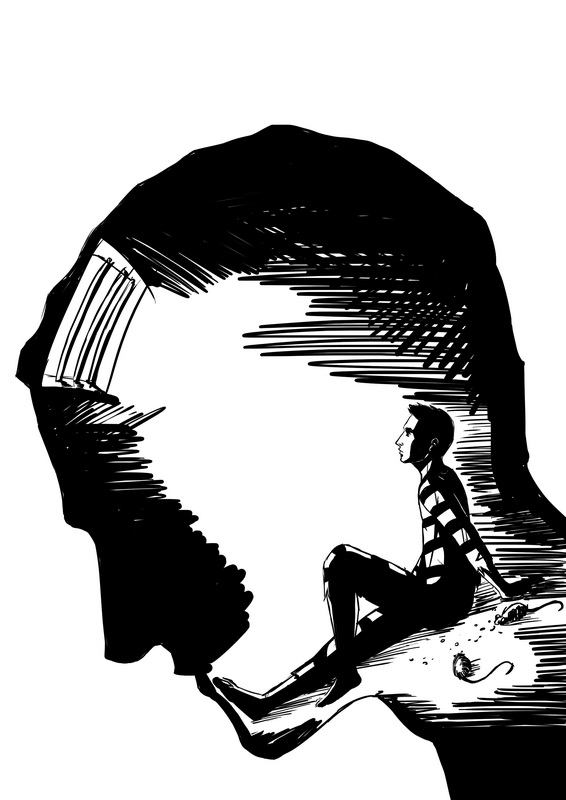
Get ready for the next phase of the government’s war on thought crimes: mental health round-ups and involuntary detentions.

Under the guise of public health and safety, the government could use mental health care as a pretext for targeting and locking up dissidents, activists and anyone unfortunate enough to be placed on a government watch list.

If we don’t nip this in the bud, and soon, this will become yet another pretext by which government officials can violate the First and Fourth Amendments at will.

This is how it begins.

In communities across the nation, police are being empowered to forcibly detain individuals they believe might be mentally ill, based solely on their own judgment, even if those individuals pose no danger to others.

In New York City, for example, you could find yourself forcibly hospitalized for suspected mental illness if you carry “firmly held beliefs not congruent with cultural ideas,” exhibit a “willingness to engage in meaningful discussion,” have “excessive fears of specific stimuli,” or refuse “voluntary treatment recommendations.”

While these programs are ostensibly aimed at getting the homeless off the streets, when combined with advances in mass surveillance technologies, artificial intelligence-powered programs that can track people by their biometrics and behavior, mental health sensor data (tracked by wearable data and monitored by government agencies such as HARPA), threat assessments, behavioral sensing warnings, precrime initiatives, red flag gun laws, and mental health first-aid programs aimed at training gatekeepers to identify who might pose a threat to public safety, they could well signal a tipping point in the government’s efforts to penalize those engaging in so-called “thought crimes.”

As the AP reports, federal officials are already looking into how to add “‘identifiable patient data,’ such as mental health, substance use and behavioral health information from group homes, shelters, jails, detox facilities and schools,” to its surveillance toolkit.

Make no mistake: these are the building blocks for an American gulag no less sinister than that of the gulags of the Cold War-era Soviet Union.

The word “gulag” refers to a labor or concentration camp where prisoners (oftentimes political prisoners or so-called “enemies of the state,” real or imagined) were imprisoned as punishment for their crimes against the state.

The gulag, according to historian Anne Applebaum, used as a form of “administrative exile—which required no trial and no sentencing procedure—was an ideal punishment not only for troublemakers as such, but also for political opponents of the regime.”

Totalitarian regimes such as the Soviet Union also declared dissidents mentally ill and consigned political prisoners to prisons disguised as psychiatric hospitals, where they could be isolated from the rest of society, their ideas discredited, and subjected to electric shocks, drugs and various medical procedures to break them physically and mentally.

In addition to declaring political dissidents mentally unsound, government officials in the Cold War-era Soviet Union also made use of an administrative process for dealing with individuals who were considered a bad influence on others or troublemakers. Author George Kennan describes a process in which:

The obnoxious person may not be guilty of any crime . . . but if, in the opinion of the local authorities, his presence in a particular place is “prejudicial to public order” or “incompatible with public tranquility,” he may be arrested without warrant, may be held from two weeks to two years in prison, and may then be removed by force to any other place within the limits of the empire and there be put under police surveillance for a period of from one to ten years.

Warrantless seizures, surveillance, indefinite detention, isolation, exile… sound familiar?

It should.

The age-old practice by which despotic regimes eliminate their critics or potential adversaries by making them disappear—or forcing them to flee—or exiling them literally or figuratively or virtually from their fellow citizens—is happening with increasing frequency in America.

Now, through the use of red flag lawsbehavioral threat assessments, and pre-crime policing prevention programs, the groundwork is being laid that would allow the government to weaponize the label of mental illness as a means of exiling those whistleblowers, dissidents and freedom fighters who refuse to march in lockstep with its dictates.

That the government is using the charge of mental illness as the means by which to immobilize (and disarm) its critics is diabolical. With one stroke of a magistrate’s pen, these individuals are declared mentally ill, locked away against their will, and stripped of their constitutional rights.

These developments are merely the realization of various U.S. government initiatives dating back to 2009, including one dubbed Operation Vigilant Eagle which calls for surveillance of military veterans returning from Iraq and Afghanistan, characterizing them as extremists and potential domestic terrorist threats because they may be “disgruntled, disillusioned or suffering from the psychological effects of war.”

Coupled with the report on “Rightwing Extremism: Current Economic and Political Climate Fueling Resurgence in Radicalization and Recruitment” issued by the Department of Homeland Security (curiously enough, a Soviet term), which broadly defines rightwing extremists as individuals and groups “that are mainly antigovernment, rejecting federal authority in favor of state or local authority, or rejecting government authority entirely,” these tactics bode ill for anyone seen as opposing the government.

Thus, what began as a blueprint under the Bush administration has since become an operation manual for exiling those who challenge the government’s authority.

An important point to consider, however, is that the government is not merely targeting individuals who are voicing their discontent so much as it is locking up individuals trained in military warfare who are voicing feelings of discontent.

Under the guise of mental health treatment and with the complicity of government psychiatrists and law enforcement officials, these veterans are increasingly being portrayed as ticking time bombs in need of intervention.

For instance, the Justice Department launched a pilot program aimed at training SWAT teams to deal with confrontations involving highly trained and often heavily armed combat veterans.

One tactic being used to deal with so-called “mentally ill suspects who also happen to be trained in modern warfare” is through the use of civil commitment laws, found in all states and employed throughout American history to not only silence but cause dissidents to disappear.

For example, NSA officials attempted to label former employee Russ Tice, who was willing to testify in Congress about the NSA’s warrantless wiretapping program, as “mentally unbalanced” based upon two psychiatric evaluations ordered by his superiors.

NYPD Officer Adrian Schoolcraft had his home raided, and he was handcuffed to a gurney and taken into emergency custody for an alleged psychiatric episode. It was later discovered by way of an internal investigation that his superiors were retaliating against him for reporting police misconduct. Schoolcraft spent six days in the mental facility, and as a further indignity, was presented with a bill for $7,185 upon his release.

Marine Brandon Raub—a 9/11 truther—was arrested and detained in a psychiatric ward under Virginia’s civil commitment law based on posts he had made on his Facebook page that were critical of the government.

Each state has its own set of civil, or involuntary, commitment laws. These laws are extensions of two legal principlesparens patriae Parens patriae (Latin for “parent of the country”), which allows the government to intervene on behalf of citizens who cannot act in their own best interest, and police power, which requires a state to protect the interests of its citizens.

The fusion of these two principles, coupled with a shift towards a dangerousness standard, has resulted in a Nanny State mindset carried out with the militant force of the Police State.

The problem, of course, is that the diagnosis of mental illness, while a legitimate concern for some Americans, has over time become a convenient means by which the government and its corporate partners can penalize certain “unacceptable” social behaviors.

In fact, in recent years, we have witnessed the pathologizing of individuals who resist authority as suffering from oppositional defiant disorder (ODD), defined as “a pattern of disobedient, hostile, and defiant behavior toward authority figures.” Under such a definition, every activist of note throughout our history—from Mahatma Gandhi to Martin Luther King Jr.—could be classified as suffering from an ODD mental disorder.

Of course, this is all part of a larger trend in American governance whereby dissent is criminalized and pathologized, and dissenters are censored, silenced, declared unfit for society, labelled dangerous or extremist, or turned into outcasts and exiled.

Red flag gun laws (which authorize government officials to seize guns from individuals viewed as a danger to themselves or others), are a perfect example of this mindset at work and the ramifications of where this could lead.

As The Washington Post reports, these red flag gun laws “allow a family member, roommate, beau, law enforcement officer or any type of medical professional to file a petition [with a court] asking that a person’s home be temporarily cleared of firearms. It doesn’t require a mental-health diagnosis or an arrest.

With these red flag gun laws, the stated intention is to disarm individuals who are potential threats.

While in theory it appears perfectly reasonable to want to disarm individuals who are clearly suicidal and/or pose an “immediate danger” to themselves or others, where the problem arises is when you put the power to determine who is a potential danger in the hands of government agencies, the courts and the police.

Remember, this is the same government that uses the words “anti-government,” “extremist” and “terrorist” interchangeably.

This is the same government whose agents are spinning a sticky spider-web of threat assessments, behavioral sensing warnings, flagged “words,” and “suspicious” activity reports using automated eyes and ears, social media, behavior sensing software, and citizen spies to identify potential threats.

This is the same government that keeps re-upping the National Defense Authorization Act (NDAA), which allows the military to detain American citizens with no access to friends, family or the courts if the government believes them to be a threat.

This is the same government that has a growing list—shared with fusion centers and law enforcement agencies—of ideologies, behaviors, affiliations and other characteristics that could flag someone as suspicious and result in their being labeled potential enemies of the state.

For instance, if you believe in and exercise your rights under the Constitution (namely, your right to speak freely, worship freely, associate with like-minded individuals who share your political views, criticize the government, own a weapon, demand a warrant before being questioned or searched, or any other activity viewed as potentially anti-government, racist, bigoted, anarchic or sovereign), you could be at the top of the government’s terrorism watch list.

Moreover, as a New York Times editorial warns, you may be an anti-government extremist (a.k.a. domestic terrorist) in the eyes of the police if you are afraid that the government is plotting to confiscate your firearms, if you believe the economy is about to collapse and the government will soon declare martial law, or if you display an unusual number of political and/or ideological bumper stickers on your car.

Let that sink in a moment.

Now consider the ramifications of giving police that kind of authority in order to preemptively neutralize a potential threat, and you’ll understand why some might view these mental health round-ups with trepidation.

No matter how well-meaning the politicians make these encroachments on our rights appear, in the right (or wrong) hands, benevolent plans can easily be put to malevolent purposes.

Even the most well-intentioned government law or program can be—and has been—perverted, corrupted and used to advance illegitimate purposes once profit and power are added to the equation.

The war on terror, the war on drugs, the war on illegal immigration, the war on COVID-19: all of these programs started out as legitimate responses to pressing concerns and have since become weapons of compliance and control in the government’s hands. For instance, the very same mass surveillance technologies that were supposedly so necessary to fight the spread of COVID-19 are now being used to stifle dissent, persecute activists, harass marginalized communities, and link people’s health information to other surveillance and law enforcement tools.

As I make clear in my book Battlefield America: The War on the American People and in its fictional counterpart The Erik Blair Diaries, we are moving fast down that slippery slope to an authoritarian society in which the only opinions, ideas and speech expressed are the ones permitted by the government and its corporate cohorts.

We stand at a crossroads.

As author Erich Fromm warned, “At this point in history, the capacity to doubt, to criticize and to disobey may be all that stands between a future for mankind and the end of civilization.”
The Child That Christmas Forgot: How Would Jesus Fare in the American Police State?

By John W. Whitehead

Source: The Rutherford Institute

“Once upon a midnight clear, there was a child’s cry, a blazing star hung over a stable, and wise men came with birthday gifts. We haven’t forgotten that night down the centuries. We celebrate it with stars on Christmas trees, with the sound of bells, and with gifts… We forget nobody, adult or child. All the stockings are filled, all that is, except one. And we have even forgotten to hang it up. The stocking for the child born in a manger. It’s his birthday we’re celebrating. Don’t let us ever forget that. Let us ask ourselves what He would wish for most. And then, let each put in his share, loving kindness, warm hearts, and a stretched out hand of tolerance. All the shining gifts that make peace on earth.”—The Bishop’s Wife (1947)

The Christmas story of a baby born in a manger is a familiar one.

The Roman Empire, a police state in its own right, had ordered that a census be conducted. Joseph and his pregnant wife Mary traveled to the little town of Bethlehem so that they could be counted. There being no room for the couple at any of the inns, they stayed in a stable (a barn), where Mary gave birth to a baby boy, Jesus. Warned that the government planned to kill the baby, Jesus’ family fled with him to Egypt until it was safe to return to their native land.

Yet what if Jesus had been born 2,000 years later?

What if, instead of being born into the Roman police state, Jesus had been born at this moment in time? What kind of reception would Jesus and his family be given? Would we recognize the Christ child’s humanity, let alone his divinity? Would we treat him any differently than he was treated by the Roman Empire? If his family were forced to flee violence in their native country and sought refuge and asylum within our borders, what sanctuary would we offer them?

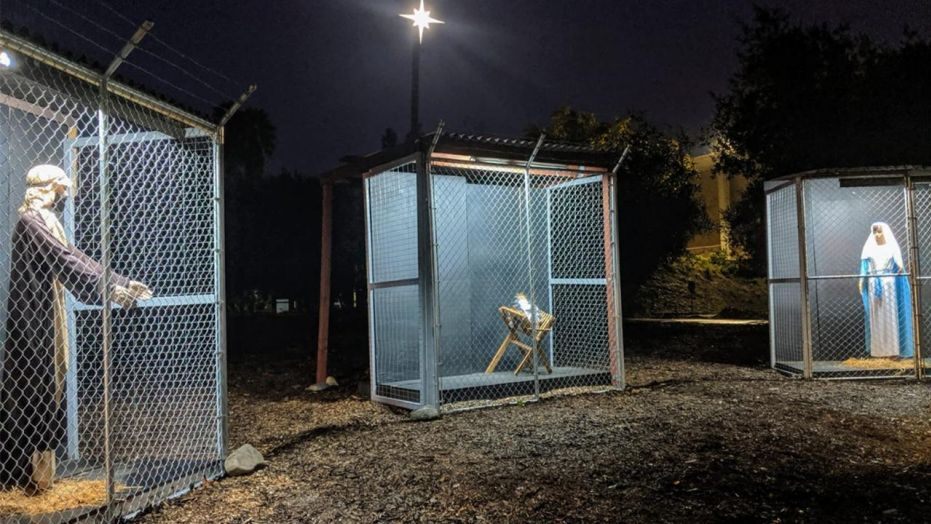
A singular number of churches across the country are asking those very questions, and their conclusions are being depicted with unnerving accuracy by nativity scenes in which Jesus and his family are separated, segregated and caged in individual chain-link pens, topped by barbed wire fencing.

These nativity scenes are a pointed attempt to remind the modern world that the narrative about the birth of Jesus is one that speaks on multiple fronts to a world that has allowed the life, teachings and crucifixion of Jesus to be drowned out by partisan politics, secularism, materialism and war.

The modern-day church has largely shied away from applying Jesus’ teachings to modern problems such as war, poverty, immigration, etc., but thankfully there have been individuals throughout history who ask themselves and the world: what would Jesus do?

What would Jesus—the baby born in Bethlehem who grew into an itinerant preacher and revolutionary activist, who not only died challenging the police state of his day (namely, the Roman Empire) but spent his adult life speaking truth to power, challenging the status quo of his day, and pushing back against the abuses of the Roman Empire—do?

Dietrich Bonhoeffer asked himself what Jesus would have done about the horrors perpetrated by Hitler and his assassins. The answer: Bonhoeffer risked his life to undermine the tyranny at the heart of Nazi Germany.

Aleksandr Solzhenitsyn asked himself what Jesus would have done about the soul-destroying gulags and labor camps of the Soviet Union. The answer: Solzhenitsyn found his voice and used it to speak out about government oppression and brutality.

Martin Luther King Jr. asked himself what Jesus would have done about America’s warmongering. The answer: declaring “my conscience leaves me no other choice,” King risked widespread condemnation when he publicly opposed the Vietnam War on moral and economic grounds.

Even now, despite the popularity of the phrase “What Would Jesus Do?” (WWJD) in Christian circles, there remains a disconnect in the modern church between the teachings of Christ and the suffering of what Jesus in Matthew 25 refers to as the “least of these.”

As the parable states:

“Then the King will say to those on his right, ‘Come, you who are blessed by my Father; take your inheritance, the kingdom prepared for you since the creation of the world. For I was hungry and you gave me something to eat, I was thirsty and you gave me something to drink, I was a stranger and you invited me in, I needed clothes and you clothed me, I was sick and you looked after me, I was in prison and you came to visit me.’ Then the righteous will answer him, ‘Lord, when did we see you hungry and feed you, or thirsty and give you something to drink? When did we see you a stranger and invite you in, or needing clothes and clothe you? When did we see you sick or in prison and go to visit you?’ The King will reply, ‘Truly I tell you, whatever you did for one of the least of these brothers and sisters of mine, you did for me.’ Then he will say to those on his left, ‘Depart from me, you who are cursed, into the eternal fire prepared for the devil and his angels. For I was hungry and you gave me nothing to eat, I was thirsty and you gave me nothing to drink, I was a stranger and you did not invite me in, I needed clothes and you did not clothe me, I was sick and in prison and you did not look after me.’ They also will answer, ‘Lord, when did we see you hungry or thirsty or a stranger or needing clothes or sick or in prison, and did not help you?’ He will reply, ‘Truly I tell you, whatever you did not do for one of the least of these, you did not do for me.’”

This is not a theological gray area: Jesus was unequivocal about his views on many things, not the least of which was charity, compassion, war, tyranny and love.

After all, Jesus—the revered preacher, teacher, radical and prophet—was born into a police state not unlike the growing menace of the American police state. When he grew up, he had powerful, profound things to say, things that would change how we view people, alter government policies and change the world. “Blessed are the merciful,” “Blessed are the peacemakers,” and “Love your enemies” are just a few examples of his most profound and revolutionary teachings.

When confronted by those in authority, Jesus did not shy away from speaking truth to power. Indeed, his teachings undermined the political and religious establishment of his day. It cost him his life. He was eventually crucified as a warning to others not to challenge the powers-that-be.

Can you imagine what Jesus’ life would have been like if, instead of being born into the Roman police state, he had been born and raised in the American police state?

Consider the following if you will.

Had Jesus been born in the era of the America police state, rather than traveling to Bethlehem for a census, Jesus’ parents would have been mailed a 28-page American Community Survey, a mandatory government questionnaire documenting their habits, household inhabitants, work schedule, how many toilets are in your home, etc. The penalty for not responding to this invasive survey can go as high as $5,000.

Instead of being born in a manger, Jesus might have been born at home. Rather than wise men and shepherds bringing gifts, however, the baby’s parents might have been forced to ward off visits from state social workers intent on prosecuting them for the home birth. One couple in Washington had all three of their children removed after social services objected to the two youngest being birthed in an unassisted home delivery.

Had Jesus been born in a hospital, his blood and DNA would have been taken without his parents’ knowledge or consent and entered into a government biobank. While most states require newborn screening, a growing number are holding onto that genetic material long-term for research, analysis and purposes yet to be disclosed.

Then again, had Jesus’ parents been undocumented immigrants, they and the newborn baby might have been shuffled to a profit-driven, private prison for illegals where they first would have been separated from each other, the children detained in make-shift cages, and the parents eventually turned into cheap, forced laborers for corporations such as Starbucks, Microsoft, Walmart, and Victoria’s Secret. There’s quite a lot of money to be made from imprisoning immigrants, especially when taxpayers are footing the bill.

From the time he was old enough to attend school, Jesus would have been drilled in lessons of compliance and obedience to government authorities, while learning little about his own rights. Had he been daring enough to speak out against injustice while still in school, he might have found himself tasered or beaten by a school resource officer, or at the very least suspended under a school zero tolerance policy that punishes minor infractions as harshly as more serious offenses.

Had Jesus disappeared for a few hours let alone days as a 12-year-old, his parents would have been handcuffed, arrested and jailed for parental negligence. Parents across the country have been arrested for far less “offenses” such as allowing their children to walk to the park unaccompanied and play in their front yard alone.

Rather than disappearing from the history books from his early teenaged years to adulthood, Jesus’ movements and personal data—including his biometrics—would have been documented, tracked, monitored and filed by governmental agencies and corporations such as Google and Microsoft. Incredibly, 95 percent of school districts share their student records with outside companies that are contracted to manage data, which they then use to market products to us.

From the moment Jesus made contact with an “extremist” such as John the Baptist, he would have been flagged for surveillance because of his association with a prominent activist, peaceful or otherwise. Since 9/11, the FBI has actively carried out surveillance and intelligence-gathering operations on a broad range of activist groups, from animal rights groups to poverty relief, anti-war groups and other such “extremist” organizations.

Jesus’ anti-government views would certainly have resulted in him being labeled a domestic extremist. Law enforcement agencies are being trained to recognize signs of anti-government extremism during interactions with potential extremists who share a “belief in the approaching collapse of government and the economy.”

While traveling from community to community, Jesus might have been reported to government officials as “suspicious” under the Department of Homeland Security’s “See Something, Say Something” programs. Many states, including New York, are providing individuals with phone apps that allow them to take photos of suspicious activity and report them to their state Intelligence Center, where they are reviewed and forwarded to law-enforcement agencies.

Rather than being permitted to live as an itinerant preacher, Jesus might have found himself threatened with arrest for daring to live off the grid or sleeping outside. In fact, the number of cities that have resorted to criminalizing homelessness by enacting bans on camping, sleeping in vehicles, loitering and begging in public has doubled.

Viewed by the government as a dissident and a potential threat to its power, Jesus might have had government spies planted among his followers to monitor his activities, report on his movements, and entrap him into breaking the law. Such Judases today—called informants—often receive hefty paychecks from the government for their treachery.

Had Jesus used the internet to spread his radical message of peace and love, he might have found his blog posts infiltrated by government spies attempting to undermine his integrity, discredit him or plant incriminating information online about him. At the very least, he would have had his website hacked and his email monitored.

Had Jesus attempted to feed large crowds of people, he would have been threatened with arrest for violating various ordinances prohibiting the distribution of food without a permit. Florida officials arrested a 90-year-old man for feeding the homeless on a public beach.

Had Jesus spoken publicly about his 40 days in the desert and his conversations with the devil, he might have been labeled mentally ill and detained in a psych ward against his will for a mandatory involuntary psychiatric hold with no access to family or friends. One Virginia man was arrested, strip searched, handcuffed to a table, diagnosed as having “mental health issues,” and locked up for five days in a mental health facility against his will apparently because of his slurred speech and unsteady gait.

Without a doubt, had Jesus attempted to overturn tables in a Jewish temple and rage against the materialism of religious institutions, he would have been charged with a hate crime. Currently, 45 states and the federal government have hate crime laws on the books.

Had anyone reported Jesus to the police as being potentially dangerous, he might have found himself confronted—and killed—by police officers for whom any perceived act of non-compliance (a twitch, a question, a frown) can result in them shooting first and asking questions later.

Rather than having armed guards capture Jesus in a public place, government officials would have ordered that a SWAT team carry out a raid on Jesus and his followers, complete with flash-bang grenades and military equipment. There are upwards of 80,000 such SWAT team raids carried out every year, many on unsuspecting Americans who have no defense against such government invaders, even when such raids are done in error.

Instead of being detained by Roman guards, Jesus might have been made to “disappear” into a secret government detention center where he would have been interrogated, tortured and subjected to all manner of abuses. Chicago police have “disappeared” more than 7,000 people into a secret, off-the-books interrogation warehouse at Homan Square.

Charged with treason and labeled a domestic terrorist, Jesus might have been sentenced to a life-term in a private prison where he would have been forced to provide slave labor for corporations or put to death by way of the electric chair or a lethal mixture of drugs.

Indeed, as I show in my book Battlefield America: The War on the American People, given the nature of government then and now, it is painfully evident that whether Jesus had been born in our modern age or his own, he still would have died at the hands of a police state.

Thus, as we draw near to Christmas with its celebrations and gift-giving, we would do well to remember that what happened on that starry night in Bethlehem is only part of the story. That baby in the manger grew up to be a man who did not turn away from evil but instead spoke out against it, and we must do no less.