Saturday Matinee: Beyond the Infinite Two Minutes

Beyond the Infinite Two Minutes (2020) Review

Director: Junta Yamaguchi
Cast: Kazunari Tosa, Riko Fujitani, Gôta Ishida, Masashi Suwa, Yoshifumi Sakai, Haruki Nakagawa, Munenori Nagano, Takashi Sumita, Chikara Honda, Aki Asakura
Running Time: 70 min.

By Paul Bramhall

Source: City on Fire

The concept of time travel is always an interesting one when it’s transferred to screen, and the Japanese film industry has flirted with it just as much as any other. From modern day military units transported to feudal Japan in the likes of G.I. Samurai, to the quirkiness of Summer Time Machine Blues, to of course the countless romantic spins on the genre. What all of them have in common is characters travelling back to the past, whether it be days or decades, and their need to adjust to a different time period or right a wrong. Beyond the Infinite Two Minutes also uses time travel as its key theme, however it does so in an arguably more minutiae way than any of its predecessors (and perhaps anything that’ll come after it), dealing with a café owner who realises the monitor in his room is capable of showing 2 minutes into the future.

Played by Kazunari Tosa (Prisoners of the GhostlandMisono Universe), his character lives in the apartment directly upstairs from the café he runs, and this realisation comes about when he returns home one night and the monitor flickers on, his own face staring back at him from behind the screen. His 2 minutes into the future self is back in the café downstairs, and after explaining the strange phenomenon to his current self, his current self heads back downstairs – completing the loop and setting things in motion. Soon the café’s barista, played by Riko Fujitani (Beautiful DreamerAsahinagu), gets in on the action, who proceeds to call up 3 of the cafes regulars to also come around and check it out as well. Before you know it, the group find themselves interacting between their current and 2 minutes into the future selves with all of the inconsequence you’d imagine 120 seconds can bring.

The directorial debut of Junta Yamaguchi, the creative force behind the indie production is actually a theatre troupe called Europe Kikaku based out of Kyoto, of which Yamaguchi is a member, as are most of the other cast and crew. The fact that the majority of talent involved in Beyond the Infinite Two Minutes comes from a theatre background makes a lot of sense when you consider that 95% of the punchy 70-minute runtime plays out in a single location – the upstairs and downstairs in a low-rise building. The use of the confined environment enables the 2 minutes plot device to play out via a series of comedic interactions involving the cast talking to themselves through a monitor, a feat which Yamaguchi makes look easy, but had to have taken a substantial amount of precision timed planning behind the scenes.

The plot itself is inspired by scriptwriter Makoto Ueda’s (who also scripted the previously mentioned Summer Time Machine Blues) own self-directed and penned short from 2014, Howling, with the motivation being to stretch out the concept from the shorts 11-minute runtime to a feature length production. Admittedly, Beyond the Infinite Two Minutes’ origins do show through on occasion. There can be no denying that the concept is a one-trick pony, and Yamaguchi spends a little too much time with the cafe’s regulars fooling around and being shouty in a slightly aggravating way. The focus initially seems to be on how many comedic vignettes can be pulled off with the concept, not all of which necessarily work, when it would be far more engaging if there was an actual plot to anchor the gimmick off.

As a result, because of the scenes inconsequential nature, topped off with the fact that we have to watch many of them play out twice (current and future), there are moments that feel like padding. Thankfully Yamaguchi has a plot up his sleeve, and once it kicks in it delivers the required narrative thrust just in time, ensuring that the concept alone isn’t left to carry the entire production on its shoulders. Sure it’s nothing we haven’t seen countless times before – a stash of cash with unknown origins and the yakuza who are looking for it – but paired up with the time travel concept it provides a reason for the audience to get behind the characters, as well as some of the biggest laughs.

Yamaguchi goes for the double whammy on the gimmick front, opting for the one-take approach for the 70-minute duration, although he confessed in an interview that it is in fact made up of several 10-minute takes which have then been blended together in post. The authenticity behind the one-take isn’t the important part here though (as opposed to its importance in productions like One Shot and Crazy Samurai Musashi, where the performers endurance is an integral part of enjoying the single take), rather the flow it gives to the time loop allows both the characters and the audience to experience the 2-minute time travel in real time. 

As much as the previously mentioned productions are defined by the performers sustained physicality during the continuous takes, here the admiration goes to how skilfully everyone involved has executed a narrative which essentially involves them talking to themselves for extended periods. I had to frequently remind myself while watching Beyond the Infinite Two Minutes that the actors are actually not talking to themselves in real time (it was done with recordings), and the complexity behind creating such a unique character dynamic must have been vast. It’s a testament to the passion of the cast and crew that onscreen not once does it come across as questionable or contrived, and the fact that the complexity only increases as the plot progresses but the illusion never wavers is an outstanding feat.

As the owner of the café Kazunari Tosa makes for a likable protagonist. His realisation that he has a monitor that can see into the future is one of understated (almost disinterested) bewilderment, and his lack of enthusiasm to utilise its potential makes him a relatable character for the audience. The short runtime doesn’t give much room for character development, but his change from a passive observer (in his own café no less!) into a somewhat man of action is a convincing one, spurred on by the chance of a date with the café owner next door, played by Aki Asakura (the most recognisable name in the cast, having featured in the likes of Whistleblower and 2017’s live action Fullmetal Alchemist).

Despite this though, there should be no doubt that the real star of the show in Beyond the Infinite Two Minutes is the filmmaking technique itself. Whereas just a few years ago saying a movie looked like it was shot on an iPhone would be considered an insult (see my review for 2018’s The Dark Soul), here the entire thing actually was shot on an iPhone, and it looks just fine. In Yamaguchi’s eagerness as a first time director he also took on the role of cinematographer (something which he openly states he likely won’t do again for his next production!), and his commitment to getting certain shots at certain angles can be seen in the behind-the-scenes footage as he scrambles on top of, over, and around tables and various other objects to maintain the integrity of his vision. 

While Beyond the Infinite Two Minutes has had plenty of labels thrown at it already, from being a time travel movie for the Zoom generation, to One Cut of the Dead comparisons due to its micro budget and one-take approach, in the end both only tenuously relate to the end product that Yamaguchi has crafted. While far from perfect and at times a little too stretched for its own good, ultimately the way such a complex tale has been successfully pulled off from both a technical and story standpoint is difficult not to admire. The fact that some genuine laugh out loud moments are thrown in along the way make its shortcomings easy to overlook, and at just 70 minutes Beyond the Infinite Two Minutes self fulfils its title, not sticking around a minute longer than it needs to.

____________________

Watch Beyond the Infinite Two Minutes on Tubi here: https://tubitv.com/movies/671945/beyond-the-infinite-two-minutes

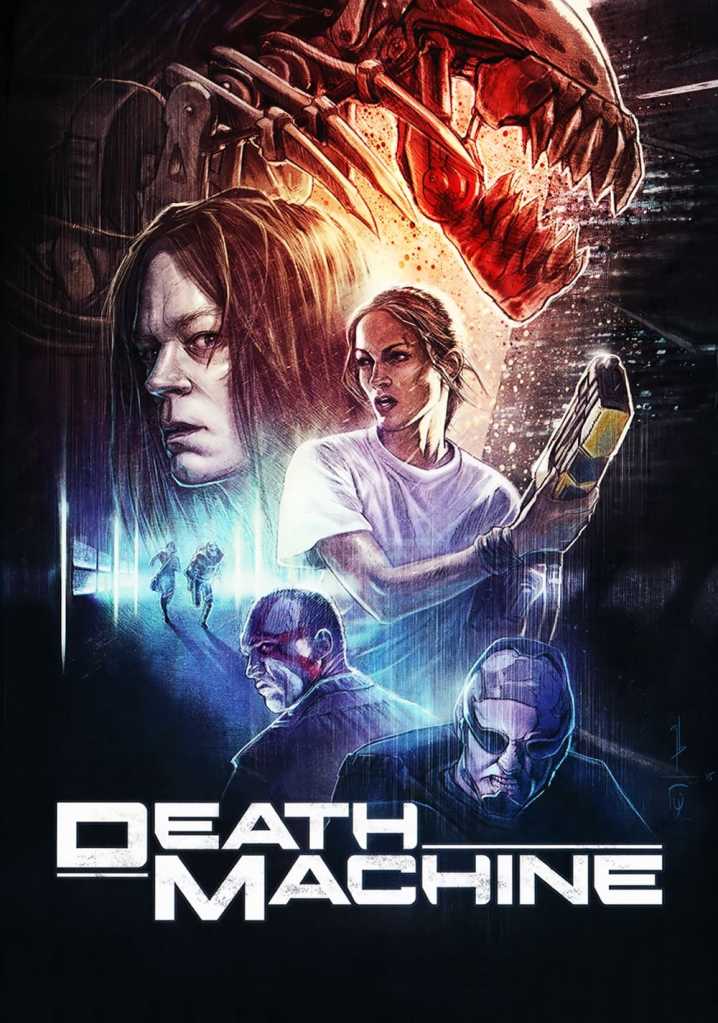
Saturday Matinee: Death Machine

THE DAILY DIG: DEATH MACHINE (1994)

“DEATH MACHINE” HAS ALL THE WORKINGS TO BE A CULT SCI-FI HORROR FILM, RIPE FOR REDISCOVERY AND A PROPER US RELEASE FINALLY.

By Bobby Lisse:

Source: Morbidly Beautiful

A weapons manufacturer tries to cover up its mistakes with a super soldier program while a morally sound executive does her best to uncover their evil plot and the scientist behind it all plots to maim and destroy it all. Let’s dig into 1994’s “Death Machine”, directed by Stephen Norrington!

AS I SEE IT

The directorial debut from Stephen Norrington, and reportedly the effort that landed him the director’s chair for BladeDeath Machine is a good movie with an arsenal of flaws.

Set in the future, which is now past, 2003, we follow the company Chaank that provides military weapons. Their failed Robocop-like super-soldier suit has malfunctioned and caused a slaughter of civilians. Now they’re back to the drawing board, so to speak, though the bottom line is always more important. In steps Scott Ridley who instructs the board they will just be pivoting.

The mad scientist behind the creation, Jack Dante, secretly creates a psycho-death bot named Warbeast. And once the fun starts, this metal death force shreds everyone in its path.

The story has interesting points, such as the evil corporation, the righteous humanist alliance, and the mad genius hellbent on domination. But the acting and script fall off a cliff a little more than halfway through the film. The sets are great, and the animation on the Warbeast is chaotic and amazing, which makes sense because the Director used to cut his teeth in creature effects on films like Aliens and Alien 3. 

The homages are off the charts.

Some of the examples I picked up on were sound effects from DoomMasters of the Universe toys that decorate Dante’s office, a Daffy Duck impression from Brad Dourif, a battle cry from Street Fighter, as well as the Warbeast resembling a Mouser from Teenage Mutant Ninja Turtles. The names of the characters as well are tributary. Some are identical: John Carpenter, Scott Ridley (Ridley Scott), Jack Dante (Joe Dante), Weyland, Yutani (Alien).

There was too much whimsy and cheeky humor inserted for the tone of the film and could have used some fine-tuning. But I feel it was just on the cusp of being a classic sci-fi/horror.

FAMOUS FACES

Brad Dourif (Dante): you know him, you love him, he’s everyone’s favorite good guy. He always brings the same quality of maniacal energy and really excels as the bad guy, but no role was as iconic and great as that of our friend Chuck in Child’s Play. 

He has since become a Rob Zombie regular (31 and Three from Hell), but Richard Brake (Ridley) showed he has the propensity for villainy in what I felt was an underappreciated role. He really stood out, and it was a shame he was killed off so early as he seemed to have an insurmountable level of maddening bravado.

William Hootkins (John Carpenter) is probably most famous as Porkins (Red Six) in Star Wars. He also played Eckhart in Tim Burton’s Batman.

Rachel Weisz has a brief cameo in this her first feature, and would later go on to star in The Mummy series and marry James Bond.

OF GRATUITOUS NATURE

The inclusion of the heartbreaking and gut-wrenching story of Cale’s daughter getting her arm flayed in a garbage disposal does nothing for the greater good of the story. It affords Pouget an opportunity to display another emotion in her repertoire. At this point, however, the script already jumped the shark.

HEARTTHROB

Ely Pouget (Hayden Cale) is a great leading lady for this genre, and her skills are emphasized in the first half of the film. She’s got Ripley’s bad-ass woman card in my opinion, and she’s beautiful to boot. She seems to have hardly aged since 1994 in most recent photographs as well.

RIPE FOR A REMAKE

This is one of those odd, hardly heard of, 90’s films that deserved better. I know it’s been given numerous cuts and a so-called definitive cut, but it could really stand to use some sound editing and unbiased clipping. It’s not sacred ground, but I would rather it see a clean pass rather than a clean slate.

SPAWNS

No progeny to report.

WHERE TO WATCH

An uncut Blu-ray was released in Germany (the version I watched). If you don’t feel like paying up for it, you can stream on Amazon Prime, Roku, Vudu, or Plex.

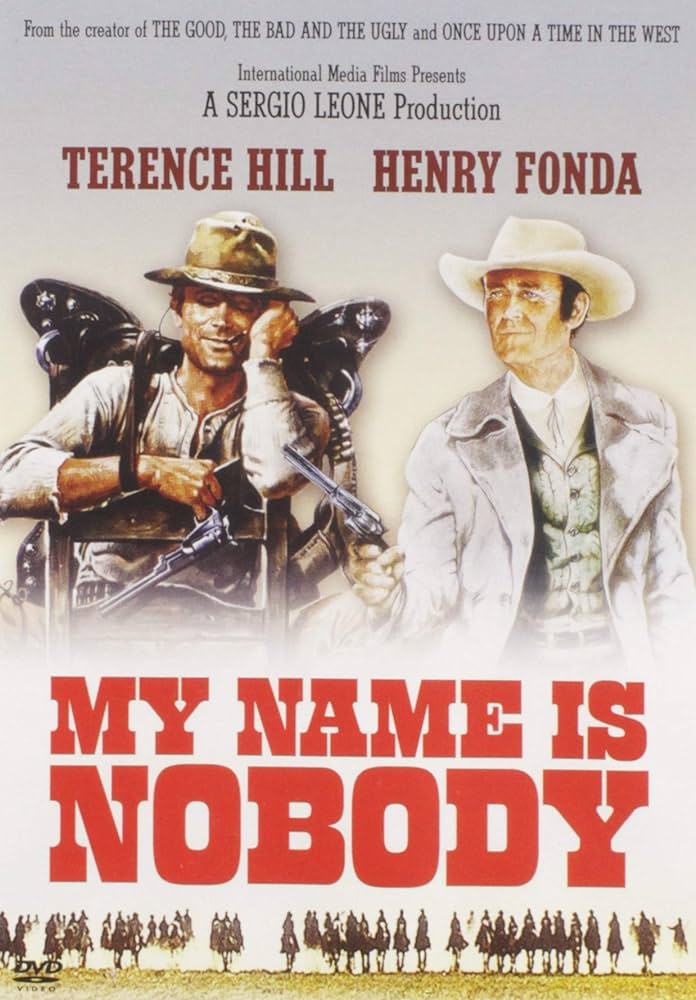
Saturday Matinee: My Name is Nobody

By Richard T. Jameson

Source: Parallax View

[Originally published in Movietone News 36, October 1974]

Most people have been writing about My Name Is Nobody as though it were as unequivocally a Sergio Leone film as Once upon a Time in the West, Duck You Sucker, et al.; some reviewers haven’t troubled to mention the existence of Tonino Valerii (who is emphatically given directorial credit twice in the opening titles) while more scrupulous commentators have nodded toward Valerii while acclaiming My Name Is Nobody as “the most producer-directed movie since The Thing.” There’s no mistaking the Leone manner, the Leone themes, and the frequent instances of Leone power and feeling; the protégé has learned the master’s lessons well, and one feels certain he was largely executing Leone’s own detailed plan of the film. I’m sorry I muffed my chance to see Valerii’s own A Reason to Live, a Reason to Die a month or so ago (I loathe drive-ins) because I might have been better prepared to wade in and sort out the fine points of auteurship in the mise-en-scène. There are lapses in the film that mightn’t have occurred—or might have been more decisively compensated for—if Leone’s hand had been at the throttle. But there are also shots, sequences, and literally timeless moments in the movie that do no disservice to the memory of previous Leones—which is to say that My Name Is Nobody contains some of the most extravagantly exciting footage that’s going to appear on movie screens this year.

The greater share of these is concentrated in the opening half hour or so, wherein we encounter Henry Fonda (doing his best and most cinematic work since Once upon a Time in the West) as a legendary gunfighter named Jack Beauregard and Terence Hill as the latest blue-eyed Leone angel with no name whose life-obsession is to see Beauregard top his career with a one-man stand against the Wild Bunch—150 strong. Beauregard, 51 years of age, isn’t interested. He’s engaged in a double-purpose journey: tracking down several men to kill them or save them, we aren’t quite sure for a while—and also aiming himself toward a ship called the Sundowner in New Orleans which will carry him away from his life-and-death career to bookish retirement in Europe. One inevitably becomes aware of career parallels: Ford winding up his cavalry trilogy with Rio Grande—which has the U.S. Cavalry riding out of United States territory to defeat some hostile Indians—and then turning back to the Ould Sod with The Quiet Man; and, of course, Leone himself, who reconstituted the western in the deliriously decadent terms of Italian romanticism and eventually came to America to make his movies, or parts of them: it has been suggested that My Name Is Nobody is his farewell to the genre (it’s at least an arrivederci—he still wants his next picture to be that long-awaited gangster movie Once upon a Time in the United States) and in its verbal explicitness this latest effort is as prosaically academic as Jack Beauregard looks whenever he puts on his wire-templed spectacles.

But if Beauregard/Fonda makes an appropriate “national monument” to build another death-of-the-West-and-western movie around, Terence Hill’s Nobody—despite a splendid introduction—keeps souring the enterprise with his bland blond pretty-boy features and limited, but very insistent, comic repertoire. And, magnificent as some of the visuals are, too many of them lack the elusive but suggestively forceful spatial and spiritual and characterological coordinates of Leone’s own frames. The mesmerizing detail, the comprehensive authority of camera placement and movement in Leone’s own films, inculcates a terrific sense of inevitability, which tends to make a perverse virtue out of his tortuous excuses for plots (all of which—save the one he stole from Kurosawa—boast holes through which the Wild Bunch could ride). When Beauregard refuses to shoot a man whom everyone has expected him to kill, he sardonically apologizes to Nobody for failing to live up to the sterling ideal the younger man believed in: his destiny, he insists, is to quit while he’s still alive. But Nobody says, “Sometimes ya run smack into your destiny on the very road you’re takin’ to get away from it”: Leone/Valerii cuts to a white desertscape through which the Wild Bunch rides like a storm, and we know that, in the space of that cut, Nobody has gone and killed the man Beauregard spared, and the Bunch is riding to avenge him, as dictated by Nobody’s own inscrutable scenario: Jack Beauregard will face those 150 sons-o’-bitches after all.

This had every right to be a throat-clutching moment (and, in fairness, it’s not bad at all), but this happens to be the third time we’ve been treated to such a scene (each set to Morricone’s outrageous version of “The Ride of the Valkyries”) and, unlike the increasingly distinct memory-image that punctuates Once upon a Time or the cumulatively meaningful progression of recollections from Coburn’s past in Duck You Sucker, the effect has diminished through familiarity on our part and a failure on the director’s to make it new again. Similarly, when Beauregard passes a payroll train at sunset a moment later in the film, we recall that a train rather gratuitously wiped a view of Nobody as he attended a western carnival earlier (a scene that is too derivative and too long—the point, indeed, at which the picture breaks down), and this same train will, for no good reason whatsoever, figure in—be present at—Beauregard’s showdown with the Bunch. Such imagistic links have worked beautifully in the past, but here they never resolve into a form with an aesthetic validity in its own right. Indeed, no sequence suffers from failure of formal credibility more crucially than the big shootout, because there is no rational explanation of how Beauregard figures out how to defeat the numerous adversary (not the first time that’s been true in a Leone film—to those films’ glory) and the fatal flaw—the “visual” logic that seeks to stand in for a more conventional rationale—is, in fact, illogical and trivial.

If I’ve gone on too long about some of the shortcomings of My Name Is Nobody, let me assure the reader I’ve deliberately avoided recounting the manifold beauties of those shots and scenes that do work, the breathtaking switches between absurdist comedy and exultant romanticism, the splendors of Morricone’s score (completely integral to the film, as always with Leone-Morricone endeavors) and Ruzzolini’s and Nannuzzi’s cinematography, and the many self-aware allusions to western classics by Leone and others, which possess a resonance that the over-descriptive screenplay occasionally threatens to overwhelm. A hemi-semi-demi-Leone movie is not only better than no Leone movie at all—it’s also better than just about anything else that’s come along lately. Because, after all, who makes films bigger than Sergio Leone’s? Nobody.

____________________

Watch My Name is Nobody on Plex here: https://watch.plex.tv/movie/my-name-is-nobody-1973

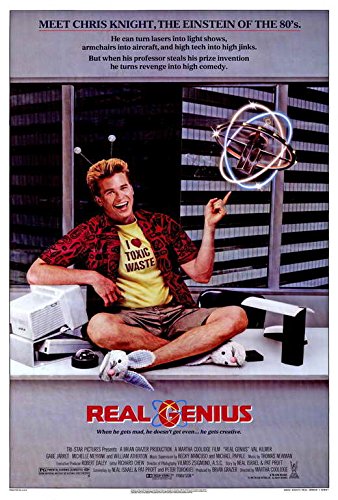
Saturday Matinee: Real Genius

By Roger Ebert

Source: RogerEbert.com

The movie involves the saga of Mitch (Gabe Jarret), a brilliant high school student whose Science Fair project has revised the theory of laser beam technology. He is personally recruited by Professor Hathaway (William Atherton), a famous physics professor who wants the kid to work in his personal laboratory. Once on campus, the kid meets the legendary Chris Knight (Val Kilmer), the most brilliant freshman in history who is now a junior whose mind is beginning to be cluttered by mischief. The two students room together, and there seems to be a third person in the room: a strange, wraith-like bearded figure who disappears into the clothes closet, and doesn’t seem to be there when the door is flung open.

The professor is running a scam. He has a Defense Department contract for a sophisticated laser device so accurate that it could incinerate a single man on Earth from a base in orbit. The professor is using his students as slave labor to do most of the work on the project, while ripping off the government grant to build himself a new house. The students, meanwhile, have no idea they’re working on a weapons system, and are more interested in using laser beams to lead everyone to a “Tanning Invitational” they’ve set up by turning a lecture hall into a swimming pool.

“Real Genius” allows every one of its characters the freedom to be complicated and quirky and individual. That’s especially true of Jordan (Michelle Meyrink), a hyperactive woman student who talks all the time and never sleeps and knits things without even thinking about it, and follows Mitch into the john because she’s so busy explaining something that she doesn’t even notice what he’s doing. I recognize students like this from my own undergraduate days. One of the most familiar types on campus (and one of the rarest in the movies) is the self-styled eccentric, who develops a complex of weird personality traits as a way of clearing space and defining himself.

“Real Genius” was directed by Martha Coolidge, who made “Valley Girl,” one of the best and most perceptive recent teenage movies. What I like best about her is that she gives her characters the freedom to be themselves. They don’t have to be John Belushi clones, or fraternity jocks, or dumb coeds. They can flourish in all of their infinite variety, as young people with a world of possibilities and a lot of strange, beautiful notions. “Real Genius” contains many pleasures, but one of the best is its conviction that the American campus contains life as we know it.

Saturday Matinee: A Bittersweet Life

By George Karystianis

Source: Film Mining 101

Kim Jee-woon’s career is a peculiar one. Filled with masterpieces from his native country (South Korea) and excluding a rather tame Hollywood debut (“The Last Stand” (2013)), he always manages to surprise through his creative outputs due to a chameleonic ability to transcend genres the same way Kubrick, Tarantino and Scorsese (among others) can do.

While other contemporary directors from South Korea (e.g., Bong Joon-ho) include sharp socio-economic commentary and heavy metaphors of emotional allegories, Jee-woon’s films are on a different plane altogether. Bearing genuine traits of auterism, his flicks feature dark stories, complex characters, ambiguous morality and inevitable outcomes.

Following outputs on black comedy (“The Quiet Family” (1998)) and psychological horror (“A Tale of Two Sisters“ (2003)), “A Bittersweet Life” (2005) sees the prolific filmmaker taking a stab at the much established neo-noir action drama with hearty dosages of all your favorite gangster and revenge tropes. Coming hot after the international success of Park Chan-wook’s “Oldboy” (2003), some comparisons might be unavoidable but the only common element for both films is the revenge centric plot.

Embracing a more stylish take on action, Jee-woon’s direction relishes on sudden outbursts of choregraphed violence heading towards a climatic finale that owes a lot to John Woo. Yet “A Bittersweet Life” is at its best when Kim Sun-woo’s stylish, silent and stoic enforcer is on screen. A brilliant (roughly) antihero, he kicks copious amounts of ass under a slick black suit that would make John Wick blush when he is not contemplating how empty his life is (and has been). Delivering a stand out performance, Lee Byung-hun demonstrates what an exceptional actor he is building up a resume filled with challenging roles which demand less talk, more emotion and interesting dramatic layers.

Split into two halves, the moment the inevitable story of betrayal unfolds, Sun-woo consumes the scenery, a human stark contrast against his more emotionally involved cast. Whether he is beating down goons, or escapes narrowly with his life, there are not any moral dilemmas to be answered or cute romances that might take this antihero out of the gangster abyss. No, this is pure old fashioned revenge, packaged gorgeously under Jee-woon’s stylistic flourishes who would go on bigger and more outrageous pastures (Byung-hun on his arm, e.g., “The Good, the Bad, and the Weird” (2008)). A particular fight or die skirmish inside a warehouse is appropriately tense and thrilling bearing stakes and playing interesting against traditional conventions.

There are some minor glimpses of the other life which Sun-woo could have had mostly through the surrogate relationship of “protection” with a talented cellist who acts as the catalyst for the action but the script never fully encapsulates this aspect. We see everything through Kim’s eyes and his perspective of violence and structure is perhaps the only one he has known. Thus, the few loose subplots involving oppositional crime bosses and the cellist herself could initially confuse someone although they are ultimately resolved by the time the credits roll.

A Bittersweet Life” might not be a genre breaking entry but it is expertly made and aims to please fans of the genre with stand out performances, great action, beautiful shots and an interesting choice of Spanish guitar infused soundtrack that gives a melancholic aura, wholly suitable for such a protagonist. It is a pleasing nail bitter from start to finish and a vehicle to showcase t the acting talents of Byung-hun.

____________________

Watch A Bittersweet Life on Kanopy here: https://www.kanopy.com/en/product/13436028

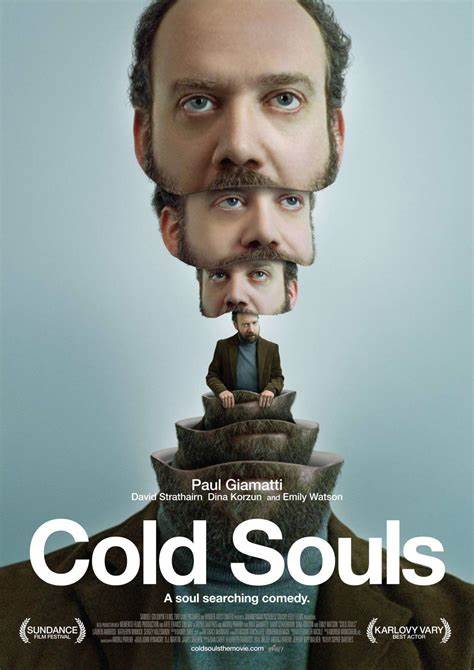
Saturday Matinee: Cold Souls

You may say it’s my soul, but it looks to me like a garbanzo bean

By Roger Ebert

Source: RogerEbert.com

Would an actor sell his own soul for a great performance? No, but he might pawn it. Paul Giamatti is struggling through rehearsals for Chekhov’s “Uncle Vanya” and finds the role is haunting every aspect of his life. His soul is weighed down, it tortures him, it makes his wife miserable. He sees an article in the New Yorker about a new trend: People are having their souls extracted for a time, to lighten the burden.

The man who performs this service is Dr. Flintstein, whose Soul Storage service will remove the soul (or 95 percent of it, anyway) and hold it in cold storage. As played by a droll David Strathairn, whose own soul seems in storage for this character, Flintstein makes his service sound perfectly routine. He’s the type of medical professional who focuses on the procedure and not the patient. Giamatti, playing an actor named after himself, has some questions, as would we all, but he signs up.

“Cold Souls” is a demonstration of the principle that it is always wise to seek a second opinion. The movie is a first feature written and directed by Sophie Barthes, whose previous film was a short about a middle-aged condom tester who considers buying a box labeled “Happiness” at the drugstore. Clearly this is a filmmaker who would enjoy having dinner with Charlie Kaufman. Perhaps inspired by Kaufman’s screenplay for “Being John Malkovich,” she also credits Dead Souls, the novel by Gogol about a Russian landowner who buys up the souls of his serfs.

Gogol was writing satire, and so is Barthes. We hope that medical intervention can help us do what we cannot do on our own: Focus better, look younger, lose weight, cheer up, be smarter. If only it were as simple as taking a pill. Or, in Giamatti’s case, lying on his back to be inserted into a machine looking uncannily like a pregnant MRI scanner.

His soul is successfully extracted and kept in an airtight canister. He’s allowed to see it. It has the size and appearance of a chickpea. Lightened of the burden, he becomes a different actor: easygoing, confident, upbeat, energetic — and awful. Rehearsals are a disaster, and he returns to Flintstein, demanding his old soul back.

This is not easily done, for reasons involving Nina (Dina Korzun), a sexy Russian courier in the black market for souls. A Russian soul is made available to Giamatti, with alarming results. All of this is dealt with in the only way that will possibly work, which is to say, with very straight faces. The material could be approached as a madcap comedy, but it’s funnier this way, as a neurotic, self-centered actor goes through even more anguish than Chekhov ordinarily calls for.

I suppose “Cold Souls” is technically science fiction. There’s a subset involving a world just like the one we inhabit, with only one element changed. In an era of Frankenscience, “Cold Souls” objectifies all the new age emoting about the soul and inserts it into the medical-care system. Certainly if you have enough money to sidestep your insurance company, a great many cutting-edge treatments are available. And soul extraction is not such a stretch when you reflect that personality destruction, in the form of a pre-frontal lobotomy, was for many years medically respectable. Insert an ice pick just so, and your worries are over.

I enjoy movies like this, which play with the logical consequences of an idea. Barthes takes her notion and runs with it, and Giamatti and Strathairn follow fearlessly. The movie is rather evocative about the way we govern ourselves from the inside out. One of Nina’s problems is that she has picked up little pieces from the souls of all other people she has carried. Don’t we all?

____________________

Watch Cold Souls on Plex here: https://watch.plex.tv/movie/cold-souls

Saturday Matinee: One Eyed Jacks

One Eyed Jacks

Hollywood Century, 1961: In which things start to get out of hand

By Tim Brayton

Source: Alternate Ending

The one thing that can never be claimed of the 1961 Western One-Eyed Jacks is that it’s like other movies. Lumbering and bloated, often compelling, always gorgeous, and at times astonishingly bizarre in its attempt to force the psychological impulses of mid-century naturalist theater acting into the framework of a bog-standard Western revenge thriller, I haven’t decided whether or not it “works”, though I am inclined to say it does. But this is the kind of film in which functioning according to any conventional metric was out of the question long before the filming wrapped and the final cut was issued into theaters, and its considerable fascinations are mostly disconnected from its objective quality or lack thereof.

The film began life as a screenplay by Samuel Fuller, adapting Charles Neider’s novel The Authentic Death of Hendry Jones, to be directed by Stanley Kubrick, then just emerging from his enfant terrible years, and starring Marlon Brando. It certainly did not end up that way. When the film entered production in the second half of 1958, Brando’s early career as cinema’s most famous practitioner of Method acting had just begun its slow but steady drift into the wobbly and weird middle period, where he seemed more interested in indulging unspoken private whims than serving the needs of the picture (for a more graphic depiction of this process, I would point you to the actor’s next released film after One-Eyed Jacks, the marvelously clumsy 1962 version of Mutiny on the Bounty). To put it a little more bluntly, Brando had begun his irrevocably slide into becoming a prima donna of the first order. Kubrick had ego problems of his own, of course, as would shortly be thrown in to the sharpest relief on the production of Spartacus, but in the late ’50s, there was no question who was going to win. Brando was one of the biggest names the movies had, and he pulled rank over Kubrick at every turn; eventually, the conflict between the men resulted in Kubrick leaving the production, either because he simply couldn’t stand to be around his star any longer, or because Brando demanded that he be fired.

This left a movie with no clear direction and an in-progress rewrite by Calder Willingham, and nobody in charge to make things right; eventually, Brando assumed the role of director himself, for the first and only time in his career, extensively re-working the screenplay with yet a third writer, Guy Trosper (he and Willingham received final credit onscreen). It would be easy to regard the finished product as a vanity project, and in a lot of ways, that’s precisely what it is. Undoubtedly, there’s no missing that it’s a first-time effort by a man who didn’t necessarily want to direct (the film’s box office failure certainly hurt Brando’s future dreams in that direction if he had them, though I feel like a man of his stature could have finagled another directing assignment somewhere in all the years to come, if he’d been inclined), though it also doesn’t feel lazy or slapdash. Without having ever seen the film, I had rather assumed it would resemble secondhand Elia Kazan set in the West, Kazan being the director most responsible for shaping Brando into the cinematic figure he became. But there’s barely a trace of any such influence in a film that gives itself over to plenty of poetic, narratively fuzzy sequences in which the stillness and peace of the outdoors trumps anything to do with character or plot (and there would have allegedly been plenty more of them in Brando’s original cut, running well in excess of four hours; Paramount carved it down to two hours and 21 minutes, and neither the studio nor the actor-director were happy with that process).

Brando was lucky to have a seasoned old vet to help him shape the visuals: One-Eyed Jacks was shot by Charles Lang, a great and varied cinematographer who worked in everything from light comedy to film noir to character drama, and made visual successes out of material that wouldn’t seem to require any visual sensibility at all (he triumphed on what must have been the immensely thankless job of filming Some Like It Hot, a screenplay-dominated movie if one ever existed). Westerns are, of course, the exact opposite of movies that don’t require strong visuals, and his contribution to One-Eyed Jacks is the glue that holds everything together no matter how badly the drama wants to strain apart or, more often, dissolve into a fog of aimlessness. This is a film with a truly inspiring amount of depth to its compositions and blocking: how much of that was Brando’s theater-honed sensibility, how much was Lang’s desire to show off, how much was simply the sheer power of collaboration, it’s not mine to say. The results are what matter, and the result is a film that constantly offers to pull us in, through the action, into the rooms, and to appreciate the spaces between characters and what that says about their motivations and relative domination of any given moment. It is as impressively three-dimensional as any actual 3-D movie I’ve ever seen. And that’s without even pausing to mention the gorgeous use of color, the penetrating blue of the sky and the dusty, out-of-time feeling to the ground and the interiors.

Anyway, One-Eyed Jacks is something of a visual masterpiece, which I don’t mean as a slight, or as a backhanded compliment. Westerns, as much as any genre, tend to live or die on the quality of their images, which often do a lot of the heavy lifting for defining characters and conflict and themes and emotions. And so it is with this movie, where the way that people exist in the context of their environment tell us more about them than what they say or how they say it. And this is useful to the film, since it is in a lot ways a very stiff and unconvincing piece of storytelling.

Anyway, here’s the idea behind it: there are two bank robbers, Rio (Brando), and Dad Longworth (Karl Malden, whose casting was a chief sticking point between Kubrick and Brando). They’re being chased outside of Sonora, Mexico, in 1880, by the Rurales; Dad promises to get fresh horses and return for Rio, but he simply chickens out, leaving his partner to be taken by the law and imprisoned for five years, till he escapes. At that point, Rio teams up with fellow inmate Chico Modesto (Larry Duran) and the clearly untrustworthy Bob Amory (Ben Johnson), and tracks Dad to Monterey, California, where the turncoat has established himself as the much-loved sheriff, with a beautiful Mexican wife, Maria (Katy Jurado), and a beautiful stepdaughter, Louisa (Pina Pellicer). Eager for revenge on all fronts, Rio plots to steal from the Monterey bank to humiliate Dad and seduce Louisa to symbolically cuckold him, but then he goes and falls in love with the girl instead. And after Dad administers a terrible injury to his hand, and he has a chance to think for weeks while he recuperates, Rio begins to reconsider everything he has planned.

There’s absolutely no obvious reason under the sun for this to take 141 minutes, and One-Eyed Jacks doesn’t provide any non-obvious ones. It’s an indulgent film, is all: full of lengthy, go-nowhere scenes that allow Brando and his co-stars to bat dialogue and situations back and forth in longueurs that I suppose resemble Actors Studio exercises, or something those lines; there’s an aimlessness to the rhythm of scenes for which the only possible justification is that it “feels like life”, not that it in any way works dramatically. And, too, a lot of the film consists of the camera resting on Brando, doing a lot of small-scale business to show off his character and what he’s thinking about. A little bit of it goes a long way, and it doesn’t help that Brando’s performance is nowhere near one of his best: he strands himself with an accent that’s so off-base it’s rather more funny than anything, and threads the script with the most bluntly obvious “overthrowing the father” metaphor imaginable (for serious, Malden’s character has the given name “Dad”?) that provides very little to play that isn’t flat and obvious.

The acting as a whole is a mixed bag, which surprised me a little – apparently, Brando-the-director spent most of his time helping Pellicer into her character and out of her pants, and not to much of an end: she still gives the stiffest performance in the movie with the least modulation of her line deliveries, and only comes alive when she gets to play bigger, negative emotions. The rest of the cast range from excellent (Malden’s flop-sweating authority, Slim Pickens in a remarkable reined-in performance of admirable nastiness) to simply mediocre (Brando himself), and given the film’s obvious desire to be a modernist psychological drama in Western trappings, the inconsistency of the characterisations is a real problem.

The good thing, then, is that One-Eyed Jacks works best when it’s not the film it openly wants to be, and instead can be some kind of weird fever dream of clashing tones and visual abstraction. Especially in its opening quarter or so, the film induces a kind of whiplash in its extreme fluctuations of mood from scene to scene, and cut to cut; it’s laid back here, angry here, mildly comic here, tense here, thoughtful here, and all within five minutes. There’s a deranged electricity to it that’s not exactly the same (or even in the same wheelhouse) as solid genre filmmaking, but it’s a movie with real, palpable ambition to find new, challenging, different things to do with the form. Its radicalism has been overstated by its partisans (psychologically deep Westerns, and Westerns fronted by antiheroes, weren’t exactly new news in 1961), and so has its effectiveness, but that the film is brassy and unique is pretty much beyond dispute. It’s symptomatic in some ways of the bloat and loss of focus that marks so much Hollywood filmmaking of the 1960s, but it would be a lot harder to consider that a problem if every one of those bloated epics of the period had such demented, unpredictable personality as Brando’s captivating folly.

Saturday Matinee: Sanjuro

By Brian Eggert

Source: Deep Focus Review

Answering for the violent thrills of Yojimbo, Akira Kurosawa’s sequel Sanjuro modifies its predecessor’s structure and, in a way, condemns its eponymous hero, reprised by Toshiro Mifune, by depicting his violent existence as a tarnished bushido ideal. Instead of sending up the swordfighting chambara genre as Mifune’s Sanjuro mows down gangs of grotesque, bumbling yakuza criminals, against which he appears superior and even righteous, Kurosawa places his unkempt ronin in the middle of a jidai-geki, a dramatic period piece wherein Mifune’s protagonist remains crafty and skilled in combat, but, shamefully, without nobility nor willingness to restrain his violent instincts. Redefined through introspection and eventual feelings of disgrace about his lifestyle, Kurosawa’s Sanjuro becomes a tragic figure, his mythic stature marked—or soaked, rather—by the blood of his undisciplined existence.

Along with Ryuzo Kikushima and Hideo Oguni, Kurosawa developed Sanjuro from the Shugoro Yamamoto novel Hibi Heian (A Break in the Tranquility) prior to shooting Yojimbo. Yamamoto’s tale, although similarly plotted in its broadstrokes to Kurosawa’s eventual adaptation, features a samurai protagonist without as much idiosyncrasy or skill as Sanjuro. Author of the source novels for Kurosawa’s upcoming pictures Red Beard and Dodes’ka-den, Yamamoto would be associated with Kurosawa for the rest of their careers. For this picture, Kurosawa intended for Hiromichi Horikawa to direct. Horikawa was a former assistant director for Kurosawa on Seven Samurai and Throne of Blood among others, and had become a thriving director in the mid-1950s, with many chambara films among his releases. Nevertheless, producers at Toho Company insisted that Kurosawa direct, given the popularity of Yojimbo under his headship.

Shooting began on Yojimbo in January 1961 and was completed on April 16, and because Kurosawa edited during production, the film was released four days later on April 20, 1961. And since Sanjuro required only minor rewriting to convert the earlier draft into a sequel to Yojimbo, production commenced on September 25, 1961, and ended December 20, with the finished film premiering January 1, 1962. The speed and artistic showmanship with which these films were shot, edited, and released is staggering, especially taking into consideration the detail Kurosawa integrates into his picture. The main setting—a chamberlain’s house and the pond in front, a separating wall with a compound on one side and the sanctuary house on the other—were built as open sets on Toho’s largest stage. Kurosawa oversaw every detail personally, from the vast layout down to the crucial look of camellias on the trees, which the director insisted be hand-made to make sure each one looked just right. At his prime, Kurosawa’s meticulous, even autocratic control over his productions fully justified his nickname: The Emperor.

Sanjuro opens with nine young, incompetent samurai assembled in secret at a forest shrine. Their leader, Iori Izaka (Yuzo Kayama), has recently met with his uncle, the chamberlain, with whom Izaka lobbied to permit his fellow samurai to investigate signs of corruption. The chamberlain refused, which suggested to Izaka that the chamberlain was behind the corruption. And so, Izaka turned to the superintendent for advice; the superintendent agreed to help if they all meet at the present forest shrine. All at once, Mifune’s Sanjuro yawns from the darkness, and casually steps out to offer his thoughts—that the superintendent is, in fact, the corrupt one and the chamberlain was merely being protective of his nephew. He even suspects the superintendent’s men will double-cross the young samurai at their planned meeting, which, as it turns out, takes place at the forest shrine. When Sanjuro learns this, he looks outside and confirms his suspicions are true, then hides the nine young samurai in the floorboards. The superintendent’s men call for surrender and Sanjuro emerges, shouting about the noise and knocking several soldiers down. Believing Sanjuro’s deception, the soldiers’ leader, the idealized samurai warrior Muroto (Tatsuya Nakadai, who also played the gunslinger in Yojimbo), so bound to bushido, recognizes Sanjuro’s skill and offers him a job if he wants it.

Mifune’s introduction recalls the one from Yojimbo, where the ronin is asked his name, and in response, he reveals his first name, “Sanjuro [meaning thirty years old]… going on forty.” He then scans the area and settles on some nearby plantlife for his family name. In Yojimbo, he sees a mulberry field and responds “Kuwabatake [mulberry field],” and in Sanjuro he replies “Tsubaki [camellia]”—an ironic yet apt choice given the camellia’s associations to the chamberlain’s wife and daughter later in the film. In this sequel, Mifune’s Sanjuro proves just as iconic as his performance in the preceding film, only streamlined to highlight those memorable character traits. Unless his sword is drawn, the actor’s arms rarely leave his kimono except to scratch his chin or to itch at his scalp; along with his character’s minimum of dialogue, this places our focus on Mifune’s expressions, ripe with seemingly stoic confidence interrupted by his anger and unease. Sanjuro’s disdain around the hopeless young samurai and his later discomfort around the chamberlain’s wife and daughter are always comical, making Mifune’s performance a subtly complex combination of characterized gestures and reserved emotions.

After the superintendent’s men depart the forest shrine, Sanjuro and the young samurai realize the chamberlain will probably be arrested or worse, as the superintendent has no doubt deduced that the chamberlain suspects him. They resolve to rescue the chamberlain’s wife and daughter (Takako Irie and Reiko Dan) first, before they too are taken. Contemptuous of the young samurai but impelled to assist (for some cash and food) because, as he tells them, they cannot take care of themselves, Sanjuro leads them to the chamberlain’s house, which is guarded by the superintendent’s men. Despite Sanjuro’s constant insults and berating tone, the young samurai follow his every word “like a centipede” astonished by his skill. And, after convincing a servant to get the guards drunk, they quietly take out the sentries and move the women into a nearby barn. Here, Kurosawa pauses for a scene to establish Sanjuro’s lasting themes by differentiating the film’s protagonist from everyone else onscreen. The young samurai, the mannerly women, the dignified warriors serving an upper class—they each follow a particular decorum against which Sanjuro seems incongruous.

When the women first enter their own barn turned hideout, it is a place they have never been; they remark about the lovely smell of hay, the dreamlike quality one feels when resting back on a large mound of the stuff, and reveal their sophisticated obliviousness to the danger of the situation. Their ability to see so much good in the world amid all the bloodshed and unruly politics is not meant to make them look ignorant; rather, they are elevated beyond such unnecessary concerns, achieving a level of paradoxical nescient enlightenment. The chamberlain’s wife asks with polite interest about Sanjuro, and Izaka explains he is a friend. “I hesitate to say this after you so kindly saved us,” remarks the wife, “but killing people is a bad habit. You glisten too brightly… Like a drawn sword… You’re like a sword without a sheath. You cut well, but the best sword is kept in its sheath.” Sanjuro reacts uneasily to this, knowing the wife’s assessment is accurate, but perhaps unwilling to admit it to himself, yet. Sanjuro begins to feel ashamed of his status in the presence of the refined sensibilities of these women. With this, Kurosawa deepens the character throughout the course of the film, allowing Sanjuro to learn something about himself, his eventual victory bittersweet.

One of the young samurai suggests hiding in his house and Sanjuro agrees, but their group quickly learns that the superintendent is keeping the chamberlain locked up next door, just over a compound wall. By the end, Sanjuro, who deceives his enemies by taking Muroto’s job offer to learn of the chamberlain’s exact location, calls the young samurai to rescue the chamberlain, using a downpour of camellias floating down a stream under the compound’s wall as an elegant signal to attack. With this, bloody violence begins to unfold, while on the other side of the wall, the chamberlain’s wife and daughter clap with enchantment at the beauty of the flowers on the water, a scene played both for humor and to emphasize the nonsensicality of violence against the simpler things in life—a message Sanjuro learns by the conclusion. With the chamberlain rescued, the young samurai realize Sanjuro has gone. They find him in a field, preparing to face off against the distinguished samurai Muroto, who, his honor shamed with Sanjuro’s deception, insists they duel. Sanjuro cuts down his opponent with incredible speed, and all of the young samurai, shocked, watch with enthusiasm. After a moment of silent awe, one of them declares the display “brilliant”.

The duel itself remains Sanjuro’s most memorable scene, not only because it concludes the film, but because it does so with such an unforgettable “bang”. Positioned face-to-face, Mifune and Nakadai, mirroring their final scene together in Yojimbo, standoff for a clocked 26 seconds of silence, an excruciatingly long period of suspense. The technician who controlled the pressurized pump to spray Muroto’s fake blood (a batch of chocolate syrup and carbonated water) from Nakadai’s torso worried that the effect would not please Kurosawa, and overcompensated by adding thirty pounds of pressure, so when the scene commenced filming and Mifune cuts with split-second speed, fake blood shot out like a geyser. The larger-than-life outcome, wholly staggering and uncharacteristic when compared to the violence in the rest of the film, pleased Kurosawa, as its exaggerated quality echoes the base thrill both the young samurai and the audience feel toward the spectacle, and how even for a violent film this last act of violence remains the ugliest and most horrible.

A moment later, Sanjuro, enraged by their response, scorns the young samurai for applauding such violence. “Idiots! What do you know about anything? …He was just like me. A drawn sword that wouldn’t stay in its sheath. But you know, the lady was right. The best sword is kept in its sheath. You’d better stay in yours.” Sanjuro begins to walk away and the young samurai follow. “Stop following me or I’ll kill you!” They pause, drop to their knees in honor of their master, confused and shamed by their own ignorance. Scratching, Sanjuro says curtly, “Abayo” or “Bye” and walks off, as composer Masaru Sato’s theme from Yojimbo sends the disillusioned hero on his way. Forced to cut down his opponent, Sanjuro has learned enough about himself to see a level of self-destruction in killing Muroto. Whereas Sanjuro walks away from Yojimbo unaffected by the violence he has caused, he is not so untouched by the end of this sequel.

With Sanjuro a deeper, more thoughtful hero than he was in Yojimbo, this conclusion does not come as a victory. Despite his attempts to instruct them, Sanjuro’s young students have learned nothing of honor, only the thrill of battle. They remain adolescents, swept up in the illusions of the typical jidai-geki, with all of its heroics and courtly politics and romanticized sword fights, and find themselves taken by the rapidly unfolding progression of the plot. Meanwhile, Sanjuro finds the true meaning of bushido by the end, ironically from the words of an inexperienced, naïve but ultimately astute woman whose ideals are shaped by the strictest of Japanese formality. Whereas the young samurai are clinging to their chambara-inspired tales of swordplay and violence, Sanjuro realizes he supplied their myth and feels guilty for his crimes, but in the end reaches a greater plane of wisdom, one aspiring to be more like the strict master swordsman from Seven Samurai.

Among Kurosawa’s most well-balanced films, Sanjuro resounds with equal parts artistic intent and sheer entertainment value—the quality of Kurosawa’s greatest works. An argument can be made that the sequel betters its predecessor by adding a human dimension to the mythological anti-hero from Yojimbo, who, instead of descending upon a small village like a god to unleash retribution, is brought down to earth by humbling comments from the chamberlain’s wife. An undefeatable presence between two pathetic yakuza gangs, Sanjuro stands out as a disheveled bum amid the white-collar setting of a jidai-geki, and because of this, he feels shame. Kurosawa redefines the character in his sequel, complicates his mythology, and avoids that typical sequel mistake of giving audiences more of a proven formula. An audience might walk away from Yojimbo and overlook the social implications, mistaking the picture for escapist entertainment void of commentary; but after Sanjuro, no one can deny the powerful message Kurosawa imparts.


Bibliography:

Galbraith IV, Stuart. The Emperor and the Wolf: The Lives and Films of Akira Kurosawa and Toshiro Mifune. New York: Faber and Faber, 2002.

Kurosawa, Akira. Something Like An Autobiography. New York : Knopf: distributed by Random House, 1982.

Richie, Donald. The Films of Akira Kurosawa, Third Edition, Expanded and Updated. With additional material by Joan Mellen. Berkeley, Calif.: University of California Press, 1996.

Richie, Donald; Schrader, Paul. A Hundred Years of Japanese Film: A Concise History, with a Selective Guide to DVDs and Videos. Tokyo; New York: Kodansha International: Distributed in the U.S. by Kodansha America, 2005.