Hillary Clinton has a dark history in foreign policy. Indeed, if the Nuremberg principles were applied evenly, her name would certainly be on the docket, along with her former boss in the White House, who is actually less of a hawk than she. When Donald Trump publicly expressed a willingness to negotiate with Russia over international conflicts, she referred to such an idea as putting “Christmas in the Kremlin.” She’s red-baited Bernie Sanders for his support for the Cuban and Nicaraguan revolutions back in the 1980s. Clinton basically backs not “political realism,” but the more imperial tradition of neoconservative “American exceptionalism,” a chauvinist mindset by which the US sets the political, economic, and military priorities of the world and the places and times of its interventions, sometimes with allied support, sometimes without, at its own discretion.
Hillary is a product of her husband’s alignment with Democratic Leadership Council (DLC) and the right wing shift of the party, which moved the Democrats away from its moorings in organized labor, the New Deal, civil rights, and the Great Society. Bill Clinton’s successful election undoubtedly inspired the formation of “New” Labour in Britain, which likewise broke with its party history in the labor movement. In the 1990s, then MP Tony Blair, his shadow government chancellor of the exchequer Gordon Brown, and his chief pollster Philip Gould came to America as apprentices of the Clinton presidential campaigns to study their public relations and other electioneering tactics. This became part of New Labour’s successful “Third Way” victorious strategy in 1997. Back then, Anthony Howard, writing in the Times of London, said that Clinton’s New Democrats “lighted the path” for Blair’s New Labour. Blair partnered with Clinton and the DLC in taking a more militarist stance toward Saddam Hussein, which paved the way for Bush’s and Blair’s 2003 invasion of Iraq.
Bill Clinton’s and the DLC’s legacy candidate is Hillary. And what better way to prove her cojones, in case anyone thought a woman president might turn out to be a negotiator and peacenik, than to pick on Russia and reignite the Cold War. Despite the Russians’ brilliant mix of negotiation – warding off a US invasion of Iran, getting the US off Assad’s back with the disposal of his chemical weapons stash – and their effective military intervention against ISIS, Obama, Clinton, and now Kerry will not relent in their hostility. The US neocon inner circle cannot countenance a balance of power arrangement with the Kremlin, disregarding Russia’s status as the second most militarily powerful country in the world. Clinton has called Putin a dictator, the favorite term of disgrace in American ruling circles, except when it comes to America’s allies in the Gulf states, Erdogan, and the long list of authoritarian friends the US has backed over the entire course of the postwar era. Indeed, Putin may be a strongman of sorts, and an extremely popular one in his own country, but is far less of an authoritarian than his predecessor, ” Boris Yeltsin, who ruled by decree and whom Hillary’s husband lauded and financed as a genuine, if quite inebriated, democrat.
Was Hillary in on Bill’s political choices? Recently speaking to Amy Goodman on Democracy Now, Clinton’s secretary of labor Robert Reich said that Bill never made an important decision without consulting the first lady. What are the programs to which Hillary can claim advisory credit during her husband tenure? NAFTA, welfare reform (“ending welfare as we know it,” said Bill), balancing the budget (inflicting austerity measures), the 1994 crime bill (“three strikes and you’re out”), bank deregulation (a sonata for the Great Recession). All of these projects, says author Thomas Frank, were for working Americans and people of color absolute disasters. And one might add to his list the expansion of NATO and the assault on Yugoslavia.
As secretary of state, Hillary backed CIA director Petraeus’ plan to overthrow the Assad government in Syria, from which Obama eventually backed away, thanks to Russia’s intervention and defense of Syria’s sovereignty. As a good neocon soldier for American exceptionalism, Clinton aligns herself with whatever appears at the moment to be the “national interest” center of political gravity (promoting the oil industry, arms sales, the pro-Zionist alliance, divide and rule aid to opponents of secular nationalism, right-to-protect military and economic interventions). The distraction over her emailgate and the Benghazi investigation hides the real crimes of her active support for the bombing of Libya, the overthrow of the government, and the resulting chaos and ISIS organizing in the country, not to mention her backing for the Honduran coup d’etat. Former secretary of defense Robert Gates says that it was Hillary who pushed Obama into the decision on Libya, for which the president now publicly expresses regret, calling the present condition of the country (his words) “a shit show.”
Her champions who cheer her work with women and children ignore the thousands of women and children in Libya and elsewhere in the Middle East, who were slaughtered under her leadership in the State Department. Speaking on regime change, even a right-wing former Pentagon analyst, Michael Maloof, didn’t believe it was appropriate to attack Iraq. “Now with Libya,” he says, “it’s the same. And Hillary Clinton was very much responsible for that.”
If she becomes president, what can be expected of her on domestic policy? She’ll be a good team player – that is, the neocon team – and may even get something accomplished, such as privatizing part of social security and medicare, which was always part of the DLC agenda, and working more closely with the oil companies. Among her other achievements during her years in the State Department, according to investigative journalist, Lee Fang, was her creation of a separate bureau, with more than 60 staff, whose focus was on energy resources. Traveling the world, Clinton used her position, partnered with Chevron, to promote the practice of fracking in developing countries.
With the power couple in the White House, their assets already worth well over $100 million, and with a Congress being mostly a millionaires’ club, no serious tax increase on the rich can be expected. Indeed, the White House will be more of a revolving door for government officials and staff moving back and forth between the corporate world and “public service.” Open Secrets.org found 84 revolving door personnel working for Hillary, more than on any other politician’s staff: “the greatest number of staffers who either came to Capitol Hill after representing private interests or left the member’s staff for a lobbying position.”
Her march to the White House relies on over 400 superdelegates pledged to her – a number of them also wearing the hat of corporate lobbyist – rather than to the democratic voice of the people, Even if nominated and then elected, Hillary, lacking credibility about her authenticity, will not be a popular president. Nearly half of Democrats don’t trust her (56% express trust vs. 81% for Bernie). And a new AP-GfK poll reveals that 55% of all Americans hold a negative opinion of her. Under her presidency, and with the return of the first man, American politics will continue to be business as usual.
Gerald Sussman is a Professor in the Toulan School of Urban Studies and Planning at Portland State University
If there were any doubts that Hillary Clinton favors a neoconservative foreign policy, her performance at Thursday’s debate should have laid them to rest. In every meaningful sense, she is a neocon and – if she becomes President – Americans should expect more global tensions and conflicts in pursuit of the neocons’ signature goal of “regime change” in countries that get in their way.
Beyond sharing this neocon “regime change” obsession, former Secretary of State Clinton also talks like a neocon. One of their trademark skills is to use propaganda or “perception management” to demonize their targets and to romanticize their allies, what is called “gluing white hats” on their side and “gluing black hats” on the other.
So, in defending her role in the Libyan “regime change,” Clinton called the slain Libyan leader Muammar Gaddafi “genocidal” though that is a gross exaggeration of Gaddafi’s efforts to beat back Islamic militants in 2011. But her approach fits with what the neocons do. They realize that almost no one will dare challenge such a characterization because to do so opens you to accusations of being a “Gaddafi apologist.”
Similarly, before the Iraq War, the neocons knew that they could level pretty much any charge against Saddam Hussein no matter how false or absurd, knowing that it would go uncontested in mainstream political and media circles. No one wanted to be a “Saddam apologist.”
Clinton, like the neocons, also shows selective humanitarian outrage. For instance, she laments the suffering of Israelis under crude (almost never lethal) rocket fire from Gaza but shows next to no sympathy for Palestinians being slaughtered by sophisticated (highly lethal) Israeli missiles and bombs.
She talks about the need for “safe zones” or “no-fly zones” for Syrians opposed to another demonized enemy, Syria’s President Bashar al-Assad, but not for the people of Gaza who face the wrath of Israeli Prime Minister Benjamin Netanyahu.
“Yes, I do still support a no-fly zone [in Syria] because I think we need to put in safe havens for those poor Syrians who are fleeing both Assad and ISIS and have some place that they can be safe,” Clinton said. But she showed no such empathy for Palestinians defenseless against Israel’s “mowing the grass” operations against men, women and children trapped in Gaza.
In Clinton’s (and the neocons’) worldview, the Israelis are the aggrieved victims and the Palestinians the heartless aggressors. Referring to the Gaza rocket fire, she said: “I can tell you right now I have been there with Israeli officials going back more than 25 years that they do not seek this kind of attacks. They do not invite the rockets raining down on their towns and villages. They do not believe that there should be a constant incitement by Hamas aided and abetted by Iran against Israel. …
“So, I don’t know how you run a country when you are under constant threat, terrorist attack, rockets coming at you. You have a right to defend yourself.”
Ignoring History
Clinton ignored the history of the Israeli-Palestinian conflict, which dates back to the 1940s when Israeli terrorist organizations engaged in massacres to drive Palestinians from their ancestral lands and murdered British officials who were responsible for governing the territory. Israeli encroachment on Palestinian lands has continued to the present day.
But Clinton framed the conflict entirely along the propaganda lines of the Israeli government: “Remember, Israel left Gaza. They took out all the Israelis. They turned the keys over to the Palestinian people. And what happened? Hamas took over Gaza. So instead of having a thriving economy with the kind of opportunities that the children of the Palestinians deserve, we have a terrorist haven that is getting more and more rockets shipped in from Iran and elsewhere.”
So, Clinton made clear – both at the debate and in her recent AIPAC speech – that she is fully in line with the neocon reverence for Israel and eager to take out any government or group that Israel puts on its enemies list. While waxing rhapsodic about the U.S.-Israeli relationship – promising to take it “to the next level” – Clinton vows to challenge Syria, Iran, Russia and other countries that have resisted or obstructed the neocon/Israeli “wish list” for “regime change.”
In response to Clinton’s Israel-pandering, Sen. Bernie Sanders, who once worked on an Israeli kibbutz as a young man, did the unthinkable in American politics. He called out Clinton for her double standards on Israel-Palestine and suggested that Netanyahu may not be the greatest man on earth.
“You gave a major speech to AIPAC,” Sanders said, “and you barely mentioned the Palestinians. … All that I am saying is we cannot continue to be one-sided. There are two sides to the issue. … There comes a time when if we pursue justice and peace, we are going to have to say that Netanyahu is not right all of the time.”
But in Hillary Clinton’s mind, the Israeli-Palestinian dispute is essentially one-sided. During her speech to the American Israel Public Affairs Committee last month, she depicted Israel as entirely an innocent victim in the Mideast conflicts.
“As we gather here, three evolving threats — Iran’s continued aggression, a rising tide of extremism across a wide arc of instability, and the growing effort to de-legitimize Israel on the world stage — are converging to make the U.S.-Israel alliance more indispensable than ever,” she declared.
“The United States and Israel must be closer than ever, stronger than ever and more determined than ever to prevail against our common adversaries and to advance our shared values. … This is especially true at a time when Israel faces brutal terrorist stabbings, shootings and vehicle attacks at home. Parents worry about letting their children walk down the street. Families live in fear.”
Yet, Clinton made no reference to Palestinian parents who worry about their children walking down the street or playing on a beach and facing the possibility of sudden death from an Israeli drone or warplane. Instead, she scolded Palestinian adults. “Palestinian leaders need to stop inciting violence, stop celebrating terrorists as martyrs and stop paying rewards to their families,” she said.
Then, Clinton promised to put her future administration at the service of the Israeli government. Clinton said, “One of the first things I’ll do in office is invite the Israeli prime minister to visit the White House. And I will send a delegation from the Pentagon and the Joint Chiefs to Israel for early consultations. Let’s also expand our collaboration beyond security.”
Pleasing Phrases
In selling her neocon policies to the American public, Clinton puts the military aspects in pleasing phrases, like “safe zones” and “no-fly zones.” Yet, what she means by that is that as President she will invade Syria and push “regime change,” following much the same course that she used to persuade a reluctant President Obama to invade Libya in 2011.
The Libyan operation was sold as a “humanitarian” mission to protect innocent civilians though Gaddafi was targeting Islamic militants much as he claimed at the time and was not engaging in any mass slaughter of civilians. Clinton also knew that the European allies, such as France, had less than noble motives in wanting to take out Gaddafi.
As Clinton confidant Sidney Blumenthal explained to her, the French were concerned that Gaddafi was working to develop a pan-African currency which would have given Francophone African countries greater freedom from their former colonial master and would undermine French economic dominance of those ex-colonies.
In an April 2, 2011 email, Blumenthal informed Clinton that sources close to one of Gaddafi sons reported that Gaddafi’s government had accumulated 143 tons of gold and a similar amount of silver that “was intended to be used to establish a pan-African currency” that would be an alternative to the French franc.
Blumenthal added that “this was one of the factors that influenced President Nicolas Sarkozy’s decision to commit France to the attack on Libya.” Sarkozy also wanted a greater share of Libya’s oil production and to increase French influence in North Africa, Blumenthal wrote.
But few Americans would rally to a war fought to keep North Africa under France’s thumb. So, the winning approach was to demonize Gaddafi with salacious rumors about him giving Viagra to his troops so they could rape more, a ludicrous allegation that was raised by then-U.S. Ambassador to the United Nations Susan Rice, who also claimed that Gaddafi’s snipers were intentionally shooting children.
With Americans fed a steady diet of such crude propaganda, there was little serious debate about the wisdom of Clinton’s Libyan “regime change.” Meanwhile, other emails show that Clinton’s advisers were contemplating how to exploit Gaddafi’s overthrow as the dramatic moment to declare a “Clinton Doctrine” built on using “smart power.”
On Oct. 20, 2011, when U.S.-backed rebels captured Gaddafi, sodomized him with a knife and then murdered him, Secretary of State Clinton couldn’t contain her glee. Paraphrasing a famous Julius Caesar quote, she declared about Gaddafi, “we came, we saw, he died.”
But this U.S.-organized “regime change” quickly turned sour as old tribal rivalries, which Gaddafi had contained, were unleashed. Plus, it turned out that Gaddafi’s warnings that many of the rebels were Islamic militants turned out to be true. On Sept. 11, 2012, one extremist militia overran the U.S. consulate in Benghazi killing U.S. Ambassador Christopher Stevens and three other Americans.
Soon, Libya slid into anarchy and Western nations abandoned their embassies in Tripoli. President Obama now terms the Libyan fiasco the biggest mistake of his presidency. But Clinton refuses to be chastened by the debacle, much as she appeared to learn nothing from her support for the Iraq invasion in 2003.
The Libyan Mirage
During Thursday’s debate – instead of joining Obama in recognition of the Libyan failure – Clinton acted as if she had overseen some glowing success: “Well, let me say I think we did a great deal to help the Libyan people after Gaddafi’s demise. … We helped them hold two successful elections, something that is not easy, which they did very well because they had a pent-up desire to try to chart their own future after 42 years of dictatorship. I was very proud of that. …
“We also worked to help them set up their government. We sent a lot of American experts there. We offered to help them secure their borders, to train a new military. They, at the end, when it came to security issues, … did not want troops from any other country, not just us, European or other countries, in Libya.
“And so we were caught in a very difficult position. They could not provide security on their own, which we could see and we told them that, but they didn’t want to have others helping to provide that security. And the result has been a clash between different parts of the country, terrorists taking up some locations in the country.”
But that is exactly the point. Like the earlier neocon-driven “regime change” in Iraq, the “regime change” obsession blinds the neocons from recognizing that not only are these operations violations of basic international law regarding sovereignty of other nations but the invasions unleash powerful internal rivalries that neocons, who know little about the inner workings of these countries, soon find they can’t control.
Yet, America’s neocons are so arrogant and so influential that they simply move from one catastrophe to the next like a swarm of locust spreading chaos and death around the globe. They also adapt readily to changes in the political climate.
That’s why some savvy neocons, such as the Brookings Institution’s Robert Kagan, have endorsed Clinton, who The New York Times reported has become “the vessel into which many interventionists are pouring their hopes.”
Kagan told the Times, “I feel comfortable with her on foreign policy. If she pursues a policy which we think she will pursue it’s something that might have been called neocon, but clearly her supporters are not going to call it that; they are going to call it something else.”
Now with Clinton’s election seemingly within reach, the neocons are even more excited about how they can get back to work achieving Syrian “regime change,” overturning Obama’s nuclear deal with Iran, and – what is becoming their ultimate goal – destabilizing nuclear-armed Russia and seeking “regime change” in Moscow.
After all, by helping Assad bring some stability to Syria and assisting Obama in securing the Iranian nuclear deal, Russian President Vladimir Putin has become what the neocons view as the linchpin of resistance to their “regime change” goals. Pull Putin down, the thinking goes, and the neocons can resume checking off their to-do list of Israel’s adversaries: Syria, Iran, Hezbollah, Hamas, etc.
And what could possibly go wrong by destabilizing nuclear-armed Russia and forcing some disruptive “regime change”?
By making Russia’s economy scream and instigating a Maidan-style revolt in Moscow’s Red Square, the neocons see their geopolitical path being cleared, but what they don’t take into account is that the likely successor to Putin would not be some malleable drunk like the late Russian President Boris Yeltsin but, far more likely, a hardline nationalist who might be a lot more careless with the nuclear codes than Putin.
But, hey, when has a neocon “regime change” scheme veered off into a dangerous and unanticipated direction?
A Neocon True-Believer
In Thursday’s debate, Hillary Clinton showed how much she has become a neocon true-believer. Despite the catastrophic “regime changes” in Iraq and Libya, she vowed to invade Syria, although she dresses up that reality in pretty phrases like “safe zones” and “no-fly zones.” She also revived the idea of increasing the flow of weapons to “moderate” rebels although they, in reality, mostly fight under the command umbrella of Al Qaeda’s Nusra Front.
Clinton also suggested that the Syria mess can be blamed on President Obama’s rejection of her recommendations in 2011 to authorize a more direct U.S. military intervention. “Nobody stood up to Assad and removed him,” Clinton said, “and we have had a far greater disaster in Syria than we are currently dealing with right now in Libya.”
In other words, Clinton still harbors the “regime change” goal in Syria. But the problem always was that the anti-Assad forces were penetrated by Al Qaeda and what is now called the Islamic State. The more likely result from Clinton’s goal of removing Assad would be the collapse of the Syrian security forces and a victory for Al Qaeda’s Nusra Front and/or the Islamic State.
If that were to happen, the horrific situation in Syria would become cataclysmic. Millions of Syrians – Alawites, Shiites, Christians, secularists and other “infidels” – would have to flee the beheading swords of these terror groups. That might well force a full-scale U.S. and European invasion of Syria with the bloody outcome probably similar to the disastrous Iraq War.
The only reasonable hope for Syria is for the Assad regime and the less radical Sunni oppositionists to work out some power-sharing agreement, stabilize most of the country, neutralize to some degree the jihadists, and then hold elections, letting the Syrian people decide whether “Assad must go!” – not the U.S. government. But that’s not what Clinton wants.
Perhaps even more dangerous, Clinton’s bellicose rhetoric suggests that she would eagerly move into a dangerous Cold War confrontation with Russia under the upside-down propaganda theme blaming tensions in Eastern Europe on “Russian aggression,” not NATO’s expansion up to Russia’s borders and the U.S.-backed coup in Ukraine in 2014 which ousted an elected president and touched off a civil war.
That coup, which followed neocon fury at Putin for his helping Obama avert U.S. bombing campaigns against Syria and Iran, was largely orchestrated by neocons associated with the U.S. government, including Assistant Secretary of State for European Affairs Victoria Nuland (Robert Kagan’s wife), Sen. John McCain and National Endowment for Democracy President Carl Gershman.
After the violent coup, when the people of Crimea voted by 96 percent to secede from Ukraine and rejoin Russia, the U.S. government and Western media deemed that a “Russian invasion” and when ethnic Russians in eastern Ukraine rose up in resistance to the new authorities in Kiev that became “Russian aggression.”
NATO on the Move
Though President Obama should know better – and I’m told that he does know better – he has succumbed this time to pressure to go along with what he calls the Washington “playbook” of saber-rattling and militarism. NATO is moving more and more combat troops up to the Russian border while Washington has organized punishing economic sanctions aimed at disrupting the Russian economy.
Hillary Clinton appears fully onboard with the neocon goal of grabbing the Big Enchilada, “regime change” in Moscow. Rather than seeing the world as it is, she continues to look through the wrong end of the telescope in line with all the anti-Russian propaganda and the demonization of Putin, whom Clinton has compared to Hitler.
Supporting NATO’s military buildup on Russia’s border, Clinton said, “With Russia being more aggressive, making all kinds of intimidating moves toward the Baltic countries, we’ve seen what they’ve done in eastern Ukraine, we know how they want to rewrite the map of Europe, it is not in our interests [to reduce U.S. support for NATO]. Think of how much it would cost if Russia’s aggression were not deterred because NATO was there on the front lines making it clear they could not move forward.”
Though Clinton’s anti-Russian delusions are shared by many powerful people in Official Washington, they are no more accurate than the other claims about Iraq’s WMD, Gaddafi passing out Viagra to his troops, the humanitarian need to invade Syria, the craziness about Iran being the principal source of terrorism (when it is the Saudis, the Qataris, the Turks and other Sunni powers that have bred Al Qaeda and the Islamic State), and the notion that the Palestinians are the ones picking on the Israelis, not the other way around.
However, Clinton’s buying into the neocon propaganda about Russia may be the most dangerous – arguably existential – threat that a Clinton presidency would present to the world. Yes, she may launch U.S. military strikes against the Syrian government (which could open the gates of Damascus to Al Qaeda and the Islamic State); yes, she might push Iran into renouncing the nuclear agreement (and putting the Israeli/neocon goal to bomb-bomb-bomb-Iran back on the table); yes, she might make Obama’s progressive critics long for his more temperate presidency.
But Clinton’s potential escalation of the new Cold War with Russia could be both the most costly and conceivably the most suicidal feature of a Clinton-45 presidency. Unlike her times as Secretary of State, when Obama could block her militaristic schemes, there will be no one to stop her if she is elected President, surrounded by likeminded neocon advisers.
Investigative reporter Robert Parry broke many of the Iran-Contra stories for The Associated Press and Newsweek in the 1980s. You can buy his latest book, America’s Stolen Narrative, either in print here or as an e-book (from Amazon and barnesandnoble.com).
A nightmare scenario of U.S. geopolitical strategists is coming true: foreign independence from U.S.-centered financial and diplomatic control. China and Russia are investing in neighboring economies on terms that cement Eurasian integration on the basis of financing in their own currencies and favoring their own exports. They also have created the Shanghai Cooperation Organization (SCO) as an alternative military alliance to NATO.[1] And the Asian Infrastructure Investment Bank (AIIB) threatens to replace the IMF and World Bank tandem in which the United States holds unique veto power.
More than just a disparity of voting rights in the IMF and World Bank is at stake. At issue is a philosophy of development. U.S. and other foreign investment in infrastructure (or buyouts and takeovers on credit) adds interest rates and other financial charges to the cost structure, while charging prices as high as the market can bear (think of Carlos Slim’s telephone monopoly in Mexico, or the high costs of America’s health care system), and making their profits and monopoly rents tax-exempt by paying them out as interest.
By contrast, government-owned infrastructure provides basic services at low cost, on a subsidized basis, or freely. That is what has made the United States, Germany and other industrial lead nations so competitive over the past few centuries. But this positive role of government is no longer possible under World Bank/IMF policy. The U.S. promotion of neoliberalism and austerity is a major reason propelling China, Russia and other nations out of the U.S. diplomatic and banking orbit.
On December 3, 2015, Prime Minister Putin proposed that Russia “and other Eurasian Economic Union countries should kick-off consultations with members of the SCO and the Association of Southeast Asian Nations (ASEAN) on a possible economic partnership.”[2] Russia also is seeking to build pipelines to Europe through friendly secular countries instead of Sunni jihadist U.S.-backed countries locked into America’s increasingly confrontational orbit.
Russian finance minister Anton Siluanov points out that when Russia’s 2013 loan to Ukraine was made, at the request of Ukraine’s elected government, Ukraine’s “international reserves were barely enough to cover three months’ imports, and no other creditor was prepared to lend on terms acceptable to Kiev. Yet Russia provided $3 billion of much-needed funding at a 5 per cent interest rate, when Ukraine’s bonds were yielding nearly 12 per cent.”[3]
What especially annoys U.S. financial strategists is that this loan by Russia’s National Wealth Fund was protected by IMF lending practice, which at that time ensured collectability by withholding credit from countries in default of foreign official debts, or at least not bargaining in good faith to pay. To cap matters, the bonds are registered under London’s creditor-oriented rules and courts.
Most worrisome to U.S. strategists is that China and Russia are denominating their trade and investment in their own currencies instead of dollars. After U.S. officials threatened to derange Russia’s banking linkages by cutting it off from the SWIFT interbank clearing system, China accelerated its creation of the alternative China International Payments System (CIPS), and its own credit card system to protect Eurasian economies from the threats made by U.S. unilateralists.
Russia and China are simply doing what the United States has long done: using trade and credit linkages to cement their diplomacy. This tectonic geopolitical shift is a Copernican threat to New Cold War ideology: Instead of the world economy revolving around the United States (the Ptolemaic idea of America as “the indispensible nation”), it may revolve around Eurasia. As long as global financial control remains grounded in Washington at the offices of the IMF and World Bank, such a shift in the center of gravity will be fought with all the power of an American Century (and would-be American Millennium) inquisition.
Any inquisition needs a court system and enforcement vehicles. So does resistance to such a system. That is what today’s global financial, legal and trade maneuvering is all about. And that is why today’s world system is in the process of breaking apart. Differences in economic philosophy call for different institutions.
To U.S. neocons the specter of AIIB government-to-government investment creates fear of nations minting their own money and holding each other’s debt in their international reserves instead of borrowing dollars, paying interest in dollars and subordinating their financial planning to the U.S. Treasury and IMF. Foreign governments would have less need to finance their budget deficits by selling off key infrastructure. And instead of dismantling public spending, a broad Eurasian economic union would do what the United States itself practices, and seek self-sufficiency in banking and monetary policy.
Imagine the following scenario five years from now. China will have spent half a decade building high-speed railroads, ports, power systems and other construction for Asian and African countries, enabling them to grow and export more. These exports will be coming online to repay the infrastructure loans. Also, suppose that Russia has been supplying the oil and gas energy for these projects on credit.
To avert this prospect, suppose an American diplomat makes the following proposal to the leaders of countries in debt to China, Russia and the AIIB: “Now that you’ve got your increased production in place, why repay? We’ll make you rich if you stiff our adversaries and turn back to the West. We and our European allies will support your assigning your nations’ public infrastructure to yourselves and your supporters at insider prices, and then give these assets market value by selling shares in New York and London. Then, you can keep the money and spend it in the West.”
How can China or Russia collect in such a situation? They can sue. But what court in the West will accept their jurisdiction?
That is the kind of scenario U.S. State Department and Treasury officials have been discussing for more than a year. Implementing it became more pressing in light of Ukraine’s $3 billion debt to Russia falling due by December 20, 2015. Ukraine’s U.S.-backed regime has announced its intention to default. To support their position, the IMF has just changed its rules to remove a critical lever on which Russia and other governments have long relied to ensure payment of their loans.
The IMF’s role as enforcer of inter-government debts
When it comes to enforcing nations to pay inter-government debts, the IMF is able to withhold not only its own credit but also that of governments and global bank consortia participating when debtor countries need “stabilization” loans (the neoliberal euphemism for imposing austerity and destabilizing debtor economies, as in Greece this year). Countries that do not privatize their infrastructure and sell it to Western buyers are threatened with sanctions, backed by U.S.-sponsored “regime change” and “democracy promotion” Maidan-style. The Fund’s creditor leverage has been that if a nation is in financial arrears to any government, it cannot qualify for an IMF loan – and hence, for packages involving other governments. That is how the dollarized global financial system has worked for half a century. But until now, the beneficiaries have been U.S. and NATO lenders, not been China or Russia.
The focus on a mixed public/private economy sets the AIIB at odds with the Trans-Pacific Partnership’s aim of relinquishing government planning power to the financial and corporate sector, and the neoliberal aim of blocking governments from creating their own money and implementing their own financial, economic and environmental regulation. Chief Nomura economist Richard Koo, explained the logic of viewing the AIIB as a threat to the U.S.-controlled IMF: “If the IMF’s rival is heavily under China’s influence, countries receiving its support will rebuild their economies under what is effectively Chinese guidance, increasing the likelihood they will fall directly or indirectly under that country’s influence.”[4]
This was the setting on December 8, when Chief IMF Spokesman Gerry Rice announced: “The IMF’s Executive Board met today and agreed to change the current policy on non-toleration of arrears to official creditors.” Russian Finance Minister Anton Siluanov accused the IMF decision of being “hasty and biased.”[5] But it had been discussed all year long, calculating a range of scenarios for a sea change in international law. Anders Aslund, senior fellow at the NATO-oriented Atlantic Council, points out:
The IMF staff started contemplating a rule change in the spring of 2013 because nontraditional creditors, such as China, had started providing developing countries with large loans. One issue was that these loans were issued on conditions out of line with IMF practice. China wasn’t a member of the Paris Club, where loan restructuring is usually discussed, so it was time to update the rules.
The IMF intended to adopt a new policy in the spring of 2016, but the dispute over Russia’s $3 billion loan to Ukraine has accelerated an otherwise slow decision-making process.[6]
The target was not only Russia and its ability to collect on its sovereign loan to Ukraine, but China even more, in its prospective role as creditor to African countries and prospective AIIB borrowers, planning for a New Silk Road to integrate a Eurasian economy independent of U.S. financial and trade control. The Wall Street Journal concurred that the main motive for changing the rules was the threat that China would provide an alternative to IMF lending and its demands for crushing austerity. “IMF-watchers said the fund was originally thinking of ensuring China wouldn’t be able to foil IMF lending to member countries seeking bailouts as Beijing ramped up loans to developing economies around the world.”[7] So U.S. officials walked into the IMF headquarters in Washington with the legal equivalent of suicide vests. Their aim was a last-ditch attempt to block trade and financial agreements organized outside of U.S. control and that of the IMF and World Bank.
The plan is simple enough. Trade follows finance, and the creditor usually calls the tune. That is how the United States has used the Dollar Standard to steer Third World trade and investment since World War II along lines benefiting the U.S. economy. The cement of trade credit and bank lending is the ability of creditors to collect on the international debts being negotiated. That is why the United States and other creditor nations have used the IMF as an intermediary to act as “honest broker” for loan consortia. (“Honest broker” means being subject to U.S. veto power.) To enforce its financial leverage, the IMF has long followed the rule that it will not sponsor any loan agreement or refinancing for governments that are in default of debts owed to other governments. However, as the afore-mentioned Aslund explains, the IMF could easily
change its practice of not lending into [countries in official] arrears … because it is not incorporated into the IMF Articles of Agreement, that is, the IMF statutes. The IMF Executive Board can decide to change this policy with a simple board majority. The IMF has lent to Afghanistan, Georgia, and Iraq in the midst of war, and Russia has no veto right, holding only 2.39 percent of the votes in the IMF. When the IMF has lent to Georgia and Ukraine, the other members of its Executive Board have overruled Russia.[8]
After the rules change, Aslund later noted, “the IMF can continue to give Ukraine loans regardless of what Ukraine does about its credit from Russia, which falls due on December 20.[9]
The IMF rule that no country can borrow if it is in default to a foreign government was created in the post-1945 world. Since then, the U.S. Government, Treasury and/or U.S. bank consortia have been party to nearly every major loan agreement. But inasmuch as Ukraine’s official debt to Russia’s National Wealth Fund was not to the U.S. Government, the IMF announced its rules change simply as a “clarification.” What its rule really meant was that it would not provide credit to countries in arrears to the U.S. government, not that of Russia or China.
It remains up to the IMF board – and in the end, its managing director – whether or not to deem a country creditworthy. The U.S. representative can block any foreign leaders not beholden to the United States. Mikhail Delyagin, Director of the Institute of Globalization Problems, explained the double standard at work: “The Fund will give Kiev a new loan tranche on one condition: that Ukraine should not pay Russia a dollar under its $3 billion debt. … they will oblige Ukraine to pay only to western creditors for political reasons.”[10]
The post-2010 loan packages to Greece are a case in point. The IMF staff saw that Greece could not possibly pay the sums needed to bail out French, German and other foreign banks and bondholders. Many Board members agreed, and have gone public with their whistle blowing. Their protests didn’t matter. President Barack Obama and Treasury Secretary Tim Geithner pointed out that U.S. banks had written credit default swaps betting that Greece could pay, and would lose money if there were a debt writedown). Dominique Strauss-Kahn backed the hard line US- European Central Bank position. So did Christine Lagarde in 2015, overriding staff protests.[11]
Regarding Ukraine, IMF executive board member Otaviano Canuto, representing Brazil, noted that the logic that “conditions on IMF lending to a country that fell behind on payments [was to] make sure it kept negotiating in good faith to reach agreement with creditors.”[12] Dropping this condition, he said, would open the door for other countries to insist on a similar waiver and avoid making serious and sincere efforts to reach payment agreement with creditor governments.
A more binding IMF rule is Article I of its 1944-45 founding charter, prohibiting the Fund from lending to a member state engaged in civil war or at war with another member state, or for military purposes in general. But when IMF head Lagarde made the last loan to Ukraine, in spring 2015, she merely expressed a vapid token hope there might be peace. Withholding IMF credit could have been a lever to force peace and adherence to the Minsk agreements, but U.S. diplomatic pressure led that opportunity to be rejected. President Porochenko immediately announced that he would step up the civil war with the Russian-speaking population in the eastern Donbass region.
The most important IMF condition being violated is that continued warfare with the East prevents a realistic prospect of Ukraine paying back new loans. The Donbas is where most Ukrainian exports were made, mainly to Russia. That market is being lost by the junta’s belligerence toward Russia. This should have blocked Ukraine from receiving IMF aid. Aslund himself points to the internal contradiction at work: Ukraine has achieved budget balance because the inflation and steep currency depreciation has drastically eroded its pension costs. But the resulting decline in the purchasing power of pension benefits has led to growing opposition to Ukraine’s post-Maidan junta. So how can the IMF’s austerity budget be followed without a political backlash? “Leading representatives from President Petro Poroshenko’s Bloc are insisting on massive tax cuts, but no more expenditure cuts; that would cause a vast budget deficit that the IMF assesses at 9-10 percent of GDP, that could not possibly be financed.”[13]
By welcoming and financing Ukraine instead of treating as an outcast, the IMF thus is breaking four of its rules:
Not to lend to a country that has no visible means to pay back the loan. This breaks the “No More Argentinas” rule, adopted after the IMF’s disastrous 2001 loan.
Not to lend to a country that repudiates its debt to official creditors. This goes against the IMF’s role as enforcer for the global creditor cartel.
Not to lend to a borrower at war – and indeed, to one that is destroying its export capacity and hence its balance-of-payments ability to pay back the loan.
Finally, not to lend to a country that is not likely to carry out the IMF’s austerity “conditionalities,” at least without crushing democratic opposition in a totalitarian manner.
The upshot – and new basic guideline for IMF lending – is to split the world into pro-U.S. economies going neoliberal, and economies maintaining public investment in infrastructure n and what used to be viewed as progressive capitalism. Russia and China may lend as much as they want to other governments, but there is no global vehicle to help secure their ability to be paid back under international law. Having refused to roll back its own (and ECB) claims on Greece, the IMF is willing to see countries not on the list approved by U.S. neocons repudiate their official debts to Russia or China. Changing its rules to clear the path for making loans to Ukraine is rightly seen as an escalation of America’s New Cold War against Russia and China.
Timing is everything in such ploys. Georgetown University Law professor and Treasury consultant Anna Gelpern warned that before the “IMF staff and executive board [had] enough time to change the policy on arrears to official creditors,” Russia might use “its notorious debt/GDP clause to accelerate the bonds at any time before December, or simply gum up the process of reforming the IMF’s arrears policy.”[14] According to this clause, if Ukraine’s foreign debt rose above 60 percent of GDP, Russia’s government would have the right to demand immediate payment. But President Putin, no doubt anticipating the bitter fight to come over its attempts to collect on its loan, refrained from exercising this option. He is playing the long game, bending over backward to behave in a way that cannot be criticized as “odious.”
A more immediate reason deterring the United States from pressing earlier to change IMF rules was the need to use the old set of rules against Greece before changing them for Ukraine. A waiver for Ukraine would have provided a precedent for Greece to ask for a similar waiver on paying the “troika” – the European Central Bank (ECB), EU commission and the IMF itself – for the post-2010 loans that have pushed it into a worse depression than the 1930s. Only after Greece capitulated to eurozone austerity was the path clear for U.S. officials to change the IMF rules to isolate Russia. But their victory has come at the cost of changing the IMF’s rules and those of the global financial system irreversibly. Other countries henceforth may reject conditionalities, as Ukraine has done, as well as asking for write-downs on foreign official debts.
That was the great fear of neoliberal U.S. and Eurozone strategists last summer, after all. The reason for smashing Greece’s economy was to deter Podemos in Spain and similar movements in Italy and Portugal from pursuing national prosperity instead of eurozone austerity. “Imagine the Greek government had insisted that EU institutions accept the same haircut as the country’s private creditors,” Russian finance minister Anton Siluanov asked. “The reaction in European capitals would have been frosty. Yet this is the position now taken by Kiev with respect to Ukraine’s $3 billion eurobond held by Russia.”[15]
The consequences of America’s tactics to make a financial hit on Russia while its balance of payments is down (as a result of collapsing oil and gas prices) go far beyond just the IMF. These tactics are driving other countries to defend their own economies in the legal and political spheres, in ways that are breaking apart the post-1945 global order.
Countering Russia’s ability to collect in Britain’s law courts
Over the past year the U.S. Treasury and State Departments have discussed ploys to block Russia from collecting by suing in the London Court of International Arbitration, under whose rules Russia’s bonds issued to Ukraine are registered. Reviewing the excuses Ukraine might use to avoid paying Russia, Prof. Gelpern noted that it might declare the debt “odious,” made under duress or corruptly. In a paper for the Peterson Institute of International Economics (the banking lobby in Washington) she suggested that Britain should deny Russia the use of its courts as a means of reinforcing the financial, energy and trade sanctions passed after Crimea voted to join Russia as protection against the ethnic cleansing from the Right Sector, Azov Battalion and other paramilitary groups descending on the region.[16]
A kindred ploy might be for Ukraine to countersue Russia for reparations for “invading” it and taking Crimea. Such a claim would seem to have little chance of success (without showing the court to be an arm of NATO politics), but it might delay Russia’ ability to collect by tying the loan up in a long nuisance lawsuit. But the British court would lose credibility if it permits frivolous legal claims (called barratry in English) such as President Poroshenko and Prime Minister Yatsenyuk have threatened.
To claim that Ukraine’s debt to Russia was “odious” or otherwise illegitimate, “President Petro Poroshenko said the money was intended to ensure Yanukovych’s loyalty to Moscow, and called the payment a ‘bribe,’ according to an interview with Bloomberg in June this year.”[17] The legal and moral problem with such arguments is that they would apply equally to IMF and U.S. loans. They would open the floodgates for other countries to repudiate debts taken on by dictatorships supported by IMF and U.S. lenders.
As Foreign Minister Sergei Lavrov noted, the IMF’s change of rules, “designed to suit Ukraine only, could plant a time bomb under all other IMF programs.” The new rules showed the extent to which the IMF is subordinate to U.S. aggressive New Cold Warriors: “since Ukraine is politically important – and it is only important because it is opposed to Russia – the IMF is ready to do for Ukraine everything it has not done for anyone else.”[18]
In a similar vein, Andrei Klimov, deputy chairman of the Committee for International Affairs at the Federation Council (the upper house of Russia’s parliament) accused the United States of playing “the role of the main violin in the IMF while the role of the second violin is played by the European Union, [the] two basic sponsors of the Maidan – the … coup d’état in Ukraine in 2014.”[19]
Putin’s counter-strategy and the blowback on U.S.-European relations
Having anticipated that Ukraine would seek excuses to not pay Russia, President Putin refrained from exercising Russia’s right to demand immediate payment when Ukraine’s foreign debt rose above 60 percent of GDP. In November he even offered to defer any payment at all this year, stretching payments out to “$1 billion next year, $1 billion in 2017, and $1 billion in 2018,” if “the United States government, the European Union, or one of the big international financial institutions” guaranteed payment.[20] Based on their assurances “that Ukraine’s solvency will grow,” he added, they should be willing to put their money where their mouth was. If they did not provide guarantees, Putin pointed out, “this means that they do not believe in the Ukrainian economy’s future.”
Implicit was that if the West continued encouraging Ukraine to fight against the East, its government would not be in a position to pay. The Minsk agreement was expiring and Ukraine was receiving new arms support from the United States, Canada and other NATO members to intensify hostilities against Donbas and Crimea.
But the IMF, European Union and United States refused to back up the Fund’s optimistic forecast of Ukraine’s ability to pay in the face of its continued civil war against the East. Foreign Minister Lavrov concluded that, “By having refused to guarantee Ukraine’s debt as part of Russia’s proposal to restructure it, the United States effectively admitted the absence of prospects of restoring its solvency.”[21]
In an exasperated tone, Prime Minister Dmitry Medvedev said on Russian television: “I have a feeling that they won’t give us the money back because they are crooks … and our Western partners not only refuse to help, but they also make it difficult for us.” Accusing that “the international financial system is unjustly structured,” he nonetheless promised to “go to court. We’ll push for default on the loan and we’ll push for default on all Ukrainian debts,” based on the fact that the loan
was a request from the Ukrainian Government to the Russian Government. If two governments reach an agreement this is obviously a sovereign loan…. Surprisingly, however, international financial organisations started saying that this is not exactly a sovereign loan. This is utter bull. Evidently, it’s just an absolutely brazen, cynical lie. … This seriously erodes trust in IMF decisions. I believe that now there will be a lot of pleas from different borrower states to the IMF to grant them the same terms as Ukraine. How will the IMF possibly refuse them?[22]
And there the matter stands. On December 16, 2015, the IMF’s Executive Board ruled that “the bond should be treated as official debt, rather than a commercial bond.”[23] Forbes quipped: “Russia apparently is not always blowing smoke. Sometimes they’re actually telling it like it is.”[24]
Reflecting the degree of hatred fanned by U.S. diplomacy, U.S.-backed Ukrainian Finance Minister Natalie A. Jaresko expressed an arrogant confidence that the IMF would back the Ukrainian cabinet’s announcement on Friday, December 18, of its intention to default on the debt to Russia falling due two days later. “If we were to repay this bond in full, it would mean we failed to meet the terms of the I.M.F. and the obligations we made under our restructuring.”[25]
Adding his own bluster, Prime Minister Arseny Yatsenyuk announced his intention to tie up Russia’s claim for payment by filing a multibillion-dollar counter claim “over Russia’s occupation of Crimea and intervention in east Ukraine.” To cap matters, he added that “several hundred million dollars of debt owed by two state enterprises to Russian banks would also not be paid.”[26] This makes trade between Ukraine and Russia impossible to continue. Evidently Ukraine’s authorities had received assurance from IMF and U.S. officials that no real “good faith” bargaining would be required to gain ongoing support. Ukraine’s Parliament did not even find it necessary to enact the new tax code and budget conditionalities that the IMF loan had demanded.
The world is now at war financially, and all that seems to matter is whether, as U.S. Defense Secretary Donald Rumsfeld had put matters, “you are for us or against us.” As President Putin remarked at the 70th session of the UN General Assembly regarding America’s support of Al Qaeda, Al Nusra and other allegedly “moderate” ISIS allies in Syria: “I cannot help asking those who have caused this situation: Do you realize now what you have done? … I am afraid the question will hang in the air, because policies based on self-confidence and belief in one’s exceptionality and impunity have never been abandoned.”[27]
The blowback
America’s unilateralist geopolitics are tearing up the world’s economic linkages that were put in place in the heady days after World War II, when Europe and other countries were so disillusioned that they believed the United States was acting out of idealism rather than national self-interest. Today the question is how long Western Europe will be willing to forego its trade and investment interests by accepting U.S.-sponsored sanctions against Russia, Iran and other economies. Germany, Italy and France already are feeling the strains.
The oil and pipeline war designed to bypass Russian energy exports is flooding Europe with refugees, as well as spreading terrorism. Although the leading issue in America’s Republican presidential debate on December 15, 2015, was safety from Islamic jihadists, no candidate thought to explain the source of this terrorism in America’s alliance with Wahabist Saudi Arabia and Qatar, and hence with Al Qaeda and ISIS/Daish as a means of destabilizing secular regimes in Libya, Iraq, Syria, and earlier in Afghanistan. Going back to the original sin of CIA hubris – overthrowing the secular Iranian Prime Minister leader Mohammad Mosaddegh in 1953 – U.S. foreign policy has been based on the assumption that secular regimes tend to be nationalist and resist privatization and neoliberal austerity.
Based on this assumption, U.S. Cold Warriors have aligned themselves against democratic regimes seeking to promote their own prosperity and resist neoliberalism in favor of maintaining their own traditional mixed public/private economies. That is the back-story of the U.S. fight to control the rest of the world. Tearing apart the IMF’s rules is only the most recent chapter. Arena by arena, the core values of what used to be American and European social democratic ideology are being uprooted by the tactics being used to hurt Russia, China and their prospective Eurasian allies.
The Enlightenment’s ideals were of secular democracy and the rule of international law applied equally to all nations, classical free market theory (of markets free from unearned income and rent extraction by special interests), and public investment in infrastructure to hold down the cost of living and doing business. These are all now to be sacrificed to a militant U.S. unilateralism. Putting their “indispensable nation” above the rule of law and parity of national interests (the 1648 Westphalia treaty, not to mention the Geneva Convention and Nuremburg laws), U.S. neocons proclaim that America’s destiny is to prevent foreign secular democracy from acting in ways other than in submission to U.S. diplomacy. Behind this lie the special U.S. financial and corporate interests that control American foreign policy.
This is not how the Enlightenment was supposed to turn out. Industrial capitalism a century ago was expected to evolve into an economy of abundance worldwide. Instead, we have American Pentagon capitalism, with financial bubbles deteriorating into a polarized rentier economy and a resurgence of old-fashioned imperialism. If and when a break comes, it will not be marginal but a seismic geopolitical shift.
The Dollar Bloc’s Financial Curtain
By treating Ukraine’s repudiation of its official debt to Russia’s National Wealth Fund as the new norm, the IMF has blessed its default. President Putin and foreign minister Lavrov have said that they will sue in British courts. The open question is whether any court exist in the West not under the thumb of U.S. veto?
America’s New Cold War maneuvering has shown that the two Bretton Woods institutions are unreformable. It is easier to create new institutions such as the AIIB than to retrofit the IMF and World Bank, NATO and behind it, the dollar standard – all burdened with the legacy of their vested interests.
U.S. geostrategists evidently thought that excluding Russia, China and other Eurasian countries from the U.S.-based financial and trade system would isolate them in a similar economic box to Cuba, Iran and other sanctioned adversaries. The idea was to force countries to choose between being impoverished by such exclusion, or acquiescing in U.S. neoliberal drives to financialize their economies under U.S. control.
What is lacking here is the idea of critical mass. The United States may arm-twist Europe to impose trade and financial sanctions on Russia, and may use the IMF and World Bank to exclude countries not under U.S. hegemony from participating in dollarized global trade and finance. But this diplomatic action is producing an equal and opposite reaction. That is the Newtonian law of geopolitics. It is propelling other countries to survive by avoiding demands to impose austerity on their government budgets and labor, by creating their own international financial organization as an alternative to the IMF, and by juxtaposing their own “aid” lending to that of the U.S.-centered World Bank.
This blowback requires an international court to handle disputes free from U.S. arm-twisting. The Eurasian Economic Union accordingly has created its own court to adjudicate disputes. This may provide an alternative to Judge Griesa’s New York federal kangaroo court ruling in favor of vulture funds derailing Argentina’s debt settlements and excluding that country from world financial markets.
The more nakedly self-serving U.S. policy is – from backing radical fundamentalist outgrowths of Al Qaeda throughout the Near East to right-wing nationalists in Ukraine and the Baltics – then the greater the pressure will grow for the Shanghai Cooperation Organization, AIIB and related institutions to break free of the post-1945 Bretton Woods system run by the U.S. State, Defense and Treasury Departments and their NATO superstructure of coercive military bases. As Paul Craig Roberts recently summarized the dynamic, we are back with George Orwell’s 1984 global fracture between Oceania (the United States, Britain and its northern European NATO allies as the sea and air power) vs. Eurasia as the consolidated land power.
Footnotes:
[1] The SCO was created in 2001 in Shanghai by the leaders of China, Russia, Kazakhstan, Kyrgyzstan, Tajikistan, and Uzbekistan. India and Pakistan are scheduled to join, along with Iran, Afghanistan and Belarus as observers, and other east and Central Asian countries as “dialogue partners.”
[2] “Putin Seeks Alliance to Rival TPP,” RT.com (December 04 2015). The Eurasian Economic Union was created in 2014 by Russia, Belarus and Kazakhstan, soon joined by Kyrgyzstan and Armenia. ASEAN was formed in 1967, originally by Indonesia, Malaysia the Philippines, Singapore and Thailand. It subsequently has been expanded. China and the AIIB are reaching out to replace World Bank. The U.S. refused to join the AIIB, opposing it from the outset.
[8] Anders Åslund, “Ukraine Must Not Pay Russia Back,” Atlantic Council, November 2, 2015 (from Johnson’s Russia List, November 3, 2015, #50).
[9] Anders Aslund, “The IMF Outfoxes Putin,” op. cit.
[10] Quoted in Tamara Zamyantina, “IMF’s dilemma: to help or not to help Ukraine, if Kiev defaults,” TASS, translated on Johnson’s Russia List, December 9, 2015, #9.
[11] I provide a narrative of the Greek disaster in Killing the Host (2015).
[15] Anton Siluanov, “Russia wants fair rules on sovereign debt,” Financial Times, op. cit.. He added: “Russia’s financing was not made for commercial gain. Just as America and Britain regularly do, it provided assistance to a country whose policies it supported. The US is now supporting the current Ukrainian government through its USAID guarantee programme.”
“Lavrov: U.S. admits lack of prospects of restoring Ukrainian solvency,” November 7, 2015, translated on Johnson’s Russia List, December 7, 2015, #38.[21]
[24] Kenneth Rapoza, “IMF Says Russia Right About Ukraine $3 Billion Loan,” Forbes.com, December 16, 2015. The article added: “the Russian government confirmed to Euroclear, at the request of the Ukrainian authorities at the time, that the Eurobond was fully owned by the Russian government.”
The neoconservatives arguably have damaged American national interests more than any group in modern history. They have done more harm than the marginal Communists pursued by Sen. Joe McCarthy in the 1950s, more than the Yippies of the 1960s, more than Richard Nixon’s Watergate burglars in the 1970s or the Iran-Contra conspirators in the 1980s.
The neocons have plunged the U.S. government into extraordinarily ill-considered wars wasting trillions of dollars, killing hundreds of thousands if not millions of people, anddestabilizing large swaths of the planet including the Middle East, much of Africa and now Europe. Those costs include a swelling hatred against America and a deformed U.S. foreign policy elite that is no longer capable of formulating coherent strategies.
Yet, the neocons have remained immune from the consequences of their catastrophes. They still dominate Washington’s major think tanks as well as the op-ed pages of virtually all the leading newspapers, including The Washington Post, Wall Street Journal and New York Times. They hold down key positions in the State Department, and their “liberal interventionist” pals have the ear of President Barack Obama.
Clearly, the neocons are skilled operatives, knowing how to arrange a steady stream of funding for themselves, from military contractors donating to think tanks, from U.S. taxpayers footing the bill for organizations like the National Endowment for Democracy, and from ideological billionaires set on aligning U.S. foreign policy with hard-line Israeli desires.
The neocons are adept at writing op-ed articles that twist any set of facts into support for their ideological cause; they supply just the right quote that fits into the news cycle’s latest narrative; and they host policy conferences that attract powerful politicians and fawning media coverage.
But are the neocons a force that can coexist with the American Republic? Have they become an existential threat not only to the constitutional structure crafted in 1787 but to continued life on the planet? Are they locked on a course of action that could lead to a nuclear holocaust?
Clearly, the neocons’ commitment to Israeli interests violates a key principle established by the nation’s early presidents who all warned against “foreign entangling alliances” as a fundamental threat to a citizens’ republic that would transform America into a warrior state that would inevitably sap the nation’s liberties.
That loss of liberty has surely happened. Not only is there now bipartisan support for a surveillance state that can spy on the personal lives of American citizens, but the U.S. government has wedded itself to the concept of “strategic communications,” a catch-phrase that merges psychological operations, propaganda and P.R. into a seamless approach toward managing public perceptions at home and abroad.
When information is systematically pushed through a filter designed to ensure consent, the core democratic concept of an informed electorate has been turned on its head: The people no longer oversee the government; the government manipulates the people.
Neocon Tactics
All this has been part of the neocon approach dating back to the 1980s when key operatives, such as Robert Kagan and Elliott Abrams, were part of inter-agency task forces designed to whip the American people into line behind the government’s aggressive war policies. Guided by seasoned CIA propagandists, such as Walter Raymond Jr., the neocons learned their lessons well.
But the neocons are no longer just threatening the existence of the Republic; they are now endangering the continuation of life itself. They have decided to launch a new Cold War against Russia that will push the world toward the brink of thermo-nuclear war.
Of course, the neocons will frame their doomsday strategy as all Vladimir Putin’s fault. They will insist that they are just standing up to “Russian aggression” and that anyone who doesn’t join them is a “stooge of Moscow” or “weak.” They will dictate the shape of the debate just as they have in countless other situations, such as guiding Americans to war in Iraq over non-existent WMD stockpiles.
The neocon pundits will write seemingly authoritative op-eds about devious Kremlin strategies which will glue black hats on the Russians and white hats on whomever is on the other side, whether the neo-Nazis in Ukraine or the Islamic State/Al Qaeda terrorists in Syria. Americans will be whipped up into a frenzy that will demand a direct clash with the “Russ-kies” or “regime change” in Moscow.
There will be little or no concern about the risks. With the neocons, there never is. The assumption is that if “Amur-ika” is tough, the other side will back down. Then, with U.S.-led economic sanctions from the outside and U.S.-funded NGOs stirring up trouble from the inside, “regime change” becomes the cure-all.
Everyone who’s important in Official Washington – everyone on the talk shows and op-ed pages – knows that these disruptive situations always play out just the way they’re diagramed inside the top think tanks. A hand-picked “democratic reformer” who’s traveled the think-tank circuit and gotten the seal of approval – the likes of Iraq’s Ahmed Chalabi – will easily be installed and then the target country will do whatever the neocons dictate. After all, that approach worked so well in Iraq. The neocons always know best.
Raising the Stakes
Yet, with Russia, the stakes are even higher than with Iraq. Yes, it’s easy to find fault with Vladimir Putin. I myself have a personal rule that men over 40 should keep their shirts on when out in public (unless maybe they’re actors in a Bond film or going for a swim at the beach).
But Putin at least is a rational player in global affairs. Indeed, he has tried to cooperate with President Obama on a variety of key issues, including convincing Syria to surrender its chemical weapons and getting Iran to make concessions in the nuclear deal – two contributions to world peace that infuriated the neocons who favored bomb-bomb-bombing both Syria and Iran.
At a dinner party in Europe this summer, I was asked by a well-informed British woman what should be done with Putin. My answer was that Putin doesn’t frighten me; it’s the guy who comes after Putin who frightens me – because despite the neocons’ confidence that their “regime change” plans for Moscow will install a malleable moderate, the more likely result would be a much harder-line Russian nationalist than Putin.
The idea of the nuclear codes being handed to someone determined to defend the honor of Mother Russia is what scares me. Then, the clumsily aggressive neocons in Washington would have their reckless counterpart in Moscow, with neither side having the wisdom of a John F. Kennedy or a Nikita Khrushchev as displayed during the Cuban Missile Crisis in 1962.
Would American neocons or a Russian super-nationalist have the wisdom and courage to back down, to compromise, to make the concessions necessary to avoid plunging over the edge? Or would they assume that the other guy would blink first and that they would “win” the showdown?
I recall what William R. Polk, one of Kennedy’s mid-level aides during the Cuban Missile Crisis,wrote recently about what happens to the human mind under such stress.
“Since human beings make the decisions, we must be aware of decision makers’ vulnerabilities,” Polk wrote. “During the Cuban Missile Crisis, I was one of about 25 civilians fully engaged in the events. I was not at the center but in the second or third ‘echelon.’ So I did not feel the full strain, but by the Thursday of the Crisis, I was thoroughly exhausted. My judgment must have been impaired even though I was not aware of it.
“I do remember, however, a terrible episode – fortunately lasting only a few minutes – at which I thought to myself, ‘let’s just get it over with.’ When later I met with my Soviet counterparts, I got the impression, although they denied it, that my feelings were not unique. How the strain impacted on the inner group I can only guess.”
If someone as stable and serious as Bill Polk had such thoughts – “let’s just get it over with” – what might happen when American neocons or hyped-up Russian nationalists are inserted into the decision process? That is an existential question that I don’t want to even contemplate.
Endless Putin-Bashing
And, if you doubt that the neocons will engage in over-the-top Cold War-style Putin bashing, you should read the op-ed by The Washington Post’s neocon deputy editorial page editor Jackson Diehl on Monday, entitled “Putin shifts fronts: With a move into Syria, he continues his in-your-face maneuvers.”
Diehl delves into Putin’s psyche – a process that is so much easier than doing real reporting – and concludes that Putin’s decision to join the fight in Syria against the Islamic State and Al Qaeda is just another attempt to stick his finger in the eye of the righteous but clueless United States.
Diehl, of course, starts off with the neocon-approved narrative of the Ukraine crisis, ignoring the key role of neocon Assistant Secretary of State Victoria Nuland (Robert Kagan’s wife) in midwifing the Feb. 22, 2014 coup that overthrew democratically elected President Viktor Yanukovych and installed an intensely anti-Russian regime on Russia’s border. Nuland even handpicked the new Prime Minister Arseniy Yatsenyuk, telling U.S. Ambassador Geoffrey Pyatt in a phone call several weeks before the coup that “Yats is the guy.”
The coup-makers then dispatched neo-Nazi militias (and Islamist militants) to wage a bloody “anti-terrorism operation” against ethnic Russian Ukrainians who resisted the “regime change.” [See Consortiumnews.com’s “Ukraine Merges Nazis and Islamists.”]
But all that complexity is neatly boiled down by American neocons and the mainstream U.S. media as “Russian aggression.” Regarding the Syrian civil war, some neocons have even joined with senior Israeli officials in claiming that a victory by Al Qaeda is preferable to the continuation of Assad’s secular regime. [See Consortiumnews.com’s “Syria’s Nightmarish Narrative.”]
Yet, however the story goes, the biggest bad guy is Putin, always with sinister motives and evil intent. So, in explaining the situation in Ukraine and Syria, Diehl writes:
“Throughout the summer, Russia’s forces in eastern Ukraine kept up a daily drumbeat of attacks on the Ukrainian army, inflicting significant casualties while avoiding a response by Western governments. On Sept. 1, following a new cease-fire, the guns suddenly fell silent. Optimists speculated that Vladimir Putin was backing down.
“Then came the reports from Syria: Russian warplanes were overflying the rebel-held province of Idlib. Barracks were under construction at a new base. Ships were unloading new armored vehicles. Putin, it turns out, wasn’t retreating, but shifting fronts — and executing another of the in-your-face maneuvers that have repeatedly caught the Obama administration flat-footed.”
The rest of the op-ed is similarly didactic and one-sided: Putin is the villain and Obama is the rube. In Diehl’s world, only he and other neocons have what it takes to take on Putin and put Russia down.
Any alternative explanation for Russia’s action in Syria is brushed aside, such as Putin deciding that a victory by either Al Qaeda’s Nusra Front – as favored by Israel – or the even more bloodthirsty Islamic State is unacceptable and thus Assad’s regime must be stabilized to avert a major geopolitical catastrophe.
Typically, the neocons breeze past the frightening logic of what the collapse of Assad’s military would mean for the Middle East, Europe and the world. After all, once Israeli leaders decided to throw in their lot with Al Qaeda in Syria, the die was cast as far as the neocons were concerned.
But the notion that the neocons can micromanage the outcome in Syria, with “moderate” Al Qaeda taking Damascus rather than the more “radical” Islamic State, reflects the arrogant know-nothing-ism of these U.S. opinion leaders. More likely, Al Qaeda’s Nusra Front would coordinate with their former allies in the Islamic State and share in the Sunni revenge against Syria’s Christian, Alawite, Shiite and other minorities.
So, while the Islamic State would busy itself chopping off heads of “heretics,” Al Qaeda could use its new headquarters in Damascus to plot the next round of terror attacks against the West. And, as destabilizing as the current refugee flow into Europe has been, it would multiply astronomically as the survivors of the Islamic State/Al Qaeda bloodletting flee Syria.
With Europe in chaos and the neocons still insisting that the real enemy is Russia, the possible consequences would be frightening to contemplate. Yet, this is the course that the neocons have set for the world – and nearly all the Republican candidates for president have signed on for the journey along with Democratic frontrunner Hillary Clinton.
In 2014, arch-neocon Robert Kagan, whom Secretary of State Clinton selected as one of her advisers while also promoting his wife, Victoria Nuland, told The New York Times that he could embrace a Clinton presidency: “If she pursues a policy which we think she will pursue … it’s something that might have been called neocon, but clearly her supporters are not going to call it that; they are going to call it something else.” [For more, see Consortiumnews.com’s “Is Hillary Clinton a Neocon-Lite?” and “Obama’s True Foreign Policy ‘Weakness.’“]
So far, virtually no one in the 2016 presidential race or in the mainstream U.S. news media is seriously addressing the reality of the neocons’ “regime change” chaos spreading across the Middle East and the prospect of a destabilized Europe. What limited discussion there is on the campaign trail mostly echoes Jackson Diehl’s Putin-bashing.
No one dares confront the existential question of whether the United States and the world can continue to tolerate and accommodate the neoconservatives.
Investigative reporter Robert Parry broke many of the Iran-Contra stories for The Associated Press and Newsweek in the 1980s. You can buy his latest book, America’s Stolen Narrative, either in print here or as an e-book (from Amazon andbarnesandnoble.com). You also can order Robert Parry’s trilogy on the Bush Family and its connections to various right-wing operatives for only $34. The trilogy includesAmerica’s Stolen Narrative. For details on this offer, click here.
Even if we accept that there was a plausible military imperative to drop the atomic bombs on Hiroshima and Nagasaki – to bring about a swift defeat of Japan and thus an end to the Pacific War – the horror of civilian death toll from those two no-warning aerial attacks places a disturbing question over the supposed ends justifying the means.
But what if the official military rationale touted by US President Harry Truman and his administration turns out to be bogus? That is, the real reason for dropping the A-bombs on Hiroshima and Nagasaki 70 years ago on August 6 and 9, 1945, had little to do with defeating imperial Japan and saving the lives of American troops. What if the real reason was the deliberate and cold-blooded demonstration of raw military power by Washington in order to warn the Soviet Union of America’s postwar demarcation of global hegemony?
That leads to the most chilling conclusion – a conclusion far worse than the official American narrative would have us believe. For it means that the act of obliterating up to 200,000 Japanese civilians was an event of premeditated mass murder whose intent was solely political. Or, in other words, an ineffable act of state terrorism committed by the United States.
This conjecture about the ulterior motive for the American atomic bombing of Japan has been around for many years. In January 1995, the New York Times reported: «Indeed, some historians contend that the bombing was not aimed so much at the wartime enemy Japan as at the wartime ally Soviet Union, delivered as a warning against postwar rivalry».
With complacent equivocation, the New York Times did not follow through on the horrendous implications of its own partial admission for why the atomic bombs were dropped. If the official US calculation was indeed «a warning against postwar rivalry» to the Soviet Union, then that makes the act an indefensible political decision that had nothing to do with a moral imperative of promptly ending a war. It was, as noted, a supreme act of terrorism.
Professsor Gar Alperovitz – one of several American historians – has over the decades compiled a compelling case that the Truman administration did in fact make the decision to use the A-bombs as a political weapon against the Soviet Union.
The author of ‘The Decision to Use the Atomic Bomb’ wrote: «Though most Americans are unaware of the fact, increasing numbers of historians now recognise that the United States did not need to use the atomic bomb to end the war against Japan in 1945. Moreover, this essential judgment was expressed by the vast majority of top American military leaders in all three services in the years after the war ended: Army, Navy and Army Air Force».
Alperovitz cites then US Secretary of War Henry L Stimson and such military luminaries as General Dwight Eisenhower and Joint Chiefs of Staff Admiral William D Leahy who were explicitly opposed to using the A-bomb on Japan. Eisenhower said it was»completely unnecessary» while Leahy noted: «The use of this barbarous weapon at Hiroshima and Nagasaki was of no material assistance in our war against Japan. The Japanese were already defeated and ready to surrender».
This points to covert political decision-making during the critical three-week period between the Potsdam conference (July 17-August 2 1945) and the dropping of the A-bombs on Japan. During that period it appears that Truman and his aides decided in secret that the then Soviet wartime ally was to be henceforth made the postwar enemy. The Cold War was being formulated.
Bear in mind that for months before Potsdam, the US and Britain were appealing to Russian leader Josef Stalin to join the Pacific War soon after the defeat of Nazi Germany. Two months after the Third Reich was vanquished in May 1945, the Potsdam conference between the Big Three allies achieved the much-anticipated commitment from Stalin to redeploy the Red Army against Japan. The Soviet Union was scheduled to officially enter the Pacific War on August 15. As it turned out, Stalin ordered the Red Army into Manchuria on August 8, a week ahead of the scheduled offensive.
As Harry Truman gleefully wrote in a private letter during Potsdam this commitment from the Soviet Union meant that «the Japs were finished».
However, the successful testing of the first A-bomb by the United States in the desert of New Mexico on July 16 – only the day before begining the Potsdam summit – was a point of no return. With this awesome new weapon, US planners must have quickly realised that they could finish the war against Japan without the Soviet Union entering the Pacific theatre, by dropping the A-bomb.
But the primary US objective wasn’t to finish the Pacific War per se. American and British military chiefs and intelligence were convinced that the mere entry of Russia into the war against Japan would precipitate the latter’s surrender. And besides the American invasion of mainland Japan was not planned to take place until November 1945.
It seems clear then that the Truman administration rushed ahead to use its new atomic weapon on Japan because its concern was to circumscribe any advance by the Soviet Union in Asia-Pacific. Not only was the Red Army poised to take Manchuria and the Korean Peninsula but mainland Japan as well.
Hiroshima and Nagasaki – two civilian centres of no military value – were thus selected as the venues for demonstrating the most spellbinding act of terror, not to an all but defeated Japan, but to the Soviet Union. The atomic bombing of Japan was therefore not the last act of the Pacific War, as the official American narrative contends, but rather it was the first, brutal act of the nascent Cold War by the US towards Soviet Russia.
That puts the horrific events in an altogether different criminal light. Because the atomic bombings can then be seen as a deliberate act of mass murder for no other strategic reason other than to intimidate a perceived geopolitical rival – Moscow.
Seventy years on, history proves that this barbaric logic of the US ruling elite still holds. After the official end of the Cold War nearly a quarter of a century ago, Washington has evidently no intention of disarming its nuclear arsenal. In fact, the US government under President Barack Obama is planning to spend $355 billion over the next decade to upgrade its stockpile of some 5,000 nuclear warheads – each many times more powerful than the A-bombs that were originally dropped on Japan.
Furthermore, Washington has offiicially declared Russia, along with China, as its top strategic enemy, as recent as this month, according to senior Pentagon figures.
The unilateral withdrawal by the US from the Anti-Ballistic Missiles Treaty in 2002 and the ongoing expansion of US missile systems on Russia’s borders and in the Pacific with provocative reference to China are testimony to the inherent bellicose intent that resides in Washington.
As with the first and only use of nuclear weapons 70 years ago, the US logic that led to the holocaust at Hiroshima and Nagasaki is a barbaric logic than pertains to this day. It is still being aimed at Russia, as it was seven decades ago.
Only the full exposure and eradication of this uniquely American barbaric logic will lead to peaceful international relations.


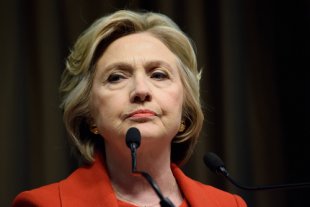

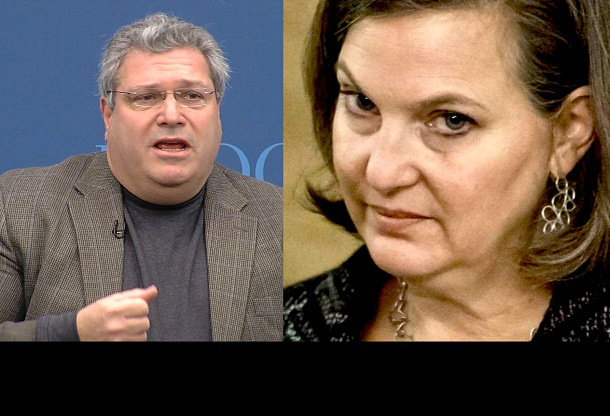
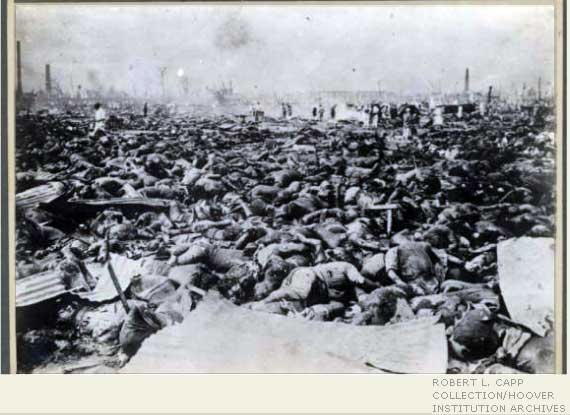
 After the Crash