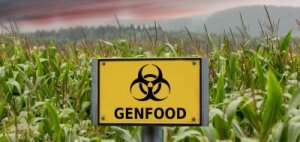
Gates Unhinged: Dystopian Vision for the Future of Food

By Colin Todhunter

Source: Off-Guardian

We are currently seeing an acceleration of the corporate consolidation of the entire global agrifood chain. The high-tech/data conglomerates, including Amazon, Microsoft, Facebook and Google, have joined traditional agribusiness giants, such as Corteva, Bayer, Cargill and Syngenta, in a quest to impose a certain type of agriculture and food production on the world.

The Bill and Melinda Gates Foundation is also involved (documented in the recent report ‘Gates to a Global Empire‘ by Navdanya International), whether through buying up huge tracts of farmland, promoting a much-heralded (but failed) ‘green revolution’ for Africa, pushing biosynthetic food and new genetic engineering technologies or more generally facilitating the aims of the mega agrifood corporations.

Of course, those involved in this portray what they are doing as some kind of humanitarian endeavour – saving the planet with ‘climate-friendly solutions’, helping farmers or feeding the world. This is how many of them probably do genuinely regard their role inside their corporate echo chamber. But what they are really doing is repackaging the dispossessive strategies of imperialism as ‘feeding the world’.

FAILED GREEN REVOLUTION

Since the Green Revolution, US agribusiness and financial institutions like the World Bank and the International Monetary Fund have sought to hook farmers and nation states on corporate seeds and proprietary inputs as well as loans to construct the type of agri infrastructure that chemical-intensive farming requires.

Monsanto-Bayer and other agribusiness concerns have since the 1990s been attempting to further consolidate their grip on global agriculture and farmers’ corporate dependency with the rollout of genetically engineered seeds, commonly known as GMOs (genetically modified organisms).

In her latest report, ‘Reclaim the Seed’, Vandana Shiva says:

In the 1980s, the chemical corporations started to look at genetic engineering and patenting of seed as new sources of super profits. They took farmers varieties from the public gene banks, tinkered with the seed through conventional breeding or genetic engineering, and took patents.”

Shiva talks about the Green Revolution and seed colonialism and the pirating of farmers seeds and knowledge. She says that 768,576 accessions of seeds were taken from farmers in Mexico alone:

…taking the farmers seeds that embodies their creativity and knowledge of breeding. The ‘civilising mission’ of Seed Colonisation is the declaration that farmers are ‘primitive’ and the varieties they have bred are ‘primitive’, ‘inferior’, ‘low yielding’ and have to be ‘substituted’ and ‘replaced’ with superior seeds from a superior race of breeders, so called ‘modern varieties’ and ‘improved varieties’ bred for chemicals.”

It is now clear that the Green Revolution has been a failure in terms of its devastating environmental impacts, the undermining of highly productive traditional low-input agriculture and its sound ecological footing, the displacement of rural populations and the adverse impacts on village communities, nutrition, health and regional food security.

Aside from various studies that have reported on the health impacts of chemical-dependent crops (Dr Rosemary Mason’s many reports on this can be accessed on the academia.edu website), ‘New Histories of the Green Revolution’ (2019) debunks the claim that the Green Revolution boosted productivity; ‘The Violence of the Green Revolution’ (1991) details (among other things) the impact on rural communities; Bhaskar Save’s open letter to Indian officials in 2006 discusses the ecological devastation of the Green Revolution and in a 2019 paper in the Journal of Experimental Biology and Agricultural Sciences, Parvez et al note that native wheat varieties in India have higher nutrition content than the Green Revolution varieties (many such crop varieties were side-lined in favour of corporate seeds that were of lower nutritional value).

These are just a brief selection of peer-reviewed and ‘grey’ literature which detail the adverse impacts of the Green Revolution.

GMO VALUE CAPTURE

As for GM crops, often described as Green Revolution 2.0, these too have failed to deliver on the promises made and, like the 1.0 version, have often had devastating consequences.

The arguments for and against GMOs are well documented, but one paper worth noting appeared in the journal Current Science in 2018. Along with PC Kesavan, MS Swaminathan – regarded as the father of the Green Revolution in India – argued against introducing GM crops to India and cited various studies about the failings of the GMO project.

Regardless, the industry and its well-funded lobbyists and bought career scientists continue to spin the line that GM crops are a marvellous success and that the world needs even more of them to avoid a global food shortage. GM crops are required to feed the world is a well-worn industry slogan trotted out at every available opportunity. Just like the claim of GM crops being a tremendous success, this too is based on a myth.

There is no global shortage of food. Even under any plausible future population scenario, there will be no shortage as evidenced by scientist Dr Jonathan Latham in his recent paper ‘The Myth of a Food Crisis’.

However, new gene drive and gene editing techniques have now been developed and the industry is seeking the unregulated commercial release of products that are based on these methods.

It does not want plants, animals and micro-organisms created with gene-editing to be subject to safety checks, monitoring or consumer labelling. This is concerning given the real dangers that these techniques pose.

Many peer-reviewed research papers now call into question industry claims about the ‘precision’, safety and benefits of gene-edited organisms and can be accessed on the GMWatch.org website.

It really is a case of old wine in new bottles.

And this is not lost on a coalition of 162 civil society, farmers and business organisations which has called on Vice-President of the European Commission Frans Timmermans to ensure that new genetic engineering techniques continue to be regulated in accordance with existing EU GMO standards.

The coalition argues that these new techniques can cause a range of unwanted genetic modifications that can result in the production of novel toxins or allergens or in the transfer of antibiotic resistance genes. The open letter adds that even intended modifications can result in traits which could raise food safety, environmental or animal welfare concerns.

The European Court of Justice ruled in 2018 that organisms obtained with new genetic modification techniques must be regulated under the EU’s existing GMO laws. However, there has been intense lobbying from the agriculture biotech industry to weaken the legislation, aided by the Gates Foundation.

The coalition states that various scientific publications show that new techniques of genetic modification allow developers to make significant genetic changes, which can be very different from those that happen in nature.

In addition to these concerns, a new paper from Chinese scientists, ‘Herbicide Resistance: Another Hot Agronomic Trait for Plant Genome Editing’, says that, in spite of claims from GMO promoters that gene editing will be climate-friendly and reduce pesticide use, what we can expect is just more of the same – GM herbicide-tolerant crops and increased herbicide use.

The industry wants its new techniques to be unregulated, thereby making gene-edited GMOs faster to develop, more profitable and hidden from consumers when purchasing items in stores. At the same time, the costly herbicide treadmill will be reinforced for farmers.

None of this is meant to imply that new technology is bad in itself. The issue is who owns and controls the technology and what are the underlying intentions. By dodging regulation as well as avoiding economic, social, environmental and health impact assessments, it is clear that the industry is first and foremost motivated by value capture and profit and contempt for democratic accountability.

This is patently clear if we look at the rollout of Bt cotton in India which served the bottom line of Monsanto but brought dependency, distress and no durable agronomic benefits for many of India’s small and marginal farmers. Prof A P Gutierrez argues that Bt cotton has effectively placed these farmers in a corporate noose.

Monsanto sucked hundreds of millions of dollars in profit from these cotton farmers, while industry-funded scientists are always keen to push the mantra that rolling out Bt cotton in India uplifted their conditions.

Those who promote this narrative remain wilfully ignorant of the challenges (documented in the 2019 book by Andrew Flachs – ‘Cultivating Knowledge: Biotechnology, Sustainability and the Human Cost of Cotton Capitalism in India‘) these farmers face in terms of financial distress, increasing pest resistance, dependency on unregulated seed markets, the eradication of environmental learning, the loss of control over their productive means and the biotech-chemical treadmill they are trapped on (this last point is precisely what the industry intended).

When assessing the possible impacts of GMO agriculture, it was with good reason that, in their 2018 paper, Swaminathan and Kesavan called for:

able economists who are familiar with and will prioritise rural livelihoods and the interests of resource-poor small and marginal farmers rather than serve corporate interests and their profits”.

WHAT CAN BE DONE?

Whether through all aspects of data control (soil quality, consumer preferences, weather, etc), e-commerce monopolies, corporate land ownership, seed biopiracy and patenting, synthetic food or the eradication of the public sector’s role in ensuring food security and national food sovereignty (as we could see in India with new farm legislation), Bill Gates and his corporate cronies seek to gain full control over the global food system.

Smallholder peasant farming is to be eradicated as the big-tech giants and agribusiness impose lab-grown food, GM seeds, genetically engineered soil microbes, data harvesting tools and drones and other ‘disruptive’ technologies.

We could see farmerless industrial-scale farms being manned by driverless machines, monitored by drones and doused with chemicals to produce commodity crops from patented GM seeds for industrial ‘biomatter’ to be processed and constituted into something resembling food.

The displacement of a food-producing peasantry (and the subsequent destruction of rural communities and local food security) was something the Gates Foundation once called for and cynically termed “land mobility”.

Technocratic meddling has already destroyed or undermined agrarian ecosystems that draw on centuries of traditional knowledge and are increasingly recognised as valid approaches to secure food security, as outlined in Food Security and Traditional Knowledge in India in the Journal of South Asian Studies, for instance.

But is all of this inevitable?

Not according to the International Panel of Experts on Sustainable Food Systems, which has just released a report in collaboration with the ETC Group: ‘A Long Food Movement: Transforming Food Systems by 2045‘.

The report outlines two different futures. If Gates and the global mega-corporations have their way, we will see the entire food system being controlled by data platforms, private equity firms and e-commerce giants, putting the food security (and livelihoods) of billions at the mercy of AI-controlled farming systems.

The other scenario involves civil society and social movements – grassroots organisations, international NGOs, farmers’ and fishers’ groups, cooperatives and unions – collaborating more closely to transform financial flows, governance structures and food systems from the ground up.

The report’s lead author, Pat Mooney, says that agribusiness has a very simple message: the cascading environmental crisis can be resolved by powerful new genomic and information technologies that can only be developed if governments unleash the entrepreneurial genius, deep pockets and risk-taking spirit of the most powerful corporations.

Mooney notes that we have had similar messages based on emerging technology for decades but the technologies either did not show up or fell flat and the only thing that grew were the corporations.

He says:

In return for trillions of dollars in direct and indirect subsidies, the agribusiness model would centralise food production around a handful of untested technologies that would lead to the forced exodus of at least a billion people from hundreds of millions of farms. Agribusiness is gambling on other people’s food security.”

Although Mooney argues that new genuinely successful alternatives like agroecology are frequently suppressed by the industries they imperil, he states that civil society has a remarkable track record in fighting back, not least in developing healthy and equitable agroecological production systems, building short (community-based) supply chains and restructuring and democratising governance systems.

As stated in the report, the thrust of any ’Long Food Movement’ strategy is that short-termism is not an option: civil society groups need to place multiple objectives and actions on a 25-year roadmap and not make trade-offs along the way – especially when faced with the neoliberal-totalitarianism of Gates et al who will seek to derail anything or anyone regarded as a threat to their aims.

The report ‘A Long Food Movement: Transforming Food Systems by 2045’ can be accessed here.

Offering Choice but Delivering Tyranny: The Corporate Capture of Agriculture

By Colin Todhunter

Source: Off-Guardian

Many lobbyists talk a lot about critics of genetic engineering technology denying choice to farmers. They say that farmers should have access to a range of tools and technologies to maximise choice and options.

At the same time, somewhat ironically, they decry organic agriculture and proven agroecological approaches, presumably because these practices have no need for the proprietary inputs of the global agrochemical/agritech corporations they are in bed with.

And presumably because agroecology represents liberation from the tyranny of these profiteering, environment-damaging global conglomerates.

It is fine to talk about ‘choice’ but we do not want to end up offering a false choice (rolling out technologies that have little value and only serve to benefit those who control the technology), to unleash an innovation that has an adverse impact on others or to manipulate a situation whereby only one option is available because other options have been deliberately removed. And we would certainly not wish to roll out a technology that traps farmers on a treadmill that they find difficult to get off.

Surely, a responsible approach for rolling out important (potentially transformative) technologies would have to consider associated risks, including social, economic and health impacts.

Take the impact of the Green Revolution in India, for instance. Sold on the promise that hybrid seeds and associated chemical inputs would enhance food security on the basis of higher productivity, agriculture was transformed, especially in Punjab. But to gain access to seeds and chemicals many farmers had to take out loans and debt became (and remains) a constant worry.

Many became impoverished and social relations within rural communities were radically altered: previously, farmers would save and exchange seeds but now they became dependent on unscrupulous money lenders, banks and seed manufacturers and suppliers. Vandana Shiva in The Violence of the Green Revolution (1989) describes the social marginalisation and violence that accompanied the process.

On a macro level, the Green Revolution conveniently became tied to an international (neo-colonial) system of trade based on chemical-dependent agro-export mono-cropping linked to loans, sovereign debt repayment and World Bank/IMF structural adjustment (privatisation/deregulation) directives.

Many countries in the Global South were deliberately turned into food deficit regions, dependent on (US) agricultural imports and strings-attached aid.

The process led to the massive displacement of the peasantry and, according to the academics Eric Holt-Giménez et al, (Food rebellions: Crisis and the hunger for Justice, 2009), the consolidation of the global agri-food oligopolies and a shift in the global flow of food: developing countries produced a billion-dollar yearly surplus in the 1970s; they were importing $11 billion a year by 2004.

And it’s not as though the Green Revolution delivered on its promises.

In India, it merely led to more wheat in the diet, while food productivity per capita showed no increased or even actually decreased (see New Histories of the Green Revolution by Glenn Stone). And, as described by Bhaskar Save in his open letter (2006) to officials, it had dire consequences for diets, the environment, farming, health and rural communities.

The ethics of the Green Revolution – at least it was rolled out with little consideration for these impacts – leave much to be desired.

As the push to drive GM crops into India’s fields continues (the second coming of the green revolution – the gene revolution), we should therefore take heed. To date, the track record of GMOs is unimpressive, but the adverse effects on many smallholder farmers are already apparent (see Hybrid Bt cotton: a stranglehold on subsistence farmers in India by A P Gutierrez).

Aside from looking at the consequences of technology roll outs, we should, when discussing choice, also account for the procedures and decisions that were made which resulted in technologies coming to market in the first place.

Steven Druker, in his book Altered Genes, Twisted Truth, argues that the decision to commercialise GM seeds and food in the US amounted to a subversion of processes put in place to serve the public interest.

The result has been a technology roll out which could result (is resulting) in fundamental changes to the genetic core of the world’s food. This decision ultimately benefited Monsanto’s bottom line and helped the US gain further leverage over global agriculture.

We must therefore put glib talk of the denial of technology by critics to one side if we are to engage in a proper discussion of choice. Any such discussion would account for the nature of the global food system and the dynamics and policies that shape it. This would include looking at how global corporations have captured the policy agenda for agriculture, including key national and international policy-making bodies, and the role of the WTO and World Bank.

Choice is also about the options that could be made available, but which have been closed off or are not even considered. In Ethiopia, for example, agroecology has been scaled up across the entire Tigray region, partly due to enlightened political leaders and the commitment of key institutions.

However, in places where global agribusiness/agritech corporations have leveraged themselves into strategic positions, their interests prevail. From the false narrative that industrial agriculture is necessary to feed the world to providing lavish research grants and the capture of important policy-making institutions, these firms have secured a thick legitimacy within policymakers’ mindsets and mainstream discourse.

As a result, agroecological approaches are marginalised and receive scant attention and support.

Monsanto had a leading role in drafting the WTO Agreement on Trade-Related Aspects of Intellectual Property Rights to create seed monopolies. The global food processing industry wrote the WTO Agreement on the Application of Sanitary and Phytosanitary Measures.

Whether it involves Codex or the US-India Knowledge Initiative on Agriculture aimed at restructuring (destroying) Indian agriculture, the powerful agribusiness/food lobby has secured privileged access to policy makers and sets the policy agenda.

From the World Bank’s ‘enabling the business of agriculture’ to the Gates Foundation’s role in opening up African agriculture to global food and agribusiness oligopolies, democratic procedures at sovereign state levels are being bypassed to impose seed monopolies and proprietary inputs on farmers and to incorporate them into a global supply chain dominated by powerful corporations.

We have the destruction of indigenous farming in Africa as well as the ongoing dismantling of Indian agriculture and the deliberate impoverishment of Indian farmers at the behest of transnational agribusiness. Where is the democratic ‘choice’?

It has been usurped by corporate-driven Word Bank bondage (India is its biggest debtor in the bank’s history) and by a trade deal with the US that sacrificed Indian farmers for the sake of developing its nuclear sector.

Similarly, ‘aid’ packages for Ukraine – on the back of a US-supported coup – are contingent on Western corporations taking over strategic aspects of the economy. And agribusiness interests are at the forefront. Something which neoliberal apologists are silent on as they propagandise about choice, and democracy.

Ukraine’s agriculture sector is being opened up to Monsanto/Bayer. Iraq’s seed laws were changed to facilitate the entry of Monsanto.

India’s edible oils sector was undermined to facilitate the entry of Cargill. And Bayer’s hand is possibly behind the ongoing strategy to commercialise GM mustard in India. Whether on the back of militarism, secretive trade deals or strings-attached loans, global food and agribusiness conglomerates secure their interests and have scant regard for choice or democracy.

The ongoing aim is to displace localised, indigenous methods of food production and allow transnational companies to take over, tying farmers and regions to a system of globalised production and supply chains dominated by large agribusiness and retail interests. Global corporations with the backing of their host states, are taking over food and agriculture nation by nation.

Many government officials, the media and opinion leaders take this process as a given. They also accept that (corrupt) profit-driven transnational corporations have a legitimate claim to be owners and custodians of natural assets (the ‘commons’).

There is the premise that water, seeds, food, soil and agriculture should be handed over to these conglomerates to milk for profit, under the pretence these entities are somehow serving the needs of humanity.

Ripping land from peasants and displacing highly diverse and productive smallholder agriculture, rolling out very profitable but damaging technologies, externalising the huge social, environmental and health costs of the prevailing neoliberal food system and entire nations being subjected to the policies outlined above: how is any of it serving the needs of humanity?

It is not. Food is becoming denutrified, unhealthy and poisoned with chemicals and diets are becoming less diverse. There is a loss of plant and insect diversity, which threatens food security, soils are being degraded, water tables polluted and depleted and millions of smallholder farmers, so vital to global food production, are being pushed into debt in places like India and squeezed off their land and out of farming.

It is time to place natural assets under local ownership and to develop them in the public interest according to agroecological principles. This involves looking beyond the industrial yield-output paradigm and adopting a systems approach to food and agriculture that accounts for local food security and sovereignty, cropping patterns to ensure diverse nutrition production per acre, water table stability and good soil structure. It also involves pushing back against the large corporations that hold sway over the global food system and more generally challenging the leverage that private capital has over all our lives.

That’s how you ensure liberation from tyranny and support genuine choice.


Colin Todhunter is an independent journalist who writes on development, environmental issues, politics, food and agriculture. He was named in August 2018 by Transcend Media Services as one of 400 Living Peace and Justice Leaders and Models in recognition of his journalism. 

Agrochemicals and Institutional Corruption: Pleading with the Slave Master Will Not Set You Free

By Colin Todhunter

Source: CounterPunch

Environmental campaigner Dr Rosemary Mason has just written to President of the European Commission Jean-Claude Juncker, Vice President of the European Commission Frans Timmermans and Health Commissioner Vytenis Andruikaitis. As set out below, she asks these top officials some very pertinent questions about the EU’s collusion with the agrochemical corporations.

1) In authorising glyphosate on behalf of the Glyphosate Task Force led by Monsanto, why did President Juncker fail to state the European Chemicals Agency’ (ECHA) risk assessment in full?

2) Why did the EU collude with corporations that made nerve gases in WW2 for chemical warfare and for use in the Nazi concentration camps? These firms continued to use similar chemicals in agriculture to poison ‘pests’, beneficial insects, birds and people.

3) Could it be that is it is because biocides regulations in the EU are merely designed to make corporations money and are ultimately controlled by the agrochemical industry?

4) Why did Monsanto, the European Food Safety Authority (EFSA), the ECHA and the industry-funded UK Science Media Centre suppress the paper by Gilles-Eric Seralini of the two-year rat feeding study of GM crops and Roundup that produced organ damage and tumours at four months?

5) Do the commissioners know that Cancer Research UK was hijacked by the Agrochemical Industry in 2010 with the full knowledge of the UK government? Michael Pragnell, former Chairman of Cancer Research UK (CRUK), was founder of Syngenta and former chairman of industry lobby group CropLife International. The CRUK website says that there is no convincing evidence that pesticides cause cancer. Instead, CRUK links cancer to life style choices and individual behaviour and blames alcohol use, obesity and smoking.

6) Why did the EU regulators and David Cameron, on behalf of the British government, ignore the Letter from America in 2014 from nearly 60 million citizens, warning you not to authorise GM crops and Roundup because of their toxicity to human health and the environment?

7) Where have all the insects and birds gone as a result of intensive chemical agriculture? The UK, Germany, France, Denmark and Canada are rapidly losing biodiversity. US farmland growing GM Roundup Ready crops has become a biological desert.

8) Did Monsanto and President Juncker conceal the ECHA harmonised classification of glyphosate as “toxic to aquatic life with long-lasting effects” because it would explain the accelerating deterioration of coral in the Great Barrier Reef?

Mason concludes her letter by reiterating the damning advisory opinion of the International Monsanto Tribunal delivered in 2017. She also sent the commissioners a recent letter signed by 23 prominent organisations criticising the EU’s decision to renew the license for glyphosate and outlining Monsanto’s undue influence over decision making.

Along with her letter, Mason sent a 22-page document containing detailed information on:

* The European Commission’s flawed renewal of the license for glyphosate

* The causes of decline in coral cover on the Great Barrier Reef

* European legislation existing for the benefit of the agrochemical industry

* Contamination by glyphosate and neonicotinoid insecticides causing dramatic declines in insects and birds

* Glyphosate being present everywhere

* The International Monsanto Tribunal and various alarming reports on pesticides, their use and impacts

To date, there has been no response from the commissioners to Mason.

In 2003, the World Wide Fund for Nature (UK) concluded that every person it tested across the UK was contaminated by a cocktail of highly toxic chemicals, which were banned from use during the 1970s. Over the years, Mason has cited a range of sources to show the harmful impact of pesticides and that the amount and range of pesticide residues on British food is increasing annually. She also notes a massive rise in the use of glyphosate between 2012 and 2014 alone.

In her many detailed documents and letters (which contains her own views on all the questions she poses above to the commissioners) she has sent to officials over the years, Mason offers sufficient evidence to show that the financial and political clout of a group of powerful agrochemical/agribusiness corporations ensure that its interests are privileged ahead of public health and the environment to the detriment of both. Mason has gone to great lengths to describe the political links between industry and various government departments, regulatory agencies and key committees that have effectively ensured that ‘business as usual’ prevails.

The corporations which promote industrial agriculture and the agrochemicals Mason campaigns against have embedded themselves deeply within the policy-making machinery at both national and international levels. From the flawed narrative that industrial agriculture is necessary to feed the world to providing lavish research grants and the capture of important policy-making institutions, global agribusiness has secured a bogus ‘thick legitimacy’ within policymakers’ mindsets and mainstream discourse.

By referring to the Monsanto Tribunal, Mason implies that governments, individuals and civil groups that collude with corporations to facilitate ecocide and human rights abuses resulting from the actions of global agribusiness corporations should be hauled into court. Perhaps it is only when officials and company executives are given lengthy jail sentences for destroying health and the environment that some change will begin to happen.

From Rachel Carson onward, the attempt to roll back the power of these corporations and their massively funded lobby groups has had limited success. Some 34,000 agrochemicals remain on the market in the US, many of which are there due to weak regulatory standards or outright fraud, and from Argentina to Indonesia, the devastating impact of the industrial chemical-dependent model of food and agriculture on health and the environment has been documented by various reports and writers at length.

What is worrying is that these corporations are being facilitated by the World Bank’s ‘enabling the business of agriculture’, duplicitous trade deals like the US-India Knowledge Initiative on Agriculture, the Gates Foundation’s ‘opening up’ of African agriculture and the bypassing of democratic procedures at sovereign state levels to impose seed monopolies and proprietary inputs on farmers and to incorporate them into a global supply chain dominated by these powerful companies.

For the reasons set out in my previous piece, pleading with public officials to roll back the actions and influence of agrochemical/agribusiness corporations may have no more impact than appealing to a slave master to set you free.

Ultimately, the solution relies on people coming together to challenge a system of neoliberal capitalism that by design facilitates the institutionalised corruption that we see along with the destruction of self-sufficiency and traditional food systems. At the same time, alternatives must be promoted based on localisation, the principles of a politically-oriented model of agroecology (outlined here, here and here) and a food system that serves the public good not private greed.


Colin Todhunter is an extensively published independent writer and former social policy researcher based in the UK and India.

Sweat Shops, GMOs and Neoliberal Fundamentalism: The Agroecological Alternative to Global Capitalism

By Colin Todhunter

Source: Global Research

Much of the argument in favour of GM agriculture involves little more than misrepresentations and un scrupulous attacks on those who express concerns about the technology and its impacts. These attacks are in part designed to whip up populist sentiment and denigrate critics so that corporate interests can secure further control over agriculture. They also serve to divert attention from the underlying issues pertaining to hunger and poverty and genuine solutions, as well as the self-interest of the pro-GMO lobby itself.

The very foundation of the GMO agritech sector is based on a fraud. The sector and the wider transnational agribusiness cartel to which it belongs have also successfully captured for their own interests many international and national bodies and policies, including the WTO, various trade deals, governments institutions and regulators. From fraud to duplicity, little wonder then the sector is ridden with fear and paranoia.

“They are scared to death,” says Marion Nestle, professor of nutrition, food studies, and public health at New York University and author of several books on food policy. She adds: “They have an industry to defend and are attacking in the hope that they’ll neutralize critics … It’s a paranoid industry and has been from the beginning.”

War against reason

Global corporations like Monsanto are waging an ideological war against not only critics but the public too. For instance, consider that the majority of the British public and the Canadian public have valid concerns about GM food and do not want them. However, the British government was found to have been secretly colluding with the industry and the Canadian government is attempting to soften up the public to try to get people to change their opinions.

Instead of respecting public opinion and serving the public interest by holding powerful corporations to account, officials seem more inclined to serve the interests of the sector, regardless of genuine concerns about GM that, despite what the industry would like to have believe, are grounded in facts and involve rational discourse.

Whether via the roll-out of GMOs or an associated chemical-intensive industrialised monocrop system of agriculture, the agritech/agribusiness sector wants to further expand its influence throughout the globe. Beneath the superficial façade of working in the interest of humanity, however, the sector is driven by a neoliberal fundamentalism which demands the entrenchment of capitalist agriculture via deregulation and the corporate control of seeds, land, fertilisers, water, pesticides and food processing.

If anything matters to the corporate agribusiness/agritech industry, contrary to the public image it tries to convey, it clearly has little to do with ‘choice’, ‘democracy’ or objective science. It has more to do with undermining and debasing these concepts and displacing existing systems of production: economies are “opened up through the concurrent displacement of a pre-existing productive system. Small and medium-sized enterprises are pushed into bankruptcy or obliged to produce for a global distributor, state enterprises are privatised or closed down, independent agricultural producers are impoverished” (Michel Chossudovsky in The Globalization of Poverty, p16).

Critics are highlighting not only how the industry has subverted and debased science and has infiltrated key public institutions and regulatory bodies, but they are also showing how trade and aid is used to subjugate regions and the most productive components of global agriculture – the small/peasant farmer – to the needs of powerful commercial entities.

Critics stab at the heart of neoliberalism

By doing this, critics stab hard at the heart such corporate interests and their neoliberal agenda.

According to Eric Holt-Giménez:

“The World Bank, the World Trade Organization, the World Food Program, the Millennium Challenge, The Alliance for a Green Revolution in Africa, the U.S. Department of Agriculture, and industrial giants like Yara Fertilizer, Cargill, Archer Daniels Midland, Syngenta, DuPont, and Monsanto, carefully avoid addressing the root causes of the food crisis. The ‘solutions’ they prescribe are rooted in the same policies and technologies that created the problem in the first place: increased food aid, de-regulated global trade in agricultural commodities, and more technological and genetic fixes. These measures only strengthen the corporate status quo controlling the world’s food… The future of our food-and fuel-systems are being decided de facto by unregulated global markets, financial speculators, and global monopolies.”

The geopolitics of food and agriculture has played a significant role in creating food-deficit regions. For instance, African agriculture has been reshaped on behalf of the interests described in the above extract. The Gates Foundation is currently spearheading the ambitions of corporate America and the scramble for Africa by global agribusiness. And in India, there has been an ongoing attempt to do the same: a project that is now reaching a critical phase as the motives of the state acting on behalf of private (foreign) capital are laid bare and the devastating effects on health, environment and social conditions are clear for all to see.

Any serious commitment to feeding the world sustainably and equitably must work to challenge a globalised system of capitalism that has produced structural inequality and poverty; a system which fuels the marginalisation of small-scale farms and their vitally important cropping systems and is responsible for the devastating impacts of food commodity speculationland takeoversrigged trade and an industrial system of agriculture.

And embedded within the system is a certain mentality. Whether it is the likes of Monsanto’s High GrantRobb Fraley or Bill Gates, highly paid (multi-millionaire) white men with an ideological commitment to corporate power are trying to force a profitable but bogus model of food production on the world.

They do so while conveniently ignoring the effects of a system of capitalism that they so clearly promote and have financially profited from.

It is a capitalism and a system of agriculture propped up by the blood money of militarism (Ukraine and Iraq), ‘structural adjustment’ and strings-attached loans (Africa) or slanted trade deals (India) whereby transnational agribusiness drives a global agenda to suit its interests and eradicate impediments to profit. And it doesn’t matter how much devastation ensues or how unsustainable their model is, ‘crisis management’ and ‘innovation’ fuel the corporate-controlled treadmill they seek to impose.

Genuine solutions: agroecology, decentralisation and localism

However, what really irks the corporate interests which fuel the current GMO/chemical-intensive industrialised model of agriculture is that critics are offering genuine alternatives and solutions. They advocate a shift towards more organic-based systems of agriculture, which includes providing support to small farms and an agroecology movement that is empowering to people politically, socially and economically.

This represents a challenge to all good neoliberal evangelists (and outright hypocrites) with a stake in corporate agriculture who rely on smears to attack those who advocate for such things.

To understand what agroecology involves, let us turn to Raj Patel:

“To understand what agro-ecology is, it helps first to understand why today’s agriculture is called “industrial.” Modern farming turns fields into factories. Inorganic fertilizer adds nitrogen, potassium, and phosphorous to the soil; pesticides kill anything that crawls; herbicides nuke anything green and unwanted—all to create an assembly line that spits out a single crop… Agro-ecology uses nature’s far more complex systems to do the same thing more efficiently and without the chemistry set. Nitrogen-fixing beans are grown instead of inorganic fertilizer; flowers are used to attract beneficial insects to manage pests; weeds are crowded out with more intensive planting. The result is a sophisticated polyculture—that is, it produces many crops simultaneously, instead of just one.”

And it works. Look no further than what Cuba has achieved and the successes outlined in this article. Indeed, much has been written about agroecology and its potential for radical social change, its successes and the challenges it faces (see thisthis and this). And now there a major new book from Food First and Groundswell International: Fertile Ground: Scaling agroecology from the ground up.

Executive Director of Food First Eric Holtz-Gimenez argues that agroecology offers concrete, practical solutions to many of the world’s problems that move beyond (but which are linked to) agriculture. In doing so, it challenges – and offers alternatives to – the prevailing moribund doctrinaire economics of a neoliberalism that drives a failing system (also see this and this) of GM/chemical-intensive industrial agriculture.

He adds that the scaling up of agroecology can tackle hunger, malnutrition, environmental degradation and climate change. By creating securely paid labour-intensive agricultural work, it can also address the interrelated links between labour offshoring by rich countries and the removal of rural populations elsewhere who end up in sweat shops to carry out the outsourced jobs: the two-pronged process of neoliberal globalisation that has devastated the economies of the US and UK and which is displacing existing indigenous food production systems and undermining the rural infrastructure in places like India to produce a reserve army of cheap labour.

When you fail to understand capitalism and the central importance of agriculture, you fail to grasp many of the issues currently affecting humanity. At the same time, when you are part of the problem and fuel and benefit from it, you will do your best to attack and denigrate anything or anyone that challenges your interests.

Poisoned Agriculture: Depopulation and Human Extinction

gmo_crops_genfood_735_350-400x190

By Colin Todhunter

Source: RINF

There is a global depopulation agenda. The plan is to remove the ‘undesirables’, ‘the poor’ and others deemed to be ‘unworthy’ and a drain on finite resources. However, according to Rosemary Mason, the plan isn’t going to work because an anthropogenic mass extinction is already underway that will affect all life on the planet and both rich and poor alike. Humans will struggle to survive the phenomenon.

A new paper by Rosemary A Mason in the ‘Journal of Biological Physics and Chemistry’, indicates that a ‘sixth extinction’ is under way (the Holocene extinction, sometimes called the Sixth Extinction, is a name describing the ongoing extinction of species during the present Holocene epoch – since around 10,000 BCE). In her paper, ‘The sixth mass extinction and chemicals in the environment: our environmental deficit is now beyond nature’s ability to regenerate’, she argues that loss of biodiversity is the most urgent of the environmental problems, as biodiversity is critical to ecosystem services and human health. And the main culprit is the modern chemical-intensive industrialised system of food and agriculture.

Mason asserts there is a growing threat from the release of hormone-disrupting chemicals that could even be shifting the human sex ratio and reducing sperm counts. An industrial agricultural revolution has created a technology-dependent global food system, but it has also created serious long-run vulnerabilities, especially in its dependence on stable climates, crop monocultures and industrially produced chemical inputs. In effect, farming is a principal source of global toxification and soil degradation.

Without significant pressure from the public demanding action, Mason argues there could little chance of changing course fast enough to forestall disaster. The ‘free’ market is driving the impending disaster and blind faith in corporate-backed technology will not save us. Indeed, such faith in this technology is actually killing us.

Since the late 1990s, US scientists have written in increasingly desperate tones regarding an unprecedented number of fungal and fungal-like diseases, which have recently caused some of the most severe die-offs and extinctions ever witnessed in wild species and which are jeopardizing food security. Only one paper dared to mention pesticides as being a primary cause, however.

Mason cites a good deal of evidence to show how the widespread use on agricultural crops of the systemic neonicotinoid insecticides and the herbicide glyphosate, both of which cause immune suppression, make species vulnerable to emerging infectious pathogens, driving large-scale wildlife extinctions, including essential pollinators.

Providing evidence to show how human disease patterns correlate remarkably well with the rate of glyphosate usage on corn, soy and wheat crops, which has increased due to ‘Roundup Ready’ crops, Mason goes on to present more sources to show how our over-reliance on chemicals in agriculture is causing irreparable harm to all beings on this planet. Most of these chemicals are known to cause illness, and they have likely been causing illnesses for many years. But until recently, the herbicides have never been sprayed directly on food crops and never in this massive quantity.

The depopulation agenda

Mason discusses how agriculture and genetically modified organisms (GMOs) fit into a wider agenda for depopulating the planet. She notes that on the initiative of Gates, in May 2009 some of the richest people in the US met at the home of Nurse, a British Nobel prize-winning biochemist and President (2003–10) of Rockefeller University in Manhattan, to discuss ways of tackling a ‘disastrous’ environmental, social and industrial threat of overpopulation. The meeting was hosted by David Rockefeller Jr. These same individuals have met several times since to develop a strategy in which population growth would be tackled.

The Rockefeller Foundation (RF) was involved in extensive financing of eugenics research by the National Socialists (Nazis) during and after World War and was in league with some of the US’s most respected scientists from such prestigious universities as Stanford, Yale, Harvard and Princeton. The explicit aim of the eugenics lobby funded by wealthy élite families, such as Rockefeller, Carnegie, Harriman and others since the 1920s, has embodied what they termed ‘negative eugenics’, the systematic killing off of ‘undesired bloodlines’.

RF funded the earliest research on GMOs, which Mason regards as part of the depopulation agenda (of course, apart from the adverse health impacts of GMOs, Monsanto owns the ‘epicyte gene’ which causes sterility in males). The RF funded the earliest research on GMOs in the 1940s and effectively founded the science of molecular biology.

Mason cites Steven Druker to show the fraud behind GMOs and how governments and leading scientific institutions have systematically misrepresented the facts about GMOs and the scientific research that casts doubt on their safety. Druker has shown that GMOs can have severe health impacts, which have been covered up.

The Royal Society is the preeminent scientific body within the UK that advises the government. It has misrepresented the facts about GMOs and has engaged in various highly dubious and deceptive tactics to promote the technology.

Druker wrote an open letter to RS as it has an obligation to the British public to provide a public response and ‘put the record straight’ on GMOs. Although Sir Paul Nurse’s presidency of Rockefeller University terminated in 2010, after he assumed the Royal Society presidency, Mason notes that Nurse is said to have maintained a laboratory on the Rockefeller campus and has an ongoing relationship with the university.

She asks: is that why Sir Paul was unable (or unwilling) even to discuss GMOs with Steven Druker? Was he sent to London by the Rockefeller Foundation to support the UK Government in their attempt to bring in GM crops? The UK Government and the GM industry have after all been shown to be working together to promote GM crops and foods, undermine consumer choice and ignore environmental harm.

Mason then goes on to discuss the impact of glyphosate residues (herbicide-tolerant GM crops are designed to work with glyphosate), which are found in the organs of animals, human urine and human breast milk as well as in the air and rivers. She documents its widespread use and contamination of soil and water and notes that the WHO International Agency for Research on Cancer’s assessment of glyphosate being a 2A carcinogen (probably carcinogenic in humans) is unwelcome news for the agrochemical industry. She also notes that Roundup usage has led to a depletion of biodiversity and that loss of biodiversity is also correlated with neonicotinoids. However, despite the evidence, the blatant disregard concerning the use of these substances by regulatory agencies around the world is apparent.

To provide some insight into the impact on health of the chemical-intensive model of agriculture, Mason shows that in the US increases in Alzheimer’s disease, obesity, breast cancer, oesophageal cancer, congenital anomalies and a growing burden of disability, particularly from mental disorders are all acknowledged.

She claims that plans are under way to depopulate the planet’s seven million plus people to a more manageable level of between 500–2000 million by a combination of means, including the poisoning and contamination of the planet’s food and water supplies via chemical-intensive industrialised agriculture. Mason also notes that health-damaging GMOs are being made available to the masses (under the guise of ‘feeding the poor’), while elites are more prone to eat organic food.

We may be gone before planned depopulation takes hold

Although Mason cites evidence to show that a section of the US elite has a depopulation agenda, given the amount of poisons being pumped into the environment and into humans, the thrust of her argument is that we could all be extinct before this comes to fruition – both rich and poor alike.

In concluding, she states that the global pesticides industry has been allowed to dominate the regulatory agencies and have created chemicals of mass destruction that can no longer be controlled. She has some faith in systems biology coming to the fore and being able to understand the complexity of the whole organism as a system, rather than just studying its parts in a reductionist manner. But Mason believes that ultimately the public must place pressure on governments and hold agribusiness to account.

However, that in itself may not be enough.

It is correct to highlight the poisonous impacts of the Rockefeller-sponsored petrochemical ‘green revolution’. It has uprooted indigenous/traditional agriculture and local economies and has recast them in a model that suits global agribusiness. It is poisoning life and the environment, threatening food security across the globe and is unsustainable. The ‘green revolution’ was ultimately a tool of US foreign policy that has been used in conjunction with various institutions like the IMF, World Bank and World Trade Organisation. GMOs represent more of the same.

In this respect, Mason follows the line of argument in William F Engdahl’s book ‘Seeds of Destruction: The Hidden Agenda of Genetic Manipulation’, which locates the GM issue and the ‘green revolution’ firmly within the context of empire. Engdahl also sees the Rockefeller-Gates hand behind the great GMO project to a sinister eugenicist strategy of depopulation.

Mason’s concerns about depopulation therefore should not be dismissed, particularly given the record of the likes of the Gates and Rockefeller clans, the various covert sterility programmes that have been instituted by the US over the decades and the way agriculture has and continues to be used as a geopolitical tool to further the agendas of rich interests in the US.

To understand the processes that have led to modern farming and the role of entities like Monsanto, we must appreciate the geopolitics of food and agriculture, which benefits an increasingly integrated global cartel of finance, oil, military and agribusiness concerns. This cartel seeks to gain from war, debt bondage and the control of resources, regardless of any notions relating to food security, good health and nutrition, biodiversity, food democracy, etc.

Food and trade policy analyst Devinder Sharma notes the impacts in India:

“India is on fast track to bring agriculture under corporate control… Amending the existing laws on land acquisition, water resources, seed, fertilizer, pesticides and food processing, the government is in overdrive to usher in contract farming and encourage organized retail. This is exactly as per the advice of the World Bank and the International Monetary Fund as well as the international financial institutes.”

In Punjab, India, pesticides have turned the state into a ‘cancer epicentre‘. Moreover, Indian soils are being depleted as a result of the application of ‘green revolution’ ideology and chemical inputs. India is losing 5,334 million tonnes of soil every year due to soil erosion because of the indiscreet and excessive use of fertilisers, insecticides and pesticides. The Indian Council of Agricultural Research reports that soil is become deficient in nutrients and fertility.

And now, there is an attempt to push GM food crops into India in a secretive, non-transparent manner that smacks of regulatory delinquency underpinned by corrupt practices, which suggests officials are working hand in glove with US agribusiness.

As smallholders the world over are being driven from their land and the GMO/chemical-industrial farming model takes over, the problems continue to mount.

The environment, the quality of our food and our health are being sacrificed on the altar of corporate profit and a type of looting based on something we can loosely regard as ‘capitalism’. The solution involves a shift to organic farming and investment in and reaffirmation of indigenous models of agriculture. But ultimately it entails what Daniel Maingi of Growth Partners for Africa says what we must do: “… take capitalism and business out of farming.”

It must also entail, according to Maingi, investing in  “… indigenous knowledge and agroecology, education and infrastructure and stand(ing) in solidarity with the food sovereignty movement.”

In other words, both farmers and consumers must organise to challenge governments, corrupt regulatory bodies and big agribusiness at every available opportunity. If we don’t do this, what Mason outlines may come to pass.


Colin Todhunter is an independent writer : you can support his writing here.