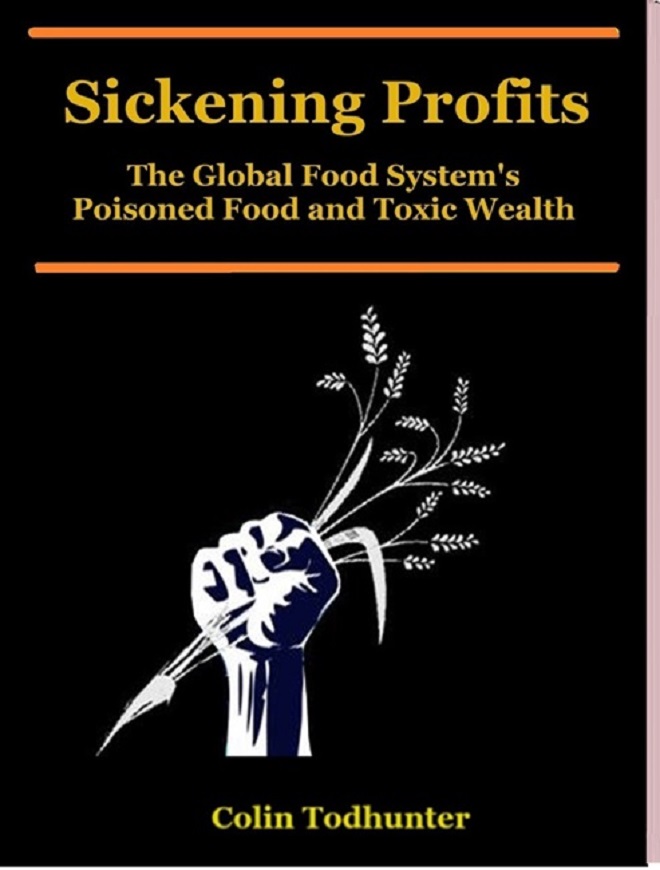
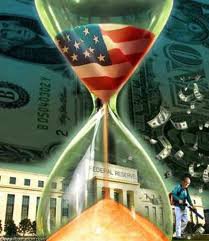
Sickening Profits — The Global Food System’s Poisoned Food and Toxic Wealth

By Colin Todhunter

Source: Off-Guardian

The modern food system is being shaped by the capitalist imperative for profit. Aside from losing their land to global investors and big agribusiness concerns, people are being sickened by corporations and a system that thrives on the promotion of ‘junk’ (ultra-processed) food laced with harmful chemicals and cultivated with the use of toxic agrochemicals.

It’s a highly profitable situation for investment firms like BlackRock, Vanguard, State Street, Fidelity and Capital Group and the food and agribusiness conglomerates they invest in. But BlackRock and others are not just heavily invested in the food industry. They also profit from illnesses and diseases resulting from the food system by having stakes in the pharmaceuticals sector as well. For them, it’s a win-win situation.

Lobbying by agrifood corporations and their well-placed, well-funded front groups ensures this situation prevails. They continue to capture policy-making and regulatory space at international and national levels and promote the (false) narrative that without their products the world would starve.

They are now also pushing a fake-green, ecomodernist agenda and rolling out their new proprietary technologies in order to further entrench their grip on a global food system that produces poor food, illness, environmental degradation, dependency and dispossession.

The prevailing globalised agrifood model is built on unjust trade policies, the leveraging of sovereign debt to benefit powerful interests, population displacement and land dispossession. It fuels export-oriented commodity monocropping and regional food insecurity.

This model is responsible for increasing rates of illness, nutrient-deficient diets, a narrowing of the range of food crops, chemical runoffs, increasing levels of farmer indebtedness and the eradication of biodiversity. And it relies on a policy paradigm that privileges urbanisation, global markets and agrifood corporations’ needs ahead of rural communities, local markets, on-farm resources and food sovereignty.

In addition, there are also the broader geopolitical aspects of food and agriculture in a post-COVID world characterised by food inflation, hardship and multi-trillion-dollar global debt.

There are huge environmental, political, social and health issues that stem from how much of our food is currently produced and consumed. A paradigm shift is required.

All of this is set out in Sickening Profits: The Global Food System’s Poisoned Food and Toxic Wealth (December 2023), published as an open-access (free) e-book by Global Research (it can be read directly on the Global Research website or downloaded as a pdf) and is a follow up to the author’s book Food, Dispossession and Dependency: Resisting the New World Order (2022).

That book contains substantial sections on the agrarian crisis in India and issues affecting the agriculture sector. Aruna Rodrigues — prominent campaigner and lead petitioner in the GMO Mustard Public Interest Litigation in the Supreme Court of India — stated the following about the book:

This is graphic, a detailed horror tale in the making for India, an exposé on what is planned, to hand over Indian sovereignty and food security to big business.”

‘Sickening Profits’ continues in a similar vein. By describing situations in Ukraine, India, the Netherlands and elsewhere, it is another graphic horror tale in the making that is being intensified across the globe. The question is: Can it be stopped?

Meet the New Normal, Same as the Old Normal: You Are Still the Enemy Within

By Colin Todhunter

Source: Off-Guardian

Today, we are witnessing the nudging (manipulation) of the population to accept a ‘new normal’ based on a climate emergency narrative, restrictions on movement and travel, programmable digital money, ‘pandemic preparedness’ courtesy of the World Health Organization’s tyrannical pandemic treaty, unaccountable AI and synthetic ‘food’.

Whether it involves a ‘food transition’, an ‘energy transition’, 15-minute cities or some other benign-sounding term, all this is to be determined by a supranational ‘stakeholder’ elite with ordinary people sidelined in the process. An undemocratic agenda designed to place restrictions on individual liberty, marking a dramatic shift towards authoritarianism.

In the 1980s, to help legitimise the deregulation-privatisation neoliberal globalisation agenda, government and media instigated an ideological onslaught, driving home the primacy of ‘free enterprise’, individual rights and responsibility and emphasising a shift away from the role of the state, trade unions and the collective in society.

We are currently seeing another ideological shift: individual rights and freedoms are said to undermine the wider needs of society and the planet – in a stark turnaround – personal freedom is now said to pose a threat to national security, public health or the climate.

As in the 1980s, this messaging is being driven by an economic impulse. This time, the collapsing neoliberal project.

In the UK, poverty is increasing in two-thirds of communities, food banks are now a necessary part of life for millions of people and living standards are plummeting. Indeed, the poorest families are enduring a ‘frightening’ collapse in living standards, resulting in life-changing and life-limiting poverty).

In the US, around 30 million low-income people are on the edge of a ‘hunger cliff’ as a portion of their federal food assistance is taken away. In 2021, it was estimated that one in eight children were going hungry in the US. Small businesses are filing for bankruptcy in the US at a record rate.

The Bank of England’s chief economist, Huw Pill, says that people should ‘accept’ being poorer. This is similar to the response of Rob Kapito, co-founder of the world’s biggest asset management firm, BlackRock. In 2022, the unimaginably rich and entitled Kapito said that a “very entitled” generation of (ordinary working) people who have never had to sacrifice would soon have to face shortages for the first time in their lives.

While business as usual prevails in Kapito’s world of privilege and that of major armsenergypharmaceuticals and food companies, whose megarich owners continue to rake in massive profits, Kapito and Pill tell ordinary people to get used to poverty and the ‘new normal’ as if we are ‘all in it together’ – billionaires and working class alike. They conveniently use COVID and the situation in Ukraine as cover for the collapsing neoliberalism.

But this is part of the hegemonic agenda that seeks to ensure that the establishment’s world view is the accepted cultural norm. And anyone who challenges this world view – whether it involves, for instance, questioning climate alarmism, the ‘new normal’, the nature of the economic crisis, the mainstream COVID narrative or the official stance on Ukraine and Russia – is regarded as a spreader of misinformation and the ‘enemy within’.

Although the term ‘enemy within’ was popularised by Margaret Thatcher during the miners’ strike in 1984-85 to describe the striking miners, it is a notion with which that Britain’s rulers have regarded protest movements and uprisings down the centuries. From the Peasants’ Revolt in 1381 to the Levellers and Diggers in the 17th century, it is a concept associated with anyone or any group that challenges the existing social order and the interests of the ruling class.

John Ball, a radical priest, addressed the Peasants’ Revolt rebels with the following words:

Good friends, matters cannot go well in England until all things be held in common; when there shall be neither vassals nor lords; when the lords shall be no more masters than ourselves.”

The revolt was suppressed. John Ball was captured and hung, drawn and quartered. Part of the blood-soaked history of the British ruling class.

Later on, the 17th-century Diggers movement wanted to create small, egalitarian rural communities and farm on common land that had been privatised by enclosures.

The 1975 song ‘The world Turned Upside Down’ by Leon Rosselson commemorates the Diggers. His lyrics describe the aims and plight of the movement. In Rosselson’s words, the Diggers were dispossessed via theft and murder but reclaimed what was theirs only to be violently put down.

Little surprise then that, in the 1980s, Margaret Thatcher used the state machinery to defeat the country’s most powerful and trade union and the shock troops of the labour movement, the National Union of Mineworkers – ‘the enemy within’. She needed to do this to open the gates for capital to profit from the subsequent deindustrialisation of much of the UK and the dismantling of large parts of the welfare state.

And the result?

A hollowed-out, debt-bloated economy, the destruction of the social fabric of entire communities and the great financial Ponzi scheme – the ‘miracle’ of deregulated finance – that now teeters on the brink of collapse, leading the likes of Kapito and Pill to tell the public to get ready to become poor.

And now, in 2023, the latest version of the ‘enemy within’ disseminates ‘misinformation’ – anything that challenges the official state-corporate narrative. So, this time, one goal is to have a fully controlled (censored) internet.

For instance, US Special Operations Command (USSOCOM) recently awarded Accrete a contract for Argus to detect disinformation threats from social media. Argus is AI software that analyses social media data to predict emergent narratives and generate intelligence reports at a speed and scale to help neutralise viral disinformation threats.

Accrete AI is a leading dual-use enterprise AI company. It deployed its AI Argus software for open-source threat detection with the US Department of Defense in 2022.

In a recent press release, Prashant Bhuyan, founder and CEO of Accrete, boasts:

Social media is widely recognised as an unregulated environment where adversaries routinely exploit reasoning vulnerabilities and manipulate behaviour through the intentional spread of disinformation. USSOCOM is at the tip of the spear in recognising the critical need to identify and analytically predict social media narratives at an embryonic stage before those narratives evolve and gain traction. Accrete is proud to support USSOCOM’s mission.”

‍This is about predicting wrong think on social media. But control over the internet is just part of a wider programme of establishment domination, surveillance and dealing with protest and dissent.

The recent online article ‘How the Government Weaponizes Surveillance to Silence Its Critics’ notes that, on any given day, the average person in the US is monitored, spied on and tracked in more than 20 different ways.

The authors of the article ask us to consider some of the ways the US government is weaponizing its surveillance technologies to flag citizens as a threat to national security, whether or not they have done anything wrong – from flagging citizens as a danger based on their feelings, phone and movements to their spending activities, social media activities, political views and correspondence.

The elite has determined that the existential threat is you. The article ‘Costs of War: Peterloo’, written by UK Veterans for Peace member Aly Renwick, details the history of the brutal suppression of protesters by Britain’s rulers. He also strips away any notion that some may have of a benign, present-day ruling elite with democratic leanings. The leopard has not changed its spots.

As we saw during COVID, the thinking is that hard-won rights must be curtailed, freedom of association is reckless, free thinking is dangerous, dissent is to be stamped on, impartial science is a threat and free speech is deadly. Government is ‘the truth’, Fauci (or some similar figure) is ‘the science’ and censorship is for your own good.

None of this was justified. It only begins to make sense if we regard the COVID restrictions in terms of trying to deal with an economic crisis by closing down the global economy under cover of a public health crisis (see the online articles ‘What Was Covid Really About? Triggering a Multi-Trillion Dollar Global Debt Crisis’ and ‘Italy 2020: Inside Covid’s Ground Zero’ which outline how COVID policies can be explained by economic factors not health concerns).

The economic crisis is making many people poorer, so they must be controlled, monitored and subjugated.

The transitions mentioned at the start of this article along with the surveillance agenda (together known as the ‘Great Reset’) are being accelerated at this time of economic crisis when countless millions across the West are being impoverished. The collapsing financial system is resulting in an interrelated global debt, inflation and ‘austerity’ crisis and the biggest transfer of wealth to the rich in history.

As a result, the powers that be fear that the masses might once again pick up their pitchforks and revolt. They are adamant that the peasants must know their place.

But the flame of protest and dissent from centuries past still inspires and burns bright. So, with that in mind, let’s finish with Leon Rosselson’s lyrics in reference to the Diggers movement (Billy Bragg’s version of the song can be found on YouTube):

In sixteen forty-nine
To St. George’s Hill
A ragged band they called the Diggers
Came to show the people’s will
They defied the landlords
They defied the laws
They were the dispossessed reclaiming what was theirs

We come in peace they said
To dig and sow
We come to work the lands in common
And to make the waste grounds grow
This earth divided
We will makе whole
So it will be
A common treasury for all

Thе sin of property
We do disdain
No man has any right to buy and sell
The earth for private gain
By theft and murder
They took the land
Now everywhere the walls
Spring up at their command

They make the laws
To chain us well
The clergy dazzle us with heaven
Or they damn us into hell
We will not worship
The God they serve
The God of greed who feed the rich
While poor man starve

We work we eat together
We need no swords
We will not bow to masters
Or pay rent to the lords
We are free men
Though we are poor
You Diggers all stand up for glory
Stand up now

From the men of property
The orders came
They sent the hired men and troopers
To wipe out the Diggers’ claim
Tear down their cottages
Destroy their corn
They were dispersed
Only the vision lingers on

You poor take courage
You rich take care
The earth was made a common treasury
For everyone to share
All things in common
All people one
We come in peace
The order came to cut them down
We come in peace
The order came to cut them down

How “Food Shortages” & Economic Collapse Protects the Status Quo

Engineered Food & Poverty Crises Secure Continued US Dominance

By Colin Todhunter

Source: Off-Guardian

In March 2022, UN Secretary-General Antonio Guterres warned of a “hurricane of hunger and a meltdown of the global food system” in the wake of the crisis in Ukraine.

Guterres said food, fuel and fertiliser prices were skyrocketing with supply chains being disrupted and added this is hitting the poorest the hardest and planting the seeds for political instability and unrest around the globe.

According to the International Panel of Experts on Sustainable Food Systems, there is currently sufficient food and no risk of global food supply shortages.

We see an abundance of food but skyrocketing prices. The issue is not food shortage but speculation on food commodities and the manipulation of an inherently flawed global food system that serves the interests of corporate agribusiness traders and suppliers of inputs at the expense of people’s needs and genuine food security.

The war in Ukraine is a geopolitical trade and energy conflict. It is largely about the US engaging in a proxy war against Russia and Europe by attempting to separate Europe from Russia and imposing sanctions on Russia to harm Europe and make it further dependent on the US.

Economist Professor Michael Hudson recently stated that ultimately the war is against Europe and Germany. The purpose of the sanctions is to prevent Europe and other allies from increasing their trade and investment with Russia and China.

Neoliberal policies since the 1980s have hollowed out the US economy. With its productive base severely weakened, the only way for the US to maintain hegemony is to undermine China and Russia and weaken Europe.

Hudson says that, beginning a year ago, Biden and the US neocons attempted to block Nord Stream 2 and all (energy) trade with Russia so that the US could monopolise it itself.

Despite the ‘green agenda’ currently being pushed, the US still relies on fossil fuel-based energy to project its power abroad. Even as Russia and China move away from the dollar, the control and pricing of oil and gas (and resulting debt) in dollars remains key to US attempts to retain hegemony.

The US knew beforehand how sanctions on Russia would play out. They would serve to divide the world into two blocks and fuel a new cold war with the US and Europe on one side with China and Russia being the two main countries on the other.

US policymakers knew Europe would be devastated by higher energy and food prices and food importing countries in the Global South would suffer due to rising costs.

It is not the first time the US has engineered a major crisis to maintain global hegemony and a spike in key commodity prices that effectively trap countries into dependency and debt.

In 2009, Andrew Gavin Marshall described how in 1973 – not long after coming off the gold standard – Henry Kissinger was integral to manipulating events in the Middle East (the Arab-Israeli war and the ‘energy crisis’). This served to continue global hegemony for the US, which had virtually bankrupted itself due to its war in Vietnam and had been threatened by the economic rise of Germany and Japan.

Kissinger helped secure huge OPEC oil price rises and thus sufficient profits for Anglo-American oil companies that had over-leveraged themselves in North Sea oil. He also cemented the petrodollar system with the Saudis and subsequently placed African nations, which had embarked on a path of (oil-based) industrialisation, on a treadmill of dependency and debt due to the spike in oil prices.

It is widely believed that the high-priced oil policy was aimed at hurting Europe, Japan and the developing world.

Today, the US is again waging a war on vast swathes of humanity, whose impoverishment is intended to ensure they remain dependent on the US and the financial institutions it uses to create dependency and indebtedness – the World Bank and IMF.

Hundreds of millions will experience (are experiencing) poverty and hunger due to US policy. These people (the ones that the US and Pfizer et al supposedly cared so much about and wanted to get a jab into each of their arms) are regarded with contempt and collateral damage in the great geopolitical game.

Contrary to what many believe, the US has not miscalculated the outcome of the sanctions placed on Russia. Michael Hudson notes energy prices are increasing, benefiting US oil companies and US balance of payments as an energy exporter. Moreover, by sanctioning Russia, the aim is to curtail Russian exports (of wheat and gas used for fertiliser production) and for agricultural commodity prices to therefore increase. This too will also benefit the US as an agricultural exporter.

This is how the US seeks to maintain dominance over other countries.

Current policies are designed to create a food and debt crisis for poorer nations especially. The US can use this debt crisis to force countries to continue privatising and selling off their public assets in order to service the debts to pay for the higher oil and food imports.

This imperialist strategy comes on the back of ‘COVID relief’ loans which have served a similar purpose. In 2021, an Oxfam review of IMF COVID-19 loans showed that 33 African countries were encouraged to pursue austerity policies. The world’s poorest countries are due to pay $43 billion in debt repayments in 2022, which could otherwise cover the costs of their food imports.

Oxfam and Development Finance International have also revealed that 43 out of 55 African Union member states face public expenditure cuts totalling $183 billion over the next five years.

The closure of the world economy in March 2020 (‘lockdown’) served to trigger an unprecedented process of global indebtedness.

Conditionalities mean national governments will have to capitulate to the demands of Western financial institutions. These debts are largely dollar-denominated, helping to strengthen the US dollar and US leverage over countries.

The US is creating a new world order and needs to ensure much of the Global South remains in its orbit of influence rather than ending up in the Russian and especially Chinese camp and its belt road initiative for economic prosperity.

Post-COVID, this is what the war in Ukraine, sanctions on Russia and the engineered food and energy crisis are really about.

Back in 2014, Michael Hudson stated that the US has been able to dominate most of the Global South through agriculture and control of the food supply. The World Bank’s geopolitical lending strategy has transformed countries into food deficit areas by convincing them to grow cash crops – plantation export crops – not to feed themselves with their own food crops.

The oil sector and agribusiness have been joined at the hip as part of US geopolitical strategy.

The dominant notion of ‘food security’ promoted by global agribusiness players like Cargill, Archer Daniel Midland, Bunge and Louis Dreyfus and supported by the World Bank is based on the ability of people and nations to purchase food. It has nothing to do with self-sufficiency and everything to do with global markets and supply chains controlled by giant agribusiness players.

Along with oil, the control of global agriculture has been a linchpin of US geopolitical strategy for many decades. The Green Revolution was exported courtesy of oil-rich interests and poorer nations adopted agri-capital’s chemical- and oil-dependent model of agriculture that required loans for inputs and related infrastructure development.

It entailed trapping nations into a globalised food system that relies on export commodity mono-cropping to earn foreign exchange linked to sovereign dollar-denominated debt repayment and World Bank/IMF ‘structural adjustment’ directives. What we have seen has been the transformation of many countries from food self-sufficiency into food deficit areas.

And what we have also seen is countries being placed on commodity crop production treadmills. The need for foreign currency (US dollars) to buy oil and food entrenches the need to increase cash crop production for exports.

The World Trade Organization’s Agreement on Agriculture (AoA) set out the trade regime necessary for this type of corporate dependency that masquerades as ‘global food security’.

This is explained in a July 2022 report by Navdanya International – Sowing Hunger, Reaping Profits – A Food Crisis by Design – which notes international trade laws and trade liberalisation has benefited large agribusiness and continue to piggyback off the implementation of the Green Revolution.

The report states that US lobby and trade negotiations were headed by former Cargill Investors Service CEO and Goldman Sachs executive – Dan Amstutz – who in 1988 was appointed chief negotiator for the Uruguay round of GATT by Ronald Reagan. This helped to enshrine the interests of US agribusiness into the new rules that would govern the global trade of commodities and subsequent waves of industrial agriculture expansion.

The AoA removed protection of farmers from global market prices and fluctuations. At the same time, exceptions were made for the US and the EU to continue subsidising their agriculture to the advantage of large agribusiness.

Navdanya notes:

“With the removal of state tariff protections and subsidies, small farmers were left destitute. The result has been a disparity in what farmers earn for what they produce, versus what consumers pay, with farmers earning less and consumers paying more as agribusiness middlemen take the biggest cut.”

‘Food security’ has led to the dismantling of food sovereignty and food self-sufficiency for the sake of global market integration and corporate power.

We need look no further than India to see this in action. The now repealed recent farm legislation in India was aimed at giving the country the ‘shock therapy’ of neoliberalism that other countries have experienced.

The ‘liberalising’ legislation was in part aimed at benefiting US agribusiness interests and trapping India into food insecurity by compelling the country to eradicate its food buffer stocks – so vital to the nation’s food security – and then bid for food on a volatile global market from agribusiness traders with its foreign reserves.

The Indian government was only prevented from following this route by the massive, year-long farmer protest that occurred.

The current crisis is also being fuelled by speculation. Navdanya cites an investigation by Lighthouse Reports and The Wire to show how speculation by investment firms, banks and hedge funds on agricultural commodities are profiting off rising food prices. Commodity future prices are no longer linked to actual supply and demand in the market but are based purely on speculation.

Archer Daniels Midland, Bunge, Cargill and Louis Dreyfus and investment funds like Black Rock and Vanguard continue to make huge financial killings, resulting in the price of bread almost doubling in some poorer countries.

The cynical ‘solution’ promoted by global agribusiness to the current food crisis is to urge farmers to produce more and seek better yields as if the crisis is that of underproduction. It means more chemical inputs, more genetic engineering techniques and suchlike, placing more farmers in debt and trapped in dependency.

It is the same old industry lie that the world will starve without its products and requires more of them. The reality is that the world is facing hunger and rising food prices because of the system big agribusiness has instituted.

And it is the same old story – pushing out new technologies in search of a problem and then using crises as justification for their rollout while ignoring the underlying reasons for such crises.

Navdanya sets out possible solutions to the current situation based on principles of agroecology, short supply lines, food sovereignty and economic democracy – policies that have been described at length in many articles and official reports over the years.

As for fighting back against the onslaught on ordinary people’s living standards, support is gathering among the labour movement in places like the UK. Rail union leader Mick Lynch is calling for a working class movement based on solidarity and class consciousness to fight back against a billionaire class that is acutely aware of its own class interests.

For too long, ‘class’ has been absent from mainstream political discourse. It is only through organised, united protest that ordinary people will have any chance of meaningful impact against the new world order of tyrannical authoritarianism and the devastating attacks on ordinary people’s rights, livelihoods and standards of living that we are witnessing.

What Will You Say When Millions Of People Starve To Death?

By Michael Snyder

Source: End of the American Dream

For a long time, those of us that were claiming that a global famine was coming were widely mocked.  The skeptics could see the exact same trends that everyone else could see, but they just assumed that we would find a way to muddle through somehow.  So they didn’t want to listen to common sense, and they weren’t interested in warnings from “gloom and doomers” such as myself.  But I don’t consider myself to be a “doom and gloomer” because I am actually a very optimistic person.  I am so excited to be living during this time in human history, but I also know that very difficult times are ahead of us.  One of the major trends that I keep writing about over and over is famine, because the truth is that there simply is not going to be enough food for everyone on the planet in 2023 and beyond.  Of course the mainstream media is also starting to issue similar warnings.  For example, the following comes from a Yahoo News article entitled “Millions in East Africa face starvation due to drought”

The World Health Organization warned on Wednesday that millions of people in East Africa face the threat of starvation. Speaking at a media briefing in Geneva, WHO Director-General Tedros Adhanom Ghebreyesus said that drought, climate change, rising prices and an ongoing civil war in northern Ethiopia are all contributing to worsening food insecurity.

Over 50 million people in East Africa will face acute food insecurity this year, a study from late July by the World Food Programme and Food and Agriculture Organization found. Roughly 7 million children are suffering from malnourishment and, according to the United Nations High Commissioner for Refugees, hundreds of thousands are leaving their homes in search of food or livelihoods. Affected countries include Djibouti, Ethiopia, Kenya, Somalia, South Sudan, Sudan and Uganda.

In Somalia, authorities are projecting that vegetable and grain production will “drop by about 80% this year” due to the endless drought that they are currently experiencing.

Millions of precious people in Africa are facing imminent starvation.  But most of us in the western world don’t care, because our grocery stores are still full of food.

If you are one of those people that are choosing to ignore what is happening on the other side of the planet, you can afford to be cocky for now.

But conditions are starting to change here too.

Earlier today, I came across an excellent article about how the multi-year megadrought in the western half of the country is absolutely devastating the ranching industry…

The megadrought in the Western U.S., the region’s worst in 1,200 years, is threatening America’s cattle heartland: withering pastures, wrecking feed harvests and endangering a quintessential way of life.

The drought is forcing ranchers here in Texas and across the Southern plains to make an agonizing decision: Sell early now for less money than they planned on — or hold on, pray for rain and risk losing everything.

Sadly, more ranchers are deciding to sell off cattle with each passing day.

If you can believe it, the rate at which cattle are being sold is now 120 percent above last year’s level…

Over the last two weeks of July, the national cattle sale rate also jumped to 120 percent above 2021 levels — an average that reporting by The Hill and KAMR suggested conceals even higher frenzies of sales in some markets.

What this means is that lots of beef is coming on to the market.

Beef prices had been soaring, but in the short-term all of the cattle that are being slaughtered will help to moderate prices.

However, the outlook for 2023 is grim.  The national cattle herd just keeps getting smaller and smaller, and some beef producers in Oklahoma are now predicting that ground beef “could eventually top $50 per pound”

Thanks to the unending economic symptoms of the pandemic and 2022’s inflation double-punch, average beef prices are currently about twice what they were in 2019. Add in the deepening widespread drought, a shortage of hay and feed, skyrocketing prices, transport costs, and various other metrics, some Southwest Oklahoma beef producers suggest cheap ground beef could eventually top $50 per pound.

If the price of ground beef does reach 50 dollars a pound, what do you think our country will look like?

Needless to say, at that point there will be absolutely no debate about whether we are in a global food crisis or not.

And we are also being told that we could soon be facing shortages of potatoes and tomatoes.  The following comes from Zero Hedge

Days ago, we said the next food insecurity problem that may impact Americans’ eating habits could be an emerging potato shortage. Now there appears to be another issue: Tomatoes are getting squeezed, and risks of a ketchup shortage rise as a severe drought batter California’s farmland.

California accounts for a quarter of the world’s tomato output. The worst drought in 1,200 years has forced farmers to abandon fields as crops turn to dust amid a water crisis.

I recently wrote an entire article about the coming tomato shortage that you can find right here.  Unless some rain comes along, the tomato crop in California this year is going to be absolutely disastrous.

So are you ready to eat less pizza because there isn’t enough pizza sauce to go around?

And are you ready to pay twice as much for spaghetti sauce at the grocery store?

On top of everything else, we are also potentially facing an extremely painful shortage of cotton

Intense drought has forced cotton farmers to abandon millions of acres that have produced so little cotton that they are no longer worth harvesting, the Wall Street Journal reported Tuesday.

Farmers will harvest an estimated 7.13 million acres, abandoning approximately 5.35 million acres due to an ongoing drought hammering southern U.S. states, representing an estimated abandonment rate of 42.87%, according to the National Cotton Council of America, who based their analysis on U.S. Department of Agriculture (USDA) data. This represents the smallest harvest by area since 1868, The Wall Street Journal reported.

What I have touched on in this article is just the tip of the iceberg.

Agricultural production is going to be way down all over the planet this year.

But we will surely find a way to “muddle through” somehow, right?

If you have been a skeptic of reports of shortages and famine, it is time to wake up.

We really are staring an unprecedented global crisis right in the face, and the months ahead are going to be filled with pain.

“Genetically Edited” Food – The next stage of the Great Reset?

By Kit Knightly

Source: Off-Guardian

The Queen’s Speech was interesting this year.

For all the people outside the UK who don’t understand what the “Queens Speech” actually is, it’s a farcical state occasion in which the Queen (or, in this case, Prince Charles since her majesty is ill/secretly dead/having “mobility issues”) makes a speech about what “her government” intends to do for the next 12 months.

Of course, the Queen doesn’t actually write the speech, or have any input on its content, or have any control at all over what “her” government intends to do. She’s just a mouthpiece in a big gold hat.

It’s the UK equivalent of the State of the Union, only done in Halloween costumes made out of shiny stolen rocks.

The whole thing is nothing but a grand, gilt statement of intent from the British Deep State, wrapped in mink and draped in medals they never earned. It’s a joke, but it is worth listening to.

Or, if you have a sensitive stomach, you can just read the full text the next day on the UK government’s website (that’s what I do).

A lot of the content is entirely predictable.

More money to Ukraine, with a promise the UK will “lead the way in championing security around the world”. More online censorship via the “Online Safety Bill”. A compulsory register for homeschooled children via the “Schools Reform Bill”.

There’s also mention of “securing the constitution” by introducing the UK’s own “Bill of Rights”. We broke down that particular Trojan Horse back in February.

But the part I found most interesting is the stated plan to “encourage agricultural and scientific innovation at home” via the proposed Genetic Technology (Precision Breeding) Bill.

The proposed bill (which, for some reason is not available through the parliament website) follows on from DEFRA’s announced “loosened regulation” of genetic research back in January.

To quote the National Institute of Agricultural Botany (NIAB), the legislation would “take certain precision breeding techniques out of the scope of restrictive GMO rules”.

Essentially, this would see new “gene-edited” foods as distinct from old-fashioned “genetically modified” foods, and therefore not subject to the same rules and oversight.

The claimed distinction is that gene editing, as opposed to genetic modification, doesn’t introduce DNA from other species. Therefore, in effect, is merely speeding up what could potentially naturally happen over time.

Now, you might think this is just semantics, and that such a law will just provide a loophole for ALL “genetically modified” foods to simply rebrand themselves as “genetically edited” foods, and thereby avoid regulation. But that is disgustingly cynical and shame on you for even thinking it.

All in all, this is pretty on-message stuff, and not especially surprising. What’s noteworthy is – by pure happenstance, I’m sure – it appears to coincide with a renewed push on the GM food front in other countries all over the world.

In December 2021, Switzerland added an amendment to its moratorium on GMO crops, permitting the use of certain “gene editing” techniques.

Last month, Egypt announced their new strain of GM wheat. Just two days ago, Ethiopia’s National Agricultural Biotechnology Research Center announced they had researched, and the country will now be growing, genetically modified cotton and maize.

Despite Russia’s sweeping ban on the cultivation and/or importing of genetically modified crops, they have nonetheless created a 111 billion Ruble project to create up to 30 varieties of genetically edited plants and farm animals.

Britain’s deregulation of GM food is always described as a “post-Brexit” move – with the EU chided around the world for its “precautionary principle” on GM crops – and yet as long ago as last April, the EU was calling for a “rethink” on GM crops.

In fact, just today, European Biotechnology Magazine reports:

The EU Commission has launched its final consultation on the deregulation of new breeding techniques in agriculture

WHY THIS? WHY NOW?

So, we’re seeing a sudden increase in the variety of GM crops available and a simultaneous push for deregulation of the industry in Western nations.

Why would they be doing this now?

Well, there is a food crisis.

Or, more accurately, they have just created a food crisis. And as the cliched Hegelian dialectic inevitably goes, their manufactured “problem” is now in need of their contrived “solution”.

We should expect to see genetic engineering pitched as a solution to our food crisis in the very near future…like yesterday. Or indeed, two months ago.

That’s how fast they work now, with barely a pretence at concealing the plan. Spitting out the answer so fast they make it obvious they knew the question beforehand.

On March 15th, when the “special operation” in Ukraine was less than 3 weeks old, the Time was already headlining:

War forces farmers to think again about GM crops

…and reporting:

Genetic modification could make Britain’s food system less susceptible to geopolitical turmoil

A week later Verdict published an article titled “Improving food self-sufficiency with GM crops during geopolitical crises”

Last week, the Times of Israel asked:

Can gene editing help farmers satisfy the rising demand for food?

Four days ago, the Manila Times published an article titled “In times of food scarcity: Revisiting genetically modified crops”.

Two days ago (so before the Queen’s speech specifically mentioning the gene editing bill), Scotland’s Press & Journal ran an opinion piece headlined: “Scottish Government must lift GM crop ban to ease cost of living crisis”.

Yesterday, the “information services” company IHS Markit published an article on GM regulation in Europe, in which they claimed:

The Ukraine-Russia conflict has demonstrated the fragility and vulnerability of global and European food supply chains. Around the world, governments in leading agricultural-producing countries are now catching up with the United States, both to better legislate gene-edited (GE) products, as well as differentiate them from the older Genetically Modified Organism (GMO) technology, and its negative connotations to some consumers, commentators, farmers, retailers, politicians and lawmakers.

And just today, the Genetic Literacy Project published an article by Ukrainian-Canadian David Zaruk, railing against the EU’s “precautionary principle” on GMOs and calling for an embracing of “new technology” to prevent widespread hunger and increase food sovereignty.

It goes on and on and on.

…LET’S NOT FORGET CLIMATE CHANGE, GUYS

Of course, it’s not all about the food crisis – giving corporate giants free rein to genetically alter all the food we eat will also be good for the planet. They talk about that a lot recently.

On February 8th this year, the University of Bonn published a new study claiming “Genetic engineering can have a positive effect on the climate”

On February 24th this year, the Cornell-based NGO “Alliance for Science” published an article claiming “GMOs could shrink Europe’s climate footprint”, based on the study mentioned above.

In a response to the Queen’s Speech, the UK’s National Institute of Agriculture and Botany claimed that genetic modification will make farming “more sustainable”.

In a reminder we’re not just talking about crops but genetically engineering livestock as well, in February Deutsche Welle suggested that genetically altered “Climate sheep and eco pigs could combat global heating”.

Three weeks ago, Stuff.NZ asked simply:

Can GM save the planet?”

The narrative is clearly set: Genetically engineered food will save us all from the food crisis, and global warming too. Plus anything else they can think of.

THE KNIVES ARE OUT FOR ORGANICS

Not content with the semi-constant fluffing of the GM business, the MSM are also turning their guns on organic farming and giving it both barrels.

The Wall Street Journal reports:

Ukraine Crisis Reveals the Folly of Organic Farming: As food prices skyrocket, the world needs to admit it can’t live without modern, efficient agriculture.

The Telegraph blames organic farming policies for tipping Sri Lanka into bloody chaos”

The “Allliance for Science” article mentioned above goes out of its way to criticise the EU’s pro-organic “farm to fork” plans, claiming “[organic farming] has lower yields and would be associated with increases in global [greenhouse gas] emissions by causing land-use changes elsewhere”.

Meanwhile, Erik Fyrwald, the CEO of the Swiss agrochemicals group Syngenta (so possessing somewhat of a conflict of interests), told Swiss newspaper NZZ am Sonntag that the West must “stop organic farming to help future food crisis”, adding that organic farming is worse for the planet, because ploughing up fields releases more carbon dioxide into the atmosphere.

We already saw wellness “cults” accused of peddling “anti-vax conspiracy theories” last year, this will easily extend to organic farmers and their customers.

NOTE: In an interesting (again, probably totally accidental) parallel, the currently simmering “Bird Flu outbreak” has also hit organic and free-range farmers hard, with one (sponsored) Guardian article asking if “year-round” bird flu could spell “the end of free-range eggs”.

CONCLUSION

Having just seen how the Covid19 “vaccine” campaign unfolded, it’s not hard to see how the pro-GM push will go from here. Genome-edited crops and farm animals are going to become the new “settled science”.

They will be sold to the public as cheapermore nutritious, better for the environment and good for “preventing future pandemics” (yes, they literally did say that already).

Naturally, anyone who resists the push for gene-edited food, and/or mourns the planned death of organic farming, will be accused of “questioning the science”.

Eating British GM foods will be “doing your part” and “helping Ukraine”, while people who want more expensive organic products will be deemed “unpatriotic” or “selfish”.

Just as we saw Covid sceptics denounced as spreading “Russian disinformation”, despite Russia’s willing complicity in the Covid lie, those who argue against genome-edited food will be said to be “sharing Russian talking points” or “doing Putin’s work for him” despite Russia being well onboard the gene-editing train.

It all gets very predictable from there. Organic farmers will probably be “anti-vaxxer conspiracy theorist Russian spies” by the end of the summer.

…This probably explains why Bill Gates was buying up so much farmland last year, too.

5 signs they are CREATING a food crisis

By Kit Knightly

Source: Off-Guardian

It’s no secret that, according to politicians and the corporate press, “food shortages” and a “food supply crises” have been on the way for a while now. They have been regularly predicted for several years.

What’s really strange is that despite its near-constant incipience, the food shortage never seems to actually arrive and is always blamed on something new.

As long ago as 2012, “scientists” were predicting that climate change and a lack of clean water would create “food shortages” that would “turn the world vegetarian by 2050”.

In 2019, UN “experts” warned that “climate change was threatening the world’s food supply”.

Later the same year, the UK was warned that they could expect a food shortage as a result of “post-Brexit chaos”.

By early March 2020 supermarkets were already “warning” that the government had been too slow to act on the coronavirus outbreak, and they might run out of food. (They never actually did).

A month later, in April 2020 when the “pandemic” was less than three months old, “officials” warned Covid was going to create a global food crisis. Three months later it had ballooned into “the worst food crisis for 50 years”.

In the Summer of 2021 the British press was predicting the “worst food shortages since world war 2” and “rolling power cuts”, allegedly due to a lack of truck drivers blamed equally on Covid and Brexit (neither the shortages nor power cuts ever really materialised).

By September 2021, the UK was told the gas price spike would create a shortage of frozen food, and just a month later, that we may have to ration meat ahead of Christmas, due to the gas crisis. (There never was any rationing)

In January 2022, Australia saw “empty supermarket shelves” blamed on the Omicron variant crippling the supply chain, while the US had the same empty shelves blamed on bad winter weather.

Moving into the spring of 2022, the food crisis is still on its way…only now it’s because of the war in Ukraine, or China’s “Zero Covid” policies, or the bird flu outbreak.

You’d be forgiven for thinking that – since the food crisis is always expected but never arrives, and is always blamed on the current thing – that it doesn’t really exist. That it’s nothing but a psy-op designed to spread panic and give suppliers an excuse to jack up their prices in response to fake “scarcity” created by the press.

However, there are indications that this may be about to change.

In a Brussels press conference on March 25th of this year, Joe Biden said…

Regarding food shortages – yes, we did talk about shortages, and they’re going to be real.”

…which is a decidedly odd thing to say.

Most of the time the only reason to strongly affirm something is “going to be real” from now on, is that up to that point it was not.

Indeed, there are a few signs that the food supply is about to genuinely come under attack.

1. UKRAINE WAR & WESTERN SANCTIONS

It’s well documented that Russia’s “special operation” in Ukraine has driven up the prices of oil, gas and wheat. Partly due to disruption on the ground, but mostly due to Western sanctions.

Russia is the largest exporter of wheat and other grains in the world, and these products are used not just for making food for humans, but also as animal feed. Western nations boycotting Russian wheat will therefore potentially drive up the price of a huge variety of foodstuffs.

We have already seen rationing of sunflower oil (a major Ukrainian export), with reports that this could extend to all kinds of other products including sausages, chicken, pasta and beer.

This war did not need to happen, it could have been prevented (and could still be stopped) by a simple agreement on Ukrainian neutrality. Combine that with the sweeping nature of the anti-Russian sanctions – unmatched in recent history – and you can reason that the chaos on the ground and concomitant increase in food prices is part of a deliberate policy serving the Great Reset agenda.

2. INCREASING THE PRICE OF OIL

The increased price of oil has natural and obvious knock-on effects for every industrial sector – most especially transport, logistics and agriculture. Despite fears of a cost of living crisis, warnings of food shortages and Russia’s status as the largest exporter of oil and gas in the world, Western nations and their allies have made virtually zero effort to lower the cost of oil.

The high oil price has already seen the Russian ruble bounce back to pre-war strength, and yet Saudi Arabia has been increasing their prices, not flooding the market to tank the price as they did in 2014/15.

Keeping the cost of petroleum high is a deliberate policy decision, and one that shows the cost of living crisis – and any resultant food shortages – are being engineered on purpose.

3. BIRD FLU

The press is claiming there is a major bird flu outbreak going on. As we published last week, the dynamics of “bird flu” seem to be identical to Covid. Birds are tested for the virus using PCR tests, culled if they are “positive”, and these culls are then labelled “bird flu deaths”.

This process has already seen at least 27 million poultry birds destroyed in the US alone, the world’s largest exporter of both chicken and eggs. France, Canada and the UK have also culled millions of birds.

Bird flu has already (allegedly) caused the price of chicken and eggs to skyrocket.

(As a potentially important aside, a new report has also warned that pigs can pass “superbugs” to humans, so pigs may be for the chop sometime soon, too)

4. UK & US PAYING FARMERS TO STOP FARMING

Going back to last May, the Biden administration began pushing farmers to add agricultural land to the “conservation reserve program”, a federally funded program allegedly aimed at preserving the environment. The program is essentially paying farmers not to farm. A very odd policy decision, given the widely predicted food shortages.

A state-level plan in California is going to pay farmers to grow less, this time in the name of saving water.

Interestingly, the UK has a similar program going on for (again, allegedly) totally different reasons. Starting this past February, the British government is paying lump sums of up £100,000 to any farmers who want to retire from farming. Again, a strange policy during a period of geopolitical unrest impacting the food supply.

5. MANUFACTURED FERTILISER SHORTAGES

Russia and Belarus are two of the biggest exporters of fertiliser and fertiliser-related products in the world, accounting for around 10 billion dollars worth of trade manually. So, the war in Ukraine (and the sanctions) are already hitting the fertiliser market hard, with prices hitting new all-time highs in March.

China, the third biggest exporter of fertiliser in the world, has had a self-imposed export ban on the product since last summer, allegedly in an effort to keep domestic food prices low.

Given that, it is very strange that America’s Union Pacific Railway has suddenly placed a limit on the number of fertiliser deliveries it will make, informing fertiliser giant CF Industries they will need to cut their train car use by as much as 20%.

In their public response, CF Industries stated:

The timing of this action by Union Pacific could not come at a worse time for farmers…Not only will fertilizer be delayed by these shipping restrictions, but additional fertilizer needed to complete spring applications may be unable to reach farmers at all. By placing this arbitrary restriction on just a handful of shippers, Union Pacific is jeopardizing farmers’ harvests and increasing the cost of food for consumers.”

BONUS: FIRES AT FOOD PROCESSING PLANTS

This get’s a bonus slot, not an official spot, because of the multiple unknowns in this case.

In the strangest and most ephemeral story on the list, it seems there has been a rash of fires at food processing plants all over the United States in the last six months. Since August 2021 at least 16 major fires have broken out at food processing plants all across the country.

In September last year a meat processor in Nebraska burned down, impacting 5% of the country’s beef supply. In March of this year fire shut down a Nestle frozen food plant in Arkansas and a major potato processing site in Belfast, Maine was almost levelled by a huge fire.

The examples just keep on coming.

In just the last week two different single-engine planes have crashed into two different food plants, causing major fires. One at a potato processing plant in Idaho, another at a General Mills plant in Georgia.

Right now we can’t prove this is a deliberate campaign, or even statistically unusual, but it certainly warrants some further investigation.

There’s a good write-up on this story on Tim Pool’s website, and an in-depth twitter thread covering all the recent events from Dr Ben Braddock here.

*

In summary…

  1. A war which did not need to happen is driving up food and oil prices.
  2. Sanctions which did not need to be put in place are also driving up food and oil prices.
  3. Western allies are intentionally raising their oil prices.
  4. Despite warning of a food crisis, US and UK are paying farmers not to farm.
  5. A “bird flu epidemic” very much like the fake Covid “pandemic” is driving up the price of poultry and eggs.
  6. Western companies are actively making the fertiliser shortages worse.
  7. Bizarre fires are crippling large sections of the US food industry.

Taken individually maybe these points could all be seen as mistakes or coincidences, but when you put them all together it’s not hard to spot the pattern. The press may claim we are “sleepwalking” into a food crisis, but it looks more like they’re running head-first into it.

After years of saying there’s a food shortage on the way, it looks like they might be about to finally actually create one.

The American Empire self-destructs.

By Michael Hudson

Source: Michael-Hudson.com

But nobody thought that it would happen this fast.

Empires often follow the course of a Greek tragedy, bringing about precisely the fate that they sought to avoid. That certainly is the case with the American Empire as it dismantles itself in not-so-slow motion.

The basic assumption of economic and diplomatic forecasting is that every country will act in its own self-interest. Such reasoning is of no help in today’s world. Observers across the political spectrum are using phrases like “shooting themselves in their own foot” to describe U.S. diplomatic confrontation with Russia and allies alike.

For more than a generation the most prominent U.S. diplomats have warned about what they thought would represent the ultimate external threat: an alliance of Russia and China dominating Eurasia. America’s economic sanctions and military confrontation has driven them together, and is driving other countries into their emerging Eurasian orbit.

American economic and financial power was expected to avert this fate. During the half-century since the United States went off gold in 1971, the world’s central banks have operated on the Dollar Standard, holding their international monetary reserves in the form of U.S. Treasury securities, U.S. bank deposits and U.S. stocks and bonds. The resulting Treasury-bill Standard has enabled America to finance its foreign military spending and investment takeover of other countries simply by creating dollar IOUs. U.S. balance-of-payments deficits end up in the central banks of payments-surplus countries as their reserves, while Global South debtors need dollars to pay their bondholders and conduct their foreign trade.

This monetary privilege – dollar seignorage – has enabled U.S. diplomacy to impose neoliberal policies on the rest of the world, without having to use much military force of its own except to grab Near Eastern oil.

The recent escalation U.S. sanctions blocking Europe, Asia and other countries from trade and investment with Russia, Iran and China has imposed enormous opportunity costs – the cost of lost opportunities – on U.S. allies. And the recent confiscation of the gold and foreign reserves of Venezuela, Afghanistan and now Russia, along the targeted grabbing of bank accounts of wealthy foreigners (hoping to win their hearts and minds, along with recovery of their sequestered accounts), has ended the idea that dollar holdings or those in its sterling and euro NATO satellites are a safe investment haven when world economic conditions become shaky.

So I am somewhat chagrined as I watch the speed at which this U.S.-centered financialized system has de-dollarized over the span of just a year or two. The basic theme of my Super Imperialism has been how, for the past fifty years, the U.S. Treasury-bill standard has channeled foreign savings to U.S. financial markets and banks, giving Dollar Diplomacy a free ride. I thought that de-dollarization would be led by China and Russia moving to take control of their economies to avoid the kind of financial polarization that is imposing austerity on the United States. But U.S. officials are forcing them to overcome whatever hesitancy they had to de-dollarize.

I had expected that the end of the dollarized imperial economy would come about by other countries breaking away. But that is not what has happened. U.S. diplomats have chosen to end international dollarization themselves, while helping Russia build up its own means of self-reliant agricultural and industrial production. This global fracture process actually has been going on for some years now, starting with the sanctions blocking America’s NATO allies and other economic satellites from trading with Russia.For Russia, these sanctions had the same effect that protective tariffs would have had.

Russia had remained too enthralled by free-market ideology to take steps to protect its own agriculture or industry. The United States provided the help that was needed by imposing domestic self-reliance on Russia (via sanctions). When the Baltic states lost the Russian market for cheese and other farm products, Russia quickly created its own cheese and dairy sector – while becoming the world’s leading grain exporter.

Russia is discovering (or is on the verge of discovering) that it does not need U.S. dollars as backing for the ruble’s exchange rate. Its central bank can create the rubles needed to pay domestic wages and finance capital formation. The U.S. confiscations thus may finally lead Russia to end neoliberal monetary philosophy, as Sergei Glaziev has long been advocating in favor of MMT.

The same dynamic undercutting ostensible U.S aims has occurred with U.S. sanctions against the leading Russian billionaires. The neoliberal shock therapy and privatizations of the 1990s left Russian kleptocrats with only one way to cash out on the assets they had grabbed from the public domain. That was to incorporate their takings and sell their shares in London and New York. Domestic savings had been wiped out, and U.S. advisors persuaded Russia’s central bank not to create its own ruble money.

The result was that Russia’s national oil, gas and mineral patrimony was not used to finance a rationalization of Russian industry and housing. Instead of the revenue from privatization being invested to create new Russian means of protection, it was burned up on nouveau-riche acquisitions of luxury British real estate, yachts and other global flight-capital assets. But the effect of making the Russian dollar, sterling and euro holdings hostage has been to make the City of London too risky a venue in which to hold their assets. By imposing sanctions on the richest Russians closest to Putin, U.S. officials hoped to induce them to oppose his breakaway from the West, and thus to serve effectively as NATO agents-of-influence. But for Russian billionaires, their own country is starting to look safest.

For many decades now, the Federal Reserve and Treasury have fought against gold recovering its role in international reserves. But how will India and Saudi Arabia view their dollar holdings as Biden and Blinken try to strong-arm them into following the U.S. “rules-based order” instead of their own national self-interest? The recent U.S. dictates have left little alternative but to start protecting their own political autonomy by converting dollar and euro holdings into gold as an asset free of political liability of being held hostage to the increasingly costly and disruptive U.S. demands.

U.S. diplomacy has rubbed Europe’s nose in its abject subservience by telling its governments to have their companies dump the Russian assets for pennies on the dollar after Russia’s foreign reserves were blocked and the ruble’s exchange rate plunged. Blackstone, Goldman Sachs and other U.S. investors moved quickly to buy up what Shell Oil and other foreign companies were unloading.

Nobody thought that the postwar 1945-2020 world order would give way this fast. A truly new international economic order is emerging, although it is not yet clear just what form it will take. But “prodding the Bear” with the U.S./NATO confrontation with Russia has passed critical-mass level. It no longer is just about Ukraine. That is merely the trigger, a catalyst for driving much of the world away from the US/NATO orbit.

The next showdown may come within Europe itself. Nationalist politicians could seek to lead a break-away from the over-reaching U.S. power-grab over its European and other Allies, trying in vain to keep them dependent on U.S.-based trade and investment. The price of their continuing obedience is to impose cost-inflation on their industry while relinquishing their democratic electoral politics in subordination to America’s NATO proconsuls.

These consequences cannot really be deemed “unintended.” Too many observers have pointed out exactly what would happen – headed by President Putin and Foreign Secretary Lavrov explaining just what their response would be if NATO insisted in backing them into a corner while attacking Eastern Ukrainian Russian-speakers and moving heavy weaponry to Russia’s Western border. The consequences were anticipated. The neocons in control of U.S. foreign policy simply didn’t care. Recognizing its concerns was deemed to make one a Putinversteher.

European officials did not feel uncomfortable in telling the world about their worries that Donald Trump was crazy and upsetting the apple cart of international diplomacy. But they seem to have been blindsided at the Biden Administration’s resurgence of visceral Russia-hatred by Secretary of State Blinken and Victoria Nuland-Kagan. Trump’s mode of expression and mannerisms may have been uncouth, but America’s neocon gang has much more globally threatening confrontation obsessions. For them, it was a question of whose reality would emerge victorious: the “reality” that they believed they could make, or economic reality outside of U.S. control.

What foreign countries have not done for themselves – replacing the IMF, World Bank and other arms of U.S. diplomacy – American politicians are forcing them to do. Instead of European, Near Eastern and Global South countries breaking away out of their own calculation of their long-term economic interests, America is driving them away, as it has done with Russia and China. More politicians are seeking voter support by asking whether they would be better served by new monetary arrangements to replace dollarized trade, investment and even foreign debt service.

The energy and food price squeeze is hitting Global South countries especially hard, coinciding with their own Covid-19 problems and the looming dollarized debt service coming due. Something must give. How long will these countries impose austerity to pay foreign bondholders?

How will the U.S. and European economies cope in the face of their sanctions against imports of Russian gas and oil, cobalt, aluminum, palladium and other basic materials? American diplomats have made a list of raw materials that their economy desperately needs and which therefore are exempt from the trade sanctions being imposed. This provides Mr. Putin a handy list of pressure points to use in reshaping world diplomacy, in the process helping European and other countries break away from the Iron Curtain that America has imposed to lock its satellites into dependence on high-priced U.S. supplies.

But the final breakaway from NATO’s adventurism must come from within the United States itself. As this year’s midterm elections approach, politicians will find a fertile ground in showing U.S. voters that the price inflation led by gasoline and energy is a policy byproduct of the Biden administration blocking Russian oil and gas exports. Gas is needed not only for heating and energy production, but to make fertilizer, of which there already is a world shortage. This is exacerbated by blocking Russian and Ukrainian grain exports, sending U.S. and European food prices soaring.

Trying to force Russia to respond militarily and thereby looking bad to the rest of the world is turning out to be a stunt aimed simply at demonstrating Europe’s need to contribute more to NATO, buy more U.S. military hardware and lock itself deeper into trade and monetary dependence on the United States. The instability that this has caused is turning out to have the effect of making the United States look as threatening as Russia.

Our Vanishing World: Rainforests

By Robert J. Burrowes

Rainforests are a crucial feature of Earth’s biosphere. Apart from being critical to Earth’s climate and vital carbon sinks, the major player in Earth’s hydrological (water) cycle, a massive producer of oxygen and home to most of the world’s species, rainforests are the home of a large indigenous human population. They are also the source of many vital resources, including medicines, used by humans around the world.

However, the vast range of ecological services that rainforests have provided ongoingly for the 400 million years of their existence, and which have been critical to the survival of homo sapiens since we first walked the Earth 200,000 years ago, are not measured and valued by accountants and economists: Have you ever seen a balance sheet or set of national accounts that includes an entry for ‘Value of ecological services taken from nature and on which life and our entire production of goods and services depend’?

Because these services have been available without the need for human management or intervention, and given the primitive conception of accounting and economics that humans use, the ecological services of rainforests are given no monetary value. Hence, essential ecological services are treated as worthless by virtually everyone in the industrialized world. As a result, modern industrialized humans have decided to systematically destroy the rainforests in order to extract a vast amount of short-term profit for the benefit of a few and the temporary satisfaction of many. So if we do not value ecological services such as oxygen and water generation as well as climate and weather-moderating capacities, what is it that we do value by destroying rainforests?

A small proportion of rainforest is logged to provide attractive rainforest timbers – such as teak, mahogany, ebony and rosewood – for a variety of decorative purposes, including making furniture, which can last hundreds of years.

However, a much wider range and vastly greater quantity of rainforest trees are cut or burnt down for purposes such as the following: acquiring timbers used in construction, clearing land to establish cattle farms so that many people can eat cheap hamburgers, clearing land to establish palm oil plantations so that many people can eat processed (including junk) foods based on this oil, clearing land to establish palm oil and soy bean plantations so that some people can delude themselves that they are using a ‘green biofuel’ in their car (when, in fact, these fuels generate a far greater carbon footprint than fossil fuels), mining (much of it illegal) for a variety of minerals (such as gold, silver, copper, coltan, cassiterite and diamonds), and logging to produce woodchips so that some people can buy cheap paper, including cheap toilet paper.

In essence then: We trade the essential life-giving and sustainably-available ecological services of Earth’s rainforests, also home to indigenous peoples and countless wildlife, for hamburgers and other processed junk foods, carbon-intensive ‘biofuels’, paper and some building and furniture materials, as well as some minerals. Obviously, some humans are far from clever at ‘making deals’.

But if you think that is bad, consider this: ‘by one estimate, a hectare of livestock or soy is worth between $25 and $250, while the same hectare of sustainably managed forest can yield as much as $850’ harvesting, depending on the location, such products as medicinal plants, rubber, nuts and fruits while benefitting from a range of ecotourism services and research opportunities. See ‘Rainforest on Fire: On the Front Lines of Bolsonaro’s War on the Amazon, Brazil’s Forest Communities Fight Against Climate Catastrophe’. Of course, you have to know how to manage the forest sustainably to yield this much income but that sort of intelligence is rare and invariably escapes those focused on destruction for short-term profit.

So how bad is this rainforest destruction? Well, worldwide we are currently destroying rainforests for these unsustainable and mainly short-term products at the rate of 80,000 acres each day. See ‘Measuring the Daily Destruction of the World’s Rainforests’.

Moreover, beyond the devastating impact this has on indigenous peoples, forcing increasing numbers of them to leave their destroyed homes in the rainforest to try to survive elsewhere, this rainforest destruction is also the key driver of species extinctions globally with one million species of life on Earth threatened with extinction. As reported in the recent Global Assessment Report on Biodiversity and Ecosystem Services researched and published by the Intergovernmental Science-Policy Platform on Biodiversity and Ecosystem Services (IPBES) – the scientific body which assesses the state of biodiversity and the ecosystem services this provides to society – ‘Nature is declining globally at rates unprecedented in human history. The IPBES Global Assessment ranks, for the first time at this scale, the 5 direct drivers of change in nature with the largest global impact. So what are the culprits behind nature’s destruction?’ Number 1. on the IPBES list is ‘Changes in land and sea use, like turning intact tropical forests into agricultural land’.

Let me briefly illustrate the nature and extent of this destruction by discussing rainforests in just three locations (the Brazilian Amazon, the Democratic Republic of the Congo and Indonesia/West Papua) where the destruction of rainforest was greatest in 2018 – see ‘The World Lost a Belgium-sized Area of Primary Rainforests Last Year’ – and which are representative of elsewhere around the planet where even World Heritage listed areas are ongoingly under threat.

The Brazilian Amazon

While the Amazon in South America occurs in several countries, two-thirds of it lie within the borders of Brazil. Unfortunately, since his fraudulent election in 2018, the neofascist, corrupt and insane president Jair Bolsonaro – see the definition of sanity, which Bolsonaro does not come close to meeting, in ‘The Global Elite is Insane Revisited’ – has promptly eliminated years of painstaking effort by committed indigenous and environmental activists to convince previous governments to protect the Brazilian Amazon from the worst corporate and other depredations.

For just a taste of the documentation on Bolsonaro’s actions in accord with elite interests and to the detriment of indigenous and environmental well-being, see ‘Bolsonaro Caps Natives’ Lands, Pleasing Farmers in One of First Acts’, ‘Rainforest on Fire: On the Front Lines of Bolsonaro’s War on the Amazon, Brazil’s Forest Communities Fight Against Climate Catastrophe’, ‘Bolsonaro’s Clearcut Populism. “The Barbarism has Begun”’, this report from Amazon Watch: ‘Complicity in Destruction II: How northern consumers and financiers enable Bolsonaro’s assault on the Brazilian Amazon’ and ‘Amazon Deforestation Accelerating Towards Unrecoverable “Tipping Point”’.

The key drivers of rainforest destruction in the Amazon are soy production and cattle ranching. Brazilian soy accounted for 14.3% of the country’s total exports, generating $31.0 billion in 2017, while cattle exports accounted for about $5.4 billion. Because Brazil leads the world in exports of both of these commodities, it is the world market for these products that is driving these industries to aggressively expand activities to the detriment of the rainforest and indigenous peoples.

But the Amazon is huge, you might say: Does it matter if we destroy some of it for soy and cattle farming? Well, one recent study suggested that deforestation of 20–25% of the Amazon would be the tipping point beyond which it would cease to be a functioning rainforest ecosystem and this, as you might expect, would be catastrophic. Moreover, recent severe droughts appear to be ‘the first flickers of this ecological tipping point’ suggesting that it is already imminent. See ‘Amazon Tipping Point’.

So, to reiterate, the key driver of rainforest destruction in the Brazilian Amazon is consumer-generated demand for certain products in other parts of the world. And while the US and European countries play critical roles in destruction of the Amazon, China is the largest importer of agricultural products from Brazil so its government and consumers are complicit too. For example, as China’s demand for Brazilian soy surges due to the trade war between the United States and China, ‘it could drive further ecological catastrophe: 13 million hectares (50,000 square miles) in the Amazon and Cerrado could ultimately be cleared to meet this additional demand.’ See ‘Complicity in Destruction II: How northern consumers and financiers enable Bolsonaro’s assault on the Brazilian Amazon’.

The point then, is this: governments and ordinary people (in their role as consumers) in other parts of the world can play a vital role in defending the Amazon and its indigenous peoples – see, for example, Brazil’s Indigenous People Articulation – by choosing what they buy from Brazil. Boycotting rainforest timber, beef and soy bean products are powerful options to consider. But don’t forget, there is no point simply identifying and boycotting Brazilian timbers, beef and soy beans. If you want impact on the total market (to prevent one country’s timber, beef and soy beans being substituted for another’s), then you must boycott them all (unless you can clearly identify the source of the product as local and sustainable). Obviously, this takes commitment. The future of the Amazon depends largely on enough of us making that commitment.

The Democratic Republic of the Congo in Central Africa

The rainforests of the Congo Basin in central Africa are the second largest on Earth. Much of this rainforest lies within the borders of the Democratic Republic of the Congo, crippled by corrupt government for decades and a new president elected earlier this year who has inherited a corrupt and inefficient state apparatus. See ‘Democratic Republic of the Congo: Overview of corruption and anti-corruption’.

Unfortunately, therefore, rainforests in the Congo have long been under siege on several fronts. With rebel soldiers (such as the Rwanda-backed M23), miners and poachers endlessly plundering inadequately protected national parks and other wild places for their resources, illegal mining is rampant, over-fishing a chronic problem, illegal logging (and other destruction such as charcoal burning for cooking) of rainforests is completely out of control in some places, poaching of hippopotami, elephants, chimpanzees and okapi for ivory and bushmeat is unrelenting (often despite laws against hunting with guns), and wildlife trafficking of iconic species (including the increasingly rare mountain gorilla) simply beyond the concern of most people.

The Congolese natural environment – including the UNESCO World Heritage sites at Virunga National Park and the Okapi Wildlife Reserve, together with their park rangers – and the indigenous peoples such as the Mbuti (‘pygmies’) who live in them, are under siege. In addition to the ongoing mining, smaller corporations that can’t compete with the majors, such as Soco, want to explore and drill for oil. For a taste of the reading on all this, see ‘Virunga National Park Ranger Killed in DRC Ambush’, ‘The struggle to save the “Congolese unicorn”’, ‘Meet the First Female Rangers to Guard One of World’s Deadliest Parks’ and ‘The Battle for Africa’s Oldest National Park’.

Unfortunately too, as with rainforests elsewhere, ‘What Happens in the Congo Basin Doesn’t Stay in the Congo Basin’: it impacts on regions across Africa playing a part, for example, in recent droughts in Ethiopia and Somalia causing millions of people to depend on emergency food and water rations. See ‘Congo Basin Deforestation Threatens Food and Water Supplies Throughout Africa’.

As with the Amazon, you have some powerful options to consider if you want to save the Congolese rainforests and their indigenous peoples. Again, refusing to buy rainforest timbers, conflict minerals and wildlife products is a good start but remember that key minerals in your computer and mobile phone are illegally sourced from the Congo so your thoughtful consideration of minimizing how many of these devices you own can play a part too. For a fuller account of this exploitation and its destructive impact on the rainforests and its indigenous peoples, with references to many other sources, see ‘500 years is long enough! Human Depravity in the Congo’.

Indonesia and West Papua

Indonesia has the most extensive rainforest cover in Asia – and is home to hundreds of distinct indigenous languages and over 3,000 animal species including Sumatran tigers, pygmy elephants, rhinoceros and orangutans – but the forests are being systematically degraded and destroyed. Rainforest cover has steadily declined since the 1960s when 82 percent of the country was covered with forest; it is less than 50 percent today. The rainforest is being destroyed by logging, mining, large-scale agricultural plantations (especially for palm oil), colonization, and subsistence activities like shifting agriculture and cutting for fuelwood. Much of the remaining cover consists of logged-over and degraded forest although large areas, including of the island of Kalimantan/Borneo (shared with Malaysia and Brunei), have been stripped bare.

Logging for tropical timbers and pulpwood (to make paper) is the biggest cause of rainforest destruction in the country where as much as 75 percent of the logging is illegal. Indonesia is the world’s largest exporter of tropical timber, which generates more than $US5 billion annually. And more than 48 million hectares (55 percent of the country’s remaining rainforests) are concessioned for logging. Destruction of the rainforest in Indonesia has opened up some of the most remote places on Earth to development: as rainforests in less remote locations have been decimated, timber corporations have stepped up practices on the island of Kalimantan/Borneo and the occupied West Papau, where great swaths of forests have been cleared in recent years. In fact, 20 percent of Indonesia’s logging concessions are in West Papua, despite ongoing resistance by West Papuans.

Unfortunately, the fastest and cheapest way to clear rainforests for plantations is by burning. Hence, every year ‘hundreds of thousands of hectares go up in smoke as developers and agriculturalists feverishly light fires before monsoon rains begin to fall. In dry years – especially during strong el Niño years – these fires can burn out of control for months on end, creating deadly pollution that affects neighboring countries and causes political tempers to flare’. See Indonesian Rainforests’.

Mining operations, including for coal, also have a devastating impact on the rainforests and their peoples. See ‘New report exposes World Bank links to destructive coal mining in Indonesia’. By far the worst of these projects, however, is the gigantic gold, silver, and copper mine in occupied West Papua, run by Freeport-McMoRan. As widely documented, the mining company has dumped appalling amounts of waste into local streams, rendering downstream waterways and wetlands ‘unsuitable for aquatic life’. Relying on large payments to Indonesian police and military officers, the mining operation is ‘protected’; this has resulted in many West Papuans being killed.

The waste from the mine, estimated by Freeport at 700,000 tons each day, covers several square miles and Government surveys have found that tailings from the mines have produced levels of copper and sediment so high that almost all fish have disappeared from vast areas of wetlands downstream from the mine.

Like other powerful corporations in Indonesia (and elsewhere), Freeport-McMoRan is well aware that there is little official interest in its abuses of local people and the environment as long as corrupt officials are given sufficient incentive to ignore them. As elsewhere in many parts of the world, therefore, corporate access to resources includes serious human rights abuses and persistent conflicts between companies and local communities which is ignored by corrupt politicians. See Indonesian Rainforests’.

Apart from the rainforest itself and the millions of people who live in them, destruction of the rainforest threatens the habitat of iconic species like Sumatran tigers and orangutans, as well as many others, and plays a part in destroying the climate too.

But the damage does not stop with the issues noted above. Forests across the world are being destroyed to make fabrics for clothing we wear every day. Fabrics like rayon, viscose and modal are all made from trees and, every year, more than 120 million trees are cut down to make clothing. This is done by companies such as Forever 21, Under Armour, Foot Locker, Prada Group and Michael Kors. You can join the Rainforest Action Network in campaigning to get these laggard companies to adopt responsible sourcing policies for their forest-based fabrics. See ‘Does your clothing contain rainforest destruction?’

Bizarrely, while its incredible rainforests, along with its coral reefs and beaches, play a part in attracting tourists from across the world to see Indonesia’s charismatic native species – such as orangutans, Sumatran tigers, Komodo dragons, whale sharks, sea turtles and manta rays – and to experience its adventure and dive destinations, this tourism also contributes significantly to the destruction as rainforests make way for tourist facilities.

So, as with Brazil and the Congo, you can boycott rainforest products from Indonesia and other countries where rainforests are being destroyed. Along with suggestions made earlier, responsible choices about the clothing you wear and the tourist destinations you choose (or boycott) will all make a difference.

The ‘Big Picture’ Fight for the Rainforests: What can we do?

A great deal. Halting rainforest destruction might be a complex undertaking but it is imperative if we are to have any prospect of preserving life on Earth. So I hope that you will consider the many options I have offered above and those I mention now and do as many as you can, even if you are already working on other critical issues such as the climate and the struggle to end war and the threat of nuclear war.

If you want easy options, you can support the campaign efforts of organizations that defend rainforests, indigenous peoples and wildlife such as the Rainforest Action Network, the Rainforest Information Centre, the Rainforest 4 Foundation and Rainforest Rescue which work closely with indigenous and local communities while campaigning against the governments and corporations destroying rainforests, as well as the banks and insurance companies that support this destruction.

If you recognize the pervasiveness of the fear-driven violence in our world, which also drives the massive over-consumption of resources by people in industrialized countries – see ‘Love Denied: The Psychology of Materialism, Violence and War’ – then consider addressing this directly starting with yourself – see ‘Putting Feelings First’ – and by reviewing your relationship with children. See ‘My Promise to Children’ and ‘Nisteling: The Art of Deep Listening’.

If you want to understand and address the fundamental cause of violence in our world, see Why Violence? and Fearless Psychology and Fearful Psychology: Principles and Practice.

If you wish to campaign strategically in support of indigenous peoples and local communities in their struggles to halt the destruction of Earth’s rainforests. See Nonviolent Campaign Strategy.

The governments and corporations that profit from the destruction of the rainforests are deeply entrenched and not about to give way without strategically focused campaigns to make it untenable and unprofitable for them to do so. This will include convincing key personnel, whether company directors of corporations involved in rainforest destruction, cargo ship owners, trade unionists (in many industries) and the many other agents involved in the rainforest destruction-to-customer supply chain, as well as ordinary consumers of rainforest products, to make conscious choices about the products they supply, use and/or buy. So strategy is imperative if we are to get corrupt and/or conscienceless governments and corporations, as well as people further removed from the source of the destruction, to end their role in rainforest destruction before it is too late.

The big deforestation drivers are timber, palm oil, cattle and soy while mining, oil drilling, clothing and dam construction all play significant roles too, depending on the country. And, as reported by the CDP (formerly the Carbon Disclosure Project): ‘The ABCD (The Archer Daniels Midland Company [ADM], Bunge, Cargill and Louis Dreyfus Company) trader companies have a large impact on countless commodity supply chains. For example, they represent up to 90% of the global grain trade. With a wide array of clients that go from Nestlé to McDonald’s, their role in managing deforestation risk is crucial’ and, so far, grossly inadequate. See ‘Revenue at risk: Why addressing deforestation is critical to business success’ which contains a long list of hundreds of companies (on pages 39-46) which are making zero effective effort to end their rainforest-destroying business practices.

Given the strategic sophistication necessary to tackle this complex problem effectively, if you want to view a 15 minute video of (or read a couple of short articles about) the inspirational Melbourne Rainforest Action Group (MRAG) that successfully led a national campaign from 1988 to 1991 to halt imports of rainforest timber into Australia, you can view it here: ‘Time to Act’.

In those cases where corrupt elites control or occupy countries, such as those controlling Brazil, the Democratic Republic of the Congo and West Papua, it might be necessary to remove these corrupt governments as part of the effort – see Nonviolent Defense/Liberation Strategy – thus helping to restore the political space for local populations to defend rainforests and their rights.

You might also consider joining the global network of people resisting violence in all contexts by signing the online pledge of The Peoples Charter to Create a Nonviolent World.

But if you do nothing else while understanding the simple point that Earth’s biosphere, including its rainforests, cannot sustain a human population of this magnitude of whom more than half endlessly over-consume, then consider accelerated participation in the strategy outlined in The Flame Tree Project to Save Life on Earth.

Or, if none of the above options appeal or they seem too complicated, consider committing to:

The Earth Pledge

Out of love for the Earth and all of its creatures, and my respect for their needs, from this day onwards I pledge that: 

  1. I will listen deeply to children (see explanation above)
  2. I will not travel by plane
  3. I will not travel by car
  4. I will not eat meat and fish
  5. I will only eat organically/biodynamically grown food
  6. I will minimize the amount of fresh water I use, including by minimizing my ownership and use of electronic devices
  7. I will not buy rainforest timber
  8. I will not buy or use single-use plastic, such as bags, bottles, containers, cups and straws
  9. I will not use banks, superannuation (pension) funds or insurance companies that provide any service to corporations involved in fossil fuels, nuclear power and/or weapons
  10. I will not accept employment from, or invest in, any organization that supports or participates in the exploitation of fellow human beings or profits from killing and/or destruction of the biosphere
  11. I will not get news from the corporate media (mainstream newspapers, television, radio, Google, Facebook, Twitter…)
  12. I will make the effort to learn a skill, such as food gardening or sewing, that makes me more self-reliant
  13. I will gently encourage my family and friends to consider signing this pledge.

Feeling overwhelmed? Still prefer something simpler?

I wish I could, in all sincerity, offer you that option. If it were still 1990, I would. But the time for simple actions to make a difference is long past and time is now incredibly short. See ‘Human Extinction by 2026? A Last Ditch Strategy to Fight for Human Survival’.

In essence, you have a choice: understand and act on the crucial importance of rainforests before we destroy their integrity and lose them completely. Or help to accelerate the human rush to extinction as a consequence of failing to do so.


Biodata: Robert J. Burrowes has a lifetime commitment to understanding and ending human violence. He has done extensive research since 1966 in an effort to understand why human beings are violent and has been a nonviolent activist since 1981. He is the author of Why Violence? His email address is flametree@riseup.net and his website is here.