The Forever War Is So Normalized That Opposing It Is “Isolationism”

By Caitlin Johnstone

Source: CaitlinJohnstone.com

After getting curb stomped on the debate stage by Tulsi Gabbard, the campaign for Tim “Who the fuck is Tim Ryan?” Ryan posted a statement decrying the Hawaii congresswoman’s desire to end a pointless 18-year military occupation as “isolationism”.

“While making a point as to why America can’t cede its international leadership and retreat from around the world, Tim was interrupted by Rep. Tulsi Gabbard,” the statement reads. “When he tried to answer her, she contorted a factual point Tim was making— about the Taliban being complicit in the 9/11 attacks by providing training, bases and refuge for Al Qaeda and its leaders. The characterization that Tim Ryan doesn’t know who is responsible for the attacks on 9/11 is simply unfair reporting. Further, we continue to reject Gabbard’s isolationism and her misguided beliefs on foreign policy. We refuse to be lectured by someone who thinks it’s ok to dine with murderous dictators like Syria’s Bashar Al-Assad who used chemical weapons on his own people.”

Ryan’s campaign is lying. During an exchange that was explicitly about the Taliban in Afghanistan, Ryan plainly said “When we weren’t in there, they started flying planes into our buildings.” At best, Ryan can argue that when he said “they” he had suddenly shifted from talking about the Taliban to talking about Al Qaeda without bothering to say so, in which case he obviously can’t legitimately claim that Gabbard “contorted” anything he had said. At worst, he was simply unaware at the time of the very clear distinction between the Afghan military and political body called the Taliban and the multinational extremist organization called Al Qaeda.

More importantly, Ryan’s campaign using the word “isolationism” to describe the simple common sense impulse to withdraw from a costly, deadly military occupation which isn’t accomplishing anything highlights an increasingly common tactic of tarring anything other than endless military expansionism as strange and aberrant instead of normal and good. Under our current Orwellian doublespeak paradigm where forever war is the new normal, the opposite of war is no longer peace, but isolationism. This removal of a desirable opposite of war from the establishment-authorised lexicon causes war to always be the desirable option.

This is entirely by design. This bit of word magic has been employed for a long time to tar any idea which deviates from the neoconservative agenda of total global unipolarity via violent imperialism as something freakish and dangerous. In his farewell address to the nation, war criminal George W Bush said the following:

“In the face of threats from abroad, it can be tempting to seek comfort by turning inward. But we must reject isolationism and its companion, protectionism. Retreating behind our borders would only invite danger. In the 21st century, security and prosperity at home depend on the expansion of liberty abroad. If America does not lead the cause of freedom, that cause will not be led.”

A few months after Bush’s address, Antiwar‘s Rich Rubino wrote an article titled “Non-Interventionism is Not Isolationism“, explaining the difference between a nation which withdraws entirely from the world and a nation which simply resists the temptation to use military aggression except in self defense.

“Isolationism dictates that a country should have no relations with the rest of the world,” Rubino explained. “In its purest form this would mean that ambassadors would not be shared with other nations, communications with foreign governments would be mainly perfunctory, and commercial relations would be non-existent.”

“A non-interventionist supports commercial relations,” Rubino contrasted. “In fact, in terms of trade, many non-interventionists share libertarian proclivities and would unilaterally obliterate all tariffs and custom duties, and would be open to trade with all willing nations. In addition, non-interventionists welcome cultural exchanges and the exchange of ambassadors with all willing nations.”

“A non-interventionist believes that the U.S. should not intercede in conflicts between other nations or conflicts within nations,” wrote Rubino. “In recent history, non-interventionists have proved prophetic in warning of the dangers of the U.S. entangling itself in alliances. The U.S. has suffered deleterious effects and effectuated enmity among other governments, citizenries, and non-state actors as a result of its overseas interventions. The U.S. interventions in both Iran and Iraq have led to cataclysmic consequences.”

Calling an aversion to endless military violence “isolationism” is the same as calling an aversion to mugging people “agoraphobia”. Yet you’ll see this ridiculous label applied to both Gabbard and Trump, neither of whom are isolationists by any stretch of the imagination, or even proper non-interventionists. Gabbard supports most US military alliances and continues to voice full support for the bogus “war on terror” implemented by the Bush administration which serves no purpose other than to facilitate endless military expansionism; Trump is openly pushing regime change interventionism in both Venezuela and Iran while declining to make good on his promises to withdraw the US military from Syria and Afghanistan.

Another dishonest label you’ll get thrown at you when debating the forever war is “pacifism”. “Some wars are bad, but I’m not a pacifist; sometimes war is necessary,” supporters of a given interventionist military action will tell you. They’ll say this while defending Trump’s potentially catastrophic Iran warmongering or promoting a moronic regime change invasion of Syria, or defending disastrous US military interventions in the past like Iraq.

This is bullshit for a couple of reasons. Firstly, virtually no one is a pure pacifist who opposes war under any and all possible circumstances; anyone who claims that they can’t imagine any possible scenario in which they’d support using some kind of coordinated violence either hasn’t imagined very hard or is fooling themselves. If your loved ones were going to be raped, tortured and killed by hostile forces unless an opposing group took up arms to defend them, for example, you would support that. Hell, you would probably join in. Secondly, equating opposition to US-led regime change interventionism, which is literally always disastrous and literally never helpful, is not even a tiny bit remotely like opposing all war under any possible circumstance.

Another common distortion you’ll see is the specious argument that a given opponent of US interventionism “isn’t anti-war” because they don’t oppose all war under any and all circumstances. This tweet by The Intercept‘s Mehdi Hasan is a perfect example, claiming that Gabbard is not anti-war because she supports Syria’s sovereign right to defend itself with the help of its allies from the violent extremist factions which overran the country with western backing. Again, virtually no one is opposed to all war under any and all circumstances; if a coalition of foreign governments had helped flood Hasan’s own country of Britain with extremist militias who’d been murdering their way across the UK with the ultimate goal of toppling London, both Tulsi Gabbard and Hasan would support fighting back against those militias.

The label “anti-war” can for these reasons be a little misleading. The term anti-interventionist or non-interventionist comes closest to describing the value system of most people who oppose the warmongering of the western empire, because they understand that calls for military interventionism which go mainstream in today’s environment are almost universally based on imperialist agendas grabbing at power, profit, and global hegemony. The label “isolationist” comes nowhere close.

It all comes down to sovereignty. An anti-interventionist believes that a country has the right to defend itself, but it doesn’t have the right to conquer, capture, infiltrate or overthrow other nations whether covertly or overtly. At the “end” of colonialism we all agreed we were done with that, except that the nationless manipulators have found far trickier ways to seize a country’s will and resources without actually planting a flag there. We need to get clearer on these distinctions and get louder about defending them as the only sane, coherent way to run foreign policy.

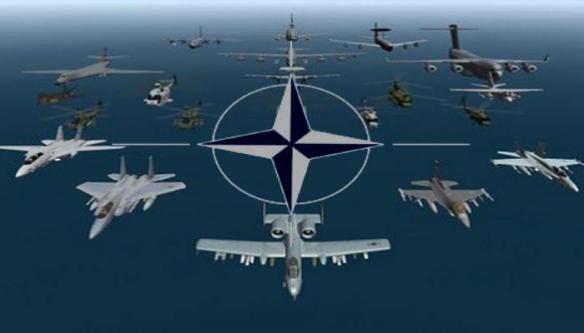
Understanding NATO, Ending War

By Robert J. Burrowes

On 4 April 2019, the North Atlantic Treaty Organization, better known as NATO, marked the 70th anniversary of its existence with a conference attended by the foreign ministers of member nations in Washington DC. This will be complemented by a meeting of the heads of state of member nations in London next December.

Coinciding with the anniversary event on 4 April, peace activists and concerned scholars in several countries conducted a variety of events to draw attention to, and further document, the many war crimes and other atrocities committed by NATO (sometimes by deploying its associate and crony terrorist armies – ISIS, Al Qaeda, Al Nusra – recruited and trained by the CIA and funded by Saudi Arabia, other Gulf countries and the US directly or through one or other of its many agencies: see ‘NATO – No Need – NATO-EXIT: The Florence Declaration’), the threat that NATO poses to global peace and security as an appendage of the US military, and to consider ways that NATO might be terminated.

These protests and related activities included several outlined in ‘No To NATO: Time To End Aggressive Militarism’ which also explains how NATO ‘provides a veneer of legality’ when ‘the US is unable to get the United Nations Security Council to approve military action’ and ‘Congress will not grant authority for US military action’ and despite the clearcut fact that NATO has no ‘international legal authority to go to war’, the grounds for which are clearly defined in the Charter of the United Nations and are limited to just two: authorization by the UN Security Council and a response in self-defense to a military attack.

The most significant gathering of concerned scholars was undoubtedly the ‘Exit NATO!’ conference in Florence, Italy, which culminated in the Florence Declaration calling for an end to NATO. See ‘The Florence Declaration: An International Front Calling for NATO-Exit’.

If NATO’s record of military destruction is so comprehensive – in the last 20 years virtually destroying Yugoslavia (balkanized into various successor states), Iraq and Libya, while inflicting enormous damage on many others, particularly Afghanistan and Syria – how did it come into existence and why does it exist now?

The Origin and Functions of NATO

Different authors offer a variety of reasons for the establishment of NATO. For example, Yves Engler argues that two of the factors driving the creation of NATO were ‘to blunt the European Left’ and ‘a desire to bolster colonial authority and bring the world under a US geopolitical umbrella’. See ‘On NATO’s 70th anniversary important to remember its anti-democratic roots’ and ‘Defense of European empires was original NATO goal’.

But few would disagree with Professor Jan Oberg’s brief statement on the origin of NATO: ‘Its raison d’etre… had always and unambiguously been the very existence of the Soviet Union… and its socialist/communist ideology.’ See ‘NATO at 70: An unlawful organisation with serious psychological problems’.

In other words, NATO was established as one response to the deep fear the United States government harbored in relation to the Soviet Union which, despite western propaganda to the contrary and at staggering cost to its population and industrial infrastructure, had led the defeat of Nazi Germany in World War II.

As Professor Michel Chossudovsky elaborates this point: The NATO ‘alliance’ of 29 member states (with Israel also a de facto member), most with US military bases, US military (and sometimes nuclear) weapons and significant or substantial deployments of US troops on their territory, was designed to sustain ‘the de facto “military occupation” of Western Europe’ and to confront the Soviet Union as the US administration orchestrated the Cold War to justify its imperial agenda – global domination guaranteed by massive US military expansion – in service of elite interests (including the profit maximization of the military industrial complex, its fossil fuel and banking corporations, and its media and information technology giants).

While NATO has the appearance of a multinational military alliance, the US controls NATO command structures with the Pentagon dominating NATO decision-making. NATO’s Supreme Allied Commander Europe (SACEUR) and Supreme Allied Commander Atlantic (SACLANT) are Americans appointed by Washington with the NATO Secretary General Jens Stoltenberg performing merely bureaucratic functions.

In light of the above, Chossudovsky observes: ‘Under the terms of the military alliance, NATO member states are harnessed into endorsing Washington’s imperial design of World conquest under the doctrine of collective security.’ Even worse, he argues, given the lies and fabrications that permeate US-NATO military doctrine, key decision-makers believe their own propaganda. ‘Immediately after the Cold War, a new nuclear doctrine was formulated, focused on the preemptive use of nuclear weapons, meaning a nuclear first strike as a means of self-defense.’ More recently: ‘Not only do they believe that tactical nuclear weapons are peace-making bombs, they are now putting forth the concept of a “Winnable Third World War”. Taking out China and Russia is on the drawing board of the Pentagon.’ See ‘NATO-Exit: Dismantle NATO, Close Down 800 US Military Bases, Prosecute the War Criminals’ and ‘NATO Spending Pushes Europe from Welfare to Warfare’.

So, given the ongoing military threats – with an expanding range of horrific weapons (including, to nominate just two, ‘more usable’ low yield nuclear weapons and technologies on ‘weather warfare’ offered by the military/nuclear corporate war planners) that threaten previously unimagined outcomes – and interventions by a US-led NATO, with Venezuela and now Iran the latest countries to be directly threatened – see ‘“Dangerous game”: US, Europe and the “betrayal” of Iran’ – as well as a gathering consensus among peace activists and scholars of the importance of stopping NATO (particularly given the many opportunities, beginning with aborting its origin, that have been missed already as explained by Professor Peter Kuznick: see ‘“Obscene” Bipartisan Applause for NATO in Congress’) how do we actually stop NATO?

While several authors, including those with articles cited above, offer ideas on what should be done about ending NATO, Chossudovsky offers the most comprehensive list of ideas in this regard well aware that stopping NATO is intimately connected to the struggle to end war and globalization. Chossudovsky’s ideas range from organizational suggestions such as integrating anti-war protest with the campaign against the gamut of neoliberal economic ‘reforms’ and the development of a broad based grassroots network independent of NGOs funded by Wall Street, objectives such as dismantling the propaganda apparatus which sustains the legitimacy of war and neoliberalism, challenging the corporate media (including by using alternative media outlets on the Internet), providing encouragement (including information about the illegality of their orders) for military personnel to refuse to fight (perhaps like the GI coffeehouse movement during the US war on Vietnam: see ‘The story of the GI coffeehouses’), working to close down weapons assembly plants and many other suggestions. See Towards a World War III Scenario: The Dangers of Nuclear War and ‘NATO-Exit: Dismantle NATO, Close Down 800 US Military Bases, Prosecute the War Criminals’.

Given my own deep interest in this subject of US/NATO wars and in developing and implementing a strategy that ends their war-making, let me elaborate Chossudovsky’s explanation of NATO’s function in the world today by introducing a book by Professor Peter Phillips.

In his book Giants: The Global Power Elite, Phillips observes that the power elite continually worries about rebellion by the ‘unruly exploited masses’ against their structure of concentrated wealth. This is why the US military empire has long played the role of defender of global capitalism. As a result, the United States has more than 800 military bases (with some scholars suggesting 1,000) in 70 countries and territories. In comparison, the United Kingdom, France, and Russia have about 30 foreign bases. In addition, US military forces are now deployed in 70 percent of the world’s nations with US Special Operations Command (SOCOM) having troops in 147 countries, an increase of 80 percent since 2010. These forces conduct counterterrorism strikes regularly, including drone assassinations and kill/capture raids.

‘The US military empire stands on hundreds of years of colonial exploitation and continues to support repressive, exploitative governments that cooperate with global capital’s imperial agenda. Governments that accept external capital investment, whereby a small segment of a country’s elite benefits, do so knowing that capital inevitably requires a return on investment that entails using up resources and people for economic gain. The whole system continues wealth concentration for elites and expanded wretched inequality for the masses….

‘Understanding permanent war as an economic relief valve for surplus capital is a vital part of comprehending capitalism in the world today. War provides investment opportunity for the Giants and TCC elites and a guaranteed return on capital. War also serves a repressive function of keeping the suffering masses of humanity afraid and compliant.’

As Phillips elaborates: This is why defense of global capital is the prime reason that NATO countries now account for 85 percent of the world’s military spending; the United States spends more on the military than the rest of the world combined.

In essence, ‘the Global Power Elite uses NATO and the US military empire for its worldwide security. This is part of an expanding strategy of US military domination around the world, whereby the US/ NATO military empire, advised by the power elite’s Atlantic Council, operates in service to the Transnational Corporate Class for the protection of international capital everywhere in the world’.

In short, ending NATO requires recognition of its fundamental role in preserving the US empire (at the expense of national sovereignty) and maintaining geopolitical control to defend the global elite’s capital interests – reflected in the capitalist agenda to endlessly expand economic growth – and particularly the profits the elite makes by inciting, supplying and justifying the massively profitable wars that the US/NATO conduct on its behalf.

So if you thought that wars were fought for reasons other than profit (like defense, a ‘just cause’ or ‘humanitarian’ motives) you have missed the essential function of US/NATO wars. And while these wars might be promoted by the corporate media as conflicts over geostrategic considerations (like ‘keeping open the Straits of Hormuz’), access to resources (‘war for oil’) or even markets (so that we can have US junk-food chains in every country on Earth), these explanations are all merely more palatable versions of the word ‘profit’ and are designed to obscure the truth.

And this raises another question worth pondering. Given that wars are the highly organized industrial-scale killing of fellow human beings (for profit) as well as the primary means of expanding the number of fellow human beings who are drawn into the global capitalist economy to be exploited (for profit) and the primary method used for destroying Earth’s climate and environment (for profit), you might wander if those who conduct wars are sane. Well, as even posing the question suggests, the global elite – which drives wars, the highly exploitative capitalist economy and destruction of the biosphere – is quite insane. And there is a brief explanation of this insanity and how it is caused in the article ‘The Global Elite is Insane Revisited’.

Stopping NATO

So if war is precipitated and now maintained perpetually by an insane elite that controls and utilizes the US and NATO military forces to secure profits by killing and exploiting fellow human beings while destroying the climate and environment, how can we stop it? Clearly, not without a sophisticated strategy that addresses each dimension of the conflict.

Hence, my own suggestion is that we do three things simultaneously:

  1. Invite participation in a comprehensive strategy to end war, of which NATO is a symptom
  2. Invite participation in one or another program to substantially reduce consumption to systematically reduce the vital driver of ‘wars for resources’ (which will also reduce the gross exploitation of fellow human beings and humanity’s adverse impact on the biosphere), and
  3. Invite participation in programs to increase human emotional functionality so that an increasing proportion of the human population is empowered to actively engage in struggles for peace, justice and sustainability and to perceive the propaganda of elites and their agents, including NATO functionaries and corporate media outlets, without being deceived by it.

There is a comprehensive strategy to end war explained on this website – Nonviolent Campaign Strategy – which includes identification of the two strategic aims and a basic list of 37 strategic goals to end war. See ‘Strategic Aims’.

There is a strategy for people to systematically reduce their consumption and increase their self-reliance mapped out in ‘The Flame Tree Project to Save Life on Earth’. But if you want a simpler 12-point list which still has strategic impact, see ‘The Earth Pledge’ included in ‘Why Activists Fail’. If you want to better understand why people over-consume, you can find out here: ‘Love Denied: The Psychology of Materialism, Violence and War’.

There is a process for improving your own emotional functionality (which will develop your conscience, courage and capacity to think strategically) described in the article ‘Putting Feelings First’. If you would like to assist children to grow up without emotional dysfunctionalities, consider making ‘My Promise to Children’. If you want to read the foundation behind these two suggestions, see Why Violence? and Fearless Psychology and Fearful Psychology: Principles and Practice.

Complementary to these suggestions, you might like to sign the online pledge of The Peoples Charter to Create a Nonviolent World which links people working to end violence in all contexts.

There is one question that remains unaddressed by the suggestions above: How do we mobilize sufficient people (both anti-war activists and others) and organizations (including anti-war groups and others) to participate in the effort to end elite-sponsored war, including its organizational structures such as NATO?

Given the notorious difficulty of mobilizing activists to act strategically in any context (a much more complex version of the basic problem of mobilizing people), my primary suggestion is that individuals within the anti-war movement invite other individuals and activist groups to choose and campaign on one or more of the strategic goals necessary to end war listed in ‘Strategic Aims’. While some activist groups are already working to achieve one or more of these strategic goals, we clearly need to engage more groups to work on the many other goals so that each of these goals is being addressed. War will not be ended otherwise.

One thing that a section of the climate movement does well is to research and report on those banks, superannuation funds and insurance companies that provide financial services, loans, investment capital and insurance cover to fossil fuel corporations and to then invite concerned people to sign standard letters sent to these organizations requesting them to cease their support of fossil fuels. The anti-war movement could usefully emulate this tactic (on a far wider scale than has existed previously) in relation to weapons corporations and to invite individuals and organizations everywhere to boycott banks, superannuation funds and insurance companies with any involvement in the weapons industry.

But this is just one simple tactic (involving no risk and little effort) on a small but important range of ‘targets’ in the anti-war struggle. Unfortunately, there are plenty more targets that need our attention and that will require more commitment than signing a letter given that, for example, essential funding for the weapons industry is supplied by government procurement programs using your taxes.

Similarly, we need individuals and groups working to mobilize people to substantially reduce their consumption, and individuals and groups working to mobilize people to prioritize their emotional well-being (the foundation of their courage to act conscientiously and strategically in resisting war, exploitation and destruction of the biosphere generally). If we do not undertake these complementary but essential programs, our efforts to end war will be endlessly undermined by our own fear and over-consumption.

Because, in the final analysis, it is our fearfully surrendered tax dollars and our dollars spent consuming the resources seized in wars that will ensure that elite-driven wars for profit by the US and NATO will be financially sustained, whatever words we utter and actions we take.

So our strategy must address this fear and over-consumption too if it is to have the sophistication and comprehensiveness necessary to shut down NATO and end war.


Biodata: Robert J. Burrowes has a lifetime commitment to understanding and ending human violence. He has done extensive research since 1966 in an effort to understand why human beings are violent and has been a nonviolent activist since 1981. He is the author of Why Violence? His email address is flametree@riseup.net and his website is here.

Bullet Points: How Forever War Will End

By

Source: Another Day in the Empire

Forget a popular movement to end the wars.

As George W. Bush said during his murder spree in Afghanistan and Iraq, the antiwar movement at that time (far larger than what we have today) was little more than a “focus group” ignored by the state (with the exception of sending out their operatives to spy on the movement and create disorder and factionalism).

Most Americans are numb to decades of expensive and debilitating wars. They prefer not to think about it. The corporate propaganda media provides plenty of fluff and chaff to distract them—spiked with hate screeds against the president—and the idea of a popular movement to end the wars is now nearly impossible.

Like former dirty trickster Karl Rove famously said, the American people really have no choice but to sit back and watch the creative destructionists “make history.” Any serious effort to mobilize an antiwar movement would be disrupted. The state has perfected the dark art of killing democratic action through subversion.

Economic Armageddon. It’s breathing down our necks, thanks to federal spending out of control for decades, at least half of it going to the “defense” department and associated death merchants.

“The United States recorded a government debt equivalent to 105.40 percent of the country’s Gross Domestic Product in 2017,” Trading Economics points out. “Government Debt to GDP in the United States averaged 61.70 percent from 1940 until 2017, reaching an all-time high of 118.90 percent in 1946 [after participating in the worst act of organized carnage in human history] and a record low of 31.70 percent in 1981.”

According to research conducted by William D. Harding and Mandy Smithberger, the “final annual tally for war, preparations for war, and the impact of war come to more than $1.25 trillion, more than double the Pentagon’s base budget [of the $750 billion Trump budget].”

Last year, the official tally for the national debt was $21,500 trillion. Some believe this is a lowball figure. John Williams of shadowstats.com has shown that with unfunded liabilities, the debt is actually closer to $222 trillion, a staggering number virtually unknown to the American people. Most don’t even realize the average public unfunded liability is $2 million per household (piled atop personal debt, which is at an all-time high).

Obviously, somewhere along the line, and I’d have to say soon, there will be a “reset,” an economic collapse and reordering of the game (on terms beneficial to the bankers). Empires typically fall when they become unsustainable.

Russia and China. Both nations have their own problems and are less than friendly to individual rights, although Russia is far better than totalitarian China. It is now obvious both are working to find an exit to the domination of Federal Reserve fiat funny money scheme that rules international economies and trade around the world. The US has weaponized this system by slapping sanctions on disfavored nations and those it has decided to invade and destroy (and with the current rhetoric from both sides of the one-sided war party, it is obvious the political class and its corporate directors are itching for a fight).

This is, of course, insane. I really do think the hubris—the indispensable nation, the exceptional nation—is so thick these fools can’t see how easily it would be to turn the world into a radioactive cauldron. On the other hand, I do believe, at least in regard to nuclear annihilation, somewhat saner heads will prevail.

News flash. If there is a non-nuclear (or limited nuclear) war with each or both (see the 2001 Sino-Russian Treaty of Friendship), it will not turn out good for the US, which has corrupted its defensive military capacity with a manufactured terror-asymmetrical posture.

This approach is effective in subversion operations to destabilize countries, particularly in the Middle East and South Asia. As we have seen since the end of the Second World War, the United States appears to be incapable of winning wars. This no mistake and primarily benefits Eisenhower’s military-industrial complex with a host of related new “national security” industries in addition to the war merchant stalwarts (Boeing, General Dynamics, General Electric, Lockheed-Martin, Raytheon, etc.), all feeding at the trough. Forever war is a forever profit stream for the ruling elite and its political class.

So, the conclusion is either economic collapse or defeat in a more or less conventional war will halt the trajectory the US is taking now as it is pulled along in a neocon spell with a president that has at best a sixth grade understanding of the world. Both probable outcomes are unthinkable.

Who knows. Maybe the American people will get off their duffs and demand the wars and provocations leading to war end. This was done in the 1960s and early 70s, primarily due to the Vietnam War protest that began in response to military servitude imposed on teenagers. The state ended a military draft, although it retained its “selective service” registration of potential future bullet-stoppers.

The moral aspect was secondary.

Decriminalizing the Drug War?

Calculating the Damage from a Century of Drug Prohibition

By Alfred W. McCoy

Source: TomDispatch.com

We live in a time of change, when people are questioning old assumptions and seeking new directions. In the ongoing debate over health care, social justice, and border security, there is, however, one overlooked issue that should be at the top of everyone’s agenda, from Democratic Socialists to libertarian Republicans: America’s longest war. No, not the one in Afghanistan. I mean the drug war.

For more than a century, the U.S. has worked through the U.N. (and its predecessor, the League of Nations) to build a harsh global drug prohibition regime — grounded in draconian laws, enforced by pervasive policing, and punished with mass incarceration. For the past half-century, the U.S. has also waged its own “war on drugs” that has complicated its foreign policy, compromised its electoral democracy, and contributed to social inequality. Perhaps the time has finally come to assess the damage that drug war has caused and consider alternatives.

Even though I first made my mark with a 1972 book that the CIA tried to suppress on the heroin trade in Southeast Asia, it’s taken me most of my life to grasp all the complex ways this country’s drug war, from Afghanistan to Colombia, the Mexican border to inner-city Chicago, has shaped American society. Last summer, a French director doing a documentary interviewed me for seven hours about the history of illicit narcotics. As we moved from the seventeenth century to the present and from Asia to America, I found myself trying to answer the same relentless question: What had 50 years of observation actually drilled into me, beyond some random facts, about the character of the illicit traffic in drugs?

At the broadest level, the past half-century turns out to have taught me that drugs aren’t just drugs, drug dealers aren’t just “pushers,” and drug users aren’t just “junkies” (that is, outcasts of no consequence). Illicit drugs are major global commodities that continue to influence U.S. politics, both national and international. And our drug wars create profitable covert netherworlds in which those very drugs flourish and become even more profitable. Indeed, the U.N. once estimated that the transnational traffic, which supplied drugs to 4.2% of the world’s adult population, was a $400 billion industry, the equivalent of 8% of global trade.

In ways that few seem to understand, illicit drugs have had a profound influence on modern America, shaping our international politics, national elections, and domestic social relations. Yet a feeling that illicit drugs belong to a marginalized demimonde has made U.S. drug policy the sole property of law enforcement and not health care, education, or urban development.

During this process of reflection, I’ve returned to three conversations I had back in 1971 when I was a 26-year-old graduate student researching that first book of mine, The Politics of Heroin: CIA Complicity in the Global Drug Trade. In the course of an 18-month odyssey around the globe, I met three men, deeply involved in the drug wars, whose words I was then too young to fully absorb.

The first was Lucien Conein, a “legendary” CIA operative whose covert career ranged from parachuting into North Vietnam in 1945 to train communist guerrillas with Ho Chi Minh to organizing the CIA coup that killed South Vietnamese President Ngo Dinh Diem in 1963. In the course of our interview at his modest home near CIA headquarters in Langley, Virginia, he laid out just how the Agency’s operatives, like so many Corsican gangsters, practiced the “clandestine arts” of conducting complex operations beyond the bounds of civil society and how such “arts” were, in fact, the heart and soul of both covert operations and the drug trade.

Second came Colonel Roger Trinquier, whose life in a French drug netherworld extended from commanding paratroopers in the opium-growing highlands of Vietnam during the First Indochina War of the early 1950s to serving as deputy to General Jacques Massu in his campaign of murder and torture in the Battle of Algiers in 1957. During an interview in his elegant Paris apartment, Trinquier explained how he helped fund his own paratroop operations through Indochina’s illicit opium traffic. Emerging from that interview, I felt almost overwhelmed by the aura of Nietzschean omnipotence that Trinquier had clearly gained from his many years in this shadowy realm of drugs and death.

My last mentor on the subject of drugs was Tom Tripodi, a covert operativewho had trained Cuban exiles in Florida for the CIA’s 1961 Bay of Pigs invasion and then, in the late 1970s, penetrated mafia networks in Sicily for the U.S. Drug Enforcement Administration. In 1971, he appeared at my front door in New Haven, Connecticut, identified himself as a senior agent for the Treasury Department’s Bureau of Narcotics, and insisted that the Bureau was worried about my future book. Rather tentatively, I showed him just a few draft pages of my manuscript for The Politics of Heroin and he promptly offered to help me make it as accurate as possible. During later visits, I would hand him chapters and he would sit in a rocking chair, shirt sleeves rolled up, revolver in his shoulder holster, scribbling corrections and telling remarkable stories about the drug trade — like the time his Bureau found that French intelligence was protecting the Corsican syndicates smuggling heroin into New York City. Far more important, though, through him I grasped how ad hoc alliances between criminal traffickers and the CIA regularly helped both the Agency and the drug trade prosper.

Looking back, I can now see how those veteran operatives were each describing to me a clandestine political domain, a covert netherworld in which government agents, military men, and drug traders were freed from the shackles of civil society and empowered to form secret armies, overthrow governments, and even, perhaps, kill a foreign president.

At its core, this netherworld was then and remains today an invisible political realm inhabited by criminal actors and practitioners of Conein’s “clandestine arts.” Offering some sense of the scale of this social milieu, in 1997 the United Nations reported that transnational crime syndicates had 3.3 million members worldwide who trafficked in drugs, arms, humans, and endangered species. Meanwhile, during the Cold War, all the major powers — Britain, France, the Soviet Union, and the United States — deployed expanded clandestine services worldwide, making covert operations a central facet of geopolitical power. The end of the Cold War has in no way changed this reality.

For over a century now, states and empires have used their expanding powers for moral prohibition campaigns that have periodically transformed alcohol, gambling, tobacco, and, above all, drugs into an illicit commerce that generates sufficient cash to sustain covert netherworlds.

Drugs and U.S. Foreign Policy

The influence of illicit drugs on U.S. foreign policy was evident between 1979 and 2019 in the abysmal failure of its never-ending wars in Afghanistan. Over a period of 40 years, two U.S. interventions there fostered all the conditions for just such a covert netherworld. While mobilizing Islamic fundamentalists to fight the Soviet occupation of that country in the 1980s, the CIA tolerated opium trafficking by its Afghan mujahedeen allies, while arming them for a guerrilla war that would ravage the countryside, destroying conventional agriculture and herding.

In the decade after superpower intervention ended in 1989, a devastating civil war and then Taliban rule only increased the country’s dependence upon drugs, raising opium production from 250 tons in 1979 to 4,600 tons by 1999. This 20-fold increase transformed Afghanistan from a diverse agricultural economy into a country with the world’s first opium monocrop — that is, a land thoroughly dependent on illicit drugs for exports, employment, and taxes. Demonstrating that dependence, in 2000 when the Taliban banned opium in a bid for diplomatic recognition and cut production to just 185 tons, the rural economy imploded and their regime collapsed as the first U.S. bombs fell in October 2001.

To say the least, the U.S. invasion and occupation of 2001-2002 failed to effectively deal with the drug situation in the country. As a start, to capture the Taliban-controlled capital, Kabul, the CIA had mobilized Northern Alliance leaders who had long dominated the drug trade in northeast Afghanistan, as well as Pashtun warlords active as drug smugglers in the southeastern part of the country. In the process, they created a post-war politics ideal for the expansion of opium cultivation.

Even though output surged in the first three years of the U.S. occupation, Washington remained uninterested, resisting anything that might weaken military operations against the Taliban guerrillas. Testifying to this policy’s failure, the U.N.’s Afghanistan Opium Survey 2007 reported that the harvest that year reached a record 8,200 tons, generating 53% of the country’s gross domestic product, while accounting for 93% of the world’s illicit narcotics supply.

When a single commodity represents over half of a nation’s economy, everyone — officials, rebels, merchants, and traffickers — is directly or indirectly implicated. In 2016, the New York Times reported that both Taliban rebels and provincial officials opposing them were locked in a struggle for control of the lucrative drug traffic in Helmand Province, the source of nearly half the country’s opium. A year later, the harvest reached a record 9,000 tons, which, according to the U.S. command, provided 60% of the Taliban’s funding. Desperate to cut that funding, American commanders dispatched F-22 fighters and B-52 bombers to destroy the insurgency’s heroin laboratories in Helmand — doing inconsequential damage to a handful of crude labs and revealing the impotence of even the most powerful weaponry against the social power of the covert drug netherworld.

With unchecked opium production sustaining Taliban resistance for the past 17 years and capable of doing so for another 17, the only U.S. exit strategy now seems to be restoring those rebels to power in a coalition government — a policy tantamount to conceding defeat in its longest military intervention and least successful drug war.

High Priests of Prohibition

For the past half-century, the ever-failing U.S. drug war has found a compliant handmaiden at the U.N., whose dubious role when it comes to drug policy stands in stark contrast to its positive work on issues like climate change and peace-keeping.

In 1997, the director of U.N. drug control, Dr. Pino Arlacchi, proclaimed a 10-year program to eradicate all illicit opium and coca cultivation from the face of the planet, starting in Afghanistan. A decade later, his successor, Antonio Maria Costa, glossing over that failure, announced in the U.N.’s World Drug Report 2007 that “drug control is working and the world drug problem is being contained.” While U.N. leaders were making such grandiloquent promises about drug prohibition, the world’s illicit opium production was, in fact, rising 10-fold from just 1,200 tons in 1971, the year the U.S. drug war officially started, to a record 10,500 tons by 2017.

This gap between triumphal rhetoric and dismal reality cries out for an explanation. That 10-fold increase in illicit opium supply is the result of a market dynamic I’ve termed “the stimulus of prohibition.” At the most basic level, prohibition is the necessary precondition for the global narcotics trade, creating both local drug lords and transnational syndicates that control this vast commerce. Prohibition, of course, guarantees the existence and well-being of such criminal syndicates which, to evade interdiction, constantly shift and build up their smuggling routes, hierarchies, and mechanisms, encouraging a worldwide proliferation of trafficking and consumption, while ensuring that the drug netherworld will only grow.

In seeking to prohibit addictive drugs, U.S. and U.N. drug warriors act as if mobilizing for forceful repression could actually reduce drug trafficking, thanks to the imagined inelasticity of, or limits on, the global narcotics supply. In practice, however, when suppression reduces the opium supply from one area (Burma or Thailand), the global price just rises, spurring traders and growers to sell off stocks, old growers to plant more, and new areas (Colombia) to enter production. In addition, such repression usually only increases consumption. If drug seizures, for instance, raise the street price, then addicted consumers will maintain their habit by cutting other expenses (food, rent) or raising their income by dealing drugs to new users and so expanding the trade.

Instead of reducing the traffic, the drug war has actually helped stimulate that 10-fold increase in global opium production and a parallel surge in U.S. heroin users from just 68,000 in 1970 to 886,000 in 2017.

By attacking supply and failing to treat demand, the U.N.-U.S. drug war has been pursuing a “solution” to drugs that defies the immutable law of supply and demand. As a result, Washington’s drug war has, in the past 50 years, gone from defeat to debacle.

The Domestic Influence of Illicit Drugs

That drug war has, however, incredible staying power. It has persisted despite decades of failure because of an underlying partisan logic. In 1973, while President Richard Nixon was still fighting his drug war in Turkey and Thailand, New York’s Republican governor, Nelson Rockefeller, enacted the notorious “Rockefeller Drug Laws.” Those included mandatory penalties of 15 years to life for the possession of just four ounces of narcotics.

As the police swept inner-city streets for low-level offenders, annual prison sentences in New York State for drug crimes surged from only 470 in 1970 to a peak of 8,500 in 1999, with African-Americans representing 90% of those incarcerated. By then, New York’s state prisons held a previously unimaginable 73,000 people. During the 1980s, President Ronald Reagan, a conservative Republican, dusted off Rockefeller’s anti-drug campaign for intensified domestic enforcement, calling for a “national crusade” against drugs and winning draconian federal penalties for personal drug use and small-scale dealing.

For the previous 50 years, the U.S. prison population had remained remarkably stable at just 110 prisoners per 100,000 people. The new drug war, however, doubled those prisoners from 370,000 in 1981 to 713,000 in 1989. Driven by Reagan-era drug laws and parallel state legislation, prison inmates soared to 2.3 million by 2008, raising the country’s incarceration rate to an extraordinary 751 prisoners per 100,000 population. And 51% of those in federal penitentiaries were there for drug offenses.

Such mass incarceration has led as well to significant disenfranchisement, starting a trend that would, by 2012, deny the vote to nearly six million people, including 8% of all African-American voting-age adults, a liberal constituency that had gone overwhelmingly Democratic for more than half a century. In addition, this carceral regime concentrated its prison populations, including guards and other prison workers, in conservative rural districts of the country, creating something akin to latter-day “rotten boroughs” for the Republican Party.

Take, for example, New York’s 21st Congressional District, which covers the Adirondacks and the state’s heavily forested northern panhandle. It’s home to 14 state prisons, including some 16,000 inmates, 5,000 employees, and their 8,000 family members — making them collectively the district’s largest employer and a defining political presence. Add in the 13,000 or so troops in nearby Fort Drum and you have a reliably conservative bloc of 26,000 voters (and 16,000 non-voters), or the largest political force in a district where only 240,000 residents actually vote. Not surprisingly, the incumbent Republican congresswoman survived the 2018 blue wave to win handily with 56% of the vote. (So never say that the drug war had no effect.)

So successful were Reagan Republicans in framing this partisan drug policy as a moral imperative that two of his liberal Democratic successors, Bill Clinton and Barack Obama, avoided any serious reform of it. Instead of systemic change, Obama offered clemency to about 1,700 convicts, an insignificant handful among the hundreds of thousands still locked up for non-violent drug offenses.

While partisan paralysis at the federal level has blocked change, the separate states, forced to bear the rising costs of incarceration, have slowly begun reducing prison populations. In a November 2018 ballot measure, for instance, Florida — where the 2000 presidential election was decided by just 537 ballots — voted to restore electoral rights to the state’s 1.4 million felons, including 400,000 African-Americans. No sooner did that plebiscite pass, however, than Florida’s Republican legislators desperately tried to claw backthat defeat by requiring that the same felons pay fines and court costs before returning to the electoral rolls.

Not only does the drug war influence U.S. politics in all sorts of negative ways but it has reshaped American society — and not for the better, either. The surprising role of illicit drug distribution in ordering life inside some of the country’s major cities has been illuminated in a careful study by a University of Chicago researcher who gained access to the financial records of a drug gang inside Chicago’s impoverished Southside housing projects.  He found that, in 2005, the Black Gangster Disciple Nation, known as GD, had about 120 bosses who employed 5,300 young men, largely as street dealers, and had another 20,000 members aspiring to those very jobs. While the boss of each of the gang’s hundred crews earned about $100,000 annually, his three officers made just $7.00 an hour, his 50 street dealers only $3.30 an hour, and their hundreds of other members served as unpaid apprentices, vying for entry-level slots when street dealers were killed, a fate which one in four regularly suffered.

So what does all this mean? In an impoverished inner city with very limited job opportunities, this drug gang provided high-mortality employment on a par with the minimum wage (then $5.15 a hour) that their peers in more affluent neighborhoods earned from much safer work at McDonald’s. Moreover, with some 25,000 members in Southside Chicago, GD was providing social order for young men in the volatile 16-to-30 age cohort — minimizing random violence, reducing petty crime, and helping Chicago maintain its gloss as a world-class business center. Until there is sufficient education and employment in the nation’s cities, the illicit drug market will continue to fill the void with work that carries a high cost in violence, addiction, imprisonment, and more generally blighted lives.

The End of Drug Prohibition

As the global prohibition effort enters its second century, we are witnessing two countervailing trends. The very idea of a prohibition regime has reached a crescendo of dead-end violence not just in Afghanistan but recently in Southeast Asia, demonstrating the failure of the drug war’s repression strategy. In 2003, Thai Prime Minister Thaksin Shinawatra launched a campaign against methamphetamine abuse that prompted his police to carry out 2,275 extrajudicial killings in just three months. Carrying that coercive logic to its ultimate conclusion, on his first day as Philippine president in 2016, Rodrigo Duterte ordered an attack on drug trafficking that has since yielded 1.3 million surrenders by dealers and users, 86,000 arrests, and some 20,000 bodies dumped on city streets across the country. Yet drug use remains deeply rooted in the slums of both Bangkok and Manila.

On the other side of history’s ledger, the harm-reduction movement led by medical practitioners and community activists worldwide is slowly working to unravel the global prohibition regime. With a 1996 ballot measure, California voters, for instance, started a trend by legalizing medical marijuana sales. By 2018, Oklahoma had become the 30th state to legalize medical cannabis. Following initiatives by Colorado and Washington in 2012, eight more states to date have decriminalized the recreational use of cannabis, long the most widespread of all illicit drugs.

Hit by a surge of heroin abuse during the 1980s, Portugal’s government first reacted with repression that, as everywhere else on the planet, did little to stanch rising drug abuse, crime, and infection. Gradually, a network of medical professionals across the country adopted harm-reduction measures that would provide a striking record of proven success. After two decades of this ad hoc trial, in 2001 Portugal decriminalized the possession of all illegal drugs, replacing incarceration with counseling and producing a sustained drop in HIV and hepatitis infections.

Projecting this experience into the future, it seems likely that harm-reduction measures will be adopted progressively at local and national levels around the globe, while various endless and unsuccessful wars on drugs are curtailed or abandoned. Perhaps someday a caucus of Republican legislators in some oak-paneled Washington conference room and a choir of U.N. bureaucrats in their glass-towered Vienna headquarters will remain the only apostles preaching the discredited gospel of drug prohibition.

America is exceptional — in all the wrong ways

By Maj. Danny Sjursen

Source: Axis of Logic

I was born and raised in an America far more Orwellian than many now remember. Matters have gone so far off the rails since 9/11 that few seem to recall the madness of the 1980s. The U.S. had a celebrity actor for president, who railed about America’s ostensibly existential adversary—the Soviet “evil empire.” Back then, Ronald Reagan nearly started a nuclear war during the all-too-real Able Archer war game. He also secretly sold missiles to Iran, and then laundered the windfall to the Contras’ Central American hit squads, resulting in some 100,000 dead.

Looking back from 2019, at least as the contemporary media tell it, those were the good old days. Heck, even Barack Obama—faux liberal that he was—proudly and publicly admired Reagan. Oh, and one of Reagan’s favorite campaign slogans: “Make America Great Again.”

Today, matters seem to be coming farcically full circle, what with Elliott Abrams—convicted in the aforementioned Iran-Contra scandal—being appointed special envoy to Venezuela, and Uncle Sam again bullying a Latin American country. Welcome to America’s own grisly ’80s foreign affairs theme party! Which all got me thinking, again, about the whole notion of American exceptionalism. Only a country that truly, deeply believes in its own special mission could repeat the hideous policies of the 1980s and hardly notice.

Perhaps one expects this absurd messianism from the likes of The Donald, but the real proof is that America’s supposed progressives—like Obama—also obediently pray at the temple of exceptionalism. “Orwellian” is the only word for a nation whose leaders and commentariat were absolutely aghast when candidate Obama was seen without (gasp!) an American flag pin on his lapel. Even more disturbing was how quickly he folded and dutifully adorned his mandatory flair. This sort of nonsense is dangerous, folks: It’s hypernationalism—the very philosophy that brought us World War I.

So it was this week, while sitting on a plane reading my oh-so-bourgeois Economist, and getting infuriated about seeing Elliott Abrams’ war-criminal face, that my thoughts again turned to good old American exceptionalism. My opinions on the topic have waxed and waned over the course of a career spent waging illegal war. First, as a young cadet at West Point, I bought it hook, line and sinker; then, as an Iraq War vet and dissenter, I rejected the entire notion. Only now, observing the world as it is, have I begun to think that America really is exceptional after all—only in all the wrong ways.

Humor me, please, while I run through a brief laundry list of the ways the US of A is wildly and disconcertingly different from all the other “big-boy countries” in the developed world. Let’s start with domestic policy:

  • The U.S. has been the site of exponentially more mass shootings than any other nation. And unlike in New Zealand—where officials took immediate steps to tighten gun control in the wake of its recent tragedy—American politicians won’t do a thing about it. We also own more guns per capita than any other country in the world. In second place is Yemen.
  • The U.S. is essentially alone in the Western world in not guaranteeing health care as a basic human right. It spends much more cash, yet achieves worse health outcomes than its near-peer countries.
  • America is home to some of the starkest income inequality on the globe—right up there with Turkey and South Africa.
  • The U.S. keeps migrant kids in cages at the border, or did until recently. Even more exceptional is that Washington is largely responsible for the very unrest in Central America that generates the refugees, all while American conservatives proudly wear their “Christianity” as badge of honor—but wasn’t Jesus a refugee child? Maybe I read the wrong Bible.
  • America is alone among 41 Western nations in not guaranteeing paid family leave. How’s that for “family values?”
  • As for representative democracy, only the U.S. has an Electoral College. This fun 18th-century gimmick ensures that here in America—in 40 percent of its elections since 2000—the presidential candidate with fewer votes actually won. Furthermore, our peculiar system ensures that a rural Wyoming resident has—proportionally—several times more representative power in Washington than someone who lives in California.
  • Similarly, America counts several non-state “territories”—think Guam, Samoa, Puerto Rico—that don’t even get to vote for the president that it can legally send  to war. But hey, why should we grant them statehood? It’s not as though some of them have higher military enlistment rates than any U.S. state … oh, wait.
  • The U.S. is essentially solo in defining corporations as “people,” and thanks to the Citizens United Supreme Court ruling, has lifted limits on money in politics. Buying elections is officially as American as apple pie.
  • The USA locks up its own people at the highest rate in the world and is nearly alone among developed nations in maintaining the death penalty. Last year, the U.S. was the only country in the Americas to conduct executions and the only Western democracy to do so. But our friends the Saudis still execute folks, so it’s got to be OK. Dostoyevsky famously claimed that “the degree of civilization in a society can be judged by entering its prisons.” How are we doing there?

Then there’s the foreign policy of the great American empire:

  • The U.S. spends exponentially more on military defense than anyone else, and more than the next seven competitors (most of which are allies) combined.
  • America’s bloated military is all by itself in dotting the globe with hundreds of foreign military bases—by some estimates more than any country or empire in world history. As for our two biggest rivals,  Russia has 21 (mostly close to home); China has maybe three.
  • Benevolent, peaceful, freedom-loving America is also the world’s top arms dealer—even selling death-dealing weapons to famous human rights abusers.
  • After Syria signed on, the U.S. became the last nation on earth not party to the Paris Climate Accord. Heck, the occupant of the Oval Office doesn’t even believe in man-made climate change.
  • Then there’s the discomfiting fact that the U.S.—along with Russia—won’t even make a “no-first-use” pledge regarding nuclear weapons. And that’s reality, not “Dr. Strangelove.”
  • The U.S. was first and, until recently, alone in flying its drone fleet through sovereign national airspace and executing “terrorists” from the sky at will. I wonder how Washington will respond when other countries cite that American precedent and do the same?
  • Only the U.S. Navy patrols all the world’s oceans in force and expects to maintain superiority everywhere. And only the U.S. boasts near total control of the goings-on in two whole continents—unflinchingly asserting that North and South America fall in its “sphere of influence.” Crimea abuts Russia and the people speak Russian—still, the U.S. denies Moscow any sphere of influence there or anywhere else. Ah, consistency.

Of course there is so, so much more, but let’s end our tour of American “exceptionalism” there in the interest of time.

What’s so staggeringly unique about the United States is ultimately this: It stands alone among historical hegemons in denying the very existence of its empire. This, truly, is something new. Kids in 19th-century Great Britain knew they had an empire—they even colored their colonies red on school maps. Not so here in the land of the free and the home of the brave. No, Washington seems to believe its own lie—and has its people convinced—that the U.S. is no empire at all, but rather a benevolent “democratic” gentle giant.

American colonies were founded from the outset as mini-empires wrested from the natives. Next, the nascent U.S. grew up enough to take what was left of the continent from the Mexicans. Since then, Washington has been trolling the world’s oceans and spreading the gospel of its own hyper-late-stage capitalism and bullying others in order to get its way. Sure, there are countries where worse human-rights abusers and worse authoritarian regimes are in power. But do we really want to be competing for last place? Especially if we’re supposedly so exceptional and indispensable?

Me, I’m sick of patriotism, of exceptionalism, of nationalism. I’ve seen where all those ideologies inevitably lead: to aggressive war, military occupations and, ultimately, dead children. So count me as over hegemony—it’s so 20th-century, anyway—and bring on the inevitable decline of U.S. pretense and power. Britain had to give up most of an empire to gain a social safety net. That was the humane thing to do.

Tomgram: Danny Sjursen, Ringing in a New Year of War

By Tom Engelhardt

Source: TomDispatch.com

On December 9th, the Washington Post covered Donald Trump’s offhand, if long expected, announcement of the ousting of retired Marine General John Kelly from an embattled White House. Its report focused on the chief of staff’s “rocky tenure” there with a nod to his many merits, among them that he “often talked the president out of his worst impulses.” Buried deep in the piece, though, was a single line that caught my eye (and possibly that of no one else on this planet): “Kelly told others that among his biggest accomplishments was keeping the president from making rash military moves, such as removing troops from sensitive zones.”

It was admittedly neither a direct quote, nor attributed to anyone, nor elaborated on in the rest of the piece. So that’s all we know, not whether Kelly took particular pride in stopping the president from removing American troops from, say, Syria, or Iraq, or Afghanistan, or for that matter Niger. But however passing and non-specific that line may have been, it seemed to catch something striking about these last two years, a time when those in the mainstream opposition to the president have come to love so many of the retired generals and former heads of outfits like the National Security Agency and the CIA, and have turned them into the equivalent of security blankets for the rest of us. They were the men (because they were all men) intent on talking Donald Trump out of “his worst impulses” and so, in the phrase of the era, they were the “adults in the room.”

Thanks to the wars and other shenanigans that those “adults” had already been so deeply involved in and the money — more than $5 trillion of it — squandered on them, they were also the men who helped generate the dissatisfaction that gave Donald Trump his opening in the first place. And now, having been part of the problem, they are in full chorus condemnation of Donald Trump’s most recent solution: to withdraw American troops from Syria (and soon evidently from Afghanistan as well).  We — that is, the country whose actions were crucial in creating ISIS in the first place — are now the only “bulwark” against its return.  That goes without saying, of course, among Republicans, Democrats, the national security elite, America’s generals, and that last “adult” in the room, Secretary of Defense James Mattis — or at least it did until, days ago, he resigned in protest.  And as U.S. Army major and TomDispatch regular Danny Sjursen suggests in his year-ending piece, as that one Washington Post line about Kelly indicates, they worked awfully hard to ensure that President Trump wouldn’t withdraw from any part of the mess they made. With that thought in mind and withdrawals about to be under way on an increasingly grim planet, Happy New Year! Tom

The World According to the “Adults in the Room”
A Year of Forever War in Review
By Danny Sjursen

Leave it to liberals to pin their hopes on the oddest things. In particular, they seemed to find post-Trump solace in the strange combination of the two-year-old Mueller investigation and the good judgment of certain Trump appointees, the proverbial “adults in the room.” Remember that crew? It once included Secretary of State Rex Tillerson, the former ExxonMobil CEO, and a trio of active and retired generals — so much for civilian control of the military — including Secretary of Defense Jim Mattis, National Security Advisor H.R. McMaster, and White House Chief of Staff John Kelly. Until his sudden resignation, Mattis was (just barely) the last man standing. Still, for all these months, many Americans had counted on them to all but save the nation from an unpredictable president. They were the ones supposedly responsible for helming (or perhaps hemming in) the wayward ship of state when it came to foreign and national security policy.

Too bad it was all such a fantasy. As Donald Trump wraps up his second year in the Oval Office, despite sudden moves in Syria and Afghanistan, the United States remains entrenched in a set of military interventions across significant parts of the world. Worse yet, what those adults guided the president toward was yet more bombing, the establishment of yet more bases, and the funding of yet more oversized Pentagon budgets. And here was the truly odd thing: every time The Donald tweeted negatively about any of those wars or uttered an offhand remark in opposition to the warfare state or the Pentagon budget, that triumvirate of generals and good old Rex went to work steering him back onto the well-worn track of Bush-Obama-style forever wars.

All the while, a populace obsessed and distracted by the president’s camera-grabbing persona seemed hardly to notice that this country continued to exist in a state of perpetual war. And here’s the most curious part of all: Trump wasn’t actually elected on an interventionist military platform. Sure, he threw the hawkish wing of his Republican base a few bones: bringing back waterboarding as well as even “worse” forms of torture, bombing “the shit” out of ISIS, and filling Guantánamo with “some bad dudes.” Still, with foreign policy an undercard issue in a domestically focused campaign to “Make America Great Again,” most Trump supporters seemed to have little stomach for endless war in the Greater Middle East — and The Donald knew it.

Common Sense on the Campaign Trail

Despite his coarse language and dubious policy positions, candidate Trump did seem to promise something new in foreign policy. To his credit, he called the 2003 Iraq War the “single worst decision ever made” (even if his own shifting position on that invasion was well-documented). He repeatedly tweeted his virulent opposition to continuing the war in Afghanistan and regularly urged President Obama to stay out of Syria. And to the horror of newly minted Cold War liberals, he even suggested a détente with Russia.

Like so much else in his campaign, none of this was from the standard 2016 bullet-point repertoire of seasoned politicians. Sure, Donald Trump lacked the requisite knowledge and ideological coherence usually considered mandatory for serious candidates, but from time to time he did — let’s admit it — offer some tidbits of fresh thinking on foreign policy. However blasphemous that may sound, on certain international issues the guy had a point compared to Hillary, the hawk.

During his presidency, traces of his earthy commonsense still showed up from time to time. In August 2017, for instance, when announcing yet another escalation in the Afghan War, he felt obliged to admit that his original instinct had been to “pull out” of it, adding that he still sympathized with Americans who were “weary of war.”  He sounded like a man anything but confident of his chosen course of action — or at least the one chosen for him by those “adults” of his. Then, last week, he surprised the whole business-as-usual Washington establishment by announcing an imminent withdrawal of U.S. troops from Syria.  Whether he reverses himself, as he’s been apt to do, remains unknown, but here was at least a flash of his campaign-style anti-interventionism.

How, then, to explain the way a seemingly confident candidate had morphed into a hesitant president — until his recent set of decisions to pull troops out of parts of the Greater Middle East — at least on matters of war and peace? Why those nearly two years of bowing to the long-stale foreign policy thinking that had infused the Bush-Obama years, the very thing he had been theoretically running against?

Well, pin it on those adults in the room, especially the three generals. As mid-level and senior officers, they had, after all, cut their teeth on the war on terror. It and it alone defined their careers, their lives, and so their thinking. Long before Donald Trump came along, they and their peer commanders had already been taken hostage by the interventionist military playbook that went with that war and came to define the thinking of their generation. That was how you had to think, in fact, if you wanted to rise in the ranks.

The adults weren’t, for the most part, political partisans. Then again, neither was the militarist playbook they were following. Both Hillary Clinton and Jeb Bush had been selling exactly the same snake oil in 2016. Only Trump — and to some extent Bernie Sanders — had offered a genuine alternative. Nevertheless, the Trump administration sustained that same policy of forever war for almost two full years and the grown-ups in the room were the ones who made it so. Exhibit A was the Greater Middle East.

The Same Old Playbook

While George W. Bush favored a “go-big” option of regime change, massive military occupation, and armed nation-building, Barack Obama preferred expanded drone strikes, increased military advisory missions, and — in the case of Libya — a bit of light regime-changing. In Trump’s first two years in office, the U.S. military seemed to merge aspects of the losing strategies of both of those presidents.

If Trump’s gut instinct was to skip future “dumb” Iraq-style wars, “pull out” of Afghanistan, and avoid regional conflict with Russia, his grown-up advisers pushed him in exactly the opposite direction. They chose instead what might be called the more strategy: more bombing, more troops, more drone strikes, more defense spending, more advisors, more everything. And if a war seemed to be failing anyway, the answer came straight from that very playbook, as in Afghanistan in 2017: a “surge” and the need for yet more time. As a result, America’s longest-ever war grew longer still with no end faintly in sight.

Given such thinking, it’s odd to recall that those adults in the room were, once upon a time, reputed to be outside-the-box thinkers. Secretary Mattis was initially hailed as such an avid reader and devoted student of military history that he was dubbed the “warrior monk.” H.R. McMaster was similarly hailed for having written a book critical of U.S. strategy in Vietnam (though wrong in its conclusions). Both Democrats and Republicans in Washington were similarly convinced that if anyone could bring order to the Trump administration, it would be the ever-responsible John Kelly.

Let’s review, then, the advice that these innovators offered the president in his first two years in office and the results in the Greater Middle East, starting with that presidential urge to pull out of Iraq. You won’t be surprised to learn that U.S. troops are still ensconced there in an ongoing fight against what’s suddenly a growing ISIS insurgency (now that its “caliphate” is no more). Nor has Washington taken any meaningful steps to bolster the legitimacy of the Shia-dominated Baghdad government, which portends an indefinite Sunni-based insurgency of some sort (or sorts) and a possible Kurdish secession.

In Syria, rather than downsize the U.S. military mission in the interest of Trump’s stated wish for détente with Russia and his urge to get the troops out “like very soon,” his administration had more than stayed put. It essentially chose to go with an indefinite American occupation of eastern Syria, including up to 4,000 mainly Special Operations forces backing predominantly Kurdish rebels there. In fact, only recently Mattis and other “senior national security officials” reportedly tried unsuccessfully to talk the president out of his recent tweeted proclamation to end the American role in Syria and withdraw those troops from the country as, it seems, is now happening. In this, he clearly wants to avoid the ongoing risk of war with both Russia and NATO ally Turkey, not to speak of Iran. The Turks continue to threaten to invade the northern Syrian region controlled by those U.S.-backed Kurds, while Russian forces had, alarmingly, exchanged fire with U.S. troops more than once along the Euphrates River buffer zone. The Syrian mission was all risk and no reward, but the adults in the room continued to work feverishly to convince the president that to pull out might create a new “safe haven” not just for ISIS but also for the Iranians.

In Afghanistan, whatever Trump’s “instinct” may have been, after many meetings with his “cabinet and generals,” or what he called his “experts,” the president decided on a new escalation, a mini-surge in that then 17-year-old war. To that end, he delegated yet more decision-making to the very generals who were so unsuccessful in previous years and they proceeded to order the dropping of a record number of bombs, including the first-ever use of the largest non-nuclear ordnance in the Air Force arsenal, the so-called Mother of all Bombs. The results were the very opposite of reassuring. Indeed, the U.S. and its Afghan allies may be headed for actual military defeat, as the Taliban controls or contests more districts than ever, while Afghan government casualties have become, in the phrase of an American general, “unsustainable.”

Now, in a rebuke to those very experts and adults, the president will apparently remove half the U.S. troops in Afghanistan. After so many years of fruitless war, this sensible decision raised immediate alarm among the hawks in Congress and in the rest of the Washington national security establishment.  That decision, plus pulling the plug on the Syrian operation, apparently proved to be a red line for the last adult left standing and Jim Mattis promptly resigned in protest.  For the outgoing secretary of defense, it seems that complicity in Saudi war crimes in Yemen and the murder of Washington Post columnist and Saudi citizen Jamal Khashoggi were passing events.  Trump’s willingness to try to end the American role in two failing, dubiously legal quagmires, however, proved to be the general’s breaking point.

Elsewhere, the Trump team has moved ever closer to a regime-change policy in Iran, especially after the replacement of Tillerson and McMaster by the particularly Iranophobic duo of Mike Pompeo and John Bolton as secretary of state and national security advisor. Still, don’t blame any looming Iran disaster on them. Washington had unilaterally pulled out of the Obama-negotiated nuclear deal with that country well before they arrived on the scene. While the grown-ups might not have been quite as amenable to war with Iran as Bolton and Pompeo, they couldn’t countenance détente for even a second.

And, of course, all those adults in the room supported U.S. complicity in the Saudi-led terror bombing and starvation of Yemen, the poorest Arab country. They also favored sustained ties with Saudi Arabia and its increasingly brutal crown prince, Mohammed bin Salman. Indeed, despite the recent murder and dismemberment of Washington Post columnist and Saudi citizen Jamal Khashoggi in that country’s embassy in Istanbul, Turkey, and the Senate’s increasing disenchantment with the war in Yemen, Mattis remained a vocal supporter of the Saudis. Just before the Senate recently voted to pull U.S. military assistance for the Saudi war, he joined Pompeo in urging that chamber not to abandon Riyadh. In addition, key senators called Mattis’s testimony “misleading” because he “downplayed” the Saudi crown prince’s role in the murder, ignoring the conclusion of the CIA that the prince was indeed “complicit” in it.

So when it comes to outside-the-box thinking about the Greater Middle East almost two years into the president’s first term, the U.S. remains ensconced in a series of distinctly inside-the-box and unwinnable wars across the region.  Trump, however, now appears ready to change course, at least in Syria and Afghanistan, perhaps out of frustration with the ever-so-conventional mess the adults left him in.

A Militarized Planet

Elsewhere, matters are hardly more encouraging. At a global level, the grown-ups have neither tempered the president’s more bizarre policies nor offered a humbler, more modest military approach themselves. The result, as the country enters 2019, is an increasingly militarized planet. Mattis’s own National Defense Strategy (NDS), released in January 2018, represents a blatant giveaway to the domestic arms industry, envisioning as it does a world eternally on the brink of Great Power war.

On that planet of the adults, the U.S. must now prepare for threats across every square inch of the globe. Far from the military de-escalation hinted at by candidate Trump (and suggested again in a recent tweet of his), Mattis’s “2-2-1 policy” has the Pentagon ramping up for potential fights with two “big” adversaries (China and Russia), two “medium” opponents (Iran and North Korea), and one “sustained” challenge (conflicts and terrorism across the Greater Middle East). Few have asked whether such a strategy is faintly sustainable, even with a military budget that dwarfs that of any other power on the planet.

In fact, the implementation of that NDS vision is clearly leading to a new arms race and a burgeoning Cold War 2.0. Washington is already engaged in a spiraling trade war with Beijing and has announced plans to pull out of a key Cold War nuclear treaty with Russia, while developing a new group of treaty-busting intermediate range nuclear missiles itself. In addition, at the insistence of his military advisers, the president has agreed to back an Obama-era “modernization” program for the U.S. nuclear arsenal now estimated to cost at least $1.6 trillion over the next three decades.

So much for a Republican insistence on balanced budgets and decreased deficits. Furthermore, climate-change denial remains the name of the game in the Trump administration and, in this singular case, the adults in the room could do nothing about it. Despite earlier Pentagon reports that concluded man-made climate change presents a national security threat to the country, the Trump administration has ignored such claims. It has even insisted upon substituting the term “extreme weather” for “climate change” in current defense reports. Here, the grown-ups do indeed know better — the military has long been focused on the dangers of climate change — but have dismally failed to temper the president’s anti-science policies.

So, as 2018 comes to a close, thanks to the worldview of those grown-ups and the pliability of Trump’s own ideology (except when it comes to climate change), Washington’s empire of bases, its never-ending war on terror, and its blank-check spending on the military-industrial complex were more firmly entrenched than ever.  It will fall to the president — if indeed he proves to be serious when it comes to a course change — to begin the long work of (modestly) undoing a planet of war.

The Last Adult?

Looking toward 2019 in a world on edge, here are a couple of thoughts on our future. Expect that Robert Mueller’s future report will find many things to focus on, including plenty of collusion with women, but — whatever the Russians did and whatever the desires of those around candidate Trump may have been — no actual collusion of substance with Moscow in election 2016. That will undoubtedly break the hearts of liberals everywhere and ensure — despite the best efforts of a new Democratic House — a full Trump term (or two!). Furthermore, whatever “blue-wave” Democrats do domestically, they are unlikely to present a coherent, alternative foreign-policy vision. Instead, prepare to watch them cede that territory (as always) to Trump and the Republicans. Meanwhile, at least until 2021, they will continue to lament the absence of those “adults in the room” and their supposed ability to preserve a respectable foreign policy, which, of course, would have meant war all the way to the bank.

Maybe it’s time to start thinking of those adults as the tools (and often enough the future employees) of a military-industrial-congressional complex that feeds Americans ample servings of endless war, year after year, decade after decade. In truth, in this century presidents change but the failing policies haven’t.

Call it the deep state, the swamp, or whatever you like, but bottom line: during Trump’s first two years in office, there wasn’t, until now, any serious rethinking of American foreign and military policy, not in terms of peaceableness anyway. Trump’s original adults in the room set the table for endless war. Their replacements clearly intended to devour plentiful helpings of the same dishes. Make no mistake, if it were up to those adults, the United States would be ringing in this New Year with yet another copious serving of militarism.  It still may.

I must admit that I find myself in a lonely spot as 2018 ends. I’ve been serving in the U.S. Army during this period, while dissenting from prevailing foreign policy. After spending 18 years in uniform, including tours of duty in both the Afghan and the Iraq wars, and observing a slew of retired generals and policymakers who oversaw those very wars champion yet more (failed) conventional thinking, forgive me for wondering, from time to time, if I weren’t the last true adult in the room.

Endless War Has Been Normalized And Everyone Is Crazy

By Caitlin Johnstone

Source: CaitlinJohnstone.com

Since I last wrote about the bipartisan shrieking, hysterical reaction to Trump’s planned military withdrawal from Syria the other day, it hasn’t gotten better, it’s gotten worse. I’m having a hard time even picking out individual bits of the collective freakout from the political/media class to point at, because doing so would diminish the frenetic white noise of the paranoid, conspiratorial, fearmongering establishment reaction to the possibility of a few thousands troops being pulled back from a territory they were illegally occupying.

Endless war and military expansionism has become so normalized in establishment thought that even a slight scale-down is treated as something abnormal and shocking. The talking heads of the corporate state media had been almost entirely ignoring the buildup of US troops in Syria and the operations they’ve been carrying out there, but as soon as the possibility of those troops leaving emerged, all the alarm bells started ringing. Endless war was considered so normal that nobody ever talked about it, then Trump tweeted he’s bringing the troops home, and now every armchair liberal in America who had no idea what a Kurd was until five minutes ago is suddenly an expert on Erdoğan and the YPG. Lindsey Graham, who has never met an unaccountable US military occupation he didn’t like, is now suddenly cheerleading for congressional oversight: not for sending troops into wars, but for pulling them out.

“I would urge my colleagues in the Senate and the House, call people from the administration and explain this policy,” Graham recently told reporters on Capitol Hill. “This is the role of the Congress, to make administrations explain their policy, not in a tweet, but before Congress answering questions.”

“It is imperative Congress hold hearings on withdrawal decision in Syria — and potentially Afghanistan — to understand implications to our national security,” Graham tweeted today.

In an even marginally sane world, the fact that a nation’s armed forces are engaged in daily military violence would be cause for shock and alarm, and pulling those forces out of that situation would be viewed as a return to normalcy. Instead we are seeing the exact opposite. In an even marginally sane world, congressional oversight would be required to send the US military to invade countries and commit acts of war, because that act, not withdrawing them, is what’s abnormal. Instead we are seeing the exact opposite.

A hypothetical space alien observing our civilization for the first time would conclude that we are insane, and that hypothetical space alien would be absolutely correct. Have some Reese’s Pieces, hypothetical space alien.

It is absolutely bat shit crazy that we feel normal about the most powerful military force in the history of civilization running around the world invading and occupying and bombing and killing, yet are made to feel weird about the possibility of any part of that ending. It is absolutely bat shit crazy that endless war is normalized while the possibility of peace and respecting national sovereignty to any extent is aggressively abnormalized. In a sane world the exact opposite would be true, but in our world this self-evident fact has been obscured. In a sane world anyone who tried to convince you that war is normal would be rejected and shunned, but in our world those people make six million dollars a year reading from a teleprompter on MSNBC.

How did this happen to us? How did we get so crazy and confused?

I sometimes hear the analogy of sleepwalking used; people are sleepwalking through life, so they believe the things the TV tells them to believe, and this turns them into a bunch of mindless zombies marching to the beat of CIA/CNN narratives and consenting to unlimited military bloodbaths around the world. I don’t think this is necessarily a useful way of thinking about our situation and our fellow citizens. I think a much more useful way of looking at our plight is to retrace our steps and think about how everyone got to where they’re at as individuals.

We come into this world screaming and clueless, and it doesn’t generally get much better from there. We look around and we see a bunch of grownups moving confidently around us, and they sure look like they know what’s going on. So we listen real attentively to what they’re telling us about our world and how it works, not realizing that they’re just repeating the same things grownups told them when they were little, and not realizing that if any of those grownups were really honest with themselves they’re just moving learned concepts around inside a headspace that’s just as clueless about life’s big questions as the day it was born.

And that’s just early childhood. Once you move out of that and start learning about politics, philosophy, religion etc as you get bigger, you run into a whole bunch of clever faces who’ve figured out how to use your cluelessness about life to their advantage. You stumble toward adulthood without knowing what’s going on, and then confident-sounding people show up and say “Oh hey I know what’s going on. Follow me.” And before you know it you’re donating ten percent of your income to some church, addicted to drugs, in an abusive relationship, building your life around ideas from old books which were promoted by dead kings to the advantage of the powerful, or getting your information about the world from Fox News.

For most people life is like stumbling around in a dark room you have no idea how you got into, without even knowing what you’re looking for. Then as you’re reaching around in the darkness your hand is grasped by someone else’s hand, and it says in a confident-sounding voice, “I know where to go. Come with me.” The owner of the other hand doesn’t know any more about the room than you do really, they just know how to feign confidence. And it just so happens that most of those hands in the darkness are actually leading you in the service of the powerful.

That’s all mainstream narratives are: hands reaching out in the darkness of a confusing world, speaking in confident-sounding voices and guiding you in a direction which benefits the powerful. The largest voices belong to the rich and the powerful, which means those are the hands you’re most likely to encounter when stumbling around in the darkness. You go to school which is designed to indoctrinate you into mainstream narratives, you consume media which is designed to do the same, and most people find themselves led from hand to hand in this way all the way to the grave.

That’s really all everyone’s doing here, reaching out in the darkness of a confusing world and trying to find our way to the truth. It’s messy as hell and there are so many confident-sounding voices calling out to us giving us false directions about where to go, and lots of people get lost to the grabbing hands of power-serving narratives. But the more of us who learn to see through the dominant narratives and discover the underlying truths, the more hands there are to guide others away from the interests of the powerful and toward a sane society. A society in which people abhor war and embrace peace, in which people collaborate with each other and their environment, in which people overcome the challenges facing our species and create a beautiful world together.

People aren’t sleepwalking, they are being duped. Duped into insanity in a confusing, abrasive world where it’s hard enough just to get your legs underneath you and figure out which way’s up, let alone come to a conscious truth-based understanding of what’s really going on in the world. But the people doing the duping are having a hard time holding onto everyone’s hand, and their grip is slipping. We’ll find our way out of this dark room yet.


The Pentagon’s Massive Accounting Fraud Exposed

How US military spending keeps rising even as the Pentagon flunks its audit.

By Dave Lindorff

Source: Information Clearing House

On November 15, Ernst & Young and other private firms that were hired to audit the Pentagon announced that they could not complete the job. Congress had ordered an independent audit of the Department of Defense, the government’s largest discretionary cost center—the Pentagon receives 54 cents out of every dollar in federal appropriations—after the Pentagon failed for decades to audit itself. The firms concluded, however, that the DoD’s financial records were riddled with so many bookkeeping deficiencies, irregularities, and errors that a reliable audit was simply impossible.

Deputy Secretary of Defense Patrick Shanahan tried to put the best face on things, telling reporters, “We failed the audit, but we never expected to pass it.” Shanahan suggested that the DoD should get credit for attempting an audit, saying, “It was an audit on a $2.7 trillion organization, so the fact that we did the audit is substantial.” The truth, though, is that the DoD was dragged kicking and screaming to this audit by bipartisan frustration in Congress, and the result, had this been a major corporation, likely would have been a crashed stock.

As Republican Senator Charles Grassley of Iowa, a frequent critic of the DoD’s financial practices, said on the Senate floor in September 2017, the Pentagon’s long-standing failure to conduct a proper audit reflects “twenty-six years of hard-core foot-dragging” on the part of the DoD, where “internal resistance to auditing the books runs deep.” In 1990, Congress passed the Chief Financial Officers Act, which required all departments and agencies of the federal government to develop auditable accounting systems and submit to annual audits. Since then, every department and agency has come into compliance—except the Pentagon.

Now, a Nation investigation has uncovered an explanation for the Pentagon’s foot-dragging: For decades, the DoD’s leaders and accountants have been perpetrating a gigantic, unconstitutional accounting fraud, deliberately cooking the books to mislead the Congress and drive the DoD’s budgets ever higher, regardless of military necessity. DoD has literally been making up numbers in its annual financial reports to Congress—representing trillions of dollars’ worth of seemingly nonexistent transactions—knowing that Congress would rely on those misleading reports when deciding how much money to give the DoD the following year, according to government records and interviews with current and former DoD officials, congressional sources, and independent experts.

“If the DOD were being honest, they would go to Congress and say, ‘All these proposed budgets we’ve been presenting to you are a bunch of garbage,’ ” said Jack Armstrong, who spent more than five years in the Defense Department’s Office of Inspector General as a supervisory director of audits before retiring in 2011.

The fraud works like this. When the DoD submits its annual budget requests to Congress, it sends along the prior year’s financial reports, which contain fabricated numbers. The fabricated numbers disguise the fact that the DoD does not always spend all of the money Congress allocates in a given year. However, instead of returning such unspent funds to the US Treasury, as the law requires, the Pentagon sometimes launders and shifts such moneys to other parts of the DoD’s budget.

Veteran Pentagon staffers say that this practice violates Article I Section 9 of the US Constitution, which stipulates that

No Money shall be drawn from the Treasury, but in Consequence of Appropriations made by Law; and a regular Statement and Account of the Receipts and Expenditures of all public Money shall be published from time to time.

Among the laundering tactics the Pentagon uses: So-called “one-year money”—funds that Congress intends to be spent in a single fiscal year—gets shifted into a pool of five-year money. This maneuver exploits the fact that federal law does not require the return of unspent “five-year money” during that five-year allocation period.

The phony numbers are referred to inside the Pentagon as “plugs,” as in plugging a hole, said current and former officials. “Nippering,” a reference to a sharp-nosed tool used to snip off bits of wire or metal, is Pentagon slang for shifting money from its congressionally authorized purpose to a different purpose. Such nippering can be repeated multiple times “until the funds become virtually untraceable,” says one Pentagon-budgeting veteran who insisted on anonymity in order to keep his job as a lobbyist at the Pentagon.

The plugs can be staggering in size. In fiscal year 2015, for example, Congress appropriated $122 billion for the US Army. Yet DoD financial records for the Army’s 2015 budget included a whopping $6.5 trillion (yes, trillion) in plugs. Most of these plugs “lack[ed] supporting documentation,” in the bland phrasing of the department’s internal watchdog, the Office of Inspector General. In other words, there were no ledger entries or receipts to back up how that $6.5 trillion supposedly was spent. Indeed, more than 16,000 records that might reveal either the source or the destination of some of that $6.5 trillion had been “removed,” the inspector general’s office reported.

In this way, the DoD propels US military spending higher year after year, even when the country is not fighting any major wars, says Franklin “Chuck” Spinney, a former Pentagon whistle-blower. Spinney’s revelations to Congress and the news media about wildly inflated Pentagon spending helped spark public outrage in the 1980s. “They’re making up the numbers and then just asking for more money each year,” Spinney told The Nation. The funds the Pentagon has been amassing over the years through its bogus bookkeeping maneuvers “could easily be as much as $100 billion,” Spinney estimated.

Indeed, Congress appropriated a record amount—$716 billion—for the DoD in the current fiscal year of 2019. That was up $24 billion from fiscal year 2018’s $692 billion, which itself was up $6 billion from fiscal year 2017’s $686 billion. Such largesse is what drives US military spending higher than the next ten highest-spending countries combined, added Spinney. Meanwhile, the closest thing to a full-scale war the United States is currently fighting is in Afghanistan, where approximately 15,000 US troops are deployed—only 2.8 percent as many as were in Vietnam at the height of that war.

The DoD’s accounting practices appear to be an intentional effort to avoid accountability, says Armstrong. “A lot of the plugs—not all, but a substantial portion—are used to force general-ledger receipts to agree with the general budget reports, so what’s in the budget reports is basically left up to people’s imagination,” Armstrong says, adding, “Did the DoD improperly spend funds from one appropriated purpose on another? Who can tell?”

“The United States government collects trillions of dollars each year for the purpose of funding essential functions, including national-security efforts at the Defense Department,” Senator Grassley told The Nation. “When unelected bureaucrats misuse, mismanage and misallocate taxpayer funds, it not only takes resources away from vital government functions, it weakens citizens’ faith and trust in their government.”

This Pentagon accounting fraud is déjà vu all over again for Spinney. Back in the 1980s, he and a handful of other reform-minded colleagues exposed how the DoD used a similar accounting trick to inflate Pentagon spending—and to accumulate money for “off-the-books” programs. “DoD routinely over-estimated inflation rates for weapons systems,” Spinney recalled. “When actual inflation turned out to be lower than the estimates, they did not return the excess funds to the Treasury, as required by law, but slipped them into something called a ‘Merged Surplus Account,’” he said.

“In that way, the Pentagon was able to build up a slush fund of almost $50 billion” (about $120 billion in today’s money), Spinney added. He believes that similar tricks are being used today to fund secret programs, possibly including US Special Forces activity in Niger. That program appears to have been undertaken without Congress’s knowledge of its true nature, which only came to light when a Special Forces unit was ambushed there last year, resulting in the deaths of four US soldiers.

“Because of the plugs, there is no auditable way to track Pentagon funding and spending,” explains Asif Khan of the Government Accountability Office, the Congress’s watchdog on the federal bureaucracy. “It’s crucial in auditing to have a reliable financial record for prior years in order to audit the books for a current year,” notes Khan, the head of the National Security Asset Management unit at GAO. Plugs and other irregularities help explain why the Pentagon has long been at or near the top of the GAO’s list of “high risk” agencies prone to significant fraud, waste, and abuse, he adds.

The Nation submitted detailed written questions and requested interviews with senior officials in the Defense Department before publishing this article. Only public-affairs staff would speak on the record. In an e-mailed response, Christopher Sherwood of the DoD’s Public Affairs office denied any accounting impropriety. Any transfer of funds between one budgetary account and another “requires a reprogramming action” by Congress, Sherwood wrote, adding that any such transfers amounting to more than 1 percent of the official DoD budget would require approval by “all four defense congressional committees.”

The scale and workings of the Pentagon’s accounting fraud began to be ferreted out last year by a dogged research team led by Mark Skidmore, a professor of economics specializing in state and local government finance at Michigan State University. Skidmore and two graduate students spent months poring over DoD financial statement reviews done by the department’s Office of Inspector General. Digging deep into the OIG’s report on the Army’s 2015 financial statement, the researchers found some peculiar information. Appendix C, page 27, reported that Congress had appropriated $122 billion for the US Army that year. But the appendix also seems to report that the Army had received a cash deposit from the US Treasury of $794.8 billion. That sum was more than six times larger than Congress had appropriated—indeed, it was larger than the entire Pentagon budget for the year. The same appendix showed that the Army had accounts payable (accounting lingo for bills due) totaling $929.3 billion.

“I wondered how you could possibly get those kinds of adjustments out of a $122 billion budget,” Skidmore recalled. “I thought, initially, ‘This is absurd!’ And yet all the [Office of Inspector General] seemed to do was say, ‘Here are these plugs.’ Then, nothing. Even though this kind of thing should be a red flag, it just died. So we decided to look further into it.”

To make sure that fiscal year 2015 was not an anomaly, Skidmore and his graduate students expanded their inquiry, examining OIG reports on Pentagon financial records stretching back to 1998. Time and again, they found that the amounts of money reported as having flowed into and out of the Defense Department were gargantuan, often dwarfing the amounts Congress had appropriated: $1.7 trillion in 1998, $2.3 trillion in 1999, $1.1 trillion in 2000, $1.1 trillion in 2007, $875 billion in 2010, and $1.7 trillion in 2012, plus amounts in the hundreds of billions in other years.

In all, at least a mind-boggling $21 trillion of Pentagon financial transactions between 1998 and 2015 could not be traced, documented, or explained, concluded Skidmore. To convey the vastness of that sum, $21 trillion is roughly five times more than the entire federal government spends in a year. It is greater than the US Gross National Product, the world’s largest at an estimated $18.8 trillion. And that $21 trillion includes only plugs that were disclosed in reports by the Office of Inspector General, which does not review all of the Pentagon’s spending.

To be clear, Skidmore, in a report coauthored with Catherine Austin Fitts, a former assistant secretary of the Department of Housing and Urban Development who complained about similar plugs in HUD financial statements, does not contend that all of this $21 trillion was secret or misused funding. And indeed, the plugs are found on both the positive and the negative sides of the ledger, thus potentially netting each other out. But the Pentagon’s bookkeeping is so obtuse, Skidmore and Fitts added, that it is impossible to trace the actual sources and destinations of the $21 trillion. The disappearance of thousands of records adds further uncertainty. The upshot is that no one can know for sure how much of that $21 trillion was, or was not, being spent legitimately.

That may even apply to the Pentagon’s senior leadership. A good example of this was Donald Rumsfeld, the notorious micromanaging secretary of defense during the Bush/Cheney administration. On September 10, 2001 Rumsfeld called a dramatic press conference at the Pentagon to make a startling announcement. Referring to the huge military budget that was his official responsibility, he said, “According to some estimates we cannot track $2.3 trillion in transactions.” This shocking news that an amount more than five times as large as the Pentagon’s FY 2001 budget of an estimated $313 billion was lost or even just “untrackable” was—at least for one 24-hour news cycle—a big national story, as was Secretary Rumsfeld’s comment that America’s adversary was not China or Russia, but rather was “closer to home: It’s the Pentagon bureaucracy.” Equally stunning was Rumsfeld’s warning that the tracking down of those missing transactions “could be…a matter of life and death.” No Pentagon leader had ever before said such a thing, nor has anyone done so since then. But Rumsfeld’s exposé died quickly as, the following morning on September 11, four hijacked commercial jet planes plowed full speed into the two World Trade Center towers, the Pentagon, and a field in Pennsylvania. Since that time, there has been no follow-up and no effort made to find the missing money, either.

Recalling his decades inside the Pentagon, Spinney emphasized that the slippery bookkeeping and resulting fraudulent financial statements are not a result of lazy DoD accountants. “You can’t look at this as an aberration,” he said. “It’s business as usual. The goal is to paralyze Congress.”

That has certainly been the effect. As one congressional staffer with long experience investigating Pentagon budgets, speaking on background because of the need to continue working with DoD officials, told The Nation, “We don’t know how the Pentagon’s money is being spent. We know what the total appropriated funding is for each year, but we don’t know how much of that funding gets spent on the intended programs, what things actually cost, whether payments are going to the proper accounts. If this kind of stuff were happening in the private sector, people would be fired and prosecuted.”

DoD officials have long insisted that their accounting and financial practices are proper. For example, the Office of Inspector General has attempted to explain away the absurdly huge plugs in DoD’s financial statements as being a common, widely accepted accounting practice in the private sector.

When this reporter asked Bridget Serchak, at the time a press spokesperson for the inspector general’s office, about the Army’s $6.5 trillion in plugs for fiscal year 2015, she replied, “Adjustments are made to the Army General Fund financial statement data…for various reasons such as correcting errors, reclassifying amounts and reconciling balances between systems…. For example, there was a net unsupported adjustment of $99.8 billion made to the $0.2 billion balance reported for Accounts Receivable.”

There is a grain of truth in Serchak’s explanation, but only a grain.

As an expert in government budgeting, Skidmore confirmed that it is accepted practice to insert adjustments into budget reports to make both sides of a ledger agree. Such adjustments can be deployed in cases where receipts have been lost—in a fire, for example—or where funds were incorrectly classified as belonging to one division within a company rather than another. “But those kinds of adjustments should be the exception, not the rule, and should amount to only a small percentage of the overall budget,” Skidmore said.

For its part, the inspector general’s office has blamed the fake numbers found in many DoD financial statements on the Defense Finance and Accounting Service (DFAS), a huge DoD accounting operation based in Indianapolis, Indiana. In review after review, the inspector general’s office has charged that DFAS has been making up “unsupported” figures to plug into DoD’s financial statements, inventing ledger entries to back up those invented numbers, and sometimes even “removing” transaction records that could document such entries. Nevertheless, the inspector general has never advocated punitive steps against DFAS officials—a failure that suggests DoD higher-ups tacitly approve of the deceptions.

Skidmore repeatedly requested explanations for these bookkeeping practices, he says, but the Pentagon response was stonewalling and concealment. Even the inspector general’s office, whose publicly available reports had been criticizing these practices for years, refused to answer the professor’s questions. Instead, that office began removing archived reports from its website. (Skidmore and his grad students, anticipating that possibility, had already downloaded the documents, which were eventually were restored to public access under different URLs.)

Nation inquiries have met with similar resistance. Case in point: A recent DoD OIG report on a US Navy financial statement for FY 2017. Although OIG audit reports in previous years were always made available online without restriction or censorship, this particular report suddenly appeared in heavily redacted form—not just the numbers it contained, but even its title! Only bureaucratic sloppiness enabled one to see that the report concerned Navy finances: Censors missed some of the references to the Navy in the body of the report, as shown in the passages reproduced here.

A request to the Office of Inspector General to have the document uncensored was met with the response: “It was the Navy’s decision to censor it, and we can’t do anything about that.” At The Nation’s request, Senator Grassley’s office also asked the OIG to uncensor the report. Again, the OIG refused. A Freedom Of Information Act request by The Nation to obtain the uncensored document awaits a response.

The GAO’s Khan was not surprised by the failure of this year’s independent audit of the Pentagon. Success, he points out, would have required “a good-faith effort from DoD officials, but to date that has not been forthcoming.” He added, “As a result of partial audits that were done in 2016, the Army, Navy, Air Force, and Marines have over 1,000 findings from auditors about things requiring remediation. The partial audits of the 2017 budget were pretty much a repeat. So far, hardly anything has been fixed.”

Let that sink in for a moment: As things stand, no one knows for sure how the biggest single-line item in the US federal budget is actually being spent. What’s more, Congress as a whole has shown little interest in investigating this epic scandal. The absurdly huge plugs never even get asked about at Armed Services and Budget Committee hearings.

One interested party has taken action—but it is action that’s likely to perpetuate the fraud. The normally obscure Federal Accounting Standards Advisory Board sets the accounting standards for all federal agencies. Earlier this year, the board proposed a new guideline saying that agencies that operate classified programs should be permitted to falsify figures in financial statements and shift the accounting of funds to conceal the agency’s classified operations. (No government agency operates more classified programs than the Department of Defense, which includes the National Security Agency.) The new guideline became effective on October 4, just in time for this year’s end-of-year financial statements.

So here’s the situation: We have a Pentagon budget that a former DOD internal-audit supervisor, Jack Armstrong, bluntly labels “garbage.” We have a Congress unable to evaluate each new fiscal year’s proposed Pentagon budget because it cannot know how much money was actually spent during prior years. And we have a Department of Defense that gives only lip service to fixing any of this. Why should it? The status quo has been generating ever-higher DoD budgets for decades, not to mention bigger profits for Boeing, Lockheed, and other military contractors.

The losers in this situation are everyone else. The Pentagon’s accounting fraud diverts many billions of dollars that could be devoted to other national needs: health care, education, job creation, climate action, infrastructure modernization, and more. Indeed, the Pentagon’s accounting fraud amounts to theft on a grand scale—theft not only from America’s taxpayers, but also from the nation’s well-being and its future.

As President Dwight D. Eisenhower, who retired from the military as a five-star general after leading Allied forces to victory in World War II, said in a 1953 speech, “Every gun that is made, every warship launched, every rocket fired signifies, in the final sense, a theft from those who hunger and are not fed, those who are cold and are not clothed.” What would Eisenhower say today about a Pentagon that deliberately misleads the people’s representatives in Congress in order to grab more money for itself while hunger, want, climate breakdown, and other ills increasingly afflict the nation?