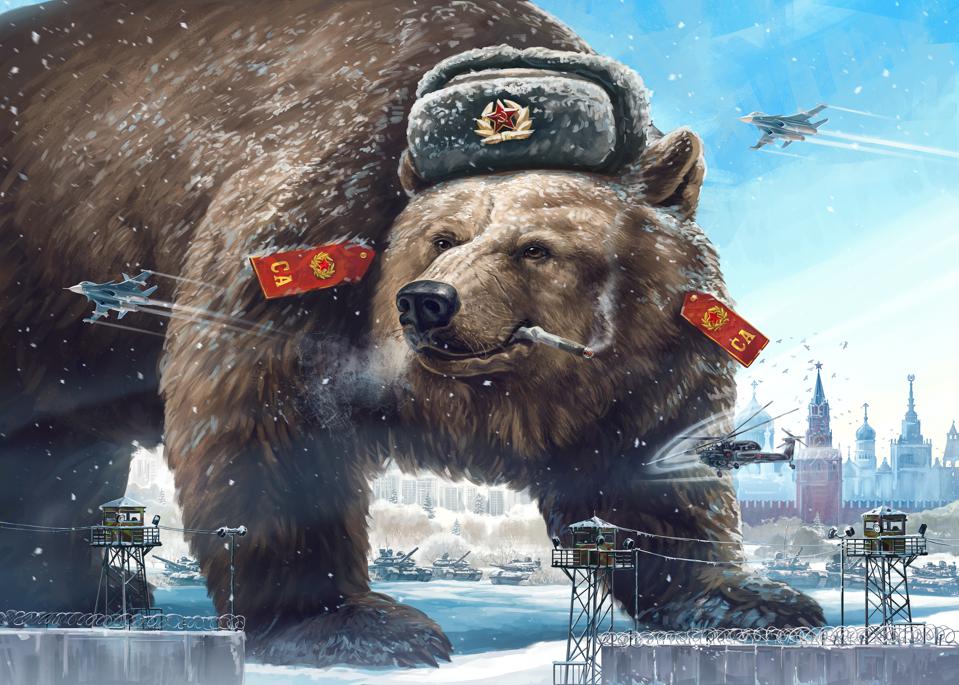
Charade Buster… Biden Goes Off Script With Regime-Change Admission on Russia

By Finian Cunningham

Source: Islam Times

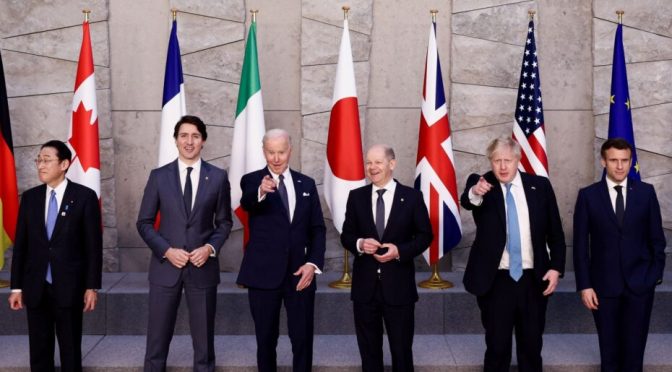
U.S. President Joe Biden came to Europe last week riding high on European deference towards America’s leadership. Then he went to Warsaw to make a victory lap speech at the weekend which was billed as marking the high point in galvanizing European and NATO unity towards Russia.

But the climax cratered like a house of cards. As the president was boarding Air Force One to take him home, the much-vaunted transatlantic unity was in disarray from Biden’s cack-handed big moment.

It reminds one of former President Barack Obama’s cautionary words in appraising Biden. “Never underestimate Joe’s ability to fuck things up,” said Obama of his former vice president and his gaffe-prone big mouth.

Biden’s speech in Warsaw was a carefully crafted rousing one. It was of course littered with mangled words as is Biden’s rambling style, and laden with the usual banal American arrogance about leading the free world against evil dictators. Nevertheless, he also appeared to succeed in rallying the unity of the U.S. and its allies in facing down alleged Russian aggression. That unity certainly seemed remarkable with regard to NATO’s and the European Union’s response to Russia’s military intervention in Ukraine. The Europeans have ratcheted up economic sanctions against Russia at the behest of Washington; they are buying up U.S. weapons and set to import American energy instead of Russian.

It was all going swimmingly well until the very end of the speech when Biden suddenly went off script and, referring to Russian President Vladimir Putin, declared: “For God’s sake, this man cannot remain in power.”

There it is. Regime change, according to Biden. European allies have recoiled in embarrassment over the clumsy admission. Britain, France, Germany and the European Union have all said they repudiate the objective. The distancing from Washington is not so much out of principle but rather out of the bad political look.

After weeks of an intense Western media campaign projecting the policy as supposedly defending Ukraine (and European democracy), the U.S. president was letting it be known that the real endgame is regime change in Moscow.

Just like the Biden order to pull out from Afghanistan last year, the European leaders are left looking like bystanders at a bus stop. Washington calls the shots without even the pretense of consulting its vassals.

At the end of a European tour deemed up to that point to be a stunning success for the American president owing to the fawning deference he was shown days before, and just at the very end of a set-piece address choreographed for the history books, Joe Biden blew it.

The White House immediately swung into damage-limitation mode, urgently clarifying that the president did not actually mean regime change. Biden himself denied that he was referring to regime change when he got back to the U.S. But even sycophantic news outlets admitted the difficulty in trying to spin any other literal meaning.

Biden’s knack for putting his foot in his mouth has been around for a long time during 50 years as a politician. It can’t be simply explained as a sign of senility although the recent frequency of gaffes suggests his mental acuity is waning with his 79-year-old age. During his first year-and-half as 46th president, administration aides have countless times had to clean up sloppy remarks. In one notorious clanger, he appeared to repudiate Washington’s decades-old One China Policy, saying the U.S. would militarily defend Taiwan in the event of an invasion from the mainland.

The laugh is Biden touts himself as a “foreign policy expert” from his many years as a Senator and roving ambassador before he entered the White House, first as vice president under Obama and now as the president.

If this is American expertise, then what does incompetence look like? At a time of extremely sensitive U.S.-Russian relations, Biden has called Putin “a killer” and “war criminal”. On the weekend before his regime-change manifesto was announced, he labeled the Russian president a “butcher” and compared the Kremlin with the Third Reich.

The hypocrisy of Biden is bad enough. He has endorsed endless criminal U.S. wars and regime-change operations that have resulted in millions of deaths and whole nations destroyed. For Biden to call anyone a war criminal and butcher is too nauseating for irony.

But it is contemptible that the Ukraine conflict is reduced by Biden to simplistic caricatures in total denial of how the U.S.-led NATO alliance has largely created the confrontation with Russia.

Biden’s Secretary of State Antony Blinken was among the damage-limitation squad over the weekend’s incendiary remarks. Blinken had the temerity to say: “We don’t have a strategy of regime change in Russia or anywhere else.” That’s from Blinken who helped engineer the regime-change wars in Libya and Syria while Biden was vice president.

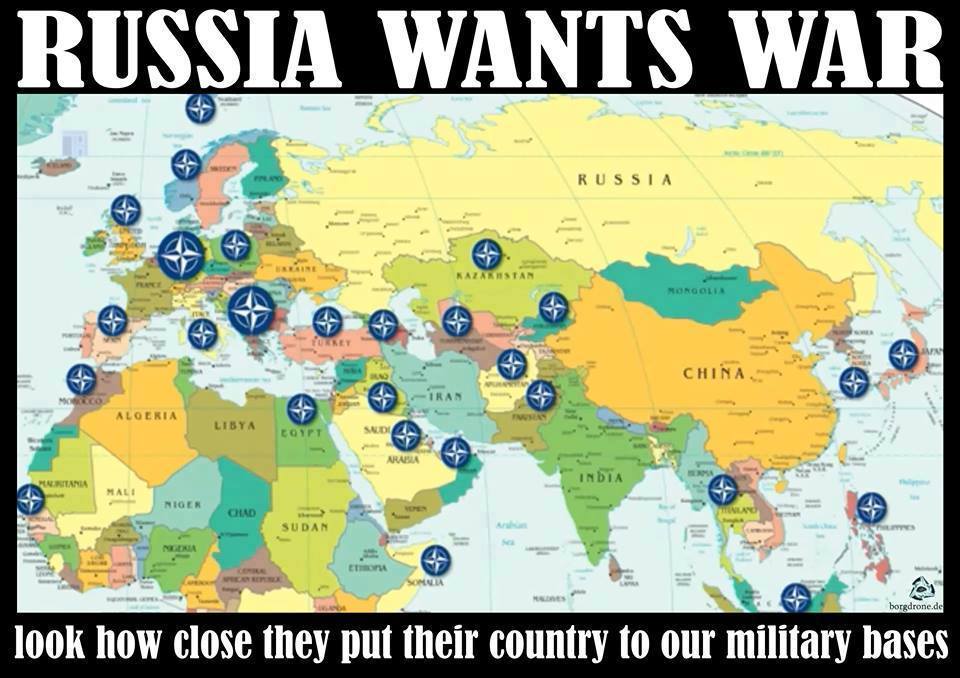
The Ukraine conflict is only a part of a bigger picture of U.S. hostility towards Russia. Washington and its European minions have tried to portray NATO’s eastward expansion over the years as an innocent development of a defensive nature.

Moscow has repeatedly denounced NATO’s stance as aggressive and an existential threat to Russian national security. When the Kremlin proposed a security treaty at the end of last year, it was rebuffed by Washington and NATO. That inevitably led to the war in Ukraine as a defensive counter-measure by Russia.

Biden just ripped off the wrapping on the policy. In one fell swoop, he just proved what Russia has been saying. His admission of regime change against Russia is an admission of violating the UN Charter and international law. The European leaders are aghast not because they are against such criminality. Their concern is that they too are exposed as being complicit in a criminal conspiracy. They fear how their public will react to that imperial agenda. Is this what economic sanctions and resulting energy price inflation are for?

Good old Joe, screwing it up – again. Just when Uncle Sam had the Europeans corralled under supposed American leadership, the imperial agenda blows up in their face.

This also explains why the Zelensky regime in Kiev is procrastinating and avoiding political settlement of the conflict. Settlement is not in Washington’s interest. It wants the proxy war to continue because the real aim is to use Ukraine as a cat’s paw to destabilize Russia. Zelensky and Kiev can’t make the peace because that’s not what their handlers in Washington are after. Washington wants and needs permanent tensions and conflict (short of all-out war) with Russia.

After Biden’s charade-busting admission, however, it will be difficult politically to maintain US-European “unity” over such a flagrant imperial agenda.

A matter of self-defence

By Ghassan Kadi

Source: The Saker

I am not here to write about historic, strategic and military details pertaining to the issues surrounding the Ukraine crisis. Apart from those fabricating Hollywood material, there are many excellent analysts covering these areas competently.

But as a Syrian/Lebanese, within my limited capacity, I have a duty to show support and reciprocate Russia’s support to Syria where it is due and, in this case, it is as it is one that is based on truths and moral issues that cannot be overlooked, even if Russia did not support Syria at all.

What I want to discuss is the justification and morality of self-defence.

War is a heavily-loaded word, a word that implies man killing man, humanity fighting humanity, armies pillaging nations, creating orphans and widows, refugees, sex slaves, destroying civilizations, economies, beautiful ancient architectural icons and a whole hoard of other atrocities that often are never repaired or resolved.

But there are wars and there are wars.

One cannot place the actions of the USA’s invasion of Iraq in the same basket as that of resistance against Nazi occupation.

People, and nations, have the right of self-defence. Self-defence is not an act of aggression. It is an act to prevent further aggression.

Not surprisingly, when the rules of the jungle prevail, just like in La Fontaine’s fables, aggressors on one hand conjure up for themselves the justification to kill, and on the other hand, they vilify the victims of their aggression when they try to exercise their right of self-defence.

The USA has been engaged in wars ever since WWII ended. Beginning with the Korean War, the West moved the theatre to Vietnam, Laos, Cambodia, Iraq I and Iraq II, Afghanistan, Libya, Syria; not to mention other smaller wars. In reality, there was never ever any justification for any of them and the national security of the United States of America was never under threat by any of those much pooper and much less equipped nations.

What is ironic is the fact that even though the odds were always in favour of America, and this is an understatement, America never won any of those wars. Some cynics argue that America’s objectives were not about winning wars but about leaving mess and destruction behind. Whilst I partially agree with this sentiment, I cannot accept that America has intentionally invaded Iraq to hand it on a silver platter to Iran any more that it invaded Taliban’s Afghanistan to hand it back to the Taliban. Those who believe that America has always been successful in achieving its target of havoc seem to give it more kudos than it deserves. I genuinely believe that America has been a total failure and that its performance as the world’s self-appointed custodian of the post WWII era had been abysmal to put it mildly.

Perhaps America could be excused for it actions during the hot Cold-War era. It was a period of uncertainty, fear, and what was behind the ‘dreaded’ ‘Iron Curtain’ left little surprises to be desired.

But, using American administration rhetoric, with the dismantling of the USSR this hot-cold War era was also supposed to cease.

Contrary to the commonly-held belief in the West, America did not win the Cold War. The Cold War ended when Gorbachev negotiated with Reagan the terms of disengagement. https://sputniknews.com/20190402/gorbachev-nato-expansion-reasons-1073764558.html

The rest is history. The manner in which America broke all of its promises to never encroach into Eastern Europe, how it coaxed former Warsaw Pact nations to join NATO, how it positioned missiles close to Russian borders, how it pillaged Serbia, how it tried to create a puppet regime in Georgia in 2008, how it sponsored a coup d’etat in Ukraine in 2014 putting Neo-Nazis in charge, how it bombarded the Eastern provinces for eight long years, how it reneged on the Minsk Agreements, how it refused to reach a deal on Ukraine in Jan 2022, a deal that took into consideration Russia’s legitimate security concerns, are all acts of provocation that can only lead to war; a Russian war of self-defence.

Western arrogance remains high despite the fact that Russia has clearly demonstrated red lines in Georgia and Syria. But Kiev is not Damascus. Kiev was the capital of the Russian Empire long before Texas was a state of the Union.

Furthermore, Russia is not Afghanistan or Somalia. Russia is not only a nuclear superpower, but also one with weaponry that is far more advanced than the West’s.

The Western bully has been picking on the wrong would-be adversary, and for a very long time.

What is most unbelievable about the current situation is the Western European compliance with America’s stance. Americans may well be distanced from the history and internal politics of Europe, but Germany, France, Italy and Spain must surely know better, but they are behaving in a manner as if they are either totally ignorant or extremely callous.

Puppet states of Eastern Europe should look over their shoulders and see what real support Ukraine is receiving from America after America promised Ukraine the world and then hung it out to dry.

This brings us back to the issue of drawing the line between instigating war for no reason other than imperial gain and fighting legitimately for self-defence.

The West and its media are taking the line of presenting Russia as the aggressor, portraying Putin as a crazed Tzar who wants to rebuild the USSR; not only ignoring the events of 2014 onwards, but also ignoring past and present atrocities of the West that had no justification at all.

Have we forgotten Iraq’s WMD blunder?

Russia did all it could to avert a military confrontation in Ukraine.

For eight long years, Russia refused to acknowledge the independence of the eastern provinces.

Russia continued to keep all bridges of communication with the West open in the hope of reaching an agreement to end the impasse.

Russia made it clear to America time after time, that it has red lines that cannot be crossed, including not accepting Ukraine to join NATO.

But all that America did was to ignore and continue to intimidate. When the talk about the impending Russian invasion of Ukraine was flagged on Western media, it was because America had the full intention to make sure that the January 2022 Switzerland talks with Russia must fail leaving the military option alone on the table.

The actions of Russia to neutralize and de-Nazify Ukraine are acts of self-defence. Any fair and proper court of justice would attest to this, but not in the West, where media is the echo chamber of the Western globalists and the only key to the hearts and minds of people in the West who unquestionably believe what their media dishes out.

But why are some of Russians so surprised and dismayed now by the new wave of anti-Russian propaganda? Lucky enough to visit Russia a few years ago, I found myself in an alternative paradigm; not a ‘Truman Show’ little bubble, but a huge world that did what it believed was right and didn’t give a pig’s butt (excuse the French) about what the West and Western media thought and decreed.

I was able to see the so-called ‘iron curtain’, way after the USSR was no longer, but not from a Western xenophobic vantagepoint, but from a Russian one that did not seem to care much at all about the views and the attitude of the West.

It was disappointing to see Western franchises like Starbucks and McDonald’s, but Russia looked like a proud stand-alone nation that is big enough, strong enough and rich enough to dictate its own directive and destiny.

If anything, a few years later, Russia is now in a much stronger position to dictate what it wants to the old ailing West and the stronger sanctions today are not going to be any more effective than previous milder ones.

President Biden now represents the West in many more ways than one. Not only he is meant to be the leader of the so-called ‘Free World’, but at his old age, a mental state that borders dementia, he represents the global hemisphere that has lost its technical edge and rationality; not to mention economic clout.

It is very sad that the once developed West that paved the rest of the world in technology and innovation has put its leadership under the hands of short-sighted impotent leaders like Biden, Merkel (formerly), Johnson and Macron. Those weak and shortsighted leaders are pushing the West into the corner of cultural suicide.

They represent the political legacy that led to the exodus of Western manufacturing base.

They are the legacy that destroyed family values, cultural values as well as moral values.

They are the ones forcing Russia to create an alternative global power with China; the West’s main and primary competitor.

But the problem with Western political leaders is that they are not serving their own people; they are serving their sponsors and their own profit and loss statements.

Nations are not corporations, and the corporate aspect of Western political leadership is bursting its own bubble. It is not ready to confront the challenges of either Russia or China, let alone both of them combined. The West continues to live in the euphoria of a bygone era in which it had the upper hand by way of being a leader in technological advances and manufacturing which are the basic foundations for strong economies. It has lost its technical edge, placing itself in a conflict it can neither win, let alone be able to fight.

The West needs to learn to accept humility as a desired value. For the sake of humanity as a whole, it needs to learn this lesson before its obstinance and arrogance leads the world into further and deeper wars and disasters.

AS WAR DRUMS BEAT FOR UKRAINE, REMEMBER, LIES AND PROPAGANDA STARTED NEARLY EVERY WAR IN US HISTORY

By Don Via Jr,

Source: Waking Times

War is one of the most primitive and senseless manifestations of the human experience, so naturally, most sane people with families, ambitions and kind hearts want nothing to do with such things. Unfortunately, as we are seeing with the Ukraine / Russia escalation, governments thrive on war, as it gives them a pressing excuse to grab more power and take extrajudicial measures—both at home and abroad.

To get around the obstacle of public opinion, governments have an extensive history of lying their way into war. This is hard to believe for people who think that government has their best interest in mind, but it is something that rulers have been doing since the beginning of time. In the modern United States, people are led to believe that the establishment accidentally flounders its way into war with the good intentions of protecting the country from harm or liberating an ally in distress.

This strategy of deception was illustrated by the Nazi propagandist Herman Goering, who famously said:

“Of course the people don’t want war. Why should some poor slob on a farm want to risk his life in a war when the best he can get out of it is to come back to his farm in one piece? Naturally, the common people don’t want war neither in Russia, nor in England, nor for that matter in Germany. That is understood. But, after all, it is the leaders of the country who determine the policy and it is always a simple matter to drag the people along, whether it is a democracy, or a fascist dictatorship, or a parliament, or a communist dictatorship. Voice or no voice, the people can always be brought to the bidding of the leaders. That is easy. All you have to do is tell them they are being attacked, and denounce the peacemakers for lack of patriotism and exposing the country to danger. It works the same in any country.

Of course, the Nazi regime is notorious for their brutality and deceit, so this admission is not as stunning as it would be from an American general, but make no mistake that these are the types of thoughts that American generals and politicians have—they are just not brazen enough to say it out loud.

Believe it or not, using deceptive tactics to sway public opinion in favor of war is actually an official part of the US military’s playbook. According to Wikileaks, the U.S. Army’s publication “Special Forces Foreign Internal Defense Tactics Techniques and Procedures for Special Forces” recommends funding terrorists for regime change operations and using false flag attacks to destabilize regimes that were unfriendly to western interests.

This is nothing new though, this is a part of American history, as nearly every war that the U.S. has ever been involved in was built upon lies. Below are some of the most well-documented examples of wars that were started because of lies and government propaganda.

Spanish-American War – 1898

In January 1898, President William McKinley ordered the USS Maine to port in Havana, Cuba, despite years of conflict between Cuban rebels and the Spanish government. The move was intended to be a show of force against the Spanish government, in line with the Monroe doctrine, to establish U.S. dominance in the Western hemisphere.

At 9:40 p.m., on February 15, 1898, The USS Maine exploded with a crew of 354 men on board, killing 266. While the Spanish government insisted the explosion was caused by a fire in a coal bunker that ignited the forward magazines, politicians in the U.S. were quick to blame Spain because they wanted an excuse to wage a war of conquest for territory in Mexico, the Caribbean, and the Pacific.

Although President McKinley had previously voiced his opposition to a military conflict, on April 25, the U.S. declared war on Spain.

The “Ten-Week War” resulted in not only the defeat of the last remnants of the Spanish empire but in a new era of U.S. “expansionism” as the United States took control of Puerto Rico, Guam, and the Philippine islands.

In 1976, a team of naval explosive experts examined the evidence and corroborated Spanish claims that the USS Maine’s sinking was caused by an internal explosion from ammunition being stored on board.

World War 1 – 1915

The first world war was opposed by most Americans from the start, as they rightly saw it as a power struggle between European aristocrats that they had no business in. This was a problem for the British military, led by Winston Churchill, as they were desperate to get the United States behind them in the war.

The U.S. did finally enter the war in 1915, when a U.S. ship called the Lusitania was sent through hostile waters as bait, filled with more than a thousand civilians and an unusually large amount of ammunition. The ship was hit by a German torpedo and exploded instantly due to all of the ammunition onboard, killing more than half of the passengers and crew.

A week before the sinking of Lusitania, Churchill wrote to Walter Runciman, the President of the Board of Trade, stating that it is “most important to attract neutral shipping to our shores, in the hope especially of embroiling the United States with Germany.”

After investigating the tragedy, former British naval intelligence officer Patrick Beesly said, “unless and until fresh information comes to light, I am reluctantly driven to the conclusion that there was a conspiracy deliberately to put Lusitania at risk in the hope that even an abortive attack on her would bring the United States into the war. Such a conspiracy could not have been put into effect without Winston Churchill’s express permission and approval.”

In addition to this treacherous military maneuver, there was a relentless campaign in the U.S. to dehumanize Germans and to paint them as monsters. In some propaganda that was peddled to U.S. citizens, German soldiers were depicted killing babies and sometimes eating them. There were even false reports of crucifixions.

World War 2 – 1941

The history books suggest that Pearl Harbor was an unprovoked attack, killing thousands of Americans and “forcing” the government to enter a war that was extremely unpopular at the time. However, the U.S. government was enacting strict sanctions on both Japan and Germany, hoping that either country would make the first move and give them an excuse to enter the war. Not only was the attack provoked, but President Roosevelt and the U.S. military knew the attack was coming and moved their most expensive aircraft to other locations while leaving thousands of people as sacrificial pawns.

The history books also sell the war against the Nazis as a humanitarian war to save people from the Holocaust, but the U.S. denied safe passage to Jewish refugees, and UK intelligence even planned to blow up refugee ships, in a plot called Operation Embarrass.

Many American businesses and politicians worked very closely with the Nazis even after the two countries were at war with each other. The Holocaust had already claimed the lives of millions of German people by that point, and a police state had long since been established, so whoever was doing business with the Nazis knew exactly who they were getting involved with.

Prior to the Americans getting involved in the war, there were corners of the political arena that were actually big supporters of the Nazi party—both for business purposes and common interests such as eugenics.

The most prominent American politician to work with the Nazis was actually George W. Bush’s grandfather, Prescott Bush. There is no doubt that he was funding and working with the Nazis because his company’s assets were seized in 1942 by the United States government under the “trading with the enemy” act. He worked at the head of a financial firm called Brown Brothers Harriman, which acted as a U.S. base for the Nazi business interests.

Brown Brothers Harriman was one of the biggest international investment firms in the 1930s and they sent millions of dollars in gold overseas to rebuild the German army and fund the Nazi party. This racket was finally exposed on July 30, 1942, when the New York Herald Tribune posted an article titled, “Hitler’s Angel Has three million dollars in US Bank.” This article raised suspicion about the bank being a “secret nest” for Nazi elites and eventually sparked the investigation that took down the operation.

Korean War – 1950

The propaganda of war has led many to believe that the North Korean government launched an unprovoked attack on South Korea, on behalf of the larger communist powers of Russia and China. Yet, once again, this was another case where the U.S. was propping up one dictator to fight another, in an attempt to gain control of an entire continent—all the while, lying to the people back home about the true motivations for war.

As historian Mark E. Caprio, professor of history at Rikkyo University in Tokyo points out:

“On February 8, 1949, the South Korean president met with Ambassador John Muccio and Secretary of the Army Kenneth C. Royall in Seoul. Here the Korean president listed the following as justifications for initiating a war with the North: the South Korean military could easily be increased by 100,000 if it drew from the 150,000 to 200,000 Koreans who had recently fought with the Japanese or the Nationalist Chinese. Moreover, the morale of the South Korean military was greater than that of the North Koreans. If war broke out he expected mass defections from the enemy. Finally, the United Nations’ recognition of South Korea legitimized its rule over the entire peninsula (as stipulated in its constitution). Thus, he concluded, there was “nothing [to be] gained by waiting.”

Vietnam War – 1964

Information released in 2005 by the National Security Agency showed that the Gulf of Tonkin incident on August 1964 was deliberately falsified to make it appear that North Vietnamese gunboats attacked an American destroyer patrolling in international waters when in reality, they did not. This was the event that the U.S. military used as an excuse to go to war in Vietnam and it was surrounded by mystery and controversy until decades later when the official facts were released.

It has now been 49 years since the U.S. withdrew the last of its combat troops from Vietnam and the last prisoners of war that were held in North Vietnam returned to U.S. soil. According to estimates, more than 2 million civilians, 1.1 million North Vietnamese and Viet Cong fighters, 250,000 South Vietnamese fighters, and nearly 58,000 U.S. military members were killed in Vietnam during the war—all because of lies that were used to create propaganda that made American fear for their safety.

Libya – 1984 (then 2015)

Former Mossad agent Victor Ostrovsky admitted that the Mossad planted a radio transmitter in Libyan Prime Minister Muammar Gaddafi’s compound in Tripoli, which broadcast fake terrorist transmissions that were recorded by Mossad and used to frame Gaddafi as a terrorist supporter. President Reagan bombed Libya immediately after the false reports, but this was not the first or last time the U.S. would involve itself in Libya.

As The Free Thought Project has reported, 3,000 emails from former Secretary of State Hillary Clinton released by the State Department contained damning evidence of Western nations using NATO as a tool to overthrow Gaddafi.

The NATO overthrow was not for the protection of the people, but instead, it was to thwart Gaddafi’s attempt to create a gold-backed African currency to compete with the Western central banking monopoly. As per usual, the U.S. and its Western counterparts left the country to its own devices after slashing the once-thriving nation to the ground.

“Today there is no government of Libya. It’s simply mobs that patrol the streets and kill one another,” Virginia State Senator Richard Black told RT of the mess left behind.

Despite certain issues in Libya before the coup, “Libyans had an incredibly high standard of living, the highest in Africa,” international lawyer Francis Boyle told RT. “When I first went to Libya in 1986, I was amazed by the empowerment of women. What I saw in Libya was that women could do anything they wanted to do.”

Iraq – 1990

At the onset of Operation Desert Storm in 1990, a public relations firm by the name of Hill and Knowlton spent millions of dollars on the U.S. government’s behalf, constructing news pieces that would sell the war to the American public. One of the most moving hoaxes to come from this push to war was the testimony of a 15-year-old Kuwaiti girl, known only by her first name of Nayirah.

In a videotaped testimony that was later distributed to the media, she claimed that Iraqi soldiers killed babies in incubators at a hospital.

I volunteered at the al-Addan hospital, While I was there, I saw the Iraqi soldiers come into the hospital with guns, and go into the room where… babies were in incubators,” Nayirah said. “They took the babies out of the incubators, took the incubators, and left the babies on the cold floor to die.”

Sounds horrible, right? Well, luckily it never happened. This was a fabricated event designed to dehumanize the Iraqi people in the eyes of the American public. The whole thing was exposed when journalists discovered that the witness, Nayirah was actually the daughter of a U.S. ambassador, who was being coaxed by military psychological operations specialists.

In addition to this false testimony, the U.S. government also showed Saudi Arabia fake satellite images that depicted Iraqi troops massing on their border.

Iraq – 2003-Present

Emails that were declassified in 2015 paint a much different picture of the Bush administration’s invasion of Iraq than they led the public to believe. A memo drafted by the U.S. embassy in London revealed how the Bush administration used “spies” in the British Labor Party to help shape British public opinion in favor of the war, prior to U.S. invasion.

In the weeks leading up to the invasion of Iraq, the Bush administration inundated American airwaves with assertions ranging from Saddam Hussein’s connections to Al-Qaeda, to Colin Powell’s ‘badly flawed’ claims that Iraq had weapons of mass destruction.

After invading a sovereign foreign nation, President George W. Bush blatantly lied to the American public and when news came to light that there were, in fact, no weapons of mass destruction, he simply accused anyone who criticized him of attempting to “revise history.” 

During his presidency, while giving a speech about that very issue, Bush saidThis nation acted to a threat from the dictator of Iraq. Now there are some who would like to rewrite history—revisionist historians is what I like to call them.

War on Terror – 2001-Present

Now the United States military and its allies are exporting their wars of terror across the globe, in the name of fighting terrorism, and most of these wars are also justified with propaganda and lies.

In the early days of the “War on Terror,” the Macedonian government was caught staging a fake terror attack in an attempt to get funding from western forces. Six innocent Pakistani immigrants were accused of being terrorists and killed in the incident.

In 2001, U.S. media spent weeks circulating the idea that anthrax attacks were being carried out by Arabs connected with Afghanistan, when in reality it was a government scientist behind the attacks.

In 2005, former Department of Justice lawyer John Yoo suggested that the U.S. should create a false terrorist organization to give the military an excuse to attack places where they believed real terrorists might be hiding:

“Our intelligence agencies create a false terrorist organization,” Yoo said. “It could have its own websites, recruitment centers, training camps, and fundraising operations. It could launch fake terrorist operations and claim credit for real terrorist strikes, helping to sow confusion within al-Qaeda’s ranks, causing operatives to doubt others’ identities and to question the validity of communications.”

In 2005, Israeli soldiers admitted to throwing stones at other Israeli soldiers so they could blame it on Palestinians to justify using violent force against protesters. Israel also has a deep history of using lies and false attacks to justify military action.

In an incident that came to be known as The Lavon Affair in 1954, undercover Israeli agents set off bombs against U.S. and Brittish targets, hoping that the attack would be blamed on local rebels. Luckily, they were caught and the plot was exposed.

This long track record of deception is important to consider as the U.S. military is beating the war drum again, this time in Iran, where there has also been a long list of false attacks at the hands of western powers.

Starting all the way back in 1957, politicians in the U.S. and UK developed a plot to train Islamic extremists to carry out false flag attacks to push for regime change in Iran. Now, decades later, history is repeating itself in the same part of the world, as regime change in Iran is back on the agenda, and the western powers are following the same playbook.

Current Push For A Proxy War Against Russia In Ukraine — 2022

As this report has demonstrated, the use of falsified evidence, propaganda, disinformation, and even outright false flag attacks, has been common practice within the military industrial complex handbook of expanding US imperialism and the neo-liberal world order.

This latest push to essentially turn the Ukraine into Syria 2.0, a convoluted dirty war among proxy States/ groups to maintain American hegemony — and potentially bring the world to the brink of annihilation in the process — is no different.

While it is of course pertinent to recognize that the reality for the Ukrainian people on the ground is a complex one rooted in nearly a century of culture and history weaving its own tensions among the local populations;  A number of facts clearly demonstrate the reality of the driving forces behind today’s conflict.

In 2010, diplomatic cables released by WikiLeaks show correspondence between American and French officials that paint plainly the intentions of Western policymakers to absorb Ukraine into NATO. Being in direct violation of the agreements made between the United States and former Soviet leader Mikhail Gorbachev in 1990.

Fast forward four years and we see the beginning stages US/ NATO’s aggressive expansionism eastward come to fruition.

Following Ukrainian President Viktor Yanukovych’s rejection of joining NATO, small anti-corruption protests that had already been ongoing were co-opted by Western agent provocateurs and shifted into a regime change color revolution.

What was touted in the western media as an organic people’s uprising to overthrow their communist leader, was really a carefully crafted coup d’état.

We know this due to a leaked phone call from then US Assistant Secretary of State Victoria Nuland. In it, she can be heard discussing with U.S. Ambassador to Ukraine Geoffrey Pyatt the key figures which should be installed in a post-Yanukovych government.

Showing that not only were the protests not organic, but the US was directly involved in the government overthrow.

In 2022, Victoria Nuland is now acting as the Under Secretary of State. The call also acknowledged the cooperation of then-and-current National Security Advisor Jake Sullivan, and Vice President at the time now President Joe Biden. It’s no wonder things are developing the way they are when these figures have been maneuvered into such crucial positions.

But to make matters worse, in 2014 as the coup was in full swing, the United States took to facilitating the most repugnant of individuals to install their new puppet regime. Providing armaments, funding, and training to openly admitted Neo-Nazi paramilitary forces.

Years later, it seems maintaining a fascist state in Ukraine has essentially become an openly accepted part of America’s policy in the region. In December of 2021, the United Nations brought forth its annual resolution to condemn Nazism, urging nations to work together to prevent the spread of ultra-nationalist and racist ideologies. It should have been a common sense resolution for everyone to agree on.

Yet out of all members of the United Nations, the United States and Ukraine were the only two to vote against it. Sadly, this has become tradition. Both Nations have regularly voted against the resolution since 2014.

In line with this, Western media is still permeated with propaganda distorting the facts driving the conflict. As elaborated in this brilliant piece by Mintpress News’ Alan Macleod, the US has spent upwards of 22 million dollars sowing the seeds of discontent to favor an anti-russian, pro-US and NATO expansionist agenda.

No one here is claiming that Vladimir Putin or Russia is a saint. As is the case with all governments they are surely just as vile and corrupt in their own ways. But the facts contradict the narrative. The idea that Russia is acting as the aggressor “threatening freedom and democracy” and “endangering the innocent” is a farce.

Even on international corporate media, the true attitudes and intentions for the crisis are openly admitted.

On the February 20th, 2022, episode of Al jazeera’s Inside Story hosting a panel of three experts regarding the Minsk agreements; Ukrainian Associate Professor of Sociology, National University of Kyiv-Mohyla Academy, Mychailo Wynnyckyj, while first claiming that Ukrainians are interested in de-escalation, closed the segment by stating brazenly —

“Looking at peaceful solutions, of course. But at the end of the day I think Ukrainians understand today that the existential threat that Russia presents to Ukraine is long-term, and we will have to deal with that long-term. It’s not something that’s going to go away tomorrow, or as long as the Putin regime remains in the Kremlin.

Openly admitting the desire for regime change. This is the prevailing attitude of elitist powers. And as mentioned earlier while it may also in part be fostered by generations of uneasy ongoings, it is also certainly augmented and exacerbated by the west’s geostrategic activities.

If the Russians were to have an organization similar to NATO, aligning themselves with China, North Korea, Iran, Venezuela, and any of the other nations America considers its adversaries; and proceeded to push its military up to our borders of Canada and Mexico. Bullying, threatening, and cajoling other nations into compliance. Openly demanding a chamge in our government. You can be damn certain we wouldn’t stand for it.

Why should any less be expected when the shoe is on the other foot, and the globalist power that is the American Empire and its allies — having a demonstrable history of flagrant war crimes and abuse — saunter its way up to Russian borders after expressing it’s desire for regime-change?

Saturday Matinee: Ukraine on Fire – The Real Story

[Originally posted on 2/24/18]

https://vimeo.com/332524840

A Documentary You’ll Likely Never See

By James DiEugenio

Source: Consortium News

It is not very often that a documentary film can set a new paradigm about a recent event, let alone, one that is still in progress. But the new film Ukraine on Fire has the potential to do so – assuming that many people get to see it.

Usually, documentaries — even good ones — repackage familiar information in a different aesthetic form. If that form is skillfully done, then the information can move us in a different way than just reading about it.

A good example of this would be Peter Davis’s powerful documentary about U.S. involvement in Vietnam, Hearts and Minds. By 1974, most Americans understood just how bad the Vietnam War was, but through the combination of sounds and images, which could only have been done through film, that documentary created a sensation, which removed the last obstacles to America leaving Indochina.

Ukraine on Fire has the same potential and could make a contribution that even goes beyond what the Davis film did because there was very little new information in Hearts and Minds. Especially for American and Western European audiences, Ukraine on Fire could be revelatory in that it offers a historical explanation for the deep divisions within Ukraine and presents information about the current crisis that challenges the mainstream media’s paradigm, which blames the conflict almost exclusively on Russia.

Key people in the film’s production are director Igor Lopatonok, editor Alex Chavez, and writer Vanessa Dean, whose screenplay contains a large amount of historical as well as current material exploring how Ukraine became such a cauldron of violence and hate. Oliver Stone served as executive producer and conducted some high-profile interviews with Russian President Vladimir Putin and ousted Ukrainian President Viktor Yanukovych.

The film begins with gripping images of the violence that ripped through the capital city of Kiev during both the 2004 Orange Revolution and the 2014 removal of Yanukovich. It then travels back in time to provide a perspective that has been missing from mainstream versions of these events and even in many alternative media renditions.

A Longtime Pawn

Historically, Ukraine has been treated as a pawn since the late Seventeenth Century. In 1918, Ukraine was made a German protectorate by the Treaty of Brest Litovsk. Ukraine was also a part of the Molotov-Ribbentrop Pact of 1939 signed between Germany and Russia, but violated by Adolf Hitler when the Nazis invaded the Soviet Union in the summer of 1941.

The reaction of many in Ukraine to Hitler’s aggression was not the same as it was in the rest of the Soviet Union. Some Ukrainians welcomed the Nazis. The most significant Ukrainian nationalist group, Organization of Ukrainian Nationalists (OUN), had been established in 1929. Many of its members cooperated with the Nazis, some even enlisted in the Waffen SS and Ukrainian nationalists participated in the massacre of more than 33,000 Jews at Babi Yar ravine in Kiev in September 1941. According to scholar Pers Anders Rudling, the number of Ukrainian nationalists involved in the slaughter outnumbered the Germans by a factor of 4 to 1.

But it wasn’t just the Jews that the Ukrainian nationalists slaughtered. They also participated in massacres of Poles in the western Ukrainian region of Galicia from March 1943 until the end of 1944. Again, the main perpetrators were not Germans, but Ukrainians.

According to author Ryazard Szawlowksi, the Ukrainian nationalists first lulled the Poles into thinking they were their friends, then turned on them with a barbarity and ferocity that not even the Nazis could match, torturing their victims with saws and axes. The documentary places the number of dead at 36,750, but Szawlowski estimates it may be two or three times higher.

OUN members participated in these slaughters for the purpose of ethnic cleansing, wanting Ukraine to be preserved for what OUN regarded as native Ukrainians. They also expected Ukraine to be independent by the end of the war, free from both German and Russian domination. The two main leaders in OUN who participated in the Nazi collaboration were Stepan Bandera and Mykola Lebed. Bandera was a virulent anti-Semite, and Lebed was rabidly against the Poles, participating in their slaughter.

After the war, both Bandera and Lebed were protected by American intelligence, which spared them from the Nuremburg tribunals. The immediate antecedent of the CIA, Central Intelligence Group, wanted to use both men for information gathering and operations against the Soviet Union. England’s MI6 used Bandera even more than the CIA did, but the KGB eventually hunted down Bandera and assassinated him in Munich in 1959. Lebed was brought to America and addressed anti-communist Ukrainian organizations in the U.S. and Canada. The CIA protected him from immigration authorities who might otherwise have deported him as a war criminal.

The history of the Cold War was never too far in the background of Ukrainian politics, including within the diaspora that fled to the West after the Red Army defeated the Nazis and many of their Ukrainian collaborators emigrated to the United States and Canada. In the West, they formed a fierce anti-communist lobby that gained greater influence after Ronald Reagan was elected in 1980.

Important History

This history is an important part of Dean’s prologue to the main body of Ukraine on Fire and is essential for anyone trying to understand what has happened there since the collapse of the Soviet Union in 1991. For instance, the U.S.-backed candidate for president of Ukraine in 2004 — Viktor Yushchenko — decreed both Bandera and his military assistant Roman Shukhevych, who was also involved in atrocitites, were both named national heroes by Yushchenko.

Bandera, in particular, has become an icon for post-World War II Ukrainian nationalists. One of his followers was Dmytro Dontsov, who called for the birth of a “new man” who would mercilessly destroy Ukraine’s ethnic enemies.

Bandera’s movement was also kept alive by Yaroslav Stetsko, Bandera’s premier in exile. Stetsko fully endorsed Bandera’s anti-Semitism and also the Nazi attempt to exterminate the Jews of Europe. Stetsko, too, was used by the CIA during the Cold War and was honored by Yushchenko, who placed a plaque in his honor at the home where he died in Munich in 1986. Stetsko’s wife, Slava, returned to Ukraine in 1991 and ran for parliament in 2002 on the slate of Yushchenko’s Our Ukraine party.

Stetsko’s book, entitled Two Revolutions, has become the ideological cornerstone for the modern Ukrainian political party Svoboda, founded by Oleh Tyahnybok, who is pictured in the film calling Jews “kikes” in public, which is one reason the Simon Wiesenthal Center has ranked him as one of the most dangerous anti-Semites in the world.

Another follower of Bandera is Dymytro Yarosh, who reputedly leads the paramilitary arm of an even more powerful political organization in Ukraine called Right Sektor. Yarosh once said he controls a paramilitary force of about 7,000 men who were reportedly used in both the overthrow of Yanukovych in Kiev in February 2014 and the suppression of the rebellion in Odessa a few months later, which are both fully depicted in the film.

This historical prelude and its merging with the current civil war is eye-opening background that has been largely hidden by the mainstream Western media, which has downplayed or ignored the troubling links between these racist Ukrainian nationalists and the U.S.-backed political forces that vied for power after Ukraine became independent in 1991.

The Rise of a Violent Right

That same year, Tyahnybok formed Svoboda. Three years later, Yarosh founded Trident, an offshoot of Svoboda that eventually evolved into Right Sektor. In other words, the followers of Bandera and Lebed began organizing themselves immediately after the Soviet collapse.

In this time period, Ukraine had two Russian-oriented leaders who were elected in 1991 and 1994, Leonid Kravchuk, and Leonid Kuchma. But the hasty transition to a “free-market” economy didn’t go well for most Ukrainians or Russians as well-connected oligarchs seized much of the wealth and came to dominate the political process through massive corruption and purchase of news media outlets. However, for average citizens, living standards went down drastically, opening the door for the far-right parties and for foreign meddling.

In 2004, Viktor Yanukovych, whose political base was strongest among ethnic Russians in the east and south, won the presidential election by three percentage points over the U.S.-favored Viktor Yushchenko, whose base was asmostly in the country’s west where the Ukrainian nationalists are strongest.

Immediately, Yushchenko’s backers claimed fraud citing exit polls that had been organized by a group of eight Western nations and four non-governmental organizations or NGOs, including the Renaissance Foundation founded by billionaire financial speculator George Soros. Dick Morris, former President Bill Clinton’s political adviser, clandestinely met with Yushchenko’s team and advised them that the exit polls would not just help in accusations of fraud, but would bring protesters out into the streets. (Cambridge Review of International Affairs, Vol. 19, Number 1, p. 26)

Freedom House, another prominent NGO that receives substantial financing from the U.S.-government-funded National Endowment for Democracy (NED), provided training to young activists who then rallied protesters in what became known as the Orange Revolution, one of the so-called “color revolutions” that the West’s mainstream media fell in love with. It forced an election rerun that Yushchenko won.

But Yushchenko’s presidency failed to do much to improve the lot of the Ukrainian people and he grew increasingly unpopular. In 2010, Yushchenko failed to make it out of the first round of balloting and his rival Yanukovych was elected president in balloting that outside observers judged free and fair.

Big-Power Games

If this all had occurred due to indigenous factors within Ukraine, it could have been glossed over as a young nation going through some painful growing pains. But as the film points out, this was not the case. Ukraine continued to be a pawn in big-power games with many Western officials hoping to draw the country away from Russian influence and into the orbit of NATO and the European Union.

In one of the interviews in Ukraine on Fire, journalist and author Robert Parry explains how the National Endowment for Democracy and many subsidized political NGOs emerged in the 1980s to replace or supplement what the CIA had traditionally done in terms of influencing the direction of targeted countries.

During the investigations of the Church Committee in the 1970s, the CIA’s “political action” apparatus for removing foreign leaders was exposed. So, to disguise these efforts, CIA Director William Casey, Reagan’s White House and allies in Congress created the NED to finance an array of political and media NGOs.

As Parry noted in the documentary, many traditional NGOs do valuable work in helping impoverished and developing countries, but this activist/propaganda breed of NGOs promoted U.S. geopolitical objectives abroad – and NED funded scores of such projects inside Ukraine in the run-up to the 2014 crisis.

Ukraine on Fire goes into high gear when it chronicles the events that occurred in 2014, resulting in the violent overthrow of President Yanukovych and sparking the civil war that still rages. In the 2010 election, when Yushchenko couldn’t even tally in the double-digits, Yanukovych faced off against and defeated Yulia Tymoshenko, a wealthy oligarch who had served as Yushchenko’s prime minister.

After his election, Yanukovych repealed Bandera’s title as a national hero. However, because of festering economic problems, the new president began to search for an economic partner who could provide a large loan. He first negotiated with the European Union, but these negotiations bogged down due to the usual draconian demands made by the International Monetary Fund.

So, in November 2013, Yanukovych began to negotiate with Russian President Putin who offered more generous terms. But Yanukovych’s decision to delay the association agreement with the E.U. provoked street protests in Kiev especially from the people of western Ukraine.

As Ukraine on Fire points out, other unusual occurrences also occurred, including the emergence of three new TV channels – Spilno TV, Espreso TV, and Hromadske TV – going on the air between Nov. 21 and 24, with partial funding from the U.S. Embassy and George Soros.

Pro-E.U. protests in the Maidan square in central Kiev also grew more violent as ultra-nationalist street fighters from Lviv and other western areas began to pour in and engage in provocations, many of which were sponsored by Yarosh’s Right Sektor. The attacks escalated from torch marches similar to Nazi days to hurling Molotov cocktails at police to driving large tractors into police lines – all visually depicted in the film. As Yanukovich tells Stone, when this escalation happened, it made it impossible for him to negotiate with the Maidan crowd.

One of the film’s most interesting interviews is with Vitaliy Zakharchenko, who was Minister of the Interior at the time responsible for law enforcement and the conduct of the police. He traces the escalation of the attacks from Nov. 24 to 30, culminating with a clash between police and protesters over the transport of a giant Christmas tree into the Maidan. Zakharchenko said he now believes this confrontation was secretly approved by Serhiy Lyovochkin, a close friend of U.S. Ambassador Geoffrey Pyatt, as a pretext to escalate the violence.

At this point, the film addresses the direct involvement of U.S. politicians and diplomats. Throughout the crisis, American politicians visited Maidan, as both Republicans and Democrats, such as Senators John McCain, R-Arizona, and Chris Murphy, D-Connecticut. stirred up the crowds. Yanukovych also said he was in phone contact with Vice President Joe Biden, who he claims was misleading him about how to handle the crisis.

The film points out that the real center of American influence in the Kiev demonstrations was with Ambassador Pyatt and Assistant Secretary of State for European Affairs Victoria Nuland. As Parry points out, although Nuland was serving under President Obama, her allegiances were really with the neoconservative movement, most associated with the Republican Party.

Her husband is Robert Kagan, who worked as a State Department propagandist on the Central American wars in the 1980s and was the co-founder of the Project for the New American Century in the 1990s, the group that organized political and media pressure for the U.S. invasion of Iraq in 2003. Kagan also was McCain’s foreign policy adviser in the 2008 presidential election (although he threw his support behind Hillary Clinton in the 2016 race).

Adept Manipulators

As Parry explained, the neoconservatives have become quite adept at disguising their true aims and have powerful allies in the mainstream press. This combination has allowed them to push the foreign policy debate to such extremes that, when anyone objects, they can be branded a Putin or Yanukovych “apologist.”

Thus, Pyatt’s frequent meetings with the demonstrators in the embassy and Nuland’s handing out cookies to protesters in the Maidan were not criticized as American interference in a sovereign state, but were praised as “promoting democracy” abroad. However, as the Maidan crisis escalated, Ukrainian ultra-nationalists moved to the front, intensifying their attacks on police. Many of these extremists were disciples of Bandera and Lebed. By February 2014, they were armed with shotguns and rapid-fire handguns.

On Feb. 20, 2014, a mysterious sniper, apparently firing from a building controlled by the Right Sektor, shot both police and protesters, touching off a day of violence that left about 14 police and some 70 protesters dead.

With Kiev slipping out of control, Yanukovich was forced to negotiate with representatives from France, Poland and Germany. On Feb. 21, he agreed to schedule early elections and to accept reduced powers. At the urging of Vice President Biden, Yanukovych also pulled back the police.

But the agreement – though guaranteed by the European nations – was quickly negated by renewed attacks from the Right Sektor and its street fighters who seized government buildings. Russian intelligence services got word that an assassination plot was in the works against Yanukovych, who fled for his life.

On Feb. 24, Yanukovych asked permission to enter Russia for his safety and the Ukrainian parliament (or Rada), effectively under the control of the armed extremists, voted to remove Yanukovych from office in an unconstitutional manner because the courts were not involved and the vote to impeach him did not reach the mandatory threshold. Despite these irregularities, the U.S. and its European allies quickly recognized the new government as “legitimate.”

Calling a Coup a Coup

But the ouster of Yanukovych had all the earmarks of a coup. An intercepted phone call, apparently in early February, between Nuland and Pyatt revealed that they were directly involved in displacing Yanukovych and choosing his successor. The pair reviewed the field of candidates with Nuland favoring Arseniy Yatsenyuk, declaring “Yats is the guy” and discussing with Pyatt how to “glue this thing.” Pyatt wondered about how to “midwife this thing.” They sounded like Gilded Age millionaires in New York deciding who should become the next U.S. president. On Feb. 27, Yatsenyuk became Prime Minister of Ukraine.

Not everyone in Ukraine agreed with the new regime, however. Crimea, which had voted heavily for Yanukovych, decided to hold a referendum on whether to split from Ukraine and become a part of Russia. The results of the referendum were overwhelming. Some 96 percent of Crimeans voted to unite with Russia. Russian troops – previously stationed in Crimea under the Sevastopol naval base agreement – provided security against Right Sektor and other Ukrainian forces moving against the Crimean secession, but there was no evidence of Russian troops intimidating voters or controlling the elections. The Russian government then accepted the reunification with Crimea, which had historically been part of Russia dating back hundreds of years.

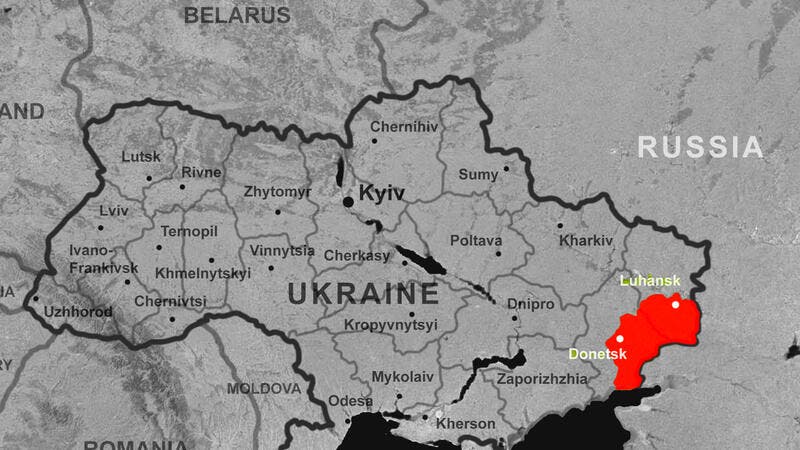
Two eastern provinces, Donetsk and Lugansk, also wanted to split off from Ukraine and also conducted a referendum in support of that move. But Putin would not agree to the request from the two provinces, which instead declared their own independence, a move that the new government in Kiev denounced as illegal. The Kiev regime also deemed the insurgents “terrorists” and launched an “anti-terrorism operation” to crush the resistance. Ultra-nationalist and even neo-Nazi militias, such as the Azov Battalion, took the lead in the bloody fighting.

Anti-coup demonstrations also broke out in the city of Odessa to the south. Ukrainian nationalist leader Andrei Parubiy went to Odessa, and two days later, on May 2, 2014, his street fighters attacked the demonstrators, driving them into the Trade Union building, which was then set on fire. Forty-two people were killed, some of whom jumped to their deaths.

‘Other Side of the Story’

If the film just got across this “other side of the story,” it would provide a valuable contribution since most of this information has been ignored or distorted by the West’s mainstream media, which simply blames the Ukraine crisis on Vladimir Putin. But in addition to the fine work by scenarist Vanessa Dean, the direction by Igor Lopatonok and the editing by Alexis Chavez are extraordinarily skillful and supple.

The 15-minute prologue, where the information about the Nazi collaboration by Bandera and Lebed is introduced, is an exceptional piece of filmmaking. It moves at a quick pace, utilizing rapid cutting and also split screens to depict photographs and statistics simultaneously. Lopatonok also uses interactive graphics throughout to transmit information in a visual and demonstrative manner.

Stone’s interviews with Putin and Yanukovych are also quite newsworthy, presenting a side of these demonized foreign leaders that has been absent in the propagandistic Western media.

Though about two hours long, the picture has a headlong tempo to it. If anything, it needed to slow down at points since such a large amount of information is being communicated. On the other hand, it’s a pleasure to watch a documentary that is so intelligently written, and yet so remarkably well made.

When the film ends, the enduring message is similar to those posed by the American interventions in Vietnam and Iraq. How could the State Department know so little about what it was about to unleash, given Ukraine’s deep historical divisions and the risk of an escalating conflict with nuclear-armed Russia?

In Vietnam, Americans knew little about the country’s decades-long struggle of the peasantry to be free from French and Japanese colonialism. Somehow, America was going to win their hearts and minds and create a Western-style “democracy” when many Vietnamese simply saw the extension of foreign imperialism.

In Iraq, President George W. Bush and his coterie of neocons was going to oust Saddam Hussein and create a Western-style democracy in the Middle East, except that Bush didn’t know the difference between Sunni and Shiite Moslems and how Iraq was likely to split over sectarian rivalries and screw up his expectations.

Similarly, the message of Ukraine on Fire is that short-sighted, ambitious and ideological officials – unchecked by their superiors – created something even worse than what existed. While high-level corruption persists today in Ukraine and may be even worse than before, the conditions of average Ukrainians have deteriorated.

And, the Ukraine conflict has reignited the Cold War by moving Western geopolitical forces onto Russia’s most sensitive frontier, which, as scholar Joshua Shifrinson has noted, violates a pledge made by Secretary of State James Baker in February 1990 as the Soviet Union peacefully accepted the collapse of its military influence in East Germany and eastern Europe. (Los Angeles Times, 5/30/ 2016)

This film also reminds us that what happened in Ukraine was a bipartisan effort. It was begun under George W. Bush and completed under Barack Obama. As Oliver Stone noted in the discussion that followed the film’s premiere in Los Angeles, the U.S. painfully needs some new leadership reminiscent of Franklin Roosevelt and John Kennedy, people who understand how America’s geopolitical ambitions must be tempered by on-the-ground realities and the broader needs of humanity to be freed from the dangers of all-out war.

James DiEugenio is a researcher and writer on the assassination of President John F. Kennedy and other mysteries of that era. His most recent book is Reclaiming Parkland.

Why the Russian Federation Recognized the Independence Movements in the Donbas

Recognition of the Donetsk and Luhansk People’s Republics is a direct result of U.S. efforts to contain Russian economically and militarily.

By Ajamu Baraka

Source: Black Agenda Report

“Minsk, Minsk, Minsk,” they cried after Russia recognized Donetsk and Luhansk. But those Western diplomats and pundits did not hear those of us in the anti-war, pro-peace and anti-imperialist movements who insisted that Minsk II was the only conceivable way out of the crisis!  

There will be reams of words attempting to provide a coherent analysis of the manufactured crisis dramatically unfolding in Ukraine, which took another unanticipated turn when Russia extended recognition to the Peoples’ Republics of Donetsk and Luhansk in the territory referred to as the Donbas in Eastern Ukraine. 

I will not add to that mountain of ink because, for me, the story is relatively simple. I have argued since 2015 that it was greed informed by miscalculations that drove the U.S. — with the support of European capital salivating from prospect of profits generated by gaining full control of the Ukrainian economy through the European Association agreement — to decide to overthrow the government of Viktor Yanukovych when he turned to Russia instead of surrendering Ukrainian sovereignty to U.S. and European capital. 

This was the genesis of the crisis. For U.S. policymakers it did not matter that the coup government was made up of literal neo-Nazis and extremist white supremacists and antisemitic ultra-nationalists from the neo-Nazi Svoboda party — the National Socialist Party of Ukraine. 

Nor was there any concern that one of the former commanders of the Azov Battalion, a violent right-wing gang that was merged into the Ukrainian National Guard and is now being trained by the British, said that Ukraine’s mission is to “lead in a final crusade … against the Semite-led Untermenschen” (sub-humans). 

No concern because aligning with rightist elements in order to advance the economic and geostrategic interests of the U.S. state and capitalist class behind the backs of the U.S. public is nothing new. That is why it is so ironic, or perhaps contradictory, that while Democratic Party activists are mobilized to struggle against the far-right in the U.S., Biden’s Ukrainian policies are affirming once again that the neoliberal right does not mind aligning with naked fascism to advance the imperial interests of capital.  

From rightist Islamic forces to right-wing apartheid state of Israel, to anti-democratic monarchs of Saudi Arabia and the Gulf Cooperation Council (GCC), there is usually never a state too odious for the U.S. to deal with as long as there was the possibility of a buck to be made. 

That is why it is almost surreal to read U.S. propaganda messages that still frame U.S. intentions in themes that suggest a benevolent character to U.S. behavior — and getting away with it! And even among African/Black radicals who should know better, instead of educating Africans on what was in play in Ukraine with the expansion of the white supremacist NATO structure, the gangster move being made on Ukraine in order for U.S. capital to continue to assert control over the European market, and the crude attempt to divert attention away from the failures of Biden’s domestic policies — some Africans, along with elements of the white left, were more interested in having abstract discussions on the class nature of the Russian state and economy — as if there was anything to debate there! 

Like other subversive actions by the U.S. state, the destabilization and then capturing of the Ukrainian state, and the installation of a puppet government had nothing to do with any concerns for democracy. It is impossible for the U.S. to be concerned about democracy when it is the principal state undermining democracy around the world. If the U.S. were committed to upholding democratic processes, it would not have overthrown a democratically elected government in Ukraine. 

And U.S. policy certainly did not reflect any concern for human rights in Ukraine. The war that was sparked after the coup government decided to attack its own citizens in the Donbas who rejected its legitimacy resulted in thousands of Ukrainians losing their lives.

The U.S. was not concerned with the territorial integrity of Ukraine either, because it was the coup government, backed by their bosses in Washington, that forced the separation of the Donbas from Ukraine by defining them as non-Ukrainians. Ukrainian citizens in Donbas became “pro-Russia separatists and terrorists,” which made them eligible for massive human rights violations, including murder as foreign entities. 

Yet, with all of that, up until February 21, 2022, the 57th anniversary of the assassination of Black internationalist revolutionary Malcolm X, a route to a peaceful resolution to the crisis existed — the Minsk II agreement.  It was the Minsk II agreement, put in place after the independent republics fought the Ukrainian neo-fascists to a military stand-still, along with provisions for a ceasefire, that provided a path to peaceful resolution. The agreement would have provided political autonomy for the Donbas within the Ukrainian state, thus preserving the existing borders of Ukraine before the coup of 2014. 

Unfortunately, with the election of Joe Biden, who was the Obama administration’s point person on Ukraine, the Democrats immediately picked-up where U.S. policy left off in 2016 and started to encourage the Ukrainian government to ignore the Minsk II agreement and to consider taking back the Donbas by force. 

Today, after the U.S. flooded Ukraine with weapons, including long-range artillery that was introduced into the conflict area in violation of the Minsk ceasefire deal, the deployment of 150,000 Ukrainian troops positioned along the contact line between Ukraine and Donbas, and the shelling from the Ukrainian forces right during the period that the U.S. predicted that Russia would invade, the Minsk agreement has become another casualty of war. 

On February 18, 2022, Russian foreign minister Sergei Lavrov stated that he was “alarmed ” by a reported spike in Ukrainian artillery attacks against rebels in the eastern region of Donbas with weapons prohibited by the Minsk agreement. Reports from the Organization for Security and Cooperation in Europe (OSCE), which was tasked with the responsibility, since 2015, to monitor and report on violations of the agreement, indicated that in Donetsk, between February 18 and February 20, 2022, there were 591 ceasefire violations, and in Luhansk it recorded 975 ceasefire violations, including 860 explosions.  

What was the response from the Ukraine government? The government claims that OSCE is biased because the data it is gathering seems to indicate that it is the Ukrainian forces that are responsible for the increase in military actions.  

But that controversy and debate over that data failed to find itself in the daily coverage of the situation by the Western press, even though the empirical data clearly showed that Ukrainian forces were responsible for escalating the military engagement.  

Ukraine is just the symptom; the Disease is U.S. Doctrine of “Full Spectrum Dominance”

The U.S. has its pretext to move the Europeans to impose economic sanctions against Russia, even though it is clear to many in Europe that the Biden administration’s policies are no more than the “liberal” version of “America First” as it relates to Europe. 

European capital, especially the Germans, are expected to take another hit for the team like it did during the first round of sanctions against Russia and the money they all lost with the Trump administration’s abrogation of the Joint Comprehensive Plan of Action (the Iran Nuclear Deal). 

The capitalist oligarchy that is the base of Putin’s governing coalition may understand something that U.S. policymakers in their arrogance are underestimating, namely, that European capital is getting closer to a breaking point with the U.S., especially when money can be made in a context of relative stability in Europe as opposed to the destabilizing effects of conflict. 

They also know that the world is changing and that multipolarity is rapidly becoming the new reality and that European capital will have to make careful choices.

China is the number one trade and investment partner with the European Union states, the Chinese inspired “Regional Comprehensive Economic Partnership (RCEP) ” is the largest “free trade” agreement on the planet constituting one third of humanity and one third of global GDP. Russia is sitting on top of the Eurasia Economic Union that, in terms of land, is the largest trade union on the planet, and of course the Belt and Road Initiative (BRI). 

The Russian recognition of the republics of Donbas was no more than the open acknowledgment of the dismembering of Ukraine. A process that started with the U.S. coup and the imposition of a government that completely turned over Ukrainian sovereignty to U.S. and European capital. 

The lesson for the colonized, working classes and nationally oppressed? Authentic national liberation, people(s)-centered human rights, and self-determination for peoples and nations are impossible in a world in which capitalist competition and war are the defining characteristics of global relations. 

We must, as we say in the Black is Back Coalition and the Black Alliance for Peace, turn imperialist wars into wars against imperialism! That is our task and responsibility. To do otherwise is to fail the historical mission of our generation. 

Russian bear wants justice

By Batko Milacic for the Saker Blog

Source: The Saker

Despite possible sanctions and their hard-hitting economic consequences, the hunted Russian bear has got out of the den and is going after the hunters. Until recently, Russians, Ukrainians, and Europeans believed that there would be no war. What we see now, however, is a full-scale Russian intervention and quite a successful one too. Where are the Russian troops going, and most importantly, why? And where will they stop?

Strengthened since the breakup of the Soviet Union, Russia was quite content with its new status of a leading regional power, and only verbally recalled its glorious imperial past. During the early 2000s, Russia even mulled the possibility of integrating into NATO and the EU, only to see its natural and legitimate interests repeatedly and shamelessly ignored. Millions of Russian-speakers living in the post-Soviet republics were deprived of their right to use their native language, while the Baltic countries and Ukraine profited from the transit of gas, oil, and raw materials. There was even a new “policy of gas pipelines,” when Russia was pressured into make concessions in exchange for being allowed to build a gas pipeline or simply put a stop to the syphoning off of its pipeline gas.

In fact, a resurgent Russia was gradually being presented as a “potential enemy” for the sake of reiterating NATO’s role as a defender against the imagined Russian threat. All this resulted in the 2013 events in Ukraine where nationalists came to power not without outside help, flatly refusing to safeguard the interests of the country’s Russian-speaking population, primarily in eastern Ukraine. Facing the risk of losing its naval base in Sevastopol (existing there since the 18th century) and wishing to protect the Russian-speaking people living in Ukraine, Russia, with the full support of the local population, re-absorbed Crimea and supported the separatists of Donbass. This was followed by Kiev’s ban on the use of the Russian language in the country (not entirely successful, though, since it was the main spoken language of Ukraine) and police persecution of those who advocated a dialogue with Moscow. In its effort to support Ukraine, the West introduced a series of anti-Russian sanctions, which seriously damaged the Russian economy. Still, for the past eight years, Russia was ready for dialogue. In exchange for autonomy for Russian-speakers and guarantees of non-deployment of a NATO infrastructure in eastern Ukraine, Moscow was prepared to roll back its support for the separatists and, possibly, even hold a new referendum in Crimea on its reunification with Russia.

However, during all these eight years, people continued to die along the disengagement line in Donbass, separating Kiev’s armed forces and the separatists (at the rate of more than 100 a year). Meanwhile, Russia was officially branded by Kiev as an “aggressor,” and those in power in Ukraine started to busily prepare for a big war, demanding military and financial assistance from the EU and Washington. And while President Zelensky’s predecessor, the millionaire Petro Poroshenko, was still able to maintain a dialogue with Moscow with the help of the oligarchs, the current president, who came to power on the strength of promises to seek peace and reconciliation, was trying hard to enter NATO and was threatening Russia with missiles deployed near Chernigov (750 km from Moscow). As for the Kremlin, it has spent the past six months trying to negotiate with Brussels, Washington and Zelensky himself. All that Putin was asking for were security guarantees for Russia. In fact, Moscow never really threatened Ukraine but was still being systematically pushed towards a military solution.

It should be noted that prior to the intervention, Putin explained in great detail to his compatriots what was going on, recalling how the borders of the Soviet republics had been cut and how Russian-speaking territories had been handed over to Ukraine. He also made it clear that one cannot talk about a violation of international law after the invasion of Iraq, the bombing of Serbia, the recognition of Kosovo and NATO’s move to the Russian borders.

Let’s be honest: a bear sleeping peacefully in its den was smoked out of there by being poked with a stick, and now they are wondering why it is chasing those who did that. Moscow has been pushed into a corner and is now demonstrating its strength and standing up for its interests. Now Putin will at best be satisfied with a change of guard in Kiev, and at worst, Ukraine as a state will disappear from the map of Europe. Is it possible to justify an aggression that has been provoked for a long time? This is a matter of a lengthy discussion. One thing is clear: 20 years ago, Russia could and wanted to join NATO and united Europe. However, the latter chose to make Russia an enemy…

Related Articles:

From the Black Sea to the East Med, Don’t Poke the Russian Bear – By Pepe Escobar

Scholz Caves on Nord Stream While Putin Throws Donbass a Lifeline – By Mike Whitney

WAR IN EUROPE AND THE RISE OF RAW PROPAGANDA

By John Pilger

Source: JohnPilger.com

Marshall McLuhan’s prophecy that “the successor to politics will be propaganda” has happened.  Raw propaganda is now the rule in Western democracies, especially the US and Britain

On matters of war and peace, ministerial deceit is reported as news. Inconvenient facts are censored, demons are nurtured. The model is corporate spin, the currency of the age. In 1964, McLuhan famously declared, “The medium is the message.” The lie is the message now.

But is this new? It is more than a century since Edward Bernays, the father of spin, invented “public relations” as a cover for war propaganda. What is new is the virtual elimination of dissent in the mainstream.

The great editor David Bowman, author of The Captive Press, called this “a defenestration of all who refuse to follow a line and to swallow the unpalatable and are brave”. He was referring to independent journalists and whistle blowers, the honest mavericks to whom media organisations once gave space, often with pride. The space has been abolished.

The war hysteria that has rolled in like a tidal wave in recent weeks and months is the most striking example. Known by its jargon, “shaping the narrative”, much if not most of it is pure propaganda.

The Russians are coming. Russia is worse than bad. Putin is evil, “a Nazi like Hitler”, salivated the Labour MP Chris Bryant. Ukraine is about to be invaded by Russia – tonight, this week, next week. The sources include an ex CIA propagandist who now speaks for the US State Department and offers no evidence of his claims about Russian actions because “it comes from the US Government”.

The no-evidence rule also applies in London. The British Foreign Secretary, Liz Truss, who spent £500,000 of public money flying to Australia in a private plane to warn the Canberra government that both Russia and China were about to pounce,  offered no evidence. Antipodean heads nodded; the “narrative” is unchallenged there. One rare exception, former prime minister Paul Keating, called Truss’s warmongering “demented”.

Truss has blithely confused the countries of the Baltic and Black Sea. In Moscow, she told the Russian foreign minister that Britain would never accept Russian sovereignty over Rostov and Voronezh – until it was pointed out to her that these places were not part of Ukraine but in Russia. Read the Russian press about the buffoonery of this pretender to 10 Downing Street and cringe.

This entire farce, recently starring Boris Johnson in Moscow playing a clownish version of his hero, Churchill, might be enjoyed as satire were it not for its wilful abuse of facts and historical understanding and the real danger of war.

Vladimir Putin refers to the “genocide” in the eastern Donbas region of Ukraine. Following the coup in Ukraine in 2014 – orchestrated by Barack Obama’s “point person” in Kyiv, Victoria Nuland – the coup regime, infested with neo-Nazis, launched a campaign of terror against Russian-speaking Donbas, which accounts for a third of Ukraine’s population.

Overseen by CIA director John Brennan in Kyiv, “special security units” coordinated savage attacks on the people of Donbas, who opposed the coup. Video and eyewitness reports show bussed fascist thugs burning the trade union headquarters in the city of Odessa, killing 41 people trapped inside. The police are standing by. Obama congratulated the “duly elected” coup regime for its “remarkable restraint”.

In the US media the Odessa atrocity was played down as “murky” and a “tragedy” in which “nationalists” (neo-Nazis) attacked “separatists” (people collecting signatures for a referendum on a federal Ukraine). Rupert Murdoch’s Wall Street Journal damned the victims – “Deadly Ukraine Fire Likely Sparked by Rebels, Government Says”.

Professor Stephen Cohen, acclaimed as America’s leading authority on Russia, wrote, “The pogrom-like burning to death of ethnic Russians and others in Odessa reawakened memories of Nazi extermination squads in Ukraine during world war two. [Today] storm-like assaults on gays, Jews, elderly ethnic Russians, and other ‘impure’ citizens are widespread throughout Kyiv-ruled Ukraine, along with torchlight marches reminiscent of those that eventually inflamed Germany in the late 1920s and 1930s…

“The police and official legal authorities do virtually nothing to prevent these neo-fascist acts or to prosecute them. On the contrary, Kyiv has officially encouraged them by systematically rehabilitating and even memorialising Ukrainian collaborators with Nazi German extermination pogroms, renaming streets in their honour, building monuments to them, rewriting history to glorify them, and more.”

Today, neo-Nazi Ukraine is seldom mentioned. That the British are training the Ukrainian National Guard, which includes neo-Nazis, is not news. (See Matt Kennard’s Declassified report in Consortium 15 February). The return  of violent, endorsed fascism to 21st-century Europe, to quote Harold Pinter, “never happened … even while it was happening”.

On 16 December, the United Nations tabled a resolution that called for “combating glorification of Nazism, neo-Nazism and other practices that contribute to fuelling contemporary forms of racism”. The only nations to vote against it were the United States and Ukraine.

Almost every Russian knows that it was across the plains of Ukraine’s “borderland” that Hitler’s divisions swept from the west in 1941, bolstered by Ukraine’s Nazi cultists and collaborators. The result was more than 20 million Russian dead.

Setting aside the manoeuvres and cynicism of geopolitics, whomever the players, this historical memory is the driving force behind Russia’s respect-seeking, self-protective security proposals, which were published in Moscow in the week the UN voted 130-2 to outlaw Nazism. They are:

– NATO guarantees that it will not deploy missiles in nations bordering Russia. (They are already in place from Slovenia to Romania, with Poland to follow)
– NATO to stop military and naval exercises in nations and seas bordering Russia.
– Ukraine will not become a member of NATO.
– the West and Russia to sign a binding East-West security pact.
– the landmark treaty between the US and Russia covering intermediate-range nuclear weapons to be restored. (The US abandoned it in 2019)

These amount to a comprehensive draft of a peace plan for all of post-war Europe and ought to be welcomed in the West. But who understands their significance in Britain? What they are told is that Putin is a pariah and a threat to Christendom.

Russian-speaking Ukrainians, under economic blockade by Kyiv for seven years, are fighting for their survival. The “massing” army we seldom hear about are the thirteen Ukrainian army brigades laying siege to Donbas: an estimated 150,000 troops. If they attack, the provocation to Russia will almost certainly mean war.

In 2015, brokered by the Germans and French, the presidents of Russia, Ukraine, Germany and France met in Minsk and signed an interim peace deal. Ukraine agreed to offer autonomy to Donbas, now the self declared republics of Donetsk and Luhansk.

The Minsk agreement has never been given a chance. In Britain, the line,  amplified by Boris Johnson, is that Ukraine is being “dictated to” by world leaders. For its part, Britain is arming Ukraine and training its army.

Since the first Cold War, NATO has effectively marched right up to Russia’s most sensitive border having demonstrated its bloody aggression in Yugoslavia, Afghanistan, Iraq, Libya and broken solemn promises to pull back.  Having dragged European “allies” into American wars that do not concern them, the great unspoken is that NATO itself is the real threat to European security.

In Britain, a state and media xenophobia is triggered at the very mention of “Russia”. Mark the knee-jerk hostility with which the BBC reports Russia. Why? Is it because the restoration of imperial mythology demands, above all, a permanent enemy? Certainly, we deserve better.

How Can the US Accuse Any Nation of Violating ‘Rules-Based International Order’?

North Dakota’s Governor ordered the state’s National Guard to clear the protest encampment of Lakota Sioux water protectors and their supporters during the 2016-17 protests against a pipeline through tribal lands. Click on image to play video (video courtesy RT television)

By Dave Lindorff

Source: This Can’t Be Happening

Sometimes the hypocrisy of the US government, especially when it comes to foreign affairs, it just too much to let pass.

The latest example of this is the Ukraine crisis, where the US pretty much stands all alone (unless you count Britain’s embattled and embarrassed Prime Minister Boris Johnson, who parrots US policy like a trained bird), accusing Russia not just of preparing for an “imminent invasion’ of Ukraine, but of violating international law and “rules-based international order,” as Secretary of State Antony Blinken likes to put it.

The Biden administration’s top diplomat has made repeatedly blasted both Russia for threatening Ukraine with an invasion by moving troops and equipment to its border and to the border between Ukraine and Belarus, Russia’s ally to the west, and China for its threats to Taiwan and for a rights crackdown in Hong Kong, a Chinese Special Administrative Region that had been promised 30 years or “no change” but was put under new stricter national security laws following violent student protests and university occupations in 2019-20.

But how can the US make such accusations against the Russians and the Chinese governments when the US for nearly eight years, has been bombing, launching rocket and drone attacks, and sending troops, under both CIA and Pentagon control, against both ISIS and Syrian government troops and aircraft — even attacking and killing Russian mercenary troops at one point, who, unlike the US, were in Syria at the request of the Syrian government.

US military actions in Syria are completely outside of any “rules based international order.”

International rules, when it comes to warfare, are crystal clear, enshrined in the United Nations Charter, which is an international treaty signed and ratified by the US government along with most other nations of the world and incorporating all the laws of war. The primary law, violation of which is described as the gravest war crime of all “because it contains with in it all other war crimes.” Called a Crime Against Peace, it states that no nation may attack another except if that nation faces an “imminent threat” of attack.

There are no codicils expanding on or getting around that proscription.

The US has committed that  Crime Against Peace countless times, in Vietnam, in Laos, in Cambodia, in Yemen, in Iraq, in Lebanon, in Syria, in Somalia, in Sudan, in Haiti, in the Dominican Republic, in Nicaragua, in El Salvador, in Cuba, in Niger, in the Congo, in Panama, in Grenada — indeed in so many places I’m sure I’m not remembering them all. Suffice to say that my whole life (I was born in 1949), my country has been a violator of the UN Charter’s ban on launching illegal wars.

Rules-based order? What the F**k is Blinken talking about? The US makes its own rules. In fact, whenever the US launches some illegal invasion or air attack against a country, the biggest complaint we hear in the US is that the president has ordered up and launched a war “without Congressional approval”

The implication is that if Congressional approves an illegal war or act of war, that makes it legit.  It doesn’t.

What makes it worse when the US makes such accusations against Russia and China is that it is accusing two countries which, as objectionable as their actions or threats might be,  at least have a better argument for their legality than does the US.

Let’s start with China. The government in Beijing stands accused by Blinken and the US government under a series of presidents, with threatening Taiwan, an island that historically was a part of China, but became functionally independent in 1949 when the Chinese Communist Party won its revolution on the mainland, founding the People’s Republic of China, and the remnants of the Nationalist Party and its army fled to Taiwan, murdering tens of thousands of local Taiwanese and Hakka Chinese people, and establishing a brutal dictatorship under Nationalist leader and major domo Chiang Kai-Shek. China has never acknowledged the independence of Taiwan, which for 50 years prior to the end of World War II had been a colony of Japan, a spoil of victory in the China-Japan War won by Japan against the Ching dynasty in 1895.

The US initially recognized Taiwan, after the Chinese Communist revolutionary victory in 1949, as an independent country, but Richard Nixon, in a slick realpolitik maneuver masterminded by his National Security Advisor and later Secretary of State Henry Kissinger, in order to recognize China and drive a wedge between that country and the Soviet Union, agreed to cease recognizing Taiwan as an independent nation, removed the US embassy from the island, and set one up in Beijing. In other words, at that point, from the US point of view at least, Taiwan’s status became an internal affair of China’s, not an international affair.

The same applies to the Chinese crackdown on rights in Hong Kong. Since July 1997, Hong Kong ceased to be a British colony, and reverted to being part of China. Now it’s true there were negotiations between the Beijing government and departing British government.  During those years of transition, Hong Kong’s appointed colonial Governor Chris Patten, former head of the British Conservative Party, carefully avoided allowing Hong Kongers to obtain long-sought universal suffrage to elect all members of the territory’s legislative council, Legco, before the British departure (a move which would at least have left the Beijing facing a local government that actually represented all the people of Hong Kong, instead of Legco representatives representing various business sectors like banking, the legal profession, the retail industry, property owners, etc).

China agreed during those negotiations to gradually increase the number of Legco members elected from geographic constituencies, and to leave basic freedoms of speech, press, etc. untouched “for 30 years.” But when students rose up to protest the arrests of Hong Kong residents and their deportation to face trials in China, it set in motion a confrontation between democracy advocates in Hong Kong and authoritarians in Beijing, and ultimately to a new Beijing-imposed national security law for Hong Kong that has turned the city into essentially just another bit of China. But again, while it was certainly a draconian over-reaction to legitimate local protests, that action by China is not a violation of international law — just violation of an agreement between a departing (and loathed) colonial power, a legacy of the European Opium War against China, and a new vastly more powerful China. It’s a bit like the US’s brutal crackdown on immigrants at the Mexican border or on Native defenders of water rights in North Dakota. Disgusting, and perhaps criminal under US law, but hardly a violation of some kind of “rules-based international order.”

As for Russia, even the plebiscite in Crimea, some 97% of the population there voted that they wanted to leave Ukraine and return to being part of Russia, as the peninsula had been until 1954, when new Soviet Premier Nikita Khrushchev, as a gift to the region he had grown up in, transferred Crimea from the Russian Soviet to the Ukrainian Soviet, which the US has criticized as somehow fraudulent (Crimea is about 85% ethnic Russian). With 85% of eligible people voting, that plebiscite provided Russia with the justification for reclaiming  jurisdiction over Crimea. Russia’s action, criticized by the US as “aggression,” is less of a violation of democratic norms though than the massive disenfranchisement of blacks and other people of color in Republican-run “red” states of the US — a process that is now being accelerated to warp speed with the approach of the 2022 off-year Congressional elections. If the Biden administration really cared about justice and democracy it would be laser-focused on defending voter rights, not on shipping deadly weapons to Ukraine.

If the US government cared about following a “rules-based international order,” the it would pull all US military forces out of Syria, pull the US Navy out of the Persian Gulf, stop using drones to kill people in Yemen, Somalia, and elsewhere, stop sending US Special Forces wherever the president wants to send them, and rejoin the World Court and respect its adjudication of violations of international rules and laws.

Then we wouldn’t have to listen to all the hypocritical crap uttered by Biden, Blinken and their ilk.

Someday, I’m sure there will come a reckoning, when US leaders will finally be held to account for their long record of crimes against humanity. Until then, we will have to endure all this epic hypocrisy.