China’s unexpected gains from the Red Sea crisis

Despite Beijing’s maritime security priority, Yemen’s Red Sea ban on Israeli-linked shipping has boosted China’s regional standing while miring its US adversary in an unwinnable crisis.

By Giorgio Cafiero

Source: The Cradle

The Gaza war’s expansion into the Red Sea has created an international maritime crisis involving a host of countries. Despite a US-led bombing campaign aimed at deterring Yemen’s Ansarallah-aligned navy from carrying out missile and drone strikes in the Red Sea, the armed forces continue to ramp up attacks and now are using “submarine weapons.” 

As these clashes escalate dangerously, one of the world’s busiest bodies of water is rapidly militarizing. This includes the recent arrival to the Gulf of Aden of a Chinese fleet, including the guided-missile destroyer Jiaozuo, the missile frigate Xuchang, a replenishment vessel, and more than 700 troops – including dozens of special forces personnel – as part of a counter-piracy mission. 

Beijing has voiced its determination to help restore stability to the Red Sea. “We should jointly uphold the security on the sea lanes of the Red Sea in accordance with the law and also respect the sovereignty and territorial integrity of the countries along the Red Sea coast, including Yemen,” Chinese Foreign Minister Wang Yi emphasized last month.

As the largest trading nation in the world, China depends on the Red Sea as its “maritime lifeline.” Most of the Asian giant’s exports to Europe go through the strategic waterway, and large quantities of oil and minerals that come to Chinese ports transit the body of water. 

The Chinese have also invested in industrial parks along Egypt and Saudi Arabia’s Red Sea coasts, including the TEDA–Suez Zone in Ain Sokhna and the Chinese Industrial Park in Saudi Arabia’s Jizan City for Primary and Downstream Industries. 

Chinese neutrality in West Asia

Prior to the sending of the 46th fleet of the Chinese People’s Liberation Army Navy, Beijing’s response to Ansarallah’s maritime attacks had been relatively muted. China has since condemned the US–UK airstrikes against Ansarallah’s military capabilities in Yemen, and refused to join the western-led naval coalition, Operation Prosperity Guardian (OPG).

China’s response to mounting tension and insecurity in the Red Sea is consistent with Beijing’s grander set of foreign policy strategies, which include respect for the sovereignty of nation-states and a doctrine of “non-interference.” 

In the Persian Gulf, China has pursued a balanced and geopolitically neutral agenda resting on a three-pronged approach: enemies of no one, allies of no one, and friends of everyone. 

China’s position vis-à-vis all Persian Gulf countries was best exemplified almost a year ago when Beijing brokered a surprise reconciliation agreement between Iran and Saudi Arabia, in which it played the role of guarantor. 

In Yemen, although China aligns with the international community’s non-recognition of the Ansarallah-led government in Sanaa, Beijing has nonetheless initiated dialogues with those officials and maintained a non-hostile stance – unlike many Arab and western states.

Understanding Beijing’s regional role 

Overall, China tries to leverage its influence in West Asian countries to mitigate regional tensions and advance stabilizing initiatives. Its main goal is ultimately to ensure the long-term success of President Xi Jinping’s multi-trillion dollar Belt and Road Initiative (BRI) and keep trade routes free of conflict. 

Often labeled by the west as a “free rider,” China is accused of opportunistically benefiting from US- and European-led security efforts in the Persian Gulf and the northwestern Indian Ocean without contributing to them. 

But given China’s anti-piracy task force in the Gulf of Aden and its military base in Djibouti, this accusation isn’t entirely justified.

Beijing’s motivations for staying out of OPG were easy to understand: first, China has no interest in bolstering US hegemony; second, joining the naval military coalition could upset its multi-vector diplomacy vis-à-vis Ansarallah and Iran; and third, the wider Arab–Islamic world and the rest of the Global South would interpret it as Chinese support for Israel’s war on Gaza. 

Rejecting the OPG mission has instead bolstered China’s regional image as a defender of the Palestinian cause.

Speaking to The Cradle, Javad Heiran-Nia, director of the Persian Gulf Studies Group at the Center for Scientific Research and Middle East Strategic Studies in Iran, said: 

[Beijing’s] cooperation with the West in securing the Red Sea will not be good for China’s relations with the Arabs and Iran. Therefore, China has adopted political and military restraint to avoid jeopardizing its economic and diplomatic interests in the region.

Dropping the blame on Washington’s doorstep

Beijing recognizes the Red Sea security crisis to be a direct “spillover” from Gaza, where China has called for an immediate ceasefire.

As Yun Sun, co-director of the China Program at the Washington-based Stimson Center, informed The Cradle:

The Chinese do see the crisis in the Red Sea as a challenge to regional peace and stability but see the Gaza crisis as the fundamental origin of the crisis. Therefore, the solution to the crisis in the Chinese view will have to be based on ceasefire, easing of the tension and returning to the two-state solution.

Jean-Loup Samaan, a senior research fellow at the National University of Singapore’s Middle East Institute, agrees, telling The Cradle:

Chinese diplomats have been carefully commenting on the events, but in Beijing’s narrative, the rise of attacks is a consequence of Israel’s war in Gaza – and perhaps more importantly the US policy in support [of] the Netanyahu government.

But in January, after the US and UK began their bombing campaign of Ansarallah targets in Yemen, China began to weigh in with serious concerns about the Red Sea crisis. Beijing noted that neither Washington nor London had received authorization for the use of force from the UN Security Council, and, therefore, as Sun explained it, the US–UK strikes “lack legitimacy in the Chinese view.”  

How the Red Sea Crisis benefits Beijing

China has capitalized on intensifying anger directed against the US from all over the Islamic world and Global South. The Gaza war and its spread into the Red Sea have delivered Beijing some easy soft-power gains and reinforced to Arab audiences the vital importance of multipolarity.
This point was drummed home by Victor Gao, vice president of the Center for China and Globalization, when he told the 2023 Doha Forum: 

The fact that there is only one single country which [on 8 December, 2023] vetoed the United Nations Security Council Resolution calling for ceasefire in the Israel-Palestine War should convince all of us that we should be very lucky living not in the unipolar World.

Certainly, China has experienced some economic repercussions from the Red Sea crisis, although the extent of this is difficult to calculate. Yet Beijing’s political gains appear to trump any associated financial losses. As Sun explained to The Cradle, “The crisis does affect China, but the loss has been mostly economic and minor, while the gains are primarily political as China stands with the Arab countries on Gaza.”

In some ways, China has actually gained economically from the Red Sea crisis. With Ansarallah making a point of only targeting Israel-linked vessels, there is a widespread view that Chinese ships operating in the area are immune from Yemeni attacks. 

After many international container shipping lines decided to reroute around South Africa to avoid Ansarallah’s missiles and drones, two ships operating under the Chinese flag – the Zhong Gu Ji Lin and Zhong Gu Shan Dong – continued transiting the Red Sea. 
As Bloomberg reported early this month:

Chinese-owned merchant ships are getting hefty discounts on their insurance when sailing through the Red Sea, another sign of how Houthi attacks in the area are punishing the commercial interests of vessels with ties to the West.

US officials have since implored Beijing to pressure Iran into ordering the de-facto Yemeni government to halt maritime attacks. Those entreaties have failed, however, largely because Washington incorrectly assumes that Beijing holds influence over Tehran and that Iran can make demands of Ansarallah. Regardless, the fact that the US would turn to China for such help amid escalating tensions in the Red Sea is a boost to Beijing’s status as a go-to power amid global security crises.

China also has much to gain from the White House’s disproportionate focus on Gaza and the Red Sea. Since October–November 2023, the US has had significantly less bandwidth for its South China Sea and Taiwan files. In turn, this frees Beijing to act more confidently in West Asia while the US remains distracted. According to Heiran-Nia:

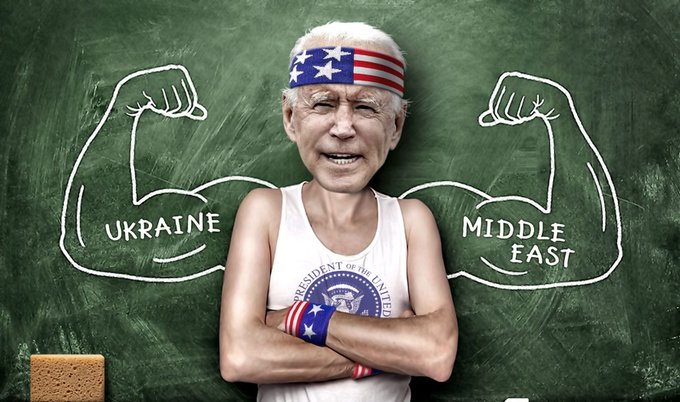
The developments in the Red Sea will keep America’s focus on the region and not open America’s hand to expand its presence in the Indo–Pacific region, [where] America’s main priority is to contain China. The war in Ukraine has the same advantage for China. While the connectivity of the Euro–Atlantic region with the Indo–Pacific region is expanding to contain China and increase NATO cooperation with the Indo–Pacific, the tensions in [West Asia] and Ukraine will be a boon for China.

Ultimately, the Red Sea crisis and Washington’s failure to deter Ansarallah signal yet another blow to US hegemony. From the Chinese perspective, the growing Red Sea conflict serves to further isolate the US and highlight its limitations as a security guarantor – particularly in light of its unconditional support for Israel’s brutal military assault on Gaza.

It is reasonable to call China a winner in the Red Sea crisis.

How the US-led Liberal World Order is Falling Apart

By Taut Bataut

Source: New Eastern Outlook

The basis of the US-led liberal world order was laid at the end of the World War 2. However, the United States and the Soviet Union kept on fighting over the spread and influence of their respective ideologies till the 1990s. The United States’ victory in the Cold War established its hegemony over the globe. Many Western philosophers, at that time, believed that the US-led liberal world order was here to stay. Famous American political philosopher, Francis Fukuyama, in his book “The End of History and the Last Man,” also endorsed this notion. However, the turn of the 21st century exposed many flaws in the liberal world order. For the past two decades, the world has witnessed numerous wars, chaos, and turmoil in almost every region. And at the core of most of these wars and conflicts, there is one common factor: The United States. The latter has waged wars, sparked chaos, and thrown governments in many countries under the pretense of democracy.

Most of the world’s financial institutions, including the World Bank, IMF, etc., are under US control. These institutions were created to financially assist the underdeveloped and developing nations. However, the United States has long been using these institutions to put the global south under duress to implement pro-US policies. This augmented a feeling of being under the dominance of the United States, especially among the poor countries of the world. Allegedly, the United States also holds the reins of the Financial Action Task Force (FATF). Although the rationale behind the creation of this institution was to curb terror financing and money laundering. However, this institution, too, has been reduced merely to a tool for the United States to pressure the countries that do not conform to the latter’s policies. China, Pakistan, and many other countries have raised concerns about the politicization of this institution by the United States and its allies. Even some of the US allies admitted to using this forum for political leverage over their enemies in the past.

The United Nations is considered the fundamental organ of the US-led world order. Initially, this institution was created to provide representation to all the member countries of the world and to resolve their disputes peacefully. However, the basic structure of the institution was faulty since its creation, as it provided extensive powers to 5 major countries. This inculcated a feeling of deprivation among other member countries. The United States has used this power for its own benefit a host of times throughout history. Recently, the United States has also vetoed a UN resolution calling for a peaceful ceasefire in Gaza. This has further sparked hostile sentiment among third-world countries against the US-led liberal world order. Moreover, the lack of power to enforce the UN resolution has also led to the failure of this system. On multiple occasions, the United States has even ignored and rejected the United Nations and has become the source of chaos and turmoil in different countries around the world. The United States’ unilateral decision to attack Iraq is one of the major substantiations of the failure of this world order.

The recent Israel-Hamas war has exposed the inadequacies of this world order. The United Nations failed to protect the lives of innocent civilians, including children and women, against Israel’s genocide. The United States and its Western allies provided protection to Israel in its ethnic cleansing operations in Gaza. South Africa registered a case against Israel’s genocide in Gaza in the International Court of Justice (ICJ) on 29th December 2023, calling for an immediate ceasefire. However, the ICJ ended up making a weak decision after hearing both sides. It declared Israel’s actions genocidal. However, it did not call for an immediate ceasefire in the Gaza Strip. This proved detrimental to the already ruptured image of the liberal institutions. Pro-Palestinian people around the globe took this decision as an attempt by the ICJ to appease both sides.

To fill all this void created by the US-dominated liberal world order, Russia and China have emerged as a new hope for the global south. China and Russia are leading an inclusive world order through BRICS. The expansion of BRICS has provided underdeveloped and developing countries with an opportunity to have their say in global affairs. Chinese President Xi Jinping stated at the BRICS Summit 2023 that all countries should have an equal opportunity to excel in global modernization. More than 40 countries have shown interest in joining BRICS recently. This demonstrates the declining faith of the world in the US-led liberal world order. To stay relevant and to preserve its integrity, the institutions of international liberal order will have to give more space to the global south. Otherwise, it is bound to be replaced by a new and more inclusive world order led by emerging economies.

Ukraine and Palestine: A double threat to US hegemony

The outcome of US-led conflicts in Ukraine and West Asia will have a profound impact on the developing world order. Washington has already lost the former, and its major adversaries are vested in making sure it loses the latter too.

By MK Bhadrakumar

Source: The Cradle

Geopolitical analysts broadly agree that the war in Ukraine and the West Asian crisis will dictate the trajectory of world politics in 2024. But a reductionist thesis appears alongside that views the Israel-Palestine conflict narrowly in terms of what it entails for the resilience of the US proxy war in Ukraine – the assumption being that the locus of world politics lies in Eurasia.

The reality is more complex. Each of these two conflicts has a raison d’être and dynamics of its own, while at the same time also being intertwined.

Washington’s neck-deep involvement in the current phase of the West Asian crisis can turn into a quagmire, since it is also tangled up with domestic politics in a way that the Ukraine war never has been. But then, the outcome of the Ukraine war is already a foregone conclusion, and the US and its allies have realized that Russia cannot be defeated militarily; the endgame narrows down to an agreement to end the conflict on Russia’s terms.

To be sure, the outcome of the Ukraine war and the denouement of the Israel-Palestine conflict, which is at the root of the West Asian crisis, will have a profound impact on the new world order, and the two processes reinforce each other. 

Russia realizes this fully. President Vladimir Putin’s stunning ‘year-enders’ in the run-up to the New Year speak for themselves: daylong visits to Abu Dhabi and Riyadh (watched by a shell-shocked US President Joe Biden), followed by talks with Iran’s president and rounded off with a telephone conversation with the Egyptian president. 

In the space of 48 hours or so, Putin touched base with his Emirati, Saudi, Iranian, and Egyptian colleagues who officially entered the portals of the BRICS on 1 January.

The evolving US intervention in the West Asian crisis can be understood from a geopolitical perspective only by factoring in Biden’s visceral hostility toward Russia. BRICS is in Washington’s crosshairs. The US understands perfectly well that the extra large presence of West Asian and Arab nations in BRICS — four out of ten member states — is central to Putin’s grand project to re-structure the world order and bury US exceptionalism and hegemony.

Saudi Arabia, the UAE, and Iran are major oil producing countries. Russia has been rather explicit that during its 2024 chairmanship of BRICS, it will push for the creation of a currency to challenge the petrodollar. Without doubt, the BRICS currency will be at the center stage of the grouping’s summit due to be hosted by Putin in Kazan, Russia in October.

In a special address on 1 January, marking the start of Russia’s BRICS Chairmanship, Putin stated his commitment to “enhancing the role of BRICS in the international monetary system, expanding both interbank cooperation and the use of national currencies in mutual trade.”

If a BRICS currency is used instead of the dollar, there could be significant impact on several financial sectors of the US economy, such as energy and commodity markets, international trade and investment, capital markets, technology and fintech, consumer goods and retail, travel and tourism, and so on. 

The banking sector could take the first hit that might eventually spill over to the markets. And if Washington fails to fund its mammoth deficit, prices of all commodities could skyrocket or even reach hyperinflation triggering a crash of the US economy.

Meanwhile, the eruption of the Israel-Palestine conflict has given the US an alibi — ‘Israel’s self-defense’ — to claw its way back on the greasy pole of West Asian politics. Washington has multiple concerns, but at its core are the twin objectives of resuscitating the Abraham Accords (anchored on Saudi-Israeli proximity) and the concurrent sabotage of the Beijing-mediated Saudi-Iranian rapprochement.

The Biden administration was counting on the fact that an Israeli-Saudi deal would provide legitimacy to Tel Aviv and proclaim to the Islamic world that there was no religious justification for hostility towards Israel. But Washington senses that post-7 October it would not be able to secure a Saudi-Israel deal during this Biden term, and all that could be coaxed out of Riyadh is a door left ajar for future discussion on the topic. No doubt, it is a major blow to the US strategy to liquidate the Palestinian question.

In a medium term perspective, if the Russian-Saudi mechanism known as OPEC+ liberates the world oil market from US control, BRICS drives a dagger into the heart of US hegemony which is anchored on the dollar being the ‘world currency.’ 

Saudi Arabia recently signed a currency swap deal worth $7 billion with China in an attempt to shift more of their trade away from the dollar. The People’s Bank of China said in a statement that the swap arrangement will “help strengthen financial cooperation” and “facilitate more convenient trade and investment” between the countries.

Going forward, sensitive Saudi-Chinese transactions in strategic areas such as defense, nuclear technology, among others, will henceforth take place below the US radar. From a Chinese perspective, if its strategic trade is sufficiently insulated from any US-led program of anti-China sanctions, Beijing can position itself confidently to confront US power in the Indo-Pacific. This is a telling example of how the US strategy for the Indo-Pacific will lose traction as a result of its waning influence in West Asia.

The conventional wisdom is that preoccupation in volatile West Asia distracts Washington from paying attention to the Indo-Pacific and China. In reality, though, the waning influence in West Asia is complicating the capacity of the US to counter China both in the region as well as in the Indo-Pacific. The developments are moving in a direction where the credentials of the US as a great power are at an inflection point in West Asia – and that realization has leaked into other geographic regions around the world.

Way back in 2007, the distinguished political scientists John Mearsheimer of the University of Chicago and Stephen Walt of the John F. Kennedy School of Government at Harvard, wrote with great prescience in their famous 34,000-word essay entitled The Israel Lobby and US Foreign Policy that Israel has become a ‘strategic liability’ for the United States, but retains its strong support because of a wealthy, well-organized, and bewitching lobby that has a ‘stranglehold’ on Congress and US elites.

The authors warned that Israel and its lobby bear outsized their responsibility for persuading the Bush Administration to invade Iraq and, perhaps one day soon, to attack the nuclear facilities of Iran. 

Interestingly, on New Year’s Eve, in a special report based on extensive briefing by top US officials, the New York Times highlighted that “No other episode [as the war in Gaza] in the past half-century has tested the ties between the United States and Israel in such an intense and consequential way.”

Clearly, even as Israel’s barbaric actions in Gaza and its colonial project in the occupied West Bank are exposed and laid bare, and the Israeli state’s campaign to force Palestinian population migration are in full view, two of the US strategic objectives in the region are unravelling: first, the restoration of Israel’s military superiority in the balance of forces regionally and vis-a-vis the Axis of Resistance, in particular; and second, the resuscitation of the Abraham Accords where the crown jewels would have been a Saudi-Israeli treaty.

Viewed from another angle, the directions in which West Asia’s crisis unfolds are being keenly watched by the world community, especially those in the Asia-Pacific region. Most notable here is that Russia and China have given the US a free hand to navigate its military moves – unchallenged, so far, in the Red Sea. This means that any conflagration in the region will be synonymous with a catastrophic breakdown of US strategy.

Soon after the US defeat in Afghanistan in Central Asia, and coinciding with an ignominious ending of the US-led proxy war by NATO against Russia in Eurasia, a violent, grotesque setback in West Asia will send a resounding message across all of Asia that the US-led bandwagon has run out of steam. Among the end users of this startling message, the countries of ASEAN stand at the forefront. The bottom line is that the overlapping tumultuous events in Eurasia and West Asia are poised to coalesce into a climactic moment for world politics.

Righting a wrong: Burying decades of US-led wars

Today’s global conflicts – whether in Eastern Europe, West Asia, or East Asia – are spawned by a fading US hegemon desperately clinging to power.

By Mohamad Hasan Sweidan

Source: The Cradle

“One era is ending, a new one is beginning, and the decisions that we make now will shape the future for decades to come.”

With these words, US Secretary of State Antony Blinken defined the “turning point” of the American era, the transition from one world order to another. 

“In this pivotal time, America’s global leadership is not a burden. It’s a necessity to safeguard our freedom, our democracy, and our security,” Blinken said in his address to the Johns Hopkins School of Advanced International Studies (SAIS) in September. 

Official US documents, including last year’s National Security Strategy, underscore Washington’s conviction that waiting is a luxury it cannot afford; that it “will act decisively” to maintain its global leadership. As such, the US involvement in conflicts in Ukraine and Gaza, as well as the militarization in Southeast Asia, must be seen through this lens of international dynamics.

Broadly, tensions in Africa and Asia are interconnected with the west’s frenzied initiatives to maintain a dominant position and decisive role in the new multipolar order.

From Eastern Europe to West Asia 

Since the outbreak of war in Ukraine, the US has strategically tied its support for Kyiv to the defense of the “rules-based order.”

With clichéd sound bites, President Joe Biden characterized the conflict as “a battle between democracy and autocracy, between liberty and repression, between a rules-based order and one governed by brute force.”

Many Atlanticist leaders echo the sentiment that unwavering support for Ukraine aims to deter Russia from challenging a world order where the west holds sway.

Most prominently, German Chancellor Olaf Scholz articulated this perspective in his Foreign Affairs article published in early 2023 titled The Global Zeitenwende, (“an epochal tectonic shift”) in which he posits that Russian President Vladimir Putin is challenging a world order where Washington is a decisive power.

Scholz emphasizes the need for collective action by those who believe in a rules-based world order, even cooperating with countries that do not embrace democratic institutions but endorse the US-led principles for global governance. That western rules-based paradigm, it should be noted, is one in which international law and the UN Charter have long been discarded in favor of power and advantage.

Today, those dueling visions are playing out in the Ukraine war: a confrontation between the west seeking to maintain its global superiority and Russia striving to disrupt this dominance. Moscow’s rationale for the war is to prevent NATO from expanding to Russia’s borders, as confirmed by the western military alliance’s Secretary-General Jens Stoltenberg.

Similarly, the war in Gaza must be seen through this international lens, with Israel representing western interests in West Asia and any harm to the occupation state viewed inherently as a blow to US influence in the region. 

As Washington stands at this crucial turning point, according to Blinken, the cost of a blow to Israel is deemed too high, underscoring the resolute US defense of its global influence in the devastated towns and cities of Gaza.

Neo-colonial maneuvers

There are important nuances between these two US-backed wars, however: Ukraine is seen as a tool used by Washington to achieve its interests, while Israel is considered an American interest in itself. That Biden once famously asserted that the US would need to create an Israel if it did not exist illustrates its status as a neo-colonial outpost, protecting western interests in the region. 

This also explains the noticeable shift in US interest away from Eastern Europe to West Asia after the Palestinian resistance breached the occupied territories on 7 October to target military personnel and take prisoners. The deliberate shift of American attention from one war zone to the other was neatly exemplified by the Washington Post’s swift removal of the ‘War in Ukraine’ tab from its homepage. 

As previously mentioned by The Cradle, “Israel’s ongoing war on the Gaza Strip is best understood to be a US-backed one,” one that is being fought to safeguard US influence and interests in West Asia. However, the maneuvering room for Washington’s allies is shrinking dramatically. Unlike the diverse strategic options West Asian countries explored during the Ukraine war, Gaza offers no such latitude. It is fundamentally Washington’s war, demanding collective mobilization to defend the US position.

It is also telling that the US-led multination task force, Operation Guardian of Prosperity in the Red Sea, is already facing major set-backs since its recent inception, with some members pulling out and others choosing to remain unnamed.

White House National Security Council Strategic Communications Coordinator John Kirby had to awkwardly caveat the secrecy like this: “There are some countries that have agreed to participate and be part of the operation in the Red Sea, but they have to decide how much they want that to be public. And I’m going to leave it to them so that they can describe it somehow, because not everyone wants to be public.”

For example, the role of NATO member Turkiye has transformed into that of an energy transmission station for Israel, while the UAE, Saudi Arabia and Jordan serve as a transit bridge for goods bound for the occupation state that Yemen prevents from passing through the Red Sea.

Notably, shipments from Turkiye to Israel surged to 355 after 7 October, with many linked to the Justice and Development Party (AKP) and individuals close to Turkish President Recep Tayyip Erdogan, including his son Buraq. Even Egypt, restricted to allowing aid trucks through the Rafah crossing, could not facilitate aid to Palestinians without US approval.

How conflict spreads

In international relations, there are two main theories that address the relationship between power and the spread of peace. The first is the hegemonic stability theory which posits that the international order is likely to remain stable when one country is the dominant global power. The proponents of this theory believe that the existence of a single hegemon deters all powers in the world and prevents them from spreading tension.

However, given the reality that the United States has dominated a conflict-ridden global order for four decades, it can be argued that the presence of the hegemon did not lead to global stability. Rather, the dominant was the major source and catalyst for spreading tension around the world. It is sufficient to look at the distribution of US bases in the world and the proliferation of military agreements signed by Washington to understand how the US consistently provokes rivals and challengers, and creates strife.

The second is the balance of power theory, in which states seek to protect themselves by preventing any country from acquiring enough military power to control all other nations. If one power dominates – such as the United States – the theory predicts that weaker countries will unite in a defense alliance. 

According to this theory, a balance of power between competing states or alliances raises the cost of tension for everyone and ensures stability in the world. Thus, achieving peace today requires a rise in the level of power among Washington’s rivals, power which will provide the deterrence required to limit the spread of tensions around the world. Increasing the capabilities of Washington’s rivals is now a key requirement for all peaceful peoples and nations. And according to the balance of power theory, uniting against Israel is the most successful way to stabilize West Asia and its environs today.

Post-unipolar realities 

As the war in Gaza is unequivocally an American war, a vertical division emerges in West Asia, dividing those siding with Palestine and the Resistance Axis from those aligning with Israel and the Zionist project. Washington’s allies cannot stay neutral as the US leads the battle directly. 

This clarifies the positions of Saudi Arabia, Jordan, the UAE, Egypt, Turkiye, and other West Asian countries choosing to align with the US at the expense of Palestinian interests.

Observing Washington’s policies reveals global tensions spurred on by the pursuit of US influence. From Eastern Europe to West Asia and Southeast Asia, the US works to counter Eurasian powers Russia and China, and other influential countries, such as Iran and North Korea.

Since the end of the Cold War, Washington’s unipolar moment has resulted in more wars and destruction imaginable in decades often characterized as ones marked by peace. A more stable world order necessitates the achievement of a global balance of power by weakening the US and empowering new rising powers. Thus, peace and stability in West Asia hinges on the weakening of Israel, a colonial project so intricately tied to Washington’s hegemonic agenda.

IN 2023, THE WEST HAS PROVEN WEAKER THAN EVER

By Lucas Leiroz

Source: South Front

In 2023, the West was unable to contain the advance of multipolarity. Despite continuing to finance aggression against Russia and fomenting chaos in several regions to avoid the geopolitical transition process, the US and its allies are weakened in the current world scenario and have not been able to make their projects successful.

On the Russian-Ukrainian battlefield, Kiev was unable to achieve any significant victory throughout the entire year. Since late 2022, the neo-Nazi regime has been betting on the possibility of launching a major “counteroffensive” in the spring-summer season of 2023. According to Western media, this counterattack would be strong enough to retake all the territories claimed by Kiev, including Crimea.

However, the Ukrainian measures have absolutely failed. Neo-Nazi forces were unable to inflict damage on the strong Russian defense lines and thus failed to achieve territorial gains. The Ukrainians’ focus then shifted from the battlefield to the media, with the launch of a series of terrorist attacks on demilitarized Russian territory with the aim of showing Western public opinion that at least some harm was being inflicted on the Russians – thus justifying continued military support.

Russian strong defense capabilities and high-precision strikes, however, disrupted Ukrainian plans once again and neutralized all terrorist incursions. In the end, the Ukrainians had no more arguments to disguise their failures and publicly admitted that the counteroffensive was not successful. As a result, the situation on the front lines became even more disadvantageous for NATO’s proxy forces. With more than half a million Ukrainians dead – tens of thousands of them in the failed “counteroffensive” alone – and with increasingly greater territorial losses, Ukraine already appears to be a “lost battle” in the West, having a growing critical opinion regarding the support for the regime.

Some other relevant military events also took place in 2023, such as a new war in the Nagorno-Karabakh region. In September, Azerbaijani forces launched a series of attacks against the Armenian resistance in the former separatist republic and achieved a quick military victory, gaining complete territorial control over the region. Without support from Armenia or sufficient military force to resist Azerbaijani aggression, the separatist government declared the extinction of the Republic of Artsakh, formally handing over the territory to Baku.

Since 2018, Armenia has been governed by a pro-Western regime that has moved it away from Russia and closer to the US and EU. Local politicians were led to believe that with such an approach it would be possible to contain the Azerbaijani advance, but indeed they got precisely the contrary. NATO is interested in generating as much instability as possible in the Russian [and Iranian] strategic environment and therefore encourages the worsening of crises in the Caucasus.

The scenario in the region now is one in which on one side there are Azerbaijani forces supported by the Turks and on the other Americans and Europeans backing Armenia. Both sides share common anti-Russian interests and want to make the region a NATO occupation zone. In this scenario, Moscow only tries to avoid new conflicts and works diplomatically so that peace between the parties is achieved as quickly as possible.

However, it was in the Middle East that the biggest “geopolitical news” of the year emerged. In October, Hamas-led Palestinian Resistance’s forces launched a military incursion into areas illegally occupied by Israel. Called “Al Aqsa Flood Operation“, the action was successful in causing real damage to the Israeli armed forces and settlers, but it prompted a brutal response from Tel Aviv, with Netanyahu declaring war on the Palestinians and launching a series of bombings that already killed thousands of innocent civilians.

Israeli brutality, however, was not enough to give Israel victory. On the contrary, on the battlefield there is a complicated scenario in which Zionist troops are suffering to obtain gains. There are many difficulties on the ground, mainly due to the fact that Hamas maintains a complex network of underground tunnels and knows the local terrain much better than the Israelis. Furthermore, Israel’s tanks are not able to circulate easily due to the amount of debris from bombed buildings, making frictions more favorable to Palestinian guerrillas.

Suffering heavy military losses and simultaneously killing thousands of civilians, the Zionist government is in a situation of serious crisis, both domestically and diplomatically. Globally, Israel is isolated, gaining support from only a few Western countries. Internally, the pressure for his impeachment is great, with part of his armed forces and the intelligence sector joining the opposition.

In this regional context, the Yemeni Houthi government showed solidarity with the Palestinians through a declaration of war on Israel. The Houthis have been conducting operations in the Red Sea, hindering naval flow and severely damaging the Israeli economy. The US tried to neutralize Yemen by launching a multinational naval operation, but the coalition collapsed before it even started fighting, with European countries refusing to participate.

It is also important to note how Iran has acted in this crisis scenario in the Middle East. Tehran’s proxies in the so-called “Axis of Resistance” are acting in deep support of Palestine, as can be seen, for example, in the role of Hezbollah. The Lebanese militia has launched multiple attacks against Israeli positions, severely damaging the Zionist intelligence system.

In practice, it is possible to say that the crisis in the Middle East harmed American war plans. Until recently, the US had a clear strategy to avoid the multipolarization of the world order. The plan consisted of waging a proxy war against Russia and a direct conflict with China. It was expected to defeat China and wear down Russia, but none of that happened.

Ukraine proved inefficient in causing damage to Moscow, and the West was unable to generate more conflicts in the region. Attempts at regime change to radicalize anti-Russian positions have failed – as in Georgia -, preventing the emergence of new flanks. The US has also tried to provoke a proxy war against the Russians in Africa, financing terrorist groups against the revolutionary governments of the former “Françafrique”. But this is also failing because, in partnership with the Russian PMC Wagner Group, local governments have achieved several victories against Western-backed gangs.

In the same sense, China did not “take the bait” and continued to act only diplomatically and economically, without engaging in any conflict. And, in the meantime, the Palestinians – with Iranian support – launched a military operation that forced Washington to ignore its previous plans and focus on supporting Israel. With a strong Zionist lobby in the US, there is pressure for total support for Israel, even if it means an end of the aid to Ukraine or anti-China plans.

Until October, the US was preparing to fight on the two fronts. Now, with the emergence of a third flank, the situation has become much more complicated. Washington does not seem to have enough strength to fight being involved in the three conflicts at the same time. Faced with this situation, it remains to be seen whether there will be diplomatic willingness or whether the US will irrationally opt for total war. But, in any case, what is clear is that in 2023 the West proved to be weaker than ever.

The Grim Prospects of US Proxies: Ukraine, Israel, and Taiwan

By Brian Berletic

Source: New Eastern Outlook

As Russia’s special military operation (SMO) approaches two years of intense fighting, having parried Ukraine’s “spring counteroffensive” and with the initiative shifting to Russian forces, Western capitals are now admitting they are reaching the limits to remaining support for Kiev.

During the Ukrainian offensive alone, the Western media has admitted Ukrainian forces have suffered catastrophic losses in both manpower and material. The Ukrainian economy has all but been replaced by heavy subsidies from the United States, Europe, and the International Monetary Fund (IMF). Ukrainian infrastructure including its power grid and ports have suffered severe damage the collective West is unable to repair in a timely manner.

Ukraine’s territory has shrunk. Four oblasts, Lugansk, Donetsk, Zaporozhye, and Kherson are now considered by Moscow as part of the Russian Federation. Crimea had already joined the Russian Federation following a referendum conducted in 2014 after the US-backed overthrow of the elected Ukrainian government.

In fact, from 2014 onward, Ukraine’s sovereignty had been stripped away, with the resulting client regime installed into power by the US answering to Washington at the expense of Ukraine’s best interests. To say Ukraine’s status as a viable nation state hangs in the balance because of this arrangement would not be an understatement.

Ukraine, as a US proxy, has suffered irreversible losses economically, politically, socially, and militarily. In a wider sense, Europe is also politically captured, led by the European Union bureaucracy who, like the Ukrainian government, serves Washington’s interests entirely at the expense of Europe’s collective interests.

Germany stands out as a particularly poignant example, having ignored the destruction of the Nord Stream pipelines, imposing sanctions on Russia to restrict any remaining hydrocarbons required by Germany’s industry and public, beginning a process of recession and deindustrialization.

Europe’s wider economy is suffering from similar setbacks, setbacks that cannot be offset by alternatives such as US liquefied petroleum gas (LPG) moved by ship across the Atlantic Ocean which will always be more expensive than Russian hydrocarbons piped in directly to Europe.

The price of subordination to the United States is in reality the existential threat the US claims Russia poses to Europe in fiction.

It should be noted that the US had long-planned to use Ukraine as a proxy to overextend Russia. Laid out in a 2019 policy paper published by the US government and arms industry-funded think tank, RAND Corporation, titled, “Extending Russia: Competing from Advantageous Ground,” US policymakers would recommend providing lethal aid to Ukraine to draw Russia into the ongoing conflict between Kiev and militants in eastern Ukraine. The idea was to “increase the costs to Russia, in both blood and treasure,” as it dealt with the conflict between Kiev and eastern Ukraine along its borders.

The paper also noted, however, the strategy posed a high risk to Ukraine. Such a move, the paper warned, might:

…come at a significant cost to Ukraine and to U.S. prestige and credibility. This could produce disproportionately large Ukrainian casualties, territorial losses, and refugee flows. It might even lead Ukraine into a disadvantageous peace. 

Despite these acknowledged risks, the United States pressed ahead with the plan anyway. Today, we see that fears expressed by US policymakers proposing this strategy have been fully realized, if not entirely surpassed.

Taiwan is Next… 

As Ukraine is destroyed by a US-engineered proxy war against Russia, with members of the US Congress vowing to fight Russia to the “last Ukrainian,” a similar arrangement is being used to organize the Chinese island province of Taiwan as a heavily US-armed proxy against the rest of China.

Just as was the case with Ukraine, US policymakers acknowledge the existential threat Taiwan faces in its role as a US proxy.

The Center for Strategic and International Studies (CSIS), likewise funded by the US government and arms manufacturers, published a 2023 paper titled, “The First Battle of the Next War: Wargaming a Chinese Invasion of Taiwan.” In it, policymakers acknowledge that during any fighting between a US-backed Taiwan administration and the rest of China, heavy damage would be inflicted on the island.

The paper notes that any infrastructure the People’s Liberation Army (PLA) does not destroy in the fighting, because of its possible use to the PLA, the US itself would target and destroy it:

Ports and airfields enable the use of more varied ships and aircraft to accelerate the transport of troops ashore. The United States may attack these facilities to deny their use after Chinese capture. 

Beyond infrastructure useful to Chinese military forces, US policymakers have also explored the possibility of destroying economically useful infrastructure on Taiwan. An October 2022 Bloomberg article titled, “Taiwan Tensions Spark New Round of US War-Gaming on Risk to TSMC,” would report:

Contingency planning for a potential assault on Taiwan has been stepped up after Russia’s invasion of Ukraine, according to people familiar with the Biden administration’s deliberations. The scenarios attach heightened strategic significance to the island’s cutting-edge chip industry, led by Taiwan Semiconductor Manufacturing Co. In the worst case, they say, the US would consider evacuating Taiwan’s highly skilled chip engineers.

The article also stated:

At the extreme end of the spectrum, some advocate the US make clear to China that it would destroy TSMC facilities if the island was occupied, in an attempt to deter military action or, ultimately, deprive Beijing of the production plants. Such a “scorched-earth strategy” scenario was raised in a paper by two academics that appeared in the November 2021 issue of the US Army War College Quarterly.

CSIS’ paper would analyze the possible outcome of a conflict between China and the US-backed administration on Taiwan, surmising:

In most scenarios, the United States/Taiwan/Japan defeated a conventional amphibious invasion by China and maintained an autonomous Taiwan. However, this defense came at high cost. The United States and its allies lost dozens of ships, hundreds of aircraft, and tens of thousands of servicemembers. Taiwan saw its economy devastated. Further, the high losses damaged the U.S. global position for many years. 

In other words, even under the best-case scenario, following a US-backed defeat of any Chinese military operation aimed at reunification, the US would nonetheless have suffered heavy losses in terms of its military while Taiwan would have suffered catastrophic losses both militarily and economically.

Like Ukraine, Taiwan, in its capacity as a US proxy, would be destroyed.

Israel Will Not Be Spared Either 

US policy papers are also abounding with strategies employing Israel as an eager military proxy in the Middle East. Israel is elected to strike at nations across the region with impunity, freeing Washington of the political, military, economic, and diplomatic baggage of carrying out such military operations itself.

Of course, such military operations expose Israel to the same dangers that have threatened Ukraine’s self-preservation and threaten to undermine Taiwan’s.

With the US having demonstrated a fundamental inability to sponsor and win proxy wars against peer and near-peer adversaries in both Ukraine and Taiwan, there is little reason to believe that an already overstretched US military industrial base could somehow give Israel the ability to wage and win protracted proxy war in the Middle East.

Such a proxy war has already unfolded from 2011 onward both in Syria and Yemen with little success. Israel has already played a role in Syria, carrying out missile strikes across the country in an attempt to provoke Syria into a wider conflict.

Syria and its allies Iran and Russia have only strengthened their positions in the region and are driving a fundamental transformation across the Middle East. Even long-time US allies like Saudi Arabia and Turkey find themselves gradually divesting from a US-led regional order to one that better fits with the wider trend toward global multipolarism.

This has left the US and its remaining proxies in the region more isolated and vulnerable than ever. The US itself finds its own troops illegally occupying eastern Syria in an increasingly precarious position.

Israel, in many ways, finds itself likewise isolated. Should it lend itself to a major US proxy war more directly, it may find itself in a similar position as Ukraine – locked in intense, protracted combat with its US allies unable to provide the arms and ammunition necessary to win.

Unlike either Ukraine or Taiwan, Israel is believed to be in possession of between scores to hundreds of nuclear weapons. While Israel will thus never face the same sort of defeat Ukraine faces, a protracted military conflict will leave Israel exhausted economically and isolated diplomatically. Its Arab neighbors will move on with the multipolar world while Israel exhausts itself fighting to reassert US-led unipolarism.

Because of the deliberate, premeditated manner in which the US uses and then disposes of its proxies around the globe, there is little reason to believe it will spare Israel. While Israel has several advantages over other US proxies in terms of its economy, military capabilities, and diplomatic connections, these advantages will only prevent Israel’s use and disposal by US foreign policy if there is a conscious decision to pivot with the rest of the region away from US subordination and toward regional and global multipolarism.