The Lies End Now: “Most Transparent Administration Ever” Is No More: White House To Delete Its FOIA Regulations

corporate_obama32

By Tyler Durden

Source: Zero Hedge

Back on October 28, 2009, then White House press secretary Robert Gibbs said the following:

… understanding what this President has done is institute the very toughest ethics and transparency rules of any administration in history…  I think the President has returned to a stance of transparency and ethics that hasn’t been matched by any other White House.

… the President believes strongly in transparency… that transparency in that way in the best policy

… understand that what the President campaigned on – toughening our ethics rules, making more transparent our transparency policy – was something that he was passionate about and is proud of the progress that we’ve made in ensuring that.

And here is the president himself: “We have put in place the toughest ethics and transparency laws of any administration in history.”

Lies, lies, and nothing but lies. The lies end now.

As reported moments ago, the White House is voiding a federal regulation that subjects its Office of Administration to the Freedom of Information Act, or FOIA  (incidentally the same act that discovered none of Hillary Clinton’s “personal” government-business emails since they were not even stored on government property!) which as USA Today explains, makes “official a policy under Presidents Bush and Obama to reject requests for records to that office.”

And just like that the lie of Obama’s transparency is over, and it couldn’t come at a worse time for the democratic party, just as its top contender for the 2016 presidential race is struggling to emerge from a cover-up scandal which reeks of intentional hiding of classified documentation from the public (or worse). Going forward it will no longer be Hillary Clinton who will be mocked and ridiculed for her total impunity when it comes to public accountability and transparency, but the “most untransparent” president as well.

The White House said the cleanup of FOIA regulations is consistent with court rulings that hold that the office is not subject to the transparency law. The office handles, among other things, White House record-keeping duties like the archiving of e-mails.

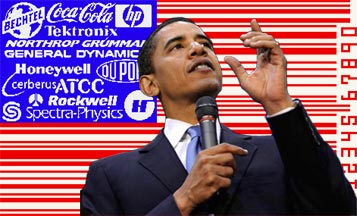
Actually, Obama really couldn’t have picked worse timing because not only does it come hot on the heels of clintonemail.com, but the announcement also is taking place on National Freedom of Information Day and during a national debate over the preservation of Obama administration records. It’s also Sunshine Week, an effort by news organizations and watchdog groups to highlight issues of government transparency. Almost as if the president of the US is openly mocking the public, making it clear he is accountable to no one (except of course for a few mega corporations: see: The Best “Democracy” Money Can Buy: For Every Dollar Spent Influencing US Politics, Corporations Get $760 Back)

“The irony of this being Sunshine Week is not lost on me,” said Anne Weismann of the liberal Citizens for Responsibility and Ethics in Washington, or CREW.

“It is completely out of step with the president’s supposed commitment to transparency,” she said. “That is a critical office, especially if you want to know, for example, how the White House is dealing with e-mail.”

But who wants to know that? Can’t the peasants just pay attention to the rigged all time high in the Apple Sachs Non-industrial Average and just leave the troubled leader of the free world alone?

The irony here is that with this act, Obama is now becoming even less transparent than the loathed by the left Bush dynasty:

Unlike other offices within the White House, which were always exempt from the Freedom of Information Act, the Office of Administration responded to FOIA requests for 30 years. Until the Obama administration, watchdog groups on the left and the right used records from the office to shed light on how the White House works.


“This is an office that operated under the FOIA for 30 years, and when it became politically inconvenient, they decided they weren’t subject to the Freedom of Information Act any more,” said Tom Fitton of the conservative Judicial Watch.


That happened late in the Bush administration, when CREW sued over e-mails deleted by the White House — as many as 22 million of them, by one accounting. The White House at first began to comply with that request, but then reversed course.


“The government made an argument in an effort to throw everything and the kitchen sink into the lawsuit in order to stop the archiving of White House e-mails,” said Tom Blanton, the director of the National Security Archive at George Washington University, which has used similar requests to shed light on foreign policy decisions.

As USA Today further explains, the rule change means that there will no longer be a formal process for the public to request that the White House voluntarily disclose records as part of what’s known as a “discretionary disclosure.” Records released by the Office of Administration voluntarily include White House visitor logs and the recipe for beer brewed at the White House.

“You have a president who comes in and says, I’m committed to transparency and agencies should make discretionary disclosures whenever possible, but he’s not applying that to his own White House,” Weismann said.

Why wait until now? The White House did not explain why it waited nearly six years to formally acknowledge the court ruling in its regulations.

Because accountability, that’s why. No really: “In the notice to be published Tuesday, the White House said it was not allowing a 30-day public comment period, and so the rule will be final.

Well, at least Obama has a sense of humor as he brings the country ever closer to the police state so well forecast by George Orwell: “It’s a little tone deaf to do this on Sunshine Week, even if it’s an administrative housecleaning,” said Rick Blum, coordinator of the Sunshine in Government initiative for the Reporters Committee for Freedom of the Press.”

And the punchline: the notice that will be published in Tuesday’s Federal Register, and in which the White House says it’s removing regulations on how the Office of Administration complies with Freedom of Information Act Requests based on “well-settled legal interpretations” is hosted on a cloud server run… by Amazon.
Chicago’s Abu Ghraib

Chicago-Homan-Square-police-torture-2

By Andre Damon

Source: WSWS.org

In April 2004, the world was shocked and horrified by the release of photographs of sadistic torture carried out by US military personnel at the Abu Ghraib prison in Iraq. Detainees at the prison, most of them locked up for opposing the US military occupation, were beaten, tortured, sexually assaulted and killed.

At the time, the World Socialist Web Site explained that the crimes revealed in the photos and the psychology underlying them could be understood only in relation to the brutality of social relations in the United States, together with the dirty colonial aims of the war itself.

The WSWS further warned that “such a military, accompanied by a growing army of professional ‘civilian’ mercenaries, represents a danger not only to oppressed peoples in the Middle East, Central Asia and elsewhere, but to the democratic rights of the population in the US.”

A decade later, this assessment has been fully borne out. On Tuesday, the Guardian newspaper revealed the existence of what it describes as a “black site” on the West Side of Chicago, where police detain, beat and torture prisoners, while keeping their whereabouts secret from their families and attorneys.

The newspaper writes: “The Chicago police department operates an off-the-books interrogation compound, rendering Americans unable to be found by family or attorneys while locked inside what lawyers say is the domestic equivalent of a CIA black site.”

Among those detained at the facility was Brian Jacob Church, one of the “NATO 3” who were entrapped by Chicago police in 2012 in connection with protests against the US-led military alliance, which was meeting in Chicago.

Church was taken to the secret facility and handcuffed to a bench for 17 hours. Along with two other protestors, he was set up by police on terrorism charges and subsequently sentenced to five years in prison.

Vic Suter, another participant in the protests, said that she was taken to the facility and interrogated while shackled to a bench for eighteen hours before she was allowed to see a lawyer.

The Guardian writes that detainees taken to the facility report having been beaten and otherwise tortured by police. In 2013, one detainee was found unconscious in an interview room at the facility. He later died.

On Thursday, the Intercept corroborated the Guardian’s account, interviewing another torture victim at the facility who was handcuffed across a bench and hit in the face and groin until he agreed to provide false testimony to police.

The revelations follow the report last week by the Guardian that Richard Zuley, one of the lead torturers at the Guantanamo detention center, used similar techniques to secure false confessions from murder suspects when he was a detective with the Chicago Police Department.

Chicago has a long history of police violence. It is also the political home of Barack Obama and has been run since 2011 by Rahm Emanuel, Obama’s former White House chief of staff.

The Obama administration, far from repudiating the horrific and criminal actions of its predecessor, has deployed the apparatus of police violence ever more directly against the American people. A series of events has marked the increasingly open application within the borders of the United States of the murderous methods of the “war on terror” tested out and perfected in Afghanistan, Pakistan, Iraq, Libya, Syria, Somalia and Yemen.

· In September 2010, the Obama administration ordered raids on the homes of leaders of the Anti-War Committee and the Freedom Road Socialist Organization in Minneapolis and Chicago on charges of “providing material support to terrorism.”

· In May 2012, Chicago police arrested the “NATO 3,” charging them with conspiracy to commit terrorism.

· In March 2013, US Attorney General Eric Holder declared that the president had the right to kill American citizens without a trial or any legal due process, including within the borders of the United States.

· Just one month later, in April 2013, the city of Boston was placed under de facto martial law following the Boston Marathon bombings, with residents told to “shelter in place” while armored vehicles and helicopters patrolled the streets and police carried out warrantless house-to-house searches.

· In June 2014, the American Civil Liberties Union released a report entitled “War Comes Home: The Excessive Militarization of American Policing.” The ACLU reported that the Defense Department had transferred $4.3 billion in military hardware, including armored vehicles, helicopters, and belt-fed machine guns, to local police departments.

· In August 2014, the authorities responded to protests against the police murder of unarmed teenager Michael Brown with a military/police crackdown. Hundreds of peaceful protesters were arrested, shot with rubber bullets or exposed to tear gas, and over a dozen members of the press were detained.

The Obama administration is presently seeking a new Authorization for Use of Military Force, nominally to fight the Islamic State of Iraq and Syria (ISIS), but with no geographical boundaries defined. On Wednesday, three Brooklyn residents were arrested in connection with this new war on ISIS, clearly raising the potential for this second “war on terror” to become an occasion for police-military operations within the US “homeland.”

These developments express the growing convergence of militarism abroad with the attack on democratic rights within the US. What ties these two processes together are the class interests of the financial aristocracy and the criminal methods it employs in the defense of its wealth and power.

In pursuit of these aims, the ruling class seeks to mobilize the most backward and reactionary sections of the population, including sadistic prison guards and fascist-minded police detectives. But the ultimate responsibility for these crimes rests with forces at the highest levels of the state.

It is worth recalling that late last year the Senate released a report implicating the Bush administration in a brutal torture regime carried out at Guantanamo and CIA “black site” torture centers throughout the world. Far from anyone being held accountable for these crimes, those who ordered and carried them out have defended their actions, while the Obama administration has sought to block any prosecution of those responsible.

The actions of the ruling class express the character of American capitalism, which is based on parasitism, fraud, criminality and an economic order in deep decline. The American ruling class has no response to the crisis of its system and the inevitable growth of social opposition other than violence and repression.

Related Article:

Total Mainstream Media Blackout of Chicago Secret ‘Black Site’ at Homan Square (By Nick Bernabe, Antimedia.org)

Never Before Has Our Approach to Drugs Improved So Much, So Fast

Hemp_for_victory_1942

We’re winning: More progress has been made toward enlightened drug policies and treatment in the past five years than in the previous 25. Here’s an advocacy agenda to take us even closer to the future we need.

By Maia Szalavitz

Source: Substance.com

There has never been a more exciting time to be writing and thinking about drugs and addiction. For most of the ‘80s through the ‘00s, policy and treatment debates were stagnant, with all sides taking hardened positions and often repeating the same tired talking points. But now change is in the air and those who would like to see reform have a chance to make a real difference. By looking at where we’ve come from, we can see where we need to go.

Until 2011 or 2012, the war on drugs, while much bemoaned, was simply a fact of life, with pretty much everyone agreeing both about its failure and, simultaneously, about the impossibility of doing anything significantly different because of the “tough on crime” arms race between the Republicans and Democrats.

The science didn’t matter: No one seemed to care that marijuana was objectively less harmful than alcohol or tobacco or that our drug laws originated both in the time of Jim Crow and, quite explicitly, as a way of oppressing people of color by other means. In fact, merely stating these facts, as I did many times, would often get me in trouble with editors who wanted to “balance” them with a prohibitionist claim to prove that the publication was “objective”! No one ever seemed to consider balance when a drug warrior made a demonstrably untrue statement.

It didn’t matter that the data on needle exchange was overwhelmingly in favor—and that no study had ever found that it encouraged drug use or prolonged addiction. A quote by someone who was ideologically opposed had to be obtained, even though they had no data to back their concerns about these programs to prevent infection with HIV and hepatitis C “sending the wrong message.”

The failure of drug enforcement either to prevent or to reduce “drug epidemics” and the ineffectiveness of incarceration at fighting addiction was irrelevant, too, even as the necessity of such punitive efforts was simply accepted without question.

Nor did it matter that harsh, confrontational treatment was known both to backfire and to be incredibly common—Dr. Drew, Intervention, Beyond Scared Straight and similar shows even portrayed it as exemplary.

At the same time, 12-step supporters were adamant that their way was the only way—or at least the best way. Drug warriors were convinced that criminalization of both possession and sales was the only way to avoid addiction Armageddon—and even many people in recovery bought into the idea that law enforcement must always play a role in policies related to illegal drugs.

In 2000, for instance, during the fight over California’s Proposition 36, which gives drug users three chances at treatment before jail becomes a sentencing option, the Betty Ford Center was among the opponents. Speaking for a coalition that included the rehab, actor and sobriety advocate Martin Sheen wrote in an op-ed, “Without accountability and consequences, drug abusers have little incentive to change their behavior or take treatment seriously.” (He didn’t explain how Betty Ford gets alcoholics, whose drug is legal, to comply with care.) But Prop 36 passed anyway, an early sign of the drug war’s waning hold.

And so, even when reforms would actually send patients to rehabs, treatment providers remained firmly aligned with drug warriors on the necessity of harsh criminalization, while they begged for crumbs of financing from the abundant table of law enforcement and argued that treatment is better than jail.

Now, though, the winds have shifted. Four states and Washington, DC, have legalized recreational use of marijuana. President Obama has directed the justice department not to interfere with these experiments and said last week, “My suspicion is that you are going to see other states start looking at this.” California, which rejected recreational legalization as recently as 2010, may pass it in an expected 2016 ballot initiative. National polls show majority support for legalization.

Neither Colorado nor Washington—the first two states to legalize—has seen anything near the predicted disaster in the first year after the passage of the law. In fact, in Colorado, crime is down, auto fatalities are down and teen use is stable or declining. (Because Washington took longer to implement its regime, good statistics aren’t yet available).

All of this is excellent news for reformers. So what should be next on the agenda? Here are a few things I’d like to see, which I think could build on the increased openness to more effective policy:

1. Over-the-counter naloxone

Naloxone, an opioid antagonist that can reverse opioid overdose, is now widely available to first responders and, through many harm reduction agencies, to friends and families of people at risk. No adverse effects have been reported; just more and more lives saved. The FDA should make naloxone available over the counter, and sales should be subsidized or prices capped to make it affordable. This safe, effective lifesaver should be in every first-aid kit.

2. Expand access to medication-assisted treatment

As I noted recently, it’s outrageous that any doctor who discovers that a patient has an opioid problem can’t simply prescribe the most effective treatment: maintenance with Suboxone or methadone. Federal limits on the number of patients a doctor can have on maintenance and laws that literally ghettoize methadone treatment should be repealed. Insurance limits on prescribing also should be challenged: These exist for no other medical condition.

3. Decriminalize personal possession of all drugs

Now that even once-staunch prohibitionists like Kevin Sabet no longer argue strongly for arrest and incarceration of those who possess marijuana, why does it still make sense for heroin, cocaine or other illegal drugs?

82% of all drug arrests are for possession, and half of these are for marijuana. According to the ACLU, the US spends $3.1 billion annually arresting and adjudicating marijuana possession cases, and at least as much is likely to be spent on the other half of possession arrests for all other drugs. And yet no data suggests that arresting drug users for possession fights addiction or reduces crime: In fact, addicted people often get worse due to incarceration, with very little treatment available in jail.

Moreover, Portugal’s 10-plus-year experience of complete decriminalization has found it to be associated with less crime, more treatment and less disease. What’s not to like? The World Health Organization recently came out in favor of decriminalization. Drug reformers should not make marijuana arrests the only focus of their abolition campaign. Arrests for use are expensive, harmful and ineffective: They need to stop.

5. Reform treatment

People with addiction and their loved ones are often shocked at what occurs in treatment: Evidence-based care is so hard to find that even leading addiction researcher and former deputy drug czar Tom McLellan didn’t know where to turn when his son needed help in 2009. Anne Fletcher’s Inside Rehab, David Sheff’s Clean and this 2012 report from the Center on Addiction and Substance Abuse all demonstrate the need for better accountability from treatment providers.

To start, private and public insurers should simply refuse to pay for treatment that is little more than indoctrination into 12-step groups, which can be had for free at many church basements. Instead, treatment time should be devoted to evidence-based therapies like motivational interviewing and cognitive behavioral therapy, which aren’t free—and provider reimbursement should be based on results, respectful and empathetic care and genuine fidelity to evidence-based therapies.

And this isn’t a change that only opponents of 12-step programs should favor. Even those who are helped by the steps know that such treatment clearly violates the Eighth Tradition, which states that AA should be “forever nonprofessional” and that the 12th-step work of trying to bring others into the program should be unpaid. Both 12-step groups and treatment will ultimately be better off disentangled.

5. Reframe addiction

As I’ve argued here before, addiction is better characterized as a learning or developmental disorder than as a brain disease. While those who support the brain disease concept see it as a way of reducing stigma, in actual fact, this idea can increase fear and hatred of addicts because the notion of “brain damage” suggests permanence and poor odds for recovery.

What addiction actually does in the brain is similar to what love does—it strongly wires in new memories and pushes us to seek certain experiences. This is not “damage” or “destruction.” When we understand addiction as one more type of neurodiversity—not always a disability, sometimes even a source of strength—we’ll really cut stigma.

Also, it’s impossible to fight stigma while the legal system enforces it: The whole point of criminalizing drug possession is to stigmatize it. Without changing both criminalization and the view of addiction as the only disease treated by prayer and repentance, stigma reduction won’t get very far.

There’s much more, of course, but these are areas where real progress can be made. Never before have I seen more openness in this area: Now people who used to blanch at the words “harm reduction” are singing its praises and those who were once horrified by needle exchange are calling for naloxone. We still have a long way to go—and there’s always the chance of backlash—but as Martin Luther King, Jr., put it, “The arc of the moral universe is long, but it bends towards justice.”

Maia Szalavitz is the nation’s leading neuroscience and addiction journalist, and a columnist at Substance.com. She has contributed to Time, The New York Times, Scientific American Mind, the Washington Post and many other publications. She has also published five books, including Help at Any Cost: How the Troubled-Teen Industry Cons Parents and Hurts Kids (Riverhead, 2006), and is currently finishing her sixth, Unbroken Brain, which examines why seeing addiction as a developmental or learning disorder can help us better understand, prevent and treat it. Her previous column for Substance.com was about how to treat people who need, but misuse, opiate painkillers in a more helpful and enlightened way.

Eleven countries studied, one inescapable conclusion – the drug laws don’t work

war-on-drugs

Eight month study shows legalisation policies do not result in wider use, and the US should be watched with interest

UK government’s drug laws survey was suppressed, Lib Dem minister says

By Alan Travis

Source: The Guardian

The UK government’s comparison of international drug laws, published on Wednesday, represents the first official recognition since the 1971 Misuse of Drugs Act that there is no direct link between being “tough on drugs” and tackling the problem.

The report, which has been signed off by both the Conservative home secretary, Theresa May, and the Liberal Democrat crime prevention minister, Norman Baker, is based on an in-depth study of drug laws in 11 countries ranging from the zero-tolerance of Japan to the legalisation of Uruguay.

The key finding of the report, written by Home Office civil servants, lies in a comparison of Portugal and the Czech Republic, both countries where personal use is decriminalised.

“We did not in our fact-finding observe any obvious relationship between the toughness of a country’s enforcement against drug possession, and levels of drug use in that country,” it says. “The Czech Republic and Portugal have similar approaches to possession, where possession of small amounts of any drug does not lead to criminal proceedings, but while levels of drug use in Portugal appear to be relatively low, reported levels of cannabis use in the Czech Republic are among the highest in Europe.

“Indicators of levels of drug use in Sweden, which has one of the toughest approaches we saw, point to relatively low levels of use, but not markedly lower than countries with different approaches.”

Endless coalition wrangling over the contents of the report, which has taken more than eight months to be published, has ensured that it does not include any conclusions.

However, reading the evidence it provides, it is hard to escape the conclusion that the Home Office civil servants who wrote it seem to have been impressed that a health-based rather than a criminal justice-based approach is where effective policies lie.

It also, rather remarkably, says that the experiments in legalisation now under way in the US states of Washington and Colorado, and in Uruguay, should be watched with interest. This is a world away from the “war on drugs” rhetoric that has formed the mainstay of the political debate on drugs in the past four decades.

The report, Drugs: International Comparators, documents in great detail the experience of Portugal, where personal use was decriminalised nearly 11 years ago and those arrested for drugs are given the choice of going before a health “dissuasion commission” or facing a criminal justice process.

“Trend data from Portugal shows how levels of drug use changed in the years following decriminalisation in 2001. Although levels of drug use rose between 2001 and 2007, use of drugs has since fallen to below 2001 levels. It is clear that there has not been a lasting and significant increase in drug use in Portugal since 2001,” the report says.

At the same time, it notes there have been significant reductions in the number of drug users diagnosed with HIV and Aids at a time when drug-related deaths have remained stable: “These outcomes cannot be attributed to decriminalisation alone, and are likely to have been influenced by increases in the use of treatment and harm reduction,” it says, stressing that it is difficult to disentangle the impact of decriminalisation from wider improvements in drug treatment and harm reduction over the same period.

Nevertheless, it firmly rejects claims that decriminalisation in Portugal has led to a spike in drug use. It goes on to contrast Portugal with the Czech Republic, where an evaluation found that there was no significant decline in the availability of drugs following an earlier implementation of stricter laws, prior to decriminalisation.

On the situation in Colorado, Washington and Uruguay, the Home Office says their experimental policies which legalise production, supply and recreational use of cannabis have the common aim of disrupting organised crime and exercising greater control over the use of cannabis.

“The American states have a market-driven approach, with lighter regulation than Uruguay and fewer limitations on consumption and use. Uruguay, which has growing concerns about organised crime, has a stronger role for the state, with limitations in size of the market, the strains and potency of cannabis, and the quantity that an individual can purchase in a month.”

Crucially, the report adds: “It is too early to know how these experiments will play out, but we will monitor the impacts of these new policies in the coming years.”

The report examines various harm reduction initiatives in 11 countries, including the use of drug consumption rooms, the prescription of heroin under medical supervision, and prison-based needle exchange programmes. In particular it found evidence that heroin prescribing, including in three limited trials in Britain, can be effective.

There is no overall conclusion to the report, but in its last paragraph the Home Office authors reflect that the lack of any clear correlation between “toughness” of approach and levels of drug use demonstrates the complexity of the issue: “Achieving better health outcomes for drug users cannot be shown to be a direct result of the enforcement approach.”

This article was amended on 31 October 2014. An earlier version said incorrectly that, in the Czech Republic, “criminal penalties for possession [of drugs] were introduced as recently as 2010”, and later referred incorrectly to “the implementation of stricter laws in 2010”.

After Legalization, Why Can’t People’s Prior Pot Convictions Be Wiped Clean?

marijuana_legal_gavel_620x350

In states where marijuana is now legal, many people still have small-scale possession convictions on their records. Advocates for “expungement” face uphill battles, from Washington state to Washington, DC

By Jake Thomas

Source: Substance.com

Marijuana won in November’s midterm elections, with Oregon, Alaska and the District of Columbia joining Colorado and Washington in legalizing it. But it’s a bittersweet victory for people who have a prior cannabis conviction for doing something that is now legal in their state. For now, efforts to clear pot marks from people’s records in states that have legalized the drug are facing uphill battles.

“It’s pretty much ruined my life at this point,” Aaron Pickel (below), who was busted in Oregon for carrying two to three pounds of pot-infused edibles, told the Oregonian. “I’ve tried pretty hard to find work, and when you’re going against people who have nothing on their record and you do, you’re not going to get it.” Pickel’s California medical marijuana card didn’t get him out of the charges. Although he was slapped with only a $200 fine and no jail time, the 33-year-old now has a felony rap—and stays in his mother’s spare bedroom.

People who have been convicted of misdemeanor and lesser charges for possessing the drug often have a hard time securing housing, jobs and education. Proponents of “expungement”—wiping records clean—argue that the voters of these states made it clear that possessing small amounts of marijuana should not be illegal and therefore people who have prior convictions should get a second chance. Opponents argue that people should abide by laws until they are changed.

The expungement debate does not address the plight of people currently serving time for nonviolent cannabis crimes, however. The ballot measures that legalized pot allow people to carry only small amounts—in the case of Oregon’s Measure 91, up to an ounce. Before the passage of these measures, these amounts wouldn’t be cause to lock someone up in prison—in Oregon, it resulted in a violation and a fine. Someone would need to possess up to four ounces to be charged with a felony. Carrying four ounces is still illegal under Measure 91.

“I’ve tried pretty hard to find work, and when you’re going against people who have nothing on their record and you do, you’re not going to get it,” said Aaron Pickel, who was busted in Oregon for carrying several cookies and other pot-infused edibles.

There were 8 million marijuana-related arrests in the US between 2001 and 2010, according to a 2013 American Civil Liberties Union report. Nearly 36,000 people were arrested in 2010 alone in states and jurisdictions that have recently legalized pot. What’s worse, African-Americans, who already face discrimination in housing, employment and education, make up a disproportionate number of arrests. Nationally, they were 3.7 times as likely to be arrested for marijuana possession than whites in 2010, even though they used marijuana at similar rates.

“There are thousands of people in Washington state who have a misdemeanor marijuana conviction, and it hangs over their head when they apply for jobs or housing or education, and giving them a second chance will remove that obstacle,” says Washington state Rep. Joe Fitzgibbon, a Democrat, who introduced a bill in 2013 that would have cleared the records of people with misdemeanor marijuana convictions.

Fitzgibbon’s legislation ended up stuck in committee. He says that lawmakers apparently want to let the dust settle from pot becoming legal two years ago before further tinkering with marijuana laws. But he got pushback from the state prosecutors’ association, which opposes prior-conviction expungement.

A similar bill failed in the state legislature in Colorado, where pot was also legalized in 2012. But a ruling by the Colorado court of appeals in March could provide limited relief for people with pot convictions. The ruling stemmed from a 2010 court case that involved a woman who was charged with child abuse along with possessing methamphetamine and marijuana. Her lawyer, Brian Emeson, says that he was in the process of appealing her methamphetamine charge when the state legalized marijuana, so he appealed her pot charge as well. The court granted the appeal on the pot charge, removing it from her record.

“Thousands of people in Washington state have a misdemeanor marijuana conviction, and it hangs over their head when they apply for jobs or housing or education, and giving them a second chance will remove that obstacle,” said state Rep. Joe Fitzgibbon.

The ruling only affects people who have an active appeal for a pot possession charge, Emeson says. He estimates that number is anywhere from about a dozen to a hundred. He expects the Colorado supreme court to take up the issue next year and possibly reverse the appeals court ruling.

Emeson says that he was able to separate the marijuana charge from the others in his case, characterizing them as “relatively not that bad.” Emeson acknowledges that child abuse is a serious charge, but he says that courts often see much worse. “It’s impossible for people to ignore really, really bad facts in a case.”

Efforts to provide relief to people with prior pot convictions are likely to be complicated by other crimes on their records. “Most people convicted of marijuana are convicted of other things that are still illegal,” says Sam Kamin, a professor of constitutional law at the University of Denver and one of the nation’s leading experts in marijuana regulation. Their crimes, not surprisingly, often involve possession or trafficking of large amounts of pot or other drugs.

Oregon lawmakers will begin grappling with this problem when they meet in the new year to discuss the implementation of the state’s pot legalization measure, says state Sen. Floyd Prozanski, a Democrat who chairs the senate’s judiciary committee. Prozanski says he does not expect any “blanket bills” that will provide automatic expungement.

People convicted of certain felonies and misdemeanors in Oregon can already petition to have their records expunged after a certain period of time has lapsed. Prozanski says that any effort to provide relief to people with pot convictions will rely on the state’s existing expungement process. Lawmakers may update the expungement process in response to marijuana becoming legal.

However, as in Colorado and Washington state, lawmakers will be mainly focused on implementing legal marijuana, Prozanski says. “[Expungement] is sort of secondary issue to the implementation of Measure 91.”

The situation for people with prior convictions is different in Washington, DC, says Mason Tvert, communications director for the Marijuana Policy Project. In October, the city council passed a bill that would allow people convicted of all crimes and misdemeanors that have become legal to have their records sealed.

“It’s astonishing that some congressional members are so concerned about blocking DC from enacting [its legalization measure]. If cartels and gangs had lobbyists on the Hill, preventing marijuana regulation would be their top legislative priority,” said  the Marijuana Policy Project‘s Mason Tvert.

The District of Columbia had the highest overall marijuana possession arrest rate in the country in 2010. African-Americans are eight times more likely to be arrested for pot than their white counterparts, according to the ACLU.

However, both this bill and the measure that legalized marijuana require approval by the incoming Republican Congress, which has not been sympathetic to marijuana legalization or people convicted of pot crimes. Some have already said they will oppose DC’s legalization measure. “I will consider using all resources available to a member of Congress to stop this action,” Rep. Andy Harris, a Maryland Republican, told the Washington Post.

Making good on that threat, congressional Republicans and Democrats struck a deal on Tuesday to fund the federal government through September that includes provisions upending Initiative 71’s legalization of pot, according to the Washington Post. At press time, advocates were debating whether or not the language in the bill offers a loophole allowing the will of DC voters to go forward.

How this mess will ensnare efforts of people to expunge their prior pot convictions remains to be seen. “There’s some uncertainty surrounding the effect the provision will have on the measure. It could end up being a situation in which the courts will decide,” Tvert wrote in an email. “With all of the issues facing the country, it’s astonishing that some congressional members are so concerned about blocking DC from enacting a widely supported local policy. If cartels and gangs had lobbyists on the Hill, preventing marijuana regulation would be their top legislative priority.”

Pro-pot politicians in a few other states are already taking steps to expunge peoples’ old marijuana convictions should the drug be legalized. One Maryland lawmaker has proposed legislation that would erase any prior marijuana-related offense that becomes legal. A candidate in last year’s Democratic primary for Pennsylvania governor called for legalizing pot and expunging records of people convicted of possessing it.

But one of the biggest victories for advocates of expunging peoples’ past drug records came in the 2014 midterm election in a state where pot legalization wasn’t even on the ballot. California voters approved Measure 47, which automatically and retroactively downgraded some nonviolent felonies, many of them drug-related, to misdemeanors. Some 10,000 people are eligible for immediate release, including many who have been jailed for drug misdemeanors—and, once again, a disproportionate number are African-Americans.

Jake Thomas is a reporter in Spokane, Washington. He has written for the Portland MercuryStreet Roots and numerous other publications. His website is here. He tweets at @jakethomas2009. This is his first piece for Substance.com.

The FBI is Great at Disrupting (Its Own) “Terror Plots”

index

By Kevin Carson

Source: Center for a Stateless Society

On January 14 the US Department of Justice announced that the Joint Terrorism Task Force had disrupted the latest “domestic terrorism plot” — this time by “a Cincinnati-area man … to attack the U.S. Capital and kill government officials.” House Speaker  John Boehner immediately cited the disrupted plot as evidence that Congress should think carefully before refusing to renew the NSA’s bulk data collection powers. Only it turns out the feds had at least as much to do with hatching the plot as did the alleged plotter, Christopher Cornell.

The FBI investigator became aware of Cornell’s pro-ISIS comments on Twitter thanks to a tip-off from an unnamed informant who “began cooperating with the FBI in order to obtain favorable treatment with respect to his criminal exposure on an unrelated case.” The informant, on FBI orders, arranged two meetings with Cornell where they discussed attacks on the capital, after which the FBI arrested him to “prevent” the attacks. In other words, it identified Cornell as a suspect entirely on the basis of his expression of radical political opinions, with the help of a jailhouse snitch who rolled over in response to prosecutorial blackmail. And the actual “plot” was worked out only in subsequently arranged meetings in which one party — working for the FBI — may well have been leading Cornell. It wasn’t for nothing that ecological activist Judi Bari said “the first person to mention bringing dynamite is probably a fed.”

In this the Cornell case has a lot in common with a great many other so-called “domestic terrorism plots” federal law enforcement has “disrupted,” going back to the Lackawanna Six. A good example is the so-called “plot” of the Newburgh Four, who supposedly plotted to blow up synagogues and attack a military base. The judge commented that the government “came up with the crime, provided the means, and removed all relevant obstacles,” in the process making a terrorist out of a man “whose buffoonery is positively Shakespearean in scope” (“US: Terrorism Prosecutions Often An Illusion,” Human Rights Watch, July 21, 2014).

This reminds me of a story I read — from Dilbert cartoonist Scott Adams, I think — about a software company that offered programmers a bonus for every bug they detected in code. Predictably, creating bugs to “detect” became a major source of revenue for employees. H.L. Mencken once remarked on government’s tendency “to keep the populace alarmed (and hence clamorous to be led to safety) by menacing it with an endless series of hobgoblins, all of them imaginary.”

We see this in the dismaying, Starship Troopers-like media narrative involving any and all armed government personnel in uniform. Last weekend’s highest U.S. box office receipts came not from Selma (the story of oppressed people organizing to fight for their freedom) but from American Sniper. The latter movie glorifies a vile wretch who gloated over all the “savages” (his word for any male age 16 to 60) he murdered in Iraq, on the grounds that he was saving American troops from being shot at. Never mind that the people in Iraq were shooting back at an invading army in their own country. Domestically, we see the same phenomenon with shows like COPS, and local news coverage of police in paramilitary gear (breathlessly referred to as “the authorities” by nitwit reporters) storming alleged “meth labs.”

And remember, the very concept of a “sting operation” (also known as “entrapment”) invokes the principle that some human beings are superior to the law. The first professional police forces were justified on the grounds that they were simply being paid to exercise the same posse comitatus powers of “citizen’s arrest” possessed by any other member of society. By that standard, if it’s illegal for an ordinary citizen to solicit or instigate illegal activity, it should be illegal for anyone — including uniformed state officials.

But most importantly, this is an example of how the state mostly “solves” problems of its own making — and has an incentive to keep creating more problems to justify giving it the power and resources to “solve” them.


The Boston Bombing Trial Starts, But Answers Aren’t on the Docket

Boston_Marathon-1024x576

By Russ Baker

Source: WhoWhatWhy

We do not know what will come out of the trial of Dzhokhar Tsarnaev, but one thing we are pretty sure of: we will not get the real, complete story of what actually happened.

Keep this in mind: the prosecution’s job is not principally to fully explain the background of a crime that was committed. It is to convince a jury to convict. Also, in cases such as this, where a lot of questions about security state operations have been raised, the prosecution, as an arm of the federal government, will be under strict orders to win its case without unduly exposing “sources and methods.” That’s a  polite way of saying, “let’s keep the skeletons in the family closet.”

Lead defense counsel Judy Clarke’s job, and her historic role in past cases, has been to do whatever is necessary to ensure her client avoids the death penalty. Meanwhile, the defendant’s job, right now, is to do what his lawyer tells him. It’s not his job to object or say, “Hey, there’s more to this story.”

Clarke’s interest in exposing the truth is strictly limited to: A) using the threat of embarrassing the government or B) casting doubt on its narrative solely as a bargaining chip to keep her client off death row. She has no particular mandate to find out what really happened. Even by her own pronouncements, Clarke either believes her client is guilty or, perceives that the only practical way forward is to accept that her client will be found guilty.

So don’t hold your breath for explanations to some of the questions we’ve raised. They include:

-What actual evidence exists that these brothers made such a sophisticated bomb—which some experts say they could not have? If not, then they had help and did not act alone, as the government insists. Aren’t the identities and roles of other possible players germane?

-What actual evidence exists that these brothers had bombs with them—and detonated them? Pictures of the backpacks that exploded to some people don’t look like the ones the brothers were wearing.

-What actual evidence exists that these brothers shot and killed an MIT police officer? We’re told that video cameras captured the act, but we’re also told that the video doesn’t make a positive ID.

-Did they actually carjack a man, and if so, for how long and under what circumstances? As we have reported, the purported victim, whose identity has not yet been disclosed, substantially changed his story of what happened.

-Why did the brothers’ uncle, who was the son-in-law of an important CIA official, quickly announce (within hours of their death/apprehension) his suspicion that his nephews were indeed the Boston bombers, despite the fact they had never done anything like that nor indicated that they may do such a thing?

-And what about the other CIA associate, a college professor and former case officer who corresponded with Dzhokhar Tsarnaev about Chechnya? Soon after the bombing, the professor, Brian Glyn Williams, was quoted as saying “I hope I didn’t contribute,” an apparent reference to Dzhokhar’s alleged radicalization.

-Why did the FBI seemingly ignore warnings from the Russians that the elder brother was involved in radical activity?

-Why did the FBI harass rather than seek to obtain information from crucial witnesses?

-After being warned by the Russians, why did the FBI fail to monitor Tamerlan when he left the country to travel to restive regions of Russia where Islamists were active? And then how was it that an alert for him was lowered just before he re-entered the U.S.?

-Why has no one been allowed to talk to Dzhokhar to find out his version of events?

-Will the authorities ever explain why so many things that were leaked by the government to prejudice the public (and the jury pool) turned out to be untrue? The claim that Tamerlan Tsarnaev was guilty in a triple homicide in Waltham, Mass., is just one example. The police never questioned Tamerlan about the slayings, even though they knew he was close friends with one of the victims.

-Will the conflicting and dubious explanations about the FBI’s shooting of an unarmed Ibragim Todashev, friend of Tamerlan, in his Florida apartment while being interrogated, be resolved?

-What about claims that there were drills going on during or around the time of the Marathon—and why were there bomb-sniffing dogs at the finish line? Even the cautious Boston Globe noted that officials had planned a training drill eerily similar to what actually happened.

These are some of the things any fair-minded, thoughtful person would like to know.

But the whole thing appears to be sealed, a done deal. We’re hoping for revelations at the trial. But we aren’t expecting too many. The authorities don’t think we need to know much about our country and its doings in that shadowy arena called “national security.” So the chances of them wanting to enlighten us are depressingly slim.

Image Credit:
Boston Bombing. Photo collage by DonkeyHotey for WhoWhatWhy adapted from photos in the public domain or Creative Commons: 
Street Scene – WikimediaDzhokhar Tsarnaev – WikimediaWhite House meeting – WikimediaPolice – Flickr/A Name Like Shields…Vigil – Flickr/Mark Zastrow and Tamerlan Tsarnaev & Ibragim Todashev – DonkeyHotey paintings.

“Protect and Serve?” More like Hate and Fear

dyqniri

By Kevin Carson

Source: Center for a Stateless Society

The recent trajectory of events leading up to the shooting of NYPD officers Wenjian Liu and Rafael Ramos, and the nationwide police backlash afterward, have made it clearer than ever how police feel about the public they supposedly protect and serve: they’re terrified of us. For more than twenty years, the Drug War and associated police militarization encouraged an increasing tendency of urban police to see local populations as a dangerous occupied enemy. In Radley Balko’s Rise of the Warrior Cop they admit to stopping and exiting patrol cars randomly in non-white neighborhoods solely to make a show of force, reminding cowed residents who’s boss. And thanks to the mushroom proliferation of SWAT teams (originally designed for use in rare situations like hostage crises) even in small towns, and the enormous flow of surplus military equipment to local police forces like Ferguson, that hostile and fearful attitude towards the local population has spread downward into suburbs and towns.

Meanwhile internal police culture has taken on the same paranoid coloring that caused Lt. Calley and his men to snap and massacre the population of My Lai. Since Hill Street Blues days, cops have commonly described their jobs patrolling the community using “Band of Brothers” rhetoric reminiscent of extended recon missions in Vietnam. But these self-perceptions are utterly detached from reality. Soldiers in Vietnam actually had a high risk of getting killed. But police on-duty casualty rates have fallen steadily for decades. Policing is the ninth-most dangerous job (the top two are logging and fishing); sanitation work is twice as deadly.

That embattled self-image has been the police norm, to an increasing extent, for the past twenty years or more. In recent years police resentment ratcheted further upward over the “chilling effect” of widespread citizen recording of brutality with smart phones, and social media criticism after the Occupy camp shutdowns. But internal police culture went into full-blown panic mode in response to protests over the shooting of Michael Brown, and to the nationwide #WeCantBreathe and #BlackLivesMatter demonstrations after the verdicts in the Michael Brown and Eric Garner shootings.

On police-only message boards, off-duty cops feel free to admit how they really see us: a bunch of sniveling ingrates too spoiled to appreciate the “thin blue line” protecting them from chaos.  Virtually any unarmed non-white person killed by a cop is referred to in such venues as a “criminal” or “thug.” Police apologists go frantically to work digging up dirt on the victims. They depict the victims in language appealing to the most bestial, menacing stereotypes of black men (like the fixation on 12-year-old Tamir Rice’s height and the description of Michael Brown as a hulking linebacker grunting like an animal).

Poul Anderson once wrote that government is the only institution that’s entitled to kill you for disobeying it. That comes through loud and clear with the police — especially the “entitled” part. A police union spokesman flat-out said, if you don’t want to get killed, obey police orders without question. (As if even that were a sufficient guarantee, considering the people having epileptic seizures or in diabetic comas who were killed for “resisting arrest.”) Among the general public “Stop resisting! Stop resisting!” is a punchline, but police even joke among themselves about literally getting away with murder (for example those “We Show Up Early to Beat the Crowds” t-shirts).

To police any criticism at all, even a suggestion that police may sometimes engage in racial profiling or excessive force, is seen as an existential threat. Those same police message boards mentioned above were rife with complaints that protests over the Brown and Garner verdicts were creating an “open season” on cops. The NYPD union gave Mayor Bill de Blasio notice, after he mentioned warning his biracial son to be especially careful around cops, that he would not be welcome at police funerals.

Police paranoia increased its simmer to a boil in response to the protests over Brown’s death and the verdicts; the shooting of Liu and Ramos made it an exploding pressure cooker. Internal NYPD emails accused de Blasio of having “blood on his hands” for his remarks, and implicated protestors as accomplices. Police nationwide have echoed the sentiments.

In short, the cops blame everyone for the hostility that led to Liu’s and Ramos’s death except themselves. Police are professionals at playing the victim card.

The NYPD now considers itself at war. Cops only patrol in pairs, serving warrants and summonses only when absolutely necessary to make an arrest. After decades of asserting how inconceivably dangerous their jobs are, the NYPD responds to two line-of-duty deaths in a force of thousands — the first in THREE YEARS — like it was Pearl Harbor. That speaks volumes about how privileged and entitled they really are.

We can safely assume that, NYPD officers minimize interactions with the public to when an arrest is absolutely necessary, rates of crime by both the public and the cops themselves can only decrease. While they’re at it, maybe they can go on strike — another phenomenon that’s historically associated with drastic drops in the crime rate. That’s one good way of taking criminals off the street.