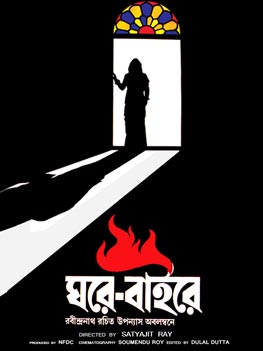
“Ghare Baire” (“The Home and the World” ) is a 1984 Bengali film directed by Satyajit Ray and based on the novel of the same name by Rabindranath Tagore. Ray began the script for it in the 1940s, long before his first film Pather Panchali. It’s a period piece set in 1907 yet deals with still-timely issues such as the tensions between the personal and political, freedom and security, tradition and change, internationalism and imperialism, nationalism and xenophobia, and populism and demagoguery.
I met journalist and friend Rafiq Lutf and cameraman Abdul-Mun’aim Arnous in January 2018 and I was honoured when Rafiq asked me to work with him on his film project, The Veto.
As Dr Shaaban said to me in August 2016, “Western propaganda is paid for in Syrian blood”. This is true. The horrifying bloodshed and loss of life in Syria could never have happened without the colonial media manufacturing consent for another illegal war against a Sovereign nation.
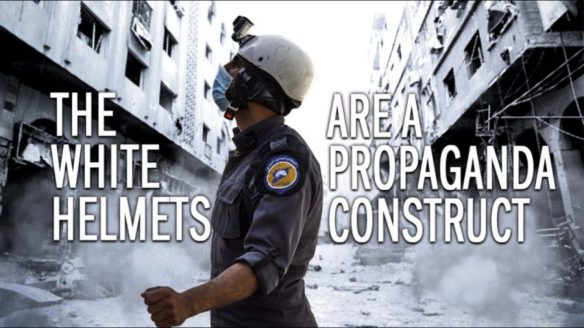
The Veto tracks the evolution of the propaganda campaign waged by Western media against Syria. From Baba Amr in Homs 2011/2012 until the modern day “propaganda construct” – the NATO-member-state funded White Helmets. It honours Russia and China’s vetoes that have consistently defended Syria’s sovereignty and territorial integrity in the UN.
George Orwell said “The most effective way to destroy people is to deny and obliterate their own understanding of their history.” Western media has been tasked with writing the history of the Syrian conflict to serve the aggressors in the US Coalition of terrorism.
As Dr Shaaban also told me:
“The US alliance and its media are focusing on our history, material history, cultural history, identity, our army. Any power that keeps you as an entire state, or any statesman that represents strength or unity will be demonized and destroyed.”
The Veto exposes the criminal intentions of Western media and it archives the progression of the propaganda war waged by the West against Syria. Syrians are writing the history of the Syrian conflict because Syria and her allies have courageously resisted the Imperialist machine.
As Rafiq has said so eloquently “we are the Veto” and we must use it against the Industrial Media Complex in the West. Syria’s history belongs to the Syrians and Syria’s final victory must ensure that Western media is never again given the power to destroy a nation, divide its people and promote international terrorism both military and economic. Watch the film:
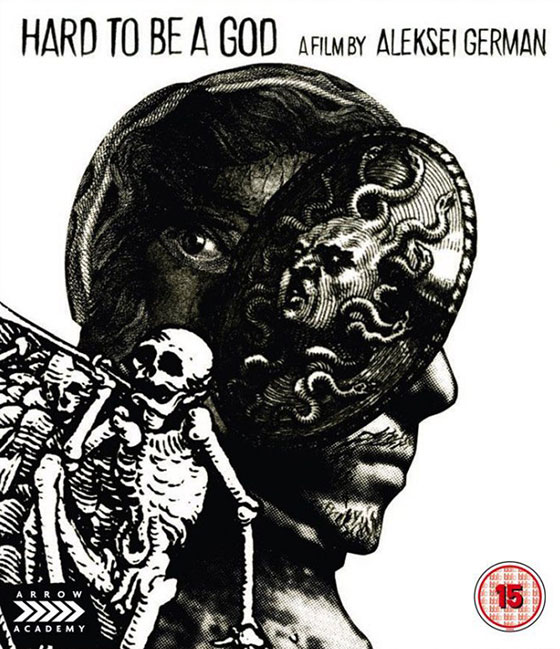
When legendary Russian auteur Aleksei German died in 2013, he left behind this extraordinary final film, a phantasmagoric adaptation of the revered sci-fi novel by the Strugatsky brothers (authors of the source novel for Tarkovsky’s Stalker). Hard to be a God began percolating in German’s consciousness in the mid-1960s, and would actively consume him for the last 15 years of his life.
He brought the film close enough to completion for his wife and son to apply the finishing touches immediately after his passing. Taking place on the planet Arkanar, which is in the midst of its own Middle Ages, the film focuses on Don Rumata (Leonid Yarmolnik), one of a group of Earth scientists who have been sent to Arkanar with the proviso that they must not interfere in the planet’s political or historical development. Treated by the planet’s natives as a kind of divinity, Don Rumata is both godlike and impotent in the face of its chaos and brutality.
As rioting rocks Los Angeles in the year 2028, disgruntled thieves make their way to Hotel Artemis — a 13-story, members-only hospital for criminals. It’s operated by the Nurse, a no-nonsense, high-tech healer who already has her hands full with a French assassin, an arms dealer and an injured cop. As the violence of the night continues, the Nurse must decide whether to break her own rules and confront what she’s worked so hard to avoid.
Directed by Drew Pearce and featuring Jodie Foster, Sterling K. Brown, Sofia Boutella, Jeff Goldblum, Charlie Day, Brian Tyree Henry, Jenny Slate, Dave Bautista, and Zachary Quinto.
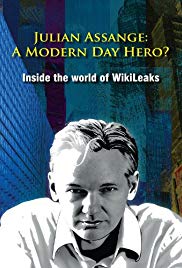
A 3 hour version of the unbiased and informative 2011 documentary about persecuted journalist and activist Julian Assange. Also features Daniel Ellsberg.
A small group of Wikileaks journalists make their way through Central Asia interviewing newspaper editors. Their real goal: to find local media outlets to publish secret US diplomatic cables. This intelligent, guerrilla-style doc follows their fascinating journey from Afghanistan to Manhattan, through the boundaries of free speech and the minds of those who shape our understanding of the world.
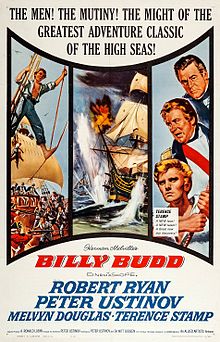
“Billy Budd” (1962) is a British drama produced, directed, and co-written by Peter Ustinov. In this film adaptation of the stage play of Herman Melville’s short novel of the same name, young Billy Budd (Terence Stamp) is conscripted by the British navy during wartime where his charisma and integrity quickly makes him a trusted crew member. However, master-at-arms Claggart (Robert Ryan), secretly jealous of Billy’s natural leadership skills, conspires to frame him for mutiny.
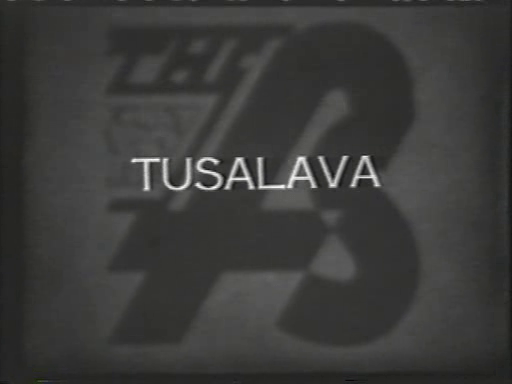
The New Zealand-born artist Leonard Charles Huia Lye (1901-80), better known as Len Lye, is renowned for his work in kinetic sculpture and experimental film, and is widely considered one of the most innovative modernists of the 20th century. Lye’s first film, Tusalava (1929), produced over two years following a move to London, was born of the city’s emerging experimental film scene and Lye’s abiding interest in Maori, Aboriginal and Samoan art. Composed of some 7,000 hand-drawn images, the abstract animation synthesises modern and ancient art as it depicts simple life forms emerging, evolving and coming into conflict. As with the influence of African art on Pablo Picasso, Lye’s use of so-called ‘primitivism’ has been both praised for introducing non-Western perspectives to Western art, and criticised for cultural appropriation. The film was originally paired with a now-lost piano score from the UK-born composer Jack Ellitt. This version features the UK composer Eugene Goossens’s composition Rhythmic Dance(1928), which Lye later suggested as an alternative accompaniment.


 After the Crash