Understanding NATO, Ending War

By Robert J. Burrowes

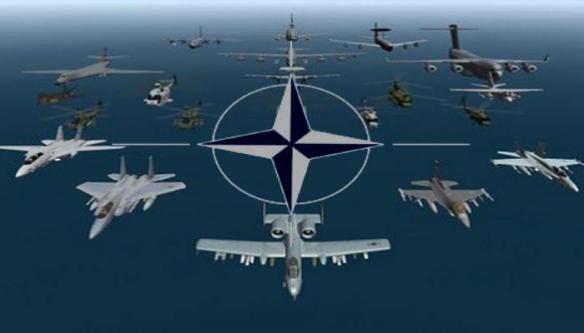
On 4 April 2019, the North Atlantic Treaty Organization, better known as NATO, marked the 70th anniversary of its existence with a conference attended by the foreign ministers of member nations in Washington DC. This will be complemented by a meeting of the heads of state of member nations in London next December.

Coinciding with the anniversary event on 4 April, peace activists and concerned scholars in several countries conducted a variety of events to draw attention to, and further document, the many war crimes and other atrocities committed by NATO (sometimes by deploying its associate and crony terrorist armies – ISIS, Al Qaeda, Al Nusra – recruited and trained by the CIA and funded by Saudi Arabia, other Gulf countries and the US directly or through one or other of its many agencies: see ‘NATO – No Need – NATO-EXIT: The Florence Declaration’), the threat that NATO poses to global peace and security as an appendage of the US military, and to consider ways that NATO might be terminated.

These protests and related activities included several outlined in ‘No To NATO: Time To End Aggressive Militarism’ which also explains how NATO ‘provides a veneer of legality’ when ‘the US is unable to get the United Nations Security Council to approve military action’ and ‘Congress will not grant authority for US military action’ and despite the clearcut fact that NATO has no ‘international legal authority to go to war’, the grounds for which are clearly defined in the Charter of the United Nations and are limited to just two: authorization by the UN Security Council and a response in self-defense to a military attack.

The most significant gathering of concerned scholars was undoubtedly the ‘Exit NATO!’ conference in Florence, Italy, which culminated in the Florence Declaration calling for an end to NATO. See ‘The Florence Declaration: An International Front Calling for NATO-Exit’.

If NATO’s record of military destruction is so comprehensive – in the last 20 years virtually destroying Yugoslavia (balkanized into various successor states), Iraq and Libya, while inflicting enormous damage on many others, particularly Afghanistan and Syria – how did it come into existence and why does it exist now?

The Origin and Functions of NATO

Different authors offer a variety of reasons for the establishment of NATO. For example, Yves Engler argues that two of the factors driving the creation of NATO were ‘to blunt the European Left’ and ‘a desire to bolster colonial authority and bring the world under a US geopolitical umbrella’. See ‘On NATO’s 70th anniversary important to remember its anti-democratic roots’ and ‘Defense of European empires was original NATO goal’.

But few would disagree with Professor Jan Oberg’s brief statement on the origin of NATO: ‘Its raison d’etre… had always and unambiguously been the very existence of the Soviet Union… and its socialist/communist ideology.’ See ‘NATO at 70: An unlawful organisation with serious psychological problems’.

In other words, NATO was established as one response to the deep fear the United States government harbored in relation to the Soviet Union which, despite western propaganda to the contrary and at staggering cost to its population and industrial infrastructure, had led the defeat of Nazi Germany in World War II.

As Professor Michel Chossudovsky elaborates this point: The NATO ‘alliance’ of 29 member states (with Israel also a de facto member), most with US military bases, US military (and sometimes nuclear) weapons and significant or substantial deployments of US troops on their territory, was designed to sustain ‘the de facto “military occupation” of Western Europe’ and to confront the Soviet Union as the US administration orchestrated the Cold War to justify its imperial agenda – global domination guaranteed by massive US military expansion – in service of elite interests (including the profit maximization of the military industrial complex, its fossil fuel and banking corporations, and its media and information technology giants).

While NATO has the appearance of a multinational military alliance, the US controls NATO command structures with the Pentagon dominating NATO decision-making. NATO’s Supreme Allied Commander Europe (SACEUR) and Supreme Allied Commander Atlantic (SACLANT) are Americans appointed by Washington with the NATO Secretary General Jens Stoltenberg performing merely bureaucratic functions.

In light of the above, Chossudovsky observes: ‘Under the terms of the military alliance, NATO member states are harnessed into endorsing Washington’s imperial design of World conquest under the doctrine of collective security.’ Even worse, he argues, given the lies and fabrications that permeate US-NATO military doctrine, key decision-makers believe their own propaganda. ‘Immediately after the Cold War, a new nuclear doctrine was formulated, focused on the preemptive use of nuclear weapons, meaning a nuclear first strike as a means of self-defense.’ More recently: ‘Not only do they believe that tactical nuclear weapons are peace-making bombs, they are now putting forth the concept of a “Winnable Third World War”. Taking out China and Russia is on the drawing board of the Pentagon.’ See ‘NATO-Exit: Dismantle NATO, Close Down 800 US Military Bases, Prosecute the War Criminals’ and ‘NATO Spending Pushes Europe from Welfare to Warfare’.

So, given the ongoing military threats – with an expanding range of horrific weapons (including, to nominate just two, ‘more usable’ low yield nuclear weapons and technologies on ‘weather warfare’ offered by the military/nuclear corporate war planners) that threaten previously unimagined outcomes – and interventions by a US-led NATO, with Venezuela and now Iran the latest countries to be directly threatened – see ‘“Dangerous game”: US, Europe and the “betrayal” of Iran’ – as well as a gathering consensus among peace activists and scholars of the importance of stopping NATO (particularly given the many opportunities, beginning with aborting its origin, that have been missed already as explained by Professor Peter Kuznick: see ‘“Obscene” Bipartisan Applause for NATO in Congress’) how do we actually stop NATO?

While several authors, including those with articles cited above, offer ideas on what should be done about ending NATO, Chossudovsky offers the most comprehensive list of ideas in this regard well aware that stopping NATO is intimately connected to the struggle to end war and globalization. Chossudovsky’s ideas range from organizational suggestions such as integrating anti-war protest with the campaign against the gamut of neoliberal economic ‘reforms’ and the development of a broad based grassroots network independent of NGOs funded by Wall Street, objectives such as dismantling the propaganda apparatus which sustains the legitimacy of war and neoliberalism, challenging the corporate media (including by using alternative media outlets on the Internet), providing encouragement (including information about the illegality of their orders) for military personnel to refuse to fight (perhaps like the GI coffeehouse movement during the US war on Vietnam: see ‘The story of the GI coffeehouses’), working to close down weapons assembly plants and many other suggestions. See Towards a World War III Scenario: The Dangers of Nuclear War and ‘NATO-Exit: Dismantle NATO, Close Down 800 US Military Bases, Prosecute the War Criminals’.

Given my own deep interest in this subject of US/NATO wars and in developing and implementing a strategy that ends their war-making, let me elaborate Chossudovsky’s explanation of NATO’s function in the world today by introducing a book by Professor Peter Phillips.

In his book Giants: The Global Power Elite, Phillips observes that the power elite continually worries about rebellion by the ‘unruly exploited masses’ against their structure of concentrated wealth. This is why the US military empire has long played the role of defender of global capitalism. As a result, the United States has more than 800 military bases (with some scholars suggesting 1,000) in 70 countries and territories. In comparison, the United Kingdom, France, and Russia have about 30 foreign bases. In addition, US military forces are now deployed in 70 percent of the world’s nations with US Special Operations Command (SOCOM) having troops in 147 countries, an increase of 80 percent since 2010. These forces conduct counterterrorism strikes regularly, including drone assassinations and kill/capture raids.

‘The US military empire stands on hundreds of years of colonial exploitation and continues to support repressive, exploitative governments that cooperate with global capital’s imperial agenda. Governments that accept external capital investment, whereby a small segment of a country’s elite benefits, do so knowing that capital inevitably requires a return on investment that entails using up resources and people for economic gain. The whole system continues wealth concentration for elites and expanded wretched inequality for the masses….

‘Understanding permanent war as an economic relief valve for surplus capital is a vital part of comprehending capitalism in the world today. War provides investment opportunity for the Giants and TCC elites and a guaranteed return on capital. War also serves a repressive function of keeping the suffering masses of humanity afraid and compliant.’

As Phillips elaborates: This is why defense of global capital is the prime reason that NATO countries now account for 85 percent of the world’s military spending; the United States spends more on the military than the rest of the world combined.

In essence, ‘the Global Power Elite uses NATO and the US military empire for its worldwide security. This is part of an expanding strategy of US military domination around the world, whereby the US/ NATO military empire, advised by the power elite’s Atlantic Council, operates in service to the Transnational Corporate Class for the protection of international capital everywhere in the world’.

In short, ending NATO requires recognition of its fundamental role in preserving the US empire (at the expense of national sovereignty) and maintaining geopolitical control to defend the global elite’s capital interests – reflected in the capitalist agenda to endlessly expand economic growth – and particularly the profits the elite makes by inciting, supplying and justifying the massively profitable wars that the US/NATO conduct on its behalf.

So if you thought that wars were fought for reasons other than profit (like defense, a ‘just cause’ or ‘humanitarian’ motives) you have missed the essential function of US/NATO wars. And while these wars might be promoted by the corporate media as conflicts over geostrategic considerations (like ‘keeping open the Straits of Hormuz’), access to resources (‘war for oil’) or even markets (so that we can have US junk-food chains in every country on Earth), these explanations are all merely more palatable versions of the word ‘profit’ and are designed to obscure the truth.

And this raises another question worth pondering. Given that wars are the highly organized industrial-scale killing of fellow human beings (for profit) as well as the primary means of expanding the number of fellow human beings who are drawn into the global capitalist economy to be exploited (for profit) and the primary method used for destroying Earth’s climate and environment (for profit), you might wander if those who conduct wars are sane. Well, as even posing the question suggests, the global elite – which drives wars, the highly exploitative capitalist economy and destruction of the biosphere – is quite insane. And there is a brief explanation of this insanity and how it is caused in the article ‘The Global Elite is Insane Revisited’.

Stopping NATO

So if war is precipitated and now maintained perpetually by an insane elite that controls and utilizes the US and NATO military forces to secure profits by killing and exploiting fellow human beings while destroying the climate and environment, how can we stop it? Clearly, not without a sophisticated strategy that addresses each dimension of the conflict.

Hence, my own suggestion is that we do three things simultaneously:

  1. Invite participation in a comprehensive strategy to end war, of which NATO is a symptom
  2. Invite participation in one or another program to substantially reduce consumption to systematically reduce the vital driver of ‘wars for resources’ (which will also reduce the gross exploitation of fellow human beings and humanity’s adverse impact on the biosphere), and
  3. Invite participation in programs to increase human emotional functionality so that an increasing proportion of the human population is empowered to actively engage in struggles for peace, justice and sustainability and to perceive the propaganda of elites and their agents, including NATO functionaries and corporate media outlets, without being deceived by it.

There is a comprehensive strategy to end war explained on this website – Nonviolent Campaign Strategy – which includes identification of the two strategic aims and a basic list of 37 strategic goals to end war. See ‘Strategic Aims’.

There is a strategy for people to systematically reduce their consumption and increase their self-reliance mapped out in ‘The Flame Tree Project to Save Life on Earth’. But if you want a simpler 12-point list which still has strategic impact, see ‘The Earth Pledge’ included in ‘Why Activists Fail’. If you want to better understand why people over-consume, you can find out here: ‘Love Denied: The Psychology of Materialism, Violence and War’.

There is a process for improving your own emotional functionality (which will develop your conscience, courage and capacity to think strategically) described in the article ‘Putting Feelings First’. If you would like to assist children to grow up without emotional dysfunctionalities, consider making ‘My Promise to Children’. If you want to read the foundation behind these two suggestions, see Why Violence? and Fearless Psychology and Fearful Psychology: Principles and Practice.

Complementary to these suggestions, you might like to sign the online pledge of The Peoples Charter to Create a Nonviolent World which links people working to end violence in all contexts.

There is one question that remains unaddressed by the suggestions above: How do we mobilize sufficient people (both anti-war activists and others) and organizations (including anti-war groups and others) to participate in the effort to end elite-sponsored war, including its organizational structures such as NATO?

Given the notorious difficulty of mobilizing activists to act strategically in any context (a much more complex version of the basic problem of mobilizing people), my primary suggestion is that individuals within the anti-war movement invite other individuals and activist groups to choose and campaign on one or more of the strategic goals necessary to end war listed in ‘Strategic Aims’. While some activist groups are already working to achieve one or more of these strategic goals, we clearly need to engage more groups to work on the many other goals so that each of these goals is being addressed. War will not be ended otherwise.

One thing that a section of the climate movement does well is to research and report on those banks, superannuation funds and insurance companies that provide financial services, loans, investment capital and insurance cover to fossil fuel corporations and to then invite concerned people to sign standard letters sent to these organizations requesting them to cease their support of fossil fuels. The anti-war movement could usefully emulate this tactic (on a far wider scale than has existed previously) in relation to weapons corporations and to invite individuals and organizations everywhere to boycott banks, superannuation funds and insurance companies with any involvement in the weapons industry.

But this is just one simple tactic (involving no risk and little effort) on a small but important range of ‘targets’ in the anti-war struggle. Unfortunately, there are plenty more targets that need our attention and that will require more commitment than signing a letter given that, for example, essential funding for the weapons industry is supplied by government procurement programs using your taxes.

Similarly, we need individuals and groups working to mobilize people to substantially reduce their consumption, and individuals and groups working to mobilize people to prioritize their emotional well-being (the foundation of their courage to act conscientiously and strategically in resisting war, exploitation and destruction of the biosphere generally). If we do not undertake these complementary but essential programs, our efforts to end war will be endlessly undermined by our own fear and over-consumption.

Because, in the final analysis, it is our fearfully surrendered tax dollars and our dollars spent consuming the resources seized in wars that will ensure that elite-driven wars for profit by the US and NATO will be financially sustained, whatever words we utter and actions we take.

So our strategy must address this fear and over-consumption too if it is to have the sophistication and comprehensiveness necessary to shut down NATO and end war.


Biodata: Robert J. Burrowes has a lifetime commitment to understanding and ending human violence. He has done extensive research since 1966 in an effort to understand why human beings are violent and has been a nonviolent activist since 1981. He is the author of Why Violence? His email address is flametree@riseup.net and his website is here.

Freedom Rider: U.S. Wages War Against the World

By Margaret Kimberly

Source: Black Agenda Report

The U.S. “troika of tyranny,” Trump, Bolton and Pompeo, are making things up as they go along, seeking to bend the planet to their lawless will.

“The activists who chose to protect the Venezuelan embassy from Guaido and the other Venezuelan traitors are showing us the way to move forward.”

This columnist has spent many years predicting a United States war on Iran. There is now a president who may finally make good on that long expressed threat. Donald Trump is deep in the thrall of Saudi Arabia and Israel, the two nations that pose the greatest risk to Iran. He happily does their bidding and is in a position to bring the sick neocon fantasy to reality.

But the U.S. excels at nothing except creating misery for millions of people and raising the risk of an all out hot war.  Cuba recently instituted rationing after Trump returned to the bad old days of strict sanctions enacted against that nation. More than 40,000 Venezuelans have lost their lives as a result of the crushing sanctions imposed on that country. Iran suffered catastrophic flooding but not one country would provide them with needed aid because U.S. sanctions prevented them from doing so.

“More than 40,000 Venezuelans have lost their lives as a result of the crushing sanctions.”

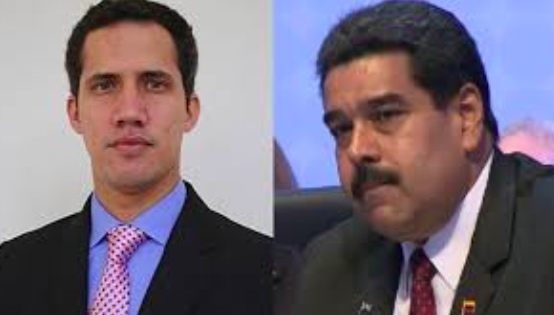
Aside from starving civilians and depriving them of medical care, the U.S. can’t do much else that doesn’t create dangerous consequences. The latest regime change attempt failed miserably and exposed the limits of U.S. power.  The Venezuelan coup attempt was a complete farce . Hand-picked puppet Juan Guaido never had more than 25 soldiers on his side, and those few were tricked into showing up for what amounted to a photo-op.

In the interim, National Security Adviser John Bolton and Secretary of State Pompeo have proven themselves to be the worst in a long line of bad foreign policy decision making. First they accused Iran of some unspecified aggressive act and sent a fleet of ships to make their case for a war of aggression. Then Pompeo scheduled meetings with Russian foreign minister Sergei Lavrov to be followed by talks with Vladimir Putin himself. But he chose to cut short his time in Russia in order to meet with Europeans and enlist their support for action against Iran.

“Hand-picked puppet Juan Guaido never had more than 25 soldiers on his side.”

All of the bluster, meeting changes and dispatching navy vessels to the Persian gulf prove one important point. The U.S. “troika of tyranny,” Trump, Bolton and Pompeo, are making things up as they go along. They picked a trade fight with China that they could not win. They want regime change in Iran and Venezuela but they won’t get the results they want even if they carry out military attacks.

In the meantime they fall back on the old tricks of false flags, in this case blaming Iran for a mysterious and conveniently timed oil tanker explosion in the United Arab Emirates. The Saudi puppets are obviously part of the plan and right on cue claim to have been sabotaged .

The United States has willing vassals such as the NATO member states. It has the biggest military in the world. It can attack Venezuela or Iran but faces serious consequences should it do so. Iran and Venezuela have friends, namely Russia and China. Those two countries have developed a strong alliance in order to protect themselves from the crazed and unpredictable Americans.

“They fall back on the old tricks of false flags.”

The U.S. continues to up the ante with phony requests to attack Venezuela allegedly coming from the dupes who thought the United States would put them in power. It isn’t coincidental that the activists protecting the Venezuelan embassy were expelled at the same time.

The evil war mongers are very stupid but that it isn’t a cause for celebration. Unintended consequences have already lead to two world wars and millions of dead.  Unfortunately no one who ought to educate the public on this subject are doing what they should. The corporate media always support presidents at war. Even supposedly liberal outlets have spent years demonizing Russia, Venezuela and Iran. In so doing they have made the population ignorant and or blood thirsty. Democrats in congress are equally imperialist and will say nothing as the government plans a humanitarian catastrophe. At most they will mutter that Trump must ask for their approval before killing thousands of people. Instead they carry on the discredited Russiagate story but oppose none of the things that actually make the Trump administration so dangerous.

“At most Democrats will mutter that Trump must ask for their approval before killing thousands of people.”

But Russiagate and phony claims of a constitutional crisis were intentionally created for this moment. When the United States most needs détente and a lessening of tensions, the lies meant to make Russia look like an aggressor are repeated and make war more likely.

Only the people can lead the United States away from disaster. The activists who chose to protect the Venezuelan embassy from Guaido and the other Venezuelan traitors are showing us the way to move forward. Leftish Democrats won’t help us. The media will continue to lie in service to the state. The “resistance” aren’t angry about anything except a faux scandal. Those of us who want peace will have to say so and demand that our representatives work for the people and not for the cause of war and suffering. There will be no saviors for this country or for the rest of the world. We can only rely on ourselves.

Corporate Media Target Gabbard for Her Anti-Interventionism—a Word They Can Barely Pronounce

Tulsi Gabbard being asked by CBS‘s Stephen Colbert (3/11/19) why she doesn’t see the US as a “force for good in the world.”

By Owen Marsh

Source: FAIR

Presidential hopeful Tulsi Gabbard has not garnered much press coverage since announcing her bid on February 2; she’s the 13th-most-mentioned Democratic candidate on TV news, according to FAIR’s most recent count (4/14/19).

But when corporate media do talk about the Hawaii congressmember, they tend to reveal more about themselves than about her.

A veteran of the Iraq War, Gabbard is centering her presidential campaign around anti-interventionism (2/3/19): the belief that US interference in foreign countries, especially in the form of regime-change wars, increases the suffering of the citizens in those countries.

When corporate outlets talk about this anti-interventionist position, they primarily use it to negatively characterize the candidates who espouse it. Few in establishment media seem interested in going any deeper or considering the veracity of arguments raised by anti-interventionists.

The Washington Post (1/15/19) listed Gabbard’s anti-interventionism as a factor that hurts her electability in a video titled, “Why Some See Tulsi Gabbard as a Controversial 2020 Candidate.” Part of the video’s explanation: “The congresswoman has raised concern among Democrats in the past when she criticized Obama’s strategy on Iran, ISIS and Syria.”

CBS News (2/4/19) briefly interviewed Honolulu Civil Beats reporter Nick Grube regarding Gabbard’s campaign announcement. The anchors had clearly never encountered the term anti-interventionism before, struggling to even pronounce the word, then laughing and saying it “doesn’t roll off the tongue.” When asked to define the candidate’s position, Grube equated it to President Trump’s foreign policy. But “America First” rallying cries aside, it hardly seems accurate to call Trump an anti-interventionist, given his administration’s regime change efforts in Venezuela, his unilateral reimposition of sanctions on Iran (FAIR.org5/2/19) and his escalation of the drone wars (Daily Beast11/25/18).

When Gabbard appears on talkshows, she is typically on the receiving end of baseless questions coated in assumptions of military altruism. Gabbard appeared on ABC’s The View (2/20/19) and articulated her argument that US intervention does more harm than good to the people purportedly being helped. Rather than respond to any of the points she raised, however, the hosts resorted to the kinds of shallow questions that have been supporting interventionism for decades.

Sunny Hostin asked, “So should we not get involved when we see atrocities abroad?” Fellow panelist Ana Navarro elaborated:

I’m very troubled by the tweets about Venezuela that you’ve put out…. [Maduro] is not allowing humanitarian aid, he is a thug, he is a dictator, he is corrupt. And I am very supportive of what the United States is doing right now…. Why are you so against intervention in Venezuela?

On CBS’s Late Show With Stephen Colbert (3/11/19), the host resorted to old-fashioned American exceptionalism and Cold War–style paranoia to counter the congressmember:

Nature abhors a vacuum. If we are not involved in international conflicts, or trying to quell international conflicts, certainly the Russians and the Chinese will fill that vacuum…. That might destabilize the world, because the United States, however flawed, is a force for good in the world, in my opinion.

Comments like these may seem harmless; why not, after all, fight “atrocities”? In fact, they contain the same language that media have used for decades to justify interventionism and quiet dissenters.

Colbert’s exceptionalism argument, in particular, is reminiscent of the centuries-old vision of the US as a “shining city upon a hill.” It’s also a frame historically employed by media to rationalize the country’s foreign policy. As communications scholar Andrew Rojecki wrote in his 2008 research article (Political Communication2/4/08) on elite commentary of George W. Bush’s military interventions in Afghanistan and Iraq, “Over the course of the two crises, American exceptionalist themes made up a constant background presence in elite commentary and opinion.”

In other words, the assurance that Colbert has that the US has been “a force for good in the world” has paved the way for some of the greatest disasters of the modern world, including the 17-year-old war in Afghanistan (or almost 40 years, if you date from the US deliberately provoking the 1979 Soviet intervention) and the half-million-plus killed in the Iraq War. Other difficult cases for proponents of intervention include Libya, where removing an authoritarian ruler devastated the nation and brought back slave markets, and Syria, where hawks evade responsibility for the hundreds of thousands killed in a US-backed effort to overthrow the government by pretending that the US has failed to intervene.

Currently, in Venezuela, where Navarro is “very supportive of what the United States is doing,” Washington has imposed sanctions that are blamed for killing 40,000 in the last two years (CEPR, 4/25/19). Meanwhile, the US offers as a publicity stunt a convoy with “humanitarian aid” valued at less than 1 percent of the assets it has blocked Venezuela from spending.

Another easy to way to discredit anti-war critics is to accuse them of siding with the enemy (FAIR.org4/1/06). So it’s not much of a surprise that when Gabbard gets mentioned in establishment news, a comment about her meeting with Syrian President Bashar al-Assad is usually soon to follow.

Gabbard traveled to Syria in 2017, on what her office called a “fact-finding mission.” During her trip, she met and spoke with al-Assad, prompting the media to question her loyalties ever since, equating her meeting to tacit support of his regime. (Gabbard calls Assad a “brutal dictator,” but says US efforts to overthrow his government are “illegal and counterproductive.”)

New York Times columnist Bari Weiss appeared on the popular Joe Rogan Experience podcast (1/21/19) and confidently called Gabbard an “Assad toadie.” When Rogan asked her what “toadie” meant, she couldn’t define the word, asking the show’s producer to look it up for her. (It means “sycophant”).

The New York Times (1/11/19) and Associated Press (Washington Post5/2/19) both identified Gabbard’s meeting with Assad as a factor that made her a controversial candidate. In an article about Gabbard’s apparent fall from grace within the Democratic party, Vox (1/17/19) characterized Gabbard’s opposition to the funding of Syrian rebels as “quasi-support for Syrian President Bashar al-Assad, the dictator responsible for the outbreak of the Syrian civil war and the conflict’s worst atrocities.”

Interviewers from MSNBC’s Morning JoeABC’s The ViewCBS’s Late Show and CNN’s Van Jones Show all asked Gabbard to justify her meeting with Assad, or pressured her to renounce him as an enemy. None were interested in asking even the most basic question of substance, “What did you and Assad talk about during your meeting?” The implication is clear: When it comes to those designated by the state as official enemies, communication is suspect.

So perhaps the simplest explanation for corporate media’s treatment of Gabbard is that she opposes the kind of intervention that they have historically been complicit in.

FAIR (e.g, 4/913/19/078/11) has documented mainstream media’s consistent support for US intervention across the globe. FAIR has also been documenting corporate media’s support for intervention in Venezuela, finding recently that zero percent of elite commentators opposed regime change in that country (4/30/19) and noting corporate media’s harsh admonishment of Bernie Sanders after he tepidly questioned US intervention in Venezuela (3/5/19).

Gabbard’s campaign is just one small piece of a larger phenomenon in the mainstream media: Space for dissenting opinions on the US’s neoliberal, interventionist foreign policies must not be allowed.

Who knows? Who cares? If the Media Claim 50 Countries Reject Venezuela’s Elected President and Repeat It Enough It Must Be True

Wno’s the president of Venezuela? The elected Nicolas Maduro or the self-proclaimed unelected Juan Guaido?

By Dave Lindorff

Source: This Can’t Be Happening

American media still refer to Juan Guaidó, America’s hand-picked “legitimate leader” or “legitimate president” of Venezuela, as having an “administration.”

The truth is that his “administration” — consisting of advisors and other opposition leaders — are all either arrested and being held by the government, hiding, seeking asylum in various foreign embassies (Spanish, Italian, Brazilian and Argentinian) in the capital of Caracas, or have fled to other countries like Brazil and Colombia.

Guaidó, apparently a government of one, has so far avoided arrest probably because the elected Venezuelan President Maduro doesn’t want to give the US an excuse to try and rescue him, or to launch military actions of some kind against Venezuela as the White House keeps threatening to do.

Clearly, in calling for US military intervention, Guaidó has both demonstrated almost his total lack of backing among the masses of Venezuelan people, as well as his desperation, given Latin American’s visceral resentment of US interventions in their country, all of which have been designed to put autocrats or even military juntas in power, and many of which have openly overthrown popularly elected governments, as in Guatemala, Chile, Brazil, Nicaragua, Haiti, Dominican Republic, and elsewhere.

None of this gets reported in the US. Only recently has the New York Times, always a reliable backer of US imperial policy in Latin America, at least hinted at the possibility that the reason Maduro remains president and that Guaidó’s efforts to oust him are failing  so abysmally could be that the Venezuelan people want him to stay president, and do not want a US-backed coup or a US military intervention to replace him.

At this point the huffing and puffing coming from Secretary of State Mike Pompeo and especially from the White House National Security Advisor and chief militarist blowhard John Bolton, are looking pretty pathetic, with Bolton trying to sow dissension and distrust by hinting that Maduro “better not trust” his own generals’ loyalty, and by offering rewards to those generals willing to abandon Maduro.

It is an indication of the United States’s declining power and influence in Latin America that few outside the US with its insular mass media believe that the US would or even could successfully invade Venezuela and impose a government on that country of 32 million (a number that keeps declining as the upper middle class and rich flee).

If anything, US sabotage and threats and US backing for a government of the wealthy are probably galvanizing support for Maduro. While people in the US, if they are paying any attention at all to events in Venezuela, may believe that Maduro is a corrupt thug, people in Venezuela itself, and in most of Latin America know full well that the main problems in that oil-rich country have to do with the collapse in oil prices since the heady days of Hugo Chavez when it was going for $100 a barrel, to American efforts to block Venezuela from exporting its oil now, and to freeze or even seize Venezuelan assets and oil receipts from the oil it does manage to export, and to other forms of economic warfare engaged in by the United States. As in Cuba, this kind of strategy by the US only works to build support for the country’s existing government.

At some point Guaidó is going to go. He will either be written off by the US media — his main backer — or will be arrested. Probably the latter will follow the former since once he’s recognized as an impotent charlatan, his arrest will not make him a martyr for the opposition. Already he has lost what public support he had as Venezuela’s wealthy abandon the country for Florida. As well, the “50 countries” that we in the US keep hearing about which supposedly back Guaidó as Venezuela’s “legitimate leader” are realizing that they were hoodwinked by the US. The are now mostly calling for a calmer response to the crisis in Venezuela, and are refusing to buy into US military threats against the Maduro government. Meanwhile nobody in the US media mentions that over 140 countries in the world support Maduro as the leader of Venezuela. 

In truth it’s impossible to find that list of “more than 50 countries” backing a self-proclaimed and unelected Guaidó as Venezuela’s president. The closest I could come by running google searches was a map produced by Bloomberg News listing 13 countries besides the US as supporting Guaidó. These included Canada, the UK, Guatemala, Honduras, Costa Rica, Panama, Ecuador, Colombia, Peru, Chile, Argentina, Paraguay and Brazil. That is 13 plus the United States. Listed as supporting Maduro as elected President are Russia, China, Turkey, Bolivia, and Cuba, though I believe Bloomberg neglected to mention Nicaragua, a strong Maduro backer, which would make it six. All of Africa and much of Asia was left as “no opinion,” though in fact that means they are continuing to recognize the current Maduro government. 

For a time, most of the countries of Europe were lining up behind Guaidó, particularly after Germany announced that it was recognizing him as the new interim leader of Venezuela in late January, and after it ousted the country’s ambassador, but then by late March Germany was having second thoughts, and rejected the person sent there by Guaidó to assume the position of Venezuelan ambassador. At this point, except for the UK, the countries of Europe, along with Mexico and Uruguay, are simply calling for a dialogue and a negotiated solution to the Venezuela political crisis, and in addition to opposing any talk of military action or a coup, are seeking nothing more than a new election (which Maduro would probably win, given the alternative of the return of a government of the rich). The Europeans are no longer really backing Guaidó.

The reporters who continue to refer to “more than 50 countries” calling for Maduro’s ouster all must be using the same wrong or outdated news clip or some exaggerated and dated State Department press release.  (I asked the State Department for an updated list today but so far none has been forthcoming, though it would appear such a list shouldn’t take long to compile given how short it must be.)

Understanding the American Dictatorship

By Eric Zuesse

Source: Washington’s Blog

The American dictatorship is by the aristocracy of the country’s 585 billionaires, and has been scientifically proven beyond any doubt, now, not only in the classic Gilens and Page study, which examined thousands of bills in Congress and their money-backers and their ultimate outcomes (passage or failure to pass), during the studied period, 1981-2002. But also another (though less rigorous) study suggests that this control of the U.S. Government by America’s billionaires is getting even worse. So, America is clearly a dictatorship, by America’s aristocracy.

This is not just one or the other of America’s two Parties — Democrats versus Republicans — representing only the super-rich. Both of the Parties do, but the Democratic Party represents liberal billionaires, while the Republican Party represents conservative billionaires. Each Party represents a different faction of the billionaires.

The conservative faction is well represented by Donald Trump, whose swash-buckling rhetoric — “I’d take the oil!” in Iraq, and in Syria, and in Venezuela, etc. — is more blatantly uncouth than Barack Obama’s more gentlemanly rhetoric, but not basically different than Obama’s even bloodier grabbing of Honduras, Ukraine, Libya, and Syria were. The prominent Obama-backer George Soros, however, was demanding that banks, backed up by taxpayers, should kick in an extra $50 billion to enable him and other billionaires to exploit that country successfully. (He said this while Ukraine was spending most of the money that it did have trying to conquer the people in the far-eastern part of the country who refused to accept Obama’s imposed ruler who replaced the democratically elected President for whom they had voted over 90%.) So, ‘liberal’ and ‘conservative’ are both neoconservative, or the old term for that was “imperialistic.” In such matters (international matters), the billionaires very much are unified, and their news-media also are. And they all do represent the billionaires — never the public.

One billionaire, the owner of the fake-progressive “The Intercept” news-site, was exposed recently for his grabbingness. The excellent and honest journalists Alexander Rubinstein and Max Blumenthal headlined at one of the few honest news-media, Mint Press, “Pierre Omidyar’s Funding of Pro-Regime-Change Networks and Partnerships with CIA Cutouts”, and reported:

A select group of national news ‘stakeholders’ gathered at an undisclosed location for what was described as a “semi-secret” workshop somewhere in Canada on January 26. The meeting had been convened to determine how and to whom a ‘news industry bailout’ of $645 million in Canadian government subsidies to private and supposedly independent media outlets would be disbursed. … 

Jesse Brown, a Canadian journalist who participated in the meeting, complained that the first thing he noticed about it “was that one major public ‘stakeholder’ wasn’t represented: the public.” Inside what amounted to a smoke filled room that was off limits to most Canadian citizens, Ben Scott — a former Obama administration official who also served in Hillary Clinton’s State Department — presided over the discussions. Today, as the director of policy and advocacy for the Omidyar Network, Scott works for one of the most quietly influential billionaires. …

Pierre Omidyar, the ebay founder [is] best known for his sponsorship of The Intercept, a flashy progressive publication that possesses the classified documents exfiltrated by NSA whistleblower Edward Snowden. Unlike rival Silicon Valley billionaires Peter Thiel, Jeff Bezos, and Eric Schmidt, Omidyar has mostly managed to keep his influential role in media below the radar. … Samantha Power, the former U.S. ambassador to the UN and liberal interventionist guru, has explicitly praised Omidyar as someone who is following in the footsteps of Soros.

While Samantha Power was Obama’s U.N. Representative, she joined with two other countries, Ukraine and Canada, to oppose a U.N. resolution condemning nazism and all forms of racism. (Only three nations opposed it at the U.N., and these were the three.) When Donald Trump became America’s President, his U.N. Representative, Nikki Haley, likewise was one of only three nations at the U.N. who opposed a similar resolution.

So, perhaps the only people in U.S. and Canada who don’t know that their Governments are among only three that march ideologically in today’s lockstep with the Axis powers that lost World War II, are those three nazi-supporting countries’ own citizens. What media will tell their citizens the truth about this? Who owns the major media, and who finances politicians’ careers there, in the three-or-so brazenly fascist and even pro-nazi countries — the three that vote shamelessly for it?

The extraordinarily fine Rubenstein-Blumenthal article continued:

While backing media outlets around the world that produce news and commentary, Omidyar supports a global cartel of self-styled fact-checking groups that determine which outlets are legitimate and which are “fake.” He has also thrown his money behind murky initiatives like the non-profit backing New Knowledge, the data firm that waged one of the most devious disinformation campaigns in any recent American election campaign; and he is a key backer of the International Consortium of Investigative Journalism (ICIJ), the outfit that holds the Panama Papers and oversees the strategic dissemination of that leaked trove of financial files to hand-picked journalists.

And this is only on the liberal side of the U.S. regime.

The present article is being submitted to all major and most of the smaller national news media throughout the U.S. and its allied countries. The sites that publish it will be the only national and international news-media worth subscribing to, because all the rest are simply censoring-out these basic truths — and are labeling as ‘fake news’ the few honest sites, such as the one you are reading now, the ones that publish such news.

The American dictatorship can’t be accurately understood by relying mainly upon the ‘news’ that the billionaires’ sites publish. That’s very sad, but it’s true. It’s bad news, but it is real news, and not (like the billionaires’ sites call it but actually they themselves are) “fake news” sites. Maybe they publish non-controversial news honestly, but that’s about all of the truth that their owners will allow.

The American dictatorship is increasingly becoming a lock-down against truth. No matter how ugly one might imagine it to be, it’s worse. No solution to this vast problem is being presented here, but the first step toward solving any problem is to understand accurately what that problem actually is, and how it actually functions. In the present case, it’s no malfunction. It’s not a mistake. It’s instead a plan. And it is very competently being imposed — by the billionaires’ agents, against the public. That’s how dictatorships normally are imposed, and that’s how they’re imposed here. Mussolini called it “corporationism.” The U.S. has become its center.

Decriminalizing the Drug War?

Calculating the Damage from a Century of Drug Prohibition

By Alfred W. McCoy

Source: TomDispatch.com

We live in a time of change, when people are questioning old assumptions and seeking new directions. In the ongoing debate over health care, social justice, and border security, there is, however, one overlooked issue that should be at the top of everyone’s agenda, from Democratic Socialists to libertarian Republicans: America’s longest war. No, not the one in Afghanistan. I mean the drug war.

For more than a century, the U.S. has worked through the U.N. (and its predecessor, the League of Nations) to build a harsh global drug prohibition regime — grounded in draconian laws, enforced by pervasive policing, and punished with mass incarceration. For the past half-century, the U.S. has also waged its own “war on drugs” that has complicated its foreign policy, compromised its electoral democracy, and contributed to social inequality. Perhaps the time has finally come to assess the damage that drug war has caused and consider alternatives.

Even though I first made my mark with a 1972 book that the CIA tried to suppress on the heroin trade in Southeast Asia, it’s taken me most of my life to grasp all the complex ways this country’s drug war, from Afghanistan to Colombia, the Mexican border to inner-city Chicago, has shaped American society. Last summer, a French director doing a documentary interviewed me for seven hours about the history of illicit narcotics. As we moved from the seventeenth century to the present and from Asia to America, I found myself trying to answer the same relentless question: What had 50 years of observation actually drilled into me, beyond some random facts, about the character of the illicit traffic in drugs?

At the broadest level, the past half-century turns out to have taught me that drugs aren’t just drugs, drug dealers aren’t just “pushers,” and drug users aren’t just “junkies” (that is, outcasts of no consequence). Illicit drugs are major global commodities that continue to influence U.S. politics, both national and international. And our drug wars create profitable covert netherworlds in which those very drugs flourish and become even more profitable. Indeed, the U.N. once estimated that the transnational traffic, which supplied drugs to 4.2% of the world’s adult population, was a $400 billion industry, the equivalent of 8% of global trade.

In ways that few seem to understand, illicit drugs have had a profound influence on modern America, shaping our international politics, national elections, and domestic social relations. Yet a feeling that illicit drugs belong to a marginalized demimonde has made U.S. drug policy the sole property of law enforcement and not health care, education, or urban development.

During this process of reflection, I’ve returned to three conversations I had back in 1971 when I was a 26-year-old graduate student researching that first book of mine, The Politics of Heroin: CIA Complicity in the Global Drug Trade. In the course of an 18-month odyssey around the globe, I met three men, deeply involved in the drug wars, whose words I was then too young to fully absorb.

The first was Lucien Conein, a “legendary” CIA operative whose covert career ranged from parachuting into North Vietnam in 1945 to train communist guerrillas with Ho Chi Minh to organizing the CIA coup that killed South Vietnamese President Ngo Dinh Diem in 1963. In the course of our interview at his modest home near CIA headquarters in Langley, Virginia, he laid out just how the Agency’s operatives, like so many Corsican gangsters, practiced the “clandestine arts” of conducting complex operations beyond the bounds of civil society and how such “arts” were, in fact, the heart and soul of both covert operations and the drug trade.

Second came Colonel Roger Trinquier, whose life in a French drug netherworld extended from commanding paratroopers in the opium-growing highlands of Vietnam during the First Indochina War of the early 1950s to serving as deputy to General Jacques Massu in his campaign of murder and torture in the Battle of Algiers in 1957. During an interview in his elegant Paris apartment, Trinquier explained how he helped fund his own paratroop operations through Indochina’s illicit opium traffic. Emerging from that interview, I felt almost overwhelmed by the aura of Nietzschean omnipotence that Trinquier had clearly gained from his many years in this shadowy realm of drugs and death.

My last mentor on the subject of drugs was Tom Tripodi, a covert operativewho had trained Cuban exiles in Florida for the CIA’s 1961 Bay of Pigs invasion and then, in the late 1970s, penetrated mafia networks in Sicily for the U.S. Drug Enforcement Administration. In 1971, he appeared at my front door in New Haven, Connecticut, identified himself as a senior agent for the Treasury Department’s Bureau of Narcotics, and insisted that the Bureau was worried about my future book. Rather tentatively, I showed him just a few draft pages of my manuscript for The Politics of Heroin and he promptly offered to help me make it as accurate as possible. During later visits, I would hand him chapters and he would sit in a rocking chair, shirt sleeves rolled up, revolver in his shoulder holster, scribbling corrections and telling remarkable stories about the drug trade — like the time his Bureau found that French intelligence was protecting the Corsican syndicates smuggling heroin into New York City. Far more important, though, through him I grasped how ad hoc alliances between criminal traffickers and the CIA regularly helped both the Agency and the drug trade prosper.

Looking back, I can now see how those veteran operatives were each describing to me a clandestine political domain, a covert netherworld in which government agents, military men, and drug traders were freed from the shackles of civil society and empowered to form secret armies, overthrow governments, and even, perhaps, kill a foreign president.

At its core, this netherworld was then and remains today an invisible political realm inhabited by criminal actors and practitioners of Conein’s “clandestine arts.” Offering some sense of the scale of this social milieu, in 1997 the United Nations reported that transnational crime syndicates had 3.3 million members worldwide who trafficked in drugs, arms, humans, and endangered species. Meanwhile, during the Cold War, all the major powers — Britain, France, the Soviet Union, and the United States — deployed expanded clandestine services worldwide, making covert operations a central facet of geopolitical power. The end of the Cold War has in no way changed this reality.

For over a century now, states and empires have used their expanding powers for moral prohibition campaigns that have periodically transformed alcohol, gambling, tobacco, and, above all, drugs into an illicit commerce that generates sufficient cash to sustain covert netherworlds.

Drugs and U.S. Foreign Policy

The influence of illicit drugs on U.S. foreign policy was evident between 1979 and 2019 in the abysmal failure of its never-ending wars in Afghanistan. Over a period of 40 years, two U.S. interventions there fostered all the conditions for just such a covert netherworld. While mobilizing Islamic fundamentalists to fight the Soviet occupation of that country in the 1980s, the CIA tolerated opium trafficking by its Afghan mujahedeen allies, while arming them for a guerrilla war that would ravage the countryside, destroying conventional agriculture and herding.

In the decade after superpower intervention ended in 1989, a devastating civil war and then Taliban rule only increased the country’s dependence upon drugs, raising opium production from 250 tons in 1979 to 4,600 tons by 1999. This 20-fold increase transformed Afghanistan from a diverse agricultural economy into a country with the world’s first opium monocrop — that is, a land thoroughly dependent on illicit drugs for exports, employment, and taxes. Demonstrating that dependence, in 2000 when the Taliban banned opium in a bid for diplomatic recognition and cut production to just 185 tons, the rural economy imploded and their regime collapsed as the first U.S. bombs fell in October 2001.

To say the least, the U.S. invasion and occupation of 2001-2002 failed to effectively deal with the drug situation in the country. As a start, to capture the Taliban-controlled capital, Kabul, the CIA had mobilized Northern Alliance leaders who had long dominated the drug trade in northeast Afghanistan, as well as Pashtun warlords active as drug smugglers in the southeastern part of the country. In the process, they created a post-war politics ideal for the expansion of opium cultivation.

Even though output surged in the first three years of the U.S. occupation, Washington remained uninterested, resisting anything that might weaken military operations against the Taliban guerrillas. Testifying to this policy’s failure, the U.N.’s Afghanistan Opium Survey 2007 reported that the harvest that year reached a record 8,200 tons, generating 53% of the country’s gross domestic product, while accounting for 93% of the world’s illicit narcotics supply.

When a single commodity represents over half of a nation’s economy, everyone — officials, rebels, merchants, and traffickers — is directly or indirectly implicated. In 2016, the New York Times reported that both Taliban rebels and provincial officials opposing them were locked in a struggle for control of the lucrative drug traffic in Helmand Province, the source of nearly half the country’s opium. A year later, the harvest reached a record 9,000 tons, which, according to the U.S. command, provided 60% of the Taliban’s funding. Desperate to cut that funding, American commanders dispatched F-22 fighters and B-52 bombers to destroy the insurgency’s heroin laboratories in Helmand — doing inconsequential damage to a handful of crude labs and revealing the impotence of even the most powerful weaponry against the social power of the covert drug netherworld.

With unchecked opium production sustaining Taliban resistance for the past 17 years and capable of doing so for another 17, the only U.S. exit strategy now seems to be restoring those rebels to power in a coalition government — a policy tantamount to conceding defeat in its longest military intervention and least successful drug war.

High Priests of Prohibition

For the past half-century, the ever-failing U.S. drug war has found a compliant handmaiden at the U.N., whose dubious role when it comes to drug policy stands in stark contrast to its positive work on issues like climate change and peace-keeping.

In 1997, the director of U.N. drug control, Dr. Pino Arlacchi, proclaimed a 10-year program to eradicate all illicit opium and coca cultivation from the face of the planet, starting in Afghanistan. A decade later, his successor, Antonio Maria Costa, glossing over that failure, announced in the U.N.’s World Drug Report 2007 that “drug control is working and the world drug problem is being contained.” While U.N. leaders were making such grandiloquent promises about drug prohibition, the world’s illicit opium production was, in fact, rising 10-fold from just 1,200 tons in 1971, the year the U.S. drug war officially started, to a record 10,500 tons by 2017.

This gap between triumphal rhetoric and dismal reality cries out for an explanation. That 10-fold increase in illicit opium supply is the result of a market dynamic I’ve termed “the stimulus of prohibition.” At the most basic level, prohibition is the necessary precondition for the global narcotics trade, creating both local drug lords and transnational syndicates that control this vast commerce. Prohibition, of course, guarantees the existence and well-being of such criminal syndicates which, to evade interdiction, constantly shift and build up their smuggling routes, hierarchies, and mechanisms, encouraging a worldwide proliferation of trafficking and consumption, while ensuring that the drug netherworld will only grow.

In seeking to prohibit addictive drugs, U.S. and U.N. drug warriors act as if mobilizing for forceful repression could actually reduce drug trafficking, thanks to the imagined inelasticity of, or limits on, the global narcotics supply. In practice, however, when suppression reduces the opium supply from one area (Burma or Thailand), the global price just rises, spurring traders and growers to sell off stocks, old growers to plant more, and new areas (Colombia) to enter production. In addition, such repression usually only increases consumption. If drug seizures, for instance, raise the street price, then addicted consumers will maintain their habit by cutting other expenses (food, rent) or raising their income by dealing drugs to new users and so expanding the trade.

Instead of reducing the traffic, the drug war has actually helped stimulate that 10-fold increase in global opium production and a parallel surge in U.S. heroin users from just 68,000 in 1970 to 886,000 in 2017.

By attacking supply and failing to treat demand, the U.N.-U.S. drug war has been pursuing a “solution” to drugs that defies the immutable law of supply and demand. As a result, Washington’s drug war has, in the past 50 years, gone from defeat to debacle.

The Domestic Influence of Illicit Drugs

That drug war has, however, incredible staying power. It has persisted despite decades of failure because of an underlying partisan logic. In 1973, while President Richard Nixon was still fighting his drug war in Turkey and Thailand, New York’s Republican governor, Nelson Rockefeller, enacted the notorious “Rockefeller Drug Laws.” Those included mandatory penalties of 15 years to life for the possession of just four ounces of narcotics.

As the police swept inner-city streets for low-level offenders, annual prison sentences in New York State for drug crimes surged from only 470 in 1970 to a peak of 8,500 in 1999, with African-Americans representing 90% of those incarcerated. By then, New York’s state prisons held a previously unimaginable 73,000 people. During the 1980s, President Ronald Reagan, a conservative Republican, dusted off Rockefeller’s anti-drug campaign for intensified domestic enforcement, calling for a “national crusade” against drugs and winning draconian federal penalties for personal drug use and small-scale dealing.

For the previous 50 years, the U.S. prison population had remained remarkably stable at just 110 prisoners per 100,000 people. The new drug war, however, doubled those prisoners from 370,000 in 1981 to 713,000 in 1989. Driven by Reagan-era drug laws and parallel state legislation, prison inmates soared to 2.3 million by 2008, raising the country’s incarceration rate to an extraordinary 751 prisoners per 100,000 population. And 51% of those in federal penitentiaries were there for drug offenses.

Such mass incarceration has led as well to significant disenfranchisement, starting a trend that would, by 2012, deny the vote to nearly six million people, including 8% of all African-American voting-age adults, a liberal constituency that had gone overwhelmingly Democratic for more than half a century. In addition, this carceral regime concentrated its prison populations, including guards and other prison workers, in conservative rural districts of the country, creating something akin to latter-day “rotten boroughs” for the Republican Party.

Take, for example, New York’s 21st Congressional District, which covers the Adirondacks and the state’s heavily forested northern panhandle. It’s home to 14 state prisons, including some 16,000 inmates, 5,000 employees, and their 8,000 family members — making them collectively the district’s largest employer and a defining political presence. Add in the 13,000 or so troops in nearby Fort Drum and you have a reliably conservative bloc of 26,000 voters (and 16,000 non-voters), or the largest political force in a district where only 240,000 residents actually vote. Not surprisingly, the incumbent Republican congresswoman survived the 2018 blue wave to win handily with 56% of the vote. (So never say that the drug war had no effect.)

So successful were Reagan Republicans in framing this partisan drug policy as a moral imperative that two of his liberal Democratic successors, Bill Clinton and Barack Obama, avoided any serious reform of it. Instead of systemic change, Obama offered clemency to about 1,700 convicts, an insignificant handful among the hundreds of thousands still locked up for non-violent drug offenses.

While partisan paralysis at the federal level has blocked change, the separate states, forced to bear the rising costs of incarceration, have slowly begun reducing prison populations. In a November 2018 ballot measure, for instance, Florida — where the 2000 presidential election was decided by just 537 ballots — voted to restore electoral rights to the state’s 1.4 million felons, including 400,000 African-Americans. No sooner did that plebiscite pass, however, than Florida’s Republican legislators desperately tried to claw backthat defeat by requiring that the same felons pay fines and court costs before returning to the electoral rolls.

Not only does the drug war influence U.S. politics in all sorts of negative ways but it has reshaped American society — and not for the better, either. The surprising role of illicit drug distribution in ordering life inside some of the country’s major cities has been illuminated in a careful study by a University of Chicago researcher who gained access to the financial records of a drug gang inside Chicago’s impoverished Southside housing projects.  He found that, in 2005, the Black Gangster Disciple Nation, known as GD, had about 120 bosses who employed 5,300 young men, largely as street dealers, and had another 20,000 members aspiring to those very jobs. While the boss of each of the gang’s hundred crews earned about $100,000 annually, his three officers made just $7.00 an hour, his 50 street dealers only $3.30 an hour, and their hundreds of other members served as unpaid apprentices, vying for entry-level slots when street dealers were killed, a fate which one in four regularly suffered.

So what does all this mean? In an impoverished inner city with very limited job opportunities, this drug gang provided high-mortality employment on a par with the minimum wage (then $5.15 a hour) that their peers in more affluent neighborhoods earned from much safer work at McDonald’s. Moreover, with some 25,000 members in Southside Chicago, GD was providing social order for young men in the volatile 16-to-30 age cohort — minimizing random violence, reducing petty crime, and helping Chicago maintain its gloss as a world-class business center. Until there is sufficient education and employment in the nation’s cities, the illicit drug market will continue to fill the void with work that carries a high cost in violence, addiction, imprisonment, and more generally blighted lives.

The End of Drug Prohibition

As the global prohibition effort enters its second century, we are witnessing two countervailing trends. The very idea of a prohibition regime has reached a crescendo of dead-end violence not just in Afghanistan but recently in Southeast Asia, demonstrating the failure of the drug war’s repression strategy. In 2003, Thai Prime Minister Thaksin Shinawatra launched a campaign against methamphetamine abuse that prompted his police to carry out 2,275 extrajudicial killings in just three months. Carrying that coercive logic to its ultimate conclusion, on his first day as Philippine president in 2016, Rodrigo Duterte ordered an attack on drug trafficking that has since yielded 1.3 million surrenders by dealers and users, 86,000 arrests, and some 20,000 bodies dumped on city streets across the country. Yet drug use remains deeply rooted in the slums of both Bangkok and Manila.

On the other side of history’s ledger, the harm-reduction movement led by medical practitioners and community activists worldwide is slowly working to unravel the global prohibition regime. With a 1996 ballot measure, California voters, for instance, started a trend by legalizing medical marijuana sales. By 2018, Oklahoma had become the 30th state to legalize medical cannabis. Following initiatives by Colorado and Washington in 2012, eight more states to date have decriminalized the recreational use of cannabis, long the most widespread of all illicit drugs.

Hit by a surge of heroin abuse during the 1980s, Portugal’s government first reacted with repression that, as everywhere else on the planet, did little to stanch rising drug abuse, crime, and infection. Gradually, a network of medical professionals across the country adopted harm-reduction measures that would provide a striking record of proven success. After two decades of this ad hoc trial, in 2001 Portugal decriminalized the possession of all illegal drugs, replacing incarceration with counseling and producing a sustained drop in HIV and hepatitis infections.

Projecting this experience into the future, it seems likely that harm-reduction measures will be adopted progressively at local and national levels around the globe, while various endless and unsuccessful wars on drugs are curtailed or abandoned. Perhaps someday a caucus of Republican legislators in some oak-paneled Washington conference room and a choir of U.N. bureaucrats in their glass-towered Vienna headquarters will remain the only apostles preaching the discredited gospel of drug prohibition.

Assange and the Unforgivable Sin of Disemboweling Official Narratives

By Charles Hugh Smith

Source: Of Two Minds

The entire global status quo is on the cusp of the S-Curve decline phase.

There is really only one unforgivable sin in the political realm, and that’s destroying the official narrative by revealing the facts of the matter. This is why whistleblowers who make public the secret machinery of the elaborately artful lies underpinning all official narratives are hounded to the ends of the Earth.

Employees of state entities such as Ellsberg, Manning and Snowden are bound by vows of secrecy and threatened by the promise of severe punishment. Outsiders such as Assange are even further beyond the pale because they can’t be accused of being traitors, as they never took the vows of secrecy required by the Deep State.

The single most damaging revelation to all the elaborate lies that make up official narratives is the truth revealed in official emails, documents and conversations. This is why virtually every document and correspondence is now “classified,” so anyone releasing even a mundane scrap can be sentenced to rot in federal prison.

In a recent C-SPAN interview, author Nomi Prins explained the incredible difficulty of accessing papers in presidential libraries now due to virtually everything being classified. Freedom of Information Act (FOIA) applications must be filed, and researchers must wait years to gain access to routine correspondence that was freely available to all a decade or so ago.

Official paranoia has a 100% correlation with the amount of damage done to official narratives by any leaks of the facts of the matter. What are they so afraid of? Here’s the dynamic in play: the more fragile the narrative, the greater the dependence on half-truths and lies, the greater the official urgency to crush all whistleblowers and maintain a Stasi-like vigilance against any murmurs of dissent or doubt.

If the entire contraption wasn’t so vulnerable to exposure and so dependent on lies, why the infinite paranoia? This paranoia extends past the present system of lies into the past, as exposing the lies in decades past calls into question the official narratives of today.

Any doubt is extremely dangerous, as if even a single thread is pulled loose, the entire fabric of ginned-up statistics, false assurances, half-truths and outright lies unravels. Once the Pentagon Papers revealed the facts of the war in Vietnam, support for the official narrative collapsed essentially overnight.

In the immortal words of Jean-Claude Juncker, when it becomes serious you have to lie, and it’s now serious all the time.

The entire global status quo is on the cusp of the S-Curve decline phase. Hence the vulnerability to disruption of its official narratives and the panicky paranoia of its handlers.


Freedom Rider: The “Resistance” Is Silent on Julian Assange

By Margaret Kimberly

Source: Black Agenda Report

Liberals are just as much true believers in imperialism as the right wing they claim to oppose.

“Attacking the person who revealed war crimes is compliance in the service of the state.”

Ever since Donald Trump was elected president we have heard a lot about people who call themselves the “resistance.” That word has very significant meaning and should not be used frivolously. The enslaved Haitian people resisted the French 200 years ago. Harriet Tubman resisted and so did Tecumseh. Brave people all over the world have resisted colonial invasion, occupation, and racist violence.

But resistance for the anti-Trump group doesn’t amount to very much. They are united in dislike of Donald Trump, but only some of the time. They call him a fascist, but they mute themselves when his fascism supports the bipartisan imperialist consensus.

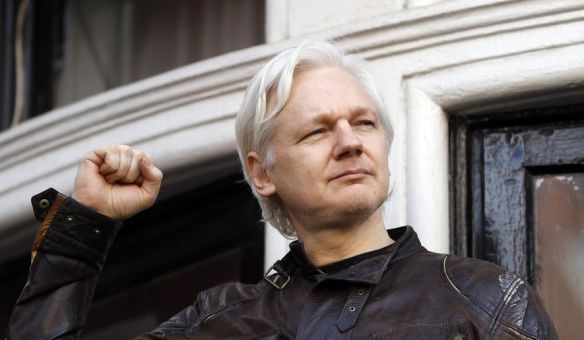
The so-called resistance have been conspicuously silent ever since Julian Assange was arrested after Ecuador withdrew his asylum from its London embassy. Under the guise of defending the press, this same group became hysterical when Trump had a stupid argument with a CNN reporter.They are enraged when he refers to the media as “enemies of the people.” But when publisher and journalist Julian Assange was snatched up by the U.S. and its vassal states they either said nothing or condemned a man whose actions are the very embodiment of resistance.

“This same group became hysterical when Trump had a stupid argument with a CNN reporter.”

Julian Assange now sits in a London prison awaiting extradition hearings. The United States government convened a grand jury in 2017 which handed down a secret indictment against him. He is charged with conspiracy to commit computer intrusionin relation to Chelsea Manning’s 2010 revelation of United States war crimes in Iraq. The Collateral Murder video shows army soldiers killing civilians, returning for a “double tap” killing of first responders, and laughing about their massacre. Anyone who revealed these horrors is a hero and should be supported without any ifs, ands or buts.

The United Kingdom played its usual role of partner in crime for the U.S. Fellow puppet state Australia refused to protect its citizen. Ecuador made off with a cool $4 billion in IMF loans. There is so much corruption to oppose but one wouldn’t know that with all the cheering on behalf of the surveillance state.

“Anyone who revealed these horrors is a hero.”

This resistance is little more than a collective hissy fit from dead ender Democrats who insist on following a party that can’t even reliably stay in office.  They have spent the last three years railing against Trump but bite their tongues when he commits an act that reeks of fascist ideology.

The kindest thing that can be said is that they have been hypnotized by a combination of Democratic Party and corporate media lies. It is very difficult to determine the truth in a culture saturated with all the deformities of an imperial state in panic mode. One has to act as a detective and know which web sites to read or whom to follow on social media in order to learn anything outside of the confines of state propaganda. Ever since election night in November 2016 the public have been subjected to a relentless campaign meant to deflect righteous anger away from the Democrats while furthering imperialist goals at the same time.

Julian Assange has become the poster child for the big lie. His leaks of Democratic National Committee emails are blamed for Hillary Clinton’s defeat. But there was no computer hack of the DNC at all. Assange received leaked materials from an insider and used Wikileaks to publish it.

“His leaks of Democratic National Committee emails are blamed for Hillary Clinton’s defeat.”

But that is only a partial explanation. The reality is far worse. Liberals are just as much true believers in imperialism as the right wing they claim to oppose.They are nothing if not consistent. When the Trump administration announced the coup attempt against the Venezuelan government the resistance didn’t resist at all.

Instead they repeated talking points from the New York Timesand National Public Radio which labeled the elected Venezuelan president a brutal dictator. They didn’t question the United States claim of a right to undo the will of people in another country. Some gave wishy washy criticism of military intervention but none of them questioned an intervention which is fascist by any definition.

“Liberals are just as much true believers in imperialism as the right wing they claim to oppose.”

These people will never defend Julian Assange. According to their world view he doesn’t deserve to be defended. He revealed government secrets, which runs counter to their support of the imperialist state, and they think he deprived them of a second Clinton presidency.

Now we know who is for real and who is a phony. Chelsea Manning sits in jail for a second time because she refused to testify before the grand jury which indicted Assange. There are people all over the world occupying Venezuelan embassies and consulates in order to protect them from the would be usurpers. That is resistance. Attacking the person who revealed war crimes is compliance in the service of the state. Perhaps this group needs a new name. They should be honest and call themselves the conformists. That would be truth in advertising.


Margaret Kimberley’s Freedom Rider column appears weekly in BAR, and is widely reprinted elsewhere. She maintains a frequently updated blog as well at http://freedomrider.blogspot.com . Ms. Kimberley lives in New York City, and can be reached via e-Mail at Margaret.Kimberley(at)BlackAgendaReport.com.