Two for Tuesday
Reply


By Keith Garlington
Source: Keith and the Movies
It’s hard to believe that it has been twelve years since French filmmaker Michel Hazanavicius won his Best Director Academy Award for the Best Picture winning “The Artist”. While it has become somewhat fashionable in some circles to dismiss that brilliant 2011 film as unworthy, I still hold it in incredibly high regard as a delightful ode to a bygone cinematic era.
Hazanavicius’ latest film couldn’t be more different. “Final Cut” is a meta zombie comedy that is an open-armed tribute to cinema, a love letter to genre filmmaking, a celebration of creative collaboration, and just an all-around wacky piece of work. It’s a faithful remake of Shin’ichirô Ueda’s 2017 cult hit “One Cut of the Dead” but with its own French twist. It’s a consistently clever and routinely funny concoction that sees Hazanavicius and his all-in cast having the time of their lives.
Describing “Final Cut” to those who haven’t seen “One Cut of the Dead” is a bit of a challenge because the less you know going in the better. The film’s unorthodox structure plays a big part in making it such a fun experience. It’s a case of a filmmaker showing you one thing and then adding an entirely different perspective later on. I know that’s vague, but suffice it to say Hazanavicius has a field day playing with his audience’s expectations.
The spoiler-free gist of the story goes something like this. Romain Duris plays Rémi Bouillon, a frustrated filmmaker who signs on to direct a low-budget zombie short film for an upstart streaming platform that specializes in B-movies. But there’s a catch. The 30-minute single-take film is to be shot and streamed LIVE! It’s an unheard of undertaking but one the platform’s ownership has already pulled off in their home country of Japan. Now they want to do it in France.
Rémi is hesitant to take the job at first, seeing it as a doomed-to-fail project. But with the encouragement of his wife Nadia (Bérénice Bejo) and with hopes it will rekindle his relationship with his aspiring filmmaker daughter Romy (Simone Hazanavicius) he agrees.
Soon he’s on location dealing with a smug high-maintenance lead actor (Finnegan Oldfield), his inexperienced lead actress Ava (Matilda Lutz), a supporting actor who can’t stay off the bottle (Grégory Gadebois), and the demands of domineering producers who don’t prescribe to the notion of a director’s creative freedom.
As “Final Cut” shifts to the show’s production phase things get crazy and we gain an entirely new perspective on everything we’ve seen up to that point. Hazanavicius drenches his audience in blood, gore, and countless zombie horror tropes which is a big part of the fun. That said, it’s never the slightest bit tense or scary but neither does it try to be. It’s much more of a comedy, full of running gags, fun characters, an infectious B-movie charm, and a surprising level of warmth that I never expected.
Watch Final Cut on Kanopy here: https://www.kanopy.com/en/product/13547325
By Edward Curtin
Source: Behind the Curtain
“Method, Method, what do you want from me? You know that I have eaten of the fruit of the unconscious.” – Jules Laforgue, Moralités légendaires
The other day my wife attended an event at a well-appointed home in town where men in dark suits stood around to provide a sense of security that no harm would come to the visitors, even though the angel of death had visited this house on previous occasions, for it was a funeral home, well-steeped in boxing people up for the journey to the underworld. So to call it a “home” is really a misnomer; that might sound cozy, but it is really a way station for the dead. A layover.
Mistakenly thinking that she was attending a traditional wake and the dead person’s corpse would be there in a coffin, I suggested that she check out the casket and, if she liked its wood and the softness of its velvet liner, to inquire whether they had any sales going on, especially if they had a buy-one-get-one-free sale like the local supermarket often has for English muffins and other goodies.
I think she forgot to ask, but she did tell me that the elderly woman who died had been cremated weeks ago and that her ashes were in a box on a table. Boxes, ah, little boxes.
***
I have long wondered why so many people are enchanted by sunsets, why they travel to see them and gasp in wonder that the sun disappears and night comes on. Colorful yes, but not as glorious as the sunrise, the rosy-fingered dawn of every new day. Why celebrate the death of the day and our journey into the underworld of sleep and the cave of dreams rather than the dawn of our awakening and new life. Jokes aside, morbidity is not life-affirming. The true apocalypse – Greek apokalyptein, uncover, disclose, reveal – is every dawn’s epiphany when we can dream while awake and create.
***
In Apuleius’s Metamorphoses there is the story of Cupid and Psyche, the former being a male god and the latter a female human. Psyche, who has lost her lover Cupid but wants him back, is tricked by the goddess Aphrodite who challenges her, if she wants Cupid back, to take the dangerous journey to the underworld to retrieve a box of beauty cream. Psyche goes and gets the box but is tempted to open it since it would enhance her already beautiful human appearance. When she does, she falls into a deathlike sleep. It’s an old story, forever new. Switch the sexes if you wish. Take 200 vitamin pills a day as many billionaires and other assorted crazies do intent on becoming immortal gods. Good luck. Get uploaded or downloaded into a computer, whichever it is, and live forever. Maybe watch the sun set or perchance wake up. And although Psyche is given a Hollywood ending when she is saved by Zeus and made immortal with the other gods in Olympus, that’s just an old movie. We live by facts these days, not myths. Ah, boxes.
***
The Boxer by Simon & Garfunkel
I am just a poor boy, though my story’s
seldom told
I have squandered my resistance for a
pocketful of mumbles
Such as promises
All lies and jest
Still a man hears what he wants to hear
And disregards the rest, hmm
***
Children love boxes within which they often hide their collections for safekeeping. Give a child a box with a lid and it will be filled in no time. Filled with little things that symbolize for children the vast infinity of secret space that is their hold on time. Children are born poets and philosophers who over time are usually dulled by adults around them from whom they learn to hide their secrets and the questions these secrets raise. The secrets often fester and die, only to live on in repressed lives. I knew a man who collected cigar boxes. They were everywhere in his house when he died. Most were empty. His wife outdid him with her collection of empty boxes: shoe boxes, jewelry boxes, every kind of box imaginable. All empty. Were they waiting to be filled? With what? Secrets? Another woman I knew had a box with an envelope inside marked, “My Father’s Magic Envelope – AKA Miracles.” It was empty. She pictured herself as a boxer in a sketch she drew, a child without a face with boxing gloves. I can only guess at the secrets she was fighting to remember or forget. The experimental method is based on repetition, but so too is trauma. Internment is not just for the dead.
***
Boxed in, boxed up, housed, enclosed. trapped, contained, caged , enveloped, bounded, penned, corralled, trapped: calling from my cell for help? The screen lights up with a concatenation of phantom images that seize the mind, what the Greeks called eidolon.
***
Let’s forget about Pandora’s box, which was actually a jar in the original story. Its last content being hope. I once knew a girl named Hope. She was very seductive. But I sensed she was trouble and escaped when she started to open up about her secrets. I wasn’t very curious, just afraid. So long, Hope, “it’s time that we began to laugh and cry and cry and laugh about it all again.” Thanks, Leonard.
***
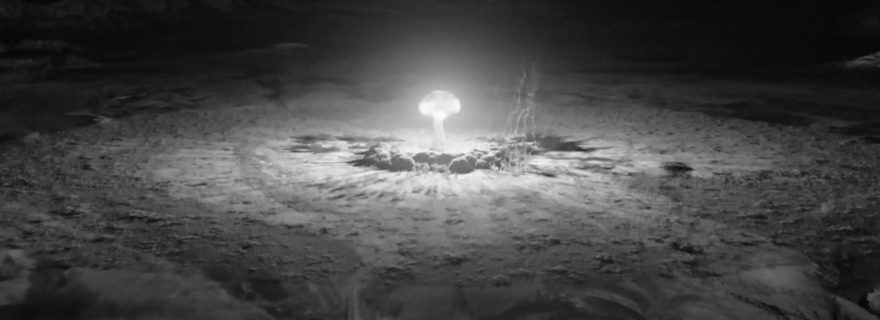
There are countless political analyses of what drives the United States’ ruling forces in their systematic, brutal, and remorseless wars of aggression around the world. The perpetual effort to expand an empire originally built on the blood of indigenous people. The refusal to live in peace within national boundaries. The pushing of NATO expansion up to Russia’s borders. It seems insane, which of course it is. But what is behind such madness? The secret may be quite simple. Again the ancient Greeks come to mind as Roberto Calasso writes in The Marriage of Cadmus and Harmony, quoting the historian Jacob Burckhardt, when he wrote of the secret of war-loving Sparta: “But the power of Sparta seems to have come into being almost entirely for itself and for its own self-assertion, and its constant pathos was the enslavement of subject peoples and the extension of its own dominion as an end unto itself.” Power as an end in itself. Realizing this is apocalyptic in the revelatory sense, for it opens the box on the secret nihilism of the U.S. ruling elites.
***
I am waiting
to get some intimations
of immortality
by recollecting my early childhood
and I am waiting
for the green mornings to come again
youth’s dumb green fields come back again
and I am waiting
for some strains of unpremeditated art
to shake my typewriter
and I am waiting to write
the great indelible poem
and I am waiting
for the last long careless rapture
and I am perpetually waiting
for the fleeing lovers on the Grecian Urn
to catch each other up at last
and embrace
and I am waiting
perpetually and forever
a renaissance of wonder– Lawrence Ferlinghetti, “I Am Waiting,”
for jazz accompaniment

By Simon Abrams
Source: RogerEbert.com
Japanese filmmaker Nobuhiko Obayashi was diagnosed with lung cancer in 2016, about three years before he completed “Labyrinth of Cinema,” a trippy anti-war drama about Japanese war movies, of which Obayashi re-creates, parodies, and criticizes in one long movie within his movie. Or really, it’s one long movie marathon within Obayashi’s movie since “Labyrinth of Cinema” takes place at an evening-long war film festival hosted by Setouchi Kinema, a small Hiroshima movie theater that’s putting on one last show before permanently closing.
The plot is simple enough to be irrelevant: three bright young things— teeth-picking film historian Hosuke (Takahito Hosoyamada), enthusiastic film buff Mario (Takuro Atsuki), and aspiring gangster Shigeru (Yoshihiko Hosoda)—chase after chaste 13-year-old Noriko (Rei Yoshida) after she tumbles into the Setouchi Kinema’s movie screen, and becomes part of Obayashi’s unstable meta-narrative. By the way: Obayashi died of lung cancer a year and a half ago. You can tell that his death weighed on him just by watching “Labyrinth of Cinema,” his last movie, a three-hour living will, and a dazzling curtain call.
The movie’s Hiroshima setting gives away its personal nature since Onomichi, Hiroshima is director/co-writer/co-editor Obayashi’s hometown and also the main location for some of his movies, including the 1983 bubblegum-psych fantasy “The Girl Who Leapt Through Time.” Obayashi is best known to American cinephiles as the director of the 1977 day-glo nightmare “House,” a fizzy horror-fantasy that only became an international cause célèbre in 2009 after it screened at the New York Asian Film Festival and a few other noteworthy events. In “Labyrinth of Cinema,” Obayashi (along with co-writers Kazuya Konaka and Tadashi Naito) tries to sum up what he’s learned and tried to convey through filmmaking in a volatile auto-critique of movies as both seductive propaganda and palliative empathy machines.
Obayashi uses green-screen technology and cheap (but effective) computer graphics to dramatize folksy anecdotes about filmmakers like John Ford and Yasujiro Ozu, which he sandwiches between brutal and/or sentimental episodes about local war crimes and counter-cultural resistance. Sometimes Obayashi quotes poetry, particularly by Chuya “Japan’s Rimbaud” Nakahara. Sometimes, a cartoon character or samurai folk hero (Musashi Miyamoto?!) steals a scene or two. A few characters, like the time-traveling authorial stand-in Fanta G (drummer Yukihiro Takahashi), talk about movies as a beautiful, essential lie that’s first used as a balm and a distraction, and then also considered as a runway to a brighter and still unimaginable future. You give Obayashi three hours of your time, and he’ll give you a brilliant headache.
You might watch “Labyrinth of Cinema” and wonder where the hell this all came from. Like Obayashi’s recent war trilogy (2011-2017), and many of his earlier features—and short movies and TV commercials—“Labyrinth of Cinema” constantly reminds you that it’s “A Movie.” Before Obayashi’s movies begin, the words “A Movie” are usually presented on-screen in a frame within the image’s frame. So in “Labyrinth of Cinema,” Obayashi’s characters are often re-framed by small circular frames within the camera’s frame. Sometimes these images flip around on-screen, so that a character who was on the left side of the screen is now upside, or on the right, as if they were in conversation with themselves, the viewer, and anyone else who’s watching. There are also a surprising number of fart jokes and some callbacks to older Japanese movies like “I Am a Cat,” “The Rickshaw Man,” and “Wife! Be Like a Rose.” “Labyrinth of Cinema” is a lot of movie.
Obayashi’s various projects are instantly recognizable, given his usual combination of mistrust and fascination with movies as an expression of wish fulfillment and nostalgia. So it’s not surprising that his view of the past—and the cinematic image—is never really seductive in “Labyrinth of Cinema.” Cheerfully naïve characters get lost in their companions’ comforting, half-remembered memories, and never stop to wonder why one thing inevitably leads to another, and another, and another. They float around on-screen, unmoved by the laws of gravity or physics and unable to hide in whatever photo-booth-quality backdrop surrounds them. Obayashi’s characters all half-know and half-hope that they’ll live to see the next scene, so they take their time learning how to ride the ever-breaking tidal wave of Japanese history according to Nobuhiko Obayashi.
“Labyrinth of Cinema” is tremendously affecting, frequently beguiling, usually exhausting, and on, and on, and on. An indulgent ramble from an innovative surrealist who was always sensitive and even suspicious of his own work’s impact—as a tool for advertising, political whitewashing, and pure sentimental indoctrination. On his out way the door, Nobuhiko Obayashi left us wondering how he got all the way from “House” to here without losing faith in humanity and his art; I don’t know, but “Labyrinth of Cinema” is still there anyway.
By Brian Tallerico
Source: RogerEbert.com
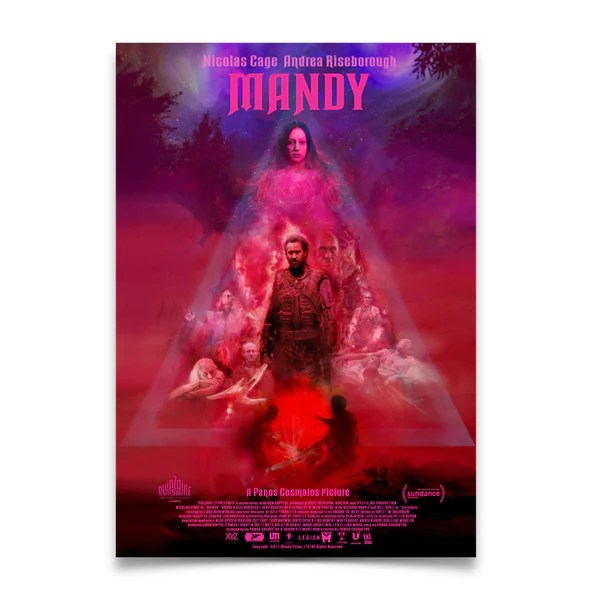
More than most movies, it’s hard to know where to begin with an appreciation or critique of Panos Cosmatos’ “Mandy.” It’s a really difficult film to capture tonally and even narratively in a review, largely because it is such a stylish, visceral experience that it demands you give yourself over to it actively instead of passively analyzing it. On the one hand, it’s a thriller, of sorts, a vengeance piece about a man killing those who destroyed his life. But, man, does that not really capture the experience of this movie. Some have compared it to an ‘80s heavy metal album cover sprung to life, but that’s only part of “Mandy,” and doesn’t convey the emotional depth that saturates every frame. And then there’s the fact that “Mandy” is kind of two movies in one, a slow-burn journey into hell in the first hour and a blood-soaked climb out of it in the second. Did I mention the chainsaw fight yet?
Nicolas Cage stars in “Mandy” as Red Miller, a lumberjack who lives a quiet life in the woods with his girlfriend Mandy, played by Andrea Riseborough. One day, Mandy catches the eye of a cult leader named Jeremiah Sand (Linus Roache), who proceeds to conjure motorcycle-riding demons to steal the girl and make her one of their own. In the process, Red is tortured and nearly killed. The first half of “Mandy” is filled with long, color-saturated takes of impending doom. Even casual behavior like quiet scenes between Mandy and Red have a foreboding nature, and then the film peaks in the middle with a waking nightmare as Red sees something no one should ever see happen to the love of his life. Deeply traumatized, Red is destroyed, and there’s a sequence in which Cage drinks an entire bottle of booze (well he ingests the stuff that isn’t poured on his wounds) while in his underwear, howling like an injured animal. It’s going to be GIF-ed and mocked, but it’s actually a great bit of acting, conveying a man not just mourning or in grief but literally destroyed.
Like a character in a Queensrÿche concept album, Red emerges from this destruction with his plans for vengeance. With a title card that divides the film in half, “Mandy” then becomes the movie that most people will remember in that it’s about Red working his way through both the demons that Jeremiah conjured and, inevitably, the gang itself. The heavy metal comparison is apt not just because the genre often included figures like the nightmarish creations that Jeremiah brought to life but in the very structure of “Mandy,” which unfolds in a very untraditional manner in both halves. Scenes play out like songs on an album, episodically cast in extreme color palettes that amplify the trippy, surreal natures of the entire experience. “Mandy” is a fascinating genre exercise in that it is as untraditional a horror movie as you’ll see this year but also relies on so many classics of the form. It is, at its core, a downright biblical tale of evil and vengeance.
It’s also pretty bad-ass when it comes to stand-out moments, particularly an already-acclaimed fight with two men wielding chainsaws like they’re swords. It’s a perfect blend of the old and new in “Mandy” and a distillation of what the film does well in how it takes a familiar good vs. evil sequence and twists it to fit Cosmatos’ vision.
Having said that, there are times when I felt the length of said vision. “Mandy” runs over two hours, and a little of its style goes a long way. I think there’s a masterful version of this movie that runs notably shorter, but that doesn’t mean there’s not an unforgettable one the way it is right now.
One more thing before you go on this journey with Nicolas Cage: the incredible Johann Johannsson (“Sicario,” “Arrival“) does the best of his career in this, his final film composition. The score here is another character, a series of screeching, violent noises that add to the tone of the film in ways that can’t be overstated. The film simply doesn’t work without it. And, as much as I like other parts of the movie, Johannson’s work alone justifies a viewing. It reminds us how much we lost by his early passing.
Watch Mandy on Hoopla here: https://www.hoopladigital.com/title/12253438
INDIAN COUNTRY NEWS
"It is the duty of every man, as far as his ability extends, to detect and expose delusion and error"..Thomas Paine
Human in Algorithms
From the Roof Top
I See This
blog of the post capitalist transition.. Read or download the novel here + latest relevant posts
अध्ययन-अनुसन्धानको सार
 After the Crash