“Heaven and Earth” (1993) was released at the height of director Oliver Stone’s popularity (made between JFK and Natural Born Killers) and is considered the final film of his “Vietnam Trilogy” following Platoon and Born on the Fourth of July. While Heaven and Earth is just as powerful and provocative (if not more so) than Stone’s other films, it has never received the popular and critical recognition it deserves. Unlike the other films of the Vietnam Trilogy (and most films about war) Heaven and Earth tells the story of an innocent civilian of a war-torn nation as well as the psychological impact of war on soldiers and their post-war life. The film features a remarkable debut performance by Hiep Thi Le and a career-best performance by Tommy Lee Jones.
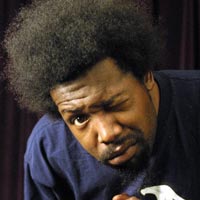
Nearly fifteen years after the release of “Because I Got High”- a song well known for poking fun at overzealous reefer madness rhetoric – Afroman is ready to jump headfirst back into the marijuana limelight. Only this time, as an advocate for legalization.
The grammy nominated artist recently teamed up with NORML and Weedmaps to launch a remake of his hit song, turning the hip hop classic into a positive legalization anthem for the 2014 elections. The remix is a new and entertaining way to drive the narrative surrounding the benefits of cannabis law reform, as well as the medical benefits of the plant itself. With election day right around the corner, his latest project is geared towards keeping up the momentum for all the marijuana law reform efforts taking place across the country, and especially upcoming ballot initiatives.
On November 4th, two states and the District of Columbia will be voting to legalize marijuana, and Florida will be voting on a medical marijuana amendment. The timing couldn’t have been better to take, and remake the canna-cult classic. The 2014 version of “Because I Got High” not only challenges old stereotypes, it also seeks to build support and enthusiasm for the three measures proposing to create a regulated pot market for adults, age 21 and over.
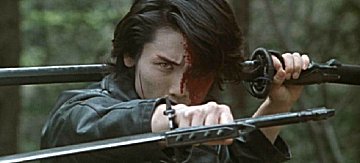
“Versus” (2000) is an action/horror/comedy directed by Ryuhei Kitamura about an escaped prisoner’s fight for survival against Yakuza gangsters and zombies in a forest containing an inter-dimensional portal. As the film’s title suggests, the main focus is on action scene setpieces which mash-up a wide range of genre tropes in an over-the-top style.
Obviously the film isn’t for everyone but if one happens to have intersecting interests in Yakuza, Samurai and zombie films, it doesn’t get much better than “Versus”. Even for those less fanatical about such genres it’s better than one might expect thanks to the enthusiasm and low-budget inventiveness of the filmmakers, athleticism of lead actor Tak Sakaguchi and the team of stuntmen, and a self-aware absurdist sense of humor.
“The Return of the Living Dead” (1985) was written and directed by Dan O’Bannon (writer of “Dark Star” and “Alien”), and remains among the all-time horror/comedy classics. Unlike typical zombie film scenarios, this one is set off by bumbling employees who release military-grade toxic waste inexplicably stored in the basement of a medical storage facility. The girlfriend of one of the employees and her punk rocker friends end up at the scene and find themselves under siege from reanimated bodies in the storage facility and the neighboring cemetery. While zombie apocalypse films are a dime a dozen today, Return of the Living Dead still has an edge thanks to it’s nihilistic slapstick humor and biting social satire. Four sequels followed Return of the Living Dead, none of them nearly as good.
Frankie’s having a terrible day. His wife and infant son are starving. He’s run out of money and food. Now he’s going to be evicted. He’s got a gun. Let’s hear it for Frankie…
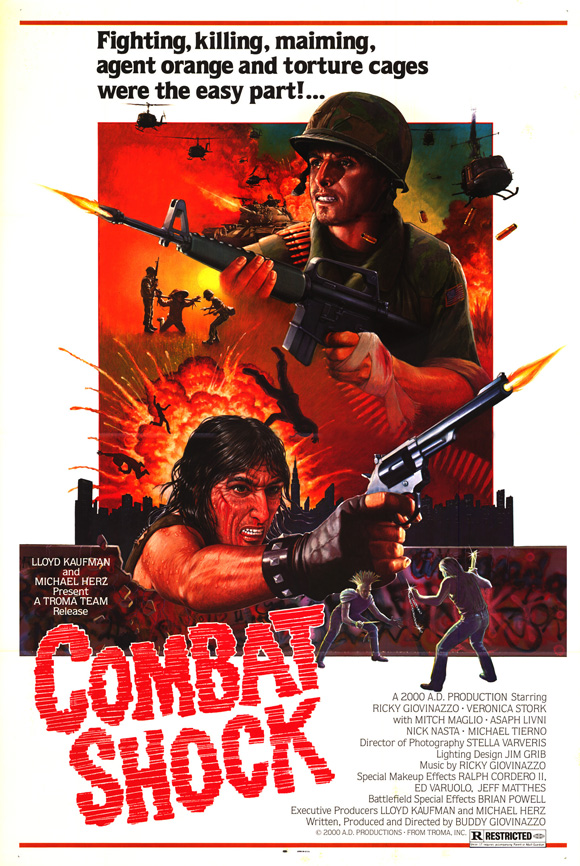
If this sounds familiar, it’s because the story of the 1984 Troma movie Combat Shock bears a striking resemblance to that of Suicide’s harrowing song “Frankie Teardrop.” The movie concerns the struggle of a young man named Frankie to feed his wife and child in blighted Staten Island, and if you’ve heard the song, I don’t have to tell you that it ends pretty badly for Frankie, his family, you, me, and the entire human race.
Frankie isn’t a factory worker in this version of the story, but an unemployed Vietnam vet whose days and nights are continually interrupted by flashbacks of ‘Nam and the torture he suffered at the hands of the VC. These, in turn, lead to flashbacks within flashbacks where, for purposes of exposition, Frankie relives arguments with his father, now estranged because a) Frankie has refused to carry on the family legacy of race hate and b) Dad disapproves of Mrs. Frankie. Suffering through the exposition of any movie is itself a form of torture.
However, these gestures toward the conventions of plot are mercifully few and brief, and Combat Shock soon makes with the laffs and gasps you crave from late-night horror fare. Much of the pleasure of watching Combat Shock comes from the genre detail writer, director, producer and editor Buddy Giovinazzo adds to extend Suicide’s story to feature length. For instance, because of Frankie’s exposure to Agent Orange, and because this is a Troma movie, the child looks like a cross between the Eraserhead baby and Edvard Munch’s screamer.
Until the awful climax, the movie takes its time presenting a loser’s-eye view of urban anomie. If you’ve ever lived in a place that had a TV set, you already know all these characters: Frankie’s slow descent into madness involves demoralizing encounters with small-time hoods (Frankie’s creditors), child prostitutes, junkie thieves and social workers (one of whom is missing a Ronco Veg-O-Matic). There are also one or two thrilling surprises, even for the very jaded.
And in case you somehow feel cheated of your full share of human misery after watching Combat Shock, here’s a kind of sequel to “Frankie Teardrop,” Alan Vega’s 12-minute bum-out “Viet Vet.”



 bears a striking resemblance to that of Suicide’s harrowing song “Frankie Teardrop.” The movie concerns the struggle of a young man named Frankie to feed his wife and child in blighted Staten Island, and if you’ve heard the song, I don’t have to tell you that it ends pretty badly for Frankie, his family, you, me, and the entire human race.
 After the Crash