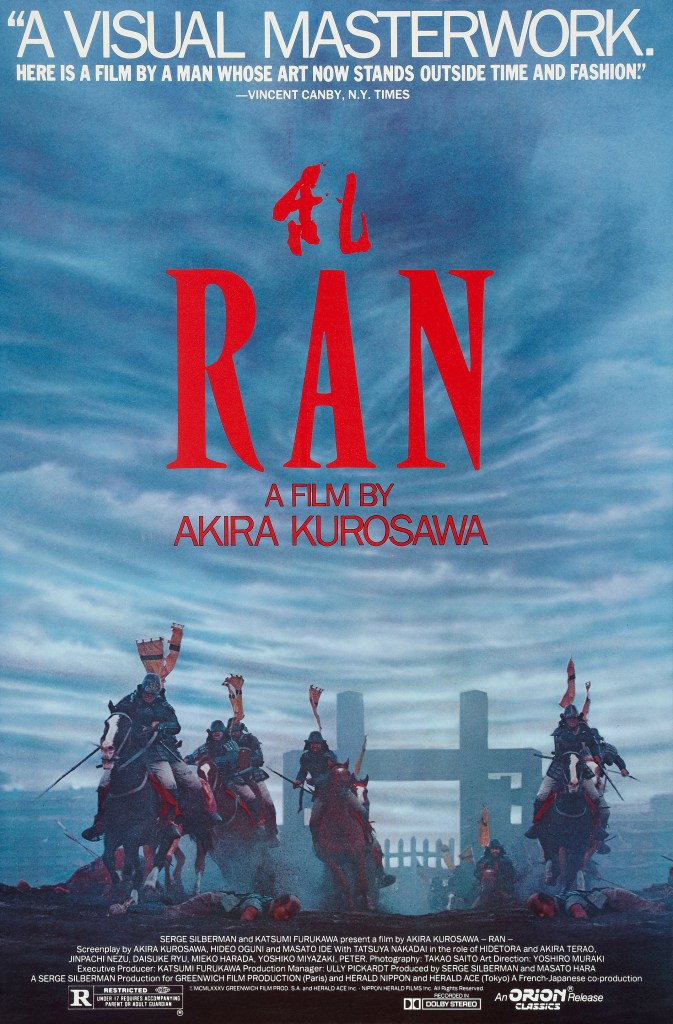
One of the early reviews of Akira Kurosawa’s “Ran” said that he could not possibly have directed it at an earlier age. My first impulse was to question that act of critical omnipotence. Who is to say Kurosawa couldn’t have made this film at 50 or 60, instead of at 75, as he has?
But then I thought longer about “Ran,” which is based on Shakespeare’s “King Lear” and on a similar medieval samurai legend. And I thought about Laurence Oliver’s “Lear” on TV last year, and about the “Lear” I saw starring Douglas Campbell a few weeks ago here in Chicago, and I realized that age probably is a prerequisite to fully understand this character. Dustin Hoffman might be able to play Willy Loman by aging himself with makeup, but he will have to wait another 20 years to play Lear.
The character contains great paradoxes, but they are not the paradoxes of youth; they spring from long habit. Lear has the arrogance of great power, long held. He has wide knowledge of the world. Yet he is curiously innocent when it comes to his own children; he thinks they can do no wrong, can be trusted to carry out his plans. At the end, when his dreams have been broken, the character has the touching quality of a childlike innocence that can see breath on lips that are forever sealed, and can dream of an existence beyond the cruelties of man. Playing Lear is not a technical exercise. I wonder if a man can do it who has not had great disappointments and long dark nights of the soul.
Kurosawa has lived through those bad times. Here is one of the greatest directors of all time, out of fashion in his own country, suffering from depression, nearly blind. He prepared this film for 10 years, drawing hundreds of sketches showing every shot, hardly expecting that the money ever would be found to allow him to make the film. But a deal was finally put together by Serge Silberman, the old French producer who backed the later films of Luis Bunuel (who also could have given us a distinctive Lear). Silberman risked his own money; this is the most expensive Japanese film ever made, and, yes, perhaps Kurosawa could not have made it until he was 75.
The story is familiar. An old lord decides to retire from daily control of his kingdom, yet still keep all the trappings of his power. He will divide his kingdom in three parts among his children. In “Ran” they are sons, not daughters. First, he requires a ritual statement of love. The youngest son cannot abide the hypocrisy, and stays silent. And so on. The Japanese legend Kurosawa draws upon contains a famous illustration in which the old lord takes three arrows and demonstrates that when they are bundled, they cannot be broken, but taken one at a time, they are weak. He wishes his sons to remain allies, so they will be strong, but of course they begin to fight, and civil war breaks out as the old lord begins his forlorn journey from one castle to another, gradually being stripped of his soldiers, his pride, his sanity. Nobody can film an epic battle scene like Kurosawa. He already has demonstrated that abundantly in “The Seven Samurai,” in “Yojimbo,” in “Kagemusha.” In “Ran,” the great bloody battles are counterpointed with scenes of a chamber quality, as deep hatreds and lusts are seen to grow behind the castle walls.
“King Lear” is a play that centers obsessively around words expressing negatives. “Nothing? Nothing will come to nothing!” “Never, never, never.” “No, no, no, no, no.” They express in deep anguish the king’s realization that what has been taken apart never will be put together again, that his beloved child is dead and will breathe no more, that his pride and folly have put an end to his happiness. Kurosawa’s film expresses that despair perhaps more deeply than a Western film might; the samurai costumes, the makeup inspired by Noh drama, give the story a freshness that removes it from all our earlier associations.
“Ran” is a great, glorious achievement. Kurosawa often must have associated himself with the old lord as he tried to put this film together, but in the end he has triumphed, and the image I have of him, at 75, is of three arrows bundled together.
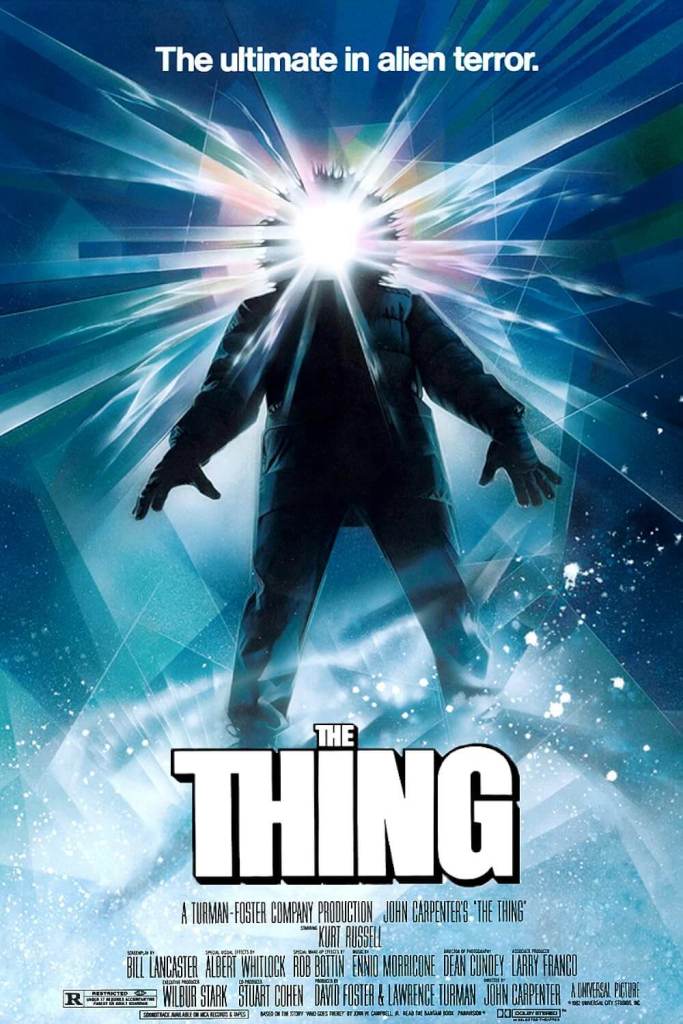
It’s the summer of 1982, and director John Carpenter is on the cusp of releasing his latest movie, The Thing. For the 34-year-old filmmaker, the release marks the end of a major undertaking: the culmination of months of shooting on freezing cold sets and snowy British Columbia locations, not to mention the execution of complex and time-consuming practical effects scenes.
Carpenter was understandably proud of the results: after such independent hits as Assault On Precinct 13, Halloween,andEscape From New York, this was his first studio movie (for Universal) and also his most expensive to date, with a budget of around $15m. And while The Thing had appeared in cinemas before (in the guise of Howard Hawks and Christian Nyby’s 1951 sci-fi shocker,The Thing From Another World) Carpenter’s movie was a fresh adaptation of John W. Campbell’s novella, Who Goes There?– a story Carpenter had long prized.
The Nyby-Hawks adaptation took the skeleton of Campbell’s story, about scientists discovering an alien life form in Antarctica, and made it into a monster movie chiller with James Arness as the hulking creature from outer space. Carpenter’sThe Thing, on the other hand, went back to the original story’s most compelling idea: that of a creature which can transform itself into perfect imitations of the people around it.
With the help of Rob Bottin’s groundbreaking effects work, Carpenter’s movie would bring this creature “out into the light” and he was understandably satisfied with the unholy amalgam of suspense and outright horror he’d brought to the screen.
THE ICY CRITICAL RECEPTION
Yet whenThe Thing opened in US cinemas on the 25th June 1982, the critical reception was almost as aggressive and seething as the movie’s title monster.
Writing for The New York Times, noted movie critic Vincent Canby described the movie as “foolish, depressing” with its actors “used merely as props to be hacked, slashed, disembowelled and decapitated, finally to be eaten and then regurgitated […] it is too phony to be disgusting. It qualifies only as instant junk.”
Timemagazine dismissed The Thing as “an exercise in abstract art,” while Roger Ebert, in a slightly less aggressive review, described it as “a great barf-bag movie”, but maintained that, “the men are just setups for an attack by The Thing.”
Even reviewers outside the mainstream were hostile towards The Thing. The magazine Cinefantastiqueran a cover which asked, “Is this the most hated movie of all time?”
In science fiction magazine Starlog, critic Alan Spencer wrote, “John Carpenter’s The Thing smells, and smells pretty bad. It has no pace, sloppy continuity, zero humor, bland characters on top of being totally devoid of either warmth or humanity […] It’s my contention that John Carpenter was never meant to direct a science-fiction horror movie. Here’s some things he’d be better suited to direct: traffic accidents, train wrecks and public floggings.”
Carpenter was left reeling from the critical reaction. “I was pretty stunned by it,” he later said. “I made a really gruelling, dark movie, but I [thought] audiences in 1982 wanted to see that.”
In terms of its theatrical performance, Carpenter’s dark vision didn’t exactly go down as either he or Universal had perhaps expected. A major summer release, The Thingscraped in at number eight at the US box office, and while it was by no means a flop – its lifetime gross amounted to just under $20 million according to Box Office Mojo – neither was it considered a hit.
THE CRUEL SUMMER
The issue of Starlog in which Alan Spencer’s review of The Thing appeared provides several clues as to why the critical reaction to the movie was so extreme. First, there’s the cover: published in November 1982, issue 64 of Starlog features the benevolent, childlike face of E.T.
Steven Spielberg’s family blockbuster E.T.: The Extra-Terrestrial had, unfortunately for Carpenter, appeared in American cinemas just two weeks before The Thing came out on the 25th June, and that movie’s warm, gentle view of extraterrestrial life was diametrically opposed to the nightmarish excess of Carpenter’s, and moviegoers were still eagerly lining up to see it 14 days later. The Thing, it seemed, simply ran counter to the mood of the times. Neither critics nor audiences were prepared for the intensity or chilly nihilism ofThe Thing, particularly in the heat of the summer season.
The actor Kenneth Tobey, who played Captain Hendry in The Thing From Another World, summed up the general consensus after a screening of Carpenter’s movie. “The effects were so explicit that they actually destroyed how you were supposed to feel about the characters,” Tobey said. “They became almost a movie in themselves, and were a little too horrifying.”
Its gory excess when compared to the sheer cuddliness of E.T. wasn’tThe Thing‘s only problem, either. As that November issue of Starlogproves, 1982 was a crowded year for science fiction, fantasy and horror.Star Trek II: The Wrath Of Khan, and Poltergeistopened on the same day – the 4th June. Disney’s hugely expensive sci-fi adventure Tron came out a little over a month later, on the 9th July.
Then there wasBlade Runner, 20th Century Fox’s expensive sci-fi gamble, which, likeThe Thing, opened on the 25th June and was initially regarded as a financial and critical disappointment.
The Thing was therefore unfortunate to appear in a bumper summer for genre films, and it was doubly hobbled by its R-rating; had its release date been moved to the winter and away from its more family-friendly competitors (even Poltergeistsomehow garnered a PG certificate), it’s possible that it could have found a wider audience in cinemas, despite all those savage reviews.
THE AFTERMATH
Bruised by the reaction to The Thing, Carpenter continued to make movies (he made Christinein 1983 and Starmanthe year after) but lost considerable confidence from the experience, and took some time before he’d talk openly about the earlier movie’s box office disappointment. Perhaps ironically, one of the outlets Carpenter first opened up to was Starlog.
“I was called ‘a pornographer of violence’,” Carpenter said in 1985. “I had no idea it would be received that way […] The Thing was just too strong for that time. I knew it was going to be strong, but I didn’t think it would be too strong […] I didn’t take the public’s taste into consideration.”
It was on video – and later television – that the perception ofThe Thing began to change. The initial shock and repulsion which greeted it in the summer of 1982 began to ebb, as the full extent of what Carpenter, and his filmmakers – among them writer Bill Lancaster, cinematographer Dean Cundey, composer Ennio Morricone and effects artist Rob Bottin (aided in certain scenes by Stan Winston) had managed to achieve.
With the growing passage of time, it becomes easier to see the criticisms aimed at The Thing as being among its most positive attributes. The characters aren’t “merely props” but distinct individuals whose traits are introduced subtly and cleverly – a brief line here, a quirky facial expression there.
That Kurt Russell’s MacReady is slow and even reluctant to emerge as the group’s leader adds to the movie’s unpredictability. The terse dialogue and frosty tone heightens the sense of paranoia and suspicion – this is a cold war horror about the very human emotions of fear and distrust, where the Thing could lurk anywhere, perhaps even within MacReady himself.
The Thing‘s apocalyptic tone was such that, when it came to filming the conclusion, even Carpenter wondered whether he’d gone a little too far. But editor Todd Ramsay coaxed him on, encouraging to remain true to his own bleak vision. “You have to embrace the darkness,” Ramsay told Carpenter. “That’s where this movie is. In the darkness.”
THE ENDURING CLASSIC
It has been more than 30 years since The Thing first appeared in that crowded summer of 1982, and it has long since shaken off its “instant junk” stigma. Repeat viewings have exposed the rich depths beneath Rob Bottin’s spectacular mutations: to this day, there are fan sites, such as Outpost 31, dedicated to detailing the minutiae of the movie’s production and story details.
Speculation still rages over exactly when Blair (played by Wilford Brimley) was first imitated by the shape-shifting monster, or whether the victims of the Thing know whether they’ve been replaced, or whether the two survivors at the end of the movie are even human anymore. It’s the ambiguity of Carpenter’s filmmaking, as well as its obvious technical brilliance, that has allowed The Thing to endure, despite the slings and arrows of its critics.
Back in 1982, Roger Ebert wrote, “there’s no need to see this version unless you are interested in what the Thing might look like while starting from anonymous greasy organs extruding giant crab legs and transmuting itself into a dog. Amazingly, I’ll bet that thousands, if not millions, of moviegoers are interested in seeing just that.”
On that latter point, Ebert was precisely right: thousands, even millions of movie fans are interested in The Thing. It’s just taken them a little while to realize that fact.
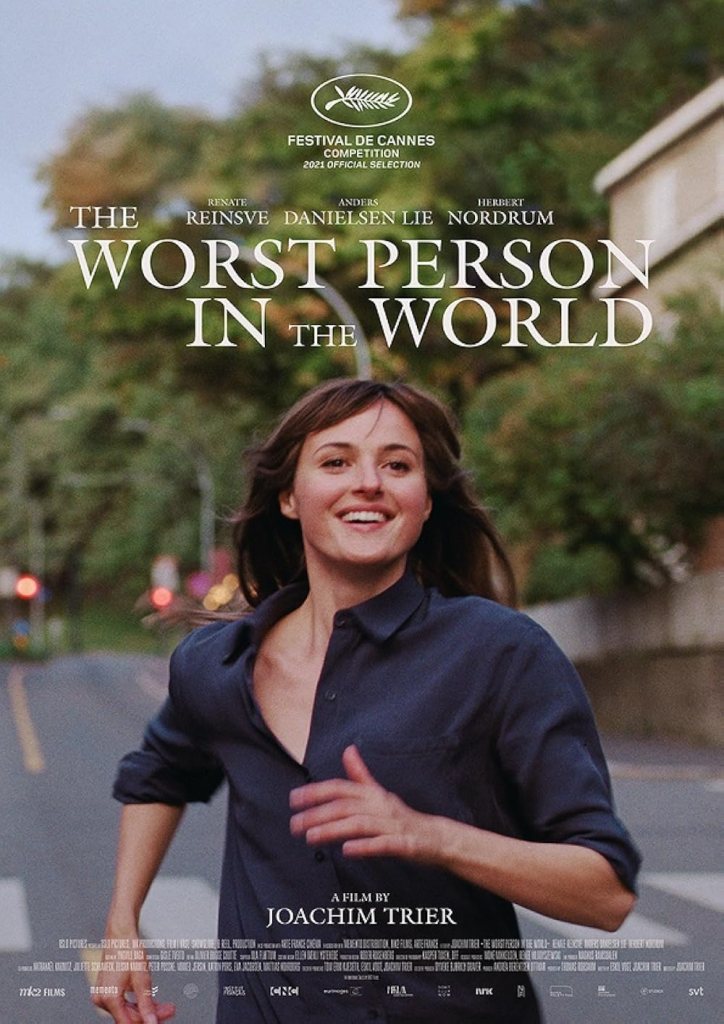
Directed by Joachim Trier — Screenplay by Eskil Vogt and Joachim Trier.
At the end of last month, I turned thirty years old. In the build-up to that turning of a corner, I must admit that I was feeling some kind of quarter-life crisis. Turning thirty reminded me that I should probably rewatch (and finally review) Joachim Trier’s The Worst Person in the World (Norwegian Title: Verdens Verste Menneske), for reasons that will be obvious to those who are familiar with it, but if you aren’t, then please read on and I’ll elaborate. In any case, The Worst Person In the World is the much-lauded third film in Joachim Trier’s acclaimed Oslo Trilogy, the first two films of which — Reprise and Oslo 31. August — I reviewed just last year. As I pressed play and rewatched the Danish-born Norwegian director’s Oscar-nominated hit, I’ll admit that it hit me harder than it had on my first viewing. It is yet another example of the kind of intelligent filmmaker that Trier is, and I suspect it will carve its own place as a true classic for how it speaks to the quarter-life crisis.
Joachim Trier’s The Worst Person in the World follows a soon-to-be-thirty-year-old medical student in Oslo named Julie (played by Renate Reinsve). Julie is facing feelings of self-doubt about the track she is on in life. It occurred to her that she originally only went to medical school because her grades were good enough for it, and so she now, on said whim, suddenly decides to pursue other careers like photography. At that same time, she also encounters a comic book artist fifteen years her senior named Aksel (played by Anders Danielsen Lie). Julie and Aksel hit it off, and he gives her something she thinks she desires — a feeling of life, or perhaps adulthood, having finally started for her. And yet, she has misgivings about the whole ordeal once she meets his friends. She’s not ready for children. She feels infantilized by his friends. Soon she, again on a whim, finds herself at a private wedding house party at which she knows no one. Here she encounters someone named Eivind (played by Herbert Nordrum) who, she feels, matches her energy more, and, even though they are both in a relationship, this encounter inspires her to once again question all that she knows to be safe and comfortable. Because what does she really want? Does she know?
The Worst Person in the World is a rich, deep text about someone who feels lost in early adulthood as the passage of time at study has sent them into something akin to being astray. Here we find a person who made a decision about her life out of esteem and practicality but not passion several years before we meet her. Now she feels like she’s ready for life to begin. She’s ready for a pattern of adulthood, comfortability, sense of belonging, forward momentum, and creative energy that people in their 20s and 30s crave at some point or another. But she wants it on her own terms (at her own pace), and she’s, frankly, not sure how to make that happen with everything that happens around her. There is something so innately timely and human about it that it is tough to put your finger on how exactly all of it has been so carefully baked into the film with such skill and insightfulness. Through it all, Trier’s leading lady Renate Reinsve delivers an energetic and modern performance with no false notes.
On the surface, it may sound like a fairly simple coming-of-age dramedy for someone in their late 20s, but, as it always is, ultimately what is important is how a film is about something. At one point, there is a truly glorious sequence in which our main character runs through the streets while time has stopped entirely so that she can imagine herself escaping her mundane relationship and instead rekindle her intimate romance with Eivind. This is such an effective way of showcasing desire and infatuation moments before dissolving everything safe that she knows. There is an inventive, odd, and explicit sequence showcasing Julie’s doubts about time, her body, and her relationship with her father, which pairs well with an earlier montage sequence in which we are guided through her family lineage at that age. Though significant portions of the film are shown through handheld camerawork, there is a moment with a noticeably shaky camera movement during an increasingly intense argument between Julie and Aksel (when she is seated and he calls her behavior pathetic) that effectively breaks the spell of the relationship, in a way that I thought was fascinating — it may have been a (happy) accident, but it works for the scene because of how real and messy a break up on-screen should be depicted. It’s also a film that is split neatly into 12 chapters, a prologue, and an epilogue, and which, on top of it all, also features sporadic narration from a female voice (an unspecified individual). It is jam-packed with the kind of light but evocative everyday wisdom through which the filmmakers cast a wide net with which its audience is properly enmeshed and affected. And, as a whole, I think it is an expressive rumination of what it means to be human and to become oneself under the pressure of modernity.
Vogt and Trier — both born in 1974 — were obviously in their forties when they made this film, and yet it feels so current and so much like these two individuals have their fingers on the pulse of generations that are younger than them. Obviously, they’ve been through a similar quarter-life crisis, and they also manage to include a character in the film that speaks to the kind of mid-life depression that they may feel hits them from time to time with Anders Danielsen Lie’s Aksel. Anders Danielsen Lie is fantastic as Aksel, and I think the scene in which he is negotiating the future of his doomed relationship with Julie shows the kind of elegant actor that he is. He is phenomenal at showing the pains of being at that point in your life and having to start over romantically, and he is soul-crushingly good in the scene in which Aksel reveals how he feels the world is leaving him behind
From top to bottom, Joachim Trier’s The Worst Person in the World is a work of art that possesses infectious feelings of excitement at the beginning of new love, but, at the same time, it is a complex film in that it is also so much more than just a romantic drama — it is thoughtful about turning thirty, i.e. turning a corner in life, and what that means in our time with unending options at our fingertips. Trier’s film has these playful visual techniques — and moments of magical realism — to give us key insight into the inner workings of his protagonist, but it is also more than just a mastery of visual artistry, he and co-writer Eskil Vogt once again showcase that they are perceptive filmmakers who can eloquently touch your heart. It is a deeply relatable film that I suspect speaks to so many of us in part because of how perfectly and accurately it captures generational feelings of ennui and aimlessness in a way that is in conversation with Trier’s previous films. Joachim Trier and Eskil Vogt’s 2021 film captures the zeitgeist in a way that isn’t merely superficial. It is keenly aware of the way we feel insufficient and unaccomplished because of both this unshakable yet unspecific feeling that the world is somehow constantly on the brink of something terrible, but also because of how we struggle to build on what past generations did for us and for themselves. One of the first masterpieces of the 2020s, it is heart-achingly sweet in its portrayal of newfound love before a crossroads, it is crushingly haunting in how it shows the effects of major life decisions, and it is made with the kind of penetrative precision that manages to speak to the human experience.
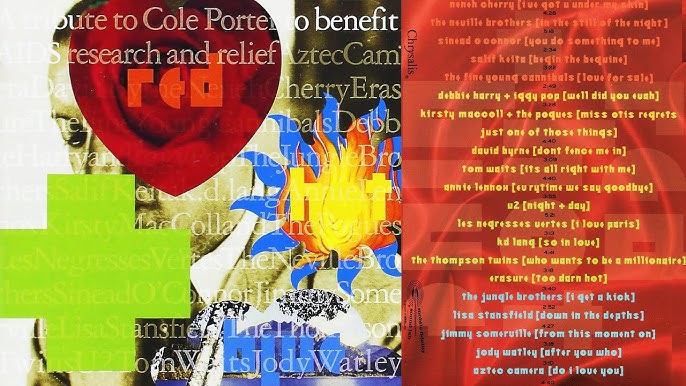
Red Hot + Blue is the first in the series of compilation albums from the Red Hot Organization. It features contemporary pop performers reinterpreting the music of Cole Porter, one of the great American songwriters of the early 20th century. It was one of the first successful tribute albums and a landmark multimedia project, with contributions from filmmakers, artists and designers in addition to musicians. The money raised went to several groundbreaking AIDS organizations, notably ACT UP and Treatment Action Group (TAG), which were responsible for forcing the government and pharmaceutical companies to release the drugs that now allow people to live with HIV.
FACTS / ORAL HISTORY
Filmmakers who made videos for the project included: Wim Wenders, Jim Jarmusch, Jonathan Demme, Alex Cox, Jean Baptiste Mondino, Percy Adlon and Neil Jordan
Artists and designers who contributed included: Jean Paul Gaultier, Keith Haring, David Wojnarowicz, Sue Coe, Barbara Kruger, Gran Fury and Jenny Holzer
The TV show was seen in over 30 countries around the world. ABC in the US demanded a different edit of the show with hosts who included Richard Gere, Whoopie Goldberg and several others. Gere’s introduction was one of the first mentions of the word ‘condom’ on network US television, outside of news programming
Pedro Almodovar wrote a treatment and was scheduled to make the video for “Don’t Fence Me In”, but couldn’t at the last minute and David Byrne directed a video himself
Most regrettable combination that didn’t, but almost happened: Lou Reed doing “I Get A Kick Out of You” directed by Martin Scorsese. The track was eventually done by The Jungle Brothers with a video by Mark Pellington
Neneh Cherry’s rap in “I’ve Got You Under My Skin” was one of the first times AIDS was described and talked about directly in popular culture
PRESS
Bella Online
The Red Hot + Blue movement was started in the early 90s’ by John Carlin. John had been working as an art critic and teacher and witnessed how AIDS was destroying his community. John got established music artists to come on board to record the songs of Cole Porter. Several Red, Hot & Blue compilation CD’s were released during the 90’s.
LONG ISLAND PRESS
One of the greatest CD compilations of all time, 1990’s RH + B was inspired, eclectic collection of songs by top artists of the time rendering Cole Porter songs– all to benefit AIDS research. As with the CD, the DVD collection of videos is sexy, provocative and most importantly, timeless. The music weathers the years well, and the videos add an extra intensity.
arkansas gazette
This astounding collection of contemporary pop performers reinterpreting the songs of Cole Porter came out in 1990, first as an album and then as a television special consisting of music videos, many by famous directors and openly portraying the effects of AIDS on society. The album sold more than a million copies worldwide and was one of the music industry’s first major AIDS benefits.
CREDITS
Produced and Directed By: Leigh Blake + John Carlin Created By: Leigh Blake, John Carlin + F. Richard Pappas Supervising Musical Producer: Steve Lillywhite
Having spent nearly a year and nine months paralyzed, experiencing higher levels of muscle pain and relatively less social interaction, I’ve gained a visceral understanding of dukkha, the Buddhist conception of pain (which encompasses the spectrum of unpleasant mental and physical sensations from mild discomfort to agony), as well as the gnostic concept of the material world as prison. Like Russian nesting dolls, our physical bodies are a prison within a prison, but what’s inside the prison? Some might call it a soul but Gnostics view it as a divine spark, one’s true self and fragment of the Pleroma, the divine realm of the universe.
As infants we’re extremely confined in terms of physical and mental abilities. Over time the parameters of our confinement expand through natural growth, learning and exercise. We can also get a sense of transcendence through relationships, social structures, art, spirituality, technology, drugs, and various physical/mental disciplines. However, all of these can also be utilized to increase pain and confinement (which Gnostics might interpret as the work of a demiurge or archons). In any case, the relative freedom one might experience is always temporary.
Expanding one’s sense of freedom or transcending confinement is often slow and difficult but losing one’s freedom and increasing confinement can be shockingly quick and easy. Both can occur at any time by random chance or either conscious or unconscious intention. If one is fortunate enough to avoid an early debilitating injury or death, one inevitably experiences accumulating loss of functions as one ages closer towards death. When death occurs the divine spark is freed from the body to reintegrate with the divine source, the Pleroma. To facilitate this process, the divine spark can be “nourished” through various means.
One of the primary ways to nourish the divine spark is to achieve Gnosis, which can be accomplished intuitively or through direct experience to gain a sense of “knowing” regarding the true nature of the world and one’s place in it. Other methods include meditation and asceticism (both of which seem to come naturally for some experiencing paralysis). Whether or not one subscribes to Gnostic ontology, the world would likely be much improved if more people practiced the various methods involved in reaching Gnosis.

 After the Crash