Next Few Days Continued

It wasn’t long after arriving at neuro ICU when hospital staff began preparing me for life on a wheelchair. Sitting on a wheelchair seemed easy enough but as I soon learned, after a few weeks lying down and after having been intubated with an endotracheal tube implanted in my windpipe, it was quite an ordeal.

To prepare for the wheelchair I needed to be centered on a sling harness which involved being rolled to my left and right as the sling was moved under me. Once centered, straps on the lower and upper sides of the sling were attached to a ceiling lift to transfer me to the chair. The rolling was enough to trigger coughing fits and dizziness but the additional movement from being slowly lifted and swung made it much worse. The process seemed excruciatingly slow and drawn-out because the tubes attached to me and accompanying hardware had to be moved as well without getting tangled or damaged.

On two occasions within two weeks my coughing fits were so violent the trach tube decannulated (partially ejected out of my throat), requiring a stat surgical team to reinstall it and stitch up the wound. Being elevated on the lift the first few times seemed to have a negative effect on my blood pressure. On a few early occasions I became dizzy to the point of seeing stars and nearly passing out.

Initially, sitting on the wheelchair was so painful I would need a dose of oxycodone to be able to stay on it for up to an hour. As days progressed I was gradually able to stay on the chair longer which was especially challenging because for some reason nurses advised I not sleep while on the chair. At first I would listen to music to stay focused, but on the second or third day of wheelchair training Danielle suggested that I try listening to “binaural beats”.

Although I had no memory of it, binaural beats were previously recommended by my brother at the trauma ICU. It’s basically a soundscape using two overlapping tones of slightly different frequencies which are perceived by the brain as a third tone which proponents believe can enhance various beneficial brain waves. The examples I listened to were found on YouTube and most sounded like very slow ascending and descending chord progressions that evoked calmness and peace, which is what I needed during the painful early phase of adjusting to the wheelchair.

I also began listening to binaural beats rather than music at night because I found some helpful for inducing sleep starting from the third or fourth night at neuro ICU.

Saturday Matinee: Santa Sangre

By Roger Ebert

Source: RogerEbert.com

To call “Santa Sangre” (1989) a horror film would be unjust to a film that exists outside all categories. But in addition to its deeper qualities, it is a horror film, one of the greatest, and after waiting patiently through countless Dead Teenager Movies, I am reminded by Alejandro Jodorowsky that true psychic horror is possible on the screen–horror, poetry, surrealism, psychological pain and wicked humor, all at once.

The movie involves the perverse emotional and physical enslavement of a son by his mother–a control all the more macabre when we learn, late in the film, the secret of its actual nature. It is also about an instinctive hatred between characters representing lust and chastity, which are both seen as perversions in a world without a sane middle way. This bold subject matter is orchestrated by Jodorowsky in a film that inspires critics to make lists, calling it Jungian, surrealistic, Felliniesque, Bunuelian, sadomasochistic, expressionist and strongly flavored by such horror classics as “The Beast With Five Fingers,” “The Hands of Orlac” and the film that guides the hero’s fantasies, “The Invisible Man.”

The story involves Fenix, the boy magician at the Circus Gringo, a shabby touring show in Mexico. Played by two of Jodorowsky’s sons (Adan at about 8, Axel at about 20), Fenix is the child of the beautiful trapeze artist Concha (Blanca Guerra) and the bloated circus owner and knife-thrower Orgo (Guy Stockwell). Always at Fenix’s side is the dwarf Aladin (Jesus Juarez), who acts as his assistant and moral support.

The little magician’s best friend is Alma (Faviola Elenka Tapia and, when older, Sabrina Dennison). She is a deaf-mute mime, the daughter of the carnal Tattooed Woman (Thelma Tixou), who works as the target for Orgo’s knives. One night when Concha is suspended above the circus ring by her hair, she sees Orgo caressing the Tattooed Lady and screams to be brought back to earth. In a rage, she surprises them in bed and throws acid on Orgo’s genitals. Bellowing with pain, he severs her arms with mighty thrusts of two knives. Then he kills himself, the acid having rendered him uninteresting to women tattooed and otherwise.

Concha’s mutilation is a cruel irony: She is the leader of a cult of women who worship a saint whose arms were cut off by rapists. Their church contains a pool of blood, no doubt suggesting menstrual fluid (Concha’s name is Mexican slang for the vagina); its members wear tunics with crossed, severed arms. When authorities arrive to bulldoze the church, there is a clash between the women and the police, and then a shouting match between Concha and the local monsignor, she screaming that the pool contains holy blood, he replying that it is red paint.

The bulldozing reveals the shabby construction of the church, mostly made of corrugated iron and possibly reflecting the film’s limited budget. If Jodorowsky’s funds were limited, however, his imagery and imagination are boundless, and this movie thrums with erotic and diabolical energy. Consider the scene where the circus elephant dies after hemorrhaging from its trunk. In a funeral both sad and funny, the beast’s great coffin is hauled by truck to a ravine and tipped over the edge–to the delight of wretched shanty-dwellers, who rip open the casket and throw bloody elephant meat to the crowd. An image like this is one of the reasons we go to the movies: It is logical, illogical, absurd, pathetic, and sublimely original. For Alejandro Jodorowsky, all in a day’s work.

Now 74 and at work on his first film in 14 years, Jodorowsky is a legendary man of many trades. Born in Chile, living mostly in Mexico and Paris, he works here in English, which has been imperfectly dubbed; oddly enough, the oddness of the dubbing adds to the film’s eerie quality.

Jodorowsky has occupied the edges of the arts. He was a clown and puppeteer, studied under the mime Marcel Marceau, filmed a mime version of Thomas Mann’s play “The Transposed Heads,” was a friend of the surrealist Arrabal, and is, in his own words, a “very famous comic-strip artist,” the author of graphic novels that have become legendary.

He is also the author of the legendary cult film “El Topo” (1970), which was both saved and doomed by John Lennon. Saved, because Lennon admired it so much, he asked his manager, Allen Klein, to buy and distribute it. Doomed, because after the film became a worldwide sensation (Jodorowsky told me in 1989) “Klein made it disappear. He says, ‘I am waiting until you die, and then I am going to have a fortune.’ He thinks he’s immortal. If he dies first, I get the film back.” So far, both men are still alive and “El Topo” is not available on video.

Jodorowsky’s visionary world owes much to the surrealists, but even more to the quirky films that Luis Bunuel made during his Mexican exile, films showing men quietly obsessed with the details of their fetishes. Fenix, his hero, is literally a man whose world is defined by his obsessions. The witness to his mother’s mutilation and his father’s suicide, he is in an insane asylum when the film opens, perched atop a tree trunk. When he returns to the world, it is to play the role of his mother’s arms and hands. He walks behind her, slips his arms through the sleeves of her garments and feeds her, plays the piano, gestures, and even caresses her body as if it is his own. Axel Jodorowsky and Blanca Guerra do this with such perfect timing that the hands seem to sense the next thought of the mother. But Fenix has no identity except as her instrument, which is why “The Invisible Man” appeals so strongly.

The first half of the film is filled with Felliniesque exuberance, celebrating the circus with its tawdry charms and sad clowns. The second half is somber and creepy, as in a scene where Fenix and four young men with Down syndrome are taken on a movie outing that ends (not unhappily) with cocaine and a visit to the red-light district.

Fenix eventually moves with his mother into a house where timbers lean everywhere at crazy angles for no apparent reason, except to evoke expressionism. And here he begins his revolt. As his mother jealously uses his hands to kill one woman after another, he recruits a muscular giantess who will be able, he thinks, to fight off any attack.

This giantess is pretty clearly a man in drag, but the movie makes no notice of that fact, and indeed many oddities pass unremarked, including the omnipresent doves and the ability of the Tattooed Lady, the dwarf and the deaf-mute girl to materialize in Fenix’s life when and how he needs them. All is finally made clear at the end, revealing how fearlessly Jodorowsky has married magic realism to Freud, in a film that is like a shriek against Momism.

Of course the movie is rated NC-17. I believe more horror films should be made for adults, so that they are free to deal with true malevolence in the world, instead of retailing the pornography of violence without consequences. A generation is growing up that equates violence with action, instead of with harm. Not long ago “The Exorcist” was re-released and some young moviegoers laughed all the way through it. A society that laughs at evil eventually laughs at good, and then it loses its way.

The quality that Jodorowsky has above all is passionate sincerity. Apart from his wildly creative style, apart from his images, apart from his story inventions, he has strong moral feelings. He has an instinctive sympathy for Fenix, who was born into a world of fanaticism and cruelty, and has tried, with the help of a deaf girl and a dwarf, to get back the soul that was warped by his father and trapped by his mother. Maybe one difference between great horror films and all the others is that the great ones do not celebrate evil, but challenge it.

Watch Santa Sangre on Kanopy here: https://www.kanopy.com/en/product/6683745

The Next Few Days at Neuro ICU

Though I had moments of deep sleep at Harborview’s neuro ICU, more often than not brief lapses into sleep were interrupted by nurses and/or assistants dropping in to administer meds, take vitals, draw blood, or change my sleep position to prevent pressure sores. Of all the various scheduled procedures the position changes were the most disruptive.

In my weakened state at the time changing positions, such as being tilted left or right, would be enough to drastically alter my blood pressure, sometimes causing dizziness. It would also cause coughing fits due to the movement loosening mucus built up around my trach tube. Because of the difficulty coughing and swallowing, I needed the assistance of a suction tube to be able to breathe.

When I was able to sleep deeply enough to dream, I dreamt of walking and exploring familiar environments from the past (usually schools and workplaces). Such dreams continue to be the most common type to this day and probably stem from an innate need to explore. I’m always walking alone and never encounter others in the various environments. Sometimes I find useful items like a flashlight which I need to use, for the buildings I explore are often dark (though for some reason I never feel afraid or anxious, just curious). After a few months of using a wheelchair I’d occasionally realize within the dream that I shouldn’t be able to walk and would wake up immediately after having that thought.

Because of the lack of deep sleep during the night in addition to the regular doses of meds, I was often tired throughout the following day. Even communication was tiring despite it usually being one-way and requiring simple yes/no answers. Listening comprehension was itself a struggle at the time, which was why I opted to listen to music rather than podcasts.

For communicating more detailed information, Danielle had to review with me a system taught by a speech therapist at the trauma ICU (which I had no memory of). It was a simple but tedious way to spell out words using a laminated grid with color-coded quadrants containing a set of letters in alphabetical order.

To communicate a specific word I would indicate the color of the quadrant with the first letter of the word by silently saying the name of the color (hoping the listener can read lips) while focusing my eyes on the quadrant linked to the color. Once the correct quadrant was understood I would mouth the name of the letter and if the listener didn’t understand they would have to ask yes or no for each letter in the section. When the correct letter was found they would write it down and move to the next until the word was deduced.

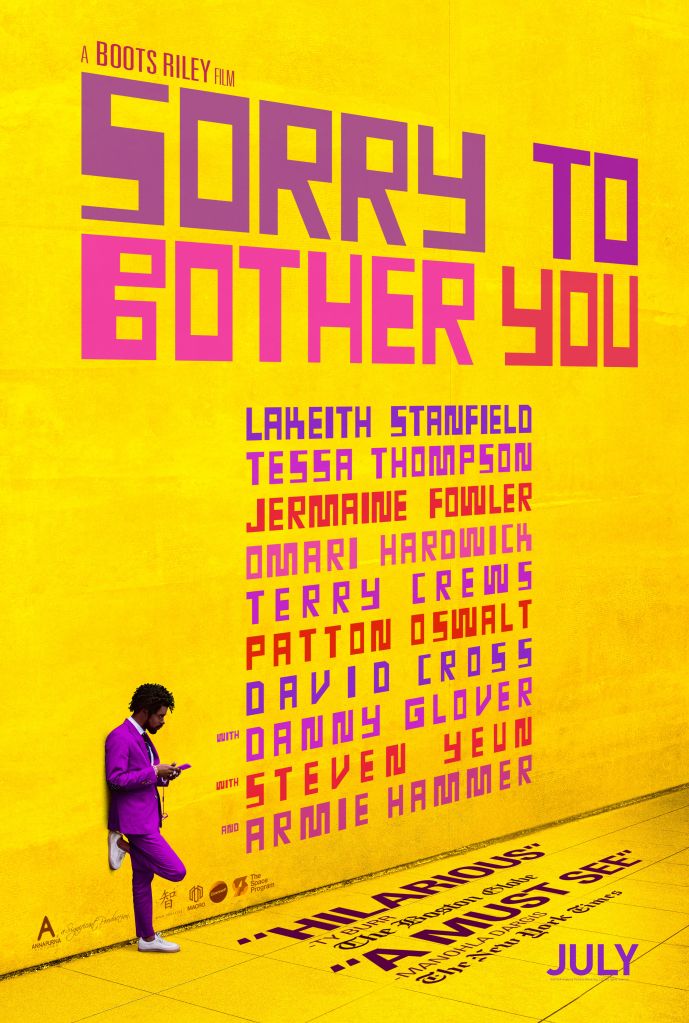
Fortunately this system didn’t need to be used very often at neuro ICU, mostly when Danielle or my mom wanted to help me select media to keep myself distracted while bedridden and unable to talk. Finding something I wanted to watch was often difficult because what I had in mind was something escapist yet relevant, abstract but not overly convoluted and with a message of hope. The films that helped me most to get through those times were Strawberry Mansion, Linoleum, and The Fall. In addition I had time to rewatch dystopian fare I’ve always enjoyed such as Children of Men and Max Headroom.

Danielle and my mom spent much of the time monitoring my health and getting help from nurses as needed, providing water and the suction tube when needed, working on medical, insurance, and financial matters, and offering words of support which I could acknowledge but not reciprocate. I imagined it might have been almost as traumatic watching me go through various ordeals as experiencing them first-hand. Later in the week it was determined I was ready to sit in a wheelchair, which initially wasn’t pleasant but at least it gave me something to do.

Saturday Matinee: Metropia

MOVIE REVIEW: TRIBECA: Metropia – Swedish Animated Dystopic Film’s Look is Stunning!

By Sheldon Wiebe

Source: Eclipse Magazine

Metropia is a stranger film than the average dystopia. With a visual design that would be appropriate for 1984 and its depiction of a Europe connected by a vast subway complex called The Metro and a plot that includes a biological mind control device disseminated by shampoo, Metropia is definitely a unique experience.

Roger [voiced by Vincent Gallo] is a drone who works at Supercall, the mother of all telemarketing/tech help companies. He lives in a shabby apartment with his exotic looking girlfriend, Anna [Sofia Hein], and rides a bike to work because he doesn’t trust the Metro. The Sweden in which he lives is a grey, grey place – as is all of Europe, we learn over the course of the film. He is as normal/unremarkable as a person can get. His biggest fantasy is to meet the model for the shampoo that, unbeknownst to him, has left his thoughts open to the ominous Trexx corporation.

Being as normal as he is, Roger is startled to realize that he’s hearing voices – or rather a voice – in his head. Freaked, he manages to finish his shift and get home. The next morning, he has to take The Metro to work – someone has trashed his bike. In the station, he spies the woman from the shampoo. He follows her. She is Nina [Juliette Lewis] and she not only confronts him, she seems to know about the voice in head! She also seems to know what to do about that.

Metropia is a great looking film. The animation – like some absurd CG hybrid of Terry Gilliam’s more fluid cutout work and Gerry Anderson’s Supermarionation – is extremely well done and carries the story as well as setting a very specific mood. Director/co-writer [with Stig Larsson and Frederik Edin] Tarik Saleh keeps things to a very deliberate pace for most of the film, with only a few moments of accelerated action.

Considering the number of people who worked on the script [comparatively few for an animated film], the story seems to be pretty skeletal. Everything moves, more or less, in a single direction and [with only a couple of exceptions] at a single pace – and the film doesn’t quite hang together.

The biggest problem has to be that Roger hears that voice in his head, but is still able to do whatever he wants – which makes him unique in a world of people whose lives are seemingly controlled by others. It’s never explained why this should be – and there’s no real reason for Nina to take him bed, either. Roger is such an unremarkable guy that the film might have worked better had she used her sexuality to get him to do what she wanted with just the promise of sex as a motivator. Still, Gallo’s washed out vocal performance as Roger is spot on, as is Lewis’ turn as Nina. If we buy them, then we buy the film – and they work.

Some of the best moments of the film come with the CEO of Trexx, Ivan Bahn [Udo Kier] explains to investors just how the company works – and how the shampoo figures in the company’s bottom line. His demonstration of the effects of the shampoo –on a Texan named Wayne Marshall [Indy Neidell] – is particularly effective.

Metropia may be flawed, but it’s still quite the visual feast, and definitely worth a look.

Watch Metropia on Kanopy here: https://www.kanopy.com/en/product/5845007

Saturday Matinee: Amores Perros

By James Berardinelli

Source: ReelViews

Without a doubt, the majority of the reviews of Amores Perros, the acclaimed debut feature from Mexican filmmaker Alejandro González Iñárritu, will, at one time or another, invoke Pulp Fiction. There are undeniable similarities, although most of them are at the surface level. Amores Perros, like Quentin Tarantino’s Oscar-nominated opus, deals with men and women who live on the seedy side of life. The plot unravels episodically and in a non-linear fashion, with characters from one segment occasionally appearing in, or passing through, another. However, one of Pulp Fiction‘s trademarks was to glamorize the gangster – to make the traditional “bad guy” seem hip and interesting. This was done through clever dialogue and stylish filmmaking techniques. In Amores Perros, criminals are not romanticized. They are exposed for what they are – human beings whose moral compasses have become twisted. So, although the territory may be familiar to viewers of Pulp Fiction, the vantage point is radically different.

Amores Perros introduces us to a veritable Rogues Gallery of individuals. Of the seven or eight significant characters traversing Iñárritu’s terrain, only one could be considered sympathetic. The others comprise a web of corruption and deceit. There are hit men, murderers, philanderers, thieves, betrayers, and other assorted riff-raff. Tarantino’s anti-heroes are cool and suave, with always the right one-liner to offer. Iñárritu’s are brutal and lacking even a modicum of charisma.

The first two we meet are Octavio (Gael García Bernal) and Susana (Vanessa Bauche). She’s his sister-in-law, but that doesn’t stem his ardor for her, and, because he treats her with a degree of kindness that her brutish husband, Ramiro (Marco Pérez), never shows, she can’t help but be attracted to him. Octavio is determined to make enough money so that he and Susana can run away together (along with her infant son), but, in Mexico City, where poverty abounds, clean money is hard to find. Ramiro’s meager income as a grocery store clerk is supplemented by convenience store hold ups, but that’s not a path Octavio is interested in taking. Instead, he decides to get involved in dog fighting, and he’s fortunate to own a real winner. But, once Ramiro finds out about his little brother’s windfall, he wants a piece of the action, and all of Octavio’s carefully laid plans are put in jeopardy.

Meanwhile, a couple of rungs higher on the social ladder are Daniel (Álvaro Guerrero) and Valeria (Goya Toledo). She’s a world-class model who has hit the big time. Her face and body are plastered all over billboards throughout Mexico City. He’s a magazine publisher who has left his wife and two children to be with her. Together, they make the perfect couple – young, good-looking, and in love – until tragedy strikes. Valeria is seriously injured in a car accident and Daniel must cope with living with a mentally and physically crippled woman whose modeling career is at an end. Suddenly, the rosy life he envisioned reeks of decay.

Finally, there’s Chivo (Emilio Echevarría), a mysterious, wild-looking figure who hovers around the periphery of the other stories until his tale is finally told. Chivo is an ex-guerilla who abandoned his wife and daughter for The Cause. Now, many years later, he lives with regrets. He spies on his adult child from afar, never having the courage to approach her, while he takes odd jobs as a hit man to feed himself and his small menagerie of mangy dogs. But, when Chivo is hired by one brother to kill another over money, he arrives at a few realizations about the importance of family.

The dogs in this film are almost as important as the humans. Canines feature prominently in all three stories. Octavio makes his fortune by fighting dogs. Valerie loves her pooch more than a child (and, one might argue, more than Daniel). And Chivo treats his animals with greater respect than he accords to any human. By elevating dogs to this level of importance, Iñárritu is making a statement about the level to which society has descended. It’s a sad commentary about a culture where individuals care more about dogs than other human beings.

Amores Perros‘ timeline is not linear. It curves back on itself, but not in a manner that is intended to confound the audience. The film begins with an pivotal occurrence that happens half-way through the movie, then proceeds to show events that lead up to that moment, and, later, what happens afterwards. Chivo’s story plays out in the background for most of the film, until, during the final forty-five minutes, it is brought to the fore while the other tales are wrapped up on the periphery. Iñárritu’s approach isn’t unique, but it is unusual, and it’s one of the elements that will keep viewers involved in Amores Perros from beginning to end.

Iñárritu has surrounded himself with a strong cast. Veteran Emilio Echevarría is magnetic as Chivo, with blazing eyes staring out from beneath bushy eyebrows. They are the eyes of a fanatic, but there’s also a sense of almost unspeakable loss in them as they gaze in the direction of his daughter. Álvaro Guerrero brings a youthful energy to the part of Octavio, and Goya Toledo is suitably fragile and spoiled as the model who is used to having the world bow down in front of her. In fact, there isn’t a weak performance to be found throughout the movie; even the trained dogs do solid jobs.

Amores Perros has won an impressive number of awards in film festivals across the globe. Watching the film, it’s not hard to understand why. Iñárritu’s style contains elements of Tarantino, Peckinpah, and others, but, ultimately, the synthesis is all his own. Even though there’s really no one in this film we can like, root for, or sympathize with, the intricacies of the narrative and the its themes are strong enough to ensure that we will not lose interest. Amores Perros is more than just a strong debut; it’s good, gritty filmmaking.

Watch Amores Perros on Hoopla here: https://www.hoopladigital.com/title/12158942?utm_source=MARC&Lid=hhh985