
Big Corporations Have an Overwhelming Amount of Power Over Our Food Supply

By Michael Snyder

Source: The Economic Collapse

From our fields to our forks, huge corporations have an overwhelming amount of power over our food supply every step of the way.  Right now there are more than 313 million people living in the United States, and the job of feeding all of those people is almost entirely in the hands of just a few dozen monolithic companies.  If you do not like how our food is produced or you don’t believe that it is healthy enough, it isn’t very hard to figure out who is to blame.  These mammoth corporations are not in business to look out for the best interests of the American people.  Rather, the purpose of these corporations is to maximize wealth for their shareholders.  So the American people end up eating billions of pounds of extremely unhealthy food that is loaded with chemicals and additives each year, and we just keep getting sicker and sicker as a society.  But these big corporations are raking in big profits, so they don’t really care.

If we did actually have a capitalist system in this country, we would have a high level of competition in the food industry.  But instead, the U.S. food industry has become increasingly concentrated with each passing year.  Just consider the following numbers about the U.S. agricultural sector…

The U.S. agricultural sector suffers from abnormally high levels of concentration. Most economic sectors have concentration ratios around 40%, meaning that the top four firms in the industry control 40% of the market. If the concentration ratio is above 40%, experts believe competition can be threatened and market abuses are more likely to occur: the higher the number, the bigger the threat.

The concentration ratios in the agricultural sector are shocking.

-Four companies own 83.5% of the beef market.
-The top four firms own 66% of the hog industry.
-The top four firms control 58.5% of the broiler chicken industry.
-In the seed industry, four companies control 50% of the proprietary seed market and 43% of the commercial seed market worldwide.
-When it comes to genetically engineered (GE) crops, just one company, Monsanto, boasts control of over 85% of U.S. corn acreage and 91% of U.S. soybean acreage.

When so much power is concentrated in so few hands, it creates some tremendous dangers.

And many of these giant corporations (such as Monsanto) are extremely ruthless.  Small farmers all over America are being wiped out and forced out of the business by the predatory business practices of these huge companies

Because farmers rely on both buyers and sellers for their business, concentrated markets squeeze them at both ends. Sellers with high market power can inflate the prices of machinery, seeds, fertilizers and other goods that farmers need for their farms, while powerful buyers, such as processors, suppress the prices farmers are paid. The razor-thin profit margins on which farmers are forced to operate often push them to “get big or get out”—expanding into mega-operations or exiting the business altogether.

Of course the control that big corporations have over our food supply does not end at the farms.

The distribution of our food is also very highly concentrated.  The graphic shared below was created by Oxfam International, and it shows how just 10 gigantic corporations control almost everything that we buy at the grocery store…

10-Corporations-Control-What-We-Eat-425x265

And these food distributors are often not very good citizens either.

For example, it was recently reported that Nestle is running a massive bottled water operation on a drought-stricken Indian reservation in California

Among the windmills and creosote bushes of San Gorgonio Pass, a nondescript beige building stands flanked by water tanks. A sign at the entrance displays the logo of Arrowhead 100% Mountain Spring Water, with water flowing from a snowy mountain. Semi-trucks rumble in and out through the gates, carrying load after load of bottled water.

The plant, located on the Morongo Band of Mission Indians’ reservation, has been drawing water from wells alongside a spring in Millard Canyon for more than a decade. But as California’s drought deepens, some people in the area question how much water the plant is bottling and whether it’s right to sell water for profit in a desert region where springs are rare and underground aquifers have been declining.

Nestle doesn’t stop to ask whether it is right or wrong to bottle water in the middle of the worst drought in the recorded history of the state of California.

They have the legal right to do it and they are making large profits doing it, and so they are just going to keep on doing it.

Perhaps you are thinking that you can avoid all of these corporations by eating organic and by shopping at natural food stores.

Well, it isn’t necessarily that easy.

According to author Wenonah Hauter, the “health food industry” is also extremely concentrated

Over the past 20 years, Whole Foods Market has acquired its competition, including Wellspring Grocery, Bread of Life, Bread & Circus, Food for Thought, Fresh Fields, Wild Oats Markets and others. Today the chain dominates the market because it has no national competitor. Over the past five years its gross sales have increased by half (47 percent) to $11.7 billion, and its net profit quadrupled to $465.6 million. One of the ways it has achieved this profitability is by selling conventional foods under the false illusion that they are better than products sold at a regular grocery store. Consumers falsely conclude that these products have been screened and are better, and they are willing to pay a higher price.

The distribution of organic foods is also extremely concentrated. A little-known company, United Natural Foods, Inc. (UNFI) now controls the distribution of organic and natural products. Publically traded, the company has a contract with Whole Foods and it is the major source of these products for the remaining independent natural food stores. This relationship has resulted in increasingly high prices for these foods. Small manufacturers are dependent on contracts with UNFI to get their products to market and conversely, small retailers often have to pay a premium price for products because of their dependence on this major distributor. Over the past five years, UNFI’s net sales increased by more than half (55.6 percent) $5.2. billion. Its net profit margin increased by 88 percent to $91 million.

Everywhere you look, the corporations are in control.

And this is especially true when you look at big food retailers such as Wal-Mart.

Right now, grocery sales account for about half of all business at Wal-Mart, and approximately one out of every three dollars spent on groceries in the United States is spent at Wal-Mart.

That is absolutely astounding, and it obviously gives Wal-Mart an immense amount of power.

In fact, if you can believe it, Wal-Mart actually purchases a billion pounds of beef every single year.

So the next time someone asks you where the beef is, you can tell them that it is at Wal-Mart.

On the restaurant side, the ten largest fast food corporations account for 47 percent of all fast food sales, and the love affair that Americans have with fast food does not appear to be in danger of ending any time soon.

Personally, if you do not like how these corporate giants are behaving, you can always complain.

But you are just one person among 313 million, and most of these big corporations are not going to consider the ramblings of one person to be of any significance whatsoever.

Collectively, however, we have great power.  And the way that we are going to get these big corporations to change is by voting with our wallets.

Unfortunately, the vast majority of Americans seem quite satisfied with the status quo.  So the population as a whole is likely going to continue to get sicker, fatter and less healthy with each passing year, and the big food corporations are going to keep becoming even more powerful.
Podcast Roundup

7/12: Host Douglas Lain has a freewheeling discussion with Steven Michalkow connecting an odd episode of Columbo with psychoanalysis, theology, philosophy, surrealism, “The Prisoner” TV series and beyond:


http://dietsoap.podOmatic.com/enclosure/2014-04-11T10_19_14-07_00.mp3

7/13: On Expanding Minds, author Mitch Horowitz discusses the history of positive thinking, William James and the modern skeptic movement among other related topics:


http://expandingmind.podbean.com/mf/web/in3m76/ExpandingMind_071314.mp3

7/14: Paul Molloy and Mark Thornton of the Von Mises Institute discuss potential pitfalls of the recent minimum wage increase in Seattle:


http://library.mises.org//media/Interviews/Minimum%20Wage%20and%20Unintended%20Consequences.mp3

7/14: On The Progressive Commentary Hour retired US Army Colonel Larry Wilkerson discusses parallels between the build up to war with Syria and build up to the invasion of Iraq followed by Dr. Douglas Hall, Executive Director of National Priorities Project, who discusses the backwards priorities of the federal budget.


http://s50.podbean.com/pb/41fd9bbc863f4b9cc489a55a2783e998/53c5c21e/data2/blogs18/371244/uploads/PCH_Madhi_070714.mp3

7/15: Guillermo Jimenez and Danny Benavides tackle the immigration issue and the escalating “humanitarian crisis” along the US-Mexico border on Traces of Reality Radio:


http://tracesofreality.com/wp-content/uploads/2014/07/Traces-of-Reality-Radio-2014.07.11-Danny-Benavides.mp3

7/15: On the Project Censored Show, Mickey Huff is joined by Ken Walden of “What the World Could Be” to discuss public banking for the 99%:


http://s39.podbean.com/pb/c913d2484774a3f6ad1f69a136e87968/53c5c81f/data1/blogs18/405745/uploads/ProjectCensored071414.mp3

Israel is Captive to its “Destructive Process”

By Chris Hedges

Source: OpEdNews.com

Raul Hilberg in his monumental work, “The Destruction of the European Jews” chronicled a process of repression that at first was “relatively mild” but led, step by step, to the Holocaust. It started with legal discrimination and ended with mass murder. “The destructive process was a development that was begun with caution and ended without restraint,” Hilberg wrote.

The Palestinians over the past few decades have endured a similar “destructive process.” They have gradually been stripped of basic civil liberties, robbed of assets including much of their land and often their homes, have suffered from mounting restrictions on their physical movements, been blocked from trading and business, especially the selling of produce, and found themselves increasingly impoverished and finally trapped behind walls and security fences erected around Gaza and the West Bank.

“The process of destruction [of the European Jews] unfolded in a definite pattern,” Hilberg wrote. “It did not, however, proceed from a basic plan. No bureaucrat in 1933 could have predicted what kind of measures would be taken in 1938, nor was it possible in 1938 to foretell the configuration of the undertaking in 1942. The destructive process was a step-by-step operation, and the administrator could seldom see more than one step ahead.”

There will never be transports or extermination camps for the Palestinians, but amid increasing violence against Palestinians larger and larger numbers of them will die, in airstrikes, targeted assassinations and other armed attacks. Hunger and misery will expand. Israeli demands for “transfer” — the forced expulsion of Palestinians from occupied territory to neighboring countries — will grow.

The Palestinians in Gaza live in conditions that now replicate those first imposed on Jews by the Nazis in the ghettos set up throughout Eastern Europe. Palestinians cannot enter or leave Gaza. They are chronically short of food — the World Health Organization estimates that more than 50 percent of children in Gaza and the West Bank under 2 years old have iron deficiency anemia and reports that malnutrition and stunting in children under 5 are “not improving” and could actually be worsening. Palestinians often lack clean water. They are crammed into unsanitary hovels. They do not have access to basic medical care. They are stateless and lack passports or travel documents. There is massive unemployment. They are daily dehumanized in racist diatribes by their occupiers as criminals, terrorists and mortal enemies of the Jewish people.

“A deep and wide moral abyss separates us from our enemies,” Israeli Prime Minister Benjamin Netanyahu said recently of the Palestinians. “They sanctify death while we sanctify life. They sanctify cruelty while we sanctify compassion.”

Ayelet Shaked, a member of the right-wing Jewish Home Party, on her Facebook page June 30 posted an article written 12 years ago by the late Uri Elitzur, a leader in the settler movement and a onetime adviser to Netanyahu, saying the essay is as “relevant today as it was then.” The article said in part: “They [the Palestinians] are all enemy combatants, and their blood shall be on all their heads. Now this also includes the mothers of the martyrs, who send them to hell with flowers and kisses. They should follow their sons, nothing would be more just. They should go, as should the physical homes in which they raised the snakes. Otherwise, more little snakes will be raised there.”

The belief that a race or class of people is contaminated is used by ruling elites to justify quarantining the people of that group. But quarantine is only the first step. The despised group can never be redeemed or cured — Hannah Arendt noted that all racists see such contamination as something that can never be eradicated. The fear of the other is stoked by racist leaders such as Netanyahu to create a permanent instability. This instability is exploited by a corrupt power elite that is also seeking the destruction of democratic civil society for all citizens — the goal of the Israeli government (as well as the goal of a U.S. government intent on stripping its own citizens of rights). Max Blumenthal in his book “Goliath: Life and Loathing in Greater Israel” does a masterful job of capturing and dissecting this frightening devolution within Israel.

The last time Israel mounted a Gaza military assault as severe as the current series of attacks was in 2008, with Operation Cast Lead, which lasted from Dec. 27 of that year to Jan. 18, 2009. That attack saw 1,455 Palestinians killed, including 333 children. Roughly 5,000 more Palestinians were injured. A new major ground incursion, which would be designed to punish the Palestinians with even greater ferocity, would cause a far bigger death toll than Operation Cast Lead did. The cycle of escalating violence, this “destructive process,” as the history of the conflict has illustrated, would continue at an accelerating rate.

The late Yeshayahu Leibowitz, one of Israel’s most brilliant scholars, warned that, followed to its logical conclusion, the occupation of the Palestinians would mean “concentration camps would be erected by the Israeli rulers” and “Israel would not deserve to exist, and it will not be worthwhile to preserve it.” He feared the ascendancy of right-wing, religious Jewish nationalists and warned that “religious nationalism is to religion what National Socialism was to socialism.” Leibowitz laid out what occupation would finally bring for Israel:

“The Arabs would be the working people and the Jews the administrators, inspectors, officials, and police — mainly secret police. A state ruling a hostile population of 1.5 to 2 million foreigners would necessarily become a secret-police state, with all that this implies for education, free speech and democratic institutions. The corruption characteristic of every colonial regime would also prevail in the State of Israel. The administration would suppress Arab insurgency on the one hand and acquire Arab Quislings on the other. There is also good reason to fear that the Israel Defense Force, which has been until now a people’s army, would, as a result of being transformed into an army of occupation, degenerate, and its commanders, who will have become military governors, resemble their colleagues in other nations.”

Israel is currently attacking a population of 1.8 million that has no army, no navy, no air force, no mechanized military units, no command and control and no heavy artillery. Israel pretends that this indiscriminate slaughter is a war. But only the most self-deluded supporter of Israel is fooled. The rockets fired at Israel by Hamas — which is committing a war crime by launching those missiles against the Israeli population — are not remotely comparable to the 1,000-pound iron fragmentation bombs that have been dropped in large numbers on crowded Palestinian neighborhoods; the forced removal of some 300,000 Palestinians from their homes; the more than 160 reported dead — the U.N. estimates that 77 percent of those killed in Gaza have been civilians; the destruction of the basic infrastructure; the growing food and water shortages; and the massing of military forces for a possible major ground assault.

When all this does not work, when it becomes clear that the Palestinians once again have not become dormant and passive, Israel will take another step, more radical than the last. The “process of destruction” will be stopped only from outside Israel. Israel, captive to the process, is incapable of imposing self-restraint.

A mass movement demanding boycotts, divestment and sanctions is the only hope now for the Palestinian people. Such a movement must work for imposition of an arms embargo on Israel; this is especially important for Americans because weapons systems and attack aircraft provided by the U.S. are being used to carry out the assault. It must press within the United States for cutoff of the $3.1 billion in military aid that the U.S. gives to Israel each year. It must organize to demand suspension of all free trade and other agreements between the U.S. and Israel. Only when these props are knocked out from under Israel will the Israeli leadership be forced, as was the apartheid regime in South Africa, to halt its “destructive process.” As long as these props remain, the Palestinians are doomed. If we fail to act we are complicit in the slaughter.

The “Makers” and “Takers” — Not Who You Think

corporate_welfare_medium

By Kevin Carson

Source: Center for a Stateless Society

The old “53% vs. 47%” meme that got so much attention in the 2012 election resurfaced this week when it came out that Colorado gubernatorial candidate Bob Beauprez apparently first coined it at a 2010 Rotary Club speech. The 47% who pay no income tax, he said back then, are “dependent on the largesse of government” and “perfectly happy that someone else is paying the bill.” The talking point got traction with the Tea Party and was soon picked up by politicians like Paul Ryan (who warned we were approaching “a net majority of takers vs. makers”) and Mitt Romney.

Of course this is pure buncombe.  It presupposes that high taxable incomes result primarily from being “makers,” when the truth is just the opposite. The higher your income, in fact, the more likely you’re a taker who’s — all together now! — dependent on government.

It’s possible to get moderately wealthy — say, an income that qualifies you for the “top 1%,” which is somewhere under $400,000, or assets in the low millions — through genuine entrepreneurship. Even at this level, of course, it’s more likely you have an income heavily inflated by membership in a licensing cartel, or help manage a highly authoritarian, statist corporation where your “productivity” — and bonuses — are defined by how effectively you shaft the people whose skills, relationships and other human capital are actually responsible for the organization’s productivity. But it’s at least possible to get this rich by being a maker of sorts, by being more adept than others at anticipating and meeting real human needs.

But you don’t get to be super-rich — to the tune of hundreds of millions or billions of dollars — by making stuff. You get that filthy rich only through crime of one sort or another (even if it’s technically perfectly legal in this society). You get the really big-time money not by making stuff or doing stuff, but by controlling the conditions under which other people are allowed to make stuff and do stuff. You get super-rich by getting into a position where you can fence off opportunities to produce, enclosing those natural opportunities as a source of rent. You do it by collecting tolls and tribute from those who actually make stuff, as a condition of not preventing them from doing so. In other words you get super-rich by being a parasite and extorting protection money from productive members of society, with the help of government.

So don’t be fooled by the fact that some of us aren’t paying any income taxes. We pay lots of taxes — to rich takers who live off our largesse. The portion of your rent or mortgage that results from the enormous tracts of vacant and unimproved land held out of use through artificial property rights is a tax to the landlord. The 95% of the price of drugs under patent, or Bill Gates’s software, is a tax you pay to the owners of “intellectual property” monopolies. So is the portion of the price you pay for manufactured goods, over and above actual materials and labor, that results from embedded rents on patents and enormous brand-name markups on (for example) Nike sneakers over and above the few bucks a pair the sweatshops contract to make them for. So is the estimated 20% oligopoly price markup for industries where a few corporations control half or more of output. If by chance you do pay federal income tax, half of it goes to support the current military establishment or pay off debt from past wars — wars fought for the sake of giant corporations.

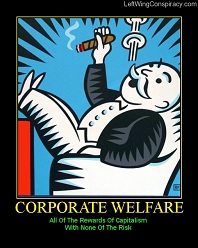
The “takers,” in short, are the people Romney spoke to at $1000/plate fundraisers, who pay Hillary Clinton several hundred grand for a speech reassuring them Wall Street’s not to blame. The entire Fortune 500, the entire billionaire plutocracy, depends on largesse from us makers — and they can only do it with government help.

Seralini Republished: Roundup-ready GMO maize causes serious health damage

monsantoskull_dees

By Oliver Tickell

Source: The Ecologist

A scientific study that identified serious health impacts on rats fed on ‘Roundup ready’ GMO maize has been republished following its controversial retraction under strong commercial pressure. Now regulators must respond and review GMO and agro-chemical licenses, and licensing procedures.

A highly controversial paper by Prof Gilles-Eric Séralini and colleagues has been republished after a stringent peer review process.

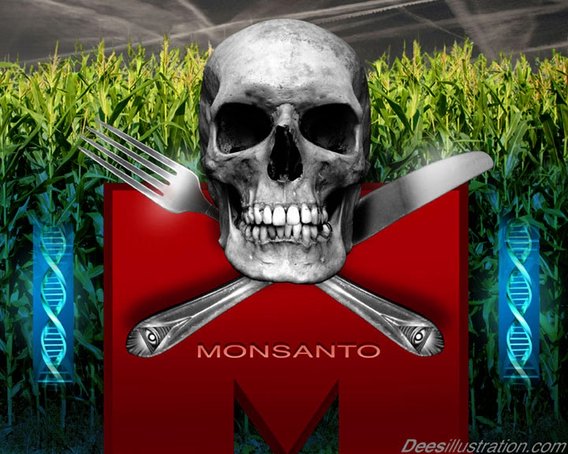
The chronic toxicity study examines the health impacts on rats of eating  a commercialized genetically modified (GM) maize, Monsanto’s NK603 glyphosate-based herbicide Roundup.

The original study, published in Food and Chemical Toxicology (FCT) in September 2012, found severe liver and kidney damage and hormonal disturbances in rats fed the GM maize and low levels of Roundup that are below those permitted in drinking water in the EU.

However it was retracted by the editor-in-chief of the Journal in November 2013 after a sustained campaign of criticism and defamation by pro-GMO scientists.

Toxic effects were found from the GM maize tested alone, as well as from Roundup tested alone and together with the maize. Additional unexpected findings were higher rates of large tumours and mortality in most treatment groups.

Criticisms addressed in the new version

Now the study has been republished by Environmental Sciences Europe. The republished version contains extra material addressing criticisms of the original publication.

The raw data underlying the study’s findings are also published – unlike the raw data for the industry studies that underlie regulatory approvals of Roundup, which are kept secret. However, the new paper presents the same results as before and the conclusions are unchanged.

The republication restores the study to the peer-reviewed literature so that it can be consulted and built upon by other scientists.

The republished study is accompanied by a separate commentary by Prof Séralini’s team (also published on The Ecologist) describing the lobbying efforts of GMO crop supporters to force the editor of FCT to retract the original publication.

The authors explain that the retraction was “a historic example of conflicts of interest in the scientific assessments of products commercialized worldwide.”

“We also show that the decision to retract cannot be rationalized on any discernible scientific or ethical grounds. Censorship of research into health risks undermines the value and the credibility of science; thus, we republish our paper.”

Paper subjected to extraordinary scrutiny and peer review

Claire Robinson, editor of GMOSeralini.org, commented: “This study has now successfully passed no less than three rounds of rigorous peer review.”

First the paper was peer reviewed for its initial publication in Food and Chemical Toxicology, and according to the authors it passed with only minor revisions.

The second review involved a non-transparent examination of Prof Séralini’s raw data by a secret panel of unnamed persons organized by the editor-in-chief of FCT, A. Wallace Hayes, in response to criticisms of the study by pro-GMO scientists.

In a letter to Prof Séralini, Hayes admitted that the anonymous reviewers found nothing incorrect about the results, but argued that the tumour and mortality observations in the paper were “inconclusive”, and this justified his decision to retract the study:

“A more in-depth look at the raw data revealed that no definitive conclusions can be reached with this small sample size regarding the role of either NK603 or glyphosate in regards to overall mortality or tumor incidence. Given the known high incidence of tumors in the Sprague-Dawley rat, normal variability cannot be excluded as the cause of the higher mortality and incidence observed in the treated groups.”

“The rationale given for the retraction was widely criticized by scientists as an act of censorship and a bow to the interests of the GMO industry”, says Robinson.

“Some scientists pointed out that numerous published scientific papers contain inconclusive findings, including Monsanto’s own short (90-day) study on the same GM maize, and have not been retracted. The retraction was even condemned by a former member of the editorial board of FCT.”

Now the study has passed a third peer review arranged by the journal that is republishing the study, Environmental Sciences Europe.

Let the critics carry out their own studies

Dr Michael Antoniou, a molecular geneticist based in London, commented, “Few studies would survive such intensive scrutiny by fellow scientists.

“The republication of the study after three expert reviews is a testament to its rigour, as well as to the integrity of the researchers. If anyone still doubts the quality of this study, they should simply read the republished paper. The science speaks for itself.

“If even then they refuse to accept the results, they should launch their own research study on these two toxic products that have now been in the human food and animal feed chain for many years.”

Dr Jack A Heinemann, Professor of Molecular Biology and Genetics, University of Canterbury New Zealand, said: “I applaud Environmental Sciences Europe for submitting the work to yet another round of rigorous blind peer review and then bravely standing by the process and the recommendations of its reviewers, especially after witnessing the events surrounding the first publication.

“This study has arguably prevailed through the most comprehensive and independent review process to which any scientific study on GMOs has ever been subjected.”

‘Significant biochemical disturbances and physiological failures’

The study examines the health effects on rats of eating Roundup-tolerant NK603 genetically modified (GM) maize (from 11% in the diet), cultivated with or without Roundup application, and Roundup alone (from 0.1 ppb of the full pesticide containing glyphosate and adjuvants) in drinking water. It found:

  • “Biochemical analyses confirmed very significant chronic kidney deficiencies, for all treatments and both sexes; 76% of the altered parameters were kidney-related.
  • “In treated males, liver congestions and necrosis were 2.5 to 5.5 times higher. Marked and severe nephropathies were also generally 1.3 to 2.3 times greater.
  • “In females, all treatment groups showed a two- to threefold increase in mortality, and deaths were earlier.
  • “This difference was also evident in three male groups fed with GM maize.
  • “All results were hormone- and sex-dependent, and the pathological profiles were comparable.
  • “Females developed large mammary tumors more frequently and before controls;
  • “the pituitary was the second most disabled organ;
  • “the sex hormonal balance was modified by consumption of GM maize and Roundup treatments.
  • “Males presented up to four times more large palpable tumors starting 600 days earlier than in the control group, in which only one tumor was noted.
  • “These results may be explained by not only the non-linear endocrine-disrupting effects of Roundup but also by the overexpression of the EPSPS transgene or other mutational effects in the GM maize and their metabolic consequences.
  • “Our findings imply that long-term (2 year) feeding trials need to be conducted to thoroughly evaluate the safety of GM foods and pesticides in their full commercial formulations.”

The paper concludes: “Taken together, the significant biochemical disturbances and physiological failures documented in this work reveal the pathological effects of these GMO and R treatments in both sexes, with different amplitudes.

“They also show that the conclusion of the Monsanto authors that the initial indications of organ toxicity found in their 90-day experiment were not ‘biologically meaningful’ is not justifiable.

“We propose that agricultural edible GMOs and complete pesticide formulations must be evaluated thoroughly in long-term studies to measure their potential toxic effects.”

Regulators must take these results seriously

Dr Heinemann commented: “The work provides important new knowledge that must be taken into account by the community that evaluates and reports upon the risks of genetically modified organisms, indeed upon all sources of pesticide in our food and feed chains.”

According to Patrick Holden, Chief Executive of the Sustainable Food Trust (SFT) the study highlights the inadequacy of current safety testing:

“The most obvious deficiency relates to the fact that the current approval process is based on animal feeding trials of only 90 days, a totally inadequate duration when one considers that chronic diseases in animals and humans do not usually manifest until mid-life.”

A second deficiency, he added, relates to the newly emerging science of epigenetics – which demonstrates that endocrine systems can be seriously disrupted by the presence of chemical residues at concentrations as low as a few parts per billion.

“This turns on its head the logic of an approval process based on MRL (maximum residue levels), since it is becoming increasingly apparent that these chemicals have patterns of non-linear response.”

An ‘urgent review’ of pesticide licensing is needed

Given these concerns, said Holden, “there is a strong case for an urgent review of the regulatory process for licensing both the herbicide Roundup and the neonicotinoid class of insecticides. A fundamental review of the entire process for licensing agricultural chemicals is required to ensure that in future the public interest is better served.”

Professor Pete Myers, Chief Executive of Environmental Health Sciences and scientific advisor to the SFT points out that only “the tiniest fraction of agricultural chemicals” have been studied for health effects by independent scientists:

“Over the last two-decades there has been a revolution in environmental health sciences that suggests the proportion of diseases attributable to chemical exposures is far bigger and more significant than previously understood.

“The tools we have available to us to say what is safe and not safe are deeply flawed. They are not based on two decades of development in the fields of endocrine disruption and epigenetics, but instead on tests developed in the 1950s.

“They do not reflect the complexity of mixtures, or the way in which chemicals interact.”

Related articles:

Monsanto’s Herbicide Linked to Fatal Kidney Disease Epidemic: Could It Topple the Company?

New Study finds Monsanto’s Roundup Herbicide 125 Times More Toxic Than Regulators Say


Saturday Matinee: The Monitors

monitors

“The Monitors” (1969) is based on the novel of the same name by Keith Laumer and was the first film produced by the Second City comedy troupe. It’s an ambitious but low budget sci-fi satire about an invasion of aliens who oversee humanity in a manner similar to hall monitors (ie. Big Brother). Among the cast are a few familiar faces such as Guy Stockwell, Susan Oliver and Alan Arkin. The Monitors also features excellent cinematography by Vilmos Zsigmond.

GMOs: the ‘right to know’ campaign is winning

did-you-know-graph

By Ralph Nader

Source: The Ecologist

Campaigners for the labeling of GMOs in food are winning their battle against corporate America, writes Ralph Nader. No wonder the corporations are fighting back with lawsuits and scare stories … they’re on the back foot, and they know it.

Let us celebrate today the latest initiatives of our nation’s growing food safety movement.

Across the country, consumers are demanding the right to know what is in their food, and labeling of genetically engineered food.

It’s a vibrant and diverse coalition: mothers and grandmothers, health libertarians, progressives, foodies, environmentalists, main street conservatives and supporters of free-market economics.

Last year, a New York Times poll found that a near-unanimous 93% of Americans support such labeling.

FDA: GMO food not proven safe

This is no surprise. Genetically engineered food has yet to be proven safe. In 1998, the US Food and Drug Administration (FDA) admitted in court that it had reached “no dispositive scientific findings” about the risks of genetically engineered foods.

There is no scientific consensus about the risks of eating genetically engineered food, according to a statement last year signed by nearly 300 scientists.

The scientists agree that “Concerns about risks are well-founded” and that a “substantial number” of “animal feeding studies and reviews of such studies … found toxic effects and signs of toxicity” in animals fed genetically engineered food, compared with controls. “Some of the studies give serious cause for concern.”

For example, a review of 19 studies on mammals, published in Environmental Sciences Europe, found that the “data appear to indicate liver and kidney problems” arising from diets of genetically engineered food.

According to Consumers Union senior scientist Michael Hansen PhD, the ability of genetically engineered crops to induce allergic reactions is a major food safety concern.”

GMO risks – many questions, few answers

When it comes to genetically engineered food, there are questions about risks, but no convincing answers. There is no mandatory pre-market safety testing for genetically engineered food.

These questions of risks and safety have festered for years because the big agrichemical companies use their intellectual property rights to deny independent scientists the ability to test genetically engineered crops, or to report their results.

Scientific American called these restrictions on free inquiry “dangerous”. “In a number of cases”the magazine reports“experiments that had the implicit go-ahead from the seed company were later blocked from publication because the results were not flattering.”

When scientists do publish studies adverse to the interests of the big agrichemical companies, they are met with vicious attacks on their credibility, their science and even in their personal lives.

Sixty-four nations have already required labeling of genetically engineered food, including the members of the European Union, Australia, Brazil, Turkey, South Africa, even Russia and China.

Nestlé: it’s no longer business as usual

The food industry is feeling the pressure. Paul Bulcke, CEO of Nestle, the world’s largest food and beverage company, said that “It is not business as usual anymore. Pressure is mounting from all sides and angles.”

Despite the overwhelming popularity of labeling, Congress refused to act, so citizens took up the cause in their own states.

Under heavy corporate lobbying and deceptive TV ads, ballot initiatives for labeling of genetically engineered food were narrowly defeated by 51% – 49% in both California and Washington State. In May, legislation in the California Senate led 19-16, but failed without the 21 vote majority needed for passage.

Finally, on May 8, in a major victory, Vermont approved the first unconditional statewide labeling law for genetically engineered food.“Vermonters take our food and how it is produced seriously, and we believe we have a right to know what’s in the food we buy”, said Gov. Peter Shumlin.

Since then, the food and agrichemical industries have escalated to a full panic. On June 13, the Grocery Manufacturers Association and three other trade associations – the heart of the junk food industry – filed a lawsuit in federal court to block the new Vermont labeling law.

The good news is that people are rushing to Vermont’s defense, including Ben & Jerry’s ice cream, which will re-name one of its flavors ‘Food Fight! Fudge Brownie’ to help fund a vigorous legal defense of Vermont’s new labeling law.

No, GMO labeling will not increase food prices

Elsewhere, industry is spending lavishly against the food movement. In New York State, the Daily News reported that “Trade organizations, farm groups and corporate giants such as Coca-Cola and Kraft have spent millions of dollars on lobbyists and campaign contributions to defeat” labeling of genetically engineered food.

The food industry is quick to scare consumers with the canard that labeling of genetically engineered food will raise food prices. But manufacturers change their labels often, so their claim doesn’t make sense.

It has been debunked in an study by Joanna Shepherd Bailey, a professor at Emory University School of Law, who found that“consumers will likely see no increases in prices” as a result of labeling genetically engineered food.

In Congress, US Rep Mike Pompeo (R-KS) introduced a bill at the behest of the Grocery Manufacturers Association – dubbed by its consumer opponents the ‘Deny Americans the Right-to-Know (DARK) Act’ – to block any federal or state action for labeling of genetically engineered food.

Sometimes, politics is drearily predictable: Can you guess Rep. Pompeo’s largest campaign contributor? You got it: Koch Industries.

Left and Right united can defat the corporate lobbies

But the shame is fully bipartisan: sleazy Democratic lobbyists like former US Senator Blanche Lincoln and Steve Elmendorf are plying their trade for Monsanto and the Grocery Manufacturers Association to keep you from knowing what’s in your food.

Meanwhile, the food disclosure movement is going full speed ahead with ballot initiatives for GMO labeling in Oregon and Colorado, as well aslegislative efforts in many other states.

There’s a great lesson in all this: when left and right join together, they can defeat big corporations and their subservient politicians. That’s the theme of my new book, Unstoppable: The Emerging Left-Right Alliance to Dismantle the Corporate State.

Food labeling is hardly a radical idea. Conservative economists are quick to point out that the free exchange of information about products is crucial to the proper functioning of a free market.

Even Monsanto supported labeling of genetically engineered food in Britain. But it spends millions to oppose labeling here in America. Such is corporate patriotism in the 21st Century: St. Louis-based Monsanto believes the British deserve more consumer rights than Americans do.

Not worried? You ought to be …

There are other reasons to be concerned about genetically engineered crops.

Genetically engineered crops have led to increased use of pesticides. For example, a study by Professor Chuck Benbrook of Washington State University found that between 1996 and 2011, genetically engineered crops have brought an increased use of more than 400 million pounds of pesticides.

Mutating weed resistance is requiring the Monsantos to sell even more powerful herbicides. More details on these backfiring GMO crop technologies are contained in the new book titled The GMO Deceptionedited by Professor Sheldon Krimsky and Jeremy Gruber.

Perhaps most alarming is the corporate control of agriculture in the hands of the world’s largest agrichemical companies – Monsanto, DuPont, Syngenta, Dow, Bayer and BASF.

“The Big 6 chemical and seed companies are working diligently to monopolize the food system at the expense of consumers, farmers and smaller seed companies”said Philip H. Howard, an associate professor at Michigan State University.

Food is love

These companies may be meeting their match in the mothers and grandmothers who have powered the movement for labeling of genetically engineered food. Like Pamm Larry, the pioneering grandmother who came up with the spreading idea reflected by the California ballot initiative for labeling.

Mothers know that food is love. Certainly, my mother did. She taught me early and often about how important it is to eat healthy food. She even wrote about these values in the book, It Happened in the Kitchen.

I’d like to think that she’d feel right at home with the mothers and grandmothers of today’s food movement. I sure do. In some ways, that’s the point: a movement that makes you feel at home, no wonder it is so popular.


Ralph Nader’s latest book is: Unstoppable: the Emerging Left-Right Alliance to Dismantle the Corporate State.