
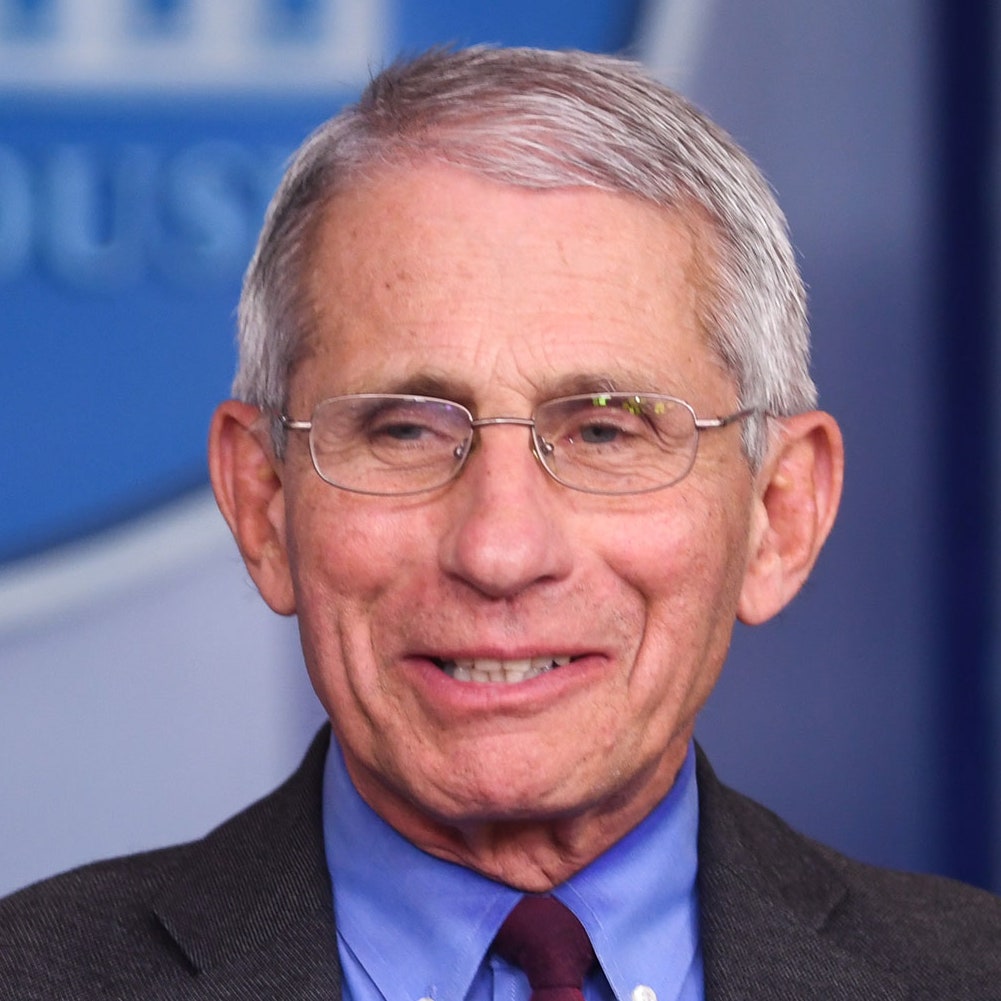
COVID-19: Fauci Backed Strengthening of Viruses Despite Admitting Risk of Pandemic, Australian Newspaper Reports

Dr. Anthony Fauci, the top U.S. virus expert, acknowledged the risk of a pandemic from an accidental leak of a fortified virus but supported the research anyway, The Australian newspaper has reported.

By Joe Lauria

Source: Consortium News

Dr. Anthony Fauci, director of the U.S. Nat­ional Institute of Allergy and Infectious Diseases, wrote in an academic paper nine years ago that he supported “gain-of-function” research on viruses despite admitting a “remote” possibility that such “important work” could lead to a global pandemic if such a fortified virus escaped from a lab, The Australian newspaper reported on Friday.

In October 2012, Fauci wrote a paper for the American Society for Microbiology, in which he said:

“In an unlikely but conceivable turn of events, what if that scientist becomes infected with the virus, which leads to an outbreak and ultimately triggers a pandemic? Many ask reasonable questions: given the possibility of such a scenario – however remote – should the initial experiments have been performed and/or published in the first place, and what were the processes involved in this decision?

Scientists working in this field might say – as indeed I have said – that the benefits of such experiments and the resulting knowledge outweigh the risks. It is more likely that a pandemic would occur in nature, and the need to stay ahead of such a threat is a primary reason for performing an experiment that might appear to be risky.”

The newspaper’s revelation comes as President Joe Biden announced this week an investigation into whether the coronavirus that causes Covid-19 leaked out of the Wuhan Institute of Virology (WIV)’s lab in Wuhan, China, where the pandemic first broke out. 

Fauci, who had dismissed that possibility and insisted the virus had natural transmission from another species to humans, on May 11 reversed himself, saying at a conference that he was “not convinced” of the coronavirus’ natural origins and said authorities needed to learn “exactly what happened.”

Fauci has denied allegations that his NIH helped fund gain-of-function experiments at the Wuhan lab. He told a U.S. Senate hearing this month that the NIH “has not ever and does not now fund gain-of-function research in the WIV.” But The Australian reported: “Papers published as late as last year in American peer-­reviewed academic journals that include WIV researchers – including its prominent virologist Shi Zhengli – disclose that work on coronaviruses had been funded by at least three NIH grants.” 

Lifted the Ban

The newspaper also revealed that in December 2017 Fauci unilaterally reversed an Obama administration 2014 ban on such experiments precisely because of the danger that a leak could cause a pandemic. The Australian quoted former Trump administration officials as saying that no one at the Trump White House knew that Fauci had lifted Obama’s ban.

“It kind of just got rammed through,” one official told the newspaper. “I think there’s truth in the narrative that the (National Security Council) staff, the president, the White House chief-of-staff, those people were in the dark that he was switching back on the research.”

Gain-of-function research by manipulating, splicing and recombining viruses increases its lethality and contagiousness in the apparent attempt to help combat future viruses.

The Australian reported that prominent scientists oppose the research, including 200 researchers at the Cambridge Working Group who issued this warning in a 2014 letter:

“Accident risks with newly created ‘potential pandemic pathogens’ raise grave new concerns. Laboratory creation of highly transmissible, novel strains of dangerous viruses, especially but not limited to influenza, poses substantially increased risks.

An accidental infection in such a setting could trigger outbreaks that would be difficult or impossible to control. Historically, new strains of influenza, once they establish transmission in the human population, have infected a quarter or more of the world’s population within two years.”

Steven Salzberg, at the Johns Hopkins School of Medicine, wrote in 2015 that gains from the research were “minimal at best” and could “far more safely be obtained through other avenues of research.”

“I am very concerned that the continuing gain-of-function research on influenza viruses, and more recently on other viruses, presents extremely serious risks to the public health,” he wrote.

Acknowledging the Risks

In his academic paper, Fauci detailed the risks involved with gain-of-function research, particularly in labs with substandard safety measures.

“Within the research community, many have expressed concern that important research progress could come to a halt just because of the fear that someone, somewhere, might attempt to replicate these experiments sloppily. This is a valid concern.

“Putting aside the specter of bioterrorism for the moment, consider this hypothetical scenario: an important gain-of-function experiment involving a virus with serious pandemic potential is performed in a well-regulated, world-class laboratory by experienced investigators, but the information from the experiment is then used by another scientist who does not have the same training and facilities and is not subject to the same regulations.” 

Fauci said virologists needed to respect “that there are genuine and legitimate concerns about this type of research, both domestically and globally.” He added:

“We cannot expect those who have these concerns to simply take us, the scientific community, at our word that the benefits of this work outweigh the risks, nor can we ignore their calls for greater transparency, their concerns about conflicts of interest, and their efforts to engage in a dialogue about whether these experiments should have been performed in the first place.

Those of us in the scientific community who believe in the merits of this work have the responsibility to address these concerns thoughtfully and respectfully.

Granted, the time it takes to engage in such a dialog could potentially delay or even immobilize the conduct of certain important experiments and the publication of valuable information that could move the field forward for the good of public health.

If we want to continue this important work, we collectively need to do a better job of articulating the scientific rationale for such experiments well before they are performed and provide discussion about the potential risk to public health, however remote.” 

Among the evidence being looked at in the U.S. probe into a possible lab leak is a CIA finding, first reported in February from a State Dept. fact sheet by The Wall Street Journal, that three lab workers at the WIV became seriously ill with a flu-like disease and were hospitalized in November 2019.
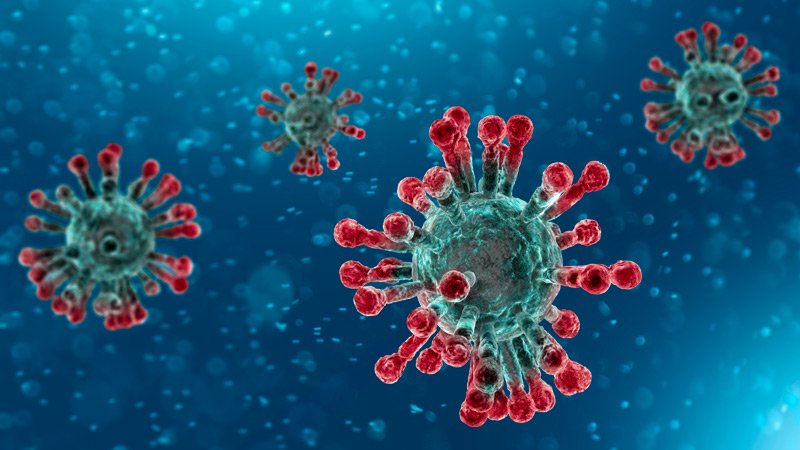
Is Coronavirus a bioweapon?

By David Swanson

Source: Let’s Try Democracy

The Washington Post’s article opposing such a conclusion admits the following: The lab in Wuhan “was researching coronaviruses transmitted by bats.” And “[a]n annual State Department report released last year said China had engaged ‘in biological activities with potential dual-use applications.’” And that at least one expert worried about potential outbreaks from that lab. And that other experts had discussed the possibility of Coronavirus being a bioweapon but found no proof.

Francis Boyle’s video arguing the case that Coronavirus is a bioweapon points to three articles from scientific journals. The first describes the virus in terms that Boyle, but not the authors, considers a dead giveaway. How is a non-expert to judge?

The second article, one of whose authors is from the Institute in Wuhan and one of whose funders is China, describes work at the University of North Carolina at Chapel Hill, which Boyle views as aggressive work to make a virus more deadly, the authors clearly maintain was defensive, but indisputably was “dual-use” as most such research seems unavoidably to be. Boyle thinks Wuhan acquired this research by funding and participating in it through the good services of UNC which got its deadly cells from Fort Detrick.

The third article has the same connections to Wuhan and China that the second one does, but comes from Australia instead of North Carolina.

Boyle thinks that bioweapons researchers in Australia and North Carolina did work that contributed to the current disaster, regardless of what they may have intended or wanted or wished for. I think there’s ample evidence that bioweapons researchers around the world are engaged in a deadly and counterproductive game that develops weapons in the name of trying to defeat them.

Does the evidence show that this virus must have come from a lab and not from bats via other animals with no human role other than habitat destruction and a keystone-cops response to the outbreak? I don’t know. I think the evidence is overwhelming in that regard when it comes to Lyme Disease. I think so, too, when it comes to Anthrax. I’ve not seen such powerful evidence with regard to AIDS and would have to see it before jumping to that conclusion.

But what exactly is the distinction between a lab acquiring a disease from bats, studying it, and accidentally letting it loose, versus a lab acquiring a disease from another lab, modifying it to make it worse in the name of preventing it, and accidentally letting it loose? When does it become a bioweapon?

Developing biological weapons in order to develop vaccines to counter them is done in exactly the same way, whether it’s for defense or offense. In an offensive attack, the vaccines are needed to protect the attacking troops. And the development of these weapons is very difficult and expensive. The most likely source of biological weapons in a terrorist attack is a government lab that developed the stuff for “defense.” A possible source for any disease that looks like a bioweapon is the same.

Of course it might not be. I have not the slightest expertise on the matter. But we know that governments are working on bioweapons, and we know that they don’t want it discussed, and we know that corporate and state media alike avoid things that governments don’t want discussed. Still, people are finding the decency in some cases to do better in trying to survive coronavirus than what their governments are telling them to do. Perhaps people can also do better than their governments want them to in researching the origins.

It just might turn out that the United States and China are both right to blame each other, and that the internationalism of academics — such a force for good in other contexts — creates plenty of blame to go around.

WUHAN AND HARVARD… AND JEFFREY

By Joseph P. Farrell

Source: Giza Death Star

I’m constantly amazed at the information that people email to me, but this one is a whopper doozie spotted by V.S. I’ve already blogged about the arrest of Dr. Charles Lieber of Harvard, and about this strange tie to the Wuhan University of Technology. But there’s more lurking in the background of that Harvard connection than meets the eye, and I just have to share this one:

There you have it. So it’s important to review what this article is saying: Dr. Lieber worked at the same university as Drs Church and Nowak, both known associates of Jeffrey Epstein and recipients of his largesse. Given the nature of their work, it strains credibility to assume that Lieber was unaware of their work or they of his. They are, after all, all faculty members working in more or less the same broad discipline. As they article makes clear, all were working in aspects of modifying biology and doing genetic engineering, all areas of obvious biowarfare implications. All of this raises some intriguing high octane speculations and questions:

1) Why would professors, who are recipients of government funds for research, also take private funding in the millions from Epstein? Did they need it? And was Epstein in fact laundering money for other interests in sponsoring this research? And does that mean that their are private interests trying to obtain a biowarfare capability? Their taking of Epstein money on an individual basis was quite probably entirely innocent. But it’s the overall pattern of a Harvard connection that I find highly odd.

2) Do these questions in their turn indicate that all of China is being turned into a biowarfare, economic warfare, and social engineering experiment?

In respect to these questions, the article itself asks a highly pertinent question regarding Dr. Lieber toward the end of the piece:

Why  would someone (Lieber) getting $10 million plus from the U.S. funding agencies go through the hassle of setting up a secret lab in another country and risk his entire life’s work for less money. What was he doing there exactly?

Indeed, and for whom was he really doing it? China? Harvard? Some private international interest?

Like the author of the article, I eagerly await for more details to come out. In the connection to the idea of some private international interest however, I’m reminded of a detail that occurred prior to 9/11, when Russian economist Dr. Tatiana Koryagina mentioned in Pravda, prior to the events of 9/11, that the US would shortly be attacked on its own soil by a private group with assets in the trillions of dollars. Recently, Harvard took its funding entirely black, and I have to wonder, in the light of this article, if it is one of the crucial “fronts” or “nodes” for some sort of private network. Would it be involved in such activities as a massive social engineering experiment?

Well, as I detailed with co-author Gary Lawrence in our book Rotten to the (Common) Core, another Harvard chemist – indeed, a former president of the institution – comes to mind: Dr. James Conant Bryant, and with him, the answer to that question is a resounding yes.

See you on the flip side…