
By John & Nisha Whitehead
Source: The Rutherford Institute
“If the state could use [criminal] laws not for their intended purposes but to silence those who voice unpopular ideas, little would be left of our First Amendment liberties, and little would separate us from the tyrannies of the past or the malignant fiefdoms of our own age. The freedom to speak without risking arrest is ‘one of the principal characteristics by which we distinguish a free nation.’”—Justice Neil Gorsuch, dissenting, Nieves v. Bartlett (2019)
Tyrants don’t like people who speak truth to power.
Cue the rise of protest laws, which take the government’s intolerance for free speech to a whole new level and send the resounding message that resistance is futile.
In fact, ever since the Capitol protests on Jan. 6, 2021, state legislatures have introduced a broad array of these laws aimed at criminalizing protest activities.
There have been at least 205 proposed laws in 45 states aimed at curtailing the right to peacefully assemble and protest by expanding the definition of rioting, heightening penalties for existing offenses, or creating new crimes associated with assembly.
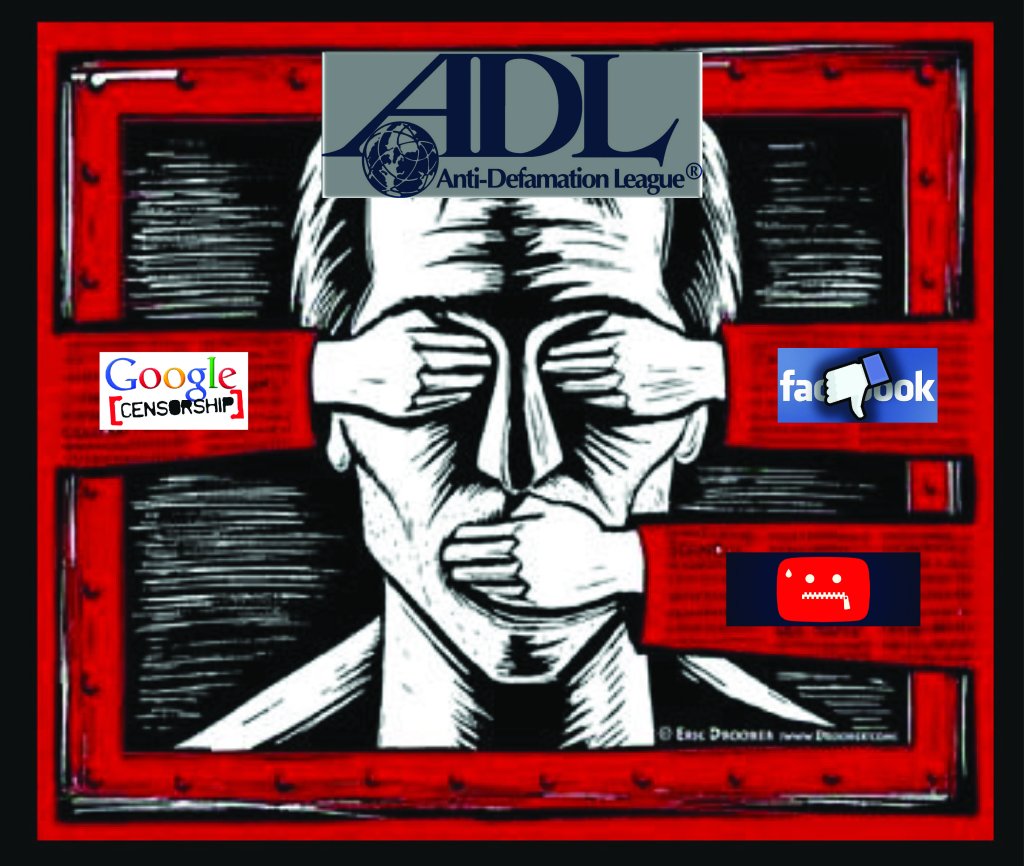
Weaponized by police, prosecutors, courts and legislatures, these protest laws, along with free speech zones, bubble zones, trespass zones, anti-bullying legislation, zero tolerance policies, hate crime laws, and a host of other legalistic maladies have become a convenient means by which to punish individuals who refuse to be muzzled.
In Florida, for instance, legislators passed a “no-go” zone law making it punishable by up to 60 days in jail to remain within 25 feet of working police and other first responders after a warning.
Yet while the growing numbers of protest laws cropping up across the country are sold to the public as necessary to protect private property, public roads or national security, they are a wolf in sheep’s clothing, a thinly disguised plot to discourage anyone from challenging government authority at the expense of our First Amendment rights.
It doesn’t matter what the source of that discontent might be (police brutality, election outcomes, COVID-19 mandates, the environment, etc.): protest laws, free speech zones, no-go zones, bubble zones, trespass zones, anti-bullying legislation, zero tolerance policies, hate crime laws, etc., aim to muzzle every last one of us.
To be very clear, these legislative attempts to redefine and criminalize speech are a backdoor attempt to rewrite the Constitution and render the First Amendment’s robust safeguards null and void.
No matter how you package these laws, no matter how well-meaning they may sound, no matter how much you may disagree with the protesters or sympathize with the objects of the protest, these proposed laws are aimed at one thing only: discouraging dissent.
This is the painful lesson being imparted with every incident in which someone gets arrested and charged with any of the growing number of contempt charges (ranging from resisting arrest and interference to disorderly conduct, obstruction, and failure to obey a police order) that get trotted out anytime a citizen voices discontent with the government or challenges or even questions the authority of the powers-that-be.
These assaults on free speech are nothing new.
As Human Rights Watch points out, “Various states have long-tried to curtail the right to protest. They do so by legislating wide definitions of what constitutes an ‘unlawful assembly’ or a ‘riot’ as well as increasing punishments. They also allow police to use catch-all public offenses, such as trespassing, obstructing traffic, or disrupting the peace, as a pretext for ordering dispersals, using force, and making arrests. Finally, they make it easier for corporations and others to bring lawsuits against protest organizers.”
Journalists have come under particular fire for exercising their right to freedom of the press.
According to U.S. Press Freedom Tracker, the criminalization of routine journalism has become a means by which the government chills lawful First Amendment activity.
Journalists have been arrested or faced dubious charges for “publishing,” asking too many questions of public officials, being “rude” for reporting during a press conference, and being in the vicinity of public protests and demonstrations.
For instance, Steve Baker, a reporter for Blaze News, was charged with four misdemeanors, including trespassing and disorderly conduct charges, related to his sympathetic coverage of the Jan. 6 riots. Dan Heyman, a reporter for the Public News Service, was arrested for “aggressively” questioning Tom Price, then secretary of the Department of Health and Human Services during an encounter in the West Virginia State Capitol.
It’s gotten so bad that merely daring to question, challenge or hesitate when a cop issues an order can get you charged with resisting arrest or disorderly conduct.
For example, Deyshia Hargrave, a language arts teacher in Louisiana, was thrown to the ground, handcuffed and arrested for speaking out during a public comment period at a school board meeting.
Fane Lozman was arrested for alluding to government corruption during open comment time at a City Council meeting in Palm Beach County, Fla.
College professor Ersula Ore was slammed to the ground and arrested after she objected to the “disrespectful manner” shown by a campus cop who stopped her in the middle of the street and demanded that she show her ID.
Philadelphia lawyer Rebecca Musarra was arrested for exercising her right to remain silent and refusing to answer questions posed by a police officer during a routine traffic stop. (Note: she cooperated in every other way by providing license and registration, etc.)
Making matters worse, the U.S. Supreme Court issued a ruling in Nieves v. Bartlett that protects police from lawsuits by persons arrested on bogus “contempt of cop” charges (ranging from resisting arrest and interference to disorderly conduct, obstruction, and failure to obey a police order) that result from lawful First Amendment activities (filming police, asking a question of police, refusing to speak with police).
These incidents reflect a growing awareness about the state of free speech in America: you may have distinct, protected rights on paper, but dare to exercise those rights, and you risk fines, arrests, injuries and even death.
Unfortunately, we have been circling this particular drain hole for some time now.
More than 50 years ago, U.S. Supreme Court Justice William O. Douglas took issue with the idea that merely speaking to a government representative (a right enshrined in the First Amendment) could be perceived as unlawfully inconveniencing and annoying the police.
In a passionate defense of free speech, Douglas declared:
Since when have we Americans been expected to bow submissively to authority and speak with awe and reverence to those who represent us? The constitutional theory is that we the people are the sovereigns, the state and federal officials only our agents. We who have the final word can speak softly or angrily. We can seek to challenge and annoy, as we need not stay docile and quiet. The situation might have indicated that Colten’s techniques were ill-suited to the mission he was on, that diplomacy would have been more effective. But at the constitutional level speech need not be a sedative; it can be disruptive.
It’s a power-packed paragraph full of important truths that the powers-that-be would prefer we quickly forget: We the people are the sovereigns. We have the final word. We can speak softly or angrily. We can seek to challenge and annoy. We need not stay docile and quiet. Our speech can be disruptive. It can invite dispute. It can be provocative and challenging. We do not have to bow submissively to authority or speak with reverence to government officials.
In theory, Douglas was right: “we the people” do have a constitutional right to talk back to the government.
In practice, however, we live in an age in which “we the people” are at the mercy of militarized, weaponized, immunized cops who have almost absolute discretion to decide who is a threat, what constitutes resistance, and how harshly they can deal with the citizens they were appointed to “serve and protect.”
As such, those who seek to exercise their First Amendment rights during encounters with the police are increasingly finding that there is no such thing as freedom of speech.
Case in point: Tony Rupp, a lawyer in Buffalo, NY, found himself arrested and charged with violating the city’s noise ordinance after cursing at an SUV bearing down on pedestrians on a busy street at night with its lights off. Because that unmarked car was driven by a police officer, that’s all it took for Rupp to find himself subjected to malicious prosecution, First Amendment retaliation and wrongful arrest.
The case, as Jesse McKinley writes in The New York Times, is part of a growing debate over “how citizens can criticize public officials at a time of widespread reevaluation of the lengths and limits of free speech. That debate has raged everywhere from online forums and college campuses to protests over racial bias in law enforcement and the Israel-Hamas war. Book bans and other acts of government censorship have troubled some First Amendment experts. Last week, the Supreme Court heard arguments about a pair of laws — in Florida and Texas — limiting the ability of social media companies such as Facebook to ban certain content from their platforms.”
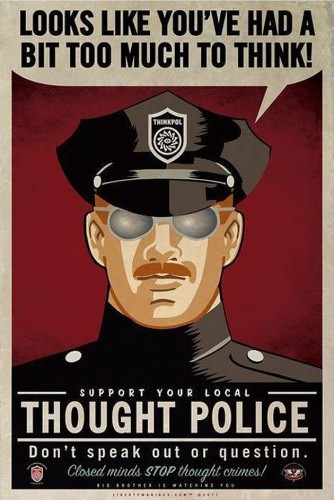
Bottom line: what the architects of the police state want are submissive, compliant, cooperative, obedient, meek citizens who don’t talk back, don’t challenge government authority, don’t speak out against government misconduct, and don’t resist.
What the First Amendment protects—and a healthy constitutional republic requires—are citizens who routinely exercise their right to speak truth to power.
Yet there can be no free speech for the citizenry when the government speaks in a language of force.
What is this language of force?
Militarized police. Riot squads. Camouflage gear. Black uniforms. Armored vehicles. Mass arrests. Pepper spray. Tear gas. Batons. Strip searches. Surveillance cameras. Kevlar vests. Drones. Lethal weapons. Less-than-lethal weapons unleashed with deadly force. Rubber bullets. Water cannons. Stun grenades. Arrests of journalists. Crowd control tactics. Intimidation tactics. Brutality. Contempt of cop charges.
This is not the language of freedom. This is not even the language of law and order.
Unfortunately, this is how the government at all levels—federal, state and local—now responds to those who choose to exercise their First Amendment right to speak freely.
If we no longer have the right to tell a Census Worker to get off our property, if we no longer have the right to tell a police officer to get a search warrant before they dare to walk through our door, if we no longer have the right to stand in front of the Supreme Court wearing a protest sign or approach an elected representative to share our views, if we no longer have the right to protest unjust laws by voicing our opinions in public or on our clothing or before a legislative body, then we do not have free speech.
What we have instead is regulated, controlled, censored speech, and that’s a whole other ballgame.
Remember, the unspoken freedom enshrined in the First Amendment is the right to challenge government agents, think freely and openly debate issues without being muzzled or treated like a criminal.
Americans are being brainwashed into believing that anyone who wears a government uniform—soldier, police officer, prison guard—must be obeyed without question.
Of course, the Constitution takes a far different position, but does anyone in the government even read, let alone abide by, the Constitution anymore?
The government does not want us to remember that we have rights, let alone attempting to exercise those rights peaceably and lawfully. And it definitely does not want us to engage in First Amendment activities that challenge the government’s power, reveal the government’s corruption, expose the government’s lies, and encourage the citizenry to push back against the government’s many injustices.
Yet by muzzling the citizenry, by removing the constitutional steam valves that allow people to speak their minds, air their grievances and contribute to a larger dialogue that hopefully results in a more just world, the government is creating a climate in which violence becomes inevitable.
When there is no First Amendment steam valve, then frustration builds, anger grows and people become more volatile and desperate to force a conversation.
As John F. Kennedy warned, “Those who make peaceful revolution impossible will make violent revolution inevitable.”
As I point out in my book Battlefield America: The War on the American People and in its fictional counterpart The Erik Blair Diaries, the government is making violent revolution inevitable.
 After the Crash