On Wednesday, Investigative journalist Seymour Hersh published a report on Substack that alleged the CIA was aware of widespread corruption in Ukraine and the embezzlement of US aid.
The report said the Ukrainian government has been using US taxpayer money to purchase diesel from Russia to fuel its military. Hersh said Zelensky “has been buying the fuel from Russia, the country with which it, and Washington, are at war, and the Ukrainian president and many in his entourage have been skimming untold millions from the American dollars earmarked for diesel fuel payments.”
Hersh said according to one estimate by CIA analysts, at least $400 million in funds were embezzled last year. Sources told Hersh that Ukrainian officials are also “competing” to set up front companies for export contracts to private arms dealers around the world.
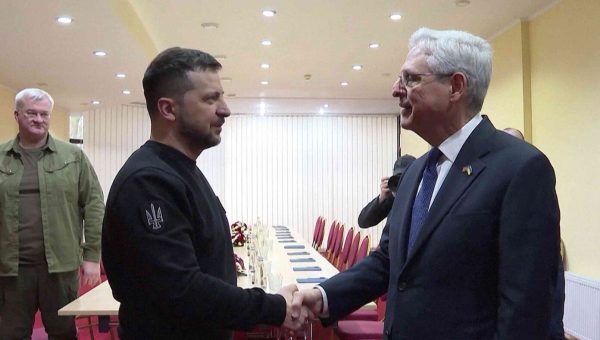
The issue of corruption was raised during a meeting between CIA Director William Burns and Zelensky in January. An intelligence official with direct knowledge of the meeting told Hersh that Burns delivered a stunning message to Zelensky.
Hersh wrote: “The senior generals and government officialsin Kiev were angry at what they saw as Zelensky’s greed, so Burns told the Ukrainian president, because ‘he was taking a larger share of the skim money than was going to the generals.’”
During the meeting, Burns presented Zelensky with a list of 35 generals and senior government officials whose corruption was known to the CIA. Zelensky responded by dismissing 10 officials who were engaged in flagrant corruption. “The ten he got rid of were brazenly bragging about the money they had—driving around Kiev in their new Mercedes,” the intelligence official said.
Hersh said Zelensky’s “half-hearted response” and the “lack of concern” in the White House angered some US intelligence officials. The intelligence official speaking to Hersh criticized President Biden’s two main foreign policy advisors, Secretary of State Antony Blinken and National Security Advisor Jake Sullivan.
“They have no experience, judgment, and moral integrity. They just tell lies, make up stories. Diplomatic deniability is something else,” the official said. The official said there was a “total breakdown between the White House leadership and the intelligence community.”
The report said the rift started in the fall when the Nord Stream natural gas pipelines were blown up. According to Hersh’s earlier reporting, President Biden ordered the operation that took out the pipelines. “Destroying the Nord Stream pipelines was never discussed, or even known in advance,by the community,” the official said.
The official said there is “no strategy for ending the war” within the Biden administration and offered more scathing criticism of Blinken and Sullivan.
“Burns is not the problem,” the official said. “The problem is Biden and his principal lieutenants—Blinken and Sullivan and their court of worshippers—who see those who criticize Zelensky as being pro-Putin. ‘We are against evil. Ukraine will fight ’til the last military shell is gone, and still fight.’ And here’s Biden who is telling America that we’re going to fight as long as it takes.”
Hersh’s story comes after a series of leaked top-secret documents from the Pentagon and other government agencies surfaced online. Some of the documents show US war planning for Ukraine and reveal the US doubts Kyiv’s ability to launch a successful counter-offensive, offering a starkly different view of Ukraine’s abilities than what Biden officials have been saying publicly.
With diplomacy thwarted, the US and its allies plan for “open-ended” military and economic warfare against Russia, no matter the costs at home and abroad.
Russia has announced plans to mobilize an additional 300,000 troops for the war in Ukraine. In his speech unveiling the expanded war effort, Vladimir Putin vowed to achieve his main goal of the “liberation of Donbas,” and issued a thinly veiled nuclear threat in the process. The move comes days ahead of planned referendums in breakaway Ukrainian areas to formalize Russian annexation.
Russia’s escalation ensures that the fighting is entering an even more dangerous phase. While Russia bears legal and moral responsibility for its invasion, recent developments underscore that NATO leaders have shunned opportunities to prevent further catastrophe and chosen instead to fuel it.
According to The Atlantic’s Anne Applebaum, “Americans and Europeans need to prepare for a Ukrainian victory,” one so overwhelming that it may well bring “about the end of Putin’s regime.”
Beyond the chorus of emboldened neoconservatives, Western officials are less sanguine.
“Certainly it’s a military setback” for Russia, a US official said of the Kharkiv retreat to the Washington Post. “I don’t know if I could call it a major strategic loss at this point.” Germany’s defense chief, General Eberhard Zorn, said that while Ukraine “can win back places or individual areas of the frontlines,” overall, its forces can “not push Russia back over a broad front.”
Whether or not it marked a major strategic loss for Russia, the battle in Kharkiv is already a major victory for NATO leaders seeking to prolong their proxy war in Ukraine and economic warfare next door.
Ukraine’s expulsion of Russian forces in the northeast, the New York Times reports, has “amplified voices in the West demanding that more weapons be sent to Ukraine so that it could win.”
“Despite Ukrainian forces’ startling gains in the war against Russia,” the Washington Post adds, “the Biden administration anticipates months of intense fighting with wins and losses for each side, spurring U.S. plans for an open-ended campaign with no prospect for a negotiated end in sight.”
As has been apparent since the Ukraine crisis erupted, US planning for open-ended proxy warfare against Russia has led it to sabotage any prospect of a negotiated end.
The US rejection of diplomacy around Ukraine has been newly substantiated by former White House Russia expert Fiona Hill. Citing “multiple former senior U.S. officials,” Hill reports that in April of this year “Russian and Ukrainian negotiators appeared to have tentatively agreed on the outlines of a negotiated interim settlement.” Under this framework, Russia would withdraw to its pre-invasion position, while Ukraine would pledge not to join NATO “and instead receive security guarantees from a number of countries.”
In confirming that US officials were aware of this tentative agreement, Hill bolsters previous news that Washington’s junior partner in London was enlisted to thwart it. As Ukrainian media reported, citing sources close to Ukrainian President Volodymyr Zelensky, UK Prime Minister Boris Johnson traveled to Kiev in April and relayed the message that Russia “should be pressured, not negotiated with.” Johnson also informed Zelensky that “even if Ukraine is ready to sign some agreements on [security] guarantees with Putin,” his Western patrons “are not.” The talks promptly collapsed.
In his speech announcing the expanded war effort, Putin invoked this episode. After the invasion began, he said, Ukrainian officials “reacted very positively to our proposals… After certain compromises were reached, Kyiv was actually given a direct order to disrupt all agreements.”
Having undermined the prospect of a negotiated peace in the war’s early weeks, proxy warriors in Washington are openly celebrating their success.
“I like the structural path we’re on here,” Republican Senator Lindsey Graham recently declared. “As long as we help Ukraine with the weapons they need and the economic support, they will fight to the last person.”
It's not just critics who say that US policy in Ukraine is to fight Russia to the last Ukrainian.
Here's @LindseyGrahamSC saying that as long as the US arms Ukraine, "they will fight to the last person." And four months in, he says, "I like the structural path we're on here." pic.twitter.com/1fntZG7cjQ
Graham’s avowed willingness to expend every “last person” in Ukraine to fight Russia is in line with a broader US strategy that views the entire world as subordinate to its war aims. As the Washington Post reported in June, the White House is willing to “countenance even a global recession and mounting hunger” in order to hand Russia a costly defeat. In Ukraine, this now means also countenancing the threat of nuclear disaster, as the crisis surrounding the Zaporizhzhia nuclear power plant has laid bare.
The prevailing willingness to sacrifice civilian well-being extends to the US public, as National Security Advisor Jake Sullivan has newly made clear. Appearing at the Aspen Security Conference, Sullivan was asked if he is worried about the “American people’s staying power” on the Ukraine proxy war, amid “criticism that we’re spending billions and billions to support Ukraine, and not spending it here.”
“Fundamentally not,” Sullivan responded. “It’s very important for Putin to understand what exactly he’s up against from the point of view of the United States’ staying power.” That staying power, Sullivan explained, was cemented in the $40 billion war funding measure overwhelmingly approved by Congress (including every self-identified progressive Democrat) in May.
“That can go on, just on the basis of what we have already had allocated to us and resources for a considerable period of time,” Sullivan vowed. “And then, I strongly believe that there will be bipartisan support in the Congress to re-up those resources should it become necessary.”
To policymakers like Sullivan, there is not only an endless pool of money to “re-up” the war, but a “fundamentally” indifferent posture toward the taxpayers footing the bill.
.@JakeSullivan46 is asked if he’s worried by "criticism that we're spending billions… to support Ukraine, not spending it here."
Jake says he's not worried: Congress approved $40B, enough to send weapons "for a considerable period of time," and will easily "re-up" if needed. pic.twitter.com/NmUG1Hp6Gr
Despite Biden’s reported scolding of Defense Secretary Lloyd Austin for admitting that the US goal in Ukraine is to leave Russia “weakened,” Sullivan – speaking before a friendly Beltway crowd — also forgot to stick to the script.
The US “strategic objective” in Ukraine, Sullivan explained, is to “ensure that Russia’s invasion of Ukraine… is a strategic failure for Putin,” and that “Russia pay a longer-term price in terms of the elements of its national power.” This would teach a “lesson,” he added, “to would-be aggressors elsewhere.”
By “would-be aggressors elsewhere”, Sullivan naturally precludes the US and its allies, whose aggression is not only permitted but promoted under the US-led “rules-based international order.”
President Biden has made that clear by abandoning his pledge to make Saudi Arabia a “pariah” state, notwithstanding its murderous (US-backed) aggression in Yemen. The regular aggression by US ally Israel against Gaza and Syria also continues unabated. The United Nations just reported that an Israeli strike on the Damascus international airport in June – one of hundreds of Israeli bombings on Syria that go largely ignored — “led to considerable damage to infrastructure” and “meant the suspension of U.N. deliveries of humanitarian assistance” to Syrians in need for nearly two weeks. As of this writing, the latest Israeli strike killed five Syrian soldiers, eliciting no Western media and political protest. It is more accurate to describe Israeli aggression on Syria as a joint Israeli-US effort, given that the US reviews and approves the strikes.
Allied NATO leaders are also vocally countenancing the Ukraine proxy war’s costs on their domestic populations. In response to the European sanctions, Russia has now halted gas deliveries to the EU via the key Nord Stream 1 pipeline. Having previously relied on Russia for close to 40 percent of its gas needs, European industries are facing layoffs, factory closures, and higher energy bills that “are pushing consumers to near poverty,” the Financial Times reports.
“People want to end the war because they cannot bear the consequences, the costs,” the EU’s Josep Borell observed this month. While ending the war might appeal to some, it does not interest the EU’s top diplomat. “This mentality must be overcome,” Borell declared. “The offensive on the northeastern front helps with that.”
Europe, NATO chief Jens Stoltenberg recently wrote, may even face “civil unrest,” as economies contract and temperatures drop, but “for Ukraine’s future and for ours, we must prepare for the winter war and stay the course.”
“No matter what my German voters think, I want to deliver to the people of Ukraine,” Germany’s Foreign Minister Annalena Baerbock told a conference in Prague last month. During the upcoming winter, Baerbock acknowledged, “we will be challenged as democratic politicians. People will go in the street and say ‘We cannot pay our energy prices’.” While pledging to help people “with social measures,” Baerbock insisted that the European Union’s sanctions on Russia will remain. “The sanctions will stay also in wintertime, even if it gets really tough for politicians,” she said.
Whereas Western leaders appear confident they can manage civil unrest at home, they face additional resistance abroad. In Africa, a leaked report from the European Union’s envoy to the continent warns that African nations are blaming the EU’s Russia sanctions for food shortages. The report also cautions that “the EU is seen as fueling the conflict,” in Ukraine, “not as a peace facilitator.”
Rather than address these African concerns, the envoy’s office proposes a “more transactional… approach” in which the EU makes “clear” that its “willingness” to “maintain higher levels” of foreign aid “will depend on working based on common values and a joint vision,” – in short, on Africa falling in line.
That is undoubtedly the US policy, as UN Ambassador Linda Thomas-Greenfield made clear last month. After promising a “listening tour,” Thomas-Greenfield instead came to Africa with a dictate and an outright threat. “Countries can buy Russian agricultural products, including fertilizer and wheat,” she decreed. But “if a country decides to engage with Russia” and break US sanctions, “they stand the chance of having actions taken against them.” That Africa faces a food security crisis, with hundreds of millions going hungry, is apparently of lower importance.
While Western sanctions on Russia wreak havoc worldwide, the architects in Washington seem only perturbed by their failure, so far, to inflict the intended levels of suffering on Russian civilians. “We were expecting” that US sanctions “would totally crater the Russian economy” by now, a disappointed senior US official told CNN.
Other US officials are leaving room for hope. “There’s going to be long-term damage done to the Russian economy and to generations of Russians as a result of this,” CIA Director William Burns told a cybersecurity conference this month. Burns’ long-term forecast of harming “generations of Russians” is based on extensive planning. As one US official explained it to CNN, when the sanctions were designed, Biden officials not only “wanted to keep pressure on Russia over the long term as it waged war on Ukraine,” but also “wanted to degrade Russia’s economic and industrial capabilities.” Accordingly, “we’ve always seen this as a long-term game.”
The “long-term game” of trying to destroy Russia’s economy and immiserate “generations” of its citizens is accompanied by increasing plans for a long-term fight. The Biden administration plans to formally name the US military mission in Ukraine – such as in prior campaigns like Operation Desert Storm — while also appointing a general to oversee the effort. The naming, the Wall Street Journal observes, is “significant bureaucratically, as it typically entails long-term, dedicated funding.”
The US plan for a long-term military and economic campaign against Russia is being implemented despite the awareness that Ukraine could face far worse.
“Some American officials express concern that the most dangerous moments are yet to come,” the New York Times reports. To date, “Putin has avoided escalating the war in ways that have, at times, baffled Western officials.” Unlike US military campaigns in Iraq, Russia “has made only limited attempts to destroy critical infrastructure or to target Ukrainian government buildings.”
“The current moment draws attention to a tension that underlies America’s strategy for the war,” the Washington Post observes, “as officials channel massive military support to Ukraine, fueling a war with global consequences, while attempting to remain agnostic about when and how Kyiv might strike a deal to end it.”
These rare admissions not only contradict the typical portrayal of a genocidal Russia that is used to justify the proxy war, but capture the underlying policy driving it. More than six months in, US officials are aware that Russia has “avoided escalating the war” and targeting “critical infrastructure,” – to the point where these same officials are “baffled” by Russian restraint. Despite this, their policy centers on “fueling” this same war, while remaining “agnostic” about ending it.
War being fluid – and US-led military support for Ukraine ever-expanding – it is of course possible that Ukraine will continue to defy expectations and drive out the invading Russian forces.
What the latest developments on and off the battlefield make undoubtedly clear is that NATO states are willing to use Ukraine for as long as it takes to achieve the stated aim of leaving Russia “weakened” or even achieving regime change, no matter the damage knowingly inflicted on Ukrainians, Russians, the Global South, and their own citizens.

 After the Crash