E-Cig Users and Vapers Need to Join Anti-Drug War Movement

IMG_5220-e1408753980206

By Tony Newman

Source: Drug Policy Alliance

New Year’s Eve is around the corner and no doubt millions of smokers will make resolutions to quit.

Many smokers would love to give up the habit. But smoking is an incredibly hard addiction to quit. Many heroin users say it is harder to quit smoking than quitting heroin.

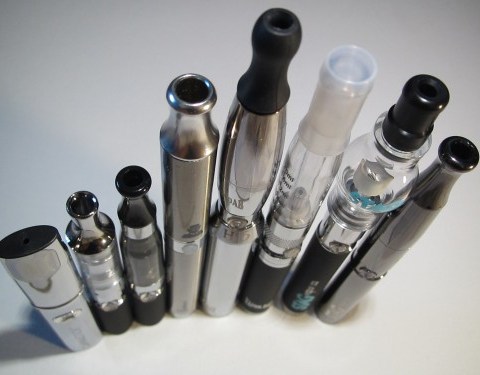
Thankfully, there is an exciting new tool that is helping millions give up on smoking: e-cigs and vaping. Stand on the streets of most major U.S. cities for five minutes and you will see people walking by with an e-cig instead of a cigarette hanging from their mouth.

It is encouraging how fast e-cigs and vaping have taken off. Smokers aren’t stupid. When offered a safer alternative, millions have chosen it. The fact that e-cigs can be purchased at most delis and stores makes it easy for those who want to reduce the harms associated with smoking.

Instead of praising the great news that millions have stopped smoking, too many in the health and anti-smoking fields beat the drums against e-cigs and vaping. Opportunistic politicians and anti-smoking lobbyists ignore emerging evidence that vaping is vastly safer than smoking, and instead are trying to equate the two activities.

City after city has passed anti-vaping laws akin to anti-smoking statues. Cities have prohibited where people can vape, and are currently trying to ban flavors that vapers say helps them quit. Legislation is also in the works to raise the age so people under 21 can’t use e-cigs.
E-cig users should be worried and they should be pissed.

They should be worried because people are going make it harder and harder to vape. And vapers should be pissed because these “health” advocates are trying to take away their tools that can literally help save their life.

It is time for smokers and vapers to join the growing anti-drug war movement. Smokers and vapers may not think about it, but they are also drug users and they are being demonized and threatened like other drug users. And vapers may not know it, but they are also harm-reductionists.

Harm reduction is a major philosophy of the drug reform movement. Thanks to harm-reduction activists we have clean syringe programs that have prevented hundreds of thousands of people from getting HIV.  We have passed laws that allow people to call 911 when witnessing an overdose without fear of being arrested.  And have expanded access to naloxone, that reverses overdose.

But there are too many backward-thinking politicians and uninformed folks who have tried to block such programs by using the same flawed logic that it sends the “wrong message.”

E-cigs and vaping is the most mainstream example of harm reduction in our society right now. It’s something that can save more lives than any other harm reduction practice in our society.

But there will be reactionary folks who will try to ban vaping and e-cigs like they tried to ban clean syringes.

Vapers need to fight for their rights and their lives. They need to join our movement and say we are not going to allow misinformed, judgmental folks to take away their e-cigs. There are millions of vapers who could be a powerful political voice.

Ethan Nadelmann, of the Drug Policy Alliance has a powerful message when he talks about the cost of a slow learning curve. It took the U.S. 20 years to get behind syringe exchange programs, even though much of the rest of the world had embraced it and the evidence was crystal clear that syringes reduced HIV while not increasing drug use. Because of this slow learning curve, 100’000’s of people needlessly got HIV and died.

This is our moment to organize and fight for e-cigs and vaping as a life-saving harm-reduction practice.

A slow learning curve is not something we can accept.

Tony Newman is the director of media relations for the Drug Policy Alliance.

Surprise: The Drug War Isn’t About Drugs

Drug-War1By Kevin Carson

Source: Center for a Stateless Society

On the morning of November 6 the US Federal Bureau of Investigation trumpeted its takedown of the Silk Road 2.0 website and the arrest of  alleged operator Blake Benthall.

In so doing the FBI demonstrated, once again, that the War on Drugs has nothing to do with anything its propagandists claim it’s about. If drug criminalization is a public safety issue — about fighting violent crime and gangs, or preventing overdoses and poisoning — shutting down Silk Road is one of the dumbest things the feds can do. Silk Road was a secure, anonymous marketplace in which buyers and sellers could do business without the risk of violence associated with street trade. And the seller reputational system meant that drugs sold on Silk Road were far purer and safer than their street counterparts.

This is true of all the other selling points for the Drug War. Hillary Clinton, in possibly one of the stupidest remarks ever uttered by a human being, says legalizing narcotics is a bad idea “because there’s too much money in it” — referring, presumably, to the lucrative drug trade and the cartels fighting over it.

But there’s so much money in it, and the cartels fight to control it, only because it’s illegal. That’s what happens when you criminalize stuff people want to buy: You create black markets with much higher prices, which organized crime gangs fight to control. Alcohol prohibition created the gangster culture of the 1920s. It’s been with us ever since. When Prohibition was repealed, organized crime just shifted to fighting over other illegal markets. The more consensual, non-violent activities are made illegal, the larger the portion of the economy that’s turned into black markets for gangs to fight over.

In related news, the Mexican drug cartels are reportedly making less money since the legalization or decriminalization of pot in several American states. I wonder why.

Perhaps the biggest joke is that the War on Drugs is fought to reduce drug use. No doubt many people involved in the domestic enforcement side of the Drug War actually believe this, but the left hand doesn’t know what the right hand’s doing. The narcotics trade is an enormous source of money for the criminal gangs that control it, and guess what? The US intelligence community is one of the biggest criminal drug gangs in the world, and the global drug trade is a great way for it to raise money to do morally repugnant stuff it can’t get openly funded by Congress. It’s been twenty years since journalist Gary Webb revealed the Reagan cabinet’s collusion with drug cartels in marketing cocaine inside the United States, to raise money for the right-wing Contra death squads in Nicaragua — a revelation he was gaslighted and driven to suicide for by the US intelligence community and mainstream press.

Now we hear that the US is “losing the drug war in Afghanistan.” Well, obviously — it’s a war that’s designed to be lost. The Taliban were so easy to overthrown in the fall of 2001 because they really did try to stamp out opium poppy cultivation, and with a fair degree of success. This didn’t sit well with the Afghan populace, which traditionally makes a lot of money growing poppies. But the Northern Alliance — which the United States turned into the national government of Afghanistan — was quite friendly to poppy cultivation in its territory. When the Taliban was overthrown, poppy and heroin cultivation resumed normal levels. Putting the US in charge of a “war on drugs in Afghanistan” is like putting Al Capone in charge of alcohol prohibition.

Besides, actually “winning” the drug war would mean ending it. And who in US domestic law enforcement wants to cut off the source of billions in federal aid and military equipment, militarized SWAT teams and unprecedented surveillance and civil forfeiture powers? This is a war meant to go on forever, just like the so-called War on Terror.

The state always encourages moral panic and “wars” on one thing or another in order to keep us afraid, so we’ll give it more power over our lives. Don’t believe its lies.


At the Stuff They Don’t Want You to Know podcast Ben and Matt share their views on the War on Drugs.

mp3 link: http://podcasts.howstuffworks.com/hsw/podcasts/stdwytk-audio/2014-11-14-stdwytk-war-on-drugs.mp3

This Mom Could Go To Jail For Saving Her Son With Cannabis Oil. This Needs To Stop

index

By Joe Martino

Source: Collective Evolution

A mother of a 15-year-old could be facing jail time for using cannabis oil to help her son with the side effects of his brain injury. Her son was finally seeing relief from daily migraines, muscle spasms and uncontrollable outbursts.

“I broke the law, but I did it to save my son,” Angela Brown said. She had traveled to Colorado to obtain the cannabis oil and brought it back to Minnesota where it is illegal. She administered the Cannabis oil safely to her son and the results were amazing.

Her Son’s Accident

Angela Brown’s son Trey was a healthy kid, but a baseball accident in 2011 led to a build-up of pressure inside of his head. He was hit with a line drive to the head causing bleeding in his brain. At first, doctors were not sure if he was going to survive. They chose to induce a medical coma. When Trey finally awoke, he didn’t appear to be the same kid according to his mother.

“I cry like every day before I go to bed, like my brain is about to blow up, cause there is so much pressure.” Trey said.

He began dealing with chronic pain, depression and difficult to control outbursts. His mother searched everywhere to try and help treat the effects of his injury. They went through 18 different medications and none of them worked. Trey’s mother felt that the effects of the medications even made her son suicidal.

Then they found cannabis oil and everything was starting to turn around.

Cannabis Oil

Cannabis oil has been making news and headlines for a couple years in ways we may not expect. Cancer and Alzheimer treatments, helping to reduce seizures and replacing potentially harmful medications for many people. Cannabis, although holding a negative stigma, can be seen as a natural miracle substance in a way. It may hold the power to treat and potentially cure a lot of people’s serious diseases.

In the case of Trey, cannabis oil helped to treat and bring quality of life back in a situation where all else was tried and didn’t work.

“It stopped the pain and stopped the muscle spasms,” Trey said. “It was helping me go to school until it then got taken away and then school was really hard again.”

“It was a miracle in a bottle.”Angela Brown

But It’s Illegal In Many Places

The miracle in a bottle didn’t last for Angela and her son. When Trey’s teacher asked how he was doing better in school suddenly, Angela mentioned the oil.

“Well, I gave him an oil that we’d gotten from Colorado, it’s derived from a marijuana plant. And then you could feel the tension in the room.”

It only took a week for the sheriff’s department to confiscate the oil. Later, county officials charged Angela with child endangerment which required child protection to get involved. If she is convicted of her charges she could face up to two years in jail and $6000 in fines.

“It’s asinine, I didn’t hurt my son; I was trying to prevent him from being hurt.”

CBS News, who attained the interview with the family, took the time to reach out to the county prosecutor, law enforcement and Trey’s school district. All declined any form of interview about the case.

The final killer in this story is that in May, Minnesota became the 22nd state to approve specific forms of medicinal marijuana. But the law doesn’t go into effect until 2015. So although this substance is already recognized as something that will become legal very soon, helping her son get better is still a crime.

Why Do We Deny Things That Work?

You might ask yourself why this type of thing could even happen. Are we really that disconnected as a society? Sure one could argue we don’t have the necessary data to state whether or not cannabis oil could have negative effects over time, but the crazy thing is we do have the data that states our medications we so often prescribe have nasty side effects, even after short periods of use. So why is one illegal and the other not? The easy answer is due to social conditioning and stigma.

The deeper answer could go into the realm of business, profit and control. It is often argued that many aspects of the medical system are set up to create life long patients versus properly treating and curing patients.

Although cannabis is finally becoming legal in more places across the world, there is still resistance when it comes to the potential treatment and curing ability the natural plant can have on many serious diseases.

With clinical trials finally on the go with brain cancer patients, the next year of study for cannabis oil could be monumental to the health of our world.

Don’t Forget Why Marijuana Legalization Is Winning

index

By Maia Szalavitz

Source: Substance.com

When I first started writing about drugs in the mid-’80s—before I got into recovery in 1988—it was almost impossible to imagine an America where four states and DC have legalized recreational marijuana use, 58% of Florida midterm voters just cast their ballots in favor of legalizing medical use (the measure needed 60% to pass), and California passed a ballot initiative to lower drug and other nonviolent crime sentences. (Nineteen other states have legalized medical marijuana.)

The magnitude of the change is hard to understand without knowing a bit of recent history—and if we are going to continue to move toward rational drug policy, knowing where we’ve been and how it has changed is critical. I offer this perspective through the lens of my own experience covering the drug war for nearly 30 years.

My first national column was called, embarrassingly enough, “Piss Patrol.” I was assigned by High Times to write about corporate urine testing policies, starting around 1987, presumably as a service to stoned readers who were considering their employment options.

Over the next few years, the media would spill so much ink and airtime demonizing crack cocaine that by 1989, 64% of people polled by CBS News said that drugs were the country’s biggest problem—and Republicans and Democrats began tripping over one another to race to pass the harshest possible drug sentencing laws.

High Times itself was targeted by the DEA with frequent demands for its list of subscribers and raids on all of its biggest advertisers of growing supplies, nearly forcing the magazine to close.

Testifying before Congress, LAPD chief Daryl Gates said that casual drug users “ought to be taken out and shot,” and the DARE drug prevention program he founded saw nothing ominous in encouraging kids to turn their parents in to the police if they used drugs. Supreme Court Justice Thurgood Marshall warned in a prescient 1989 dissent in a urine testing case that “there is no drug exception to the Constitution,” although Congress and the rest of the legal establishment apparently begged to differ.

Even today, police can confiscate cash and property they suspect to be involved in drug crimes, without convicting the owners and with virtual impunity. The surveillance revelations about the NSA’s spying on American citizens include cases where that agency has shared information with the DEA that was gathered from phones and computers without a warrant. In fact, the DEA has an official policy of basically lying to defense attorneys—and sometimes even prosecutors and judges—about the source of this data.

Yet even before the rage to pass tough drug laws took off in the 1980s, law enforcement efforts like mandatory minimum sentences were known to be ineffective. The federal government had quietly overturned one set of mandatory drug sentences in the late ‘60s—since they had clearly failed to prevent the late ‘60s.

And New York City would never have been one of the capitals of crack if the 15-to-life “Rockefeller law” mandatory sentences for selling even powder cocaine, which had been in place here since the mid-‘70s, actually suppressed drug use.

As is clear from this brief summary, for most of my adult life, the idea of a rational drug policy seemed literally to be a pipe dream (a term, by the way, from opium dens). So how did we go, in just a few years, from seeing drug users as demon enemies in a war who must be locked up to having the drug czar drop the military language and even speak at last month’s National Harm Reduction Conference in Baltimore?

Many factors are clearly playing a role. Two of the most obvious are the sheer economic burden of having become the world’s most prolific jailer and the drop in violent crime that hasn’t been paralleled by a fall in addiction rates or a reduction in the availability of drugs like marijuana, heroin and cocaine. Some of the crime decrease may, of course, be linked to the 500% rise in the number of prisoners since 1980—but research shows that violent crime fell more in states that have lowered incarceration rates.

Other influences have also been important. One has been the increasing recognition—driven especially by Michelle Alexander’s 2011 bestseller The New Jim Crow—of the racist nature of the drug war. When you know this history of the drug laws it is very hard to justify supporting them.

Another factor is the rise of the Internet. Early adopters of the net tended to be hippies and libertarians: Steve Jobs famously said that his use of LSD was one of the most important experience of his life, for example, and pro-legalization views dominated online before the mainstream media began to realize the web was the future of its business.

This gave legalizers a loud voice—one that had been previously drowned out by a media that had so bought into the drug war that networks and newsmagazines thought nothing of taking government payments to place stories with the “correct” anti-drug slant in lieu of running paid anti-drug ads.

The Internet has also allowed critics—including me—to directly attack inaccurate coverage as it appeared, exposing readers to truthful information about drugs and drug users that was previously hard to find. It is much harder to start a panic when debunkers immediately offer alternative perspectives.

Three other important forces should also be mentioned. First, the Drug Policy Alliance—helped by large donations from billionaire George Soros—spurred activism and funded ballot initiative measures that brought marijuana policy reform out of the fringes and into the mainstream.

Second, the harm reduction movement spurred by the AIDS epidemic quietly racked up successes. As it became clear that needle exchange hadn’t resulted in a massive increase in IV drug use—but had helped halt the spread of HIV—resistance to measures like naloxone to reverse overdose was pre-empted.

In contrast to the fight over needle exchange, when conservative politicians, drug treatment providers and religious leaders actively opposed expansion and claimed, without data, that it would encourage drug use, it’s actually hard now to find anyone who will argue that drug users and their families should not have access to the OD antidote for fear that preventing the deaths of users “sends the wrong message.”

Third, recovery activists have played a role. While there are still reactionary forces like Patrick Kennedy, many people who have come out about their own recovery have made clear that the criminal justice approach has failed. By putting a real face on drug users—not a stereotyped image of a criminal—recovering people have begun to help fight against, rather than support, their own oppression.

Of course, historically, fights for drug law reform have often resulted in backlash—marijuana was almost legalized, for example, under President Jimmy Carter, but instead we got Ronald Reagan’s war on drugs. But the strength and variety of the forces working against that possibility—particularly the rapid access to accurate information—give me hope that we may finally be starting to get drug policy right.

Maia Szalavitz is one of the nation’s leading neuroscience and addiction journalists, and a columnist at Substance.com. She has contributed to Timethe New York TimesScientific American Mindthe Washington Post and many other publications. She has also published five books, including Help at Any Cost: How the Troubled-Teen Industry Cons Parents and Hurts Kids (Riverhead, 2006), and is currently finishing her sixth, Unbroken Brain, which examines why seeing addiction as a developmental or learning disorder can help us better understand, prevent and treat it. Her last column for Substance.com was about why it is time to reclaim the concept of “recovery” from the abstinence-only establishment.

The Web Revolution That’s Changing How the World Gets High

ibdt-carousel

By Mike Power

Source: Disinfo.com

It is mainly the young who are suffering the consequences of society’s inability to update our drug laws effectively for the modern age. Almost one third of young people are searching for ways of getting legally high, according to the latest survey commissioned by the Angelus Foundation, a campaign group founded in 2009 by Maryon Stewart, whose twenty-one-year-old daughter Hester, a gifted medical student and keen athlete, died after taking GBL in 2009. (Gamma-butyrolactone, a paint stripper and industrial cleaner, can be used as an intoxicant and is poplar on the club scene. It is active at 1 ml, and causes euphoria and disinhibition, but overdoses, where users fall into a coma-like state, are commonplace since it is so potent. It was legal until late 2009.)

Two-thirds of the 1,011 sixteen-to-twenty-four-year-olds surveyed by the Angelus Foundation in October 2012 admitted they were not well-informed about the risks associated with the new drugs on the market.

Festivals since Woodstock have been linked with drug use, whatever message their PR machines might seed in the press, so events there can tell us much about current trends of use and the attendant problems. Dip your head under the canvas at a festival medical tent and you arrive at the intersection of the net, new drugs and young people. Monty Flinsch, who runs Shanti Camp, a non-profit aid organization providing drug crisis intervention at American festivals, says that in recent years instead of dealing with the psychological issues caused by LSD, psilocybin and MDMA, they have seen seizures, delirium, violence and deaths. ‘Even discounting the hyperbolic news coverage of face-eating zombies, the real situation is substantially worse with legal research chemicals than it ever was before. It is now easier for an American teenager to obtain a powerful psychedelic than it is to obtain alcohol. Today’s scene is much more complex with the influx of large numbers of research chemicals ranging from the more common bath salts (MDPV, methylone) to much more obscure chemicals such as 25C-NBOMe and methoxetamine,’ he said.

The reasons the drugs are taken are manifold, but he believes their legality is a major draw, along with cultural influences. ‘Kids feel they are exposing themselves to less risk by taking drugs that are not going to get them arrested, and drug use is highly subject to countercultural trends, and whatever the cool kids are taking quickly becomes popular. In many cases the legal consequences of drug use far outweigh the medical risks. Our drug laws in the US are forcing users to experiment with increasingly dangerous compounds in order to avoid having their lives ruined by a criminal conviction.’

Flinsch says he cannot see any likely improvements in the future. ‘New research chemicals are ubiquitous and the problems associated with them are growing. From the frontlines we see the situation getting worse rather than better. The new compounds are poorly understood and have little or no history of human use, and therefore the problems we see are harder to characterize and therefore treat. It is sad that what is currently legal is substantially more dangerous than what is illegal.’

The entire debate around drugs, which was already philosophically and practically complex, has been made yet more intractable by the emergence of these new drugs and distribution systems. Our insistence on overlaying anachronistic models of drug control onto this digital world might, in future years, be seen as a fatal flaw that we did not address when we had the chance.

The popularization of research chemicals presents legislators, policymakers and police with an almost existential dilemma. They are charged with protecting the health of populations and reducing crimes, and these new drugs pose health risks, but are legal. The Chinese factories that produce them operate with none of the quality control typical in most pharmaceutical manufacturing plants, but customer uptake is enthusiastic. Each new ban brings a newer, possibly more dangerous drug to the market, and it is impossible to predict what the next moves might be.

Legal responses seem not only not to work, but to exacerbate the issue. The American Analog Act did nothing to prevent the arrival in 2009–11 of the JWH chemicals, the cathinones found in bath salts, and the other synthetic cannabinoids that had hit the UK and Europe in 2008. And where the early vendors of synthetic cannabis substitutes had sold the drugs online, the US did it bigger and better, and even more publicly and commercially.

In the US, in October 2011 the DEA responded by adding several of the new drugs to the controlled-substances schedule, making them formally and specifically illegal. The Synthetic Drug Control Act of 2011 was finally signed into law in July 2012, banning dozens of research chemicals at a stroke. Soon after the bill was passed, Time magazine quoted a Tennessee medic, Dr Sullivan Smith, who said the state had been engulfed by the new drugs. ‘The problem is these drugs are changing and I’m sure they’re going to find some that are a little bit different chemically so they don’t fall under the law,’ he said. ‘Is it adequate to name five or ten or even twenty? The answer is no, they’re changing too fast.’

Within weeks of these laws being passed, there were dozens more new drugs available in the US. One category, known as the NBOME-series of chemicals, is composed of unscheduled analogues of the banned Shulgin psychedelics 2C-I, 2C-B, 2C-D, and so on. Where Shulgin’s chemicals were generally active between 10 mg and 20 mg, these new compounds, created in legitimate medical settings for experimental purposes, are more potent by a large order of magnitude, active at around 200 µg. Each gram of these new, unresearched drugs contains around 5,000 doses, and they cost fractions of a penny per dose. The compounds existed before the most recent bans, but it was the new laws that inspired their wider use; use that will only grow as talk of their effects is amplified online. They have already claimed victims. At the Voodoo Fest in New Orleans in October 2012, twenty-one-year-old Clayton Otwell died after taking one drop of an NBOME drug. The New Orleans Times Picayune newspaper spoke to festival goers who said many dealers were selling the drug 25I-NBOME as artificial LSD or mescaline at the event. ‘This weekend, it was everywhere,’ festivalgoer Jarod Brignac, who also was with Otwell at the festival, told the paper. ‘People had bottles and bottles of it; they were walking through the crowd, trying to make a dime off people at the festival.’

There have been at least six other fatalities in the US from 25I-NBOME, Erowid reported in late 2012. There are dozens of other NBOME-drugs, and their use is growing. The Bluelight bulletin board has three threads on 25I-NBOME, running to over seventy-five pages with more than 100,000 views. Search Google for it and there are suppliers on the first page. A kilo of it can be bought for a few thousand dollars from China.

We must now allow drug users to make safer choices, and that means a gradual, tested, evaluated but concerted roll-back of all existing drug laws; particularly those concerning MDMA, marijuana, magic mushrooms and mescaline, for these are the drugs that most research chemicals seek to emulate. Only then will dangerous innovation end. Simultaneously, drug awareness classes should be compulsory at all schools with credible, evidenced and honest discussions of each drug’s effects, good and bad, including alcohol and tobacco. This will not end the debate, or addiction, or reduce drug use. But it will mean those who choose to take drugs in the future will be better informed and safer, and the costs to society lower. Governments must now seize control of the market in new and old drugs from amateurs, criminals and gangsters.

Perhaps the web’s final and most dramatic effect will be to strip drug culture of its mystique, its cachet of countercultural cool, to reveal that behind the magic and madness, there lie only molecules. At the end of it all, drugs are just carbon, hydrogen and a few other elements. They have their meaning projected onto them by users and the culture more widely. Remove the thrill of social transgression that acting illegally provides and reframe drug use in a clinical context, as a health issue, and that might change. We know in detail what the route we have taken for the last century results in: greater and more dangerous use. We now need a new approach and new data to analyse. It is not this book’s argument that any drug is entirely safe; they demonstrably are not. But to persist in the digital age with this failed and arbitrary strategy of prohibition in the face of all the evidence that it increases harm is irresponsibly dangerous.

However, although some politicians are able to admit grudgingly to youthful experimentation with drugs, it seems few are willing to experiment even moderately with new approaches in policy now they have the power to effect positive change – even at a time when the people who vote for them are demanding exactly that, and when it is more urgent than ever before.

Mike Power is a freelance investigative journalist living in London. He has worked for The Guardian, the Mail on Sunday, the BBC, and Reuters. In 2014 he received the Best Investigative Journalism Award, awarded by the Association of British Science Writers, for his piece “The drug revolution that no one can stop,” which appeared in the online journal Matter. Drugs Unlimited is his first book.

9 Crucial Ballot Measures that Could Legalize Marijuana and Help End the Drug War this Election

war-on-drugs

There are more drug policy reform questions on the ballot this November than ever in American history.

By Stephen Gutwillig

Source: Alternet

It may be an off-year election, but it’s a big one for drug policy reform. In seven weeks, voters across the country will have a chance to accelerate the unprecedented momentum to legalize marijuana and end the wider drug war. In fact, there are more drug policy reform questions on the ballot this November than ever in American history. Voter initiatives — primarily reforming or repealing marijuana laws — appear on the ballots in seven states, at least 17 municipalities and one U.S. territory. To help you keep score at home, here’s an overview, starting with the highest-profile measures.

Oregon: Passage of Measure 91 [3] will make the Beaver State the third to legalize marijuana for adults outright. Like the historic laws adopted in Colorado and neighboring Washington two short years ago, this initiative would legalize possession of small amounts of marijuana for adults 21 and older and create a statewide system to regulate production and sales. And similar to Colorado’s law, Measure 91 would allow adults to cultivate small amounts of marijuana under controlled circumstances. In this entirely vote-by-mail election, the initiative has already been endorsed by the Pacific Northwest’s largest daily paper [4] and would likely boost efforts across its southern border to end marijuana prohibition in California two years from now.

Alaska: The other statewide marijuana legalization initiative, Measure 2 [5], is closely modeled on Colorado’s Amendment 64 and tracks many of the elements in Oregon’s prospective law. Alaska was something of a marijuana reform pioneer as possession and cultivation of small amounts for personal use in a private residence has been protected under the Alaska Constitution since the 1970s. Alongside Oregon in 1998, Alaska was among the first states to legalize medical marijuana. With a deep-rooted respect for personal freedom, Alaska would become the first red state to legalize marijuana for adult use, no doubt raising eyebrows across the political spectrum.

Florida: Amendment 2 [6] is the only statewide medical marijuana initiative on the ballot this year, and it’s one to watch. Victory would make Florida, with its huge population and bell weather status in American politics, the very first southern state to adopt a medical marijuana law. With 23 other medical marijuana states and super-majority support [7] nationally, passage of Amendment 2 would effectively settle any lingering questions on public acceptance of marijuana as medicine. It’s going to be a challenge, though, since Florida law requires 60% to pass a voter initiative. While polls indicate enormous support [8], casino mogul Sheldon Adelson contributed a few million dollars [9] to stop it as Amendment 2 is associated with Charlie Crist’s comeback gubernatorial campaign. Adelson’s intervention has created the first well-funded opposition to a statewide marijuana reform campaign ever.

California: On the heels of reforming its harshest-in-the-nation Three Strikes law in 2012, Californians are now poised to refine six low-level, nonviolent offenses, including simple drug possession, from felonies to misdemeanors. Proposition 47 [10]would then dedicate the savings — likely more than $1 billion a year — to schools, victim services, and mental health treatment. With retroactive sentencing and expungement provisions, the impact of Prop 47 in California on wasteful corrections spending and individual lives would be profound and surely resonate across the country.

District of Columbia: Earlier this year, the D.C. Council adopted the nation’s most far-reaching marijuana decriminalization law [11]. In November, voters in the nation’s capital will decide whether to go even further. Initiative 71 [12] makes it legal for adults over the age of 21 to possess and cultivate small amounts of marijuana. While District law prevents the ballot initiative from addressing the sale of marijuana, the D.C. Council is considering a bill that would tax and regulate marijuana within the District. D.C. has the highest per capita marijuana arrest rates in the U.S. with enormous racial disparities as police target African Americans for 91 percent of these arrests. Initiative 71 will be the first marijuana reform campaign fought primarily on the issue of the drug war’s ongoing toxic impact on black communities.

Other races: Voters in municipal elections from the Northeast to Micronesia will weigh in November 4th on a range of marijuana focused issues.

  • Guam: Voters could make this U.S. territory the first to adopt medical marijuana. The binding referendum [13] would allow for dispensaries regulated by the Department of Public Health and Social Services.
  • Maine: By a wide margin in 2013, Portlanders chose to eliminate criminal penalties for adult possession of up to an ounce of marijuana. In seven weeks, voters in York, South Portland, and Lewiston [14] will tackle the same question.
  •  Michigan: In the last two years, residents of seven cities have voted to remove local penalties for adult possession of small amounts of marijuana in a private residence. As of now, a whopping 11 other cities [15] (with apparently more to come) will have the chance to follow suit this year.
  • New Mexico: Last month, the City of Santa Fe became the first in the state to decriminalize possession of small amounts of marijuana. On the ballot in November, voters in Bernalillo (Albuquerque) and Santa Fe Counties will decide [16] if their county should affirm decriminalization efforts.

Public opinion has shifted dramatically over the last decade in favor of reforming marijuana laws and dismantling the egregious excesses of the drug war. And elected officials have begun to take notice. The U.S. House has voted five times in recent months to let states set their own marijuana policies while Senators Rand Paul and Cory Booker have introduced similar bi-partisan legislation in the U.S. Senate in addition to a cluster of other long-overdue criminal justice reforms. When the dust settles on November 5th, the momentum for change in this country will only have accelerated.

Saturday Matinee: Drug War Double Feature

American_Drug_War_-_The_Last_White_HopeIMG_5412

Source: AmericanDrugWar.com

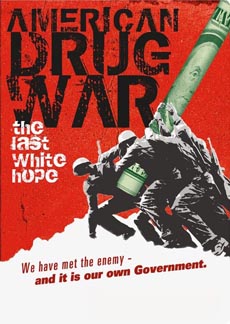
The War on Drugs has become the longest and most costly war in American history, the question has become, how much more can the country endure? Inspired by the death of four family members from “legal drugs” Texas filmmaker Kevin Booth sets out to discover why the Drug War has become such a big failure. Three and a half years in the making the film follows gang members, former DEA agents, CIA officers, narcotics officers, judges, politicians, prisoners and celebrities. Most notably the film befriends Freeway Ricky Ross; the man many accuse for starting the Crack epidemic, who after being arrested discovered that his cocaine source had been working for the CIA.

AMERICAN DRUG WAR shows how money, power and greed have corrupted not just dope fiends but an entire government. More importantly, it shows what can be done about it. This is not some ‘pro-drug’ stoner film, but a collection of expert testimonials from the ground troops on the front lines of the drug war, the ones who are fighting it and the ones who are living it.

Source: AKATommyChong.com

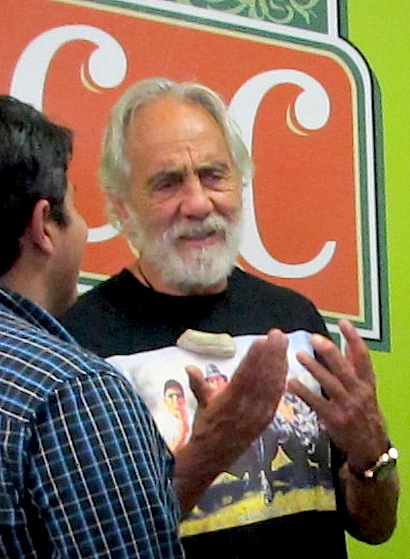
At the height of popularity of the Bush administration — the federal government entrapped and subsequently imprisoned Tommy Chong.  Josh Gilbert began documenting the federal case against his long time friend, for the terrible crime of selling bongs.

This film examines the personal effects on Tommy, the motivations and tactics of the politicized Justice Department under George Bush, set against the back drop of the War on Drugs and the legal issues involved. The film premiered at the Toronto Film Festival to huge press and critical acclaim, and appeared at many other film festivals. It premiered theatrically at Film Forum in New York City and went on to a successful arthouse theatrical release throughout North America. It was recently broadcast on Showtime and the CBC in Canada.

Why We Can’t Wage War on Drugs

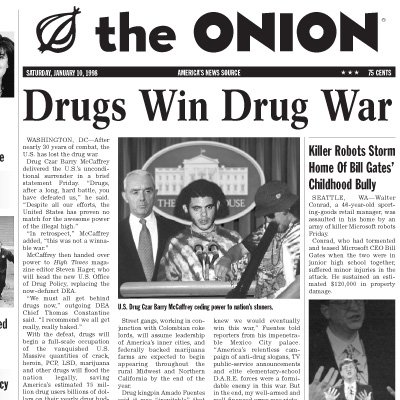
drugs-win-war-on-drugs

The war on drugs was always a war against an idea. But ideas have a shelf-life, too, and this one has lost its potency

By Mike Jay

Source: Aeon Magazine

When the US President Richard Nixon announced his ‘war on drugs’ in 1971, there was no need to define the enemy. He meant, as everybody knew, the type of stuff you couldn’t buy in a drugstore. Drugs were trafficked exclusively on ‘the street’, within a subculture that was immediately identifiable (and never going to vote for Nixon anyway). His declaration of war was for the benefit of the majority of voters who saw these drugs, and the people who used them, as a threat to their way of life. If any further clarification was needed, the drugs Nixon had in his sights were the kind that were illegal.

Today, such certainties seem quaint and distant. This May, the UN office on drugs and crime announced that at least 348 ‘legal highs’ are being traded on the global market, a number that dwarfs the total of illegal drugs. This loosely defined cohort of substances is no longer being passed surreptitiously among an underground network of ‘drug users’ but sold to anybody on the internet, at street markets and petrol stations. It is hardly a surprise these days when someone from any stratum of society – police chiefs, corporate executives, royalty – turns out to be a drug user. The war on drugs has conspicuously failed on its own terms: it has not reduced the prevalence of drugs in society, or the harms they cause, or the criminal economy they feed. But it has also, at a deeper level, become incoherent. What is a drug these days?

Consider, for example, the category of stimulants, into which the majority of ‘legal highs’ are bundled. In Nixon’s day there was, on the popular radar at least, only ‘speed’: amphetamine, manufactured by biker gangs for hippies and junkies. This unambiguously criminal trade still thrives, mostly in the more potent form of methamphetamine: the world knows its face from the US TV series Breaking Bad, though it is at least as prevalent these days in Prague, Bangkok or Cape Town. But there are now many stimulants whose provenance is far more ambiguous.

Pharmaceuticals such as modafinil and Adderall have become the stay-awake drugs of choice for students, shiftworkers and the jet-lagged: they can be bought without prescription via the internet, host to a vast and vigorously expanding grey zone between medical and illicit supply. Traditional stimulant plants such as khat or coca leaf remain legal and socially normalised in their places of origin, though they are banned as ‘drugs’ elsewhere. La hoja de coca no es droga! (the coca leaf is not a drug) has become the slogan behind which Andean coca-growers rally, as the UN attempts to eradicate their crops in an effort to block the global supply of cocaine. Meanwhile, caffeine has become the indispensable stimulant of modern life, freely available in concentrated forms such as double espressos and energy shots, and indeed sold legally at 100 per cent purity on the internet, with deadly consequences. ‘Legal’ and ‘illegal’ are no longer adequate terms for making sense of this hyperactive global market.

The unfortunate term ‘legal highs’ reflects this confusion. It has become a cliché to note its imprecision: most of the substances it designates are not strictly legal to sell, while at the same time it never seems to include the obvious candidates – alcohol, caffeine and nicotine. The phrase hasn’t quite outgrown its apologetic inverted commas, yet viable alternatives are thin on the ground: ‘novel psychoactive substance’ (NPS), the clunky circumlocution that is preferred in drug-policy circles, is unlikely to enter common parlance. ‘Legal highs’, for all its inaccuracies, points to a zone beyond the linguistic reach of the war on drugs, that fervid state of mind in which any separation between ‘drugs’ and ‘illegal’ seems like a contradiction in terms. Then again, if that conceptual link breaks down, what does become of the old idea of drugs? When the whiff of criminality finally disperses, what are we left with?

I said ‘old idea’, but the word ‘drug’, at least in the sense that has been familiar throughout our lifetimes, turns out to be a recent coinage, peculiar to the 20th century. The word itself is, of course, centuries old: as a general term for any medication or chemical remedy, it dates back to the 14th century. But its more specific sense – as in ‘drug addict’, ‘drug control’ or ‘drug culture’ – can be dated quite precisely to the years around 1900. And on examination, it proves to be a curious hybrid, bridging two quite separate meanings.

The first is psychoactivity. A ‘drug’ is a substance that acts on the mind, changing the way we think or feel. But this descriptive meaning also carries a strong suggestion of judgment, less easily defined but unmistakably negative. ‘Drug’, in this sense, is a label to be avoided. Thus, according to the industries that produce and promote them, alcohol and tobacco are not drugs; cannabis advocates insist it is not a drug but a herb; and LSD enthusiasts say that it is not a drug but a sacrament. Indigenous users of coca, betel nut or ayahuasca are appalled at the suggestion these substances might be drugs. A cup of tea is psychoactive, but we would only call it a drug if we wished to make a point. An indeterminate white powder bought off the internet, on the other hand, might be legal, but it is undoubtedly still a drug.

Before the 20th century, it would have been difficult to express this idea. Many of today’s ‘drugs’, such as cannabis, cocaine and morphine, were sold in any high-street pharmacy. ‘Heroin’, for instance, emerged in 1898 as Bayer Pharmaceuticals’ new brand of over-the-counter cough medicine. Did the authorities simply turn a blind eye to the dangers that these substances posed? They did not: opium was classified as a poison because of its overdose risk, and cannabis was known to cause mental disturbance in some users. Yet these properties did not confer any exceptional status. And why should they? Even today, there are still plenty of prescription medicines that are toxic, habit-forming or that have deliriant side-effects. What made the drug-drugs special? In the 20th century, they came to be defined by their illegality, but of course they could not have been created by it. Only once certain hostile perceptions about drugs were in place could it make sense to ban them. What caused the perceptions?

We might start with the temperance movement. In the 19th century, alcohol was being recognised as a causal factor in all sorts of social ills, and so temperance campaigns promoted sobriety as the path to personal health, moral virtue and social respectability. Progressive social reformers joined forces with doctors and religious authorities to condemn the habitual intoxication of previous generations. Other intoxicating drugs might not have presented such a widespread problem, but they all got swept up in the same mixture of medical, moral and social opprobrium.

By the late 19th century, consumer groups were campaigning against the heavy doses of opiates and cocaine concealed in patent medicines

Global trade, meanwhile, made imported drugs such as opium and cocaine cheap and abundant; industry refined them into newly potent forms, which an energetic and largely unregulated business sector advertised and distributed to a booming consumer market. At the same time, the hypodermic syringe was transforming medical practice. It allowed doctors – and, increasingly, the general public – to inject large quantities of pure and potentially dangerous opiates such as morphine. This brought a breakthrough in pain relief, but also new risks such as abscesses and blood poisoning and, for some patients, compulsive and self-destructive overuse.

By the late 19th century, consumer groups were campaigning against the heavy doses of opiates and cocaine concealed in patent medicines, and doctors were diagnosing addiction as a medical pathology with serious social consequences. The first uses of ‘drug’ in its modern sense date from this era: in its earliest occurrences, it stood as an abbreviation of phrases such as ‘addictive drug’ or ‘dangerous drug’. Doctors advised governments and the public that injections of powerful narcotics should be confined to professionals. Use without medical supervision was classified as ‘abuse’.

Largely couched in medical terms as it was, the whole notion of ‘drugs’ carried moral and cultural implications from the start. Within the temperance debate, intoxication was an evil in itself and abstinence a corresponding virtue. Also, a good many of the substances that caused concern in the West were associated with immigrant communities: opium in the Chinese districts of San Francisco or London’s docklands, cocaine among the black communities of the southern US. In the racially charged debates of the day, these substances were presented as the ‘degenerate habits’ of ‘inferior races’, a ‘plague’ or ‘contagion’ that might infect the wider population. Such ideas might no longer be explicit, but the drug concept certainly carries a murky sense of the foreign and alien even now. That’s why it rarely applies to the psychoactive substances that we see as part of normal life, whether caffeine in the west, coca in the Andes, or ayahuasca in the Amazon.

During the first years of the 20th century, opium, morphine and cocaine became less socially acceptable, rather as tobacco has in our era. Their use was now viewed through the prism of medical harm, and their users correspondingly started to seem feckless or morally weak. The drugs themselves became, in a sense, ‘legal highs’: not technically prohibited but retreating into the shadows, available only under the counter or from those in the know. And then, once their sale was formally banned in the years around the Great War, ‘drugs’ became a term with legal weight: a specified list of substances that were not merely medically dangerous or culturally foreign, but confined to the criminal classes.

The banning of drugs occasioned strikingly little public debate, certainly compared with the prohibition of alcohol in the US. Then again, the ‘drug problem’ was pretty marginal at that point, and confined to subcultures (ethnic, bohemian, criminal) without a public voice. The only organised resistance to this new language of condemnation came from the pharmaceutical industry, concerned that its legitimate trade was being tarnished by unfortunate associations. What’s now the American Pharmacists Association, pressured by its major corporate sponsors such as Johnson & Johnson, complained about the casual use of terms such as ‘drug evil’, ‘drug fiend’ and ‘drug habit’, and lobbied newspapers to specify the drugs in question as ‘narcotics’ or ‘opiates’.

But ‘drugs’ was too vague and too useful to replace with more precise terms. It conveyed not simply particular chemicals, but a moral position on the use of them by certain people and for certain purposes. This position was eventually enshrined in the legal frameworks that emerged to prohibit them. The 1961 UN Single Convention on Narcotic Drugs, the founding document of the international drug laws, is unique among UN conventions in using the word ‘evil’ to describe the problem it seeks to address.

Legislators celebrated the 1961 Convention as the culmination of a 50-year battle to prohibit drugs, a battle that had begun at the Hague Opium Conference of 1911. Yet with hindsight, 1961 was the moment at which the consensus around the evils of drugs began to fracture. An adventurous postwar generation, the first to be raised as truly global consumers, was awakening to the realisation that alcohol was not the world’s only intoxicant. An international underground was beginning to spread news of hashish-smoking in Morocco and LSD synthesised in Swiss laboratories, as well as Benzedrine pills that propelled truck drivers through the night, and hallucinogenic mushrooms in Mexican mountain villages. For many, the resounding denunciations of drugs as dangerous, foreign and criminal no longer rang quite true. Within a booming youth culture, controlled substances were becoming the talismans of a new morality, an entire view of life that valorised pleasure, experiment and self-discovery.

In a sense, Nixon’s war on drugs was lost before it was even announced. It could have succeeded only by uniting an already polarised society in the belief that drugs were a genuine threat to civilisation, and that there was a genuine possibility of returning to a world without them. These propositions grew ever harder to sell over the intervening decades, as drug use became increasingly normal, while the vast sums of money spent trying to control it not only failed to reduce it, but actually created a global criminal market on a scale that Nixon could never have imagined.

psychiatric diagnoses such as low self-esteem and social anxiety open the door to new ‘feel-good’ drugs designed to enhance confidence and happiness

The problem is not just one of unintended consequences. As the war on drugs has dragged on, the medical, moral and cultural certainties that interlocked so tightly to create the very concept of ‘drugs’ have been drifting out of focus. In medical terms, the category rested on a clear distinction between sanctioned ‘use’ and criminal ‘abuse’. Yet today’s consumers are in practice free to make this distinction themselves. The arrival of online pharmacies means we can all take our chances with the prescription drugs of our choice: generic, pirated, off-label, out of date or semi-legitimately dispensed by doctors and pharmacists on the other side of the world. As a result, the line between pharmaceutical and illicit drugs is blurring. Recent studies in the US have found opiate users moving from prescription drugs such as OxyContin and Vicodin to street heroin and back again, depending on price and availability. As new ‘legal highs’ with opiate-like effects come on-stream, any such line may eventually become impossible to draw.

Within the pharmaceutical industry as a whole, other pressures and trends are conspiring to soften the distinction between recreation and medicine, ‘feeling good’ and ‘feeling better’. Smart drugs and nootropics promise to make us feel ‘better than well’; the broadening of psychiatric diagnoses to encompass conditions such as low self-esteem and social anxiety opens the door to new ‘feel-good’ drugs designed to enhance confidence and happiness. Pop-science catchphrases such as ‘serotonin-booster’ might apply equally to antidepressants or to MDMA. At the cutting edge of brain research, neural network studies are pointing the way towards implants for deep-brain stimulation or brain-embedded fibre-optic cables: a brave new world in which moods and perceptions might be controlled electronically and drugs, good or bad, would be redundant.

At the same time, the cultural landscape in which ‘drugs’ were defined is receding from view. Nixon launched his war on drugs in a country where even cannabis was a profoundly alien substance to almost everybody over the age of 30; today, most Westerners below retirement age recognise drugs, for better or worse, as part of the culture in which they grew up. We have long been comfortable global consumers, seeking out the novel and exotic in everything from food to travel, music to spirituality; our appetite for intoxicants participates in this pursuit of novel sensations, and is explicitly linked to it by corporate advertising that uses the visual lexicon of mind-expanding drugs to sell us everything from energy drinks to smartphones. ‘Drugs’, in its original sense, drew on a reflexive distaste for the culturally alien. This distaste has itself become alien to the inhabitants of the 21st century.

As drugs have swirled into this kaleidoscope of lifestyle and consumer choices, the identity of the ‘drug user’ has slipped out of view. A unitary class of ‘drugs’ depended for its coherence on an identifiable class of users, clearly recognised as deviant. But drug use has long ceased to function as a reliable indicator of class, ethnicity, age, political views or any criminality beyond itself. Plenty of drug users self-identify with confidence these days and, if conspicuous drug ‘scenes’ are easily located, the majority of drug use nevertheless takes place outside them. Buying and selling, the point of greatest visibility and risk for the user, has been rendered virtual: the shady street deals of the past can now be conducted online via PayPal or bitcoin, the incriminating package delivered through the letterbox in an innocuous Jiffy bag.

Though its medical and cultural underpinnings might be shifting, the category of drugs is still firmly defined by the law. At their margins, the drug laws could be starting to reflect the reality of what we might call a post-drug world, but it seems unlikely that they will drive the process. When the drug laws were first passed a century ago, they reflected a cultural shift that had already taken place; we can expect them to be dismantled only after the landscape of a post-drug world is plain for all to see. But even now, it is not hard to discern in outline. Alcohol prohibition, when it eventually collapsed, was superseded by a patchwork of regulatory controls – licensing, insurance, tax – that either existed already or were devised on the basis of pragmatic policy goals.

We can envisage a similar patchwork for a day – however close or distant – when drugs are removed from the ambit of criminal law. In so far as any drug presents medical risks, it requires regulation to minimise them, and a well-established spectrum, from labelling to licensing to prescription, already exists for this purpose. In so far as they constitute a luxury market, we might expect them to be taxed. As with alcohol, in some jurisdictions they might remain illegal by broad popular consent. The prohibition of drugs, including alcohol, was an emergency measure that overrode the logic of pragmatism. The alternative is not another leap in the dark, but a return to the routine regulatory calculus.

But what lies beyond the idea of ‘drugs’ itself? The simple answer is that there is nothing to replace. Behind the term lies a disparate group of chemicals whose varied effects – stimulant, narcotic, psychedelic, euphoriant – offer a more accurate language of description. Value-laden terms, both positive and negative, would doubtless emerge to complement them. A post-drug world would require not a new language but the recovery of an older one. The category of ‘drugs’ was an attempt, characteristic of its historical moment, to separate out good chemicals from bad ones. But as we have known since antiquity, good and evil, virtue and vice are not inherent in a plant or a molecule. Pedanius Dioscorides, the great classical authority on medicine, maintained that no substance is intrinsically good: it all depends on the dose at which it is administered, the use to which it is put, and the intentions behind that use. The Greek term pharmakon could mean both a medicine and a poison: there was no such thing as a harmless remedy, since anything with the power to heal also had the power to harm. All drugs, psychoactive or otherwise, are a technology, a prosthetic that extends our physical and mental reach. Like so many of the other technologies that are transforming our world, their benefits and dangers must ultimately be understood as extensions of ourselves.