By Frank Castro
Source: The Hampton Institute
“Anyone who has ever struggled with poverty knows how extremely expensive it is to be poor.” – James Baldwin
My house sat tucked a mile deep, wrapped in 500 acres of sprawling oaks and towering pines. Dense thickets crisscrossed the land like formidable barricades protecting masses of forests from the intrusions of bored, yet curious children. They would leave you picking daggers from your sides and forearms if you journeyed too far. I grew up in a remote place called Farmhaven, the midway point between Canton and Carthage, Mississippi. Driving through you would never know you were somewhere with a name. Farmhaven is one of those places marked by only an intersection and a road that always goes somewhere else. It is here though, with my father and my brother, in the heart of the South, that I learned the most important lesson life could teach me.
When I was very young the world was a place of limitless potential. Like a naïve summer breeze still clinging to the fantasy that winter will never come, I was no different than most children who believe the world is theirs. You do not have to be rich to dream such dreams. A swift run and leap off the South end of our porch, where the ground was soft and the magnolia leaves puddled, was all it took. With my arms stretched wide I pretended to be a fighter pilot leaving the deck of an aircraft carrier. I never really knew or cared what fighter pilots do; I just wanted to see the world through a bird’s eyes. It was my own American Dream. And the further from the porch I landed, the more I believed I would someday soar.
It’s probably not an unfamiliar story. After all, in children imagination abounds. About this time we start being told to follow our dreams, as if the world were built in such a way that the realization of all our dreams is possible. Certainly that’s what I believed, that people just out to make the imagined real. Life is not without a cruel sense of irony though, and elders rarely mention to adolescents the kind of world in which we live. They shield us from it, understandably not wanting to damage the authenticity and fragility of our youthful ambition. But reality will come knocking. It always does. It will come to tell us that the world has been built in such a way that our dreams will be withheld from us, that the joys of making them real cannot be ours, but rather, with and atop our backs, they must be forfeited to erect someone else’s.
This is the price of poverty.
Knock, Knock
“Capitalism is cruel and heartless and tears people apart, mentally, physically and socially.” - Susan Rosenthal
My father taught me the value of work. For all his faults, I could never question how hard he labored to provide for my brother and me, or how determined he was to instill in us a love for building with our own hands. He tried to teach us how to work the land. We plowed and planted. We built homes for our chickens, turkeys, and ducks. We constructed wooden and wire fences for rotating our goats and horses from one field to another. During the winter months when our grazing fields turned to tundra, I hoisted buckets of feed to the troughs I had built. My brother and I became so proficient with our hands that often my father would drop us off in the woods with supplies and expect a job to be done when he returned with lunch.
But neither our farm nor all the work we put into it was ever what kept a roof over our heads. Even after the fruits of our labor yielded plates for our table, we still needed money. I knew this all too well, even as a seven year old. My room was in the middle of our house. You could not get from the kitchen to the living room without first walking through it. Often a door was left cracked open, not intentionally, but because door frames shift with age and require a firm snug to be pulled completely shut. Through the years while I had a step-mother I heard my father and her argue about bills when the doors where ajar. Always more bills. They both worked in addition to our farm. She worked at a cigarette store. His job always changed. And still it was never enough. Sometimes they got loud. Her voice screeched. His slurred. And mine would make lists in my head of everything I was going to do the next day to make it all better.
I began doing my own laundry about that time because I wanted my step-mother to stay. My child’s mind thought it would make a difference. She left after a few more years though, and when it happened I really could not blame her. My father had begun turning to his bottles more often than he turned to her. When he got drunk enough one night to put a shotgun to my brother’s head, she lost all composure. Refrigerator doors flung open. Voices thundered. Walls shook. Glass bottles clanked and flew further off the porch than I ever had, exploding all over the lawn - just like my family, exploding. My screams were equal only to my tears. Every little list I had made in my head was useless. The gun landed in the yard too after my step-mother snatched it. My brother and I spent that night in the shadow of two people we loved parting ways forever. Soon we lost the farm… and our father too.
I never soared into those magnolia leaves again. In the years to come dreams of a family and a home where I belonged replaced all desire to fly.
Not till much later did I realize that nothing I did then would have made a significant difference. Neither my brother nor I held fault for our poverty and, despite his drinking, it was not entirely my father’s fault either. Addiction, I learned, is most often endemic of a society that generates addicts. Something bigger loomed, something far more pervasive and far-reaching than the lives of a few backwoods Mississippians. Reflecting on how expensive poverty had been for my family, asking why I was poor and why were we ripped apart, I found myself on an inescapable trajectory to discover the origins of inequality.
Their Gluttony Is Our Starvation
“The class which has the power to rob upon a large scale has also the power to control the government and legalize their robbery.” - Eugene V. Debs
My family’s farm was bought by a group of wealthy men who wanted a hunting resort. For the majority of the year our old home sits empty and rotting. It is a reminder that in the halls of country clubs and on the decks of overpriced yachts, poverty is, in the most acute sense of the word, the abundant currency of the rich. Their very existence is predicated on the existence of the poor.
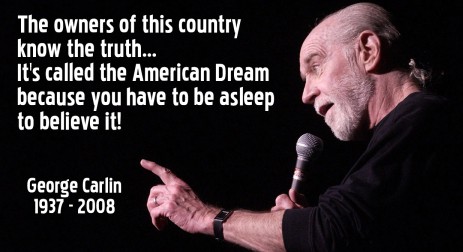
This is not a fact we like to grapple with in America. Here everybody believes they can get rich. We believe the realization of ALL of our dreams is possible. We call this belief the American Dream, and it has been incredibly successful at stifling plausible attempts at equality outside the capitalist framework. To paraphrase John Steinbeck, socialism never took root in America because the poor see themselves not as an exploited proletariat but as temporarily embarrassed millionaires. It is the worst sort of fabrication because it makes us believe the preposterous - my family could have our house, our farm, a decent living with ample food, and an environment where addiction would stymy, while simultaneously rich folks could use it all to shoot animals for sport.
If it sounds ridiculous, it’s because it is.
Under capitalism one party was always going to lose, and generally the party which loses is the one with significantly less money. Our socioeconomic realities are structured this way. “Losers” are a necessity for capitalism’s survival. My family’s misfortune was a microcosm of structured events that play out against billions of poor people in orchestrated symphony every day. They (we) find ourselves in battles with people, organizations, and nations who have enormous financial capabilities, and therefore power, and because our global political system was built around empowering the moneyed class, before the battle ever starts our circumstances are engineered for defeat. Scaled up or down, this predisposition between those with power and those without is consistent. It is why my family lacked the financial agency over our lives to survive. But it is also why entire poor communities are displaced and gentrified by wealthy developers, or entire swaths of the planet are exploited by wealthy nations and their corporations. Where ever we are, our struggles are connected.
The American Dream then has at least two primary functions. Its first is to generate a mythology around itself which can effectively negate the reality that within capitalism not everybody can realize their dreams, that there must be an oppressed class. Such a mythology atomizes people from collective struggle. It induces a form of hyper individualism often seen in the “Boot-Strap Myth,” or the idea that anybody of little means, with hard work and determination, can lift themselves to the highest rungs of bourgeoisie society (the richest of the rich). By focusing on individual stories of capitalist success, the Bill Gates and Sam Waltons of the world, the vast poverty and suffering required for the emergence of massive fortunes is left out of the picture. One can point to Gates and believe their own ascendance is possible without understanding its possibility is predicated on the systematic exploitation of tens of thousands of workers in mines and factories across the globe. And more importantly, focus on the few success stories of the super-rich invisibilizes the structure which keeps wealth within their hands at the direct expense of the poor and makes it beyond examination or reproach.
A second primary function of the American Dream is to facilitate an overpowering sense of entitlement through exploitive competition. It cleaves us from cooperative modes of thinking and existing by constantly pitting us against each other. Through competing with fellow human beings for the necessities of life - work, housing, education, affection, nourishment, social belonging, etc. - an individual is conditioned to accept that competition is the natural state of human existence, and therefore competition necessitates winners and losers. Here, belief of capitalist mythology graduates into acceptance of capitalist power structures, and then finally into the endorsement and full-fledged participation in them. The latter is crucial, for in order to amass a huge fortune a person has to endorse a sort self-maximizing choice which, in their minds, justifies widespread exploitation. At this point it is believed that “losers” (the exploited) are inevitable, thus the more losers, or the greater number of exploited, the richer (and fewer) the winners. If you play the game ruthlessly enough to win, or even thrive, the logic follows that you are entitled to all the rewards and privileges expropriated from the oppressed.
With little doubt, I imagine the men who bought our farm thought nothing of it. In their minds having the money for it was the only requisite needed, and since they had played by the rules of capitalism well enough to be rewarded with the money needed to purchase it, they were “entitled” to it. But it was never their home. They had never toiled in the fields for crops. They had never spent a birthday or Christmas Eve in the house. They had never fished the ponds. They had never run around the yard filling the trees with laughter, or fed the hummingbirds from the clotheslines. They had never made peace with the bees that burrowed into the oak joists beneath the porch. They had never labored with an axe to stock firewood or climbed beneath the house and wrapped the pipes for winter. They knew nothing of the land or the house but its acreage and price. And that was enough, because the memories of children don’t fetch power when money talks.
Poverty Is a Weapon of Mass Destruction
“You cannot call a society which has 3.5 million homeless and 18.5 million vacant homes civil. That’s violent and morally bankrupt.” - Frank Castro
Poverty is a weapon of mass destruction. We just do not see it that way because we have a very limited understanding of what violence looks like. Statistics paint a broad picture, like the fact that 7.7 million people die of hunger every year (21,000 a day), or the fact that 3.5 Americans remain homeless despite 18.5 million vacant homes; but unless we know those individuals’ stories, and they resonate with us in some way, a culture of competition and entitlement keeps us preoccupied with trying to realize our own ambitions - or resolve our own problems. Whatever the reason, often we are concerned more with ourselves than our collective struggle.
Myths like the American Dream condition us to accept that an elite minority profiting off widespread misery is the way of the world. But remember, the hungry don’t choose to starve, and few houseless people choose homelessness. They are starved and put on the streets by a system which structurally denies them access to food and shelter. If we are to get a realistic picture of how destructive global capitalism is, it requires a broader and deeper understanding of violence.
In 2013, Peter Joseph tried reframing the parameters of violence:
“If I put a gun to someone’s head, say, a 30-year-old healthy male, pull the trigger, and kill him, assuming an average life expectancy of, say, 84, you can argue that possibly 54 years of life [were] stolen from that person in a direct act of violence.
However, if a person is born into poverty in the midst of an abundant society where it is statistically proven that it would hurt no one to facilitate meeting the basic needs of that person and yet they die at the age of 30 due to heart disease, which has been found to statistically relate to those who endure the stress and effects of low socioeconomic status, is that death, the removal of those 54 years once again, an act of violence? And the answer is “Yes, it is.” You see, our legal system has conditioned us to think that violence is a direct behavioral act. The truth is that violence is a process, not an act, and it can take many forms. You cannot separate any outcome from the system by which it is oriented.”
***Distributed equally, the grains produced throughout the world would provide each person 3,600 calories per day . The average person requires 2,000 calories a day to maintain a healthy diet.
If we can understand the scenario Peter explains as a process of violence multiplied by millions of starving and homeless people, then little more evidence is needed to indict and convict capitalism as the sadistic, murderous, and megalomaniacal system it is. Contrary to what the Boot Straps Myth and the American Dream tell us, poverty sits infinitely more on the shoulders of structures we are born into than it does personal choice, ambition, or determination. If more understood this, perhaps then finally the lie that billions like me were born into poverty because our parents were lazy, untalented, or lack the ambition to succeed, could die.
Dream Differently
“You have to act as if it were possible to radically transform the world. And you have to do it all the time.” - Angela Davis
When poverty consumed my family it destroyed any understanding of unity I had. To this day my dream remains to rediscover what family means for me, what it will look and feel like; but through the pain and the loss this much has become clear: There is no room left for “America” in my dreams. I imagine a world where families are no longer faced with the looming pistol of starvation and homelessness. No borders, rules, or regulations will rip our homes from us. No person or institution will dangle over us the future we strive toward like a tree that grows inches with every stretch for fruit. Instead we will live in cooperation with each other, a cooperation which builds beyond blood and yields families the breadth of communities. I have survived this long by doing what most people with dreams do - by continuing to live every day to make them reality. And while I struggle every day to keep mine alive, I am inspired by the building happening all around me, and by the friends who have been my family.
My story is only one of billions across the globe though - one among a sea of poverty’s victims. Ensuring billions more are not to follow suit requires shedding America’s myths. When we tell children to follow their dreams without empowering them to envision a world beyond global capitalism, and beyond America, we limit them to the possibilities afforded through oppression. We preclude the possibility of starting our lives with visions of a world that centers liberation, cooperation, love, and justice.
As Wolfi Landstreicher once said, “If one loves life, if one wants to expand and flourish, it is absolutely necessary to free desire from the channels to constrain it, to let it flood our minds and hearts with passion that sparks the wildest dreams. Then one must grasp these dreams and from them hone a weapon with which to attack this reality, a passionate rebellious reason capable of formulating projects aimed at the destruction of that which exists and the realization of our most marvelous desires. For those of us who want to make our lives our own, anything less would be unrealistic.”
To us then has fallen the challenge of taking back the power of imagination, of dreaming beyond ourselves and beyond America.



 After the Crash