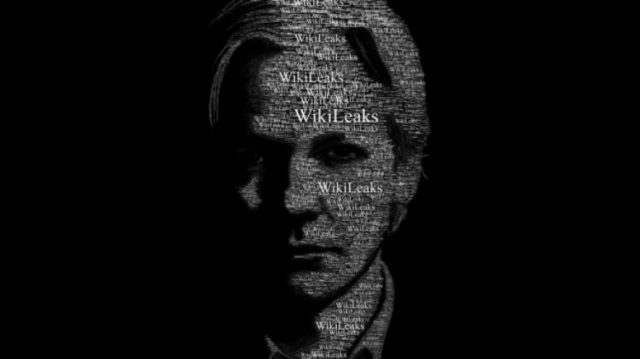
Julian Assange’s Day in Court

Julian Assange’s lawyers — in a final bid on Tuesday to stop his extradition — fought valiantly to poke holes in the case of the prosecution to obtain an appeal.
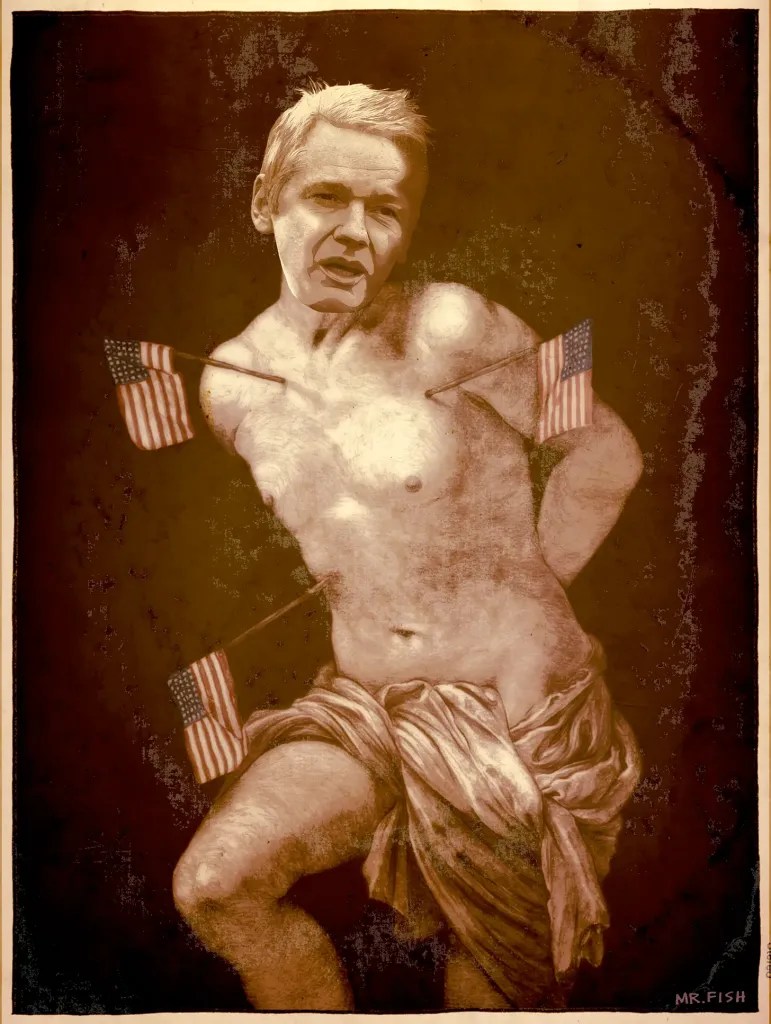
And Our Flags Are Still There – by Mr. Fish

By Chris Hedges

Source: Scheer Post

By the afternoon the video link, which would have allowed Julian Assange to follow his final U.K. appeal to prevent his extradition, had been turned off. Julian, his attorneys said, was too ill to attend, too ill even to follow the court proceedings on a link, although it was possible he was no longer interested in sitting through another judicial lynching. The rectangular screen, tucked under the black wrought iron bars that enclosed the upper left hand corner balcony of the courtroom where Julian would have been caged as a defendant, was perhaps a metaphor for the emptiness of this long and convoluted judicial pantomime. 

The arcane procedural rules — the lawyers in their curled blonde wigs and robes, the spectral figure of the two judges looking down on the court from their raised dais in their gray wigs and forked white collars, the burnished walnut paneled walls, the rows of lancet windows, the shelves on either side filled with law books in brown, green, red, crimson, blue and beige leather bindings, the defense lawyers, Edward Fitzgerald KC and Mark Summers KC, addressing the two judges, Dame Victoria Sharp and Justice Johnson, as “your lady” and “my lord” — were all dusty Victorian props employed in a modern Anglo-American show trial. It was a harbinger of a decrepit justice system that, subservient to state and corporate power, is designed to strip us of our rights by judicial fiat.

The physical and psychological disintegration of Julian, seven years trapped in the Ecuadorian Embassy in London and nearly five years held on remand in the high-security HM Prison Belmarsh, was always the point, what Nils Melzer the former U.N. Special Rapporteur on torture calls his “slow-motion execution.”  Political leaders, and their echo chambers in the media, fall all over themselves to denounce the treatment of Alexei Navalny but say little when we do the same to Julian. The legal farce grinds forward like the interminable case of Jarndyce and Jarndyce in Charles Dickens’ novel Bleak House. It will probably grind on for a few more months — one can’t expect the Biden administration to add the extradition of Julian to all its other political woes. It may take months to issue a ruling, or grant one or two appeal requests, as Julian continues to waste away in HM Prison Belmarsh. 

Julian’s nearly 15-year legal battle began in 2010 when WikiLeaks published classified military files from the wars in Iraq and Afghanistan — including footage showing a U.S. helicopter gunning down civilians, including two Reuters journalists in Baghdad. He took refuge in London’s Ecuadorian embassy, before being arrested by the Metropolitan Police in 2019 who were permitted by the Ecuadorian embassy to enter and seize him. He has been held for nearly five years in HM Prison Belmarsh.

Julian did not commit a crime. He is not a spy. He did not purloin classified documents. He did what we all do, although he did it in a far more important way. He published voluminous material, leaked to him by Chelsea Manning, which exposed U.S. war crimesliescorruptiontorture and assassinations. He ripped back the veil to expose the murderous machinery of the U.S. empire.

The two-day hearing is Julian’s last chance to appeal the extradition decision made in 2022 by the then British home secretary, Priti Patel. On Wednesday the prosecution will make its arguments. If he is denied an appeal he can request the European Court of Human Rights (ECtHR) for a stay of execution under Rule 39, which is given in “exceptional circumstances” and “only where there is an imminent risk of irreparable harm.” But the British court may order Julian’s immediate extradition prior to a Rule 39 instruction or may decide to ignore a request from the ECtHR to allow Julian to have his case heard by the court.

District Judge Vanessa Baraitser in January 2021, at Westminster Magistrates’ Court, refused to authorize the extradition request. In her 132-page ruling, she found that there was a “substantial risk” Julian would commit suicide due to the severity of the conditions he would endure in the U.S. prison system. At the same time, she accepted all the charges leveled by the U.S. against Julian as being filed in good faith. She rejected the arguments that his case was politically motivated, that he would not get a fair trial in the U.S. and that his prosecution is an assault on the freedom of the press.

Baraitser’s decision was overturned after the U.S. government appealed to the High Court in London. Although the High Court accepted Baraitser’s conclusions about Julian’s “substantial risk” of suicide if he was subjected to certain conditions within a U.S. prison, it also accepted four assurances in U.S. Diplomatic Note no. 74, given to the court in February 2021, which promised Julian would be treated well. The “assurances” state that Julian will not be subject to Special Administrative Measure. They promise that Julian, an Australian citizen, can serve his sentence in Australia if the Australian government requests his extradition. They promise he will receive adequate clinical and psychological care. They promise that, pre-trial and post-trial, Julian will not be held in the Administrative Maximum Facility in Florence, Colorado.

The defense must convince the two judges that the District Judge made serious legal errors to see an appeal granted.  

They argued that espionage is, as a matter of law, a political offense and that the extradition treaty with the U.S. prohibits extradition for political offenses. They focused on the extensive UK law, common law and international law that defines espionage as a “pure political offense” because it is directed against a state apparatus. For this reason, those charged with espionage should be protected from extradition. The lawyers spent a long time adjudicating the case of Chelsea Manning to justify her leak of documents that exposed war crimes as in the public interest, then arguing that if she was justified in leaking the documents Julian was justified in publishing them.

As the day wore on it became evident that the two judges were not well versed in the case, constantly asking for citations and expressing surprise that senior officials in the U.S., such as Mike Pompeo when he was head of the CIA, said Julian would not be protected by the First Amendment in an American court because he was not a citizen. Julian’s lawyers brought up past espionage cases, such as that of MI5 agent David Shaylerprosecuted under the Official Secrets Act 1989 for passing secret documents to The Mail on Sunday in 1997 — which included the names of agents. He also disclosed that MI5 (Britain’s domestic intelligence service) kept files on prominent politicians, including Labour ministers, and that MI6 (Britain’s foreign intelligence service) was involved in a plot to assassinate Libyan leader Colonel Momar Gaddafi. The British extradition request was rejected by the French Cour d’Appel because it was a “political offense.”  

All 18 counts filed against Julian allege that his purpose was “that such information so obtained could be used to the injury of the United States and the advantage of any foreign nation.”

The hearing was, after those in 2020 that focused on Julian’s mental and psychological health, refreshing in that it discussed the crimes committed by the U.S. and the importance of making them public. The two judges rarely interrupted, unlike other court proceedings for Julian I have attended where the judge often condescendingly cut short the defense. This may be a reflection of the broad public support, including by major media organizations, which have belatedly rallied behind Julian. Hundreds of people thronged the entrance to The Royal Courts of Justice, an expansive Victorian Gothic stone building adorned with statues of Jesus, Moses, Solomon and Alfred the Great, the celebrated pillars of the English legal tradition, to call for Julian’s freedom.

The afternoon session was different. On about a half dozen occasions the judges halted the defense to ask about how the leaks, because they were not thoroughly redacted, had endangered lives, although the U.S. has never been able to provide evidence of anyone whose life was lost as a result of the leaks. This canard has long been the cross on which U.S. officials have sought to crucify Julian. The two judges — one wonders if they had been given instructions during the lunch break — hurled these accusations at the defense lawyers until we adjourned.

“These indiscriminate disclosures were condemned by The Guardian and The New York Times,” Judge Sharp admonished the defense team. “They could have been done differently.”

This reference was especially egregious since the unredacted documents were first made public not by WikiLeaks or Julian but by the website Cryptome after reporters from The Guardian printed the password to the unredacted documents in their book.

The U.S. is officially seeking Julian’s extradition, where he potentially faces up to 175 years in prison, for the 2010 publication of the Iraq and Afghanistan war logs and US diplomatic cables. But the U.S. did not request his extradition until the release in March 2017 of the files known as Vault 7 which detailed how the CIA could hack Apple and Android smartphones and turn internet-connected televisions — even when they were off — into listening devices. Joshua Schulte, a former CIA employee, was found guilty last year of four counts each of espionage and computer hacking and one count of lying to FBI agents after handing over classified materials to WikiLeaks. He was given a forty-year sentence in February.

After the release of Vault 7 then CIA Director Mike Pompeo called WikiLeaks “a non-state hostile intelligence service.” The Attorney General at the time, Jeff Sessions, said that Julian’s arrest was a priority. By August the U.S. Senate had passed a 78-page intelligence finance bill which included a sentence declaring that “it is the sense of Congress that Wikileaks and the senior leadership of Wikileaks resemble a non-state hostile intelligence service often abetted by state actors and should be treated as such a service by the United States.” In May 2019 the Trump administration accused Julian of violating the Espionage Act and asked the UK to extradite him to stand trial in the U.S. Trump has called the allegations against Julian treason and called for “the death penalty or something.” Other politicians, including former Republican presidential candidate Mike Huckabee, have also called for Julian to be executed.

If Julian is extradited and additionally charged for the release of the Vault 7 documents, Fitzgerald told the court, “it could result in additional charges that merit the death penalty for aiding and abetting the enemy.” The U.S., he said, especially if Trump is elected again to the presidency, could easily “reformulate these charges into a capital offense.”

Summers brought up President Donald Trump’s request for “detailed options” of how to assassinate Julian when he was in the Ecuadorian Embassy. “Sketches were even drawn up,” he said, adding that the plot fell apart when the UK authorities backed down, especially over a potential shootout, in the streets of London”.

“The evidence showed that the US was prepared to go to any lengths, including misusing its own criminal justice system, to sustain impunity for US officials in respect of the torture/war crimes committed in its infamous ‘war on terror’, and to suppress those actors and courts willing and prepared to try to bring those crimes to account,” he said.

 The lawyers were right. The CIA is the driving force behind the extradition. The leak was highly embarrassing and to the CIA highly damaging. The CIA intends to make Julian pay. Schulte, who leaked Vault 7, was given a forty year sentence. Julian, if extradited, will be next. 
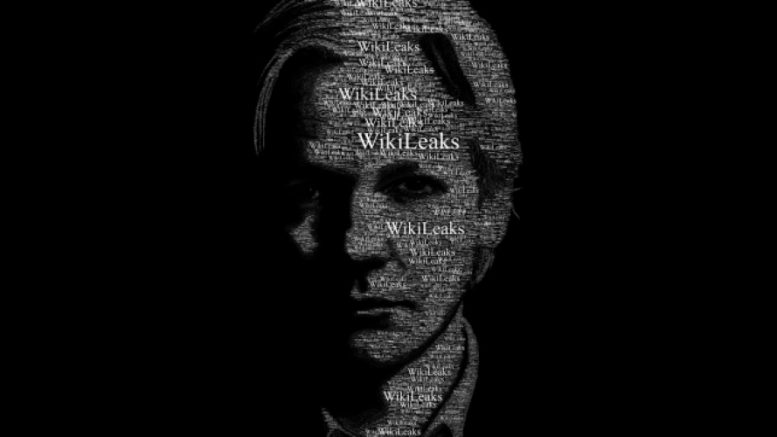
Assange prosecution relied on false testimony from a diagnosed sociopath and convicted pedophile

By Caitlin Johnstone

Source: Intrepid Report

The Icelandic newspaper Stundin reports that a key witness in the US prosecution of Julian Assange has admitted in an interview with the outlet that he fabricated critical accusations in the indictment against the WikiLeaks founder.

“A major witness in the United States’ Department of Justice case against Julian Assange has admitted to fabricating key accusations in the indictment against the Wikileaks founder,” Stundin reports. “The witness, who has a documented history with sociopathy and has received several convictions for sexual abuse of minors and wide-ranging financial fraud, made the admission in a newly published interview in Stundin where he also confessed to having continued his crime spree whilst working with the Department of Justice and FBI and receiving a promise of immunity from prosecution.”

BREAKING: Lead witness in US case against Julian Assange admits to fabricating evidence against him in exchange for a deal with the FBI #Assange https://t.co/kZxsTi62q0

— WikiLeaks (@wikileaks) June 26, 2021

This major witness would be Iceland’s Sigurdur “Sigi” Thordarson, a paid FBI informant who after his short-lived association with WikiLeaks has been found guilty of sexually abusing nine boys as well as embezzlement, fraud, and theft in his home country. A court-appointed psychologist has found him to be a sociopath.

“The court found that Sigurður is by all definitions a sociopath, suffering from a severe anti-social personality disorder. However, the court found that he did know the difference between right and wrong and could not be considered insane and could therefore stand trial,” Iceland Magazine reported in 2015 during Thordarson’s child abuse case.

This was all public knowledge when the US government was building its case to extradite Julian Assange to America and try him under the Patriot Act for journalistic activity which exposed US war crimes, a prosecution for which Assange is still locked up in Belmarsh Prison pending Washington’s appeal of a UK court’s denial of the extradition request. And now we know for a fact that the odious person whose testimony formed the basis for much of that prosecution was lying.

“US officials presented an updated version of an indictment against him to a Magistrate court in London last summer,” Stundin says. “The veracity of the information contained therein is now directly contradicted by the main witness, whose testimony it is based on.”

What this means is that the US decided to add more accusations to its previous indictment because charging a journalist for standard journalistic practices was too weak on its own, and now this decision has bitten them in the ass.

The article’s authors explain that contrary to the claims in that indictment, “Thordarson now admits to Stundin that Assange never asked him to hack or access phone recordings of MPs” and “further admits the claim, that Assange had instructed or asked him to access computers in order to find any such recordings, is false.”

Judge Baraitser: “he also asked [Thordarson] to hack into computers to obtain information including audio recordings of phone conversations between high-ranking officials, including members of the Parliament, of the government of “NATO country 1”.”
This is false, says Thordarson https://t.co/oDXLARJuGK

— Kristinn Hrafnsson (@khrafnsson) June 26, 2021

Thordarson’s testimony was cited extensively by British Magistrate Vanessa Baraitser when she was providing her ruling on the extradition request which is currently under appeal, and it looks pretty silly now that we know it was bogus. Her ruling repeats the prosecution’s claim that Assange “asked Teenager to hack into computers to obtain information including audio recordings of phone conversations between high-ranking officials, including members of the Parliament,” but Thordarson has now recanted this claim.

While the judgement on the extradition request reads, “It is alleged that Mr. Assange and Teenager failed a joint attempt to decrypt a file stolen from a ‘NATO country 1′ [ code for Iceland] bank”, Thordarson told Stundin that “this actually refers to a well publicised event in which an encrypted file was leaked from an Icelandic bank and assumed to contain information about defaulted loans provided by the Icelandic Landsbanki,” and that “Nothing supports the claim that this file was even ‘stolen’ per se, as it was assumed to have been distributed by whistleblowers from inside the failed bank.”

While the ruling repeats the claim that Assange “used the unauthorized access given to him by a source, to access a government website of NATO country-1 used to track police vehicles,” Thordarson told Stundin that “Assange never asked for any such access.”

It should be. https://t.co/PhTi8PIKLJ

— Glenn Greenwald (@ggreenwald) June 26, 2021

These revelations are entirely damning.

“This is the end of the case against Julian Assange,” tweeted NSA whistleblower Edward Snowden, adding, “If Biden continues to seek the extradition of a publisher under an indictment poisoned top-to-bottom with false testimony admitted by its own star witness, the damage to the United States’ reputation on press freedom would last for a generation. It’s unavoidable.”

“Now it’s time to have an international inquiry on how Sweden, UK, US, Ecuador and Australia have handled the Julian Assange case. My FOIA provides evidence nothing is normal in this case,” tweeted investigative journalist Stefania Maurizi.

It just says so much that the most powerful government in the world, with all its essentially limitless resources, needed to build its case against Assange on false testimony from a diagnosed sociopath and convicted child molester. That’s how strong their case was against a journalist whose only “crime” was telling the truth about the powerful.

This after we learned that Assange and his lawyers were spied on by the CIA, that he is being tortured, that his seven-year de facto imprisonment prior to his two-year stay in Belmarsh was arbitrary detention and unjust from the very beginning, and that the pretext for keeping him there was itself fallacious.

This is a farce. The fact that this man remains behind bars is an outrage.

Reporters Claim Facebook is Censoring Information on Julian Assange Case


“90% of my traffic has just been cut off by what seems to be a general algorithm command of some kind to downplay Assange.” “I think it is as simple as that.”

By Alan Macleod

Source: Mint Press News

Craig Murray, the former British ambassador to Uzbekistan and longtime confidant of Julian Assange, has been fastidiously reporting on the Australian publisher’s extradition hearing to the United States. Yet few people have been reading it. This, according to Murray, is because of a deliberate decision by online media giants to downplay or suppress discussion of the case. On his blog, Murray wrote that he usually receives around 50 percent of his readers from Twitter and 40 percent from Facebook links, but that has dropped to 3 percent and 9 percent, respectively during the hearing. While the February hearings sent around 200,000 readers to his site daily, now that figure is only 3,000.

To be plain that is very much less than my normal daily traffic from them just in ordinary times. It is the insidious nature of this censorship that is especially sinister – people believe they have successfully shared my articles on Twitter and Facebook, while those corporations hide from them that in fact it went into nobody’s timeline,” he added.

Asked about the situation by former New York Times reporter Chris Hedges, Murray explained that

Anybody who is at all radical or takes any view of anything that is outwith the official establishment view gets used to occasional shadow banning, but I have never seen anything on this scale before.”

“90% of my traffic has just been cut off by what seems to be a general algorithm command of some kind to downplay Assange,” he added. “I think it is as simple as that.”

There has been considerable public interest in the court proceedings, but very little mainstream attention given to them. To be fair, British authorities have made it inordinately difficult to cover the case, allowing only a small handful of journalists into the Old Bailey court system, where they can watch a live television link up but cannot bring in recording devices. An online stream can only be watched if one registers and signs in between exactly 9:30 and 9:40 a.m., and if they suffer even a momentary lapse in wifi connection, they are shut out of the session. The court system has also blocked human rights groups, including Amnesty International, from monitoring proceedings.

Still, considering the implications for the future of journalism, the lack of coverage might surprise some. The New York Times, the flagship outlet of American print media (and a Wikileaks partner) printed only two articles on the subject and has not mentioned Assange in over two weeks. Its broadcast journalism equivalent CNN, meanwhile, has not touched the issue at all.

Online media creators have, for many years, lived with the threat of algorithmic suppression or demonetization of content on sensitive or controversial issues. YouTube regularly cuts all advertising on videos on the Syrian Civil War, fracking, or other topics on which advertisers might not wish to promote scrutiny. Even airsoft and paintball enthusiasts have learned not to use words like “shoot” and “gun” in their titles, lest the platform demonetizes their content.

Perhaps more alarmingly, however, Silicon Valley tech giants are becoming increasingly closely intertwined with the state department, to the point where it is often difficult to tell where one ends, and another begins. “What Lockheed Martin was to the twentieth century…technology and cyber-security companies [like Google] will be to the twenty-first,” wrote Google executives Eric Schmidt and Jared Cohen in their book, “The New Digital Age: Reshaping the Future of People, Nations and Business.” For example, Facebook is now in a close partnership with the Atlantic Council, who essentially decides for them what content to promote in people’s news feeds and what content is discarded as fake news, misinformation, or low quality. The problem is that the Atlantic Council is a NATO cutout, and a government-funded organization whose board of directors is a who’s who of deep state officials, including virtually every living ex-C.I.A. director, Bush-era cabinet members like Condoleezza Rice and Colin Powell, and military generals like Wesley Clark and David Petraeus. Thus, an organization like this deciding what the world sees on their screens is barely one step removed from total government control of the flow of information.

The U.S. government also frequently directly interferes with content appearing on prominent social media. Earlier this year, Facebook announced that it would remove all comments or posts in praise of recently-slain Iranian General Qassem Soleimani from all its platforms. This was done to comply with the Trump administration’s designation of the Iranian Revolutionary Guard Corps (which Soleimani led) as a terrorist organization. The problem is that Soleimani was Iran’s most popular political figure, with an over 80 percent approval rating, and that Instagram is used by around one-third of the entire Iranian population. Thus, Iranians speaking in their local language were barred from sharing a majority opinion with their country folk because of a decision by Donald Trump.

The Middle East is a particularly contentious area of the world. Yet when news broke that the British Army’s online psychological operations brigade had managed to become a senior Twitter executive, responsible for Middle Eastern content, media largely ignored it, raising even more questions. Algorithm changes have also hammered independent alternative media outlets — often precisely the ones most likely to cover the Assange case — drastically reducing their search engine traffic flow.

Former C.I.A. chief Leon Panetta (an honorary director of the Atlantic Council) recently admitted that Assange is being prosecuted as a warning to journalists. “All you can do is hope that you can ultimately take action against those that were involved in revealing that information so you can send a message to others not to do the same thing,” he told a German documentary crew. While the message is being heard loud and clear by journalists, the public is far less aware that anything is going on, thanks, in part, to online suppression of news about the case. Judge Vanessa Baraitser is scheduled to pronounce judgment on the media “trial of the century” on January 4, after the U.S. presidential election. Murray will doubtless be there. But will anyone read what he has to say?