
Ukraine and Palestine: A double threat to US hegemony

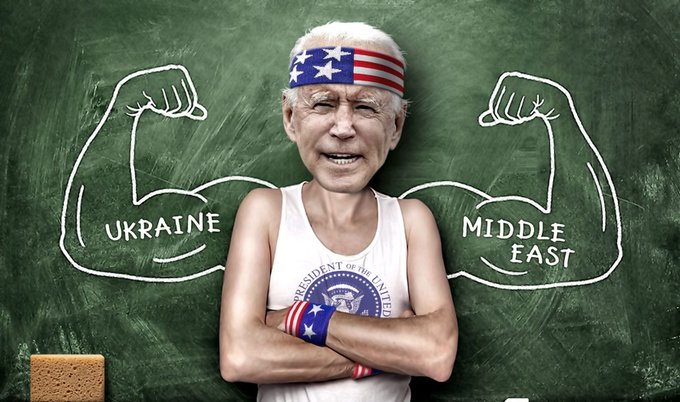
The outcome of US-led conflicts in Ukraine and West Asia will have a profound impact on the developing world order. Washington has already lost the former, and its major adversaries are vested in making sure it loses the latter too.
By MK Bhadrakumar

Source: The Cradle

Geopolitical analysts broadly agree that the war in Ukraine and the West Asian crisis will dictate the trajectory of world politics in 2024. But a reductionist thesis appears alongside that views the Israel-Palestine conflict narrowly in terms of what it entails for the resilience of the US proxy war in Ukraine – the assumption being that the locus of world politics lies in Eurasia.

The reality is more complex. Each of these two conflicts has a raison d’être and dynamics of its own, while at the same time also being intertwined.

Washington’s neck-deep involvement in the current phase of the West Asian crisis can turn into a quagmire, since it is also tangled up with domestic politics in a way that the Ukraine war never has been. But then, the outcome of the Ukraine war is already a foregone conclusion, and the US and its allies have realized that Russia cannot be defeated militarily; the endgame narrows down to an agreement to end the conflict on Russia’s terms.

To be sure, the outcome of the Ukraine war and the denouement of the Israel-Palestine conflict, which is at the root of the West Asian crisis, will have a profound impact on the new world order, and the two processes reinforce each other. 

Russia realizes this fully. President Vladimir Putin’s stunning ‘year-enders’ in the run-up to the New Year speak for themselves: daylong visits to Abu Dhabi and Riyadh (watched by a shell-shocked US President Joe Biden), followed by talks with Iran’s president and rounded off with a telephone conversation with the Egyptian president. 

In the space of 48 hours or so, Putin touched base with his Emirati, Saudi, Iranian, and Egyptian colleagues who officially entered the portals of the BRICS on 1 January.

The evolving US intervention in the West Asian crisis can be understood from a geopolitical perspective only by factoring in Biden’s visceral hostility toward Russia. BRICS is in Washington’s crosshairs. The US understands perfectly well that the extra large presence of West Asian and Arab nations in BRICS — four out of ten member states — is central to Putin’s grand project to re-structure the world order and bury US exceptionalism and hegemony.

Saudi Arabia, the UAE, and Iran are major oil producing countries. Russia has been rather explicit that during its 2024 chairmanship of BRICS, it will push for the creation of a currency to challenge the petrodollar. Without doubt, the BRICS currency will be at the center stage of the grouping’s summit due to be hosted by Putin in Kazan, Russia in October.

In a special address on 1 January, marking the start of Russia’s BRICS Chairmanship, Putin stated his commitment to “enhancing the role of BRICS in the international monetary system, expanding both interbank cooperation and the use of national currencies in mutual trade.”

If a BRICS currency is used instead of the dollar, there could be significant impact on several financial sectors of the US economy, such as energy and commodity markets, international trade and investment, capital markets, technology and fintech, consumer goods and retail, travel and tourism, and so on. 

The banking sector could take the first hit that might eventually spill over to the markets. And if Washington fails to fund its mammoth deficit, prices of all commodities could skyrocket or even reach hyperinflation triggering a crash of the US economy.

Meanwhile, the eruption of the Israel-Palestine conflict has given the US an alibi — ‘Israel’s self-defense’ — to claw its way back on the greasy pole of West Asian politics. Washington has multiple concerns, but at its core are the twin objectives of resuscitating the Abraham Accords (anchored on Saudi-Israeli proximity) and the concurrent sabotage of the Beijing-mediated Saudi-Iranian rapprochement.

The Biden administration was counting on the fact that an Israeli-Saudi deal would provide legitimacy to Tel Aviv and proclaim to the Islamic world that there was no religious justification for hostility towards Israel. But Washington senses that post-7 October it would not be able to secure a Saudi-Israel deal during this Biden term, and all that could be coaxed out of Riyadh is a door left ajar for future discussion on the topic. No doubt, it is a major blow to the US strategy to liquidate the Palestinian question.

In a medium term perspective, if the Russian-Saudi mechanism known as OPEC+ liberates the world oil market from US control, BRICS drives a dagger into the heart of US hegemony which is anchored on the dollar being the ‘world currency.’ 

Saudi Arabia recently signed a currency swap deal worth $7 billion with China in an attempt to shift more of their trade away from the dollar. The People’s Bank of China said in a statement that the swap arrangement will “help strengthen financial cooperation” and “facilitate more convenient trade and investment” between the countries.

Going forward, sensitive Saudi-Chinese transactions in strategic areas such as defense, nuclear technology, among others, will henceforth take place below the US radar. From a Chinese perspective, if its strategic trade is sufficiently insulated from any US-led program of anti-China sanctions, Beijing can position itself confidently to confront US power in the Indo-Pacific. This is a telling example of how the US strategy for the Indo-Pacific will lose traction as a result of its waning influence in West Asia.

The conventional wisdom is that preoccupation in volatile West Asia distracts Washington from paying attention to the Indo-Pacific and China. In reality, though, the waning influence in West Asia is complicating the capacity of the US to counter China both in the region as well as in the Indo-Pacific. The developments are moving in a direction where the credentials of the US as a great power are at an inflection point in West Asia – and that realization has leaked into other geographic regions around the world.

Way back in 2007, the distinguished political scientists John Mearsheimer of the University of Chicago and Stephen Walt of the John F. Kennedy School of Government at Harvard, wrote with great prescience in their famous 34,000-word essay entitled The Israel Lobby and US Foreign Policy that Israel has become a ‘strategic liability’ for the United States, but retains its strong support because of a wealthy, well-organized, and bewitching lobby that has a ‘stranglehold’ on Congress and US elites.

The authors warned that Israel and its lobby bear outsized their responsibility for persuading the Bush Administration to invade Iraq and, perhaps one day soon, to attack the nuclear facilities of Iran. 

Interestingly, on New Year’s Eve, in a special report based on extensive briefing by top US officials, the New York Times highlighted that “No other episode [as the war in Gaza] in the past half-century has tested the ties between the United States and Israel in such an intense and consequential way.”

Clearly, even as Israel’s barbaric actions in Gaza and its colonial project in the occupied West Bank are exposed and laid bare, and the Israeli state’s campaign to force Palestinian population migration are in full view, two of the US strategic objectives in the region are unravelling: first, the restoration of Israel’s military superiority in the balance of forces regionally and vis-a-vis the Axis of Resistance, in particular; and second, the resuscitation of the Abraham Accords where the crown jewels would have been a Saudi-Israeli treaty.

Viewed from another angle, the directions in which West Asia’s crisis unfolds are being keenly watched by the world community, especially those in the Asia-Pacific region. Most notable here is that Russia and China have given the US a free hand to navigate its military moves – unchallenged, so far, in the Red Sea. This means that any conflagration in the region will be synonymous with a catastrophic breakdown of US strategy.

Soon after the US defeat in Afghanistan in Central Asia, and coinciding with an ignominious ending of the US-led proxy war by NATO against Russia in Eurasia, a violent, grotesque setback in West Asia will send a resounding message across all of Asia that the US-led bandwagon has run out of steam. Among the end users of this startling message, the countries of ASEAN stand at the forefront. The bottom line is that the overlapping tumultuous events in Eurasia and West Asia are poised to coalesce into a climactic moment for world politics.
Righting a wrong: Burying decades of US-led wars

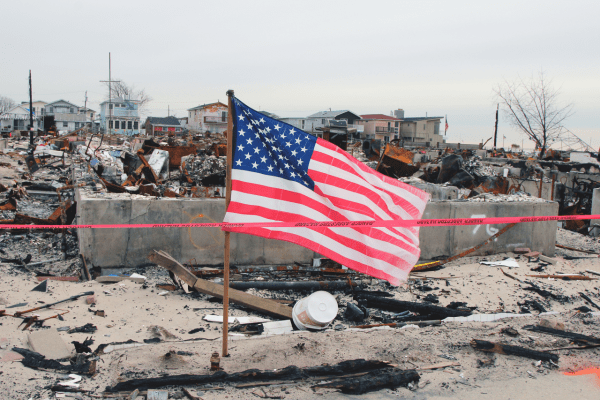
Today’s global conflicts – whether in Eastern Europe, West Asia, or East Asia – are spawned by a fading US hegemon desperately clinging to power.

By Mohamad Hasan Sweidan

Source: The Cradle

“One era is ending, a new one is beginning, and the decisions that we make now will shape the future for decades to come.”

With these words, US Secretary of State Antony Blinken defined the “turning point” of the American era, the transition from one world order to another. 

“In this pivotal time, America’s global leadership is not a burden. It’s a necessity to safeguard our freedom, our democracy, and our security,” Blinken said in his address to the Johns Hopkins School of Advanced International Studies (SAIS) in September. 

Official US documents, including last year’s National Security Strategy, underscore Washington’s conviction that waiting is a luxury it cannot afford; that it “will act decisively” to maintain its global leadership. As such, the US involvement in conflicts in Ukraine and Gaza, as well as the militarization in Southeast Asia, must be seen through this lens of international dynamics.

Broadly, tensions in Africa and Asia are interconnected with the west’s frenzied initiatives to maintain a dominant position and decisive role in the new multipolar order.

From Eastern Europe to West Asia 

Since the outbreak of war in Ukraine, the US has strategically tied its support for Kyiv to the defense of the “rules-based order.”

With clichéd sound bites, President Joe Biden characterized the conflict as “a battle between democracy and autocracy, between liberty and repression, between a rules-based order and one governed by brute force.”

Many Atlanticist leaders echo the sentiment that unwavering support for Ukraine aims to deter Russia from challenging a world order where the west holds sway.

Most prominently, German Chancellor Olaf Scholz articulated this perspective in his Foreign Affairs article published in early 2023 titled The Global Zeitenwende, (“an epochal tectonic shift”) in which he posits that Russian President Vladimir Putin is challenging a world order where Washington is a decisive power.

Scholz emphasizes the need for collective action by those who believe in a rules-based world order, even cooperating with countries that do not embrace democratic institutions but endorse the US-led principles for global governance. That western rules-based paradigm, it should be noted, is one in which international law and the UN Charter have long been discarded in favor of power and advantage.

Today, those dueling visions are playing out in the Ukraine war: a confrontation between the west seeking to maintain its global superiority and Russia striving to disrupt this dominance. Moscow’s rationale for the war is to prevent NATO from expanding to Russia’s borders, as confirmed by the western military alliance’s Secretary-General Jens Stoltenberg.

Similarly, the war in Gaza must be seen through this international lens, with Israel representing western interests in West Asia and any harm to the occupation state viewed inherently as a blow to US influence in the region. 

As Washington stands at this crucial turning point, according to Blinken, the cost of a blow to Israel is deemed too high, underscoring the resolute US defense of its global influence in the devastated towns and cities of Gaza.

Neo-colonial maneuvers

There are important nuances between these two US-backed wars, however: Ukraine is seen as a tool used by Washington to achieve its interests, while Israel is considered an American interest in itself. That Biden once famously asserted that the US would need to create an Israel if it did not exist illustrates its status as a neo-colonial outpost, protecting western interests in the region. 

This also explains the noticeable shift in US interest away from Eastern Europe to West Asia after the Palestinian resistance breached the occupied territories on 7 October to target military personnel and take prisoners. The deliberate shift of American attention from one war zone to the other was neatly exemplified by the Washington Post’s swift removal of the ‘War in Ukraine’ tab from its homepage. 

As previously mentioned by The Cradle, “Israel’s ongoing war on the Gaza Strip is best understood to be a US-backed one,” one that is being fought to safeguard US influence and interests in West Asia. However, the maneuvering room for Washington’s allies is shrinking dramatically. Unlike the diverse strategic options West Asian countries explored during the Ukraine war, Gaza offers no such latitude. It is fundamentally Washington’s war, demanding collective mobilization to defend the US position.

It is also telling that the US-led multination task force, Operation Guardian of Prosperity in the Red Sea, is already facing major set-backs since its recent inception, with some members pulling out and others choosing to remain unnamed.

White House National Security Council Strategic Communications Coordinator John Kirby had to awkwardly caveat the secrecy like this: “There are some countries that have agreed to participate and be part of the operation in the Red Sea, but they have to decide how much they want that to be public. And I’m going to leave it to them so that they can describe it somehow, because not everyone wants to be public.”

For example, the role of NATO member Turkiye has transformed into that of an energy transmission station for Israel, while the UAE, Saudi Arabia and Jordan serve as a transit bridge for goods bound for the occupation state that Yemen prevents from passing through the Red Sea.

Notably, shipments from Turkiye to Israel surged to 355 after 7 October, with many linked to the Justice and Development Party (AKP) and individuals close to Turkish President Recep Tayyip Erdogan, including his son Buraq. Even Egypt, restricted to allowing aid trucks through the Rafah crossing, could not facilitate aid to Palestinians without US approval.

How conflict spreads

In international relations, there are two main theories that address the relationship between power and the spread of peace. The first is the hegemonic stability theory which posits that the international order is likely to remain stable when one country is the dominant global power. The proponents of this theory believe that the existence of a single hegemon deters all powers in the world and prevents them from spreading tension.

However, given the reality that the United States has dominated a conflict-ridden global order for four decades, it can be argued that the presence of the hegemon did not lead to global stability. Rather, the dominant was the major source and catalyst for spreading tension around the world. It is sufficient to look at the distribution of US bases in the world and the proliferation of military agreements signed by Washington to understand how the US consistently provokes rivals and challengers, and creates strife.

The second is the balance of power theory, in which states seek to protect themselves by preventing any country from acquiring enough military power to control all other nations. If one power dominates – such as the United States – the theory predicts that weaker countries will unite in a defense alliance. 

According to this theory, a balance of power between competing states or alliances raises the cost of tension for everyone and ensures stability in the world. Thus, achieving peace today requires a rise in the level of power among Washington’s rivals, power which will provide the deterrence required to limit the spread of tensions around the world. Increasing the capabilities of Washington’s rivals is now a key requirement for all peaceful peoples and nations. And according to the balance of power theory, uniting against Israel is the most successful way to stabilize West Asia and its environs today.

Post-unipolar realities 

As the war in Gaza is unequivocally an American war, a vertical division emerges in West Asia, dividing those siding with Palestine and the Resistance Axis from those aligning with Israel and the Zionist project. Washington’s allies cannot stay neutral as the US leads the battle directly. 

This clarifies the positions of Saudi Arabia, Jordan, the UAE, Egypt, Turkiye, and other West Asian countries choosing to align with the US at the expense of Palestinian interests.

Observing Washington’s policies reveals global tensions spurred on by the pursuit of US influence. From Eastern Europe to West Asia and Southeast Asia, the US works to counter Eurasian powers Russia and China, and other influential countries, such as Iran and North Korea.

Since the end of the Cold War, Washington’s unipolar moment has resulted in more wars and destruction imaginable in decades often characterized as ones marked by peace. A more stable world order necessitates the achievement of a global balance of power by weakening the US and empowering new rising powers. Thus, peace and stability in West Asia hinges on the weakening of Israel, a colonial project so intricately tied to Washington’s hegemonic agenda.

Showdown in Ukraine

Hobbled US Turns to War to Preserve its Waning Primacy

By Mike Whitney

Source: The Unz Review

The future of humanity will be decided on a battlefield in Ukraine. That’s no exaggeration. The conflict between the United States and Russia will determine whether global economic integration will expand within an evolving multi-polar system or if the “rules-based order” will succeed in crushing any opponent to its Western-centric model. This is what’s taking place in Ukraine today, in fact, all of the recent government-prepared documents related to national security identify Russia and China as the greatest threats to US hegemony. For example, take a look at this brief clip from the 2021 Congressional Research Service Report titled Renewed Great Power Competition: Implications for Defense—Issues for Congress:

The U.S. goal of preventing the emergence of regional hegemons in Eurasia… is a policy choice reflecting two judgments: (1) that given the amount of people, resources, and economic activity in Eurasia, a regional hegemon in Eurasia would represent a concentration of power large enough to be able to threaten vital U.S. interests….

From a U.S. perspective on grand strategy and geopolitics, it can be noted that most of the world’s people, resources, and economic activity are located not in the Western Hemisphere, but in the other hemisphere, particularly Eurasia. In response to this basic feature of world geography, U.S. policymakers for the last several decades have chosen to pursue, as a key element of U.S. national strategy, a goal of preventing the emergence of regional hegemons in Eurasia.” (“Renewed Great Power Competition: Implications for Defense—Issues for Congress”, US Congress)

That sums up US foreign policy in a nutshell; “prevent the emergence of a regional hegemon” at all cost. Now check out this summary of the 2022 US National Defense Strategy by Andre Damon at the World Socialist Web Site:

These documents, which were not seriously discussed in the US media, make clear the fundamental falsehood that the massive US military buildup this year is a response to “Russian aggression.” In reality, in the thinking of the White House and Pentagon war planners, the massive increases in military spending and plans for war with China are created by “dramatic changes in geopolitics, technology, economics, and our environment.”

These documents make clear that the United States sees the economic rise of China as an existential threat, to be responded to with the threat of military force. The United States sees the subjugation of Russia as a critical stepping stone toward the conflict with China.” (“Pentagon national strategy document targets China”, Andre Damon, World Socialist Web Site)

These two excerpts are by no means a comprehensive summary of US foreign policy objectives, but they are a pretty effective thumbnail sketch. Bottom line: The war in Ukraine is not about Ukraine. America’s clearly articulated strategic objectives are as follows: To weaken Russia, topple its leader, take control of its vast natural resources and move on to containing China. Simply put, Washington’s escalating aggression in Ukraine is a Hail Mary pass aimed at containing emerging centers of economic power in order to preserve its waning position in the global order.

This is the geopolitical chess match that is being played behind the cover of “a war against Russia’s unprovoked aggression.” People should not be hoodwinked by that absurd deception. This war was concocted as a desperate attempt for the United States to defend its flickering global hegemony. That’s what Ukraine is really all about. It’s a clash between the warmongering western oligarchs who have a stranglehold on the US media and political establishment and the emerging economies that are using the market system to link their resources and manufactured goods to countries around the world through “high-speed” infrastructure and cooperative development.

So, the question everyone must ask themselves is this: Do you want to see more economic integration, lower prices, more shared prosperity and less war or another 80 years of onerous and arbitrary sanctions, color-coded revolutions, regime change operations, genocidal interventions and bioweapon warfare (Covid-19)? Which do you want?

Perhaps, you are one of the millions of Americans who believe that China is an enemy of the United States. Perhaps, you are also unaware of the role the US played in creating modern China. Here’s a question for you: Did the US and western corporations move their operations en masse to China to escape the high costs of production in the US?

answer– Yes, they did.

And, did they betray US workers because they didn’t want a fair wage to interfere with their excessive profit-making?

answer– Yep.

And, did they offshore their businesses, outsource their product manufacturing and do everything in their power to make themselves winners while robbing American workers of the opportunity of making a decent wage so they could put food on the table?

answer– They sure did.

Then who is actually responsible for the rise of China?

answer– Western corporations are responsible. If Americans want to blame someone, blame them!

But now the corporate mandarins and other elites are unhappy with China because China will not allow them to take control over their markets, financial system and currency as they have in America. So now these same cutthroat corporations want us to fight a war with the monster that they created?

Can you see that? Can you see that the relentless provocations against China have nothing to do with US national security or US interests. We are being led by the nose to fight and die for the cadres of voracious western oligarchs who have settled on China as the next target of their grand looting operation.

But let’s forget the past for a minute and focus on the future, after all, that’s what really matters, right?

Well then, which country has a more “positive vision” for the future: China or the United States?

Have you ever heard of China’s Belt and Road Initiative, the massive, multi trillion-dollar infrastructure plan that is the centerpiece of China’s foreign policy? It is the biggest infrastructure program in history and more 150 countries have invested in the plan already. It is a development-oriented project aimed at increasing connectivity through high-speed rail, shipping lanes and ports, skyscrapers, railroads, roads, bridges, airports, dams, power stations, and railroad tunnels. By increasing the speed of travel, China’s products and merchandise will get to markets faster generating greater prosperity for itself and for the other countries involved. And, keep in mind, the BRI will link countries around the world in a high-speed system that will not require its participants to follow a specific economic model dictated by Beijing. In other words, the Belt and Road Initiative is free market economics without the politics. It’s a “win-win” situation for everyone, a guarantee of mutual prosperity absent political manipulation, coercion or exploitation.

The venal oligarchs that run the US can’t even imagine a project of this scale or potential. In fact, they can’t even pony-up enough money to keep the trains on the rails in America. The profits these billionaire parasites extract from their activities invariably come from stock buybacks, tax evasion, and other sleight-of-hand, debt-layering ponzi-scams that benefit no one and merely shift more of the nation’s wealth into their own bulging bank accounts. Of course, ripping off the country would be bad enough, but now we see how this same class of miscreants have settled on public health as a means for amplifying their political power so they can impose repressive, police-state measures that greatly curtail the freedom of the entire population. In short, they want absolute social control and they aren’t going to let-up until they get it.

Where is the “positive vision” in this behavior?

There isn’t one. America used to be a country of ideas, ideals and vision. Now it is an oligarch-run detension center in which all hope for the future has been ruthlessly extinguished by a handful of mercenary billionaires.

At least, in the case of China, we can imagine a better, more prosperous world that is interconnected and more accessible to everyone. But what about the United States? Are we supposed to believe that fighting a war in eastern Europe is going to improve our lives? Are we supposed to believe that the only way “we can stay on top” is by pushing everyone else down? Are we expected to hate China and Russia even while our own government demonizes 80 million of us for voting for the wrong presidential candidate or for not supporting the terrorists who burn and loot our cities or for believing that the people in East Palestine are more deserving of our support and assistance than the Nazi stormtroopers in Kiev?

The fact is, our leaders cannot imagine devoting public resources to a giant interconnected infrastructure project like BRI, because that would mean less lucre for themselves. So, they’ve decided to destroy it just like they destroyed Nord Stream. Just read the press reviews on this groundbreaking project. Western journalists can’t find a ‘good word’ to say about it. A vast area in the center of America was fiendishly nuked with vinyl chloride, butyl acrylate and isobutylene, but the western media would rather criticize China’s ambitious BRI project than hold their paymasters accountable. Go figure.

The same rule applies to Russia. The Biden team and their wealthy allies don’t want closer relations between Germany and Russia because closer relations mean more prosperity for both countries, and Washington can’t have that, which is why they blew up the pipeline that was Germany’s lifeline to cheap fuel. That’s how Washington solved the problem. It pushed Germany and Russia down so the US could remain on top. Who doesn’t see this?

In contrast, the Belt and Road Initiative provides a positive vision for the future, which is an idea that the majority of the world supports. It puts us on a path to an interconnected world in which people can raise their standards of living, make a meaningful contribution to their communities, and enjoy their own culture and traditions without fear of being sanctioned, incarcerated or bombed to death. This is an excerpt from China’s Global Times:

The China-proposed Belt and Road Initiative (BRI) has already become a well-received international public good and an important platform for international cooperation…

“BRI transcends the outdated mentality of geopolitical games, and created a new model of international cooperation. It is not an exclusive group that excludes other participants but an open and inclusive cooperation platform. It is not just China’s solo effort, but a symphony performed by all participating countries….

Since the Belt and Road Initiative (BRI) was proposed in 2013, the initiative has always been development-oriented, and consistent efforts have been made to ensure that it is high-standard, sustainable and people-centered….

By August, China’s goods trade with countries participating in the BRI had reached around $12 trillion and the country’s non-financial direct investment in those countries surpassed $140 billion. … By the end of 2021, Chinese enterprises had invested $43 billion in the construction of economic and trade cooperation zones in BRI countries, creating more than 340,000 local jobs, official data showed…

China is open to other countries’ and regions’ participation in the BRI and is considering connecting with infrastructure initiatives proposed by other nations to provide more good-quality public goods for the world…. China hopes to join hands with all partners to advance the high-quality development … stressing that China aims to strive for global connection rather than fragmentation, for mutual opening-up rather than shutting doors, for mutual integration rather than zero-sum games. (“BRI remains open, inclusive for all, transcends the outdated mentality of geopolitical games“, Global Times)

What is the American-led project that rivals the Belt and Road Initiative?

There isn’t one. The US allocates over $1 trillion per year for lethal weaponry and war-making, and trillions more to bail out the Wall Street banksters, and trillions more to shut down all the businesses across the country that were forced to comply with the diktats of billionaire elites who wanted to inject the population with their toxic slurry, but zero for any global infrastructure project that would peacefully bring the world’s people closer together through commerce and recreation.

No one is saying that China is perfect, at least, I’m not. Nor do I want to live in China. I don’t. I’m an American and I plan to die here.

But I’m not blind. It’s easy to see that this war with Russia has nothing to do with “unprovoked aggression.” That is merely a smokescreen that’s being used to conceal the real objective, which is to preserve America’s global hegemony. What we need to do now, is honestly analyze ‘what is happening’; try to understand ‘why it is happening’, and, then, figure out what the outcome will be if the United States prevails. In other words, do we want to perpetuate an oligarch-controlled system that crushes Russia, contains China, starves Europe of the energy it needs, sabotages the Belt and Road infrastructure plan and reinforces the same failed policies that brought us Afghanistan, Libya, Syria and Iraq?

Do we want that? Do YOU want that?

The American people want their government to cooperate with other nations in order to create a more prosperous and peaceful world. They don’t want a new world order and they certainly don’t want a Third World War.

Way to Go Vladimir

vladimir-putin_416x416

Putin Gobsmacks Uncle Sam … Again

By Mike Whitney

Source: Information Clearing House

Here’s the scoop: Two days before the swaggering Sec-Def touched down in Germany, Gazprom announced that it was putting the finishing touches on a massive deal that would double the amount of Russian gas flowing to Germany via a second Nord Stream pipeline. The shocking announcement made it look like the clueless Carter had no idea what was going on and that his efforts to isolate Russia were a complete flop. And, make no mistake; the deal is huge, big enough to change the geopolitical calculus of the entire region. Robert Morley explains what’s going on in a recent article at The Trumpet:

“Once this pipeline is finished, almost all of Eastern Europe can be completely cut out of the gas picture. There will be no need for any gas to transit through Ukraine, Poland, Romania, Belarus, Hungary or Slovakia.” (Gazprom’s Dangerous New Nord Stream Gas Pipeline to Germany, The Trumpet)

Yep, Ukraine is out and Germany’s in, which means that Washington’s plan to extend US hegemony by driving a wedge between Russia and Europe is down the plughole.

Judo expert Putin has done it again; he waited until the eleventh hour to pull the rug out from under the blustery Carter, and now he’s sitting back enjoying the show. Is it any wonder why Carter’s been running around Europe with his hair on fire? Here’s more from the same article:

“Think of the huge leverage this will give Russia…..Germany may not have much in the way of natural resources of its own, but with Russia’s help, it is becoming an energy hub of Europe! Increasing quantities of Russian gas are flowing through Germany before being distributed to countries like the Netherlands, Belgium, France and Britain. In this way Germany leverages the power of Russia. Western Europe also is becoming dependent on Germany for gas supplies too…

Don’t let the current conflict in Ukraine cloud what is happening. Germany and Russia have a history of secret cooperation—even when headline conflict appears to indicate otherwise. That Germany and Russia would push through such a deal when the West is supposedly sanctioning Russia for its actions in Ukraine speaks volumes.” (“Gazprom’s Dangerous New Nord Stream Gas Pipeline to Germany”, The Trumpet)

Talk about sour grapes! The author would like you believe that US motives in Europe are pure as the driven snow, but are they? Is Washington really afraid of Russian aggression or are they trying desperately to keep the unipolar model intact by separating Germany and Russia? Isn’t that what the sanctions are all about? STRATFOR CEO George Friedman summed up it up perfectly in a recent speech he gave at The Chicago Council on Foreign Affairs. He said:

“The primordial interest of the United States, over which for centuries we have fought wars–the First, the Second and Cold Wars–has been the relationship between Germany and Russia, because united there, they’re the only force that could threaten us. And to make sure that that doesn’t happen.”

Bingo. This is Washington’s strategy in a nutshell, preventing German industry from linking up with Russia’s vast natural resources. That’s the lethal combo that will lead to an integrated Eurasian free trade zone that will dwarf US GDP and put an end to the empire. So don’t believe the baloney about “Russian aggression”. What Washington really cares about is an economic rival that could leave it in the dust. And that’s exactly what’s going to happen when Germany becomes Moscow’s biggest gas station.

Naturally, the Gazprom news left Carter in a bit of a crabby mood, which may explain why he’s been dragging himself from one Capital to the next issuing terse warnings to Putin while promising NATO more weapons, more troops, more joint-maneuvers, and more missiles. And for what? To stop the Cossacks from sweeping across the Steppe and into Baltics? Be serious. Putin’s not going to invade Europe. He wants their business, that’s all. Like we’ve been saying from the beginning; Putin just wants to makes some dough. He wants to pull his economy out of recession, and, yes, beef up Gazprom’s profits. Is there a problem with that?

Nope. In fact, that’s the way the US used to do things, y’know, before they decided it was easier to just blow up stuff and steal whatever they could.

But all this whining about Putin is ridiculous, don’t you think? So he sells gas to Europe. So what? Get over it. No one likes a whiner.

The US did everything in its power to sabotage South Stream, and they succeeded too. Score one for Team USA. But did they really think it would end there? Did they really think that that Putin would just fold his tent and go home for a good cry? Did they really think he was going to walk away from his biggest trading partner and move on to China?

Of course not. Any fool could have seen this coming, so why was the Pentagon caught flatfooted? Don’t they have anyone on the payroll who can figure out stuff like this or are they too busy with their damn wargames? And why is Carter talking about tanks and missiles systems when US trade reps should be looking for ways to cut a deal? Isn’t that the way capitalism is supposed to work or has the US degenerated to the point where it has to incinerate anyone it can’t compete with? It’s pathetic! Here’s a clip from Carter in Europe:

“One of [Putin’s] stated views is a longing for the past and that’s where we have a different perspective on the world and even on Russia’s future, Carter said. “We’d like to see us all moving forward, Europe moving forward, and that does not seem to be his stated perspective.”

C’mon, Carter. Can’t you just man-up and admit the US can’t compete anymore so you’ve decided to start a war instead. Is that so hard to say?

Of course Carter has made every effort to sweep the Gazprom story under the rug and pretend that nothing has happened, but anyone who follows these things can figure it out. The fact is, he got his clock-cleaned by Putin, and not just once either. There was another bombshell on Wednesday that just added a little icing to the cake. Check this out from Oil Price.com:

“Russia’s state-run gas company Gazprom says it has taken a step toward building the Turkish Stream pipeline by securing permission from Ankara to begin surveying waters of the Black Sea for the offshore leg of the project…..Alexander Novak, Russia’s energy minister, says he expects Ankara and Moscow will sign an agreement to build Turkish Stream by the end of June.” (Controversial Gazprom Pipeline Clears Hurdle, Oil Price)

That’s what you call the double whammy! Now Putin’s going to be pumping gas into Europe from both directions leaving Uncle Sam out in the cold. Can you feel those Russian pincers starting to tighten around Europe? Now you can understand why Carter’s been running around Europe with his knickers in a twist; it’s because his glorious divide and conquer strategy just exploded in his face. His only option now is to scrap Plan A altogether and go back to drawing board. What a freaking disaster.

There’s another story that broke during Carter’s euro-junket that’s also worth mentioning. This is from Bloomberg:

“Ukraine will miss a bond coupon payment in July, setting off a default on about $19 billion of debt, as a standoff with creditors shows no sign of abating, according to Goldman Sachs Group Inc…

Ukraine is giving creditors a few weeks to accept a proposal that includes a 40 percent writedown to principal before it imposes a debt moratorium, a person familiar with the talks said on June 19.

“Ukraine will not make the July 24 coupon payment and, as a result, will enter into default at that point,” Matheny said of his base-case scenario in the report. “We do not expect the ad hoc committee to accept Ukraine’s latest restructuring proposal.” (Goldman Sees Ukraine Default in July as Debt Standoff Holds, Bloomberg)

Ukraine is busted, are you kidding me? The country that was so critical to US plans for luring Putin into a Vietnam-type quagmire, is headed for bankruptcy? So all that work was for nothing–toppling the government, arming the Nazis, fomenting a civil war, incinerating buildings full of civilians in Odessa, shooting down commercial airliners, and plunging the state into Somalia-like chaotic abyss? It was all just a big miscalculation, a boo-boo; is that it?

Can you see why the United States can’t be trusted as “the guarantor of global security”? Washington destroys everything it touches with its wrecking ball foreign policy; Afghanistan, Iraq, Libya, Syria. Now it’s destroyed Ukraine. Who’ll be next?

Putin has done us all a favor by throwing a wrench in Washington’s plans and helping to bring the era of imperial overreach to a swift and merciful end. We all owe him a debt of gratitude.

Way to go, Vladimir.

Mike Whitney lives in Washington state. He is a contributor to Hopeless: Barack Obama and the Politics of Illusion (AK Press). Hopeless is also available in a Kindle edition. He can be reached at fergiewhitney@msn.com.