Is the Pentagon behind this massive hit on independent journalism?
ThisCantBeHappening.net didn’t make the Washington Post’s list of 200 news sites that are “purveyors of Russian propaganda” designed to “undermine Americans’ faith in democracy,” but an article by yours truly published on our site on September 29 which was picked up by Counterpunch.org and run the following day was cited as “proof” that Counterpunch is just such a perfidious agent of Russian subversion of the US — which I guess supposedly “outs” me as one of those secret Russian agents in the US alternative media.
The article in question, headlined US Propaganda Campaign to Demonize Russia in Full Gear over One-Sided Dutch/Aussie Report on Flight 17 Downing, called out the Dutch “investigation” into that horrific shoot-down of a fully-loaded Malaysian jumbo jet over war-torn eastern Ukraine in 2013, pointing out that the prosecutors and investigators involved refused to accept any radar or transmission monitoring evidence offered by Russia or by separatist rebels in the region, using instead only evidence provided by the Ukrainian intelligence service and government — this despite the fact that both Ukraine and Russia possessed quantities of the BUK missile and mobile launchers that were known to have been involved in the downing of the plane, and should thus both be potential suspects in the case. I also noted that as reported by noted former AP investigative reporter Robert Parry on his own Consortium News site (also on the Washington Post’s hit list of Russian propaganda sites), and by retired CIA Senior Analyst Ray McGovern, the Dutch investigators never asked for nor received any satellite surveillance photos or NSA transcripts of relevant telecommunications concerning the shoot-down from the US, though such evidence certainly exists.
The Washington Post article in question, written by Craig Timberg — surely either one of the most credulous and lazy journalists working in a major US news organization (and that’s really an accomplishment!), or a rank propagandist for the US government posing as a journalist at the Post — relied upon only two sources for his dramatic “exposé” purporting to prove that a massive Russian propaganda campaign had surreptitiously attempted to undermine (perhaps successfully!) the Hillary Clinton presidential campaign and to throw the race to Donald Trump, at the same time undermining US foreign policy and faith in the US government while elevating the reputation of Russian President Vladimir Putin. Both sources are falsely described by Timberg as being “two teams of independent researchers.” The assumption we clearly are meant to have is that these organizations have no institutional bias.
In fact, the first of these sources, the Foreign Policy Research Institute (FPRI), turns out to be a hoary relic of the Cold War founded in 1955 by Robert Strausz-Hupé, an Austrian emigré and passionate anti-Communist. It has continued its anti-Russian propaganda stance since the collapse of the Soviet Union and the 2002 death of its founder and now boasts on its board of trustees jailbait like former Reagan National Security Advisor Robert McFarlane, a key player in the Reagan-era Iran Contra scandal who pleaded guilty to four counts of lying to Congress but was pardoned by President Reagan, arch-neocon and Russia-phobe Robert Kagan, a key promoter of the the US invasion or Iraq in 2003, and a whole host of other right-wing anti-Russian fanatics.
At least FRPI is willing to let people know who it is and who is running the joint. In contrast, the other of Timberg’s sources, PropOrNot, an organization with a website, PropOrNot.com, founded only several months ago, remains totally secret, providing no information on its site about its origins, its funding, its leadership or its staff. And yet Timberg confidently claims its information about Russia’s alleged epic propaganda effort was the result of the painstaking analytical work of these “experts.” In fact Timberg says the organization’s executive director, whom he quotes, asked for and received anonymity along with all his staff because they wanted to “avoid being targeted by Russia’s legions of skilled hackers.”
And the Post’s editors allow him to get away with this gutlessness and lack of transparency.
To get the full picture of how credulous and unprofessional — or willfully biased — Timberg’s editors at the Washington Post (often still considered one of the nation’s top “newspapers of record”), were in not vetting his article, read the Intercept’s article Washington Post Disgracefully Promotes a McCarthyite Blacklist from a New, Hidden and Very Shady Group, which devastatingly eviscerates both PropOrNot and the Post.
Suffice to say that besides allowing Timberg to use as the key source of his article and dramatic media blacklist an anonymous and clearly partisan group, PropOrNot, the Post’s editors also never required their supposedly crack “technology reporter” to even attempt to contact a single editor or journalist at any of the named alleged purveyors or “useful idiots” he was accusing of secretly spreading Russian-sourced “false news.” There’s not even a perfunctory: “Efforts to contact the editors at Counterpunch were unsuccessful” in the entire piece. Timberg and the editors of a paper that once gave us the Watergate story that brought down President Richard Nixon clearly didn’t even consider such basics of journalism important!
As we will see, there may be more than meets the eye to the hiding of PropOrNot’s secret personnel list, though. Bear with me.
I can vouchpersonally for Timberg’s lack of journalistic principle and reportorial effort.Counterpunch is listed on PropOrNot’s home page as number nine on the PropOrNot.org blacklist, under the headline: “Russian Propaganda Targets All Americans.” PropOrNot conveniently included two links to Counterpunch articles which it indicates make its case for including the site on their list. The first, under the heading “Review Article,” takes the reader to a page of Propornot.com and an article headlined: “Russia Useful Idiots Proliferate Russian Propaganda.” Below that snarky headline, the PropOrNet analyst Joel Harding gives an analysis of the article, in which he questions the author’s qualifications to be a self-described part of the American left, since he identifies himself as a socialist, which Harding then tells the reader “isn’t exactly the normal American ‘left’, but the ‘remnants of the Soviet’ left.” Comically, Harding fails to notice that actually the Counterpunch author in this case isn’t even a US resident, but describes himself as a “retired aerospace worker living in British Columbia.”
Clearly this is not a website given to sober expert analysis as characterized by the Post’s Timberg.
In any event, the reprint that follows Harding’s introduction, written by the Canadian Counterpunch contributor Robert Annis, and headlined “Western Media Propaganda Threatens Peace and Prolongs the Deadly Conflict in Eastern Ukraine,” which ran Sept. 2, reports quite factually, quoting such Western sources as Reuters and the New York Times, that a plurality of Swedes and Finns oppose their respective conservative governments’ efforts to join NATO. Annis then goes on to quite accurately write that US reporting on the civil war in eastern Ukraine fails to note that it is Ukrainian forces that are taking aggressive actions towards the separatist regions of Lugansk and Donetsk, not separatists (or Russians) invading the or threatening regions of Ukraine to the east of those two breakaway ethnic-Russian majority provinces.
Nothing in Annis’s article sources Russian information, and there is no evidence that Annis, who clearly identifies himself in his accompanying Counterpunch bio, as a Canadian socialist and as editor of the website The New Cold War: Ukraine and Beyond.
Think about it a moment. If that kind of open identification of the politics of its authors is how Counterpunch operates (and it is), it’s pretty hard to see how anyone, except for the incredibly credulous or disingenuous Timberg and his pathetic sources for his scare story could perceive the magazine as being a secret vehicle for promoting subversive Russian propaganda!
And in fact, while our corporate media don’t talk about it, the US does run a vast propaganda operation, which includes the spawning and spreading of, guess what?, fake news stories! This kind of thing has gone on for years abroad, but since 2001, under both the Bush and Obama administrations, both the Pentagon and the US Information Agency have done away with an earlier ban on spreading such lies posing as news inside the US. Now we’re all fair game for US propaganda, which by the way the mainstream media routinely parrot. (Of course, we were already massively fed false stories by our mainstream media, from WMDs in Hussein’s Iraq to Assad’s chlorine gas attacks in Damascus, from only “moderate” Jihadi rebels being armed and trained in Syria to US hospital bombings like the one in Kunduz, Afghanistan being “accidents,” not deliberate targeting.)
In any event, no effort is made by either PropOrNot or Timberg to show how my article, which is based upon my own opinions and analysis, my own reporting, plus the excellent work of crack investigative journalists like Bob Parry, and experts like Ray McGovern, is either a piece of Russian propaganda, or a parroting of other articles that might be, in Timberg’s view, Russian propaganda.
I wrote an email to Timberg offering to explain to him how as a veteran, award-winning journalist and investigative reporter of 44 year’s experience with four critically reviewed books to my name and five years’ experience as a foreign correspondent for Business Week in Hong Kong and China, I select my stories to report on and to write, so that he might get the proverbial “other side” of his story out to readers. So far, Timberg hasn’t replied to that offer. I’m sure editors at some of the sites expressly named on Timberg’s PropOrNot list — none of whom he apparently bothered to try and contact while cobbling together his article — have done the same.
What it appears we really have here courtesy of Timberg and the Washington Post is a classic piece of McCarthyite red-baiting propaganda, complete with a call for the FBI and US Justice Department to investigate those on the list for possible violation of the US Espionage Act, the Foreign Agent Registration Act “and other related laws.” Any site that is critical of US foreign policy, who says anything favorable about Russia, or who was critical of Hillary Clinton, is suspected of being a Russian propagandist.
Where things get really serious is that if this Harding character — the guy whose byline appears in the introduction on PropOrNot’s first page of evidence against Counterpunch magazine — is what he appears to be, PropOrNot could actually be a Pentagon funded operation, which would make Timberg’s Washington Post hit piece on alternative news sites particularly outrageous, and his and the Post editors’ keeping of the site’s members and owners names secret a scandal of enormous proportions. Harding, I have discovered through some research on Google, while perhaps not a high-wattage secret propagandist spotter, does appear to be a major figure in PropOrNot — perhaps even its mysterious executive director? He describes himself on his own website as having this interesting background: 35 years “working national security issues,” including enlisted soldier in a Special Forces detachment, followed by a career as a military intel officer, at information operations at the Department of Defense, and organizer of InfowarCon, which hosts meetings on cyberwarfare.
And while some might take some pause at the source, Russia Insider, which describes itself as a media criticism site put out by a “group of expats living in Russia,” the site reports that Joel Harding, a current or retired brigadier general in the US Army and a self-described NATO advisor, heads a “team of dedicated internet trolls,” allegedly on the Pentagon payroll, who “openly libel and harass” journalists and authors whom the ever-vigilent Harding perceives to be Kremlin agents. No wonder PropOrNot wants its members’ identities kept secret!
If any of this stuff is correct, it means that this whole effort to tar the country’s leading alternative news sites and leading independent journalists on left and right as Russian agents workinF aspart of a propaganda conspiracy is really just a gigantic “fake news” story perpetrated by the government, and worse perhaps, the military — with the willing connivance of one of the country’s leading newspapers — an idea that should turn the stomach and infuriate any real American.
And remember, this is happening not because of the election of Donald Trump — the guy the Russians supposedly manipulated gullible American voters into putting into the White House. Rather, pretty evidently, it’s happening because some leading Democratic Party hacks, and the very clearly pro-Hillary Clinton Washington Post, are trying to divert the blame for Clinton’s stunning loss to Trump not on the Democratic Party’s and Clinton’s epic failure to connect with the working class voters they both long since abandoned, but on the alternative media that helped expose not just Clinton’s and the Democratic Establishment’s corruption, but the ugly reality of US militarism and foreign policy that both Clinton and the Democratic Party so enthusiastically back.
And while I’m certainly no purveyor of or “useful idiot” transmitter of “Russian propaganda,” I do plead guilty to being part of that alternative media, which is in the best traditions of American journalism going back to Tom Paine and John Peter Zenger.
Today FBI Director James Comey described Hillary Clinton’s email communications as Secretary of State as “extremely careless.” His statement undermined the defenses Clinton put forward, stating the FBI found 110 emails on Clinton’s server that were classified at the time they were sent or received; eight contained information classified at the highest level, “top secret,” at the time they were sent. That stands in direct contradiction to Clinton’s repeated insistence she never sent or received any classified emails.
All the elements necessary to prove a felony violation were found by the FBI investigation, specifically of Title 18 Section 793(f) of the federal penal code, a law ensuring proper protection of highly classified information. Director Comey said that Clinton was “extremely careless” in handling such information. Contrary to the implications of the FBI statement, the law does not require showing that Clinton intended to harm the United States, but that she acted with gross negligence.
The recent State Department Inspector General (IG) report was clear that Clinton blithely disregarded safeguards to protect the most highly classified national security information and that she included on her unprotected email server the names of covert CIA officers. The disclosure of such information is a felony under the Intelligence Identities Protection Act.
While the FBI is giving Clinton a pass for not “intending” to betray state secrets, her staff has said Secretary Clinton stated she used her private email system because she did not want her personal emails to become accessible under FOI laws. This is damning on two counts – that she intended to disregard the protection of security information, and that she had personal business to conceal.
This is not the end of the Clinton email issues. Department of Justice officials filed a motion in federal court on June 29th requesting a 27-month delay in producing correspondence between former Secretary of State Hillary Clinton’s four top aides and officials with the Clinton Foundation and Teneo Holdings, a public relations firm that Bill Clinton helped launch.
Hillary Clinton deleted 30,000 emails claiming they were ‘personal’. This is equal to the volume of her emails designated as department business. If half of an employee’s email volume is for their personal business, they are not using their time for their job.
If Secretary Clinton was conducting personal business for her family Foundation through the Secretary of State’s Office, this is a matter the American public deserves to know about. As Secretary of State Hillary Clinton routinely granted lucrative special contracts, weapons deals and government partnerships to Clinton Foundation donors. The Secretary of State’s office should not be a place to conduct private back room business deals.
The blurring of the lines between Clinton family private business and national security matters in the Secretary of State Office underscores evidence on many other fronts that Hillary Clinton is serving the 1%, not we the people.
Hillary Clinton’s failure to protect critical security information is not the only thing in her tenure as Secretary that deserves the term reckless, including her decision to pursue catastrophic regime change in Libya, and to support the overthrow of democratically elected governments in Ukraine and Honduras.
There are numerous tactics available to those who aim to make problems worse while pretending to solve them, but misdirection is always a favorite. The reason to want to make problems worse is that problems are profitable—for someone. And the reason to pretend to be solving them is that causing problems, then making them worse, makes those who profit from them look bad.
In the international arena, this type of misdirection tends to take on a farcical aspect. The ones profiting from the world’s problems are the members of the US foreign policy and military establishments, the defense contractors and the politicians around the world, and especially in the EU, who have been bought off by them. Their tactic of misdirection is conditioned by a certain quirk of the American public, which is that it doesn’t concern itself too much with the rest of the world. The average member of the American public has no idea where various countries are, can’t tell Sweden from Switzerland, thinks that Iran is full of Arabs and can’t distinguish any of the countries that end in -stan. And so a handy trick has evolved, which amounts to the following dictum: “Always attack the wrong country.”
Need some examples? After 9/11, which, according to the official story (which is probably nonsense) was carried out by “suicide bombers” (some of them, amusingly, still alive today) who were mostly from Saudi Arabia, the US chose to retaliate by attacking Saudi ArabiaAfghanistan and Iraq.
When Arab Spring erupted (because a heat wave in Russia drove up wheat prices) the obvious place to concentrate efforts, to avoid a seriously bad outcome for the region, was Egypt—the most populous Arab country and an anchor for the entire region. And so the US and NATO decided to attack EgyptLibya.
When things went south in the Ukraine, whose vacillating government couldn’t make up its mind whether it wanted to remain within the Customs Union with Russia, its traditional trading partner, or to gamble on signing an agreement with the EU based on vague (and since then broken) promises of economic cooperation, the obvious place to go and try to fix things was the Ukraine. And so the US and the EU decided fix the UkraineRussia, even though Russia is not particularly broken. Russia was not amused; nor is it a country to be trifled with, and so in response the Russians inflicted some serious pain on the Washington establishmentfarmers within the EU.
Who was at fault exceedingly clear once the Ukrainians that managed to get into power (including some very nasty neo-Nazis) started to violate the rights of Ukraine’s Russian-speaking majority, including staging some massacres, in turn causing a large chunk of it to hold referendums and vote to secede. (Perhaps you didn’t know this, but the majority of the people in the Ukraine are Russian-speakers, and there is just one city of any size—Lvov—that is mostly Ukrainian-speaking. Mind you, I find Ukrainian to be very cute and it makes me smile whenever I hear it. I don’t bother speaking it, though, because any Ukrainian with an IQ above bathwater temperature understands Russian.) And so the US and the EU decided to fix things by continuing to put pressure on the UkraineRussia.
When Russia started insisting on a political rather than a military resolution to the crisis in the Ukraine, and helped negotiate the Minsk agreements together with the Ukraine, France and Germany, a similar thing happened. These agreements obligated the Ukrainian government to pass constitutional reforms to grant autonomy to its Russian regions in the east. The Ukrainian government refused to abide by these agreements. As a result, the US and the EU decided to put pressure on the UkrainianRussian government.
When a nasty terrorist group calling itself ISIS and composed of Islamic Salafi/Takfiri extremists started to seize power in large parts of Iraq, and then spread to Syria, something had to be done about it. These extremists were being financed by Turkey (which is still buying oil from them and sheltering them on its territory) and Saudi Arabia. And so the US and NATO decided to put some pressure on Turkey and Saudi ArabiaSyria.
In response to all this foolishness, Russia up and decided to actually go and fix something that was broken: Syria. And now Syria is on the mend, and members the misdirectorate in Washington are left scratching their heads.
So far so good. But this method of pretending to be solving problems by making them worse has some definite downsides.
For one thing, eventually even the dimmest, most geographically challenged bulbs in the general population start to get a clue, and then they start refusing to vote for the establishment candidates. Then it becomes hard to continue with the misdirecting because the people doing the misdirecting are voted out, and (horror of horrors!) somebody who might actually try to fix a problem or two might get voted in.
For another, continually making problems worse by attacking the wrong country tends to eventually make the sheer number problems get completely out of hand. Take the recent massive terror attack in Brussels, down the road from NATO headquarters, for which ISIS took credit. Recently, Europe has been experiencing a large-scale influx of people from the Middle East and North Africa, who have been forced to flee their native lands because of all the previous acts of misdirection, and a fair number of these people are ISIS terrorists. And so, to protect itself, NATO is planning to fight ISIS in EuropeSyria. Also, it is well known that the influx into Europe has been orchestrated by Turkey. In response, the EU has decided to put pressure ongive billions of euros to Turkey and tell Turkey that it is welcome to join the EU.
Lastly, this pattern has an overall momentum that, over time, becomes harder and harder to break. It starts out as just one group of plutocrats doing incredibly vile, underhanded but profitable things; later on, an even bigger group of plutocrats is doing equally vile but now completely idiotic, self-defeating, embarrassing things; and right near the end a really huge group of plutocrats is doing things that are absolutely suicidal—but they can’t stop themselves. You should be able to decide for yourselves when that point in time arrives, but I doubt that it is too far in the future.
Sadly, some important duties of journalism, such as applying evenhanded standards on human rights abuses and financial corruption, have been so corrupted by the demands of government propaganda – and the careerism of too many writers – that I now become suspicious whenever the mainstream media trumpets some sensational story aimed at some “designated villain.”
Far too often, this sort of “journalism” is just a forerunner to the next “regime change” scheme, dirtying up or delegitimizing a foreign leader before the inevitable advent of a “color revolution” organized by “democracy-promoting” NGOs often with money from the U.S. government’s National Endowment for Democracy or some neoliberal financier like George Soros.
We are now seeing what looks like a new preparatory phase for the next round of “regime changes” with corruption allegations aimed at former Brazilian President Luiz Ignacio Lula da Silva and Russian President Vladimir Putin. The new anti-Putin allegations – ballyhooed by the UK Guardian and other outlets – are particularly noteworthy because the so-called “Panama Papers” that supposedly implicate him in offshore financial dealings never mention his name.
Or as the Guardian writes: “Though the president’s name does not appear in any of the records, the data reveals a pattern – his friends have earned millions from deals that seemingly could not have been secured without his patronage. The documents suggest Putin’s family has benefited from this money – his friends’ fortunes appear his to spend.”
Note, if you will, the lack of specificity and the reliance on speculation: “a pattern”; “seemingly”; “suggest”; “appear.” Indeed, if Putin were not already a demonized figure in the Western media, such phrasing would never pass an editor’s computer screen. Indeed, the only point made in declarative phrasing is that “the president’s name does not appear in any of the records.”
A British media-watch publication, the Off-Guardian, which criticizes much of the work done at The Guardian, headlined its article on the Putin piece as “the Panama Papers cause Guardian to collapse into self-parody.”
But whatever the truth about Putin’s “corruption” or Lula’s, the journalistic point is that the notion of objectivity has long since been cast aside in favor of what’s useful as propaganda for Western interests.
Some of those Western interests now are worried about the growth of the BRICS economic system – Brazil, Russia, India, China and South Africa – as a competitor to the West’s G-7 and the International Monetary Fund. After all, control of the global financial system has been central to American power in the post-World War II world – and rivals to the West’s monopoly are not welcome.
What the built-in bias against these and other “unfriendly” governments means, in practical terms, is that one standard applies to a Russia or a Brazil, while a more forgiving measure is applied to the corruption of a U.S. or European leader.
Take, for instance, former Secretary of State Hillary Clinton’s millions of dollars in payments in speaking fees from wealthy special interests that knew she was a good bet to become the next U.S. president. [See Consortiumnews.com’s “Clinton Stalls on Goldman-Sachs Speeches.”]
Or, similarly, the millions upon millions of dollars invested in super-PACS for Clinton, Sen. Ted Cruz and other presidential hopefuls. That might look like corruption from an objective standard but is treated as just a distasteful aspect of the U.S. political process.
But imagine for a minute if Putin had been paid millions of dollars for brief speeches before powerful corporations, banks and interest groups doing business with the Kremlin. That would be held up as de facto proof of his illicit greed and corruption.
Losing Perspective
Also, when it’s a demonized foreign leader, any “corruption” will do, however minor. For example, in the 1980s, President Ronald Reagan’s denounced Nicaraguan President Daniel Ortega for his choice of eyewear: “The dictator in designer glasses,” declared Reagan, even as Nancy Reagan was accepting free designer gowns and free renovations of the White House funded by oil and gas interests.
Or, the “corruption” for a demonized leader can be a modest luxury, such as Ukrainian President Viktor Yanukovych’s “sauna” in his personal residence, a topic that got front-page treatment in The New York Times and other Western publications seeking to justify the violent coup that drove Yanukovych from office in February 2014.
Incidentally, both Ortega and Yanukovych had been popularly elected but were still targeted by the U.S. government and its operatives with violent destabilization campaigns. In the 1980s, the CIA-organized Nicaraguan Contra war killed some 30,000 people, while the U.S.-orchestrated “regime change” in Ukraine sparked a civil war that has left some 10,000 people dead. Of course, in both cases, Official Washington blamed Moscow for all the trouble.
In both cases, too, the politicians and operatives who gained power as a result of the conflicts were arguably more corrupt than the Nicaraguan Sandinistas or Yanukovych’s government. The Nicaraguan Contras, whose violence helped pave the way for the 1990 election of U.S.-backed candidate Violeta Chamorro, were deeply implicated in cocaine trafficking. [See Consortiumnews.com’s “The Sordid Contra-Cocaine Saga.”]
Today, the U.S.-supported Ukrainian government is wallowing in corruption so deep that it has provoked a new political crisis.[See Consortiumnews’com’s “Reality Peeks Through in Ukraine.”]
Ironically, one of the politicians actually named in the Panama Papers for having established a shadowy offshore account is the U.S.-backed Ukrainian President Petro Poroshenko, although he got decidedly second-billing to the unnamed Putin. (Poroshenko denied there was anything improper in his offshore financial arrangements.)
Double Standards
Mainstream Western journalism no longer even tries to apply common standards to questions about corruption. If you’re a favored government, there might be lamentations about the need for more “reform” – which often means slashing pensions for the elderly and cutting social programs for the poor – but if you’re a demonized leader, then the only permissible answer is criminal indictment and/or “regime change.”
One stark example of these double standards is the see-no-evil attitude toward the corruption of Ukraine’s Finance Minister Natalie Jaresko, who is touted endlessly in the Western media as the paragon of Ukrainian good governance and reform. The documented reality, however, is that Jaresko enriched herself through her control of a U.S.-taxpayer-financed investment fund that was supposed to help the people of Ukraine build their economy.
According to the terms of the $150 million investment fund created by the U.S. Agency for International Development (USAID), Jaresko’s compensation was supposed to be capped at $150,000 a year, a pay package that many Americans would envy. But it was not enough for Jaresko, who first simply exceeded the limit by hundreds of thousands of dollars and then moved her compensation off-books as she amassed total annual pay of $2 million or more.
The documentation of this scheming is clear. I have published multiple stories citing the evidence of both her excessive compensation and her legal strategies for covering up evidence of alleged wrongdoing. [See Consortiumnews.com’s “How Ukraine’s Finance Minister Got Rich” and “Carpetbagging Crony Capitalism in Ukraine.”]
Despite the evidence, not a single mainstream Western news outlet has followed up on this information even as Jaresko is hailed as a “reform” candidate for Ukrainian prime minister.
This disinterest is similar to the blinders that The New York Times and other major Western newspapers put on when they were assessing whether Ukrainian President Yanukovych was ousted in a coup in February 2014 or just wandered off and forgot to return.
In a major “investigative” piece, the Times concluded there was no coup in Ukraine while ignoring the evidence of a coup, such as the intercepted phone call between U.S. Assistant Secretary of State for European Affairs Victoria Nuland and U.S. Ambassador to Ukraine Geoffrey Pyatt discussing who they would put into power. “Yats is the guy,” said Nuland – and surprise, surprise, Arseniy Yatsenyuk ended up as prime minister.
The Times also ignored the observation of George Friedman, president of the global intelligence firm Stratfor, who noted that the Ukraine coup was “the most blatant coup in history.” [See Consortiumnews.com’s “NYT Still Pretends No Coup in Ukraine.”]
The Propaganda Weapon
The other advantage of “corruption” as a propaganda weapon to discredit certain leaders is that we all assume that there is plenty of corruption in governments as well as in the private sector all around the world. Alleging corruption is like shooting large fish crowded into a small barrel. Granted, some barrels might be more crowded than others but the real decision is whose barrel you choose.
That’s part of the reason why the U.S. government has spread around hundreds of millions of dollars to finance “journalism” organizations, train political activists and support “non-governmental organizations” that promote U.S. policy goals inside targeted countries. For instance, before the Feb. 22, 2014 coup in Ukraine, there were scores of such operations in the country financed by the National Endowment for Democracy (NED), whose budget from Congress exceeds $100 million a year.
But NED, which has been run by neocon Carl Gershman since its founding in 1983, is only part of the picture. You have other propaganda fronts operating under the umbrella of the State Department and USAID. Last year, USAID issued a fact sheet summarizing its work financing friendly journalists around the globe, including “journalism education, media business development, capacity building for supportive institutions, and strengthening legal-regulatory environments for free media.”
USAID estimated its budget for “media strengthening programs in over 30 countries” at $40 million annually, including aiding “independent media organizations and bloggers in over a dozen countries,” In Ukraine before the coup, USAID offered training in “mobile phone and website security,” which sounds a bit like an operation to thwart the local government’s intelligence gathering, an ironic position for the U.S. with its surveillance obsession, including prosecuting whistleblowers based on evidence that they talked to journalists.
USAID, working with billionaire George Soros’s Open Society, also funds the Organized Crime and Corruption Reporting Project, which engages in “investigative journalism” that usually goes after governments that have fallen into disfavor with the United States and then are singled out for accusations of corruption. The USAID-funded OCCRP also collaborates with Bellingcat, an online investigative website founded by blogger Eliot Higgins.
Despite his dubious record of accuracy, Higgins has gained mainstream acclaim, in part, because his “findings” always match up with the propaganda theme that the U.S. government and its Western allies are peddling. Though most genuinely independent bloggers are ignored by the mainstream media, Higgins has found his work touted by both The New York Times and The Washington Post.
In other words, the U.S. government has a robust strategy for deploying direct and indirect agents of influence. Indeed, during the first Cold War, the CIA and the old U.S. Information Agency refined the art of “information warfare,” including pioneering some of its current features like having ostensibly “independent” entities and cut-outs present U.S. propaganda to a cynical public that would reject much of what it hears from government but may trust “citizen journalists” and “bloggers.”
But the larger danger from this perversion of journalism is that it sets the stage for “regime changes” that destabilize whole countries, thwart real democracy (i.e., the will of the people), and engender civil warfare. Today’s neoconservative dream of mounting a “regime change” in Moscow is particularly dangerous to the future of both Russia and the world.
Regardless of what you think about President Putin, he is a rational political leader whose legendary sangfroid makes him someone who is not prone to emotional decisions. His leadership style also appeals to the Russian people who overwhelmingly favor him, according to public opinion polls.
While the American neocons may fantasize that they can generate enough economic pain and political dissension inside Russia to achieve Putin’s removal, their expectation that he will be followed by a pliable leader like the late President Boris Yeltsin, who will let U.S. operatives back in to resume plundering Russia’s riches, is almost certainly a fantasy.
The far more likely possibility is that – if a “regime change” could somehow be arranged – Putin would be replaced by a hard-line nationalist who might think seriously about unleashing Russia’s nuclear arsenal if the West again tries to defile Mother Russia. For me, it’s not Putin who’s the worry; it’s the guy after Putin.
So, while legitimate questions about Putin’s “corruption” – or that of any other political leader – should be pursued, the standards of evidence should not be lowered just because he or anyone else is a demonized figure in the West. There should be single not double standards.
Western media outrage about “corruption” should be expressed as loudly against political and business leaders in the U.S. or other G-7 countries as it is toward those in the BRICS.
Investigative reporter Robert Parry broke many of the Iran-Contra stories for The Associated Press and Newsweek in the 1980s. You can buy his latest book, America’s Stolen Narrative, either in print here or as an e-book (from Amazon and barnesandnoble.com).
Had Sun Tsu co-authored a treatise on the art of sports with Capt. Obvious, a quote from that seminal work would probably read as follows:
If your team keeps playing an offensive game and keeps losing, eventually it will end up playing a defensive game, and will lose that too.
Stands to reason, doesn’t it? The team I have in mind is the neocon-infested Washington régime, which is by now almost universally hated, both within the US and outside of its borders, and the offensive game is the game that has been played by the Color Revolution Syndicate, with George Soros writing the checks and calling the shots. Having lost ground around the world, it is now turning its attention to trying to hold on to its home turf, which is the US.
Behind the Washington régime stands a group of transnational oligarchs, including many of the richest people in the world, and the game they play is as follows:
1. Saddle countries around the world with unrepayable levels of debt, most of which is stolen as soon as it is disbursed, leaving a population perpetually saddled with onerous repayment terms. This used to be done by the US to countries around the world, and has most recently been done to the US itself.
2. This game often results in rebellion, and the well-bribed national leaders in the rebellious countries are expected to put down the rebellion using any means necessary. But if they fail to suppress the rebellion, or if they side with the rebels, then they need to be regime-changed and replaced with a more subservient leadership, and the Color Revolution Syndicate swings into action.
3. The first ploy is to organize young people into a “nonviolent” protest movement (“nonviolent” is in quotes because mobbing the streets, shutting down commerce and blocking access to public buildings are all acts of violence). Their goal is to erode the boundaries of what’s allowed, until law and order break down and chaos and mayhem take over. At that point, the leadership that is to be regime-changed is supposed to jump on a plane never to be heard from again. But if they fail to do so, the next step in the program is…
4. Mass murder. Snipers are flown in and kill lots of people indiscriminately, while Western media blames the deaths on the soon-to-be-overthrown government. At this point most national leaders, sensing that their lives are at risk, choose to flee. This is what happened with the Ukraine’s Yanukovich. But sometimes, as happened with Egypt’s Hosni Mubarak, they simply retreat to a well-defended residence outside the capital and wait things out. And then a magic thing happens: the revolution chokes on itself. Local self-defense units form to protect neighborhoods; out of them emerges a partisan movement to thwart attempts by foreigners to further destabilize the country; and, after much bloodshed, law and order and a legitimate government return. This could have happened in Egypt, if it weren’t for the efforts of traitors within Mubarak’s own government. But then there is always…
5. Political assassination. If mass murder doesn’t work, it’s time to send in the assassins and physically eliminate the leadership. This has happened in Libya. As Hillary Clinton put it, paraphrasing Julius Caesar, “We came, we saw, he died!” Beware the Ides of March, Hillary!
By this time, it generally has to be conceded that the Color Revolution did not go according to plan, and the Washington régime starts doing its best to pretend that the sad country in question doesn’t exist. If someone manages to make it past face control and has the temerity to point out that it does exist, then the point is made doesn’t matter because it isn’t a vital interest. As Obama just pointed out [paraphrased by Jeffrey Goldberg writing for The Atlantic]: “Ukraine is a core Russian interest but not an American one.” This caused one Zbigniew Brzezinski to spit up all over his shirt. To be sure, there is fine comedy to be had when things don’t go according to plan for the Washington régime.
Recently, things have only been going downhill for the Color Revolution Syndicate. George Soros’s NGOs, which have been used to organize Color Revolutions, have been kicked out of both Russia and China; the silly “Umbrella Revolution” in Hong-Kong went nowhere slowly; Russia used its military training budget to rescue the government in Syria and to thrash ISIS and friends, and then moved on to negotiating a political settlement. And when Soros, in a fit of pique, tried to attack the Chinese currency, the Chinese laughed in his face and beat him about the head and shoulders with a printing press until he retreated.
Not only that, but things haven’t been going so well for the Washington régime either. The fake Democrat/Republican duopoly, which it has been using to simulate democracy and to disguise the fact that it’s all made to order for the same bunch of transnational oligarchs, is in trouble: a barbarian is at the gates. His name is Donald Trump, and he’s had the régime in his sights for many years. And now he is moving in for the kill.
Trump isn’t even that good at it, but this is a super-easy job. As I said, the Washington régime is just as hated within the US as it is around the world, if not more. Trump’s slogan of “Make America great again!” may sound overly ambitious, but what if his promise is to make America great again at exactly one thing—throwing members of the Washington régime on the ground and stomping on their heads until they pop? I am pretty sure that he can get this done.
Moreover, Trump doesn’t even try to be that good, although he is certainly very good at causing people to lose their minds. I came across one commentator who bounced off Carl Jung’s proto-new-age woo-woo on Hitler being a reincarnation of the Norse god Wotan and went on to claim that Trump is a reincarnation of Wotan’s brother Loki the Trickster. But here is a much simpler idea: Trump is an epitome of Trump. He enjoys being himself, and the unwashed multitudes find this aspirational because they are sick and tired of being told how they should think and behave by a bunch of clueless puppets.
Lastly, Trump gets a lot of help—from his enemies. All they have to do for him to prevail is to carry on being themselves—saying politically and perhaps even factually correct things, toeing the party line, carefully distancing themselves from Trump, repeating the talking points fed to them by Washington think tanks and generally being as useless and boring as possible. Then all Trump has to do to win is to distinguish himself from them by being rude, crude, vulgar, crass, obnoxious and raucously fun. Can you figure out on your own which one the people will pick—useless and boring or raucously fun—or will I need to summon Capt. Obvious again?
The Washington régime, and the oligarchs that back it and profit from it, have finally groked all of this, which is why they have been huddling and trying to organize a Color Counterrevolution that can stop Trump in his tracks. Soros and the ‘garchs started throwing around big bags of cash to get the counterrevolution on even before the actual Trump revolution happens. They were initially successful, shutting down a venue in Chicago with the help of Soros-owned Moveon.org. But it seems doubtful that they will prevail in the end. Instead, it seems more likely that they will give rise to a partisan movement.
You see, in the US hatred of the Washington régime runs very deep, with millions of people sick and tired of being swindled by various hated bureaucracies—in government, law, medicine, education, the military, banking… They hate those who took away their jobs and gave them to foreigners and immigrants. They hate those who stole their retirement savings and ruined their children’s futures. They hate the smug university types who keep telling them what to think and how to speak, making them feel inadequate simply for being who they are—salt of the earth Americans, racist, bigoted, small-minded, parochial, willfully ignorant, armed to the teeth and proud of it. There is very little that the régime can ask of these people, because the response to every possible ask is “no, because we hate you.”
And when these people, who are already seething with hatred, look at the political landscape, what do they see? They see the Democrats pushing the candidacy of the banker-crony-crook Clinton, and the only alternative is the full-socialistard “I am from the US government and I am here to help” Sanders who seems to be stuck in some sort of Great Society time warp. (There may be governments that get socialism right; the US government will never be one of them.)
They also see that the Republican establishment, previously so full of pseudorevolutionary puffery, is now so afraid of Trump that it would rather throw the election to the Democrats than support their own candidate, and this fills them with anger and disgust. Take all that seething hatred, mix in lots of anger and disgust, knead it, let it rise, and now you can bake a popular insurgency.
And a popular insurgency, or a partisan movement, is exactly what it takes to defeat the Color Revolution Syndicate. You see, the official authorities, be they the police, the army, the secret service or private security, are limited in the things they can do. In some ways, their hands are tied: if they violate law and order in order to defend law and order, they become mired in self-contradiction, and that just makes it more difficult for them to defend it the next time around.
But the partisans can do anything they want. They can infiltrate the protest movement and commit acts of violence in order to provoke the authorities into taking perfectly justifiable action. They can act to misdirect, demoralize and splinter protest groups. They can use social media to “out” the Color Revolution’s leaders and those who finance them (who, to remain effective, must hide in the shadows). They can liaise with the official authorities and trade favors for information.
If the Color Revolution shows signs of proceeding to the point where the tactics of Massacre and Political Assassination are about to be tried, they can form commando units, to make sure that these tactics lead to some massive unintended consequences, preventing their productive use. And if all else fails, they can form a guerrilla movement which, in order to win, simply has to not lose.
If all goes well then, starting next year, tens of thousands of Washington operatives, along with their friends in various politically connected industries, such as banking, defense, medicine and education, will evacuate to a variety of nonextradition countries (which will no doubt respond by raising the prices of their passports) while thousands more will begin their lengthy sojourns at federal penitentiaries. And thus the crisis will be defused.
And if it doesn’t go well, then we’ll probably be looking at a “deteriorating security environment.” How far it will deteriorate is anyone’s guess, but if you are one of the Washington régime’s stooges then you may want to get yourself a second passport before the prices go up and get out ahead of time.
A nightmare scenario of U.S. geopolitical strategists is coming true: foreign independence from U.S.-centered financial and diplomatic control. China and Russia are investing in neighboring economies on terms that cement Eurasian integration on the basis of financing in their own currencies and favoring their own exports. They also have created the Shanghai Cooperation Organization (SCO) as an alternative military alliance to NATO.[1] And the Asian Infrastructure Investment Bank (AIIB) threatens to replace the IMF and World Bank tandem in which the United States holds unique veto power.
More than just a disparity of voting rights in the IMF and World Bank is at stake. At issue is a philosophy of development. U.S. and other foreign investment in infrastructure (or buyouts and takeovers on credit) adds interest rates and other financial charges to the cost structure, while charging prices as high as the market can bear (think of Carlos Slim’s telephone monopoly in Mexico, or the high costs of America’s health care system), and making their profits and monopoly rents tax-exempt by paying them out as interest.
By contrast, government-owned infrastructure provides basic services at low cost, on a subsidized basis, or freely. That is what has made the United States, Germany and other industrial lead nations so competitive over the past few centuries. But this positive role of government is no longer possible under World Bank/IMF policy. The U.S. promotion of neoliberalism and austerity is a major reason propelling China, Russia and other nations out of the U.S. diplomatic and banking orbit.
On December 3, 2015, Prime Minister Putin proposed that Russia “and other Eurasian Economic Union countries should kick-off consultations with members of the SCO and the Association of Southeast Asian Nations (ASEAN) on a possible economic partnership.”[2] Russia also is seeking to build pipelines to Europe through friendly secular countries instead of Sunni jihadist U.S.-backed countries locked into America’s increasingly confrontational orbit.
Russian finance minister Anton Siluanov points out that when Russia’s 2013 loan to Ukraine was made, at the request of Ukraine’s elected government, Ukraine’s “international reserves were barely enough to cover three months’ imports, and no other creditor was prepared to lend on terms acceptable to Kiev. Yet Russia provided $3 billion of much-needed funding at a 5 per cent interest rate, when Ukraine’s bonds were yielding nearly 12 per cent.”[3]
What especially annoys U.S. financial strategists is that this loan by Russia’s National Wealth Fund was protected by IMF lending practice, which at that time ensured collectability by withholding credit from countries in default of foreign official debts, or at least not bargaining in good faith to pay. To cap matters, the bonds are registered under London’s creditor-oriented rules and courts.
Most worrisome to U.S. strategists is that China and Russia are denominating their trade and investment in their own currencies instead of dollars. After U.S. officials threatened to derange Russia’s banking linkages by cutting it off from the SWIFT interbank clearing system, China accelerated its creation of the alternative China International Payments System (CIPS), and its own credit card system to protect Eurasian economies from the threats made by U.S. unilateralists.
Russia and China are simply doing what the United States has long done: using trade and credit linkages to cement their diplomacy. This tectonic geopolitical shift is a Copernican threat to New Cold War ideology: Instead of the world economy revolving around the United States (the Ptolemaic idea of America as “the indispensible nation”), it may revolve around Eurasia. As long as global financial control remains grounded in Washington at the offices of the IMF and World Bank, such a shift in the center of gravity will be fought with all the power of an American Century (and would-be American Millennium) inquisition.
Any inquisition needs a court system and enforcement vehicles. So does resistance to such a system. That is what today’s global financial, legal and trade maneuvering is all about. And that is why today’s world system is in the process of breaking apart. Differences in economic philosophy call for different institutions.
To U.S. neocons the specter of AIIB government-to-government investment creates fear of nations minting their own money and holding each other’s debt in their international reserves instead of borrowing dollars, paying interest in dollars and subordinating their financial planning to the U.S. Treasury and IMF. Foreign governments would have less need to finance their budget deficits by selling off key infrastructure. And instead of dismantling public spending, a broad Eurasian economic union would do what the United States itself practices, and seek self-sufficiency in banking and monetary policy.
Imagine the following scenario five years from now. China will have spent half a decade building high-speed railroads, ports, power systems and other construction for Asian and African countries, enabling them to grow and export more. These exports will be coming online to repay the infrastructure loans. Also, suppose that Russia has been supplying the oil and gas energy for these projects on credit.
To avert this prospect, suppose an American diplomat makes the following proposal to the leaders of countries in debt to China, Russia and the AIIB: “Now that you’ve got your increased production in place, why repay? We’ll make you rich if you stiff our adversaries and turn back to the West. We and our European allies will support your assigning your nations’ public infrastructure to yourselves and your supporters at insider prices, and then give these assets market value by selling shares in New York and London. Then, you can keep the money and spend it in the West.”
How can China or Russia collect in such a situation? They can sue. But what court in the West will accept their jurisdiction?
That is the kind of scenario U.S. State Department and Treasury officials have been discussing for more than a year. Implementing it became more pressing in light of Ukraine’s $3 billion debt to Russia falling due by December 20, 2015. Ukraine’s U.S.-backed regime has announced its intention to default. To support their position, the IMF has just changed its rules to remove a critical lever on which Russia and other governments have long relied to ensure payment of their loans.
The IMF’s role as enforcer of inter-government debts
When it comes to enforcing nations to pay inter-government debts, the IMF is able to withhold not only its own credit but also that of governments and global bank consortia participating when debtor countries need “stabilization” loans (the neoliberal euphemism for imposing austerity and destabilizing debtor economies, as in Greece this year). Countries that do not privatize their infrastructure and sell it to Western buyers are threatened with sanctions, backed by U.S.-sponsored “regime change” and “democracy promotion” Maidan-style. The Fund’s creditor leverage has been that if a nation is in financial arrears to any government, it cannot qualify for an IMF loan – and hence, for packages involving other governments. That is how the dollarized global financial system has worked for half a century. But until now, the beneficiaries have been U.S. and NATO lenders, not been China or Russia.
The focus on a mixed public/private economy sets the AIIB at odds with the Trans-Pacific Partnership’s aim of relinquishing government planning power to the financial and corporate sector, and the neoliberal aim of blocking governments from creating their own money and implementing their own financial, economic and environmental regulation. Chief Nomura economist Richard Koo, explained the logic of viewing the AIIB as a threat to the U.S.-controlled IMF: “If the IMF’s rival is heavily under China’s influence, countries receiving its support will rebuild their economies under what is effectively Chinese guidance, increasing the likelihood they will fall directly or indirectly under that country’s influence.”[4]
This was the setting on December 8, when Chief IMF Spokesman Gerry Rice announced: “The IMF’s Executive Board met today and agreed to change the current policy on non-toleration of arrears to official creditors.” Russian Finance Minister Anton Siluanov accused the IMF decision of being “hasty and biased.”[5] But it had been discussed all year long, calculating a range of scenarios for a sea change in international law. Anders Aslund, senior fellow at the NATO-oriented Atlantic Council, points out:
The IMF staff started contemplating a rule change in the spring of 2013 because nontraditional creditors, such as China, had started providing developing countries with large loans. One issue was that these loans were issued on conditions out of line with IMF practice. China wasn’t a member of the Paris Club, where loan restructuring is usually discussed, so it was time to update the rules.
The IMF intended to adopt a new policy in the spring of 2016, but the dispute over Russia’s $3 billion loan to Ukraine has accelerated an otherwise slow decision-making process.[6]
The target was not only Russia and its ability to collect on its sovereign loan to Ukraine, but China even more, in its prospective role as creditor to African countries and prospective AIIB borrowers, planning for a New Silk Road to integrate a Eurasian economy independent of U.S. financial and trade control. The Wall Street Journal concurred that the main motive for changing the rules was the threat that China would provide an alternative to IMF lending and its demands for crushing austerity. “IMF-watchers said the fund was originally thinking of ensuring China wouldn’t be able to foil IMF lending to member countries seeking bailouts as Beijing ramped up loans to developing economies around the world.”[7] So U.S. officials walked into the IMF headquarters in Washington with the legal equivalent of suicide vests. Their aim was a last-ditch attempt to block trade and financial agreements organized outside of U.S. control and that of the IMF and World Bank.
The plan is simple enough. Trade follows finance, and the creditor usually calls the tune. That is how the United States has used the Dollar Standard to steer Third World trade and investment since World War II along lines benefiting the U.S. economy. The cement of trade credit and bank lending is the ability of creditors to collect on the international debts being negotiated. That is why the United States and other creditor nations have used the IMF as an intermediary to act as “honest broker” for loan consortia. (“Honest broker” means being subject to U.S. veto power.) To enforce its financial leverage, the IMF has long followed the rule that it will not sponsor any loan agreement or refinancing for governments that are in default of debts owed to other governments. However, as the afore-mentioned Aslund explains, the IMF could easily
change its practice of not lending into [countries in official] arrears … because it is not incorporated into the IMF Articles of Agreement, that is, the IMF statutes. The IMF Executive Board can decide to change this policy with a simple board majority. The IMF has lent to Afghanistan, Georgia, and Iraq in the midst of war, and Russia has no veto right, holding only 2.39 percent of the votes in the IMF. When the IMF has lent to Georgia and Ukraine, the other members of its Executive Board have overruled Russia.[8]
After the rules change, Aslund later noted, “the IMF can continue to give Ukraine loans regardless of what Ukraine does about its credit from Russia, which falls due on December 20.[9]
The IMF rule that no country can borrow if it is in default to a foreign government was created in the post-1945 world. Since then, the U.S. Government, Treasury and/or U.S. bank consortia have been party to nearly every major loan agreement. But inasmuch as Ukraine’s official debt to Russia’s National Wealth Fund was not to the U.S. Government, the IMF announced its rules change simply as a “clarification.” What its rule really meant was that it would not provide credit to countries in arrears to the U.S. government, not that of Russia or China.
It remains up to the IMF board – and in the end, its managing director – whether or not to deem a country creditworthy. The U.S. representative can block any foreign leaders not beholden to the United States. Mikhail Delyagin, Director of the Institute of Globalization Problems, explained the double standard at work: “The Fund will give Kiev a new loan tranche on one condition: that Ukraine should not pay Russia a dollar under its $3 billion debt. … they will oblige Ukraine to pay only to western creditors for political reasons.”[10]
The post-2010 loan packages to Greece are a case in point. The IMF staff saw that Greece could not possibly pay the sums needed to bail out French, German and other foreign banks and bondholders. Many Board members agreed, and have gone public with their whistle blowing. Their protests didn’t matter. President Barack Obama and Treasury Secretary Tim Geithner pointed out that U.S. banks had written credit default swaps betting that Greece could pay, and would lose money if there were a debt writedown). Dominique Strauss-Kahn backed the hard line US- European Central Bank position. So did Christine Lagarde in 2015, overriding staff protests.[11]
Regarding Ukraine, IMF executive board member Otaviano Canuto, representing Brazil, noted that the logic that “conditions on IMF lending to a country that fell behind on payments [was to] make sure it kept negotiating in good faith to reach agreement with creditors.”[12] Dropping this condition, he said, would open the door for other countries to insist on a similar waiver and avoid making serious and sincere efforts to reach payment agreement with creditor governments.
A more binding IMF rule is Article I of its 1944-45 founding charter, prohibiting the Fund from lending to a member state engaged in civil war or at war with another member state, or for military purposes in general. But when IMF head Lagarde made the last loan to Ukraine, in spring 2015, she merely expressed a vapid token hope there might be peace. Withholding IMF credit could have been a lever to force peace and adherence to the Minsk agreements, but U.S. diplomatic pressure led that opportunity to be rejected. President Porochenko immediately announced that he would step up the civil war with the Russian-speaking population in the eastern Donbass region.
The most important IMF condition being violated is that continued warfare with the East prevents a realistic prospect of Ukraine paying back new loans. The Donbas is where most Ukrainian exports were made, mainly to Russia. That market is being lost by the junta’s belligerence toward Russia. This should have blocked Ukraine from receiving IMF aid. Aslund himself points to the internal contradiction at work: Ukraine has achieved budget balance because the inflation and steep currency depreciation has drastically eroded its pension costs. But the resulting decline in the purchasing power of pension benefits has led to growing opposition to Ukraine’s post-Maidan junta. So how can the IMF’s austerity budget be followed without a political backlash? “Leading representatives from President Petro Poroshenko’s Bloc are insisting on massive tax cuts, but no more expenditure cuts; that would cause a vast budget deficit that the IMF assesses at 9-10 percent of GDP, that could not possibly be financed.”[13]
By welcoming and financing Ukraine instead of treating as an outcast, the IMF thus is breaking four of its rules:
Not to lend to a country that has no visible means to pay back the loan. This breaks the “No More Argentinas” rule, adopted after the IMF’s disastrous 2001 loan.
Not to lend to a country that repudiates its debt to official creditors. This goes against the IMF’s role as enforcer for the global creditor cartel.
Not to lend to a borrower at war – and indeed, to one that is destroying its export capacity and hence its balance-of-payments ability to pay back the loan.
Finally, not to lend to a country that is not likely to carry out the IMF’s austerity “conditionalities,” at least without crushing democratic opposition in a totalitarian manner.
The upshot – and new basic guideline for IMF lending – is to split the world into pro-U.S. economies going neoliberal, and economies maintaining public investment in infrastructure n and what used to be viewed as progressive capitalism. Russia and China may lend as much as they want to other governments, but there is no global vehicle to help secure their ability to be paid back under international law. Having refused to roll back its own (and ECB) claims on Greece, the IMF is willing to see countries not on the list approved by U.S. neocons repudiate their official debts to Russia or China. Changing its rules to clear the path for making loans to Ukraine is rightly seen as an escalation of America’s New Cold War against Russia and China.
Timing is everything in such ploys. Georgetown University Law professor and Treasury consultant Anna Gelpern warned that before the “IMF staff and executive board [had] enough time to change the policy on arrears to official creditors,” Russia might use “its notorious debt/GDP clause to accelerate the bonds at any time before December, or simply gum up the process of reforming the IMF’s arrears policy.”[14] According to this clause, if Ukraine’s foreign debt rose above 60 percent of GDP, Russia’s government would have the right to demand immediate payment. But President Putin, no doubt anticipating the bitter fight to come over its attempts to collect on its loan, refrained from exercising this option. He is playing the long game, bending over backward to behave in a way that cannot be criticized as “odious.”
A more immediate reason deterring the United States from pressing earlier to change IMF rules was the need to use the old set of rules against Greece before changing them for Ukraine. A waiver for Ukraine would have provided a precedent for Greece to ask for a similar waiver on paying the “troika” – the European Central Bank (ECB), EU commission and the IMF itself – for the post-2010 loans that have pushed it into a worse depression than the 1930s. Only after Greece capitulated to eurozone austerity was the path clear for U.S. officials to change the IMF rules to isolate Russia. But their victory has come at the cost of changing the IMF’s rules and those of the global financial system irreversibly. Other countries henceforth may reject conditionalities, as Ukraine has done, as well as asking for write-downs on foreign official debts.
That was the great fear of neoliberal U.S. and Eurozone strategists last summer, after all. The reason for smashing Greece’s economy was to deter Podemos in Spain and similar movements in Italy and Portugal from pursuing national prosperity instead of eurozone austerity. “Imagine the Greek government had insisted that EU institutions accept the same haircut as the country’s private creditors,” Russian finance minister Anton Siluanov asked. “The reaction in European capitals would have been frosty. Yet this is the position now taken by Kiev with respect to Ukraine’s $3 billion eurobond held by Russia.”[15]
The consequences of America’s tactics to make a financial hit on Russia while its balance of payments is down (as a result of collapsing oil and gas prices) go far beyond just the IMF. These tactics are driving other countries to defend their own economies in the legal and political spheres, in ways that are breaking apart the post-1945 global order.
Countering Russia’s ability to collect in Britain’s law courts
Over the past year the U.S. Treasury and State Departments have discussed ploys to block Russia from collecting by suing in the London Court of International Arbitration, under whose rules Russia’s bonds issued to Ukraine are registered. Reviewing the excuses Ukraine might use to avoid paying Russia, Prof. Gelpern noted that it might declare the debt “odious,” made under duress or corruptly. In a paper for the Peterson Institute of International Economics (the banking lobby in Washington) she suggested that Britain should deny Russia the use of its courts as a means of reinforcing the financial, energy and trade sanctions passed after Crimea voted to join Russia as protection against the ethnic cleansing from the Right Sector, Azov Battalion and other paramilitary groups descending on the region.[16]
A kindred ploy might be for Ukraine to countersue Russia for reparations for “invading” it and taking Crimea. Such a claim would seem to have little chance of success (without showing the court to be an arm of NATO politics), but it might delay Russia’ ability to collect by tying the loan up in a long nuisance lawsuit. But the British court would lose credibility if it permits frivolous legal claims (called barratry in English) such as President Poroshenko and Prime Minister Yatsenyuk have threatened.
To claim that Ukraine’s debt to Russia was “odious” or otherwise illegitimate, “President Petro Poroshenko said the money was intended to ensure Yanukovych’s loyalty to Moscow, and called the payment a ‘bribe,’ according to an interview with Bloomberg in June this year.”[17] The legal and moral problem with such arguments is that they would apply equally to IMF and U.S. loans. They would open the floodgates for other countries to repudiate debts taken on by dictatorships supported by IMF and U.S. lenders.
As Foreign Minister Sergei Lavrov noted, the IMF’s change of rules, “designed to suit Ukraine only, could plant a time bomb under all other IMF programs.” The new rules showed the extent to which the IMF is subordinate to U.S. aggressive New Cold Warriors: “since Ukraine is politically important – and it is only important because it is opposed to Russia – the IMF is ready to do for Ukraine everything it has not done for anyone else.”[18]
In a similar vein, Andrei Klimov, deputy chairman of the Committee for International Affairs at the Federation Council (the upper house of Russia’s parliament) accused the United States of playing “the role of the main violin in the IMF while the role of the second violin is played by the European Union, [the] two basic sponsors of the Maidan – the … coup d’état in Ukraine in 2014.”[19]
Putin’s counter-strategy and the blowback on U.S.-European relations
Having anticipated that Ukraine would seek excuses to not pay Russia, President Putin refrained from exercising Russia’s right to demand immediate payment when Ukraine’s foreign debt rose above 60 percent of GDP. In November he even offered to defer any payment at all this year, stretching payments out to “$1 billion next year, $1 billion in 2017, and $1 billion in 2018,” if “the United States government, the European Union, or one of the big international financial institutions” guaranteed payment.[20] Based on their assurances “that Ukraine’s solvency will grow,” he added, they should be willing to put their money where their mouth was. If they did not provide guarantees, Putin pointed out, “this means that they do not believe in the Ukrainian economy’s future.”
Implicit was that if the West continued encouraging Ukraine to fight against the East, its government would not be in a position to pay. The Minsk agreement was expiring and Ukraine was receiving new arms support from the United States, Canada and other NATO members to intensify hostilities against Donbas and Crimea.
But the IMF, European Union and United States refused to back up the Fund’s optimistic forecast of Ukraine’s ability to pay in the face of its continued civil war against the East. Foreign Minister Lavrov concluded that, “By having refused to guarantee Ukraine’s debt as part of Russia’s proposal to restructure it, the United States effectively admitted the absence of prospects of restoring its solvency.”[21]
In an exasperated tone, Prime Minister Dmitry Medvedev said on Russian television: “I have a feeling that they won’t give us the money back because they are crooks … and our Western partners not only refuse to help, but they also make it difficult for us.” Accusing that “the international financial system is unjustly structured,” he nonetheless promised to “go to court. We’ll push for default on the loan and we’ll push for default on all Ukrainian debts,” based on the fact that the loan
was a request from the Ukrainian Government to the Russian Government. If two governments reach an agreement this is obviously a sovereign loan…. Surprisingly, however, international financial organisations started saying that this is not exactly a sovereign loan. This is utter bull. Evidently, it’s just an absolutely brazen, cynical lie. … This seriously erodes trust in IMF decisions. I believe that now there will be a lot of pleas from different borrower states to the IMF to grant them the same terms as Ukraine. How will the IMF possibly refuse them?[22]
And there the matter stands. On December 16, 2015, the IMF’s Executive Board ruled that “the bond should be treated as official debt, rather than a commercial bond.”[23] Forbes quipped: “Russia apparently is not always blowing smoke. Sometimes they’re actually telling it like it is.”[24]
Reflecting the degree of hatred fanned by U.S. diplomacy, U.S.-backed Ukrainian Finance Minister Natalie A. Jaresko expressed an arrogant confidence that the IMF would back the Ukrainian cabinet’s announcement on Friday, December 18, of its intention to default on the debt to Russia falling due two days later. “If we were to repay this bond in full, it would mean we failed to meet the terms of the I.M.F. and the obligations we made under our restructuring.”[25]
Adding his own bluster, Prime Minister Arseny Yatsenyuk announced his intention to tie up Russia’s claim for payment by filing a multibillion-dollar counter claim “over Russia’s occupation of Crimea and intervention in east Ukraine.” To cap matters, he added that “several hundred million dollars of debt owed by two state enterprises to Russian banks would also not be paid.”[26] This makes trade between Ukraine and Russia impossible to continue. Evidently Ukraine’s authorities had received assurance from IMF and U.S. officials that no real “good faith” bargaining would be required to gain ongoing support. Ukraine’s Parliament did not even find it necessary to enact the new tax code and budget conditionalities that the IMF loan had demanded.
The world is now at war financially, and all that seems to matter is whether, as U.S. Defense Secretary Donald Rumsfeld had put matters, “you are for us or against us.” As President Putin remarked at the 70th session of the UN General Assembly regarding America’s support of Al Qaeda, Al Nusra and other allegedly “moderate” ISIS allies in Syria: “I cannot help asking those who have caused this situation: Do you realize now what you have done? … I am afraid the question will hang in the air, because policies based on self-confidence and belief in one’s exceptionality and impunity have never been abandoned.”[27]
The blowback
America’s unilateralist geopolitics are tearing up the world’s economic linkages that were put in place in the heady days after World War II, when Europe and other countries were so disillusioned that they believed the United States was acting out of idealism rather than national self-interest. Today the question is how long Western Europe will be willing to forego its trade and investment interests by accepting U.S.-sponsored sanctions against Russia, Iran and other economies. Germany, Italy and France already are feeling the strains.
The oil and pipeline war designed to bypass Russian energy exports is flooding Europe with refugees, as well as spreading terrorism. Although the leading issue in America’s Republican presidential debate on December 15, 2015, was safety from Islamic jihadists, no candidate thought to explain the source of this terrorism in America’s alliance with Wahabist Saudi Arabia and Qatar, and hence with Al Qaeda and ISIS/Daish as a means of destabilizing secular regimes in Libya, Iraq, Syria, and earlier in Afghanistan. Going back to the original sin of CIA hubris – overthrowing the secular Iranian Prime Minister leader Mohammad Mosaddegh in 1953 – U.S. foreign policy has been based on the assumption that secular regimes tend to be nationalist and resist privatization and neoliberal austerity.
Based on this assumption, U.S. Cold Warriors have aligned themselves against democratic regimes seeking to promote their own prosperity and resist neoliberalism in favor of maintaining their own traditional mixed public/private economies. That is the back-story of the U.S. fight to control the rest of the world. Tearing apart the IMF’s rules is only the most recent chapter. Arena by arena, the core values of what used to be American and European social democratic ideology are being uprooted by the tactics being used to hurt Russia, China and their prospective Eurasian allies.
The Enlightenment’s ideals were of secular democracy and the rule of international law applied equally to all nations, classical free market theory (of markets free from unearned income and rent extraction by special interests), and public investment in infrastructure to hold down the cost of living and doing business. These are all now to be sacrificed to a militant U.S. unilateralism. Putting their “indispensable nation” above the rule of law and parity of national interests (the 1648 Westphalia treaty, not to mention the Geneva Convention and Nuremburg laws), U.S. neocons proclaim that America’s destiny is to prevent foreign secular democracy from acting in ways other than in submission to U.S. diplomacy. Behind this lie the special U.S. financial and corporate interests that control American foreign policy.
This is not how the Enlightenment was supposed to turn out. Industrial capitalism a century ago was expected to evolve into an economy of abundance worldwide. Instead, we have American Pentagon capitalism, with financial bubbles deteriorating into a polarized rentier economy and a resurgence of old-fashioned imperialism. If and when a break comes, it will not be marginal but a seismic geopolitical shift.
The Dollar Bloc’s Financial Curtain
By treating Ukraine’s repudiation of its official debt to Russia’s National Wealth Fund as the new norm, the IMF has blessed its default. President Putin and foreign minister Lavrov have said that they will sue in British courts. The open question is whether any court exist in the West not under the thumb of U.S. veto?
America’s New Cold War maneuvering has shown that the two Bretton Woods institutions are unreformable. It is easier to create new institutions such as the AIIB than to retrofit the IMF and World Bank, NATO and behind it, the dollar standard – all burdened with the legacy of their vested interests.
U.S. geostrategists evidently thought that excluding Russia, China and other Eurasian countries from the U.S.-based financial and trade system would isolate them in a similar economic box to Cuba, Iran and other sanctioned adversaries. The idea was to force countries to choose between being impoverished by such exclusion, or acquiescing in U.S. neoliberal drives to financialize their economies under U.S. control.
What is lacking here is the idea of critical mass. The United States may arm-twist Europe to impose trade and financial sanctions on Russia, and may use the IMF and World Bank to exclude countries not under U.S. hegemony from participating in dollarized global trade and finance. But this diplomatic action is producing an equal and opposite reaction. That is the Newtonian law of geopolitics. It is propelling other countries to survive by avoiding demands to impose austerity on their government budgets and labor, by creating their own international financial organization as an alternative to the IMF, and by juxtaposing their own “aid” lending to that of the U.S.-centered World Bank.
This blowback requires an international court to handle disputes free from U.S. arm-twisting. The Eurasian Economic Union accordingly has created its own court to adjudicate disputes. This may provide an alternative to Judge Griesa’s New York federal kangaroo court ruling in favor of vulture funds derailing Argentina’s debt settlements and excluding that country from world financial markets.
The more nakedly self-serving U.S. policy is – from backing radical fundamentalist outgrowths of Al Qaeda throughout the Near East to right-wing nationalists in Ukraine and the Baltics – then the greater the pressure will grow for the Shanghai Cooperation Organization, AIIB and related institutions to break free of the post-1945 Bretton Woods system run by the U.S. State, Defense and Treasury Departments and their NATO superstructure of coercive military bases. As Paul Craig Roberts recently summarized the dynamic, we are back with George Orwell’s 1984 global fracture between Oceania (the United States, Britain and its northern European NATO allies as the sea and air power) vs. Eurasia as the consolidated land power.
Footnotes:
[1] The SCO was created in 2001 in Shanghai by the leaders of China, Russia, Kazakhstan, Kyrgyzstan, Tajikistan, and Uzbekistan. India and Pakistan are scheduled to join, along with Iran, Afghanistan and Belarus as observers, and other east and Central Asian countries as “dialogue partners.”
[2] “Putin Seeks Alliance to Rival TPP,” RT.com (December 04 2015). The Eurasian Economic Union was created in 2014 by Russia, Belarus and Kazakhstan, soon joined by Kyrgyzstan and Armenia. ASEAN was formed in 1967, originally by Indonesia, Malaysia the Philippines, Singapore and Thailand. It subsequently has been expanded. China and the AIIB are reaching out to replace World Bank. The U.S. refused to join the AIIB, opposing it from the outset.
[8] Anders Åslund, “Ukraine Must Not Pay Russia Back,” Atlantic Council, November 2, 2015 (from Johnson’s Russia List, November 3, 2015, #50).
[9] Anders Aslund, “The IMF Outfoxes Putin,” op. cit.
[10] Quoted in Tamara Zamyantina, “IMF’s dilemma: to help or not to help Ukraine, if Kiev defaults,” TASS, translated on Johnson’s Russia List, December 9, 2015, #9.
[11] I provide a narrative of the Greek disaster in Killing the Host (2015).
[15] Anton Siluanov, “Russia wants fair rules on sovereign debt,” Financial Times, op. cit.. He added: “Russia’s financing was not made for commercial gain. Just as America and Britain regularly do, it provided assistance to a country whose policies it supported. The US is now supporting the current Ukrainian government through its USAID guarantee programme.”
“Lavrov: U.S. admits lack of prospects of restoring Ukrainian solvency,” November 7, 2015, translated on Johnson’s Russia List, December 7, 2015, #38.[21]
[24] Kenneth Rapoza, “IMF Says Russia Right About Ukraine $3 Billion Loan,” Forbes.com, December 16, 2015. The article added: “the Russian government confirmed to Euroclear, at the request of the Ukrainian authorities at the time, that the Eurobond was fully owned by the Russian government.”
The paradox of the current global crisis is that for the last five years, all relatively responsible and independent nations have made tremendous efforts to save the United States from the financial, economic, military, and political disaster that looms ahead. And this is all despite Washington’s equally systematic moves to destabilize the world order, rightly known as the Pax Americana (“American peace”).
Since policy is not a zero-sum game; i.e., one participant’s loss does not necessarily entail a gain for another, this paradox has a logical explanation. A crisis erupts within any system when there is a discrepancy between its internal structure and the sum total of available resources (that is, those resources will eventually prove inadequate for the system to function normally and in the usual way).
There are at least three basic options for addressing this situation:
Through reform, in which the system’s internal structure evolves in such a way as to better correspond to the available resources.
Through the system’s collapse, in which the same result is achieved via revolution.
Through preservation, in which the inputs threatening the system are eliminated by force, and the relationships within the system are carefully preserved on an inequitable relationship basis (whether between classes, social strata, castes, or nations).
The preservation method was attempted by the Ming and Qing dynasties in China, as well as the Tokugawa Shogunate in Japan. It was utilized successfully (in the 19th century) prior to the era of capitalist globalization. But neither of those Eastern civilizations (although fairly robust internally) survived their collision with the technologically more advanced (and hence more militarily and politically powerful) European civilization. Japan found its answer on the path of modernization (reform) back in the second half of the 19th century, China spent a century immersed in the quagmire of semi-colonial dependence and bloody civil wars, until the new leadership of Deng Xiaoping was able to articulate its own vision of modernizing reforms.
This point leads us to the conclusion that a system can be preserved only if it is safeguarded from any unwanted external influences; i.e., if it controls the globalized world.
The contradiction between the concept of escaping the crisis, which has been adopted by the US elite, and the alternative concept – proposed by Russia and backed by China, then by the BRICS nations and now a large part of the world – lay in the fact that the politicians in Washington were working from the premise that they are able to fully control the globalized world and guide its development in the direction they wish. Therefore, faced with dwindling resources to sustain the mechanisms that perpetuate their global hegemony, they tried to resolve the problem by forcefully suppressing potential opponents in order to reallocate global resources in their favor.
If successful, the United States would be able to re-enact the events of the late 1980s – early 1990s, when the collapse of the Soviet Union and the global socialist system under its control allowed the West to escape its crisis. At this new stage, it has become a question of no longer simply reallocating resources in favor of the West as a collective whole, but solely in favor of the United States. This move offered the system a respite that could be used to create a regime for preserving inequitable relationships, during which the American elite’s definitive control over the resources of power, raw materials, finance, and industrial resources safeguarded them from the danger of the system’s internal implosion, while the elimination of alternative power centers shielded the system from external breaches, rendering it eternal (at least for a historically foreseeable period of time).
The alternative approach postulated that the system’s total resources might be depleted before the United States can manage to generate the mechanisms to perpetuate its global hegemony. In turn, this will lead to strain (and overstrain) on the forces that ensure the imperial suppression of those nations existing on the global periphery, all in the interests of the Washington-based center, which will later bring about the inevitable collapse of the system.
Two hundred, or even one hundred years ago, politicians would have acted on the principle of “what is falling, that one should also push” and prepared to divvy up the legacy of yet another crumbling empire. However, the globalization of not only the world’s industry and trade (that was achieved by the end of the 19th century), but also global finance, caused the collapse of the American empire through a policy that was extremely dangerous and costly for the whole world. To put it bluntly, the United States could bury civilization under its own wreckage.
Consequently, the Russian-Chinese approach has made a point of offering Washington a compromise option that endorses the gradual, evolutionary erosion of American hegemony, plus the incremental reform of international financial, economic, military, and political relations on the basis of the existing system of international law.
America’s elite have been offered a “soft landing” that would preserve much of their influence and assets, while gradually adapting the system to better correspond to the present facts of life (bringing it into line with the available reserve of resources), taking into account the interests of humanity, and not only of its “top echelon” as exemplified by the “300 families” who are actually dwindling to no more than thirty.
In the end, it is always better to negotiate than to build a new world upon the ashes of the old. Especially since there has been a global precedent for similar agreements.
Up until 2015, America’s elite (or at least the ones who determine US policy) had been assured that they possessed sufficient financial, economic, military, and political strength to cripple the rest of the world, while still preserving Washington’s hegemony by depriving everyone, including (at the final stage) even the American people of any real political sovereignty or economic rights. European bureaucrats were important allies for that elite; i.e., the cosmopolitan, comprador-bourgeoisie sector of the EU elite, whose welfare hinged on the further integration of transatlantic (i.e., under US control) EU entities (in which the premise of Atlantic solidarity has become geopolitical dogma) and NATO, although this is in conflict with the interests of the EU member states.
However, the crisis in Ukraine, which has dragged on much longer than originally planned, Russia’s impressive surge of military and political energy as it moved to resolve the Syrian crisis (something for which the US did not have an appropriate response) and, most important, the progressive creation of alternative financial and economic entities that call into question the dollar’s position as the de facto world currency, have forced a sector of America’s elite that is amenable to compromise to rouse itself (over the last 15 years that elite has been effectively excluded from participation in any strategic decisions).
The latest statements by Kerry and Obama which seesaw from a willingness to consider a mutually acceptable compromise on all contentious issues (even Kiev was given instructions “to implement Minsk“) to a determination to continue the policy of confrontation – are evidence of the escalating battle being fought within the Washington establishment.
It is impossible to predict the outcome of this struggle – too many high-status politicians and influential families have tied their futures to an agenda that preserves imperial domination for that to be renounced painlessly. In reality, multibillion-dollar positions and entire political dynasties are at stake.
However, we can say with absolute certainty that there is a certain window of opportunity during which any decision can be made. And a window of opportunity is closing that would allow the US to make a soft landing with a few trade-offs. The Washington elite cannot escape the fact that they are up against far more serious problems than those of 10-15 years ago. Right now the big question is about how they are going to land, and although that landing will already be harder than it would have been and will come with costs, the situation is not yet a disaster.
But the US needs to think fast. Their resources are shrinking much faster than the authors of the plan for imperial preservation had expected. To their loss of control over the BRICS countries can be added the incipient, but still fairly rapid loss of control over EU policy as well as the onset of geopolitical maneuvering among the monarchies of the Middle East. The financial and economic entities created and set in motion by the BRICS nations are developing in accordance with their own logic, and Moscow and Beijing are not able to delay their development overlong while waiting for the US to suddenly discover a capacity to negotiate.
The point of no return will pass once and for all sometime in 2016, and America’s elite will no longer be able to choose between the provisions of compromise and collapse. The only thing that they will then be able to do is to slam the door loudly, trying to drag the rest of the world after them into the abyss.
Rostislav Ischenko is the President of Centre for System Analysis and Forecasting (Kiev) currently living in Moscow. Read other articles by Rostisla.
The explosion and crash of Russian Metrojet Airbus A321-200 over Egypt’s Sinai peninsula raises ominous new questions. There are going to be numerous theories bandied about in the course of another long international “investigation”, accompanied with endless political spin from all sides.
We hear numerous variations that boil down to two basic theories: catastrophic mechanical failure or bomb.
Many officials have already ruled out a missile strike because there was no evidence of a missile launch nor an engine burn. US satellites detected heat around the plane before the explosion, but the cause of the heat is unknown. In an Associated Press account, US aviation analyst Paul Beaver stated, “It doesn’t tell us if it was a bomb, or if someone had a fight in the airplane with a gun—there is a whole raft of things that could happen in this regard.” Adding to the mystery, Beaver also noted that in the event of a fuel tank or engine explosion, “engines are designed so that if something malfunctions or breaks off, it is contained within the engine”. The plane broke up at high altitude.
Most recently, British officials have more strongly suggested that a bomb was the cause. And now, US intelligence officials are coming forward to embrace the idea of a bomb.
Looking past the political smoke, one scenario deserves scrutiny.
The Islamic State (IS) has taken responsibility for the incident. In a manifesto, the IS claimed to have brought down the Russian plane in retaliation for Russian military intervention in Syria.
Egyptian officials immediately derided the claim as propaganda that damages the image of Egypt. But at the same time, the authenticity of the IS propaganda has not been debunked. The nature of the propaganda was in keeping with previous manifestos; CIA standard procedure. There is “insufficient evidence” to support the claim, but there never is sufficient evidence. By design.
Given the amply documented fact that the IS (ISIS, ISIL, etc.) is a creation of US intelligence, and function as assets and military-intelligence fronts of the CIA and Washington—financed, recruited and trained by the US and its allies— why shouldn’t the claims of responsibility be taken at face value?
In an era in which false flag atrocities and deception have constituted US foreign policy, it is in no way inconceivable that forces aligned with Washington committed yet another act of terrorism, another act of war, to send a message of warning and/or provocation to Moscow.
This is by no means the first time that the downing of a plane has been exploited for political purpose, aimed at Russia. The false flag shootdown of MH-17 and the cover-up and propaganda that followed offers a ghastly example. The history of American covert operations is rife with atrocities involving planes.
The CIA is opportunistic, flexible, and selective with its work. In this conveniently-timed case, Washington can deny terrorism, warn about terrorism, poo-pooh the jihadist rhetoric (sourced to their own propaganda machine), and express sympathy, all at the same time that a brutal political message is sent to Moscow.
This scenario is not merely “conspiracy theory” when viewed against current big picture realities, and the fact that a superpower war is underway. As chronicled by Michel Chossudovsky:
While the media narrative acknowledges that Russia has endorsed the counter-terrorism campaign, in practice Russia is (indirectly) fighting the US-NATO coalition by supporting the Syrian government against the terrorists,who happen to be the foot soldiers of the Western military alliance,with Western mercenaries and military advisers within their ranks. In practice, whatRussia is doing is fighting terrorists who are supported by the US.
The forbidden truth is that by providing military aid to both Syria and Iraq, Russia is (indirectly) confronting America.
Moscow will be supporting both countries in their proxy war against the ISIL which is supported by the US and its allies.
Russia is now directly involved in the counter-terrorism campaign in coordination with the Syrian and Iraqi governments.
“the countries involved in this war are now from all four hemispheres of the planet who are now represented and engaged in a conflict that will definitely be a fight to the very end.”
We can even go beyond this measured view. From Ukraine to Syria, to hot spots across the Middle East and North Africa, we are witnessing an increasingly open war between Washington and Russia, no different than the Cold War (Vietnam, etc.) but with stakes even higher, engulfing far more of the planet. Add to this the increasing tensions between the United States and China, and the map of the global conflict is literally worldwide. What cannot be argued is that the war between the superpowers is intensifying, perhaps past the brink.
The downing of a Russian passenger plane and the death of hundreds of Russians would mean nothing to the war criminals with grand aspirations of conquest for the geography and resources of the most resource-rich chunks of the Earth.
Russia has openly and resolutely waged effective military counter-terrorism operations against the terror fronts of the US and NATO—all jihadist terrorist armies, including ISIS, ISIL, Al-Qaeda, and Al-Nusra, which are all US and CIA fronts. What Moscow has done is call Washington’s bluff and upping the ante.
Put simplistically, Moscow said:
“If you (US-NATO) truly wish to combat terrorism throughout the region, then we will ‘help you’, by actually doing it.”
These operations were followed by agonized and flummoxed whines from Washington, as more and more of the Anglo-American empire’s terror assets have been hampered from their massive attempt to topple the Assad regime. The Vienna-Geneva Peace Talks are a charade that buys time for Washington to counter the Russian actions.
Moscow, acting as the actual “good guys”, have “ruined everything”; ripped the “false good guy” mask off of Washington’s massive criminal operation. This embarrassment to the empire had to be met with a desperate reply.
Was Metrojet Airbus A321-200 part of this response? The message from the Islamic State (aka the CIA) clearly was.
The message was received: Russian President Vladimir Putin’s spokesman Dmitri Peskov quickly rejected any connection between the crash and the Russian military operation in Syria, while Putin himself has vowed that nothing will succeed in scaring them off.



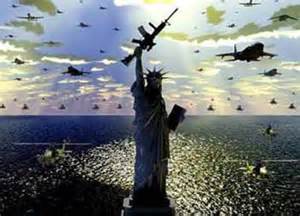

 After the Crash