
It’s the DNC, Stupid: Democratic Party, Not Russia, Has Delegitimized the Democratic Process

By Elizabeth Vos

Source: Consortium News

Establishment Democrats and those who amplify them continue to project blame for the public’s doubt in the U.S. election process onto outside influence, despite the clear history of the party’s subversion of election integrity. The total inability of the Democratic Party establishment’s willingness to address even one of these critical failures does not give reason to hope that the nomination process in 2020 will be any less pre-ordained.

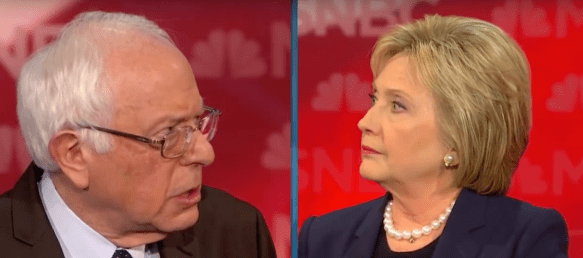
The Democratic Party’s bias against Sen. Bernie Sanders during the 2016 presidential nomination, followed by the DNC defense counsel doubling down on its right to rig the race during the fraud lawsuit brought against the DNC, as well as the irregularities in the races between former DNC Chairwoman Debbie Wasserman Schultz and Tim Canova, indicate a fatal breakdown of the U.S. democratic process spearheaded by the Democratic Party establishment. Influences transcending the DNC add to concerns regarding the integrity of the democratic process that have nothing to do with Russia, but which will also likely impact outcomes in 2020.

The content of the DNC and Podesta emails published by WikiLeaks demonstrated that the DNC acted in favor of Hillary Clinton in the lead up to the 2016 Democratic primary. The emails also revealed corporate media reporters acting as surrogates of the DNC and its pro-Clinton agenda, going so far as to promote Donald Trump during the GOP primary process as a preferred “pied-piper candidate.” One cannot assume that similar evidence will be presented to the public in 2020, making it more important than ever to take stock of the unique lessons handed down to us by the 2016 race.

Social Media Meddling

Election meddling via social media did take place in 2016, though in a different guise and for a different cause from that which are best remembered. Twitter would eventually admit to actively suppressing hashtags referencing the DNC and Podesta emails in the run-up to the 2016 presidential election. Additional reports indicated that tech giant Google also showed measurable “pro-Hillary Clinton bias” in search results during 2016, resulting in the alleged swaying of between 2 and 10 millions voters in favor of Clinton.

On the Republican side, a recent episode of CNLive! featured discussion of the Cambridge Analytica scandal, in which undecided voters were micro-targeted with tailored advertising narrowed with the combined use of big data and artificial intelligence known collectively as “dark strategy.” CNLive! Executive Producer Cathy Vogan noted that SCL, Cambridge Analytica’s parent company, provides data, analytics and strategy to governments and military organizations “worldwide,” specializing in behavior modification. Though Cambridge Analytica shut down in 2018, related companies remain.

The Clinton camp was hardly absent from social media during the 2016 race. The barely-legal activities of Clintonite David Brock were previously reported by this author to have included $2 million in funding for the creation of an online “troll army” under the name Shareblue. The LA Times described the project as meant to “to appear to be coming organically from people and their social media networks in a groundswell of activism, when in fact it is highly paid and highly tactical.” In other words, the effort attempted to create a false sense of consensus in support for the Clinton campaign.

In terms of interference in the actual election process, the New York City Board of Elections was shown to have purged over one hundred thousand Democratic voters in Brooklyn from the rolls before the 2016 primary, a move that the Department of Justice found broke federal law. Despite this, no prosecution for the breach was ever attempted.

Though the purge was not explicitly found to have benefitted Clinton, the admission falls in line with allegations across the country that the Democratic primary was interfered with to the benefit of the former secretary of state. These claims were further bolstered by reports indicating that voting results from the 2016 Democratic primary showed evidence of fraud.

DNC Fraud Lawsuit

The proceedings of the DNC fraud lawsuit provide the most damning evidence of the failure of the U.S. election process, especially within the Democratic Party. DNC defense lawyers argued in open court for the party’s right to appoint candidates at its own discretion, while simultaneously denying any “fiduciary duty” to represent the voters who donated to the Democratic Party under the impression that the DNC would act impartially towards the candidates involved.

In 2017, the Observer reported that the DNC’s defense counsel argued against claims that the party defrauded Sanders’ supporters by favoring Clinton, reasoning that Sanders’ supporters knew the process was rigged. Again: instead of arguing that the primary was neutral and unbiased in accordance with its charter, the DNC’s lawyers argued that it was the party’s right to select candidates.

The Observer noted the sentiments of Jared Beck, the attorney representing the plaintiffs of the lawsuit:

…“People paid money in reliance on the understanding that the primary elections for the Democratic nominee —nominating process in 2016 were fair and impartial, and that’s not just a bedrock assumption that we would assume just by virtue of the fact that we live in a democracy, and we assume that our elections are run in a fair and impartial manner. But that’s what the Democratic National Committee’s own charter says. It says it in black and white.”

The DNC defense counsel’s argument throughout the course of the DNC fraud lawsuit doubled down repeatedly in defense of the party’s right to favor one candidate over another, at one point actually claiming that such favoritism was protected by the First Amendment. The DNC’s lawyers wrote:

“To recognize any of the causes of action that Plaintiffs allege would run directly contrary to long-standing Supreme Court precedent recognizing the central and critical First Amendment rights enjoyed by political parties, especially when it comes to selecting the party’s nominee for public office.” [Emphasis added]

The DNC’s shameless defense of its own rigging disemboweled the most fundamental organs of the U.S. body politic.  This no indication that the DNC will not resort to the same tactics in the 2020 primary race,

Tim Canova’s Allegations

If Debbie Wasserman Schultz’s role as disgraced chairwoman of the DNC and her forced 2016 resignation wasn’t enough, serious interference was also alleged in the wake of two contests between Wasserman Schultz and professor Tim Canova in Florida’s 23rd congressional district. Canova and Wasserman Schultz first faced off in a 2016 Democratic primary race, followed by a 2018 general congressional election in which Canova ran as an independent.

Debacles followed both contests, including improper vote counts, illegal ballot destruction, improper transportation of ballots, and generally shameless displays of cronyism. After the controversial results of the initial primary race against Wasserman Schultz, Canova sought to have ballots checked for irregularities, as the Sun-Sentinel reported at the time:

“[Canova] sought to look at the paper ballots in March 2017 and took Elections Supervisor Brenda Snipes to court three months later when her office hadn’t fulfilled his request. Snipes approved the destruction of the ballots in September, signing a certification that said no court cases involving the ballots were pending.”

Ultimately, Canova was granted a summary judgment against Snipes, finding that she had committed what amounted to multiple felonies. Nonetheless, Snipes was not prosecuted and remained elections supervisor through to the 2018 midterms.

Republicans appear no more motivated to protect voting integrity than the Democrats, with The Nation reporting that the GOP-controlled Senate blocked a bill this week that would have “mandated paper-ballot backups in case of election machine malfunctions.”

Study of Corporate Power

A 2014 study published by Princeton University found that corporate power had usurped the voting rights of the public: “Economic elites and organized groups representing business interests have substantial independent impacts on U.S. government policy, while average citizens and mass-based interest groups have little or no independent influence.”

In reviewing this sordid history, we see that the Democratic Party establishment has done everything in its power to disrespect voters and outright overrule them in the democratic primary process, defending their right to do so in the DNC fraud lawsuit. We’ve noted that interests transcending the DNC also represent escalating threats to election integrity as demonstrated in 2016.

Despite this, establishment Democrats and those who echo their views in the legacy press continue to deflect from their own wrongdoing and real threats to the election process by suggesting that mere discussion of it represents a campaign by Russia to attempt to malign the perceptionof the legitimacy of the U.S. democratic process.

Hillary Clinton’s recent comments to the effect that Congresswoman Tulsi Gabbard is being “groomed” by Russia, and that the former Green Party Presidential candidate Dr. Jill Stein is a “Russian asset”, were soon echoed by DNC-friendly pundits. These sentiments externalize what Gabbard called the “rot” in the Democratic party outward onto domestic critics and a nation across the planet.

Newsweek provided a particularly glaring example of this phenomenon in a recent op-ed penned by columnist Naveed Jamali, a former FBI double agent whose book capitalizes on Russiagate. In an op-ed titled: Hillary Clinton Is Right. Tulsi Gabbard Is A Perfect Russian Asset – And Would Be A Perfect Republican Agent,” Jamali argued:

“Moscow will use its skillful propaganda machine to prop up Gabbard and use her as a tool to delegitimize the democratic process.” [Emphasis added]

Jamali surmises that Russia intends to “attack” our democracy by undermining the domestic perception of its legitimacy. This thesis is repeated later in the piece when Jamali opines: “They want to see a retreat of American influence. What better way to accomplish that than to attack our democracy by casting doubt on the legitimacy of our elections.” [Emphasis added]

The only thing worth protecting, according to Jamali and those who amplify his work (including former Clinton aide and establishment Democrat Neera Tanden), is the perception of the democratic process, not the actual functioning vitality of it. Such deflective tactics ensure that Russia will continue to be used as a convenient international pretext for silencing domestic dissent as we move into 2020.

Given all this, how can one expect the outcome of a 2020 Democratic Primary — or even the general election – to be any fairer or transparent than 2016?


Elizabeth Vos is a freelance reporter, co-host of CN Live! and regular contributor to Consortium News. 

Wasserman Schultz Has a Change of Heart, but Too Little, Too Late

debbie-wasserman-schultz

Just follow the money on this one.

By Bill Moyers and Michael Winship

Source: Alternet

Return with us now to the saga of Debbie Wasserman Schultz and the soul of the Democratic Party.

First, a quick recap: Rep. Wasserman Schultz (D-FL), chair of the Democratic National Committee, also has been an advocate for the payday loan industry. The website Think Progress even described her as the “top Democratic ally” of “predatory payday lenders.” You know — the bottom-feeding bloodsuckers of the working poor. Yes, them.

Low-income workers living from paycheck to paycheck, especially women and minorities, are the payday lenders’ prime targets — easy pickings because they’re often desperate. Twelve million Americans reportedly borrow nearly $50 billion a year through payday loans, at rates that can soar above 300 percent, sometimes even beyond 500 percent. Bethany McLean at The Atlantic recently reported that the government’s Consumer Financial Protection Bureau (CFPB) studied millions of payday loans and found that “67 percent went to borrowers with seven or more transactions a year and that a majority of those borrowers paid more in fees than the amount of their initial loan.”

Yet when the CFPB was drawing up new rules to make it harder for payday predators to feast on the poor, Rep. Wasserman Schultz co-sponsored a bill to delay those new rules by two years. How, you ask, could the head of the party’s national committee embrace such an appalling exploitation of working people?

Just follow the money. Last year, the payday loan industry spent $3.5 million lobbying; and as we wrote two weeks ago, in Wasserman Schultz’s home state, since 2009, payday lenders have bought protection from Democrats and Republicans alike by contributing $2.5 million or so to candidates from both parties, including her. That’s how “Representative” Wasserman Schultz, among others, wound up representing the predators instead of the poor.

That position became a major issue in her campaign for reelection to the House this year — she has a primary opponent for the first time since she entered Congress — and was even threatening the prospect of her continuing as DNC chair and presiding over the Democratic National Convention next month in Philadelphia. More than 40,000 have signed a petition calling for her removal from that post.

She had become a symbol of the failure of Democratic elites to understand that there is an uprising in the land. Millions of Americans are rebelling against the leadership of both parties. They are fed up with inside-the-Beltway politicians who pay only lip service to the deep needs of everyday people and the country; fed up with incumbents who ask for their votes, are given them in good faith, and then return to Washington to do the bidding of the donor class and its lobbyists.

Donald Trump gets it. He has roiled and humiliated and conquered an out-of-touch Republican establishment in Washington that also ignored the popular uprising against corporate domination and crony capitalism, and now GOP titans such as Senate Majority Leader Mitch McConnell and Speaker of the House Paul Ryan, spear carriers for Big Money, are being hauled around the talk-show circuit in Trump’s tumbrel, eating crow and swearing fealty to the misogynistic, bigoted and pathologically lying brute who bestrides their party.

Democratic insiders like Wasserman Schultz, however, continued to whistle past the graveyard, believing that the well-funded and well-connected Clinton machine — and general fear of a Trump regime — were enough to carry them to victory in November, despite the grass-roots disgust with a party that reeks of rot from the top. Once the champions of people who came home from work with hands dirty from toil and sweat, too many establishment Democrats went over to the dark side, taking up the cause of the well-manicured executives (think: Goldman Sachs) who write the checks and the mercenaries who deliver them (for a substantial cut, of course).

The lust for loot, which now defines the Democratic establishment, became pronounced in the Bill Clinton years, when the Clinton-friendly Democratic Leadership Council (DLC) abandoned its liberal roots and embraced “market-based solutions” that led to deregulation, tax breaks, and subsidies for the 1 percent. Seeking to fill coffers emptied by the loss of support from a declining labor movement, Democrats rushed into the arms of big business and crony capitalists.

Another case in point (and, alas, there are many): the Democratic governor of Connecticut, Dan Malloy, who seems to treat his state’s corporate residents far better than the 1 in 10 of his citizens who live at or below the poverty line.

At International Business Times last week, investigative reporter David Sirota analyzed the proposed merger of Cigna and Anthem Blue Cross Blue Shield, a deal that would create the biggest health insurance company in the country. Cigna is based in Connecticut and Katharine Wade, the state’s insurance commissioner, appointed by Governor Malloy, is a former Cigna lobbyist with deep family ties to the company.

Sirota reported, “Malloy’s decision to appoint Wade to such a powerful regulatory post on the eve of the merger was not made in a vacuum,” Sirota reported. “It came after employees of Cigna, its lobbying firm Robinson & Cole and Anthem delivered more than $1.3 million to national and state political groups affiliated with Malloy, including the Democratic Governors Association (DGA), the Connecticut Democratic Party, Malloy’s own gubernatorial campaign and a political action committee supporting Connecticut Democrats [our italics].

“Since Malloy’s first successful run for governor in the 2010 election cycle, donors from the insurance companies and the lobbying firm have given more than $2 million to Malloy-linked groups, according to the figures compiled by PoliticalMoneyLine and the National Institute on Money In State Politics. Almost half that cash has come in since 2015, the year the merger was announced.”

Sirota now reports that since his investigation first was published, the state has “formally denied open records requests for information about their meetings with Cigna and Anthem, and declared that ‘any’ documents about the health insurance companies’ proposed merger that haven’t already been made public will be kept secret.” His FOIA request was turned down “one day after Anthem requested [state insurance commissioner] Wade approve an average 26 percent increase in health insurance premiums for individual plans.” So much for transparency.

And while we’re in Connecticut, let’s also take a look at what Malloy is doing for the world’s biggest hedge fund — Bridgewater Associates, based in his state, with an estimated worth of $150 billion. The founder of the firm, Ray Dalio, is the richest man in Connecticut, by one estimate weighing in at $14.3 billion.

Dalio made $1.4 billion in 2015 alone, according to Institutional Investor’s Alpha magazine. That same year, his top two executives pulled in $250 million each. Yet as part of Connecticut’s campaign to keep companies from leaving the state, Malloy is taking $22 million of the public’s money and giving it to Dalio to stay put.

You might think a Democratic governor would have thrown down the gauntlet and told Bridgewater’s top three, “Get outta here! You guys made almost $2 billion among yourselves. Shake your piggy bank or look under your sofa cushions for the $22 million; we’re not milking the public for it.”

But no, Malloy and his fellow Democrats buckled. Buckled to the one-tenth of the one-tenth of the one-hundredth percent of the rich. Ordinary taxpayers will now ante up.

So given all of that, guess who’s the chairman of the platform committee for the upcoming Democratic National Convention? Right: Dan Malloy, governor of Connecticut, subsidizer of billionaires. Guess who named him? Right again: Wasserman Schultz, “top Democratic ally” of “predatory payday lenders.” We’re not making this up.

Not only will Malloy be presiding over the priorities of the Democratic platform at the convention next month, he doubtless will be making the rounds with Wasserman Schultz and other party elites as they genuflect before the corporate sponsors and lobbyists she has invited to pay for the lavish fun-and-games that will surround the coronation. Many of those corporate sponsors and lobbyists have actively lobbied against progressive policies like health-care reform and a Wall Street cleanup and even contributed large sums to Republicans. Yes, we know, shocking.

So take the planks in the platform and the platitudes and promises in the speeches with a grain of salt. It’s all about the money.

Except when it’s not. Except for those moments when ordinary people rise up and declare: “Not this time!”

Which brings us back to predatory lenders and their buddy, Debbie Wasserman Schultz.

Look around: There’s an uprising in the land, remember, and it isn’t going away after Hillary Clinton, now the presumptive nominee, is crowned. This year even Wasserman Schultz couldn’t ignore the decibel level of an aroused public. Unaccustomed to a challenge in the Democratic “wealth primary” where money usually favors incumbents, she now finds herself called to account by an articulate opponent who champions working people, Tim Canova. Across the country tens of thousands of consumer advocates — and tens of thousands of other progressives angry at her perceived favoritism toward Hillary Clinton — have been demanding that Wasserman Schultz resign as the party’s chair or be dumped before the convention opens Philadelphia.

So last week the previously tone-deaf Wasserman Schultz perked up, did an about-face and announced she will go along with the proposed new rules on payday lending after all. At first blush, that’s good; the rules are a step in the right direction. But all that lobbying cash must have had some effect, because the new rules only go so far. A New York Times editorial calls them “a lame response” to predatory loans and says the final version of the new regulations “will need stronger, more explicit consumer protections for the new regulatory system to be effective.”

Nick Bourke, director of small-dollar loans for the Pew Charitable Trusts, is a man who closely follows these things and got to the heart of the matter: Not only do the proposed new rules “fall short,” they will allow payday lenders to lock out attempts at lower-cost bank loans.

His judgment is stark: “As drafted, the CFPB rule would allow lenders to continue to make high-cost loans, such as a line of credit with a 15-percent transaction fee and 299-percent interest rate, or a $1,250 loan on which the borrower would repay a total of $3,700 in fees, interest and principal,” Bourke wrote. “These and many other high-cost payday installment loans are already on the market in most states, and they will thrive if the regulation takes effect without change.”

Nonetheless, the new rules were improvement enough for Allied Progress, an organization that has taken on Wasserman Schultz in Florida’s late August primary, to declare victory. And they were enough for Wasserman Schultz to do a 180-degree turn which she clearly hopes will not too dramatically reveal her hypocrisy. “It is clear to me,” she said, “that the CFPB strikes the right balance and I look forward to working with my constituents and consumer groups as the CFPB works toward a final rule.”

All well and good, but if she survives her primary to return to Washington, be sure to keep the lights on in those rooms where the final version of the rules are negotiated. A powerful member of Congress with support from a Democrat in the White House could seriously weaken a law or a rule when the outcome is decided behind closed doors and money whispers in the ear of a politician supplicant: “I’m still here. Remember. Or else.”

But the times, they really may be a-changing, as the saga of Wasserman Schultz reveals. You can be deaf to the public’s shouts for only so long. The insurgency of popular discontent that has upended politics this year will continue no matter the results in November. For much too long now it’s been clear that money doesn’t just rule democracy, it is democracy.

Until we prove it isn’t.

Democrats can’t unite unless Wasserman Schultz goes!

dws

The Democratic National Committee chair has thrown fuel on the flames of infighting just as the party faces a critical November election.

By Bill Moyers and Michael Winship

Source: Intrepid Report

To paraphrase the words of that Scottish master Robert Burns, the best laid plans of mice, men—and women—go often astray, or “gang aft agley,” as they say in the Highlands. No one knows this better than Hillary Rodham Clinton.

Twice now, the flight of her presidential aspirations has been forced to circle the airport as other contenders put up an unexpected fight: In 2008, Barack Obama emerged to grab the Democratic nomination away and this year, although all signs point to her finally grabbing the brass ring, unexpected and powerful progressive resistance came from the mighty wind of the Bernie Sanders campaign.

Certainly, Hillary Clinton is angered by all of this, but the one seemingly more aggrieved—if public comments and private actions are any indication—is Democratic National Committee chair and Florida Rep. Debbie Wasserman Schultz, a Hillary surrogate who takes umbrage like ordinary folks pop their vitamins in the morning.

As we recently wrote, “ . . . She embodies the tactics that have eroded the ability of Democrats to once again be the party of the working class. As Democratic National Committee chair she has opened the floodgates for Big Money, brought lobbyists into the inner circle and oiled all the moving parts of the revolving door that twirls between government service and cushy jobs in the world of corporate influence.”

And that ain’t all. As a member of Congress, particularly egregious has been her support of the payday loan business, defying new regulations from the Consumer Financial Protection Bureau (CFPB) that would rein in an industry that soaks desperate borrowers. As President Obama said, “While payday loans might seem like easy money, folks often end up trapped in a cycle of debt.”

In fact, according to an article by Bethany McLean in the May issue of The Atlantic, “After studying millions of payday loans, the Consumer Financial Protection Bureau found that 67 percent went to borrowers with seven or more transactions a year, and the majority of borrowers paid more in fees than the amount of their initial loan.”

A recent editorial in the Orlando Sentinel notes that 7 percent of Florida’s population “must resort to this predatory form of small-dollar credit—nearly the highest rate in the nation . . .” What’s more, “Based on a 14-day loan term, the typical payday loan . . . had an annual percentage rate of 278 percent. Many lenders advertise rates of more than 300 percent.” Let us repeat that slowly . . . 300 percent!

So why has Wasserman Schultz been so opposed to the CFPB’s proposed rules? She has said, “Payday lending is unfortunately a necessary component of how people get access to capital, [people] that are the working poor.” But maybe it has something more to do with the $2.5 million or so the payday loan industry has donated to Florida politicians from both parties since 2009. That’s according to a new report by the liberal group Allied Progress. More than $50,000 of that cash has gone to Rep. Wasserman Schultz.

But we digress. It’s the skullduggery going on within the Democratic Party establishment that’s our current concern and as we wrote in March, Rep. Wasserman Schultz “has played games with the party’s voter database, been accused of restricting the number of Democratic candidate debates and scheduling them at odd days and times to favor Hillary Clinton, and recently told CNN’s Jake Tapper that superdelegates—strongly establishment and pro-Clinton—are necessary at the party’s convention so deserving incumbent officials and party leaders don’t have to run for delegate slots ‘against grassroots activists.’ Let that sink in, but hold your nose against the aroma of entitlement.

Now Wasserman Schultz has waded into the controversy over what happened or didn’t happen last weekend when Sanders supporters loudly and vehemently objected to the rules at the Nevada State Democratic Convention. In truth, some behaved badly at the event and others made trollish, violent and obscene threats to Democratic state chair Roberta Lange via phone, email and social media. There’s no excuse for such aggressive, creepy conduct, and Sanders was quick and direct in apologizing for the behavior of the rowdies and bullies.

But there is a double standard at play here. Why, pray tell, shouldn’t the peaceful majority of Sanders people be angry at the slow-motion, largely invisible rigging of the political process by Wasserman Schultz and the Clinton machine—all for the benefit of Secretary Clinton?

Wasserman Schultz claims the party rules over which she has presided (and manipulated) are “eminently fair.” She told CNN on Wednesday morning, “It is critical that we as candidates, we as Democratic Party leaders, everyone involved needs to make sure that we can take all the steps that we need to, to ensure that the process is not only run smoothly but that the response from the supporters of both candidates is appropriate and civil.”

In response to the DNC chair’s remarks, Sanders campaign manager Jeff Weaver talked to CNN, too, and said Wasserman Schultz had been “throwing shade on the Sanders campaign since the very beginning . . . Debbie Wasserman Schultz has really been a divider and not really provided the kind of leadership that the Democratic Party needs.”

The Nation’s Joan Walsh, a Clinton supporter critical of the Sanders campaign, concurs: “Once again, Democratic National Committee chair Debbie Wasserman Schultz escalated a conflict that she should have worked to defuse,” she writes. “ . . . Wasserman Schultz is not helping her friend Hillary Clinton with her attacks on Sanders. Just the appearance of fairness can go a long way in assuaging worries about fairness. Wasserman Schultz’s defiant rebuke to the Sanders camp has made it worse.”

So, too, has her abolition of the restraints that had been placed on corporate lobbyists and big money—now they can write checks bankrolling what doubtless will be swank and profligate parties during this summer’s Democratic National Convention. At The Intercept, Lee Fang and Zaid Jilani report that a number of the members of the Philadelphia host committee “are actively working to undermine progressive policies achieved by President Barack Obama, including health care reform and net neutrality. Some . . . are hardly even Democratic Party stalwarts, given that many have donated and raised thousands of dollars for Republican presidential and congressional candidates this cycle.”

This is a slap in the face to progressives calling for a halt to big money and allowing lobbyists to buy our elected officials. And it’s contrary to what Hillary Clinton herself has said about money and politics on the campaign trail. The Sanders movement has shown that lots of cash can be raised from everyday people making small donations. His supporters and all of us should be outraged that Debbie Wasserman Schultz and convention officials have kowtowed not only to the corporate wing of their own party but also to those high rollers who back the opposition and ideas antithetical to a democracy.

Rep. Wasserman Schultz is facing a primary challenge for the first time this year, her opponent a law professor, activist and progressive Sanders supporter named Tim Canova. But the primary’s not until late August, long after the Democratic National Convention. Unless she steps down now or Hillary Clinton has her removed, Philadelphia will be dominated by someone who represents everything that has gone wrong with the Democratic Party and Washington. At the convention’s opening session, Debbie Wasserman Schultz will be bringing the gavel down squarely on progressive hopes of returning the party to its legacy as champion of working people and the dispossessed.

We’ve said it before and we’ll say it again: Time for her to go.


Bill Moyers is the managing editor of Moyers & Company and BillMoyers.com.

Michael Winship is the Emmy Award-winning senior writer of Moyers & Company and BillMoyers.com, and a former senior writing fellow at the policy and advocacy group Demos. Follow him on Twitter at @MichaelWinship.