
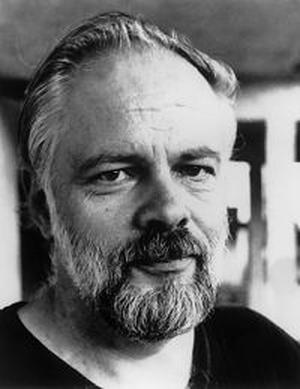
Philip K. Dick Makes Off-the-Wall Predictions for the Future: Mars Colonies, Alien Viruses & More (1981)

PhilipDick

By Colin Marshall

Source: Open Culture

Philip K. Dick died in 1982, but readers — more readers than ever, in all probability — still thrill to his daring, unconventional imagination, and how tightly he could weave the inventions of that imagination into mundane reality. (Sometimes they wonder, as in his meeting with God, to what extent he himself could tell the two apart.) And like many strong-visioned writers of what roughly fell into the category of science fiction, Dick got consulted now and again as something of a futurist.

In 1980, David Wallechinsky, Amy Wallace, and Irving Wallace (the Book of Lists people) rounded up visions of the future from all manner of sages past and present, prescient and incompetent, in order to create The Book of Predictions. Dick’s contributions, republished in the September 2003 issue of fanzine PKD Otaku, go like this.

  • 1983: The Soviet Union will develop an operational particle-beam accelerator, making missile attack against that country impossible. At the same time the U.S.S.R. will deploy this weapon as a satellite killer. The U.S. will turn, then, to nerve gas.
  • 1984: The U.S. will perfect a system by which hydrogen, stored in metal hydrides, will serve as a fuel source, eliminating a need for oil.
  • 1985: By or before this date there will be a titanic nuclear accident either in the U.S.S.R. or in the U.S., resulting in shutting down all nuclear power plants.
  • 1986: Such satellites as HEAO-2 will uncover vast, unsuspected high energy phenomenon in the universe, indicating that there is sufficient mass to collapse the universe back when it has reached its expansion limit.
  • 1989: The U.S. and the Soviet Union will agree to set up one vast metacomputer as a central source for information available to the entire world; this will be essential due to the huge amount of information coming into existence.
  • 1993: An artificial life form will be created in a lab, probably in the U.S.S.R., thus reducing our interest in locating life forms on other planets.
  • 1995: Computer use by ordinary citizens (already available in 1980) will transform the public from passive viewers of TV into mentally alert, highly trained, information-processing experts.
  • 1997: The first closed-dome colonies will be successfully established on Luna and Mars. Through DNA modification, quasi-mutant humans will be created who can survive under non-Terran conditions, i.e., alien environments.
  • 1998: The Soviet Union will test a propulsion drive that moves a starship at the velocity of light; a pilot ship will set out for Proxima Centaurus, soon to be followed by an American ship.
  • 2000: An alien virus, brought back by an interplanetary ship, will decimate the population of Earth, but leave the colonies on Luna and Mars intact.
  • 2012: Using tachyons (particles that move backward in time) as a carrier, the Soviet Union will attempt to alter the past with scientific information.

Cherry-pickers among us will fixate on Dick’s near-hits: the development of DNA modification, a 1985 nuclear accident in the U.S.S.R. (Chernobyl happened in 1986), and computer use by ordinary citizens (though our status as “mentally alert, highly trained, information-processing experts” admittedly remains questionable). Others might prefer to highlight the most improbable, such as the eliminated need for oil, the creation of artificial life, and not just the 21st-century existence but eventual time-traveling capabilities of the Soviet Union.

Still, even in his fiction, Dick does have his moments of prophecy, especially for those who share his paranoia that we’ve unwittingly let ourselves slip into surveillance-state conditions. But I’ve always found him best, especially in the what-if-Japan-won-the-war story The Man in the High Castle, as a teller of alternate histories, whether of the past, present, or future. These predictions, stretching from just after the writer’s death to just before our time, strike me as nothing so much as the premises for the best novel Philip K. Dick never wrote.

You can find 33 of his stories online here.

Related Content:

Philip K. Dick Takes You Inside His Life-Changing Mystical Experience

Robert Crumb Illustrates Philip K. Dick’s Infamous, Hallucinatory Meeting with God (1974)

33 Sci-Fi Stories by Philip K. Dick as Free Audio Books & Free eBooks

Philip K. Dick Previews Blade Runner: “The Impact of the Film is Going to be Overwhelming” (1981)

Arthur C. Clarke Predicts the Future in 1964 … And Kind of Nails It

Isaac Asimov Predicts in 1964 What the World Will Look Like Today — in 2014

Mark Twain Predicts the Internet in 1898: Read His Sci-Fi Crime Story, “From The ‘London Times’ in 1904”

In 1968, Stanley Kubrick Makes Predictions for 2001: Humanity Will Conquer Old Age, Watch 3D TV & Learn German in 20 Minutes

Colin Marshall hosts and produces Notebook on Cities and Culture as well as the video series The City in Cinema and writes essays on cities, language, Asia, and men’s style. He’s at work on a book about Los Angeles, A Los Angeles Primer. Follow him on Twitter at @colinmarshall or on Facebook.
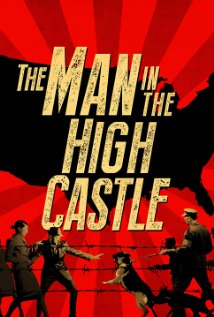
The Man in the High Castle: When a Nazi-Run World Isn’t So Dystopian

MV5BMTUxODUxOTY5NV5BMl5BanBnXkFtZTgwMzIyMjk5MzE@._V1_SX214_AL_

(Editor’s note: I recently viewed the pilot for the new “The Man in the High Castle” series and was disappointed for the same reasons mentioned in the article. For a PKD adaptation more faithful to the source material see Radio Free Albemuth.)

By Noah Berlatsky

Source: The Atlantic

Amazon’s new television adaptation The Man In the High Castle—part of the streaming service’s 2015 pilot season—opens in a conquered New York. The Nazis won World War II, and the American flag now bears a swastika. A few freedom fighters struggle on—we see one in particular brutally tortured and beaten to death—and the police are everywhere. Life in this alternate dystopia is a thing of fear and hardship, as in 1984, or The Handmaid’s Tale, or The Hunger Games. The familiar forces of freedom struggle against the familiar totalitarian forces of dystopia, epitomized, in the usual way, by a cruel, sadistic supervillain (here portrayed by Rufus Sewell as SS officer John Smith). If the Nazis had won the war, the TV series warns us, the world would have been much, much worse.

This message, as it happens, is a complete inversion of Philip K. Dick’s 1962 novel of the same name, on which the series is based. As such, it betrays the source material’s difficult and conflicted message in the interest of the banal genre default of plucky Americans fighting for freedom against the evil invaders; as Adi Robertson of The Verge suggests, it might as well be Red Dawn.

Superficially, perhaps, the novel isn’t all that different. Dick also imagines that the Nazis have won World War II, and the world under the Nazis is certainly horrible enough: The novel mentions several times that after their victory in the war, the Germans set about murdering everyone in Africa. Slavery has been reinstituted in the southern United States (an uncomfortable detail that isn’t mentioned in the pilot episode), and American Jews in Nazi-controlled areas have been systematically gassed. One of the Jewish main characters, Frank Frink (née Fink) is arrested on the Japanese-controlled west coast and scheduled for deportation to Germany. Meanwhile, in the TV series, Frink (Rupert Evans) only has a Jewish grandparent, which seems a bizarre alteration.

But while life in the novel’s alternate reality is certainly awful in many ways, it’s not exactly a dystopia, which is precisely why it’s so chilling. Dick’s book has little of the pulp melodrama of the TV pilot; there are no torture scenes, no supervillains, and not even a single scene set in the repressive Nazi-controlled region of the former U.S. Instead, the action occurs in the independent Mountain States or on the Japanese-controlled Pacific areas, and most of the characters go about their daily lives just as most of us do now. They have small problems and worries and cares, they adapt to quotidian injustices. But they do so without great urgency about the genocidal violence being inflicted on people on the other side of the world, continent, or neighborhood. The frightening thing isn’t the dystopia. It’s that the dystopia is so familiar it doesn’t really feel dystopian at all.

This is nowhere more clear than in the novel’s treatment of race. In the TV pilot, the bad guys are racists, and the good guys are not. Frank’s wife, Juliana Frink (Alexa Davalos), makes it clear that she opposes the racial laws that threaten her husband and that she harbors no racist feelings toward the Japanese conquerors. But in the book, things are a lot murkier. Juliana and Frank are estranged, and in her internal monologue she sneers at him for liking “Japs” and for being “ugly” with “large pores” and a “big nose.” Another character who doesn’t appear in the pilot, the salesman R. Childan, vacillates between obsequious paeans to Japanese racial superiority and resentful, vicious Orientalist stereotyping. Even Mr. Tagomi, the Japanese official who is the moral center of the book in most respects, lapses occasionally into racist invective—”white barbarian. Neanderthalyank. That subhuman …”— although he regrets it almost immediately.

It makes sense that a world in which the Axis won the war would be, in just about every way, more racist. But the uncomfortable question is, just how much more racist is it? Again, the Nazis seem to have created a protectorate of sorts in the southern U.S., the implication being that whites who supported Jim Crow there would find the Nazi racial doctrines quite congenial. And when Mr. Tagomi, in a quintessential Dickian moment, stumbles out of his alternate reality into the “real” 1962, his own racist preconceptions (as he orders whites around) are met in turn with the simmering racist antipathy of the world in which America won the war. (“Watch it, Tojo,” one man says to him.) The racism in Dick’s alternate universe isn’t alien. It’s homey.

The imagined and the real fit together in a number of other ways as well. One of Dick’s characters muses, for example, that the basic insanity of the Nazis is that “They want to be the agents, not the victims, of history. They identify with God’s power and believe they are godlike … Man has not eaten God; God has eaten man.” That’s a reasonable analysis of Nazi obsessions. But it’s also a reasonable analysis of American obsessions, as Carl Freedman points out in his book Critical Theory and Science Fiction. Dick, Freedman says, is linking “the quintessential Western will to domination with the horrors of genocidal Nazism.” And that Western will to domination is shown most clearly in the book through the Nazi plan to drop a bomb on the Japanese home islands. But in the real world the Nazis didn’t drop a bomb on the home islands. America did.

In the TV pilot, Juliana finds a banned newsreel called The Grasshopper Lies Heavy, which portrays a world in which the Allies won the war. The idea that this might be true fills her with an almost religious, tearful enthusiasm. In Dick’s version, The Grasshopper Lies Heavy is a book. Juliana discovers that that book is true—but her reaction is not exactly fervor. Instead, it’s a mixture of hope, bafflement, and a kind of displaced, distant fear. “Truth, she thought. As terrible as death.” That truth, or at least one possible truth suggested by Dick, is that there is no radical disjunction between his alternate history and our own. The TV show encourages us to congratulate ourselves on our horror at the Nazis, and our distance from them. But Dick’s novel suggests, disturbingly, that the defeat of the Nazis did not, in fact, truly transform the world. Their evil was not banished; it’s still here with us, a dystopia we can choose, and that many of us do choose, every day.