Colonizing the Western Mind

By Jason Hirthler

Source: CounterPunch

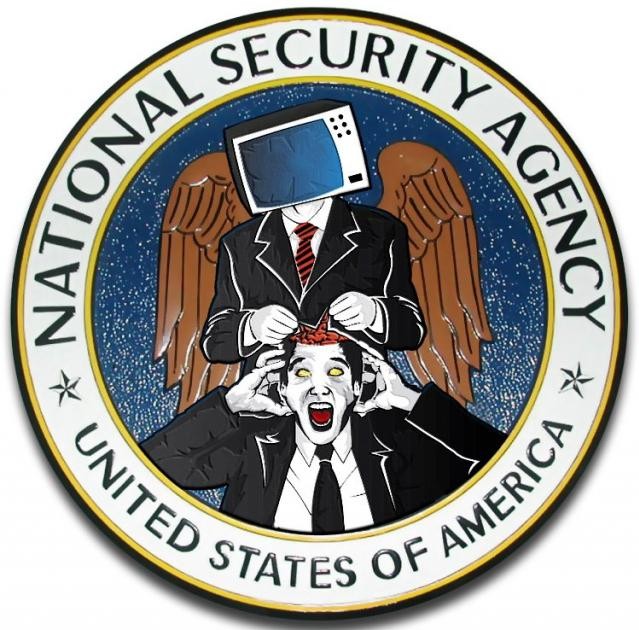
In Christopher Nolan’s captivating and visually dazzling film Inception, a practitioner of psychic corporate espionage must plant and idea inside a CEO’s head. The process is called inception, and it represents the frontier of corporate influence, in which mind spies no longer just “extract” ideas from the dreams of others, but seed useful ideas in a target’s subconscious. Inception is a well-crafted piece of futuristic sci-fi drama, but some of the ideas it imparts are already deeply embedded in the American subconscious. The notion of inception, of hatching an idea in the mind of a man or woman without his or her knowledge, is the kernel of propaganda, a black art practiced in the States since the First World War. Today we live beneath an invisible cultural hegemony, a set of ideas implanted in the mass mind by the U.S. state and its corporate media over decades. Invisibility seems to happen when something is either obscure or ubiquitous. In a propaganda system, an overarching objective is to render the messaging invisible by universalizing it within the culture. Difference is known by contrast. If there are no contrasting views in your field of vision, it’s easier to accept the ubiquitous explanation. The good news is that the ideology is well-known to some who have, for one lucky reason or another, found themselves outside the hegemonic field and are thus able to contrast the dominant worldview with alternative opinions. On the left, the ruling ideology might be described as neoliberalism, a particularly vicious form of imperial capitalism that, as would be expected, is camouflaged in the lineaments of humanitarian aid and succor.

Inception 1971

In a short span of time in the 1970s, dozens of think tanks were established across the western world and billions of dollars were spent proselytizing the tenets of the Powell Memo in 1971, which galvanized a counter-revolution to the liberal upswing of the Sixties. The neoliberal economic model of deregulation, downsizing, and privatization was preached by the Reagan-Thatcher junta, liberalized by the Clinton regime, temporarily given a bad name by the unhinged Bush administration, and saved by telegenic restoration of the Obama years. The ideology that underlay the model saturated academia, notably at the University of Chicago, and the mainstream media, principally at The New York Times. Since then it has trickled down to the general populace, to whom it now feels second nature. Today think tanks like the Heritage Foundation, the Brookings Institute, Stratfor, Cato Institute, American Enterprise Institute, Council on Foreign Relations, Carnegie Endowment, the Open Society Foundation, and the Atlantic Council, among many others, funnel millions of dollars in donations into cementing neoliberal attitudes in the American mind.

The ideological assumptions, which serve to justify what you could call neocolonial tactics, are relatively clear: the rights of the individual to be free of overreach from monolithic institutions like the state. Activist governments are inherently inefficient and lead directly to totalitarianism. Markets must be free and individuals must be free to act in those markets. People must be free to choose, both politically and commercially, in the voting booth and at the cash register. This conception of markets and individuals is most often formulated as “free-market democracy,” a misleading conceit that conflates individual freedom with the economic freedom of capital to exploit labor. So when it comes to foreign relations, American and western aid would only be given on the condition that the borrowers accepted the tenets of an (highly manipulable) electoral system and vowed to establish the institutions and legal structures required to fully realize a western market economy. These demands were supplemented with notions of the individual right to be free of oppression, some fine rhetoric about women and minorities, and somewhat more quietly, a judicial understanding that corporations were people, too. Together, an unshackled economy and an unfettered populace, newly equipped with individual rights, would produce the same flourishing and nourishing demos of mid-century America that had been the envy of humanity.

A False Promise

This ‘Washington Consensus’ is the false promise promoted by the West. The reality is quite different. The crux of neoliberalism is to eliminate democratic government by downsizing, privatizing, and deregulating it. Proponents of neoliberalism recognize that the state is the last bulwark of protection for the common people against the predations of capital. Remove the state and they’ll be left defenseless. Think about it. Deregulation eliminates the laws. Downsizing eliminates departments and their funding. Privatizing eliminates the very purpose of the state by having the private sector take over its traditional responsibilities. Ultimately, nation-states would dissolve except perhaps for armies and tax systems. A large, open-border global free market would be left, not subject to popular control but managed by a globally dispersed, transnational one percent. And the whole process of making this happen would be camouflaged beneath the altruistic stylings of a benign humanitarianism.

Globalists, as neoliberal capitalists are often called, also understood that democracy, defined by a smattering of individual rights and a voting booth, was the ideal vehicle to usher neoliberalism into the emerging world. Namely because democracy, as commonly practiced, makes no demands in the economic sphere. Socialism does. Communism does. These models directly address ownership of the means of production. Not so democratic capitalism. This permits the globalists to continue to own the means of production while proclaiming human rights triumphant in nations where interventions are staged. The enduring lie is that there is no democracy without economic democracy.

What matters to the one percent and the media conglomerates that disseminate their worldview is that the official definitions are accepted by the masses. The real effects need never be known. The neoliberal ideology (theory) thus conceals the neoliberal reality (practice). And for the masses to accept it, it must be mass produced. Then it becomes more or less invisible by virtue of its universality.

A Pretext for Pillage

Thanks to this artful disguise, the West can stage interventions in nations reluctant to adopt its platform of exploitation, knowing that on top of the depredations of an exploitative economic model, they will be asked to call it progress and celebrate it.

Washington, the metropolitan heart of neoliberal hegemony, has numerous methods of convincing reluctant developing nations to accept its neighborly advice. To be sure, the goal of modern colonialism is to find a pretext to intervene in a country, to restore by other means the extractive relations that first brought wealth to the colonial north. The most common pretexts for intervention depict the target nation in three distinct fashions.

First, as an economic basket case, a condition often engineered by the West in what is sometimes called, “creating facts on the ground.” By sanctioning the target economy, Washington can “make the economy scream,” to using war criminal Henry Kissinger’s elegant phrasing. Iran, Syria, and Venezuela are relevant examples here. Second, the West funds violent opposition to the government, producing unrest, often violent riots of the kind witnessed in Dara, Kiev, and Caracas. The goal is either to capsize a tottering administration or provoke a violent crackdown, at which point western embassies and institutions will send up simultaneously cries of tyranny and brutality and insist the leader step aside. Libya, Syria, and Venezuela are instructive in this regard. Third, the country will be pressured to accept some sort of military fettering thanks to either a false flag or manufactured hysteria over some domestic program, such as the WMD restrictions on Iraq, chemical weapons restrictions on Syria, or the civilian nuclear energy restrictions on Iran. Given that the U.S. traffics in WMDs, bioweapons, and nuclear energy itself, insisting others forsake all of these is perhaps little more than racially motivated despotry. But significant fear mongering in the international media will provide sufficient moral momentum to ram through sanctions, resolutions, and inspection regimes with little fanfare.

Schooling the Savages

Once the pretext is established, the appropriate intervention is made. There’s no lack of latent racism embedded in each intervention. Something of Edward Said’s Orientalism is surely at play here; the West is often responding to a crude caricature rather than a living people. One writer, Robert Dale Parker, described western views of Asia as little more than, “a sink of despotism on the margins of the world.” Iran is incessantly lensed through a fearful distrust of the ‘other’, those abyssal Persians. Likewise, North Korea is mythologized as a kingdom of miniature madmen, possessed of a curious psychosis that surely bears no relation to the genocidal cleansing of 20 percent of its population in the Fifties, itself an imperial coda to the madness of Hiroshima.

The interventions, then, are little different than the missionary work of early colonizers, who sought to entrap the minds of men in order to ensnare the soul. Salvation is the order of the day. The mission worker felt the same sense of superiority and exceptionalism that inhabits the mind of the neoliberal. Two zealots of the age peddling different editions of a common book. One must carry the gospel of the invisible hand to the unlettered minions. But the gifts of the enlightened interloper are consistently dubious.

It might be the loan package that effectively transfers economic control out of the hands of political officials and into the hands of loan officers, those mealy-mouthed creditors referred to earlier. It may be the sanctions that prevent the country from engaging in dollar transactions and trade with numberless nations on which it depends for goods and services. Or it might be that controversial UNSC resolution that leads to a comprehensive agreement to ban certain weapons from a country. Stipulations of the agreement will often include a byzantine inspections regime full of consciously-inserted trip wires designed to catch the country out of compliance and leverage that miscue to intensify confrontational rhetoric and implement even more far-reaching inspections.

Cracking the Shell

The benign-sounding structural adjustments of the West have fairly predictable results: cultural and economic chaos, rapid impoverishment, resource extraction with its attendant ecological ruin, transfer of ownership from local hands to foreign entities, and death from a thousand causes. We are currently sanctioning around 30 nations in some fashion; dozens of countries have fallen into ‘protracted arrears’ with western creditors; and entire continents are witnessing huge outflows of capital–on the order of $100B annually–to the global north as debt service. The profiteering colonialists of the West make out like bandits. The usual suspects include Washington and its loyal lapdogs, the IMF, World Bank, EU, NATO, and other international institutions, and the energy and defense multinationals whose shareholders and executive class effectively run the show.

So why aren’t Americans more aware of this complicated web of neocolonial domination? Italian communist Antonio Gramsci, who pioneered the concept of cultural hegemony, suggested that the ruling ideologies of the bourgeoisie were so deeply embedded in popular consciousness that the working classes often supported leaders and ideas that were antithetical to their own interests. Today, that cultural hegemony is neoliberalism. Few can slip its grasp long enough to see the world from an uncolored vantage point. You’ll very rarely encounter arguments like this leafing through the Times or related broadsheets. They don’t fit the ruling dogma, the Weltanschauung (worldview) that keeps the public mind in its sleepy repose.

But French-Algerian philosopher Louis Althusser, following Gramsci, believed that, unlike the militarized state, the ideologies of the ruling class were penetrable. He felt that the comparatively fluid zones of Ideological State Apparatuses (ISAs) were contexts of class struggle. Within them, groups might attain a kind of ‘relative autonomy’, by which they could step outside of the monolithic cultural ideology. The scales would fall. Then, equipped with new knowledge, people might stage an inception of their own, cracking open the cultural hegemony and reshaping its mythos in a more humane direction. This seems like an imperative for modern American culture, buried as it is beneath the hegemonic heft of the neoliberal credo. These articles of false faith, this ideology of deceit, ought to be replaced with new declarations of independence, of the mind if not the mainstream.

 

Jason Hirthler is a veteran of the communications industry and author of The Sins of Empire: Unmasking American Imperialism. He lives in New York City and can be reached at jasonhirthler@gmail.com.

Jeremy Hammond Speaks Out on FBI Entrapment

Jeremy Hammond Photo: Jim Newberry, FreeHammond.com

Jeremy Hammond Photo: Jim Newberry, FreeHammond.com

By Sparrow Media and Jeremy Hammond

[NEW YORK, NY] Jeremy Hammond, a 28-year-old political activist, was sentenced today to 10 years in prison after pleading guilty to participating in the Anonymous hack into the computers of the private intelligence firm Strategic Forecasting (Stratfor). The Ceremonial Courtroom at the Federal Court for the Southern District of New York was filled today with an outpouring of support by journalists, activists and other whistleblowers who see Jeremy Hammond’s actions as a form of civil disobedience, motivated by a desire to protest and expose the secret activities of private intelligence corporations.

The hearing opened with arguments as to what sections of the court record will remain redacted after sentencing. While Jeremy’s attorneys initially erred on the side of caution in previous memorandums and kept large pieces of the record redacted, both the defense and prosecution agreed this morning that many of the sections should now be made available for public view. The prosecution, however took stiff exception to portions of the court record being made public that indicate victims, specifically foreign governments, that Jeremy allegedly hacked under the direction of Hector “Sabu” Monsegur, the FBI informant at the helm of Jeremy’s alleged actions. Judge Preska ordered that the names of these foreign governments remain sealed.

Jeremy’s counsel, Sarah Kunstler, who is 9 months pregnant and due to give birth today, delivered a passionate testimonial as to the person that Jeremy is, and the need for people like Jeremy during this era of exponential changes in our socio-political landscape. (Read Sarah Kunstler’s complete argument HERE) She was followed by co-counsel, Susan Kellman, who wept as she recalled her own experiences reading the hundreds of letters from supporters to the court detailing Jeremy Hammond’s unbridled selflessness and enthusiastic volunteerism. She pointed out that it was this same selflessness that motivated Jeremy’s actions in this case. She closed her testimony by underscoring that, “The centerpiece of our argument is a young man with high hopes and unbelievably laudable expectations in this world.”

Susan was followed by Jeremy Hammond himself, who gave a detailed, touching and consequential allocution to the court. The following is Jeremy’s statement to the court. We have redacted a portion [marked in red] upon the orders of Judge Preska. While we believe the public has a right to know the redacted information therein, we refuse to publish information that could adversely effect Jeremy or his counsel.

JEREMY HAMMOND’S SENTENCING STATEMENT | 11/15/2013

Good morning. Thank you for this opportunity. My name is Jeremy Hammond and I’m here to be sentenced for hacking activities carried out during my involvement with Anonymous. I have been locked up at MCC for the past 20 months and have had a lot of time to think about how I would explain my actions.

Before I begin, I want to take a moment to recognize the work of the people who have supported me. I want to thank all the lawyers and others who worked on my case: Elizabeth Fink, Susan Kellman, Sarah Kunstler, Emily Kunstler, Margaret Kunstler, and Grainne O’Neill. I also want to thank the National Lawyers Guild, the Jeremy Hammond Defense Committee and Support Network, Free Anons, the Anonymous Solidarity Network, Anarchist Black Cross, and all others who have helped me by writing a letter of support, sending me letters, attending my court dates, and spreading the word about my case. I also want to shout out my brothers and sisters behind bars and those who are still out there fighting the power.

The acts of civil disobedience and direct action that I am being sentenced for today are in line with the principles of community and equality that have guided my life. I hacked into dozens of high profile corporations and government institutions, understanding very clearly that what I was doing was against the law, and that my actions could land me back in federal prison. But I felt that I had an obligation to use my skills to expose and confront injustice—and to bring the truth to light.

Could I have achieved the same goals through legal means? I have tried everything from voting petitions to peaceful protest and have found that those in power do not want the truth to be exposed. When we speak truth to power we are ignored at best and brutally suppressed at worst. We are confronting a power structure that does not respect its own system of checks and balances, never mind the rights of it’s own citizens or the international community.

My introduction to politics was when George W. Bush stole the Presidential election in 2000, then took advantage of the waves of racism and patriotism after 9/11 to launch unprovoked imperialist wars against Iraq and Afghanistan. I took to the streets in protest naively believing our voices would be heard in Washington and we could stop the war. Instead, we were labeled as traitors, beaten, and arrested.

I have been arrested for numerous acts of civil disobedience on the streets of Chicago, but it wasn’t until 2005 that I used my computer skills to break the law in political protest. I was arrested by the FBI for hacking into the computer systems of a right-wing, pro-war group called Protest Warrior, an organization that sold racist t-shirts on their website and harassed anti-war groups. I was charged under the Computer Fraud and Abuse Act, and the “intended loss” in my case was arbitrarily calculated by multiplying the 5000 credit cards in Protest Warrior’s database by $500, resulting in a total of $2.5 million.My sentencing guidelines were calculated on the basis of this “loss,” even though not a single credit card was used or distributed – by me or anyone else. I was sentenced to two years in prison.

While in prison I have seen for myself the ugly reality of how the criminal justice system destroys the lives of the millions of people held captive behind bars. The experience solidified my opposition to repressive forms of power and the importance of standing up for what you believe.

When I was released, I was eager to continue my involvement in struggles for social change. I didn’t want to go back to prison, so I focused on above-ground community organizing. But over time, I became frustrated with the limitations, of peaceful protest, seeing it as reformist and ineffective. The Obama administration continued the wars in Iraq and Afghanistan, escalated the use of drones, and failed to close Guantanamo Bay.

Around this time, I was following the work of groups like Wikileaks and Anonymous. It was very inspiring to see the ideas of hactivism coming to fruition. I was particularly moved by the heroic actions of Chelsea Manning, who had exposed the atrocities committed by U.S. forces in Iraq and Afghanistan. She took an enormous personal risk to leak this information – believing that the public had a right to know and hoping that her disclosures would be a positive step to end these abuses. It is heart-wrenching to hear about her cruel treatment in military lockup.

I thought long and hard about choosing this path again. I had to ask myself, if Chelsea Manning fell into the abysmal nightmare of prison fighting for the truth, could I in good conscience do any less, if I was able? I thought the best way to demonstrate solidarity was to continue the work of exposing and confronting corruption.

I was drawn to Anonymous because I believe in autonomous, decentralized direct action. At the time Anonymous was involved in operations in support of the Arab Spring uprisings, against censorship, and in defense of Wikileaks. I had a lot to contribute, including technical skills, and how to better articulate ideas and goals. It was an exciting time – the birth of a digital dissent movement, where the definitions and capabilities of hacktivism were being shaped.

I was especially interested in the work of the hackers of LulzSec who were breaking into some significant targets and becoming increasingly political. Around this time, I first started talking to Sabu, who was very open about the hacks he supposedly committed, and was encouraging hackers to unite and attack major government and corporate systems under the banner of Anti Security. But very early in my involvement, the other Lulzsec hackers were arrested, leaving me to break into systems and write press releases. Later, I would learn that Sabu had been the first one arrested, and that the entire time I was talking to him he was an FBI informant.

Anonymous was also involved in the early stages of Occupy Wall Street. I was regularly participating on the streets as part of Occupy Chicago and was very excited to see a worldwide mass movement against the injustices of capitalism and racism. In several short months, the “Occupations” came to an end, closed by police crackdowns and mass arrests of protestors who were kicked out of their own public parks. The repression of Anonymous and the Occupy Movement set the tone for Antisec in the following months – the majority of our hacks against police targets were in retaliation for the arrests of our comrades.

I targeted law enforcement systems because of the racism and inequality with which the criminal law is enforced. I targeted the manufacturers and distributors of military and police equipment who profit from weaponry used to advance U.S. political and economic interests abroad and to repress people at home. I targeted information security firms because they work in secret to protect government and corporate interests at the expense of individual rights, undermining and discrediting activists, journalists and other truth seekers, and spreading disinformation.

I had never even heard of Stratfor until Sabu brought it to my attention. Sabu was encouraging people to invade systems, and helping to strategize and facilitate attacks. He even provided me with vulnerabilities of targets passed on by other hackers, so it came as a great surprise when I learned that Sabu had been working with the FBI the entire time.

On December 4, 2011, Sabu was approached by another hacker who had already broken into Stratfor’s credit card database. Sabu, under the watchful eye of his government handlers, then brought the hack to Antisec by inviting this hacker to our private chatroom, where he supplied download links to the full credit card database as well as the initial vulnerability access point to Stratfor’s systems.

I spent some time researching Stratfor and reviewing the information we were given, and decided that their activities and client base made them a deserving target. I did find it ironic that Stratfor’s wealthy and powerful customer base had their credit cards used to donate to humanitarian organizations, but my main role in the attack was to retrieve Stratfor’s private email spools which is where all the dirty secrets are typically found.

It took me more than a week to gain further access into Stratfor’s internal systems, but I eventually broke into their mail server. There was so much information, we needed several servers of our own in order to transfer the emails. Sabu, who was involved with the operation at every step, offered a server, which was provided and monitored by the FBI. Over the next weeks, the emails were transferred, the credit cards were used for donations, and Stratfor’s systems were defaced and destroyed. Why the FBI would introduce us to the hacker who found the initial vulnerability and allow this hack to continue remains a mystery.

As a result of the Stratfor hack, some of the dangers of the unregulated private intelligence industry are now known. It has been revealed through Wikileaks and other journalists around the world that Stratfor maintained a worldwide network of informants that they used to engage in intrusive and possibly illegal surveillance activities on behalf of large multinational corporations.

After Stratfor, I continued to break into other targets, using a powerful “zero day exploit” allowing me administrator access to systems running the popular Plesk webhosting platform. Sabu asked me many times for access to this exploit, which I refused to give him. Without his own independent access, Sabu continued to supply me with lists of vulnerable targets. I broke into numerous websites he supplied, uploaded the stolen email accounts and databases onto Sabu’s FBI server, and handed over passwords and backdoors that enabled Sabu (and, by extension, his FBI handlers) to control these targets.

These intrusions, all of which were suggested by Sabu while cooperating with the FBI, affected thousands of domain names and consisted largely of foreign government websites, including those of XXXXXXX, XXXXXXXX, XXXX, XXXXXX, XXXXX, XXXXXXXX, XXXXXXX and the XXXXXX XXXXXXX. In one instance, Sabu and I provided access information to hackers who went on to deface and destroy many government websites in XXXXXX. I don’t know how other information I provided to him may have been used, but I think the government’s collection and use of this data needs to be investigated.

The government celebrates my conviction and imprisonment, hoping that it will close the door on the full story. I took responsibility for my actions, by pleading guilty, but when will the government be made to answer for its crimes?

The U.S. hypes the threat of hackers in order to justify the multi billion dollar cyber security industrial complex, but it is also responsible for the same conduct it aggressively prosecutes and claims to work to prevent. The hypocrisy of “law and order” and the injustices caused by capitalism cannot be cured by institutional reform but through civil disobedience and direct action. Yes I broke the law, but I believe that sometimes laws must be broken in order to make room for change.

In the immortal word of Frederick Douglas, “Power concedes nothing without a demand. It never did and it never will. Find out just what any people will quietly submit to and you have found out the exact measure of injustice and wrong which will be imposed upon them, and these will continue till they are resisted with either words or blows, or both. The limits of tyrants are prescribed by the endurance of those whom they oppress.”

This is not to say that I do not have any regrets. I realize that I released the personal information of innocent people who had nothing to do with the operations of the institutions I targeted. I apologize for the release of data that was harmful to individuals and irrelevant to my goals. I believe in the individual right to privacy – from government surveillance, and from actors like myself, and I appreciate the irony of my own involvement in the trampling of these rights. I am committed to working to make this world a better place for all of us. I still believe in the importance of hactivism as a form of civil disobedience, but it is time for me to move on to other ways of seeking change. My time in prison has taken a toll on my family, friends, and community. I know I am needed at home. I recognize that 7 years ago I stood before a different federal judge, facing similar charges, but this does not lessen the sincerity of what I say to you today.

It has taken a lot for me to write this, to explain my actions, knowing that doing so — honestly — could cost me more years of my life in prison. I am aware that I could get as many as 10 years, but I hope that I do not, as I believe there is so much work to be done.

STAY STRONG AND KEEP STRUGGLING!

To schedule interviews with Jeremy Hammond’s attorneys and supporters following today’s sentencing please contact Andy Stepanian, 631.291.3010, andy@sparrowmedia.net.

The Jeremy Hammond Defense Committee is a coalition of family members, activists, lawyers, and other supporters who are working together to protect free speech and to support Jeremy Hammond. The committee’s goal is to provide information to the public and the press, to organize events related to Jeremy’s case, and to support Jeremy while he is in jail. For more information, please visit http://freejeremy.net.

sparrow donate

Post the Wrong Link, Get 105 Years in Jail

NSA-Seal--43798

What kind of link does the government think warrants such punishment? Documents revealing the secrets-sharing relationship between government and private security companies, apparently. That was what Barrett Brown linked to, and was the root cause of his 105 year sentence. Brown is an author and activist journalist best known for his “spokesperson” role for the hacker collective “Anonymous”. He was also a close friend and associate of fellow journalist Michael Hastings, who was working on a story with Brown shortly before his death in a suspicious car explosion. In his last published article, Hastings wrote:

Transparency supporters, whistleblowers, and investigative reporters, especially those writers who have aggressively pursued the connections between the corporate defense industry and federal and local authorities involved in domestic surveillance, have been viciously attacked by the Obama administration and its allies in the FBI and DOJ.

…Barrett Brown, another investigative journalist who has written for Vanity Fair, among others [sic] publications, exposed the connections between the private contracting firm HB Gary (a government contracting firm that, incidentally, proposed a plan to spy on and ruin the reputation of the Guardian’s [Glenn] Greenwald) and who is currently sitting in a Texas prison on trumped up FBI charges regarding his legitimate reportorial inquiry into the political collective known sometimes as Anonymous.

…Perhaps more information will soon be forthcoming.

Christian Stork of WhoWhatWhy wrote a great piece on the connections between Michael Hastings, Barrett Brown, and Edward Snowden here: http://whowhatwhy.com/2013/08/07/connections-between-michael-hastings-edward-snowden-and-barrett-brown-the-war-with-the-security-state/

In 2010, Brown formed his own online collective called Project PM to investigate documents uncovered by Anonymous, Wikileaks and others. Among the documents they analyzed were ones involving the security company Stratfor Global Intelligence revealing close relationships between them, several other security contractors and several agencies of the government (including the NSA).

A recent article by Alfredo Lopez of OpEdNews.com covers the important details about the case and why it matters for all of us who believe in freedom of speech and freedom of information. The following excerpts outline why Barrett Brown’s case may also be of concern for everyone who uses the internet:

To make this personal, do you use links? Or, a less absurd question, are you sure the links you post don’t include criminal information? Today, there are an estimated 4500 federal criminal statutes and that means that, at some point in your life, you’ve probably violated federal law without knowing it. The same is true of the people who posted the material you are linking to. As ridiculous as it may seem, based on the Brown prosecution, you could be charged with a crime without having any involvement in it by linking to material posted by people who have no idea they committed a crime.

For example, here’s the link to the Stratfor files. While it indicates that these linked documents have now been cleansed of credit card information, I can’t be sure of that. Nor do I know that other information the government considers illegal (or may in the future) isn’t in there. I haven’t read all the documents. But based on what prosecutors are saying, if these files do contain information they eventually consider illegal, I could be charged with spreading it.

On the one hand, they attack privacy, which makes the Internet useful for us. Now they’re attacking links, the protocol that makes the Internet…well, the Internet. That’s something we can’t afford to lose

For those who might want to do something about this, there’s a website of people trying to organize a campaign in his support.

Read the entire article here: http://www.opednews.com/articles/When-Posting-a-Website-Lin-by-Alfredo-Lopez-Information_Internet_Internet_Internet-130918-548.html

At Traces of Reality Radio, host Guillermo Jimenez recently interviewed Christian Stork, author of the WhoWhatWhy article about the connections between Hastings, Brown and Snowden. They discuss Brown’s work and how he became a target of the FBI, how Project PM exposed HB Gary and Romas/COIN, the State Department and their use of “persona management software” and social media “sock puppets,” among other topics:

Show link: http://tracesofreality.com/2013/09/17/tor-radio-09172013-christian-stork-on-barrett-brown-project-pm-and-the-hidden-world-of-intelligence-contractors/