
USAID Board Member Says ‘New World Order’ will Continue Despite a Rising Multipolar World

By Timothy Alexander Guzman

Source: Silent Crow News

That same old American institution called the United States Agency for International Development (USAID) who supports regime change and wars across the world has a board member who wrote an opinion piece for The Hill, a liberal online news organization on the relevance of the rules-based order and how much the world needs it.  Harley Lippman, a board member for USAID wrote about how the rules-based order (New World Order) will continue despite the challenges of a multipolar world and the peace dividends it has brought to the table thus far.  Lippman’s claims about where the rules-based order stands in this new world of geopolitics is propaganda at its best, so you might already know where this article is going since the liberal media is absolutely pro-establishment and pro-war.  

Lippman wrote an opinion piece called ‘The rules-based order will endure, despite ‘shifting sands’ based on Russia and China’s achievements that includes establishing a diplomatic solution between Iran and Saudi Arabia and bringing back Syria into the fold with the rest of the Middle East which is a big deal, but to Lippman, it “rings hollow”, its insincere:

Russia and China recently have attempted to act as chief mediators on the international stage. Russia reportedly facilitated meetings between Saudi Arabia and Syria to restore ties and reopen their respective consular services, and China played peacemaker between Saudi Arabia and Iran. More recently, Saudi Arabia’s Cabinet approved a decision to join the Shanghai Cooperation Organization (SCO) as a dialogue partner. The SCO was created to counter U.S. economic hegemony and includes longtime adversaries and partners of our country. These recent developments have been described by some as evidence of the decline of the U.S.-led rules-based order.

Despite the clamoring of pundits to bemoan America’s decline, Moscow and Beijing’s attempts at diplomatic relevance ring hollow as the U.S. shores up the post-World War II international order by reinvigorating existing strategic alliances that underpin various security architectures

Lippman says that the US-led rules-based order is in decline but at the same time, it is working on replenishing its old alliances as a counterweight to Russia and China even though they were able to forge a peaceful solution among nations who were at odds against each other at one time or another.  However, Russia and China are trying to establish real peaceful solutions among nations and that should be welcomed by the international community.  Lippman says that “the U.S. values its alliance with Japan and South Korea in the Asia-Pacific to serve as a counterweight to an increasingly belligerent China.”  A belligerent China?  How many military bases does the US have around the world?  In fact, how many of these bases surround China?  China’s peace initiatives should be welcomed at all costs.  Bringing peace is a good thing while the US and its Western allies (and Israel) has brought endless wars and chaos on almost every continent on the planet, in fact the US war machine has killed more than 20 million people since World War II.  In other words, when Lippman says that the US “values” its alliance with Japan and South Korea, he is talking about the continuation of selling them military hardware and keeping the same US bases in place to counter China’s growing influence in the region so that the US war machine can keep antagonizing China in the South Pacific sea at all costs even if it means starting a war.   

Lippman also takes aim at Russia, “Correspondingly, America’s role in NATO is pivotal to the West’s efforts to face off an aggressive Russia that threatens the security of Europe and the Balkans.”  Seriously?  Wasn’t Ukraine’s continuous bombardment of the Eastern Donbass region for more than 8 years killing at least 8,000 Ukrainian people who spoke Russian an aggressive action that was and still is supported by the US-NATO alliance? 

The US has used its alliances to counter Russia and China as part of the old rules-based order strategy of divide and conquer in Asia and Eastern Europe.  In other words, he wants Washington to keep the same policies of funding and arming one-side against another to advance the US war machine and continue the rules-based order to establish their Great Reset agenda.  

Concerning the Middle East, Russia and China also have a wide range of interests with Iran, therefore that arrangement angers the US political establishment and their bosses who are based in Israel, and that’s the other problem for Lippman:

In contrast to America’s values-based approach to allies and partners, engagement with Russia and China offers only a transactional and interest-based relationship that rests on economic ties both countries share equally with such aggressors as Iran and Iran’s proxies 

Russia and China’s strategic partnership with Iran, Syria and now Saudi Arabia bypasses US interests in the region so for most of the people in the Middle East, it’s a new development that is welcomed in a region that has only experienced regime change and endless wars that the US and its closest ally, Israel sponsored and at times participated in since the end of World War II:   

Riyadh’s decision to restore diplomatic relations with Tehran via China is an attempt to reduce regional tensions with an aggressive neighbor committed to militant Islam and regional hegemony. In the near term, Tehran will likely seek to avoid actions that threaten this new relationship. However, absent an Iranian decision to radically redefine its foreign policy and abolish the Revolutionary Guards, this rapprochement is likely to collapse in the wake of fresh Iranian violence

First, let me start by saying that Iran is not looking to expand into a hegemonic footprint in the Middle East, it is Israel who is looking to expand its territorial ambitions by hoping to destroy all its Arab neighbors’ piece by piece and carry-out Oded Yinon’s plan or what is known as the “Greater Israel” project.  Rabbi Fischmann, a member of the Jewish Agency for Palestine testified to the U.N. Special Committee of Enquiry on July 9th, 1947, said that “the Promised Land extends from the River of Egypt up to the Euphrates, it includes parts of Syria and Lebanon.” But Iran is the aggressor?  The rules-based order will continue if the U.S. Central Command (CENTCOM) focuses on its security commitments according to Lippman:

America’s security commitment to the region must be paramount. U.S. Central Command (CENTCOM) remains the foundation of the region’s security architecture that protects trade and energy arteries critical to global economic stability. The Biden administration should ensure that CENTCOM remains well-resourced and focused on building regional partnerships. Furthermore, economic ties must be strengthened. American firms view the region with enthusiasm. The Biden administration must be more vocal in its support for trade and expedite approvals for technology sharing on 5G and 6G communications, green energy, and space. Furthermore, increased cabinet-level visits to the region would demonstrate the U.S.’s commitment to the region. While this will not offset the inevitable commercial relationships between the Gulf States and China, it will assert America’s ability to compete in this strategic region

Using the Sunni-Shiite argument is propaganda to further instigate that there is a sectarian divide in the Arab world for thousands of years’, and the threat of a nuclear-armed Iran and because of that, the US security structure under CENTCOM will remain in place since the US and Saudi Arabia has a long-standing relationship.  China’s peace deal between Iran and Saudi Arabia is what he calls “cosmetic”, and that China has no place for its peace initiative in the Middle East:

Despite the region’s “shifting sands” of ever-changing relationships, the Sunni-Shiite tensions are over a thousand years old and Iran’s advancement toward nuclear status has every U.S. partner in the Middle East on alert. The traditional security architecture underpinned by U.S.-Saudi strategic ties will remain intact. As a result, future Chinese transactional neutrality is likely to be cosmetic, devoid of any significant strategic substance. 

The U.S. and its allies can best sustain the rules-based order established after WWII through robust engagement with allies and partners in which we show that we understand and support their core economic and security interests in the same way that we expect they will do the same for American interests

Tell that to the families of the 20 million people that US and its NATO allies killed since the end of World War II.  The old rules-based order has collapsed in the face of a new multipolar world, as for Harley Lippman’s vision for the US and its globalist cabal to continue its hegemonic agenda in this new world of ours, is just wishful thinking.       
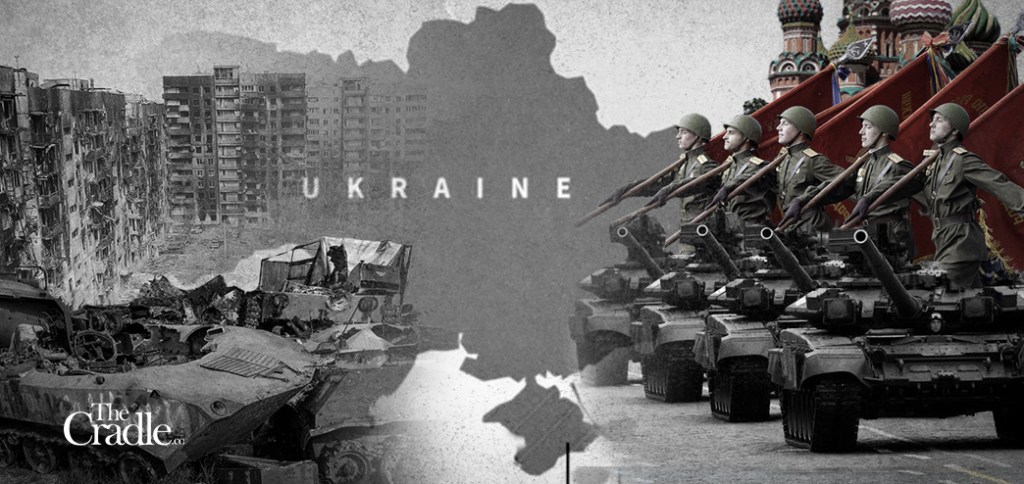
Ukraine: Somewhere between Afghanization and Syrianization

Ukraine is finished as a nation – neither side will rest in this war. The only question is whether it will be an Afghan or Syrian style finale.

Photo Credit: The Cradle

By Pepe Escobar

Source: The Cradle

One year after the astounding US humiliation in Kabul – and on the verge of another serious comeuppance in Donbass – there is reason to believe Moscow is wary of Washington seeking vengeance: in the form of the ‘Afghanization’ of Ukraine.

With no end in sight to western weapons and finance flowing into Kiev, it must be recognized that the Ukrainian battle is likely to disintegrate into yet another endless war. Like the Afghan jihad in the 1980s which employed US-armed and funded guerrillas to drag Russia into its depths, Ukraine’s backers will employ those war-tested methods to run a protracted battle that can spill into bordering Russian lands.

Yet this US attempt at crypto-Afghanization will at best accelerate the completion of what Russia’s Defense Minister Sergei Shoigu describes as the “tasks” of its Special Military Operation (SMO) in Ukraine. For Moscow right now, that road leads all the way to Odessa.

It didn’t have to be this way. Until the recent assassination of Darya Dugina at Moscow’s gates, the battlefield in Ukraine was in fact under a ‘Syrianization’ process.

Like the foreign proxy war in Syria this past decade, frontlines around significant Ukrainian cities had roughly stabilized. Losing on the larger battlefields, Kiev had increasingly moved to employ terrorist tactics. Neither side could completely master the immense war theater at hand. So the Russian military opted to keep minimal forces in battle – contrary to the strategy it employed in 1980s Afghanistan.

Let’s remind ourselves of a few Syrian facts: Palmyra was liberated in March 2016, then lost and retaken in 2017. Aleppo was liberated only in December 2016. Deir Ezzor in September 2017. A slice of northern Hama in December and January 2018. The outskirts of Damascus in the Spring of 2018. Idlib – and significantly, over 25 percent of Syrian territory – are still not liberated. That tells a lot about rhythm in a war theater.

The Russian military never made a conscious decision to interrupt the multi-channel flow of western weapons to Kiev. Methodically destroying those weapons once they’re in Ukrainian territory – with plenty of success – is another matter. The same applies to smashing mercenary networks.

Moscow is well aware that any negotiation with those pulling the strings in Washington – and dictating all terms to puppets in Brussels and Kiev – is futile. The fight in Donbass and beyond is a do or die affair.

So the battle will go on, destroying what’s left of Ukraine, just as it destroyed much of Syria. The difference is that economically, much more than in Syria, what’s left of Ukraine will plunge into a black void. Only territory under Russian control will be rebuilt, and that includes, significantly, the bulk of Ukraine’s industrial infrastructure.

What’s left – rump Ukraine – has already been plundered anyway, as Monsanto, Cargill and Dupont have already bagged 17 million hectares of prime, fertile arable land – over half of what Ukraine still possesses. That translates de facto as BlackRock, Blackstone and Vanguard, top agro-business shareholders, owning whatever lands that really matter in non-sovereign Ukraine.

Going forward, by next year the Russians will be applying themselves to cutting off Kiev from NATO weapons supplies. As that unfolds, the Anglo-Americans will eventually move whatever puppet regime remains to Lviv. And Kiev terrorism – conducted by Bandera worshippers – will continue to be the new normal in the capital.

The Kazakh double game

By now it’s abundantly clear this is not a mere war of territorial conquest. It’s certainly part of a War of Economic Corridors – as the US spares no effort to sabotage and smash the multiple connectivity channels of Eurasia’s integration projects, be they Chinese-led (Belt and Road Initiative, BRI) or Russian-led (Eurasian Economic Union, EAEU).

Just like the proxy war in Syria remade large swathes of West Asia (witness, for instance, Erdogan about to meet Assad), the fight in Ukraine, in a microcosm, is a war for the reconfiguration of the current world order, where Europe is a mere self-inflicted victim in a minor subplot. The Big Picture is the emergence of multipolarity.

The proxy war in Syria lasted a decade, and it’s not over yet. The same may happen to the proxy war in Ukraine. As it stands, Russia has taken an area that is roughly equivalent to Hungary and Slovakia combined. That’s still far from “task” fulfillment – and it’s bound to go on until Russia has taken all the land right up to the Dnieper as well as Odessa, connecting it to the breakaway Republic of Transnistria.

It’s enlightening to see how important Eurasian actors are reacting to such geopolitical turbulence. And that brings us to the cases of Kazakhstan and Turkey.

The Telegram channel Rybar (with over 640k followers) and hacker group Beregini revealed in an investigation that Kazakhstan was selling weapons to Ukraine, which translates as de facto treason against their own Russian allies in the Collective Security Treaty Organization (CSTO). Consider too that Kazakhstan is also part of the Shanghai Cooperation Organization (SCO) and the EAEU, the two hubs of the Eurasian-led multipolar order.

As a consequence of the scandal, Kazakhstan was forced to officially announce the suspension of all weapons exports until the end of 2023.

It began with hackers unveiling how Technoexport – a Kazakh company – was selling armed personnel carriers, anti-tank systems and munitions to Kiev via Jordanian intermediaries, under the orders of the United Kingdom. The deal itself was supervised by the British military attaché in Nur-Sultan, the Kazakh capital.

Nur-Sultan predictably tried to dismiss the allegations, arguing that Technoexport had not asked for export licenses. That was essentially false: the Rybar team discovered that Technoexport instead used Blue Water Supplies, a Jordanian firm, for those. And the story gets even juicier. All the contract documents ended up being found in the computers of Ukrainian intel.

Moreover, the hackers found out about another deal involving Kazspetsexport, via a Bulgarian buyer, for the sale of Kazakh Su-27s, airplane turbines and Mi-24 helicopters. These would have been delivered to the US, but their final destination was Ukraine.

The icing on this Central Asian cake is that Kazakhstan also sells significant amounts of Russian – not Kazakh – oil to Kiev.

So it seems that Nur-Sultan, perhaps unofficially, somehow contributes to the ‘Afghanization’ in the war in Ukraine. No diplomatic leaks confirm it, of course, but bets can be made Putin had a few things to say about that to President Kassym-Jomart Tokayev in their recent – cordial – meeting.

The Sultan’s balancing act

Turkey is a way more complex case. Ankara is not a member of the SCO, the CSTO or the EAEU. It is still hedging its bets, calculating on which terms it will join the high-speed rail of Eurasian integration. And yet, via several schemes, Ankara allows Moscow to evade the avalanche of western sanctions and embargoes.

Turkish businesses – literally all of them with close connections to President Recep Tayyip Erdogan and his Justice and Development Party (AKP) – are making a killing, and relishing their new role as crossroads warehouse between Russia and the west. It’s an open boast in Istanbul that what Russia cannot buy from Germany or France they buy “from us.” And in fact several EU companies are in on it.

Ankara’s balancing act is as sweet as a good baklava. It gathers    economic support from a very important partner right in the middle of the endless, very serious Turkish economic debacle. They agree on nearly everything: Russian gas, S-400 missile systems, the building of the Russian nuclear power plant, tourism – Istanbul is crammed with Russians – Turkish fruits and vegetables.

Ankara-Moscow employ sound textbook geopolitics. They play it openly, in full transparence. That does not mean they are allies. It’s just pragmatic business between states. For instance, an economic response may alleviate a geopolitical problem, and vice-versa.

Obviously the collective west has completely forgotten how that normal state-to-state behavior works. It’s pathetic. Turkey gets “denounced” by the west as traitorous – as much as China.

Of course Erdogan also needs to play to the galleries, so every once in a while he says that Crimea should be retaken by Kiev. After all, his companies also do business with Ukraine – Bayraktar drones and otherwise.

And then there’s proselytizing: Crimea remains theoretically ripe for Turkish influence, where Ankara may exploit the notions of pan-Islamism and mostly pan-Turkism, capitalizing on the historical relations between the peninsula and the Ottoman Empire.

Is Moscow worried? Not really. As for those Bayraktar TB2s sold to Kiev, they will continue to be relentlessly reduced to ashes. Nothing personal. Just business.