
Saturday Matinee: David Lynch Presents the History of Surrealist Film (1987)

By Colin Marshall

Source: Open Culture

What living director has drawn the descriptor “surreal” more often than David Lynch? If you’ve seen, or rather experienced, a few of his films — particularly Eraserhead, Lost Highway, Mulholland Dr., or Inland Empire, or even the first half of his television series Twin Peaks — you know he’s earned it. Like any surrealist worth his salt, Lynch creates his own version of reality, with its own set of often unfathomable and inexplicably but emotionally and psychologically resonant qualities. In 1987, the year after his breakthrough Blue Velvet opened in theaters, the BBC apparently thought him enough of an authority on the matter of cinematic surrealism to enlist him to present an episode of Arena on the subject.

And so we’ve highlighted, just above in two parts, the fruit of their collaboration, with apologies for the straight-from-the-VHS quality of the video. (I just think of the slight muddledness as adding another welcome layer of unreality to the proceedings.)

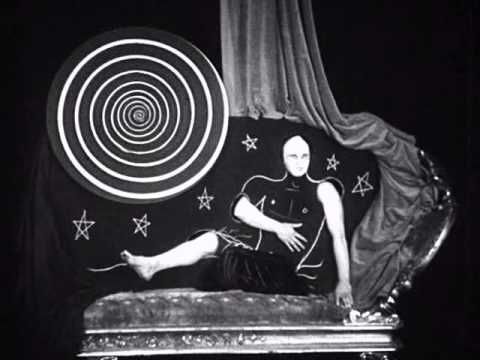
Lynch’s duties on the broadcast include providing facts about the films and filmmakers excerpted throughout to tell the history of surrealist film. (He also provides several choice opinions, as when he calls Philadelphia “one of the sickest, most corrupt, decadent, fear-ridden cities that exists.”) We see bits and pieces of pictures like Luis Buñuel and Salvador Dali’s 1929 Un Chien Andalou, Jean Cocteau’s 1932 Blood of a Poet, Fernand Léger’s 1947 The Girl with the Prefabricated Heart, and Chris Marker’s 1962 La Jetée. Not only does Lynch contextualize them, he discusses their influence on his own work. Casual filmgoers who’ve caught a Lynch movie or two and taken them as the imaginings of an entertaining weirdo will, after watching this episode, come to understand how long a tradition they fit into — and they’ll no doubt want to see not just more of Lynch’s work, but his sources of inspiration as well. (They may, however, after hearing all he has to say here, still regard him as a weirdo.)
 

Saturday Matinee: Un Chien Andalou and L’Age d’Or

Two Vintage Films by Salvador Dalí and Luis Buñuel: Un Chien Andalou and L’Age d’Or

By Colin Marshall

Source: Open Culture

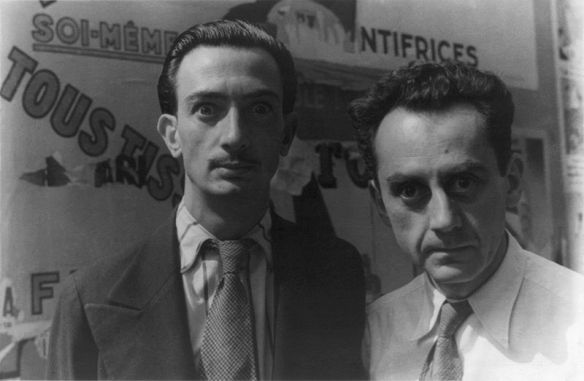
While studying at the University of Madrid in the late 1910s, a young Luis Buñuel befriended an even younger Salvador Dalí. The first fruit of their association, a short film called Un Chien Andalou, appeared a decade later, in 1929, and quickly achieved the international renown it still has today. Several elements had to fall into place to bring this cinematic dream — or cinematic nightmare, or, most accurately, something nebulously in-between — into reality. First, Buñuel gained experience in the medium by assistant-directing on major silent-era European films like Mauprat, La chute de la maison Usher, and La Sirène des Tropiques. Then, Buñuel dreamt of the simultaneous image of a cloud slicing through the moon and a razor slicing through an eye. Then, Dalí dreamt of a human hand covered in ants. With those two visuals in place, they proceeded to collaborate on the rest of the film, working under the principle that “no idea or image that might lend itself to a rational explanation of any kind would be accepted.”

We could discuss Un Chien Andalou‘s rationally inexplicable images, but wouldn’t that defeat the purpose? The moon, the eye, the hand, the ants, the cyclist in the nun’s habit — these nonsensical but enduring images must be seen, and you can do that free on YouTube. But at sixteen minutes, the movie will only whet your aesthetic appetite for Buñuel and Dalí’s particular flavor of flamboyantly nonsensical, grimly satirical imagery. Luckily, you can follow it up with 1930’s L’Age d’Or, which began as another Buñuel-Dalí joint venture until the two suddenly went their separate ways after writing the script. Buñuel took over, crafting a wryly savage five-part critique of the Roman Catholic Church. Buñuel and Dalí had prepared themselves for shock-induced physical violence at the premiere of Un Chien Andalou, only to find that the crowd had heartily approved. But L’Age d’Or drew enough fire for both pictures and then some, getting banned in France and eventually withdrawn from distribution until re-emerging in 1979. Now you can watch it whenever you like on the internet, suggesting that the controversy has evaporated — yet the images remain as surreal a way as any to begin your weekend. A restored version of the film can be viewed here.